Home Blog Page 5

TRAFFICKING – Prevention in Ireland – Tip Report Video 5

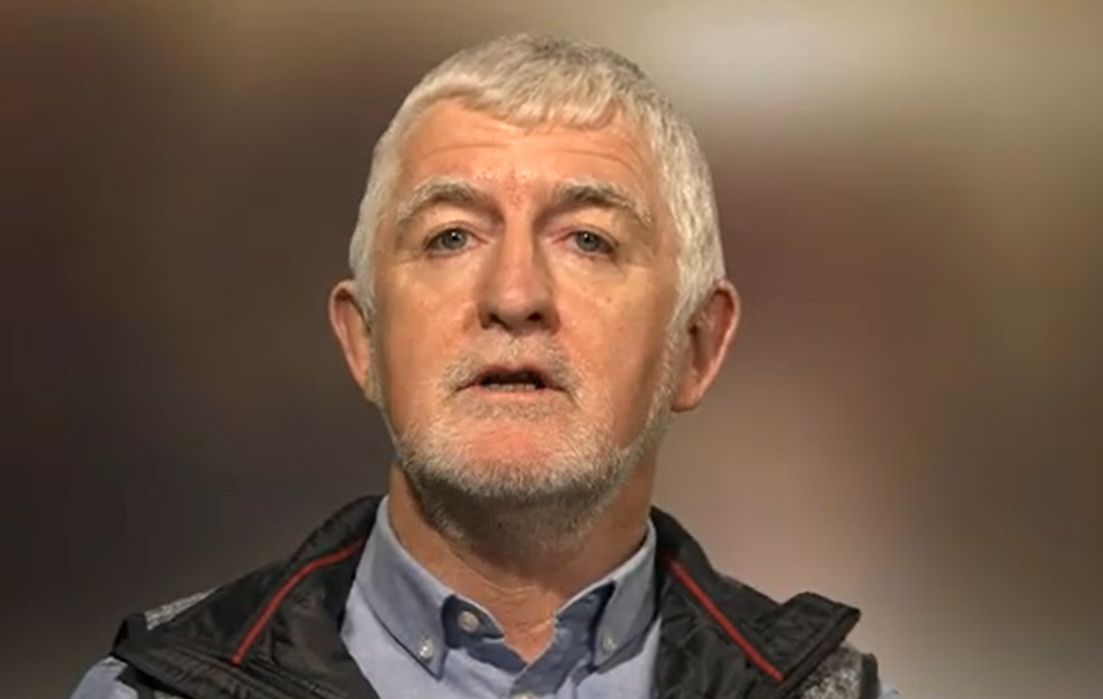
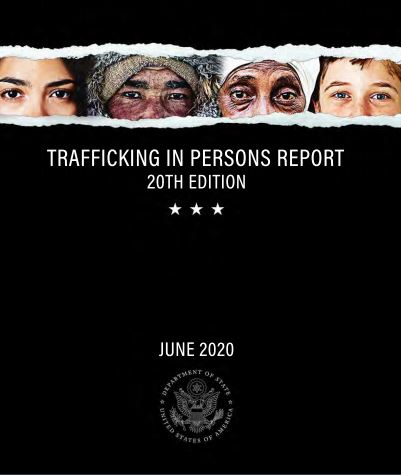
We continue today with the 5th in our series of videos based on the Annual Trafficking in Persons Report (TIP) published by the US State Department in June 2021.

We look today at how the Irish Government built its capacity to prevent trafficking, where the government fell short in the prevention of trafficking, the efforts taken to raise awareness and prevent labour and sex trafficking, as well as the Trafficking in Person’s (TIP) report’s priority recommendations to prevent trafficking.


5. Human Trafficking – Prevention in Ireland 

For ease of access all previously published videos are available on this page.


4 Human Trafficking – Law Enforcement in Ireland.

3. Human Trafficking – Ireland’s Trafficking in Persons Report Ranking. 

2. Human Trafficking in the Global Pandemic. 


1. Human Trafficking – What is it?

Human Trafficking – Law Enforcement – TIP Report Video 4

Today we bring you the 4th in a series of six videos based on the Annual Trafficking in Persons Report (TIP) published by the US State Department in June 2021. Globally recognised as the most authoritative information on human trafficking it ranks each country based on their anti-trafficking efforts.

Todays video, No 4, looks at anti Human Trafficking Law Enforcement in Ireland. This highlights the efforts by the Garda Síochána to identify human trafficking and prosecute the traffickers.  We draw attention to the priority recommendations in the Trafficking in Persons (TIP) report. Unfortunately, the Irish Government falls short on all of these.

For ease of access other videos published  during the last three days are also available here. 

4 Human Trafficking – Law Enforcement in Ireland.

3. Ireland’s Ranking in the Trafficking in Persons Report.  


2. Human Trafficking in the Global Pandemic. 

1. Human Trafficking – What is it?

Human Trafficking IRELAND’S RANKING – TIP Report Video 3

Today we bring you the third in a series of six videos based on the Annual Trafficking in Persons Report (TIP) published by the US State Department in June 2021. Globally recognised as the most authoritative information on human trafficking it ranks each country based on their anti-trafficking efforts.

Today’s video, reflecting the findings of the TIP Repot, shows how the response of the Irish Government to Human Trafficking fell short of expected standards resulting in Ireland, for the second year in succession, being ranked on the “Tier 2 Watch List” (Countries meeting minimum standards are ranked Tier 1 while those not making any efforts to meet minimum standards are ranked Tier 3).

3. Ireland’s Ranking in the Trafficking in Persons Report. 

Videos yet to be published

4. Human Trafficking – Law Enforcement in Ireland. 

5. Human Trafficking – Protecting Victims in Ireland. 

 6. Human Trafficking – Prevention in Ireland.   

For ease of access the previous two videos in the series are also available below.


2. Human Trafficking in the Global Pandemic. 

1. Human Trafficking – What is it?

Human Trafficking in the Global Pandemic – TIP Report Video 2

The COVID-19 Pandemic has greatly exacerbated Human Trafficking by increasing vulnerabilities, especially for those who are already at risk as well as reducing efforts to combat trafficking. This has provided traffickers with an opportunity to use these vulnerabilities to their advantage. 

2. Human Trafficking in the Global Pandemic. 

Today we bring you the second in a series of six videos based on information provided in the 2021 Trafficking in Persons Report (TIP) published by the US State Department in June this year.  In this video we share more about the impact of the Pandemic on Human Trafficking.

 Videos Yet to be published
3. Human Trafficking – Ireland’s TIP Ranking
4. Human Trafficking – Law Enforcement in Ireland. 
5. Human Trafficking – Protecting Victims in Ireland.
6. Human Trafficking – Prevention in Ireland.   

For ease of access the first video in the series – Human Trafficking – What is it? is also published here.

1. Human Trafficking – What is it?

IRELAND’S RESPONSE TO HUMAN TRAFFICKING – TIP Report Video 1

The latest edition of the annual Trafficking in Persons Report was published by the US State Department in June 2021. Globally this publication is recognised as the most authoritative source of information on human trafficking and it ranks each country based on their anti-trafficking efforts.

This week, to mark World Day Against Trafficking in Persons, a series of six short video’s will be published.   Produced by the SMA and OLA Communications and Justices Offices and based on information contained in the TIP Report they will look at Ireland’s response to the issue of Human Trafficking within its borders. 

The videos will cover the the topics listed below –  The first video, defining Human Trafficking is now available. A new  link to access the others will be added each day.

1. Human trafficking – What is it?

Next Videos  

2. Human Trafficking in the Global Pandemic. 

3. Human Trafficking – Ireland’s TIP Ranking. 

4. Human Trafficking – Law Enforcement in Ireland. 

5. Human Trafficking – Protecting Victims in Ireland.

6. Human Trafficking – Prevention in Ireland. 


World Day against Trafficking in Persons 2021

World Day against Trafficking in Persons is held on July 30th each year.  This year the theme set by the UN is “Victims’ Voices Lead the Way”. This focus aims to put victims of human trafficking at the centre of a campaign that will highlight the importance of listening to and learning from survivors of human trafficking.

The campaign portrays survivors as key actors in the fight against human trafficking and focusses on the crucial role they play in establishing effective measures to prevent this crime, identify and rescue victims and support them on their road to rehabilitation about this campaign Click Here

People trafficking and modern day slavery remains a massive worldwide problem with very few countries immune to this injustice. Some of the information here has been published before on this website. For example the fact that today more people suffer the pain of slavery through human trafficking than during the entire 400 years of the transatlantic slave trade.

Human trafficking is not reducing, it is increasing rapidly.  In the past eight years the estimated number of human beings enslaved has grown from twenty-seven million to over forty million. 

FACTS ABOUT TRAFFICKING
Trafficking comes in many forms, including:
– Forcing victims into prostitution.
– Subjecting victims to slavery or involuntary servitude.
– Compelling victims to commit sex acts for the purpose of creating pornography.
– Misleading victims into debt bondage. 

It’s estimated 80% of trafficking involves sexual exploitation, and 19% involves labour exploitation.   

  • Nearly 70 percent of victims are female and many are children.
  • After illegal drugs and arms trafficking, Human trafficking is the third most lucrative international crime.
  • It reportedly generates a profit of $32 billion every year. Around half which is made in the developed world. 
  • Victims come from all age groups, however many are female and under 18 years old.
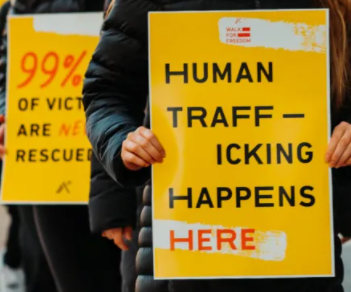
  • Only 1-2 percent of victims are rescued.
  • Only 1 in 100,000 Europeans involved in trafficking are convicted.
  • Approximately 30 million children have lost their childhood through sexual exploitation over the past 30 years.
  • Globally, the average cost of a slave is €120.     Source: – https://www.renate-europe.net/trafficking-resources/   

During the coming week a series of six short videos, produced jointly by the SMA and OLA Justice and Communications Offices will be published on SMA and OLA media platforms, including this website.  These will focus on Ireland and its response to Human Trafficking

The information in these videos is based on the latest edition of the Trafficking in Persons Report (TIP) published in June 2021 by the US State Department.  This is the world’s most most comprehensive report on Human Trafficking and ranks each government on its anti- trafficking efforts.   The video series begins by defining Human Trafficking and then looks at;

  • Human Trafficking law enforcement in Ireland
  • Human Trafficking and the Pandemic
  • Human Trafficking and Protecting Victims in Ireland
  • Human Trafficking – Ireland’s TIP Ranking
  • Human Trafficking – Ireland’s prevention efforts

To view these videos please return each day over the coming week.  

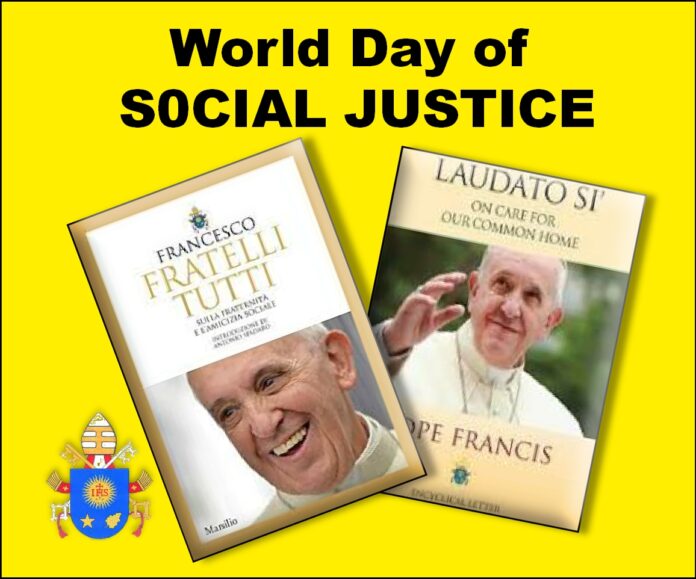
FRATELLI TUTTI & Human Trafficking
“even though the international community has adopted numerous agreements aimed at ending slavery in all its forms, and has launched various strategies to combat this phenomenon, millions of people today – children, women and men of all ages – are deprived of freedom and forced to live in conditions akin to slavery Today, as in the past, slavery is rooted in a notion of the human person that allows him or her to be treated as an object… Whether by coercion, or deception, or by physical or psychological duress, human persons created in the image and likeness of God are deprived of their freedom, sold and reduced to being the property of others. They are treated as means to an end… [Criminal networks] are skilled in using modern means of communication as a way of luring young men and women in various parts of the world”.[21]  


18th Sunday in Ordinary Time 2021 – Year B

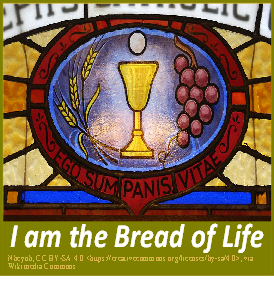
Nheyob, CC BY-SA 4.0 , via Wikimedia Commons

1 August 2021

Exodus 16: 2-4, 12-15              Ephesians 4:1-17, 20-24              Mark 6:24-35

Many of you, I’m sure, are familiar with Diana Ross’s popular song, ‘Do you know where you’re going to’. It is the theme song of the 1975 movie, Mahogany, in which Ross plays a character who struggles for fame and fortune, only to find that these have not brought her contentment or peace of heart. So she questions herself about her life and where it is going. The refrain of the song goes like this:

‘Do you know where you’re going to? Do you like the things that life is showing you?
Where are you going to? Do you know?

These words challenge us to ask ourselves if we have found what we are looking for in life. Have we found answers to the deepest desires of our hearts? These are the questions addressed in today’s readings.

Our first reading, taken from the Book of Exodus, tells the story of how the initial euphoria of the Israelites on being freed from servitude in Egypt evaporates when they face the inhospitable conditions of life in the wilderness. Predictably, they rail against their leaders, Moses and Aaron, and long to return to the ‘fleshpots of Egypt’. In response, the Lord sends them manna and quails to sustain them on their journey. In the words of today’ responsorial psalm: ‘The Lord gave them bread from heaven’. Still the people continued to complain about their circumstances, failing to appreciate the Lord’s loving concern for them, and to trust him.

Today’s gospel passage, from John, recalls the experience of the Israelites. Following his miraculous feeding of the five thousand with five barley loaves and two fish, Jesus was forced to escape the crowd who wanted to make him king, but on their terms. They set out to look for Jesus again and find him in Capernaum, puzzled as to how he got there.  Jesus, aware that they are seeking him for the wrong reason, says:  ‘I tell you most solemnly, you are not looking for me because you have seen the signs but because you had all the bread you wanted to eat’ (Jn 6:26). He challenges them to look beyond their physical hunger to the deeper hunger of the human spirit: ‘Do not work for food that cannot last, but work for food that endures to eternal life’ (Jn 6:27).  Then, in an astounding statement, he says that he, the Son of Man, is the one who can satisfy their deepest hunger:  ‘I am the bread of life’ (Jn 6:34).  This is the first of seven great ‘I am’ statements in John’s Gospel, in which Jesus reveals his true identity as the Son of God. The words, ‘I am’, echo God’s name as revealed to Moses (Ex 3:14).

When Jesus says that he is ‘the Bread of Life’, he is saying that he is the answer to the deepest longing of the human heart. Besides our physical  hunger which is easily satisfied, we have other more profound hungers like  the need to feel accepted, to feel wanted, to be loved and to love – hungers that may not be easily satisfied. But deeper even than these hungers,  we have a hunger which only God can satisfy, as St Augustine, after many years of fruitless search, discovered for himself: ‘You have made us for yourself, O Lord, and our hearts are restless till they rest in thee’. It is this hunger for God that Christ promises to satisfy: ‘The one who comes to me will never be hungry; the one who believes in me will never thirst’ (Jn 6:35).

In our second reading today, from his Letter to the Ephesians, St Paul exhorts us not to let ourselves be led astray by the illusory desires of our hearts but to focus our lives on Christ so that we can ‘put on the new self that has been created in God’s way, in the goodness and holiness of the truth’ (Eph 4:24). The illusory desires Paul is referring to are the desires that captivated the hearts of the pagans – the desires for fame, prestige, wealth and power. These are like junk food that kills instead of nourishing. Only Christ, the true bread of life, nourishes and transforms us, enabling us to live in a new way, in God’s way.

In today’s Eucharist, Jesus is inviting us to let him into our lives fully and unconditionally, to let him be as close to us as the bread we eat. He will nourish and sustain us on the journey of life, and fulfill the deepest longing of our hearts. As ‘the bread of life’ he wants to give himself totally to us. Then we, in turn,  will learn to give ourselves to our brothers and sisters. In this way we, too, become bread broken for a world hungry for that Love which is God’s way of being. And this is our mission. So, let us pray in the words of Ivan Nicoletto, OSB:

‘May we be always hungry and thirsty for Love.
May our hearts and minds be soft and receptive to God’s abundant life.
May our bodies have open doors and windows to welcome the approaching, unknown future.
May we welcome, bless and share this Universe, this earth, this time, as a lavish banquet of grace God is setting’


Click on the play button below to listen to an alternative homily for this Sunday from Fr Tom Casey of the SMA Media Centre, Ndola, ZAMBIA.

17th Sunday in Ordinary Time 2021 – Year B

25 July 2021

2 Kings 4: 42-44              Ephesians 4:1-6              Mark 6:1-15

Christ, the Bread of Life broken for the life of the world

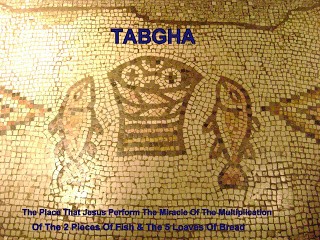
There is famous mosaic on the floor of the ‘Church of the Multiplication’ at Tagbha in Israel that commemorates the event recounted in today’s gospel. The mosaic depicts two fish with a basket of loaves between them. We notice that there are only four loaves in the basket and wonder where is the fifth? Is it Jesus himself, the bread come down from heaven to be the life of the world? Or is it the Eucharistic community, fed by Christ and called, in turn, to be food and sustenance for a hungry world? All our readings today resonate with Eucharistic themes and give us a deeper appreciation of this great sacrament, the pulsating heart of the Church’s life.

Our first reading, taken from the second book of Kings, tells us the story of how Elisha, during a time of destitution and famine, feeds 100 men with twenty-five barley loaves and some ears of corn. Today’s gospel passage, taken from the sixth chapter of John’s Gospel echoes while surpassing the miracle of Elisha’s. It recounts the familiar story of the multiplication of the loaves and fish, common to all four gospels. John, the only evangelist who has no account of the institution of the Eucharist, models his story of how Jesus feeds the five thousand on what happens in every Eucharist. Jesus takes the bread offered by a young boy, gives thanks for what has been offered, and shares the food with all present.  In the second reading, taken from his letter to the Ephesians, Paul, writing from prison, reminds the community at Ephesus that they have received one Spirit and form one body. Hence, he exhorts them: ‘Do all you can to preserve the unity of the Spirit in the peace that binds you together’ (Ephesians 4:5). This unity in the Spirit is the fruit of the Eucharist, our partaking of the Body of the Lord.

Eucharist’ comes from a Greek word and means ‘thankgsiving’. In the Eucharist, we give thanks for Christ present as the food that nourishes and strengthens us. The Eucharist renews the deepest springs of our humanity, unites us to one another, and enables us to become sources of nourishment for others. The Eucharist is Christ’s communion with us. It is, at the same time, our communion with one another. Christ loves us so much that he wants to be with us and wants us to be with him. Love tends towards union. When we love someone we want to be with them always. We never want to be separated with them.

Christ desires to be with us in the most complete way possible. This is what happens in the Eucharist. He comes to us. He enters into us. He takes possession of our hearts and minds and bodies. He becomes one with us. And he wants to make us one with him. The moment of communion in Mass, when we eat the body of Christ and drink his blood, is the greatest moment of intimacy that can exist between God and us. However, we cannot be in communion with the Lord without being in communion with one another. This recognition of the oneness of all who partake of the Body and Blood of Christ is expressed in several ways in the Mass: in the common acknowledgement that we are sinners, the common responses, the songs of praise, the Gloria, the Creed, the acclamation of faith, and the Great Amen (At the end of the Eucharistic Prayer, just before the Our Father). We act as one body because we are made one body in Christ. St. Augustine used to say to his Congregation as he held up the Body of Christ: “See what you are and become what you see.”

Every Eucharist ends with a sending out on mission: “Go in Peace to love and serve the Lord”.  We have to bring the Eucharistic Christ to the world. Just as Christ has become our Food, giving himself completely to us, so too we must give ourselves for the sake of the world. We are challenged in this mission to live the love we have experienced. We have to become sources of nourishment for the world as Christ has become a source of nourishment for us. There is a contemporary hymn, based on a prayer attributed to St Theresa of Avila, which expresses this challenge quite beautifully:

‘Christ has no body now but yours,
no hands but yours,
no feet but yours.
Yours are the eyes through which
Christ’s compassion must look out on the world.
Yours are the feet with which
He is to go about doing good.
Yours are the hands with which
He is to bless us now.’

We become the body of Christ when we receive Christ, the Bread of life, in Communion, and our mission is to be, in turn, the body of Christ for others.

Michael McCabe SMA, Cork, July 2021

Fr Joseph Zimmermann SMA – Homily & Video

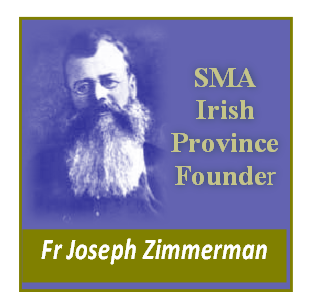
Fr Joseph Zimmermann SMA is acknowledged as the Founder of the Irish Province.

After 28 years in Ireland, he was transferred to Savannah, Georgia, USA, where he died on 19 July 1921.

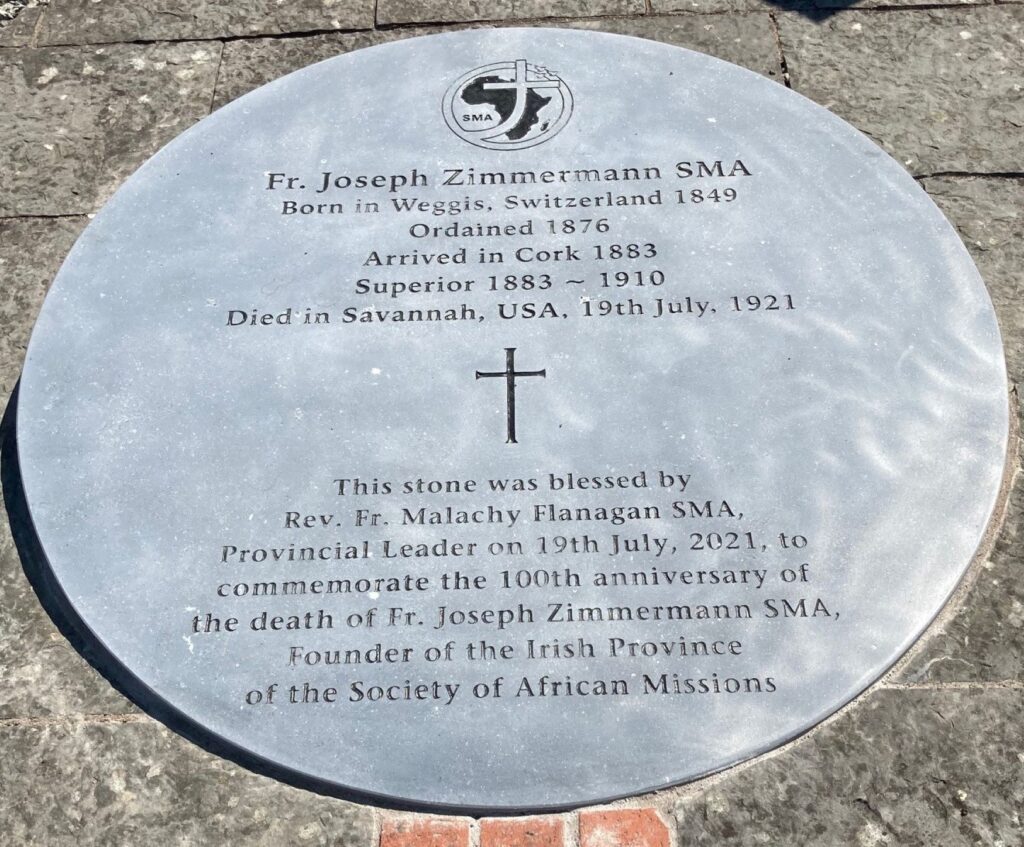
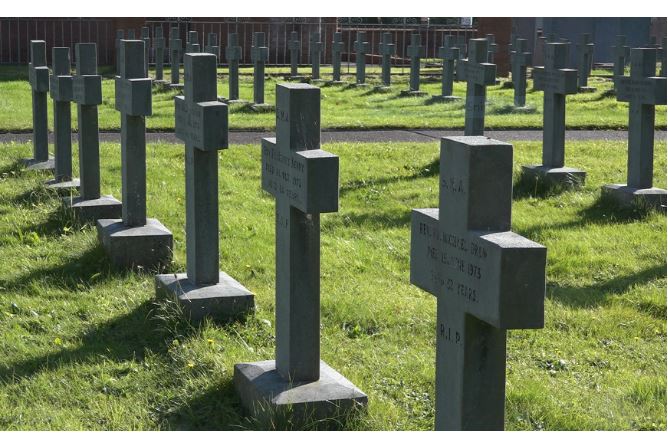
To mark his contribution to the SMA, and particularly to the Irish Province, the Irish Provincial Leader, Fr Malachy Flanagan, celebrated a Mass on 17 July at St Joseph’s SMA Church, Wilton, Cork, followed by the unveiling of a Memorial Plaque in the SMA community cemetery.

Fr Tim Cullinane preached at the Mass, basing his homily on Ecclesiasticus 44:1,9-13, Ephesians 2:19-22 and John 12:23-26. Following Fr Tim’s homily (below) we have two videos relating to this celebration, in Ireland and the USA.

Memorial Plaque in honour of Fr Joseph Zimmermann SMA, Founder of the Irish Province

We are gathered together this afternoon to remember and honour the memory of Joseph Zimmermann, who died 100 years ago next Monday, 19 July. He is, as the first reading tells us, among a list of generous people whose good works have not been forgotten and in their descendants there remains a rich inheritance, in this case, the Irish Province of the Society of African Missions [SMA]. His story is God’s story working through human beings to carry out His mission to the most abandoned spiritually and materially.

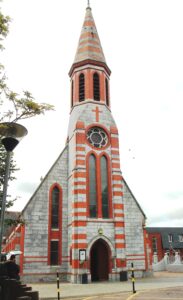
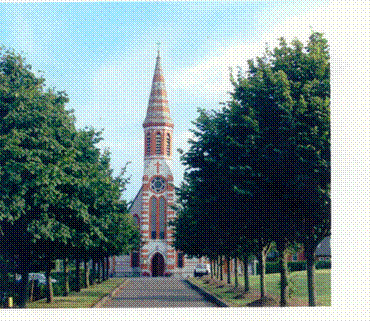
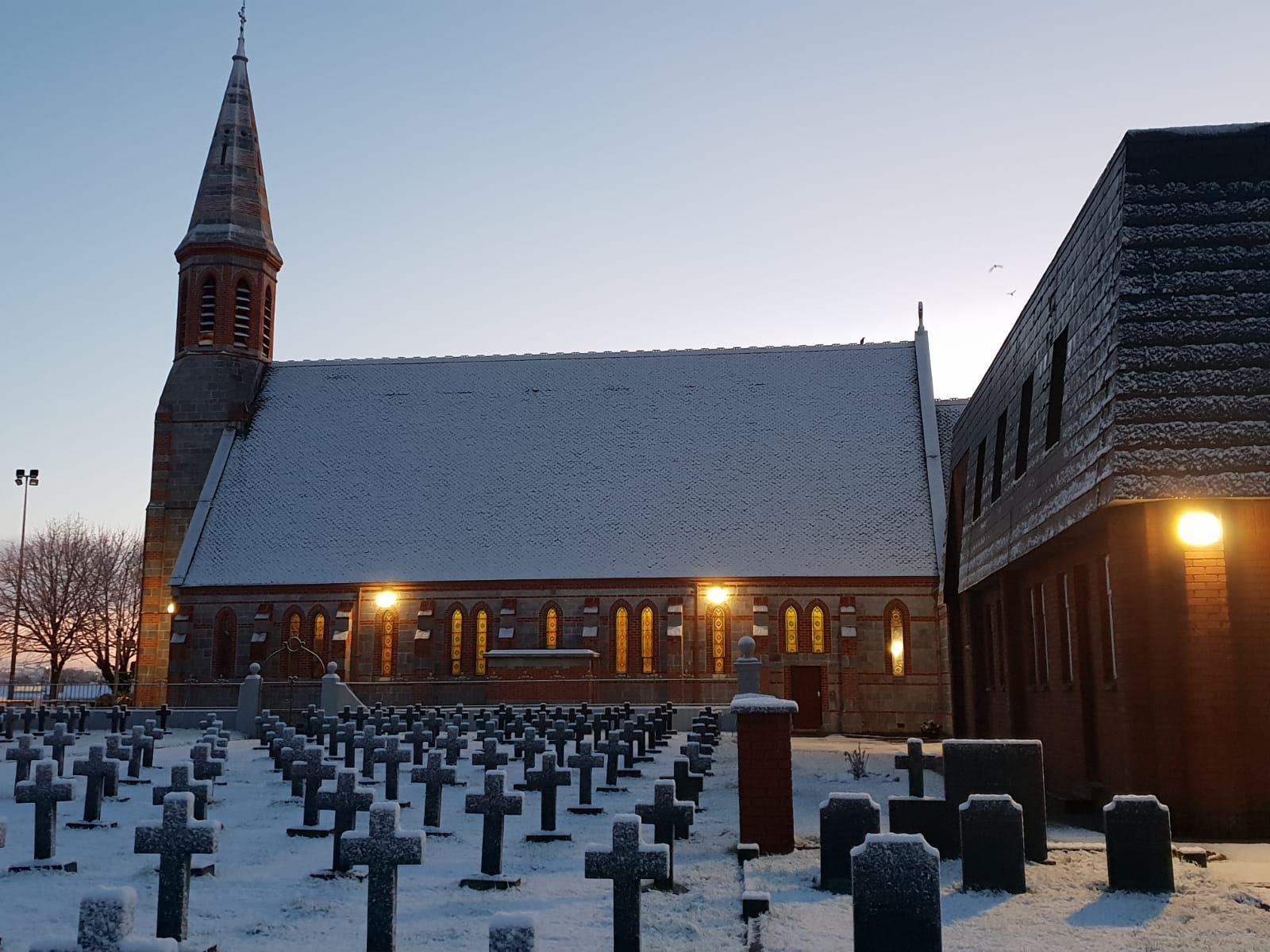
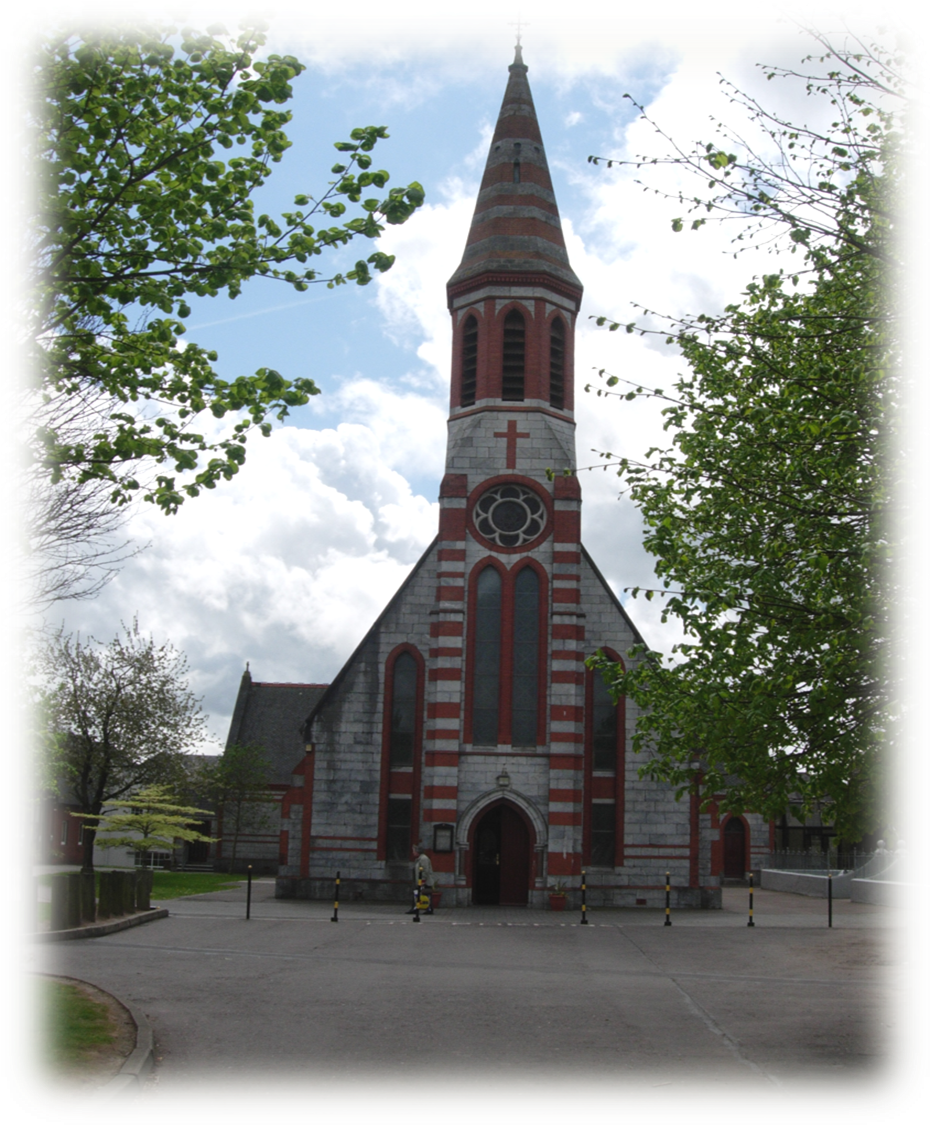
One of the most famous buildings in central London is St Paul’s Cathedral, where most of the country’s important religious events take place. The architect of the cathedral was Christopher Wren and in the crypt of the cathedral there is a plaque dedicated to his memory with the words, “If you seek a monument to this man look around you.” If you seek a monument to Joseph Zimmermann you can begin by looking around this church (pictured below). It was Fr Zimmermann who bought 72 acres of farming land from a Mr James O’Connor for £1000 pounds on which this church, the shopping centre and the SMA House behind us are St Joseph's SMA Church, Wilton, Cork, built by Fr Zimmermann SMAbuilt. It was Fr Zimmermann who engaged the architect and was responsible for the building of the Church, opened in 1897. It was built in the style of churches back in his own country of Switzerland. As we gather here this afternoon in this eucharist we can sense his presence for every Mass is part of the heavenly liturgy so he is with us in spirit.

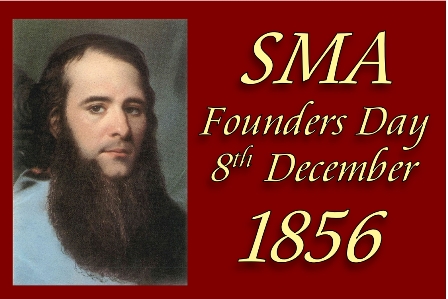
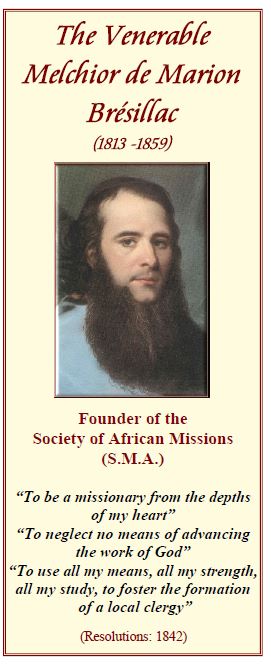
However, his most important contribution to the SMA was not this church but the SMA Irish Province itself. As most of you know the SMA was founded in Lyon, France, by Bishop Melchior de Marion Brésillac in 1856 for mission to the most abandoned in Africa. At first it was a French-speaking Society. By the 1870’s a need was felt to recruit and train English-speaking members to work in English-speaking countries in West Africa, like Nigeria, Ghana and Liberia. As a result, Fr Augustin Planque, Superior General, turned to Ireland to respond to the challenge and an Irish branch of the Society was founded in 1878 in the hope of getting priests to answer this need. Very few suitable candidates came forward and since the training was in France where they had to adapt to a new culture and a new language, very few persevered. The cost of sustaining the SMA project in Ireland was becoming prohibitive and it was facing closure unless drastic action was taken. Into the situation entered the Swiss-born Fr Joseph Zimmermann who was sent to Cork in 1883 to see whether the whole project could be saved.

The Church in Ireland at that time was very inward looking. It had little interest in any mission outside of Ireland except to supply priests and sisters for the Irish people who had emigrated to places like the USA, Australia and New Zealand. So they were not very interested in the SMA and its work for the most abandoned in Africa. A man of great passion and energy, Zimmermann set out with great commitment to change that and to save the Irish branch of the SMA from closure. There are people in our own time, like Sr Stan and Jesuit Fr Peter McVerry who have the gift of being able take on a project with passion and inspire others to join them and become as passionate about it as they are themselves. Fr Zimmermann had such a gift. With his considerable powers of eloquence and persuasion he gradually won over the local Church to the missionary cause of the SMA. To re-ignite the missionary spirit in the country, he made use of the great missionary tradition of Ireland in the 6th and 9th centuries with people like Columba and Columbanus being instrumental in the evangelization of Europe.

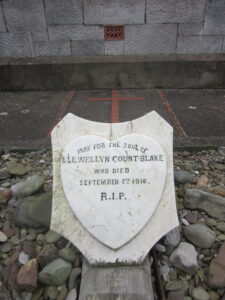
He also had a vision of the SMA which became attractive to the Irish Church, wanting to establish, not an outpost of a French missionary congregation but an independent Irish missionary Institute staffed by Irish missionaries, educated not in France but wholly in Ireland, supported by Irish funds. Gradually, he won the support of a number of bishops, Headstone of Llewellyn Count Blakepriests and lay people. He reached out in a special way to the laity and attracted a number of important benefactors including Count Llewellyn Blake, who is buried beside this church as you climb down the steps to the house. Over a number of years, Count Blake made a number of substantial financial contributions to Zimmermann’s missionary project as well as giving two substantial properties in Galway and Mayo to the Society to be used for training students in Ireland rather than having them go to France.

With an increasing number of candidates, growing financial support and certain structures in place, the canonical requirements for a Province now existed: three separate houses, financial security and the ability to get vocations. With the support of some Irish bishops, friends in Rome to promote his cause, Zimmermann’s case for recognising the Irish branch of the SMA as a separate Province was hard to turn down. Despite opposition from his French Superiors, the Irish Province of the SMA became a reality on 15 May, 1912.

Pictures of Zimmermann show him with piercing eyes, a long white beard and a giant cross across his chest. Today’s gospel says, “Unless a grain of wheat falls into the earth and dies, it yields a rich harvest.” The cross was very much part of Zimmermann’s life as it was of the life of Jesus.   Writing to Fr Planque in June 1890, he wrote, “I’ve had a rough year; how many times I went to bed without eating, and how many nights I passed without going to bed at all except on a railway station bench, without mentioning the other annoyances that were, for me, ten times harder than these deprivations and annoyances that often caused me to cry bitter tears.”  The hardest cross of all that he was called to bear must have been that, after working tirelessly for 28 years to establish an Irish Province, when it was erected, the first Superior was not to be Fr Zimmermann but Fr Stephen Kyne. The news was conveyed to him in a curt letter from the successor to Fr Planque as Superior General, Bishop Paul Pellet. Part of it reads as follows, “Dear confrere, in agreement with the Congregation of the Faith, we have decided not to renew your term as Superior. We are sending Fr Kyne to replace you… and the letter ended with the words, “You are to leave Cork and Ireland by the latest the 1st of January 1911 and come here to receive new directives.  The new directives were to take up a new post in the Unites States, in the SMA African-American parish of St Anthony in Savannah, Georgia, where he was to work for the remaining ten years of his life.

In April 1921, the SMA Superior General at the time, Fr Jean-Marie Chabert, was on a visit to America. He brought with him a letter from the Irish Province inviting Zimmermann to return to Ireland. He was very happy to receive it but his health did not allow it and he died less than three months later and is buried in Savannah.

Today, 100 years after his death, there is a certain sadness,  as part of us  would like to see a man who was so much part of our history for 28 years buried in the adjoining cemetery so it is good that today we are unveiling a plaque here in his honour. I’m mindful that on 9 December, 2018, the refurbished SMA House in Claregalway was renamed “Zimmermann SMA House”. Yes, there is sadness but our predominant feeling should be one of gratitude to God and to Fr Zimmermann. The seed he planted has borne much fruit and has made, and is making, a difference to many people in different parts of Africa.

Fr Zimmermann is not only part of the story of the Irish Province of the SMA. He is also part of the story of the Irish Province of the OLA Sisters. It was he who introduced them to Ireland in 1887 and organised accommodation for them. That seed too has borne much fruit in Africa and in Ireland.

I said at the beginning that Zimmermann’s story is God’s story. It is also our story, as an Irish Province, and in our own time, we are called to write a new chapter in the story. The 100th anniversary of his death is a good time to ask the question, “Where is the Irish Province that he did so much to establish going into the future, considering that the Irish Province has had no ordinations in the past ten years”. Gerard Hughes, SJ, in a book called, “The God of Surprises” gives good advice, “Look at the facts, the facts are kind and God is in the facts.”  Fr Arrupe, the former Superior General of the Jesuits, said on many occasions as he went around visiting Jesuit communities in different parts of the world people would often ask him, “Where is the Society of Jesus going?” We are asking a similar question, where is the SMA Irish Province going? Regarding the Jesuits, Fr Arrupe would answer, “I don’t know… but God knows … and we have to hear the answer from God. That is why we have to be open to the signs of the times. God is leading us today to live the Gospel in new ways. We have to be open to that and ask God to enlighten us and follow his lead.” This too is what the SMA Irish Province has to do at this time.  As the prophet Isaiah said to his people in his time:

See I am doing a new deed, even now it comes to light, can you see it?” (Isaiah 43: 18-19)

And as the Letter to the Hebrews says, “Remember your leaders, who preached the word of God to you and as you reflect on their lives, imitate their faith.”

Click here to view a short video of the unveiling of the Memorial Plaque. 

Click here to see a video prepared by Sr Pauline O’Brien at the grave of Fr Zimmermann in Savannah, Georgia.

SMA IRISH PROVINCE FOUNDER – MEMORIAL

The Centenary of the death of Fr Joseph Zimmerman took place on 19 July, 2021 and this occasion was marked by a memorial event in St Joseph’s Parish Wilton on Saturday, 17 July.

Fr Zimmermann is rightly seen as the Founder of the Irish Province of the Society of African Missions (SMA).

Mass was celebrated by Fr Malachy Flanagan, the SMA Provincial Leader, with a Homily delivered by Fr Tim Cullinane SMA. A memorial Plaque was later blessed and unveiled in the SMA Cemetery. Afterwards, Fr Edmund Hogan SMA delivered a Talk on the life and role of Fr Zimmerman in the Wilton Parish Centre.

In 1882 Fr Joseph Zimmerman took charge of the Irish branch of the SMA. It had been founded four years earlier to attract vocations for work in the Society’s British West African missions. But very few suitable candidates were coming forward and those that were did not persevere. The cost of maintaining this unproductive SMA enterprise was becoming prohibitive and it was clear that drastic action needed to be taken. In January 1883 Joseph Zimmermann was named Superior and arrived in Cork with a mission to see whether anything could be salvaged.

Over the next 28 years, he not only saved the Irish branch of the Society from closure, but built it up until it was to become the first Province of the Society. He achieved this by winning over the local Church to the missionary cause. At the start, little by little, he made friends among the clergy and laity, helping out wherever he was needed. Then, using his considerable powers of eloquence and persuasion, he began to preach the missionary message to a Church which at first did not want to hear, but gradually began to listen. He struck a chord deep in the heart of modern Irish Catholicism, invoking Ireland’s illustrious missionary past between the 6th and 9th century and urging that once more Ireland should take its place among the great missionary nations. He was Founder of the Irish Province of the SMA and one among a handful who can be titled: Founders of the Irish Missionary Movement.  The Irish Province of the Society of African Missions was formally established on the 15th of May 1912 with Fr Stephen Kyne SMA as its first Superior. 

Sr Pauline O’Brien and Fr John Lyons at the Grave of Joseph Zimmerman in Savannah, Georgia.

Just one year earlier, in June 1911, Joseph Zimmermann had left Ireland to take up a new post in the United States, in the SMA African-American parish of St. Anthony, in Savannah, Georgia. There he was to remain for the remaining ten years of his life. He died on 19 July 1921. 

Click Here to see a short video made at the grave of Fr Zimmerman in Savannah, Georgia, by Sr Pauline O’Brien, sister of Fr John O’Brien SMA. 

To view the unveiling of the memorial plaque to Fr Joseph Zimmerman in the SMA Cemetery in Wilton, Cork Click Here.  

Click here to read Fr Cullinane’s homily.

16th Sunday in Ordinary Time 2021 – Year B

18 July 2021

Jeremiah 23.1- 6               Ephesians 2.13-18               Mark 6.30-34

I knew a mother who cared for a son for nearly 40 years. He was diagnosed with Parkinson’s disease and by his early teenage years he was almost totally incapacitated. Though he had not been expected to live for very long, through her absolute devotion to him, he lived far longer than anyone expected, even the medical people. Until her own death, some years before her son, she stayed at his side, day and night.

To live is an unselfish way is never easy. It’s far easier when we do our own thing, when we happen to be in good mood and it causes a minimum of inconvenience and disruption. But when the ction is not of our own choosing, when we don’t feel in the mood and it is sprung on us at awkward moments. In such cases we have to forget ourselves and set aside our own feelings and plans. A real sacrifice is involved.  Isn’t it a great test of a person when, at the drop of a hat, they put aside their own plans to help another person?

It’s a consolation for us to know that Jesus too had to cope with interruptions. He too had his plans upset.  Today’s gospel tell us that his disciples were in such demand when he sent them out to preach and heal that they had scarcely time to eat. They had seen this in the case of Jesus himself when he and the disciples could not even have a meal. So his relatives set out to take charge of him because they were convinced he was out of his mind.

In today’s gospel Jesus decides to take the apostles apart to a quiet place for a break. This time he wasn’t thinking of himself but of his apostles. They had just come back from the mission he sent them on. He saw that they needed rest. He took them to a quiet place apart. He knew that the carers too needed to be cared for.

However, things did not turn out as planned. The people followed him. How did Jesus react? Far from getting annoyed he welcomed the people. Doesn’t this tell us a lot about the kind of person he was? He was moved with pity for them. Don’t we all appreciate people who show compassion to us in a time of need?

The three readings today speak of God’s compassion. In the reading from the prophet Jeremiah, God speaks out against those who failed to care for those he had sent them to. Many of them failed, being more interested in their own well-being and a good lifestyle at the expense of those to whom they were sent. So the compassionate God promises that he himself will look after the sheep, his people, who have been dispersed. Furthermore, in the days to come, he will he raise up someone who will be a true shepherd for Israel, His son Jesus. In the Letter to the Ephesians, Paul tells us that God, through Jesus, will gather into one those who have been ‘far off’, that is the Gentiles who were regarded as not belonging to God’s people, and the Jews who ‘were near’, that is God’s people.  Before Jesus, Jews could not accept that the Gentiles were also God’s beloved children. It is the compassion of God which will do all this.

Those of you parents with sick children or ageing parents will know this too. How often when the children were growing up and got sick at night or at others times did you not spend sleepless nights looking after them? Is this not compassion on your part.

It is very important to remember that when giving us the great commandment to love God, our neighbour as ourselves he also told us to love ourselves too.  It is not a choice. Jesus knew that if we do not, we will not be able to care for others when necessary.

Is this one of our strongest images of Jesus, of God? A God full of tenderness and compassion? We will keep the commandments because we are saved by God’s compassion and grace and not in order to earn salvation. That is indeed Good News. Of course, it means that we too are expected to show tenderness and compassion to others in our turn.

Lord Jesus, thank you for revealing to us that you are a God of total compassion.  Help us to be compassionate to others also, relying on the gift of the Holy Spirit to do so. Amen’.

Edited from a homily of the late Fr Jim Kirstein, SMA (RIP)

Click on the play button below to listen to an alternative homily for this Sunday from Fr Tom Casey of the SMA Media Centre, Ndola, ZAMBIA.

THE BEAUTY OF CREATION IN BLACKROCK RD

In the cold days of late winter and early spring an effort was made in the garden in Blackrock Road to prepare the ground, plant wild flower seeds and to do things in a way that cares more for creation. 

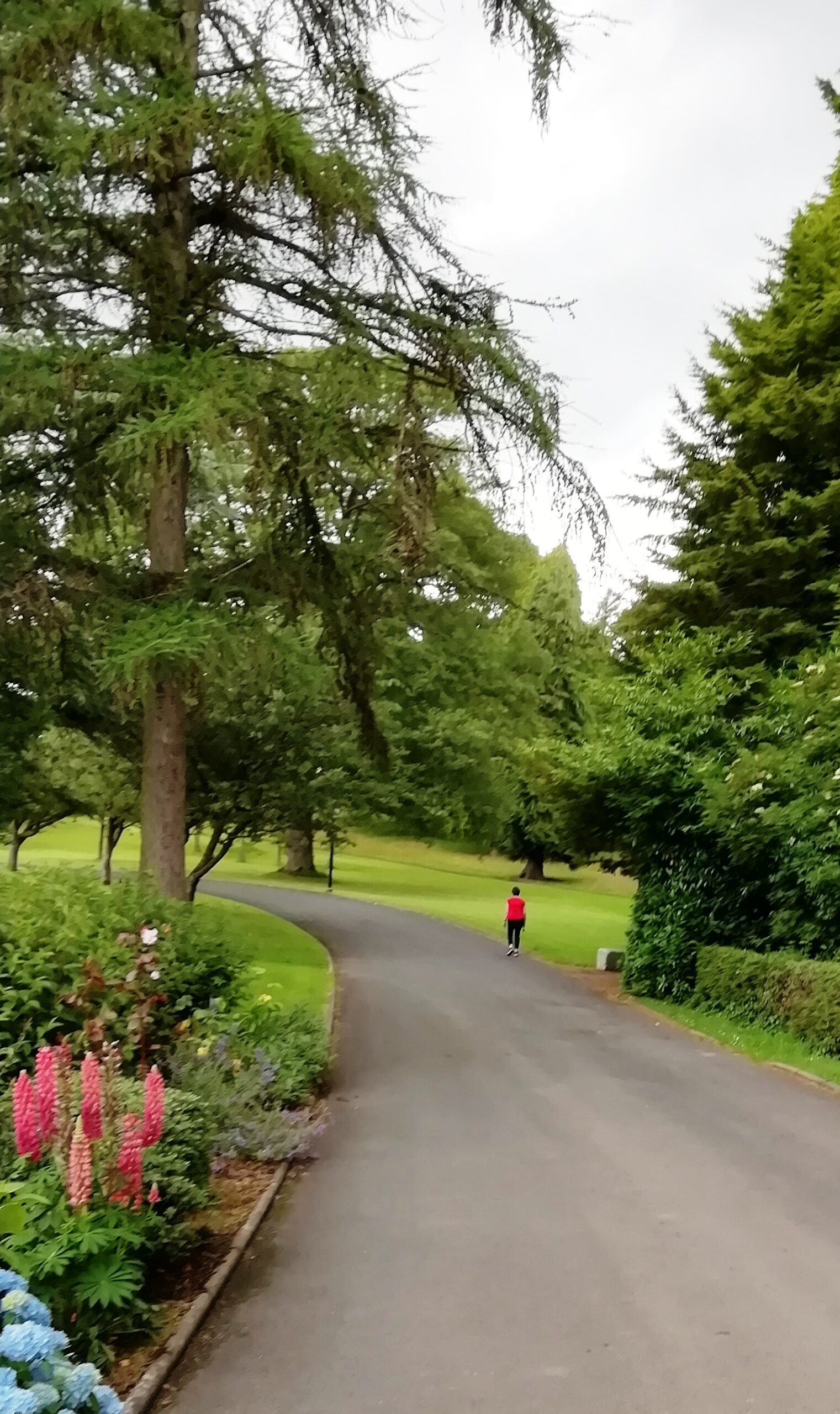
We present the result of this work here as one example of the many things that have begun to happen in SMA Communities all around Ireland, in Dublin, Claregalway, Dromantine, Wilton and Blackrock Road.  There is a growing consciousness of the need to do more in order to care more.  There is also a growing awareness that this caring needs to be planned, sustained and become an active part of Christian living and of living more justly.  

The efforts made in Blackrock Rd have, as you will see, had a beautiful result but all the other efforts in SMA Houses around Ireland are, although less visible equally important, the recycling, not mowing all the grass, growing vegetables, not using weed killer, reducing waste, composting, saving energy and so on.   All are ways of caring for creation and for all who depend on it, ourselves, those living far away and those yet to be born. 

All of us can do more to care more.  We hope you enjoy this three minute video which was filmed one afternoon in July.  We also hope it will be for you a meditation, a prayer on the beauty of God’s Creation – entrusted to our active care. 

Filmed and edited by Paul O’Flynn                                                                                               Click on Full Screen for best viewing

15th Sunday of the Year 2021 – Year B

11 July 2021

Amos 7:12-15              Ephesians 1:3-14              Mark 6: 7-13

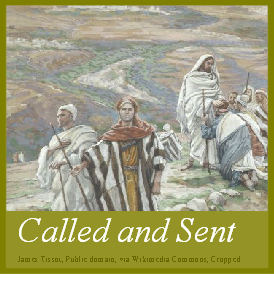
Called and Sent on Mission

The related themes of vocation and mission are highlighted in the readings of today’s Mass. Amos, the first of the great prophets, lived in the eighth century before Christ. This was a time of peace and prosperity in the northern kingdom of Israel but a time of wholesale corruption and exploitation of the poor. In the first reading, Amos is forced to defend his vocation as a prophet to Israel.

The Gospel recounts the call and first mission of the twelve specially chosen disciples of Jesus. 

Amos, who came from a poor village in the southern kingdom of Judah, courageously denounced the injustices inflicted upon the poor and drew on himself the ire of Amaziah, one of the leading members of the priestly caste. Amaziah lived in the wealthy Royal Sanctuary of Bethel and was a lackey of King Jeroboam II. It was not in his interest to have the unjust practices of the political establishment questioned by Amos. So he orders Amos to go back to his own land (Judah) and prophesy there. In his reply Amos defends his prophetic vocation as a direct call from the Lord, not an inherited position with status, like that of Amaziah and the priestly caste to which he belonged. He was poor farmer, taking care of sycamore trees, before the Lord summoned him to go and prophesy to the people of Israel. This is the call he must obey, not the orders of a well-heeled flunkey of the royal court. The example of Amos reminds us of our prophetic vocation as members of Christ’s Body to speak truth to power, to point our and denounce the corrupt practices of powerful elites, and to defend the rights of the poor and exploited people of our time.

Today’s gospel passage from Mark continues where last Sunday’s left off. Following his rejection in his home town of Nazareth, Jesus summons twelve of his disciples and sends them out on mission, into the villages and towns where he himself had already preached. He shares his mission and authority with them – the same authority he received from his Father to cast out evil spirits, to heal and call to repentance. Jesus sends them out with detailed instructions, not about what they are to preach – though the call to repentance is mentioned – but rather on how they are to live. They are not to travel on their own, but two by two. This is in contrast to the individualistic style of the maverick preachers, self-appointed prophets and bogus healers who were familiar figures in first century AD. They are not to take anything for the journey except a staff: ‘no bread, no haversack, no coppers for their purses’; not even ‘a spare tunic’ (Mark 6:9).  In other words, their lifestyle is to be marked by a radical dependence on God and on the generosity of the people to whom they minister. Finally, the locus of their ministry is to be people’s homes rather than the synagogues. 

Mark’s account of the first apostolic mission may not, at first sight, seem very relevant to the complex challenges facing the Church in the twenty-first century. Yet it identifies the essential calling of the Church and all its members. Like the apostles who are its foundation stone, the Church is called to be a community of missionaries, continuing the mission of Jesus Christ in the service of God’s reign. Its authority and power resides not in itself, but in the word of the one who calls and sends it. It is challenged to travel light, putting its trust in divine providence rather than in material resources, and being open to receive as well as to give. It is required to confront the forces of evil and serve as the agent of God’s healing power in a sick and broken world. Above all, it is enjoined to witness to God’s power by a radical simplicity of life-style. Pope Paul VI underlined this challenge when he stated, over forty years ago,  that witness of life is the primary and indispensable form of the Church’s mission – one that is especially relevant in our time when people are more influenced by witnesses than by teachers or preachers (cf. Evangelii Nuntiandi, 41). So let us, in the words of the American poet, Amanda Gorman, ‘step out of the shade, aflame and unafraid’ and bear witness to the healing love of Christ by the lives we live.

I will end with a prayer:

‘Jesus, teach us to live by faith and share in love,
so that we may be free of cloying comforts
and the protective padding of material goods.
Teach us to accept without embarrassment the help that others give us.
But help us to give ourselves in return,
finding a family in all who need to hear your word.
Risen Lord, who comforted your apostles
when they had laboured without success throughout the night,
show us the true worth of the human techniques we employ.
Do not allow us to despise them,
for even the miraculous draught would be impossible without a net.
But neither let their constant use enslave us.
Remind us rather that your presence is the power that changes hearts.’

(taken from the book, Catalysts, by Rene Dionne, MAfr., and Michael Fitzgerald, Mafr.)

Michael McCabe SMA, Cork, June 2021

Click on the play button below to listen to an alternative homily for this Sunday from Fr Tom Casey of the SMA Media Centre, Ndola, ZAMBIA.


SMA INTERNATIONAL NEWS – JULY 2021

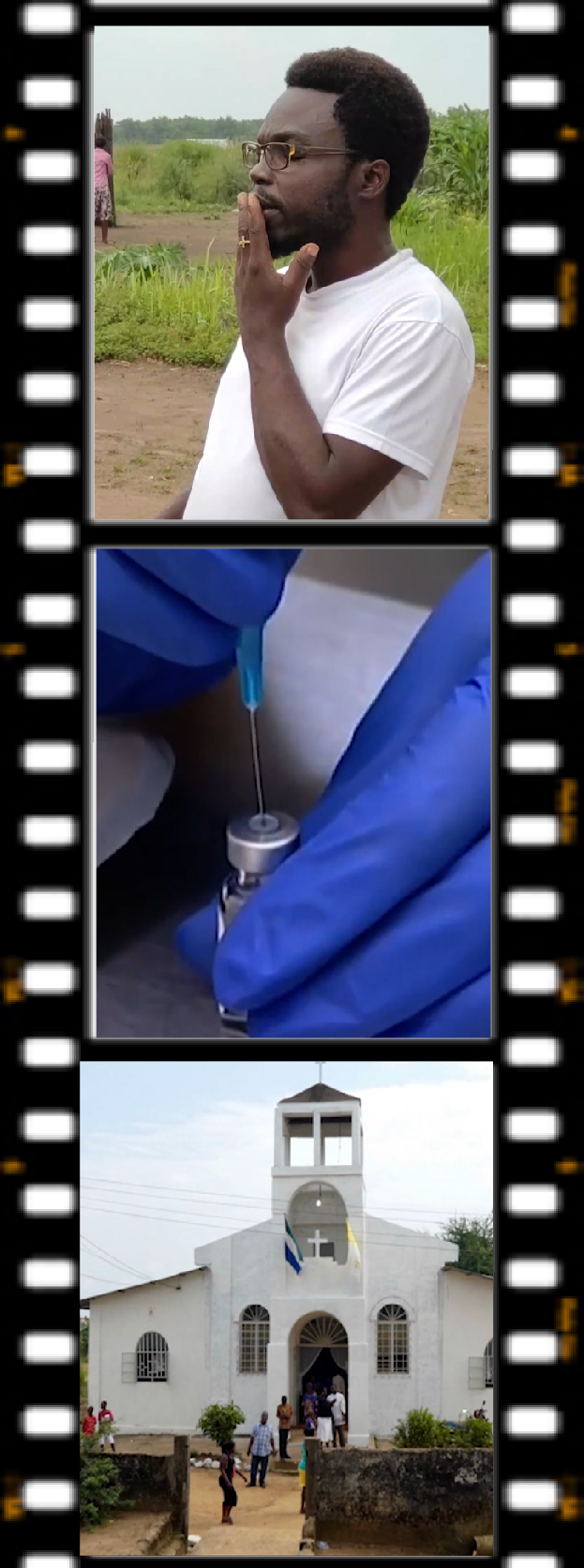
Welcome to the July SMA International News. In this edition we cover stories from the Democratic Republic of Congo, Sierra Leon and from SMA Houses of Formation. 

In the Republic of Congo the SMA has taken responsibility for St. Thomas Aquinas parish in Manpu, located in a rural area, at 150 km from the city of Kinshasa.   A second report looks at the effects of Covid-19 in our houses of formation. How have  students and formators experienced this health crisis?  We then go to Sierra Leone to hear how the SMA marks this year, 

the 9th anniversary of its return to the Archdiocese of Freetown. 

This month’s News ends with a general round-up of SMA information and events. 

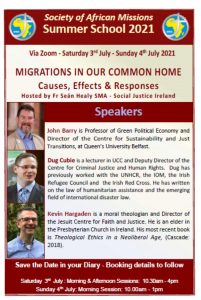
MIGRATIONS IN OUR COMMON HOME Causes, Effects & Responses – VIDEO RECORDINGS Summer School 2021

SPEAKERS
John Barry is Professor of Green Political Economy and Director of the Centre for Sustainability and Just Transitions, at Queen’s University Belfast
Dug Cubie is a lecturer in UCC and Deputy Director of the Centre for Criminal Justice and Human Rights. Dug has previously worked with the UNHCR, the IOM, the Irish Refugee Council and the Irish Red Cross. He has written on the law of humanitarian assistance and the emerging field of international disaster law.

Kevin Hargaden is a moral theologian and Director of the Jesuit Centre for Faith and Justice. He is an elder in the Presbyterian Church in Ireland. His most recent book is Theological Ethics in a Neoliberal.Age, (Cascade:2018).

Video Recordings

1. Forced Displacement in a Global Context
Dr Dug Cubie  
Click here to view

2. A WORLD OF FLOWS, WOES & FOES
Migration, Capitalism and Climate Breakdown
Professor John Barry  
Click Here to view

3. Fratelli Tutti: Insiders, Outsiders, and Ireland’s Second Century
Dr Kevin Hargaden  
Click here to view

4. Roundtable Discussion – Chaired by Collette Bennet with Sr Josephine McCarthy, Dug Cubie and Kevin HargadenClick here to view

Other Resources


POPE’S VIDEO – JULY 21, SOCIAL FRIENDSHIP


We pray that, in social, economic and political situations of conflict, we may be courageous and passionate architects of dialogue and friendship.

Pope Francis – July 2021 
 

To view video – click play button below 

TEXT OF POPE’S VIDEO MESSAGE:  The Bible says that whoever finds a friend has found a treasure.

I would like to invite everyone to go beyond their groups of friends and build social friendship, which is so necessary for living together well. We especially need to have a renewed encounter with the most impoverished and vulnerable, those on the peripheries. And we need to distance ourselves from populisms that exploit the anguish of the people without providing solutions, proposing a mystique that solves nothing.

We must flee from social enmity which only destroys, and leave polarization behind. And this isn’t always easy, especially today when part of our politics, society and media are bent on creating enemies so as to defeat them in a game of power. Dialogue is the path to seeing reality in a new way, so we can live with passion the challenges we face in constructing the common good.

Let us pray that, in social, economic, and political situations of conflict, we may be courageous and passionate architects of dialogue and friendship, men and women who always hold out a helping hand, and may no spaces of enmity and war remain.

14th Sunday in Ordinary Time 2021 – Year B

4 July 2021

Ezekiel 2:2-5            2 Corinthians 12:7-10            Mark 6:1-6a

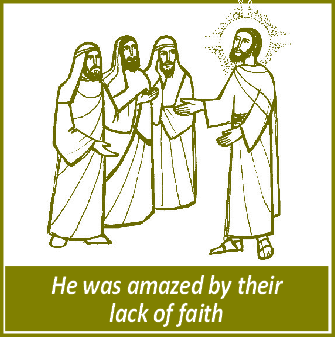
He was amazed at their lack of faith (Mark 6:6a)

The theme of rejection looms large in today’s scripture readings.  Ezekiel, the prophet of today’s first reading suffered rejection because he predicted the destruction of Jerusalem. He was among the Israelites driven into exile by the Babylonian King, Nebuchadnezzar, and is the only prophet called by God to prophesy outside Israel. The exile was a traumatic experience for a people who saw themselves as specially chosen by God. Captured and enslaved in Babylon, they had lost everything they held precious: their freedom and the things which gave them a sense of identity as a people – their land and their Temple. Their most cherished hopes has been dashed. Many of them were so disheartened that they lost faith in the Lord and in his promises, and turned to the gods of their oppressors. No wonder they refused to listen to Ezekiel. Nevertheless, Ezekiel is empowered by the Spirit and mandated by the Lord to continue proclaiming his word to the people, ‘whether they listen or not’ (Ezekiel 2:5). We might ask ourselves who are today prophets, whose preaching is falling on deaf ears?

Our second reading reminds us that St Paul’s mission, while remarkably successful, was not all plain sailing and that he experienced what he calls ‘a thorn in the flesh’ to stop him ‘from getting too proud’ (2 Corinthians 12:8). While Paul never states clearly what precisely this thorn in the flesh was, many Scripture Scholars suggest that it may refer to one or other of the practical difficulties he mentions in verse 10: ‘weaknesses, insults, hardships, persecutions, and constraints’. All of these Paul is prepared to accept for the sake of Christ. ‘For’, he adds, ‘it is when I am weak, that I am strong.’ (2 Corinthians 12:10).

In today’s gospel from Mark, Jesus returns to his home town of Nazareth not to a hero’s welcome, as one might expect following his raising of the daughter of Jairus to life,  but instead to jealously, ridicule, and rejection. Clearly taken aback by the people’s ‘lack of faith’, Jesus responds with words tinged with bitter disappointment: ‘A prophet is only despised in his own country, among his own relations and in his own house (Mark 6:4). We know that, following this incident, Jesus would not return again to his home town or set foot in another synagogue in Galilee.

Why did Jesus’ own townspeople reject him? Perhaps because they knew him too well or thought they did. He had lived among them for thirty years as the son of a humble tradesman, and they never saw any signs of extraordinary power or wisdom in him. So,  when he started to speak in their synagogue, they were ‘astonished by his wisdom’, but not disposed to accept him. Instead they raised questions about the source of his wisdom  and his identity: ‘Where did this man get these things? What is the wisdom given to him? How are such mighty works done by his hands? Is not this the carpenter,  the son of Mary and brother of James and Joset and Jude and Simon? And are not his sisters here with us?(Mark 6:2-3). These remarks clearly show the prejudices that acted as a stumbling block to their acceptance of Jesus and his message. There is also here an echo of an earlier scene in Mark’s gospel, where Jesus’ relations set out to take charge of him’, convinced he was ‘out of his mind(Mark 3:21).

It is easy for us to stand in judgement over the people of Nazareth. But, if the historical Jesus were to come among us today and preach in our Churches, would we recognise him and accord him a better reception? An uncomfortable question surely, and difficult to answer with certainty! Like the people of Nazareth we would be meeting with someone we think we know very well. But how well do we really know Jesus? Would he confirm or challenge our expectations of him? Would we listen with respect to a lay man coming from a humble, working class, background and with no formal religious education or religious status? Would we recognise the presence of God in his words and actions?  What are the barriers for us in recognising God at work in our world today?

SMA Summer School
THIS WEEKEND

3rd & 4th July
You are welcome to attend all or part of this event free of charge.
View Programme and Book
Here

Today’s readings call on us to open our hearts, our minds and our whole being to the challenging and often surprising presence of God among us: in others, in the events of our lives, in the Church, in our world. God is always speaking to us, but we have to listen and, to echo the words of the poet, Patrick Kavanagh, allow him ‘to surprise us’.

Let us pray: Heavenly Father, you break through our deafness of heart to speak to us the Word of life. Grant that we might hear and recognise your voice and respond with faith through Jesus Christ, your Son and our Lord.  Amen.

Michael McCabe SMA, Cork, June 2021

Click on the play button below to listen to an alternative homily for this Sunday from Fr Tom Casey of the SMA Media Centre, Ndola, ZAMBIA.

13th Sunday in Ordinary Time 2021 – Year B

Life is changed, not ended

27 June 2021

Wisdom 1:13-15; 2:23-24              2 Cor 8:7,9,13-15              Mk 5:21-43

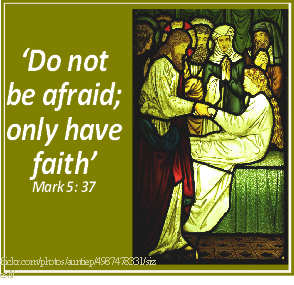
‘Do not be afraid; only have faith’ (Mark 5: 37)

Today’s gospel reading from Mark continues where last Sunday’s ended with the account of Jesus calming the storm. It reports two miracles performed by Jesus after returning to the Jewish part of Galilee from the land of the Gerasenes: the raising to life of the daughter of Jairus, and the healing of a woman with a haemorrhage she had endured for twelve years.  In each case, Jesus’ miracle is in response to a courageous act of faith.

Jairus, we are told, is a synagogue official, and therefore a man of considerable standing within the Jewish community. Clearly distraught by his daughter’s worsening illness, he approaches Jesus, falls to his knees and earnestly pleads with him to lay his hands on her and heal her. ‘My little daughter is desperately sick. Do come and lay your hands on her to make her better and save her life’ (Mk 5:23). We can only imagine the courage and humility it took for this ‘important man’ to swallow his pride, abandon his dignity, and fall at the feet of Jesus.

As Jesus accompanies Jairus to his house, followed by a large crowd, we are told that a woman with a twelve-years’ bleeding complaint approaches Jesus timidly and with apprehension. Her condition would have rendered her legally ‘unclean’. At the slightest suspicion that she was suffering from a haemorrhage, the people accompanying Jesus would, most likely, have driven her away for exposing them to defilement. Understandably, then, she approaches Jesus surreptitiously from behind, secretly touches his cloak, and is immediately cured. In response, Jesus turns and asks who touched him. The woman probably could have remained anonymous; yet, at Jesus’ question, she steps forward and acknowledges what she has done. She comes clean ‘with the whole truth’ of her ‘shame-inducing’ condition. Jesus responds by acknowledging her faith and sends her away with the words that must have sounded like music to her ears: ‘My daughter, your faith has restored you to health: go in peace and be free from your complaint’ (Mk 5:34). By addressing her as ‘daughter’ Jesus is ending her sense of isolation and including her in the family of God’s beloved sons and daughters.

At this point, we can imagine Jairus’ mounting anxiety. His daughter is seriously ill and may be dying, and now Jesus’ arrival is being delayed. As if to heighten the tension Mark tells us that messengers suddenly arrive from Jairus’ house and confirm his worst fear: his daughter is dead. No point in troubling Jesus any longer!  Jesus ignores their message and reassures Jairus with words that echo the message of last Sunday’s gospel: ‘Do not be afraid; only have faith’ (Mk 5: 37). When Jesus, Jairus, and the accompanying crowd all arrive at the house of Jairus, they find family and friends mourning the dead girl. But Jesus enters the room where she is laid out, takes her by the hand, and instructs her, in Aramaic, to arise: ‘Talitha, kum’.  Jairus’ faith in Jesus has not been in vain. His daughter is restored to life. And Jesus is revealed not only as having power over nature but also over death, reversing the work of the devil, as the first reading from Wisdom indicates (Wisdom 2:23-24).

These two overlapping miracle stories contain a number of striking contrasts and one very important common element. The main character in one story is a man, Jairus; in the other, it is a woman. One is a public official, an important person in the community. The other is a woman who has spent all her money and was probably reduced to penury in seeking a cure for a shameful condition that had isolated her from the community. One approaches Jesus publicly. The other approaches him secretly. Yet, in both cases, it is faith that leads them to seek out Jesus in their distress and that brings about his miraculous response.

In a world where sickness and loss are still present realities, the miracle stories in today’s gospel remind us of the Lord’s healing kindness. The faith of Jairus and of the woman with the haemorrhage invites us to reflect on our own faith in Jesus and take steps to nurture and develop it, confident that Jesus’ response will be gentle, loving and healing.

SMA Summer School
3rd & 4th July
View Programme and

Book Here 

 So, let us pray: ‘Heavenly Father, through the twists and turns of life, brighten our horizons and make our hearts receptive to the message of your Son, Jesus, who healed the sick and raised the dead to life. Strengthen our faith in his healing and life-giving power. Amen.

Michael McCabe SMA, Cork, June 2021

The challenge of a new mission… the support of a joyful and active laity, young and old

Fr Lorenzo Snider SMA

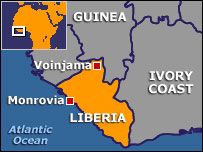
In many countries of the African continent young people have few prospects and life is precarious. In Foya, in a remote corner of Liberia, the situation is no different. “The environment is difficult, there are few job opportunities, but there are many generous and willing young people”, according to Father Lorenzo Snider, an Italian SMA priest in a letter to FIDES, the Vatican News Agency for the Congregation for the Evangelization of Peoples.

Fr Lorenzo has been in Foya for a year and a half, after 8 years in Ivory Coast and then 7 at home in Italy in mission and vocations work. He defines himself as a “missionary apprentice” and says that it was not easy to start over with a new language, to try to learn some Kissi expressions, the local language spoken throughout the district and in neighbouring countries: Guinea and Sierra Leone, for a total of about one million people.

“I found myself entering a culture, a new history, a local church that is taking its first steps and, as a missionary apprentice and foreign parish apprentice, I am discovering that it is possible to make up for one’s limitations and lack of experience, simply asking for help,working together, in community, with the people”, he told Fides.

Father Lorenzo explains that the parish is equipped with solid structures where everyone is involved in the parish. The “laity are used to not only participating in the decision-making process, but also to carrying out the task of communion and evangelization responsibly. And it is nice to see brave young people ready to make sacrifices to contribute to the development of their land and to do it with joy”.  “Many of the children get up at five every morning to do housework, clean the house, look for water and wood, etc., before going to school at 8, and stay there until 1 pm. After school they go to the fields to help the family. And they consider themselves lucky because they can go to school.
In the numerous Pentecostal churches, of which there are about twenty in Foya, who first carried out the evangelization of this territory, witch hunts are often preached, accusing, creating divisions within families, fear, suspicion, in a climate that leads to seeing more of the presence of the devil and his emissaries than the great works of God, more to seek God’s protection against occult forces, than to seek together the ways to grow in his love”. “Furthermore”, concludes Fr Lorenzo, “with the first rains, many people are busy in the fields, to start sowing rice, the region’s real wealth. The unskilled worker gets two dollars a day and a teacher can be considered lucky if he earns sixty dollars a month. Some of them get just 15 or 20 dollars”. (LS/AP) (Agenzia Fides, 22/6/2021)
With thanks to FIDES


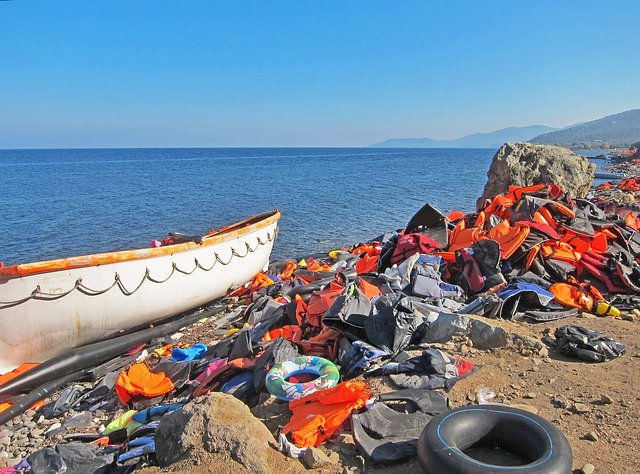
World Refugee Day: A clarion call to protect and support migrants

Lesbos, Greece, Pixabay License

Today 20 June is World Refugee Day.  This article from Vatican News, written by Lydia O’Kane, shines the spotlight on the plight of migrants and refugees with calls to protect and support those on the move and forced to flee.

“More than 82.4 million men, women and children have had their worlds turned upside down by war, violence and persecution. While the rest of us spent much of the last year at home to stay safe, they had to run from their homes just to stay alive.”

Read More 

12th Sunday in Ordinary Time 2021 – Year B

20 June 2021

Job 38.1, 8-11                    2 Cor. 5.14-17                    Mark 4.35-41

There is a story about a sea captain who in his retirement skippered a boat taking day-trippers to the Shetland Islands. On one trip the boat was full of young people. These laughed at the old captain when they saw him saying a prayer before setting out, because the day was fine and the sea was calm. However, they weren’t long out at sea when a storm suddenly blew up, and the boat began to pitch violently. The terrified passengers came to the captain and asked him to join them at prayer. But he replied, ‘I say my prayers when it’s calm. When it’s rough I attend to my ship’.

Is there not a lesson for us here? If we cannot or will not seek God in the still moments of our lives, we are not likely to find him when trouble strikes. We are more likely to panic. But if we have learnt to seek him and trust him in the quiet moments, then most certainly we will find him when the going gets rough.

Life can be compared to a voyage. Some people hold the view, “paddle your own canoe”. The life of a Christian is not meant to be a solo voyage. We journey with our own fellow Christians, and thus are able to support each other in times of difficulty.

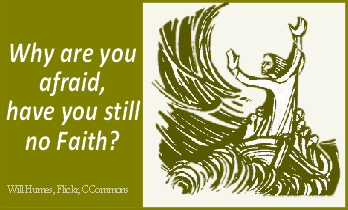
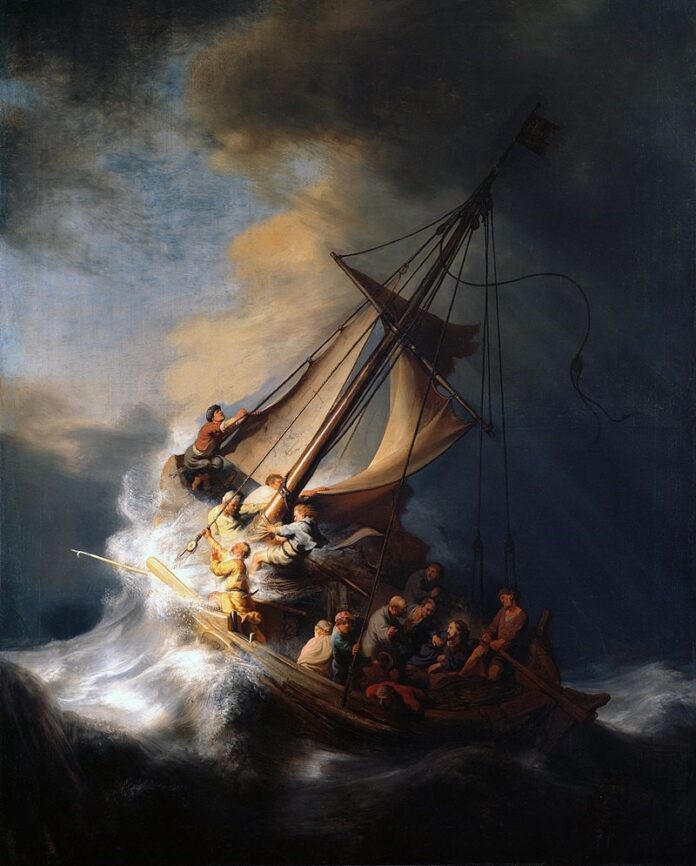
In the gospel today Jesus told the disciples to cross over to the other side of the lake. Then it began to blow a gale and the waves were breaking into the boat so that it was almost swamped. But he was in the stern, sleeping, with his head on a cushion. They woke him and said to him. ‘Do you not care? We are going down!’ And he woke up and rebuked the wind and said to the sea: ‘Quiet now, be calm! And the wind dropped and all was calm again.’ Then he said to them: ’Why are you so frightened? How is it that you have no faith?

For the Jews the sea and wind were seen as signs of evil and chaos which God only could control (1st reading). But the storm can also stand for the trials and difficulties each of us can suffer in life.

In calming the storm the disciples witnessed the divine power of Jesus at work. The disciples were really in awe at what Jesus did and were being given another insight into who he really was. It was interesting that when Jesus was in the boat during the storm he was asleep in the stern. He showed his tremendous faith and trust in his Father and also assumed that the disciples, as seasoned fishermen, knew how to deal with the elements. The scene showed whom the disciples were really worried about, not so much Jesus but themselves and their own safety. ‘Master, do you not care? We are going down’!

Are we not also like this too at least sometimes? When the storms come into our own lives like a tragedy – a severe sickness, Coronavirus, a sudden death of a loved one, an unexpected ‘bad’ event etc. maybe we think that God doesn’t care. But he is always there even if we think he isn’t. God doesn’t always answer our prayers in the way that we want but our faith tells us that he is surely with us giving us the courage, strength and perseverance that we need to cope with the particular event / situation we are asking help for.

Don’t we like to be in control of our lives? To be ‘not in control’ is not a pleasant experience. We experience small signs of it when we get caught in a very slow and long traffic jam, yet especially with more serious cases when it is severe illness and tragedy. To find oneself in such a situation is both humbling and terrifying. But it is precisely at these times that we find we discover if we have faith and trust in God.

It reminds me of the story of a little boy who was calmly reading in a plane caught in an electric storm with great turbulence. The passenger next to him who was terrified asked him: ‘are you not scared to death like I am?’ ‘No’, he replied ‘why should I be? My father is the pilot of this plane’!

For the early Christians this miracle is very relevant. The boat represented the Church, and the storm the persecutions unleashed on it by evil powers that wanted to wreck it.

If we have faith we will not doubt that he is with us, and we will turn to him in prayer and know his help. The story challenges us to trust in God’s power especially when storms assail us. When we have faith we give up the need to be in control.

‘Lord increase our faith and trust in you especially in the storms of life that come our way’.

Edited from a sermon prepared by the late Fr. Jim Kirstein, SMA

Beyond Planting Trees: Let Communities Lead Restoration

The 17th of June is marked as  International Day to Combat Desertification.  Here we link to an article written by staff of the UN Food and Agricultural Organization that gives a broad view of the effects and solutions to desertification. Its much more than planting trees. This article goes beyond the purely ecological approach towards one that is very much in line with the integral ecology approach of Laudato Si’.

“Restoration must go beyond increasing biomass and improve ecology, lives, and livelihoods simultaneously. Approaches should increase climate resilience and prioritize income generation through green jobs and addressing food insecurity and malnutrition.”

For those who wish to delve more deeply into this issue the article contains many links to other sources of information.  Read more 

INTERFAITH PRAYER SERVICE AND TALK BY THEOLOGIAN AND POET PADRAIG Ó TUAMA

On Saturday 19th of June at 7.30pm Three Faiths Forum Cork have organised an online interfaith Prayer Service on the theme “Living Together in Peace.”   The event will be preceded by a short talk from Padraig Ó Tuama.

Members of the Christian, Muslim, Jewish, Baha’i, Hindu and Buddhist faiths will participate in the Prayer Service.  The event will be hosted via the OLA Communications Office Zoom account with slides and graphics by the SMA Justice Officer.

The event will last about one hour.   To register Click  REGISTER HERE 
An email with a link to join will be sent to you within 15 minutes of registering.  If you do not receive it then check in you Spam mail.

SMA Dromantine: Retreat & Conference Centre Reopening August 2021

A SAFE AND WARM WELCOME
The SMA Community in Dromantine along with our Hospitality Team are ready to safely and warmly welcome you back. We are fully focused on the Covid-19 related responsibilities and have put all the necessary requirements in place.

We invite you to share our Retreat & Workshop programme for 2021. Please let your friends and communities know that Dromantine is opening in August.  As we are committed to keeping everybody safe, we have limited numbers for the foreseeable future.

There are only 30 places available for each Retreat / Workshop. Make sure you book early so as not to be disappointed.  Looking forward to seeing you back with us soon – Fr. Damian SMA

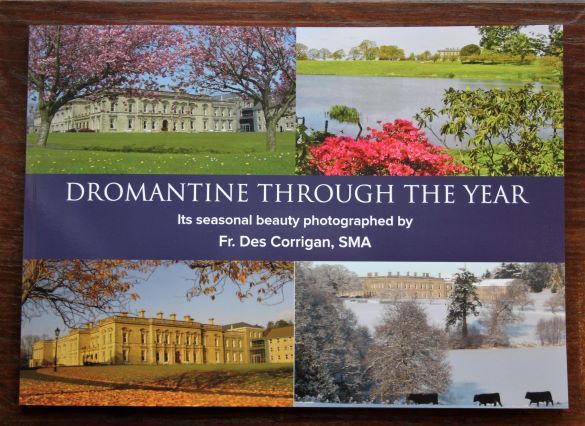
Dromantine Retreat and Conference Centre – Click on photo to enlarge

See Programme to the end of the year below.  There is also a link to a downloadable copy at the end of this article should you wish to print it for your community or email it to friends.

AUGUST
Preached Retreat. ‘Time to awaken the soul with the unfolding of the Word of God.’
Thursday 12th Aug. 5pm — Tues. 17th Aug. 2pm.  Preacher Fr. Joe McGee MSC £450 / €520

Focusing Prayer
Saturday 21st Aug. 9.30am — 5pm.
Fr. Adrian Farelly OP
 £35/€40

View of the Lake at Dromantine – Click on photo to enlarge

6 day Directed Retreat
Tuesday 31st Aug. 5pm — Tues. 7th Sept. 9.30am
£600/€695
 …. or the option of

6 day Non -Directed Retreat
Tuesday 31st Aug. 5pm — Tues. 7th Sept. 9.30am
£540 /€630
_______________________________

SEPTEMBER
Retreat for Mission Supporters & Friends of SMA
Friday 10th Sept. 5pm — Sun. 12th Sept. 2pm

£160/€185
________________________________

Dromantine Avenue – Click on photo to enlarge

OCTOBER
Preached Retreat. ‘Called by a New Name: Refocus, recharge 
and reconnect in a post-pandemic world.
Sunday 3rd Oct. 5pm — Fri. 8th Oct. 9.30am
Fr. Hugh Lagan SMA
£420/€490

Transformation Retreat. ‘The Transformation Game’
Friday 15th Oct. 5pm — Sun. 17th Oct. 2pm
Noel Bradley DD
£200/€230

Workshop. ‘Hello You: Finding the joy, purpose and happiness you deserve’.
Monday 18th Oct. 5pm — Thur. 21st Oct. 2pm
Fr. Hugh Lagan SMA
£280/€325
________________________________

NOVEMBER

Dealing with Grief
Saturday 6th Nov. 9.30am — 5.30pm
Fr. Brendan McManus SJ & Mr Jim Deeds
£35/€40

Workshop. ‘ Broken Open: How difficult times can help us grow.’
Friday 19th Nov . 5pm — Sun. 21st Nov. 2pm
Fr. Hugh Lagan SMA £200/€230  
_______________________________

DECEMBER
Advent Retreat
Friday 3rd Dec. 5pm — Sun. 5th Dec. 2pm
Rev. Ruth Patterson £200/€230

To download a copy of the Programme CLICK HERE

Terrorism and violence: unsustainable situation in West African countries

Fr Donald Zagoré SMA

“The West African sub-region is unfortunately becoming the bastion of terrorism in Africa. A situation that is becoming increasingly worrying”, writes Fr Donald Zagore, SMA, in a letter to the Vatican News Agency, FIDES. Fr Zagore was expressing his concern and alarm about the situation in the area. The conflict between government forces and armed groups linked to Isis and al-Qaeda in the western part of the Sahel has devastated much of the region over the past decade, triggering a significant humanitarian crisis. According to data from the Armed Conflict and Location Event Data Project, nearly 7,000 people died due to the worsening of fighting in 2020. And the continuing violence has led to the internal displacement of over two million people. Father Zagore notes: “Displaced persons and deaths are increasing. Whole populations living in conditions of total precariousness can no longer take it. Almost permanent political instability, violation of democratic values, large-scale corruption, increasingly accentuated poverty, the rise to power of the drug cartels and clandestine gold, which contribute enormously to the financing of terrorism, are aggravating the social, political and economic conditions in this part of Africa”.

As long as these countries remain prisoners of all these evils without ever fighting them vigorously, their doors will be widely open to all forms of violence and terrorism par excellence. “It is no longer time for speeches and eternal summits on the fight against terrorism. It is time to act. People must not become prisoners in their own country”, he wrote.

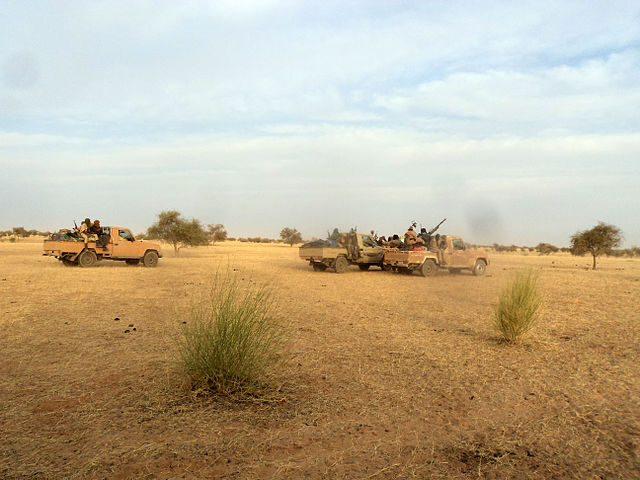
 Jemal Ould Mohamed Oumar (from this link), CC BY 2.0, via Wikimedia Commons
Armed Islamist Fighters on the border of Mauritania and Mali

On 13 June, two soldiers and a police officer were killed near Tèhini, in the north-east of Ivory Coast, near the border with Burkina Faso, when their vehicle was blown-up. According to local sources, the explosion also caused three injuries less than a week after an attack by suspected jihadists in the town of Tougbo, a few kilometres from the Burkina Faso border. The conflict in the Sahel region has caused one of the largest humanitarian crises in the world, with 24 million people in need of aid this year and 13 million people starving, according to the United Nations Office for the Coordination of Humanitarian Affairs (OCHA). With its vast, poorly controlled desert expanses and porous borders, the Sahel has proved to be fertile ground for the rise of Islamist militancy in one of the poorest regions in the world, while climate change has worsened competition for dwindling resources. According to a recent study commissioned by Catholic Relief Services (CRS) in Mali, Burkina Faso and Niger, youth unemployment and lack of economic opportunities are the main cause of violence, driving many young people to join armed groups.

In West Africa, a 1% elite owns wealth more than the rest of the population and governments are not doing enough to reduce inequality through policies such as taxation and social spending, NGO Oxfam said.

With thanks to FIDES – (DZ/AP) (Agenzia Fides, 14/6/2021)

Sr Margaret finds purpose in a time of Pandemic

In March 2020, when the (then) Taoiseach, Leo Varadkar, made his announcement (from Washington) about the Coronavirus Pandemic and the need for lockdown, people experienced fear, isolation and many started panic buying. The necessary PPE was in short supply and any surgical masks available were rightly reserved for our front line workers. To fill the need for masks among family and friends I started making cloth masks for them. I designed a mask which people told me they found very comfortable.

Before long I was getting donations of fabric, reels of thread, stamps and even a sewing machine. Sisters in my Mercy community began to help with cutting, ironing and distributing masks, “We were all in this together.”

Sewing became my fulltime occupation especially when the wearing of masks in shops and crowded places became mandatory. As a ‘cocooning elder’ it gave me a purpose and a structure for my day.  Boredom was not an issue and the days were often not long enough to keep up with the requests!

Having distributed the first 1,000 masks free of charge, people were anxious to give some gesture of support. It was suggested that they donate to a particular charity. To that end I contacted the Irish Motor Neurone Association (IMNDA) and they were very happy to receive any donations, as their income has been considerably reduced due to the pandemic. To date some 4,800 masks have resulted in a €5,000 donation to the IMNDA.

My best supporters are shop assistants, office workers, teachers and care workers. By all accounts my masks have made their way to Germany, Holland, Italy, England, Scotland and even to Mexico!

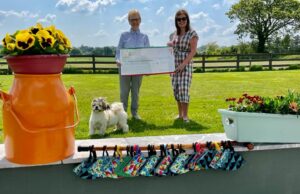
Sr Margaret Kiely RSM handing over a cheque to Katie Hallissey of IMNDA

Lately, the mask-making has entered the fashion stakes – my most recent orders are for weddings. People are requesting masks to match the bridesmaids’ outfits. I have also had requests to match people’s county colour!!

Besides providing me with a purpose, making the masks had an environmental benefit. Cloth masks are washable, re-usable and environmentally friendly. People don’t throw them away. This is definitely something worthwhile.

Though it may be that end of the pandemic may be in sight, thanks to the science, vaccination and good hygiene practice (wash your hands, proper cough etiquette and social distancing), I feel that we will continue to wear masks and observe the regulations for some time to come.

Monday, 21 June, is MND Global Awareness Day. Why not drink ‘tea’ in support of MND?  Further information here.

Stay safe! Keep others safe!!

To make a donation to the work of the IMNDA click here.

11th Sunday in Ordinary Time 2021 – Year B

13 June 2021

Ezekiel 17:22-24              2 Corinthians 5:6-10              Mark 4:26-34

‘Small is Beautiful’

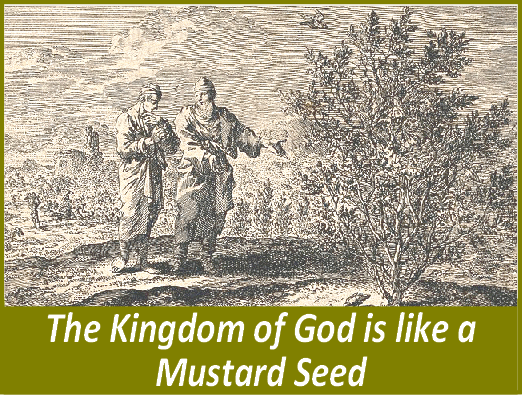
https://upload.wikimedia.org/wikipedia/commons/3/33/Faith_like_a_mustard_seed._Fe_como_semilla_de_mostaza.jpgIn 1973 a German-born economist, E.F. Schumacher, published a famous book on economics, entitled, Small is Beautiful: A Study of Economics as if People Mattered. The book critiqued the dominant ethos of mainstream economic theory, then current, that ‘bigger is better’, and argued in favour of small sustainable technologies, respectful of nature and favouring people above profit. The book became an immediate best-seller. In 1999, The Times Literary Supplement ranked it as one of the most influential books of the twentieth century. Today’s scripture readings remind us that small is not only beautiful; it is God’s chosen way of manifesting his power and establishing his reign on earth. The God we worship is the God who uses tiny things to make big things happen; the God who chooses small beginnings, insignificant events and people to achieve his purposes; the God for whom vulnerability, powerlessness and smallness are blessings rather than curses.

Our first reading from the prophet Ezekiel, who lived in the 6th century BC – a time when the people of Israel were exiled from their homeland and reduced to slavery in Babylon. The prophet employs the metaphor of a small shoot becoming a mighty cedar tree to encourage his disheartened fellow Israelites and keep their hopes alive. He assures them that God has not abandoned them, that he will bring them back to their own land and make them great again:  I will plant it (the shoot) myself on the high mountain of Israel. It will sprout branches and bear fruit’ (Ezekiel 17:23). The shoot refers to God’s faithful remnant, the ‘Anawim or ‘little ones’, those who remained steadfast in the midst of terrible adversity and became the nucleus of the restored Israel after the exile. It was from this faithful remnant that the Messiah came. By their fidelity to prayer and humble submission to God’s will, this remnant, this small shoot, transformed the messianic hope of Israel from a political to a spiritual one. To the ‘anawim’ it was no scandal for the Messiah to come from a poor family and be born in a cattle-shelter.

In today’s gospel passage from St Mark, Jesus employs the image of small seeds producing extraordinary results to explain the growth of God’s reign on earth. Mark’s gospel, like the book of Ezekiel, was written at a time of persecution and crisis to strengthen the faith of the early Church. The two great apostles of Rome, Peter and Paul, were dead. The expected Parousia – Jesus’ Second Coming – hadn’t arrived. Many Christians were abandoning their faith, while self-appointed prophets and teachers were distorting the message of Jesus and creating confusion. The faithful few were wondering if God had abandoned them. It seemed as if the Church was doomed and the Kingdom of God a long way off. In this context Mark recounts five parables of Jesus about the Kingdom of God and how it grows. Two of these parables appear in today’s gospel reading. The first uses the image of seed growing mysteriously by its own inner energies in the dark of the night as well as in the light of day. The second employs the image of a tiny mustard seed developing into a large shrub with wide spreading branches providing a home and shelter for the birds of the air. Both images, taken from nature, highlight the mysterious manner in which God works to achieve his purposes. God is at work even even while we sleep or when we think he is asleep or has abandoned us. ‘Of its own accord the land produces first the shoot, then the ear, then the full grain in the ear’ (Mark 4:28).

We live in a time, not unlike that of the Israelites in exile, or of the early Church at the time of Mark: a time of unforeseen decline for the Irish Church, both in the practice of the faith and its influence on society; a time of general mistrust of religious and civil institutions; a time of confusion and uncertainty. But if God’s Kingdom is like a mustard seed, then the size of our institutional church is not important. What matters is the quality of our witness.  This is the good seed which, in God’s time and God’s way, will yield miraculous results. So, let us not lose hope in the face of adversity. Like the ‘anawim’  of old, let us learn the art of vitality in smallness and increase the quality of our faith and relationships in this seemingly fallow time. Let us work for the coming of the Kingdom even if the desired result is not yet in sight. And let us continue to nurture the seed we have received.

I will end with a short story I came across a few years ago. ‘Many years ago two young people, a man and a woman, were on board a sailing ship, returning to their home in a distant island. The man noticed a little grain of corn at his feet. He picked it up and examined it. ‘Ah, it’s only a single grain’, he said. ‘If I had a sackful, it might be of some use!’ So he threw it away disdainfully. But the woman bent down, picked it up, put it in her pocket, and treasured it till they reached their island home. Then she sowed it. It grew into a plant and yielded a tiny crop, so small as to be laughable. But she sowed that again, and the next time the result was enough to fill a cup. This again she sowed and there was enough to give a few grains to her many friends. So the crop grew and, in the end, yielded an abundant harvest. The little grain of corn was the means of introducing corn to the islands’.

Michael McCabe SMA, Cork, 9 June 2021

SMA INTERNATIONAL NEWS – JUNE 2021

from video for SMA International news
Bishop Bulus Yohanna of Kontagora Diocese

In the June edition of the SMA International News we have reports from Nigeria where we hear about the ongoing violence in the northern part of this country that is disruption the lives of ordinary people and the mission of the Church. 

We hear from Spain, about the first Parish placed into the care of the SMA in Madrid. Then we go to Amsterdam for a report about the SMAs work to care for immigrants, particularly those from Ghana and Nigeria.  The Bulletin concludes with a news roundup of SMA events from around the world.

SMA SUMMER SCHOOL 2021

Dromantine Retreat and Conference Centre


Migrations in Our Common Home: Causes, Effects, and Responses
Since 1984 the SMA has hosted an annual Summer School in Dromantine, Newry, Co Down.  It began as a means of providing ongoing formation for SMA missionaries home on leave from Africa, a way of keeping up with developments in theology, spirituality and the social teaching of the Church. It soon became one of the major events in the SMA calendar. As time went by the Summer School broadened its scope to welcome, not just SMA’s, but also lay people and members of other religious congregations. Many participants came year after year, attracted not only by the high quality of input delivered by speakers but also by Dromantine itself, its beautiful location, mature grounds and the welcome provided by the SMA and the Dromantine staff.

In recent years, the School has focused on issues of Social Justice, with themes such as “Living faith means living justly”, “Living Laudato Si”, and “Faith responding to changing times.” Real issues facing Ireland and the wider world were examined in a faith context and from the perspective of Catholic social teaching.  

View of the Lake at Dromantine

Plans for the 2020 Summer School were, due to Covid-19, first put on hold but then cancelled when lockdown restrictions came into effect. This year as restrictions continue, the 2021 Summer School will, for the first time, move online and be a little shorter than in previous years.

In the past attendance was limited by the capacity of the Dromantine venue which could cater for about 130 participants. While many of those who attended the School in the past will miss being in Dromantine the move online, and Zoom technology, means that more people can attend and that participants need not travel.

The theme for this year’s Summer School is:  Migrations in Our Common Home: Causes, Effects, and Responses.  It will be chaired by Fr Seán Healy, SMA, CEO, Social Justice Ireland. The Speakers at this year’s event are:
Prof John Barry – School of History, Anthropology, Philosophy, Politics and International Relations, Queen’s University, Belfast.
Dr Dug Cubie  – School of Law, University College Cork.
Dr Kevin Hargaden –Jesuit Centre for Faith and Justice, Dublin.  
To view full programme, click here

To Book a Place at the 2021 Summer School Click Here  

just fill in your name and email address and you will then receive a confirmation email shortly after registering.

There is no charge for attending the Summer School although participants may, if they wish, donate to the Mikono Yetu Project in Tanzania. Its mission is “to find new ways of empowering women and girls economically so that they can own and control resources more productively and profitably, while also sustaining the environment to mitigate the negative impacts of climate change.”    For more information and to make a donation click here.

Nigerian Government does nothing to protect its citizens

In a report carried by Agenzia Fides, the Vatican-based News Agency, the Bishop of Sokoto, Bishop Matthew Hassan Kukah, stated that “Nowhere else in the world do people die as in our country. There is no place in the world where citizens can be killed every day without the government showing the slightest sign of empathy or concern for what is happening”. Bishop Kukah was speaking at the Funeral Mass for the late Fr Alphonsus Bello, the priest found dead after being kidnapped on May 20 in the nightly assault on the parish of St Vincent Ferrer in Malumfashi, in Katsina State. Fr Joseph Keke, who is still in the hands of the kidnappers, was kidnapped with him.

“I think the President of Nigeria and several governors can actually turn to Nigerians and say: dear Nigerians, I have sworn that I will not protect you. I will not protect you from foreign invaders, I will not protect you from being killed. I will not protect you from kidnappings, I will not protect you from bandits, I will not protect you from kidnappers”, says the bishop.

The plague of mass kidnapping of students affects children of all religious faiths. On Sunday last, 30 May, over 100 pupils at an Islamic school in Niger state in the northwestern part of Nigeria were kidnapped from a school in Tegina by a group of armed men who arrived on motorcycles.

“Our politicians,” continues Bishop Kukah “have unfortunately not committed themselves to the democratic ideals of integration, diversity, good governance and the implementation of the principles of a democratic society”.

“The politicians”, he added, “had reached out to their supporters and stated that they will institutionalize a theocratic state in Nigeria by creating a Sharia state in Nigeria… Now we have so much bloodshed fueled by false promises”.

“As Christians, regardless of the violence in our society, we must remain faithful to God’s promises. As Christians, we remember that only the cleansing blood of Jesus Christ gives us hope”, the bishop concluded.

Bishop Kukah, in an interview with Aid to the Church in Need (CAN) said that he is in touch with the kidnappers and finds it is difficult to speak with them. “It is one of the most painful experiences, talking and pleading with hardened criminals and murderers.”

Speaking about the Federal Government who have shown little or no inclination to do anything to curb the banditry unleashed throughout the country and are following a pro-Islam policy, he says, “They have no wish to create an egalitarian, integrated and united country. Their focus is the ascendancy of Islam even in a form that over 80% of ordinary Muslims do not support. We are in the throttle of the Salafist variant or strain of Islam.”

The Nigerian Bishops’ Conference had already warned in February (see Fides, 24/2/2021) that “Nigeria is in danger of breaking up due to the serious insecurity that is widespread in the Federation”.

Corpus Christi – The Body & Blood of Christ 2021 – Year B

6 June 2021

Exodus 24:3-8            Hebrews 9:11-15            Mark 14:12-16, 22-26

‘See what you are and become what you see’ (St Augustine)

The Eucharist is the greatest sacrament of the Church. It is, as the Apostolic Exhortation on Consecrated Life states, ‘the heart of the Church’s life’ (CL 95). It is the sacrament of Christ’s permanent presence with us. In the Eucharist, Christ is present in the assembly, in his word but, above all, in the bread and wine transformed into his body and blood shared among us.

During his life on earth we know that Jesus’ favourite way of expressing his love for people, especially for those who were rejected and unloved, was to share meals with them. For the Jews, shared meals were signs of acceptance and friendship. However, the Jews were careful about those with whom they shared meals. They invited only friends or important people. In seeking out sinners and tax collectors, Jesus was challenging their tradition. In eating with sinners, Jesus was making friends with those who had no friends. He was showing them respect and love and drawing them into the family of God. He was letting them see themselves in a new light and become a new people. Instead of a people with no hope, no future, they were God’s beloved children and citizens of his Kingdom.

When we celebrate the Eucharist we are celebrating a meal to which all are invited and where the poor and the marginalised in society are made to feel at home. In the words of Ivan Nicoletto, OSB: ‘At the heart of the Christian faith shines an open table without exclusion, where Christ is the chef, the host, and the food of life. The broken bread and the pouring wine manifests the Divine attitude to welcome especially for the ones who are broken-hearted, neglected, rejected and crushed.’

Eucharist and Communion go together. The Eucharist is God’s communion with us. It is at the same time our communion with one another. God loves us so much that he wants to be with us and wants us to be with him. Love tends towards union. When we love someone we want to be with them always. God desires to be with us in the most complete way possible. This is what happens in the Eucharist. God not only speaks his word to us. He enters into us. He takes possession of our hearts and minds and bodies. He becomes one with us. And he wants to make us one with him. The moment of communion in the Eucharist, when we eat the body of Christ and drink his blood, is the greatest moment of intimacy that can exist between God and us.

However, we cannot be in communion with the Lord without being in communion with one another. Communion is not a private devotion. This recognition of the oneness of all who partake of the Body and Blood of Christ is expressed in several ways in the Mass: in the common acknowledgement that we are sinners, the common responses, the songs of praise, the Gloria, the Creed, the acclamation of faith, the Great Amen, and the kiss of Peace. We act as one body because we are made one body in Christ. St. Augustine was accustomed to say to his Congregation as he held up the Sacred Host: ‘See what you are and become what you see.

The Eucharist ends with a sending on Mission. ‘Go in Peace to love and serve the Lord’.  We have to carry the Eucharist into the world. Just as the Lord has become our food, giving himself completely to us, so, too, we must give of ourselves for the sake of the world. We must become sources of nourishment for the world, as Christ has become a source of nourishment for us. This truth is memorably expressed in a contemporary hymn, based on a prayer attributed to St Theresa of Avila,

‘Christ has no body now but yours, 
no hands but yours,
no feet but yours.
Yours are the eyes through which
Christ’s compassion must look out on the world.
Yours are the feet with which
He is to go about doing good.
Yours are the hands with which
He is to bless us now.’

We become the body of Christ when we receive Christ in Communion, but our mission is to be the Body of Christ for others. What does this mean? It means that, through our bodies, we carry Christ to others. It is our tongues which now speak the Good News to those longing to hear it. It is our feet now that Christ uses to walk the extra mile with people and to seek out those who have gone astray in life and lost their way. The figure of the Crucified Christ on the Cross that used to grace the north wall of SMA Chapel in Maynooth had no feet. The message for all of us who celebrated the Eucharist there was that we are now the feet of Christ. But it is not only our feet we give to Christ but our entire bodies – our hands, our minds and especially our hearts, so that in our touch, our words, our actions, Christ may touch and speak and act, and people may experience the loving embrace of God.

Michael McCabe SMA, Cork, June 2021

Holy Trinity 2021 – Year B

30 May 2021

Ezekiel 17:22–24            2 Corinthians 5:6–10            Mark 4:26–34

One of the great classics of Byzantine iconography is the icon of the Trinity painted by a 15th century Russian monk.  Rublev used an ancient image of the apparition of three angels to Abraham at the oak of Mambre (Genesis 18) to represent the doctrine of the Trinity. Through intersecting circles and vivid colours, blue, green, brown and purple, his icon evokes the perfect communion of love that exists between the three persons in the one Godhead. Employing a language only a great artist could create, this famous icon continues to captivate the imagination of Christians with its beauty and power.

The Trinity of Rublev, Vestitorul Lui, Flickr, CC BY-NC 2.0

The Trinity is the defining doctrine of our Christian faith, the central statement about the kind of God we believe in. We are baptized “in the name of the Father and of the Son and of the Holy Spirit” (Matthew 28:19). We begin our formal and informal prayers with this Trinitarian formula. According to George A Maloney, ‘[I]n the earliest centuries of Christianity theology was a mysticism about the indwelling Trinity, living within and transforming Christians into divinised children of God.’  Hence, belief in the Trinity is not just a dogma to be accepted in faith or a formula to be recited in our liturgy,  but the generative and dynamic core of our Christian way of life.

Yet the great German theologian, Karl Rahner, was convinced that, for the majority of Christians, the doctrine had little or no impact on the day-to-day living out of their faith. If the doctrine of the Trinity is central to Christian faith, why has it had so little impact on our everyday lives. The reason lies in the language in which we learned, from our earliest years, to think and speak of God. Traditionally, God was seen as immutable being: unlimited, all sufficient, perfect, and far removed from the world of creaturely imperfection. The relationship between God and the world was presented as a one-way relationship. God, we learned in catechism class, could not be affected by anything that happens in the world. God was an unmoved mover. This understanding of God as unchangeable perfection is reflected in St John Henry Newman’s beautiful hymn, Abide with Me:

Change and decay in all around I see;
O thou who changest not, abide with me’.

This kind of language can make God appear remote or distant from us. But this is not the God revealed in the Bible – the birthing God of creation; the Spirit God drawing life out of chaos and enabling a universe of creatures to evolve and flourish; God, the Word incarnate, taking on and reshaping our human history. God’s closeness to us is particularly manifest in the life and ministry of Jesus of Nazareth. In him we meet a God who goes in search of men and women and rejoices when a lost son finds his way back to the house of his Father. The parable of the Prodigal Son (Luke 15:11-32) portrays God as a loving Father who responds to human decisions and is affected by them.

The God of the Bible is not remote, aloof, indifferent, self-enclosed, perfect Being but a loving Father who is interested in and cares for all creatures from the smallest to the greatest, a passionate and compassionate God, capable of being deeply moved by the sufferings of his creatures. In the words of Pope Francis, the Scriptures reveal a ‘God of Love who created the universe and generated a people, became flesh, died and rose for us, and, as the Holy Spirit, transforms everything and brings it to fullness’. This is the God who is Father, Son and Spirit.   

Moreover, the doctrine of the Trinity is not just about God’s eternal being. It is as much about us as it is about God, about how God relates with us and how we are called and challenged to relate with one another. As the Australian theologian, Catherine La Cugna, states:
‘The life of God – precisely because God is triune – does not belong to God alone. God who dwells in inaccessible light and eternal glory comes to us in the face of Christ and the activity of the Holy Spirit… The heart of the Christian life is to be united to the God of Jesus Christ by means of a communion with one another [and with all creatures].’

Hence, the doctrine of the Trinity is profoundly relevant to our everyday lives for it is ultimately about what it means to be human persons created in the image of this God of Love. To be human means to be like the God who created us, the God in whom all creatures live and move and have their being, and who are intimately connected with one another. It means to live in relationships of love and respect, not only for our fellow humans, but for all God’s creatures with whom we share the gift of life. We are called to participate fully in the Trinitarian communion of Father, Son and Spirit through our loving communion with one another and, indeed, with all creation. And, as members of the Church, are called to be witnesses of this awesome destiny in a world thirsting for love.

Michael McCabe SMA, Cork, May 2021

Pentecost Sunday 2021 – Year B

23 May 2021
Acts 2:1-11            1Cor 12:3-7            John  20: 19-23
“Receive the Holy Spirit” (John 20:22)

Today we celebrate the final climactic moment of our Easter cycle, the great feast of Pentecost. It may not be quite accurate to speak of this day as the birthday of the Church, but it is certainly the birthday of the Church’s mission – the Church as a Spirit-filled community sent out, in the name of the Risen Christ, to transform the world. The readings today remind us of three important truths about the Church and its mission: first, that the Church is essentially missionary; second, that the Holy Spirit is the principal agent of Mission; and third, that the goal of mission is to create a unity that embraces diversity.

The Church is essentially missionary or, as The Second Vatican Council (1962-1965) expresses it, “missionary by its very nature” (AG, no. 9). Witnessing to and proclaiming the Gospel is the fundamental reason for the existence of the Church. All her members, all who are baptised in the Spirit, are called to be missionaries, not just priests and religious. If the Church ever stopped reaching out to others to witness and proclaim the Gospel of Love, it would cease to be the Church of Christ. In his first Encyclical Letter, The Joy of the Gospel, Pope Francis reminds us that the true Church ‘is a Church that is bruised, hurting and dirty because it has been out on the streets, rather than a Church which is unhealthy from being confined and from clinging to its own security’ (EG, n. 49). The great Protestant theologian, Emile Bunner, employed a striking simile to express this truth when he wrote: ‘the Church exists by mission just as fire exists by burning” (The Word and the World, p. 108). And the fire that burns in the heart of the Church and keeps her alive in mission is the fire of the Holy Spirit as today’s first reading from the Acts of the Apostles makes clear.

The Holy Spirit is the principal agent of this mission. We, the members of the Church, are simply instruments in her hands. We forget this truth at our peril, at the risk of becoming agents of an enterprise that has little or nothing to do with the the promotion of God’s Reign of justice, peace and love. Corrie ten Boom, a Dutch woman famous famous for sheltering Jews from the Nazis during World War II, uses the image of the hand in the glove to express our dependence on the action of the Spirit. She writes: ‘The glove cannot do anything by itself, but when my hand is in it, it can do many things. True, it not the glove, but my hand in the glove that acts. We are gloves. It is the Holy Spirit in us which is the hand, who does the job. We have to make room for the hand so that every finger is filled. The question on Pentecost is not whether God is blessing our own plans and programmes but whether we are open to the great opportunities to which his Spirit calls us’.

Catholics have been accused of sometimes paying mere token respect to the role of the Holy Spirit in the Church. So we should ask ourselves: Do we put more trust in our resources and expertise than in the action of God’s Spirit in our lives and in the lives of those among whom we work? Do we leave enough room in our various ministries for the Spirit, the ‘God of surprises’, the God who chooses the weak to confound the strong, the God whose light invariably enters through the cracks in our lives rather than through our successes and achievements? Pope Francis reminds us that ‘there is no greater freedom than that of allowing oneself to be guided by the Holy Spirit, renouncing the attempt to plan and control everything to the last detail, and instead letting her enlighten, guide and direct us, leading us wherever she wills. The Holy Spirit knows well what is needed in every time and place’ (EG 280). 

The goal of Mission is to create a unity that respects and embraces diversity. Pentecost reverses the confusion of Babel (Cf. Genesis 11: 1-9). On the day of Pentecost, as the first reading tells us, people of different linguistic and cultural backgrounds (Persians, Asians, Romans, Egyptians, Libyans, Cretans and Arabs) were gathered together for Jewish Harvest feast (Shavuot). Because they spoke different languages they were unable to communicate with one another. However, they were all able to understand the message of the Spirit-filled apostles. ‘Surely, they said, all these men speaking are Galileans? How does it happen that each of us hears them in his own language?’ (Acts 2:7-8).

The miracle of Pentecost was a miracle of mutual understanding, a restoration of the unity humanity lost at Babel. Today we might ask what gift of the Spirit, what language do we need so that everybody can understand no matter what their ethnic or linguistic background? Yes, there is such a gift, such a language. It is the language of Love. This is a language that all people understand. For example, everybody understands when you smile. Love is the language of the Spirit, the one language capable of creating a unity that respects diversity.

Fr Michael McCabe SMA, Cork, May 2021

Biodiversity Awareness Campaign: LAUDATOS SI’ WEEK

The Society of African Missions (SMA) and the Sisters of Our Lady of Apostles (OLA)  in collaboration with Elders for Earth, SHEP Earth Aware, and Green Spaces for Health, are running a two-week biodiversity awareness campaign from 17 to 29 May 2021. This campaign coincides with the International Day for Biological Diversity on 22 May as well as Laudato Si’ Week.

We are now in Week Two of the campaign  From the 24th of May, Six Days of Action to conserve and promote biodiversity will take place.  Anybody interested in taking small steps to to protect biodiversity is invited to get involved.  You will need a Facebook Account to do so as the actions will be communicated through a Facebook Group Page.  To participate please register to join the Biodiversity Facebook Group specially set up for this Campaign  – Clink here to register: BIODIVERSITY: Six Days of Action   Then each day at 10.55am go to the  Biodiversity Group Page via the Groups Icon on the top of your Facebook page and then click on the Biodiversity Group Page link – Each day suggestions for actions will be given through a live-feed. 

Below are resources published during the first week of the Campaign.  Please take some time to read or view the video content. 

BIODIVERISTY –  a key concern of Laudato Si’  Click here to read more.  

Integral ecology and Laudato S
A video Presentation by Gerry Forde the SMA Justice Officer

Information and Resources on Biodiversity 

Day one – Monday 17 May: Biodiversity, Food Chains and Food Webs: Click Here 

Day Two –  Tuesday 18 May: What is an Ecosystem? 
Click Here

Day Three – Wednesday 19: Does  Biodiversity Matter?
 Click Her

Day Four – Thursday 20 May:  Community Gardening: The Experience of Green Spaces for Health.  Click Here  

Day Five – Fridays 21 May: Trees, Biodiversity and Community Tree Mapping. Click Here

Additional Resources on Biodiversity

A video series explaining different eco-systems is available on the The Wild Report YouTube Channel:Click Here

A TedEd YouTube video on “Why is biodiversity so important?” by Kim Preshoff is available HERE 

The National Biodiversity Data Centre provides a wealth of information and resources on their website: CLICK HERE

The National Biodiversity Data Centre also host an excellent website about pollinators containing information and resources: CLICK HERE 

Laois County Council provide an excellent guidebook on gardening for biodiversity:  CLICK HERE
Laois County Council has also created an excellent video series on YouTube on gardening for biodiversity: CLICK HERE The National Biodiversity Data Centre website also provide a useful resource page about the Great Yellow Bumble Bee:   CLICK HERE


PENTECOST PARISH PROGRAM.

St Joseph’s SMA Church, Wilton

Sunday (23rd May) is Pentecost Sunday.

Wilton Parish is hosting a special program to mark the occasion. It consists of songs, prayer and reflection on the web-cam at 7.30pm.

We hope you can join us

Via the Parish webcam CLICK HERE   
                                            or via 

                                                     The the play button below which will be live at 7.3-pm on Sunday 23rd.


Ascension of the Lord 2021 – Year B

16 May 2021

Acts 1.1-11            Ephesians 1.17-23            Mark 16.15-20

A couple were married for over 50 years when the husband died after a short illness. Like many others in such a situation, I wonder how the wife felt; probably terribly alone, abandoned, desolate, maybe orphaned. Perhaps, some of us may have had similar feelings at the loss of a loved one.

Certainly, the apostles and disciples felt the same at the death of Jesus. Did they recall his promise when he had said to them ‘I shall see you again and your hearts will be full of joy’. This is rather unlikely if we read some of the post-resurrection accounts. The Feast of the Ascension is not a commemoration of his departure from this world but of his presence in a new way. The resurrection was not simply a reversal of his death and a return to old times. It was a radical transformation of his presence.

The Ascension meant three things for the Apostles;

1) It was an ending. One stage was over and another had begun. Formerly Jesus was with them physically. Now his presence is that of a firm faith knowing he is still working with them.

2) It was a beginning. They are to take the place of Jesus and continue his work. It is like his handing on the baton to them and to us to continue his work.

3) It gave them the assurance that they had a friend not only on earth but also in heaven. That self-same Jesus who was so marvelously kind, compassionate and forgiving to them is now waiting for them in heaven (and for us too!) To die is not to go out into the dark. It is to go to him.

Thus, the Ascension is not a farewell feast; it does not lament the absence of Jesus. Rather it celebrates the new way Christ became present to his people through the gift of his Spirit. For sure, Christ went away from them. They no longer experience his physical presence on earth. But he is closer to them now than he ever was before, and to us. When Jesus was on earth he was limited like us in space and time. This is no longer true of him. He is, so to speak, out and about. He is present to us in an equally powerful but different manner. We can turn to him in any place, in any situation knowing he is there for us. It is important to realize that the apostles and disciples never regretted the departure of Jesus after his Resurrection and Ascension.

In Acts 1.8 our first reading today we heard: ‘you will be my witnesses …even to the ends of the earth’. So today’s Solemnity, like that of Pentecost are feasts of Christian maturity. They are a call to continue Jesus’ mission in today’s world and the difficulties we face there. The power of the Spirit is with us. Jesus warned his disciples to stay in Jerusalem until they were clothed with power from on high, the promise of the Father. It is as if Jesus were saying to the disciples: ‘please don’t claim to be working on my behalf as my witnesses unless you wait for, receive and live out of the power of the Spirit. If not, you will fail’.

We must face here on earth what God asks us to do and keep our feet firmly on the ground. We must set out to bring his gospel, his Good News to the ends of the earth, no matter how we may be ridiculed or made little of.

Rather than seeing the Ascension just as the departure of Jesus, we should see it as the sending of the Church on mission (in place of Jesus). Rather than seeing the Church as an orphan as a result of the Ascension of Jesus it needs to be seen as being given adult status by God, as being given responsibility to witness to Jesus Christ through the power of his Spirit.

Lord Jesus, we believe that you have ascended to be with your Father and that the real meaning of today’s feast is that each of us has been given adult status in your Church to be your witnesses throughout the world. Give us your powerful Holy Spirit to enable us to be effective witnesses of your loving concern for all’. Amen.

Edited from a homily of the late Fr Jim Kirstein, SMA

SMA Novena of Prayer 2021

Our annual SMA National Novena of Prayer in honour of Our Lady takes place from this Friday, 14th May to Saturday, 22nd May.

The Novena Mass will be by webcam at 7.30pm each evening from our Blackrock Road Church and the final Rosary and Mass will be celebrated at Knock Basilica beginning at 2.30pm on Saturday 22nd.

As this is a National Novena we are hopeful that SMA members, friends and sponsors from all over the country will tune in to the webcam Mass every evening in Blackrock Road and our final Mass in Knock. We will have three SMA preachers for the Masses in Blackrock Road (Fathers Paddy O’Rourke, Michael McCabe and Cormac Breathnach).

To join us each evening (7.30pm) in Blackrock Road click here. (the Mass on Saturday, 15 May, will be at 7pm – the usual parish Vigil Mass for Sunday).

Fr Malachy Flanagan SMA receives the Offertory Gifts during the SMA/OLA Eucharistic Celebrations at Knock Basilica

On the final day of the Novena – Saturday 22nd May – we invite you to click on this link at 2.30 to join us for Rosary and Mass from Our Lady’s Basilica Knock. Our Provincial Leader, Fr Malachy Flanagan SMA, will give a video message at 2.55pm.

Even if you are unable to tune in, please join us by praying for all those who have asked to be remembered during the Novena – those who are sick, bereaved, those whose lives have been disrupted by Covid-19, those who have lost their jobs or businesses, grandparents unable to see their children and grandchildren, students preparing for examinations, and those in any other kind of need. 

Loving God, hear our prayers for ourselves, our loved ones and all those who pray at this time through the intercession of Our Lady. Like her, may we be open to your Holy Will and, by doing it, experience the fullness of peace now and for ever. Amen.

I am the servant of the Lord, let what you have said, be done unto me!

THE WORLD OF FINANCE – Pope Francis


Today, when we hear talk of finances, we often feel as if it’s a subject very distant from our day-to-day life. As Francis says, “How far the world of high finance is from the life of the majority of people!” It doesn’t have to be this way. There are ways of bringing the world of high finance closer to ordinary people and, above all, of putting it at the service of all people, not just a small number of speculators. This is what the Pope reminds us about this month: “We still have time to begin a process of global change to practice a different kind of economy, one that is more just, more inclusive and sustainable —and leaves no one behind.” We can all contribute, to a greater or lesser degree, to make this global change possible.  To view the Popes Message click on the play button in the image below – alternatively you can read the Script below.

SCRIPT: “The true economy, the one that creates work, is in crisis. How many people are now unemployed! — But the financial markets have never been as inflated as they are now.  How far away is the world of high finance from the lives of ordinary people! If finance is unregulated, it becomes pure speculation driven by various monetary policies. This Situation is unsustainable. And it is dangerous. So that the poor do not suffer painful consequences from this system, financial speculation must be carefully regulated. Speculation. I want to underline that term.

May finance be a form of service, and an instrument to serve the people, and to care for our common home! We still have time to begin a process of global change to practice a different kind of economy, one that is more just, more inclusive and sustainable —and leaves no one behind. We can do this! And let us pray that those in charge of finance will work with governments to regulate financial markets and protect citizens from its dangers.”


SMA Summer School 2021 – Tanzania PROJECT


This page will contain information about the project in Tanzania run by Sr Regina OLA and a direct link to the Project or OLA Donation page. 

6th Sunday of Easter 2021 – Year B

9 May 2021

Acts 10:25-26, 34-35, 44-48;              1John 4:7-10;              John 15: 9-17

‘Love one another as I have loved you’

In the year 120 AD Aristides, an Athenian philosopher, defended the early Christians in a letter he wrote to the Emperor Hadrian. His words give us a striking picture of their exemplary lives: ‘Christians love one another. They never fail to help widows; they save orphans from those who would hurt them. If one of them has something, he give freely to the one who has nothing. If they see a stranger, Christians take him home and are happy, as though he was a real brother or sister. They don’t consider themselves brother and sister in the usual sense, but brothers and sisters instead through the Spirit of God. And if they hear that one of them is in jail or persecuted for professing the name of their Redeemer, they all give him what he needs… And if there is among them any poor or naked person, they fast two or three days in order to supply the need. They live with much care, justly and soberly as the Lord their God commanded, and they do not declare in the ears of the multitude the kind deeds they do but are careful that no one should take notice of them…. Truly this is a new people and there is something divine in them.’

The great Church historian, Adolph von Harnack, also noted this extraordinary witness of the Early Christians when he wrote: ‘The new language on the lips of Christians was the language of love. But it was more than a language, it was a thing of power and action.’  Clearly, the Early Christian community had taken to heart Jesus’ final instruction to his disciples on the eve of his death: ‘Love one another as I have loved you’, an instruction repeated twice in today’s gospel. We usually remember the last words spoken of those who were close to us. Jesus’ disciples not only remembered them: they practised them; they lived them. As the testimony of Aristides shows, their love was not mere words or pious gestures, but a practical love, expressed in deeds of caring service – service especially to the poor and those most in need. It was the kind of love Augustine referred to when he wrote: ‘It has hands to help others. It has feet to hasten to the poor and needy. It has eyes to see misery and want. It has ears to hear the sighs and sorrows of people. That is what love looks like’. Sadly, as Mahatma Gandhi has observed, and as history testifies, many who have dared to call themselves Christian have failed to abide in the home of love and to emulate the admirable example of the early Christians. By their hatreds and prejudices, their violence and divisions, they have given, and continue to give, counter-witness to the explicit command of Jesus and to the God who is Love (as today’s Second Reading states).

In contemporary parlance, love is, as Pope Benedict XVI pointed out in his first encyclical letter, God is Love, a much debased and misused word, a word employed to cover up what is the very opposite of love – domination and exploitation. The love Jesus wants his disciples to practice is, in the words of von Harnack (cited above) ‘a thing of power and action’, a reflection of that divine energy that brought the universe into being. It is a love that is ever faithful and constant. The only adequate measure of this love is the enduring love of God the Father for all his children: ‘I have loved you with an everlasting love and am therefore constant in my affection for you’ (Jer 31:3). 

The love that has its origin in God is a love that is universal and unrestricted in scope, open to all, irrespective of class or ethnicity. This truth is pointedly illustrated in today’s first reading from the Acts of he Apostles, which tells the story of the reception and baptism of Cornelius and his family into the Christian community. The story of Cornelius is not primarily a conversion story. It is rather the story of how the early Christians are led by the Spirit to overcome their innate prejudice and antipathy to the Gentiles, and to accept them into their  community. As Peter came to realise, ‘the truth is… that God does not have favourites, but that anybody of any nationality who fears God and does what is right is acceptable to him’ (Acts 10:34-35). The truth that Peter, and the early Church, came to realise is that God loves and cares for everyone, that his Spirit is present and active in the strangest places, in and through persons and situations where we might least expect her to be present, situations that invariably take us by surprise. 

The spiritual journey that led Peter to welcome Cornelius into the Christian family was a journey of discovery into the outreaches of divine love. It is a journey that remains unfinished, a journey we are all called to make over and over again, as we strive to live out, in the circumstances of our time and place, Jesus’ great commandment of love. Love is the one and only power that will truly transform the world and draw it home to its divine source, the God of Love. In the stirring words of Teilhard de Chardin, ‘Someday, after mastering the winds, the waves, the tides and gravity, we shall harness for God the energies of love, and then, for the second time in the history of the world, humans will discover fire’.

Michael McCabe SMA, cork, May 2021

SMA NEWS – May 2021

Welcome to the May edition of the SMA International News Programme.

This month we hear a report from Ghana about the empowerment of people with disabilities. Then we move to Kenya to hear about the opening of a new Parish in Lodwar Diocese near the border with Uganda.  Finally we go to the Philippines where the 500th Anniversary of the Church is being celebrated. From here we are told about the transfer of the SMA House of Formation from Quezon City  to Silang, Cavite. 

Indian Catholic schools become hospitals for Covid patients

Image by Farkhod Vakhob from Pixabay
Coronavirus: Pixabay License CC

A Report from AGENZIA FIDES, the Vatican News Agency for the Congregation for the Evangelization of Peoples, is reporting that the Archdiocese of Bangalore, Karnataka State in southern India, has decided to temporarily transform Catholic schools into hospitals for patients affected by Covid-19. Archbishop Peter Machado decided to do this after noting the difficulties in managing the emergency in Catholic hospitals and public structures.

The explosion of the second wave of Covid in India has paralyzed the health system. Across India there is a shortage of beds, oxygen and medicines. “Our initiative to make school facilities available can help alleviate the stress on hospitals in managing the health crisis in the country”, the Archbishop told Fides. “We appreciate the tireless and selfless service rendered in the most difficult circumstances by doctors and nurses, Catholics and non-Catholics, and we want to offer all the help and support possible”.

The Archdiocese and the Catholic hospital network have also launched a telephone helpline to reach the victims and their relatives, providing information on the management of the disease, the availability of beds and oxygen. In this way, patients will be directed to temporary Covid assistance centres, those set up in school buildings and other structures, especially dedicated to those who are on the road to recovery after initial therapeutic treatment, thus relieving the pressure on hospitals.  The Archdiocese makes a school available to each hospital in order to set up a post-Covid care centre. The “Azim Premji” Foundation offered advice and financial support.

antigen_testing_centre_Warora_Maharashtra_India Wikimedia

Since last year, Christian hospitals in Bangalore have been at the forefront in the fight against the pandemic. Father Paul Parathazham, director of St John’s Medical College Hospital in Bangalore, expressed deep concern over the rapidly growing number of infected people, which is causing enormous stress on medical facilities.

We should prepare for greater challenges if the current wave does not decrease”, he told Fides. In particular, the private network of ‘Christian Mission Hospitals’ has joined the state government in fighting the pandemic using its own resources, “serving the poorest and most marginalized people and not only in Bangalore but also throughout Karnataka State”, Sister Gracy Thomas, superior at St Martha’s Hospital, Bangalore, told Fides. (Agenzia Fides, 28/4/2021)

5th Sunday of Easter 2021 – Year B

2 May 2021

Acts 9:26-31
1 John 3:18-24
John 15:1-8

A young man in his twenties had got into bad company, drinking heavily and taking other drugs. He was warned by his employer that if his work did not improve, he would be made redundant. His life was a mess. About this time he met a young woman and they shared a meal. She realized what was going on in his life as they shared their experiences. She refused to go out a second time as she was not happy with his lifestyle. But she decided to accept provided he showed signs of change. After that second date, he knew she might be the one he was looking for. As they became closer friends she told him clearly that unless he gave up drugs and heavy drinking she would end their friendship. Bit by bit he did change and they are now engaged. It was his relationship with her and her understanding that ultimately bore fruit. However, it was a process which took time.

Today’s gospel is also about relationships, communion and friendship. Just as without the help of his girlfriend the young man might have continued his disastrous life, Jesus is telling us that even more so, we will not have the deep joy and peace we seek unless we are in a deep personal relationship with him and his Father. We will not be true disciples of Jesus if we remain far from him and don’t have his value system. Sadly, many Christians think that their religion is about keeping the commandments and if they do more good than bad in life they will go to heaven. For sure we have commandments and laws to guide us but ultimately Christianity is a Person, Jesus Christ and our relationship with him. Then the commandments will take their proper place. I can go to Mass on Sunday, pray and do good works which are very good actions. But I can miss out on the essential fact of Christianity, my relationship to Jesus, the Father, the Spirit and to my fellow human beings. Laws in themselves don’t give life.

We know deep down that life is about people, and people are about relationships, and relationships are about communication, sharing, forgiveness, all of which result in real love and friendship. Sometimes people who are lonely, ageing, seek for something or someone to relate too. We may know people who live alone and who only have a cat or dog for company. But their need for a relationship of some kind is vital for them.

In the Christian life solidarity or a deep relationship with Jesus is the condition for bearing fruit. In the Old Testament there are a number of times when Israel is described as the vine planted by Yahweh. Sadly, it often bore sour grapes because it had cut itself off from Yahweh. It did this by following false gods, worshipping idols of the surrounding peoples. Because it had abandoned Yahweh it got into all kinds of trouble. Eventually the Israelites were exiled for 70 years.

When we as Christians turn aside from worshipping God we naturally seek other gods to replace him. These maybe the gods of pleasure, money, status, drugs, sex or drink etc in a way that these are given a far too great importance in our lives. Usually at this stage we feel we don’t need God. Our own natural abilities will see us through whatever comes up in life. Yet Jesus today says very clearly, using the image of the vine that ‘cut off from him, we can do nothing’. The choice is ours. We can allow God to rule our lives or we feel we don’t need God. If we are trying to be faithful to God, he will prune or purify us in the sense that he will reveal to us what is not life-giving in our lives for ourselves and for those we relate to.

The image of the vine sketches a series of relationships of love which is the bond uniting the Father, Son and the disciples with each other. The key relationship is between Jesus and the disciples.

There is another beautiful image in today’s gospel, that of the ‘home’. Jesus says ‘make your home in me, as I make mine in you’. Isn’t he great to want to do this? A man was invited out to a business dinner by people he didn’t know too well. Obviously, he dressed fairly formally. During the meal with people he did not know well, the conversation was very polite and all were a bit reserved. Then when he got home, he immediately changed into more comfortable clothes and slippers. He relaxed in an easy chair and chatted with his wife and family without having to watch his words. He was ‘at home’, he could relax and be himself. That is the kind of relationship Jesus is inviting to. He wants us to relax in his presence. When we pray we can tell him exactly how we feel or share our problems honestly knowing he will hear us with great love and compassion. We don’t need to put on any airs or graces. We can be ‘at home’ with him as he invites us to be.

Lord Jesus, thank you for inviting us into a close relationship, a deep friendship with you. Help us to realize that only you can fulfil our deepest needs. May we express our gratitude to you by the way we reach out to all others, especially those in greatest need of our help and compassion. Amen”.

This is an edited homily written by the late Fr James Kirstein SMA (RIP)

Click on the play button below to listen to an alternative homily from Fr Tom Casey SMA.

SMA SUMMER SCHOOL 2021 – date for your Diary


This year the SMA Summer School will take place on-line over a one and a half day period.  Here we bring you advance notice of the event which will take place in July.  Please mark this date in your Diary.  Registration will open at the beginning of June and be available via this website.  The event will be free of charge however, participants may, if they wish make a donation to a Charity that will be nominated during the registration Period. 


PLANTING SEEDS

As A Follow up to yesterday’s focus on Earth Day – today it is on planting seeds.  The video below shows seeds being blessed by Fr Fergus Tuohy SMA and then with the help of Fr Tom Kearney SMA being planted in the Wilton Community Garden.

Wilton Justice Group had, in conjunction with Wilton Parish, hoped to hold a Planting Sunday during which parishioners attending Mass would plant seeds in the Church grounds and also be encouraged to do so at home.  Part of the plan was to ask parishioners to photograph their plants when they grew or came to fruit and that these would be displayed in Church during the October Harvest Mass. 

Due to Covid-19 restrictions these ideas could not happen as planned so instead this video and the one published yesterday were made.  We hope that you will plant seeds in your garden especially those that will support biodiversity and provide food for pollinators such as Bees upon whom we rely for much of the food we eat.  We still hope you will send photographs to [email protected]   To view video click on the play icon below.  


4th Sunday of Easter 2021 – Year B – Vocations’ Sunday

https://upload.wikimedia.org/wikipedia/commons/7/76/StJohnsAshfield_StainedGlass_GoodShepherd_Portrait.jpg
StJohnsAshfield StainedGlass GoodShepherd Portrait.jpg

25 April 2021 – Good Shepherd Sunday

Acts 4:8-12          1 John 3:1-2          John 10:11-18

‘The Good Shepherd is the one who lays down his life for his sheep’ (John 10:11)

Today, the World Day of Prayer for Vocations, we are invited to reflect on the meaning of God’s call and to pray for vocations to the service of the Church and its mission. To help us reflect on the meaning of vocation – a call to serve others – the Church, in today’s Gospel, presents us with the figure of Jesus, the Good Shepherd.

In biblical times there were two kinds of shepherds. There was the hired hand for whom minding the sheep was no more than a job. He would move from one flock to another depending on the conditions of service, but would never dream of risking his life for the sheep. If he saw wolves or thieves approaching, he would flee for dear life and leave the flock to the mercy of the marauders. Then there was the shepherd-owner of the flock who stayed with the same flock all his life. He knew every sheep in his flock individually. He could call each one by name and relate the life story of each one – when and where it was born, the difficulties it had gone through, its temperament and particular traits.

The Shepherd-Owner was devoted to his sheep. He knew the one likely to lag behind the others on a long trek, and he would lift it up and carry it on his shoulders or in his arms. He knew the one that was likely to stray from the flock and kept his eye out for it when passing through dangerous terrain. When attacked by wolves or thieves, he would fight to protect his sheep and even lay down his life for them.

The expression laying down his life for his sheep comes from the practice in Israel of keeping the sheep in an enclosed space with just a narrow opening for the sheep to go in and out. At night, the shepherd would lie down and stretch his body across the opening so that the sheep would not wander out or wolves enter in. If one of the flock went missing, he would climb mountains and hills looking for it, calling out its name. And whether the missing sheep had fallen into a pit or was trapped in a bush of thorns, as soon as it heard the voice of its master, it would bleat and the shepherd would go and rescue it.

Jesus is the Good Shepherd par excellence. He laid down his life for love of us.  As St John puts it: ‘Having loved those who were his own in the world, he loved them to the end (Jn 13:1). In a culture in which leaders ‘made their authority felt’ and insisted on others serving them obsequiously, Jesus modeled a leadership of loving service without conditions or limits. To illustrate what it meant to be a ‘Good Shepherd’ and give one’s life in the service of others, he washed his disciples’ feet – the action of a slave! The Good Shepherd model of leadership is still profoundly counter-cultural. The nineteenth century Italian poet, Hugo Bassi, expresses this sacrificial quality of Christian service in the following verse:

‘Measure thy life by loss and not by gain;
Not by the wine drunk, but by the wine poured forth;
For love’s strength standeth in love’s sacrifice
And who so suffers most hath most to give’

This is the model of leadership that all Church ministers, clerical and lay, are called and challenged to emulate today. When people see that their leaders are prepared to pour out their lives in truly loving and caring service, they too will be inspired and empowered to serve one another in love. I will end with a beautiful prayer, said in time of danger or distress (such as the time in which we now live), that spells out the meaning of Christian service:

‘Open our eyes to the needs of all. Inspire us with words and deeds to comfort those who labour and are overburdened. Keep our service of others faithful to the example of Christ. Let your Church be a living witness to truth and freedom, to justice and peace, that all people may be lifted up by the hope of a world made new.’

Let us pray for all involved the service of leadership in the Church today that they may display the qualities of the Good Shepherd, not those of the hired hand. Amen.

Michael McCabe SMA

RESTORE OUR EARTH – Earth Day 2021

April 22nd is Earth Day and the theme for 2021 is “Restore our Earth”.   This day is all about reducing our environmental footprint and fixing the damage we’ve already done so that we can have a clean and healthy environment.  

There are many ways and things we can do to restore and repair the damage done – we can support campaigns learn more about ways to protect nature and by not using pesticides, weed-killers etc.

This year Wilton Justice Group have focused on one simple way that we can do something worthwhile in our own homes.  Now that the weather is beginning to improve many of us want to get back in the garden.  This short video from Wilton Justice Group tells how we can restore and protect biodiversity in the garden which is literally – our most local environment.   To view click on the play button below. 


Fr Leo Silke SMA – Funeral homily

Fr Leo Silke, the oldest member of the Irish Province, passed, unexpectedly, to his eternal reward on the evening of Friday, 16 April 2021. Due to Covid-19 government restrictions, he was buried after a private Funeral Mass in St Joseph’s SMA Church, Wilton, Cork, on Monday, 19 April. Fr Malachy Flanagan, SMA Provincial Leader, celebrated the Funeral Mass and Fr Colum O’Shea SMA was the homilist. Following is an edited version of that homily.

I have good reason to remember very well the first time I met Leo. It was around 6pm on the second Sunday of September 1999, at the SMA House in Dublin. It was All-Ireland Sunday and Cork had defeated their old rivals Kilkenny by the narrowest of margins, one point! Poor Leo was in no form to be meeting anyone from Cork. I must confess that I had pity on this ‘poor Kilkenny man’. It was only when I took up residence here in Wilton about 5 years ago that I realised Leo was neither poor nor a Kilkenny man, but a Carlow man, and a very proud one at that.

He was very proud of his roots in beautiful Borris, Co Carlow. It was in Borris that Leo was born and grew up in. It is where he received a good grounding in the faith in the Silke family home, and it was here that the seeds of the missionary vocation were planted and nourished.

In 2002 on the occasion of his Golden Jubilee, Leo spoke the following words, “Priests come from real families, they belong to real parishes, and they have real friends. I became a priest from a background in which there was a deep appreciation of all that the priest did, and of his vital ministry in the life of the Church.”

Leo was very proud of his roots in Borris and very proud of the Silke clan. And you his relations and friends were very good to Fr Leo. You were good for keeping in contact and I know he used to look forward to and enjoy the family gatherings at Carrigaline, Co Cork.

When Leo entered the SMA Novitiate at Cloughballymore, Co Galway, in September 1946 he was not the first Borris man to do so. He was following in the footsteps of two other SMA priests, Fr Tommy Lennon and Fr Tom Gorman. All now gone to their eternal reward. I don’t know if there is another town of that size that can boast of three SMAs and all three living a couple of doors from each other on the same street. And they were three great men who made a great contribution to the missionary effort not only in Africa but also in Argentina, England and Ireland. They are now reunited once more in heaven.

Leo was ordained a priest on 18 June 1952. A day later his first cousin, Fr John Silke, was ordained for Raphoe diocese.

Later in 1952, Leo departed for Nigeria and ministered for 33 years in what is now the Archdiocese of Jos. Some the places he worked had rather exotic names, such as, Shendam, Kwande, Pankshin, Zawan and Bukuru. He enjoyed his years in Nigeria, was happy there and was proficient in the local Hausa language. In 1986 he was advised, on health grounds, that he could not return to Africa.

So he took up an appointment in the Archdiocese of Westminster where he served for the next 18 years. He is still fondly remembered in the parishes he served in. He was particularly appreciated for his ministry to the sick especially while Chaplain to Mount Vernon Hospital and Michael Sobel House, which cares for those suffering from cancer. In 2005 he retired and took up residence here in Wilton.

In his early years of retirement, he celebrated weekly Masses at a nearby nursing home and St Joseph’s convent, Model Farm Road. He kept that up as long as he was able to.

In spite of his years he was very much into IT and he loved trying out new gadgets that were advertised in the papers. He had a good sense of humour and a positive attitude to life. These and his daily dose of honey contributed to his longevity.

Just last week I came across, in an SMA publication, a definition of ‘attitude’ which I think applies to Leo. Imagine Leo with a shirt and written on the shirt the sentence; “I am not 93 years old; I am sweet 16 with 77 years of experience.”

He was always young at heart; he was a rogue and a charmer and had many admirers and friends.

While he had a grá for the GAA, especially the Kilkenny hurlers and Carlow footballers, he was interested in a variety of sports. In his youth he excelled at handball, he was a champion handball player. Something else about the good man was his decisiveness. He also had a stubborn streak. When the time came to make a decision, he made it. He decided when it was time to retire; he decided when to give up driving; last November he decided it was time to move to our Nursing unit at St Theresa’s, SMA House, Blackrock Road.

He was well looked after and much loved by everyone here in Wilton. There were two very fine HSE health care workers who used to attend to him three times a week. We, and they, were sad to see him go. It was a big decision but Leo knew it was time to move. He settled very well in St Theresa’s and got great care there and plenty of TLC. These are not easy decisions to make but it makes life a lot easier for everyone when others don’t have to make these decisions for you.

This is Easter time in the Church’s calendar. It is resurrection time. It is Spring time and time for new life. Leo has done his Holy Week, he carried his cross as best he could, he has experienced death and is now enjoying the fruits of Christ’s resurrection. This is what we profess, what Fr Leo professed, when we say, “We look forward to the resurrection of the dead and the life of the world to come.” Life has changed for Fr Leo, not ended.

I have no doubt that when the Lord called Leo last Friday night that he was ready to answer the call, as ready as he was way back many years ago in Borris when the Lord invited him to, “Go out to the whole world; proclaim the Good News to all creation.

On Friday night last as he departed this life he would have heard these or similar reassuring words, “Come you whom my Father has blessed, take for your heritage the kingdom prepared for you since the foundation of the world.”

Fr Leo Silke SMA, RIP

Funeral Mass for Fr Leo Silke SMA will take place at 12 noon on Monday, 19 April. Due to government restrictions it is strictly private. Click here Parish Webcam to join in the celebration of the Mass.

The Irish Province of the Society of African Missions (SMA) is mourning the death of their oldest member, Fr Leo Silke, which took place on Friday evening, 16 April 2021, in the St Theresa’s Nursing Unit, SMA House, Blackrock Road, Cork.

Fr Leo, a native of Borris, Co Carlow, was 93 last February and had served 33 years as a missionary in the then Diocese of Jos in Nigeria when serious ill health forced his departure from Africa. After recovering from surgery he ministered for 18 more years in the Archdiocese of Westminster, London, England. From 2005 until 2020, he had an active retirement in the SMA House, Wilton, Cork. In November last year, advancing ill health required that he move to the SMA Nursing Unit in Blackrock Road where he died peacefully with nursing staff and some of the SMA community at his side.

The son of the late Michael and Teresa (Née McGoldrick) Silke, Leo was one of a family of seven. His sister Mona and brothers Desmond, Brendan, Donal, Vincent and Declan all predeceased him. He attended primary school in Borris and for his secondary schooling he attended St Joseph’s Academy, Bagenalstown, Co Carlow (1941-’46).

Leo studied for the SMA at their Probation Hosue in Kilcolgan, Co Galway and in the African Missions Major seminary at Deomantine, Newry, Co Down. During his years in the seminary, Leo was a noted handball player. He was ordained in Newry Cathedral by the Bishop of Dromore, Bishop Eugene O’Doherty, on 18 June 1952. Four months later he was one of the first SMA priests to fly into Kano Airport in the north of Nigeria. Up to that time, SMAs travelled from Liverpool by boat to their missions in West Africa. For the next 33 years, he served in what is now the Archdiocese of Jos in Plateau State.

In 2002, while celebrating the Golden Jubilee of his Priestly Ordination, Fr Leo traced his vocation, first of all, to his parents and siblings, all of whom have predeceased him. He also made reference to his first contact with the SMA: “Fr Tom Lennon SMA lived three doors away from me and Fr Tom Gorman lived two doors away.” I’m sure they are all now reunited in their heavenly home.

A more complete Obituary will be published in due course.

Funeral arrangements: In accordance with Government Covid-19 regulations, Fr Leo’s Funeral Mass will be strictly private.

Rejoice, the Lord has truly Risen! Alleluia!

May Fr Leo rest in peace!

3rd Sunday of Easter 2021 – Year B

THE RISEN JESUS APPEARS TO HIS APOSTLES - CC

18 April 2021

Witnesses to the Peace of the Risen Christ

Acts 3:13-15, 17 – 19;          1 John 2:1-5a;          Luke 24:35-48

During the weeks after Easter, the eyes of Christians turn to a rough-hewn doorway that leads into an empty tomb. Rolled to one side is a huge boulder that was meant to bar the way and make the tomb impregnable. Now that sealed tomb is forever open! Not far away from that empty tomb, among a network of narrow streets in Jerusalem,  is a house with the door bolted – a ‘safe house’ where the disciples of Jesus were hiding for fear of being arrested and killed like their master.

It is easy for us today to identify with the feelings of the quarantined disciples of Jesus. ‘Locked in’ captures the condition of many people in our world today. We think of the many victims of poverty, oppression and discrimination, trafficking, those confined by sickness or disability, those walled behind prisons of anger and fear, those caught in the insidious web of depression, unable to find an exit. We count ourselves among the millions reluctantly enduring an enforced quarantine for fear of a relentless Covid 19 pandemic that continues to hold us captive.

Today’s gospel speaks powerfully to all who find themselves locked in, either physically or psychologically. The ‘locked in’ disciples have a visitor. Their Master, now risen, comes to them in their place of hiding, behind closed doors. As recounted by Luke, it is while the two disciples, who had met the risen Jesus on the road to Emmaus, are telling their companions about their encounter that ‘Jesus himself stood among them and said Peace be with you”’ (Lk 24:37). They can’t believe the evidence of their eyes and think they are seeing a ghost. Even when Jesus shows them the marks of his passion on his flesh, they remain dumbfounded. They even forget their manners! He has to ask them for something to eat. The passage ends with Jesus opening their minds to the meaning of the Scriptures and commissioning them to be be his witnesses to all the nations, beginning from Jerusalem.

We note how the Risen Christ gradually breaks through, not merely the physical barrier of their hiding place, but the much greater psychological barriers of their fears, doubts, guilt and confusion with his assuring presence, his gift of peace, his empowering words and his commissioning of them to be his witnesses. It is the same way that our Risen Lord breaks through the barriers that continue to hold us captive today, whether they be barriers created by others or barriers of our own making. And he, likewise, empowers us with his presence and peace and commissions us to be his witnesses and to share his peace with all peoples.

We may ask: What is this gift of peace that Christ gives us and that empowers us to be his witnesses? It is, first of all, an enduring serenity of spirit, even in the midst of danger and uncertainty, a serenity based on the victory of Christ over all the powers of darkness and evil in the world. It is a serenity that comes from knowing that, as St Paul reminds us, nothing can now separate us from the love of God manifest in Christ. It is the fruit of God’s Spirit at work among us. It signifies, not merely the absence of those things that keep us locked behind closed doors, but the full presence of harmony and integrity in our personal lives, in society, and in the created world. It implies wholeness, being fully healed so that we are ‘at one’ with God, with self, with others, and with all created things. It is the consummation of the marriage of heaven and earth. And it is this gift we are called and commissioned to share with all nations. Indeed, we cannot help but share it when we have experienced it.

I end with a short poem by the Anglican theologian and poet, John V Taylor, in which he describes the great missionary challenge of the Risen Christ to his disciples:

‘This is the visitor who has come to stay,
This city, the kingdom he will not surrender.
Cut through the cords of your own cowardice,
then out once more with him, if eyes can bear
the blinding sunlight of the third morning;
take up the quarrel of his undying truth
in the give and take of the streets, the cut and thrust
of this tempestuous marriage of earth and heaven
which human will can never put asunder.’

Today’s gospel challenges us to cut through ‘the cords’’ of our fears and hesitations and go out with our Risen Lord into ‘the blinding sunlight of the third morning’ to take up again ‘the quarrel of his undying truth’.

Let us pray
Compassionate and loving Lord, you promised to leave us your peace, a peace unlike that which the world offers to us.  Father, lead us all to that peace.  Help us to trust in your living word and to do what you ask of us.  Grant us a confident faith – one that looks to the light rather than at the darkness – one that dares to enter the turmoil of the world – knowing that you are making the world new. Amen.

Fr Michael McCabe SMA, April 2021

Easter in Kolowaré, Togo

Easter 2021! A special and memorable day. In front of our church in Kolowaré we have two new “washbasins”, the latest type, commonly known as Veronica buckets [see picture]. Two people can use each one at the same time. And hold on tight: “gift from Pope Francis” is marked on them. The Sokodé diocesan Caritas-OCDI presented a project to Rome, who responded favourably.

Thus, several parishes were able to benefit from basins, to help protect themselves from Covid. Here in Kolowaré, we provided 300 masks and a box of soap for the parishioners. A beautiful gesture of communion with our diocese. And we all celebrated! Easter Sunday Mass began with a solemn procession with gifts (food etc.) which the people donated and which the Parish Council distributed after the celebration, with special attention to the most disadvantaged. After the Mass we had a village ‘lunch’ for everyone, including our special guests, those young adults and others who were baptized at the Easter Vigil.

Care of the most vulnerable
The Kolowaré health centre has been caring for HIV-positive patients for years, with particular attention to children, young people and their families, or rather the extended family. Because, often these patients are all related.

The Centre brings them together, several times a year, for 10-day sessions at a time; to control the disease, provide them with adequate food and care, enabling them to live together, to socialize. Given the attention, seriousness, and commitment that the Centre has taken for years towards these patients, the Kindermissionwerk, an NGO connected to the Catholic Church in Germany, recently offered its support with a team of specialists to support these vulnerable young people and their families. Their programme, which will last for two years at a time, was launched in January and after a break-in, it is now fully operational. They are covering the salaries etc. for a number of staff, including four nurses (two women and two men) and a psychologist.

Yadé Village
On Easter Wednesday, 7 April 2021, with my diocesan assistant, Father Bruno Espoir, Iroko (the manager of the company who does our boreholes and wells) and Father Raphaël Tchassiwa SMA, parish priest of Tchébébé, we travelled to Yadé, his village of origin, about a hundred kilometers from Kolowaré. On the way we called to greet Father Alexis Bassoma SMA, PP of Awangelo, and the Catechist Sisters in Yadé. We then left the tarred road to take a track in the middle of the woods before arriving at the village. One big family was there to welcome us, father, mother, uncles and a large group of children. The village had asked for a well. And we had come to finalize the project. Since there is electricity in the village, we will make a borehole, with a submerged pump which will bring the water to a water tower, from which the water will descend to a tank with taps to draw water. Before leaving, they offer us a chicken.

Oasis of love
On the way back, we stopped at Amaoudè to visit the new Centre that cares for the mentally ill. I was there ten years ago, when they needed our help to get a well. The project was at its beginnings, and everything had to be built. Thanks to the help of an Italian NGO, Novara Centre, a borehole was dug and a water tower constructed. The Italian Bishops’ Conference then built the Centre, which is named: Oasis of love.

The centre accommodates 120 patients, under the direction of Sister Rolande. She showed us around the different sections: women, men, workshops, leisure space, a chapel. Iroko then takes us to see the borehole and water tower he constructed all those years ago! Still active and operational.

Before leaving we leave a little gift at the Centre: the chicken received at Yadé!

Fr Silvano Galli SMA (Italian SMA)

Fr Don Burke SMA – Funeral Homily

Fr Don Burke SMA : 1933 - 2021

Homily at the Funeral Service for the late Fr Daniel (Don) Burke SMA
Good Friday, 2 April 2021 – St Joseph’s SMA Church, Wilton, Cork

Fr Don Burke SMA died peacefully in St Theresa’s Nursing Unit at the SMA House, Blackrock Road, Cork, on the evening of Spy Wednesday, 31 March 2021. He celebrated his 88th birthday on 4 March last. Following reposing in the Community Chapel, his remains were brought to St Joseph’s SMA Church, Wilton, on Good Friday morning for a Funeral Service followed by burial in the adjoining SMA cemetery. As it is not permitted to celebrate Mass on Good Friday, a Service of the Word was led by the SMA Provincial Superior, Fr Malachy Flanagan. Miss Niamh Roe provided music for the Service.

The following is an edited version of the homily delivered by Fr Anthony Kelly, SMA Provincial Councillor.

Isaiah 61:1-3          Romans 6:3-4, 8-9          Mark 15:33-39

Don Burke was in the 60th year of his Priesthood in the Society of African Missions (SMA) when he died last Wednesday evening.

His life as a missionary priest can be divided into 4 parts: 22 years in Nigeria; 9 years in Poland; 18 years in Zambia and 9 years in retirement in Cork. His retirement included a short period in our SMA Parish Walthamstow in London. Don and I lived and worked together in Zambia so I knew him well from that period of his life.

I had many a good argument with Don, and from what I hear I was not the only one. But we always got over them quickly.

I often wondered why he had such rows or arguments. I think the main reason was because Don was so passionate about things. When he got something into his head he kept at it until he made it work out. A very important thing about those rows was that they didn’t last long. Don didn’t keep grudges. Usually we had our row in the morning and by lunchtime it was all over as if nothing had happened.

Don Burke who was born in Waterford in 1933. After his Leaving Cert he has spent almost four years working with the ESB in his native Waterford. Answering the Call to priesthood, following in the steps of his brother Fr Maurice (Mossie), Don entered the SMA Novitiate at Cloughballymore, Co Galway in September 1955, at the age of 22.

Having completed his Philosophy and Theology studies in the SMA major seminary at Dromantine, Newry, he was ordained on 10 December 1961.

Nigeria: Dons’ first mission appointment was to Lagos in 1962 where he served for more than 22 years. He served initially in Mushin and Shomolu. Both Mushin and Shomolu were very poor areas, and Don was quickly exposed to the extreme poverty of the people and the social problems. The major problem was the large numbers of unemployed youths who had come from rural areas without any skills looking for non-existent jobs. In response to this situation, Don established what became known as Boys Town to help train these youth in various skills. Carpentry, plumbing, farming and enable them to integrate back into their communities with a trade. Don is best known in Lagos for this pioneering work with Boys Town, Ipaja.

Don had a great command of the Yoruba language and his nickname among the youth was Fr ‘Olufemi’ Burke. Olufemi means ‘God Loves me’.

Today’s first Reading from Isaiah give us a glimpse of the motivation behind Dons’ life as a missionary priest as he tried to serve the poor. We know that it was this same passage that Jesus quoted from when he gave us his manifesto at the beginning of his public ministry

‘The spirit of the Lord is upon me, because Yahweh has anointed me to bring good news to the poor’.

When we reflect on the missionary life of Don Burke we see that he truly lived out that reading. His main focus was to bring Good news to the Poor and freedom through skills and education. This he did also in Zambia.

Poland: In spite of all the good work Don was doing in Lagos for the poor, he was approached by the SMA Superior General in Rome – in 1984 – to be part of an international team to begin the task for re-establishing the SMA in Poland. Don went about learning a new language and had to adapt to living under the constraints of the communist regime. Again, Don had great energy and zeal for this important work and set about recruiting students for missionary priesthood with the SMA. He did not take any short cuts or easy route for this demanding work. He is known for his involvement in the pilgrimage walks to the Shrine of Our Lady of Czestochowa a journey which could take up to three weeks to complete where he mingled with thousands of catholic youth as they gave expression to their faith. Don also acquired a nickname in Polish – Kazik – which referred to St Casimir, on whose feast day (4 March), Don was born.

The SMA Polish Province bears testament to his dedication and witness. Today there are Polish SMA priests serving as missionaries in Central Africa. Egypt, Morocco Tanzania, Togo and other African countries. The legacy of Fr Don Burke lives on and expanded to those countries who will have a priest today – Good Friday 2021 – to celebrate the Holy Week and Easter Ceremonies. 

Zambia: It was only when I went to Zambia that I got to know Don. For 18 years. he served the people faithfully in the diocese of Ndola. For the most part he spent his time serving the poor in a place called Chipolokusu, a very deprived area on the outskirts of Ndola where people had no education opportunity nor heath care facilities. He built a school without any walls but had an unusual design that the roof came to within a few feet of the ground. He also served as Vocations Director, chaplain to the hospital and to several educational establishments: Chiwala Boy’s secondary school, Ndola Technical college, and the Nurses Training College. Gradually, Don handed responsibility for these chaplaincies to me, along with a large amount of printed material on being a Christian. He had written pamphlets and booklets on such diverse topics as Living our Baptismal calling, Purgatory, The Sacraments, Pornography, Women in Church, Dreams, just to mention a few of the 100 plus texts he authored. Don’s course in Secretarial studies, while with the ESB, stood him in good stead in Africa as he produced a lot of very useful pamphlets explaining the Faith.

Don lived a very balanced life. He used visit different religious houses one each night of the week, including the Sacred Heart Sisters, the Missionaries of Africa (popularly known as the ‘White Fathers’, not forgetting the Bishop’s House. He swam regularly and played tennis. Nothing gave him more pleasure that beating the members of the Friends of Africa (FOA) who lived with him at Tennis, mindful of the fact that Don was in his 60’s and the FOA volunteers were in their 20’s. It amazed them that he was so fit for his age. He also entertained us with his jokes at various parties and no half measures. Don always brought his sound system so that we could hear every word! Every morning, at 6am, Don was doing his daily exercises on the veranda. I always admired his enthusiasm and his passion for his work. Each weekday morning, he left the house at 8.45 to travel to the school in Chipolokusu and be back at 12.30 for a time to relax before lunch and then, after Siesta, back to lock up the school and continue for his game of tennis. That balanced life was what contributed to his long and healthy life, as well as the Cinnamon and spices he added to his porridge! He had reached 88 years before he was confined to bed, less than two weeks before he died.

Retirement: After a short period in the SMA parish in Walthamstow, London, Don moved into a very active retirement, getting involved in many programmes happening in SMA Wilton community and in the Parish Centre. He also took part in the outings organized by the Local Senior Citizens group which he very much enjoyed. In January this year, due to failing health, he transferred to the St Theresa’s Nursing Unit in SMA Blackrock Road where he received nursing care from our very dedicated and loyal staff.

Todays 2nd reading shows us that all of us are united to Christ in and through our Baptism. As we celebrate today – God Friday – Christ’s victory over death we are celebrating the life and priesthood of Don Burke.  Directly he influenced so many people in his life as a missionary and led them to Christ, and that legacy is living on today in those parishes where Don served and where the Polish priests he recruited are serving. For them and for all of us we have a new and deeper relationship with Christ as we share in his Death and Resurrection.

It is fitting that today Good Friday we have the Gospel reading which describes the last moments of Jesus’ life. The cross on which Jesus died had two beams one vertical pointing to the heavens and one horizontal reminding us that Jesus reconciles all people with God and with each other through his cross and Resurrection. Jesus gave up his life on the Cross because of his great Love for you and me. Don Burke is now enjoying that new life brought about by the Death and Resurrection of Jesus while you and I can look forward to it.

Whenever Don came with a problem he had them written out in a list. I share with you a quotation from our Founder, Venerable (Bishop) de Marion Brésillac, in a retreat to his priests in Coimbatore Vicariate, India: “Let us sit with Jesus… he will explain everything to us… It is a time to give an account of our behaviour and preaching. He will listen to the story of our success and failures, he will overlook our faults and pardon them and love us with his Compassion”. Today, Don Burke is sitting before the face of Jesus.

We can be sure that today, as he sits with Jesus, Don will also have a list. My image of Don now is that he is sitting there before the Lord with a long list and I am confident that he is interceding for you and me as I am sure we are on his list, together with his family members and all the people he served as a missionary priest with the SMA. He is interceding for us. May his gentle soul rest in Peace.

Fr Anthony Kelly SMA, Provincial Councillor, 2 April 2021

SMA NEWS – April 2021

Welcome to the latest edition of the monthly SMA News.  Each month this international programme reports on SMA events and activities from around the world.  It is coordinated by the SMA International Media Centre in Rome and is produced in both French and English.  The English version of the Programme is edited and produced here in Ireland by Mr Paul O Flynn and narrated by Fr John Dunne SMA. 

This edition contains reports from SMA’s working in Liberia, Tanzania and the Democratic Republic of Congo.  It also reports of the recent visit of Fr Antonio Porcellato,the SMA Superior General to D R Congo. 

To view you may be asked to accept cookies on the bottom of your screen.

Liberia:  A report about the work and ministry of Fr Garry Jenkins SMA with blind people in Bomi County.

Tanzania: News of the Tanga Project supporting Albino young people in Mwanza.

D R Congo: A story about life in an SMA Formation House celebrating 25 years since its foundation.

Should you have problems trying to view this video copy this link into your address bar.  https://youtu.be/C10E-FjSAiQ     

“He is going ahead of you to Galilee; there you will see him”

Attribution-ShareAlike 2.0 Generic (CC BY-SA 2.0)
Wikimedia Commons File:Pope Francis Korea Haemi Castle 19 (cropped).jpg - W Creator: Jeon Han 2.0 Generic (CC BY-SA 2.0)

Pope Francis’ homily at Easter Vigil Mass: Full text
April 3, 2021

The women thought they would find a body to anoint; instead they found an empty tomb. They went to mourn the dead; instead they heard a proclamation of life. For this reason, the Gospel tells us, the women “were seized with trembling and amazement” (Mk 16:8). Amazement. A fear mingled with joy that took their hearts by surprise when they saw the great stone before the tomb rolled away and inside a young man in a white robe. 

Wonder at hearing the words: “Do not be afraid! You seek Jesus of Nazareth, who was crucified. He has risen” (v. 6). And a message: “He is going ahead of you to Galilee; there you will see him” (v. 7). May we too accept this message, the message of Easter. Let us go to Galilee, where the Risen Lord has gone ahead of us. Yet what does it mean “to go to Galilee”?

To go to Galilee means, first, to begin anew. For the disciples it meant going back to the place where the Lord first sought them out and called them to follow him. The place of their first encounter and their first love. From that moment on, leaving their nets behind, they followed Jesus, listening to his preaching and witnessing the miracles he performed. Yet, though they were always with him, they did not fully understand him. Frequently they misunderstood his words and in the face of the cross they abandoned him and fled. 

Even so, the Risen Lord once more appears as the one who goes ahead of them to Galilee. He precedes them. He stands before them and constantly calls them to follow him. He says to them: “Let us start over from where we began. Let us begin anew. I want you to be with me again, in spite of everything”. In this Galilee, we learn to be amazed by the Lord’s infinite love, which opens new trails along the path of our defeats.

This is the first Easter message that I would offer you: it is always possible to begin anew, because there is a new life that God can awaken in us in spite of all our failures. From the rubble of our hearts, God can create a work of art; from the ruined remnants of our humanity, God can prepare a new history. He never ceases to go ahead of us: in the cross of suffering, desolation and death, and in the glory of a life that rises again, a history that changes, a hope that is reborn. In these dark months of the pandemic, let us listen to the Risen Lord as he invites us to begin anew and never lose hope.

Going to Galilee also means setting out on new paths. It means walking away from the tomb. The women were looking for Jesus in the tomb; they went to recall what they had experienced with him, which was now gone forever. They went to indulge in their grief. There is a kind of faith that can become the memory of something once beautiful, now simply to be recalled.

Many people experience such a “faith of memories”, as if Jesus were someone from the past, an old friend from their youth who is now far distant, an event that took place long ago, when they attended catechism as a child. A faith made up of habits, things from the past, lovely childhood memories, but no longer a faith that moves me, or challenges me. Going to Galilee, on the other hand, means realizing that faith, if it is to be alive, must get back on the road. It must daily renew the first steps of the journey, the amazement of the first encounter. And it must continue to trust, not thinking it already knows everything, but embracing the humility of those who let themselves be surprised by God’s ways. Let us go to Galilee, then, to discover that God cannot be filed away among our childhood memories, but is alive and filled with surprises. Risen from the dead, Jesus never ceases to amaze us.

This, then, is the second message of Easter: faith is not an album of past memories; Jesus is not outdated. He is alive here and now. He walks beside you each day, in every situation you are experiencing, in every trial you have to endure, in your deepest hopes and dreams. He opens new doors when you least expect it, he urges you not to indulge in nostalgia for the past or cynicism about the present. Even if you feel that all is lost, let yourself be open to amazement at the newness Jesus brings: he will surely surprise you.

Going to Galilee also means going to the peripheries. Galilee was an outpost: the people living in that diverse and disparate region were those farthest from the ritual purity of Jerusalem. Yet that is where Jesus began his mission. There he brought his message to those struggling to live from day to day, the excluded, the vulnerable and the poor. There he brought the face and presence of God, who tirelessly seeks out those who are discouraged or lost, who goes to the very peripheries of existence, since in his eyes no one is least, no one is excluded. The Risen Lord is asking his disciples to go there even now, to the settings of daily life, the streets we travel every day, the corners of our cities. There the Lord goes ahead of us and makes himself present in the lives of those around us, those who share in our day, our home, our work, our difficulties and hopes. 

In Galilee we learn that we can find the Risen One in the faces of our brothers and sisters, in the enthusiasm of those who dream and the resignation of those who are discouraged, in the smiles of those who rejoice and the tears of those who suffer, and above all in the poor and those on the fringes. We will be amazed how the greatness of God is revealed in littleness, how his beauty shines forth in the poor and simple.

And this is the third message of Easter: Jesus, the Risen Lord, loves us without limits and is there at every moment of our lives. Having made himself present in the heart of our world, he invites us to overcome barriers, banish prejudices and draw near to those around us every day in order to rediscover the grace of everyday life. Let us recognize him here in our Galilees, in everyday life. With him, life will change. For beyond all defeats, evil and violence, beyond all suffering and death, the Risen One lives and guides history.

Dear brother, dear sister: if on this night you are experiencing an hour of darkness, a day that has not yet dawned, a light dimmed or a dream shattered, open your heart with amazement to the message of Easter: “Do not be afraid, he has risen! He awaits you in Galilee”. Your expectations will not remain unfulfilled, your tears will be dried, your fears will be replaced by hope. For the Lord goes ahead of you, he walks before you. And, with him, life begins anew.

Easter Sunday Mass from Ndola, ZAMBIA


Wishing you all a Peaceful and Joy filled Easter.

Easter Sunday Mass celebrated by Fr Tom Casey from the SMA District House in Ndola, Zambia.  Music is by sisters from the Convent of the Dominican Community Ndola. 

To view the Liturgy Click Here  

Sisters of the Dominican Convent, Ndola
Fr Tom Casey SMA


Fr Don Burke SMA [RIP]

Fr Don Burke SMA : 1933 - 2021

Fr Daniel (Don) Burke SMA died peacefully last night, 31 March 2021, in St Theresa’s Nursing Unit, SMA House, Blackrock Road, Cork. Fr Don was 88 years of age.

Don was from Waterford City, one of six children born to Maurice and Laura (née Coffey). His brother, Fr Maurice SMA, was a missionary in Nigeria and the United States and died in 1998. Don had four sisters – Mary (Stephens) and Peggy (Hennebry) predeceased him. He is survived by his sisters, Miss Laura Burke (Waterford) and Mrs Patricia Troy (Dublin).

Fr Don’s private funeral will take place on Good Friday, in accordance with government guidelines.

May he rest in peace.

Funeral Service:  On Good Friday at twelve noon Irish time.  This can be viewed via the Wilton Parish Webcam  Click Here

A Holy Thursday reflection

https://pixy.org/; CC BY-NC-ND 4.0

During a TV interview a well-known Muslim scholar said that ultimately there is only one sin and all others come from that sin. What would you name as the worst sin?  He was quite clear that the greatest sin of all is forgetfulness. According to him if we forget Allah (or for us, God) we forget who we are, what we are about and where we are going. We are like people wandering about without any goal in life, being blown this way and that by whatever prevailing wind blows – pleasure, drugs, money, etc.

I think he is correct. For a year before my mother died she had Alzheimer’s disease, e.g. loss of memory. My mother couldn’t recall who had visited here 5 minutes earlier, when she had eaten last, if she had forgotten to turn off the gas – very dangerous, you’ll agree. It was very hard for us to see her like that. She had forgotten the most important things, through no fault of hers.

Royalty-free stock photo ID: 146942846 Chalice with wine and bread. Cross shadow in the chalice. By Magdalena KucovaTonight’s feast, the celebration of the institution of the Lord’s Supper is all about remembering.  Remembering who God is, who we are, what we are called to be. Above all it is a call to gratitude or to thanksgiving which is the Greek word for Eucharist. In the first reading, the Jews are warned not to forget one of the greatest events in their history – the Passover Meal. This meal is still for Jewish communities around the world a commemoration of the Jews as God’s people, namely their liberation from slavery in Egypt. For us as Christians it is a re-enactment of our Christian Passover from slavery, the slavery from sin to the freedom of the children of God.

On the night before he died Jesus celebrated the Last Supper, which became our Eucharist. The account is taken from John’s gospel. John himself does not have a Last Supper scene in his gospel, rather he assumes the Christians know about it and so he interprets the meaning of the Last Supper for us. The love of Jesus for us in giving his life and in instituting the Eucharist is bound up with the idea of service – the washing of the feet. This was the work of a slave at the time of Jesus, but Jesus the Lord and Master tells us that leadership among his followers is a leadership of loving service. To be a leader, to have authority in God’s church is to serve others in love. It is about serving not in any kind of condescending way but a service among equals.

When Jesus went down on his knees to wash the disciples’ feet Peter was appalled. And he cried out ‘you shall never wash my feet’. Here Peter reveals the mentality of those, and surely we can count ourselves among them at times, that the master never serves but is served and obeyed.  But Peter has to learn that in God’s kingdom it is the leader who is the one who serves.  It is a message for bishops, priests, religious, parents, teachers, employees, managers, chief executives, in fact for all of us.  And yet most ordinary people I know do this, parents in taking care of their children or aging parents, mothers preparing meals, fathers trying to earn enough to take care of their families, young people in voluntary organisations helping the old, sick, etc. 

https://www.flickr.com/photos/paullew/6901457974/
by Lawrence OP, https://www.flickr.com/photos/paullew/6901457974/ CCommons

If God got down on his knees before you or me here tonight would we have the fundamental poverty needed to accept this graciously?  So the incredible love and humility of Jesus in getting down on his knees at the last Supper was just another expression of what he did on the Cross the next day. Each action was a total offer of love, self-sacrifice and service for us.

The spirit of Holy Thursday is a spirit of self-acceptance. Simply because, first of all, the spirit of Jesus on Holy Thursday was precisely that: the acceptance of what Good Friday would bring.  It involves all that is still to come in our lives, not just the Good Fridays, but the Holy Saturdays, the Easter Sundays and afterwards. Indeed it involves every aspect of our vocation.

Jesus ‘yes’ on Holy Thursday was essentially no different from what occurred on Good Friday, it was only the outer expression of the inner ‘yes’ that Jesus always gave to his Father. His ‘this is my body given for you’ of the Last Supper on Holy Thursday was in essence no different from the ‘yes’ which he physically lived on Good Friday. Obviously, Good Friday was a very dramatic, humiliating and painful living out of the consequences of his ‘yes’.  

Jesus always said ‘yes’ to the Father. Whether he was working in the carpenter’s shop or instituting the Last Supper, or hanging on the Cross. For Jesus, it was always ‘yes’ to his Father.

“Lord Jesus, we praise and thank you for your great humility, for getting down on your knees before the apostles to wash their feet. Help us to follow your example of loving, humble service too. Amen”

Fr Jim Kirstein SMA 

Holy Week and Easter Vigil Ceremonies Online

HOLY THURSDAY:  Mass of the Lord’s Supper 7.00pm.   During this service in place of the washing of the feet we will recognise the Front Line Workers of the parish who have helped keep our church open throughout the virus.  After Mass there will be adoration till 10pm.  Click here to view via the Wilton Parish Webcam. 


GOOD FRIDAY:
Service of the Lord’s Pasion 3 pm. 
Click here to view via the Wilton Parish Webcam. 

Stations of the Cross 7pm. From SMA Parish Blackrock Road.
 Click here to view

Tenebrae Service 8,00pm. From Wilton Parish. This is an ancient service with candles and readings from the Passion.  It concludes with the extinguishing of the 2020 Easter Candle.  A candle which has been lit in our church for every baptism and funeral in the past year.  Our new candle of 2021 will be lit on Easter morning.    Click here to view

HOLY SATURDAY: Easter Vigil: 9pm  At the request of Bishop Fintan Gavin we will be joining all parishes in the Cork & Ross diocese on the diocesan website. 
Click here to view

Easter Sunday 2021 – Year B

Easter Sunday 2021

Acts 10:34, 37-43
Colossians 3:1-4
John 20:1-9

‘Christ has turned all our sunsets into dawn’ (St Clement of Alexandria)

We are an Easter People and Alleluia is our song. The Easter liturgy makes it clear that the centre piece of the great drama of salvation is the passage of Christ from death to new life. In Christ not only is death defeated but even our fallen condition has become no longer a curse but a cause of rejoicing. Because of Christ’s resurrection we can shout triumphantly in the words of the Exsultet: O happy fault that brought us so glorious a Redeemer.’ 

In the first reading of today’s Eucharist, Peter makes it clear that Jesus’ Resurrection from the dead was the direct action of God: ‘God raised him to life and allowed him to be seen’ (Acts 10:38). The Resurrection is God the Father’s response to the Cross, his affirmation of everything that Jesus preached and did, everything for which he lived and died. It is the definitive answer of the Father to a world that sought to silence Jesus forever.  It is the supreme manifestation of the power of God’s Love – a love that is stronger than death or hatred or injustice. It is the Father’s final, astounding reply to all our hesitant, faint-hearted, self-centred responses to his gracious initiatives. It is the final word between God and humanity in the dialogue of salvation: the great Amen of God, not just to humanity, but to all creation.

The second reading from St Paul’s Letter to the Colossians reminds us of what Jesus’ resurrection means for us, his disciples. Through baptism we died with Christ and came to share in his new, risen life. So we must look for the things that are in heaven, where Christ is, sitting at God’s right hand (Col 3:2). 

The gospel passage from Saint John, recounts Mary of Magdala’s discovery of the empty tomb. She runs to tell Simon Peter and John (‘the other disciple’) who run to the tomb and, seeing for themselves that it contained only the burial cloths of Jesus, come to believe in his resurrection. Until that moment, John tells us, they had failed to understand the teaching of Scripture, that he must rise from the dead’ (John 20:9).

There are different ways of coming to believe in the Resurrection of Jesus. The following story, which I came across some time ago, illustrates one of these ways.

The editor of a leading religious newspaper was walking along some cliffs near Eastbourne, England, one Easter morning. On his walk he met an old fisherman, and during their conversation together, the editor was struck by simple faith of the old fisherman in his risen Saviour. ‘How do you know that Christ is risen?’ he asked. ‘Sir,’ came the reply, ‘do you see those cottages near the cliffs? Well, Sir, sometimes when I am far out at sea I know that the sun is risen by the light that is reflected by yon cottage windows. How do I know that Christ is risen? Why, Sir, do I not see the light reflected from the face of some of my companions every day, and do I not feel the light of his glory in my own life? You may as well tell me that the sun is not risen when I see its reflected glory, as tell me that my Lord is not risen.’  This story echoes the memorable statement of the great second century theologian, Clement of Alexandria, on the significance of Christ’s resurrection: Christ has turned all our sunsets into dawn’.

In one of his Easter homilies, Pope Francis encourages us to welcome the Risen Christ into our lives as a friend, with trust and confidence: ‘If up till now you have kept him at a distance, step forward. He will receive you with open arms. If you have been indifferent, take a risk. You won’t be disappointed. If following him seems difficult, don’t be afraid, trust him, be confident that he is close to you, he is with you and he will give you the peace you are looking for, and the strength to live as he would have you do.

On this Easter Sunday we rejoice and are glad because we know that Christ is risen and that death, and all that is negative in us and in our world, has no longer any power over him. And, with him, we too are victorious, for now nothing can come between us and the love of God manifested in Christ – manifested supremely in his glorious resurrection from the dead. I wish each and every one of you a blessed and joyful Easter.

A blessed Easter to you and yours!

Fr Michael McCabe SMA, Cork

Palm Sunday 2021 – Year B

28 March 2021

Today, Palm or Passion Sunday, is the first day of Holy Week, the high point of the Church’s year, climaxing in the Easter Triduum:  Holy Thursday, Good Friday, and the Easter Vigil on Holy Saturday. Two gospels are proclaimed during today’s Eucharist. The first is proclaimed during the procession with palms and recounts Jesus’ triumphal entry into Jerusalem, riding on a borrowed colt. He is greeted joyfully by the crowds, who spread their garments and leafy branches on the road before him and acclaim him with the words: ‘Hosanna! Blessed is he who comes in the name of the Lord! Blessed is the kingdom of our father David that is coming! Hosanna in the highest!’ (Mark 11:10). It is shocking but salutary to remember that these are the same crowds who will, a few days later, shout out in unison, ‘Crucify him!’ (Mark 15: 13).  

At the Liturgy of the Word, the events of Jesus’ passion are proclaimed in full, this year from the Gospel of Mark. We will hear these same events once more on Good Friday, when the passion of Jesus according to the Gospel of John will be proclaimed. Why does the Church give so central a place in its liturgy to the passion and death of Jesus on the Cross? Why do we continue to remember in all their shameful and gory details the humiliation and crucifixion of the one who was Love Incarnate, the one who came on earth only to bring healing, forgiveness and peace? It was surely not because this was the price demanded by the Father for our sins. Only a sadist would demand such a price, and God, far from being a sadist, is Love itself. Nor does Jesus deliberately court his own destruction. He did not seek the Cross though he did embrace it freely as he discerned that the inevitable outcome of his mission of love was to be handed over to his enemies and put to death: ‘Now it happened that as the time drew near for him to be taken up, he resolutely turned his face towards Jerusalem’ (Luke 9:51).    

Jesus’ passion and agonising death by crucifixion was not a consequence of the Father’s need to be placated nor the result of a martyr complex on the part of Jesus himself. It was, as Fr Denis McBride CSSR states ‘the final solution thought up by a world opposed to Jesus’ way’. Jesus’ suffering and death shows us, with startling clarity, what happens to self-forgetful love in a world ruled by the demons of hatred and violence. Jesus could have avoided the Cross but only by turning aside from his mission of proclaiming and inaugurating the God’s reign of justice, peace and love. And this he could not and would not do. To reveal the full extent of God’s love for us, he had to endure suffering and death. The events we recall today represent the final phase and climax of Jesus’ life-giving mission of love.

In the story of Jesus’ passion and death, presented in exacting detail by all the evangelists, Jesus’ mission moves into a higher key, in which he allows himself to be acted upon rather than to act. For three years, he had acted: reaching out to people, especially the poor and marginalised, proclaiming a message of hope to those longing for liberation, healing the sick, forgiving sinners, and casting out demons.

In the first phase of his mission, he was the protagonist. Now, in this climactic phase, he is the one being acted upon. We see him being betrayed, arrested, imprisoned, interrogated by Caiphas, Herod and Pilate, scourged, crowned with thorns, mocked, forced to carry a cross, stripped, or his garments,  and finally nailed and hung on the cross until he expired. This is the supreme moment of his witness to the God of Love. Jesus suffering and death on the Cross, as the noted Dominican theologian, Herbert McCabe OP, points out, reveals ‘the weakness of God…, not the weakness of ineffectiveness but the weakness of love, which is our best picture of the power of God. From creation itself right through to redemption the power of God is exercised not in manipulating and interfering with things but in letting them be, because the power of God is the power of love (God Matters, p. 108). It is, however, only through the lens of the resurrection that we come to see the weakness of divine love in our world not as a tragic defeat but as a glorious victory.

As we prayerfully recall the dangerous memory of Jesus’ passion and death, we profess our gratitude for a love that allowed Jesus to be ‘led like an innocent lamb to the slaughter’. We also remember and express our solidarity with all those people whose courageous love makes them victims of violence in our world today.

Fr Michael McCabe SMA, Cork, March 2021

Click on the play button below to listen to an alternative homily from Fr Tom Casey SMA.

5th Sunday of Lent 2021 – Year B

21 March 2021

Jeremiah 31:31-34
Hebrews 5:7-9
John 12:20-33

As we continue our Lenten journey with Christ, the human face of God, today’s readings remind us of the painful struggle Jesus had to endure to be faithful to his vocation as the suffering Messiah. As we saw on the first Sunday in Lent in the story of the temptations, Jesus had to decide how he would fulfil his messianic vocation. From the beginning of his ministry, he chose the path of suffering love, the way of the Cross. Both the second reading from the Letter to the Hebrews and the Gospel give us an insight into what this would cost him.

The Letter to the Hebrews tells us that, ‘Although he was Son, he learnt to obey through suffering’ (Hebrews 5:8). The gospel reveals his agonizing struggle within himself as the time of passion and death draws near: ‘Now the hour has come… now my soul is troubled’ (Jn 12: 27).  We have here an echo of Jesus’ agony in the Garden of Gethsemane where he seemed appalled at the prospect of his forthcoming death and prays to his Father: ‘Take this cup away from me’ (Mk 14: 36).  John’s account of this harrowing moment is less stark: ‘What shall I say: Father, save me from this hour? (Jn 12:27). Jesus’ fear reveals his humanity. Fear is natural. As Alexander Solzhenitsyn states: ‘A person without fear is no hero; the person who overcomes fear is. Jesus’   trepidation is followed immediately by his humble submission to the Father’s will: ‘It was for this very reason that I have come to this hour. Father, glorify your name! (Jn 12: 27)

Jesus knows that his death is necessary and he embraces it freely. It is his supreme witness to his Father’s love, the climax of his life-giving mission:   ‘Unless the grain of wheat falls on the ground and dies, it remains a single grain, but if it dies it bears much fruit’ (Jn 12:24). This declaration may, at first sight, seem to conflict with Jesus’ earlier affirmation of the life-giving nature of his mission: ‘I have come have come so that they may have life and have it to the full’ (Jn 10:10). It is indeed a paradox and a deeply counter-cultural one. But it expresses a profound truth at the heart of life and a key principle of all Christian discipleship. To try to avoid death, including the ‘little deaths’ that are part of everyday living, is to stunt our growth in love and suffocate the Spirit. From the moment we are born until the moment of our physical death, our lives are marked by a series of ‘deaths’, beginning with our departure from the comfort and warmth of our mother’s womb. Our lives are marked by a whole series of ‘deaths’, losses and renunciations – in our relationships, in our career goals, in our hopes and expectations. It is from these ‘little deaths’ that we learn to change, to adapt and make new gains.

Recently, I was listening to a BBC programme on old age and heard an 82 years old Asian woman being interviewed. She was asked the question: What in your opinion are the most important ingredients for a happy life?. Two things she said struck me: ‘Let go of being needful of the approval of others’ and ‘Don’t be afraid of death. If you’re afraid of death you will never live.

Ilia Delio says that every time we try to hold on too tightly to our comfort and security, every time we try to control our lives as we would like them to be, we reject the movement of God’s Spirit in our lives. ‘To say “I will not die” is to die. To be willing to die by surrendering to the freedom of the Spirit is to live forever’ (Making all Things New, p. 82).

Jesus’ challenge to us is clear. It is to die to self and imitate his own life-giving service: ‘The one who serves me must follow me. Wherever I am, my servant will be there too (Jn 12: 27).

At this time, as the Covid pandemic continues to dominate our lives, we are all going through a frightening experience of loss – loss of freedom, loss of friends, loss of control. There will be no return to the way things were before the pandemic.

But, as Pope Francis reminds in his most recent book, Let us dream, there is a way out of this ‘labyrinth’. It is the way of de-centering and transcending. It is the way of the Cross.  ‘We have to leave behind the “selfie” culture and look at the eyes, faces, hands and needs of those around us; and in this way find, too, our own faces, our own hands, full of possibilities’ (Let us Dream, p. 137).

Fr Michael McCabe SMA, Cork

4th Sunday of Lent 2021 – Year B

14 March 2021

2 Chronicles 36:14-16,19-21
Ephesians 2:4-10
John 3:14-21

Two of the most beautiful, heart-warming and challenging statements in the Bible are found in the passages chosen for today’s Eucharist: ‘God loved the world so much that he gave his only Son so that everyone who believes in him may not be lost but may have eternal life (Jn 3: 15); and ‘We are God’s work of art’ (Eph 2:10). These statements are intimately connected to one another and the connection is Love. God loved the world so much because, as John tells us in his first Letter, ‘God is Love’ – Love at the heart of the world since the dawn of creation. And Jesus is Love Incarnate. Hence we, who are created in the image of the God of Love cannot but be ‘God’s work of art’. What a different world it would be if we all believed those statements and took them to heart.

The problem is that we don’t really believe that God loves us or that we are his work of art – works of art in which he delights. One of the tragic consequences of sin is that we remake the God of Love into a projection of our guilt. As the Dominican theologian, Herbert Mc Cabe, states: ‘Blinded by our guilt, we don’t see the real God at all; all we see is some kind of judge who condemns us’. Jesuit priest, Fr Gerard Hughes, makes the same point in his spiritual classic, The God of Surprises. Many people, he writes, are burdened with an inadequate image of God as a stern judge, not averse to using threats to get his way – a God who warns us to be good or else face rather drastic consequences. One of the consequences of this distorted image of God is that we hide away from the God we have grown to fear. We turn away from the light and take refuge in darkness. The great philosopher, Plato, wrote: ‘We can easily forgive a child who is afraid of the dark; the real tragedy of life is when adults are afraid of the light’.

Nicodemus was a Pharisee and a member of the Sanhedrin, the supreme religious court in Israel. He was also an open-minded man and a seeker of truth. However he, too, was afraid of the light. That was why he came to Jesus at night-time.   Nevertheless, Jesus made time for him and tried to open his heart to the God who loved him so much that he could make a new person out of him, and even enable him to be born again. This was too much for Nicodemus to take in. He had lived too long in semi-gloom of a tradition, hide-bound by a myriad of legal prescriptions to be able to take that leap of faith into the light Jesus is proposing to him. However, Nicodemus did not break off all contact with Jesus and he eventually came to see the light and accept the message of Jesus. 

There is a lot of Nicodemus in most of us. We are attracted to Jesus and his message about God’s love but hesitant to open our hearts fully to its transforming force. And we find the idea that we might be God’s work of art at least as frightening as it is consoling. As the American author, Marianne Williamson, states: ‘It is our light, not our darkness that most frightens us. We ask ourselves, “Who am I to be brilliant, gorgeous, talented, fabulous?” Actually, who are you not to be? You are a child of God. Your playing small does not serve the world. There is nothing enlightened about shrinking so that other people won’t feel insecure around you. We are all meant to shine, as children do. We were born to make manifest the glory of God that is within us. It’s not just in some of us; it’s in everyone. And as we let our own light shine, we unconsciously give other people permission to do the same. As we are liberated from our own fear, our presence automatically liberates others.’

As he was with Nicodemus, Jesus is patient with us. He understands our fears and will help us to overcome them. If we keep returning to him, who is the incarnate God of Love we will overcome our fears, leave the dark behind and flourish in the sunshine of God’s loving and admiring smile. Let us not be afraid to trust Jesus to lead us out of darkness into the light and help us grow to our full stature and dignity as God’s works of art.

Michael McCabe SMA, Cork, February 2021

Click on the play button below to listen to an alternative homily from Fr Tom Casey SMA.

3rd Sunday of Lent 2021 – Year B

Christ cleansing the Temple - L Lew OP, CC

7 March 2021

Exodus 20:1-7
1 Corinthians 1:22-25
John 2:13-25

Gentle Jesus, meek and mild, look on me a little child. Pity mine and pity me, and suffer me to come to Thee.’  This was one of the first prayers I learned from my grandmother – an appropriate, if somewhat old-fashioned prayer but with a suitable image of Jesus for children. Jesus was certainly gentle and compassionate towards the poor and the sick, a friend to outcasts and sinners, and to all those with heavy burdens of any kind. These he invited to come to him with their burdens: ‘Come to me all you who labour and are overburdened and I will give you rest. Shoulder my yoke and learn from me, for I am gentle and humble in heart, and you will find rest for your souls (Mt 11:28-29). But Jesus was also passionate and determined about his mission of proclaiming and inaugurating the Kingdom of God and not afraid to stand up to those who opposed him, either openly or surreptitiously.

Jesus’ passion turns to anger when he sees the Temple of Jerusalem, his Father’s House, being desecrated. This sacred place, a place of prayer, it has been turned into ‘a market’ (Jn 2:13), or ‘a den of thieves’ (Lk 19:46). So, as today’s gospel tells us, Jesus makes a whip of cord and drives the merchants out, along with their cattle and sheep. He overturns the tables of the money-changers and scatters their coins on the ground. Then, he tells the pigeons sellers to take their pigeons away (Jn 2: 14-15). What made Jesus so angry on this occasion? True, he was often angry and frustrated with the Scribes and Pharisees, but this is the only time we see his anger turning to violent action.

To understand Jesus’ anger we need to realise the importance of the Temple for the Jews. The first Temple of Jerusalem was built by King Solomon in the tenth century BC to house the Ark of the Covenant, the residence of God on earth. Sacked and destroyed a few decades later, a second Temple was built in the sixth century BC. In 63 BC, this new Temple was ransacked but not destroyed by the Romans. In 19 BC it was completely renovated and expanded by King Herod the Great. Today’s gospel tells us that the new Temple took forty-six years to complete. At the time of Jesus, it was a magnificent building of which the Jews were justly proud. It was the centre of their religious, social and commercial life, providing a livelihood for 20% of the population of Jerusalem.

We have no reason to believe that Jesus’ anger was directed against the Temple itself. His challenge to the Jewish authorities to ‘destroy this temple, and in three days, I will raise it up’ (Jn 2:19) was a reference to his physical body as John is quick to explain: ‘But he was speaking about the temple of his body’ (Jn 2:21). The Temple played a significant role in Jesus’ life from his earliest years. His parents were accustomed to travel to Jerusalem every year for the feast of the Passover. When he was twelve years old, much to the consternation of his parents, he remained in the temple for three days, listening to the doctors of the Law, and asking them questions (Lk 2:41-42). According to John’s gospel, it was Jesus’ custom to go to the Temple at regular intervals, for the Feasts of the Passover, the Tabernacles, and the Dedication of the Temple. Nor did Jesus hate Jerusalem. Luke tells that he wept over the Holy City, foreseeing its destruction by the Romans in 70 AD.

Jesus’ anger was directed, not against the Temple, but against the powerful Temple authorities, the priests, who had turned Temple worship into a lucrative business for themselves. They controlled the buying and selling of the animals for sacrifice, the exchange of currency, and the collecting of the temple tax, equivalent to half a week’s wages of the average labourer. In effect the pilgrims, and especially the poor, were being fleeced to line the pockets of the wealthy priests. Moreover, the buying and selling of animals and the exchange of money took place in the courtyard of the Gentiles. This meant that non-Jews could not pray in peace. No wonder Jesus was furious and resorted to an action, in open defiance of the Temple authorities that surely sealed his fate. 

The Temple, the House of God, was no longer ‘a house of prayer for all peoples’ (Is 56:7), but a place of empty rituals and corrupt practices. Its worship had become commercialised and hypocritical, not the kind of worship that pleases God. What Jesus wanted, and this is his challenge to us today, is ‘worship in spirit and truth’ (Jn 4.23), the worship of lives marked by integrity and justice, compassion and sacrificial service of others. He has modelled this kind of worship for us by his own life of self-giving love and by his sacrificial death on the Cross. He has become the new Temple of God.

I end with an anonymous prayer found on the door of a Church, and quoted by Fr Flor McCarthy SDB, who died recently. May the Lord grant him the fullness of eternal life!

The House of God

‘Lord, make the door of this house wide enough to receive all who need human love and fellowship, narrow enough to shut out all envy, pride, and strife. Make its threshold smooth enough to be no stumbling block to children, not to straying feet. Make this house a house of prayer and a gateway to your kingdom.’

Fr Michael McCabe SMA, Cork

Click on the play button below to listen to an alternative homily from Fr Tom Casey SMA.


2nd Sunday of Lent 2021 – Year B

28 February 2021

Genesis 22:1-2, 9, 15-18
Romans 8:31-34
Mark 9:2-10

Some of you may recall Brenda Lee’s 1960’s hit song, “Is that all there is?” I believe that the song was a hit because it echoed a common human experience of shattered dreams and disillusionment. A somewhat similar view of life was voiced by the American novelist, Thomas Wolff, when he wrote: ‘loneliness is the constant weather of our lives, Love the rare and precious flower’ (“God’s Lonely Man”). Certainly, disappointment and loneliness are part and parcel of human life. They were real experiences for Jesus too in the course of his ministry. But, as today’s gospel illustrates, there are moments when the veil between the visible and invisible worlds is lifted, and the love which makes the world go round transfigures everything and helps us cope with ‘the slings and arrows of outrageous fortune’ (Hamlet).

The story of the Transfiguration, as recounted by Mark takes place at a critical moment in the life of Jesus. He was soon to leave behind beautiful Galilee and face towards Jerusalem where he sensed that he would meet the same fate as the prophets before him. He had already warned his disciples that the Son of man would ‘be rejected by the elders and the chief priests and the scribes, and be killed, and after three days rise again’ (Mk 8: 31). And he had rebuked Peter for refusing to accept this prophesy: ‘Get behind me, Satan! Because the way you think is not God’s way but man’s’ (Mk 8:33),

Now, as was Jesus’ custom when facing into danger, he withdrew to a mountain (probably Mount Tabor) to pray and reflect, taking with him three of his disciples, Peter, James, and John. In their presence he was transfigured and, as on the occasion of his baptism by John, affirmed in his identity and messianic vocation by his Father: ‘This is my Son, the Beloved. Listen to him’ (Mk 9:7). It was surely this affirmation that gave Jesus the strength to face the dark and threatening future that lay ahead. His intense experience of the Father’s love confirmed the truth that Paul powerfully articulates in today’s second reading: ‘With God on our side, who can be against us’? (Romans 8:31).

The transfiguration experience was important not just for Jesus but even more so for his beloved disciples, Peter, James, and John. Their eyes were opened to catch a glimpse of Jesus in his glory and their ears were opened to hear the divine confirmation of Jesus’ identity as ‘beloved Son’ to whom they were enjoined to listen. Captivated by the experience, Peter wants to remain on the mountain in the exalted company of Elijah, Moses and Jesus. However, this is not to be. The luminous moment passes and the three disciples find themselves alone with Jesus who warns them not to tell anyone what they had witnessed ‘until the Son of Man had risen from the dead’ (Mk 9:9). We are told that the disciples observed his warning faithfully, but continued to reflect on what they had seen and heard, wondering what it all meant.

Today’s gospel may prompt us to recall ‘transfiguration moments’ in our own lives, moments when we catch a glimpse of a transcendent beauty beyond the horizon of the habitual. The poets capture such moments better than we can. In his poem, ‘Primrose’, Patrick Kavanagh, remembers a moment when, as a child sitting on a river bank, he found

‘One small page of Truth’s manuscript made clear.
I looked at Christ transfigured without fear –
The light was very beautiful and kind,
And where the Holy Ghost in flame had signed
I read it through the lenses of a tear.’

Seamus Heaney, in his poem ‘Postscript’, writes of a moment when, while driving along the coast in county Clare, with the wild ocean on one side and the extraordinary expanse of the Burren on the other, ‘big soft buffetings come at the car sideways / And catch the heart off guard and blow it open’. Such moments may not change us for they are always fleeting. But they do blow open our hearts to a sustaining presence that can help us cope with times of fear and uncertainty, and carry us forward in hope of a better future. 

Lent is a time to remember such moments in our own lives and draw strength from them. It is a time to trust in the Lord like Abraham in our first reading, even when the odds seem stacked against us. It is a time to withdraw to the mountain with Jesus, to listen to him, and let him lead us on our journey towards Easter. I end with a reflection on mountains from the pen of Fr Flor McCarthy, SDB:

Jesus often went into the hills to pray.
He preached his most famous sermons from a hilltop.
He was transfigured on Mount Tabor, died on Mount Calvary,
and ascended to heaven from Mount Olivet.
It seems that he loves hills and mountains.
Why was this?
Was it because he grew up among the hills of Galilee?
Or was it because heights enlarge our vision and cause our spirit to soar?
Lift us up, strong Son of God, so that we may see further.
Strengthen our faith that we may see beyond the horizon.
And when the valley closes us in,
help us to remember the view from the hilltop.’

Michael McCabe SMA

Click on the play button below to listen to an alternative homily from Fr Tom Casey SMA.

Lenten Reflections.

Below are links to a series of Reflections recorded by SMA’s and lay people.  We hope you find them useful them and that they help us to turn again to our God by loving and caring for each other and for the world that he has entrusted to our care.  

13

Fr Hugh Lagan SMA
Emerging with Hope in a Time of Pandemic.


Click above to view

Fr Hugh Lagan SMA is from County Derry. He has worked in Tanzania, United States, Kenya and South Africa and is now living at Dromantine Retreat and Conference Centre, Newry, Northern Ireland.

12

Fr Noel O’Leary SMA
Be thankful & appreciate all that is around us.


Click above to view

Fr Noel is from Bantry and was ordained in 1986. He was appointed to Nigeria and worked mainly in parishes in Lagos until 2013, apart from formation work in Ibadan for over six years. His present appointment is in Wilton, Cork.

11

Fr Alphonse Sekongo SMA
Read the Gospel of St John.


Click above to view

Fr Alphonse Sekongo SMA is  from Cote D’ivoire. He was ordained in 2011 in Nigeria, spent five years of his missionary life in Accra, Ghana and currently the parish priest of St Joseph, SMA Blackrock Road parish in Cork, Ireland.

10

Fr Anthony Kelly SMA
Lent – a time to do something positive for yourself and to count your blessings.


Click above to view

Fr Anthony is from Co Galway and was ordained for S.M.A. in 1977, He has worked in Ghana, Zambia, Dromantine and Kenya and is now a member of the SMA leadership team in Blackrock Road in Cork since 2019

9

Máire Mulcahy

Reflect and Act to Care for Creation


Click above to view

Máire Mulcahy is a zoologist with a strong interest in ecology, environment and climate justice.  She is a member of the Faith in Action Group, Ballineaspaig Parish, Cork.

8

Fr Colum O’Shea SMA

Feasting not Fasting.


Click above to view

Fr Colum hails from Cork city. After ordination in 1970 he was assigned to Nigeria where he was mainly involved in the SMA formation programme. In recent times he has been in leadership roles at the SMA Blackrock Road and Wilton communities.

7

Mr Antóin O’Callaghan

A Time for Giving.


Click above to view

A native of Cork city retired from a career in broadcast engineering with an interest in history, particularly church history and that of my native Cork.

6

Fr John O’Brien SMA

Lent is not a burden: it’s an opportunity.  Count your blessings.


Click above to view


5

 
Ber Mulcahy

Lent in Lockdown – find your inner world


Click above to view

Ber Mulcahy works as a nurse and she has a keen interest in helping colleagues prevent compassion fatigue and burnout through mindfulness. Currently completing her degree in theology she uses her mindful practice to enhance her spiritual life and help others experience the value of spiritual well-being.

4

Fr Gus 
O’Driscoll SMA

You’ll never walk alone.


Click above to view

Fr. Gus O’Driscoll SMA, ordained in 1977, spent the first six years of his missionary life in Ghana. He was then assigned to Formation Ministry in the SMA Spiritual Year House in Wilton. He took up a new assignment in the Philippines in 1992, and remained there till the autumn of 2015.

3

Mr Victor O’Flynn

Time for a Spring Cleaning


Click above to view

Victor O’Flynn was a past-pupil of and Secondary Teacher at, St.Francis, Capuchin College, Rochestown. He formerly lived at Westgate Estate, Bishopstown, with his late wife Katrina. 

2

Fr Des Corrigan SMA

Forgiveness


Click above to view

Des Corrigan is from Fermanagh and worked in Nigeria.   He has been involved in spiritual direction / conducting retreats, in SMA formation in Ireland and Nigeria, in administration and is now on the team of Dromantine Retreat Centre.

1

Fr Michael O’Leary SMA
Repent and believe the Good News


Click above to view

Michael O’Leary is currently PP of Wilton Parish.  He previously worked in Liberia, Nigeria and South Africa and hails from Ballinlough, Cork.

On Fraternity and social friendship. Fratelli Tutti Dialogue and Friendship in Society

Here we reproduce a reflection posted by the Africa Europe Faith and Justice Network.

In Fratelli Tutti, Pope Francis gives us a vision of a fraternal humanity. What are the concrete steps on the way to this ideal? Reconciliation and understanding for other people, cultures and religions becomes possible through personal encounters and open dialogue. The centuries-old arch-enmity between Germany and France was overcome in a short time by getting to know each other, through school exchanges, community partnerships and joint political dialogue on a peaceful future for Europe. In friendly and open encounters with people of other cultures and religions, we overcome our racial, ethnic and social prejudices and discover what we have in common as human beings and as children of the same father as well as our responsibility for our “common home”. In view of the current number of conflicts in the world, the Pope emphasizes the need for reconciliation. He goes into detail about conditions that can break the growing spiral of violence. In view of the devastating destruction of modern weapons, he considers the classical criteria for a just war no longer tenable and the death penalty inadmissible.

Quotes 

  • Approaching, speaking, listening, looking at, coming to know and understand one another, and to find common ground: all these things are summed up in the one word “dialogue”. If we want to encounter and help one another, we have to dialogue. Fratelli tutti 198
  • A country flourishes when constructive dialogue occurs between its many rich cultural components: popular culture, university culture, youth culture, artistic culture, technological culture, economic culture, family culture and media culture. Fratelli Tutti 199
  • Authentic social dialogue involves the ability to respect the other’s point of view and to admit that it may include legitimate convictions and concerns… Differences are creative; they create tension and in the resolution of tension lies humanity’s progress. Fratelli Tutti 203
  • Violence leads to more violence, hatred to more hatred, death to more death. We must break this cycle which seems inescapable… Those who work for tranquil social coexistence should never forget that inequality and lack of integral human development make peace impossible. Fratelli Tutti 227 + 235
  • It is no easy task to overcome the bitter legacy of injustices, hostility and mistrust left by conflict. … This does not mean impunity. Justice is properly sought solely out of love of justice itself, out of respect for the victims, as a means of preventing new crimes and protecting the common good, not as an alleged outlet for personal anger. Forgiveness is precisely what enables us to pursue justice without falling into a spiral of revenge or the injustice of forgetting. FT 243 +252
  • At issue is whether the development of nuclear, chemical and biological weapons, and the enormous and growing possibilities offered by new technologies, have granted war an uncontrollable destructive power over great numbers of innocent civilians… We can no longer think of war as a solution because its risks will probably always be greater than its supposed benefits. The death penalty is inadmissible, and the Church is firmly committed to calling for its abolition worldwide.  FT 258
  • It is not a consensus on paper or a transient peace for a contented minority. What is important is to create a process of encounter, a process that build a people that can accept differences. FT 217

Pour forth into our hearts a fraternal spirit and inspire in us a dream of renewed encounter, dialogue, justice and peace. Move us to create healthier societies and a more dignified world, a world without hunger, poverty, violence and war.  Fratelli Tutti

Document in pdf Lenten meditations 2021 – 5 EN – Dialogue and friendship in society


Planned exclusion of refugees from vaccination

"Vaccination in Cameroun" by Sanofi Pasteur is licensed under CC BY-NC-ND 2.0

The Jesuit Refugee Services (JRS) is calling for equity in vaccine distribution. “Equal access to vaccinations is necessary to ensure public health for all in society. We cannot heal and move forward until all of us, including forcibly displaced people, are vaccinated”, according to Fr Thomas H Smolich, SJ, Jesuit Refugee Service International Director, in a report by the humanitarian organization promoted by the Jesuits, through which it launched an appeal not to forget anyone in the vaccination plans against the Covid-19 pandemic. Fr Smolich was speaking to FIDES, the Vatican News Agency of the Congregation for the Evangelization of Peoples.

The report stresses that “the dignity of each human person must be the guiding principle for global and national vaccination efforts”. JRS, which works for displaced persons and refugees in 56 countries around the world – including 15 on the African continent – recalls Pope Francis’ appeal to government leaders, business, and international organizations to foster “cooperation and not competition, and to seek a solution for everyone” rather than “letting the law of the marketplace and patents take precedence over the law of love and the health of humanity”.

The Holy Father has pointedly insisted on the need for “vaccines for all, especially…the most vulnerable and needy of all regions”. (from the Urbi et Orbi Christmas Message, 2020).  “His argument has not fallen on deaf ears”, says JRS because “the World Health Organization is encouraging equitable vaccine distribution through the COVID-19 Vaccines Global Access (COVAX) initiative, which includes special provisions for refugees”.

The JRS report sheds light and shadows on the situation, while “Angola, Colombia and South Africa are making plans that exclude or severely restrict the access of refugees to vaccination, Jordan has made a commitment that anyone on Jordanian soil can register and will receive the vaccine free of charge”.  JRS further draws attention to the fact that access to the vaccine is not enough becauseImage by Pete Linforth from Pixabaymany forcibly displaced people live without legal status, and their fears of being detained and deported through participation in vaccination programs must be addressed”.

The vaccine brings hope to end the pandemic’s suffering, and JRS affirms that everyone is entitled to share in that hope”, the report concluded.

According to statistics from the UNHCR (UN High Commissioner for Refugees) there are 80 million people displaced by violence in the world.     (With thanks to Agenzia Fides, 9/3/2021)

For a view of the African Europe Faith and Justice Network on the topic of “What Drug Supply for Africa in a Pandemic Period? A Question that Concerns us all”  Click here 


Pope’s prayer for victims of war in Iraq: Peace, justice and serene coexistence

Vatican News Reports from amid the ruins in Mosul –  Pope Francis prays for the victims of war in Iraq and in the whole of the Middle East.
 

Before his prayer, the Pope shared his own thoughts, centered on three main ideas:

“If God is the God of life – for so He is – then it is wrong for us to kill our brothers and sisters in His Name.  If God is the God of peace – for so He is – then it is wrong for us to wage war in His Name.  If God is the God of love – for so He is – then it is wrong for us to hate our brothers and sisters.” 

To read more about this event, its background and the full text of Pope Francis’ prayer
click here 

SMA NEWS – March 2021

Welcome to the third edition of the monthly SMA News.  Each month this international programme reports on SMA events and activities from around the world that have happened in the previous month.  It is coordinated by the SMA International Media Centre in Rome and is produced in both French and English.  The English version of the Programme is edited and produced here in Ireland by Mr Paul O Flynn and narrated by Fr John Dunne SMA.   This edition contains reports:

  • From SMAs  living amid the on-going conflict in the Central African Republic.
  • About Human Trafficking and how this issue has been highlighted in the Church.
  • From Ireland on celebrating Ash Wednesday and Lent in the context of Covie-19.    

Catholic agencies urge G20 nations to provide debt relief amid pandemic

Catholic agencies urge G20 nations to provide debt relief amid pandemic

The Vatican News Agency in and article written by Lisa Zengarini reports that a host of Catholic organizations renew calls for rich nations to cancel debt and offer financial support for developing nations as they struggle with massive debt loads during the Covid-19 pandemic.
 

Catholic social justice organisations have renewed their call for debt cancellation and financial support to poorest countries in the light of the current Covid-19 crisis.  In a statement published ahead of the G-20 Finance Ministers and Central Bank Governors meeting, which took place Friday in a virtual format, the international Catholic network for development and solidarity (CIDSE) urged the world’s leading economies to respond to the crisis with global cooperation and solidarity.

They highlighted Pope Francis’ words that “it cannot be expected that the debts which have been contracted should be paid at the price of unbearable sacrifices.”

Breaking point

CIDSE notes that “as well as the tragic loss of life, Covid-19 has stretched healthcare systems in many poor countries beyond breaking point, left millions of people without jobs and livelihoods, and decimated economies.”  

According to the Catholic network, the crisis has exacerbated existing inequalities “whereby more powerful countries can use their position and power to secure access to vaccines and support their own economic recovery.” It has also “compounded the challenges for many countries that were struggling with the impacts of climate change.”

The organizations pointed out that “the immediate priority for all countries is to save lives and support livelihoods, and debt cancellation is the quickest way to finance this.” They added that, in the long-term, “permanent debt restructuring and new finance is needed to rebuild societies and economies that put the needs of the poorest and most vulnerable people first, care for our common home, and tackle the climate crisis.”

“We need to act in global solidarity as one human family, moving from a myopic focus of what is politically, financially and technically feasible, to concentrate on what is necessary to save lives and protect our planet for current and future generations,” they say.

Seeking permanent solution

CIDSE therefore urges immediate action from the G-20, namely to “support a new and significant issuance of $3 trillion Special Drawing Rights (SDRs) by the IMF, that will enable all countries to respond to the current Covid crisis and support a just, sustainable recovery” and “to extend the debt moratorium through the DSSI (Debt Service Suspension Initiative) for longer (at least 4 years) and to more countries, including those climate vulnerable countries who were already struggling to respond to added pressures of climate change.”

The Catholic network also asks that private creditors – who are currently continuing to take debt payments from countries which are struggling to respond to the needs of their citizens – should be “compelled to participate in all debt restructuring and debt relief.”

Finally, CIDSE calls for “a permanent debt workout mechanism to deliver timely, comprehensive, and fair debt restructuring to all countries with a high and unsustainable debt burden, without conditionality.”

Another Catholic church in northern Nigeria burned and destroyed

The Vatican News Agency – FIDES – is reporting the destruction of the Holy Family Catholic Church in Kikwari, Kajuru County in the Archdiocese of Kaduna, Nigeria. According to state authorities, the perpetrators are members of an “armed gang”. The armed men entered Kikwari and set fire to the Church and two other buildings. The villagers fled after learning of the attackers’ arrival in their community.

State Commissioner for Homeland Security and Internal Affairs Samuel Aruwan confirmed the incident in a statement released on Sunday, February 21. According to Commissioner Aruwan, Governor El-Rufai also condemned the attack and expressed his solidarity with the villagers. Aruwan said the governor has “asked believers to stand firm in their faith and devotion, and to regard the assault as an act perpetrated by enemies of peace, humanity and diversity who will not succeed but will be defeated by the grace of God“.

El-Rufai meanwhile instructed the state crisis team in Kaduna to quickly assess the damage caused and take appropriate measures. The governor also assured that the security authorities will increase control measures in the region.

Meanwhile, in an attack on another village, also in Kaduna State, at least two people were killed and nine others kidnapped.

The Catholic Bishops of Nigeria have repeatedly condemned the inaction of Government agencies – through the country – to act against such groups. Last October, Bishop Matthew Hassan Kukah [pictured] of Sokoto diocese was scathing in his criticism of the Nigerian Federal Government for its failure to curb the ongoing violence and allowing Nigeria to become “a boiling pot that everyone wants to escape from.” The Bishop accused the President of the country of nepotism and favouring Muslims in 85 percent of key positions. “Nepotism has become the new ideology of this government”, Bishop Kukah stated in the article carried by La Croix International.

With thanks to FIDES and La Croix International

Fr Michael Boyle SMA [RIP] – Funeral homily

Fr Michael Boyle SMA, the oldest member of the Irish Province, passed peacefully to his eternal reward on Ash Wednesday morning in St Joseph’s Nursing Home, Warrenpoint, Co Down, aged 96 years. In accordance with his wishes, his Funeral Mass took place in the Community Chapel in the African Missions, Dromantine, Newry, on Friday, 19 February 2021 at 11am.
Due to Irish government travel regulations the Provincial Leader, Fr Malachy Flanagan SMA, was unable to attend the funeral. He was represented by the Dromantine Local Leader, Fr Damien Bresnahan SMA, who celebrated the Funeral Mass in the presence of the Dromantine community and some of Fr Boyle’s relatives. Assisting Fr Damien at the Mass and burial was the Very Rev Canon Francis Boyle, the last surviving member of Fr Michael’s immediate family.

The following is an edited version of Fr Damien’s homily.
“Little could Michael Boyle ever have imagined where the road of life would have brought him when he left O’Hagan & O’Hare’s Chemist, Newry, to go out to Dromantine in 1945 for an interview for the Missionary Priesthood with the Society of African Missions (SMA).
At the age of twenty years, Michael answered the Call from God and presented himself for mission. That same year he headed West, to Cloughballymore, Co Galway, to the SMA Novitiate for two years before going to Dromantine for his studies and formation programme for the missionary life with the SMA.
Of course, the main preparation was the formation Michael got at home, in Warrenpoint and later Rosetta Park, Belfast, from his parents James and Delia and his siblings. Being nurtured in the faith within the Boyle family and growing up as the middle child of seven, Michael was well prepared to leave home and country and take up the missionary life.
The gifts and talents that Michael was blessed with would find plenty of scope for sharing with the wonderful people he was to meet in the various missions in mid-west Nigeria.
I always knew that Fr Michael had special qualities but it was only recently that I learned that he was born in Strabane, Co. Tyrone and at was possibly this factor that gave him a special edge in life!!
In 1951, Michael was ordained for priesthood in the Society of African Missions with eleven other classmates. The Ordination was celebrated in St. Catherine’s Dominican Church, Newry on 13th June as Newry Cathedral was undergoing renovation. Made up of witty and interesting characters, you could imagine how this SMA class of 12 might have looked upon themselves as the current 12 apostles of their day!
Fr Michael celebrated his first Mass in the Parish church in Warrenpoint with family and parishioners before he set sail for West Africa and the welcoming shores of Nigeria.
His appointment was to the Diocese of Benin City and he arrived in the town of Asaba in late 1951. For the next forty-two years Fr Michael was to serve in many Mission stations and parishes throughout Benin and later the Diocese of Warri: Asaba, Sapele, Ozoro, Warri, Ughelli, Benin City, Eme-Ora, Ekpoma, Ewatto, Ugo, Osiomo, Agbor and Kwale.
During the Nigerian Civil War Fr Michael became Bishop Kelly’s secretary and as Fr Jimmy Higgins put it – ‘there in that little office, just off Bishop’s bungalow, Fr. Michael kept the records and the financial accounts of this vast diocese, with efficient, meticulous scrupulosity’. Michael has great admiration for Bishop Kelly and in many ways imbibed something of Bishop Kelly’s simple and austere style of living.
Michael was abstemious and a strict disciplinarian who brooked no nonsense either as manager of schools or pastor of souls – but with this of course, he himself was very hard working – very conscientious and devoted to his work. Sr Loreto McCarthy, OLA, who worked with Michael at Agbor, was telling me that if you wanted something done well you could ask Fr Michael and he would be sure to see to it.
Many knew him as a sympathetic priest, especially to those in need. Many sick people, invalids, handicapped and catechists who came under his care in the Bishop’s compound and in so many Mission stations, can never forget his loving help. Michael spent nothing on himself but all was for the needs of others.
When he was Parish Priest of Ugo he was also an attentive chaplain to the women, men and children who lived at the Osiomo Leprosy Settlement. Fr Dick Wall claims that Michael’s brief training as a chemist at O’ Hagan & O’Hares, Newry, before joining the SMA, was a great help to him in the work with those suffering from leprosy.
It seemed appropriate that Fr Michael died on Ash Wednesday, the beginning of the Season of Lent which is a special time in the Church for those preparing to receive Sacraments at Easter. He always took a very active interest in catechumens, often preparing them personally for the reception of the sacraments. At this time in many Mission parishes many people will be following that path during this Lenten Season leading up to Easter. This important ministry was so central to Fr Michael’s mission life.
Due to persistent ill-health in the early 1990s Fr Michael reluctantly had to retire in 1993 and returned to live in Belfast, while being a member of the SMA Apostolic Community at Dromantine. At the end of 2014, Michael moved to live in Dromantine and spent the last few years at St Joseph’s Nursing Home, Warrenpoint, where he received wonderful care from the nurses, carers and all the staff there. The SMA and the Boyle family are so grateful to all at St Josephs’s.
However, it has to be said that ‘the star’ in Fr Michael’s constellation was undoubtedly Jacqueline Kennedy who continued to care for him – not just in Dromantine but throughout his time in St Joseph’s. It was so appropriate and proper that Jacqueline would be with Fr Michael when he breathed his last on Ash Wednesday morning just after 11am. Thank you Jacqueline for all your devoted care.
Ageing is a privilege, denied to many’. Fr Michael was certainly among the privileged as he celebrated his 96th birthday on the first day of this month of February. He was so blessed with clarity of mind and continued to the end to enjoy a laugh and fun with his quirky and dry wit and sense of humour.
We have gathered in celebration today to pray Michael home to God to join his parents, his sister Sr. Joan OSF, his brothers Canon Liam, James, Dom Bernard OCSO and Xavier and all the many people to whom he made a difference during his long life and especially his many years of generous missionary service.
He will be missed by his brother Fr Frank and all those whose lives he touched – but no one can begrudge his easy, gentle passing as he goes to share the fullness of God’s presence in Heaven. May Fr Michael rest in peace.”

Following the Funeral Mass, Fr Michael was laid to rest beside his parents and others in the family plot in Kilbroney, Rostrevor, Co Down.

Lent: a Time for Renewing Faith, Hope and Love

Attribution-ShareAlike 2.0 Generic (CC BY-SA 2.0)
Wikimedia Commons File:Pope Francis Korea Haemi Castle 19 (cropped).jpg - W Creator: Jeon Han 2.0 Generic (CC BY-SA 2.0)

The following is the text of the Message of the Holy Father Francis for Lent 2021, entitled:  Lent: a Time for Renewing Faith, Hope and Love:

“Behold, we are going up to Jerusalem” (Mt 20:18).

Dear Brothers and Sisters,

Jesus revealed to his disciples the deepest meaning of his mission when he told them of his passion, death and resurrection, in fulfilment of the Father’s will. He then called the disciples to share in this mission for the salvation of the world.

In our Lenten journey towards Easter, let us remember the One who “humbled himself and became obedient unto death, even death on a cross” (Phil 2:8). During this season of conversion, let us renew our faith, draw from the “living water” of hope, and receive with open hearts the love of God, who makes us brothers and sisters in Christ. At the Easter vigil, we will renew our baptismal promises and experience rebirth as new men and women by the working of the Holy Spirit. This Lenten journey, like the entire pilgrimage of the Christian life, is even now illumined by the light of the resurrection, which inspires the thoughts, attitudes and decisions of the followers of Christ.

Fasting, prayer and almsgiving, as preached by Jesus (cf. Mt 6:1-18), enable and express our conversion. The path of poverty and self-denial (fasting), concern and loving care for the poor (almsgiving), and childlike dialogue with the Father (prayer) make it possible for us to live lives of sincere faith, living hope and effective charity.

1. Faith calls us to accept the truth and testify to it before God and all our brothers and sisters.

In this Lenten season, accepting and living the truth revealed in Christ means, first of all, opening our hearts to God’s word, which the Church passes on from generation to generation. This truth is not an abstract concept reserved for a chosen intelligent few. Instead, it is a message that all of us can receive and understand thanks to the wisdom of a heart open to the grandeur of God, who loves us even before we are aware of it. Christ himself is this truth. By taking on our humanity, even to its very limits, he has made himself the way – demanding, yet open to all – that leads to the fullness of life.

Fasting, experienced as a form of self-denial, helps those who undertake it in simplicity of heart to rediscover God’s gift and to recognize that, created in his image and likeness, we find our fulfilment in him. In embracing the experience of poverty, those who fast make themselves poor with the poor and accumulate the treasure of a love both received and shared. In this way, fasting helps us to love God and our neighbour, inasmuch as love, as Saint Thomas Aquinas teaches, is a movement outwards that focuses our attention on others and considers them as one with ourselves (cf. Fratelli Tutti, 93).

Lent is a time for believing, for welcoming God into our lives and allowing him to “make his dwelling” among us (cf. Jn 14:23). Fasting involves being freed from all that weighs us down – like consumerism or an excess of information, whether true or false – in order to open the doors of our hearts to the One who comes to us, poor in all things, yet “full of grace and truth” (Jn 1:14): the Son of God our Saviour.

2. Hope as “living water” enabling us to continue our journey.

The Samaritan woman at the well, whom Jesus asks for a drink, does not understand what he means when he says that he can offer her “living water” (Jn 4:10). Naturally, she thinks that he is referring to material water, but Jesus is speaking of the Holy Spirit whom he will give in abundance through the paschal mystery, bestowing a hope that does not disappoint. Jesus had already spoken of this hope when, in telling of his passion and death, he said that he would “be raised on the third day” (Mt 20:19). Jesus was speaking of the future opened up by the Father’s mercy. Hoping with him and because of him means believing that history does not end with our mistakes, our violence and injustice, or the sin that crucifies Love. It means receiving from his open heart the Father’s forgiveness.

In these times of trouble, when everything seems fragile and uncertain, it may appear challenging to speak of hope. Yet Lent is precisely the season of hope, when we turn back to God who patiently continues to care for his creation which we have often mistreated (cf. Laudato Si’, 32-33; 43-44). Saint Paul urges us to place our hope in reconciliation: “Be reconciled to God” (2 Cor 5:20). By receiving forgiveness in the sacrament that lies at the heart of our process of conversion, we in turn can spread forgiveness to others. Having received forgiveness ourselves, we can offer it through our willingness to enter into attentive dialogue with others and to give comfort to those experiencing sorrow and pain. God’s forgiveness, offered also through our words and actions, enables us to experience an Easter of fraternity.

In Lent, may we be increasingly concerned with “speaking words of comfort, strength, consolation and encouragement, and not words that demean, sadden, anger or show scorn” (Fratelli Tutti, 223). In order to give hope to others, it is sometimes enough simply to be kind, to be “willing to set everything else aside in order to show interest, to give the gift of a smile, to speak a word of encouragement, to listen amid general indifference” (ibid., 224).

Through recollection and silent prayer, hope is given to us as inspiration and interior light, illuminating the challenges and choices we face in our mission. Hence the need to pray (cf. Mt 6:6) and, in secret, to encounter the Father of tender love.

To experience Lent in hope entails growing in the realization that, in Jesus Christ, we are witnesses of new times, in which God is “making all things new” (cf. Rev 21:1-6). It means receiving the hope of Christ, who gave his life on the cross and was raised by God on the third day, and always being “prepared to make a defense to anyone who calls [us] to account for the hope that is in [us]” (1 Pet 3:15).

3. Love, following in the footsteps of Christ, in concern and compassion for all,is the highest expression of our faith and hope.

Love rejoices in seeing others grow. Hence it suffers when others are anguished, lonely, sick, homeless, despised or in need. Love is a leap of the heart; it brings us out of ourselves and creates bonds of sharing and communion.

“‘Social love’ makes it possible to advance towards a civilization of love, to which all of us can feel called. With its impulse to universality, love is capable of building a new world. No mere sentiment, it is the best means of discovering effective paths of development for everyone” (Fratelli Tutti, 183).

Love is a gift that gives meaning to our lives. It enables us to view those in need as members of our own family, as friends, brothers or sisters. A small amount, if given with love, never ends, but becomes a source of life and happiness. Such was the case with the jar of meal and jug of oil of the widow of Zarephath, who offered a cake of bread to the prophet Elijah (cf. 1 Kings 17:7-16); it was also the case with the loaves blessed, broken and given by Jesus to the disciples to distribute to the crowd (cf. Mk 6:30-44). Such is the case too with our almsgiving, whether small or large, when offered with joy and simplicity.

To experience Lent with love means caring for those who suffer or feel abandoned and fearful because of the Covid-19 pandemic. In these days of deep uncertainty about the future, let us keep in mind the Lord’s word to his Servant, “Fear not, for I have redeemed you” (Is 43:1). In our charity, may we speak words of reassurance and help others to realize that God loves them as sons and daughters.

“Only a gaze transformed by charity can enable the dignity of others to be recognized and, as a consequence, the poor to be acknowledged and valued in their dignity, respected in their identity and culture, and thus truly integrated into society” (Fratelli Tutti, 187).

Dear brothers and sisters, every moment of our lives is a time for believing, hoping and loving. The call to experience Lent as a journey of conversion, prayer and sharing of our goods, helps us – as communities and as individuals – to revive the faith that comes from the living Christ, the hope inspired by the breath of the Holy Spirit and the love flowing from the merciful heart of the Father.

May Mary, Mother of the Saviour, ever faithful at the foot of the cross and in the heart of the Church, sustain us with her loving presence. May the blessing of the risen Lord accompany all of us on our journey towards the light of Easter.

Rome, Saint John Lateran, 11 November 2020, the Memorial of Saint Martin of Tours

Francis

1st Sunday of Lent 2021 – Year B

21 February 2021

Genesis 9: 8 – 15
1 Peter 3:18 – 22

Mark 1:12 – 15

Jesus’ life was dominated by a single passion: to proclaim and establish on earth God’s reign of justice, peace and love. His mission was not about saving people’s souls by taking them out of the world and bringing them to heaven. It was about bringing God’s kingdom on earth and challenging people to embrace it. But how was he going to carry out this mission entrusted to him by the Father? He had no blueprint or plan of action to guide him. What he had was the Holy Spirit, the Spirit who came upon him at his baptism. This same Spirit – the divine energy that brought the universe into existence and ignited the fire of life – now drives Jesus out into the wilderness where he is tempted by Satan and clarifies for himself how he is going to establish God’s Reign in the world. A better word than tempted is tested.

Jesus’ forty days in the wilderness was a decisive and defining experience for him, determining the path his messianic mission would take. It led him to reject the way of violent revolution adopted by the Zealots, and the way of easy compromise adopted by the Jerusalem elite – the Sadducees and High Priests – and to choose instead the path of redemptive suffering. Jesus’ path would be to turn the other cheek, to walk the second mile and to take up the cross. He would defeat evil by letting evil do its worst to him, by suffering it in love and forgiving his enemies. Mark’s brief reference to the temptation of Jesus ends with the sentence: ‘He was with the wild beasts, and the angels looked after Him’ (Mk 1:13).

I can still vividly recall my own brief experience of the wilderness, while on a sabbatical programme in Jerusalem in the Spring of 2008. Along with my companions, I spent a short but memorable time in the Sinai Desert, including a night sleeping in the open. I had imagined the desert as a place of sand, heat and dust. But it wasn’t like that at all. Instead of sand there were rocks – huge mountainous boulders on every side – terrifying and yet strangely protective. Instead of heat, there was piercing cold. No matter how I tried to nestle down into my sleeping bag in my several layers of clothes and with my head covered, I could not get warm. Sleep eluded me and the night seemed to drag on and on interminably. And instead of dust, the air was crisp and clean with high visibility. I had never in my life seen so many stars in the sky, shining brilliantly, a sight of awesome beauty – ministering angels indeed! And then there was the silence, not just the absence of noise but the sense of ‘hush’ which made you want to speak in whispers so as not to disrupt the silence. It was an unforgettable experience. It made me feel small and insignificant and yet immensely privileged. It made me want to de-clutter my mind and heart and let go of things I thought I needed and focus on ‘something not sold for a penny / In the slums of Mind’ (Patrick Kavanagh, The Ascetic).

The message Jesus formulated in the wilderness and that we are called to take to heart in these days of Lent, is in the final words of today’s gospel: ‘Repent, and believe the Good News’ (Mk 1:15). This means to turn away from the clutter in our lives and to listen to the One who speaks to us in nature, in people and in the depths of our hearts. Lent is not a dreary, sad season to be patiently endured. It is a joyful season, as today’s Lenten preface reminds us: ‘Each year you give us this joyful season when we prepare to celebrate the paschal mystery with mind and heart renewed. You give us a spirit of loving reverence for you, Our Father, and of willing service of our neighbour. As we recall the great events that gave us new life in Christ, you bring the image of your Son to perfection within us’.

Lent, then, is a truly graced time; a time to embrace with enthusiasm ‘an offer we cannot refuse’; a time to experience afresh the breath of the Spirit and the embrace of God’s love; and to grow in our understanding of the riches hidden in Christ. It is not a time for ‘beating up’ on ourselves and our failures; it is rather a time to focus on God’s graciousness and fidelity to his promises as the first reading reminds us – a time to imitate the example of Christ and lay claim to his victory over Satan, as our second reading reminds us. Lent is the springtime of the Spirit, a time of hope and renewal, as Fr Flor McCarthy, SDB, reminds us in the following reflection:

Each year the trees give us a lesson in renewal.
First the bud, then the blossom, and finally the shoot.
Spring dresses the trees in a new robe, and makes them young again.
But this is possible only because in Autumn they let go of their old leaves,
and in between endure a period of nakedness.
Lent is the Springtime of the Spirit.
Lord, help us not to be afraid to let go of old habits,
and to face our spiritual poverty,
in order that you may renew us, and so at Easter
we will feel young again in our discipleship. Amen.

Michael McCabe SMA, February 2021

Click on the play button below to listen to an alternative homily from Fr Tom Casey SMA.

Homily for the 6th Sunday of Ordinary Time

https://www.flickr.com/photos/35409814@N00/39737771753
"Be Thou Made Clean" by Lawrence OP is licensed under CC BY-NC-ND 2.0

First Reading: Leviticus 13:1-2,44-46
The Law regarding leprosy is given to Moses and Aaron.

Responsorial Psalm: Psalm 32:1-2,5,11
A prayer of contrition and confession for sin.

Second Reading: 1 Corinthians 10:31—11:1
Paul urges the Corinthians to imitate him as he imitates Christ.

Gospel Reading: Mark 1:40-45
Jesus cures a person with leprosy, who reports his cure to everyone.  

Touching the Untouchable

Leprosy in biblical times covered a wide range of skin diseases from ringworm or psoriasis to what is today known as Hansen’s disease – a truly horrific condition which, if untreated, can lead to loss of fingers and toes and other deformities of the body. Fear of contagion forced victims to live outside the community and endure a much more severe form of isolation than that endured by the victims of the Covid-19 virus today. Lepers were treated as outcasts, pariahs, untouchables. Their miserable plight was made even worse by the ingrained belief that their disease was a punishment from God for sin. Thus, to their physical affliction was added the psychological and mental affliction of feeling rejected not only by society but even by God. As our first reading from the Book of Leviticus makes clear, a leper was declared ‘unclean’ by one of the priests, compelled to wear ‘his clothing torn and his hair disordered’, to ‘shield his upper lip and cry, “Unclean, unclean”, and to ‘live outside the camp’ (Lev 13:45-46). Moreover, Jewish Law forbade anyone from approaching or touching a leper under the pain of incurring ritual defilement. Hence the life of a leper at the time of Jesus was nothing short of a ‘living hell’. Death would have been preferable to living with leprosy

This context makes the story of Jesus’ cure of a leper in today’s gospel quite remarkable. First there is the extraordinary courage and faith of the leper. In spite of the frightful stigma he had to endure, he still has the courage to approach Jesus, trusting that he will accept and cure him. To come close to Jesus he had to risk the anger of the people around Jesus and the likelihood of been chased away with stones. With an exemplary combination of faith and humility he goes down on his knees before Jesus and pleads with him in words that must have wrung the very heart of Jesus: “If you want to, you can cure me” (Mk 1:40).

Even more extraordinary is the response of Jesus, especially the manner in which he cures the leper. Moved with compassion for the leper, he says: “Of course I want to. Be cured”. And then, with a gesture not only forbidden by the Mosaic Law but profoundly counter-cultural, he reaches out and touches the leper with his hand.  This gesture – touching the untouchable – spoke more eloquently than any words could and brought spiritual as well as physical healing to the unfortunate man. It was a gesture of acceptance and empathy that restored the leper’s humanity and sense of self-worth as well as curing him: ‘At once the leprosy left him and he was cured’ (Mk 1:42).

One of the sad consequences of the Covid-19 pandemic is its proscribing the gesture of touch, in effect making lepers of us all. The sense of touch is at the core of what it means to be human. Far more than words, it conveys concern, empathy, support and affirmation. In his latest book, Let us Dream, Pope Francis reminds us that, while ‘social distancing is a necessary response to a pandemic, it cannot last without eroding our humanity…. The communication we most need is touch…. We yearn for the touch of those we love, which we must sometimes give up for their sakes and ours. Touch is a deeply human need’ (Let us Dream, 23). Pope Francis illustrates this truth from his personal experience. During his Wednesday audiences, he was often approached by blind children who wanted to touch his face with their hands so they could “see” the Pope.

The power of touch was brought home to me forty years ago when I was teaching in a seminary in Liberia, West Africa. Every week, with a small group of seminarians, I travelled to a nearby Leprosarium, bringing some food and leading a prayer service with the members of the Leper community. The highlight of the prayer service was always the kiss of peace, when all decorum was abandoned, and everyone went around shaking hands with everyone else – not the usual handshake with the person beside you that we are accustomed to in Ireland. [The leprosy was inactive so there was no risk of contagion.] At that moment the small assembly became alive and radiated a joy that was truly infectious, making a lasting impression on me. It taught me more about the message of Christ than many homilies.

As disciples of Jesus we are called, like St Paul, to model our lives on Christ, to reach out to others with compassion and love, especially to those who are rejected and stigmatised in any way. The recently published Government report on the Mother and Baby Homes has made us shamefully aware of the profoundly unchristian manner in which we (Church and State, priests and people) treated unfortunate girls who became pregnant outside marriage. As Archbishop Michael Neary of Tuam stated in his response to the Report, ‘when the Church is not serving with compassion, it is failing’.

The love of God impels us to imitate the example of Jesus and bring his compassionate and healing touch to the lepers of our time: the isolated, despised and broken women and men longing for acceptance and love.

So we pray: ‘Lord pour your Spirit into our hearts and make us effective instruments of your healing love in our world today’.

Michael McCabe SMA, February 2021

Click on the play button below to listen to an alternative homily from Fr Tom Casey SMA.

International Day of Prayer and Awareness Against Human Trafficking: A Personal Prayer Service

The 8th of February, is the Feast of St Josephine Bakhita, a Sudanese nun, who as a child had the traumatic experience of being a victim of human trafficking. 

I encourage those who work helping the men, women and children who are enslaved, exploited, abused as instruments of work or pleasure, who are often tortured and mutilated. It is my hope that government leaders may work decisively to remove the causes of this disgraceful scourge, it is a scourge unworthy of society. May each one of us feel committed to being a voice for our brothers and sisters, who have been humiliated in their dignity. (Pope Francis: Angelus Prayer February 8, 2015) 

Scripture: Luke 4:18-19 The Spirit of our God is upon me: because the Most High has anointed me to bring good news to those who are poor. God has sent me to proclaim liberty to those who are held captive, recovery of sight to those who are blind, and release to those in prison — to proclaim the year of our God’s favour.” 

An economy without human trafficking: This day brings into the spotlight one of the main causes of human trafficking: the dominant economic model of our time, whose limits and contradictions are exacerbated by the Covid-19 pandemic.   

Human trafficking is an integral part of “this economy”: victims of trafficking are as “commodities” falling into the mechanisms of a globalization ruled by financial speculation and competition spurred by below-cost pricing. Hence the need for a “structural and global” perspective of human trafficking so as to dismantle those wicked mechanisms that fuel the supply and demand of “people to exploit”, because the very heart of the economy is sick. 

Modern finance, commerce, transportation and communications provide opportunities for the unscrupulous to enter into the system of entrapping and exploiting human persons…. human trafficking has expanded through collaboration among numerous and various perpetrators, making the phenomenon more complex and complicating the assessment of its origins and impact. The crime is easily hidden within current business models.”(Pastoral Orientations on Human Trafficking, #29) 

Reflection: A major driver of human trafficking is neoliberalism, the dominant economic model of our time. It relentlessly promotes the assumption that creating wealth for those businesses and individuals who are already well-off will “trickle down” to those in greatest need. Over and over again this has proven to be false. The rich see immense gains in their wealth while those who are poor continue to struggle against ever-greater odds

Under this model, there are currently more people trafficked and in slavery than ever in history. And the profits derived from the victims of human trafficking are enormous, especially in the sectors of mining, agriculture, hospitality, manufacturing, construction, domestic work, prostitution, and organ transplants.  Pope Francis has implored us to “promote a new way of thinking about human beings, life, society and our relationship with nature” (Laudato Si: On Care for Our Common Home, Pope Francis, #215, 2015.)    

If we accept this invitation and open ourselves to living more simply and compassionately, and to challenging our economic and political leaders, our economic models may finally begin to eliminate the differences between privilege and poverty. If we choose not to accept this invitation, the liberation of the oppressed that Jesus calls for in Luke’s Gospel will be difficult, if not impossible, to be realized.  Source: https://www.talithakum.info/en

CAN YOU SEE ME?

Can you see me in the things that you purchase,
In a place where the prices there suit you so well?
Can you imagine the place where I’m working;
No food and no breaks, in a sweat shop that’s hell?
Can you see me?
Can you see me in the shadows and darkness,
Where my body is sold for minutes and hours?
Can you imagine the suffering in sex trade,
Where dreams are stolen and so is my power?
Can you see me?
Refrain
Look! Look, and don’t turn away.
I’m calling to you and just want to say:
See all you can and tell others about me
And help to bring freedom and justice for all.
Can you see me?

Can you see me in the sweat and the struggle,
300 feet down, at the face of a mine?
My parents owe money and this is their payment:
A slave for a son and I’m only nine.
Can you see me?

Can you see me? I am here, all around you,
I don’t say a word, in case I’m ill-treated.
A servant who should know just where her place is,
Twenty-four/seven to do what is ordered.   
Can you see me? 
Refrain
Can you see me in the fields of the farmers
Who bribed us to be there, and won’t set us free?
Back breaking work, no matter the weather;
Picking and packing your fruit and your vegies. 
Can you see me? 
Can you see me, in the shed by the highway
Where people are harvested for body parts?
My brother lost eyes, and I gave a kidney.
The dead are just dumped like trash from a cart.
Can you see me?

Refrain
I’m all around you, hidden from vision
Wondering if I will ever be free.
Longing for life and for chains to be broken
Longing for sunlight, for justice and peace.
Can you see me?

Copyright © 2017, Margaret Scharf OP
Used with permission of ACRATH www.acrath.org

Music: Can You See Me?”
Please click on the link above to listen to this song written by Sr Margaret Scharf OP.  Alternatively you can read the lyrics printed on the right. The song highlights the ways and situations through which people are enslaved by Human Trafficking – situations and ways that occur more frequently now than at any time in human history. 

Prayers: On this day we are invited to remember, to pray for and to advocate on behalf of survivors and victims of human trafficking across the world.

We Pray for survivors of slavery, that God guide them to a path down which they might find wholeness and peace. Through the intercession of Saint Josephine Bakhita, patron saint of human trafficking survivors, we pray to the Lord. Lord, hear our prayer.

For all of those children, women and men currently trapped in situations of slavery that God will help to liberate them from their chains. Through the intercession of Saint Peter Claver, patron saint of slaves, we pray to the Lord. Lord, hear our prayer

For all those vulnerable to being trafficked, especially immigrants and refugees, orphans and runaways that God give them safe passage and safe homes, we pray to the Lord. Lord, hear our prayer.

For all people, that we may come to believe in and act upon our unity as one family and devote ourselves to honoring the inherent dignity of each person. Through the intercession of Mary, we pray to the Lord. Lord, hear our prayer.  
https://www.chausa.org/prayers/cha-prayer-library/prayer/february-8-international-day-of-prayer-for-victims-of-human-trafficking-2019

Silent Reflection
What touched your heart
• as you reflected on the sculpture of St. Bakhita rescuing the captives, or
• listened to the Gospel passage and the reflection, or
• absorbed the sentiments of the song?
What commitment can you make to help “proclaim liberty to those who are held captive”?

Closing Prayer
St. Josephine Bakhita, you were sold into slavery as a child and endured untold hardship and suffering. Once liberated from your physical enslavement, you found true redemption in your encounter with Christ and his Church.

St. Bakhita, assist all those who are trapped in a state of slavery; Intercede with God on their behalf so that they will be released from their chains of captivity. Those whom people enslave, let God set free. Provide comfort to survivors of slavery and let them look to you as an example of hope and faith. Help all survivors find healing from their wounds. We ask for your prayers and intercessions for those enslaved among us. Amen.

Resource: For further reading and Reflection TALITHAKUM has produced this comprehensive resource Click Here


Ireland and Human Trafficking

In 2019 forty-two victims of Human Trafficking were detected in Ireland. Thirty-three were adults and nine were children. Thirty-four were victims of sexual exploitation, 3 were victims of labour exploitation, 2 were victims of both sexual and labour exploitation and 3 were victims of forced criminality.  Numbers detected in each of the four previous years were sixty-four in 2018, seventy-five in 2017, seventy-five in 2016 and sixty-two in 2015.  A United Nations Office on Drugs and Crime (UNODC) research brief in 2019 concluded that the overall level of trafficking in Ireland was approximately 50% higher than what is currently being detected (Source: MECPATHS). Roughly 50% of victims come from Eastern Europe, 30% from Africa and the remainder mainly from Asia.

Among other sources of information regarding human trafficking in Ireland are:
a) The Global Slavery Index (GSI) 2018. 
This is a global study of modern slavery published by the Minderoo Foundation’s Walk Free initiative. To download the Index Click Here

b) The US State Department’s Trafficking in Persons Report 2020  (TIP).
This annual report is recognised globally as the most comprehensive source of information on Human Trafficking.  To download the Report Click Here

In the Global Slavery Index (GSI) Ireland is listed as a receiving country for victims of human trafficking. Its table on ‘the prevalence of modern slavery’ estimates that, in Ireland, there are 1.7 victims per 1,000 of the population, equating to 8,000 people in all.  This compares with Germany at 2 per thousand and the UK at 2.1 per thousand.  At 7.9 per thousand Greece is listed as the highest European Country. While the GSI figure of 8,000 is an estimate it is a documented fact that 471 victims of human trafficking have been identified in Ireland since 2013 (Trafficking in Persons Report 2020, p270). Given the secretive, controlling and coercive nature of human trafficking the actual figure is higher, as indicated in the introductory paragraph above.  

Looking at ‘vulnerability to modern slavery‘ the Global Slavery Index lists 167 countries using criteria such as governance, lack of basic needs, inequality, disenfranchised groups and the effects of conflict.  Of the top twenty most vulnerable countries fourteen were in Africa. These were rated from 100 down to 69.2.  Ireland and Germany were rated 10.4 with Sweden the least vulnerable at 4.3.

In terms of ‘government response to slavery‘ the Netherlands was ranked highest at 75.2 (out of 100) while Ireland is rated at 57.9. This rating means that the Irish government has introduced a response to modern slavery that includes short-term victim support services, a criminal justice framework that criminalises some forms of modern slavery, and that a body to coordinate the response and protection for those vulnerable to modern slavery exists. The 2020 Trafficking in Persons Report also reflects this analysis but with a caveat.   In this edition of the report Ireland is downgraded to “Tier 2 Watch List” [Countries meeting minimum standards are ranked Tier 1 while those not making any efforts to meet minimum standards are ranked Tier 3].

The reports says: “The Government of Ireland does not fully meet the minimum standards for the elimination of trafficking but is making significant efforts to do so. These efforts included increasing prosecutions and funding to NGOs for victim assistance. The government also increased the number of police and immigration officers that received anti-trafficking training and reorganized its antitrafficking coordination unit.” [An answer to a question given in Dáil Éireann on 7.12.2020 stated that 22 Garda and civilian staff are attached to the Human Trafficking Investigation and Coordination Unit].

“However, the government did not demonstrate overall increasing efforts compared to the previous reporting period. The government has not obtained a trafficking conviction since the law was amended in 2013, which weakened deterrence, contributed to impunity for traffickers, and undermined efforts to support victims to testify. The government continued to have systematic deficiencies in victim identification, referral, and assistance. The government continued to lack specialized accommodation and adequate services for victims, and the amended working scheme for sea fishers increased their vulnerability to trafficking. Therefore, Ireland was downgraded to Tier 2 Watch List.” (page 270) The TIP Report then goes on to made a series of fifteen Prioritized Recommendations needed to improve Ireland’s response to Human Trafficking.  To read the full entry on Ireland in the Trafficking in Persons Report 2020 Click Here.   

According to the organisation APT (Act to Prevent Trafficking) 76% of victims in Ireland are trafficked for sexual exploitation. They also report that “up to 97% of women in indoor prostitution in Ireland are migrant women (3-13% are Irish)” and that “there are at least 1,000 women (and girls) in indoor prostitution at any one time in Ireland.”   Other reports, including the Trafficking in Human Beings in Ireland – an Annual Report of the Department of Justice and Equality, indicate the presence of victims of trafficking in situations of sexual exploitation, in fishing, farming, domestic servitude and car washes.

Human Trafficking is a reality in Ireland. There are people who perpetrate and profit from this crime and people who sustain it through their use of the services of trafficked human beings. The various reports cited above give us estimates, facts and information but behind them is the reality of suffering, injustice and the denial of human rights and dignity caused to the victims who are enslaved.

At the heart of Christianity is the call to love our neighbour – at core of Church Social Teaching is the principle of Human Dignity that we, as believers, are called on to promote and protect as part of living our faith.  How do we do this in relation to the injustice of Human Trafficking that is taking place around us in Ireland?  There are many organisations and groups in Ireland that work to support victims of Trafficking, APT, Ruhama, Mecpaths the Immigrant Council of Ireland, The Sexual Violence Centre, Cork and others.  All have websites, all provide information. 

The APT website  www.aptireland.org  has a “What Can I do” section that advises us to keep ourselves informed – to be aware – to talk to others to make them aware and to do whatever we can to raise awareness of this issue in Ireland.  We can also become involved in Campaigns run by these organisations lobbying for better legislation, better services and supports for victims of trafficking.  We can report suspicions to the Gadai. To report anonymously, call The Garda Confidential Hotline 1800 666 111 or email [email protected]

The 8th of February is World Day of International Day of Prayer and Awareness Against Human Trafficking and also the Feast Day of St Bakhita who herself, was a victim of Human Trafficking.  On this day we can join in the Prayers of people around the world for victims of trafficking – To do so see the next article in this series which will be published on the 8th of February.

Resource: For a more in depth and detailed analysis of human trafficking in Ireland Click Here to access and article by Mr John McGeady the OLA Justice Officer.  This article was first published on this website in October 2020.

HUMAN TRAFFICKING – 40.3 MILLION PEOPLE IN SLAVERY

Sammis Reachers from Brazil.

FACTS ABOUT TRAFFICKING
Trafficking comes in many forms, including:
– Forcing victims into prostitution.
– Subjecting victims to slavery or involuntary servitude.
– Compelling victims to commit sex acts for the purpose of creating pornography.
– Misleading victims into debt bondage. 

It’s estimated 80% of trafficking involves sexual exploitation, and 19% involves labour exploitation.   

  • Nearly 70 percent of victims are female and many are children.
  • After illegal drugs and arms trafficking, Human trafficking is the third most lucrative international crime.
  • It reportedly generates a profit of $32 billion every year. Around half which is made in the developed world. 
  • Trafficked victims come from all age groups, however many are female and under 18 years old.
  • Only 1-2 percent of victims are rescued.
  • Only 1 in 100,000 Europeans involved in trafficking are convicted.
  • Approximately 30 million children have lost their childhood through sexual exploitation over the past 30 years.
  • Globally, the average cost of a slave is €120.     Source: – https://www.renate-europe.net/trafficking-resources/   

FRATELLI TUTTI & Human Trafficking
“even though the international community has adopted numerous agreements aimed at ending slavery in all its forms, and has launched various strategies to combat this phenomenon, millions of people today – children, women and men of all ages – are deprived of freedom and forced to live in conditions akin to slavery… Today, as in the past, slavery is rooted in a notion of the human person that allows him or her to be treated as an object… Whether by coercion, or deception, or by physical or psychological duress, human persons created in the image and likeness of God are deprived of their freedom, sold and reduced to being the property of others. They are treated as means to an end… [Criminal networks] are skilled in using modern means of communication as a way of luring young men and women in various parts of the world”.[21]  

Trafficking in persons and other contemporary forms of enslavement are a worldwide problem that needs to be taken seriously by humanity as a whole: “since criminal organizations employ global networks to achieve their goals, efforts to eliminate this phenomenon also demand a common and, indeed, a global effort on the part of various sectors of society”.’ (24)

“Every human being, man, woman, boy and girl, is made in God’s image. Therefore, modern slavery, in terms of human trafficking, forced labour and prostitution, and organ trafficking, is a crime against humanity.”   
Pope Francis Dec 2014

Human trafficking is modern day slavery. It causes unimaginable misery and suffering to those who are dehumanized, become commodities that are bought, sold, abused.  The human dignity we take as a birthright, which is central to Catholic Social Teaching and enshrined in the Universal Declaration of Human Rights is denied to millions of people.  More people are currently victims of human trafficking and slavery than at any time in history. The International Labour Organisation (ILO) estimates that 40.3 million people globally are living in slavery.

The presence of victims of human trafficking has been documented in over 160 of the world’s 197 countries, including Ireland.  Human trafficking is driven by greed and the huge profits it generates.  It is maintained by an insatiable demand for cheap labour, sexual services and cheap goods.  It is sustained by by people who turn a blind eye, by those willing tp pay for the services of trafficked people and by those willing deny other human beings their God given dignity.

The 2018 Global Slavery Index tells us that modern slavery is a hidden crime that crosses borders, sectors and jurisdictions. It is found in industries including garment manufacturing, mining, agriculture, prostitution and in many contexts such as private homes, factories, fishing boats, restaurants, farms, car washes and nail-bars.

Many richer countries view modern slavery as a problem that happens elsewhere. They deny all responsibility. However, in these countries, even those with strong anti-slavery laws and structures, human trafficking is present.  One of the most important findings of the 2018 Global Slavery Index is that the prevalence of modern slavery in high GDP countries (e.g. US, Canada, UK, France, Germany, Netherlands and other European countries) is higher than previously understood.

The Report identifies critical gaps in protections for groups such as irregular migrants, the homeless, workers in the shadow economy and certain minorities. These gaps are being exploited by criminals. The report also makes clear that in every country, there are enormous differences between the estimated size of modern slavery and the small number of victims that are identified.

Just as important is the fact that high GDP countries can be linked to slavery and human trafficking which happens far from their shores.  This can be the direct result of policy decisions allowing the importation goods produced by victims of trafficking. The link may also be indirect, i.e. resulting from a blind-eye being turned to practices that facilitate and profit from the sale of goods made through the forced labour of slaves. These are everyday products in common use such as computers, mobile phones, clothing, fish, cocoa and timber. As long as developed countries continue to allow the importation and sale of the products of slave labour they fuel and perpetuate the demand for the slaves needed to produce them or to mine the raw materials needed to make them in places like Asia and Africa. In this way richer countries contribute to the conditions that allow slavery to prosper.

All governments have committed to achieving the UN’s Sustainable Development Goals by 2030.  One of them, Goal 8.7, is to eradicate Slavery. To achieve this then wealthy countries cannot continue doing more of the same – there is an urgent need to prioritise prevention, through a focus on discrimination, safe migration support for victims and the prosecution of traffickers.  Rich countries, including Ireland, also have an obligation to take serious steps to address the slave labour products they import They owe this obligation both to consumers in their own countries but more especially to victims along the supply chain, where products are made, packed and shipped.

On an individual and everyday level modern slavery touches us all of us, through the food we consume, the clothes we buy and other goods we purchase. We all have a responsibility to address and eliminate this crime everywhere it occurs and in every way that we can. The choices we make matter, the goods we buy may cost much more than the money we pay in terms of human suffering and the lifelong bondage of people in countries far away. 

The next article in this series looks at human trafficking in Ireland.  This will be published on February 5th.


5th Sunday in Ordinary Time 2021 – Year B

7 February 2021

Job 7:1-4, 6-7        1 Cor. 9:16-19        Mark 1:29-39

Praise the Lord who heals the broken-hearted

The readings of today’s Mass touch on one of the great mysteries of life, human suffering, especially the suffering of the innocent. The first reading taken from the book of Job was written 500 years before the birth of Christ. It presents us with the situation of a just and upright man who suffers a terrible string of calamities. Having lost everything and everyone dearest to him, he is left to bemoan his sad plight in words that may at times find an echo in our own hearts: ‘Is not our life on earth no better than hired service, our time no better than hired drudgery’ (Job 7:1). Job’s anguish is heightened rather than relieved by ‘friends’ who come to comfort him. Believing that Job’s sufferings are a punishment from God for some wrong he or his family has done, they try to convince him to repent and throw himself on the mercy of the Almighty. But Job continues to profess his innocence. And God does indeed vindicate his claim to be innocent of any wrongdoing.

While rejecting the view – commonly held view of the time and still aired in some Christian circles – that human suffering is a punishment from God, the Book of Job doesn’t give an answer as to why innocent people suffer. It suggests rather that no rational answer is to be found, at least this side of the grave. This was a lesson the great Christian apologist, C S Lewis, came to learn late in life, following the untimely death from cancer of his wife, Joy. His book, A Grief Observed, gives a vivid description of his own reaction to his wife’s death. Confronted with the suffering of a devastatingly personal kind, his rational faith fell to pieces. At one point he gives vent to his inner rage: ‘Where is God? Go to him when your need is desperate, when all other help is vain, and what do you find? A door slammed in your face and a sound of bolting and double-bolting on the inside. After that silence.’ And yet Lewis never abandoned his faith in a just and loving God. He believed his undying love for his wife would endure and be fulfilled in the eternity of God.

Job also, even at the very nadir of his personal torment, continues to trust in God as his Defender: ‘For I know that I have a living Defender and that he will rise up last from the dust of the earth. After my awakening, he will set me close to him, and from my flesh I shall look on God’ (Job 19:25 – 26). Job’s and Lewis’ witness to hope in the midst of personal loss and suffering stands in stark contrast to the sentiments of hopelessness and despair uttered by the blind Gloucester in Shakespeare’s King Lear: ‘As flies to wanton boys are we to the gods they kill us for their sport’ (Act 4, scene 1). Here there is no hope of any justice in life. We are simply the playthings of vicious inscrutable gods, who reward cruelty and delight in suffering.

While it is true that there are times when suffering can be unbearable, we are not left to bear it alone. The responsorial psalm today exhorts us to ‘praise the Lord who heals the brokenhearted and binds up all their wounds’. God’s response to human suffering is to be found in Jesus Christ, though not so much in his words as in his actions and in his life. As today’s gospel clearly shows, Jesus went out of his way to heal all kinds of suffering, physical and mental. He was the lived embodiment of the divine response to human suffering, sowing seeds of hope where there he found despair, restoring broken relationships, and drawing life from the teeth of death.

Jesus came on earth to bring people into the life-giving stream of God’s love: ‘I have come that you may have life and have it to the full’ (John 10:10). At the very heart of his ministry was a concern for the integral well-being of human beings, created in the image of a God who is Love. From the life of Jesus, it is clear that God wants us to be healed, to be fully alive and well at all levels of our being: spiritual, psychological, and physical as well as social and political. However, Jesus did not eliminate all suffering. What he did, finally, was to enter the depths of human suffering himself. Jesus’ identification with suffering humanity reached its climax on the Cross, where he utters that heart-rending cry of desolation to his father: ‘My God, my God, why have you forsaken me?’ (Mt 27:46). And his Father did not forsake him but brought him through the portals of death to the fullness of resurrected life.

The God revealed in the life and death of Jesus is not a heartless tyrant, indifferent to our sufferings, but a God who assumes our weakness and pain and transforms it through the power of love. By his resurrection, Jesus shows that God’s suffering love is ultimately victorious. As disciples of Jesus, we are called to imitate his example, and even in the midst of our own doubts, fears, and sufferings, to reach out to others with loving care and sow seeds of hope, believing, as Pope Francis puts it, ‘that in the midst of darkness something new always springs to life and sooner or later produces fruit’ (Evangelium Gaudium 276).

Michael McCabe SMA

Click on the play button below to listen to an alternative homily from Fr Tom Casey SMA.

SMA NEWS – February 2021

Welcome to the second edition of the monthly SMA News.  Each month this international programme reports on SMA events and activities from around the world.  It is coordinated by the SMA International Media Centre in Rome and is produced in both French and English.  The English version of the Programme is edited and produced here in Ireland by Mr Paul O Flynn and narrated by Fr John Dunne SMA. 

This edition contains reports from SMA’s
working in Egypt, Angola and Tanzania.  


To view click on the play button – then to expand click on the icon on the right.

Egypt:  A report from the Parish of St Mark’s in Shoubra, Cairo where following the Coptic tradition Christmas is celebrated on the 6 of January.  We hear from Fr Peter Oluwatosin Ajao SMA about the celebration of the birth of the Lord in the midst of the Covid-19 Pandemic.

Angola: From the SMA House of formation in Dande – we here about the SMA Preparatory Programme for young students beginning their discernment of a vocation to the missionary priesthood. Here students are introduced into the life of the Society of African Missions  before on to study philosophy and to the International Spiritual Year in Calavi, Benin.  Students also learn English and French the two official languages of the Society. 

Tanzania: A third Report comes from Tanzania and tells of the Inter-Congregational on-going Formation Programme for Priests and Sisters which is directed by Fr James Shimbala SMA.   This year the programme, which began in January, has seventeen participants and three facilitators.  This six month programme has a focus on the human, pastoral and academic areas of ministry.

This month’s News concludes with a general round-up of information about international SMA meetings that have taken place recently. 

Slavery, Human Trafficking and St Bakhita

Below is the first in a series of articles that will be published in the lead up to the International Day of Prayer and Awareness Against Human Trafficking on the 8th of February which is also the Feast of St Bakhita who herself was sold into slavery.  

Pope John Paul II canonised St Bakhita on 1 October 2000.  During the ceremony he referred to her as an example of faith and forgiveness to us all and a source of hope for those who are in any form of slavery or who need to find peace, forgiveness and reconciliation in their lives.  

St Josephine Bakhita bore 144 physical scars throughout her life which were received after she was kidnapped at the age of nine and sold into slavery in El Obeid, Sudan.  Flogging and maltreatment were part of her daily life. She experienced the moral and physical humiliations associated with slavery. It was only in 1882 that her suffering was alleviated after she was bought for the Italian Consul. This event was to transform her life. In this family and, subsequently in a second Italian home, she received kindness, respect, peace and joy. 

A change in her owner’s circumstances meant that she was entrusted to the Canossian Sisters of the Institute of the Catechumens in Venice. It was there that Bakhita came to know about God whom, ‘she had experienced in her heart without knowing who He was’ since she was a child. She was received into the Catholic Church in 1890, joining the sisters and making final profession in 1896. The next fifty years of her life were spent witnessing to God’s love. She was a source of encouragement to those around her and her constant smile won people’s hearts, as did her humility and simplicity.

As she grew older she experienced long, painful years of sickness, but she continued to persevere in hope, constantly choosing the good. When visited and asked how she was, she’d respond: ‘As the Master desires’. During her last days she relived the painful days of her slavery and more than once begged: ‘Please, loosen the chains… they are heavy!’. She died on 8 February 1947. (SOURCE: https://preghieracontrotratta.org/) 

One of the shocking realities of our age is the fact that today more people suffer the pain of slavery through human trafficking than during the entire 400 years of the transatlantic slave trade.  An article very similar to this one was published on this website for the feast of St Bakhita in 2013  – at that time the estimated total of people enslaved in the world was, according to the International Labour Organisation (ILO) twenty-seven million. Only seven years later this estimate has risen to over forty million.  Far from reducing, Human trafficking is a growing problem in our world, more and more people are enslaved and have their inherent human dignity denied.

The fourth article of the Universal Declaration of Human Rights, 1948, which states that; “No one shall be held in slavery or servitude; slavery and the slave trade shall be prohibited in all their forms,” remains an unfulfilled aspiration. 

The next article in this series will give an overview Human Trafficking, those it affects, its causes and what sustains it.  It will be published on February 3rd.


Human Trafficking: Ireland’s Reality – WEBINAR

The Sisters of Our Lady of Apostles (OLA) and the Society of African Missions (SMA) will be hosting a Webinar:  Human Trafficking: Ireland’s Reality
Date: Tuesday 9th February 2021
Time: 19:00 – 20:30 (Ireland)

We would love you to join us!

Speakers:

      • J P O’Sullivan, Communications Manager, MECPATHS
      • Ann Mara, Education Manager, MECPATHS
      • Laoise Ní Bhriain, Head of Civil Society Engagement and Impact, The Rights Lab

We invite you to tune in on 9th February at 19:00 (Ireland)

Book your space by clicking the link below:

https://mailchi.mp/b9848cf5a205/human-trafficking-irelands-reality

Once you have indicated your interest in attending you will receive an email with the link to the Zoom Meeting. If you do not receive an email within 10 minutes, please check your spam folder and if you are using Gmail, check your Promotions and Social folders. Please keep this email and follow the link on the date and time of the webinar.


St Martin Deaf Ministry: Missionaries in Ghana support the deaf

The “St. Martin Deaf ministry” is a new missionary initiative promoted by the Society of African Missions (SMA) in the archdiocese of Accra, Ghana. Reaching out to those with hearing challenges, the initiative was presented on the 140th anniversary of the arrival of the first SMA missionaries in Ghana during the Mass presided over by the Apostolic Nuncio in Ghana, Archbishop Henryk Jakodzinsky, in the parish of St. Francis of Assisi in the Ashalay Botwe neighbourhood of Accra.

ennin-fr-paul-sma-vg
Father Paul Saa-Dade Ennin, SMA

For the Catholic Church in this country this is the first ministry aimed at satisfying the needs of deaf people during Mass and other pastoral activities such as catechism”, Father Paul Saa-Dade Ennin, SMA Provincial Superior in Ghana, said in an interview with FIDES, the News Agency of the Vatican Congregation for the Evangelization of Peoples. “Over the past 140 years, deaf people have not been specially protected and it is time to intervene”, Fr Ennin added as he presented a team to take care of this ministry, including the chaplain Father Rene Dan Yao, SMA, and seven other people, including deaf members. “With this apostolate the SMA wishes to respond to the call of an outgoing Church proposed by Pope Francis. In other words”, explains Fr Ennin, “we see ourselves as a community of faith that searches for people on the fringes and on the periphery of society and the Church”.

With thanks to FIDES, (PE/AP, 13/1/2021)

4th Sunday in Ordinary Time 2021 – Year B

31 January 2021
Deuteronomy 18: 15-20
1 Corinthians 7:32-35
Mark 1: 21-28

The Authority of Jesus: Today’s gospel reading makes a clear distinction between the teaching of Jesus and that of the Scribes, the official interpreters of the Torah or Law of the Jews. Scribes never expressed their own judgement or opinion. They always began by citing their authority and supported whatever they said with quotes from the great masters of the past. Furthermore, their focus was on the external observances of the Law rather than its spirit. Their teaching failed to make much impression on the people because it lacked the power of personal conviction, of being grounded in experience. Moreover, they did not always practice what they preached to others (cf. Mt 23:3).

The people immediately recognized that Jesus was a different kind of teacher. Mark tells us that ‘his teaching made a deep impression on them, because, unlike the scribes, he taught them with authority’ (Mk 1:22). Why did the teaching of Jesus have such an impact on the People? In what way was it different from the teaching of the scribes? The words of Jesus had the power to move people’s hearts. They had the ring of truth about them because they came from personal experience. Jesus did not just repeat what others had said. He spoke with his own voice, his own authority. The difference between the teaching of Jesus and that of the scribes is captured very well by the great nineteenth century American philosopher and essayist, Ralph Waldo Emerson, when he wrote:  ‘One person speaks from within, or from experience, as a possessor of the fact; another speaks from without, as a spectator, as acquainted with the facts on the evidence of a third person. It is no use to preach to me from without. I can do that for myself.’  Jesus taught with authority because he spoke ‘from within’, not from without. 

About thirty years ago I attended a Summer School on Spirituality in SMA House, Maynooth. One or the speakers made a memorable statement about the latest trend in Spirituality when he said: ‘we have moved from the experience of authority to the authority of experience’. We no longer listen to people simply because of their official status or authority. We listen because their lives give credibility to what they say. As Pope Paul VI stated in his famous Apostolic Exhortation, Evangelii Nuntiandi, published in 1975: ‘People in our time listen more willingly to witnesses than to teachers, and if they do listen to teachers, it is because they are witnesses’ (EN 41).

People listened to Jesus not because he had an official status like the scribes but because he was a living witness to the truth of God’s love. He showed this love by the way he lived. People experienced God’s mercy and compassion in his actions. He reached out to the sick and less privileged, those who were neglected or excluded by society. In today’s gospel we see him freeing a man tormented by an ‘unclean spirit’.  This action moves the people to exclaim: ‘Here is a teaching that is new, and with authority behind it’. Unlike the scribes, the authority of Jesus’ teaching is manifested, above all, by his actions.

We tend to associate authority with people in positions of power in society, like political or religious leaders, people we identify as ‘authority figures’. But there is another kind of authority, a moral authority, that has nothing to do with holding official positions of power or influence. It is often best seen in those far removed from the echelons of power, those on the margins of society, the little ones. Think, for example, of the extraordinary moral authority of the Swedish teenage schoolgirl, Greta Thunberg. Her straightforward, no holes barred, speeches about climate change has awakened a somnolent world to the most serious crisis in human history, and touched the consciences of even the most hardened world leaders.

The authority of people like Greta derives not from any office they hold but from the kind of persons they are. It is the highest authority of all and has its roots in the authority of God. Without it, holders of official positions of authority are mere functionaries or mouthpieces.  Jesus possessed this kind of authority in a unique and unequalled way. As his disciples, baptised in his name, and called to be his witnesses, we, too, share in his authority. And it is manifested by the transparent integrity of our lives more than by our words. Even in this time of uncertainty and anxiety, as new variants of Covid-19 continue to hold our trembling world in lock-down, we are called to reflect the authority of Jesus and to be beacons of hope for the people of our time.  This call was movingly expressed by the American Poet Laureate, Amanda Gorman (‘a skinny black girl’, as she describes herself), in her poem, The Hill we Climb, which she recited at the inauguration of President Joe Biden.  I conclude by quoting the final lines of that poem:

‘When the day comes we step out of the shade aflame and unafraid.
The new dawn blooms as we free it,
for there is always light if only we’re brave enough to see it,
if only we’re brave enough to be it’.

Let us pray for the courage to be the light of Christ for the men and women of our time.                        Michael McCabe SMA

Click on the play button below to listen to an alternative homily from Fr Tom Casey SMA.

Covid-19: challenge and opportunity – Pope Francis

Let us Dream – The Path to a Better Future 
(Pope Francis’s Vision for a Post-Pandemic World)

Let us Dream is Pope Francis’ latest publication. Written in collaboration with author and journalist, Austin Ivereigh, while the world was caught in the grip of the first wave of the Covid-19 pandemic, it was published towards the end of 2020. It reflects and reprises many of the themes of his encyclical letters, especially Laudato Si and Fratelli Tutti, but with several interesting personal touches. He speaks about his ‘covid moments of rupture and crisis’  in his own life-journey and what he learned from them: his experience of illness as a seminarian; his experience of ‘uprooting’ during his doctorate studies in Germany; and his experience of rejection and exile as a Jesuit leader in Cordoba, Argentina. He mentions the enduring impression made on him by a visit to a refugee camp in Lesbos, Greece, along with his brothers, Bartholomew, Patriarch of Constantinople, and Ieronymos, Archbishop of Athens, and by the films he saw about the treatment of migrants in Lybia (p17). He speaks of how his own ‘ecological awareness’ was awakened during the Aparecida 2007 Meeting of the Latin American bishops, and deepened through his meetings with experts on climate and environmental science, leading him eventually to the writing of his great encyclical letter, Laudato Si’ in 2015 (pp 30-32). 

Let us Dream is divided into three parts structured on the See-Judge-Act methodology of Cardinal Joseph Cardijn, made popular by Liberation theologians.

Image by <a href="https://pixabay.com/users/thedigitalartist-202249/?utm_source=link-attribution&utm_medium=referral&utm_campaign=image&utm_content=4960254">Pete Linforth</a> from <a href="https://pixabay.com/?utm_source=link-attribution&utm_medium=referral&utm_campaign=image&utm_content=4960254">Pixabay</a>Pope Francis argues that, if we wish to change the world and ourselves, we must begin by seeing both as they truly are. While keenly aware of the enormous and frightening negative impact of Covid-19 on humanity, Pope Francis prefers to see it as a ‘costly grace’, a challenge and opportunity to re-shape the world differently. This frightening virus, he says, has shaken us up, compelling us to think about our lifestyles and the kind of world we live in. It is, he adds, a visible pandemic which has alerted us to ‘the hidden pandemics of this world, the pandemics of hunger, and violence and climate change’ (p 5). It has opened our eyes to the disastrous consequences of our gross and unconscionable exploitation of planet earth, ‘our common home’. As Francis puts it, we have created a world where ‘nature is suffocated and viruses spread like wildfire and bring down our societies, where heart-breaking poverty co-exists with inconceivable wealth, and where entire peoples like the Rohingya are consigned to the dustheap’ (p 14). The pandemic has shown us that our world is sick, and we cannot be healthy in such a world.

covid-19-5000022_1280 Pixabay LicienceThe Covid crisis, Francis states, has brought us to our knees and made us ‘feel a radical powerlessness that we cannot escape on our own’ (p 14). Yet, says Francis, all is not lost. ‘The good news is that an Ark awaits us to carry us to a new tomorrow’, but only if we repent, change our ways, and ‘find our way to the Ark of the ties that unite us: of love, and of a common belonging’ (p 15). In the midst of the doom and gloom created by the pandemic, Francis states that we have witnessed the remarkable self-less dedication and courage of ‘the health workers, the doctors and nurses and other caregivers… men and women who have laid down their lives in service to those most in need’ (p 2). These people witness to what is best in us. Francis also praises the creative ways in which many people are responding to the crisis, reaching out to one another through the wonders of modern technology. These are, he says, signs that we are recovering ‘a little of that fraternity our hearts have missed’, awakening in us ‘an impatient hope that maybe the world could be organised differently’ (p 14).


The second part of the book focuses on choosing or judging the changes we need to make to bring about a more humane and just world.  We need ‘a robust set of criteria to guide us’ and ‘a healthy capacity for silent reflection, places of refuge from the tyranny of the urgent’ (p 51). Above all, we need prayer and a profound listening to the prompting of God’s Spirit. Fortunately, we have all the criteria we require in the beatitudes of Jesus and Catholic Social Teaching [CST] (cf. p 52). Francis spells out four principles that can help us make the right decisions: the principles of the common good, the universal destination of goods, solidarity, and subsidiarity (cf. pp 52-53). However, to apply these principles to our everyday choices, we also need discernment.

Discernment’, says Pope Francis, is needed particularly in an era like ours when the categories we relied on to guide us in the past are no longer adequate. However, if we let the Spirit guide us through prayer and reflection, she will enable us to make sense of the changing contours of our world and ‘interpret the signs of the times’, both positive and negative, in the light of the Gospel (p 57). Francis then goes on to draw our attention to some of these signs. On the negative side, we see ‘the exclusion and isolation of the elderly’ (p 58), the growing gap between ‘our need to protect and regenerate Mother Earth and an economic model that regards growth at any cost as its prime objective’ (p 60). On the positive side, we see, for example, ‘the leading role of women’ (p 62) in our world today. He explains how this led him to ‘create spaces where women can lead’ within the Church ‘without clericalizing’ them. He points out that to claim that women ‘aren’t true leaders because they aren’t priests is clericalist and disrespectful’ (p 68).

A second positive ‘sign of the times’, for Francis, is the recovery within the Church ‘of the ancient practice of synodality’ (p 81). He is happy ‘to see how the Church in different countries is embarking on processes that put the synod method into practice’ because, he says, ‘a Church that teaches must be firstly a Church that listens’ (p 84). The synodal method is fruitful because participants listen, and discuss in groups, ‘but above all pay attention to what the Spirit has to say’ to them (p 85) – a perspective often missed in media reports.

In the third part of the book, Francis focuses on the actions required to implement the decisions made and move us towards the desired future – a bit like the ‘Do it’  phase of our 2019 SMA General Assembly. For Francis, there are several steps we must take to exit our current crisis and build a better future.

The first step is ‘to recover the knowledge that as a people we have a shared destination’ and to act with a sense of solidarity, fraternity and communion. If there is one thing we have learned from the pandemic it is ‘that no one is saved alone’ (p 107). What Francis means by solidarity ‘is not the sharing of crumbs from the table, but to make space at the table for everyone’ (p 112).

The second step we need to take is to move away from ‘the neo-liberal economic model which has no real objective other than growth’ (p 110) and create an economic system ‘that puts human dignity, jobs, and ecological regeneration at its core’ and ‘that allows all to access good work, housing, education, and health’ (p 111).

A third step, Pope Francis proposes, is to rehabilitate politics as a noble vocation ‘in the service of the common good’ (p 112). What we need, he says, are politicians who are not content with ‘just managing the apparatus of the state and campaigning for re-election’ but ‘who serve the people rather than who make use of them, who walk with those they represent’ (p 112). Besides committed politicians with sense of vocation and mission, Francis argues that we also need structural reform of our political systems to avoid falling into ‘welfarism’. He states that ‘only a politics rooted in the people’ and ‘open to the people’s own organization, will be able to change our future’ (p 113). This kind of politics respects the culture and dignity of the people it serves. It works with them as much as for them.

For the Pope all genuine reform begins not from the centre but from the peripheries, the margins of our societies. ‘Hidden there’, he says, ‘are ways of looking at the world that can give us all a fresh start’ (p 119).  From his personal experience, Francis says that he has come to appreciate ‘the many social movements with roots in parishes or schools that bring people together to make them become protagonists of their own histories’ (p 120). He sees in these movements ‘a source of moral energy, a reserve of civic passion, capable of revitalizing and reorienting the economy’.  He mentions his meetings in the Vatican  with some of the leaders of these movements, and highlights some of the key changes they advocate: ‘a lifestyle that rejects consumerism and recovers the value of life, solidarity and respect for nature’ (p 126); a move to renewable energy; protecting and implementing biodiversity; ‘allowing the principle of ecological regeneration to shape the decisions we take at every level’ (p 129); ‘ensuring dignified, sustainable, family-friendly housing for all’ (p 130); prioritizing people’s access to meaningful employment while broadening the concept of work,   and proposing a ‘universal basic income [UBI]’ (pp 131-132).

Let us Dream ends with an Epilogue in which Pope Francis raises the question: ‘What could be my place in this future, and what can I do to make it possible?’ (p 135). He answers in two words: ‘de-centre and transcend’. By this he means that we have to go out of ourselves towards others. We have to ‘look at the eyes, faces, hands, and needs of those around us; and in this way find, too, our own faces, our own hands full of possibilities’ (p 137). Now is not the time to turn in on ourselves, to retreat; it is rather a time ‘to rethink our priorities – what we value, what we want, what we seek – and to commit to act in our daily life on what we have dreamed of’ (p 6).

I conclude with a few words of evaluation. Let us Dream is a profound and incisive reading of the signs of the times in light of the current pandemic and of the Gospel message. Of all Pope Francis’ writings, this is his most personal and revealing; in it, he speaks with great humility and honesty about his own experiences, negative and positive, what he learned from them, and the impact they have had on his development. Let us dream is a remarkable testimony to the energy, passion, and intellectual acumen of its eighty-four year old author. It contains devastating and incisive critiques of liberal capitalism and the free market economic system which puts profit before people. Above all, Let us Dream is a prophetic and hope-filled call for a more compassionate, caring and fraternal world. The current pandemic has made us see how sick and dangerous our world is and how much it is in need of radical change. The Pope is asking us not to paper over the cracks, but to dream big, rethink our priorities and, guided by the Spirit, create together a new world where all can find a home.

On the negative side, I was not convinced by the reasons he gives for declining the proposals of the Amazonia Synod to admit women to the Diaconate and ordain married men (viri probati) as priests. I also felt that his tendency to put labels on those who disagree with him was not always helpful.

On the whole, though, this is a wonderful little book: inspiring, relevant and courageous. It deserves to be read and pondered by anyone interested in the future of humanity.

Michael McCabe SMA, January 2021

Homily for the 3rd Sunday of Ordinary Time – Year B

24th January 2021

  • First Reading: Jonah 3:1-5, 10
  • Responsorial Psalm: Psalms 25:4-5, 6-7, 8-9
  • Second Reading: First Corinthians 7:29-31
  • Gospel: Mark 1:14-20

 ‘Repent and believe the Good News’

The theme of repentance looms large in our readings today. The first reading, from the book of Jonah, illustrates how the people of Nineveh, much to the surprise and chagrin of Jonah, repent and are saved from destruction, when he is sent to warn them about their evil ways. In the Gospel we see Jesus beginning his proclamation of the Kingdom with the words: ‘Repent and believe the Good News’.  He adddressed these words not only to public sinners and those who knew themselves to be nó paragons of virtue, but to everyone listening to him.

It seems a bit strange to us to speak of repentance and good news in the same sentence. We tend to asssociate repentance with feelings of guilt and doing penances.  The good news  that Jesus announced was, of course, that the Kingdom or Reign  of God was ‘at hand’, that God’s vision of a world where Love, Peace and Joy was about replace a world where hatred, violence and sadness reigned. But before this could happen, people needed to recognise and  acknowlege that something was wrong or missing in their  lives and create the space within themselves for God’s future to be ushered in. Only transformed hearts can dwell in a world where God reigns. Repentance is about preparing our hearts for such a world. It is not about self-flagelation or wallowing in guilt about the past, but rather about longing for something better, and a willingness to take the first step ón a journey towards the future God wills for us. It is about conversion, opening our hearts to the action of God’s Spirit.

People may long for a better future but still find it hard to let go of the past and embrace a better tomorrow.  They fear the change will be too much of them. But repentance is not primarily our own work. It is, first and foremost, the fruit of God’s grace in us.  That is why we pray for it.  But there is something we can do to facilitate the process. And the first step we can take is to examine our basic attitudes to change, for these can be the biggest obstacles to repentance.  Some years I was speaking with a friend about the possibility of changing or turning around one’s life. He said to me :‘Trying to change is a waste of time.  Everything I tried has failed.  It’s just not possible to change.’  At the root of this attitude is a kind of despair, a loss of confidence in the possibility of change.   Fatalism eats away at our energy, and undermines our will to change.  It is not just opposed to hope; it is a sin again faith, which means trusting God and in what God can do for us and in us.

Another common attitude which blocks our embrace of change is complacency. The complacent person says ‘I’m all right the way I am.  There was a lot of that attitude around at the time of Christ and there’s still a lot of it around today.  It is really a form of blindness. I fail see the plank in my own eye, though I can probably see very clearly the splinters in the eyes of my brothers and sisters. In the gospels we see that complacency was the attitude Jesus found most irritating.  For example, he berated the scribes and Pharisees who prided themselves on their observance of the law. He called them ‘blind guides’ because they thought they knew it all and had nothing more to learn.   The attitude of the complacent person is illustrate in the following Zen story:

A Zen master invited a visitor to tea.  The guest arrived, crossed his legs and sat in silence.  The Zen Master then took the teapot and started to fill the cup.  When he had filled it to the brim, he continued to pour until the tea was flowing over the saucer and on to the floor.  The guest was horrified and enquired why the Zen master was so careless.   ‘Because’, the master replied, I feel that your head is like this teacup – so full of certainty that it would be impossible for me to add anything to what you already know.  You cannot hear what I say.’ 

It’s very hard for God to find a niche in the armour of people as complacent and closed as the Zen Master’s guest.

A third obstacle which keeps people in a rut and prevents them from changing is fear. It is probably by far the most common attitude among those who have already made a commitment to Christ.  If we were to be converted mind, heart and soul to Jesus, where might that lead us?  The saints who tried to follow Jesus closely didn’t have it too easy. In the gospels, we see fear surfacing quite often among the disciples. And Jesus seems to understand their fears and go out of his way to reassure them.  Remember the incident of the disciples out on a boat in the Sea of Galilee and suddenly caught up in a storm. Jesus’ words of reassurance on that occasion ‘Do not be afraid. It is I were words he was to repeat over and over again. Fear, especially of what is new and unfamiliar, will   probably be a familiar companion in our journey through life.  However, our fears need not paralyse us if we acknowledge them and ask the Lord for the courage we need to continue the journey with him. Let us, then, take to heart Christ’s call to repent and open our hearts to the future God has in store for us, trusting his promise to be always with us, especially in our darkest moments.


Michael McCabe SMA

Click on the play button below to listen to an alternative homily from Fr Tom Casey SMA

Week of Prayer for Christian Unity 2021

 “Abide in my love and you shall bear much fruit” John 15:1-17

At least once a year, Christians are reminded of Jesus’ prayer for his disciples that “they may be one so that the world may believe” (see John 17.21). Hearts are touched and Christians come together to pray for their unity. Congregations and parishes all over the world exchange preachers or arrange special ecumenical celebrations and prayer services. The event that touches off this special experience is the Week of Prayer for Christian Unity.

Traditionally the week of prayer is celebrated between 18-25 January, between the feasts of St Peter and St Paul.  In order to prepare for the annual celebration, ecumenical partners in a particular region are invited to produce a basic liturgical text on a biblical theme. Then an international editorial team of WCC and Roman Catholic representatives refines this text to ensure that it can be prayed throughout the world, and to link it with the search for the visible unity of the church.  The text is jointly published by the Pontifical Council for Promoting Christian Unity and the WCC, through the WCC’s Commission on Faith and Order, which also accompanies the entire production process of the text.  

This year’s resource text was prepared by the Monastic Community of Grandchamp. The theme that was chosen, “Abide in my love and you shall bear much fruit” is based on John 15:1-17 and expresses Grandchamp Community’s vocation to prayer, reconciliation and unity in the church and the human family.  In addition to an Introduction and explanation of the theme the Resource also contains an Ecumenical Prayer Liturgy and also Readings and Reflections for each of the day of Christian Unity Week. The resource text may be used collectively or for individual Reflection and Prayer. It can be accessed by clicking here.  

To access and article about Praying for unity with the Sisters of Grandchamp in 2021
Click here.


SMA Ordination Golden Jubilees – the Class of 1970

On the 16th of December 1970 sixteen members of the SMA were ordained Priests in St Colemans Cathedral, Newry.  Fifty years later, in December 2020, celebrations for the Golden Jubilees of the 1970 SMA Ordination Class took place but, due to Covid-19, not in the planned and customary way.  Instead of the coming together to celebrate fifty years of missionary priesthood the thirteen surviving members of this class marked the occasion apart and in ways that observed the safeguarding and social distancing requirements that the pandemic necessitates.  Smaller celebrations took place locally, in the SMA Houses where members of the Class of 1970 now live, in Dromantine, Wilton, Claregalway and Blackrock Road.

A short video about the Jubilee Celebrations can be viewed by Clicking on the play button in the image below.  

“We thank God for each one of them and for the Blessing bestowed on them and for all that He achieved in and through them. Our warmest congratulations to them all.  We remember those of that class who have since died, Dan O’Brien and Ger O’Donoghue.”    Fr Malachy Flanagan SMA – Provincial Leader.


2nd Sunday in Ordinary Time 2021 – Year B

‘Speak, Lord, Your Servant is Listening’

17 January 2021

1 Samuel 3:3-10,19
1 Cor 6:13-15,17-20
John 1:35-42

Today’s readings are all about responding to the call of the Lord. The first reading describes the call of Samuel, the son of Hannah and Elkanah in their old age. During the night young Samuel hears a voice while serving in the sanctuary of the Lord. Thinking it is the high priest, Eli, who is calling him, he goes to him to find out what he wants. We are told that at this time Samuel had ‘no knowledge of the Lord and the word of the Lord had not been revealed to him’ (1 Sam 3:7). It is Eli who eventually recognises that the Lord is calling Samuel and who tells him to respond with the memorable words ‘Speak, Lord, your servant is listening’ (1 Sam 3:9).

These words serve as a template for all who seek to discern the call of the Lord in their lives. They also indicate the attitude we should have when we pray. Sometimes we turn Samuel’s words on their head and say or think: ‘Listen, Lord, your servant is speaking’. Of course, the Lord listens to us, but we must first listen and pay attention to what he is saying to us. And he speaks to us not only in Scripture, but also in the book of nature, through others, and in our everyday experiences. Let us attend to his voice and follow the example of Samuel, whom we are told ‘grew up and the Lord was with him and let no word of his fall to the ground’ (1 Sam 3:9). 

The gospel reading today is John’s account of the call of the first disciples of Jesus, Andrew, his brother, Simon Peter, and John. John and Andrew were already disciples of John the Baptist and it was the Baptist who identified Jesus for them, saying ‘Look, there is the Lamb of God’. The Baptist’s use of the messianic title, ‘Lamb of God’, shows that he recognises Jesus as the Messiah and is prepared to let his own disciples follow Jesus. It also explains why Andrew and John immediately leave the Baptist and follow Jesus [not even waiting to say ‘goodbye’]. Jesus then turns around to them and asks them what they want, or what they are looking for – a searching question, indeed! It reminds me of the Diana Ross 1975 hit ‘Do you know where you’re going to?’ I quote the first verse of lyrics:

Do you know where you’re going to?
Do you like the things that life is showing you
Where are you going to? Do you know?
Do you get what you’re hoping for?
When you look behind you, there’s no open doors
What are you hoping for? Do you know?’

Almost certainly John and Andrew were hoping to find the Messiah, the one who would fulfil the promises made to the prophets of old and liberate the People of Israel from Roman oppression. We can also presume that, in common with most of Jesus’ contemporaries, they did not have any clear understanding of how the Messiah would fulfil this promise. They may have expected a great military leader who would mount a rebellion against Rome, or a great teacher of the Law. In any case they were prepared to allow Jesus to reveal himself to them. When they ask Jesus where he was living, Jesus doesn’t give them instructions on how to get to his house. He invites them, rather, to ‘come and you see’  for themselves. Jesus is saying to Andrew and John and also to us: ‘If you want to know me, you have to live with me’. He wants to have a personal relationship, a friendship, with those who wish to follow him. Andrew and John stay with Jesus ‘the rest of that day’. Andrew, convinced that they had found the Messiah, tells his younger brother, Simon Peter, and brings him to Jesus who looks at him intently and gives him a new name, Cephas, which means Rock.

I will conclude by highlighting the important lessons of today’s readings. First, like Samuel, we are reminded of the importance of listening and paying attention to the voice of the Lord and treasuring his word. Second, like Eli and Andrew, we are challenged to share the good news with others and lead them to the Lord, but then let the Lord take over. Don’t stand in the way. Third, we are challenged to clarify what we are looking for in life and what we are hoping for from the Lord. Finally, if we want to be true disciples of Jesus, we must be prepared to spend time with him and develop a personal relationship with him.

So we pray: Lord, help us to be always attentive listeners to your Word, to cherish it, taking time to deepen our relationship with you, and to lead others to you by the example of our lives.

Michael McCabe, SMA

Click on the play button below to listen to an alternative homily from Fr Tom Casey SMA

In times of pandemic, the proclamation of the Gospel remains our starting point.

Mass to Celebrate 125 years of SMA presence in Côte d’Ivoire

Father Leopoldo Molena (an Italian SMA priest) has spent most of his 35 years as a missionary working in the Ivory Coast, Benin Republic and Nigeria. For many of those years, he has been involved in training young people who want to be SMA missionaries. The Church in Ivory Coast was founded 125 years ago by French SMA missionaries. Today, that country is sending out its own Ivorien SMA priests to preach the Gospel in other parts of Africa. Praise and thanks be to God.

In a recent interview with FIDES – the News Agency for the Vatican Congregation for the Evangelization of Peoples – Fr Leopoldo spoke of how missionaries, in the Ivory Coast, are living out their missionary calling in the face of the Coronavirus pandemic. The following is an edited translation of that interview (originally in Italian).

Father Leopoldo Molena SMA (Centre)

“Preaching the Gospel always remains our starting point. We are also particularly involved in matters relating to justice and peace. With the social confinement imposed by Covid-19 we were not able to truly exercise our pastoral care as we want, but we remain in contact with our people: on Sundays we send them telephone messages and call them to share a short homily”. 

This was a very hard situation for the Ivorian faithful, reports Fr Leopoldo. “It was a great pain to remain without Mass, each one having to pray in isolation at home. Certainly, faith has remained in the hearts of the majority of the baptized, but some have declared that they have lost trust in God and as a result this condition raises questions for us pastoral workers and suggests that we should think of new paths of evangelization”.

Among the most important challenges for the Church in Ivory Coast is also the social and political situation, which still remains tense after the presidential vote on 31 October last.

“All this shows the fragility of peace in Ivory Coast when it seemed that the page had been turned after a crisis that lasted a decade, marked by two civil wars, violence became, worryingly, a routine.  Today all Ivorians are called to safeguard the peace process and to rediscover peaceful coexistence and serenity”, says Fr Leopoldo.

To this end, the SMA missionaries, through the ‘Shalom Conflict Transformation and Reconciliation Network’ (Rest-Cor) have prepared a series of interventions aimed at raising awareness among the population. “We intend to train community leaders in conflict prevention through training seminars”, explains Fr Leopoldo. It is important – he concludes – “to start a process of non-violent social transformation, so that justice and peace reign with a view to integral human and social development”. (ES) (Agenzia Fides, 9/1/2021)

Watch the video interview (in Italian) with Fr. Leopoldo Molena on Agenzia Fides YouTube channel – https://youtu.be/Oz7G36y1oqM

With thanks to FIDES for this article which we have edited.  To see the full Fides article Click Here

Launching of SMA News

Today, the 11th of January 2021 the SMA launches a new international initiative involving all SMA Provinces and Units – a magazine news programme called “SMA NEWS” that will feature information about the work of the Society of African Missions around the world.  

Each month the Programme will bring news from different places where SMA Missionaries work. The goal is to keep you informed about the life of our missionaries, their ministry and to share with you the different realities they encounter and work in. 

To view the Programme click on the play button in the image below. 

SMA NEWS – Jan 2021

In this, first edition, there are three news items: 
– Benin Republic:
Priestly Ordination of Rev. Roberto Carlos.
– Ireland: Celebration of the Golden Jubilee of the class of 1970.
– Ivory Coast: celebration of the 125th anniversary of the arrival of the first Missionaries.

SMA News will be published each month via this Website, our YouTube channel and our Facebook page.


Poignant time in SMA church to ponder new life, and death

Written by Eric Bogle, it’s a classic of modern times with a timeless message proclaiming the futility of war. It outlines the horror of warfare and the killing and dying and bloodletting that’s part and parcel of conflict.  While the song is oft times butchered by less than talented singers, nevertheless it contains a profound message.


With my mask on, I thought I might go and say a quiet prayer in the SMA Church just near the shopping centre. The door was locked, it was still early. To pass away the time and with nothing better to do, I walked into the nearby cemetery. Then it came to me; that line from Bogle’s song.

SMA Cemetery, Wilton – Photo – I. Forde 30 Jan 2019

As I slowly made my way through this final resting place for so many priests of the ‘Societas Missionum ad Afros’, the SMA Order, that line ‘The countless white crosses in mute witness stand seemed so apt. In The Green Fields Of France the author is walking through graves in a war cemetery in 1976 and that’s what inspired him to write the song. He saw the crosses on the graves as testament to ‘man’s indifference to his fellow man’.  On Monday morning last, as I walked down the main pathway of the cemetery in Wilton and then over and back across the dew-covered graves, I could only marvel at the generosity and sacrifice that the hundreds of limestone memorials represent.

The whole concept of ‘Mission’ and Missionary work fascinates and amazes me. I think any man or woman that devotes their life entirely to doing the Work of God is special. Of course, in the Bible Christ said ‘Come follow me’ — three little words — but in making them a life’s vision, occupation and way of life, people make superhuman sacrifices.

 
‘Converting the pagans’ was seen in the past as the role of religious clergy, but of course simply preaching the Good News is never as simple as that. The role of missionaries has been and continues to be wide and varied. We live in a very unequal world and providing education, housing, medical care and basic foodstuffs has long been part and parcel of the work of overseas Missionaries.  Going out to African countries nearly a century ago was a huge undertaking — strange diseases, tropical climates, monsoons, droughts, mosquitoes and earthquakes were just some of the things that awaited so many from Ireland. 

I was saddened to see so many of the early SMA priests died so young, at 22, 24, 27 and 29 years. I read the names and ages of these brave men who truly gave their lives to a cause. 


Maybe 15 minutes, after I had began my journey of remembrance, a lady came in the gate. She too went from grave to grave, stopping briefly at each cross and then moving on. Our paths crossed. “The Church isn’t open yet, is it?” I enquired. “No,” she said, “not ’til after the live-streamed ten o clock Mass is over — I suppose it’s a sign for us to come in here to pray?”  I agreed and we went on our paths of prayer.

When the Church opened, volunteers were already at work, meticulously sanitizing and cleaning all the kneelers, pews, radiators, altars, doors and windows. I knelt at the back and prayed in silence.  It was crisp, frosty morn outside but a warm glow existed in the church. The January sunshine splayed through the stained glass windows, giving a beautiful hue to the inside of the building.  Just over an hour earlier, a new arrival had been born into our family in the CUH Maternity facility just across the road — a grandson, Toby James. I went to the side altar to light a few candles in thanksgiving.
 

I had read that on October 1 an SMA priest, Fr Pierluigi Maccalli, who had been kidnapped in Niger in 2018, had been liberated by his captors. And I prayed for him also.

There were no matches to light the candles because of the Covid regulations. One of the ladies cleaning the church asked did I want ‘a light’ and she went to the main altar and came back and lit my four candles. I thanked her and told her my ‘good news’. She was delighted and then proceeded to present me with a beautiful present.

St Joseph’s Church, Wilton

As she handed me a beautiful set of hand-made Rosary beads, she explained they had been brought from Medjugorje recently — but they came at a price!  

She asked me my name and I told her and she gave me her name.  “Now promise you’ll pray for me and I’ll pray for you, that’s the price.”

I went out into the fresh morning air. Wilton was very quiet, even the road by CUH was nearly empty. I still had time to spare. I walked up and down that tree-lined avenue in front of the church with my new beads in my hands. I prayed for all the SMA priests, those buried in the cemetery and those still active in the Order and for all Missionaries. I prayed for the new baby and parents and for all those suffering from Covid. I didn’t forget to pray for my new friend as I’d promised and last Monday, January 4th — the tenth day of Christmas — I prayed for a Happy and Safe New Year for the world.


Baptism of the Lord 2021 – Year B

Creator: pixy.org Copyright: CC0
Baptism of the Lord Creator: pixy.org Copyright: CC0

You are my beloved Son; with you I am well pleased

10 January 2021

Isaiah 55:1-11
Acts 10:34-38
Mark 1:6-11

A few days ago we celebrated the Feast of the Epiphany, the manifestation of the Light of Christ to the Gentile world. Today we are also celebrating an epiphany –   the manifestation of Jesus’ identity and mission on the occasion of his baptism by John. This moment marks the beginning of Jesus’ public life and ministry as he sets out to do the Father’s will and proclaim in word and deed the Kingdom of God. He is acclaimed from heaven by the voice of the Father and the presence of the Spirit. As followers of Christ who have heard his preaching, accepted his call, and set out to follow his way, we, too, can take to heart the words addressed to Jesus: ‘You are my beloved Son, with you I am well pleased.’ Baptised in Christ, we are beloved daughters and sons.

“Baptism of the Lord” by Lawrence OP is licensed under CC BY-NC 2.0

Homily

In his account of the baptism of Jesus by John, Mark’s concern is with the identity of Jesus. As Jesus emerges from the waters of the Jordan, a voice from heaven acclaims him with the words:  ‘You are my beloved Son; with you I am well pleased’ (Mk 1:11). The words ‘You are my beloved Son’ echo Psalm 2:7, one of the royal psalms used for the coronation of the Kings of the House of David. Hence, these words point to Jesus as the promised Messiah. The words ‘With you I am well pleased’ echo the words of Isaiah 42:1, and thus point to Jesus as the ‘suffering servant of Yahweh’. Jesus’ baptism was a threshold experience for him, a moment of radical change, after which his life would never be the same again.  He leaves behind the quiet obscure life of a carpenter’s son, his hidden years with Mary and Joseph, during which, as St Luke tells us, ‘he grew in wisdom and grace before God and people’ (Lk 2:52). He is now embarking on his messianic vocation in the service of God’s Reign.

I want to reflect for a moment on what living out this vocation would entail.  Jesus was about to launch a revolutionary movement which would turn Israel and the world up-side-down. He would finally establish God’s rule of justice, peace, truth and love in Israel and (through Israel) among all nations on earth. However, he would not choose any of the ways his contemporaries envisaged God’s rule being established. He would reject the politics of violent revolution (adopted by the Zealots); of easy compromise (the option of the Jerusalem elite) and of narrow nationalism (advocated by the Pharisees).  He would choose instead the path of redemptive suffering, as portrayed by the prophet Isaiah.

His way would be to turn the other cheek, to walk the second mile and to take up the cross. He would defeat evil by letting evil do its worst to him, by suffering evil in love and forgiving his enemies.  In obedience to the will of his Father, he would identify with sinners and outcasts, with the poor and downtrodden, and exercise a ministry of compassion and forgiveness, healing and hope. In Jesus’ Kingdom ministry, as the renowned biblical Scholar, Tom Wright puts is, ‘we see the biblical portrait of Yahweh come to life: the loving God, rolling up his sleeves to do in person the job that no one else could do, the creator God giving new life; the God who works through his created world, and supremely through his human creatures; the faithful God dwelling in the midst of his people; the stern and tender God relentlessly opposed to all that destroys or distorts the good creation,  especially human beings, but recklessly loving all those in need and distress.’ (The Challenge of Jesus, p. 90).

As we celebrate the baptism of Jesus and reflect on its significance, let us also recall our own baptism, and renew and deepen our baptismal commitment. We have been baptised, not with the baptism of John, but with the baptism of Jesus. We have been christened (what a beautiful word!) and empowered with the spirit of Christ. We have been entrusted with continuing the liberating, healing and transforming mission of Jesus.  Tom Wright uses a striking image to capture the relationship between our mission and that of Jesus. ‘We are’, he says, ‘like musicians called to play and sing the unique and once-only-written musical score. We don’t have to write it again, but we have to play it’ (The Challenge of Jesus, p. 140). 

How can we do this? Some ways are suggested by Fr Sylvester O’Flynn’s in his Reflection for today’s feast, published in this week’s Irish Catholic. I take the liberty of slightly modifying his words:

‘God alone can give faith, but we can offer witness.
God alone can give hope, but we can pass it on to others.
God alone can give peace, but we can work for unity.
God alone can give power, but we can sustain somebody feeling low.
God alone is the way, but we can show it to others.
God alone is the light, but we can make it shine for others.
God alone is life, but we can give others a taste for living.
God alone can do the impossible, but through us it can become possible.
God alone is self-sufficient…  but, amazingly, God prefers to count on us.

And God does indeed count on us. Let us not fail Her!

Michael McCabe SMA, January 2021

Click on the play button below to listen to an alternative homily from Fr Tom Casey SMA

HOMILY AT THE FUNERAL MASS FOR THE LATE MOST REV. DR. PETER YARIYOK JATAU, ARCHBISHOP EMERITUS OF KADUNA

By John Cardinal ONAIYEKAN, Archbishop Emeritus of Abuja, Ahmadu Bello Stadium Kaduna: January 6th 2021.

“Glorious in the eyes of the Lord is the death of his faithful.”

  1. The Death of an Archbishop

The death of His Grace, Most Rev. Dr. Peter Yariyok Jatau, Archbishop Emeritus of Kaduna, our brother and father, is glorious not only to God but to all of us who have known him and shared with him the inestimable gift of faith in the Lord Jesus Christ. He slept in the Lord at the ripe old age of one year short of ninety. Despite modern tremendous progress in medical sciences, what the scriptures say centuries ago is still largely true, that “the sum of our years is seventy, and eighty for those who are strong”. With him, and for him, we thank God that he has run the race of life well, and kept the faith to the end. His crown of glory is secure, as promised by the Lord Jesus for all those who love his coming and serve him well. Your Grace, Peter Jatau, rest in peace, with Mother Mary, with your patron St. Peter the Apostle, and with all the saints in heaven!

The readings of the Eucharistic celebration at this occasion have been appropriately selected to give firm basis for our strong confidence in the heavenly glory promised to our departed brother and father, as well as to us too, if we remain faithful.

The prophet Isaiah, more than 600 years before Christ, announced that on God’s holy mountain,

the Lord God of Hosts is preparing for all peoples a banquet of rich food.

He h as destroyed the veil which used to cover all peoples. He has destroyed death for ever; he has wiped away the tears from every cheek; he has taken his people’s shame away. Is. 25:6-9

Yes, for the Lord God has spoken.

On that day, when that day comes, we shall see the Lord in whom we have put our trust. Let us exult and rejoice, for he has saved us.

In the Gospel reading, we hear how Jesus invited his disciples up a mountain, and from there announced to them the seven beatitudes. Happiness and blessings await those who follow what Jesus demands. Blessed are the poor in spirit, the kingdom of heaven is theirs. The gentle will inherit the land. Those who mourn now will be comforted. Those who hunger and thirst for what is right will have their fill. The merciful will have mercy shown to them. The pure in heart will see God. Peacemakers will be recognized as children of God. Then, he turns to them and tells them directly: “Blessed are you when people abuse you and persecute you….on my account. Rejoice and be glad, for your reward will be great in heaven.” Mat. 5:12

Finally, in the second reading, St Paul assures his Roman audience and us that “all of us, when we were baptized into Christ Jesus were baptized into his death. We believe that if we died with Christ, then we shall live with him too.” Rom. 6:3-4.

These are the glorious promises that sustained the life of faith of our brother and father. He was a man of deep faith in Christ, which he acquired as a conscious young adult, against all odds in those days.

  1. In Pursuit of the Catholic Priesthood.

He decided to be not just a Christian and Catholic, but even to be a priest of the Catholic Church, at a time when it must have looked like foolishness madness. But he had discovered the wisdom and power of God, which surpasses all expectations. His pursuit of the priesthood took him away from home early and far away to Ibadan, Benin City and back to Ibadan from 1950 to 1963, when he completed his studies to be ordained on July 7th 1963, in Jos, for which diocese he was ordained. It was in his last semester in the seminary that I arrived there as a young 19 year old recruit. He was then a deacon and Prefect of the Seminarians. By his ordination, after Fathers Ohieku and Makozi of Lokoja in 1961, he became the third indigenous priest of Northern Nigeria, and the first “hausa man” to become a Catholic priest. He would be followed soon by three other pioneers: Kevin Aje, Gabriel Ganaka and Chistopher Abba, all of blessed and glorious memories. May their souls rest in peace. Amen.

Ordained at the age of 32, he launched with all zeal into his pastoral work in the diocese of Jos. He was sent in 1964 for Canon law studies in Rome, which he completed with a doctorate degree in three quick years and promptly returned home in 1967 to resume high level pastoral assignments.

  1. The Pioneer Indigenous Archbishop

His appointment by Pope Paul VI in August 1972 as Co-adjutor Archbishop of Kaduna did not come as a surprise to those who knew him well. He was a right and mature choice, at the age of 41, as his later performance was to clearly demonstrate. With the retirement of Archbishop John MacCarthy in April 1975, he automatically moved in as his anointed successor. His episcopal ordination had already taken place more than two years earlier, at exactly this same venue then new Ahmadu Bello Stadium. Although his period as Coadjutor must have given him some opportunity to understudy his predecessor, it was no doubt a great challenge for the relatively inexperienced “black bishop”. As Metropolitan Archbishop, he had responsibility not only over his already wide and complex Archdiocese of Kaduna of those days. He also had some form of canonical supervisory role over the entire Kaduna Metropolitan Province, which at that time covered the whole of the former Northern Region of Nigeria, more than two-thirds of the whole area of Nigeria. The growth and development of the Archdiocese in the 38 years that he was chief pastor have been documented elsewhere for this occasion. Many more will be written later as source material for the history of the Church in this part of the country. Of more importance, however, is the record that the angels have kept for him in heaven.

  1. The Quiet Achiever.

Our late Archbishop can be described as a “quiet achiever”. He has managed to get quite a lot done with little or no applause. His reward will be all the more great in heaven from the divine Master who sees all that is done in secret and rewards everyone according to his or her works. But I hope I will be permitted to take advantage of the privilege I have standing at this pulpit to mention just three areas where I am sure the Lord Jesus had taken note of the efforts of our late Archbishop.

4a. Ecclesiastical structures. Every now and again, we hear that new dioceses are created here and there, or new bishops appointed. This does not just happen by some magical fiat in a shrine in Rome. Many people down the line in the body of the church have to make suggestions, offer proposals, work on documents, and give opinions when requested. This is delicate hard work, in which the Metropolitan Archbishop has significant roles assigned to him. It is in this regard that we must congratulate our late Archbishop for quietly and effectively collaborating with the Holy See in putting in place many ecclesiastical structures within his jurisdiction. Before 1975, two jurisdictions had grown out of Kaduna. The first was Sokoto as Prefecture Apostolic on 29 June 1953, then Diocese on 16 June 1964. Then came Minna as Prefecture Apostolic on 9 November 1964,and then Diocese on 17 September 1973. After 1975, under the watch of Archbishop Jatau, the following emerged:
         
Kano, as Independent Mission in 1991, Vicariate 1995 and Diocese in 1999.
Kafanchan was born in 1995, with territory from Kaduna and Jos.
Then Zaria came on board on 5th December 2000.

Nor can we forget the major restructuring that took place in March 1994, with the birth of the two new Ecclesiastical Provinces of Abuja and Jos, both out of the former Kaduna Province.

4b. Nurturing an Indigenous Clergy. When Archbishop Jatau started his episcopal ministry in Kaduna in 1975, there were only a handful of Nigerian priests among a presbyterium made up almost entirely of Irish SMA Fathers. This group of gallant Christian missionaries had worked with admirable zeal for God and genuine love for our people from the very beginning of the Kaduna ecclesiastical jurisdiction on 24th August 1911, then curiously baptized the “Prefect Apostolic of Eastern Nigeria”, later re-baptised, more appropriately on July 18th 1929 as the “Prefecture Apostolic of Northern Nigeria”. Five years later, on April 9th, 1934, the territory was finally named the Prefecture Apostolic of Kaduna, on the same day that the new Prefecture Apostolic of Jos was created, both of which became full-fledged dioceses on June 24th 1953. This story was concluded on July 16th 1959, when with the formal establishment of the Nigerian hierarchy, Kaduna Province was created, along with the other two in Lagos and Onitsha, with Kaduna as the Metropolitan See.

All these are not just fanciful empty change of names and titles for a territory. Rather, the are an indication of the great work of evangelization that had taken place through the grace of God and the efforts of the entire people of God, clergy, religious and laity, foreign missionaries and local members, men and women, young and old. But today, we do well to emphasize the missionary zeal of the many mainly Irish missionaries, priests and Rev. Sisters, who left their country to bring the message of the Christian gospel to our people. Significant work took place during the colonial era, not without some restrictions and obstacles on many occasions, as our missionaries tried to work their way through the balancing act of the colonial administrators of the proverbial “indirect rule”. It is clear that a solid foundation had been laid by the time political independence came in 1960, followed soon by the tremendous events before, during and after the Nigerian civil war, which brought with them a whole set of challenges, problems and opportunities that are presently still on-going.

Perhaps the most urgent of those challenges was the need to nurture a vibrant local clergy, able to cope with the growing demands of a fast moving society. In this, the Archdiocese of Kaduna, under the leadership of Archbishop Peter Jatau made giant strides. It now on credible record that “In 1975 when Archbishop Jatau assumed full control of the Archdiocese, there were only three indigenous priests, but as at the time of his retirement in 2008, Kaduna Archdiocese could boast of no less than 125 indigenous priests”. This is perhaps not considering the many, almost a hundred others, originally ordained for Kaduna, but now priests of the many new dioceses created out of Kaduna. Thus this Archdiocese is now not only reasonably self sufficient in local clergy, but has been sending missionaries out to help out within and beyond Nigeria. To Gid be the glory.

4c.  Tremendous work for Justice, Development and Peace. The great pastoral and spiritual achievements to which we have referred above were all the more significant by the fact that they were carried out in a socio-political environment that was anything but supportive and encouraging. Every bit of success was as a result of dogged patient efforts, often swimming against the current. Today, all over the Archdiocese, the Christian faith, especially in its Catholic version, is no longer a marginalized, minority group, at best tolerated, in an overwhelming Muslim society. The members of this group are finding their feet in the ground, holding their heads high, and contributing their quota to the development and peace of the greater society.  This is as it should be, and in this there is no turning back. With a minimum of good will, this is a positive development in the overall good of the community, which nobody or group should see as a threat to their interest.

Archbishop Jatau was no only a frontline Catholic Church leader. He was also a true and prominent member if his Baggiu nation of Southern Kaduna. He was no stranger to the socio-political journey and experiences of his people. He succeeded in bringing together the best values of his two identities. He was able to apply the principles of his Catholic Social Doctrines to the struggles of his people for just emancipation and inclusion, with quiet but no less effective spirit of non-violent diplomacy. He has proved that in a situation of long entrenched social dislocation and political inequality, it is always better to light a candle than to curse the darkness. This explains his massive investment in the rural development of not only his own tribesmen, but of all marginalized groups within his jurisdiction. The results and the fruits are there for all to see.

  1. The Struggle Must Continue:

After his canonically determined retirement from active episcopal ministry in 2008, Archbishop Jatau must have spent some quiet time during his almost twelve years of retirement thinking back and looking around at his many years of struggles for justice, development and peace in our nation. My fear is that he must have found himself deeply saddened to see much of the gains of his struggles being rolled back by new agents of social disintegration and political disorganization. It is obvious that it is not yet uhuru, and the struggle has to continue, until we attain our divine destiny of a great, peaceful and prosperous nation. In his heavenly rest, we owe him the duty to continue the struggle.

His vivid example of deep faith and patience must not be lost on us left behind to continue his legacy. It was a faith that allowed him to see beyond and through the foibles of the human weakness of those who think they have the  power to do whatever they like, a faith that gave him the confidence and trust that on the long run, the truth and the good will prevail.

Now that he has run his race, there is still a long way to go. The project Nigeria is still very much work in progress, or is it work in retrogression? It is hard not to agree with the many who are saying that in our nation, things are getting worse by the day. This is not to deny that there are indeed some people, lucky they, who have not had it so good. But even their prosperity gets lost in the wider and deeper sea of the misery that is engulfing the vast majority. Basic human needs, security of life and property, minimum level of peace and harmony in the land: these are not luxuries but the necessities of life that one should expect of any true government. Those in pain should be allowed to cry. Pointing out what is not going well with the nation should be seen as an act of patriotism which government should welcome and appreciate, not shouted down and demonized. In our present serious predicament, what is needed is to bring all hands on deck, so that we can together rescue our nation from sliding into avoidable chaos. By the nature of things, the responsibility for facilitating this joint action rests with those who have accepted the role of ruling us. We can only pray that those who should hear this simple advice will listen and take relevant action.

CONCLUSION:

As we pay our last earthly homage to our brother and father, the late Archbishop Peter Jatau, we are reminded that he is one who firmly believes in the viability of the Project Nigeria. Building a one united Nigeria is for many of us a desirable enterprise. But it is an enterprise that costs a lot in terms of sincere efforts to live with one another in a spirit of mutual respect, and equal opportunity for all, in solidarity and common mind. Before we discard this as a price too high to pay for unity, we must carefully count the alternative costs of tearing ourselves apart, a cost that will surely be much higher than what it takes to stay together.  May the Almighty and merciful God lead us through the path of justice, peace and love, to the goal of a united and prosperous nation, under God.

May the soul of our late Archbishop Peter Yariyok Jatau, and the souls of all the faithful departed, through the mercy of God rest in peace. Amen.

The Epiphany – a Manifestation of the Divine Nature of Jesus

Image by sebastiano iervolino from Pixabay Creative Commons

God breaks through into our history – in Bethlehem He reveals Himself. The Three Kings came looking for Him and recognised God’s presence in this Child.  We too are called to look for him, to recognise and to let Him guide us. We are part of God’s plan. 

Click on the link below to listen to a short homily from Fr Tom Casey from the SMA Media Centre, Ndola, Zambia.


HOMILY ON THE SOLEMNITY OF THE EPIPHANY OF THE LORD

Image by sebastiano iervolino from Pixabay Creative Commons

Introduction: Today we celebrate the Solemnity of the Epiphany of the Lord, one of the most important celebrations of the Liturgical Year – a feast with particular significance for missionaries.  The word Epiphany came from the Greek word ‘Epiphaneia’, which means revelation or manifestation. This Solemnity celebrates the revelation of the light of Christ to all the nations and peoples of the world, represented by the Magi or the Wise Men. It is an appropriate occasion to thank God for our own missionary vocation ad gentes.

Homily: In the Gospel we hear of the enthralling story how the certain wise men (Magi) from the East, guided by a Star, come to visit to the Lord in Bethlehem. The Magi saw the star from afar and they knew that a very prominent event was about to happen, the birth of a great King, destined to bring integrity and justice to the world, an event foretold by many prophets and wise men throughout the centuries and millennia past. The Magi undertook a long and arduous journey from their own lands, enduring difficult conditions to reach the place indicated by the star. Although their names are not recorded in the Scriptures, Church tradition has given them the names of Gaspar, Melchior and Balthasar. Their places of origin are often given as India, Persia and Arabia or other distant lands. On entering the place indicated by the star, ‘they saw the child with his mother Mary, and falling to their knees they did him homage. Then opening their treasures, they offered him gifts of gold, frankincense and myrrh’ (Mt 2: 11-12).

While this beautiful story should not be taken literally, it is a wonderful summary of the entire life of Jesus and every element in it is rich in symbolism. Jesus’ birth was like a star rising in the skies to guide people on their pilgrimage of life. His birth has an important background, highlighted by John in his prologue to his Gospel – the moment when the Eternal Word gave birth to the Universe, nearly 14 billion years ago. This is, as theologians today increasingly recognise, the first incarnation of God, a free and creative event with particles of matter and light expanding in an endless adventure. The initial birthing of our universe eventually gave rise to our Star, the Sun, the source of the atmosphere of our planet and of all living beings. At a certain moment in time this cosmic and unfolding story converged in a unique and incomparable conjunction of light and love, of human and divine, in the historical person of Jesus. So, it is given to us today, as to the Magi, to contemplate the great miracle that is birthing the Cosmos and shines in the defenceless and tender flesh of a baby.

The story of the Magi, as recounted by Matthew, shows how Jesus is recognised as the Messiah and universal Lord by those who genuinely sought wisdom, while many of his own people rejected him for various reasons. The political leaders, represented by Herod and the Jerusalem elite were perturbed. They felt threatened by a child! The Chief priests and scribes had access to all the right texts. But their knowledge of the texts did not open their hearts and guide them along the road of faith – a warning surely to those who are too sure of themselves and their knowledge. The wise men, however, were seekers, and willing to undertake a long and hazardous journey. And, as Matthew tells us, led by a star they found the house and went inside. The house represents the house of faith. The gifts of the Magi, the gold, frankincense and myrrh express the true nature of Jesus, Universal King and Lord of all Creation, Eternal High Priest and Suffering Servant. The gift of gold expresses the real significance of Christ’s Kingship; incense is a sign of his Priesthood; while myrrh signifies the manner in which he would fulfil his role as Messiah – his suffering and death.

At the time the Gospel of Matthew was written, around 85 AD,  the Jews had, by and large, rejected Christ and his message. However, the Gentile nations had responded to the preaching of Paul and his companions and were entering the house of faith, the Church. In today’s second reading we find Paul rejoicing that ‘the pagans now share the same inheritance, that they are part of the same body, and that the same promise is made to them, in Christ Jesus, through the gospel’ (Eph 3:5-6). This providential acceptance of Christ by the nations was foreseen and gloriously celebrated by the Prophet Isaiah in the 8th century BC – as we see in the first reading: ‘The nations come to your light and kings to your dawning brightness’ (Is 60:3).

As we join with the Magi in acknowledging the great light that has come upon the earth with the birth of Jesus, and offer him our homage Let us pray:

May Christ, our Lord, King, High Priest and Saviour, revealed and manifested to the whole world, be our Light and Guide. May he sustain us with his Spirit as we continue to walk faithfully in his presence in this world, bearing witness to his truth and love. May he bless us all now and always. Amen.

Fr Michael McCabe SMA

Click on the play button below to listen to an alternative homily from Fr Tom Casey SMA


A Thought for the New Year on the Feast of Mary Mother of God

Pixy.org Blessed Virgin, Holy Mary, drawing free image


Fr Tom Casey from the SMA  Media Centre in Ndola, Zambia has sent us this Reflection for New Year’s Day – the Feast of Mary the Mother of God.  

Wishing you God’s Blessings 

To listen click on the play button in the link below. 

Message of Pope Francis for the celebration of the 54th World Day of Peace – 1 January 2021

The culture of care as a path to peace

  1. As the New Year approaches, I wish to extend my most respectful greetings to the Heads of State and Government, the heads of international organizations, the spiritual leaders and faithful of the various religions, men and women of good will. I extend my best wishes to everyone, so that this year may make humanity progress on the path of fraternity, justice and peace among individuals, communities, peoples and states.

2020 was marked by the great health crisis of Covid-19, which turned into a multisectoral and global phenomenon, aggravating strongly interrelated crises, such as climate, food, economic and migratory crises, and causing severe suffering and hardship. I am thinking first of all of those who have lost a family member or loved one, but also of those who have been unemployed. A special memory goes to the doctors, nurses, pharmacists, researchers, volunteers, chaplains and staff of hospitals and health centers, who have done their utmost and continue to do so, with great efforts and sacrifices, to the point that some of they died trying to be close to the sick, to alleviate their suffering or save their lives. In paying homage to these people,[1]

It is painful to note that, alongside numerous testimonies of charity and solidarity, unfortunately different forms of nationalism, racism, xenophobia and even wars and conflicts that sow death and destruction are gaining new momentum.

These and other events, which have marked the path of humanity in the past year, teach us the importance of taking care of each other and of creation, to build a society founded on relationships of brotherhood. Therefore I have chosen as the theme of this message: The culture of care as a path to peace. Culture of care to eradicate the culture of indifference, rejection and confrontation, which is often prevalent today.

  1. God the Creator, origin of the human vocation to care

In many religious traditions, there are narratives that refer to the origin of man, to his relationship with the Creator, with nature and with his fellow men. In the Bible, the Book of Genesis reveals, from the beginning, the importance of caring or keeping in God’s plan for humanity, highlighting the relationship between man (‘adam) and the earth (‘ adamah) and between brothers. In the biblical account of creation, God entrusts the garden “planted in Eden” (cf. Gen 2: 8) to the hands of Adam with the task of “cultivating it and keeping it” (cf. Gen 2:15). This means, on the one hand, making the earth productive and, on the other hand, protecting it and keeping it able to sustain life. [2]The verbs “to cultivate” and “to guard” describe Adam’s relationship with his garden-house and also indicate the trust that God places in him making him lord and guardian of the whole creation.

The birth of Cain and Abel generates a story of brothers, the relationship between which will be interpreted – negatively – by Cain in terms of guardianship or custody. After killing his brother Abel, Cain thus answers God’s question: “Am I my brother’s keeper?” (Gen 4: 9). [3] Yes, of course! Cain is his brother’s “keeper”. “These ancient tales, rich in profound symbolism, already contained a conviction that is felt today: that everything is related, and that the authentic care of our own life and of our relations with nature is inseparable from fraternity, justice and by fidelity to others “. [4]

  1. God the Creator, model of care

Sacred Scripture presents God, as well as as Creator, as the One who takes care of his creatures, in particular of Adam, Eve and their children. Even Cain himself, although the curse falls on him because of the crime he committed, receives as a gift from the Creator a sign of protection, so that his life may be safeguarded (cf. Gen 4:15). This fact, while confirming the inviolable dignity of the person, created in the image and likeness of God, also manifests the divine plan to preserve the harmony of creation, because “peace and violence cannot dwell in the same dwelling”. [5]

Precisely the care of creation is at the basis of the institution of Shabbat which, in addition to regulating divine worship, aimed to restore social order and attention to the poor (Gen 1: 1-3; Lv 25: 4). The celebration of the Jubilee, on the recurrence of the seventh sabbatical year, allowed a truce to the earth, to slaves and to the indebted. In this year of grace, care was taken for the most vulnerable, offering them a new perspective of life, so that there would be no needy among the people (cf. Dt 15: 4).

Also noteworthy is the prophetic tradition, where the pinnacle of the biblical understanding of justice is manifested in the way a community treats the weakest internally. This is why Amos (2: 6-8; 8) and Isaiah (58), in particular, continually raise their voices in favor of justice for the poor, who, because of their vulnerability and lack of power, are heard. only from God, who takes care of them (cf. Ps 34.7; 113.7-8).

  1. Care in the ministry of Jesus

The life and ministry of Jesus embody the pinnacle of the revelation of the Father’s love for humanity (Jn 3:16). In the synagogue of Nazareth, Jesus manifested himself as the One whom the Lord consecrated and “sent to bring the good news to the poor, to proclaim liberation to prisoners and sight to the blind; to set the oppressed free “(Lk 4:18). These messianic actions, typical of jubilees, constitute the most eloquent testimony of the mission entrusted to him by the Father. In his compassion, Christ approaches the sick in body and spirit and heals them; forgive sinners and give them new life. Jesus is the Good Shepherd who takes care of the sheep (cf. Jn 10: 11-18; Ez 34: 1-31); it is the Good Samaritan who bends over the wounded man, heals his wounds and takes care of him (cf. Lk 10: 30-37).

At the height of his mission, Jesus seals his care for us by offering himself on the cross and thus freeing us from the slavery of sin and death. Thus, with the gift of his life and his sacrifice, he opened the way of love for us and says to each one: “Follow me. Do this too “(cf. Lk 10,37).

  1. The culture of care in the life of the followers of Jesus

The spiritual and corporal works of mercy constitute the nucleus of the service of charity of the early Church. Christians of the first generation practiced sharing so that none of them would be needy (cf. Acts 4: 34-35) and they strove to make the community a welcoming home, open to every human situation, willing to take charge of the most fragile. It thus became customary to make voluntary offerings to feed the poor, bury the dead, and feed orphans, the elderly and the victims of disasters, such as castaways. And when, in later periods, the generosity of Christians lost some momentum, some Fathers of the Church insisted that property is intended by God for the common good. Ambrose argued that “nature has poured out all things for men for common use. […] Therefore,[6] Having overcome the persecutions of the first centuries, the Church took advantage of freedom to inspire society and its culture. «The misery of the times aroused new forces at the service of the Christian charitas. History recalls numerous charities. […] Numerous institutes were erected to relieve suffering humanity: hospitals, shelters for the poor, orphanages and orphanages, hospices, etc. ”. [7]

  1. The principles of the Church’s social doctrine as the basis of the culture of care

The diakonia of the origins, enriched by the reflection of the Fathers and animated, through the centuries, by the industrious charity of so many luminous witnesses to the faith, has become the beating heart of the Church’s social doctrine, offering itself to all people of good will as a precious heritage. of principles, criteria and indications, from which to draw the “grammar” of care: the promotion of the dignity of every human person, solidarity with the poor and defenseless, concern for the common good, the safeguarding of creation.

* Care as a promotion of the dignity and rights of the person.

The concept of the person, born and matured in Christianity, helps to pursue a fully human development. Because person always says relationship, not individualism, he affirms inclusion and not exclusion, the unique and inviolable dignity and not exploitation . 8] Every human person is an end in himself, never simply an instrument to be appreciated only for his usefulness, and is created to live together in the family, in the community, in society, where all the members are equal in dignity. It is from this dignity that human rights derive, as well as duties, which, for example, recall the responsibility of welcoming and helping the poor, the sick, the marginalized, each of our “neighbors, near or far in time and space”. [9]

* Care for the common good.

Every aspect of social, political and economic life finds its fulfillment when it is placed at the service of the common good, that is to say the “set of conditions of social life which allow both communities and individual members to reach their perfection more fully. and more quickly ». [10] Therefore, our plans and efforts must always take into account the effects on the entire human family, weighing the consequences for the present moment and for future generations. How true and actual this is is shown by the Covid-19 pandemic, in front of which “we realized we were in the same boat, all fragile and disoriented, but at the same time important and necessary, all called to row together” [ 11] , because “nobody saves himself alone”[12] and no isolated nation state can ensure the common good of its own population. [13]

* Healing through solidarity.

Solidarity concretely expresses love for the other, not as a vague feeling, but as “a firm and persevering determination to commit oneself to the common good: that is, to the good of each and every one because we are all truly responsible for all”. [14] Solidarity helps us to see the other – both as a person and, in a broad sense, as a people or nation – not as a statistic, or a means to be exploited and then discarded when no longer useful, but as our neighbor , a fellow traveler, called to participate, like us, in the banquet of life to which all are equally invited by God.

* The care and protection of creation.

The Encyclical Laudato si ‘fully acknowledges the interconnection of all created reality and highlights the need to listen to the cry of the needy and that of creation at the same time. From this careful and constant listening, effective care for the earth, our common home, and for the poor can be born. In this regard, I would like to reiterate that “a feeling of intimate union with other beings of nature cannot be authentic, if at the same time there is no tenderness, compassion and concern for human beings in the heart”. [15] “Peace, justice and the safeguarding of creation are three completely connected issues, which cannot be separated in such a way as to be treated individually, on pain of falling back into reductionism”. [16]

  1. The compass for a common course

In a time dominated by the throwaway culture, faced with the worsening of inequalities within and between nations, [17] I would therefore like to invite the leaders of international organizations and governments, of the economic and scientific world, of social communication and educational institutions to take this “compass” of the principles mentioned above in hand, to give a common route to the process of globalization, “a truly human route”. [18]This, in fact, would allow us to appreciate the value and dignity of each person, to act together and in solidarity for the common good, relieving those who suffer from poverty, disease, slavery, discrimination and conflicts. Through this compass, I encourage everyone to become prophets and witnesses of the culture of care, in order to fill so many social inequalities. And this will only be possible with a strong and widespread protagonism of women, in the family and in every social, political and institutional sphere.

The compass of social principles, necessary to promote the culture of care, is also indicative for relations between nations, which should be inspired by brotherhood, mutual respect, solidarity and observance of international law. In this regard, the protection and promotion of fundamental human rights, which are inalienable, universal and indivisible, must be reaffirmed. [19]

Respect for humanitarian law must also be recalled, especially in this phase in which conflicts and wars follow one another without interruption. Unfortunately, many regions and communities have stopped remembering a time when they lived in peace and security. Numerous cities have become epicenters of insecurity: their inhabitants struggle to maintain their normal rhythms, as they are attacked and bombed indiscriminately by explosives, artillery and small arms. Children cannot study. Men and women cannot work to support families. Famine takes root where it was once unknown. People are forced to flee, leaving behind not only their homes but also their family history and cultural roots.

The causes of conflict are many, but the result is always the same: destruction and humanitarian crisis. We must stop and ask ourselves: what has led to the normalization of the conflict in the world? And, above all, how to convert our hearts and change our mentality in order to truly seek peace in solidarity and fraternity?

How much dispersion of resources there is for weapons, especially nuclear weapons, [20] resources that could be used for more significant priorities to ensure the safety of people, such as the promotion of peace and integral human development, the fight against poverty , the guarantee of health needs. This too, on the other hand, is highlighted by global problems such as the current Covid-19 pandemic and climate change. What a courageous decision it would be to “set up a ‘World Fund’ with the money used in weapons and other military expenditures in order to definitively eliminate hunger and contribute to the development of the poorest countries”! [21]

  1. To educate in the culture of care

The promotion of the culture of care requires an educational process and the compass of social principles constitutes, for this purpose, a reliable tool for various interrelated contexts. I would like to give some examples in this regard.

– Education in care is born in the family, the natural and fundamental nucleus of society, where one learns to live in relationship and in mutual respect. However, the family needs to be placed in the conditions to be able to carry out this vital and indispensable task.

– Again in collaboration with the family, other subjects in charge of education are schools and universities, and similarly, in certain respects, the subjects of social communication. [22] They are called to convey a system of values ​​based on the recognition of the dignity of every person, of every linguistic, ethnic and religious community, of every people and of the fundamental rights that derive from it. Education constitutes one of the most just and supportive pillars of society.

– Religions in general, and religious leaders in particular, can play an irreplaceable role in transmitting to the faithful and to society the values ​​of solidarity, respect for differences, welcoming and caring for the most fragile brothers. In this regard, I recall the words of Pope Paul VI addressed to the Ugandan Parliament in 1969: “Do not fear the Church; it honors you, educates you honest and loyal citizens, does not foment rivalry and divisions, seeks to promote healthy freedom, social justice, peace; if it has any preference, this is for the poor, for the education of the little ones and the people, for the care of the suffering and the derelict ». [23]

– To all those engaged in the service of the populations, in international, governmental and non-governmental organizations, having an educational mission, and to all those who, in various capacities, work in the field of education and research, I renew my encouragement, so that may reach the goal of an education “more open and inclusive, capable of patient listening, constructive dialogue and mutual understanding”. [24] I hope that this invitation, addressed in the context of the Global Educational Pact, will find wide and varied acceptance.

  1. There is no peace without the culture of care

The culture of care, as a common, supportive and participatory commitment to protect and promote the dignity and good of all, as a disposition to take an interest, to pay attention, to compassion, to reconciliation and healing, to mutual respect and mutual acceptance , constitutes a privileged way to build peace. “In many parts of the world there is a need for peace paths that lead to healing the wounds, there is a need for peacemakers willing to start healing processes and renewed encounters with ingenuity and audacity”. [25]

In this time, in which the boat of humanity, shaken by the storm of the crisis, proceeds with difficulty in search of a calmer and more serene horizon, the rudder of the dignity of the human person and the “compass” of fundamental social principles can allow us to to navigate with a safe and common route. As Christians, we keep our eyes turned to the Virgin Mary, Star of the sea and Mother of hope. Let us all work together to advance towards a new horizon of love and peace, of fraternity and solidarity, of mutual support and mutual acceptance. Let’s not give in to the temptation to disinterest in others, especially the weakest, let’s not get used to looking away, [26]but let us commit ourselves concretely every day to “form a community made up of brothers who welcome each other, taking care of one another”. [27]

From the Vatican, 8 December 2020

FRANCIS

________________

SMA Parish Wilton – Christmas Eve Service

You are invited to join with the Parishioners and Priests of SMA Parish Wilton, Cork for a Christmas Service that remembers and honours the many Christians around the world who are persecuted because of their faith. 

This event is also an opportunity for us to connect with each other and with the people of Wilton Parish, who while watching this Service from their own homes will each light a candle as a symbol of solidarity with persecuted Christians and as a sign of the hope brought by Christ the Light of the World whose birth among us we celebrate on this Holy Night. Three hundred parishioners have purchased candles for this purpose and the proceeds of this sale will go to Aid to the Church in Need, a Pontifical Foundation of the Catholic Church, supporting the Catholic faithful and other Christians where they are persecuted, oppressed or in pastoral need.

We invite you join us as part of the family of Wilton Parish and of the wider Church Family in this Service of Scripture, Music, Prayer and Reflection. 

The link to the Service below will become live at 7.30pm on Christmas Eve and may be used afterwards to replay the event.  If the link does not work Refresh your screen by pressing Control R on your keyboard.  


A Christmas letter from Fr Pat Kelly SMA


Yes, it will be a strange Christmas for all of us after a very strange 2020. Who would have imagined a year ago that the whole world would find itself in this difficult, and for many, tragic place? The season of happiness and joy and merrymaking this year will be… well… different.

There will, of course, be attempts in many places to create a normal, business-as-usual, happy Christmas – and I hear Santa will definitely be still making his rounds albeit maintaining social distance – but the cloud of the pandemic will continue to hang over all of our celebrations.

How can we find a positive Christmas message in the midst of all of this? 
I draw your attention to the Book of Hosea. The prophet Hosea’s wife has been unfaithful even though he loves her dearly. He is tragically hurt yet he offers to take her back. Instead of condemning her he is prepared to give her another chance. He will entice her away from the noise and temptations of the bustling city into the desert, and there in the quietness and peace of the wilderness, he will speak tender words of love to her heart and win her back again. Hosea’s prophesy, of course, is about you and me and our relationship with God.

God is constantly calling each of us to a deeper love relationship with Him. God is constantly seeking to allure us away from all the distractions of our lives and our world into a place of quiet where we are able hear His tender words of love spoken to our hearts. No matter what we have done or how far we have strayed God is ready to forgive us and invite us home. A beautiful prophesy; a beautiful consoling message.

Christmas celebrates the greatest and most amazing event in human history when God became one of us, born as a human baby in the stable in Bethlehem.

He came to bring his light into the darkness. He came to bring hope to a broken world full of broken people. God in Jesus came to break the power of sin and death over humanity and lead us to our heavenly home. The awesomeness of this event however, is often lost to many in the midst of all the razzmatazz that surrounds Christmas. It is good and right that we celebrate, of course, but with so many presents to buy, so many cards to write, so much food to prepare and so many parties to attend and anxiety levels rising – it is difficult to find the space to ponder the reason for our celebrations. This year will be different. Because of the pandemic restrictions a much quieter celebration with a lot less razzmatazz awaits us all. Strange to say, Covid-19 could allow us to be drawn into a more peaceful place this year where we will be more able to hear him speak to us. It could end up being the best Christmas we ever had!

A blessed and happy Christmas!

Fr Pat Kelly SMA

Christmas Day 2020 – a story to change your life

25 December 2020

Some years ago I read James Redfield’s novel, ‘The Celestine Prophesy’, a popular expression of New Age spirituality. While I found little in it that was either new or profound, I could readily understand why it struck a chord with so many people searching for meaning in their lives and became a runaway bestseller. At a time of doom and gloom, it seemed to tune into positive spiritual energies in the world around us and within us. However, the claims made for this novel in the blurb were fantastic: a story that comes along just once in a lifetime to change lives forever’. The Celestine Prophesy is not such a story. It is not the answer to the meaning of our lives, but the Christmas Story is.

Christmas is a story about a New Age in human history, an age that arrived 2000 years ago in the little town of Bethlehem with the birth of Mary’s child – an epoch-changing event heralded by angels in the words of today’s gospel: I proclaim to you good news of great joy that will be for all the people. For today in the city of David a Saviour has been born for you who is Christ the Lord” (Lk 2:12).

Purchased from Shutterstock Standard License - Limited usage in print, advertising, and packaging. Unlimited web distribution. https://www.shutterstock.com/image-illustration/nativity-scene-holy-family-stable-contains-765246166Today, we celebrate the moment for which we have been waiting and preparing over the past four weeks – the birthday of our Saviour, Jesus Christ. We celebrate it with great acclaim because it was a moment that changed lives forever, breaking the curse of Adam’s sin, and bringing us a sure and lasting hope. The liturgy today pulsates with a joy that resonates throughout the universe. The responsorial psalm calls on all peoples and nations to sing a new song, and on earth and heaven, seas and plains, to rejoice and be glad.

The child whose birth we recall and celebrate this day is hailed by Isaiah, in our first reading, with the resounding titles, ‘Wonder Counselor’, ‘Mighty God’, ‘Eternal Father’, ‘Prince of Peace’ (Is 9:5). The second reading, taken from the Letter of Saint Paul to Titus, tells us that, with the birth of Christ, ‘God’s grace has been revealed, and it has made salvation possible for the whole human race’ (Titus 2:11).

The gospel reading from Luke describes in concise, elegant language how the Christ child came to be born in a manger in Bethlehem, David’s city, while Mary and Joseph were there to be registered for a census of the people. It tells us how angels announce his birth to shepherds who come to worship him. And we, too, worship him because he is Emmanuel, God-with-us. As we gaze in wonder upon the nativity scene, represented in the Christmas crib, we see the Lord of the universe as a baby totally dependent on his mother for his every need. Becoming one with us, he became subject to the joys and pains that all human flesh is heir to the joy of loving parents, of friendship, of play and laughter, of song and dance; but also to hunger and thirst, grief and sadness.

Like all humans, Jesus had to learn to walk and talk, to pray and study, to work and play. He would come to know the joy of bringing healing and hope to the crippled, the blind, the dumb, and those excluded from society. He would experience the pain of ingratitude and rejection, and the misunderstanding of even his closest disciples.  He would also know fear when faced with the hostility of those who sought to destroy him. Finally, he would endure the awful agony of a shameful death on Calvary – and all this to manifest the Father’s unfailing love for us and to show us what it really means to be human.

The Christmas story recalls the birth of this unique person, the incarnate Son of God, who emptied himself of glory to be with us –  who didn’t just give tell us how to live but showed us, through his tears, sweat and blood. The Christmas story touches something deep in our hearts, but also challenges us to reflect on the life of Jesus so that we enter into the immense mystery of the love of God and discover the meaning and purpose of our lives and share it with others. I will conclude with some words from a reflection on the meaning of Christmas, written by two Missionaries of Africa:

‘Kneeling before the Christmas crib, we acknowledge the supreme gift of God’s love, which is stronger than death, or hatred or injustice, the Father’s final, breathtaking reply to all our human, faint-hearted, self-centered responses to God’s gracious initiatives, the last word between God and us in the dialogue of salvation, the Word-made-flesh, the Great Amen of God’ (taken from a book entitled Catalysts).

As we celebrate Christ’s birth this Christmas, may our hearts burn with the fire of the love he has kindled on this earth. Have a happy, peaceful, healthy and eco-friendly Christmas.

Fr Michael McCabe SMA

SMA OLA CHRISTMAS SERVICE – from around the world

Welcome to our first ever on-line Christmas Service with messages from the the Provincial Leaders of the OLA and SMA as well as Prayers, Music and Scripture from Zambia, Kenya, Tanzania, England and Ireland. 

Wishing you all a Safe, Happy and Peaceful Christmas. 

To view the Christmas Service click on the play button in the image below


4th Sunday of Advent 2020 – Year B

20 December 2020
2 Samuel 7.1-5,8-11,16
Romans 16.25-27
Luke 1.26-38

Waiting with Mary
The role of Mary in the unfolding of God’s plan of salvation is one of the great themes of the Advent season. Some liturgists argue that December has an even greater claim than May to be called ‘Mary’s month’. In today’s Eucharist, it is the scene of the Annunciation that is evoked in the opening prayer, and recounted in the gospel reading – that dramatic moment when Mary said ‘yes’ to God’s choice of her to be the mother of the Messiah. The Second Vatican Council in its Constitution on the Church highlights the importance of Mary’s ‘yes’ in bringing God’s plan of salvation to fulfillment:

The Virgin Mary, when the angel brought the news, welcomed the Word of God in her heart, and in her body brought life into the world… Embracing God’s saving will with a full heart and impeded by no sin, she devoted herself totally, as the handmaid of the Lord, to the person and work of her Son.

Once assured that she would become the mother of the Messiah by God’s Spirit, Mary responded with the total gift of herself: Be it done unto me according to your word. Her response of total availability was made possible by the way she had lived up to the time she received the angel’s message. She had grown up with a profound awareness of God’s presence in her own life and in the life of her people. This is captured beautifully in the familiar prayer, the Magnificat.

The Magnificat is one of the most hopeful of all Christian prayers. We pray it so often that we easily miss its meaning – and how much it tells us about the way God has acted, and continues to act, in history. It is Mary’s prayer of praise and gratitude to God for choosing her as the mother of the Son of the Most High – Emmanuel. The long period of waiting is over and the great hope of Israel is about to be realised. Mary’s experience of God’s action in her personal life is the starting point of the prayer: My soul magnifies the Lord… for he has done great things to me and holy is his name’. The prayer then goes on to situate her experience in the context of the historical experiences of the people of Israel from the time of Abraham and Sarah down to the time when Mary lived. 

The Magnificat is a popular prayer, especially among marginalised and oppressed people.  It is also a very challenging prayer for people living in the so-called ‘first world’. Far from being the prayer of an innocent or sheltered girl, it is the prayer of a mature young woman, who bears in her womb as well as in her heart the hopes of a downtrodden people. It is clear that Mary has reflected often and prayerfully on the social and political history of her people – a history of ups and downs, successes and failures, joys and sorrows. In this history, God had manifested his power by puttingforth his arm in strength and scattering the proud of heart; bringing down the powerful from their thrones and raising up the lowly; fillingthe starving with good things while sending the rich away empty’.

The God that Mary praises with all her heart is a loving and compassionate God who is ever mindful of his mercy;  a God passionately concerned for the plight of those oppressed and pushed aside in the dramatic struggle between the ‘haves’ and the ‘have nots’. This is the God, whose Son Mary ‘bore in her womb with love beyond all telling’, (as the Second Advent Preface puts it). This is the God we meet in the person and ministry of Jesus, the Christ.

There is hardly any better way of preparing ourselves for the birthday of Jesus, and of getting to know him better than to put ourselves into Mary’s shoes at this time, the time of her pregnancy. From the moment the Angel left her, Mary knew that Jesus was there within her womb. But she had to wait nine months, to wait for her child to appear, to show himself, so that she could see him, touch him, feed him, hug him, and kiss him. Women, especially mothers, can easily identify with Mary’s feelings during her pregnancy, the joys and the pains, the longing and the anxiety – until her time was ripe and the child within her would come from her womb and be visible. Then she could gaze into his face, hear his cries, and hold his shivering body to her breast. She would experience her child with all her senses: eyes, ears, touch, taste, and smell. Then her waiting would be over and her joy would know no bounds.

If we invite Mary to lead us through this Advent season and remain close to her, we can be certain that Christ will become more alive for us, too, and we will experience some of Mary’s Christmas joy and join with her in praising God for the wonders of his love.

Fr Michael McCabe SMA, December 2020

Click on the play button below to listen to an alternative homily from Fr Tom Casey SMA

Solemnity of the Immaculate Conception 2020 – SMA Founders Day

Mary, Star of Evangelization

On 8 December 2020, the SMA celebrated the 164th anniversary of its foundation at the Shrine of Our Lady of Fourvière, Lyon, France. The following is an edited version of a homily Fr Michael McCabe prepared for this Feast, so dear to the hearts of SMAs.

It was on this day in 1856, 164 years ago, that Melchior de Marion Brésillac founded the Society of African Missions. It was no accident that our, now Venerable, Founder dedicated his new enterprise to the Virgin Mary on the Feast of her Immaculate Conception. The mid-nineteenth century was a high point of Mariological devotion in the Church. Many of the great Founders and Foundresses of Missionary Institutes and Religious Congregations in the 19th century laid their dreams at the feet of Mary. In 1854, two years before de Brésillac founded the SMA, Pius IX had capped a great wave of Mariological fervour with the definition of the Dogma of the Immaculate Conception. The Dogma declared that, by the grace of God, and through the merits of Jesus Christ, Mary was preserved free from all sin.

In today’s liturgy, Mary is presented as the one who is without sin, the first beginning of perfection, in contrast to the first woman, Eve, who stands at the beginning of sin. In Mary a break is made with our sinful history and humanity is made newly open to God. The Immaculate Conception signifies that Mary is the first of the redeemed. In her we see what we are called to be, and what we shall be if we respond to this call. Mary, then, is not so much ‘our fallen nature’s solitary boast’ (as an old hymn to Mary puts it) as she is our model of perfection. What God has done in her, He can and will do in us.

It is no accident either that this feast occurs during the Advent Season, when we prepare our hearts and minds to celebrate the birth of the Son of the Most High. During Advent, Mary is presented a mother awaiting the birth of her child, whom she bears in her womb ‘with love beyond all telling’ as the Second Advent Preface states. According to the Anglican theologian [and former head of the Anglican Communion], Rowan Williams, Luke presents Maryas the first missionary, the first bearer of the Good News’, and she does this simply by accepting to be the vessel of God’s living Word, and carrying that Word in her womb.

This theme of Mary as the first missionary is brought out strikingly by Luke in the story of her visit to her cousin, Elizabeth, which follows the Annunciation scene. Elizabeth, as yet unaware of Mary’s pregnancy, nevertheless recognises her as the bearer of the hopes and desires of all nations, and life stirs within her womb. Her unborn infant, John the Baptist, who will prepare the way for Christ, moves as if to greet the baby Jesus in the womb of Mary. This beautiful story teaches an important truth about evangelization or mission, namely that mission is not primarily about preaching or delivering a verbal message. It is rather about going out to meet another person with Christ in your heart and allowing his presence to touch those with whom we come into contact.

We have much to learn from Mary, Star of Evangelization and our Missionary Mother. As the first missionary, she models a patient and humble mode of missionary presence, not forcing God’s hand, but carrying Jesus with ‘love beyond all telling’ (2nd Advent Preface), and allowing the space and time for his presence to evoke that leap of recognition and joy in the hearts of those we meet. 

I will end with this reflection with a prayer:

Mother Mary, teach me how to be a missionary after you own heart, carrying Christ with love to those to whom I am sent, and allowing his presence to evoke an awakening response of recognition and joy in their hearts. Amen.

The SMA celebrates 125 years in Ivory Coast

On December 8th, SMA Founders Day, La Croix International published the article below reporting that – the Society of African Missions (SMA) has been serving the people of Côte d’Ivoire since 1895.
 

The history of the evangelization of Côte d’Ivoire has known two main stages. The first attempt in the 17th century did not produce great results. It was only when the SMA arrived in the 19th century that the Gospel was truly implanted and the Church began to grow.  It was thanks to the work of Fathers Alexandre Hamar and Émile Bonhomme, two SMA priests who arrived in Côte d’Ivoire on October 28, 1895.  Governor Luis-Gustave Binger had invited them to come educate and train future clerks of his administration.

A seed that became a big tree
Father Arthur Kola, the secretary of the apostolic nuncio in Côte d’Ivoire, presided at the anniversary Mass. And in his homily, he compared the SMA as the mustard seed that Jesus used to explain the Kingdom of Heaven. “Your mission started from a small seed that you sowed, too small for the needs, the dice that came at that time, and it has become a tree so big that everyone can find a reference point,” he explained. Father Kola also offered a prayer for the success of future initiatives.

“In thinking about what is to come, the dice to be rolled and the milestones to be planted, I invoke, with you, the Virgin who is venerated here as our Lady of the Apostles, so that through her maternal intercession she will continue to support the church in Côte d’Ivoire,” he added.

Vocation, primary evangelization
After 125 years of presence, the fathers who are SMA members want to continue walking in the footsteps, carrying out the evangelization work assigned to their missionary society. To do this, one of the challenges facing their province in Côte d’Ivoire is the formation of its members.  “As a new province, we are called to train our young confreres,” said Father Narcisse Seka Ogou, Provincial Superior of the SMA in Côte d’Ivoire.  “We need to look for means beyond pastoral care in order to be able to take care of the formation of these young people who will go on mission,” he emphasized.  

Father Ogou pointed out that there is “a lack of young people who commit themselves to following Christ for the mission”.  But he said that will not deter the SMA’s mission.  “We will always continue our commitment to the most abandoned and to primary evangelization, which is the purpose of work,” the provincial promised.

“We commit ourselves in a special way to issues of justice, peace and the protection of the environment,” he added.

With permission from La Croix International. 

The Venerable Melchior de Marion Brésillac (1813 -1859) Founder of the Society of African Missions (S.M.A.)

The 8th of December is SMA Founders Day – an occasion that is remembered and celebrated in SMA Houses and Parishes all around the world.  This year is special as the cause for the Canonisation of Melchior de Marion Brésillac has advanced with the declaration that he is Venerable, a first step on the road to Sainthood.  Below is a brief outline of his life, work  and priorities.

Early Years of his life
Melchior de Marion Brésillac was born on 2nd December 1813 in the town of Castelnaudary, near Carcassonne in the South of France. He was the eldest of five children (three boys and two girls).  His parents – Gaston and Josephine – have been described as “full of Christian faith”. Because of the state of primary education and the prevailing “atmosphere” in post- Revolution France, Gaston and Josephine decided to educate the children themselves. Melchior proved to be a good student.

Further Education
At the age of nineteen, Melchior announced that he wished to become a priest. He went to the Diocesan Minor and Major Seminaries. A long-time friend and Biographer states: “Everybody liked him (Melchior)…his school-mates because he was always cheerful and in good mood, straightforward and honest…his teachers because he was flexible, ready to work and trustful…with an immutable fidelity to all the rules of interior discipline and all the laws of the church”.  The Formators (and his Bishop) also saw in Melchior great leadership potential, as well as being a “born teacher”. He was ordained a priest for the Diocese of Carcassonne on 22nd December 1838.

Priestly Ministry
Father Melchior de Marion Brésillac was appointed as Curate in his own native parish (St. Michel) – a practice not uncommon at that time. For the next two and a half years, he was happy in the usual pastoral ministry. He was respected as a caring, prayerful and hard-working priest… but deep within his being, he felt the call to be a missionary. He realized that this feeling had “been dormant in him since childhood, side by side with a strong desire to be priest.” After much discernment and strong opposition – particularly from his father – Melchior left to join the Paris Foreign Missions Society on 2nd June 1841. He was aged 28.

Missionary in India
After taking the Oath of membership in the “Paris Foreign Missions” (M.E.P.), Father Melchior de Marion Brésillac left for India (by boat) on 12th April 1842. For the next twelve years, Melchior served in the Pondicherry area of Tamil Nadu State in the South of India. In quick succession, he held the posts of Curate in Salem District, Superior of the Minor Seminary and much to his own surprise, nominated Bishop of Coimbatore at the age of 32.   During these years – and particularly as a Bishop – Melchior de Marion Brésillac wrote and spoke about his deep-felt convictions concerning the unjustcaste system, the urgent need for a local clergy and the necessity to reform Liturgical Rites (which seemed to accept almost everything in the “culture of the people”). His views met with indifference or even strong opposition. He wrote reports to Rome in which he stressed the necessity and urgency for reform. In the meantime, he tried “to advance the work of God” as best he could.

There came a time, however, when Bishop de Marion Brésillac was faced with a serious problem of conscience. And so, after a protracted period of discernment, he felt that he had no alternative but to resign. The resignation was eventually accepted by the Pope in 1854.

 The Foundation of the Society of African Missions
Bishop de Marion Brésillac returned to France via Rome. While there, he was asked to write a comprehensive report on “The State of the Church in India”. It was well received and acted upon some years later.

The desire for missionary service continued to burn in the heart of the young “retired” Bishop. He studied various possibilities, prayed and sought advice. Finally, he requested the Congregation for the Propagation of the Faith to send him to Africa. This was a largely unknown Continent at that time. Melchior de Marion Brésillac felt that there was huge scope for his particular vision of evangelisation. Eventually – in a letter dated 26th February 1856 – Rome formally stated that Bishop de Marion Brésillac was allowed to go to Africa – provided that he set up a group of like-minded missionaries – to continue the mission. This was truly a moment of great joy – as well as a big challenge – for the new Founder.

The Society of African Missions (S.M.A.) was formally consecrated to Our Lady at the great shrine of Our Lady of Fourviere, overlooking the city of Lyons, France on 8th December 1856. With the help of some “excellent” priest volunteers, new aspirants and many friends and contacts, the work of laying the foundations for the new Society intensified.

In 1858, Bishop de Marion Brésillac formulated “The Fundamental Articles of the Society of African Missions” – a charter which describes the aim, nature, government, life-style and spirituality of the Society. On 28th October 1858, the first S.M.A. missionary team left for Freetown Sierra Leone, West Africa. They arrived (after “an interesting” voyage) on 12th January 1859.

In the meantime, the “Bishop Founder” was anxious to get to his new “area of work” or “Diocese”. With two new missionaries, he arrived at Freetown on 14th May 1859 to find a city “in a state of terror” – in the grips of a Yellow Fever epidemic. People were dying like flies. As there was no vaccine or proven treatment available at that time, the little group of six S.M.A. missionaries took whatever precautions they could and tried to help the sick.

Within three weeks of the Founder’s arrival, three missionaries had died (on 2nd, 5th and 13th June). Another member was sent back to France (on a passing ship) by the Founder due to “long-term headaches and strange behaviour”. All the time, Bishop de Marion Brésillac kept those in France and in Rome informed – expressing his “grief and sadness, the possible negative effects on young candidates at home”. He also wrote about his hopes and plans for the future.  In all his communications he expressed his “resignation to the will God”.

founders-tomb-freetown-
The grave of the Founder and the early SMA missionaries

Then, the Founder himself grew gravely ill. On the morning of 25th June 1859, it was clear that the end was near. His only remaining confrere (Father Reymond – who was ill himself) was “carried” to the Founder’s bedside and administered the Last Rites. The priest was too ill to remain there and was “carried” back to his own sick bed.  Mr. Bremond (from the French consulate) and Mr. Quinn (an Irish businessman) kept vigil. Towards the end, the Founder opened his eyes and muttered: “Faith, Hope and Ch…” He was unable to find the last word. Mr. Bremond added “Charity” – to which the Founder said: “Thank You”. He then closed his eyes and died. He was 45 years old.

The burial took place next day. There was no Catholic priest to lay him to rest (as Father Reymond was close to death).  A Protestant minister said some prayers at the graveside and a few “notables” of Freetown were present.  Father Reymond died three days later and was buried with his brethren. Thus ended the first S.M.A. mission to Sierra Leone, West Africa…

Postscript: The work of the S.M.A. has lived on… Over the past 160 years, members of the SMA have served the people of Africa and of African origin.  May the life, teaching and example of Melchior de Marion Brésillac continue to inspire a missionary commitment in Christians today and into the future…

A great fruitfulness has come from the Calvary of Freetown”.


3rd Sunday of Advent 2020 – Year B

13 December 2020

Isaiah 61:1-2,10-11
1 Thessalonians 5:16-24
John 1:6-8,19-28

Many have seen Franco Zeffirelli’s famous film, Jesus of Nazareth.  Though I saw it many years ago, a striking line, spoken by Yehuda, the rabbi, as he looks forward to the birth of the Messiah, has remained with me. ‘A future without hope’, he says, ‘is like a night without stars’. An Irish liturgist, writing on the Advent Liturgy, describes Advent as a continuous song of hope. Today’s liturgy especially resonates with joyful hope. The first reading from the Prophet Isaiah underlines this note of joy: ’I exult for joy in the Lord, my soul rejoices in my God, for he has clothed me in the garments of salvation, he has wrapped me in the cloak of integrity(Is 61:10).

Christianity is basically a religion of hope. Christians look forward to a better and brighter future for all humanity and for all creation. Our hope is based on God’s personal dwelling among us to heal, redeem, and transform our lives. This hope is movingly expressed in Isaiah’s portrait of the promised Messiah as a wise, holy and peaceful King ‘who will judge the poor with justice and decide in favour of the land’s afflicted’ (Is 11:1-10). He will put an end to conflict and bring lasting peace. With his coming, warring factions will beat their swords into ploughshares and their spears into pruning hooks’.

Yet, despite Christ’s coming, our world is not as God wants it to be. It is still a world marred by injustice, hatred, and violence. The brave new world envisaged by science and technology is very far from being a reality. Confidence in the progress of civilization has been severely damaged, if not undermined, by the emergence of new forms of lawlessness and corruption. The recent re-emergence of xenophobic populist movements frustrate political efforts to create a more open and caring society. A pernicious drug culture is spiraling out of control in many countries, including Ireland. The Covid-19 pandemic continues to wreak havoc on a global scale. Accelerated global warming and the frightening extinction of species threaten the very future of human life on earth.

In circumstances such as these it difficult to be optimistic. However, hope is not to be confused with optimism. Optimism may be naïve about the reality of failure in our lives. Hope is not. The hope which we celebrate in the Eucharist, and to which we strive to witness in our lives, is a hope that can look beyond the brokenness of our world because it is based on our faith in Christ. It is hope for a new life that rises out of the ashes of death and decay. Such hope is not confined by the limits of our vision or our human resources. Even when we are tempted to lose heart, God is not. His ultimate purpose in creation, reaffirmed in the incarnation, and gloriously manifested in the Resurrection of Christ, will not fail.

We shall not be overwhelmed. God’s reign is greater than the beleaguered kingdom of our hearts. We have placed our hope in someone who has overcome all things, not in something to be won or lost. And so, we continue to hope, even when situations appear almost hopeless, convinced that God will complete what he began when he sent us his Son. We may not know how or when this completion will happen, but, as surely as day follows night, it will happen. It is to this hope that Paul gives voice in his Epistle to the Romans when he says:

Can anything cut us off from the love of Christ – can hardships, or distress, or persecution, or lack of food and clothing, or threats or violence?… No; we come through all these things triumphantly victorious, by the power of him who loved us. For I am certain of this: neither death nor life, nor angels, nor principalities, nothing already in existence and nothing still to come, nor any power, nor the heights nor the depths, nor any created thing whatever, will be able to come between us and the love of God, known to us in Christ Jesus, our Lord (Rom. 8: 31-32; 35-39).

Fr Michael McCabe SMA, December 2020

Click on the play button below to listen to an alternative homily from Fr Tom Casey SMA

Advent Reflections

Advent Reflections

This page contains the eight Advent Reflections from SMA Fathers and an OLA Sister. These were written and recorded especially for Advent in a year that has, due to the pandemic, made us all change the way we live and the way we relate with each other.

Below are the personal reflections of eight people – what Advent means to each of them and how it offers hope in this time. The Reflections can be accessed and viewed  by clicking the link beside the  names of those who composed and delivered them.

Our thanks to all the above for these personal reflections on the meaning of Advent.

Fr Pat Kelly, SMA

Fr Paddy O'Rourke SMA

Fr Seamus Nohilly SMA

Fr Tom Casey SMA

Sr Janet Nutakor OLA

Fr Anthony Kelly SMA

Fr Mossie Kelleher

Fr Des Corrigan SMA

Pope reiterates call to end modern day slavery

Slavery makes us “un-dignified” because it takes way everyone’s dignity, Francis says in his International Day for the Abolition of Slavery message

The pope has often made it a point to speak out regularly against modern day slavery.

During an online seminar organized by the Bishops’ Conference of Argentina to observe the World Day Against Trafficking in Persons celebrated on 30 July 2020, Pope Francis in his message described modern-day slavery as “a scourge that wounds the dignity of our weakest brothers and sisters”.  He said our contemporary world is “sadly marked by a utilitarian perspective that views others according to the criteria of convenience and personal gain.”

In 2018, the pope described modern day slavery as a crime against humanity and called for everyone to be made aware of the extent of the problem and the suffering it causes.  In 2014, Pope Francis joined 12 other religious leaders at the Vatican where they pledged to use their religions to end human trafficking and slavery.

The pope said modern slavery was “an atrocious plague.”

The joint declaration stated: “Modern slavery, in terms of human trafficking, forced labor and prostitution, organ trafficking, and any relationship that fails to respect the fundamental conviction that all people are equal and have the same freedom and dignity, is a crime against humanity.”

International Day for the Abolition of Slavery raises awareness and reinforces global efforts in combatting the scourge of modern slavery that include forced labor, sexual exploitation, child labor, debt bondage, forced marriages, human trafficking, and the forced recruitment of children for use in armed conflict. According to the International Labour Organization (ILO), more than 40 million people worldwide are victims of different forms of modern slavery.In addition, more than 150 million children are subject to child labor. This represents almost one in every ten children around the world.

Findings from UN human rights bodies indicate that some forms of slavery are the result of long-standing discrimination against vulnerable groups in societies – many of them considered to be of low castes, tribal minorities and indigenous peoples. These people are trafficked for economic exploitation and include migrant workers, those who work in domestic servitude, and workers in the construction industry, the food and garment industry, and the agricultural sector.

UN human rights bodies have also highlighted children used for economic exploitation. Such exploitation deprives them of their childhood or their right to education or being put in situations that can be harmful to the child’s health and mental and social development.

With permission from La Croix International

2nd Sunday of Advent 2020 – Year B

6 December 2020

Isaiah 40:1-5, 9-11
2 Peter 3:8-14
Mark 1:1-8

The note of joyful hope, rather than penance, dominates the season of Advent. Nevertheless, the Advent readings call on us to cultivate the soil of our hearts so that we become more open to Christ. Today’s gospel reading urges us, in the stirring words of John the Baptist, to ‘prepare the way of the Lord, make his paths straight’ (Mk 1:3). Jesus wants to make his home in us, and Advent is a good time to do a bit of spring-cleaning and refurbishment in preparation for our honoured guest.

A helpful way of preparing for the birth of Jesus is to check out our image of God. Sometimes we have a wrong or inadequate image of God that prevents us from welcoming Jesus fully into the home of our hearts. Only Jesus reveals the true face of God. We could begin to bring our image of God into focus by reading and meditating on the three parables in chapter 15 of the Gospel of Luke: ‘The Prodigal Son’, ‘the Lost Sheep’, and ‘the Lost Coin’. These parables or stories were told by Jesus precisely to correct the common misunderstanding of God among the Jews of his time, as well as to explain Jesus’ own behaviour in mixing and eating with tax collectors and sinners. These stories reveal not merely a loving and compassionate God, but a God who loves us so much that he continues to seek us until he finds us. This is the Good News that Jesus wants us to accept.

The story is told of a Muslim theologian from Tunis who was asked to translate the parable of the prodigal son into Arabic. When he began to read out the translation he had made, as the story goes, he wept with joy for he had not imagined that God could have such tender love for his creatures. A Jewish scholar commenting on the three parables in Luke 15 has this to say: ‘In these parables Jesus is not just passing on a commonplace idea in the teaching of his day. He is saying something of which his contemporaries knew nothing: he is proclaiming the truth that God is a seeking God, one who reaches out in love to the sinner and brings him home.

A meditative reading of these parables leads us to ask the question: How do I relate to God? Do I believe in the God presented in the stories of the Prodigal Son, the Lost Sheep, and the Lost Coin? Do I believe that God searches for me in the same way a shepherd does for the lost sheep? Do I believe that God is like a father (or a mother) who sees his lost son from afar and goes to meet him, totally oblivious to the utterly self-centred and wasteful way his child has lived his life? Do I believe that it is this reception and this alone which gives the son the strength to go ahead and meet his father? Luke 15 brings me to a decision. Do I really believe that God is, day after day, on the way to meet me?

The opposite of love is not hatred; it is indifference. Our greatest sin against God’s incomprehensible love is our indifference. God’s love leaves us cold. In theory, we may acknowledge God’s unconditional love; yet, it is only in our actual living, the way we relate to ourselves (our image of ourselves as loved beyond measure), to others and to the world, that we manifest the kind of God we really believe in. If we really embraced with all our heart the God that Jesus reveals, if we really said ‘amen’ to his love, we could not help but be changed by it.

I conclude this homily with a few lines from a poem penned by the renowned New Testament scholar, N.T. Wright, to be found in his book, The Challenge of Jesus. Wright wrote this poem after visiting the Louvre museum, where he was only able to view Leonardo da Vinci’s famous painting, the Mona Lisa, from behind thick glass, owing to security concerns. He could not get a proper view of the famous eyes in this intriguing portrait because of all the reflections in the glass. This experience, he says, illustrates how we often view God, the world, and one another through the ‘projections of our own anxieties’. Wright finally invites us to trust and see, and to let God’s love set us free. Here are the last lines of the poem.

…….So, now, we view
 The world, each other, God, through prison glass:
 Suspicion, fear, mistrust–projections of
 Our own anxieties. Is all our knowing
 Only reflection? Let me trust, and see,
 And let love’s eyes pursue and set me free.

And when that love frees and transforms us to be all God wants us to be, we will in truth be transparent witnesses of his love in our world.

Michael McCabe SMA, Cork

Click on the play button below to listen to an alternative homily from Fr Tom Casey SMA

1st Sunday of Advent 2020 – Year B

29 November 2020

Isaiah 63:16-17; 64:1,3-8 
1 Corinthians 1:3-9
Mark 13:33-37

Today’s gospel reading admonishes us three times to ‘stay awake’. This means paying attention to the presence and action of God in our lives and in the world around us, and allowing our hearts to become alive with wonder.  The capacity for wonder is said to be the beginning of Philosophy; it is certainly a key element in our life of faith, and it is so easy to lose it.    The famous scientist, Albert Einstein, said once: ‘The one who can no longer pause to wonder and stand in awe is as good as dead.’

We should not be surprised then at how often the Advent readings call us to wake up and take notice of God’s loving presence around us and within us. As the poet, Gerard Manly Hopkins puts it, ‘The world is charged with the grandeur of God’. The fingerprints of God are all around us, but we have to open our eyes and look. The Welsh poet, William Davies reminds us: ‘What is life if, full of care, we have no time to stop and stare/no time to stand beneath the boughs, and stare as long as sheep or cows.’  This is what Jesus tells us, too:

Look at the birds in the sky…

Think of the flowers growing in the fields….

Not even Solomon in all his regalia was robed

like one of these (Mt 6: 26, 28, 30)

If Jesus had not taken time to notice the things around him the Gospels  might have given us a philosophical discourse on God’s providence but we would not have had parables, those marvellous stories which lead us to God through the filter of our senses and imagination. 

Advent is a time – a grace-filled, precious time – for us to try and recover our childhood sense of wonder at the ordinary miracles of life that surround us – basic elemental things, like the smile of a child, the most natural and spontaneous sacrament of God that I know, or the warmth of the Sun as it kisses a new day into being, or the changing colours an autumnal landscape.   Let us, then, turn to the simple things, the things we take for-granted, the things that, as the poet E.E. Cummings says, ‘I cannot touch because they are too near.’  

It is the quality of our experiences that enrich us, not the quantity.  We can easily be seduced by the myth that the more of life we experience the better.  Advertisements urge us to try everything and to leave no stone unturned.  More is better: this is the underlying philosophy of our materialistic world.  But it is precisely this attitude which kills wonder. If we take in too much quantity, we can easily deaden our capacity to appreciate the quality things in life, and we end up with hearts that are cold and indifferent.  If we try to taste too much too quickly, we become unable to really relish anything. Even the most beautiful things lose their wonder for us, and leave our hearts empty and frustrated.

Letting go of the desire to grab at things for ourselves is the key to letting wonder in. When we resist this destructive desire, we allow the inner beauty in things – and more especially in people – to speak to us. We become open to the mystery all around us and come to see things as we never saw them before. We will find ourselves enthralled by a myriad of little things we may have hardly ever noticed before, like the changing colours of the sky, or the sound the wind rustling through the trees, or the singing of the birds at dawn.  

We live in an age of inflation in more ways than one.  Our senses are daily bombarded with a thousand and one impressions.  Through the media, especially TV, computers and mobile phones, we are pummelled by information and images hitting us from every part of the world. Wonder had been sucked from our hearts. We find ourselves choked or paralysed by the effort to take in too much of the world too quickly: ‘Through a chink too wide there come in no wonder’ (Patrick Kavanagh).  We can even get to the stage where we are not to feel anything except confusion, hostility, boredom.  How could it be otherwise? Our senses were made for our hearts, not the other way round. We need to draw back from the forces launching themselves at our senses, and give our hearts time to cope, to focus, to filter and assimilate the multitude of impressions hitting us.  Advent is a time for such screening and focusing: taking in less, but learning to appreciate more, and waking up to the wonder of God’s loving presence in the creatures he has made. There is no better way to prepare our hearts to celebrate the birthday of Christ, who ‘comes to meet us with a January flower’ (Patrick Kavanagh). 

Fr Michael McCabe SMA

Click on the play button below to listen to an alternative homily from Fr Tom Casey SMA

ADVENT REFLECTIONS – “O Come, O Come, Emmanuel”

From Sunday 29th November 2020 you are invited to join us for a series of 8 short video Reflections on Advent presented by members of the SMA and OLA communities.

SMA’s from each of our Houses: Fr Des Corrigan from Dromantine, Fr Seamus Nohilly from Claregalway, Fr Pat Kelly from Ranelagh, Fr Mossie Kelleher from Wilton, and from Frs Paddy O’Rourke and Anthony Kelly, Blackrock Rd.  Reflections have also been provided by Fr Tom Casey from Ndola, Zambia and  by Sr Janet Nutakor OLA from Ardfoyle, Cork.   

Each of these participants give us their personal reflection on what Advent means to them.  We are grateful to them for sharing this with us all. 

A different reflection will be presented on this website each day for the first eight days of Advent to help us enter the spirit of this beautiful season, and will then remain available for the rest of Advent.

To view reflections Click Here

Social friendship according to Pope Francis

This article from La Croix International throws light on the concept of ‘Social Friendship’, which is at the heart of “Fratelli tutti” and is relatively a new concept in Catholic theology

By Loup Besmond de Senneville Vatican City  

 
Attribution-ShareAlike 2.0 Generic (CC BY-SA 2.0)When Pope Francis published his Fratelli tutti on October 4 some were surprised by the 

What exactly is social friendship?

Pope Francis gives several indications in Fratelli tutti to help define the term. “A love capable of transcending borders is the basis of what in every city and country can be called ‘social friendship’. Genuine social friendship within a society makes true universal openness possible,” he writes (FT, 99). The pope indicates that it is a quality to be implemented collectively. Another way of defining social friendship may be to compare it to fraternity.

“Fraternity is the solid basis for living ‘social friendship’,” noted Father Antonio Spadaro in an article published in the November issue of the magazine he edits, La Civiltà Cattolica. The Italian Jesuit pointed out that Francis expanded on the term in 2015 during a meeting with young people in Cuba. He recalled an incident from when he was the Archbishop of Buenos Aires and he visited a poor parish where the people, some not even Catholics, were working together on a building project.

“They were all different, yet they were all working for the common good. This is called social friendship, where everyone works for the common good,” the Argentine pope said at that youth gathering. “Where there is division, there is death: the death of the soul, since we are killing our ability to come together. We are killing social friendship. And this is what I’m asking you today: to find ways of building social friendship,” Francis exhorted the young people. Father Spadaro said it is precisely this common work beyond differences that the pope calls social friendship. In particular, it is something that “knows how to combine rights with responsibility for the common good” and respect “diversity” as a natural part of “radical fraternity”.

“This is much more than solidarity in the juridical sense of the term,” insisted Father François Euvé, director of the Paris-based review Études. The Jesuit theologian said the notion of social friendship always includes action.  “We can connect it to the episode of the Good Samaritan,” he continued.  “The Good Samaritan is helped by a stranger, if not an enemy. By rescuing this man by the side of the road, he demonstrates social friendship because, in fact, the inter-human relationship takes precedence over differences of conviction, theology, social class and so forth,” Euvé said. Pope Francis also dedicates a very large passage to the parable of the Good Samaritan in Fratelli tutti.

But where does term actually come from?

The pope has spoken often of “social friendship” from the very beginning of his pontificate. Yet the term is relatively new. “It is not a known or classic expression in theology,” confirmed Father Euvé. In fact, it never before appeared in the Church’s social doctrine. No pope has ever used it in the way Francis has. Furthermore, when it is found in Western philosophy, it’s in reference to a concept used by Rousseau and Montaigne, which refers in particular to the act of choosing one’s friends outside one’s family circle. To find these two words used in a theological context, you have to go to Latin America and go back a few years. More precisely, to the beginning of the 1980s, when the expression began to emerge.

One of the very first to use it was Pablo Sudar, a priest-theologian from the Diocese of Rosario in northeastern Argentina. He employs the concept in an article titled, “The face of the poor”, which was published in 1983 in Teologia, the theological journal of the Pontifical Catholic University of Argentina.  In his article, Father Sudar addressed “people in their relationship with God”, linking social friendship and justice. “A person’s dignity is a work of social justice, which must be realized in ‘social friendship’, directing all their efforts towards the realization of each and every person, that is, towards the common good of society,” he wrote.  “The ethical task implies the realization of justice, the exercise of rights and the fulfillment of duties,” Sudar noted.

“In the Christian vision, it also implies, ‘social friendship’ based on love between people, which finds its ultimate foundation in ‘fraternity’, since we are all children of the same father, who brings men and women together in equality and out of love,” he added. This reasoning can be found quite readily in Fratelli tutti.

Did Francis ever use the term before becoming pope?

Social friendship is one of the “most characteristic elements of the pope’s social thought”, said José Manuel Vidal, director of the news site Religion Digital. He pointed out in an article on the site that Francis often used the term when he headed the Archdiocese of Buenos Aires. “He preferred this expression to others that are usually ideologized, such as ‘reconciliation’ or ‘tolerance’,” Vidal noted. This was particularly the case when the then-Cardinal Bergoglio presided at the Te Deum in the Argentine capital in May 2006. The future pope spoke of “the transformative power of social friendship”, while condemning “the constant exclusion of those we believe to be against us” and “the unfortunate attitudes that lock us into the vicious circle of endless confrontation”.

Four years earlier, in front of more than a thousand people gathered at the Institute of the Sacred Heart in Buenos Aires, he also praised the idea of “social friendship”, insisting that it is a condition for “common coexistence”.

With permission form La Croix International 

34th Sunday in Ordinary Time 2020 – Year A – Christ the King

22 November 2020

Ezekiel: 34:11-12
1 Corinthians 15:20-26,28
Matthew 25:31-46

Today we celebrate the feast of Christ the King.

When we think of kings we think of people a bit remote, similar to many celebrities today.  These are well guarded and normally kept a bit away from people. But Christ is not like that. He lives among us and came not to dominate or to rule but to serve and be a close friend to us. The best way to show our loyalty to him is by serving one another.

The essential message of the Gospel is that practical service to the least of our sisters and brothers will be the measure by which we will be judged. Ordinary acts of kindness, courtesy and good manners are very important. The Gospel is basically about God’s kingdom values.

We must be careful in taking the Gospel too literally as if it were only about being kind to the hungry, the thirsty, the naked, the sick and so on. Every small action done in love is also important to whomsoever is in need.

The central theme of the Gospel is a reflection on how daily living should be influenced by loving service.  This means that as people go about their everyday business their words and actions should show to others the difference that it makes to be followers of Jesus. Words alone cannot change the world, but the smallest of actions, done by countless people, can transform the human family.

– edited from a homily of the late Fr Jim Kirstein SMA

Click on the play button below to listen to an alternative homily from Fr Tom Casey SMA

Fr James Fegan SMA [RIP] – Obituary

Fr James Fegan SMA

The death has taken place, after a short illness, of Fr James Fegan SMA. Fr Fegan died peacefully at the Bon Secours Hospital, Cork, on Monday morning, 9 November 2020. Fr Anthony Kelly SMA was with him when he died.

James Fegan (better known in the SMA as Jim) was the eldest child of James and Ellen [née Sloan] of Burren, Warrenpoint, Co Down, born on 20 July 1948 in Downpatrick Hospital, Co Down. He is predeceased by his parents, three of his brothers, Eugene, Anthony and Frank, sisters-in-law Deirdre and Joyce, brother-in-law Mike and his nephew baby Seán. His sisters Collette (Rafferty), Rosemary (Ridler), Eileen (Cywinski) and brothers John, Noel, Gerard, Martin, Gabriel and Thomas survive him.

He attended Carrick Primary School, Burren, St Joseph’s Boy’s High School, Newry and St Colman’s College, Newry. In 1966, he entered the SMA Novitiate at Cloughballymore, Co Galway. The following year he transferred to the African Missions major seminary at Dromantine, Newry, for philosophy and theology studies. In 1968, the SMA made a decision to close Dromantine as a seminary and so, in 1972, Jim transferred to St Patrick’s College, Maynooth, Co Kildare, to complete his studies.

Along with 7 classmates, Jim became a permanent member of the Society on 8 June 1972 and was ordained a priest by Bishop Eugene O’Doherty, Bishop of Dromore, in St Brigid’s Church, Newry on 10 June 1973 along with two other SMA priests, a Kiltegan missionary and two diocesan priests. The SMA 1973 class were the first SMA group to be ordained from Maynooth and were the first to be ordained in their home dioceses.

After ordination, Jim was assigned to Nigeria but due to the aftermath of the Nigerian Civil War [1966-70], many missionaries were unable to get Visas. He was then assigned to the recently-established SMA mission in Ndola diocese, Zambia. Jim taught in Chiwala secondary school and assisted the late Fr Sexton Doran in the SMA parish at Francisdale. After leaving Zambia, Fr Jim ministered in Springfield diocese, USA and the diocese of Menevia, Wales. From 1981 to 1987, Fr Jim was a missionary in Sunyani dicoese, Ghana. It was a very difficult time for the people of Ghana with civil unrest at times but, most of all, severe shortages of food, medicines, spare parts for vehicles etc. 

He was part of the SMA Promotion teams in different parts of Ireland, collecting Mission boxes in Claremorris and Blackrock Road. From 1989 – 1995, Fr Jim was the FVC Director for Leinster. In this important work, he travelled all over Leinster starting groups of supporters who help in the education of our seminarians, in Ireland and beyond. After a Sabbatical break in 1995, Fr Jim returned to the mission in Ghana, this time as part of the Formation team in Sowutuom. In 1998, Jim returned finally to Ireland and, despite a serious eye complaint, he re-joined the SMA Promotions team, based in Blackrock Road. In 2010, his eyesight had deteriorated to an extent that it was no longer possible for him to drive and do the work expected of him and so he officially retired in Blackrock Road. In these last 10 years, Fr Jim spent many hours in prayer and contemplation. He had a great devotion to the Blessed Sacrament and to our Blessed Mother. This opened up opportunities for him to engage with many families, leading them in prayer and celebrating Masses with them on occasion.

Fr James is deeply regretted by his sisters and brothers, sisters-in-law, brothers-in-law, nieces, nephews, grandnieces and grandnephews, his aunts Vera Fegan and Bridie Sloan, and his uncles Jimmy Sloan and Johnny Quinn. relatives, friends, the people of the Dioceses of Ndola (Zambia), Springfield (USA), Sunyani (Ghana), Menevia (Wales), and his confreres in the Society of African Missions.

In line with government guidelines, the funeral was strictly private with a limited number of family members allowed.

Fr Malachy Flanagan, SMA Provincial Leader, celebrated the Funeral Mass in St Joseph’s SMA Church, Wilton, Cork, after which Fr James was laid to rest in the SMA community cemetery. Fr Anthony Kelly, SMA Provincial Councillor and a colleague of Fr James in Ghana, preached the funeral homily.

Fr James Fegan SMA [RIP] – Funeral homily

Fr James Fegan SMA

Fr James Fegan SMA passed to his eternal reward in the early morning of 9 November 2020 in the Bon Secours Hospital, Cork. Fr Anthony Kelly SMA, who worked with Fr James in Ghana and is a member of the current SMA Provincial Council, was with him when he died.  Fr James was buried after a Funeral Mass celebrated by the SMA Provincial Leader, Fr Malachy Flanagan SMA, at St Joseph’s SMA Church, Wilton, Cork on 11 November 2020, after which Fr James was laid to rest in the SMA community cemetery. Due to Level 5 Coronavirus restrictions, only a small number of his family were able to attend.

To view a recording of the Funeral Mass click here and go to Recordings tab and click on there to get the Mass.

Fr Anthony preached the following homily at that Mass.

Some of you might remember the message of last Sunday’s Gospel to be ready, the last line of which I preached on “Watch, therefore, and be ready; the Son of Man is coming at an hour you do not expect”. Even though I preached my homily at 6pm Mass, just a short 12 hours later I witnessed it happening and it is only then that it dawned on me how quickly the Lord comes and calls us as the 2nd reading tells us He comes in the twinkling of an eye. The one great thing about it is that in James’ case he was ready. From the time that James heard the frightening news that he had cancer he took it on the chin and accepted it as God’s Holy will. He was able to speak about it. At first, he was hoping it was not too bad and the Doctors told him they would get the best treatment possible. But after more tests it appeared it had spread and James realised it was not possible to get treatment as he did not have enough energy. For the first few days we spoke on the phone at least 3-4 times daily and as usual when James was in talking mood he could talk! His voice was as strong as usual and he felt God had a plan for this he even quoted St Rose of Lima.

This is the gist of what he told me: without the Cross there can be no road to Heaven. But then he said: after a cross or suffering or setback we get grace and blessing as a gift. So from then on it seemed as if James welcomed the heavy cross of being diagnosed with cancer only a month ago.

As we celebrate his life today I think he would want us to rejoice in the fact that he had no pain since he received the sad news of his diagnosis so that was probably his gift or Grace that he received from his friend Our Lady. As the first reading tells us

“The favours of the Lord are not all past, His kindness are not exhausted, every morning they are renewed: great is His faithfulness.”

One story of James and the cross. The Cross was big in Fr James’ life. Not just in his own spirituality but he wished it to be central to that of us who were closest to him as well. I recall this story: a few years ago a young priest was ordained in Ghana who had been a student while James was ministering there. James heard an OLA Sister was going out to Ghana and James asked her if she wouldn’t mind taking a present of a small cross to his friend. She agreed only to find that when James gave it to her it was huge, a very large metal one & a terrible weight so she had to carry it all the way as hand luggage. Sister was not very pleased with her heavy hand luggage and we never heard if she was allowed on to the plane with her overweight. James wanted to share his Love for the Cross of Jesus.

I choose the First reading today because of the hope it offers us and that hope that James had in spite of hearing the news of his sickness. When I would ask him how he was he’d replied, “my body is not good but my soul is as good as it ever has been and I am ready to go.” That is another cause for celebration. James had no pain and his acceptance of God’s Will that were two great gifts he got. As the first reading says, “he had waited in silence for the Lord to save him.” As the Second reading tells us “Let us thank God for giving us victory through our Lord Jesus.”  So today’s celebration is about victory, the victory of Jesus over sin and death, on the Cross. Through his Resurrection we have hope now and we are confident that James is reaping the rewards of that victory and that he too is experiencing the life that Jesus promised when he said “Amen, Amen I say to you today you will be with me in Paradise”.

I had the privilege of working with James in Ghana in the 1980’s. It was a great time despite how things were in the country. We were a young team with a few older SMAs. It was a difficult time in Ghana as there had been coup after coup and the shops were empty, difficult to get spare parts and food but James would come back with his suitcase full of spare parts for his car along with little clothes items for the people who lived near his Parish house in DuaYaw-nKwanta.  They had a hospital run by some volunteer missionaries. James spent many nights there bringing the sacraments and blessing the sick and dying. Michelle, James’s niece, reminded me about the spare parts James brought back. It explains a lot. James was a fast driver in his time, and in Ghana he never took note of any potholes but just went straight through them so you can imagine how his shock absorbers were. But James always kept it on the road. Little did we know that he had a secret cache of spare parts that he brought back from home. One of our SMA leaders was out on a visit and noticed this and as we were taking him around to visit the Mission parishes the priest driving him stopped to avoid a pot hole when he met an oncoming car the visitor remarked, “I wonder what would James have done in that situation”.  Another true story of James’s driving was about his visit to the home of the late Fr Vincent Glennon SMA in Taughmaconnell outside Ballinasloe [who also worked with us in Ghana]. On his way to visit Vincent he came around a very bad bend on a narrow road and being unable to take it he went straight through the wall taking away the complete top leaving stones along his path, but on his way back from Vincent at the same bend he took the wall on the other side of the turn. There are still parts of his motor on that road near Ballinasloe. So we needed lots of spare parts when James was driving.

At that time in Ghana we had no mobile phones and communication was very poor but James kept very much in touch with his family and often like all of us received the local paper and the many letters from his mum and sisters which he cherished. He loved his family and loved to come home to stay with them on his holidays. At that time he often spoke of the fun he would have with his nieces and nephews and as there was no such thing as a Burger King Bar in Ghana or any restaurants. He enjoyed going for burgers with his nieces and nephews while at home on holidays. He looked forward to his visits home and came back with a shine and his big broad shoulders had filled out again that kept him going for another long tour in Sunyani.

One of his great interests at that time was Gaelic football. Down were doing reasonably well but Burren were tops and he was really proud of his brother’s achievement at winning 3 All Ireland medals. On one of their victories the headline on the local paper read Burren dug out Historic win. And you know that was a trait of James’s ministry, he dug it out. During his time in Ghana with us he threw himself into the work seldom taking a day off for which we would scold him. He got totally absorbed in the work from the time he arrived until holidays, seldom taking a break. He built up the parish he was in, visiting outstations on ‘Trek’, meaning he went out to the surrounding villages saying Mass hearing confessions and visiting the sick with the Sacraments as well as helping to build new schools and churches where there were none.

Patience was not always his strong point but he made up for it with the kindness he had for the people. But just to tell you a final story of his from Ghana. Very often petrol would get very scarce and sometimes during a coup it would be impossible to get because it was rationed and there were lots of regulations including one that we were not allowed to carry containers with petrol but the ‘bould’ James was not put off by that. He got this drum of petrol from a friend at the petrol station to whom he probably given him some of his old clothes. Going along smoothly until he came at speed to a police road block. The policeman waved down James and they got into a long hot discussion. The policeman was more concerned about the speed that James was doing, than about the petrol. So he gave him a strong Caution saying, “Sir, when driving you must exercise the keenest of patience.” For a long time afterwards we would joke James and advise him to exercise the keenest of patience.

That parish now where James ministered have benefited greatly from his great work there in the 1980’s. Today, the people are proud that their parish has produced 11 priests though one or two were ordained before James arrived. “Well done good and faithful servant you have been faithful over small things, inherit the kingdom prepared for you since the foundation of the world.”

James’s work in Africa was cut short due to ill health and necessitated him staying home to do promotion work in Ireland.  He spent over 10 years on promotion work mostly collecting funds in our SMA Mission boxes. If you follow football there is an award called the Golden Boot award for the player who scores the most goals in a season. Well for those on Mission Boxes collection we jokingly had a similar phantom award which we called the Golden Mission Box award for the person who raised the most income in a season. James won that hands down three or four years in a row. He was the Ronaldo of Mission box collectors. Seriously though, whether he was on the missions or at home he was totally committed to his ministry as a priest. 

As I said earlier in the quotation from St Rose of Lima the Lord sends grace to us after he sends a cross and James experienced that again in 2010 when he was given the cross of having to retire from mission promotion due to ill health. But he was given a new grace then to cope with that, namely in ministry of Spiritual direction, and offering Holy Mass and the sacraments to those he met. This, was perhaps the most fulfilling part of his priestly ministry for James. Although we often didn’t realise it he helped people cope with their everyday lives and was a conduit for God’ Grace for them. As well as James’s love for Our Lady he had a great Faith in the Eucharist and saw it as a great privilege to be able to sit and eat at the Lords table. “Look I stand at the door and knock, If anyone hears my call and opens the door, I will come in to him and have my supper with him.” We pray that now James is enjoying that same relationship with Jesus in the Banquet of Heaven.

So as we gather here today for the Funeral Mass and celebration of James’s life as a priest with the Society of African Missions, I ask the question: what would James like us to take with us.

  1. I think that he would want us to remain faithful to whatever we are called to do by God, that we would live it out faithfully in spite of any setbacks.
  2. Secondly in the words of St Rose of Lima that whenever we do meet crosses in our lives that we remember “After a cross or suffering or setback we get grace and blessings as a gift ot help us through.
  3. And to remember the words of Jesus who said “I am the resurrection and the Life, He who believes in me though he die yet shall he live, and whoever lives and believes in me shall never die.”

Although he was a strong man and had a great relationship with God the news of his sickness must have been a very lonely experience but he really appreciated the care he received from the staff in Ennis, in Limerick, in the Bon Secours here in Cork and in our own St Theresa’s Nursing Unit. I felt for him as he looked at the ceiling of his ward from his bed every day. We all felt sorry for him but I tried to comfort him with this short poem, the Weaving which helped him accept it.

My Life is but a weaving, between my God and me,

I may not choose the colours, He knows what they should be;

For he can view the pattern upon the upper side,

While I can see it only on this the underside.

Sometimes he weaveth Sorrow,

Which seems so strange to me;

But I will trust his judgement,

And work on faithfully;

Tis He who fills the shuttle,

He knows what is best;

So I shall weave in earnest

And leave with Him the rest.

At last when life is ended, With Him I shall abide,

Then I may view the pattern, upon the upper side.

Then I shall know the reason why pain and Joy entwined,

Was woven in the fabric Of Life that God designed. Amen.

Stretch forth your hand to the poor” (Sir 7:32)

Fourth World Day of the Poor – November 15, 2020

World Day of the Poor takes place each year on the 33rd Sunday of the Liturgical Calendar.   It was instigated by Pope Francis at the end of the Extraordinary Jubilee of Mercy in his Apostolic Letter, Misericordia et Misera of 20 November 2016. 

The theme for this the Fourth World Day of the Poor is: “Stretch forth your hand to the poor”, inspired by the book of Sirach, it is essentially a call to act.   In his message for this day Pope Francis speaks about the Book of Sirach as being “a precious compendium of advice on how to act…”  Pope Francis observes that “its author presents his advice concerning many concrete situations in life, one of which is poverty”. He goes on to say that “even amid hardship we must continue to trust in God.  Prayer to God and solidarity with the poor and suffering are inseparable... Time devoted to prayer can never become an alibi for neglecting our neighbour in need.  In fact the very opposite is true: the Lord’s blessing descends upon us and prayer attains its goal when accompanied by service to the poor.”   Cf. Message of pope Francis about the Fourth World Day of the Poor.

World Day of the Poor is a call to prayer accompanied by action.  For Christians it is a reminder that we have a duty to be concerned for, to care for and to act to alleviate the suffering of the poor.  A commitment to the common good, to solidarity with the poor are central to living faith and to ensuring that no one whose human dignity is violated in its basic needs will be forgotten. 

The full text of Pope Francis Message for the Fourth World Day of the Poor, from which the quotations above are taken, can be accessed via the link below. It is well worth taking the time to read this short document which is down to earth, relevant to this time of pandemic and which pulls no punches in being critical of indifference, those who are greedy and those who remain unmoved by situations of poverty.

To read the full text of Pope Francis Message for the Forth World Day of the Poor CLICK HERE

PRAYER:  Lord, Friend of the poor and the least. Those who the world despise are your favourites. Give us new eyes to see you in the sick, the elderly, those who suffer of loneliness, and those who are wounded. Give us your grace so that we may discover your living presence in all of them, welcoming and stretching forth our hand Amen.


33rd Sunday in Ordinary Time 2020 – Year A

15 November 2020

Proverb: 31:10-13, 19-20, 30-31
1 Thessalonians 5: 1-6
Matthew 25:14-30

READY FOR THE JOURNEY…

As the liturgical year draws to a close, November days remind us of the end of times. The readings these days too remind us of the end of times.

Today’s Gospel sounds a note of caution… We must be ready. Entry into God’s kingdom should not be taken for granted. But we should be up and doing, not burying our treasure in the field.

The Christian way is about dedication to duty and work. It might be prudent to bury the talent in order to ensure it is not lost. But Christianity is not about being careful or being complacent or being lazy.  It is about using our gifts. It is about showing love. In a real sense Jesus is telling us not to be afraid to take a risk, to use our imagination, to take initiatives, to challenge our world and its attitude and values. The talent we have received above all is the Word of God and every one of us is charged with the responsibility to spread that Word, the Good News.

So we have to be up and at it. Using our talents for the good of the community. We have to get on with living, living in the light of Christ. While some might think it best to sit around and wait for the Lord’s Coming, that is not what Paul advises the Thessalonians. There is not much point in waiting because we do not know when the Coming will happen. Much better therefore to be wide awake and sober and preparing.

The Second Coming will mark a new Easter night of eternity… Believers will find the fulfilment of all their baptism means – meeting Christ, they will pass from sleep to wakefulness and from darkness to light. That is worth being ready for!

Fr Tom Curran SMA, Ranelagh, Dublin

Click on the play button below to listen to an alternative homily from Fr Tom Casey SMA

SMA NOVEMBER MEMORIAL EVENTS PLAYBACK

This year due to Coronavirus restrictions the SMA was unable to observe its traditional November remembrance of the dead in our Parishes and Houses.  Instead two on-line events took place.

The first, instead of the usual memorial Masses celebrated in each of the four Provinces, was a single online Annual Mass of Remembrance for
deceased SMA Fathers and OLA Sisters
that took place at 3pm on Saturday, 7 November.  To view this Mass, followed by a recording of the Blessing of Graves in SMA Wilton Cemetery  CLICK HERE 

The second event is a SERVICE OF REMEMBRANCE from St Josephs, SMA Parish, Wilton.  This was first broadcast on Sunday 8 November at 7.30pm and consists of a service of music and reflection during which the names of all those whose funeral liturgies took place in Wilton Church during 2020 are recalled. 

To view a recording of this Service CLICK HERE


Fr James Fegan SMA [RIP]

Fr James Fegan SMA

Click on this Weblink to join the funeral ceremonies for the late Fr James Fegan SMA.

The death has taken place, after a short illness, of Fr James Fegan SMA. Fr Fegan died peacefully at the Bon Secours Hospital, Cork, on Monday morning, 9 November 2020. Fr Anthony Kelly SMA was with him when he died.

Jim Fegan was the eldest child of James and Ellen [née Sloan] of Burren, Warrenpoint, Co Down, born on 20 July 1948 in Downpatrick Hospital, Co Down. He is predeceased by his parents and three of his brothers, Eugene, Anthony, and Frank, sisters-in-law Deirdre and Joyce, brother-in-law Mike, and his nephew baby Seán.

Fr James is deeply regretted by his sisters Collette Rafferty, Rosemary Ridler and Eileen Cywinski, brothers John, Noel, Gerard, Martin, Gabriel and Thomas, brothers-in-law, sisters-in-law, his aunts Vera Fegan and Bridie Sloan, uncles Jimmy Sloan and Johnny Quinn, nieces, nephews, grandnieces and grandnephews, relatives, friends, the people of Ndola Diocese (Zambia), Menevia diocese (Wales), Sunyani Diocese (Ghana), and his confreres in the Society of African Missions.

In line with government guidelines, the funeral will be strictly private.

Condolences may be left on www.rip.ie or www.funeraltimes.com

A more complete obituary will be published shortly.

May he rest in peace.


32nd Sunday in Ordinary Time 2020 – Year A

8 November 2020

Wisdom 6.12-16
1 Thessalonians 4.13-18
Matthew 25.1-13

A young woman asked her brother were waiting at an airport to meet her fiancé who was due to arrive at 10pm. The plane was delayed several times and eventually the brother got tired and went home, telling his sister he would be back in time to meet her fiancé and bring them home. But he fell asleep and when he woke up he found that the couple had arrived at the house. It was because the young woman loved her fiancé that she was prepared to wait no matter how long or at what inconvenience to herself.

In Jewish culture, the custom was that the bride would wait with her bridesmaids, normally at the city gate, for the bridegroom to come and then go to her house for the wedding feast. With no mobile phones etc. there was no way of knowing when the bridegroom would arrive.  It would have been a great shame for the bride’s family if she was not ready when the bridegroom arrived no matter how late it was.

In the parable, Jesus tells us that five of the bridesmaids were foolish, as they took no oil with them should the bridegroom be late in arriving, and their lamps would go out as they waited. Five were wise and did take oil. The bridegroom was delayed and the foolish bridesmaids had to go to buy oil as their lamps had gone out. While they were away, the groom arrived, went into the wedding feast with the wise bridesmaids. The door was closed and the foolish ones came too late and were locked out.

The parable is telling us that the Church is a procession of people making their way through life to meet the Lord when he comes. Some keep their lamps of vigilance lit, whilst others neglect to nourish their faith because of many attractions of our modern world which are not Christian or life-giving. The former are actively Christian, the others Christian in name only. So the wise and foolish bridesmaids stand for these two types of Christians: those who hear the word and keep it and those who hear it but do not keep it.

In this parable, Jesus is the bridegroom who will come again to invite us to go with him, IF WE WANT TO. He will not force us, so the question is: ‘in which group of 5 am I? With the wise or with the foolish bridesmaids?  As we wait for Jesus what is the oil that nourishes our waiting for Jesus?  As we age, we may tire of waiting and maybe seek different kinds of oil for our lamps – the oil of pleasure that is not life-giving, of overwork, drink, a love of money, even drugs. We may have good health and think that we’ll be around for a good while yet. But life can be tenuous and there are no guarantees as to the length of life. The second reading of St. Paul says that Christians are people of hope as they await the Resurrection.

But Jesus comes into our lives – not only when we die – but each day through the daily events of our lives. He is constantly reminding us. So when we are asked to help someone and we do, we meet Jesus in that situation. Or we can refuse. When we see so much violence on TV what is it saying to us about the certainty of a long life for us? Ultimately our only security is God. If we are honestly trying to follow Jesus then it doesn’t matter when he comes. So the gospel today is a call to conversion.

Our waiting for Jesus is nothing in comparison to his waiting for us. His delight is that each one of us would respond positively because he wants each and every one of us to be with him.  But he is a gentle God who will not force our response.  If he comes and finds us not waiting for him, not interested enough to prepare for his coming, he will not force us. God never prevents me from going with him to the wedding feast when he comes.  I choose to go or not to go, doing my own thing, not too interested in God or his call.

Jesus is reminding us that there are certain things that cannot remain until the last minute no more than a student would wait for the last minute to start studying for exams. It can be easy for us to leave things too late to prepare for the coming of Jesus. Also, there are certain things we cannot borrow just as the foolish bridesmaids found it impossible to borrow oil. We cannot borrow a relationship with God, we must possess it ourselves through daily fidelity. Even if we fail we can start all over again. God never gives up on waiting for us but we may give up on wanting to be with him. It was the love of the young woman which kept her waiting at the airport. May it be so with us in relation to God.

“Lord Jesus, thank you for wanting each one of us to be with you forever in glory.  Give us your powerful Holy Spirit so that we may fill our lamps with the oil of Faith, Hope and Love as we wait for you. Amen.”

Edited from a homily of the late Fr Jim Kirstein, SMA

Click on the play button below to listen to an alternative homily from Fr Tom Casey SMA

Feast of All Saints 2020 – Year A

1 November 2020    
1 John 3:1-3
Matthew 5:1-12

The early Church suffered many periods of great persecution. So many were killed for their faith in Christ – martyred – that it was impossible to commemorate each one individually. Eventually, when the Church was given an old Roman Temple dedicated to “all the gods”, the Pantheon became a place to honour “All the Saints” and today’s feast was born.

The entire collection of Roman gods was called the ‘Pantheon’ and in ancient times, you could worship any of the gods whose statues were located in the niches of the building. The Pantheon was converted into a Catholic Church in 609 AD and dedicated to Our Lady and all the Martyrs.

On this feast of All Saints, we honour in a special way all the holy men and women who in their day-to-day lives have been challenged by the Gospel and have lived it generously, some even to the point of dying for it.

Our first reading gives us a vision of the faithful followers of Christ rejoicing in his presence in the heavenly kingdom.

St John, in the second reading, invites us to be attentive to the fact that even in this life we are really and truly children of God. As Christian believers, we belong to God because we have been adopted in Christ. We are God’s children and in case there should be any doubt about it, John adds: ‘and this is what we are.’ We have been born to a new life and share, mysteriously but really, in the life of God. Therefore, we can be sure that each one of us is loved by the Father.

If the unbelieving world does not recognise the true status of Christians, it is because the world doesn’t recognise God either. John means that the world has failed to recognise Jesus.

We have to await the coming of the Lord, to see him ‘as he is’ before we can fully appreciate our own identity, our own Christian reality – and only then, will we see clearly that our future state will be like the glorified state of Jesus.

Moreover, our present relationship with God is only the beginning. Being children of God is a source of hope, but it also demands a response from us. Meanwhile, we must be close to God in prayer, show the qualities of God in our actions – his generosity, forgiveness and openness – and live as witnesses to the love of Christ.

There are three questions we could ask ourselves in the light of what St John writes:

  • In the presence of Christ, our eyes will be opened, and we shall then truly understand what God has worked in us. What are the elements you look forward to in heaven?
  • Who are the saints who have played a part in your life? In what ways does my sainthood manifest itself?
  • How are we supposed to behave as we wait to meet Christ ‘as he really is’? We will be told that in the Beatitudes!

And so we come to St Matthew’s Gospel where he gives us the teaching of Jesus, the ‘Be-attitudes’ of a Christian.  They are the qualities that are to mark the followers of Jesus. They are a summary of the teaching of Jesus. Many have recognised in them a portrait of Jesus himself.

Jesus is laying out a set of values that would be foundational to the kingdom he came to establish, on earth as it is in heaven. The important be-attitudes are poverty of spirit, gentleness, forgiveness, a hunger for justice, a passion for peace, a readiness to suffer in his name. These are very much at variance with pagan or worldly values such as pride, vindictiveness, belligerence, aggrandisement and war.

But more than enunciating a set of values, Jesus is describing (1) the stuff of which saints are made, (2) the characteristics of those who desire to participate in the life that Jesus would live and for which he would die and (3) the kind of people who would be citizens of his kingdom.

Today we rejoice in all the saints of the Church, all the saints in our lives and what is saintly in each of us. We thank God for all the holy women and men who gone before us and those still among us today, who have enriched the Church and the world with their quiet witness to the Gospel, people whose lives are unheralded and whose names are unknown. And if you feel thanked in the process, don’t feel confused!!

Today’s feast includes all the saints who were never canonised: mothers and fathers who stayed faithful to one another and their families; single men and women who did good ‘unseen’; those who found God through the pain they endured; all those who never thought of themselves as holy but whose goodness was clear to those to them. Do I belong there?

We belong to a community that has a history of goodness and fidelity to the Gospel. We are related to those who went before us, those who linked their belief to those who went before them. We are part of a chain of holiness. We belong to the sanctified brethren.

Finally, this feast reminds us that, to the extent that the life of Christ is still with us, we are all saints!! The only question is the extent to which we try to live a godly life as God’s children.

Think of those who have been through it before you,
and just tell  yourself:
‘They did it, so it can be done again.’

This reflection for the Feast of All Saints is taken from a much longer piece written by Sr Philomena McGuinness SSL where she shares some thoughts on the Feast of All Saints and the readings chosen for the Mass of that day. Click here to read the full reflection. Thank you Sr Phil.


For a Homily by Fr Tom Casey SMA  for the Feast of All Saints click on the play icon below.

Fr Pierluigi (Gigi) Maccalli SMA: “The strength came from above. I cried, prayed and invoked the Virgin Mary”.

Fr Gigi meets Italian Officials shortly after his release

Gigliola Alfaro, journalist of the SIR (Religious Information Service, Italian Bishops’ News Agency), interviewed Fr Gigi Maccalli SMA, following his release by kidnappers on 8 October 2020. This is a translation of that interview.

“The strength came from above, I am convinced. I cried, prayed and invoked Mary and the Holy Spirit. It was two years of great silence, sadness and isolation (no communication with the outside)”. The words of Fr. Gigi, released in Mali after more than two years in captivity. He was abducted on the night of 17 September 2018 at the Bomoanga mission in Niger Republic by an armed group.

Father Gigi, in what context has your abduction affected you? During the two years of your captivity, Were you moved from place to place?   “At first I thought of an armed robbery. When I first asked them who they were (the day after my abduction), they said I could call them jihadists or terrorists. Only on the 40th day when I had already arrived in the dunes of the Sahara desert, they made me a video telling me that I had been kidnapped by the Group of Support for Islam and Muslims (by acronym Gsim) an organization that developed from Aqmi (Al Quaida in the Islamic Maghreb). At first, we moved about a lot, especially if they heard the sounds of drones. Anyway, I crossed the Sahara desert, which had many faces (sand, shrubs, stones) from southeast to west to Mauritania then from west to northeast to Algeria to finish the last 7 months in the Kidal region, which touches into Mali, Algeria and Niger. This is the guess which we, the Italian hostages (Luca Tacchetti, Nicola Chiacchio and I), made by sharing our knowledge of this geographical area.

Bomoanga Catholic Church-Mission from where Fr Gigi was abducted

How did you go through this terrible ordeal? The grace came from above, I am convinced. I cried, prayed and invoked Mary and the Holy Spirit. It was 2 years of great silence, sadness and isolation. My greatest sadness as a missionary with 21 years of presence in Africa (10 in Côte d’Ivoire and 11 in Niger) was to see young people (my jailers and supervisors) indoctrinated by propaganda videos praising Jihad and violence. I felt like a failed missionary who always preached and believed in non-violence as a means of peace and development. My commitment to the training of children and young people who are the living and dynamic force of a new or at least different Africa, for an Africa not chained by corruption and so many injustices … suffered a blow, I felt defeated.

Were you afraid of dying? “The more days passed, the less I feared a dramatic conclusion even though I had prepared for everything.  Except once. I received a verbal threat from a mujahideen to put a bullet in me. We were in the ninth month of detention. His word or ‘promise’ made me more careful and attentive. I realized that each of  my words and gestures could be read as a provocation.”

Photo of Fr Gigi and one of his fellow captives taken from a video released by their abductors months before they were freed.

To what extent has faith supported you? And how did you live your priesthood?  “That was my strength and it got stronger in the test. I could not celebrate the Eucharist, nor read the Bible, the Word of God. I was stripped of everything and sometimes chained, but not my faith. I went through the dark night and several times I cried out to God with Jesus on the cross: “Father, why did you abandon me?” It was a time of suffering but now I am resurrected and I can sing the words of Psalm 126:1- 2 “When the Lord brought back the captive ones of Zion, we were like those in a dream. Our mouths were filled with laughter, our tongues with songs of joy.”

Some of his fellow detainees converted to Islam. Did they put a lot of pressure on you? Did your refusal put you at greater risk? “As for my suffering companions, I can say that they did it out of convenience. One way to protect yourself from the worst is the belief of these zealous and fanatical Muslim mujahidin that anyone who kills a defenceless Muslim goes straight to hell. They even tried with me. When they insisted a lot, I found the trick by telling them that it will be when God wants it, since everything is written and God is not commanded. Until the last night before the liberation, a leader said to me in French: “You must be told and warned for your good to avoid going to hell. Allah will ask me to report to you too: but how, did you kidnap a non-believer and not tell him to convert to Islam?” I thanked them for their concern and kindness to me, but I said that I remained a disciple of Jesus, son of Mary and I accept the judgment of God whatever it may be.”

Did you ever given up hope of going home? “Every night I said at sunset: even today is past, hopefully tomorrow!”

When did you realize that the nightmare was about to end, how did you feel? “I accepted the announcement with caution because we had already been told several times it would soon be over. On 5 February, 2020, they also gave us an upcoming deadline: “In a week and maybe even less you will be free”. On that day, we celebrated and shared cookies and had meetings with our tutors, but nothing happened. In July and August, they made two videos of us and told us that probably in 10 or 20 days we would leave, double flop! I was afraid that once again something would go wrong, even though we knew that on Sunday, 4 October, a hundred jihadi prisoners had been released from Bamako prisons. The RFI considered this event to be a bargaining chip for the release of the hostages. Hope and prudence lived in me at that time and I entrusted everything to Our Lady of the Rosary (October 7) who untied the knots.”

What is the current situation in the Sahel? “It was a powder keg, now it’s caught fire! The alert level has increased with my abduction in the Niger-Burkina Faso border area and this year in Niger the whole country is in the red zone following the murder of 6 young aid workers of a French NGO last August. From Mali to Niger to Burkina Faso, insecurity reigns and armed groups raid. The SMA Superior General said he was struck by my call for forgiveness, for brotherhood, for the hope that an agreement could be reached with the jihadists … The young jihadists I have been in contact with, my guards, make me so sad. Almost all are illiterate and indoctrinated into the mirage of a false ideal of living Islam to the fullest, to fight for Allah and to impose Sharia law on all Muslims. I don’t blame them for what they made me suffer, because “they don’t know what they’re doing”.”

“To the man who was ‘responsible’ for our imprisonment this past year and who accompanied us personally to the place of liberation, I wished: “May God make us understand that we are all brothers one day”.”

How important is missionary reality in these lands? “The mission is to bear witness to brotherhood in everyday life. Build bridges of universal brotherhood. The mission is to fight ignorance and illiteracy with the weapons of dialogue and non-violence, with humility and patience. What man humanizes, God divinizes him, according to François Varillon. This is my missionary creed.”

Fr Gigi Maccalli arrives at SMA House in Rome

Do you intend to return to the mission? “Mission is not a matter of geography, but of heart. Our SMA Founder loved to say, “Be missionary from the bottom of your heart.” This is what I have always tried to be in Africa and in Italy (where I spent ten years doing missionary promotion work). Mission is the very nature of the Church. We are all disciples-missionaries, called and sent. Even when chained, I was a missionary, but the chains helped me to better understand the Missio Dei. I thought they had stolen two years of my life and my mission. I realize now that they were rather two years of fruitful ministry in Africa and in Italy, which I could never have imagined. A special place, of course, has in my heart: Bomoanga (Niger), the mission from which I was abruptly torn from. Now that I’m in touch with them by phone, I can finally reach them at least by voice. They danced with joy in the church of Bomoanga for my liberation. I know that they are suffering from attacks by armed groups that want to sow terror in the region. For the past two years, no priest has celebrated the Eucharist there spot. Father Mauro Armanino SMA (a colleague on mission in Niamey, Niger) told them that “for now it is not possible, maybe next year they will see me again”.


30th Sunday in Ordinary Time 2020 – Year A

25 October 2020

Exodus 22:20-27
1 Thessalonians 1:5-10
Matthew 22:34-40

Some people are very good for Church attendance and religious practices. But at home or at work they can be intolerant, tyrannical etc. A story is told of such a man: daily Mass and prayers, goes on pilgrimages etc. But he was a tyrant to his family and employees; intolerant of anyone who did not do what he wanted. His employees lived in fear of him. He certainly claims to love God. Yet this man fails to respond to what Jesus asks in today’s gospel. His response only partly fulfils Jesus’ conditions for pleasing God.

Jesus tells us quite clearly that there are two great commandments. The first being to love God totally with all our being. The second resembles it: to love our neighbour as ourselves. Both are necessary according to Jesus. The man in the story felt he loved God with his whole heart even though he neglected to love his neighbour (his family and employees).

On the other hand, a young woman, raised as a Catholic decides that she is no longer going to Church since she believes that in loving and serving her neighbour she is automatically loving God. Prayers and Mass, celebrating the sacraments, vital expressions of our love of God now have little importance for her.

Both have got it wrong, or [more correctly] neither have it completely right. Both have one aspect of the two in their lives.

Some people emphasize the love of God in such a way that makes the relationship with one’s neighbour secondary. Others prefer to give great importance to serving the neighbour without feeling the need to have a personal relationship with God. Interestingly Jesus does not give us a choice. He says that loving God is the first and greatest commandment. It is from that relationship with God that the second gets its meaning and importance. The two loves are not meant to be conflicting. It is not a question of either one or the other but ‘both and’.

The danger here is that we may think we know better than Jesus. He states very clearly that the two loves are equally important. The reason Jesus emphasizes our need to love God and so be rooted in His Love is that prayer, the Mass etc. are the vital means of enabling us to love the neighbour. In Christianity we cannot be Do It Yourself people, i.e DIYs. We need God’s enabling power, that is, the Holy Spirit. We need to be nourished at the Eucharist and by the Word of God in order to have the capacity, the ability to love our neighbour. Basically, our neighbour according to Jesus’ story of the Good Samaritan is anyone who is in need. This demands a concrete response.

So Christianity is a very concrete and practical religion. It might be easy enough to love God but the simple test of whether we do or not is how do we love, relate to our brothers and sisters. With our blood relatives it might be reasonably easy but what of the widow, orphan and poor person spoken of in the first reading from the Book of Exodus? This Book tells us of the need to be concretely concerned – ‘if you take your neighbour’s cloak as a pledge you must return it before sunset’ etc. The early Church Fathers said that if we have plenty of clothes especially those items we never use and do not share them with the poor we are stealing from them. Strong words indeed. So loving our neighbours as ourselves means loving them as if they are members of our own family, as if they were our own. This is far from easy. How we deal with asylum seekers is a case in point.

The Good News is that Jesus is inviting us to prioritise what our faith, our religion is all about. God gave Moses the 10 commandments. By the time Jesus had appeared there were 613 laws and precepts governing every aspect of human behaviour, even to things like washing one’s hands as far as the elbows on returning from market. Most Jews were enslaved by all these. So Jesus gives priority to the two great loves. He is saying the same to us. If we love God and our neighbour as ourselves and what that means concretely, then that’s all God asks of us. But it is not easy. Yet God can ask this of us because he knows we have the capacity to do so. Is it by going to war against others that will solve the question of terrorism etc.? Jesus offers us the way of love. He asks us to do this wherever we live and with all we encounter.

“Lord Jesus, thank you for loving us. By the grace of the Holy Spirit may we love God and our neighbour as you taught us to. Amen.”

Taken from a Homily of the late Fr. Jim Kirstein, SMA

Click on the play button below to listen to an alternative homily from Fr Tom Casey SMA

Human Trafficking in Ireland and Public Policy Response

European Anti-human Trafficking Day on 18th October is an important awareness raising day in the calendar and seeks to increase the exchange of information, knowledge and best practises among actors working in the field of Human Trafficking. To mark this occasion we publish an article researched and written by Mr John McGeady the OLA Justice Officer. 

 Introduction
471 victims of human trafficking have been identified in Ireland since 2013.[1] Despite these figures human trafficking remains on the periphery of Irish public consciousness, primarily due to its hidden nature.[2] The issue of human trafficking is relevant not only to law enforcement, but also public policy as it is driven and shaped by socio-economic factors. Therefore, in addition to policing, socio-economic policy must also be considered when examining human trafficking and the State’s response.

Guiding Values: Human Rights
The UN Universal Declaration of Human Rights provide the framework for upholding the dignity of victims of trafficking. Article 1 states: “All human beings are born free and equal in dignity and rights”, and Article 4 explicitly prohibits slavery. Article 13 defends the freedom of movement, and Articles 23 and 24 acknowledge the right to freedom from exploitation in work.[3] These human rights underpins the Irish State’s legal and administrative response to trafficking.

Historical and Global Context
Definition: Human trafficking was defined in the 2000 UN (Palermo) Protocol to prevent, suppress and punish trafficking in persons[4], which outlines three distinct elements: The act of recruitment, transportation, transfer, harbouring or receipt of persons; The means used include the threat or use of force or other forms of coercion, abduction, fraud, deception, abuse of power or of a position of vulnerability or the giving or receiving of payments; The purpose of exploitation such as sexual or labour exploitation etc.[5] According to the Trafficking in Human Beings in Ireland: Annual Report for 2018: ‘Trafficking in human beings is a high profit–low risk crime based upon the principles of supply and demand. Criminal networks or individuals take advantage of a series of what are known as ‘push and pull’ factors […] This, in combination with the demand for cheap labour and sexual services, fuels human trafficking’[6]

Global Context:  The UN Office on Drugs and Crime notes: ‘Almost every country in the world is affected by trafficking, whether as a country of origin, transit or destination for victims.’[7] Yet effective anti-trafficking efforts are in decline, with a 42% fall in prosecutions globally since 2015, and a 52% fall in Europe. Meanwhile, research indicates officially identified victims only represents between 2% and 5% of the true figure[8]: ‘20,532 men, women and children were registered as victims of trafficking in the EU in 2015-2016. However, the actual number is likely to be significantly higher as many victims remain undetected.’[9]

Irish Context: In Ireland, 64 victims of human trafficking were identified in 2018, including 35 victims of labour exploitation, 27 victims of sexual exploitation and two victims of forced criminality. Similar numbers were identified previously: 62 in 2015, 75 in 2016, and 75 in 2017.[10] However, only 42 victims of trafficking were identified in 2019; a significant drop from the 64 identified in 2018, and the lowest number since 2013.[11] Moreover, the numbers identified are likely only a fraction of the true figure. The Global Slavery Index estimates that there were approximately 8,000 victims of trafficking in Ireland in 2018.[12]

Despite these numbers there have been no convictions for human trafficking offences since 2013, even though the government has reported identifying 471 victims in that time.[13] Furthermore, authorities do not presently identify trafficking effectively: according to the Organisation for Security and Cooperation in Europe (OSCE), ‘one of the main pieces lacking in Ireland’s response to trafficking is proactive identification.’[14] As a result, trafficking remains largely hidden and the true extent of the problem unaddressed. The US State Department’s Trafficking in Persons (TIP) Report for 2019 notes, ‘chronic deficiencies in victim identification, referral, and assistance.’[15] Commenting on this MECPATHS stated: ‘the report outlines Ireland’s continued under-responsiveness and highlights an unchanging climate in the country.’[16] Ireland was subsequently downgraded to Tier Two Watch List on the Trafficking in Persons (TIP) Report for 2020.[17]

Legal, Administrative and Political Context
Legal Context  Ireland’s anti-trafficking efforts are governed by legislation: the Child Trafficking and Pornography Act 1998, the Criminal Law (Human Trafficking) Act 2008, the Criminal Law (Human Trafficking) (Amendment) Act 2013, and the Criminal Law (Sexual Offences) Act 2017. The 2008 Act introduced the crime of human trafficking into Irish criminal law.[18] The 2017 Act criminalises the purchase of sex, and was introduced due to the ‘effectiveness of using the criminal law to tackle demand for prostitution and in reducing trafficking.’[19]

Administrative Context:  Responsibility for coordinating anti-trafficking efforts lies with the Department of Justice’s Anti-Human Trafficking Unit (AHTU), established in 2008. An Garda Síochána (AGS) holds the role of Competent Authority for identification of suspected victims.[20] [21] While AGS can receive victim referrals from any source, only they have the authority to formally identify victims; front-line responders and NGOs have no formal role in victim identification.[22] Rather disturbingly, according to the TIP Report for 2020, AGS ‘lacked consistent standards when assessing victims; anti-trafficking efforts varied widely throughout the country; there was no consistently used formal referral mechanism for all police units for sex trafficking victims.’[23] The 2016 Second National Action Plan to Prevent and Combat Human Trafficking in Ireland[24] outlines 65 actions for implementation. However, the Action Plan has no timeframe, budget allocation, or indication of agencies responsible for its implementation, and according to the TIP Report for 2020, ‘It was uncertain whether the government followed its national anti-trafficking action plan’.[25] In 2019, a Transformation Programme initiated in the Department introduced new structures including a “policy function” and “transparency function”, both of which absorb work previously undertaken by the AHTU.[26] This restructuring raises concerns that diffused responsibility may reduce the coherence and focus of already underperforming anti-trafficking efforts: no convictions have been obtained since the 2013 amendment, and no prosecutions were initiated in 2018.[27]

Political Context: Civil society groups engage in policy advocacy, and have impacted the shaping of legislation, as was the case with the 2017 Turn Off the Red Light Campaign[28], which successfully sought to criminalise the purchase of sex. Broadly, however, there is little “political debate” around trafficking, and how best to respond is mainly an administrative question relating to priority-setting and resource allocation: human trafficking was mentioned in 88 parliamentary questions in 2019, most of which can be described as relating to implementation.[29] According to the Organisation for Security and Cooperation in Europe (OSCE), underperformance is due to ‘a lack of political will or lack of urgency on the issue and associated resources to match that.[30]

Economic Context
Trafficking is an economic activity, albeit criminal, and linked to labour exploitation in Ireland in: ‘restaurant and hotel work, domestic work, construction, agriculture and entertainment.’[31] Between 2013 and 2017, 111 people were trafficked into labour exploitation (and a further 5 victims were trafficked for both sexual and labour exploitation.)[32] Of 64 victims identified in 2018, 35 (55%) were trafficked for labour exploitation: 16 in the fishing industry, 10 in farming, 6 in domestic servitude, and 3 in car washes. Undocumented workers in the fishing industry and domestic workers, particularly au pairs, are especially vulnerable to trafficking.[33]

Government Response:  The 2019 TIP Report (reporting the on the period of 2018) found that, ‘government did not make efforts to reduce the demand for forced labor.’[34] The efforts to reduce demand for labour trafficking can be seen to have worsened in 2019, when only 3 of 39 trafficking investigations were for labour trafficking.[35] In fact, according to the 2020 TIP Report: ‘The government significantly decreased efforts to identify victims of forced labor’.[36] The number of labour inspections conducted by the Workplace Relations Commission fell from 5,700 in 2018 to 4,800 in 2019. Furthermore, they did not report identifying any trafficking victims: ‘While the WRC did convict several employers for employment-related offenses, they did not report investigating any companies for labor trafficking.’[37]

Fishing Industry: In the fishing industry, the Workplace Relations Commission, An Garda Síochána (AGS), and the International Transport Federation, are engaged in victim identification. Employment rights have been partly addressed through the Atypical Working Scheme[38]: this scheme guarantees the national minimum wage, and requires employers to provide legally binding contracts.[39] However, UN rapporteurs were critical of the scheme, stating ‘undocumented workers [were] particularly vulnerable.’[40]

Domestic Service:  Agencies who recruited domestic workers under the designation of “au pairs”, go unregulated as they can work up to 20 hours per week without a work permit. NGOs have reported that: ‘employers regularly paid au pairs less than minimum wage and forced them to violate the 20 hours of work per week maximum, creating vulnerability to labor trafficking.’[41]

Hospitality Sector:  Trafficking also intersects with the hospitality sector, using the privacy of hotel accommodation for sexual exploitation. Hotels, with the support of NGOs such as MECPATHS, are increasingly taking ‘a proactive approach to counter Child Trafficking by prioritising training for their staff.’[42] While this signals progress, gaps remain that need to be closed.

Social and Cultural Context
Human trafficking disproportionately impacts on migrants and women. Between 2014 and 2018, 46% of suspected victims came from the European Economic Area, 34% from Africa, and 11% from Asia.[43] Globally, 96% of all victims of human trafficking are women and girls.[44] Of 283 victims of trafficking in Ireland between 2013 and 2017, 183 were female, 99 male, and 1 trans: ‘for every male detected there were approximately two females.’[45] Of the 42 victims identified in 2019, 38 were female (including 7 children) and 4 were male (including 2 children).[46] In particular, the TIP Report for 2020 noted that, ‘Women from Eastern Europe who are forced into marriage in Ireland are at risk for sex trafficking and forced labor.’[47]

Sex Trafficking:  2008 research revealed a ‘highly lucrative industry worth approximately €180 million and easily accessible indoor prostitution in every part of Ireland’[48] In the EU, sexual exploitation accounts ‘for over half (56%) of registered victims of trafficking in human beings.’[49] Between 2013 and 2017, 137 of 283 trafficking victims in Ireland were trafficked into sexual exploitation, amounting to half of all trafficking, with a further 5 victims trafficked for both sexual and labour exploitation.[50] The Implementation of the Criminal Law (Sexual Offences) Act 2017, Part IV – An Interim Review noted that, ‘on average 438 women either moved or were moved every week revealing the level of organisation and control within the sex trade.’[51]

Not only are the majority of female victims of trafficking exploited in the sex trade, but in general prostitution in Ireland primarily exploits migrant women, many of whom have been trafficked: ‘an overwhelming majority of women in prostitution are migrant women […] many may be undocumented.’[52] Migrant women and girls who are victims of other forms of trafficking, such as domestic work, are also particularly vulnerability to being coerced or exploited in the sex trade.[53] Given the integration of trafficking and the sex trade, there is a clear need for emphasis on sexual exploitation. Instead, as Ruhama notes, ‘there has been very limited success in recent years in relation to either trafficking or large-scale organised prostitution investigations making it to trial. […] no convictions have been secured under Part 4 of the [Sexual Offences Act].’[54]

Clearly, the demand for trafficking is closely linked with the demand for prostitution: ‘one in 15 men in Ireland have paid for sex.’[55] Research has found that ‘buyers are well informed about trafficking in women but ignore it when buying.’[56] Evidently, there is a culture of permissiveness, and an attitude of indifference to the rights of women and children. Such a culture of indifference points to the need for strong deterrents to reduce the demand for prostitution, and resultant trafficking.

Forced Criminality:  Presently, the law does not protect victims from prosecution for forced criminality as a result of being trafficked, and indeed victims go unidentified: ‘Vietnamese and Chinese individuals who are convicted for cannabis cultivation often report indicators of forced labor, such as document retention, restriction of movement, and non-payment of wages.’[57] There is also a manifest lack of clarity in this area: ‘NGOs noted the process for victims to seek immunity from punishment for criminal activity as a result of trafficking was complex and required early legal representation.’[58] Indeed in 2015, the high court found a need for protocols or legislation that govern what happens when a trafficking victim is suspected of criminal activity.[59] Disturbingly, the TIP Report for 2020 reported that ‘NGOs noted instances where trafficking victims were persuaded to plead guilty to commercial sex-related charges because they did not fully understand their legal protections.’[60]

Victim Supports:  The State’s response to victims of trafficking raises questions about coherence and fair treatment. The formal identification scheme applies only to those who do not have legal residency in Ireland, excluding EEA nationals and asylum-seekers.[61] [62] The National Referral Mechanism provides for the rights of trafficking victims: ‘this includes accommodation, medical services, legal aid and advice, amongst other supports.’[63] However, the State’s provision for those rights is inadequate, particularly given the gendered nature of sex trafficking: victims ‘are frequently accommodated by the government’s Reception and Integration Agency (RIA) [where there is often an] absence of gender-specific accommodation.’[64]

Conclusion:  Human trafficking is not merely a breach of the law, it is a serious violation of human dignity, involving people who are: ‘traded as commodities; bought, sold, exploited and raped around the world for profit. They are isolated, intimidated, sold into debt bondage and subject to physical and sexual assault by their traffickers. Most live under constant mental and physical threat. Many suffer severe emotional trauma, including symptoms of post-traumatic stress disorder and disassociation. These victims are hidden in plain sight. They are living in our communities, in our towns and villages.’[65] Until comprehensive strategies for detection, identification, referral, assistance of victims, and prosecution and conviction of traffickers, are put in place, the victims of human trafficking will continue to remain hidden and trapped in slavery.

John McGeady, OLA Justice Officer – July 2020

END NOTES 
[1] Trafficking in Persons Report, (Washington DC: Office to Monitor and Combat Trafficking in Persons, US Department of State, 2020), retrieved: https://www.state.gov/trafficking-in-persons-report/, p. 270
[2] MECPATHS, Human-trafficking in Ireland, retrieved from www.mecpaths.com on 20 February 2020: https://mecpaths.com/human-trafficking/#ireland
[3] See https://www.un.org/en/universal-declaration-human-rights/     [4] See https://www.ohchr.org/en/professionalinterest/pages/protocoltraffickinginpersons.aspx  
[5] Department of Justice and Equality, Trafficking Explained, retrieved from www.blueblindfold.gov.ie on 5 May 2020: http://www.blueblindfold.gov.ie/en/bbf/pages/trafficking_explained  
[6] Trafficking in Human Beings in Ireland: Annual Report, (Dublin: Department of Justice and Equality, 2018)  p. 5
[7] UNODC, What is Human Trafficking, retrieved from www.unodc.org on 25 April 2020: www.unodc.org/unodc/en/human-trafficking/what-is-human-trafficking.html#What_is_Human_Trafficking  
[8] Hennessy, M., ‘You’re not screening for them’: Concern that trafficked children are falling through cracks, (TheJournal.ie, 23 February 2020), retrieved on 6 July 2020: https://www.thejournal.ie/child-trafficking-ireland-5016343-Feb2020/
[9] Trafficking in Human Beings in Ireland, (2018)  p. 13
[10] Trafficking in Human Beings in Ireland, (2018) pp. 2, 9
[11] Trafficking in Persons Report, (2020), p. 270 
[12] The Walk Free Foundation, Country Data Ireland, retrieved from www.globalslaveryindex.org  on 25 April 2020: https://www.globalslaveryindex.org/2018/data/country-data/ireland/ 
[13] Trafficking in Persons Report, (2020), p. 270  
[14] Hennessy, ‘You’re not screening for them’ 
[15] Trafficking in Persons Report, (Washington DC: Office to Monitor and Combat Trafficking in Persons, US Department of State, 2019), retrieved: https://www.state.gov/trafficking-in-persons-report/, p. 251  
[16] MECPATHS, Ireland Retains ‘Tier 2’ Status as Annual TIP’s Report Launched, retrieved from www.mecpaths.com on 2 April 2020: https://mecpaths.com/ireland-retains-tier-2-status-as-annual-tips-report-launched/  
[17] Trafficking in Persons Report, (2020), p. 269  
[18] Department of Justice and Equality, retrieved from www.blueblindfold.gov.ie on 6 May 2020: http://www.blueblindfold.gov.ie/en/bbf/pages/legislation  
[19] Shannon, D. G., The Implementation of the Criminal Law (Sexual Offences) Act 2017, Part IV – An Interim Review, (Dublin: High Level Working Group, 2020) p. 4  
[20] Department of Justice and Equality, retrieved from www.blueblindfold.gov.ie on 5 May 2020: http://www.blueblindfold.gov.ie/en/bbf/pages/doje  
[21] Department of Justice and Equality, retrieved from www.justice.ie on 28 April 2020: http://www.justice.ie/en/JELR/Pages/human_trafficking
[22] Trafficking in Persons Report, (2020), p. 271  
[23] Trafficking in Persons Report, (2020), p. 271  
[24] Second National Action Plan to Prevent and Combat Human Trafficking in Ireland: Executive Summary, (Dublin: Department of Justice and Equality, 2016)  
[25] Trafficking in Persons Report, (2020), p. 272 
[26] Transformation Programme: Briefing, (Dublin: Department of Justice and Equality, 2019) 
[27] Trafficking in Persons Report, (2019), p. 251 
[28] Turn Off the Red Light Campaign (2017), retrieved from www.turnofftheredlight.ie on 5 July 2020: http://www.turnofftheredlight.ie/  
[29] Oireachtas Éireann, Parliamentary Questions, retrieved from www.oireachtas.ie on 7 May 2020: https://www.oireachtas.ie/en/search/?searchType=questions&questionType=all&datePeriod=dates&fromDate=01%2F01%2F2019&toDate=31%2F12%2F2019&originalFilter=%2Fen%2Fdebates%2Fquestions%2F%3FdatePeriod%3Ddates%26questionType%3Dall%26toDate%3D31%252F12%252F2019    
[30] Hennessy, ‘You’re not screening for them’  
[31] Trafficking in Human Beings in Ireland, (2018) p. 5  
[32] Trafficking in Human Beings in Ireland: Annual Report, (Dublin: Department of Justice and Equality, 2017) p. 8 
[33] Trafficking in Persons Report, (2019), p. 253  
[34] Trafficking in Persons Report, (2019), p. 253  
[35] Trafficking in Persons Report, (2020), p. 270 
[36] Trafficking in Persons Report, (2020), p. 270  
[37]  Ibid, p. 272  
[38] Santa Marta Group, Ireland Report (May, 2018), retrieved from www.santamartagroup.com on 6 July 2020: http://santamartagroup.com/wp-content/uploads/2018/05/Ireland.pdf   
[39] Trafficking in Human Beings in Ireland, (2017) p. 15  
[40] Trafficking in Persons Report, (2019), p. 253  
[41]  Trafficking in Persons Report, (2020), p. 272 
[42] MECPATHS, How does Child Trafficking interest with the hospitality industry? retrieved from www.mecpaths.com on 7 May 2020: https://mecpaths.com/our-work/#hospitalityindustry   
[43] Trafficking in Human Beings in Ireland, (2018) p. 10
[44] Cork Against Human Trafficking, About, retrieved from www.s 
xtrafficking.ie
 on 15 April 2020: https://www.sextrafficking.ie/about   
[45] Trafficking in Human Beings in Ireland, (2017) pp. 5-6
[46] Trafficking in Persons Report, (2020), p. 270 
[47] Trafficking in Persons Report, (2020), p. 272  
[48] Shannon, An Interim Review, p. 5  
[49] Trafficking in Human Beings in Ireland, (2018) p. 13 
[50] Trafficking in Human Beings in Ireland, (2017) p. 8
[51] Shannon, An Interim Review, p. 5
[52] Shannon, An Interim Review, p. 8 
[53] Ruhama, Submission to CEDAW on Trafficking in Women and Girls in the Context of Migration, (Dublin: Ruhama, 2019) 
[54] Ruhama, Ruhama Policy Submission: Policing Authority Priorities 2019, (Dublin: Ruhama, 2018)  
[55] Shannon, An Interim Review, p. 6 
[56] Shannon, An Interim Review, p. 6 
[57] Trafficking in Persons Report, (2020), p. 272 
[58] Trafficking in Persons Report, (2020), p. 271 
[59] Ibid, p. 272
[60] Ibid, p. 271 
[61] Trafficking in Persons Report, (2019), p. 252 
[62] Ruhama, Submission to the Thematic Report on Innovative and Transformative Models of Social Inclusion for Victims of Trafficking, (Dublin: Ruhama, 2019)  
[63] Trafficking in Human Beings in Ireland, (2017) p. 15  
[64] Ruhama, Submission to the Thematic Report 
[65] Cork Against Human Trafficking, About


A Message for Mission Sunday: Freed SMA calls for forgiveness and fraternity


After two years of silence and solitude, Father Gigi Maccalli SMA needed to feel at home, to feel welcomed and listened to. “He talked for an hour, without ever getting tired“, Fr. Antonio Porcellato, SMA Superior General stated aid in an interview with FIDES, the Vatican News Agency.

The missionary is the man of the Word, of the announcement. Without a Bible, without the Word of God and the Eucharist, Fr. Gigi said he learned to listen to silence. The silence of the great Sahara desert, the inner silence. Like the prophet Isaiah, he could feel the presence of God in silence, in solitude. He found that God always gave him strength“.

The Day after his release Fr-Gigi-Maccalli arrives at SMA House via della Nocetta-Rome

Fr. Antonio recalled, among other things, an episode on Saturday morning, October 10, before Fr Gigi and his family began the journey towards Madignano in northern Italy. “Before leaving Rome Gigi asked to be allowed to stop at Prima Porta cemetery. There Miriam Dawa is buried, a 13-year-old girl from Niger Republic, who was admitted to Bambino Gesù hospital in Italy for heart treatment. But the disease was more serious than expected and Miriam died and the family buried her in Rome. Fr. Gigi prayed at her tomb for a short while“.

Of these hours spent with his confrere, just freed from the kidnappers, Fr. Antonio will never forget “Gigi’s deep faith, despite the doubts. Gigi said that in the desert he felt abandoned, he did not know where his captors took him each time. He had doubts also about the role of the SMA: what are they doing to free me? But he never lost hope, trust, the sense of God’s presence that accompanied him everywhere“, says Fr. Antonio.

His fellow prisoners had converted to Islam, more out of convenience than out of conviction, to get better treatment. He has always remained calm and convinced in his faith, in his relationship with the Lord“.  

I was also struck by his call for forgiveness, fraternity, the hope that we can reach an understanding with the jihadists”, continues Fr. Antonio. “There are other hostages left in the hands of terrorists. We must have the ideal of fraternity within us, insisted Fr. Gigi, and try to resolve our conflicts and our misunderstandings with non-violence“. 

There were moments that I will never forget, that will remain forever in my mind“, concludes the Superior General. (With thanks to Agenzia Fides, 14/10/20)

To view a video interview with Fr Maccalli click on the image. 

Italian SMAs say Thanks

Fr Ceferino Cainelli, Provincial Superior of the Italian Province and the members of the Italian Province addressed the following Message to all other SMAs and our supporters, indicating their gratitude for the prayers which helped carry Fr Pierluigi (Gigi) Maccalli through his years of captivity.   The message is followed by a link to a video interview given by Fr Maccalli following his release – it is in French with English subtitles.  To view the video clikc on the image below.

Dear friends and supporters

We, the missionary priests of the Italian Province of the Society of the African Missions greet you and send you best wishes.  Together we received with great joy the news about the release of our confrere and friend, Father Pier Luigi (Gigi) Maccalli. Our profound thanksgiving go to the Lord of Life and to each one of you who, with your prayers and sincere thoughts, stayed strong in faith awaiting his return.

Our words are inadequate to express our gratitude for your closeness, your friendship and your support towards Fr Gigi and our missionary community, in this long waiting time. One of the first things Fr Gigi said on his return was: “it was your prayers that sustained me in these years of imprisonment”. Heartfelt thanks to you all.

In this missionary month, the testimony of Fr Pier Luigi encourages us to continue announcing the Good News of the Kingdom, among the least and the needy on earth. This Easter experience renews in us the call that we have received to be salt of the earth and light of the world. Together, we continue to ask the Lord for more workers for his harvest.

In the suffering flesh of Fr Gigi, on the weight of the Cross of Christ, in these two years, which we are celebrating today in joy and faith, a deep experience of spiritual communion with all of you was born. We ask the Lord for the grace to continue growing as a family, gathered in the name of the Lord and sent to the ends of the earth.

May the Lord bless you and may his Mother Mary be a star that guides your steps.

The members of the Italian Province of the SMA 15 October 2020

Outspoken Catholic bishop is scathing in his criticism of Nigerian govt, president

By La Croix International staff Nigeria   
“Our country now looks like a boiling pot that everyone wants to escape from”, says Bishop Matthew Hassan Kukah of Sokoto

An article in La Croix International reports that an outspoken Catholic bishop in Nigeria has criticized the national government for its failure to curb the ongoing violence and letting the country become “a boiling pot that everyone wants to escape from.”  Bishop Matthew Hassan Kukah of Sokoto, in a statement sent to Aid to the Church in Need, also criticized Nigerian President Muhammadu Buhari of nepotism, and of favoring Muslims in key positions of power.  “The president has turned his back on almost all the key promises he made to the people of Nigeria during his campaign. Our country now looks like a boiling pot that everyone wants to escape from. Nepotism has become the new ideology of this government,” Bishop Kukah said.  “In following this ideology, it is estimated that the president has handed over 85 percent of the key positions to northern Muslims and has ensured that men of his faith hold tight to the reins of power in the most critical areas of our national life; the National Assembly and the security agencies”, he said.  According to Bishop Kukah, the past seven months in 2020 saw 178 people killed in Kaduna State, mainly by militant Fulani herders.

Atrocities against Christians have gone unchecked

The bishop’s allegations have been corroborated by other sources who reported that the atrocities were perpetrated by Nigeria’s main Islamic Jihadists — Militant Fulani Herdsmen, Boko Haram and its offshoot ISWAP, said the civil rights group.  The Nigerian civil rights group, International Society for Civil Liberties and Rule of Law or Intersociety, has reported that their investigations showed that in March 2020 no fewer than 350 Christians were hacked to death and that 11,500-12,000 Christians were killed by the Boko Haram and Jihadist herdsmen since June 2015. No less than 32,000 Christians were killed by the Jihadists since 2009.

Atrocities against Christians have gone unchecked and risen to alarming numbers with the country’s security forces and concerned political actors looking the other way or colluding with the Jihadists, it said.The group alleged that houses burnt or destroyed were in their hundreds and that the killers have intensified their anti-Christian violence in the old Middle Belt and Northeast regions of the country.  “Boko Haram since 2009 has been attacking mainly Christians and collaterally extending such attacks to Muslim targets and Government facilities including its security establishments in revenge for Government successes against the terror group” the Intersociety group said.

Bishop Kukah, in his statement, said that the Nigerian military’s arbitrary use of violence has contributed towards a culture of corruption.  “The military, perhaps even worse than the colonial state, destroyed the very foundations of our democracy, bureaucracy and public service by introducing a culture of arbitrariness and violence as a means to power. A combination of these laid the foundation for corruption as the worst manifestation of a culture of total lack of accountability,” he said.

Criticism of how the country is run

It is not the first time that the bishop has criticized the government. After Jihadists released a video showing the killing of 11 Christians in Nigeria’s Borno state on Christmas Day, Bishop Kukah said the government is “using the levers of power to guarantee the supremacy of Islam.”  Bishop Kukah in a July townhall meeting had also been scathing in his criticism of how the country is run, saying it is yet to fully embrace democratic norms and values.  “We are mistaken in assuming that we have had a transition from dictatorship to democracy. We still haven’t,” he said.  “This is why we are showing all kinds of systemic malfunctioning. When we talk about political parties, we have assumptions. The truth of the matter is that in our own case, in Nigeria, we have the greed and the political interest,” Bishop Kukah said.

Bishop Kukah most recent remarks are a follow up of Nigeria’s 60th Independence Day October 1 and very much in keeping with what the thinking of the Catholic Bishops’ Conference of Nigeria.  The Catholic bishops in Nigeria have also criticized the federal government for failing to provide security in parts of the country witnessing ongoing anti-Christian violence.  In view of the ongoing violence, the bishops have declared 40 days of prayers against terrorism. They called on Catholics to join in praying Aug. 22 – Sept. 30 September, the eve of Nigeria’s Independence Day.  “We, the members of the Catholic Bishops’ Conference of Nigeria have been following the recent events in Nigeria closely. We continue to hear of increasing insecurity and unabated acts of terrorism in Northern Nigeria. So, we are all tired of this situation,” read a statement signed by CBCN President, Archbishop Augustine Obiora.

“We do not want any politician to politicize the killing of Nigerians. There should be one response from everyone, and that is; the killings must stop,” the bishops said.

See also an interview with Bishop Matthew from Arise TV  – Click here to view    
 
With permission from La Croix International 

Police brutality: Archbishop of Lagos calls for clarification

AB Martin shttpswww.hfccfestac.comauthorparish-deskpage2.PNG

AFRICA/NIGERIA -s (Agenzia Fides)
“Recently there have been reports and videos documenting that members of the Nigerian police, in particular SARS operatives, have been involved in various acts of brutality and extortion against innocent citizens of this great Country”, said His Exc. Mgr. Alfred Adewale Martins, Archbishop of Lagos.  This comment was made in a statement sent to Agenzia Fides following the decision of the Nigerian authorities to disband the Special Anti-Robbery Squad (SARS), which was supposed to act against violent robbery, but instead was apparently responsible for criminal acts against the population.

“It is sad that a good fraction of the persons who are constitutionally empowered to provide security and ensure peace have now turned against the people they are meant to protect”, said Mgr. Martins. “We have also received reports of how some SARS officials are accused of executing victims in an extrajudicial manner.

The only way of assuaging the anger in the land now is to ensure that the guilty ones are brought to face the law and justice is seen to have been done. Such heinous crimes must not be condoned or allowed to continue”, said the Archbishop of Lagos. For years, the population has been complaining about the abuses of power by SARS members. After violent protests, the Nigerian police chief ordered a restructuring of the SARS special unit three years ago. However, according to an Amnesty International investigation published in June 2020, “torture and other ill-treatment” continued with impunity. Amnesty International documented a total of 82 cases between January 2017 and May 2020.

“Unfortunately, we have been witnesses to the seeming inability of our police authorities to put an end to this outright siege on hapless Nigerians”, said the Archbishop of Lagos. “We understand – continues Archbishop Martins – that there have been no less than four attempts by the topmost hierarchy of the Nigeria Police to call these special units to order without success. One wonders why this is the case. Inability to bring them under control gives room for people to insinuate that the top echelons are themselves compromised”. “It would be sad if this were true”

Archbishop Martins therefore asks “President Muhammadu Buhari, the Commission of Police Services and the Inspector General of the Police to commence a thorough and realistic review of the entire structure of the force in order to restore its integrity”.

(L.M.) (Agenzia Fides, 13/10/2020)

Mission Sunday 2020 – Continue the Mission of Jesus

Pope Francis, in his Message for the World Mission Sunday 2020, echoes the teaching of Vatican II  when he says that the essential calling of the Church is ‘to continue the mission of Jesus in history’.

A Church that ceased to carry out this mission, would no longer deserve to be called Christian. It would be simply a sodality, a group of like-minded people enjoying each other’s company. Emile Brunner, one of the great Protestant theologians of the last century expressed this truth memorably when he stated that ‘the Church exists by mission just as fire exists by burning’.  Continuing the mission of Jesus is the responsibility not just of priests and religious but of the entire Church. As Pope Francis again reminds us ‘all baptized members of the Church are sent forth in her name’ to witness to, and proclaim, the Gospel of God’s love. This is how God is able to ‘touch and transform hearts, minds, bodies, societies and cultures in every place and time.’

The mission of Jesus which the Church is charged and empowered to continue is to promote God’s reign on earth as in heaven’. The Gospels introduce Jesus’ public ministry with the statement: The time is fulfilled. The Kingdom of God is at hand. Repent. Believe the Good News (Mk 1:14-15, Mt 4:17, Lk 4:43). The Kingdom or Reign of God is not only the central theme of Jesus’ teaching; it is the event that shaped all his actions – his table-fellowship with sinners and outcasts, his healings and exorcisms, his forgiveness of sins. God’s reign, as lived and proclaimed by Jesus, means good news for the poor, healing for the sick, and liberation for the enslaved and oppressed: ‘The Spirit of the Lord is upon me, for he has anointed me to bring good news to the afflicted. He has sent me to proclaim liberty to captives, sight to the blind, to let the oppressed go free, to proclaim a year of favour from the Lord (Lk 4:18-19).

During his life on earth, Jesus was particularly concerned with those on the periphery, those who were marginal to, or excluded from, the Jewish establishment of his time: the poor, the blind, the lepers, the tax collectors, those possessed by demons, the persecuted, and the downtrodden. Jesus wanted to end their misery and enable them to have life in its fullness: I have come that you may have life and have it to the full (Jn 10:10). Concern for the integral welfare of human beings, created in the image of a loving God, was at the very heart of Jesus’ message and ministry. His healing ministry was always an expression of his compassion. His approach to people was never moralistic or judgmental. He saw suffering human beings and was moved with compassion. And his compassion led him to act, to heal them and draw them back into the web of life-giving relationships. As Christ’s disciples, we are called and sent to be instruments of his compassion in the context of our broken, confused and anxiety-riven world. Within the circumstances of our time, and in light of Pope Francis’ encyclical, Laudato Sí, we are particularly challenged to broaden the scope of this compassionate outreach to include our sinfully abused ‘common home’ and the myriad of living creatures to whom we are connected and with whom we share it.

Saint Francis of Assisi. Stained glass window in Notre-Dame de la Visitation, in Rochefort (Belgium)
Creative Commons CC0 1.0 Universal Public Domain Dedication.

An integral dimension of Jesus’ mission was the promotion of peace and unity. ‘Blessed are the peacemakers, for they shall be called children of God’ (Mt 5:9) he declared in his inaugural sermon. Jesus prayed for unity among his disciples, as today’s gospel reading reminds us, and his parting words to them as he returned to his Father were: Peace I leave you, my peace I give you (Jn 14:27). When we pray, “Thy kingdom come, thy will be done on earth as it is in Heaven“, we are praying for this peace. True peace is the fruit of God’s Spirit at work among us, and not simply a product of our hands. It signifies the full presence of harmony and integrity in the life of the individual person and of society, and it embraces the entire created world. The Hebrew word for peace, shalom, connotes the idea of wholeness, of being fully healed so that we are “at one” with God, with self, with others, and with all created things.

In fidelity to the mission of Jesus in history, the Church must continue, in season and out of season, to proclaim and promote, in word and in action, God’s reign of love and truth, justice and peace. All of us are called, within the circumstances of our own time and place, to participate in this mission, to be God’s instruments in the transformation of our world. And each of us is invited, not just to pray, but to embody in our lives the famous prayer of St Francis of Assisi:

 ‘Lord, make me an instrument of your peace:
where there is hatred, let me sow love;
where there is injury, pardon;
where there is doubt, faith;
where there is despair, hope;
where there is darkness, light;
where there is sadness, joy.

May we all work together to establish on earth the peace of God’s loving and life-giving reign.

Fr Michael McCabe, SMA

Mission Sunday 2020 – 29th Sunday in Ordinary Time – Year A

Jesus sends the disciples out, two by two [Yoruba carving, Dromantine]

18 October 2020

Together we can do more – blessed are the peacemakers

World Mission Sunday is the Holy Father’s annual direct appeal for spiritual and financial support so that the life-giving work of missionaries can continue.

Isaiah 45:1, 4-6 – I have called you by your name
1 Thessalonians 1:1-5 – the Good News came to you not only as words but as power and as the Holy Spirit
John 17:11, 17-23 – Keep those you have given me, true to your name

Click here to access some very good material produced by World Missions Ireland.
Mission Sunday Mass leaflet.
Prayers of the Faithful for Mission Sunday.

Click on the play button below to listen to an alternative homily from Fr Tom Casey SMA

Fr Pierluigi Maccalli SMA released after 753 days

Rejoice in hope, be patient in tribulation, be constant in prayer…” with these words from St Paul’s Letter to the Romans [12:12] the members and supporters of the Society of African Missions give thanks to God for the release from captivity of Fr Pierluigi [Gigi] Maccalli SMA on the evening of Thursday, 8 October 2020. He was missing in Niger / Mali, west Africa for just over two years.

Our prayers for Fr Gigi have been answered. But, as the SMA Superior General, Fr Antonio Porcellato reminded us in his message announcing the release, “we continue to pray for the other hostages who are still in the hands of kidnappers. We pray for the numerous victims of this blind violence that is hitting the Sahel especially those who were attacked in Burkina Faso recently.

Fr Gigi Maccalli was taken from the Catholic Mission in Bomoanga, Niger Republic on the evening of 17 September 2018. In April this year, his captors released a brief video showing him and a second Italian hostage.

Bomoanga parish is in a remote, isolated and impoverished area lacking in education, water supplies and basic infrastructure like roads and communications. In May, a Cross which was erected on a hill in Bomoanga was destroyed by Jihadists. Parishioners would often pray around the cross for rain during the severe drought season. See the report here

NMY-Fr-Gigi-Baptism
Fr Gigi Maccalli at a baptism ceremony in Bomoanga

People from all over the world united in prayer for his safe release, including a group of prisoners in a prison in Abidjan, Ivory Coast, who have committed to prayer and fasting in the hope that he will be returned safely to his confreres and family. Read the report here.

Thank you to the staff in our SMA Houses, people in our parishes in Blackrock Road, Wilton, Walthamstow [London] and Beaconsfield [western Australia], our supporters in Ireland and beyond and many others unknown to us who have been concerned and prayed for Fr Gigi’s release since his abduction. May God also hear your prayers for your other intentions and concerns.

God does answer our prayers… never give up!

“Fratelli tutti,” the dreams of solidarity from a pope concerned about the world

By Loup Besmond de Senneville Vatican City

On the 5th of October, La Croix International published the article below on the new Papal Encyclical signed by Pope Francis in Assisi on Sunday 4th of October 2020.

In new social encyclical Francis expands on themes he’s been developing throughout his pontificate, all built on the same cornerstone: fraternity.

Pope_Francis_(cropped) Estonian Foreign Ministry – cc-by-2.0 https://flickr.com/photos/16941867@N06/27056871831

Pope Francis has long praised the word “fraternity”, a concept that can sometimes seem completely exhausted when it is not actually being mocked. What can be done to make sure it does not remain an empty word?

The pope seeks to answer this in the pages of Fratelli tutti, a new “social encyclical” that focuses on “fraternity and social friendship”.  The text was published this past Sunday, the Feast of St. Francis of Assisi. The pope had gone to his namesake’s hometown a day earlier there to celebrate Mass at the saint’s tomb and then sign the new document.  This is more than just a programmatic encyclical. Throughout the lengthy text (it runs to more than 41,000 words), Francis develops themes he touched on five years ago in Laudato si’, an encyclical on matters linked to ecology.  The former Archbishop of Buenos Aires says Fratelli tutti is meant to be a “modest contribution to continued reflection” on the state of the world. But it is much more than that.

Francis begins by setting the context, describing the broad state of the world that is striking in its darkness.  The encyclical describes a “closed world” filled with “dark clouds” that are quite disturbing. And its diagnosis is sometimes harsh. After several decades of pacification in many parts of the world, including Latin America and Europe, “our own days, however, seem to be showing signs of a certain regression”, the pope worries.  The resurgence of conflicts, resentment, divisions among peoples, the resurgence of “unhealthy ‘populism'” and nationalism, generational ruptures, inequality between women and men, consumerist fever, verbal violence on social networks, indifference towards the weakest, etc. — are all signs that the Bishop of Rome underlines.

This is not even to mention the COVID-19 pandemic, which broke out after the pope had already begun writing the new encyclical. The coronavirus emergency seems to have only confirmed Francis’ intuitions on the urgency of solidarity.  Throughout this text, the pope actually evoked concepts he’s been hammering home since the beginning of the pontificate, such as the “throwaway culture” and the conviction that the world is going through what he calls a “‘third world war’ fought piecemeal,” which emerged in his speeches as early as 2015.  Francis does not spare some Christians, whom he reproaches for adding to the world’s misery, for example by considering migrants as unworthy of being welcomed.  “For Christians, this way of thinking and acting is unacceptable, since it sets certain political preferences above deep convictions of our faith,” he writes.

“Fraternity necessarily calls for something greater, which in turn enhances freedom and equality”

But this observation on the state of the world should not make us lose hope, insists the pope. Rather, he repeatedly calls us to “dream” of universal fraternity. It is in the name of this fraternity that Jesus “challenges us to put aside all differences and, in the face of suffering, to draw near to others”.  In fact, throughout his encyclical, Francis describes the different dimensions of fraternity, a key concept of his pontificate. “Fraternity necessarily calls for something greater, which in turn enhances freedom and equality,” he says.

He associates fraternity with what he calls “social friendship,” a concept he forged in the early 2000s when he was still archbishop of Buenos Aires.  “Genuine social friendship within a society makes true universal openness possible,” the pope writes in Fratelli tutti

And he insists that fraternity has primarily economic implications.  Francis thus reminds us of the existence of the principle of the universal destination of goods, central to the social doctrine of the Church, and which even supplants the right to private property.  “Private property can only be considered a secondary natural right,” he explains.  He also stresses “limits” of the liberal vision of an economic system which he calls to change.  “In some closed and monochrome economic approaches, for example, there seems to be no place for popular movements that unite the unemployed, temporary and informal workers and many others who do not easily find a place in existing structures,” the pope writes.

“Welcome, protect, promote and integrate”

He says another variation of fraternity is found in welcoming migrants.  “Ideally, unnecessary migration ought to be avoided; this entails creating in countries of origin the conditions needed for a dignified life and integral development,” the pope concedes. But when this is not possible, he says it is necessary to “welcome, protect, promote and integrate” people.  Francis suggests some very concrete ways for doing this, such as improving the granting of visas, opening humanitarian corridors for refugees, guaranteeing the right to always have identity documents or to open a bank account.

Throughout the encyclical, he expresses his attachment to a “universal fraternity” which cannot remain without consequences. However, the universality of which he speaks here is not the same as that promoted by a triumphant globalization, which, like a steamroller, would crush all differences, by what Francis calls “the new forms of cultural colonization”. As developed by the pope, “universality does not necessarily water down their distinct features”.

“Never again war!”

Francis is convinced that fraternity cannot be limited to a set of objectives to be achieved. He sees it more broadly as a method that has a direct consequence on our way of being in the world, and in particular on our commitment to “persistent and courageous dialogue”.  He insists that dialogue must prevail in all situations, including in the public arena, when two sides are negotiating peace.

Francis devotes a long passage to the themes of peace and reconciliation. And condemns all those who make claims for the notion of a “just war”.  “It is very difficult nowadays to invoke the rational criteria elaborated in earlier centuries to speak of the possibility of a ‘just war’,” the 83-year-old pope says.  To these flawed justifications, he prefers to take up the appeal Paul VI launched in 1965 before the United Nations: “Never again war!”

When Francis speaks of dialogue he obviously includes the interreligious type. This also runs throughout the entire encyclical, which he signed in Assisi, the birthplace of St. Francis and the international center of interreligious dialogue.  “We believers are challenged to return to our sources, in order to concentrate on what is essential: worship of God and love for our neighbor,” the pope writes.  While in Laudato si’he was more interested in a common reflection with the Ecumencial Patriarch Bartholomew, this time the pope takes a further step and mentions four times the Grand Imam of Al Azhar, Ahmed El-Tayeb.  The two men signed a historic declaration on human fraternity last year in Abu Dhabi “for world peace and living together”.

Their call for peace, justice and fraternity is fully taken up in the new encyclical. And a forum bringing together young people from around the world will soon be held in Rome and at Al-Azhar University to study this encyclical.

Reproduced here with permission from La Croix International 

28th Sunday in Ordinary Time 2020 – Year A

11 October 2020

Isaiah 5:1-7
Philippians 4:6-9
Matthew 2:33-43

A certain couple had 5 children, 4 of whom were generally pleasing to their parents but one of the boys, now 25, had caused problems down the years. He stole money and was imprisoned twice. He was on drugs and had 3 children with different women. His actions caused great suffering and embarrassment to the family. The relatives and friends encouraged the parents to disown their son. They were frustrated by his reply to this: ‘how can we, he is our son and we love him. Maybe with the passing of time he will change his ways’.

Today’s readings are asking us how we are responding to God’s call. Are we good workers in his vineyard etc.? The Gospel today poses this question. In such parables Jesus is trying to tell us something about who God is and his unconditional love for us.

The owner had prepared everything for the tenant farmers, he has planted the vineyard, put a hedge around it and erected a tower – a symbol of what God does for us in his loving care for us. Are we grateful enough for all that we have received from God.

Next, the vineyard owner, sends his servants to obtain his share of the grapes. We see the terrible response of the tenants. The owner sends more servants, thereby indicating that – despite what they’d done to the first group – he has forgiven the tenants their awful crime. Sadly, the same thing happens. Then, he decides to send his son, thinking that surely the tenants will respect the son. We wonder if the vineyard owner is totally naïve or crazy to risk this after what had previously been done to his servants whom he sent.

Jesus is saying that this is the way God acts towards all of us.

In the Old Testament God sent prophet after prophet and many were persecuted or killed. Finally God in his incredible love for us sends his Son and we know the end result. One wonders is God totally naïve or stupid or what. No wonder St. Paul speaks of ‘the foolish love of God’. The answer of course is that this is God’s nature: ‘God is love’ according to 1 John 4.8. He is not a vindictive God or a punishing God but trying in so many different ways to show how much he loves and cares for us.

The last part of the parable is a question to the listeners and we see their reply: punish them.

But God’s response is very different. The very Son of God killed on the cross will become the very Saviour of us all. However, God wants to bring about his kingdom here on earth and if some people refuse to cooperate with God he will choose others in their place not as punishment but simply that they will bear the fruit that will help to bring about his kingdom’.

What is the parable saying to me personally about who God is? What is my response?

Taken from a homily of the late Fr. Jim Kirstein, SMA

Click on the play button below to listen to an alternative homily from Fr Tom Casey SMA

In a democracy, political leaders must reflect the diversity of the Country

Abuja (Agenzia Fides) – “I think even the most optimistic Nigerian must conceive that we are nowhere near coming to define the real sense of democracy”, said His Exc. Mgr. Matthew Hassan Kukah, Bishop of Sokoto, in his speech at The Platform, an annual conference organised by Covenant Christian Centre in Lagos, on 1 October to mark the 60th anniversary of Nigeria’s independence.

The Bishop stressed that democracy is not just about the proper conduct of elections, but also about the appropriate choice of political leaders who, in a federation like the Nigerian one, should involve all social classes in the Country.

“Beyond just going through the process of cycles of election, we have a very serious problem with recruitment methods”, said Mgr. Kukah. “Reflecting federal character should be like viewing ourselves in the mirror and celebrating our diversity because the table is big enough to occupy everyone”

“But when you don’t have that and you put all your apples in one basket, naturally you cannot make headway, because you’re violating the constitution and thinking that we are in a democracy”.

“We need to very quickly reset the template if we are to take our place after 60 years of independence. If we are unable to provide our people with water, food, light, security, then it is a tough call. I am not a happy Nigerian, but I remain a hopeful Nigerian”, concludes Mgr. Kukah. Before the Bishop of Sokoto, other Prelates had criticized the management of the Country, and the dangers it is heading towards (see Fides, 1/10/2020). (L.M.) (Agenzia Fides, 3/10/2020)

Public Masses suspended in both SMA parishes in Cork City

Following the government’s decision to move the entire country to Coronavirus Level 3 restrictions, the SMA parishes in Blackrock Road and Wilton have suspended all public Masses until further notice [funeral Masses excepted].

Masses will be celebrated each day without a congregation and you are invited to join with us via the parish webcams.


St Joseph’s SMA Church, Blackrock RoadParish Webcam
Monday – Saturday: Mass @ 10am
Sunday: Vigil Mass @ 7pm [Saturday] and 10am and 12 noon [Sunday]
The Church will be open daily after the 10.30 Mass [after 12 noon Mass on Sunday] until 5pm for private prayer. For your safety, and that of others, please sanitise your hands on entering and leaving the church as well as observing social distancing guidelines and signs on display in the church.
The Church is sanitised daily by a team of parish volunteers. Please assist them by sanitising the place where you sat / knelt during your visit. Thank You!

St Joseph’s SMA Church, WiltonParish Webcam
Monday – Friday: Mass @ 10am and 5.35pm
Saturday: 10am and Vigil Mass @ 6pm

Sunday: Mass at 10.30am and 12 noon.
The Church will be open Monday to Saturday after the morning Mass – there will be Adoration of the Blessed Sacrament from 10.30am – 12.30pm and the Church will remain open until 5.30pm.
The Church is sanitised daily.

SMA Cookies Policy 2020

Introduction: Cookies are small files placed on your computer’s hard drive, or in your browser memory, when you visit the website of the Irish Province of the Society of African Missions – www.sma.ieand the websites of our Blackrock and Wilton parishes.

We use cookies to help you in your interactions with the site and to enhance your user experience. Our cookies do not store any personal or confidential information about you. 

What are cookies? A cookie is small piece of data containing an identifier (a string of letters and numbers) sent from a website and stored on your computer or device. The identifier is sent back to the server every time your computer requests a web page from the server. Almost all websites use cookies. Cookies do not typically contain any information which personally identifies the user but personal information that we store about you may be linked to the information stored in and obtained from cookies. Cookies may also allow SMA websites to record information regarding the webpages you have visited and the content of those webpages, any information you input, your referring URL or IP address, your time of visit and related session information, your requested page, web browser type, status of request (successful reply), cookies, number of bytes in the response and query string and any information or technical detail your browser is sending to us.

What do these websites specifically use cookies for? The main purposes for cookies are to:

  1. Allow the sites to function correctly and to help keep it secure.
  2. Make the sites easier to use by remembering information that you have entered, to recognise you as a site user and to personalise your visit.
  3. Collect basic information about the way you have used the sites in order that the SMA can better understand website usage and so that we know what areas of our websites users prefer.

Google Analytics: This is a common website tracking tool that provides us with general statistics about website usage, how people move around our sites and the type of actions people take. This helps us to make overall improvements as a result. For more information view the Google Analytics website.

How do I turn cookies off? If you do not want to receive [allow] cookies, you can modify your browser so that it notifies you when cookies are sent to it or you can refuse cookies altogether. You can also delete cookies that have already been set.

To restrict or block web browser cookies which are set on your device please go to your browser settings [some people use Google Chrome or Bing or Yahoo etc. as their browser]. The Help function within your browser should tell you how.

Alternatively, you may wish to visit www.aboutcookies.org which contains comprehensive information on how to do this on a wide variety of desktop browsers.

Privacy Policy: For more information about how we use your personal data, please see our SMA Privacy Policy. 

This Cookie Policy is part of and is incorporated into our Privacy Policy. By using this site, you agree to the terms of this Cookie Policy and our Privacy Policy.

Changes to Policy: The Society of African Missions reserves the right to review and amend this Cookies Policy at any time without notice and you should check this page regularly to review the most up to date Cookies Policy. 

Contact Details:  If you require further information, please contact us at Data Protection Office, Feltrim, Blackrock Road, Cork T12 NC68     or phone  087 7135240.

5 October 2020

I have never been as unsure of Nigeria’s future as I am now

Bp-Matthew-Kukah-and-Fr-Edw
Bishop Matthew Kukah and Fr Edward Muge SMA

After Independence, in order to build a great nation, each country went to work. But in Nigeria, after Independence, our people went to pray and fast.

So, while we were praying, Malaysia came here and took our palm seedlings and built a great factory of it.

While we were praying, Singapore went into investment in technology.

While we were praying, India went into ICT.

While we were praying, China went to massive industrialization.

While we were shouting, UAE went into massive infrastructural development.

While we were binding and casting Lucifer, Japan went into technological development

While we were speaking in tongues, Denmark went into the education of her citizens.

While we were mounting big speakers in our places of worship, USA was mounting man on the moon.

After our prayers, God, being a wise God decided to reward us according to our labour.

Since those that went into industrialization, technology, infrastructural development, ICT, education etc. had been rewarded accordingly. It’s only wise God rewards us with our efforts in prayers.

That’s why today, Nigerian pastors are competing in building the biggest churches. That’s why there are more prayer houses and worship places than hospitals and schools. That’s why people rush to prayer houses for medical and business solutions instead of hospitals.

That’s why we don’t do business proposals before jumping into business since we are going to back it up with prayers. And when such collapse, we blame the devil.

That’s why it’s a sin to say anything negative about pastors and imams.

That’s why our pastors don’t consider the opinion of engineers while building and blame the devil when the building collapsed

That’s why faith in God replaces building pillars and when it collapsed we blame it on Lucifer.

That’s why our pastors are making sure they plant church branches instead of schools in every street in Nigeria.

That’s why we always wait for God to do that which ability to accomplish he has already handed over to us.

That’s why we want our teachers to labour on earth and come to heaven for their rewards.

Nigeria is a prayer loving, God-fearing nation. Religion has taken the place of technology, infrastructure, education and all.

When we are traveling, we ignore all the necessary road requirements, servicing our vehicles, and pray. And, once we pray, we can put a half-fit vehicle on the road and blame our stepmother or mother in law if anything goes wrong.

That’s why there are more people dying on our roads that wildlife animals in the wild.

Because, we pray and fast and leave everything to God when God has given us all we need to survive and build a nation……. God help us.

Bishop Matthew Kukah DD, Sokoto diocese, Nigeria

Choose Life – Day for Life 2020

Jesus gives Life...

Day for Life is the day dedicated by the Catholic Church to raise awareness on the meaning and value of human life at every stage and in every condition. This year we celebrate the Day for Life on Sunday, 4 October, with the specific theme of ‘Choose Life‘. The Church has always cherished the value of life, from the moment of conception to the moment of natural death. It is a value which the Church upholds, no matter how civil society may consider or legislate otherwise. It is also the day when the SMA marks its commitment to upholding the principles and practices of the National Board for Safeguarding Children in the Catholic Church in Ireland [NBSCCCI].

Twenty-five years ago, Saint John Paul II issued an Encyclical – The Gospel of Life – in which he wrote that “the Gospel of Life is at the heart of Jesus’ message. Lovingly received day after day by the Church, it is to be preached with dauntless fidelity as ‘good news’ to the people of every age and culture.”

October is Mission Month. Pope Francis speaks of the Church as a missionary people “of life and for life,” which ever seeks to lead all humanity to the fullness of life in Christ, who is himself, “the way, the truth and the life” [John 14:6]. From its inception, the SMA has sought to realise this vision, but the challenges now facing us today in this mission is greater than ever.

Over recent months, as the Holy Father’s blessing highlights, the coronavirus pandemic has left a trail of sickness and death across the world. The ‘Black Lives Matter’ movement, which arose during these months too, bears witness to a different sort of pandemic: a violent one that has deep roots in the human heart, that leads to poverty and war and that results in immense suffering across the world, not least in Africa where SMA members work continue to bear witness to the Gospel of life in every facet of their work. Pope Francis urges all believers to recommit to the moral imperative of promoting “a ‘culture of life’.

The readings for the Mass on the 27th Sunday in Ordinary Time [4 October] offer valuable insights to develop these insights further. The first reading [Isaiah 5:1-7] and the Gospel [Matthew 21:33-43] offer insights into the ‘pandemic’ of violence and injustice that claims an enormous number of victims throughout the world. The Gospel parable reminds us that Jesus himself endured such violence, but in so doing he broke its stranglehold and made possible a new way of life grounded on the gifts of God which God freely offers to all.

The fruits of that new way of life are indicated very clearly in the second reading [Philippians 4:6-9], “… fill your minds with everything that is true, everything that is noble, everything that is good and pure, everything that we love and honour, and everything that can be thought virtuous or worthy of praise….” With these words, St Paul points to the missionary ideal that also underpins the work of safeguarding, the fundamental thrust of which is to enhance the life of every person, so that all may grow in the knowledge and love of God and thus finds the fulfilment promised by Christ.

In his Message for this Day, Pope Francis asks for prayers for all those families, volunteers and healthcare professionals committed, often heroically, to the care and healing of the suffering, and for all those who, amid the continuing “pandemic” of poverty and war, work to uphold the God-given value and dignity of every human person. 

To access the SMA Safeguarding policy etc. please click here.

27th Sunday of the Year 2020 – Year A

4 October 2020 – What more can I do?

Isaiah 5:1-7
Philippians 4:6-9
Matthew 21:33-43

The Jewish people looked on themselves as the Vineyard of the Lord, God’s Chosen People. In today’s first Reading, God speaks to his people in great pain because they have proven to be so ungrateful. Many a parent today might utter the same cry as they experience ingratitude from one of their children.

“What could I have done for my vineyard that I have not done ?  I expected it to yield grapes. Why did it yield sour grapes instead.”

In the Gospel, Jesus speaks to his hearers, the scribes and Pharisees, about the parable on the Vineyard. These same scribes and Pharisees have rejected God’s Son.

Overall the readings speak of the rejection that our Heavenly Father experienced from his chosen people. Today we are God’s chosen people – we are the tenants in the vineyard – I am a chosen daughter / son of God. A day will come when I too will have to give an account of my stewardship. Today’s reading remind me that I should ask what kind of fruit am I producing?

Does God and the things of God come first in my life?
Am I aware of God’s constant love and kindness towards me?
Do I return God’s love by the love I have for others?
Do I show them the same kind of love, forgiveness and compassion that God reaches out to me, again and again.

If not, today is the time to start again…

Edited from a Reflection of Fr Eddie Deeney, SMA

Click on the play button below to listen to an alternative homily from Fr Tom Casey SMA

26th Sunday of the Year 2020 – Year A

27 September 2020

Ezekiel 18:25-28
Philippians 2:1-11
Matthew 21:28-32

Today’s Gospel reminds us of how people can change their minds, or their way of life, for good or for evil. There are many such accounts in the Gospel: from Joseph who had decided to divorce Mary informally, to Mary Magdalene; from the woman caught in adultery to Peter the anointed leader who denied Jesus three times; from the doubting Thomas who declared he would not believe unless… to Judas Iscariot, one of the chosen twelve. 

In today’s Gospel we find the two sons, each doing the opposite to what they declare; while Jesus tells us that tax collectors and prostitutes paid attention to John the Baptist and they changed too.

There is plenty of common ground between those bible figures and our own fickle behaviour. 

One day we can be full of fervour and keen to profess our Christian faith, come what may. The next we can’t pray. We ask where is the God of yesterday? Does he exist at all? Is all our time wasted? Those who reject belief, faith, Church, religion and moral responsibility continue life as contented, apparently, as everyone else. Many of them were our classmates with whom we received our First Holy Communion and Confirmation. They don’t darken the door of the Church anymore. They changed their minds!

Of all the gifts given to us by God, the freedom of choice is perhaps the greatest. We’re not pre-determined beings; our choices are sacred and are literally our making, our doing and un-doing.

When we respond positively to God’s grace as also reflected in the best and noblest inspirations and aspirations of our environment, we’re shaping ourselves more firmly in the image and likeness of God our Creator.

Part of the challenge of our day is to ignore the choices made by others and content ourselves with our own good choices which uplift, and determine a better tomorrow for ourselves and society.

Let us pray for those who have changed their minds or way of life and turned away from God. May they experience afresh the fervour of their early faith and experience anew God’s gifts of peace and joy.

Edited from a Reflection of Fr Maurice Henry

Click on the play button below to listen to an alternative homily from Fr Tom Casey SMA

Covid-19 and the SMA Little Flower Novena

“Without love, deeds, even the most brilliant count as nothing…
When one loves, one does not calculate.”
St. Thérèse of Lisieux, Patroness of the Missions

The SMA National Novena in honour of St Thérèse of Lisieux [The Little Flower] begins on Wednesday, 23 September 2020, at the National Shrine to the Little Flower in St Joseph’s SMA Church, Blackrock Road, Cork at 7.30pm with Mass and homily [except Saturday when Mass will be at 7pm].

It continues each evening until the Feast of St Thérèse on Thursday, 1 October 2020.

Fr Tom McNamara SMA will celebrate the Opening Mass at 7.30pm on Wednesday evening and will be the Preacher each evening during the Novena.

Due to Covid-19 restrictions, the number permitted to attend the Novena is strictly limited. We invite all our supporters to join in the Novena through the church webcam. Access the webcam here.  

SMA Dromantine

The SMA community in Dromantine are also hosting their annual Novena each morning. Unfortunately, they were unable to arrange for the installation of a webcam in time for this year. Fr Damian Bresnahan, Community Leader in Dromantine, enclosed the following prayer with his letter to supporters:

St Thérèse, Flower of Love, please intercede for us.
Fill our hearts with your pure love of God.

As we approach and celebrate your feast day, make us more aware of the goodness of God and how God cares for us.

Instil in us your ‘Little Way’ of doing ordinary things with extraordinary love.
Give us the heart of a child who wonders at life and embraces everything with loving enthusiasm.

Teach us to delight in God’s ways so that divine charity may blossom in our hearts.

Little Flower of Jesus, bring our petitions before God, our Father.
O glorious St Thérèse, whom almighty God has raised to help and inspire the human family, I implore your intercession.

I beseech you to answer my petition and to carry out your promise of spending heaven doing good on earth …
                                                                                                                        of letting fall from Heaven a Shower of Roses.

The beauty of Dromantine in pictures

The SMA is blessed with a wonderful Retreat & Conference Centre where the mountains of Mourne sweep down to the sea. Situated about 5 miles north of Newry, on the main Dublin – Belfast road, it is noted for its beautiful grounds and nature walks. Since the Covid-19 restrictions brought a temporary halt to activities in the Centre, the SMA priests living in Dromantine have had time to appreciate – in a new way – the wonder of this part of God’s garden.

The Dromantine grounds have always been a magnet for those interested in photography.

The huge variety of trees and other vegetation is a tribute to the care which Dromantine has received since its purchase by the SMA in 1926. The present SMA community has its own amateur photographers, Fathers Eddie Deeney and Des Corrigan.

With time on his hands, Fr Des took the opportunity to go through his vast photographic library. And he has just published a book of his photos illustrating the beauty of Dromantine throughout the seasons. Fr Eddie described the book as follows:

“Art and nature / In sweet combine
Bringing forth in glory / Gorgeous Dromantine.
[quoting the late Fr J C O’Flaherty SMA]

Swans and their cygnets on the Dromantine Lake

This book presents us with that beauty, with a great selection of photographs taken during the four seasons of the year.  Each season has its own special introduction, laced with apt quotations that give us all food for thought.
Other features of the book include a pictorial history of Dromantine, the swans on the lake and a wonderful selection of African Art that is housed in Dromantine. 
This book will be a constant reminder to us of God’s wonderful gift of nature in its different seasons and particularly in Dromantine.”

The book is available from Dromantine: [email protected] 

Price:  £10 plus £3 for packaging and postage within Northern Ireland and the UK.
Due to the different weight bands of An Post, please send €20 for orders from the Republic of Ireland.

2nd anniversary of Fr Maccalli’s abduction

NMY-Fr-Gigi-Baptism
Fr Gigi Maccalli at a baptism ceremony in Bomoanga

Today, 17 September 2020, we are particularly mindful of our kidnapped SMA brother, Fr Pierluigi [Gigi] Maccalli who was taken from his Mission in Bomoanga, Niger, on this date two years ago.

Last April, a short video of Fr Gigi was released, showing him to be alive and still in the hands of his abductors. At that time, Fr Antonio Porcellato, SMA Superior General, told the FIDES News Agency that “The news fills us with joy and hope” and he asked all of us who have been praying for Fr Gigi to remain steadfast in faith and to wait with hope for Fr Gigi’s release.

Let us redouble our prayers for Fr Gigi, his brother SMA’s [particularly in the Italian Province] and most especially for his own family and friends who feel his absence so keenly every day.

Our Lady, Queen of Africa, pray for him.

Label helps shoppers choose environmentally-friendly produced rice

Geoffreyrabbit / CC BY-SA (https://creativecommons.org/licenses/by-sa/4.0

The Sustainable Rice Platform (SRP) has launched a label which identifies sustainably-produced rice. The label will help shoppers reduce the environmental impact of rice production by identifying [and buying] such rice. 

The SRP gathers over 100 groups who seek to develop a more environmentally-friendly way of production and get a fairer price for their product. In turn, this should increase the global supply of affordable rice and lead to a better standard of living for the rice farmers.

With the support of the United Nations Environment Programme (UNEP) and the International Rice Research Institute (IRRI), the SRP has developed the SRP-Verified’ label to identify such rice producers. 

“Rice, wheat, and maize are the world’s three leading food crops; together they directly supply more than 42% of all calories consumed by the entire human population. Of these, rice is the daily staple of over 3.5 billion people, accounting for 19 percent of dietary energy globally.  

Supercarwaar / CC BY-SA (https://creativecommons.org/licenses/by-sa/3.0)

Yet, the crop has an undeniable environmental impact. Rice farming consumes up to one-third of the world’s developed freshwater resources and generates up to 20% of global anthropogenic emissions of methane, a potent greenhouse gas.” 

However, global-warming is having a negative impact on rice production, with the International Food Policy Research Institute estimating that rice production will fall by 15% by 2050.  

The SRP hopes that, through more environmentally-friendly production methods they can limit this impact. Through the system they are promoting, they hope to reduce water use by some 20% and methane emissions from flooded rice fields by up to 50%. 

“The Assurance Scheme offers supply chain actors a robust, cost-effective and transparent path to sustainable procurement. Consumers are increasingly demanding that food is produced sustainably, and now they have a reliable way to choose environmentally friendly rice,” said Wyn Ellis, SRP Executive Director.  

With the new label, consumers will be able to trace the rice back to the country of origin. The scheme will also benefit an entire industry. By stocking SRP-verified rice, retailers can make significant and measurable contributions to sustainability commitments and climate change targets.  Industry actors will also be able to de-risk their supply chains and ensure stability by sourcing through SRP-verified suppliers. 

Switching over to SRP practices can help farmers boost their net income by 10-20%.  With 90% of the world’s 144 million rice producers living on or near the poverty line, this can make the difference between a secure livelihood and a family going hungry.  (Source: UNEP) 

With thanks to the SRP, UNEP and IRRI.

25th Sunday in Ordinary Time 2020 – Year A

20 September 2020

Isaiah 55:6-9
Phillipians 1:20-24, 27
Matthew 20:1-16

Work is more than a paid job…

Who are you?                    Where do you come from?                    What do you do?

These three questions have started many a conversation. All three are important but it’s the third one that is of special interest in the context of today’s Gospel reading. What do you do? How do we answer that question today? Most people respond by telling the questioner the job they have. Jobs are important and the work done in them is real work. But a great deal of work is done that is not paid employment. Work done by a parent in the home, for example, is real work even if it’s unpaid. So too is work done when people help their neighbours or take an active part in local community organisations.

Gaelic footballers / camogie players / hurlers work very hard for many years to get themselves into a County, Provincial or All-Ireland Final. There are many other examples of real work that are not paid employment that could be cited here.

In today’s Gospel reading Jesus tells the story of the workers in the vineyard. In this story we can see how people’s attitude towards payment for their work changed as people who worked shorter hours received the same remuneration. This story challenges us to reflect on our attitudes towards paid employment.

But at a more fundamental level it challenges us to reflect on our understanding of what work really is. Meaningful work is very important for everyone. It plays a huge role in defining how people engage in shaping the world in which they live. People need meaningful work. It contributes to developing one’s skills, one’s sense of self-worth and so much more. Work is anything that contributes to one’s own development, the development of community or the wider society. Society ignores the value of such work at its peril.

Taken from a reflection on Work by Fr Seán J Healy SMA, 2008
Fr Healy is now CEO of Social Justice Ireland

Click on the play button below to listen to an alternative homily from Fr Tom Casey SMA 

Fr James Hickey SMA [RIP]

Fr James [Jim] Hickey SMA will be laid to rest on Friday, 11 September 2020, alongside his parents and other family members in Glasnevin cemetery, Dublin.

Fr Jim died peacefully on 7 September, in the Nazareth House Nursing Home, Malahide Road, Dublin. He would have celebrated his 97th birthday on 24 October next. Since his retirement to Dublin some years ago, Fr Jim assisted in his home parish in Whitehall [Church of the Holy Child]. Fr Jim wanted was committed to remaining in his home for as long as possible, and it was through the massive support and care he received from his extended family, neighbours and good friends that he was able to do so. However, late last month he agreed to move into the Nazareth House Nursing Home.

Jim Hickey was one of a family of five born to John and Mary [née Litchfield from Dunlavin, Co Wicklow]. He was ordained a priest on 15 June 1946 in Newry Cathedral and, with three other SMA priests, was asked to found the American Province Major seminary at Dedham, Boston, USA, where he spent the 14 years as Philosophy Professor and 3 years as Principal of Pius X High School, Savannah, Georgia.

In 1964, Fr Jim was assigned to the Cape Palmas Vicariate, Liberia, but was recalled to the USA to take charge of our SMA community in Doylestown, PA. A year later, he returned to Liberia where he was to spend the next 20 years until his expulsion from the country because of his work for justice and defence of the poor against the kleptocracy and violence of the Liberian leader, Master Sergeant Samuel K Doe who had overthrown the legitimate Liberian government, assassinating the then President, William Tolbert in April 1980.

Until his retirement [in 2002], Fr Jim held several important posts in both the USA and Liberia. He was a passionate defender of the poor and outspoken critic of corruption and injustice. He spent a total of 23 years in Liberia and was expelled by the Liberian dictator, later turned civilian President, Samuel Doe. The catalyst for his expulsion were the protests against the imprisonment of Dr Amos Sawyer, whom Doe had arrested because Dr Sawyer intended to oppose him in Presidential elections. An article in the British Catholic Herald [August 1987] described, in an interview with Fr Hickey, what happened at that time, Doe “ordered the army to clear the campus of protesters. The army then attacked the campus, killing students, raping girls, stripping many students naked and abusing faculty members. Fr Hickey himself had only left the campus ten minutes previous to the attack. It was following this incident that Fr Hickey felt he could not keep quiet about such activity.” Following that, Fr Hickey became a very large thorn in the side of the Liberian government. In October, Samuel Doe was elected President of Liberia in what was roundly condemned by all as a rigged election. And on 10 April 1987, the President’s patience with Fr Hickey ran out and he had him expelled from the country as an “undesirable alien.”

At the time of his expulsion, he was Professor of Philosophy at the University of Liberia.

On his return to the USA, Fr Jim served the Special Concerns Office in Washington DC where he highlighted the injustices going on in Liberia. In December 1989, a terrible civil war ripped Liberia apart and on 9 September 1990, President Doe was brutally tortured and murdered by Prince Johnson, an ally of Charles Taylor. The following year Fr Jim returned to Liberia, as Parish Priest of St. Anthony’s parish, Gardnersville, Monrovia. Five years later, he was again forced to leave the country he loved due to the civil war which had broken out. From 1996 until 2002, he was involved in Promotion work for the American Province and, from 1998 – 2002, he was the Provincial Bursar.

He eventually retired to the city of his birth and lived there peacefully until his death last Monday night. Requiescat in Pace.

Fr Jim is fondly remembered by his sister-in-law Clare, his nieces Anne, Deirdre and Marian, nephews Eoin, Damien and Neil, grand-nieces and grand-nephews, great grand-nephews, other relatives, friends, clergy and parishioners of the Holy Child parish as well as his confreres in the Society of African Missions [SMA].

Due to government / church restrictions, Fr Jim’s funeral Mass can be viewed at 11am on http://www.whitehall.dublindiocese.ie/live-services/

Check RIP.IE for further information.

The day thou gavest, Lord, has ended.

FAMILY VOCATIONS COMMUNITY SPONSORS MASS


On Sunday 6th of September a little bit of SMA history was made when over one thousand people in Ireland and further afield tuned-in online for the SMA’s Family Vocations Community (FVC) Sponsors Mass.  

In previous years, Sponsors Day events took place in many locations around the country when members of the FVC would gather together for a Mass celebrated by one of the newly ordained SMA Priests that they had supported over the past eight years.  Covid-19 restrictions meant that these face-to-face and more local celebrations could no longer take place. 

The 2020 FVC Sponsors Mass celebration was therefore unique in a number of ways. Firstly, it was on-line from St Joseph’s Church Wilton, Cork.  Secondly, from a technical point of view, the broadcast was a first.  It was not just the single and distant Webcam view of the altar that we all have become used to over the past six months but instead three cameras were used giving the more varied view that we have come to expect from Sunday Mass broadcast on TV.

The main celebrant for the occasion was the SMA Promotions Director Fr Pat Kelly.  The concelebrants were the regional FVC Directors, Fr Paul Monaghan, Fr Dan McCauley, Fr Frank McGrath and Fr Denis Ryan.

The link below is a recording of the full event which began with a video message about the work of the FVC. After this the celebration of Mass took place. Fr Martin Kavanagh preached the Homily and at the end of Mass Fr Malachy Flanagan the SMA Provincial Leader made a short address. Soloist,  Linda Kenny led the singing during the Mass.  The Broadcast ends with a video message from Zambia given by Fr Ignatius Malwa SMA, the former Director of FVC Munster who is now the SMA Superior in Zambia. 

Photos Clockwise from the top
Celebrants and the Preacher, Fr Martin Kavanagh SMA. Fr Pat Kelly SMA.  Fr Malachy Flannagan SMA.  Linda Kenny, Soloist and the Video Production Team 

We are grateful for the technical know-how of Mr Paul O’Flynn and for the volunteer help provided by his relatives Mark and Riain O’Flynn. Without their help the event could not have been broadcast.  Most of all we are, as was made clear by both Fr Martin Kavanagh and Fr Malachy Flanagan during the event, thankful to the members of the Family Vocations Community who supported the formation of the 28 SMA Missionaries who were Ordained in 2020 over the past eight years. Click on the button below to view video.    


24th Sunday in Ordinary Time 2020 – Year A

13 September 2020

Ecclesiasticus 27:30 – 28.7
Romans 14:7 – 9
Matthew 18:21 – 35

Today’s gospel follows on from the gospel of last Sunday, speaking about the need for reconciliation. Today’s gospel emphasizes more directly the great need to forgive. In today’s parable, the king calls his servants in order to settle his accounts with them. The first servant owes the king the equivalent of 3 million Euros in today’s currency. This shows up the incredible generosity of a king who loaned such an immense sum knowing the servant would have difficulty in repaying it. Nonetheless, the king is prepared to risk it in order to help this servant. If the debt was not repaid, the servant would be thrown into prison until it was repaid. But the king goes even further when the servant begs for more time to pay. Amazingly, he feels so sorry for the servant that he cancels all the debt.

This reminds us of God’s great generosity, giving each of us so many talents and gifts. Even if we have misused them or squandered them, God is always prepared to forgive us when we turn to Him seeking forgiveness.

The servant whose debt was forgiven leaves the king’s presence and meets a fellow servant who owed him the equivalent of about 15 Euros. This was a pittance in comparison to what he had been forgiven by the king. And what does he do? He refuses to give his fellow servant the time to repay and even tries to choke him before sending him to prison.

The other servants were scandalized at what happened and told the king who now deals severely with the first servant. He reminded him that the very least he could have done was to forgive the other as he himself had been forgiven. Now he pays the price for such unforgiving behaviour.

The message of the parable is fairly obvious. God forgives each of us over and over again, as we turn to him for forgiveness, in proportion to our forgiveness of one another. Have we any other choice then in view of this than to forgive others who ask us to do so?

In the second reading from St. Paul to the Romans, we are told that the life and death of each one of us has its influence on others. Our Christian vocation is, among other things, to witness to God’s forgiveness to ourselves by doing the same for others. How can others know the forgiveness of God if they do not see us Christians practising it?

Forgiveness is at the very heart of who God is. Pope Francis said that another name for God is mercy! If someone we love does something hurtful our first [human] reaction may be anger but usually this gives way to forgiveness because of our love for the other. However, if someone we really don’t like does the same deed, it will be usually harder to forgive that person because we don’t have the same love for them as for someone close to us.

If we refuse to forgive someone, this will ‘eat into us’ and will rob us of that peace which Christ wishes us at every Mass: Peace I leave you, my own peace I give you….. We cannot experience God’s peace if we’re holding anger or hurt within us. We have to let go of it, even if we may never be able to forget what happened. But we can forgive… and sometimes we may never get any further than wanting to do so – but that is the first step and without the first step you’ll never make the second one.

If anyone had the right to refuse to forgive it was Jesus, hanging on the cross, unjustly condemned and crucified. We all know his reaction: ‘Father, forgive them for they know not what they are doing’.

‘Lord, you are always ready to forgive me if I turn to you. Help me to forgive others – and myself when need be – so that I may truly experience the peace you want for me in this life and in the life to come. Amen’

edited from a homily of the late Fr Jim Kirstein SMA

Click on the play button below to listen to an alternative homily from Fr Tom Casey SMA 


Suggested Practical Actions during the Season of Creation 2020

Pope Francis has declared this year, 24th May 2020 – 24th My 2021, a special Laudato Si’ Anniversary Year.

The season of creation is a time for thinking about how we can better care for the gift of the  created world entrusted to us by God.  Below is a list of practical things taken form the excellent resources published on the Irish Catholic Bishops  website. 


  • Spend some time outside each day, in awareness, reconnect with nature.
  • Start to grow some of your own food; support local producers.
  • Compost your garden and food waste.
  • Avoid or reduce the use of chemicals in your home and garden.
  • Use (vinegar, baking soda) and buy eco- friendly cleaners. See (ecoverdirect.com)
  • Plant pollinator friendly plants in your window box or garden at home and in your parish grounds. biodiversityireland.ie
  • Check out the Faith Community Pollinator plan and think about how you could implement this in your church grounds https://pollinators.ie/communities/faith-communities/
  • Shop wisely. Buy Fairtrade and buy locally made products when possible.
  • Avoid waste. Reduce, reuse, recycle, recover, treat.
  • Learn how to read your energy bills and make your home more energy efficient.
  • Explore the use of renewable energy in your home, business and school, parish buildings (seai.ie).
  • Participate in the Think Before You Flush campaign (thinkbeforeyouflush.org) and display the ‘Dirty Dozen’ posters in toilets in your parish buildings.
  • Consider installing water butts in your gardens.
  • Pray in and with nature – Encourage Laudato Si’ themed gardens in your parish.
  • Volunteer your time in some creative project. Join an existing group.
  • Offer a welcome to newcomers where you live.
  • Explore Trōcaire’s 100 ways for Parishes to implement Laudato Si’ (https://www.trocaire.org/sites/default/files/pdfs/parishes/100-ways-to-implement-laudato-si.pdf)
  • Become an Eco – Parish. See www.ecocongregationireland.com
  • Take the Laudato Si’ Pledge (CatholicClimateMovement.global/petition )
  • Discuss with / write to your local TD to express your concern on Ireland’s record on addressing the climate crisis. Check out onefuture.ie for some ideas.
  • Can we help to conserve and protect water in our area? Water is the source of life for all living things. Can we restore a local Holy Well? Take a pilgrimage to a local Holy Well. See lovingsisterearth.com
  • Get in touch with local Environmental Action Groups and/or organisations such as Trocaire, World Health Organization, Medecin sans Frontieres, etc.
  • Can we spread hope across the world by twinning with a village in a drought-stricken area?
 PLASTIC

 Refuse single use plastics such as cling film, straws, plastic cutlery.

  • Switch to a reusable water bottle /travel cup.
  • Use cloth bags for shopping; Bring/Use your own containers when possible.
  • Check for and then avoid microbeads in products.
  • Refuse packaging – Avoid – Reduce – Re-use – Recycle – Upcycle
  • Check the new recycling list recyclinglistireland.ie
  • Organise a recycling workshop in your parish/community voiceireland.org
  • Show a film or documentary on the topic in your parish/community
  • Participate in a beach, stream, river, park, street, area, road clean-up.


The Canticle of Creatures (St. Francis)

In this, the Season of Creation, we can reflect on the words of St Francis in the Canticle of Creatures.  It is believed that most of this was composed in late 1224 while he was recovering from an illness at San Damiano. Francis’ canticle tells us that creatures and elements reflect in their beauty and strength the blessings that come from God, this is one of the ways He is present with us today.  By reflecting on the words of the Canticle of the Creatures it’s possible to see how St Francis of Assisi felt and understood that our life is intimately connected with God’s Creation.  God’s artistry is in everything, everywhere and we as humanity are part of His creativity. It is within Creation where divinity and humanity became one, when Jesus was among us and it is within Creation that God’s Holy Spirit dwells with us today.  http://franciscanseculars.com/the-canticle-of-the-creatures/ 

The Canticle of Creatures (St. Francis)
Most High, all-powerful Lord, Yours are the praises, the glory, and the honour and all blessing. Praised be you, my Lord, with all Your creatures,especially Sir Brother Sun, who is the day, and through whom You give us light.  

And he is beautiful and radiant with great splendour;
and bears a likeness of You, Most High one.
Praised be You, my Lord, through Sister Moon and the stars,
in heaven You formed them, clear and precious and beautiful.
Praised be You, my Lord, through Brother Wind,
and through the air, cloudy and serene,
and every kind of weather through which you give sustance to your creatures.
Praised be You, my Lord, through Sister water,
who is very useful and humble and precious and chaste.
Praised be You, my Lord, through Brother fire,
through whom You light the night, and he is beautiful and playful
and robust and strong

Praised be You, my Lord, through our Sister Mother Earth,
who sustains and governs us, and who produces various fruit
with coloured flowers and herbs.

Praised be You, my Lord, through those who give pardon for Your love,
and bear infirmity and tribulation.
Blessed those who endure in peace,
for by You, Most High, shall they be crowned.

Praise and bless my Lord and give Him thanks
and serve Him with great humility.

Twenty-Eight New SMA Missionaries Ordained to the Priesthood

This year twenty-eight SMA seminarians completed their training and have been Ordained to the Priesthood.   In the coming months they will be assigned to Missions in various parts of Africa, joining other SMA’s in answering the call to “Go out and preach the Good News”. 

Twenty-three of the newly ordained come from African countries (Benin, DR Congo, Ghana, Ivory Coast, Liberia, Nigeria, Togo, and Zambia, two are from India and one each from the Philippines, Slovakia, and Spain.   Since 1991 the SMA have ordained more than 400 Priests from thirteen African countries, India, the Philippines and Poland.   

Throughout their formation in SMA Seminaries in Africa, India, the Philippines and Poland all of these missionaries were supported by members of the Family Vocations Community (FVC) here in Ireland. Through their financial contributions, they made the upkeep, education and training of these Missionaries possible.  This is a tremendous achievement and a great contribution to the Mission of the SMA and the Church.  The Society of African Missions is grateful for this on-going and consistent support.

We thank God for the support of FVC members, we wish the twenty-eight Newly Ordained well in their missionary lives and we ask God’s Blessing on all
 For more information on the family vocations community please contact 021 4616316 Click on the photo to enlarge

Season of Creation 2020 Prayer

The Season of Creation 2020 begins, on the 1st of September. Let us join with Christians all around the world in praying for a deeper commitment to hearing the cry of the Earth and the cry of the poor.

O Lord, Creator of Life,
At Your word, the Earth brought forth plants yielding seed and trees of every kind bearing fruit. The rivers, mountains, minerals, seas and forests sustained life. The eyes of all looked to You to satisfy the need of every living thing. And throughout time, the Earth has sustained life. Through the planetary cycle of days and seasons, renewal and growth, you open your hand to give creatures our food in the proper time.

In your Wisdom, you granted a Sabbath; a blessed time to rest in gratitude for all that you have given; a time to liberate ourselves from vicious consumption; a time to allow the land and all creatures to rest from the burden of production. But these days our living pushes the planet beyond its limits. Our demands for growth, and our never-ending cycle of production and consumption are exhausting our world. The forests are leached, the topsoil erodes, the fields fail, the deserts advance, the seas acidify, the storms intensify. We have not allowed the land to observe her Sabbath, and the Earth is struggling to be renewed.

During this Season of Creation, we ask you to grant us courage to observe a Sabbath for our planet. Strengthen us with the faith to trust in your providence. Inspire us with the creativity to share what we have been given. Teach us to be satisfied with enough. And as we proclaim a Jubilee for the Earth, send Your Holy Spirit to renew the face of creation. In the name of the One who came to proclaim good news
to all creation, Jesus Christ.   Amen

(source: seasonofcreation.org)

23rd Sunday in Ordinary Time 2020 – Year A

6 September 2020

Ezekiel 33:7-9
Romans 13:8-10
Matthew 18:15-20

Correction in a Christian way…

Many people today are involved in a process called Lectio Divina – trying to make the Word of God more alive by reflecting on a particular reading from the Bible and trying to see what application it might have for their individual lives. Some parishes have groups who do this for the readings at Sunday Mass. When people have reflected on the readings beforehand, they are more attentive to it when proclaimed in the bigger community gathering!

It is said that the word of God wants to speak to us every time it is proclaimed.  Yet how often we hear it said “I got nothing from Mass today!”  Perhaps we take away nothing because we have not prepared ourselves to hear God speaking.

There is a valuable message in what Jesus says in the Gospel today… “If your brother does something wrong, go and have it out with him alone, between your two selves.”

Jesus wants issues resolved in a way that both parties respect preserve the dignity of each other.

He goes on… “If he does not listen, take one or two others along with you: the evidence of two or three witnesses is required to sustain any charge.”

The voice of two or three may bring more weight and help the parties to realize that there is a better way forward.  But again there must be respect and concern.

Finally, Jesus tells us… “If he refuses to listen to the community, treat him like a pagan or a tax collector.”

Harsh!!! Yes, but treating the brother [or a sister] as an outcast may help him see the error of his ways and bring about conversion, much like the Prodigal Son came to his senses and sought forgiveness when he realized the wrong he had chosen. What is often called ‘tough love’ with regard to people who have an addiction and their family have to let them go to the bottom before they can begin to get up and begin the road to recovery!

While alone with our brokenness, Gods’ light can shine and enable us to hear the voice of the Holy Spirit saying, “Come back to me even in your brokenness, and I will make you whole.”

In treating with others we must see them as sisters and brothers, children of God like each of us, and, just like each of us, needing direction in our life’s journey.

 Fr John Gallagher SMA

Click on the play button below to listen to an alternative homily from Fr Tom Casey SMA 


SMA Wilton parish celebrates the Season of Creation

St Joseph’s SMA Parish, Wilton, Cork marked the beginning of the 2020 Season of Creation with a special Service on Tuesday, 1 September, at 7.30pm.

The centrepiece of the ceremony was the lighting of the Season of Creation Candle which will burn brightly in a prominent place in the church sanctuary for the duration of the Creation Season [1 September – 4 October 2020].

The Season of Creation – a time for Prayer and Action

The season starts 1 September, the Day of Prayer for Creation, and ends 4 October, the Feast of St. Francis of Assisi, the patron saint of ecology. 

Ecumenical Patriarch Dimitrios I proclaimed 1 September as a day of prayer for creation for the Orthodox Church in 1989. Next the World Council of Churches was instrumental in making the special time a season, extending the celebration from 1 September until 4 October. Pope Francis made the Catholic Church’s involvement in the season official in 2015.  He also established 1 September as an annual World Day of Prayer for the Care of Creation saying that this occasion; “…will offer individual believers and communities a fitting opportunity to reaffirm their personal vocation to be stewards of creation, to thank God for the wonderful handiwork which he has entrusted to our care, and to implore his help for the protection of creation as well as his pardon for the sins committed against the world in which we live.” 

While the above quotation from Pope Frances refers to the World Day of Prayer for the Care of Creation it also encapsulates what the Season of Creation is all about. Christians worldwide are encouraged to use this time to commit themselves to making greater efforts to care for creation during the month-long celebration. This commitment is both spiritual and practical. The Season of Creation is a time to renew our relationship with our Creator and all creation through repenting, repairing, and rejoicing together.   It is a time for prayer, commitment and action for our common home and on behalf of our common human family.  

There are many resources available on-line to help us to use this time well, through prayer, though informing ourselves and through action to care for creation.  For example, have a look at the Season of Creation Website   which gives a list of on-line events and webinars that we can attend and through which we can join our sisters and brothers in prayer and in learning how we can do more to care for the world we share.  The website of the Irish Catholic Bishops Conference has an excellent section on the Season of Creation This contains resources for Liturgy and Prayer as well as information on practical actions that we, as parish communities and individuals, can take to care for our environment.  These resources are well worth taking the time to look at.  

“This year, the COVID-19 pandemic revealed how deeply the globe is interconnected. We realised more than ever that we are not isolated from each other and that conditions related to human health and well-being are fragile. The impact of the pandemic forces us to take seriously the need for vigilance and the need for conditions of sustainable life throughout the earth. This is even more important when considering the environmental devastation and the threat of climate change.”  European Church leaders’ statement on Season of Creation  Aug 25th, 2020

The degradation of our world through our overuse of its resources, the pollution and climate change we cause is an injustice already affecting the poorest and which will be a burden that future generations have to bear. This year, our world has been shaken, we’re awakened to the urgent need to heal our relationships with creation and each other. During this Season of Creation we enter a time of restoration and hope, a jubilee for our Earth, that requires radically new ways of living with creation.  It is a time when we are all called on to make a greater effort.

The Season of Creation unites the world’s 2.2 billion Christians around one shared purpose. With so much injustice all around us, now is the time for Christians everywhere to come together and show the world how to love each other and creation.

22nd Sunday in Ordinary Time 2020 – Year A

30 August 2020

Jeremiah 20:7-9
Romans 12:1-2
Matthew 16.21-27

In the gospel today Jesus tries to make it clear to Peter and the disciples that he was destined to go to Jerusalem and suffer grievously at the hands of the elders, the chief priests and the Scribes. He was to be put to death and to be raised up on the third day. Peter was horrified at this idea. He, like all the Jews, had an idea that the Messiah would be a man of strength and power and would drive out the enemies of Judaism [in this present time, the Romans]. The idea of a suffering Messiah was incredible, in fact, unthinkable. Peter ‘caught hold’ of Jesus, putting a protective arm around him to try and stop him from following such a suicidal course. Peter’s words indicate this: ‘This must not and cannot happen to you’. And then came the great rebuke of Jesus that makes us catch our breaths – ‘get behind me Satan’. The literal meaning of the word ‘Satan’ is adversary. Peter’s words were not those of God but humans. What Jesus is saying here is that Peter cannot be the one who leads Jesus. It is the other way round. Jesus is the Messiah and therefore the leader and all others are invited to follow him. Jesus’ reaction contains both firmness and welcome. The Lord knows that discipleship involves a process. It takes time to understand and to put into practice.

Maybe we are like Peter at times. We wonder why God allows so much suffering in the world. Why doesn’t he use his power as we think he should? Again a human way of thinking. Sure, we would like to know but as people of faith and humility, we have to bow our heads and accept it. And whether we realise it or not the cross is at the very centre of all our lives. It is easy to say this. But when suffering comes our way – even when we try to lead a good life – we might feel tempted to stop following Jesus. The cross is not just on a wall in a room or in a church, or on a hill on Calvary, it is in all our lives when suffering or tragedy visit us. So it is not too difficult to understand Peter’s reaction.

How will I react when some cross / difficulty comes into my life? Jesus has gone the way before me. He invites me to follow him. I am assured of his help and I also the Holy Spirit to strengthen me.

We must also remember that each moment of our lives does not involve the cross. We could make people depressed if we gave that interpretation. Reading the gospels we know that Jesus stayed in the houses of Peter, Mary and Martha. He certainly enjoyed eating and being with his friends and their families. But when the cross came he didn’t run away from it. And so too – you and I – are invited by Jesus to do the same. Peter had still to come to a full understanding of what following Jesus involved. It was not just only using the words he used last Sunday: ‘You are the Christ, the Son of the Living God.’ Neither was it the number of miracles or the great popularity Jesus enjoyed earlier on.

But we can deal with the challenges of our life, with God’s help and the strength of our faith. Our own experience then may help us understand what Jesus meant by saying that he would suffer, be put to death, and be raised up on the last day. We need to hear this Good News as well as the rest of his statement about suffering. In fact, we will have many experiences of resurrection, of being raised up in our lives: the birth of a baby or a grandchild; the success of our children at school in spite of many difficulties during their school days and study times; the recovery from a serious accident or health problem etc.

‘Lord Jesus, you invite us to follow you when times are good and enjoyable but also when suffering and difficulties come our way. You have walked the path ahead of us. You know our human struggles and are very patient with us when we fail. Give us your powerful Holy Spirit to help us to be faithful to the end.’

Click on the play button below to listen to an alternative homily from Fr Tom Casey SMA 

European Church leaders’ statement on Season of Creation

Image - Natalie Tobert
 

An article from the Independent Catholic News reports that: the presidents of CEC, the Conference of European Churches, (CEC) and the Council of European Bishops’ Conferences,(CCEE) have released a joint statement ahead of the Season of Creation 2020. Cardinal Angelo Bagnasco, CCEE President, and Rev. Christian Krieger, CEC President, are inviting the continent’s Christians to celebrate the Season of Creation this year under the heading of Jubilee for the Earth.

The season is celebrated globally from 1 September to 4 October. To read the article and statement  Click here


Dark Clouds of Violence over Our Land

A Statement from the
Catholic Bishops of Kaduna Ecclesiastical Province, Nigeria, 
on the incessant killings in the Province

The dark clouds of violence have enveloped our land. Our country is in the firm grip of the grim reaper. In the last few years, the purveyors of this violence have taken over the land and placed our security forces on the defensive. Hitherto, the nation’s main challenge was how to contain the dreaded terrorist group, Boko Haram. Two years ago, the military announced that it had degraded Boko Haram and basked in the euphoria that Boko Haram was no longer holding Nigerian territory. But our joy was short-lived as the story has progressively gotten far worse.
Today, almost all the entire Northern states are in the grip of these purveyors of violence and death. In the last three years, we have witnessed the relentless attacks and ransacking of entire communities by bandits in states like Benue, Kebbi, Plateau, Kaduna, Katsina, Nasarawa, Niger, Sokoto, Zamfara. Thousands of lives have been lost to these bandits who have operated with relentless abandon. Taken together with the devastation of Boko Haram, Nigeria today ranks as not only the poverty capital of the world but the most violent and unsafe place to be. With Covid-19, our situation has become even more precarious and perilous.
Since this tragedy came upon us, our Governors in the north have done their best, but as we know, this is still not good enough. All our communities still bear huge injuries and scars. We call on our Governors to remain relentless in seeking to end this tragedy with greater urgency, dedication, and sincerity. There have been attempts at negotiations with these criminals by some Governors and in some cases, huge sums of money have been paid. Yet, sadly, the victims of these criminals remain trapped in camps as refugees, living and dying in poverty and disease. This is unacceptable. We appeal to the Governors to place the welfare of the victims of violence before these murderous criminals. Unless they are defeated in an all-out war, all appeasement by way of endless payments of our money will only feed their armoury and strengthen their evil enterprise.
To many Nigerians, the federal government has looked on in either helplessness or total lack of concern and care. All of this has taken its toll on the morale and confidence of the security agencies. We are hearing of young men abandoning the battlefields, some hundreds of soldiers are opting for early retirement from the service on grounds of loss of motivation. Nigeria has never been as rudderless as it is now. Amidst all of this, we need to turn our attention specifically to Southern Kaduna.
nigeria-mapWe, the Bishops of Kaduna Ecclesiastical Province; made up of Kaduna, Kano, Kontagora Minna, Sokoto and Zaria decided to schedule our meeting here in Kafanchan so that we can pray with you and extend our heartfelt condolences and stand firmly in solidarity with you. Like other Nigerians across the country, we have watched with deep sorrow and pain, the mindless slaughtering of hundreds of our innocent citizens in your different communities across our province and beyond. We have channeled our pain into prayers, believing that the merciful God will look upon us.
Some of you may recall that we were here in Kafanchan in 2018 to express similar sentiments of prayer and sympathy with you. During that occasion, we celebrated the Holy Mass with a large gathering at the Catholic Church, Gidan Waya. We then used the opportunity to visit and pray with some of your communities in the Kafanchan area. Similarly, last year, we were at Kajuru where we also celebrated the Holy Mass at the Catholic Church, Kufana in Kajuru Local Government Area. In the course of that encounter, we also visited, prayed, and condoled with the Ardo and the local Traditional ruler of Kajuru on December 9, 2019.
Today, we are here on a similar visit of prayer and solidarity. The stories of these tragedies are already well known to us all. What is left for us the living is to see how we can rebuild our lives again because it is the greatest honour we can pay to those who have died. No amount of revenge, bitterness, calumny, hatred, or name-calling can bring back those who have lost their lives in these senseless and unnecessary bloodlettings. We are pained by the shame that these evil deeds have brought to our country and our people. We are pained by the image that we have presented to the rest of the world. We are pained by the trauma that has been inflicted on our collective psyche. We are pained by the culture of death that has made life so cheap for the most vulnerable in our society. We are pained by the fact that we are losing our common humanity.
Over the years, our people have been woken up to these orgies of mindless slaughter by people who have totally lost the right to be called human beings not to talk of people who can claim to believe in God. This is not who we are as Africans. This is not who we are as Nigerians. This is not who we are as people from Southern Kaduna. Over time, we have intermarried, lived, worked, and celebrated our joys and shared our sorrows together across faith and tribe. We, your shepherds are calling on you to please pause, sheath your swords and to please end the senseless killings, not tomorrow but now. We call on you, men and women of various faiths to please know that God is not pleased with us. We call on you to know that the rest of the country is equally saddened by these happenings. Every day, the question is, when will it all end? The answer is not blowing in the wind. It is in us.
In response, we now call on you to please rally around one another. Our concern is not who is right or who is wrong. We are concerned with what is right and what is wrong. The killings are wrong. The killers are totally wrong. What is right is, protecting one another and standing together. There is no justification at all for all the innocent lives that have been lost. None of these unfortunate citizens died fighting anyone. None died for any cause that they know anything about. Muslim, Christian, or Traditionalist, none died for a crime they knew anything about. They have all died simply because they happen to be living in Southern Kaduna. No, we must turn back before it is too late. Consequently, we make the following appeals:

1 To the President of the Federal Republic of Nigeria
As the country continues to hemorrhage uncontrollably, it is difficult to know what else to say that has not been said. We are shocked by the seeming lack of empathy that continues to be displayed by the President regarding the senseless loss of lives across the country. The slap in the wrist attitude with the Service Chiefs despite the abysmal performance seems to suggest that the President is unable to place national security before whatever other narrow interests that are known only to him. We are not so much worried about the retirement of Service Chiefs or lack of it as the total absence of a clear roadmap for arresting the drift and the climate of anomie that engulfs the country now. We are shocked by the fact that our President displays such overreaching enthusiasm in sending out condolence messages to victims of accidents abroad but pays absolutely no attention to the victims of dastardly murders under his nose, deaths of his own citizens who voted for him and whose lives and properties he swore to protect. Something urgent needs to be done to pull our country back from the brink.

2 To the Governor of Kaduna State
We are saddened by the fact that in these last years, Kaduna State has been consumed by this violence and our hearts go out to our brothers and sisters in such areas especially at Birnin Gwari, Kajuru and here in Southern Kaduna. Crises test the will of a leader. At times like these, emotions are not enough. At times like this, a leader must seek out support by adopting the twin-track of diplomacy, using backroom channels, and keeping an eye on restoring peace. Like the mother of twins, a leader at times like these must not be seen to be sleeping on one side!
As with the Federal government, we believe that the State government could do more in terms of showing empathy to the victims of these crises. The people of Southern Kaduna feel abandoned by their Governor in their grief. We appreciate that these times test the will of any leader, but there is no substitute for sobriety, calm, and focus. We, therefore, call on the Governor to consult across the spectrum, have the patience of listening even to those who do not agree with him, and focus on persuasion and consensus-building across the divide. We encourage him to visit the scenes of these tragedies and use the opportunity of condolences to scold as well as appeal to the hearts of his people. These gestures are a mark of good politics. Bad politics divides, good politics unites.

3 To the Political class at all levels
It is important that politicians come to terms with the fact that no matter what the cause of this crisis is, ultimately, the business of politics is to resolve conflicts. We believe that politicians across the divide in Southern Kaduna can do more than they have done so far. Members of the ruling Party from Southern Kaduna must do more to give their Party a good name while we call on Opposition politicians not to exploit the pain of our people. The endless killings can only turn our people against politics. Therefore, we call on the political class to rise beyond the boundaries of ethnicity, party, and religious affiliations and see their people as one. It is criminal to play politics with the lives of our people.

4 To the Traditional and Religious Rulers
In the course of our visit, we have paid courtesy calls on some of our traditional rulers to both commiserate with them and also encourage them to play their part in helping to end these crises. We are aware of the efforts that you have made and continue to make despite the constraints. We enjoin you to remain relentless in making your sacrifices for those under your care. Learn to embrace all irrespective of class or status. God who sees our hearts will bless your efforts and bring healing to your communities. You more than anyone else feel the hurt and are daily witnessing the brokenness within your own communities. May God provide you with the wisdom to guide your people. Please, we call on you, stand together. You are above politics and above ethnicity. Let solidarity remain your watchword.

5 To the Women
To our women who watch the homestead and are custodians of the hopes of our families. You are always the first in the line of sufferings that these afflictions bring. Often, you helplessly watch your own husbands and children being brutally and grisly murdered. Some of your fellow women have lost their lives too. These tragedies have left many of you widows and left bitter memories. You have been left with children to look after. Do not be afraid of the future. We assure you that we are close to you and appeal to you to remain faithful and committed to the future of forgiveness. Without you, there is no future for our communities and society at large.

6: To the Youth
Our dear Young People of Southern Kaduna, the future is in your hands and to a great extent, it is yours to build. You have the talent, time, and opportunity to change our society. The nation we have today is a caricature of what you had hoped for and dreamt of.

Outstation Mass in Shafaci parish, Kontagora, Nigeria

However, you have the enthusiasm and energy of your youth. Make sure you use it well. We appeal to you to look beyond local differences of religion, ethnicity, or even your local communities. The future holds more for you than this. The world of the future is a world in which you will be citizens of a global community without boundaries. There are no short cuts to greatness. You must seek Education as it is the only viable tool for progress.
Be prepared to learn because your future depends on the lessons you learn today. As Africans, our elders hold a central place, our communities have cherished values which you must imbibe. Learn to respect them. We appeal to you to shun violence and, united as young people from Southern Kaduna across religion and community, embrace your differences and start building a future of your dreams. The place to start is here. The time to start is now. Violence has no utility value. It is in your interest that these killings end. Reject any form of violence and enlist in the peace brigade today.

7: To the Media
We want to thank our Journalists who continue to ply their trade in these difficult times. Many of you put your lives on the line to report these tragedies to the world. We highly commend you. However, we also wish to appeal to you to be more restrained in your reporting these tragedies. Use social media well. Very often, some reports add more pain and inflame emotions. We call on you to kindly respect the dead and the privacy of families. Try to present both sides of what are clearly very complicated stories of our people. Very often, what you say and what you don’t say can change a situation. We continue to pray for God to protect you and to guide you as you pursue your difficult tasks.

8: A Prayer of Hope
Finally, and like we had cause to say a couple of years ago, The ravages of Boko Haram, the herdsmen, kidnappers, and the bandits have turned everyone into a victim. We cannot survive this trauma if we do not seek greater collaboration and healing. We can only heal by accepting our own mistakes rather than blaming and finding faults. We can and must rebuild our lives together because, with God, all things are possible (Mt. 19:26)
Let us end with the words of our Holy Father, Pope Francis who, only last week, in the course of Angelus audience, said: Let us invoke the intercession of the Mother of Hope, for all situations in the world that are most in need of Hope. In particular for the population of the northern region of Nigeria, victims of violence and terrorist attacks.

Most Rev. Matthew Man’oso NDAGOSO
Archbishop of Kaduna, Metropolitan and Chairman

Most Rev. John N. NIYIRING
Bishop, Kano Diocese, Secretary                                                                  18 August 2020

21st Sunday in Ordinary Time 2020 – Year A

23 August 2020

Isaiah 22:19 – 23
Romans 11:33 – 36
Matthew 16:13 – 20

“Who do you say I am ?”

We know Peter’s inspirational response: ‘You are the Son of the living God’.
We know the varied opinions of those who met the historical Jesus from Nazareth –  ‘John the Baptist, Elijah, Jeremiah or one of the prophets’.

But you!  Who do you say He is?

We too have varied opinions about Him and may even relate only to a historical Jesus of Nazareth who died 2000 years ago. Or like St Paul, do you recognise and believe in a Risen Christ. If not, then ‘your faith is useless and my preaching is in vain’.

The risen Christ enables us to reach into the very depths of God which St Paul refers to in his letter to the Romans. In seeing the person of Christ we see the nature of God. Christ told his followers ‘if you have seen Me you have seen the Father. The Father and I are one’.

Knowing Christ enables us to plummet the depths of God’s wisdom and knowledge. To come to an understanding of God’s motives and methods. All this while still recognising our dependency on Him, knowing our place in relation to Him. As St Paul reminds us today – “who could ever be His counsellor? Who could ever give Him anything or lend Him anything? All that exists comes from Him, all is by Him and for Him. To Him be glory for ever!  Amen.”

Fr Tom Fenlon SMA, SMA Zimmermann House, Claregalway

Click on the play button below to listen to an alternative homily from Fr Tom Casey SMA

There is still a lot of fear, but finally our churches have reopened

Temperature checking before Mass

Fr Matteo Revelli, a member of the Italian Province of the SMA, has worked for more than 20 years in Morocco, a predominantly Muslim country in northwest Africa. He sent a brief report to FIDES, the News Agency of the Vatican Congregation for the Evangelization of Peoples, about the reopening of mosques, churches, and temples in Morocco last month.

“The government has rewarded the discipline of the Moroccan population who, with patience and stoicism, faced a long lockdown. Places of worship, mosques, churches and temples, were able to welcome their faithful, including my parishioners, of whom 99% are students and workers from sub-Saharan Africa who came to Morocco for study or work.

Fr Matteo has been responsible for the parish of St Francis of Assisi in Fés [Rabat Archdiocese] for more than 13 years. “However”, he underlines, “there is still a lot of fear and the alert is high. Even during the distribution of the Eucharist I was amazed to see that many hesitated to queue to receive it”. “The bad memories of the epidemic are still alive”, concludes the missionary.

There are two diocese in Morocco: Tanger and Rabat, with a total estimated Christian population of 40,000 in a population of 36 million [2018]. Catholics are about 60% of the Christian population, most of them from outside Morocco, particularly students and migrant workers.

Two other SMA priests are also serving: Fr Bert Bonouvrie SMA [Dutch Province] is Parish Priest in St Anne’s parish, Agadir, and Fr Ladislas Penkala [Polish Province] is Parish Priest in St Bernard’s parish, El Jadida.

All three parishes staffed by the SMA have large student numbers from south of the Sahara.

20th Sunday in Ordinary Time – Year A

16 August 2020
Isaiah 56:1, 6-7               Romans 11:13-15, 29-32               Matthew 15:21-28

This Gospel story makes us ask: ‘why did Jesus respond to the Canaanite woman in this way?

But perhaps rather than wondering if Jesus did the right thing or not in his response to the woman we will benefit more if we use this story to focus on our own life, our relationships and reactions to people who come across our path unexpectedly.

Jesus was in this area – a foreign environment – at the time because of the strong opposition of the Pharisees – he was rejected by the religious leaders.

  • How often have you found yourself in a strange environment?
  • When last did you feel like a stranger?
  • Do you meet people who are not part of your circle of friends or workgroup?
  • When last did you feel rejected?
  • Have you said or done something to cause others to feel rejected?

In our changing world new horizons open up daily as more and more people move from their own home base to new environments. New horizons may come about through personal choice or are forced on us by circumstances. The Covid-19 pandemic is making us face things in a new way. No matter which way they come they present a challenge.

The new environment, our personal “region of Tyre and Sidon” can be the place of new beginning just as it was for Jesus when he met the woman who kept asking for healing for her daughter. New beginnings happen when we get over the initial resistance to what comes at us or when we find ourselves challenged by new demands, new places, new cultures and new needs. While we may not be able to meet all the ways we or others would wish, we know that our choices do make a difference – we grow and others grow by creating a new beginning. And in relation to Covid-19 it is clear that each of us must not only exercise personal responsibility but also act in a responsible way for the benefit of those around us.

  • What new beginnings can you name in your life?
  • How has your life been enriched by new beginnings?
  • When last did you welcome a ‘stranger’, a rejected or self-rejecting person?
  • When did you say to someone, “you have great faith”?
  • How is your faith today?
  • Will you accept the task of acting responsibly in order to help defeat Covid-19?

Adapted from a Reflection of Fr John Dunne SMA, Kenya

Click on the play button below to listen to an alternative homily from Fr Tom Casey SMA

Pope, Maronite patriarch plead for help in Lebanon

A La Croix International article published on August 5th reports that Pope Francis has called for prayers and for the international community to help Lebanon after a massive explosion in Beirut killed at least 100, injured very many more and caused serious destruction to capital.

“Let us pray for the victims and their family members, and let us pray for Lebanon so that with the effort of everyone in society — political and religious — it may face this tragic and painful moment and, with the help of the international community, overcome the serious crisis it is experiencing,” Francis said Aug. 5 at the end of his general audience.

The Tuesday explosion, caused by tons of ammonium nitrate stored in a warehouse in the Beirut port, damaged half the city, killed at least 100 and wounded 4,000 others.  Beirut’s governor Marwan Abboud says at least 300,000 people have lost their homes and become homeless. The explosion was the equivalent of a magnitude 3.3 earthquake.

The Maronite Catholic Patriarch of Antioch has called on the “States of the world” to help as Lebanon is already “in a situation of economic and financial bankruptcy which renders it unable to face this catastrophe”. Lebanese Cardinal Bechara Rai, Maronite patriarch, described Beirut as a “devastated city”, “wounded” and reduced to “a scenario of war without war”.

The explosion comes amid Lebanon’s worst financial crisis in which the Lebanese pound has lost more than 80 percent of its value in the past eight months.  The COVID-19 pandemic has only exacerbated the economic problems.  About 45 percent of Lebanon’s population now lives below the poverty line. Tens of thousands of people have lost their jobs or seen salaries slashed. Lebanon is also mired in a political crisis.

The country has since late 2019 witnessed mass protests against the government seen as corrupt. Hundreds of thousands of people took to the streets of Beirut to protest the economic hardship, leading to the resignation of prime minister Saad Hariri in October and the installation of the Hezbollah-backed government of Prime Minister Hassan Diab in December.

This change has only alienated Lebanon from countries in the region and the West as Hezbollah is considered a terrorist organization in the United States, Europe and other countries. They are hesitant to help Lebanon out of it’s economic crisis because they refuse to offer any form of help to a government controlled by Hezbollah.

Cardinal Rai has now appealed for immediate help regardless of any political and geopolitical consideration “because what happened goes beyond politics and goes beyond conflicts”.

The European Union is already rounding up emergency workers and equipment to help Beirut and find people trapped under the rubble. About 23 tons of relief aid will be sent to the Lebanese capital from the World Health Organisation warehouse in Dubai.  France is also sending a special unit of people with chemical expertise to help in damaged industrial sites.

With permission from La Croix International 

19th Sunday in Ordinary Time 2020 – Year A

9 August 2020

1 Kings 19:9, 11-13            Romans 9:1-5            Matthew 14:22-33

It’s never easy at any time to keep faith but to hold on to it in stormy times, like many of us are going through at present, is particularly difficult. Today’s Scripture readings encourage us not to despair or give in to despondency but to hold on and trust in the Lord who is with us even when we are not conscious of his presence.

Two years ago, Father Ray Kelly, the Parish Priest of Oldcastle Parish, in my home diocese of Meath, entered the Britain’s got Talent Competition and received a standing ovation from the judges for his version of the song, ‘Everybody Hurts’, composed by the pop group, R.E.M. What struck me when I heard it was not so much Fr Ray’s excellent singing voice but the poignant words of the song, which speak powerfully to everyone going through a difficult time. The second verse of the song goes as follows:

Sometimes everything is wrong
Now it’s time to sing along
When your day is night alone (hold on)
(Hold on) if you feel like letting go (hold on)
If you think you’ve had too much
Of this life
Well, hang on.

Sometimes all we can do in difficult situations is to hang in there and hold on until help comes from the One who created us and holds us always in the palm of his hand.

In the first reading today, we see the great prophet Elijah in deep trouble. The wicked queen, Jezebel, whom Elijah has opposed, wanted him dead. So, frustrated, despondent and on the verge of despair, he fled into the desert and took refuge in a cave. He felt so low that he wanted to die. However, in the cave near Mount Horeb, he experienced the presence of the Lord in a gentle breeze and, strengthened by his presence, he found the strength and self-confidence to continue his mission as a prophet.

In the Gospel reading we see the disciples of Jesus caught in a violent storm on the Sea of Galilee. They are, quite literally, frightened out of their wits. And they become even more terrified when what seems like a ghost approaches them from across the water. They cry out in fear. But the ghost turns out to be their Master, Jesus, who reveals himself to them, saying: ‘Courage! It is I! Do not be afraid’. Peter, encouraged by Jesus’ words is the first to respond. At Jesus’ invitation, he goes to him across the water, but when he ‘feels the force of the wind’ his courage fails him and he begins to sink. Then, Jesus reaches out his hand to him and saves him. The story ends with Jesus calming the storm and being acknowledged ‘Son of God’ by the disciples.

The words Jesus spoke to his disciples in their fear: ‘Courage! It is I! Do not be afraid’, he speaks to us today as we sail on the uncertain sea of life. He does not promise us a storm free voyage, but He does promise to be there for us. The example of Peter teaches us that, to stay afloat on the sea of life, we must fix our gaze on Jesus, not on the surging of the waves around us. The Gospel today invites us to deepen our faith and, when we meet with difficulties, to keep our focus on Jesus, rather than on forces that threaten us.

The storm on the Sea of Galilee was an opportunity for Peter and the other disciples to deepen their faith in Jesus. As we battle with the forces that assail us, when we feels we are about to sink, let us not hesitate to cry out to the Lord, like Peter. He will reach out his hand and save us. The English poet, Francis Thompson, experienced the saving hand of the Lord, when he had reached the end of his tether and felt he couldn’t go on. He described this saving encounter in these memorable lines:

But (when so sad thou canst not sadder)
Cry—and upon thy so sore loss
Shall shine the traffic of Jacob’s ladder
Pitched betwixt Heaven and Charing Cross.

Yea, in the night, my Soul, my daughter,
Cry—clinging to Heaven by the hems;
And lo, Christ walking on the water,
Not of Genesareth, but Thames!

So, in these difficult times, let us hold on in faith, ‘clinging to Heaven by the hems’ and may the power of Christ’s loving presence be with us to rescue us and support us always.

Michael McCabe SMA, August 2020

Click on the play button below to listen to an alternative homily from Fr Tom Casey SMA


40 million victims of people trafficking

World Day against Human Trafficking – 30 July

On the occasion of the World Day Against Trafficking in Persons – 30 July – the Secretary General of Caritas Internationalis, Aloysius John has issued a Statement through FIDES, the News Agency of the Vatican Congregation for the Evangelization of Peoples.

At this moment of COVID-19, we denounce a preoccupying reality for vulnerable people and an increased risk of trafficking. … The fact that our attention is today focused on the pandemic must not prevent us from taking care of the people most vulnerable to trafficking and exploitation.”

According to the International Labour Organization (ILO), currently, there are 40 million people in our world today who are victims of human trafficking. This critical situation is exacerbated by the massive job losses resulting from government measures to curb the spread of COVID-19.

As can be seen in the document sent to FIDES, the Confederation of 162 national Caritas and the Christian anti-trafficking network COATNET underline how Covid-19 has focused the attention of governments in the health sector and insufficient attention was paid on the collateral damage of the ongoing pandemic, especially on migrants and informal workers, who are now more exposed to trafficking and exploitation. Lack of freedom of movement caused by the lockdown and travel restrictions means that victim of human trafficking have less chance of escaping and finding help when they are held in situations against their will.

Many Filipinos and other foreign workers, are struggling to return home after losing their jobs due to Covid-19 and the current economic crisis. They are now lined up in front of their embassies, without any social support or psychological protection and many of them are even without any legal status”, according to Gabriel Hatti, president of the Middle East and North Africa office of Caritas, denouncing the difficult situation experienced in Lebanon and other Middle Eastern countries.

Furthermore, because of the restrictive measures it is more difficult for associations and authorities to identify victims of trafficking and exploitation, many of whom are children. During the pandemic, in fact, cases of violence against minors and the number of children victims of online exploitation have increased, to which they are exposed above all when they follow lessons at a distance with poor supervision by parents. During the lockdown in India, for example, 92,000 cases of child abuse were reported to the authorities in just 11 days. Even children of economically disadvantaged families could be forced to beg on the streets, thus being exposed to a high risk of exploitation.

With thanks to Agenzia Fides, 29/7/2020

18th Sunday in Ordinary Time 2020 – Year A

2 August 2020

Isaiah 55:1-3             Romans 8:35, 37-39             Matthew  14:13-21

Today’s gospel recounts the miracle of the multiplication of the loaves and fishes. It’s a story that easily captures the imagination. It was one of the bible stories that impressed me when I was in primary school, but for the wrong reasons. I pictured Jesus as a great magician who, instead of making things disappear or pulling rabbits out of a hat, could take something small and increase it many times over. To a ten-year-old schoolboy, this seemed hugely impressive. However, although the story made a lasting impression on me, I had missed its meaning. The multiplication of the loaves and fishes is not the act of a master magician, but a miracle of divine compassion and generosity that manifests what God’s reign on earth is all about. Some years ago I came across a story that illustrates the true meaning of this miraculous event.

One day a village woman was surprised to find a well-dressed stranger at her door asking for something to eat. ‘I’m sorry,’ she said, ‘but I don’t have anything in the house right now’. ‘Not to worry’, said the stranger, ‘I have a soup stone in my bag; if you allow me to put it into a pot of boiling water, I’ll make the most delicious soup in the world. ‘Bring me a large pot, please’. The woman brought him the pot. He filled it with water and dropped in the stone into it. As he put the pot on the fire, the woman whispered the secret of the soup stone to a neighbour.
Soon all the neighbours gathered to see the stranger and his wonderful soup stone. When the water began to boil, the stranger tasted a spoonful and exclaimed. ‘Very tasty! All it needs is some potatoes.’ ‘I have potatoes at home’ shouted one woman. ‘Bring them’ said the stranger. In a few minutes, she was back with a large number of sliced potatoes, which were deposited in the pot. After a few minutes, the stranger tasted the soup again and exclaimed, ‘delicious! If only we had some vegetables it would be perfect’. So one of the neighbours rushed off home and returned with a basket of carrots and onions’. After a few minutes more, the stranger tasted the soup again. ‘Almost perfect!’ he said, ‘it just needs some salt and spicy sauce. ‘Right here said the housewife’. ‘Bowls for everyone’, shouted the stranger, so off rushed the neighbours to their homes in search of bowls. Some even returned with bread and fruit.
Then they all sat down to a delicious meal while the stranger handed out large helpings of his incredible soup. Everyone felt relaxed and happy as they laughed and talked and shared their very first common meal. In the midst of all the merriment, the stranger slipped quietly away, leaving behind the miraculous soup stone, which they used any time they wanted to make the loveliest soup in the world.

That Jesus could feed an enormous crowd of people with just five loaves and two fishes is as seemingly impossible as the stranger making soup from a stone. But nothing is impossible for God, and nothing is impossible when people are touched by the spark of divine compassion and generosity. The miracle of the multiplication of the loaves and fishes expresses in practical terms the mystery of abundant life symbolised by the parables we have heard on previous Sundays: the parable of the seed-producing a hundredfold; the mustard seed and its extraordinary growth, and the leavening of three measures of flour. The Lord of the harvest has showered us with an abundance of his gifts, more than we would ever ask for, or need. It is our hearts that need to be touched and transformed by the elixir of divine compassion and generosity so that we share what we have received with those in need, and everyone has more than enough.
At the end of Mass, St Augustine was accustomed to reminding the assembly of the meaning of what they had just celebrated by saying to them: ‘Be what you eat.’
So let us pray: “Lord, as we receive the Eucharist today may we be your loving and caring presence in our world today. May we be motivated by joyful gratitude for what we already have and by a constant concern for the needs and concerns of others. May we attend not only to our own hunger but to the hunger of those in our world who suffer from empty stomachs, aching hearts, and lonely spirits, constantly crying out for help.”

Click on the play button below to listen to an alternative homily from Fr Tom Casey SMA

Angola: the post-Covid recovery, still a fragile path

Kikolo a densely populated urban area

In a report sent to FIDES, the News Agency of the Vatican Congregation for the Evangelization of Peoples, Fr Renzo Adorni SMA, wrote that the post-Covid recovery in Angola has been once again postponed. Here in Kikolo, “on the outskirts of the capital Luanda, we are heading towards the fifth month of lockdown. In June the government announced the end of the lockdown but then, with the daily increase in cases of infection, it decided to keep Luanda isolated from the rest of the country again”.

“The problem” – explains Fr Renzo – is that in the largely poor and densely-populated suburbs of Luanda, “people who live on informal activities must invent something every day to survive with their family. Without a salary, locked up in their own little houses, under a red-hot sheet roof, how can families look at the empty pot?”

A market stall in Kikolo

Fr Renzo says that the large public market has been reopened for three days a week, in addition to those selling on the street, naturally with a mask and respected distance. However, the rules are not always respected, so the police are often forced to intervene abruptly.

“Parish Caritas and the Justice and Peace Commission, with the support of the SMA, try to alleviate extreme situations of misery. In the different neighbourhoods of our parish of Bom Pastor we have assisted about a thousand people including the sick, widows, orphans, street children, the disabled, single mothers, foreigners”.

“Even the churches are still closed, but thanks to the media, Radio Cattolica and Radio Maria Angola, which help feed faith, the faithful can pray the rosary, listen to Mass and some catechesis, as well as receive information on Covid-19 and its prevention. Thank God so far none of the parishioners of our Parish have died from Covid-19”.

Father Renzo concluded by saying that “there are 350 catechumens, young and adults, ready for Baptism, and as many for Confirmation, waiting to receive the sacrament after three years of preparation. They were to be baptized last Easter. For Confirmations, we must necessarily wait, because we are still without a Bishop. We were allowed to celebrate the Chrism Mass with the blessing of the Holy Oils, but only priests and some nuns attended, in Caxito, seat of the Diocese”.

Fr Renzo Adorni celebrates Mass with Parishioners

On 23 July, the World Health Organization reported 779 cases of Covid-19 and 30 deaths in the country.

Father Renzo, a member of the Italian Province, was ordained in 1967 and has been a missionary in Ivory Coast, Nigeria, and Angola for a total of 39 years. He has also served in his home Province of Italy as seminary professor and Provincial Treasurer. He celebrated his Golden Jubilee as a priest in 2017. We wish him and the people of Kikolo good health and safety during these months.

With thanks to Agenzia Fides, 23/7/2020

From Mwanza to Montreal – Video Messages from an OLA and an SMA

This week we publish two new videos, the last in our series of messages for Covid-19 times. One comes from an OLA Sister working in Tanzania and a second from an SMA working in Canada. 

Sr Regina Opoku OLA is a Ghanaian who has worked in Tanzania for the last twenty-six years. During this time she has worked as a teacher in secondary schools and as a lecturer in St Augustine University, Mwanza.  She currently works with an organisation empowering Women and Girls  called “Mikono Yetu”  meaning “In our hands”. Her responsibilities include research and the monitoring and evaluation of the organisation’s work and projects.  At present her work is focused on the Covid-19 Pandemic.  In the video called   “Addressing Corona Virus in Mwanza, Tanzania” Sr Regina and her colleague Sophia Nshushi describe how Mikono Yetu is working to provide what women in Mwanza need to support themselves and to live as safely as possible during Covid-19.  Click on the play button to view the video.

The second video comes from Fr Lawrence Chinnappan SMA.  He was ordained in 2006 and comes from Tamil Nadu, India.  At present he is Assistant Pastor in St Luke’s Parish in the Diocese of Montreal in Canada.  He describes the changes that Covid-19 brought since the middle of March 2020.  In spite of stay at home restrictions he describes the extensive and varied ways that he and other priests in the Parish maintained pastoral contact with their Parishioners.  In addition to live-stream liturgies, an array of other telephone and online means of contact were used. These ranged through multilingual social contact groups, prayer groups, bible study and catechetical groups. While Covid-19 changed many things, it did not stop St Luke’s Parishioners and Pastors from living their faith or from meeting together as a faith community.  Click on the play button to view the video.

We are grateful to all who have contributed to our series of twenty-one videos published over the past few months. A special thanks to Mr Paul O’Flynn for filming some of these and for editing most of them.  

Other video messages can be viewed by clicking here

Fr John Quinlan SMA – Obituary

Fr John Quinlan passed to his eternal reward on 16 July 2020, at the St Theresa’s Nursing Unit, African Missions, Blackrock Road, Cork. He was 83 years of age and had been in failing health for some years. Fr Hugh Harkin, a classmate and Secretary to Fr Quinlan during his time as Irish Provincial Superior, and the St Theresa’s Nursing Administrator, Ms Martina Rumley, were with him when he died, shortly after 7am.

His Funeral Mass was celebrated on Saturday, 18 July 2020, at St Joseph’s SMA Church, Wilton, Cork. Read Fr Malachy Flanagan’s Funeral homily.

John Alphonsus Dominic Quinlan was born in Tralee, Co Kerry on 2 August 1936, the second of eight children born to Thomas and Mary [née Daly]. He was known within the family, at school, and by many friends in Tralee and beyond as Bruddy. This was because his sister, Marie, found it hard as a small child to pronounce the word ‘brother’ and it came out as Bruddy! And so the name stuck. Fr John’s mother died in 1989, his father in 1990 and his brother Oliver in 2002. He is survived by his sisters Marie Murphy [Caherslee], Phil Casey [Caherslee] and Adrienne Young [Causeway], his brothers, Tommy [Tralee], Fr Patrick and Msgr Micheál, both priests in Salford diocese, England.

John’s Primary and Secondary education took place at the Christians Brothers, Tralee. After completing his Matriculation exams in 1953, he entered the Novitiate of the Society of African Missions at Cloughballymore, Kilcolgan, Co Galway, becoming a member of the Society on 25 June 1954.

John Quinlan was a very good athlete, excelling in athletics and, of course, Gaelic football. He was part of the CIE Relay team and won a Kerry title with them. In his final year at school he won a Kerry and Munster Colleges medal. That same year he was on the senior panel of the local O’Rahilly’s GAA team. The team played in the county semi-final the day before he joined the SMA. Trailing their opponents, the Team Manager had sufficient confidence in the 17-year old Bruddy Quinlan to put him into the right corner forward position, marked by a Kerry Senior player. This change helped O’Rahilly’s to rally and they went on to win the game. The County Final was the following Sunday! Fr Tommie Drummond, another well-known SMA from Tralee, along with the team management asked for John to be allowed return home for the final. Unfortunately, permission was not given. The O’Rahilly’s did beat the then Shannon Rangers Club and John got his Senior Championship Medal. When home on holidays, even after Ordination, he often togged out when called upon!

After becoming a member of the SMA in 1954, John headed for the SMA House in Wilton, Cork, to undertake studies at the University College, Cork. He was awarded an Honours BA degree in English and Latin. He studied theology at the African Missions Major seminary in Dromantine, Newry, Co Down from 1957 – 1961. John, one of a class of twenty-four, was ordained a priest by Bishop Eugene O’Doherty of Dromore diocese in the Cathedral of Ss Patrick and Colman, Newry, Co Down in December 1960.

From his earliest years with the Society, John’s academic ability was obvious to all. It was no surprise that, instead of going to Africa with his classmates, he was sent to Rome to study Sacred Scripture, living at the SMA Generalate on via dei Gracchi, close to the Vatican. In 1962, he was awarded a Licence in Theology [STL] from the Angelicum University. He then gained a Licence in Sacred Scripture [LSS] from the Pontifical Biblical Institute, after which he returned to Dromantine to teach Scripture.

In 1966, he arrived in Nigeria, working firstly in the diocese of Benin City and then teaching Scripture in the SS Peter and Paul Major seminary in Ibadan. In 1968, he was recalled to teach in Dromantine, and, from 1971 to 1976, he lectured in general Theology at the National seminary, St Patrick’s College, Maynooth, Co Kildare. During this time he founded the One-Year Theology Course in Maynooth which brought many priests and religious together for a one-year sabbatical programme.

In 1969 our SMA seminarians moved from Dromantine to Maynooth, living initially in the College and, in 1972, transferred to the new SMA House on the college campus. In due course, Fr John also took up residence in the SMA House.

In 1976, Fr John was the Education Officer for the Irish Missionary Union [IMU], still living at the SMA House, where he was the Director of Students. After completing his IMU appointment, Fr John undertook MA studies at the School of African and Oriental Studies at the University of London, England. He returned to Maynooth, lecturing in the Mission Studies Department where he was very popular with the students. He also served on the SMA formation staff as Dean of Students. Fr John might have continued to enjoy his teaching life but, in 1983, his SMA confreres elected him as the Vice Provincial Superior which necessitated his moving to the Provincial Headquarters in Cork.

He served as Vice Provincial from 1983 to 1989 with responsibility for Recruitment, Formation, Personnel outside Society Works, and SMA Parishes. He was elected to succeed Fr Con Murphy as Provincial Superior in 1989. He was re-elected in 1996 for a further six-year term of office. He took a well-deserved sabbatical break for one year, after which he was appointed to the SMA House, Wilton, where he was asked to reflect and write on SMA issues [2003 – 2009].

Fr John was elected many times to represent his confreres at various Society meetings, particularly the SMA Provincial and General Assemblies as well as serving on several Society Commissions, e.g. Assembly Preparatory Commissions, Formation, Revision of the SMA Constitutions & Laws etc. He was elected as President of the Irish Missionary Union [1993-1995], a sign of the esteem in which he was held by the leaders of the other Irish missionary groups, female and male.

In 2010, Fr John retired and moved across Cork to live at the African Missions, Blackrock Road. In 2018 he moved permanently into the St Theresa’s Nursing Unit where he lived until the Lord called him to his eternal rest. During those years in St Theresa’s and, particularly when he became increasingly incapacitated, his classmate, Fr Hugh Harkin, faithfully visited him, chatting, reading and praying with him.

Funeral Mass of Fr John Quinlan SMA

At his Funeral Mass, the celebrant, Most Reverend Kieran O’Reilly SMA, Archbishop of Cashel and Emly, reminded us that Fr John Quinlan had a great love for the Scriptures, not only teaching it but, like our Blessed Mother Mary, he pondered God’s word in his heart. In light of that, the Archbishop invited us to listen more closely and treasure the words of the Scriptures. He also spoke of Fr John’s invaluable support in the development of the SMA over the past 40 years. The SMA is now a growing international missionary Society with priests from many African countries, Philippines, Poland, and India. [Archbishop O’Reilly had been a member of Fr Quinlan’s Provincial Council from 1989 to 1995]. Before the Final Prayers and Commendation, the present SMA Provincial Leader, Fr Malachy Flanagan, spoke of the many qualities of Fr John, particularly his constant attention to caring for his SMA confreres, during his teaching years and, later, as Provincial Superior.

In a Message sent to the Irish Provincial Superior, the Archbishop of Tuam, Most Rev Michael Neary, spoke of Fr John as an inspirational priest who gave great support and encouragement to those he taught and to his teaching colleagues in St Patrick’s College, Maynooth.

As a lecturer, SMA Dean of Studies, member of the Provincial Council and Provincial Superior, member of the Wilton and Blackrock Road communities, John Quinlan was noted by one and all as a true gentleman. He endeared himself to his confreres and others by his gentle nature who was always open to hearing the other side. We hold fond memories of a lovely man we were privileged to know.

Though we are sad at his passing, Heaven will certainly a better place for his presence.

Four of Fr John’s siblings, Tommy, Marie Murphy, Phil Casey and Adrienne Young along with other family members participated in the funeral Mass. His brothers Fr Patrick and Monsignor Micheál were unable to travel from England due to the two-week isolation requirement but were able to watch it on the SMA Wilton parish webcam.

Also in attendance were three former SMA Provincial Superiors: Fr Con Murphy [who received Fr John’s remains into the Church before Mass], Fr Fachtna O’Driscoll [who is also a former SMA Superior General] and Fr Michael McCabe. Bishop Patrick J Harrington SMA, emeritus bishop of Lodwar, and a former SMA Superior General was also present for the funeral ceremonies as well as other SMA priests. Without doubt, there would have been a very large attendance for Fr John’s final goodbye but both State and Church rules relating to funerals were adhered to. Were it not so, the turnout would have been like a Munster Final in Pairc Uí Chaoimh, Cork!

Ar dheis Dé go raibh a anam uasail.

17th Sunday in Ordinary Time 2020 – Cycle A

26 July 2020

1 Kings 3:5, 7-12            Romans 8:28-30            Matthew 13:44-52

The hidden treasure

One day God decided to launch a treasure hunt on earth. So he called his angels and gave them a priceless treasure to bring to earth, instructing them to hide it so that people would have to search for it and might have the joy of finding it. ‘Shall we hide it on the highest mountain, the angels asked. ‘No’, answered God, ‘because only the fittest and healthiest could climb that mountain and the weak would have no chance’. Again the angels asked: ‘Shall we put it on the furthest shores of the ocean’.  ‘No’, answered God, ‘because only the rich people could afford to travel so far and the poor would have no chance.’  ‘Where then shall we put it?’ the angels asked. ‘Put it within reach of everybody, rich or poor, healthy or weak. Plant it in the centre of their beings. Hide it in their hearts.’

We are all treasure hunters. We seek the ‘pearl of great price’, the one thing that will answer our deepest yearning and make us truly happy. The problem is that we spend a lot of time looking for it in the wrong places – outside ourselves and end up frustrated. The treasure we seek is the presence of God for which our hearts were made. St Augustine writes movingly about his own experience of seeking and finally discovering this divine treasure in his famous autobiography, The Confessions. After a fruitless search for this treasure outside himself, he finally discovers it in the depths of his own heart. His words convey his joy in discovering the hidden treasure:  ‘Late have I loved you, o beauty ever ancient, ever new, late have I loved you! You were within me, but I was outside, and it was there that I searched for you.

The quest for the divine treasure was the great passion that dominated the life of the nineteenth-century English poet and mystic, Francis Thompson. He had become a destitute opium addict, begging on the streets of London when he discovered the presence of God in his own heart. His poem, In no Strange Land, reflects this discovery and reminds us that the divine presence is closer to us than we are to ourselves. I quote a few lines from this beautiful poem:

Does the fish soar to find the ocean,
The eagle plunge to find the air—
That we ask of the stars in motion
If they have rumour of thee there?
Not where the wheeling systems darken,
And our benumbed conceiving soars!—
The drift of pinions, would we hearken,
Beats at our own clay-shuttered doors.

Today’s gospel invites us to hearken to the divine presence within our own hearts for there is found the hidden treasure we seek, the priceless pearl for which we must give up all we possess. Yes, there is a price to be paid for the divine treasure. We have to make choices, to let go of the things that distract us from the quest – things we foolishly imagine will make us happy. such as power, or wealth, or success. Like Solomon in our first reading today we need ‘a discerning heart’ to keep us on the right path, the path that leads us to the secret treasure hidden by the angels. Sometimes, perhaps, we may have found the treasure and then left it aside or forgotten about it. However, like the Welsh priest poet, R. S. Thomas, we can recover it by slowing down, turning aside, and attending to a ‘brightness that seemed as transitory as your youth’. The poem was written as a reflection on the parable of the hidden treasure and is entitled, The Bright Field. It’s short, so I’ll quote it in full.

I have seen the sun break through
to illuminate a small field
for a while, and gone my way
and forgotten it. But that was the
pearl of great price, the one field that had
treasure in it. I realise now
that I must give all that I have
to possess it. Life is not hurrying
on to a receding future, nor hankering after
an imagined past.

It is the turning aside like Moses to the miracle of the lit bush, to a brightness
that seemed as transitory as your youth once, but is the eternity that awaits you.

One of the great blessings of ageing and retirement is the opportunity it gives us to slow down and turn aside to the miracles we may have missed in our busy days of doing great things for God. We can begin to embrace the eternity that awaits us and appreciate the treasure hidden in our hearts. This is nothing less than the reflection of God within us. It is a treasure beautiful beyond words and more than worth whatever it takes to find it.

Michael McCabe SMA, Cork

Click on the play button below to listen to an alternative homily from Fr Tom Casey SMA

Church activities slowly resuming in Liberia

liberia-map

“In Liberia we are in the middle of the rainy season and our people are engaged in rural work. During this period, malaria makes itself felt like every year and affects everyone, men, women, and especially children. Then this year, as everywhere in the world, we have to deal with the Coronavirus”, writes Fr Walter Maccalli SMA, from the parish of St John Vianney, in Foya. “Over the past few days, about ten cases of infected people have been registered here, including the principal pastor of the Pentecostal church (the largest religious group in the city).” The central hospital in Boma is practically closed and some doctors and nurses, who have had contact with those who tested positive, have been placed in quarantine.

Fr Walter sent his report to FIDES, the news agency for the Vatican Congregation for the Evangelization of Peoples.

“We have been authorized to resume celebrations in our churches. In reality this is the moment of maximum danger for Covid-19 and we all try to respect the indications so as not to create further outbreaks. Next Sunday we will have the first meeting with the parochial pastoral Council and then we will start again to visit the Christian communities in the villages and the secondary stations.”

Fr Walter says that the SMA and other missionaries are already back working with the grassroots communities in the main parish centre, in Foya City. “Thanks to a contribution and the generosity of our people, next week we will be able to distribute 150 bags of rice to as many needy families. It is the first duty of every Christian community to be aware of who is making the most effort and to recognize in him/her the face of the risen Christ.”

“Despite the many years of mission”, he adds, “I still cannot help being moved by human suffering and what we have discovered in recent days. We are talking about a semi-paralyzed young man who is cared for by his grandmother who, however, cannot feed him more than once a day; a sick girl imprisoned in a mud room for years; elderly people abandoned by their children and forced to beg, young mentally ill people who wander around Foya without anyone taking care of them. I believe that this must be the engine that drives us to pray and act for the most abandoned: the restlessness, the compassion of Jesus for his dispersed people.”

NMY-Fr-Gigi-Baptism
Fr Gigi Maccalli at a baptism ceremony in Bomoanga

Fr Walter, a brother of Fr Pierluigi [Gigi] Maccalli who was kidnapped from his Bomoanga parish in Niger Republic on 17 September 2018, thanked everyone for their prayers for the release of Fr Gigi. Before his appointment to Liberia, Fr Walter worked in the Ivory Coast and Angola.

Please continue to pray that Fr Gigi, along with others who have been kidnapped in the area, may be released soon.

FIDES reported, on 6 April last, that a brief video had been released proving that Fr Gigi is still alive, along with a second Italian hostage.

Fr John Quinlan SMA [RIP] – Funeral homily

Fr John Quinlan passed to his eternal reward on 16 July, 2020, at the St Theresa’s Nursing Unit, African Missions, Blackrock Road, Cork. He was 83 years of age and had been in failing health for some years. His Funeral Mass took place on Saturday, 18 July, at St Joseph’s SMA Church, Wilton, Cork, in accordance with Government and Church Covid-19 regulations.

Four of Fr John’s siblings, Tommy, Marie Murphy, Phil Casey and Adrienne Young along with other family members participated in the Funeral Mass which was celebrated by Archbishop Kieran O’Reilly SMA, Archbishop of Cashel and Emly.

Fr John’s brothers, Fr Patrick and Monsignor Micheál, were unable to travel from England due to the two-week isolation requirement but participated via the parish webcam.

Also in attendance were three former SMA Provincial Superiors: Fr Con Murphy [who received Fr John’s remains into the Church before Mass], Fr Fachtna O’Driscoll [who is also a former SMA Superior General] and Fr Michael McCabe. Bishop Patrick J Harrington SMA, emeritus bishop of Lodwar and a former SMA Superior General was also present for the funeral ceremonies as well as other SMA priests.

The Readings for the Funeral Mass were taken from Wisdom 3:1-6,9, St Paul’s Letter to the Romans 6:3-9, and Matthew 11:25-30.

The following is an edited version of the homily, preached by the Irish Provincial Leader, Fr Malachy Flanagan SMA.

We are gathered here today to formally return a dear and good friend, a family member, and an SMA confrere to his Creator. We present Fr John Quinlan back to God with gratitude, for his presence among us has been a blessing, not just to his family in Tralee, or to his SMA confreres but to all who knew him and were touched by his life among us. We bring Fr John back to this house of God here in Wilton and we place his coffin before the Pascal Candle which speaks to us of resurrection and new life with God. And we now celebrate a Requiem Mass and ask God’s forgiveness for his human shortcomings and commend him to the God whom he served faithfully for almost 60 years as a missionary priest – and we pray that God receives and welcomes him home to the Father’s House.

To the Quinlan Family, his sisters: Marie, Phil, and Adrienne; his brothers: Tommy, Fr Patrick, and Monsignor Micheál – I would ask that you also thank God, for your brother John was a great human being, a man you have every reason to be proud of, and a man who brings honour and distinction to your family.

The readings of our funeral Mass today speak to us about our faith in God and about our belief that our loved ones are “in the hands of God… They are now at peace… God has put them to the test and they have proved themselves worthy to be with him. They who trust him will understand the truth, those who are faithful will live with him in love; for grace and mercy await those he has chosen”. These are comforting words to us as mourn the loss of Fr John. The second reading reminds us that we believe that Fr John, having died with Christ, he shall return to life with him. Death has no more power over him. Jesus holds the key to life and death. Jesus, by experiencing death and rising from the dead has broken the power of death forever. We are sad now because death has claimed the life of our loved one – Fr John. But we should not be overwhelmed by it. What sustains us now is our faith and hope in Jesus – who is the resurrection and the life – that there is life after death. Fr John has gone home to be reunited with his parents, his brother Oliver, his brother-in-law, his niece, nephew, relatives and friends – all gone before him.

Fr John Quinlan was born on the 2nd of August, 1936, in Tralee, Co. Kerry. He was one of eight children born to his parents Thomas and Mary (née Daly). For his primary and secondary education, he attended the CBS in Tralee. In September 1953 he entered the SMA Novitiate at Cloughballymore in Co. Galway. Then in 1954 he moved to the SMA College in Wilton, Cork, and followed a degree course in University College Cork. By 1957 he proceeded to the SMA Major Seminary in Dromantine for his studies in Theology and was ordained a priest on the 21st December 1960 at Newry Cathedral – being one of twenty-four ordained in that class.

After his ordination, he was sent to Rome to continue his studies. He graduated in 1962 from the Angelicum University with an STL in Theology and three years later in 1965 he graduated from the Pontifical Biblical Institute with a Licentiate in Sacred Scripture.

In 1966 he was appointed to Nigeria where he spent two years working firstly in the then diocese of Benin City in a pastoral assignment and then the following year teaching bible studies in SS Peter & Paul Major Seminary in Ibadan.

Fr John was a very keen sportsman and a huge supporter of the Kerry team. He played on the CBS teams in Tralee during his school years, winning a Kerry and Munster Colleges Championship Medal in his final year. In that same year, he was on the O’Rahilly’s Senior Football panel and was brought on as a sub in the county semi-final as the team was trailing their opponents. His skill – even in one so young – was such that the Team Manager was not afraid to put him in at right corner-forward, with a Kerry Senior County player marking him. Within a few minutes, O’Rahilly’s took the lead and won the match. The following day, John left to join the SMA.

The County Final was the following Sunday! And even though requests were made for John to be allowed return home for the final – unfortunately, due to the way things were at that time this was not allowed. However, O’Rahilly’s did win the final and Fr John got his Senior Championship Medal. When home on holidays, even after Ordination, he often togged out when called upon!

In 1968, having come home from Nigeria, he was appointed to the teaching staff of our SMA Major Seminary at Dromantine – a place he was very familiar with having done his own priestly training there. He was to spend the next four years there teaching bible studies and theology to our students. Then with the transfer of our students from Dromantine to Maynooth, John also took up a teaching post as lecturer in General Theology in Maynooth College until 1976. A break from Maynooth College saw him taking over as Education Officer for the Irish Missionary Union (IMU) for one year. Then in 1977, he was asked to go on study leave for one year at the School of Oriental and African Studies, University of London. He graduated with an MA in 1978 and came back to teaching and lectured in the Mission Studies Department in Maynooth College until 1983. During that time, he was also Director of Studies at the SMA House in Maynooth.  

Fr John died on the 16th of July, the feast of Our Lady of Mount Carmel. John was a biblical scholar and had a great love and passion for the scriptures. So not only did he study the scriptures but like our Lady, he would have prayed over them, pondered over them in his heart, searching for their true meaning and relevance in today’s world. We know that Mary pondered the words of Jesus in her heart, often not knowing or understanding what they meant. But it was in the pondering and reflecting that Jesus reveals himself and Fr John through his ministry as teacher, preacher, and leader showed us a Jesus who was compassionate, loving, and merciful.

The Gospel today speaks to us about comfort and reassurance, about support and trust; about gentleness and humility and about handing over our lives to God. Allowing God to carry our burdens for us. “Come to me, all you who labour and are overburdened, and I will give you rest”. The struggles and the ups and downs of life – we are not meant to carry these by ourselves. In fact, we shouldn’t even try. Jesus invites us to come to him and unload our worries onto him. At a time of sadness and loss, we would do well to accept the Lord’s invitation to come to him who is gentle and humble of heart. In his presence we will find rest and peace.

In 1983, Fr John was a delegate to both the SMA General and Provincial Assemblies. In that same year, he was elected Vice Provincial of the Irish Province with responsibilities for recruitment, formation, personnel outside Society works and for SMA parishes. In 1989, he was elected as Provincial Superior for a term of six years. In 1995, he was re-elected as Provincial and remained in that role until 2001. So, for a period of 18 years, he served in leadership positions of the Irish Province. Fr John will be remembered as a very caring Provincial. He showed great empathy, interest and concern in the welfare of his SMA confreres. He was a great teacher, a great preacher and had a great ability to put words together. He was really gifted in that area. During his summer periods, while he was on the teaching staff in Maynooth College, he availed of opportunities and requests to visit different countries in Africa to facilitate workshops, retreats and seminars to different diocesan personnel, religious congregations and to our own SMA confreres. Visits to Africa continued during his time as Provincial when he visited Irish SMA’s in their mission fields and offered his encouragement and support.

As Provincial and in his concern for the wellbeing of our SMA members, he initiated the refurbishment of our houses in Ireland to meet the needs of our aging members. In 1998, Fr John was present at the opening and blessing of St Theresa’s Nursing Unit in Blackrock Road. This was built to care for the medical needs of our SMA members who were aging and their need for care was becoming more evident. Little did Fr John know that one day he would benefit from the medical care and attention so warmly and homely received from the nursing staff and carers in St Theresa’s.

The last few years for Fr John were not easy as his health condition deteriorated and he

Archbishop Kieran O’Reilly SMA officiates at the Funeral of Fr John Quinlan SMA

needed more and more care which he received in St Theresa’s and for which we are deeply grateful to the nursing and caring staff there.

Fr John has gone home now to God. He is at peace. He is now at rest – the rest promised by Jesus. At a time like this, we all have memories and stories of Fr John in our hearts. They are precious and every time we recall them we are reminded of just how special Fr John was to all of us.

Ar dheis Dé go raibh a anam dílis

At the conclusion of the Funeral Mass Archbishop O’Reilly spoke of Fr John’s great love for the Scriptures, not only teaching it but, like our Blessed Mother Mary, pondering God’s word in his heart. In light of that, he invited us to listen more closely and treasure the words of the Scriptures. The Archbishop also spoke of Fr John’s essential support in the development of the SMA over the past 40 years. The SMA is now a growing international missionary Society with priests from many African countries, Philippines, Poland, and India.

Before the Prayers of Final Commendation, Fr Flanagan quoted from a message sent by the Archbishop of Tuam, Most Rev Michael Neary, who spoke of Fr John as an inspirational priest who gave great support and encouragement to those he taught and to his teaching colleagues in St Patrick’s College, Maynooth.

Following the Mass, Fr John was laid to rest in the adjacent SMA community cemetery.

WEBINAR: Laudato Si and Community Activism Against Environmental Destruction.


The OLA / SMA Justice Committee is hosting a webinar on 28th July and we invite you all to join us.

Date: Tuesday 28th July 2020
Time: 19:00 – 21:00 (IST)

You will find more details and book your space by clicking the link below:

https://mailchi.mp/9aae87f1e209/laudato-si-webinar

Spaces are limited, so book now!

Once you have registered at the link above, you will receive an email with the link to the Zoom webinar. If you do not receive an email within 10 minutes, please check your spam folder, and if you are using Gmail, check your Promotions and Social folders. Please keep the email and follow the link on the date and time of the webinar.


27th Sunday in Ordinary Time 2019 – Year C

6 October 2019

Habakkuk 1:2-3, 2:2-4
2 Timothy 1:6-8,13-14
Luke 17:5-10

A certain man asked his 14 year old son to wash his car. It was his first time to ask the son to do this. The man normally got the car washed at the local garage but hadn’t the time to go there that day. The son’s reaction was to ask the father: “How much will you give me for doing it?” The father was very upset and sad. He replied: “Ever since your birth I took care of you, loved you, fed you, clothed you, sent you to a good school. I never once asked you to pay for this. Loving you as I do how could I have asked you to pay me?”

In the gospel today Jesus is telling us that we cannot claim anything from God because of any good we do. We can never put God into our debt. We can never make claims on him when we have done our best. Have we not only done our duty? How could we fail to do what God asks of us in response to all God’s blessings to us? The whole idea of merit, reward must be abandoned in our approach to God. It is a warning against a book-keeping mentality. As Jesus says in the gospel: “So with you when you have done all that you have been told to do, say: we are merely servants. We have done no more that our duty”. However, God would not want us to respond only out of a sense of duty but as an act of love, of gratitude for all he gives daily.

It is not easy for most of us to think like this. Many of us in the Catholic Church have been brought up with the idea of reward and punishment. If we do God’s will God will bless us, if we do wrong or sin God will punish us or even send us to hell if we sin badly. This is totally false and quite the opposite of what Jesus taught. In the overall teaching and life of Jesus he continually speaks about his Father and ours too being a God of total love, a God of mercy, compassion and loving concern. Unfortunately fundamentalists, those who take the gospel literally will point to certain passages where Jesus seems to be speaking about a God who will punish us if we do wrong. But these must be interpreted in the context in which they are written. When put into the overall lifestyle of Jesus, of his teaching and his attitude to outcasts, prostitutes, sinners we see Jesus speaking about a God of love. Our loving father is not interested in following the ways in which we often act here on earth. This is a merit or profit and loss approach. If I study I will probably pass my exams, if I work I will earn wages, if I please my parents they will love me but if I do what displeases them they may punish me. This really is a conditional love whereas God’s love for us is always unconditional.

People will then say: why try to be good if God loves us unconditionally? Well, the Christian answer is simply. How could I fail to do what God asks of me except in gratitude for all he has done? So our response to God is what Jesus speaks of in the gospel – a response of thanks and praise in action, not just trying to gain God’s favour. Should we not remember that we can never earn God’s love because he loves us before we can do anything to earn it and how could we lose God’s love from God’s side if he never withdraws it. Perhaps we should pray often to have the mind and heart of Jesus.

There is one other important point in today’s gospel and that is in the opening verses in which the disciples ask Jesus: ‘Increase our faith’. It is best not to try and understand faith as a quantity of something called grace which increases or decreases according to our good or bad actions.

In the story at the beginning the son acted more as an employee than as a true son. The man’s wife on the other hand does all she has to do as a housewife and mother because she loves her husband very much. She has a loving relationship with him and over the years has come to trust her husband totally. Perhaps this is the best way to describe what faith is in the Christian sense. Faith is a relationship. It consists in living in a dynamic union with someone, someone in whom we place our trust because we know that he/she loves us. This is way of the wife with her husband but more especially of us and God.

If we understand faith in this way it has many consequences which Jesus also explained.

First of all, faith is not just about being a follower of a religious system and feeling obliged to follow the rules out of a sense of duty. If we only know about God instead of really knowing God this will be our attitude. Secondly, it is not just a doctrine which we must agree with totally. More importantly, it certainly is not about trying to fulfill all the requirements of a perfect moral system.

Perhaps instead of saying ‘I have the faith’ it is more appropriate to say ‘I become a person of faith’. In this sense faith is an encounter with Someone we believe loves us and who invites us into a loving relationship, in order to become a partner of his in his work. It begins at baptism but since faith is life it has to grow toward maturity, to develop. The more I experience God’s great love for me, the more I will respond.

Jesus was always faithful to the will of his Father which finally led to his death on the cross, the true meaning and outcome of faith – giving oneself totally to the other in a relationship no matter what the cost.

“Heavenly Father, praise and thank you for the gift of faith, your invitation to us to enter into a loving relationship with you, Jesus and the Spirit. Give us all a great increase of Faith, Trust and Love. Amen”

Fr. Jim Kirstein SMA

26th Sunday in Ordinary Time 2019 – Year C

29 September 2019

Amos 6:1, 4-7
1 Timothy 6:11-16
Luke 16.19-31

A certain man had just been promoted in his job and this meant a lot of extra money for him. So he and his wife decided to celebrate. They invited a number of other well-off people to the celebration. Half way through the meal someone knocked on their door. The wife went out and found a poor man who asked for a cup of water and a slice of bread. She was very angry that he had disturbed their celebration and she told him in a very harsh voice to clear off as quickly as possible.

This story reminds us of today’s readings. They speak to us about the danger of wealth and power. It must be said immediately that Jesus is not against money. He knows we need it to live. What he is speaking very powerfully about is the danger of money if it is not used properly and so can enslave us.

In the first reading the prophet Amos challenges and warns the rich and powerful of Israel. Amos fears that the rich, comfortable lifestyle of the well-off will corrupt them and bring about their downfall as it indeed does when they are forced into exile. The bottom line is that they had become seduced by their wealth and had relied almost totally on it. They had become less and less reliant of God whilst becoming more caught up in all the things that money can buy. Greed leads us to place in money and the various forms of power flowing from it the trust which should only be in God. Amos is speaking to the wealthy who believe their riches will never fail to support their comforts. The attraction to the comforts and easy lifestyle which wealth provides desensitises the hearts of the rich who main worry may well be about the next exciting event or the newest gadget they can buy.

Jesus in the gospel continues the same theme. He is speaking directly to the Pharisees whom he knows to be lovers of money. Money can blind us to the needs of the poor. The readings invite us to change our way of seeing things. With money there is the danger of thinking we can buy anything we want as well as forgetting the poor. What Jesus is saying is that if we don’t put our trust in God, then no amount of wealth can save us or substitute for God.

Here lies the danger that the gospel warns us about. The sin of the rich man is not in his accumulation of wealth but his unconcern for the poor and suffering. He is so caught up in his rich and comfortable lifestyle that he can become very self-centred and turned in on his own needs and enjoyment. As one scripture scholar put it, ‘the sin of the rich man was not that he did wrong but that he did nothing’. Don’t we say in the Confiteor when we ask God for pardon: “What I have failed to do”?

The gospel story is more than a denouncing of riches and how wealth can keep us isolated and even contemptuous of the poor and needy who might be right outside our door.

Unusually for a parable someone in the story is given a name. Surprisingly it is not the rich man but the poor man. He is called Lazarus, the name which means “God will be good to me”. Usually it is the poor and needy who are anonymous in the world’s value system. Very often we know the names of the wealthy and powerful. But those who according to the standard of power and social prestige are the most important are anonymous before God. Power and wealth are of no importance to God. In fact those who are considered insignificant and nameless are the ones who have value for God in his kingdom.

The punch line of the parable is at the end. Both men die and the one who had nothing has all in heaven but the one who had everything has nothing but his thirst. The drama increases when the rich man asks Abraham to send Lazarus to him with water to quench his thirst. Next the rich man asks that Lazarus would go to his brothers to warn them so they would not also go to the place of torment. But he is told that they have Moses and the prophets. He agrees but if only someone came from the dead they would certainly believe and repent. Abraham tells him they would not even believe someone coming back from the dead because their hearts are so hardened. Isn’t this what happened when Jesus rose from the dead? Many Pharisees and Jews wouldn’t believe it. They were simply blind.

Where do I stand in all this? Where is my real trust – in God or in money and power only? I can still be poor and desire these and if I succeed I can become equally seduced by them. The Good News of course is that Jesus is giving us a ‘wake-up’ call before it is too late so that we do not suffer the same fate as the rich man. Perhaps we need to examine ourselves regarding our attitude to money and power and see whether the more we have leads us to think we need God less and less.

“Lord Jesus, open our eyes to the many ways we can be seduced by wealth. Free us from any wrong reliance on it that prevents us trusting more and more in you and sharing with the poor. Amen”.

Fr. Jim Kirstein, SMA

25th Sunday in Ordinary Time 2019 – Year C

22 September 2019

Amos 8:4-7
1 Timothy 2:1-8
Luke 16.1-13

I once worked as a Prison Chaplain. One day I met a new prisoner who had just been imprisoned for 6 years. He explained to me that he had defrauded his company. He told me he was the secretary of the company employing him. He said that his employers trusted him with a lot of the company’s money. After a year he felt he could falsify documents and make a lot of money for himself. Unfortunately his dishonesty was discovered. The result was he was condemned to 6 years in prison.

He reminded me of the dishonest steward in today’s gospel. Unfortunately the gospel parable seems to jump out at us directly from today’s newspaper headlines. Almost every day we hear of managers and others being accused of and dismissed for squandering money entrusted to them. Accounts of falsified documents, forgery, misuse of funds – it seems Jesus is speaking of our time rather than his own.

What surprises us about today’s gospel is that Jesus seems to be praising the dishonest steward for what he has done. Rather we would expect Jesus to condemn totally the actions of the dishonest steward. Obviously this is not the case. What Jesus praises the dishonest steward for is not his dishonesty but his astuteness or prudence in reacting to the situation when he is found out by his master.

What Jesus is praising is the resourcefulness or the imagination of the dishonest steward not the fraud. He uses his imagination in a creative way to secure his future. He knows he is not strong enough to dig, he would be ashamed to beg. An important aspect of the parable then is that in the face of total loss he acts immediately and decisively. Jesus compares the ‘children of light’, his followers with the ‘children of this world’, those who live according to worldly values only. As the steward prepares for one form of ‘after-life’ when he is dismissed, Jesus invites us to be as decisive in preparing for our ‘after-life’. Jesus is not commending any form of dishonesty or financial cheating but rather invites us to take advantage of life’s opportunities to choose real life.

‘Use money to win you friends’ – money is there to serve us. We are invited by Jesus to use money or material goods to share them with others, our families, friends but especially the less well off. In the theology of St. Luke taking care of the poor and needy is the best way for us to serve God and not mammon. This is what the prophet Amos speaks about in the first reading. He condemns those who seek only to make themselves rich by exploiting the poor and the lowly.

But there is a much deeper meaning to the parable. And this really is the Good News of today’s gospel.

When the master found out about the steward’s dishonesty, instead of putting him in prison as would normally be the case, he simply told the dishonest steward he could no longer work for him. Thus the steward then had the opportunity to act immediately and decisively to gain his future. We know what he did. Obviously before the debtors of his master found out about his dishonesty he took advantage of the situation. The steward knew his master would honour whatever decisions he made as he was still acting on the master’s behalf. The steward knowing his master to be a kind and generous man quickly got the debtors to write lesser amounts to be repaid than were on the original bonds or promissory notes. He hoped by doing this one or more of the debtors of his master would appreciate what he did and take care of him for helping him.

Thus the real point of the parable is to confirm the kindness and generosity of the master. He did not send the steward to prison but only dismissed him. He would honour the lower amounts the dishonest steward negotiated with the debtors. Jesus is saying – ‘this is your God. He could really punish you for your sinful ways but is merciful and compassionate to you like the master in the parable He accepts a lot less from you than he is entitled to receive because of his incredible goodness to you’.

But Jesus is also challenging us. ‘Wake up’, he says. Be more decisive and imaginative in your Christian vocation so as to use money and the material goods of this world as is worthy of children of God. We don’t know what time remains for us. The terrible evil terrorist attack on the Americans a week ago should be a warning to us not to be complacent. God is so generous with us in spite of our dishonest ways. Will we repent and turn back to him in generosity, especially in our care for the poor and needy?

‘Heavenly Father, we are all dishonest stewards in one way or another. Thank you for your great patience in accepting far less in return from us than you deserve. Change our hearts into hearts of loving and generous response. Amen.

Fr. Jim Kirstein, SMA

24th Sunday in Ordinary Time 2019 – Year C

15 September 2019

Exodus 32:7-11, 13-14
1 Timothy1:12-17
Luke 15.1-32

When I used to go on vacation I visited an Irish family who had 5 children aged between 25 and 35. The father was an army officer and at times his wife complained to me that she felt that he was too strict since he brought up his children as if they were in the army. The parents were very proud of 4 of their children who were married with young families and all had good jobs. The problem was the second youngest son, then 27. He seemed unable to hold down a job, got drunk frequently and spent some time in prison for stealing. The father could not accept this as he felt he is a disgrace to the family. He refused to meet the son whenever he visited home. On the other hand the mother was very gentle with her son even if not agreeing with his behaviour. This son, Paul, knew that his mother will always welcome him but certainly not his father.

This reminds me of today’s gospel. The first two verses are the most easy to neglect and yet perhaps the most important for a prayerful understanding of the text. Jesus tells the 3 parables that follow especially that of the Prodigal or wayward son to provoke a response from the Pharisees and scribes. These, in fact, are like the elder brother in the 3rd parable. They felt safe and secure in their religious practices and in a sense didn’t need God’s help as they felt by strictly keeping the Law they were just before God. The meant they were very severe and strict in their judgement of all those who did not exactly observe all the precepts of the Law, just like the army office father who judged his wayward son without any mercy.

The Pharisees saw Jesus as a lawbreaker – he was too liberal for them. He didn’t always observe the Sabbath. To welcome and eat with sinners was just not acceptable and certainly wouldn’t please God.

The chief purpose of the 3 parables is to give his listeners, the Pharisees, scribes, the tax collectors and sinners who sought his company sinners a true image of God. Is my image of God the same as that which Jesus reveals in these three parables? So who is God as revealed by Jesus?

The first parable is about the shepherd seeking the lost sheep. He leaves the other 99 in the wilderness with a good chance they will get lost whilst he is off searching for the lost one. Many would describe this shepherd as being irresponsible.

The second little parable is about a woman who loses a coin of little worth. Then she lights a lamp and sweeps out the house and searches thoroughly until she finds it. Remember she did not have a tiled or concrete floor but only an earthen one. One could say she was obsessive.

The third parable tells of the father of the prodigal son who asks for his inheritance. Now it is only when a person dies that we get our inheritance. So for this son the father is as good as dead. Besides what father knowing that his son was the kind of person who would waste all his inheritance on a life of loose living would give this to him? If he did most of us would call the father plain crazy.

This is precisely what Jesus reveals to us about God. When it comes to loving us, forgiving us, being gentle and understanding with us, God is like that. He is irresponsible like the shepherd, obsessive about us like the woman and crazy as St.Paul would say in his love and ways of dealing with us in spite of all our failings and sinfulness.

No wonder the Pharisees and scribes reacted to Jesus as they did. The image Jesus was giving us of God was so far from theirs that they were threatened and ultimately killed him. Does this image of God revealed by Jesus reflect my own or is it very different. Little wonder the tax collectors and sinners were all seeking his company to hear this Good News. We must remember that Jesus is also a challenging Messiah. In the light of God’s incredible love for us he expects us to follow his ways, to have his attitudes, be converted– not to gain God’s freely given love but to show our gratitude in action and to praise him.

So these three parables are raising some questions for us. How could one sheep equal a flock of 99, how can a single coin be as valuable as the other 9? How can a worthless son be so precious in the eyes of the father? Simply because God counts each one of us as totally irreplaceable, equally precious to him.

In the story of the Prodigal Son perhaps there is part of the younger son and the elder son in each of us. We sin; we wander far from God seeking happiness elsewhere. Are we like the elder son, very judgmental and critical of others, refusing to forgive, reconcile or be gentle with the failures and limitations of others?

The call of course, is to be like the Father who welcomes back the sinning younger son and having thrown a party to celebrate his return goes out to encourage the elder son to join the celebration. What did the elder son do? We have to finish the parable in our lives. Will we end up as the younger son who returned or as the elder son, or allow the attitudes and love of the father to take over more and more in our lives?

“Loving Father, help me to let go of all in my life that does not reflect your welcome and love for others. Amen”.                                          

Fr. Jim Kirstein, SMA

23rd Sunday in Ordinary Time 2019 – Year C

8 September 2019

Wisdom 9:13-18
Philemon 9-10, 12-17
Luke 14.25-33

In a certain American town a college student was told that because of his excellence as a basketball player, with hard work and dedication he could become a famous and rich sportsman. But he amazed his family and friends, not to mention his college coach when he turned his back on a sporting career and chose to become a doctor. He said that he wanted to work with the poor people in his city.

Using the gospel language of today’s gospel he had chosen ‘to hate’ a career as a famous sportsman. We hear Jesus saying to us today in Luke’s gospel that anyone coming to him without hating his father, mother, wife and children, brothers and sisters, and even his own life cannot be a disciple of his. This sounds shocking to our ears. How could Jesus who spoke so much about love, compassion and forgiveness now be talking about hating and especially hating those closest to us? In order to understand the text properly we must understand that Jesus’ use of the verb ‘to hate’ is a semitism, a way of speaking that was typical of the cultural background of Jesus. At that time the meaning of ‘hating’ would have been the equivalent of or very similar to ‘putting into second place’ or as the modern French bible puts it ‘to prefer’. That is, if one does not prefer me to his parents etc. he cannot be my disciple. This is   the real meaning of the text. It means that our relation to Jesus, to God has to be the most important, better than all human relations. Isn’t that going a bit too far? Are we even capable of it? Maybe Jesus is referring to monks and very holy people. So where do you and I fit in?

Once I was visiting a family and the wife was saying to her husband and myself that it was alright for her sister who is an enclosed contemplative nun to be able to give herself to following Jesus completely. They had 4 young children and the wife felt it could not mean her and her husband. She thought they were not called to that kind of discipleship. In fact they were called to be as close disciples of Jesus as her sister the nun was, though obviously in a different way. Being married with children did not give them a lesser vocation, rather a different way of living it out.

To return to the gospel. Whom was Jesus addressing? The gospel says that ‘great crowds accompanied Jesus on his way and he turned and addressed them’. So it was not only the 12 apostles but a great number of people. We know who these people were from other gospel passages: fishermen, farmers, housewives, tax collectors, prostitutes, lepers, scribes and Pharisees and all other kinds of people. So it is to this great number of all kinds of people that Jesus was speaking. Therefore, also to us.

This is the Good News of today’s gospel. Each and every one of us is called to be a disciple of Jesus. ‘Carrying the cross’ as Jesus asks of us is another way of speaking of following him. ‘Great crowds accompanied Jesus on his way’ –to be on the way of Jesus, to follow him means that it is a lifelong journey. Discipleship is more than a one-time decision. It is a process. It takes time.

Discipleship means more than doing some good things for the Lord –means giving the whole of ourselves to him as he did to us. To be a Christian means we have a goal, we are going some place, we are following Someone. Jesus does not ask the impossible of us. He knows that it takes time to follow closely. We need to learn his ways. Above all we need to depend totally on the help of the Holy Spirit. This is the great gift Jesus promised us before he went back to his Father in heaven.

The two little stories that end today’s gospel are reminding us that it costs to follow Jesus. It is not easy. But if we wish to follow Jesus on this long journey we would not want to be carrying a burden that is too heavy, one that weighs us down and causes us to give up. We are asked to let go of whatever in life attaches us too much to ourselves, our comforts etc.- our status, possessions and so on.

Maybe each one of us might ask. Do I ever sit down and ask myself: am I on the right way? Am I doing the best I can with my talents and gifts? Do I give a helping hand to others needing my help? Do I share what I have with the poor, at least sometimes? Where is my focus – Jesus, others or always myself?

Jesus calls each of us to follow him closely. For a husband or wife, it will be their love and concern for each other and their children as well as for others. For a doctor or nurse, it will be their care of the sick. For teachers, to educate their pupils and students not only in academic subjects but in what it means to help make the world a better place. For priests and religious – to share with others their love for God in faithful, loving service. Jesus calls us to discipleship. He calls us to greatness. He knows we are capable of it despite our sinfulness, limitations and failures. He won’t give up on us. He keeps calling us. He wants disciples to help him? How will we answer his call?

“Lord Jesus, you are the Way. Show us the way to go and, with the help of your Holy Spirit, enable us to follow you closely along this way. Amen.”

Fr. Jim Kirstein, SMA

22nd Sunday in Ordinary Time 2019 – Year C

1 September 2019

Sirach 3:17-18,20, 28-29
Hebrews 12:18-19, 22-24
Luke 14.1, 7-14

Once I was at a wedding and a government minister had been invited also. Before the ceremony began he arrived with his wife and they sat down near the front of the church. When the church began to fill up with other guests he was asked by one of the attendants to go back four or five rows. Since the couple to be married were working with mentally handicapped people these were to be seated at the front immediately after the family members. The government minister was clearly embarrassed by being asked to move back.

This is like the incident in today’s gospel. Jesus noticed the invited guests choosing the places of honour. Why? Probably because they considered themselves important people and also that others might see this and be impressed. Here Jesus is warning people like that and ourselves too that our real importance does not come from external signs. God isn’t at all impressed by the games people play to try to show to others how important they think they are. In fact, it seems the more fragile we are inside; the more we lack real self-esteem, then the more we will want to prove to others and ourselves by external signs that we are important.

If, as Christians we want to be important or first, then let us be first in terms of loving service to those who need us. This is precisely what Jesus did. To show to others what importance in the kingdom of God was he got down on his knees and washed the feet of his disciples. He was constantly serving others. He did not seek to impress others or try to prove that he was important. He knew God was his Father, as he is ours. He was known as coming from Nazareth in Galilee, a place that had little importance in the world of the time. He worked until he was about 30 years old as a village carpenter, unknown, unsung, unheralded.
So real humility comes from the awareness and acceptance of who we are before God. The word humble comes from the same word as human and humus, which means soil or earth. Real humility is the awareness and acceptance of who and what we are. We are of the earth and it is to this earthliness that Jesus entered and remains. Pride results from forgetting or denying the truth that we too are children of God. We depend for our very life breath from God second by second. We know too that we could be injured or fall seriously ill at any moment. Sadly we continue to play games with others and ourselves that we are important using worldly standards. We can use many symbols to fool ourselves: social status, physical beauty, money, talents, academic qualifications, where we live etc.

Recently I was introduced to a man who before we had time to talk handed me his card. On it were all the degrees and titles he had: doctor, surgeon, consultant and so on. There are people who get quite upset if they are not addressed by their titles even in the Church: bishop, father, sister or for others architect, engineer, senator etc. There is nothing wrong with having these titles but if we need them to impress others then maybe we need to take today’s gospel to heart. Jesus resisted all attempts by people to call him the Messiah or when they tried to make him king which we read about in the opening of John chapter 6.

God loves each of us passionately and unconditionally. We cannot earn his love because it is first of all freely given. We can only accept it in gratitude. But we may refuse it too.

That is why the second observation Jesus makes today in the gospel is about those who are important in God’s sight. He has a preferential option for the poor. These know they are not important in the world’s eyes. So he is drawn to them just as parents feel called to give special love and care to a handicapped child. It was interesting that in the story at the beginning, the couple being married gave the front seats to those who were mentally handicapped. These could pay nothing in return; there was nothing to be gained but the satisfaction of their joy at being present at the wedding.

Obviously Jesus is not telling us in the gospel that we should not invite our relatives or friends or even wealthy neighbours to a meal. He is using a Semitic way of speaking. He is exaggerating for effect. But the deeper meaning of what he is saying is that gratuitous or freely given love is the standard in God’s kingdom. Do we share gratuitously or freely with those less well off in society? It is not a question of ‘either or’ but of ‘both and’. Friends, relatives neighbours, yes but what of the poor, marginalised, those society looks down upon. Jesus is underlining the gratuitous nature of God’s kingdom addressed to the insignificant.

The Good News then is that we all are invited to take part in the banquet of the kingdom of heaven. We are invited by God to accept his gift freely acknowledging his great love. In fact humility and gratitude go hand in hand. The humble are truly grateful people who know that all they have received is from their loving Father. He refuses entry to nobody. It is those who seek the places of honour, those who feel important, and those who do everything out of their love of power and positions of honour who will shut themselves outside. The kingdom is for the humble, the grateful, those who freely accept God’s gift.

“Jesus meek and humble of heart, make our hearts like unto Yours. Free us from any kind of pride. Amen”.

Fr. Jim Kirstein, SMA

21st Sunday in Ordinary Time 2019 – Year C

25 August 2019

Isaiah 66:18-21
Hebrews 12:5-7,11-13
Luke 13:22-30

Once a friend of mine was in a Post Office in Nigeria waiting to buy stamps. The woman behind him tapped him on the shoulder and asked him ‘Are you saved?’ ‘What do you mean’ he replied? She then said ‘You need to be baptised in the name of Jesus and so become a Born Again Christian, otherwise you won’t be saved’. Obviously anyone not belonging to her belief system couldn’t be saved. Unfortunately we sometimes meet Catholics who believe that Buddhists, Muslims, non-believers cannot be saved either.

In the gospel today when Jesus is asked ‘will only a few people be saved?’ he does not answer with a ‘yes’ or ‘no’. Rather he invites people to enter the narrow gate. What does he mean? Well, the opening of today’s gospel gives us the key to understand Jesus’ answer. He is making his way to Jerusalem where we know he will die. In other words regardless of the cost he is determined to do his Father’s will. Those who try to do likewise and attempt to be true to what Jesus asks will join him in heaven.

The little parable that follows uses the image of a door. The master has locked the door and people come along and ask that the door be opened to allow them in. Twice the master replies that he does not know where they come from. But they claim that they ate and drank in his company and he taught in their streets. Obviously that is not enough. In the gospel of Matthew Jesus says ‘Not everyone who says to me ‘Lord, Lord will enter the kingdom of my Father but he/she who does the will of my Father in heaven’.
Jesus is telling us clearly that labels are not enough: those like Catholic, Protestant, Jew, Moslem, Hindu, Buddhist, Born Again can lead us to be complacent, and to take things for granted because we bear a certain religious label. Remember Jesus was speaking to his Jewish hearers and especially to the religious leaders like the Pharisees, the Scribes and the Pharisees. These were convinced beyond doubt that only Jews could be saved. Not only Jews but the Jews who followed the Law exactly as they interpreted it. That is why they were determined to get rid of Jesus. He was acting like an outsider. He broke the Sabbath from time to time, he did not always uphold their religious traditions.   He touched lepers and ate with people they called public sinners. He allowed women to go about publicly with him, even allowing women of bad repute to touch him. So he broke many taboos and customs.

We might think that Jesus was giving us a new teaching in this regard but the first reading today from the Old Testament prophet Isaiah says that the Lord will come to gather the nations of every language. And he is not talking just about Israelites. The Good News of today’s gospel is that God wants all people to be saved, irrespective of religious labels. Anyone who acts in a loving manner, following his/her conscience and guided by the Spirit even if not formally acknowledged will be part of God’s kingdom.

Speaking again about the image of a door, we may have heard the story of the painting in Westminster Abbey in London of Christ carrying a lantern and he is knocking at a door. When it was unveiled the first time people were full of praise for it. Then one person noticed that there was no door handle on the door. The painter agreed because he intended it that way. He says the door actually portrays the human heart that is closed and can only be opened from the inside.

Each one of us has the capacity to allow Jesus Christ into our hearts or we can keep him out. The choice is ours. Likewise regarding God’s house God doesn’t lock us out of his house. We do it ourselves by the choices we make in life. It is not enough to say we heard of him, knew about him. To enter demands going through the narrow gate – the gate of love, forgiveness, compassion, living in peace with others, sharing what we have. All this far from easy, that is why Jesus says that many will try and enter and won’t succeed.

But entry into God’s house by the narrow gate is possible for each one. The secret is to have the humility to knock on God’s door and ask God to allow us in. The narrow gate reminds us that salvation cannot be obtained through our own strength alone. When Christ knocks on the door of our hearts he is asking us to allow him to journey with us, to call on his help freely offered. Let us be on our guard against complacency lest we think that names like Catholic, Christian, Buddhist etc are enough. ‘By their fruits you shall know them’, Jesus once said.

God passionately wants us all to be in his kingdom. Jesus tells us not to worry, that in his Father’s house there are many mansions. There is enough room for us all. But we can refuse the invitation to enter. If we truly appreciate God’s incredible love for us, we will try with the help of the Holy Spirit to enter by the narrow gate, to follow him closely. It is the best way of saying ‘thank you’ to him for his call and choice of us.

“Lord, never let us take you for granted. May our lives of service, of following you closely be our thank you for your choice of us. Amen”.

Fr. Jim Kirstein, SMA

20th Sunday in Ordinary Time 2019 – Year C

18 August 2019

Jeremiah 38:4-6, 8-10
Hebrews 12:1-4, 8-19
Luke 12.49-53

A young man 23 years old who had a very well paid job arrived home one night to announce to his family that he was giving up his job to go as an aid worker in a refugee camp in a country where there was a dangerous civil war. His parents couldn’t accept his decision and did everything to get him to change his mind. They reminded him that at a time of so much unemployment he mightn’t get a job when he returned. He could even be killed as some of the other aid workers already had been. But he would not change his mind saying that he had a fire inside him that kept burning him up and he knew he wouldn’t be satisfied until he went.

In the gospel today Jesus says that he has come to ‘set fire to the earth’. What does he mean? Well, like the young man Jesus feels that he has a mission from his heavenly Father to work to bring about the reign of God so that peace, justice, truth and love might be established. If this could be done then there would be no more injustice and all peoples would have a reasonable lifestyle. Was he a just dreamer, an idealist given the situation in which he found himself where his country was under the control of the Roman Empire?

Jesus may well have had to face the same struggle as the young man. He was living in Nazareth; he had a job as a carpenter and was well known among his own villagers. Then he tells his mother and others that he has to give up his job to become a travelling preacher to proclaim God’s kingdom. His mother Mary may well have reacted as the parents of that young man did. “Where are you going to live, where will you get the money to eat? What you are doing is very dangerous and risky. You have a good job here and are well known – why this?”

But Jesus too has a fire burning within him that does not allow him to stay put, to continue as he was before. It is the fire of purification. Like all of us when we are faced with decisions involving great change we may have a fire within which can purify us. Of course, we can resist this fire burning within. We can decide it is too risky to change and so we stay as we are.

Like Jesus too it is a baptism, not just of water but a baptism of the Spirit. If we are true to this as Jesus was, for sure it may lead us to suffer. Jesus too asks his disciples for this choice, that decision that will bring peace eventually but beforehand it may involve suffering. When Jesus says that he did not come to bring peace, we wonder what he is saying. What he says is that he is not here to bring a peace as the world offers peace. The peace Jesus offers has to be a peace based on justice, truth and love. This will disturb people who want to keep things as they are for their own benefit. Living according to Christian values may bring us into conflict with others who don’t accept them or disagree with them.

If we take the death penalty, in the same families there are totally opposing beliefs and sometimes members of the same family stop talking to each other as the debate heats up. Jesus was speaking about reality when he said that if we follow him there would be division in families because some will accept his ways others won’t. I know a family where some are pro-life and others pro-abortion and it has got to the stage that there are deep divisions in the same family because of it. So real peace will only come about when people follow the ways of Jesus but this can be very costly.

There is a certain young couple who were together for 2 years and all their friends and family members were convinced that they would marry. Then one day the young woman told her boyfriend that she couldn’t continue as she felt the call to the religious life. It was a very costly decision. It almost broke her heart and his too as he could not understand it. But she felt this fire within to follow Jesus in a different way.

Jeremiah heard the call of Yahweh and paid the price by being thrown into the well and almost losing his life. Jesus heard God’s call and did lose his life. The reality is that if we hear God calling us in whatever vocation it may be, marriage, religious life, aid workers etc. we may be laughed at. If we challenge people who live a comfortable lifestyle and ask their help in making the world a better place for the poor and marginalised in our society they may well refuse. They know it will cost them.

Jesus was being very truthful today and his call to us is very demanding. It may easier to pray devotions and go to Mass weekly which are all good in themselves but if we stop there and don’t respond to the fire within us to follow Jesus more closely we will never have the deep peace and joy he is offering us.

“Lord Jesus, give us the courage to live always according to your value system even though it may be very costly. Amen”                                          

Fr. Jim Kirstein, SMA

19th Sunday in Ordinary Time 2019 – Year C

11 August 2019

Wisdom 18:6-9
Hebrews 11:1-2, 8-19
Luke 12.32-48

Some years ago I received a letter from someone I never met. He was asking for prayers. The contents of the letter went something like this. ‘Father, I have always tried to be a good Christian, going to Mass and the sacraments regularly and praying daily also. Some months ago my wife died suddenly and shortly afterwards my son was killed in a tragic car accident. Now I hear that I may have developed cancer. What have I done to deserve all this? Please pray very hard for me that my faith may not fail at this time. I still try to hold on to my faith and trust in God despite all the signs to the contrary’. I did indeed pray for him. Since he gave no address in his letter and never wrote again I don’t know what happened afterwards. All I know that he was a very honest person struggling to make sense of his faith in the face of so much suffering and doubts. Ultimately he was asking: where is God in all of this?

This man I believe is talking about the very core or heart of our belief in God. He was struggling with the idea of his faith in God. For sure faith is not always an easy experience that can be based on an obvious security that we can see and touch. Our three readings today invite us to examine the meaning we give to faith and to the foundation supporting it. Is it not true that as in the case of the man who wrote the letter there are times when darkness and insecurity seem to be overwhelming for us believers? On such occasions, circumstances are especially difficult and demanding of our faith. Fidelity to the word of God and following Jesus turn out to be very hard and arduous.

As the letter to the Hebrews reminds us: “Faith is the assurance of things hoped for, the conviction of things unseen.” (Heb.11.1). Faith is neither the possession of the goal nor certainty based on things that are evident. As in Abraham’s case it is obedience to God’s call, trust to set out and continue on the journey without knowing where he was going, relying solely on the fidelity of God making the promise.

Ultimately faith is about trust. Can I trust the promises of God? Faith maybe is not too demanding when things are going well. We may feel that God is blessing us for our efforts. But then in times of crisis doubts, even great doubts may arise. Anyone whoever lived has had to face these doubts, even Jesus and Mary as well as all the great saints. In the Garden of Gethsemene Jesus had doubts about his ability as a human being like us to be faithful to the end when the time for his terrible suffering came to pass. And especially on the cross he cried out: “My God, my God, why have you forsaken me.” He was asked to place his total trust in God not knowing what would happen. The answer came only after his death when God raised him from the dead.

Recently on television a woman was shown holding the dead body of her son who had been the victim of a car bomb attack by terrorists. It was obvious that her son was just a passer-by, an innocent victim when the bomb went off. And all one could hear her saying was “Why. Why, why? He was a good man who tried to live a good life. Why this?” Of course there was no simple answer. Was it not the same for Mary the mother of Jesus as she stood at the foot of the cross seeing her Son being crucified and suffering a terribly painful slow death. Could she not have said the exact same words as the other woman did? Yet her faith helped her to outstare suffering and death and to trust that God would sustain her then even though she had no answer as to the why of it all.

If we are honest we have to admit that there are no easy answers. What is asked of us at such difficult and demanding times is to pray very hard that we will stay faithful and continue to trust that God will be faithful in giving us courage and perseverance to continue to believe and trust that he cares for us.

Faith in God’s promises, in his kingdom, implies a commitment to take responsibility for history so that we can make our little contribution to making the world a better place. Knowing the will of God gives us greater responsibility to the Lord. “From everyone to whom much has been given, much will be required (v.48 of today’s gospel). The danger is to forget that we are on a journey and await the master’s return. Whilst we are on the journey, fidelity and trust are asked of us. In our present difficult times when so much is working against our faith we must not lose sight of the promises. Because they come from our loving God they carry the assurance of their realisation and fulfillment and so strengthen our hope.

We base our confidence on Jesus’ words at the beginning of today’s gospel: “There is no need to be afraid little flock, for it has pleased your Father to give you the kingdom

“Lord Jesus help to believe totally that you are our treasure, an inexhaustible treasure in heaven that no thief can reach nor moth destroy. Give us a great increase of faith and trust in you that especially in dark and difficult times we will be faithful to you and to your promises. Amen.”

Fr. Jim Kirstein, SMA

18th Sunday in Ordinary Time 2019- Year C

 4th August 2019

Ecclesiastes 1.2, 2.21-23
Colossians 3.1-5, 9-11
Luke 12.13-21

A certain rich man, who had never married, inherited a large amount of money at the age of 79. He consulted a number of friends who were investment bankers to know where best to invest his money so that he could get the best return. They suggested a number of different options, different companies.  Despite all his money, he spent a lot of energy and time worrying about which would give him the most interest on his investment. Whilst he was doing this he died suddenly. Because he was always well off it never seemed to have occurred to him to share with people less well off.

The readings today focus on our priorities and attitudes in life. Nowhere in today’s readings or in the Bible does it say that having possessions is wrong. The question is what importance do we give them in our lives? The first reading today is from the Book of Ecclesiastes. When he says that ‘all is vanity’ he is using the word ‘vanity’ in the sense of ‘illusion’ or ‘mist’. He says that it is an illusion to think that wealth or possessions in themselves can give true happiness and especially if we put them in the place of God so that they become idols. We then act as if we are independent of God.

In the gospel Jesus refuses to get involved in a dispute regarding an inheritance between two brothers.  He takes the opportunity to warn people against avarice or greed of any kind. Greed can become an idol because it consists in putting our trust in something other than God. Jesus is not talking only about material possessions. He is talking about anything that can become an idol for us.  It might be drugs, drink, sex, work etc. Today computers and modern technology may take up so much of our time that we haven’t time to pray or go to Mass as we used to.

In the parable Jesus speaks about a man who is already rich. He wants to pull down his barns and build bigger ones. It is clear that the focus is on himself. He is self-centred. He doesn’t seem to consider the needs of those less well off. Jesus is saying that riches are a blessing when they are shared and a violation when they are stored up for personal identity or security.

Gandhi, the Indian leader, repeated many centuries later what the early Fathers or theologians of the Church had taught. “Even if it is not stolen, something is to be considered stolen if one keeps it without needing it. The rich possess a great abundance of superfluous things they do not really need and that therefore remain unused and are lost, whilst millions die of hunger because for them there is no food”. Gandhi says clearly what Jesus speaks about in the gospel today. Maybe it is a call for each of us to examine our conscience about what importance our possessions have in our lives. Do we use them for our own needs but also to help others in need?

The other fact about the man in the parable and the man in the story at the beginning was that both acted as if they were God, as if they had control over the length of their lives. No one has any guarantee about how long he/she will live. A friend of mine was always in perfect health and one day without warning at the age of 34 he died suddenly. Could a sudden death not happen to any of us?  

Basically the man in the parable was preoccupied with the success of his farming business that it consumed him. It caused him to have a wrong perspective of life. Instead of recognizing and living every moment of his life not knowing what the future would be he begins to plan a long life. So his success had led him to the point that God no longer played a primary and guiding role in his life.

Isn’t it so easy to be distracted by the things of this world? We must call on the Holy Spirit often to prevent this from happening to us. Let us pray to maintain a primary focus on the will of God and not allow success, good management, pleasure etc. to be the cause of neglecting His role in our lives.

The Good News of today’s readings is a gentle reminder that we are here on earth only for a short time and that our true home is in heaven as St.Paul says in the second reading. The real riches that we take with us to heaven are those we have given to the poor or whatever we have shared with others here on earth. Jesus is reminding us of this so that we might have the freedom that gives us a deep peace and joy now. Money can become devalued very quickly. It is the opposite with God. God never becomes devalued! In fact the opposite is true – the more we trust in him and follow his ways with the help of his Spirit the more peace and joy we will have now and later too.

Those who try their best to share with others and are conscious of their call to help those less well off enjoy much peace and joy in their lives.

“Lord Jesus, we thank you for the many ways you have blessed us with.  Every good gift comes from our Heavenly Father. Help us to use these gifts in a Christian manner for our own good and for others less well off when this is possible.  Amen”.

Fr. Jim Kirstein SMA

17th Sunday in Ordinary Time 2019 – Year C

28th July 2019

Genesis 18.20-32
Colossians 2.12-14
Luke 11.1-13

Once a bishop friend invited me to his family home for supper. His parents were still alive. I was very touched by the way he called his parents ‘Daddy and Mammy’. They in turn treated him simply as another child of theirs calling him by their nickname for him.

Maybe that is the most important thing to say about prayer, that we are addressing someone in a very childlike and trustful way. The Aramaic word that Jesus used was ‘Abba’ or ‘daddy’ just like the bishop addressed his own father. Perhaps prayer is a bit like that. The readings for this Sunday invite us to reflect on the dimension of prayer in the Christian life. Above all it is an attitude of trust in God our kind Father who is always ready to listen to his children but who doesn’t always give us what we want because it would not be best for us. St Luke delights in frequently presenting Jesus praying. In all the important moments of Jesus’ life, Luke never forgets to point this out.

Jesus in teaching us about prayer underlines the model of all prayers. It is not to be longwinded, drawn out – we may need to listen more than we normally do and give God a chance to speak to us.

Is this not telling us that first of all prayer is about a relationship – one between our loving heavenly Father and us his children? It is interesting to note that this model of how we ought to pray puts the focus first of all on God our loving Father. We start by calling God, “Father”, not just my father but our Father.

Of the 5 petitions in the Our Father today the first two focus on God. We are told to pray: ‘may your name be held holy’. For the Jews a name was the same as the person. Thus we are asked to adore, honour and glorify our Father in heaven. Before mentioning any of our requests, praise and adoration of God are foremost. Then, in praying ‘your kingdom come’ we are told the how this might be carried out in our lives. Working to bring about his kingdom is more than just words. It calls upon us to be peacemakers, to work against all injustices, to live the truth of God’s love and forgiveness in our lives. We are called to do this wherever we are, in our homes, with our families, in our workplaces etc.

The next three petitions allow us to pray for our own needs and those of others.

They represent all time: the present (give us this day our daily bread), the past (forgive our sins, that is, all we did that was contrary to God’s kingdom), and the future (do not put us to the test – that is ‘do not demand more of us than we are capable of doing).

So in asking our generous Father for our daily bread we are asking him to give us what is best for us – we may not get what we think is best for us. Or now may not be the best time to get it as God knows. Nigerians have a saying: ‘God’s time is best’. Not a bad motto when we come to pray. Of course, God may want to give us certain gifts but others may refuse to cooperate with God’s plan. Forgiveness is mentioned quite a number of times in the gospels and it is included here. It is the only petition with a condition attached. We promise God we will forgive others as he does us though this is not always easy. That is why in the second parable that follows, Jesus tells us that God’s best gift to us is the powerful Holy Spirit who enables us to do what God asks of us to bring about his kingdom and forgive others. Our Father knows that will power is not enough, we need Spirit power to live as God’s children and to act accordingly.  

The first of the little parables that follow the Lord’s Prayer tells us of the need to persevere in prayer and not to give up if at first we don’t receive what we ask for.

I knew a woman whose husband left her. She prayed daily for his return. Then one day he walked into her house again. This was after 19 years. She really persevered in prayer and believed God would answer her.

Jesus tells us that there are 2 conditions needed to have our prayers answered by God. In John’s Gospel chapter 14:13 he says:

–                  ‘whatever you ask for in my name (that is according to my will) I will do

–                  ‘so that the Father may be glorified in the Son’ (that it will give glory to God).

Many times we forget this and want God to respond to our demands without taking these into account.

Sometimes, of course, we try to bargain with God: ‘If my sick husband lives a few years longer, I will go to Mass daily and pray a daily rosary’. Yet God doesn’t think this is foolish. In the first reading we heard about Abraham bargaining with God. He trusted God enough to bargain all the way. It doesn’t mean we will always get what we want but it does show a great trust in God and I feel God appreciates this bargaining as we take him seriously as he does us.

Ultimately prayer is about a relationship of trust. We trust we have a loving Father who passionately cares for us. More than anything he hopes we will develop an ever greater intimacy with him and he asks us to work to bring about his kingdom. He takes all this so seriously that the best gift he can give us now is the Holy Spirit who can empower and enable us to respond to his invitation.

Lord Jesus, thank you for teaching us how to pray by giving us the best model in the Our Father. May we say not only the words but also put them into practice in our daily lives. Amen”.

Fr. Jim Kirstein, SMA

16th Sunday in Ordinary Time 2019 – Year C

Sunday 21 July 2019

 Genesis 18:1-10
Colossians 1:24-28
Luke 10:38–42

One time there was a football competition organized in Paris and one of the African teams arrived to find that no accommodation had been arranged for them. Later the journalists in the daily newspapers in Paris were amazed that this did not constitute any problem. Being non-Africans they found it hard to understand. Fellow countrymen of the football players immediately put them up in their own homes without the slightest problem. Hospitality is so much part of African cultures that they saw it as very normal.

In the first reading today we read about Abraham welcoming three strangers with great hospitality. He doesn’t realise it then but in welcoming them he is welcoming God himself. Later on in the gospels Jesus will say, “whoever welcomes you welcomes me and whoever welcomes me welcomes the One who sent me”. It seems hospitality and welcome were the ground base of Jesus’ ministry. Where do we stand on this? How often do we advert to this in our daily lives wherever we find ourselves. Is not God’s welcome and hospitality revealed to us by others? How aware are we of this? Maybe a gift to pray for.

The gospel tells us of the welcome given by Martha and Mary to Jesus. Martha is the one who actually welcomes Jesus into her house and appears to be the cook and organiser. Jesus would have appreciated having a good meal after his journey. It was her way of welcoming Jesus. Mary on the other hand welcomes Jesus by sitting at his feet and listening to him. These are two different ways of welcoming someone. What Jesus meant by saying that “Mary had chosen the better part” was that at that particular moment that was the best response for her.  At another time she might need to take on the role of cook and organiser.

Here we touch on a deeper meaning in the incident. At the time of Jesus only men sat at the feet of the Rabbis or Teachers of the Law. It was not the place for women. The cultural roles would have been very strict as regards the role and place of women in society. So Jesus is emancipating or freeing women to be equally entitled to do this. Is he not the first real feminist? He is saying that God’s love and word is addressed to everyone, men and women alike.

Mary, and in fact every woman, has the right to listen to the Word of God. House tasks must not suppress that interest. This is a woman’s right which is still not recognised in many cultures even in our so-called developed countries. By his words and deeds Jesus liberates women from a concept which maintains them in a role with no other possibilities to develop themselves.

Jesus then is teaching us that an active life which leaves no time for prayer and listening to God will soon becomes dry and barren. On the other hand a relationship with God that does not bother with the neighbour is nothing but cult worship that may keep a person away from the realities of life.

How can we tell what our priorities are? The best way to recognize our actual priorities is to reflect on our normal behaviour. What gets most of our energy? These are our priorities. It’s the easiest thing in the world to get our priorities wrong. When the late Cardinal Joseph Bernadin of Chicago, learned that he had terminal cancer he said: ‘I came to realize that what consumes much of our daily life is trivial and insignificant.’ A period of non-doing is essential to nourish the soul. Action and contemplation are not meant to be contrasted. Both are necessary and have to be integrated into life.

According to Gandhi ‘prayer is not just asking. It is a longing of the soul. It is an admission of one’s weakness.’  Maybe the highest form of worship is silence. Because then we have a greater chance to hear God speaking to us. And is not listening a great form of hospitality? We all know when some people are speaking to us or we to them maybe they or us are not really practicing hospitality. We are preparing our replies or are elsewhere in our thoughts.

Ultimately really listening to God in prayer must lead to action. So the listening of Mary would have had little effect if it did not motivate her to action. Likewise if we are really listening to God in prayer it should motivate us too to action. It can be as simple as visiting someone in need in the area where we live.

At a superficial glance it might seem that Mary’s part was easier – all she had to do was sit there and listen – and Martha’s the harder. But on reflection we can see that at least sometimes Mary’s part is the harder of the two. It is not easy to set aside one’s own work and give one’s undivided attention to another person. But it is tremendously fruitful spiritually.

Is there not a Martha and Mary in each of us? As the Book of Ecclesiastes says: “there is a time for everything under heaven”. 

Lord Jesus, give us the gift to truly listen to you speaking to us and at each moment may we be guided by the Spirit “to choose the better part”.  Amen.

Fr. Jim Kirstein, SMA

15th Sunday in Ordinary Time 2019 – Year C

14th July 2019

 Deuteronomy 30:10-14
Colossians 1:15-20
Luke 10:25-37

In a certain city people were coming out of the church after Mass. Many saw a man lying at the side of the road bleeding. He had fallen from his bicycle as someone had tried to steal it from him. Nearly all kept walking by afraid of becoming involved. A young couple, both suffering from drug addiction, saw the man and immediately went and helped him, arranging to take him to the nearby hospital. Don’t we know in the gospel who acted in the way Christ invites us to respond?

Today’s gospel is about the essence of our religion: faith in God is expressed in concrete acts of love.

This gospel starts off with a lawyer trying to trap Jesus by asking him what he had to do to inherit eternal life. Jesus asked him what was written in the law. He quotes the law stating ‘you must love the Lord your God with all your heart, with all your being, with all your strength and with all your mind, and your neighbour as yourself’. But wanting to justify himself, he asked Jesus: “And who is my neighbour?’

Jesus instead of going into the details of the law and quoting from the Hebrew Scriptures tells the poignant story of the Good Samaritan. Very cleverly Jesus points out the difference between ‘knowing the law’ and ‘fulfilling the law’. For him the most important thing was not church worship but love. Church worship is important but if at times there is a clash between the two, then love has absolute priority.

In the Gospel parable the first to see the half-dead man is the Jewish priest. If the victim were a non-Jew or dead and the priest touched him he would have been defiled or ritually impure and would have had to go back to Jerusalem for purification. So he passed by on the other side. The Levite, (a member of the tribe involved in Temple worship) came next and followed the example of the priest. He also passed by on the other side. Next came a Samaritan trader who took care of the victim.

The Jewish listeners of Jesus would have been appalled that the hero of the story was not a Jew but a member of the hated Samaritans. For a long time there was ‘bad blood’ between these two peoples. This hated enemy is the one who shows compassion. He bandaged the wounds of the victim, then lifted him on his own animal meaning he had to walk himself and took him to an inn and cared for him. He paid the innkeeper and said he would pay whatever else was necessary on his way back. He really put himself out for the victim. The Samaritan was a carer. Carers are special people, they are the salt of the earth. They don’t care out of a sense of duty but because their heart will not allow them to do otherwise.

Jesus does not tell us in the story if the man robbed was a Jew or a non-Jew, whether he even believed in God. Was he a good or a bad person? The lawyer who asked the question at first focused on himself and on the need to justify himself.  He is prepared to debate the question of ‘who is my neighbour’ in an abstract way. But Jesus deals with his questions in a very concrete manner. He is not interested in a vague question like ‘who is my neighbour?’ The danger with that is we may limit neighbour to those we know and live close by, those with the same religious beliefs or skin colour. Jesus is telling us very clearly that what makes us neighbours is our generous attending to anyone in need. He is inviting us to go beyond labels or names like Christian, Catholic, Muslim, those who have AIDS, divorcees, and women who may have had an abortion. He is asking us to cross borders and boundaries we may have grown up with. There are very few of us who don’t have some prejudices. At times, don’t we all pass by on the other side? The sins of the priest and Levite were those of omission, not commission. The former may be our worst sins even if we don’t always think of them as such.

Do we recognise ourselves in the priest and the Levite? We can attend Sunday Mass, pray daily yet may not get involved with people in need especially if we can help. The story at the beginning is an indication of how we can make a distinction between loving God and loving our neighbour. As we read in 1 John 4.20 – Anyone who says ‘I love God and hates anyone is a liar, since not to love the person that he can see, cannot love God whom he has never seen’. This leaves no room for doubt.

In real life, Jesus lived out to the fullest what it means to be a Good Samaritan. As the second reading says: “He is the image of the unseen God”. His whole life was a concrete response to whoever the neighbour in need was – Jew, Samaritan, adulterous woman, prostitutes, Roman centurion, tax collectors, sinners etc. He still wants to be the Good Samaritan to each of us. He wants to bind up our wounds which may be our fears, our anxieties or whatever. It was costly for the Good Samaritan to look after the man who fell among robbers.  It actually cost Jesus his life to help us.

‘Who is my neighbour?’ asked the Samaritan. Jesus’ answer was: anyone in need of my help.  What kind of a neighbour am I?  And who am I willing to treat as my neighbour?

Lord Jesus, praise you for being the Good Samaritan for us at all times if we allow you to help us.  May the Holy Spirit enable us to be Good Samaritans for those we meet and can help. Amen.”

Fr. Jim Kirstein, SMA

14th Sunday in Ordinary Time 2019 – Year C

7 July 2019

 Isaiah 66.10-14
Galatians 6.14-18
Luke 10.1-12, 17-20

Many years ago at the height of the ‘Troubles’ in Northern Ireland, a Catholic priest went across the road to the local Protestant church to wish the minister and his congregation a happy Christmas. The minister received him warmly, reciprocated his greeting and later made a return visit. However, some of the elders of his church reacted angrily and took steps to have the minister removed from the parish. These two clergymen were only doing what Christ would want them to do – to be instruments of peace in a divided and troubled society.

In the gospel today when Jesus sends out the 72 disciples he says that their first words on entering a house were to be: ‘Peace to this house’. They were to be ambassadors of peace and goodwill. Of course, true peace must be based on justice.

Peace is not a negative thing. It is not just the absence of war or enmity. Peace is a positive thing. It implies openness, tolerance, friendship, goodwill, hospitality and reconciliation. Neither does it mean just a feeling of well-being but above all the peace between God and man / woman. Peace is especially a gift from God. God’s great gift is peace. It is a source of joy for all people. In John’s Gospel, Jesus says: “my own peace I give you, a peace the world cannot give, this my gift to you.”

In Matthew’s Gospel when Jesus gives us the Beatitudes, in verse 10:9 he says: Happy the peacemakers for they shall be children of God’. So peacemakers are those who reconcile and are reconciled. In Hebrew the word for peace is ‘Shalom’ which means to be complete or to experience wholeness. It does not mean the absence of difficulties or even suffering but deep down one is at peace. A God gifted peace ultimately means real liberation. We are at peace because we are free or detached from many things which could enslave us.

Working for peace means welcoming people who are close to us, those who annoy or disagree with us, even those who cause anguish within us. Shortly before Communion the priest invites us to offer each other a sign of peace. The hand that we reach out to our neighbour is the same hand with which we receive Jesus in Communion.

It is interesting that when Jesus sends out his 72 disciples he sends them out in pairs, meaning they cannot be effective ministers to others unless they are at peace and in communion with each other.   We are called into community. It is about living in right relationships with all others. 

Where are you and I in all this?  Do we pray to God for the gift of peace, not only for ourselves but also for others and for the world at large? Is there anyone we are not presently at peace with? Are we sharers of God’s gift of peace not only with those near us at Mass but also with others at all other times? Are we peacemakers in our world as the Beatitudes speak about?

In St. Luke’s gospel, ch.9 Jesus associates the 12 Apostles with his mission. In today’s gospel he associates 72 others. Little by little he will call on the help of more and more people to assist him. Today’s gospel is a gospel for all people, not just for priests and religious. Every baptised Christian and indeed all people of goodwill are invited by Jesus to work with him against all that is opposed to the kingdom of his Father which he came to establish on earth. Each one of us is called by God, depending on our particular vocation, to spread the Good News.

Jesus emphasises the importance of freedom for the disciples. ‘Carry no purse, no bag, no sandals’ (v.4), in other words do not trust your possessions, do not rely on them too much. He is not saying we should get rid of all we possess. But he is warning us against carrying too much baggage with us on our journey through life. Possessions may tempt to compromise us. If we truly believe that we are totally and unconditionally loved by God, and this is not as easy as it seems, then that is where we are invited to get our peace and joy from and no one can take away that conviction if we truly believe it. Then we can be free of the baggage we may have put too much trust in before – what others think of us, our possessions, our academic qualifications or our status in society etc.

At the end of the gospel the apostles return from their mission overjoyed at their success. But Jesus warns them that miracles are no guarantee that it is God’s work. He cautions them against putting too much emphasis on the successes of their pastoral ministry. If they are following the guidelines of Jesus sooner or later they will face opposition. People get tired of miracles as Jesus himself experienced.  Despite all people had seen they still crucified him. The real Good News as Jesus tells them is that ‘their names are written on heaven’. This is a totally free gift on God’s part. He offers it to us freely also.

“Lord Jesus, we may lose our possessions, our health, the good name we have but your love for us is total and constant. May we allow you to use us to bring about your kingdom here on earth.  Amen”.

Fr. Jim Kirstein, SMA 

13th Sunday in Ordinary Time 2019 – Year C

30 June 2019

1 Kings 19:16, 19-21
Galatians 5:1, 13-18
Luke 9: 51-62

On 23 October 1993, Jackie Hewitt, chairman of the Loyalist / Protestant Shankill Community council in Northern Ireland was driving back to Belfast from a town where he had been at a war memorial ceremony. He was listening to his car radio when the news came in that a bomb had gone off in his area in the Shankill Road. Three people were dead. Blinded by anger he thought to himself ‘that’s it, we need a bomb now in the Nationalist / Catholic area of the Falls Road. As he neared the city he heard another news flash on the radio saying that seven were now dead. And he thought to himself ‘we need two bombs on the Falls Road’. But when he got to the scene, and stood amidst the anger and grief of his community, his own thoughts haunted him’. “When I heard other people saying what I was thinking, it frightened me.” (A total of 10 people died in the explosion, including the bomber).

Over the subsequent years both Protestant and Catholic people came to realise that retaliation, revenge and violence are never the solution. Ultimately it was only the negotiation, courage and determination of people on both sides that brought about a peace deal. But it cost them a lot as their families and houses suffered due to hardliners on both sides.

In the gospel today the disciples of Jesus, James and John wanted to retaliate in a violent way to the refusal of the Samaritans to make them welcome as they were going to Jerusalem. They wanted Jesus to respond by calling down fire from heaven on the entire village. At that time Samaritans and Jews were hated enemies. Here we see the example of tribalism, of great prejudice. To follow Jesus’ teaching of non-violence and non-retaliation requires exceptional strength and a strange kind of love. Evil must be resisted but not by doing further evil. The perfect example for us is Jesus on the cross. The Jewish leaders, the Roman soldiers and others present hurled their abuse and hatred at Jesus but instead of retaliating in like manner he broke the cycle of violence and returned love for hatred.

Are we prejudiced in any way? How do we respond? Do we hold grudges and try to retaliate by like attitudes or actions? Or do we ask for the grace which Jesus won for us on the cross to return love for hatred. It is far from easy. That is why the help of the Holy Spirit is so necessary.

The other key point in the gospel today is the total commitment of Jesus. We are told that Jesus ‘resolutely took the road to Jerusalem’. Jerusalem is the place where Jesus’ journey will meet its goal and completion: his Passion, Resurrection and Ascension. Going up to Jerusalem with determination and commitment expresses the free decision of Jesus to surrender faithfully to the will of the Father and never to give up despite the cost.

In one sense each of us who claims to be a disciple of Jesus has to journey to his/her own Jerusalem. It is a journey to be faithful to whatever commitment we have made in life – be it marriage, priesthood, the religious life or a vocation to the lay state etc. Each of us will meet certain obstacles along the way, certain temptations to face.

The gospel today is a clear call to each of us from Jesus to be his disciple. To be a real disciple of Jesus is not easy especially in today’s world where there are so many voices calling us. It costs to be a true disciple of Jesus.

There is a call to do what we choose without reference to God; there is the voice of pleasure, of making money even if it means bending the rules and being dishonest.  We may justify this by saying ‘after all, aren’t many others doing the same thing? Then there is the call to have the latest technological gadgets. These in themselves can be very good.  But the danger is becoming enslaved by them. Yet Jesus has a dream for each one of us. He sees our capacity to accept the cost of discipleship, our ability to be faithful despite our occasional failures. He will be with us every step of the way. He knows how hard it is since he has gone the way before us.

St. Paul writes in the second reading today: ‘When Christ freed us he meant us to remain free. Stand firm then and do not submit again to the yoke of slavery’. Some may feel free now of the Church and its calls saying they were enslaved by its rules. Yet cannot many instead become enslaved by all the modern world offers with its consumerism and materialism? We may have tried to live by the world’s value system and found it wanting.  It is never too late to turn to Jesus. He is waiting to welcome us with open arms. But since he created us and loves us he is trying to warn us against seeking our security only in what is temporary and passing.

In the first reading we see the total commitment of Elisha who gave up all to follow the prophet.

The three incidents in today’s gospel are not telling us that we have to give up all we possess but that our only real security is Jesus. Neither is Jesus saying that we cannot attend the funerals of our parents or loved ones or that we cannot say goodbye to our family and friends. It is a Semitic or Jewish way of saying that our call to discipleship is not a part-time affair but that it calls for commitment and determination to be faithful. Our relationship with Jesus must be total. Having his values or attitudes should determine how we live our lives.

All this is not easy. At times it is quite difficult especially when we are tempted to seek happiness elsewhere or act selfishly. Why not pray to Jesus to give us the Holy Spirit to open our eyes to the things or relationships in our lives that cannot give us the peace and joy we seek? With this freedom hopefully we will become more sensitive to the needs of others also and care for them. Being a friend of Jesus demands we are truly centred on him, on others and not just on ourselves.

“Lord Jesus, free us of all that would prevent us from being your disciples, your friends and living as such”.

Fr. Jim Kirstein, SMA

Body and Blood of Christ 2019 – Year C

23 June 2019

Genesis 14:8-20
1 Corinthians 11:23-26
Luke 9: 11-17

bread-of-lifeOne time I remember visiting a bush village in Africa. It was a very poor area. It was the dry season so there was little water around. The farmers were waiting for the arrival of the rains to plant their seeds. The previous farming season had been a poor one because of the small amount of rain that fell. The amount of grain still left wasn’t much so they could only eat once daily. On the day I was there a son of one of the farmer’s arrived from the city far away where he worked and he brought with him some sacks of grain. His family was delighted. What really touched me was that the father immediately called all the other families together and he sat down and divided all the contents of the three sacks of grain equally among all of them. He did not keep them for his own family only. He shared because he cared.
It seems that the gospel story is precisely about that. We see Jesus sharing on a number of different levels because he cared for the people. He had hoped to be alone with his disciples but the crowd got to know where he was and went after him. So Jesus, instead of being annoyed and resentful, shares with them.

First of all he shared his time and himself. We are told that ‘he made the people welcome’. Then he shared with them his vision of the ’kingdom of God’. It involved caring for people on all levels of their being. Next Jesus cures those who were present and in need of healing. Then there is a sharing of food.

Jesus does all in his power to meet the basic human needs of those present. The people are touched by a wave of compassion and sharing. What results are waves of compassion and sharing among themselves. It is not farfetched that many others, in turn, must have been moved to share what food they brought for themselves.

Indeed if we fully understand the Eucharist, the celebration of it challenges us to share and care for others, for together we form the one Body of Christ. At one stage St. Paul had to remind the early Christians of the proper attitude they should have when they came together for the celebration of the Eucharist. (read 1 Cor. 17-22).
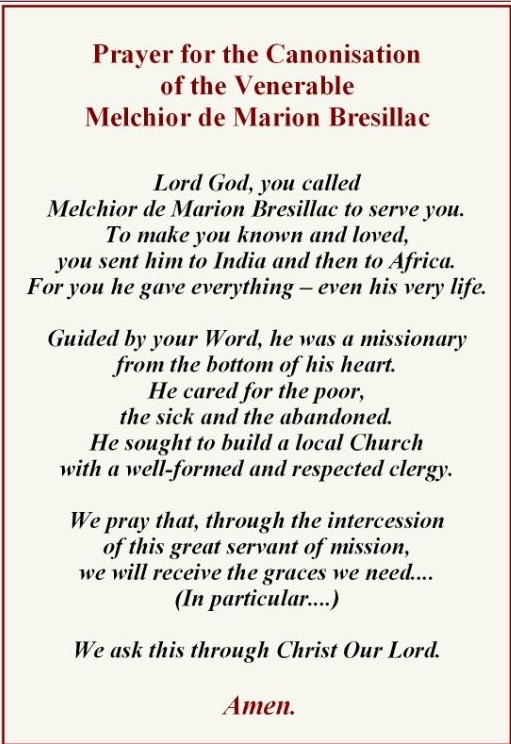
For St. Paul, the Eucharist will only be a real ‘remembrance’ of the Lord Jesus when those who partake of it are moved to share with others less fortunate. When there is enough generosity to share and care for all then the Eucharist becomes a real “memorial” of Christ whose love and compassion for the crowd make miracles of a change of heart and a transformation of the whole person possible.
Just as bread and wine which are parts of creation are transformed into the Body of Christ during the Eucharist, why cannot God change others parts of creation, you and me who are present at the celebration, into what he wants us to be? What does He want us to be? To be people more and more formed into the likeness of his Son who care and share for others once we leave the celebration of the Eucharist and go out into a world so much in need of caring and compassion.

So we go to the Eucharist to adore, praise and thank God for all his love and goodness towards ourselves. But we also go in order to be nourished from the table of the Eucharist. Having received freely from a God of sharing and caring, we are then empowered to go forth to do the same for others. Jesus took the loaves and fishes, blessed them, broke them and gave them to the disciples to distribute. He invites us to continue the work of distribution in our world today by whatever talents and gifts he has blessed us with.

Jesus was given a small amount of bread and some fish. These he took, blessed and multiplied and gave out for distribution. We may not feel that we have much to give God at the Eucharist. But whatever little we think we have but seems so small, why not offer this to God to multiply and allow him to use us to distribute to others who are more in need? When we shake ourselves out of our own self-centredness and start sharing our lives (with all our limitations) with others we will be amazed at how much we are blessed with in return.

When I first went to Nigeria I went to work with one of our SMA priests. In a rather backward area he had a cooperative organised as well as a Credit Union. He also had a clinic with some nurses from overseas who came for a few years to help the people. He also had different prayer groups etc. When I asked him what he saw his vocation as being he replied immediately. “I see myself as a sign of God’s concern for his people”. That has always remained with me. This priest, now dead, not only celebrated Eucharist daily for the people but he became, he lived Eucharist in his daily life. He shared all he could because he cared greatly. What about us who go to the Eucharist? How is it being lived out in our lives? Do we live a Eucharistic lifestyle?

“Lord Jesus, thank you for gifting us with the sacrament of your body and blood. You first of all lived it out in your daily life even to shedding the last drop of your blood. Thank you for so much love. Help us too to live Eucharist in our daily lives for the good of those you give us to share with. Amen.”

Fr Jim Kirstein SMA

For an interesting article about a Corpus Christi tradition in the Canary Islands click here.

Holy Trinity 2019 – Year C

16 June 2019

Proverbs 8.22-31
Romans 5.1-5
John 16.12-15

Trinity symbolRecently I was at a meeting during which one woman said to another, ‘After all these years of marriage I think I will never fully understand my husband. What he did recently really surprised me. I never knew he could be so creative’. No doubt men say similar things about their wives. I remember my good father shaking his head from time to time as he saw some aspect of my mother’s personality that was new to him.

Isn’t this really the experience of each of us? No matter how long we live with another in a family or in a community, people will continue to surprise us by new ‘revelations’ of their personality. If this is so true for us on the human level should we be surprised if God is like that, continually revealing himself to us in new ways. My father would have said to me more than once: ‘you know your mother is a great mystery to me at times’. If that is true of us humans how much more true is it of God?

Mystery in the religious sense means that we cannot know everything about God. But we can know more and more about God than we did at an earlier stage as he progressively reveals himself to us. Our God is a revealing God. There are many things that parents cannot tell a 6-year-old child. Yet 10 years later they know he is now ready to hear them. The parents are not being difficult. They are being wise. Is it not even more true of God who is Wisdom itself?

We can tie ourselves into all kind of knots if we try to give a mathematical explanation of how there are Three Persons in the One God. Various examples were given to help us explain this. Like in a catechism class the teacher would light three matches at the one time and say: ‘Look, only one flame etc” – meaning three persons in the one nature of God. It is much better to show from Scripture what God has already revealed to us about himself.

In today’s gospel Jesus says to the disciples: ‘I still have many things to say to you but they would be too much for you now. When the Spirit of truth comes he will lead you to the complete truth’.

Now that Jesus has gone back to his Father he has given us the powerful Holy Spirit who will make known to us and to successive generations the meaning of what Jesus revealed when on earth to his apostles. There would have been little point in Jesus speaking about ‘cloning or genetic engineering’ to his disciples. But now the Spirit is with us to help us give a Christian response to this reality of the 21st century.

What then are some of the things we can say about the Blessed Trinity that have been revealed to us already?

God is not a loner, someone so far away in the heavens that we cannot dialogue with him. Also, using human language, God is a community of love, totally focused outwards toward the other and towards all others. In the gospels, Jesus does not focus on himself. He tells us a number of times in the gospels – ‘I have come not to do my own will but the will of the one who sent me’. He also says that the Holy Spirit will reveal all things to us. Thus Jesus focuses on the Father and the Holy Spirit. When the Father’s voice is heard on the mountain and at the baptism of Jesus at the river Jordan he refers to the Son: “This is my beloved Son, listen to him”. So the focus of the Father is the Son. Jesus himself tells us that the Spirit will not focus on himself but will reveal to us more and more who the Father and Jesus are. God therefore is always concerned for the other. When Jesus came he lived out the same dynamic. He never worked a miracle for himself. He was concerned only to show God’s loving concern for us by healing, forgiving, feeding the crowds etc. Jesus’ focus was on others and their greatest needs.

In the gospel Jesus has announced the kingdom and love of the Father. Jesus came as a life-giver, his message is life-giving. Its demands, which the Spirit will make known to us, are always new and surprising. The Spirit is always at work in us to develop our potential and he invites us to work to make the world a better place to live in by having the attitudes of Jesus. This is the work of the Trinity inviting us.

Jesus shows us the way to the Father, and says the Spirit will be with us on our journey. The Spirit will sometimes lead us in ways we have not foreseen. I know a Frenchwoman who after the death of her husband decided to work as a lay missionary in Africa. So the Spirit blows where it wills. The Spirit may lead us paths we have not foreseen. This can make us afraid and distrustful. We would prefer to be settled, to live with the security of the known, of the tried and trusted. But the same Spirit empowers us with courage and hope. If we cling to our own paltry security how will we be in solidarity with all those in need: the poor and needy, prisoners, those with AIDS, unemployed, the stranger among us [asylum seekers, refugees, those in Reception Centres…] etc. Convinced that the Most Holy Trinity wants us to participate in its life of love and service let us be people of hope in our world today. Glory be to the Father, the Son and the Holy Spirit.

Lord Jesus, help us return to the source of hope, You, the Father and the Holy Spirit. Help us to believe the words of St.Paul that hope in you will not disappoint us because ‘your love has been poured into our hearts by the Holy Spirit that you have given to us. Amen

Fr. Jim Kirstein, SMA

Pentecost Sunday 2019 – Year C

 9 June 2019

Acts 2;1-11
1 Cor 12:3-7,12-13
John 20:19-23

An Irish doctor friend of mine told me of a time he received a call from the Social Services in England informing him that his brother, a lawyer, was living in very poor circumstances and that he should come immediately. Even though he hadn’t heard from his brother for years the doctor went and was appalled to find the terrible conditions in which he was living. He decided to take him home to Ireland. Before leaving he started to gather the few belongings of his brother.  He was amazed to find stuffed in an old dirty bag, a great amount of money, the equivalent of about €500,000. This man who lived as though in abject poverty could have had a very comfortable, enjoyable life if he had used the money he had accumulated over the years. But he did not and suffered greatly as a result.

Are we Christians sometimes like that? We have a great treasure, the Holy Spirit, and yet do we use and live out of the power of this Spirit?  Remember the words of the hymn: ‘We hold a treasure not made of gold, in earthen vessels wealth untold’. How often do you and I call on the Spirit in our daily lives? He is the life-giving Spirit of God. Yet where do you and I go for life? The Spirit is the giver of peace and joy.  Where do you and I seek for these?  We could call today the Feast of the Holy Spirit.

The death of Jesus, his execution on the cross, produced terror and fear in those who had followed him.  All the gospels speak of this fear. The same gospels, especially that of John, tell us that the opposite of fear is faith. Having faith means trusting. So instead of announcing the message of Jesus, the disciples had gone into a house and locked the doors because of fear. They were closed in on themselves. You can imagine their amazement and delight when Jesus comes and empowers them to leave their locked room, the room of their fears, behind them and go forth into freedom with the encouragement, the power, the peace and joy the Spirit gives. The presence of the Spirit in the Church, in each one of us, must lead us to defend the dignity of God’s children wherever their rights to life and truth are being violated.  Becoming paralysed with fear of the powerful or of losing our comfort and privileges in society means that we refuse to receive the Spirit of love and instead allow the spirit of fear and terror to dominate us like the disciples were when locked behind the closed doors. Do we pray for an ever-greater trust in the Holy Spirit?

As Christians we must stand up for what is right, and good, and holy. We should never be fearful of what people will say or do if we stand for Christian values – the right to life, the right to proper housing, education etc.

We are all impressed by the late Willie Bermingham [who founded ALONE for the care of the elderly], Fr Peter McVerry, Brother Kevin, Sister Stan… There are probably people in our community who do great things for the benefit of others… When they saw the huge problems in front of them they could have been paralysed by fear and bemoan the terrible situation. But no! They decided to do something.

It is as if a certain power emanates or goes forth from them, just like the fearful disciples of Jesus in today’s gospel account where fear was replaced by trust. If we want to be true followers of Christ we must allow him to replace our fear and terror with peace and joy and go out to confront all that is wrong in our society, not only to speak out against injustice [killing the unborn, throwing people out of their homes for the sake of increasing the wealth of a small few, leaving the elderly terroorised in their homes due to lack of Garda resources…] but start doing something positive to change these unjust situations. This is our mission. It is the mission of the Christian Church. Is this what we have experienced from our Church.  Have we experienced freedom, peace, joy and encouragement or more fear and guilt?  If so, what spirit is guiding the church in the area where we live?  We might want to call more often on the Holy Spirit to empower us to go forth on the mission Jesus sends us on with his life-giving, encouraging attitudes.

In the reading from the Acts of the Apostles, the Holy Spirit inspires the disciples to find suitable language for the proclamation of the Good News. The text provides us with an important detail which contradicts a superficial, though frequent interpretation. It is not a matter of using only one language but rather of being able to understand one another. All those present from the different nationalities understood in their own language the message of the disciples, empowered by the Spirit. Cultural differences did not impede the message of Jesus being understood by all. The message of Jesus was a cause of unity, not disunity. We all know that people who speak the same language can be bitterly divided because of ethnic differences or prejudices. The Spirit comes to unite and bring peoples together.

“Lord Jesus, you went to the disciples showing them your wounds. Are you not telling each of us that despite our wounds, our failings, our weaknesses, that you wish to send us forth too as your disciples, to be givers of peace and joy to others. Just you yourself replaced fear and terror in the disciples with trust and encouragement, you ask us to do the same for others. In order to be better able to do this, you ask us to rely as fully as possible on the power and the life-giving energy of the Spirit. Empower us to do this more and more. Amen”

Adapted from a sermon of Fr. Jim Kirstein, SMA

Ascension of the Lord 2019 – Year C

2 June 2019

Acts 1:1-11
Ephesians 1:17-23
Luke 24.46-53

Some years ago I had occasion to visit a married couple, friends of mine, during a time of great sadness for them. The husband’s brother and his wife had been tragically killed in a car accident three months earlier leaving behind them two very young children, now orphaned. My friends decided to look after the children. When I met the two small children during that visit I could not help feeling very sad at the thought of their being orphans at such a young age and having to start life without their real parents.

The one thing we cannot say about today’s feast, the Ascension of the Lord, is that the apostles felt themselves orphaned at the departure of Jesus. In no way did they consider themselves orphans, so that they felt abandoned by Jesus when he ascended to heaven. In fact the end of the gospel tells us that the opposite is true. We just heard ‘Now as Jesus blessed them he withdrew from them and was carried up to heaven. They worshipped him and went back to Jerusalem full of joy; and they were continuously in the Temple praising God.’  This is hardly the description of people thinking of themselves orphans.

The Ascension is not a farewell feast; it does not lament the absence of Jesus. Rather it celebrates the new way Christ became present to his people through the gift of his Spirit. For sure, Christ went away from us so that we no longer experience his physical presence but he is closer to us now than he ever was before.  When Jesus was on earth he was limited like us in space and time. This is no longer true of him. He is, so to speak, out and about.  He is present to us in an equally powerful but different manner. We can turn to him in any place, in any situation knowing he is there for us. It is important to realise that the apostles and disciples never regretted the departure of Jesus after his Ascension.

Our first reading reminds us: ‘you will be my witnesses …even to the ends of the earth’.

So today’s Solemnity, like that of Pentecost are feasts of Christian maturity.  They are a call to continue Jesus’ mission in today’s world and the difficulties we face there. The power of the Spirit is with us. In Acts today and also in the gospel Jesus warned his disciples to stay in Jerusalem until they were clothed with power from on high, the promise of the Father.  It is as if Jesus is saying to the disciples: ‘please don’t claim to be working on my behalf as my witnesses unless you wait for, receive and live out of the power of the Spirit. If not you will fail’.

We must not look up to heaven lamenting the absence of the Lord like the disciples did in the first reading today. We must face here on earth what God asks us to do and keep our feet firmly on the ground. We must set out to bring his gospel, his Good News to the ends of the earth. This is why any attempt to keep Christians in an attitude of dependency and immaturity without real responsibilities and voice in the Church is contrary to the meaning of the feast we are celebrating today. The Second Vatican Council strongly emphasized this. Pope Francis is constantly alluding to this in his statements and actions.

And it is happening. In comparison to when I was growing up when the priest did everything, now we have lectors, Eucharistic Ministers, laity as members of Parish Pastoral Councils etc.  In some countries because of the absence of priests, the laity do even more, like conducting funeral services, preparing people to be baptised and confirmed etc. This needs to happen here in our Church in Ireland! This may not be enough for some who feel the Church is moving too slowly in this direction.  But we need to pray more and more to the Spirit to lead us into the way of all truth. We need to pray that we will have the courage to let go of traditional practices which no longer serve our witnessing to Jesus.  Will we have the courage to follow the lead of the Spirit, painful as this may be if it is not what we would like to see happening but seems the best way forward?

Rather than seeing the Ascension just as the departure of Jesus, we should see it as the sending of the Church on mission (in place of Jesus). 

Rather than seeing the Church as an orphan as a result of the Ascension of Jesus it needs to be seen as being given adult status by God, as being given responsibility to witness to Jesus Christ through the power of his Spirit.

As St. Paul tells us there are a variety of gifts that is a variety of ways of being Church, be it as laity, priests or religious. 

No one group is called to dominate the others since we are all brothers and sisters of our one heavenly Father who uses each of us in different ways.  If we want to compete with each other let it be in the area of service to the poor, forgiveness of our enemies, love of all God’s children no matter how we refer to them or to which ethnic or religious group they belong. Here in Ireland we need to ‘welcome the stranger’ just as many of our forebears sought a welcome in America, Australia, England and other parts.

Lord Jesus, we believe that you have ascended to be with your Father and that the real meaning of today’s feast is that each of us, your Church, is called to be your witnesses throughout the world. Give us your powerful Holy Spirit to enable us to be effective witnesses of your loving concern for all.

Adapted from a sermon of Fr Jim Kirstein, SMA

6th Sunday of Easter 2019 – Year C

26 May 2019

Acts 15:1-2, 22-29
Revelation 21:10-14, 22-23
John 14:23-29

Some years ago my uncle was dying in a hospital and he was aware of this. He asked his brother to do all he could to help his wife look after his young children after he died. The brother assured him that he would faithfully carry out this promise which in fact he did. My dying uncle wanted to leave behind him someone he knew would carry on where he left off.

In the gospel today we have something similar. Jesus knows that he will die soon and that his disciples will need support after he has gone. So he consoles them that those who keep his word will find that the Heavenly Father and Jesus himself will make their home in them to encourage, console and strengthen them in the difficult times ahead. Not only that but he promises them the help of the Advocate, that is the Holy Spirit to be there for them too. We all know that in a court of law it is very important to have a good advocate or lawyer to plead our case so as to obtain justice.  The Advocate Jesus gives us is the very best, no one less than the Holy Spirit. 

Jesus assures us that this Spirit will teach us everything that we will need in difficult times. Even more he will remind the disciples of all that Jesus had taught them.  The Spirit is the interpreter of what Jesus about.  So in going back to his Father Jesus did not leave us alone.  The Spirit takes the place of Jesus, not in a physical sense but by a divine indwelling.  With the Spirit’s help we will be able to discern in each subsequent age what God wants of us, be courageous in following Jesus and having the gift of knowing what is the way forward depending on the challenges of the time in question.

We see a practical application of this in the first reading. There was disagreement among the early disciples about what the Gentiles wishing to become Christians should be asked to do. It is a measure of the extraordinary openness of at least some of the Jerusalem Church that what has been called the First General Council of the Church came out with a very new and radical decision.  After all, the church leaders of the time were living in Jerusalem, at the heart of the Jewish faith and practice which they themselves had grown up with and which they still revered. Yet they decided it was not necessary for converts to the Way of Jesus to follow the Jewish Mosaic Laws, especially all the ritual aspects of it.  So pagan converts didn’t have to follow all the laws about the washing of hands, eating pork etc. What they were asked to follow as regards the Jewish law was kept to a minimum: ‘to abstain from anything polluted by idols, from fornication meaning most likely irregular unions within certain degrees of blood kinship and from the meat of strangled animals’. That was all, no dietary regulations, no obligatory circumcision etc.  In the situation of the time this was a revolutionary decision.  When the decision was proclaimed, the elders of the Church used a very significant phrase:  “It seemed good to the Holy Spirit and to us”.  They didn’t appeal to tradition to justify their decision but to the Spirit, and they expected the Spirit to guide them to the right decision.

In the 1960’s the Second Vatican Council looked at many issues and the bishops decided to change many of the traditional laws.  Now we dialogue with our brothers and sisters of other faiths. We as Christians believe that the Holy Spirit can work through anyone.  So we have learned to respect and even revere the work of great people who are not Christians or Catholic, like Gandhi, Martin Luther King etc. Even our present Holy Father, Pope Francis, is seeking to listen to the signs of the times, in conformity with the will of God, and reaching out to many who have been alienated by the unmerciful application of rules and regulations written for a different time and situation.

Following the lead of Pope Francis, will you have the courage – will the Church as a whole – listen deeply to the voice of the Holy Spirit and make life-giving decisions that may move us away from traditional practices? How real is the Holy Spirit for us, how often do we pray to the Indwelling Holy Spirit for guidance?  Have we enough trust that the Spirit will guide us today to make decisions after the mind and heart of Jesus?

Today’s gospel is a gospel of consolation, a gospel of encouragement. In it not only are we promised the Holy Spirit to guide us but Jesus assures us the He and the Father are with anyone who tries to live a life of love and service especially for the poor. The Spirit is with those who work for justice and peace in spite of much opposition.  Finally Jesus tells us that if we try honestly to follow the prompting of the Spirit we will experience his peace.  This is not just the absence of conflict or war but a peace, a deep down joy even when we may be struggling to do what is most loving.  A deep peace even in time suffering because of our efforts to live out the invitation of Jesus to follow his ways.

“Lord Jesus, thank you for not leaving us orphans. Thank you for the free gift of the Holy Spirit.  Help us to call upon and trust more and more the guidance of the Holy Spirit in our daily lives.  Amen.”

Fr. Jim Kirstein, SMA – Cork

5th Sunday of Easter 2019 – Year C

19 May 2019

Acts 14.21-27 
Revelation 21.1-5
John 13.31-35

A young woman was about to get married when it was discovered that her brother had been diagnosed as having severe kidney problems. Without a speedy transplant he would die. Having consulted her boyfriend and family she decided to donate one of her kidneys to her brother. A number of her friends and relatives advised her not to do this. Some said that it might cause her problems later on especially when it came to having children.  Also that it was a great risk and that being quite young she mightn’t live as long as she might do if she had two kidneys. But she was adamant.  ‘I love my brother and am prepared to take the risk’. As a result of her self-sacrificing love her brother is still alive.

This young woman put into practice what Jesus commands us all to do in today’s gospel: ‘I give you a new commandment: Love one another just as I have loved you’. What is really new in this commandment?  The Old Testament already had the commandment to love: ‘you must love your neighbour as yourself’.  So is there any difference?  Yes, there is: it is in the measuring standard of love.  Whereas the Old Testament says ‘Love your neighbour as yourself’, Jesus – in the New Testament – adds to it: … ‘just as I love you, you also must love one another’.  So in the Old Testament the measuring standard is the love of oneself. In the New Testament (the time after Jesus when he made a new covenant or a new testament with us), the measuring standard for the love of neighbour is the love of Jesus himself. This puts the love of neighbour in a totally different class.  Behind this new commandment is the love of Jesus himself.  His love is the model and the measure of how we should love our neighbour. And at the same time it is the most typical characteristic of a disciple of Jesus.

What is typical of this love of Jesus? Firstly, it is a serving love. Jesus himself said ‘I came not to be served but to serve and give my life as a ransom for many’.  Jesus summed up his whole life’s attitude in the humble act of washing his disciples’ feet, in serving, in stooping down.  He stoops down to all that is weak especially the poor, the hungry, the sick, those whom society marginalises.  He showed the attitude a true disciple of his must have in relation to women, to different ethnic or religious groups or to those whose skin colour is different etc.  Jesus’ command to love is quite simple but very demanding.

Jesus’ love is a merciful, forgiving love, something which Pope Francis is emphasizing in a big way during this Jubilee Year of Mercy.  He is not someone who came to seek revenge ‘Father, forgive them they do not know what they are doing’, he said on the cross as he prayed for his enemies. He came to witness to us who our Heavenly Father really is. He is not a God who seeks revenge when we sin, not a God who wants to punish us or send us to hell. Our own choices decide that – not God’s desire. God asks us to respond to his incredible love for us, not out of fear but because of gratitude by loving others.

The love of Jesus is a constant, dedicated love. He is not a moody God who one day is in good form and at another time is in bad humour, seeking to chastise us for our wrong doing. 

Jesus’ love was a total lifelong commitment to love, service and forgiveness even when the going got very difficult. I know a man whose wife has Alzheimer’s disease who gave up his job in order to be constantly there at the service of his wife’s needs. It is a very demanding life for him now.  But it reflects the true love that Jesus himself lived. This man – who does not profess belief in God – is living a godly life, a life of service and love.  Going to Church, to Mass, praying rosaries, attending novenas are no guarantee of being a true disciple of Jesus unless they lead us to practise the kind of love Jesus himself lived whilst on earth.

Hopefully most of us do this daily in our family lives, in our homes even if we fail from time to time. The most important question is: is what I am doing now, in this relationship, in this work, in this leisure time an expression of the love Jesus asks me to live out daily? Or do my actions witness to a lack of love, a focus on my own selfishness etc. Jesus is not trying to frighten us or threaten us with punishment but he is saying that we and those we relate to will only have real peace and joy here and now by living his command to love.  Putting it as simply as possible:  ‘If you want to be truly happy here and now seek and work for the happiness and the peace of others. If you want to be unhappy, seek your own happiness and peace only’.

Lord Jesus, it is not always easy to love as you did. It is hard to forgive those who hurt us. It is easier to be selfish at the expense of others. Help us to realise that we cannot do it alone. Give us your Holy Spirit and help us call more and more on this Holy Spirit to bring about your kingdom here on earth.  Amen

Fr. Jim Kirstein, SMA

4th Sunday of Easter 2019 – Year C

12 May 2019
Vocations Sunday

Acts 13:14, 43-52
Revelation 7:9, 14-17
John 10. 27- 30

A certain young man was studying at the university as he had a great desire to become a teacher. After he qualified he had great joy and satisfaction in his chosen vocation. What saddened him was that he met some classmates who told him they had no great love of teaching. They did it because it was a well paid job.

Today is traditionally known as Good Shepherd Sunday when the Church asks us to pray especially for vocations to the priesthood. Perhaps the need to do this has never been greater. We need priests whose hearts are in it, who are truly good shepherds to the people God has entrusted to them. I feel that I am particularly blessed by God because I really enjoy being a priest and all that this involves.

Parents are asked to be shepherds of the family God has given them. It is the same for teachers, farmers, fishermen, doctors, lawyers, etc. Is our primary concern to care for and help others to a better quality of life? If we are in it just for our own good then no matter what title one has one is not a shepherd with the heart of Jesus.

Sometimes it may cost a great amount if we try to listen to what we believe we are called to do and put it into practice. In the gospel today Jesus is speaking to the Jews and he says ‘the sheep that belong to me listen to my voice; I know them and they follow me’. This does not just apply to priests but to all who want to be real disciples of Jesus. The theme of the Good Shepherd unfolds against a background of conflict and the threat of death as is clearly seen in the verses that follow today’s Gospel.

Down through the ages up to our own time many trying to really listen to the voice of God and put it into practice suffered in one way or another. It makes demands on us. We see people who try to be faithful in marriage despite difficult relationships, others who withstand the pressure to have an abortion, others again who refuse to give or take bribes etc. This is in no way a condemnation of anyone who may have given into temptation on any level. In fact, haven’t we all at some stage or other?

In our world today there are many voices calling out to be heard. Either on television or radio, by advertising, on the Internet, pressure from well meaning friends, peer pressure etc. There is also the voice of God calling us. Which voices will we listen to? ‘My sheep hear my voice’, says Jesus. Many religious leaders of his time refused to listen to him. They thought they were honouring God by killing Jesus and that they were saving religion by multiplying sacrifices, commandments, prohibitions etc. Isn’t it much safer and more secure to follow the law and tradition slavishly instead of risking to follow Jesus, who spoke about love, service, forgiveness, compassion etc being the core of true religion?

A friend of mine has a fish tank in which he has some small fish. He also keeps some canaries in a big cage. The fish and the birds belong to him. But in a sense he belongs to the fish and birds. If he doesn’t care for them they die. But I know he takes great care to feed them daily and clean their tank and cage from time to time. So they live longer and he gets great pleasure from them as Jesus does from us. Jesus says in the gospel that the sheep that belong to him listen to his voice. So in belonging to Jesus, he belongs to us and we know from experience that our belonging to him means that he does all he can to care and love us if we allow him. Very often we don’t. We stray away to follow other voices. Yet he keeps inviting us back to the true path that alone gives real peace and joy. This is the Good News.

To whom do we as Christians belong? It is not enough simply to say that we belong to Jesus. What we do and think will give us a good idea. Are we regular in going to Sunday Mass, to some daily prayer? Are we forgiving to those who may have hurt us or to those who think differently to us? Do we pray to put our trust in him and allow ourselves to be guided by his will?

He says also in this very short gospel: ‘I give them eternal life’, which doesn’t just mean life after death. Rather it involves the beginning of eternal life now – that is, a quality of life which gives peace, freedom, joy, but will also involve suffering and trial if we follow the Good Shepherd. It is especially about our relationship with God which begins here and continues into eternity.

In spite of our weaknesses Jesus gives us the great promise that as his brothers and sisters no one can steal us from him because the Father who is greater than anyone will not allow this.

Like any true shepherd Jesus will pull put all the stops to love and care for us. He does this especially through the friends and other disciples he gives us to care for us now.

‘Lord Jesus, true Shepherd of your flock, thank you for sharing this vocation with each of us. May your Spirit enable us to be true life givers and carers of your flock, those you have entrusted especially to us. In particular grant that God’s call to our young people to priesthood and religious life may not be drowned out by other voices or the lure of material wealth. Amen’.

Read the Message of Pope Francis for Vocations Sunday 2016

SMA Provincial Leader commends the work of SHALOM

Frs Padraig Devine and Ollie Noonan SMA

“Shalom’s contextually driven, rigorous but adaptable and forward-looking methodology represents a model approach towards peace-building in highly complex situations, such as those that pertain in Northern Kenya. The approach, with its emphasis on community leadership, stakeholder participation, high technical competency, logic models, results frameworks, stories of change and advocacy linkages also reflects current best practice within both the peace-building and development sectors.”
– Dr. Mike Williams

In 2009, Fr. Padraig Devine SMA, supported by Fr. Ollie Noonan SMA, founded the SHALOM Centre for Conflict Resolution and Reconciliation (SCCRR) in Nairobi, Kenya. Since then, the organization has achieved remarkable results and has captured the attention of the international media and foreign institutions.

The success of SHALOM is based on its methodology and focus on an integrated and holistic approach to peacebuilding. SHALOM does not react to the symptoms of conflicts but rather attempts to understand and address the underlying causes.
In a recent interview with the SMA Communications Department, reflecting on his term as the Provincial Leader of the Irish Province of the Society of African Missions, Fr. Michael McCabe SMA, spoke of his high regard for the work of SHALOM:

“A primary example of our missionaries working in the service of the Church’s mission of Peace and Justice is that of Fr. Padraig Devine and Fr. Oliver Noonan, in Kenya, through SHALOM. I was a board member of SHALOM before I left Kenya and witnessed the genesis of an idea that is growing from strength to strength and will, I believe, be recognized as one of the great contributions by Irish missionaries in helping to bring peace and reconciliation to Africa.”

“The success of Shalom,” Fr. McCabe continued, “is in its determination to remove the underlying causes of ethnic, religious and tribal disagreements that wreck the lives of ordinary people. Padraig realised that to achieve this he needed to recruit a highly skilled team of academics and conflict management practitioners to train teachers and tribal leaders in the art and skills of conflict resolution and reconciliation.

I personally believe that while there are many missionary and religious groups involved in the ministry of peace and justice, the approach of SHALOM is unique is addressing the underlying causes of conflict in the areas where it is working.”

To emphasize his point, Fr. McCabe quoted from a statement by Dr. Mike Williams, an international development consultant, who recently carried out an effectiveness review of the programmes on conflict transformation and peace-building conducted by SHALOM in Eastern Africa. Dr. Williams awarded SHALOM the highest possible rating while stating:

“Shalom’s contextually driven, rigorous but adaptable and forward-looking methodology represents a model approach towards peace-building in highly complex situations, such as those that pertain in Northern Kenya. The approach, with its emphasis on community leadership, stakeholder participation, high technical competency, logic models, results frameworks, stories of change and advocacy linkages also reflects current best practice within both the peace-building and development sectors.”

The SMA Communications Department has covered many stories related to the work of SHALOM on the SMA website, emphasizing the esteem with which we hold the work of the organization. In 2017 we highlighted an article on the organization by EurekAlert that was picked up by international media sources and which we encourage our readers to review again. The article summarizes the work of SHALOM and its many successful outcomes since its inception less than a decade ago, and can be accessed by clicking on the headline below:


In conclusion Fr. McCabe said he wished to commend Frs. Padraig and Oliver in their leadership and administration of Shalom and hopes the organization continues to develop and expand its reach across Africa, especially supporting the work of the United Nations in helping the African Union to deliver the Great Green Wall.

3rd Sunday of Easter 2019 – Year C

5 May 2019

Acts 5:27- 32, 40- 41
Revelation 5:11-14
John 21:1-19

ResurrectionTwo men who were very good friends for a long time had a serious disagreement and stopped talking to each other. Three months later one of them phoned the other and admitted the major fault had been his and invited the other to a meal which was accepted. His friend forgave him totally and they had a great reunion.
Today we hear about the forgiveness of Jesus in relation to Peter and the other disciples despite their betrayal of him and their infidelity. In fact, he calls them ‘friends’.

The disciples had been out fishing all night and caught nothing. It was obviously dark. Now Jesus the Light of the world appears on the shore and having been told they had caught nothing suggested they cast their nets again and they catch a huge number of fish. Obviously he did not withhold his forgiveness and compassion from them despite their infidelity and betrayal of him. We see that Jesus was concerned to save them from the embarrassment of returning home to tell their families they had failed to catch anything. Also it was during their normal work that he appeared to them. This is important for us to know. Jesus does not try to embarrass us when we betray him by our sins and he is concerned and cares for us that our daily tasks would go well. He is with us if only we are aware of this. We also see the concern of Jesus in providing a meal for them. They had worked hard all night without success and were probably cold and tired so he calls to them and says ‘Come and have breakfast’. He invites us to the Eucharistic meal always too.

When the disciples came ashore after the miraculous catch of fish they found a charcoal fire ready with fish cooking on it. You may remember that it was around a charcoal fire when Peter was warming himself that he betrayed Jesus 3 times. Now Jesus is telling Peter that he is fully forgiven for his betrayals but before Jesus can allow him to shepherd the flock he wants to hear directly from Peter if he loves him.

Jesus asks Peter 3 times ‘Do you love me?’ This threefold question and answer do not imply that Jesus has doubts about Peter but that Peter’s love for Jesus is sincere and that he has the devoted love for Jesus, which is at the heart of all true discipleship. Jesus wants to hear the reply from Peter himself.  Jesus then tells Peter to feed his lambs (the weaker members of the community), to feed his sheep (the stronger ones) and to care for all of them.  This is the role of the shepherd.

This is a very important exchange because it reveals to us what the essence of Christianity is. Is it not true to say that Christianity is a person, Jesus Christ and so it is about our relationship with him and all that involves?  So why do I go to Mass on Sunday or why do I try and keep the commandments? Is it because I think I may go hell or that God will punish me, which is untrue?   Or is it because of my relationship with Jesus?  If so who is the Jesus I relate to? Who really is Jesus for me?  How well do I know him?  Can I have a deep relationship with someone if I do not know him/her very well? How do I deepen any relationship?  Is it not by spending time with the person and getting to know him/her?

That is why Jesus came – to offer us a deep personal relationship with him. He wants us to be his friends as he says in John’s gospel. Firstly he reveals himself to the 7 disciples. He is constantly trying to reveal himself to us in the ordinary events of each day, through our friends, in prayer etc.

If we can see Jesus in this light as someone doing all he can to invite us into his friendship then we might want to be his disciples not because of any law but simply because we would like to.  Christianity was never meant to be a religion of fear and threats of punishment if we didn’t measure up. It was meant to be a relationship between Jesus and us and, between God whom Jesus revealed and us.  The Laws and Commandments were given to help us avoid trouble. So if I kill and get caught I may be hanged or electrocuted so God says – Don’t kill.  If I steal and am caught I may end up in prison, etc.

It is by living according to the value system of Jesus, attending Mass, by personal prayer, celebrating the sacraments and reading scripture that we deepen our relationship with Jesus. Jesus invited the disciples to a meal after the catch of fish.  If we could only understand and accept how passionately and unconditionally Jesus loves us then the more we would respond out of love and not fear. His death on the cross sums up this love. But it isn’t easy.  Peter was told by Jesus at the end of today’s gospel that he would suffer if he tried to be faithful to him.

‘Lord Jesus, thank you for your invitation to us to a deep, personal friendship with you. With the help of your Holy Spirit, help us to be more aware of this and to respond generously. Help us to forgive others as you forgive us always if we ask you. Amen’.

Fr. Jim Kirstein, SMA

2nd Sunday of Easter 2019 – Year C

Sunday 28 April 2019

Acts 5:16
Revelation 1:9-11, 12-13, 17-19
John 20:19- 31

Divine Mercy Sunday

A certain man asked his friend how he could be sure that his wife loved him. His friend replied that she had always been faithful to him, looked after him and the three children they had with great love and care especially when they were sick or in any trouble. Besides did she not have a big scar on her left arm when she pulled the youngest child away from a pot of boiling water on the cooker he had started to overturn and she was badly burned.

In today’s gospel Jesus appeared to the disciples and showed them the wounds in his hands and his side. He does this to help the apostles recognise him. It is the same Jesus now as he was before his death. They are also proof of his love as was that of the woman with the scar. He also showed them to Thomas and allowed him to touch them. He is telling us that it is alright to go to God in our woundedness, ours sins and shortcomings – that we are assured of a total welcome. We don’t have to pretend that we are otherwise; we can go as we are. Jesus appreciates honesty.

The end of the gospel passage today states: ’There were many other signs that Jesus worked and the disciples saw but they are not recorded in this book. These are recorded so that you may believe that Jesus is the Christ, the Son of God, and that believing you may have life through his name’.

Faith or belief is not just about believing in things we do not see. Faith is about taking a risk and making commitments, even if what lies ahead is unclear, even if we are not sure. This is what Jesus was challenging Thomas about. He was inviting Thomas to believe him even though he did not see him. Moreover, he is inviting Thomas to commit his life to him and this will involve risk. Thomas did not want to believe only on hearsay. Did he not just want to experience Jesus for himself rather than taking the word of others only?

In following Jesus we often find ourselves doubting, questioning, hesitating, even challenging Him. John is expressing an insight about our human nature. But our faith calls us to go deeper. Even before the death of Jesus most of his followers had left him. Whilst he was performing miracles and signs they had what they needed as proof but as he nears his Passion and death on the cross nearly everyone abandons him. Their conditions for following Jesus – the signs – were no longer evident. So they simply stopped following him. 

In John’s gospel the word faith or belief occurs about 98 times and it is never a static noun but always an active verb. It means a close following of Jesus, a commitment of our lives to him even when the signs are not too clear. Basically it is about trust – will we trust Jesus, will we be faithful in following him when our conditions are not met but allow him to act as he knows best, not always understanding why he acts this way?

This was basically the problem of Thomas. We read that he set up his own conditions for believing in Jesus. “Unless I see the holes that the nails made in his hands, and can put my finger into the holes they made, and unless I can put my hand into his side, I refuse to believe”. Then when the compassionate, understanding Risen Jesus Christ appears again, we see his sensitivity to the doubts of Thomas. There is no condemnation on the part of Jesus, simply kindness and gentleness.

This is our God – he knows that in life difficulties will come our way, sometimes causing us to doubt God’s love and care for us. But today’s gospel is a litany of God’s incredible understanding and sensitivity to where we are at. First, he appears to the disciples locked in a room for fear of the Jews. His first words are not those of condemnation but of consolation – he offers them Peace and this fills them with joy. In fact, three times in this gospel passage he says ‘Peace be with you’. Not only are they locked in a room but also they are locked into their fears. They are in a sense paralysed by fear. Jesus becomes a life-giver to them. Joy replaces fear.

In what way do we allow our fears to dominate our lives? I suppose each of us is in a different space but I know many people who are locked into situations they feel imprisoned in – it may be a non life-giving relationship, a drink problem, fear of people, fear of the future, fear of dying etc. etc. Jesus came to free each of us. He may not always come directly but if we ask him in faith and trust, he will use others to help us have the same freedom and peace his frightened disciples had after he appeared to them in the Upper Room.

He also breathes on them and gives them the gift of the Holy Spirit for their life’s work. We too have received that same Spirit. We each have a call from God to be bringers of joy and peace as well as being channels of God’s forgiveness to others. Knowing how difficult it is to do this always, we each are given the Holy Spirit also. But do we pray as often as we might for the gift of this Spirit – to allow the Spirit to energise and empower us daily?

Jesus was truly a life-giver to his disciples in this gospel passage. So where do we go for life? Who or what is life-giving for me?

“Lord Jesus, give us a monumental increase of faith, trust and love in you. Help us to be a bringer of joy, peace and forgiveness to others with the powerful help of the Holy Spirit. Amen”.

Fr Jim Kirstein, SMA