Home Blog Page 9

3rd Sunday of Easter 2012

22 April 2012

Acts 3:13-15, 17-19
1 John 2:1-5
Luke 24:35-48


Many years ago when I was a seminarian I went for a swim. In the swimming pool before me was a man about 70 years old. I noticed he didn’t swim about but just kept floating in the water. Later when he got out of the pool I saw that he had a very bad limp and his legs were badly scarred. We started talking and he told me that he had been a priest in China and was imprisoned by the communists and tortured in an effort to get him to give up his belief in God. He didn’t, of course, and paid the penalty. The amazing thing was that he wasn’t in the least bitter or hateful towards his former torturers.

Aren’t there many people like him in our world today? People who show the scars that result from being true to themselves. Like the scars of poverty. I know of someone who resigned from a well-paid job rather than involve himself in the dishonest practices of the company he worked for. The scars of shame some people bear because there has been a suicide in the family even though it was not their fault. Isn’t it true that we all pick up many wounds or scars going through life? For some it might be the scars of a broken relationship, the scars of addiction to drink, drugs, etc. The scars some people have from being sexually abused or those which result from from a severe depression.

In the gospel today Jesus bears the scars or wounds of being faithful to God. Rather than being untrue to himself he denounced the religious leaders of his day for leading the people astray. Many of these leaders were mainly interested in being powerful, rich, looking after themselves at the expense of the people entrusted to them by God. So Jesus appears to the disciples in the gospel to convince them that it is really the same person whom they knew before as their master and leader. Now glorified, he still carries the marks of his wounds, his scars. The simple truth is that there is no such thing as Christianity without the cross. If one follows Jesus in life he / she will bear scars or wounds. Jesus went back to his father with his wounds. He is saying that it is o.k. for us to be wounded too. That is how God loves and accepts us.

Sometimes people come to me and say, ‘Father, I have prayed and prayed for God to remove such and such a cross from my life but God doesn’t seem to care, to listen’. Of course, God does listen. Maybe the answer for the person is that in spite of a very difficult, life situation, they get the courage and strength to continue, when others would give up. Jesus never promised to take away all our crosses but he did promise to walk by our side carrying them with us.

Recently, I met a family with a badly handicapped child. Before birth, the mother knew this was a big possibility, yet she decided not to have an abortion. When the child was born handicapped the grandmother said. ‘Well, I suppose that we will all have to show an extra amount of love for this child’

Sometimes difficult situations draw incredible courage and love from people facing them. But let us not in any way romanticise them. They are not to be sought after but if they do come, Jesus has been there before us. He knows it is very costly to be faithful to God. A German theologian called it the cost of discipleship. He himself was hanged by the Nazis for denouncing the evils of Hitler and Nazism.

When Jesus appears in the gospel, he asks the disciples for a piece of fish in order to eat it and encourage them to believe it is really he who has risen. He didn’t ask for much, a piece of grilled fish. God continues to ask each of us to give whatever we can, to share with him what is possible. He still does it, but today he wants us to share with his body here on earth, his children now living in our world. So each of us has this ability – to share what we can with Jesus, now present in his people. It will still cost and maybe we will be scarred or wounded in responding to his call. The scars of those who try to look after an aging parent, of the great patience demanded from caring for a person with Alzheimer’s disease. The scars of continuing to love a teenage son who has disgraced the family by taking to drugs. The scars of accepting without a judgmental attitude and truly loving a member of the family found to be suffering from AIDS etc.

The Good News is that God gives each of us the capacity to be faithful to him in those around us. Rather than running away from the problems if we try and deal with them, knowing God is there with us, then the cross, the wounds, the scars, the crucifixion will be a prelude to the glory the Risen Christ experienced. But this deep peace and joy, which comes with the resurrection, is already ours here below. Heaven begins already as St. John says. Today we live in a world for which pleasure is the goal for very many. ‘If you want it, do it or have it’. Sadly, we know what results when people follow blindly the pursuit of pleasure. Jesus never claimed that following him would be easy. He once said to Peter when many started leaving him and abandoning him. “Will you also go away?” Perhaps today Jesus is putting the same question to us. Hopefully our answer will be that of Peter – ‘Lord to whom shall we go. You have the message of eternal life and we believe that you are the Holy One of God’

‘Lord Jesus, crucified and risen, give us this conviction too. Amen’

Fr. Jim Kirstein, SMA

Frontpage – Bottom mods

vocation
vocation donate online
safeguarding-sma

JPIC-button

African Missionary


people-are-the-church


 african missionary 2010

Module 3 Test

sma-logo

sma-logo“Lorem ipsum dolor sit amet, consectetur adipisicing elit, sed do eiusmod tempor incididunt ut labore et dolore magna aliqua. Ut enim ad minim veniam

Cois Tine honoured

cois-tine-award-2012-2

Nigerian community honours Cois Tine

cois-tine-award-2012-2


During 2011, as in previous years, Cois Tine undertook a lot of work which made a difference to many people. Usually this happened with little publicity or noise. However, in 2011, it was a bit different as Cois Tine was featured in RTE’s Secret Millionaire TV programme and received a very welcome donation of €5,000.

This was not the only award that Cois Tine received in recent times. It also received recognition as runner up in the national Diverse Ireland Awards and two Certificates of Recognition, one from AKIDWA a Dublin based African Women’s Organisation and the second from the Sudanese Association of Cork.

These were given for Cois Tine’s “support” and for “dedication to promoting equality and Justice for migrant women in Ireland.”

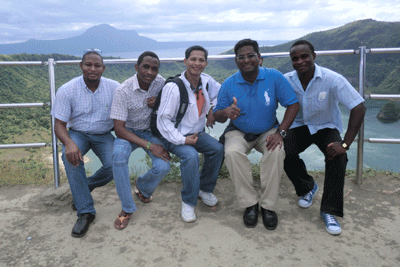
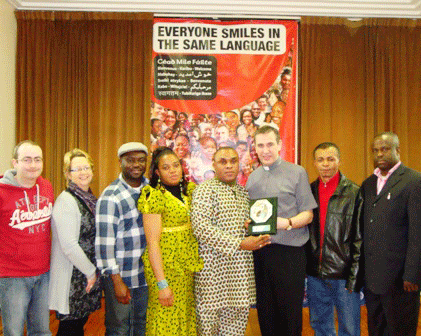
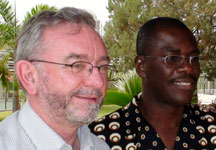
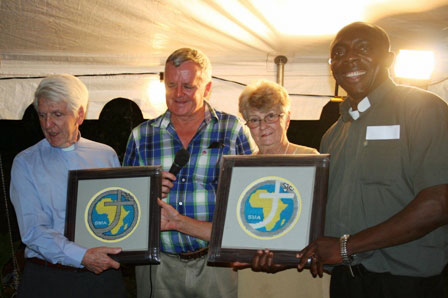
Most recently, Cois Tine was presented with the Nigerian Community of Cork’s Non-Governmental Organisation of the Year Award for “being the most supportive organisation to its main and sub-communities.” Fr. Angelo Lafferty SMA, Cois Tine Director, received the award from the President of the Nigerian Associations Cork branch, Mr Emeka Ikevuasi. Other members of the association who were present on the occasion were the Youth & Special Events Coordinator and Acting Secretary, Mr Tony Lawani, and two members of the Board of Trustees, Pastor Dickson Iribasoye and Mr Ben Uzoma.

Our thanks to all who have acknowledged our work we appreciate this and are encouraged as a result.

Our picture shows Fr Angelo, Mr Ikevuasi and some of the Trustees and Cois Tine volunteers at the award ceremony.

Easter Sunday 2012 – Year B

Easter Sunday – 8 April 2012

Acts 10:34, 37-43
Colossians 3:1-4
John 20:1-9


Many years ago I knew a young married couple, very happily married. Then after 15 years of marriage the husband died suddenly. Sadly they had had no children. For the widow life all but ended with her husband’s unexpected death. She said to me at that time that the sun would never shine for her in her life. She didn’t see any point in living. She was totally devastated. This went on for about 4 years. Being the quiet retiring person she was, she had depended very much on her husband and after his death, she felt totally alone. Others helped her for awhile but then they had to look after their own families. Then with the help of a few close friends and her faith in God, she gradually started to live again. In fact, because her husband was no longer there to depend on, she had to develop talents she never knew she had. Bit by bit she grew in self-confidence and now this woman thinks nothing of travelling to the far end of the wold alone where before she would hardly go a 100 kilometers. She had matured out of all recognition and the sun certainly shines again for her in her life. But I know that it was her faith in God and the support of a few friends, which made all the difference. But it took time.

Perhaps Easter Sunday is something like that. Up to the moment of the Resurrection, after the terrible death of Jesus on Good Friday, the disciples of Jesus were devastated. The one they had leaned on was gone. They never imagined Jesus would be taken prisoner and crucified. In that instant their dreams evaporated like that of the woman when her husband died suddenly. The disciples experienced a dreadful loss and no doubt were shattered, their hopes taken away in those short few days. They were also afraid for their lives and half expected to be caught and punished by the religious leaders who plotted the death of Jesus and had him crucified. For them too at that terrible time, they never expected the sun to shine for them again in their lives.

In today’s gospel, a woman no less, Mary of Magdala reports to Peter and John that the tomb is empty. In nearly all the Resurrection accounts, it is the women who first experience the Risen Jesus. Women at that time as in many places still were looked down upon. This may be why the disciples did not believe them. It seems that the proclamation of life of the Risen Jesus starts with the very people who were marginalised and who count for little in society. In any case the curiosity of the 2 is awakened and they run to the tomb. Peter sees the linen cloths on the ground in an empty tomb. He did no more than merely ascertain the facts. However, it is said of John that he ‘saw and he believed’ even though his own faith was not yet perfect because the full impact of the vision of faith of the Scriptures had no yet dawned on him. It took Thomas even some days to surrender and accept – very consoling for us. To discover fully how rich faith is, takes time and growth and God in incredibly understanding and patient.

Maybe we all stand condemned in some way by the woman interviewed on an international radio programme. Because of modern technology, after an operation she was able to see for the first time in her life at the age of 54 and her comments in that radio interview were. “I cannot understand how all of you who were born with the gift of sight can be so unmoved by the beauty of life. You seem to take it all for granted – the beauty of a flower, the marvels of dimples on the hands of a new born baby, the serenity in the faces of old people who are content with life.etc. etc. I feel she is correct. Faith is like a new way of seeing. The resurrection does make a difference. If we believe our eyes are opened to enormous possibilities. Jesus was in a tomb for 3 days and then burst free from its darkness and the stone that imprisoned him. For me, that is my experience of resurrection. Whilst the empty tomb has its importance I know that I have experienced much freedom because of the gift of faith in the resurrection of Jesus God gives me. Like Mary Magdalene who went in the dark and found an empty tomb Since Jesus was not there it was indeed darkness, but later in meeting Jesus a new light dawned for her and all other believers.

The resurrection doesn’t mean that we gloss over pain, suffering and difficult daily life situations, but it does give us a new vista or outlook on life. It gives us the freedom to face the dark side of life, and even death with confidence knowing that Jesus broke the bonds of human limitation and slavery in our lives. Jesus is alive and if we really have experienced the joy of the Risen Jesus in our daily lives we don’t have to wait until we die to experience resurrection now – deep joy, peace and serenity because of Jesus, now alive and out and about. In the first reading today Peter says that he and the disciples are now witnesses of all they saw Jesus doing even if for a few days they were paralysed by his death and seeming failure. If you and I have experienced the Risen Jesus at work in our lives, like the women who lost her husband suddenly, if we are faithful despite the great difficulty of these times of loss Jesus is there with us then and he will surely help us experience the sun shining again.

“Thank you Lord Jesus for the gift of our faith in the resurrection. May we be witnesses of gospel joy and peace to others till searching and doubting. Amen.”

Fr. Jim Kirstein, SMA

Holy Thursday 2012 – Year B

gbarnga last supper

Holy Thursday – 5 April 2012
Evening Mass of the Lord’s Supper

gbarnga last supper

Exodus 12:1-8, 11-14
1 Cor 11:23-26
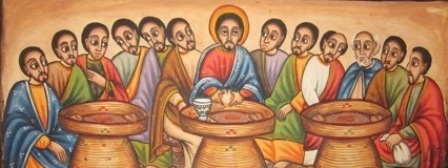
John 13:1-15


In a recent television interview a famous Muslim scholar said that ultimately there is only one sin and all others come from that sin. What would you name as the worst sin? He was quite clear that the greatest sin of all is forgefulness. According to him if we forget Allah (or for us, God) we forget who we are, what we are about and where we are going. We are like people wandering about without any goal in life, being blown this way and that by whatever prevailing wind blows – pleasure, drugs, money, etc.

I think he is correct as a year or so before my good mother died she had Alzheimer’s disease, e.g. loss of memory. My mother couldn’t recall who had visited here 5 minutes earlier, when she had eaten last, she forgot to turn off the gas – very dangerous, you’ll agree. It was very hard for us to see her like that. She had forgotten the most important things, through no fault of hers.

Tonight’s feast, the celebration of the institution of the Lord’s Supper is all about remembering. Remembering who God is, who we are, what we are called to be and above all a call to gratitude or thanksgiving which is the Greek word for Eucharist. In the first reading, the Jews are warned not to forget one of the greatest events in their history – the Passover Meal. This meal still is for Jewish communities around the world a commemoration of the Jews as God’s people, namely their liberation from slavery in Egypt. For us as Christians it is a re-enactment of our Passover from slavery, the slavery from sin to the freedom of the children of God.

On the night before he died Jesus celebrated the Last Supper, which became our Eucharist. The account is taken from John’s gospel. John himself does not have a Last Supper scene in his gospel, rather he assumes the Christians know about it and so he interprets the meaning of the Last Supper for us. The love of Jesus for us in giving his life and in instituting the Eucharist is bound up with the idea of service – the washing of the feet. This was the work of a slave at the time of Jesus, but Jesus the Lord and Master tells us that leadership among his followers is a leadership of loving service. To be a leader, to have authority in God’s church is to serve others in love. Serving not in any kind of condescending way but a service among equals.

When Jesus went down on his knees to wash the disciples’ feet Peter was appalled. And he cried out ‘you shall never wash my feet’. Here Peter reveals the mentality of those, and surely we can count ourselves among them at times, that the master never serves but is served and obeyed. But Peter has to learn that in God’s kingdom it is the leader who is the one who serves. It is a message for bishops, priests, religious, parents, teachers, employees, managers, chief executives, in fact for all of us. And yet most ordinary people I know do this, parents in taking care of their children or aging parents, mothers preparing meals, fathers trying to earn enough to take care of their families etc.

If God got down on his knees before you or me here tonight would we have the fundamental poverty needed to accept this graciously? So the incredible love and humility of Jesus in getting down on his knees at the last Supper was just another expression of what he did on the Cross the next day. Each action was a total offer of love, self-sacrifice and service for us.

So the Eucharist must be also at the same time the celebration of a loving, caring, serving community. If there is no community there is no Eucharist. If there is no unity, mutual respect and love for all present, then is not the Eucharist a mockery? Our Eucharist only becomes real after we leave the church. If the celebration of the Eucharist stops at the church door it is a sign and celebration of nothing. It is a failure by those who claim to recognise Jesus in the consecrated bread and wine to fail to see and serve him in those around us. The Eucharist if it is to be real is essentially the sign of a living, loving caring community of brothers and sisters which celebrates and strengthens and what it is through the Eucharist. Jesus told us to do this in memory of him. Let us continue to do it not just inside the church but equally so when we go outside.

‘Lord Jesus help us to practice by service and love what we claim to celebrate at the Eucharist. Amen’

Fr. Jim Kirstein, SMA

Fr Jeremiah (Der) Healy Mass & Burial

healy fr j der www

Fr Der Healy laid to resthealy fr j der www

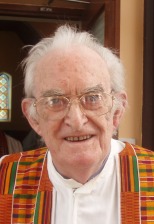
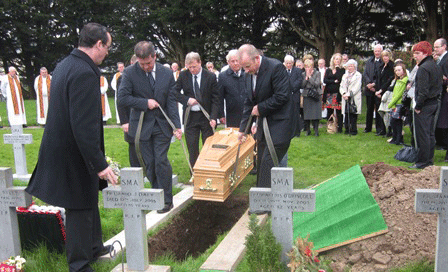
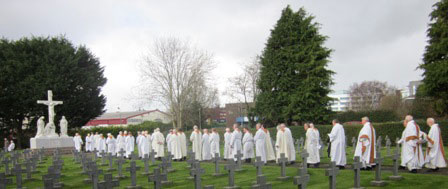
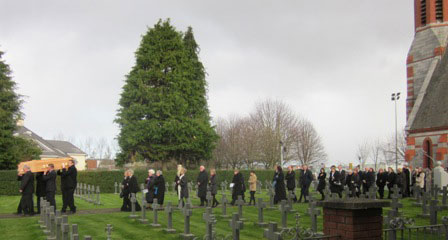
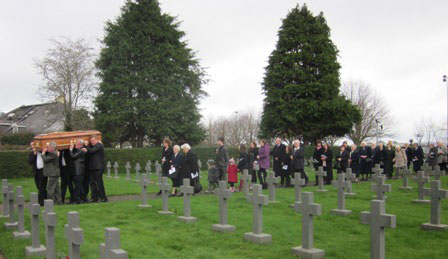
The funeral has taken place of Fr Jeremiah (Der) Healy who died peacefully on Friday, 30 March. His burial took place after 12 noon Requiem Mass at St Joseph’s SMA Parish Church, Wilton, Cork on Monday, 2 April.

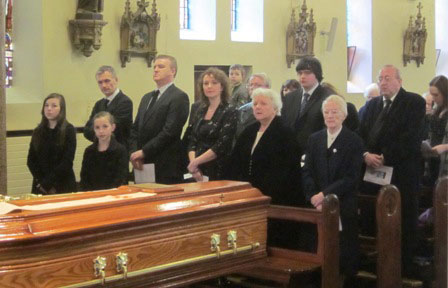
The family was led by Fr Der’s brother Teddy, his sister Lena, his sister-in-law Marie and brother-in-law James. Many of his nephews and nieces actively participated in the Mass and at the burial.

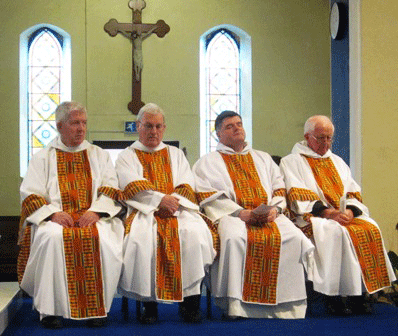
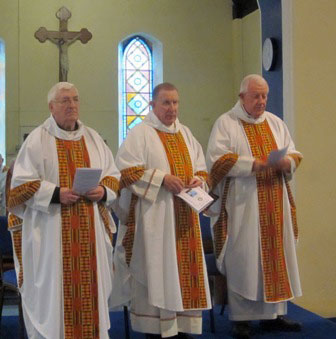
The Principal Celebrant was the SMA Irish Provincial Vice Leader, Fr John Dunne.

He was assisted by V Rev Fr Tony Mullins, Apostolic Administrator of Limerick diocese, Fr Bernie Cotter SMA (who worked with him in Jos diocese), Fr Gerard Murray SMA (who worked with Fr Der in Ilorin Prefecture) and fellow Tralee man, Fr John Quinlan SMA.

In his introduction at the beginnig of the Mass, Fr Dunne reminded us that we were gathered “this afternoon to remember and pray for Fr Jeremiah Healy who has died. He is better known in his family circles, among friends and to us in the SMA as Fr Dermot or Fr Der. Today we remember and celebrate his long life and his life as a missionary and priest in the Society of African Missions.

healy-fr-der-burial

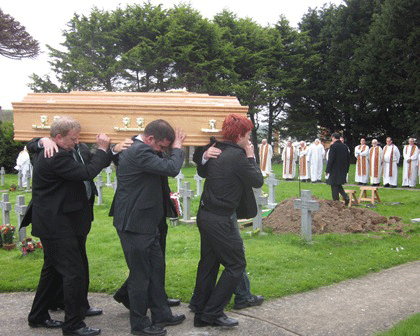
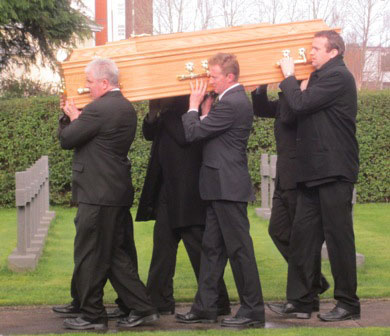
Fr Healy’s remains are lowered into his grave in Wilton by his nephews.

We are here to express our sympathy and to offer the support of our prayers to to Der’s family, relatives and friends. We gather with his sister, Lena, and his brother, Teddy, and their spouses, James and Marie. We also have with us today Der’s nieces and nephews, grand nieces and grand nephews, relatives and friends, who mourn his death. We pray also for Lauri, Der’s brother and Vera, his sister-in-law who have gone to their reward.

I welcome you all to this Mass and Christian funeral ceremonies. I wish to acknowledge the presence of Religious Brothers and Sisters, especially the OLA sisters, the Mercy Sisters and particularly Sr Margaret Kiely and the staff of St Teresa’s, Blackrock Road, who cared so well for Der in his final years and days. We appreciate the presence of concelebrating priests from our SMA communities and priests from other Diocese and Congregations who knew Fr Der.”

Fr Dunne also welcomed in a particular way former members of the Society who had come to participate in this funeral Mass.

He also wanted to “acknowledge the presence of Ms Hilda Kilraine, who was one of his best helpers when promoting the SMA magazine when Der was Editor. Some 36 years ago they met and Hilda became a lifelong and faithful friend to Der. Hilda was good to him all those years but more especially in his retirement and illness. This is evidence that the life of each one has its influence on the lives of others.

I want to convey to all of you the sympathy and prayers of our Provincial Leader, Fr Fachtna O’Driscoll, who cannot be with us today because he has travelled due to earlier commitments.”

Read Fr Dunne’s homily here.

The Readings at the Mass were read by Mary Tynan (niece) and James Reddy (grand nephew). Aoife Foley, a niece of Fr Der, played the music at the Mass and, in particular, played a favourite song of his: Abdullah Bul Bul Ameer. It brought many smiles to the congregation. 

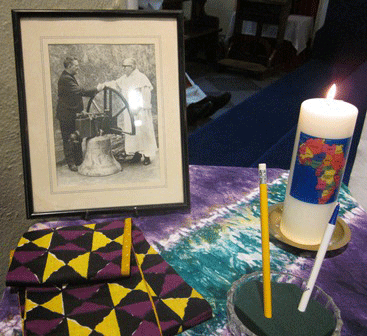
healy-fr-der-symbolsAt the Offertory of the Mass several symbols of Fr Der’s life were presented:

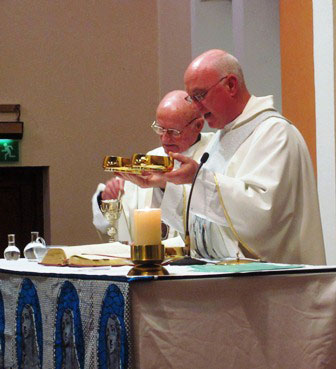
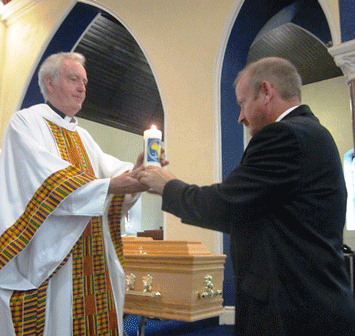
Fr Der’s own Chalice and Paten were carried by his brother Teddy and sister-in-law Marie; a photo of the Church Bell given to Ekan Meje parish by the Tralee Dominicans (Pat Brosnan); a lighted candle (symbolising Der’s mission to be a light to others, presented by John Tynan); Niamh Healy carried up a Stole, symbolising Fr Der’s priestly ministry and Willie Reddy presented a pen and pencil, symbolising Fr Der’s work as an Educator.

At the end of the Mass a nephew of Fr Der, Dermot Healy, spoke on behalf of the family. His edited comments can be read here.

Full obituary here.

Ar dheis Dé go raibh a anam.

Fr Jeremiah (Der) Healy SMA Funeral homily

healy---concelebrants

Fr Jeremiah (Der) Healy SMA

Fr John Dunne SMA, Vice Provincial Leader, was Chief celebrant at the Requiem Mass for Fr Jeremiah (Der) Healy at 12 noon on 2 April 2012 in St Joseph’s Parish Church, Wilton, Cork. The principal Concelebrants were V Rev Fr Tony Mullins, Apostolic Administrator of Limerick diocese, Fr Bernie Cotter SMA, who worked with Fr Der in Jos diocese, and Fr Gerard Murray SMA, who worked with him in Ilorin Prefecture.

healy---concelebrants


Readings:            Isaiah 61: 1-3, 6, 8-9              Romans 14: 7-12               Matthew 5: 1-12


The real desire of the human heart is planted deep within each person. It is a vital force which calls us to undertake a journey that leads us in new and different ways. Before and often during the course of that journey a person has no guarantee of the final destination. But, nonetheless, we have to make our way forward or else face the awful reality of living an unfulfilled or unhappy life. Fr Der lived a long, fulfilled and happy life and died a contented priest.

Sometimes we think we are clear and sure of where we are going; but more often than not we have to search and then find our way forward. As my life or yours is the only life given we must always proceed with care, courage and due caution. Our deepest dreams and true desires are what move us to live and ultimately find fulfilment. There are other desires too that are not so deep or that do not endure and they in time show themselves to be unreal or not likely to lead to happiness. We are all familiar with such desires and we have different names for them. Jesus experienced them as we are told in the Gospel accounts of the temptations. We spend much of our lives discerning what is a real desire of the heart and distinguishing it from those desires that are sometimes strong but, in the last analysis, prove to be only fleeting and unfulfilling.

The longings of the human heart have their source in a greater mystery. The true desire of the human heart is enfolded in the dream of God for each person. Psalm 139 reminds us of this truth when it says, “God you know me better than I could ever know myself. You know in all truth what I have been, what I am, what I will become”. The challenge of life then is to know and to follow the heart’s true desire. This takes a lifetime as the story of any human life unfolds and is lived out. But we are not alone; God is on our side to guide us. Der was blessed with 86 years of life; 65 of which were spent in the SMA and 60 of these as a missionary priest. Later this year he would have celebrated his Diamond jubilee.

Our first reading today reminds us that “the Spirit of the Lord has been given to us, for the Lord has anointed us”. Taking courage from Isaiah’s words we can be confident that if we seek the true desire of the heart we will find it. This is what vocation in life is about.

healy-fr-der-family

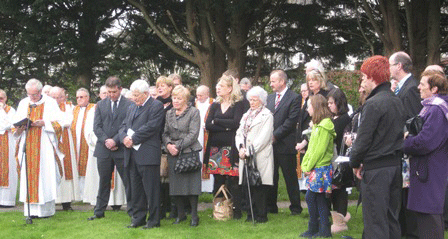
Fr Der’s family, other relatives, friends and SMA confreres
gather in the cemetery for his burial.

Der Healy was born in Tralee on 23 March 1926. He later discerned his missionary vocation and joined the SMA as a young man in 1947. Little did he know then where this decision would lead him. He was ordained on 13 July 1952. He spent 3 years at University College Cork and 1 year at London University. He was then assigned to the Diocese of Jos, in Northern Nigeria, which was at that time home to a young, emerging church. He taught in Mary Immaculate Teacher Training College, Kafanchan. Later in response to emerging needs Der was appointed to the Prefecture of Illorin to assist with the setting up of the new Mount Carmel Teacher Training College in Eloja and he became the first principal. He remained in Illorin working in the parishes of Oro and Ekan Meje until he returned to Ireland in 1974 for health reasons.

healy---james-reddyOur first reading also reminds us of what it means to respond to God’s call. For each person there is a purpose in the call we receive. In Der Healy’s life it was a call to respond to the God who called him to be a missionary. He was sent to bring good news to the poor, to bind hearts that are broken and to proclaim liberty to captives. This highlights what any vocation, but particularly the missionary vocation, is all about.

Fr Der’s nephew, James Reddy, reads from the Prophet Isaiah.

The second reading chosen for our liturgy today underlines the importance of any life by reminding us of what Christ did and the gift of his life and death for all people. The life of Der also had its influence on the lives of others. What impacts most is the way we live and interact with them. Der could not have lived and worked in Nigeria and particularly in the field of education without having a huge influence on the lives of many young people. In his parish pastoral ministry both in Nigeria and later in Ireland he was pastor and friend to many people of different backgrounds and ages. He served in the Diocese of Limerick for 18 years working in the parishes of Adare and Ardagh. Through his writing and as editor of our SMA magazine he reached many homes and people of all ages whom he never knew or met directly. This is evidence that the life of each one has its influence on the lives of others. Der Healy’s active ministry had its influence on very many people.

The years of Der’s retirement in our houses in Claregalway and Blackrock Road were different from those years of his work or ministry. But he was always a man who was kind, ready to help with advice, or make others welcome.   He was reserved, a man who knew his own mind, strong but gentle, respectful of others and a good and valued community member. His failing eyesight was a limitation and a challenge but he was not overwhelmed by it. He loved sport and his radio was ever at his side. He had a sense of humour which stood him in good stead. His family, his nieces and nephews will remember his many stories and his particular view of life and his sense of humour.

healy---john-tynanIf we are to know and follow the deep desire of the heart and fulfil the dream of God in our lives we surely need some help and guidance. This task cannot be accomplished alone! But we are not left to our own devices. Our loving and gracious God chose to accompany us in various ways at various different times to ensure that the goal would be achieved. We believe and celebrate in a special way during this time of Holy Week that God sent his Son, Jesus, who in turn promised to be for all the Way, the Truth and the Life.

John Tynan presents a lighted candle at the Offertory of the Mass, symbolising that through Baqptism, each of us is called to be a light to others.

Today our Gospel reading from Matthew reminds us of the clear, simple and attainable steps set out by Jesus in what we call the Beatitudes. Each one holds the promise of leading to happiness or the attainment of the deep desire of the human heart. In responding to our own vocations we are invited to follow these guidelines for good living. The call to be poor in spirit, to be gentle with others, to hunger for justice, to be merciful and forgiving, to suffer in the cause of right holds the promise of a place in the Kingdom of heaven. Der believed in these values and virtues and strove to live according to them. We now ask God to be merciful to him and grant him the promised blessings.

Hanging on the wall of Der’s room is a poem entitled, Sunset Sonnet. It was special to him. It seems to have moved with him over the years and so ended up in his room in Blackrock Road.

The last lines read:

“If thus to see thee veiled brings such delight
How wilt thou seem to our unclouded sight?”.

Der now knows the answer to this question and our prayer for him today is that he has seen face to face the One who alone can satisfy the deep desire of his heart”.

Ar dheis De go raibh a anam.

Fr Jeremiah (Der) Healy SMA Tribute

healy-fr-der-burial-2

 healy-fr-der-burial-2

Fr Der’s nephews and grand-nephews carry him to his final resting place.


Dermot Healy, a nephew, spoke on behalf of the Healy family before the Prayers of Final Commendation. Here is an edited version of Dermot’s remarks:


We would like to thank all those who took such amazing care of Fr. Der. In particular we would like to say a special thank you to:

Fr. Colum O’Shea and all the priests in SMA House, Blackrock Road

The SMA Fathers here in Wilton for their hospitality and for making us feel very welcome today and last night.

Sr. Margaret and her care team in St. Theresa’s Blackrock Road.

Also we would like to acknowledge Fr. Der’s previous time in the SMA House in Claregalway, a place he called “home”.

It is very comforting to know he received such great care and attention both here and in Claregalway.

A special thank to you to all of you who have sympathised and supported us in the last few days. Your words of comfort have given us great solace.

Fr. Dermot was

  • A totally devout priest dedicated his life to spreading the word of God. He did this on an international basis – from Nigeria to Adare to Carrickerry / Ardagh.
  • Editor of SMA magazine when he returned from Nigeria
  • House Masses for us were very special
  • He always prayed for prisoners who were wrongly imprisoned.

He was a totally devoted family man:

  • Fantastic brother to Lena, Teddy and Lauri
  • Great Brother in law to Marie, Vera and Jim
  • A proud Uncle to his four nieces and two nephews (Mary, John, Deirdre, Aoife, Anita and Dermot)
  • Family occasions were of huge importance to Fr. Der. We have wonderful memories of:
    1. His Golden Jubilee
    2. 80th Birthday
    3. Weddings
    4. Christenings
    5. Christmases in Tralee
    6. Numerous family gatherings
    7. We were very privileged to have him say masses in our houses

Fr. Der took a huge interest in his family and took huge pride in seeing us all grow and develop. We all know he had a very special interest in each of us and prayed for us throughout our lives.

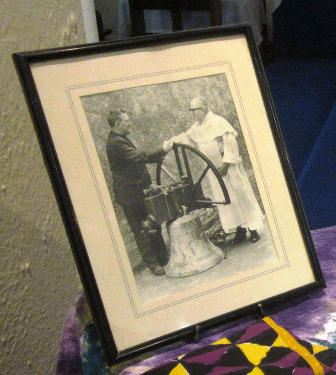
Our picture shows the Dominican Prior in Tralee presenting the Church Bell to Fr Der for Ekan Meje parish in Ilorin diocese, Nigeria where it still tolls to call the people to prayer.

healy-bell-picture37 years ago, when he was editor of SMA magazine Fr. Der formed a very special friendship with Hilda Kilraine, who became one of his closest confidante and friends. They travelled to many corners of the world together and shared so many happy memories and times together. It was fitting that Hilda was with Fr Der in his final days. The family would like to pay a special tribute to you Hilda for the true friendship, support and care you gave Fr. Der over the last 37 years. Hilda cared a lot for uncle Der and he cared equally for her.

Finally we would like to pay tribute to Fr. Der the person…

  • A Sports Fanatic – from his beloved Kerry Footballers to the pensioners in London, whom he reneged his support on recently in order to fulfil his ABU philosophy…
  • His humorous love of cricket – encouraged by an ABE spirit
  • His love of Golf
  • He would watch Sky Sports if there was two flies fighting. I am sure that he will be back watching high definition 3 D in surround sound in heaven.
  • Fr. Der had a deep and varied appreciation of music – his repertoire ranged from Pavarotti, Philharmonic Orchestras, Bach, Beethoven to Dido in more recent years. Lyric FM would blare from his room at all hours of the morning.
  • He always listened to his radio. His favourite radio programme was Alistair Cooke’s Letters from America which he listened to for 50 years
  • A true intellectual. Fr. Der loved reading and had an amazing knowledge of literature.
  • In recent years even though his sight might have failed, his mind was as sharp as ever. His general knowledge and knowledge of current affairs was to be truly admired.

Although we are all sad at Fr. Der’s Passing we take comfort in the fact that he has a first class ticket to heaven. No doubt he is finding old friends who have gone before him. Tonight he will probably be having a scotch and a Dunhill (or a pipe) surrounded by Lauri and Vera and his parents. At some stage through the sing song of Brown paper and “She moves through the fair” he will strike up his piece the resistance of Percy French’s Abdullah Bul Bul Ameer (listen to it here) Through the smoke his clear but watery blue eyes will shine as he recites with gusto the fantastic lines of this great song. He had his own unique way of singing it, forgetting verses and then remembering them out of the blue. As we grew up we loved when he sang it and we listened and hung on to every word.

One day this bold Russian had shouldered his gun,
And with his most cynical sneer,
Was looking for fun when he happened to run
Upon Abdullah Bul Bul Ameer.

“Young man,” said Bul Bul, “is existence so dull
That you’re anxious to end your career?
For, infidel, 
know you have trod on the toe
of Abdullah Bul Bul Ameer.”

A Muscovite maiden her sad vigil keeps
in her home by the cold Northern Star
And the name that she murmurs in vain as she weeps,
is Ivan Petrovski Skivar.

Although today is a sad day for all of us, it is also a time to celebrate the life of a person we all loved. Fr. Der was a dear friend to many, a great uncle and brother / brother in law. We know he lived life to the full. He never complained even when his sight and his health deteriorated. When you asked him how he was he would say “wrecked” but he always said that so we got used to it. He still smiled, still remembered, and still said prayers for us all.

Although we might forget his words, his sermons, his stories we will never forget how he made us all feel.

An HONEST man here lies at rest,

As e’er God with his image blest;

the friend of man, the friend of truth,

The friend of age, and guide of youth:

Few hearts like his, with virtue warm’d,

Few heads with knowledge so informed;

In our world, he made the best of this.

In his new world, he will live in bliss;

Robert Burns, celebrated Scottish poet and lyricist

Ar dheis De go raibh a anam dilis.

Fr Jeremiah (Der) Healy SMA Obituary

healy fr j der www

Fr Jeremiah (Der) Healy SMA

healy fr j der wwwThe death has taken place of Fr Jeremiah Healy at 8.45am on Friday, 30 March at the St Theresa’s Nursing unit, African Missions, Blackrock Road, Cork. For the previous 24 hours or so the community had been praying with him and for him as his moment of death arrived. With him when he died were some of his SMA confreres, nursing staff and his devoted friend of many years, and a longtime SMA supporter, Ms Hilda Kilrane.

Read Funeral homily here.
Read Family Tribute here.
Read Report on Mass & burial here.

Within his family and the SMA he was known as Dermot or Der. He was the born in Castle Countess, Tralee, Co Kerry on 23 March 1926 to John and Mary (née McCarthy), the first of their four children. Next to Fr Der was his sister Lena, followed by Teddy and his late brother, Lauri (RIP). (Lauri was named after the Papal Legate to the 1932 Eucharistic Congress in Dublin, Cardinal Lorenzo Lauri.)

He attended the local CBS National School in Tralee and completed his secondary education at St Mary’s CBS, The Green, Tralee.

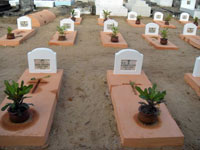
The year before Der decided to join the Society of African Missions, the SMA Vocations Director was allowed by the Bishop of Kerry to visit the schools in the diocese, subject to the approval of the local Parish Priest. He was able to visit every school bar one – Tralee CBS! And it was that very year that the SMA had the most vocations from Kerry, indeed all from Tralee CBS. Four young men joined the SMA that year: Der Healy, Elisha O’Shea and the Kennedy brothers: Michael and Tom. All four of them were to give lifelong service as missionary priests and, as Fr Bill Foley SMA (a fellow Tralee man) reminded us at Der’s burial: all four now lie resting in the Wilton cemetery until the Day of the Resurrection.

How did Der (and the other three) decide to join the SMA? Among the SMA priests from Tralee, at the time Der joined, was Fr Tommie Drummond SMA who had recently returned on holidays from his mission in northern Nigeria. His return had an amazing influence on the people of Tralee, particularly these four young men. Fr Tommie was the unofficial SMA Vocations Director that summer of 1945 in Tralee. Maith thú, a Athair!

Der went to the SMA Novitiate & House of Philosophy at Kilcolgan, Co Galway. At the end of two years he took his First Oath of membership, on 1 July 1947. He then studied Theology at the African Missions seminary, Dromantine, Co Down. He became a permanent member of the Society on 12 June 1950. In 1951, Der, along with Tom Kennedy, went to UCC to study for a BA degree. Both were ordained to the priesthood on 13 July 1952 at the Sacred Heart Church, Western Road, Cork (now a parish run by the Missionaries of the Sacred Heart [MSC]). As they were both studying at UCC at the time it was more convenient to be ordained in the city than make the long trip to Newry Cathedral where most SMA priests were ordained. The ordaining bishop was the late Dr Cornelius Lucey, Bishop of Cork. Fr Der completed his BA Degree at UCC in 1954. The following year he graduated from London University with a Diploma in Education. Destined for the teaching ministry in Nigeria, it was a decided asset to have a qualification from a British university. His first appointment in Africa was to the recently-created diocese of Jos in Nigeria, which was then under the leadership of Bishop John Reddington SMA.

Every SMA missionary had to spend several months adapting to the local culture and learning the language etc. Der was sent to Shendam for this Tyrocinium period. He was then appointed as Education Secretary in the dicoese but, quite quickly, he was asked to join the teaching staff of Mary Immaculate Teacher Training College, Kafanchan (1957 – 1963). Appointed Vice Principal, Der was a teacher par excellence. One of the principal concelebrants at his funeral Mass was Fr Bernie Cotter SMA who also served on the staff there with Der. Writing of him at the time of Der’s Golden Jubilee, Fr Bernie said: “It was my privilege to work with this most gracious and helpful confrere in CMI, Kafanchan.”

The Prefecture of Ilorin was erected in 1960. At the request of Msgr William O’Mahony SMA, Fr Der left the Mary Immaculate TTC and moved south to Ilorin. His early years in Ilorin were in the education apostolate, particularly as Principal of the Teacher Training College at Mount Carmel (1963 – 1965). When he left the education ministry behind, Der moved into fulltime pastoral work.

healy-fr-der-symbolsHe worked in Osi and Oro parishes before completing his years in Nigeria as Rev Fr i/c of Ekan-Meje parish in the south of the Prefecture. During his years in Ekan-Meje he persuaded the Dominican community in his home town to give him a Church Bell which he installed at the Parish Church. A photo of the handover of the bell from the Dominicans to the SMA had pride of place in Fr Der’s room in St Theresa’s.

This photo was one of the symbols carried to the Altar at the Requiem Mass. The other symbols were a Candle – symbol of Der’s baptism and his commissioning to be a light to others; a pencil and pen symbolizing his teaching ministry and an African Stole to remind us of his calling as a missionary priest.

In 1974, an acute heart condition forced his retirement from the missions. After recovering his health, Der was Editor of the African Missionary. During those three years, Der had an enormous outreach to SMA supporters throughout the country and beyond and used the power of his pen to inofrm them of the SMA and our missionary work. In 1978 he asked to be allowed to return to the pastoral ministry and so went on loan to Limerick diocese where he was to spend 14 very happy years – first in Adare parish (1978-1981) and then at Ardagh (1981-1994). It was fitting that V Rev Tony Mullins, Administrator of the diocese of Limerick, was among the principal concelebrants at Der’s funeral Mass.

After 18 years in Limerick diocese he moved to the SMA House, Claregalway where he helped out pastorally in neighbouring parishes and also in the SMA House with visitors etc.

In 2007, due to increasing ill health, he retired to the African Missions, Blackrock Road where he lived a quiet life as increasing sight failure restricted his activities. But he was never ‘out of touch’ – the Radio was always on and Der was up to date on all that was happening in the world. His lifelong interest in all sports was sated by Sky Sports channels. His support for his beloved Kerry team never waned, even in the (rare) bad times. In soccer he followed Chelsea; in Cricket – any team which could beat England.

Right up to the day before his death, Fr Der concelebrated the community Mass at 10.30am. Now he celebrates it with the heavenly choir.

Palm Sunday 2012

PALM (PASSION) SUNDAY – 1 April 2012

Isaiah 50:4-7
Philippians 2:6-11
Mark 14:1-15, 47

Many years ago a famous artist wanted to paint a picture of Jesus as a young man. He searched around for a model and eventually found a very handsome young man. Years later the same artist wanted to paint a picture of the Last Supper, but had difficulty in finding a model for Judas. Eventually he did, someone with an evil-looking face which put fear into people who looked at it. You can imagine the artist’s surprise when he discovered that it was the same man he had chosen as his models for Jesus and Judas. Between the first painting of Jesus and the second on of Judas at the Last Supper the young man had got into bad company and had committed many crimes. This was reflected in his face. From a young man with much potential he had become an evil person and failed to reach his capacity for greatness.

We should see this Holy Week as one unit. It includes the suffering, death, resurrection and ascension of Jesus as well as the sending of the Holy Spirit. There is the joy of today’s opening gospel of Jesus entering Jerusalem and getting an enthusiastic welcome from the crowds. But soon the picture changes to darkness, suffering and death. Very probably some of the people who welcomed Jesus enthusiastically on Palm Sunday with shouts of ‘Hosanna to the Son of David’ were among those who cried out for his death a few days later, ‘Crucify him, crucify him’. Just like the story in the beginning, the same young man who acted as a model for Jesus also modeled as Judas. Do we not do the same from time to time?

Each one of us has this capacity, that for greatness and that for evil. We all know from our own personal experience that we can do many good acts, but we are conscious that we also do what we know is wrong, evil and sinful. We have the ability both to help and to hurt others, sometimes within a matter of minutes. For me the amazing fact is that Jesus who is God never punishes us, certainly doesn’t send anyone to hell. He is sad, very sad for sure when he sees that our bad or evil behavior hurts others but he never, never, never punishes us. If you/I read the gospel account of Mark’s Passion narrative today amazingly there isn’t one word spoken by Jesus about condemning, even those who put him to death. He is upset when they are unkind to the woman who anoints him, but not statement about punishment or that he will get even with us later. This continues to astonish me as and it confirms John 3.17 where it says that ‘God sent his Son into the world not to condemn it but to save it’. This is probably the most difficult aspect to accept fully about God. God never punishes, God never judges unto condemnation, occasionally he judges unto conversion in the hope that people who cannot accept his gentle approach might be pushed to respond by his challenging words. My mind is constantly overwhelmed with the idea of a God who does not punish – ever. It is we chose not to accept God’s love, God’s friendship. The rejection of God comes from our side. The rejection of us by God is just not possible since GOD IS LOVE. But God will never force his love, his friendship on us. It is always an invitation to us.

In today’s gospel story in Mark, Jesus says or does very little. It is the various actors in the drama who decide for themselves what their relation to Jesus will be. They either accept or reject Jesus. It is the same for us. We decide by our way of life whether we want to be for Jesus and accept his way or we turn away and go our own way. We choose. It is up to us and God will not force us. Today’s gospel is another offer from God to us. Will we choose Jesus today or not?

The key to today’s Palm Sunday/Passion Sunday liturgical celebration is the second reading from St.Paul’s letter to the Philippians. “Let this mind be in you which was in Christ Jesus”. Though Jesus was in the form of God he emptied himself and went down to the lowest depths of human degradation and humiliation, taking on all that we deserved from our sinful, non-loving behaviour. Dying naked on the cross and as a convicted criminal his totally self-sacrificing attitude was accepted by God the father. Jesus descended to the very depths of degradation and darkness, to the depths of feeling rejected by God that many experience. He answered with a totally loving surrender and so won for us the possibility to do the same no matter how low we sink as humans. This shows us in the most profound way what Jesus in his love for us was prepared to do to draw us back to his embrace.

“Lord Jesus, your love for us is beyond understanding. No wonder St. Paul described it as the foolish love of God. Help us to turn to you fully in humble gratitude. You alone are the Way, the Truth and the Life. You alone are Love. Give us the Holy Spirit to love you and others as fully as we can for this is what you ask of us. Help us to show to all how valuable they are to you no matter how far they have sunk into evil patterns. Amen.

Fr. Jim Kirstein, SMA

Bishop Gbuji homily at 150th Benin City

gbuji-bishop-a-o

150th Anniversary Mass at St. Andrew’s Catholic Church,
Ngbighoko, Benin City
on 17 March 2012

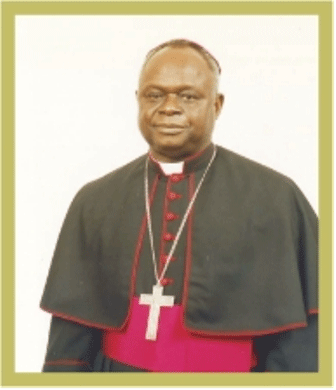
gbuji-bishop-a-oOn the occasion of the Mass to celebrate 150 years of missionary endeavour in part of Nigeria, Most Rev Anthony Okonkwo Gbuji, Bishop Emeritus of Enugu, was invited to preach.

In 1964, the request of Bishop Patrick J Kelly of Benin City to the Holy See to divide his diocese saw the erection of the diocese of Warri. Its first bishop was the Rt Rev Lucas Nwaezeapu (RIP). Nine years later, on 15 July 1973, a second diocese was carved out from Benin City. The mantle of leadership of the fledgling diocese of Issele-Uku was laid on a young priest, Rev Fr Anthony Okonkwo Gbuji. He led the diocese until 8 November 1996 when he was translated to Enugu as bishop, in succession to the Rt Rev Michael Eneje who had retired. Bishop Gbuji was to lead Enugu for over 12 years before his own resignation, having reached the age limit.

It was fitting that Bishop Gbuji be asked to preach at the Mass to mark the 150th Anniversary of the arrival of the SMA missionaries in this part of the Lord’s Vineyard. His homily is a treasure throve of information and traces the development of the Church from its beginnings until the present day. Bishop Gbuji worked with many of the pioneer missionaries and knew them well. He also has an unrivalled knowledge of the development of the Catholic Church in this part of Nigeria. His homily should be read by all who have an interest in the history of the Church, and in particular of the SMA, in this part of Nigeria.  Bishop Gbuji preached the following homily to the assembled faithful.

Your Excellencies, Beloved SMA Jubilarians, Missionary Sisters of Our Lady of the Apostles (OLA), my dear and Holy People of God

This morning we heard once again those powerful and captivating words of invitation and mandate from the loving heart of Christ the Redeemer: “FOLLOW ME AND I WILL MAKE YOU INTO FISHERS OF MEN” (Lk. 5:10; Mt. 4: 19). The mission of being fishers of people is addressed not only to Peter, but also to all those who are with Jesus, that is, to all his true followers. 150 years ago the hearts of some generous and gallant disciples were set on fire to carry the message of Good News of salvation to countries and peoples far away from theirs. That fire has blazed the path of salvation throughout many lands in Europe, Africa, Asia, Oceania and the United States of America: Yes! “Their report goes forth through all the earth, their message, to the ends of the world.” (Ps. 19:5).

My dear people of God, the story of the Society of African Missions (SMA), is a wonderful success story in the salvation history of the Church. The lives of all of us gathered here today have been deeply touched positively through the proclamation of the good news by the SMA missionaries in different parts of our country Nigeria. For this may the Lord be praised both now and forever.

Today indeed is a day of joy; it is a day of prayerful reflection and a day to express our gratitude to God for the abundant blessings on us; and to our dear SMA Fathers and Brothers for their missionary work and in our country, Nigeria. Our heartfelt gratitude similarly goes to the Missionary Sisters of Our Lady of the Apostles (OLA), the twin sisters of the SMA’s, for their effective collaborative ministry in our land.

A DAY OF JOY
Today, the entire Church, particularly the Church in Ireland and in Nigeria, celebrates the feast of St. Patrick who planted the seed of faith and mission in Ireland in 432 AD, about 1580 years ago. And all of us here like several millions of others, are overjoyed and blessed to join our S.M.A friends to offer today a Mass of Thanksgiving to mark the 150th anniversary of their missionary work in Nigeria. Our joy is overflowing because we are invited also to remember the memory of 425 deceased religious personnel who worked in the Mid West of Nigeria from 1884 – 2011. We are offered the opportunity to pray for their eternal happiness and repose in heaven: Eternal rest grant unto them O Lord….

A DAY OF PRAYERFUL REFLECTION
This day of joy is also a day of prayerful reflection, if only briefly to narrate within 20 or more minutes the long, painful and sacrificial, yet glorious and successful missionary adventures for the 150 years of the S.M.A in Nigeria. I do this under three main headings:
(i) The beginning of the Society of African Missions (1856 – 1863)
(ii) The S.M.A in Nigeria (1963 – 1985)
(iii) The New S.M.A ERA (1986 – 2012)

THE BEGINNINGS OF THE SOCIETY OF AFRICAN MISSIONS (1856 – 1863)
The early missionary endeavours of the Portuguese and the Spanish in the 15th Century (1472 – 1651) to Nigeria, from all human calculation were a total failure.

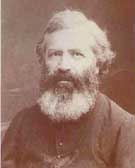
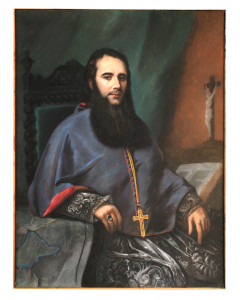
In February 1856, Cardinal Alessandro Barnabo, the Secretary of the Sacred Congregation of Propaganda Fide asked Bishop de Marion Brésillac to found a missionary congregation to assist him in his new work in West Africa and to ensure stability and continuity.

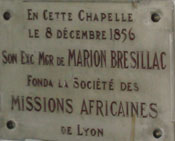
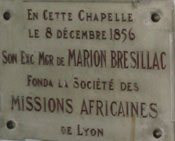
On 8 December 1856, on the hill of Fourviere – at the shrine dedicated to Our Lady in Lyons, France, Bishop de Brésillac and six companions established the Society of African Missions. The special aim of the new Society was the evangelization of the most abandoned people in Africa and the formation of an indigenous clergy to care for the newly-established communities – thus enabling the missionaries to move on to evangelize others who were still in need.

MISSIONARY ASSIGNMENT IN AFRICA
In 1858 Rome entrusted the mission of Sierra Leone to the SMA and in the same year, the first three missionaries departed for their new mission.

In 1859 Msgr. de Brésillac entrusted the SMA in Europe to Fr. Augustine Planque and set out with two others to join his three confreres in Sierra Leone.

DEATHS IN FREETOWN
On arriving off Freetown they were advised not to go on shore as an epidemic of Yellow Fever was raging in the town, but wanting to be with his missionaries and flock, the bishop and the others disembarked. Twenty-six days later, all the missionaries were dead with the exception of one Brother who returned to France to deliver the sad news. But the saying of the Lord must always come true that: “unless a wheat grain falls on the ground and dies, it remains only a single grain…” (Jn.12:24).

Despite such a harrowing loss, the work was destined to continue, and, with the blessing of Pope Pius IX and under the direction of Fr Planque, a new beginning was made. Another group left for Africa in 1861 and a foundation was made in Dahomey (now Benin Republic).

Numerous deaths of young priests marked these early years of the Society, yet still it spread quickly throughout the West Coast of Africa. “The first missionaries sent to the people of Africa will not be able to achieve their ends, but thanks to their sacrifice, they will sow an abundant harvest, which their successors will reap”, (wrote one of those early missionaries). By the time of Fr Planque’s death in 1907, there were 296 bishops, priests and brothers, 205 of whom were on the missions in 8 African countries: Dahomey (Benin), Nigeria, Algeria, South Africa, Egypt, Gold Coast (now Ghana), Ivory Coast and Liberia. At this stage more than 130 others had given their lives within a few short years of reaching African soil, then known as the “White man’s grave”.

EXPANSION OF SMA (UP TO 1992)
From the beginning, the SMA drew its membership from several countries from which, after the death of Fr Planque, the following Provinces were gradually formed in Ireland (1912), Holland (1923), two in France: Lyons and Est (1927), USA (1941), Great Britain (1968), Italy (1982), and the Districts of Canada (1968) and Spain 1992).

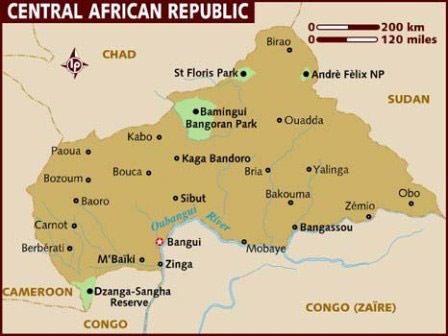
Between 1918 and 1992 the Society had also spread to Morocco, Togo, Niger, Democratic Republic of Congo, Zambia, Central African Republic, Tanzania, South Africa, Kenya and Angola. It also opened houses in Australia and Argentina.

SOCIETY OF THE AFRICAN MISSIONS IN NIGERIA (1863 – 1985 – 2012)
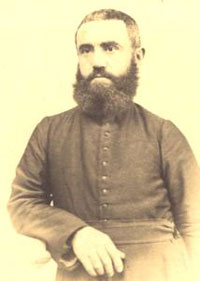
The SMA presence in Nigeria goes back to 8th September, 1863 when Fr. Francesco Xavier Borghero SMA arrived in Lagos. (Fr Borghero had paid a brief visit to Lagos in March 1862, on his way to Sierra Leone).

The elderly SMA Fathers in our midst enjoy to tell the story of how the pioneer priest to Nigeria was subjected to some catechism test before he was accepted as a Catholic priest: “There was a small Catholic Community of Brazilians under the care of a catechist named “Padre” Antonio. He questioned Fr. Borghero, the bearded figure in the white cassock, to know if he were a Catholic priest. One of the questions he asked was to could recite the Rosary. Satisfied with the replies, Fr. Francesco Borghero was accepted. On this occasion fifty nine infants were presented to him for the sacrament of Baptism. One can then understand why till today the SMA Fathers would subject the Nigerian Candidates for the Sacraments of Baptism, Holy Communion and Confirmation to rigorous catechism questions before administering the sacraments to them. Is it a revenge Bishop P.J. Kelly SMA and his SMA Brothers (Confreres) were taking on our people or what?

At first the progress of evangelization was slow but gradually the seeds sown began to bear fruit with many of our people blessed with strong faith in Christ; happily, many of us are priests and bishops today. May God bless and reward the SMA most abundantly. We pray O Lord!

As other SMA Fathers followed the footsteps of Fr. Borghero, eg Fr. Courdioux in 1863; Fr. Noche in 1864; Fr. Jolans in 1866; Frs. Vermorel, Barth and Francois Cloud in 1969, mission centres were established in different parts of the country (by the SMA):

(1880 – 1890) Abeokuta, Lokoja and Asaba
(1890 – 1900) Ibadan
(1900 – 1910) Shendam – First in Northern Nigeria.
(1910 – 1920) Ondo, Ekiti; Ilorin and Ijebu – Ode
(1920 – 1930) Kano, Kaduna and Jos.

A spectacular breakthrough in the establishment of the Church in Nigeria by the SMA was the priestly ordination of Rev. Father Paul Obdooechine Emecete, in 1920. It was the first native priest in the entire West Coast of Africa. Thousands of other priests have since followed the footsteps of our pioneer priests. Many of us here today are overjoyed and proud to be counted among them. We are infinitely indebted and very grateful to the SMA Fathers.

Another break through that accounted for the huge success of evangelization by the SMA was the establishment of education institutions at all levels. Among their numerous and most outstanding schools and worthy of special mention are: St. Gregory’s Lagos; Loyola College, Ibadan; ICC Benin-City; St. Patrick’s Asaba; St. John’s Kaduna; CMI, Kafanchan and St. Joseph’s Vom; as well as St. Theresa’s minor Seminary, Oke-Are, Ibadan, SS. Peter and Paul, Bodija Ibadan, all founded by SMA priests. During the period of Bishop  P. J. Kelly, in Bendel State, more than 75% of all the Secondary Schools in the State were established by the SMA Fathers. This is a record unbeaten in the history of education in many part of Nigeria!

bishop gbuji preaches the homilyTHE SMA IN BENIN CITY PROVINCE
Our reflection cannot be complete if we fail to put on record the tremendous growth of the Church in Benin-City Province where the SMA put in their best apostolic mission labour. All of us gathered here are witnesses to their immense sacrifice and successes in evangelization in the entire world mission history.

The best wine at today’s wedding feast of the SMA and their mission in Nigerian is about to be served and I pray, you will enjoy it to the last cup and dreg. The statistics clearly show as follows:

In 1884, the Mission territory of Benin City was carved out of the Vicariate of the Bight of Benin. It was given by Rome to the Society of African Missions (SMA) and the territory was known as the Prefecture Apostolic of the Upper Niger and the first Prefect-Apostolic was Fr. Jules Poirier, SMA.

In 1911, the Prefecture of Western Nigeria was established with Fr. Carlo Zappa, SMA, as the Prefect-Apostolic. In 1918 Bishop Thomas Broderick, SMA succeeded Fr. Carlo Zappa (died in 1917) as Vicar Apostolic when the territory was raised to the status of a Vicariate. In 1934 Bishop Leo Hale Taylor, SMA was appointed Vicar Apostolic of Western Nigeria, succeeding Bishop Thomas Broderick who had died in 1933. Bishop Taylor was succeeded as Vicar Apostolic of Western Nigeria by our own Bishop P. J. Kelly, SMA.

In 1943, the territory became known as the Vicariate of Asaba-Benin.

In 1950, the Vicariate of Asaba-Benin became the Diocese of Benin City. Its first Bishop was Bishop Patrick Joseph Kelly, SMA. Bishop Kelly was succeeded in 1973 by our beloved brother and son now Archbishop Bishop Patrick Ebosele Ekpu. The Diocese celebrated its Centenary in 1984 and in 1994 it was elevated to the status of an Archdiocese.

Archbishop Ekpu retired in November 2006 and Fr. James Mary Okunbor, V.G. was appointed Administrator of the Archdiocese. In 2007 Bishop Richard Anthony Burke, SPS (then Bishop of Warri) was appointed Archbishop of Benin City and he was installed in 2008. In 2010 Archbishop Burke resigned and on 31st May 2010, Bishop Anthony O. Gbuji (Bishop-Emeritus of Enugu) was appointed Apostolic Administrator of the Archdiocese of Benin City. On 28th April, 2011 Bishop Augustine Obiora Akubeze was installed as the Archbishop of the Metropolitan See of Benin.

In 1955, the Kabba Prefecture was erected out of Benin City Diocese and entrusted to the Canadian Province of the Spiritan Congregation (C.S.Sp.) and led by Msgr. Auguste Delisle. In 1965 the Diocese of Lokoja was created with Bishop Delisle C.S.Sp. as its first Bishop. Bishop Delisle was succeeded in 1971 by Bishop Alexius Obabu Makozi, who was succeeded in 1992 by Bishop Joseph Sunday Ajomo. The current Bishop is Bishop Martin D. A. Olorunmolu. Lokoja is now in the Abuja Ecclesiastical Province.

In 1964, the Diocese of Warri was created from the Diocese of Benin City and Bishop Lucas Olu Nwaezeapu was appointed its first Bishop. He was succeeded in 1991 by Bishop Edumund Fitzgibbon SPS. Bishop Richard Anthony Burke SPS succeeded him in 1997. Bishop Burke was installed as Archbishop of the Diocese of Benin City in 2008. Bishop John Oke Afareha was installed as the Bishop of Warri in 2010.

In 1973, the Diocese of Issele-Uku was created from the Diocese of Benin City and Bishop Anthony O. Gbuji became its first Bishop. Bishop Gbuji was succeeded in 1990 by Bishop Emmanuel E. Otteh who was succeeded in 2004 by the current Bishop, Bishop Michael O. Elue.

In 1991, the Apostolic Vicariate of Bomadi was carved out of the Dioceses of Warri and Port Harcourt and made a mission sui juris in 1992 with Msgr. Thomas Greenan SPS as the Ecclesiastical Superior. In 1997 Bishop Joseph O. Egerega was installed as first Bishop of Bomadi Vicariate. In 2008 Bishop Egerega was succeeded by Bishop Hyacinth O. Egbebo MSP (Missionaries of St Paul, a Nigerian missionary society).

In 2002, the Diocese of Auchi was created from the Archdiocese of Benin and in 2003 Bishop Gabriel Godwin Ghieakhomo Dunia was installed as its first Bishop.

In 2005, the Diocese of Uromi was formally created from the Archdiocese of Benin City. In 2006 the Diocese was canonically erected with Most Rev. Dr. Augustine Akubeze as its first bishop now the Archbishop of Benin City Province.

The record of the SMA in Benin City Province may be crowned with some brief mention of Bishop Patrick Joseph Kelly SMA (1940 – 1973). We all remember him with deepest respect and joy. May his soul and the souls of all the faithful departed… rest in peace. Amen.

Bishop Patrick Joseph Kelly SMA was appointed Bishop as successor to Bishop Taylor in 1940. His Episcopacy was a long one of thirty-three years, and a very fruitful one. There was progress on all fronts. Catechists were his top priority. He trained the catechists personally in his own compound. During the Confirmation visits he insisted on examining the candidates – thousands of them – himself. He was determined to build up the indigenous Church. In 1940 there were three indigenous priests; when he resigned in 1973 there were 50 and hundreds of Seminarians and Sisters. Likewise the number of Catholic Schools continued to multiply throughout the Diocese. (The Vicariate of Asaba-Benin became the Diocese of Benin City in 1950). He established the first Secondary Schools, Immaculate Conception College, Benin and St. Patrick’s, Asaba in the mid forties and he was the Proprietor of up to 75% of the secondary schools in 1972. But Bishop Kelly was above all a man of prayer.

He was an SMA to the core and it was fitting that he should spend the latter years of his life at our Provincial Mother House in Cork City, Ireland. He died there on 18th August 1991, two weeks short of his 97th birthday. The Cause for his Canonization is underway in the Benin City Archdiocese. We hope that after this celebration the cause will receive a new and fresh impetus.

THE NEW ERA IN THE SMA EVANGELIZATION (1986 – 2012)
In 1982 the Holy Father, Pope John Paul II came on a pastoral visit to Nigeria and proclaimed for the Church in the country a New Era of Evangelization. This must have sparked off a new zeal and courage in SMA mission thrust. Since 1983 new foundations have been made to ensure that the missionary work of the SMA to Africa and African peoples will continue.

In 1986, a new chapter began for the SMA in Nigeria. With the local Church well established and with the challenge of Pope John Paul II to the Church in Nigeria to embark on a New Era of Evangelization, the time seemed right to invite Nigerians under the banner of the SMA, to go outside their own country, to preach the Gospel to parts of Africa where the Church is not as yet well established. From SMA records made available to us, fourteen Nigerian priests have been ordained (as SMA Fathers) and are working in a number of countries outside Nigeria. Those evangelized have now become evangelizers! May the Lord be praised both now and forever.

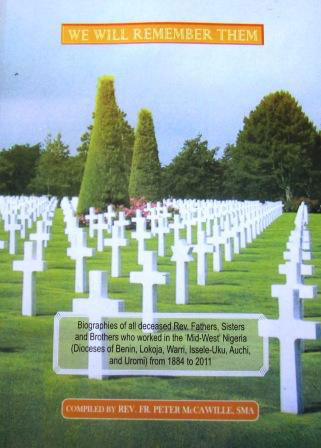
we-will-remember-them-book“WE SHALL REMEMBER THEM”

This is the title of the book containing the profiles of 425 deceased religious personnel who worked together with the SMA in the former Mid West region of Nigeria from 1884 – 2012. The Necrology of the SMA and the OLA record thousands of other missionaries who have paid, with the sacrifice of the lives, the great and precious price for love of God and neighbour.

Many of the SMA missionaries are buried in countries scattered all over the mission lands, particularly in Nigeria. A pilgrimage to the cemetery in Asaba would be spiritually rewarding; and as you gaze on and wonder, please, offer up prayers to God, to grant eternal rest to the souls that lie there and await the glorious day of the resurrection. May their souls rest in peace. Amen.


A DAY TO EXPRESS OUR GRATITUDE
As we celebrate with joy and recount the numerous achievements of the SMA over the past 150 years of the arrival of the first missionaries in modern times to establish the Church in Nigeria we are filled with an over powering feeling of gratitude to God. He has in his infinite love and mercy worked in our land and in our lives great miracles; he has poured out upon us abundant blessings of faith, hope and charity.

What shall we render to the Lord for the immeasurable gift of faith in Christ. This has proven to be the greatest gift God can give to his beloved children, for through faith in Christ we are destined to be coheirs with him of the eternal kingdom of our Father in heaven.

With the grace of God and through the special intercession of so many holy and saintly SMA missionaries who have departed this life before us, we shall work hard and zealously to reach heaven.

Dear SMA missionaries, living or dead: The Church in Nigeria today greets you and remembers you with immense gratitude. We ask the good Lord to bless and reward all the SMA missionaries to Nigeria and to the whole world. May God look kindly on the many thousands and millions of the SMA missionaries and all our people who have come to know, love and serve God and have since gone before us marked with the sign of faith. May God grant them also eternal rest in heaven. Amen.

May this Mass of Thanksgiving which we all offer today with so much love and gratitude to God, open up a new spring-time of evangelization and mission for the Society of the African Missions.

May the Blessed Virgin Mary the Mother of Jesus and Queen of the Apostles continue to protect and guide all SMA missionaries and the OLA Sisters, in the New Era of Evangelization. Amen.

+Anthony O. Gbuji
Bishop Emeritus of Issele-Uku and of Enugu
17 – 03 – 12

Fr Jean-Paul Pariseau SMA

pariseau-fr-jean-paul

Fr Jean-Paul Pariseau SMA

Funeral on 31 March

pariseau-fr-jean-paul

With the death during the night of 22nd / 23rd March 2012 of Fr Jean-Paul Pariseau, the SMA Canadian District, and the entire Society, has said goodbye to a great missionary and colleague.

As a member of the SMA General Council (1997 – 2001) Jean-Paul became well known among the Irish SMA’s as he visited them in Ireland and in their missions in Africa.

His soft-spokeness indicated a man of quiet disposition. Jean-Paul would never be rushed into an answer. He took time to consider the different options available, seeking advice if necessary and, then and only then, would he express his opinion and, more often than not, hold to it. His catch-phrase, when taking time over something he was asked : “Thank you for your question” and then that quiet chuckle of his.

In accordance with his wishes he will be buried alongside his father in Saint-Francois-du-Lac, after a Funeral Mass at 2pm in the parish Church. Fr Jean-Paul was well known and esteemed in his home parish as well as the nearby Indian Reserve. Fr Francois Gnonhossou SMA, former Superior of the African District-in-formation, will be Principal Celebrant with other SMA and diocesan priests concelebrating.

May he rest in peace.


A brief biography of Fr Jean-Paul Pariseau

Born 19 June 1931 at Saint-François du Lac, in the diocese of Nicolet, Québec, Canada.

Ordained a priest on 31 May 1958.

More than 21 years of his priestly life was spent as a missionary in Ivory Coast. For 17 of them, he was also Vicar General on Korhogo diocese.

In Canada, he served as Novice Master and Mission animator (1963 – 1970) as well as District Superior for two terms (1983 – 1989 and 2001 – 2009).

Jean-Paul’s quiet disposition and inherent holiness made him an ideal choice for formation work and as well as seven years as Master of Novices in Canada he was also Master of Novices for the Frères Catéchistes of Saint Paul in the Ivory Coast (1993 – 1997).

In 1997, Fr Jean-Paul was elected a member of the SMA General Council replacing Fr Jean-Paul Eschlimann who had resigned. After serving out the remander of that term he returned to Canada where he was, once again, proposed by his confreres for appointment as District Superior, a position he held until 2009 when increasing ill health necessitated his resignation.

Statistics for Benin Republic

STATISTICS for the CATHOLIC CHURCH in BENIN

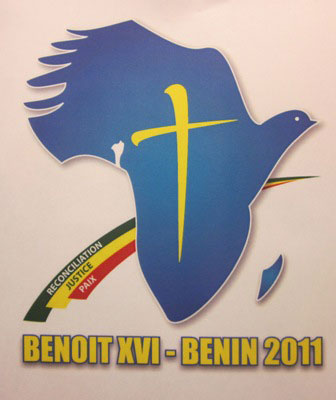
VATICAN CITY, 15 NOV 2011 (VIS) – For the occasion of Benedict XVI’s apostolic trip to Benin to sign the Post-Synodal Apostolic Exhortation of the Second Special Assembly for Africa of the Synod of Bishops, due to take place from 18 to 20 November, statistics have been published concerning the Catholic Church in that country. The information, updated to 31 December 2010, comes from the Central Statistical Office of the Church.

Benin, the capital of which is Porto Novo, has a surface area of 112,622 square kilometres and a population of 8,779,000 of whom 2,984,000 (34 per cent) are Catholic. There are 10 ecclesiastical circumscriptions, 338 parishes and 801 parish centres. Currently there are 11 bishops, 811 priests, 1,386 religious, 30 lay members of secular institutes and 11,251 catechists. Minor seminarians number 308 and major seminarians 497.

A total of 57,771 students attend 234 centres of Catholic education, from kindergartens to universities. Other institutions belonging to the Church or run by priests or religious in Benin include 12 hospitals, 64 clinics, 3 leper colonies, 7 homes for the elderly or disabled, 41 orphanages and nurseries, 3 family counselling centres and other pro-life centres, and 3 institutions of other kinds.                                               

Shalom Centre, Kenya

sccrr-logo

Shalom Centre for Conflict Resolution & Reconciliation, Nairobi, Kenya

SCCRR

Fr Padraig Devine SMA founded the Shalom Centre for Conflict Resolution and Reconciliation, aiming to assist with conflict resolution and reconciliation in Kenya.
The necessity of having conflict management processes was illustrated during the 2008/2009 post-election violence in Kenya. Many regions of Kenya, for example, the Northern territory also experience periodic conflicts. The Shalom Centre for Conflict Resolution and Reconciliation will consist of Track II conflict management which is concerned with non-official or informal conflict management processes.

Ghana

Fr Auguste-Joseph Moreau
Fr Auguste Joseph Moreau

Portuguese priests were in Ghana by 1471 but their efforts had ended by the beginning of the 18th century. The first SMA to reach Cape Coast and Accra was Fr Francesco Borghero who landed there on his was to Dahomey. But it was to Fr Auguste-Joseph Moreaube some years before the SMA actually arrived there for missionary work.

In September 1879 the territory known as the Gold Coast was erected as a Prefecture Apostolic entrusted to the Society of African Missions. This was a result of the request for missionaries made by Sir James Marshall to the Office of the Propagation of the Faith in Rome.

The pioneer SMA was Fr Auguste Moreau who arrived along with Fr Eugene Murat in 1880 at Elmina. Again the dreaded fever had its impact… On 5 August Fr Murat died. The first baptism in the Gold Coast was that of a one-year old boy, George August Salmon, at Elmina.  OLA sisters (Sr Ignatius from Ireland and Sr Potentia from Switzerland) came to Elmina in 1883 and opened the first girls’ school there.

In 1889 the first Mission was established in Cape Coast.
In 1890 the Church at Elmina was blessed, Keta became the residence of the SMA and OLA sisters opened a girls’ school at Cape Coast.
In 1896 Cape Coast was erected an Apostolic Vicariate and the first Bishop was Maximilien Albert SMA.


Republic of Ghana

Area: 239,460 sq. km.
Population: 20.4 million.
Population Growth Rate: 1.45%
Capital: Accra
Head of State:
President John Dramani Mahama was sworn-in on 7 January 2013, following the death in office of President John Atta Mills. President Mahama will serve for a four-year term.
Independence: 6 March 1957
Ethnic Groups: Akan 44%, Moshi-Dagomba 16%, Ewe 13%, Ga 8%, Gurma 3%, Yoruba 1%
Religion: indigenous beliefs 21%, Muslim 16%, Christian 63%

SMA involvement in Ghana (2013)
Currently there are 17 SMA missionaries working there of which 2 are Irish. There are also 4 lay missionaries working in Ghana. 

Fr James Owusu-Yeboah SMA is the Regional Superior, the 2nd Ghanaian to hold this position.

Values for Life

arms_africaThe Western World first began paying attention to refugees after World War II, when hundreds of thousands of civilians in mainland Europe were displaced after so many cities were bombed, some almost razed to the ground.  

Wars, of course, are still waging, and we are conscious that refugees still urgently need places of safety. But we don’t tend to think much about what fuels wars and who might be gaining from them. The global trade in arms is enormous and hugely lucrative.  Global military expenditure stands at over $1.6 trillion in annual expenditure and has been rising in recent years. The words of the former US President Eisenhower are stark:  “Every gun that is made, every warship launched, every rocket fired signifies, in the final sense, a theft from those who hunger and are not fed, those who are cold and are not clothed”.  So the cost of wars is not just in those directly affected but has global repercussions.

Ireland too plays its – admittedly small – part in this ever growing arms trade.  We don’t make full weapons systems, but we do make parts of them.  Has it ever occurred to us that while the Irish Government gives our refugees and asylum seekers the minimum of support through “direct provision”, some of them or their loved ones, may well have been wounded or killed by weapons made with Irish help?

Christians are coming to the end of an annual 6 week season of prayer and conversion called “Lent”. Its purpose is to prepare us spiritually to celebrate the great feast of Transformation that is Easter.  We are urged to “turn away from sin and believe the Good News”. Its message is that all people are loved and cherished by God, and that all life is sacred . The global arms trade illustrates so well the web of compromises we are, mostly unknowingly, involved in.  Manufacturing, after all, means jobs; exports mean income, both so badly needed. But we need to reflect deeply on the values we wish to live by. Life-affirming or life-denying?

Lord, make me an instrument of your peace.  Where there is hatred, let me sow love.
Where there is injury, pardon. Where there is doubt, faith. Where there is despair, hope.
Where there is darkness, light. Where there is sadness, joy.

O Divine Master, grant that I may not so much seek to be consoled, as to console;
to be understood, as to understand; to be loved, as to love.
For it is in giving that we receive. It is in pardoning that we are pardoned,
and it is in dying that we are born to Eternal Life.    (Prayer of St Francis)
Amen.

5th Sunday of Lent 2012

25 March 2012 

Jeremiah 31:31-34
Hebrews 5:7-9
John 12;20 –33


Some years ago the late pop idol Michael Jackson came to Ireland to give a concert. The tickets for the concert were very expensive. Nevertheless, a young relative of mine aged about 17 at the time, wanted so much to see Michael Jackson in a live concert that she went to great trouble to get a ticket. Even to get into the stadium where the concert was staged demanded a lot of struggle due to the crowds and the tight security. The people had to be in their seats 5 hours before Michael Jackson appeared on stage. However, those present didn’t consider that as too great an effort. They wanted to see Michael Jackson at any cost.

In the gospel today there are some Greeks, that is some non-Jews who want to see Jesus too, so they go first to Philip and Philip calls on Andrew and both go to Jesus to tell him. The Greeks’ request to Philip was ‘we would like to see Jesus’ I don’t know what they were hoping to see when meeting Jesus but his answer is first of all rather strange. He talks about a process of dying. In reality if they or you or me want to see Jesus we must know what to be prepared for. Seeing Jesus is not just like seeing Michael Jackson where we have a very pleasant and enjoyable time and go home probably feeling very good. To SEE Jesus is not just to look at him, which is presumably what those Greeks wanted (maybe like Zaccheus who climbed a sycamore tree to get a better look at Jesus as he passed by underneath and got far more in that Jesus went to his house to eat with him). To SEE Jesus is to enter totally into his way of thinking, to understand WHY he had to suffer and die and rise again. Like the grain of wheat, Jesus had to let go of everything, including his own life, in order to bring life to himself and many others. In the process both he and we will be transformed. If we cannot see this as the core of Jesus’ life we have not really seen him. But Jesus goes further and says that we must have the same way of thinking. Anyone who loves or clings to his life will lose it. (We think of someone like Howard Hughes the billionaire who lived the last part of his life as a lonely, fear-filled recluse).

Are we ready for what Jesus asks? Are we afraid to let everything go if necessary? Is Jesus asking too much? Let us have no doubt. Jesus too was afraid, deeply afraid. Today’s gospel says it clearly ‘Now my soul is troubled. Father, save me from this hour’. But as the second reading today, the Letter to the Hebrews says ‘he learned to obey through suffering’. Imagine that if we can.

This then is the core of Jesus’ message. To see him is to lose one’s life. Not easy to accept. Yet to die is to give life and we do this and often are not aware we are following the pattern of Jesus

We think of parents with 3 children. Another pregnancy not planned for occurs and they accept to give life rather than making a different choice, which would make things less demanding for them. We think of priests, sisters, many good lay people who renounce a family of their own and go to war-torn or famine stricken countries to aid the victims often at great cost. Some give their lives in the process. We think too of many young and not so young people who commit themselves wholeheartedly to the well being of others, people living alone, handicapped people etc. We think of the efforts married people go to bring up their children with values often counter to those in a purely consumerist or materialist world etc. etc.

It is true that giving oneself in love for the sake of others is an exacting process. Yet the paradox seems to be that it is in dying to our own desires and needs to serve others that we are much happier as a result. It seems to be a clear law of nature, that in seeking our own happiness and comfort only we will never find it. But like Jesus, it is in seeking to make others happy and trying to alleviate their sufferings even at much cost to us, that brings happiness to ourselves too. Jesus wasn’t trying to tell us in today’s gospel that if we follow him that in dying to our own desires and needs at least a good deal of the time, we will be rewarded with heaven. He is telling us that in trying to make others happier now that we ourselves will also share in this now, which I presume what heaven is about. We will continue this experience of happiness in the next life.

“Lord Jesus, we would like to see you too. But sometimes we are afraid to get to close to you because we have a good idea of what it may involve. Help us to see that following you is far more than just saying prayers and going to Mass in daily. Help us to live out the consequences of our prayers and masses in giving ourselves for others. Give us your powerful Holy Spirit to open our eyes to see you and to have the same attitudes and outlook as you had. Amen.’

Fr. Jim Kirstein, SMA

150 years in MidWest Nigeria

fr reginald nwachukwu and tim cullinane

SMA 150th Anniversary Mass in Benin City

fr reginald nwachukwu and tim cullinaneOn Saturday, 17 March, 2012, the Feast of St. Patrick (Secondary Patron of Nigeria) a special Anniversary Mass was celebrated at St. Andrew’s Church, Ugbighoko, Benin City. It was to recall and celebrate 150 years of SMA missionary endeavour in this part of the Lord’s vineyard.

Our picture shows Fr Nwachukwu and Fr Cullinane after the Mass.

The Mass took place on the recently-completed foundation of a new church building where a large crowd gathered to rejoice and thank God. The Chief Celebrant was His Grace, Archbishop Augustine Obiora Akubeze, the Archbishop of Benin City. Joining him in the Sanctuary were His Lordship, Bishop Anthony Okonkwo Gbuji, Bishop Emeritus of Enugu Diocese, who preached the homily; Fr. Maurice Henry, SMA, Regional Superior for Nigeria; Fr. Reginald Nwachukwu, SMA, recently-appointed Superior of the Bight of Benin District-in-formation; Monsignor Joseph P. Omesa, Parish Priest of St. Peter’s Church, Benin City; Fr. Bernard Cotter, SMA, representing the SMA Irish Province; Fr. Richard Wall, SMA, Superior, SMA House, Uromi; Fr. Leo Anetekhai, from the Diocese of Auchi; Fr. Augustine Onwuzurike, SMA, the Parish Priest of St. Andrew’s, Ugbighoko, Benin City and Fr. Peter McCawille, SMA, assistant priest at St. Andrew’s.

They were joined by more than 50 priests from the Archdiocese of Benin City and beyond.

bishop gbuji preaches the homilyMany of the congregation, both men and women, were wearing the special SMA wrapper which added greatly to the colour and splendour of the occasion. Bishop Anthony Gbuji whose association with the SMA goes back nearly 70 years was inspiring in his homily, in the course of which he traced the progress made down the years in both the pastoral and educational fields, linking the occasion to the role played by St. Patrick in bringing the faith to Ireland in 432 A.D. and finishing his homily by referring to the promising new developments which began in 1986 with the admission of the first Nigerian students into Ss. Peter and Paul Major Seminary to study for the missionary priesthood as members of the SMA.

Our picture shows His Lordship, Bishop Anthony Gbuji, first bishop of Issele-Uku diocese and later Bishop of Enugu, preaching at the Mass.

Following the Mass there was the launching of a recently-published book, titled ‘We Will Remember Them’, compiled by Fr. Peter McCawille, SMA. The book contains 425 profiles and photos of Bishops, Priests, Brothers and Sisters who worked in Mid-West Nigeria (Dioceses of Lokoja, Benin, Issele-Uku, Warri, Auchi, Uromi and the Prefecture of Bomadi) between 1884-2011 and have since gone to their eternal reward. Their mortal remains now reside in Nigerian soil or in other resting places in various parts of the world.

fr m henry and b cotterThe book took nearly three years of intensive and extensive research before it saw the light of day. As the author states in the introduction: ‘If those memories can inspire you to be an even more committed member of Christ’s faithful in the future the energy expended on its production will have been worthwhile’.

Fr Maurice Henry, SMA Regional Superior for Nigeria (left) with Fr Bernard Cotter SMA, representing the Irish Province at the Celebrations.

The interest shown during the launching would indicate that there are many people interested in calling to mind many of those who have gone before us marked with the sign of faith. It was also highly significant to witness the Archbishop himself personally encouraging the priests to make a donation towards the launching on behalf of their parish. At end of the launching the day was brought to a fitting close with everyone invited to participate in lunch. It is hoped that during the next few months similar launchings will be organised in each of the Suffragan Dioceses, in Lokoja, now in the Archdiocese of Abuja, and in Lagos, so that the Bishops. Priests, Sisters, Brothers and people there will also be given a chance ‘to remember them’.

Certainly, the 17 March 2012 celebration was a unique occasion filled with hugely significant historical resonances and reminiscences. All those in attendance were moved by the significance of the moment. We thank them all for their commitment and support.

 abp akubeze m henry and b cotter

His Grace, Archbishop Akubeze of Benin City meets Fr Henry and Fr Cotter.

Fr. Peter McCawille, SMA
Benin City, Nigeria

Jos bomb kills Churchgoers

Catholic Church bombing in Jos, Nigeria

St Finbarr’s Catholic Church, Rayfield, Jos was the latest church to be bombed by a suicide bomber, a member of the Boko Haram Islamic sect. The attack took place as worshippers gathered for Sunday morning Mass, about 11am. Failing to gain entry to the Church compound the bomber detonated the bomb, injuring many people around him and killing himself. There are unconfirmed reports of other deaths. St Finbarr’s Church, in the suburbs of Jos Town, was built by the late SMA missionary, Fr Denis Donovan (from Dunmanway). The present Bishop of Bauchi, Rt Rev Malachy John Goltok, was Parish Priest there until his appointment as Bishop in March 2011.

This attack is the latest in a series of bombings and killings taking place in several dioceses in Nigeria. Boko Haram intends to Islamise the entire country and does not recognize the traditional local powers, such as the Sultan of Sokoto and the different Emirs. According to Boko Haram, these institutions have no place in Islam. The Archbishop of Abuja, speaking to the FIDES News Agency on 9 March, expressed the hope that the Nigerian government and other political forces in Nigeria will recognize that “we are facing a common threat which must be addressed together” but “I do not see significant steps in this direction and this worries me.”

Priests of the Society of African Missions were the founding missionaries of the Catholic Church in the Plateau area of Nigeria. French and Italian SMA’s had established a mission in Lokoja on the west bank of the Niger in 1884. In 1907, Fathers Oswald Waller, Ernest Belin and Joseph Mouren arrived in Shendam, to the north-east. This brought them north of the other great Nigerian river, the Benue. At this time, the entire area was part of the Prefecture of Asaba, headed by Italian SMA Fr Carlo Zappa. From there, the Church expanded throughout the rest of the Plateau and further north. Today, there are several Archdioceses and dioceses in the area, all led by Nigerian bishops. Surely a sign of God’s blessing and the faith of the Nigerian people.

One of the notable missionaries, Fr Berengario Cermenati, served in the Asaba Prefecture from 1899 to 1926, when a dispute with the British authorities forced his removal to a mission in Togo. Dr Edmund Hogan SMA has recently published a book on this great missionary. Further details here.

Cork Prison honours SMA Centenary

cork prison officers mass 2

Cocork prison officers mass 2rk Prison staff and inmates celebrate SMA 100th


This year the Irish branch of the SMA is celebrating its 100th Anniversary as a separate unit of the Society of African Missions.

Though the SMA was founded in Lyons, France, in 1856 and the first Irish SMA died in 1880, (Brother Alphonsus Nolan who died in Agoué, Dahomey, modern-day Benin Republic, on 17 October 1880) it was not until 1912 that the Society began to organize itself into separate units when the Irish Province was erected.

Up to that time it was led by a Swiss SMA priest, Fr Joseph Zimmermann who established the Society on the Blackrock Road in Cork where it still has its Irish Mother House.

As we prepare to host different events throughout the country to celebrate this milestone, the Cork Prison (Officers and Inmates) took the initiative to arrange a Mass in the African Missions Church, Blackrock Road (built by Fr Zimmermann) to honour the SMA on the Centenary of the Irish Province. The Prison Officers’ and other staff formed a special Choir to sing at the Mass and a beautiful Crucifix (pictured), made by two of the inmates at the Prison, and a Pendant from the staff was presented during the Mass.

The SMA link with the Prison is through its Chaplain, Fr Michael Kidney SMA, who has served there for many years.

Fr Fachtna O’Driscoll, SMA Provincial Leader, preached at the Mass and thanked the Officers, Inmates and Choir for their most thoughtful and supportive initiative. The Choir will make a return visit to the African Missions when they sing during the Novena in honour of Our Lady in May.

cork-prison-pendant

justice issues climate change-Ghana dealing with climate change

ghana_flag

GHANA – dealing with climate change 

What is happening in Ghana’s upper west region is a scenario that is replicated to a greater or lesser degree across sub-Saharan Africa. The burden of climate change falls on Africa’s poor yet it is not Africa’s carbon emissions that have caused it. Africa is first to suffer but unlike the West it does not have the wealth to offset or cushion the effects of global warming. Climate change is not only destroying Africa’s land it also exposes Africans to health risks associated with heat waves, floods, wildfires, changes in infectious disease patterns, worsening food yields and the loss of livelihoods. The World Health Organisation estimates that climate related disease risks will more than double by 2030.

Climate change is already causing migration and the socio-political and ethnic tensions that inevitably accompany the movement of peoples. Rainfall in the Sahel region on the southern edges of the Sahara has been dropping since the 60’s and has contributed to conflicts in Sudan, Somalia and Eritrea. UN figures show that the number of refugees worldwide grew from 9.9 million in 2007 to 11.4 million in 2008. Half of this increase is accounted for by African refugees and climate change has been identified as one of the leading causes. In Ghana many people from the north cannot survive on the land, the resulting poverty forces them to migrate south to cities like Accra and Kumasi where they largely seek work doing menial tasks.
 
IS THERE ANY HOPE?
The arid landscape of Ghana’s upper west region clearly shows the effects of climate change. Yet it also has viable projects that, if replicated all over the area and indeed Africa, could reduce and even contribute to reversing it.

ghanaThere are examples of community based projects, producing vegetables and other crops.  Shea Butter is being processed for the cosmetics industry.  There is also local use wild of Jathroba Tree Beans that could be developed into biofuel crop production.  People are willing to work to support themselves and because of this there is hope. What makes all of these projects work is that they are locally owned and controlled by people who have a vested interest in maintaining their livelihoods.  Imagine if these projects could be multiplied a thousand or even ten thousand times. Small local projects can provide sustainable livelihoods in an environmentally friendly and even renewing way. A key element in their success is local ownership. No doubt replicating these projects will require support from African Governments. The western world, as the major cause of climate change, has a responsibility to be part of the solution. The latest climate change summit in Cancun has agreed to set up a fund to help affected nations deal with the effects of climate change.  However it is not yet in place and not yet available to nations such as Ghana.  Hopefully the next Climate Change Conference in Durban in 2011 will lead to practical implementation.
 

Without doubt the most important thing that the Western world must do is to stop causing the problem.  It can do this by food_seedsreducing its CO2 emissions.  The developed world also has a more immediate responsibility to support projects on the ground in places like Ghana. This will constructively buy time for gas emissions to be cut, sustain lives and at the same time protect and renew local environments. The most important thing is that it is done in a “hands-off” way.  If local people own, control and benefit from projects then they will have the greatest chance of success. The developed world can play a constructive role by providing the expertise and investment that supports local people to build environmentally sustainable livelihoods that they control. While African Governments need to be involved this should also be in a “hands off” way.   New oil revenue could allow Ghana’s government to build infrastructure and develop the business links and practical support for locally owned projects to be put in place.

Many experts now believe that the large scale World Bank structural adjustment programmes of the 80’s failed because they lacked local ownership and did not engage or motivate local people. This mistake should not be repeated.   In essence the ideas above depend on the twin approaches of a local and global solution where taking responsibility is key. Locals on the ground in places like northern Ghana take responsibility for developing their own sustainable livelihoods while the developed world takes responsibility for causing the problem by reducing emissions and by supporting local people in Africa to support themselves.
 
ghanac3Can this happen? Does the commitment necessary for this to happen exist? Clearly there are many committed people in Northern Ghana.  In the developed world however, commitment seems to be in the doldrums – the outcome of the Copenhagen Climate Change conference was disappointing and the scandal regarding the veracity  of climate change scientific evidence rolled back what was a growing popular acceptance of the seriousness of climate change in the western world. However in spite of this the blanket denial of the Bush era is gone. The current economic downturn is also damaging the climate change cause – as a result less attention is being paid to global warming and will no doubt lead to even further cuts in conservation and environmental budgets.  The recent Cancun Climate Change Conference did not achieve much in the way of practical progress but it did restore the confidence in the UN’s negotiating process that was undermined in Copenhagen so now there is hope again that real progress can be made.
 
What can be done? Can we make a difference to Climate Change in Africa? Yes we can!  For a start we who live in global north can stop being part of the cause by reducing our own carbon footprint. Perhaps now more than ever before this is important. There is no doubt that eventually western attention will turn again to climate change – it has to as climate change is not going away and its effects are becoming more pronounced. Until common sense reigns anything that can be done to lessen the effects and focus attention on climate change matters and buys time.
 

Each of us in our way, whether we are in Africa or in Ireland, or anywhere else can support and advocate for the development of sustainable livelihoods that lessen the effects of climate change. We can support Fair Trade products that will allow projects in places like Ghana to work. Our efforts can help to create the conditions that will make governments and businesses see that what the electorate and customers want is for them to give something back.

What we do matters.
ghana_yeswecan_afpBarack Obama,  is a hero in Ghana – living testament that Ghanaians can achieve greatness. “Yes we can” his campaign cry has been adopted as a statement of faith in Ghana’s ability to continue on the road to success. We can too – What we do matters very much. Even long before Barack Obama became President Ghanaians already had a proverb that placed the potential of individual effort into context. “If you think you’re too small to make a difference, try sleeping in a room with a mosquito.”

 Many of the ideas contained in this article come from a CNBC documentary programme that can be viewed on the internet at www.cnbc.com/id/29298865 or just type “Outbound Africa Richard Harvey CNBC” into Google and it will get you there.


AEFJN ADVOCACY and POPULORUM PROGRESSIO

Populorum Progressio, the Document:

On the 19th October 2007, Archbishop Diarmuid Martin of Dublin, gave an address at the United Nations in New York to mark the occasion of the 40th anniversary of Pope Paul V1’s Encyclical “Populorum Progressio”. Archbishop Martin began his talk by recalling how “it was the challenge of addressing the needs of the poorest nations and their peoples which led the Pope to write this Encyclical”.

Populorum Progressio (1967) was the first social Encyclical to be written after Vatican Council 11. Among its aims was that of establishing a new way of looking at the relationship between the Church and the world.

It followed on Gaudium et Spes of 1965 which opened with: “The joy and hope, the grief and anguish of the men of our time, especially of those who are poor or afflicted in any way, are the joy and hope, the grief and anguish of the followers of Christ as well”.

Earlier social encyclicals had been weak on social analysis:
Rerum Novarum 1891 of Pope Leo XIII, Quadregesimo Anno 1931 of Pope Pius XII and Mater et Magristra 1961 of Pope John XXIII had all been written from a European perspective, with North America included as honorary Europeans. Their concern was that of the church and the rise of the modern industrialised society.
Populorum Progressio is addressed to all, “the social question ties all men together, in every part of the world” (no.3) and thus provides a ‘common human culture’. In it the Church becomes truly catholic, universal and planetary.

In the writing of Populorum Progressio Pope Paul VI sought the advise of social analysis experts, so much so, that the Wall Street Journal described the encyclical as “souped up Marxism”.

Seminal and Forward Looking Document:

An example of the document being futuristic is its definition of authentic development: “for each and all the transition from less human conditions to those which are more human”  (no.20). (Pre-dated the ‘human development index’ of the United Nations Development Programme. – This index of UNDP is today the standard measurement of what is really happening to people, in contrast to what is happening to the economy.)

No. 6 sums up the aspirations of women and men, especially those who live now in misery, as “to seek to do more, know more and have more in order to be more”.

No 43 says, ”There is no progress towards the complete development of women and men without the simultaneous development of all humanity in the spirit of solidarity”. Solidarity moves us beyond the empirical reality of economic interdependence to the ethical reality of human interconnectedness. The world would become an integrated tolerable place, only through cultivating a sense of interdependence and solidarity. (Pope John Paul 11’s encyclical of 1987 Sollicitudo Rei Socialis no. 76 speaks of solidarity as treating others “on par with ourselves in the banquet of life, to which we are all equally invited by God”. In the Compendium of the Social Teaching of the Catholic Church of 2004 solidarity is described as the moral virtue of being responsible for one another (no 192).)

There is a hint at Globalisation in No 3. “Today the principal fact that we must all recognise is that the social question has become world-wide”.

No. 58 speaks of how an unequal starting line makes a mockery of “free trade”. And again in no. 59 “Free trade can be called just only when it conforms to the demands of social justice”.

The encyclical concludes with: “Knowing, as we all do, that development means peace these days, what man would not want to work for it with every ounce of his strength? No one, of course. So We beseech all of you to respond wholeheartedly to Our urgent plea, in the name of the Lord” (no.87).

If written today, such an encyclical would have to address the issues of gender, HIV/AIDs, environment, global migration, information technology, the “new movements” – those rallying around the World Social Forum, the new global realties of terrorism.

A Radical Document:

No. 26 speaks about the “the international imperialism of money”.
No. 58 questions liberalism by challenging prices set in free trade markets that produce unfair results.

What most distressed European and North American critics was No.59 “We must repeat once more that the superfluous wealth of rich countries should be placed at the benefit of poor nations. The rule which up to now held good for the benefit of those nearest to us, must today be applied to all the needy of the world. Besides, the rich world will be the first to benefit as a result. Otherwise their continued greed will certainly call down on them the judgement of God and the wrath of the poor, with consequences no one can foretell”.

The above has echoes of Paul VI’s first encyclical of 1964 Ecclesiam Suam where he asks in no.104, “Could we not one day bring back Marxist ideas to their Christian origins”?

No. 24 points to the duty of government to support the common good vis á vis landed estates that “are extensive, unused or poorly used, or because they bring hardships to peoples or are detrimental to the interests of the country”.

An Optimistic Document:

No. 78 sees the role or the United Nations to “bring not some people but all peoples to treat each other as sisters and brothers”
In Octogesima Adveniens No 48 he speaks about a “hope that springs also from the fact that the Christian knows that other women and men are at work, to undertake actions of justice and peace working for the same ends”.

The world-wide Impact of Populorum Progressio 1967 –1975

Justice and Peace Commissions were set up to implement Populorum Progressio. Paul VI compared these commissions to a weather clock placed on the gable of a church “as a symbol of watchfulness”. Their brief would be to “keep the eye of the church alert, her heart open, and her hand outstretched for the work of love that she is called upon to do”.
The consequence “development is the new name for peace” was the establishing in 1968 of January 1st as the World Day of Peace.
In 1967 Africae Terrarum was published to apply the teachings of Populorum Progressio to Africa. With Populorum Progression behind him Paul VI could look the Latin Americans and Africans in the eye, and think of going there. He was on their side.
In August 1968 Pope Paul V1 journeyed to Bogata and Medellín in Columbia. He went to Bogata for the Eucharistic Congress and to Medellín for the meeting of CELAM (Latin American Episcopal Conference).
By his visit to Uganda in 1969 he became the first Pope to ever visit Africa. This saw the strengthening of AMECEA (Association of member Episcopal Conferences in East Africa) and the setting up SECAM  (the Symposium of Episcopal Conferences of Africa and Madagascar).
In May 1971 Octogesima Adveniens was published only four years after Populorum Progressio. Things were moving so quickly that already there had been calls to update Populorum Progression. The approach in this Apostolic Letter was less authoritative and indicated a different spirit. It was building more from the bottom up. It provided a pluralist, decentralised approach to economic problems.
No. 4: “In the face of such widely varying situations it is difficult for us to utter a unified message and to put forward a solution which has universal validity. Such is not our ambition, nor is it our mission. It is up to the Christian communities to analyse with objectivity the situation which is proper to their own country, to shed on it the light of the Gospel’s unalterable words and for action from the social teaching of the Church”. Here there is recognition of the complexity of situations. The task at hand is for the “Christian communities” scattered throughout the world to discern “the signs of the times” and to act.
The 1971 Synod’s final document Justice in the World insisted that “action on behalf of justice and participation in the transformation of the world fully appear to us as a constitutive dimension of the preaching of the Gospel” It was not therefore an optional extra or something you tacked on when you had put across the “spiritual” message of the Gospel: the social teaching was essential to it.
It was decided to reanimate the tradition of holding a Holy Year every 25 years and to give it a contemporary relevance. The Jewish tradition of “jubilee” was proposed – there were plenty of slaves that needed freeing. Land redistribution was a matter of justice in Brazil, for example. Cancelling debt of Third World countries – technically called “rescheduling”, – was implied by Populorum Progression.

The Impact of Populorum Progressio in Ireland  1967 –1982

The social teaching of pre Populorum Progressio encyclicals did not find a resonance in Ireland, which was then a predominantly agricultural country.
The Bishop’s pastoral of 1977, The Work of Justice, presented for the first time a social analysis of poverty and underdevelopment. Two institutional developments reflected a new growth emerging out of old traditions; the founding of Trócaire  (the Development Aid of the Irish Episcopal Conference) in 1973 and CORI (the Conference of Religious of Ireland) in 1982.
The IMU (the Irish Missionary Union) was founded in 1970, to promote cooperation between mission-sending and mission-aid organisations. The IMU acts as liaison between missionary and national or international organisations involved in evangelisation and development. The IMU works closely with the AEFJN (Africa-Europe Faith and Justice Network). AEFJN founded In Brussels in 1988 works to promote greater equality in the relationships between the European Union and Africa.
The Irish Antenna or Group has 27 members from 20 religious congregations and societies and one lay person, all of whom are deeply concerned about Africa and its people

Implications for AEFJN’s advocacy

To be faithful to the vision of Populorum Progressio the promotion of structural change for fuller life must remain central to the advocacy of AEFJN which is linked to  “building a world where all people, no matter what their race, religion or nationality, can live fully human lives, freed from servitude imposed on them by others or by natural forces over which they have not sufficient control; a world where freedom is not an empty word…” (no. 47).

Structural elements are evident in:

  • Calling for higher taxes in rich countries to support the development effort,
  • Higher prices for goods imported from poor countries,
  • More concerted, human centered planning,
  • Diversion of funds from arms spending
  • Caution against neo-colonialism,
  • Effective debt restructuring without harmful conditions.
  • Equity in trade relations.

AEFJN advocacy brings a value-added dimension to the debates and discussion of public policy. This value-added dimension comes from the grounding of its advocacy in the church’s social teaching. Catholic Social Teaching contains an anthropology of human fulfilment, which encourages the work of integral development as a necessary element in the work of advocacy for global justice and fairness.

In solidarity with Populorum Progressio, AEFJN builds a Gospel-based foundation for all its advocacy work.  In its life and work the AEFJN advocacy for global justice is enhanced by the challenge and guidance of Populorum Progressio.

Brian O’Toole       
Justice IMU / AEFJN Ireland           
October 2007    [email protected]

Justice and Peace

SMA logo

SMA logo“If you want peace work for justice.” Pope Paul VI


THUMBPRINT / CLIMATE JUSTICE / WELCOME THE STRANGER… resources

For easy access to all articles in the Justice Section – click here for a sitemap.
Then just use the links listed to open the page you want to read


SMA Commitment
At its core Justice, Peace and Integrity of Creation (JPIC) concerns right relationships; with God, withself, with our fellow humans, with institutions and with all creation. JPIC is integral to and constitutive of evangelisation. Commitment to JPIC demands an authentic Gospel-based response, elaborated in Catholic Social Teaching, to what mission Means in the complex and interdependent world we live in today.

If you want to become more directly involved in the work of the SMA click on this link to our Lay Group Section

To view other Justice and Peace related articles published on this web site 
click here

The Society of African Missions (SMA) JPIC commitment is marked by a prophetic concern for Africa and its peoples, who arefarming africa small increasingly abandoned by the international brokers of economic and political power in our world (World Bank, IMF, G8,  WTO etc).

Faithfu
l to the SMA Founder’s vision of mission to the most abandoned, the SMA accompanies and supports the peoples of Africa in their struggle for a more just society and world. We do this by

– researching and publishing material to raise awareness of justice issues affecting African peoples Read more.

– by providing a series of briefings on justice issues affecting Africa and Africans.
Read more

  – through cooperation and Links wiFaith justice3th agencies and organisations working for Justice in Africa    Read more     

   – by providing reports and information about SMA’s, OLA Sisters and other missionaries Working for Justice in Africa
  Read more 

  – through advocacy, supporting campaigns focused on removing the causes and effects of injustice in Africa.
    Read more

  – through pastoral care of Africans in Ireland through Cois Tine an Outreach Project of the SMA Justice Office. Read more

 – By providing Justice and Peace Resources Read more

   – A collection of Statistics –  click here
  – A Prayer for Justice and Peaceclick here

Justice and Peace is directed towards the transformation of structures, policies and practices which diminish and destroy the integrity of creation and the possibility of a true quality of life for all, especially the poor and marginalised.“

Bishop Kevin Dowling, South Africa   

“The spirituality of Justice and Peace is a way of life modelled on the example of Jesus, and is rooted in the Scriptures and the social teaching of the Church, whose purpose is the transformation of society.”

Pete Henriot SJ

 
Contact
Mr Gerard Forde, Programme & Development Officer. [email protected]

Justice Office, African Missions, Wilton, Cork, IRELAND.  Telephone 00 353 (0)21 4933475


Plenary Council 2011 Closing homily

paul ennin

Our Journey towards GA 2013

paul enninWith the end of PC 2011, the journey towards GA 2013 has begun for the world Society. As we say farewell to one another and to Tenafly, the readings of today have some insights for us: both reading are about farewell addresses – Paul to the people of Miletus, and Christ at the last Supper.

Permit me to underline 3 points that I feel would be beneficial to us in our preparations towards GA 2013.

1.  The Word

Paul commends his people to the gracious word of God that can build them up. As missionaries, announcers of the word; the word has a special place and is key to our Mission. We have set “Mission” as the starting point of our reflection and preparation for GA 2013. Jean-Marie Guillaume reminded us in his Opening homily that God is the first missionary; and we are only helpers, assisting God to incarnate his word in the world; and for us, it means incarnating the word in the lives of the most abandoned. I believe the expression “most abandoned” is key to our reflection on our mission and vision today. Who are the most abandoned? Abandoned by whom – the Society or the Church? I think the presentation of Huge Lagan opens up a whole world of the most abandoned different may be from our traditional mission areas. I feel the challenge we face is to establish some criteria for identifying the most abandoned today in the light of our missionary charism.

2.  The Truth

Jesus states clearly “Your word is truth. Consecrate them in the truth”.

The challenge we face, today, and which will determine the success or not of GA 2013 is truth. Truth about the situation we find ourselves today. The truth about our strength but also our vulnerability. If we are honest with ourselves, and prepare ourselves to face the plain truth about our future, our problem of adequate personnel for our needs, our financial solidarity, excesses and limitation; the truth about our aging profile, and age-gap, about our administrative bottlenecks; the truth about the urgency, and certain cases, the drastic measures needed to address them, then we shall be consecrating the society and its future in Truth; for the word is Truth; and the Truth will set us free!

3.  Unity

That they may be one.

A unity based on the Trinitarian model of communion. We were founded to live a life in common: that is, a fraternal life in common. For a long time in our history we lived this life in diverse forms: apostolic teams, apostolic communities, distinct and almost independent Units of provinces and districts. Today, the signs of the times are pointing to a future in which the measure of our inter-dependence will determine the effectiveness of our mission, and in certain cases, its very survival. May be it is time to move from a life in common to a communion of life; a communion in which we do not compete against each other, but work together; a communion of life where we work, not on individual projects, but on common projects; in which we are interested not only in the good of our Unit but the common good of the Society, happy to share what we have no matter how big or how small; where we do not discredit the other for ulterior motives, but walk hand in hand, supporting each other in our fragility and weakness; a communion of life that makes the other not just a neighbor, but a brother; not just a confrere but mon frere, mio fratello.

These are some of the challenges facing us as we leave Tenafly in this Pentecost eve. May the Spirit of Pentecost embolden us, breaking up all barriers and fears as we journey towards GA 2013. Like St. Paul, we commend ourselves to the Lord who has the power to build us up and give us an inheritance!

May His name be blessed now and forever, Amen.

Fr Paul Saa-Dade SMA, Vicar General (pictured above)

Plenary Council 2011 Concluding Address

plenary-council-2011-alexis

Fr Jean-Marie Guillaume SMA brought the 2011 Plenary Council to a close on Wednesday, 8 June with the following Address:

We have arrived at the end of this Plenary Council and I think that we can be very pleased with the atmosphere that accompanied us and with the work that has been accomplished.

On your behalf and on my own behalf I wish to express my sincere thanks to Michael Moran, the Provincial of the USA Province, who has invited us and welcomed us to Tenafly. We were marvelously and warmly welcomed. We benefited from his individual and brotherly attention and from all the logistical plans that were put in place for living out this Plenary Council. Everything was perfect or almost perfect, because perfection belongs to God: lodgings, the great efforts made with the international meals; time for relaxation; the visit to the great city of New York; the charismatic experience of Sunday in the Queen of Angels parish, Newark.

Michael, we ask you to reiterate our thanks to the Superior of the House, Fr Brendan Darcy, Martha, Johanna, the kitchen staff, the laundry staff, the staff of the house, all those who have been with us during these days …

Our presence here has been a good opportunity to discover, at least in part, the activities and knowhow of the house of Tenafly and of the American Province; an occasion to assess its organization and effectiveness; to have an insight into the huge capital of sympathy and generosity which are attached to the SMA in this great country. We were able to discover and appreciate, also, the brotherhood that prevails in this house and the special attention given to our oldest and most fragile SMA members.

plenary-council-2011-alexisI would also like to thank the members who helped make the running of the Plenary Council a success: I would like to begin with Alexis, the Francophone Secretary (pictured left). I take this opportunity to officially announce that Alexis ends his three-year term as Secretary in Rome. He will, however, remain in Rome as a student and we will ask him to take up a service of leadership, which has yet to be clarified, in our community in Rome. During the Plenary Councils in which Alexis has participated, he has shown an excellent talent as a translator. The Gospels tell us that we ought not to bury talents in the ground, and I am sure that, in the future, we will give to Alexis the chance to develop further this talent.

Our thanks, also, go to Derek, the Secretary General, who has put all his energy into not only making it possible but also making effective the running of the meeting without paper. It is the first time that we have used this method, and for the first time, with Derek, we can humbly recognize that we did not do it too badly at all … It may happen soon that our successors will be able to hold a Plenary Council, from the comfort of their own homes …

Thanks to the facilitators of the three groups, the Secretaries and the translators.

Many thanks to Paul who took over the animation of this Plenary Council with great calmness, a good savoir-faire and a little bit of gracious anxiety of not being able to finish on time…

The items proposed for the Plenary Council were studied attentively. If we have not advanced too far on the point concerning the overall organization and structures of the SMA, we were able to draft some very worthwhile ideas, which can still be developed, and I hope that we will do this during our next General Assembly; e.g. prioritizing our SMA missionary projects and sharing our personnel who are thin on the ground during these years.

It is possible that a few of those who presented their construction or development projects are disappointed in not having received a full response to their requests. However, I think that, thanks to the abundance of projects that have been presented to us, we were able to put guidelines in place in order to control our finances better and to consider the near future in a more thoughtful manner.

We now have a Financial Council to which more work is being given by the Plenary Council. One of the tasks, in the beginning, was to establish a Financial Directory which now needs to be readjusted following some of the decisions of this Plenary Council 2011. Furthermore, this Financial Council has to regulate the distribution of funds such as the Construction Fund or the Development Fund. The existence of this Council, with its attributes, is a security and a help for the whole SMA, for the General Bursar and the General Council. I would like to thank the members of this Council who have planned a meeting for the beginning of October 2011, for the work they have done and for the work that there is still left to do.

plenary-council-2011-mh-toPictured right are Frs Maurice Henry, Regional Superior in Nigeria (from Clara, Co Offaly) and Thaddeus Ogato, Superior of the Great Lakes DF (Kenya).

I don’t know if this Plenary Council was an important one … During all my time participating in Plenary Councils, we have always said that they are very important, but I think that this Plenary Council prepares us well for the next General Assembly and, in addition, we have been able to come up with some principle directions that will bring us calmly to the General Assembly of April 2013.

If we can be satisfied with this Plenary Council, it is also, most certainly, because we could create a very fraternal atmosphere. We did not come here to defend ideas, but to find common solutions to our problems and our questions. And we must not forget to give thanks for what unites us; the call to contribute to implementing the mission of God that lies at the heart our Society of African Missions. It is a privilege given to us, which leads us to go beyond thinking only about the survival of the SMA – which has preoccupied us for some time – but to have faith and hope in the One through whom the love of the Father is revealed to the world, particularly in Africa: Jesus Christ, the Crucified, the Living One, who in these days of Pentecost renews in us the gift of his Spirit.

With these words I declare this Plenary Council 2011 closed.

I would like to conclude by addressing ourselves to the Virgin Mary, who was there, on the Eve of Pentecost, in the midst of the disciples. We entrust to her our missionary Society, the results of the work of the Plenary Council, all SMA members and particularly those whom we have mentioned during our time here: Father Jean-Paul Pariseau, Father Bembolio de Los Santos, Father Henk Koning, all our members in the present difficult situation of Côte d’Ivoire.

The Plenary Council concluded with the singing of the Regina Caeli.

Plenary Council 2011

j-m-guillaume

Plenary Council 2011

j-m-guillaume


The SMA Plenary Council brings together the Superiors of the various units of the Society of African Missions. This year it is taking place at the SMA Headquarters of the American Province in Tenafly, USA.

Six Irish SMA’s are attending the meeting: Fr Tom Curran, a member of the SMA General Council who assists the Superior General, Fr Fachtna O’Driscoll, Provincial Leader; Fr Anthony Kelly representing Zambia and Fr Maurice Henry representing the largest SMA Region, Nigeria. Fr Jarlath Walsh, General Bursar and Fr Derek Kearney, Secretary General are also involved in the meeting. 

This meeting represents the first time the Society leadership has engaged in a ‘paperless’ meeting. All Reports etc are given through Powerpoint and other presentations.

We present here the Opening Address of the SMA Superior General, Fr Jean-Marie Guillaume (pictured above).

Plenary Council 2011 Opening Mass

31st May, the visitation of Mary – Opening Mass of the SMA Plenary Council.

In the actual language of Missiology we find the expression “God’s mission” – “Missio Dei”. The first missionary is God himself, and we only participate in his mission. This is what Etty Hillesum had already expressed in very simple language in 1942 while she was in transit to the concentration camp and when she could not find solace in her faith during a time of violence, war and anti Semitism. Thus, she discovered a fragile God, a powerless God without the help of those he called. She wrote: “I will help you my God… It is not you who can help us, but we who can help you and in so doing, help ourselves. This is all that it is possible to save now, and it is also the only thing that counts: a little of yourself in us, my God…  It seems to me more clearly from each pulse of my heart that you can’t help us, but we can help you and defend to the end the home you have in us”

To help God to live on earth, with his life, his light, his love, is what the Virgin Mary did when she accepted the proposal, made by God himself, to become the Mother of his Son. This is what she is doing according to the Gospel of today when she goes to her cousin Elizabeth. Her coming is as a bearer of God and the elderly Elizabeth recognizes the presence of God in Mary: “How does this happen to me that the Mother of my Lord should come to me?” Being a missionary involves, firstly, a recognition of the presence of God in us, taking care of this presence, accepting his proposal to participate in his mission, carrying this God who lives in us and makes us live, discovering the same presence of God among the people whom we are sent to. Saint Paul, in the first reading, gives us some indication how to carry this God who lives in us. It is a passage from the letter to the Romans. One of the goals of this letter was to help create a climate of unity, faith and harmony between the two main groups of believers who formed the first Christian community of Rome; the Christians of Jewish origin and the Christians of non-Jewish origin. This was not easy to do since the background of these two groups of Christians was steeped in ancestral traditions with various images of God and with very different cultures. To create this unity, Paul dreams of a harmonious community carrying God’s presence and he gives some practical advice: “Brothers, let love be sincere. Hate what is evil, hold on to what is good… Love one another with mutual affection, anticipate one another in showing honor…… let the Spirit be active, be the servants of the Lord… Let yourselves be attracted by what is simple” I am sure that Paul’s exhortation is what drives us at the beginning of this Plenary Council. Let us be guided by the Holy Spirit. Let us take as our model Mary the Mother of Jesus whose Feast we celebrate today in her Visitation and who is, since the day of our Foundation on December 8, 1856, the Patron Saint of our Missionary Society.

Plenary Council

The SMA Plenary Council, which meets once a year, brings together Society leaders from throughout the world.

Ex-officio members of the Council are the the Superior General, Vicar General and the two General Councillors, the Superiors of Provinces (6), Districts (3) and Districts-in-formation (6). The Bursar General, responsible for the overall financial administration in the Society, attends for part of the meeting.

Four Superiors from the 13 Regions in Africa are invited to attend. They are elected by their peers with two coming from Francophone Regions and two from the Anglophone Regions. They serve on the Council for three years.

The Plenary Council is a forum for an exchange of ideas and can make decisions concerning many aspects of our mission, other than areas reserved to an SMA General Assembly.

Traditionally the Plenary Council met in the different units of the Society, which gave participants an opportunity to see the life of a particular Province or District. The SMA Generalate in Rome is also available for Plenary Council meetings.

In 2005 the first Plenary Council to be held in Africa took place at the SMA House of Studies, Nairobi, Kenya. The 2009 Plenary Council was hosted by the Irish Province at the SMA Retreat & Conference Centre, Dromantine, Newry, Co Down. That of 2010 will be hosted by the Dutch Province at the Dutch Provincial House (Missiehuis) in Cadier en Keer in the south of the Netherlands, close to Maastricht.

Meetings are conducted in English and French as all participants are expected to speak both languages. Translation is provided when needed.

Jubilee Celebrations


The Society of African Missions [SMA]
Jubilee 1856 – 2006


SMA Irish Provincial Team – 2006

Events:

  • The official Public Programme of the Jubilee was formally launched on 19th March 2006 at SMA Church, Wilton, Cork.
  • March 30-31: Symposium on Issues affecting Africa and Europe at UCC
    April 28-29: Lay Graduates Reunion – Dromantine
  • May 27: National SMA Pilgrimage to Knock
  • June 1-4: International Flower Show – Dromantine, Newry
    June 4: Family Open Day – Claregalway
  • June 10: Remembrance Day for all deceased SMA members – Wilton, Cork
  • June 24-25: International Pilgrimage to Lyon, France
  • Pilgrimage to Croagh Patrick
  • September 23-October 1: Mission and Novena to St Theresa – Blackrock Road, Cork
  • October 6-8: Ballinafad Old Boys Association – Dromantine, Newry
  • November: Special Commemorations of deceased SMA members at local level – Dromantine, Claregalway and Dublin
  • December 8: Foundation Day: Closing of Jubilee

Other Features

  • Souvenir Album
  • DVD on our Missionary work was launched on 7 February at Wilton
  • Biography of the Late Bishop Patrick Kelly SMA, Bishop of Benin City in Nigeria was launched on 25 August.

In 2006 the Society of African Missions (SMA) reached an historic milestone in its existence as a Missionary Society.
Founded on 8 December 1856 in Lyons in France, the SMA had a unique opportunity to both look back with gratitude for the 150 years of solidarity with Africa and to look forward with renewed hope and dedication to continue its work of mission.

Looking back on the life of the Founder, Bishop de Marion Brésillac (1813-1859), one could easily conclude that the Society’s coming into existence was a chance or accidental happening. At first a diocesan priest in France, the Founder had very early in his priesthood volunteered to work as a missionary in the East and was assigned to India. This he did for 12 years. After 4 years in India he was appointed Pro-Vicar and then Vicar Apostolic of Coimbatore (its first bishop). Had he not run into a variety of difficulties there, it is conceivable that he would not have resigned as he did in 1854, and in all likelihood would have spent all his active days there. That events transpired as they did was instrumental in his founding a new Society, with the approval of Rome, for the evangelisation of Africa. Thus 2006 gave all in the SMA, and all connected with it, the opportunity to give thanks to God:

  • For what has been achieved in Africa, under His grace, in the course of 150 years;
  • For the dedication of generations of SMA’s and loyal bands of lay co-workers in partnership;
  • For where the Society is today with an ageing membership in the older Provinces but with emerging new Units in Africa itself, in Asia and in Poland.

Indeed the focus of our celebration was very much towards the future. Undoubtedly it was a moment of opportunity and grace from God for all connected with the SMA – members and lay supporters – to renew our commitment to nurture the growth of the reign of God, especially in Africa.

It was also an occasion for more people not only to learn of the SMA and its work, but also to become active participants as an expression of their baptismal call. Our Jubilee celebrations were an opportunity to give thanks for God’s blessing and guidance during the last 150 years and to move forward in confident hope knowing that “I am with you always; yes, to the end of time” (Mt 28:20).

Supporters

The SMA needs you …  

Think of what it is like to have to walk 3 or 4 kilometers to find water to wash clothes or to draw water for use in the village. Now think of what it would be like to have a pump or well right in the middle of the village!

Living in and involved with the communities in which we work, we in the SMA witness on a daily basis the struggle of Africans to improve their lives, for themselves and their families. Being there we can ensure that support goes to where it is most needed.

You have been helping us for very many years – indeed since the foundation of the Irish Province in 1912 we have relied on the constant support of the Irish people to continue the work of our Founder, Bishop de Brésillac.

Because of your generosity many communities and peoples, through thousands of projects in rural and urban Africa, have a better life than before, though much more remains to be done.  Without your help we would not have been able to continue or to be able to reach so many.

There are many ways and means of helping the Society of African Missions and its work.

– supporting our missionaries in their ordinary upkeep
– reaching out to the needs of refugees and asylum seekers
– street-children projects
– development projects
– nursery, primary & secondary schools
– clinics and medical programmes
– transport for missionaries

There are also the demands, particularly financial, involved in the education of our students in Africa and Asia where we have over 400 students preparing for missionary priesthood.

And at the close of their day we must care for our sick and our retired missionaries.

The SMA has always relied upon people for its support and people have been most generous in their support of our missionary work. for this great involvement in our work we are very grateful.

Would you consider helping us in any of these undertakings? 

you can help us….

  • by leaving us a legacy in your will
  • by supporting one of the causes specified in our online donations facility   Click here.
  • by making a donation on a personal basis
    Please send your donation, no matter what amount, indicating what activity you wish to support to: The Development Office, African Missions, Blackrock Road, Cork, Ireland

Join the Family Vocations Community  
To support the education of SMA  students to the priesthood. For more information contact  021 461 6316 or email [email protected].

Use our SMA Mass Association cards
– we have cards for all kinds of occasions – Sympathy, Bouquet, Get Well, Weddings, Examination success, St Patrick’s Day, Christmas and Easter.  For details Click Here  and scroll down. 

Pray with us during our Novenas of Prayer:
– to our Lady of Lourdes: February
– in honour of Our Lady of Knock, May 
– in honour of St Therese of the Child Jesus, Patroness of the missions: September 

Irish Province

1856: The SMA was founded by Bishop Melchior de Marion Bresillac on 8 December 1856.

1858: Less than two years later, on 4 November 1858 the first SMA missionaries embarked in Marseille for Gorée and later Freetown in the Vicariate of Sierra Leone, the territory entrusted to the SMA. They were Louis Reymond, Jean-Baptiste Bresson and Brother Eugene.

1859: On 14 May, the Founder himself arrived accompanied by Louis Riocreux and Brother Gratien. Yellow fever, a deadly tropical disease, had broken out.

1859: June: On 2 June Fr Riocreux died aged 27. On 5 June Fr Bresson died aged 47. On 13 June Br Gratien died aged 29. On 25 June Bishop de Bressilac himself died aged 46. To complete the sacrifice, on 28 June Fr Reymond died aged 36. The ill Br Eugene was taken back to France by ship.

Back in France the devastating news reached the small group of SMA members led by Father Augustine Planque who succeeded de Bresillac as co-Founder and First Superior General.

During his years as Superior General (1859-1907) Mission territories were opened in Benin (1861), Nigeria (1863), Algeria (1865), Ghana (1879), Egypt (1874), South Africa (1874), Liberia (1906), Ivory Coast (1895).

He founded the Missionary Sisters of our Lady of Apostles, OLA, in 1876.

1877: Fr Francois Devoucoux came to Ireland and established the SMA in 1878.

1883: Fr Joseph Zimmermann succeeded him as Superior of the SMA development in Ireland.

1912: The Irish Province was founded in 1912. There have been 11 Provincial Superiors leading the Province.

4 Members of the Irish Province of the SMA have been Superiors General of the Society.

21 Members of the Irish Province have been called to serve the Church in Africa as Bishops, Vicars Apostolic and Prefects Apostolic. 1 member has been called to serve the Church in Ireland as Bishop of Killaloe (2010).

Currently there are 206 members of the Irish Province.

Infirm & Retired missionaries


“There were ambassadors from Ireland in Nigeria long before the arrival of the diplomats” said H E Liam Cunniffe, then Irish Ambassador to Nigeria in a tribute to the the long-term presence of Irish missionaries in Nigeria. Today many of these great missionaries are retired and need to be nursed and cared for.

As in every family people grow old. The SMA has always had a special regard for its senior members. “Members who are no longer able to carry out their missionary activity becasue of sickness or old age are entitled to the special care and attention of their Superiors and of the otehr members of the Society“. (SMA Constitutions & Laws)

On reaching retirement, either through illness or old age, the SMA priest / brother is able to retire in the various houses of the Society. Occasionally one may retire in the care of his family. For someone who is in need of nursing care we have St Theresa’s Nursing Unit attached to the SMA House at Blackrock Road, Cork where full time quality nursing care is provided.

Support for Aging, Sick and Retired missionaries who have borne the heat of the sun and spent their lives in the service of others is very important. Indeed they have been the ambassadors from Ireland, pioneers in primary evangelisation and development of peoples. Spent and broken they need to be cared for today.

You are invited to support that caring work.
Will you help us in providing good care for our former missionaries?

Berengario Cermenati

cermenati book

cermenati bookThis book charts the careers of three significant figures in the history of the Ebira (a small ethnic  group in Nigeria’s  Middle belt): an Italian  Missionary, a British Administrator, and the group’s young Ruler.

Stations of the Cross

stations-of-the-cross

Stations of the Cross

stations-of-the-crossFr Kevin O’Gorman SMA is a native of Tipperary Town. He joined the SMA in 1976 and was ordained a priest in 1983. His first mission assignment was to Liberia in west Africa. He later transferred to South Africa where he was on the staff of St John Vianney Seminary, helping to train diocesan priests.

Saving Sport

SAVING SPORT

Fr Kevin O’Gorman SMA

Sport has a huge following in society. Events on and off the field generate intense emotional excitement for fans. Leaving work and the worries of life aside, they identify with the fortunes of their favourite club, county and country. Their experience of agony and ecstasy in the ebb and flow of a competition is often expressed in terms of being in heaven or hell. Feeding on the worldwide passion for sport, corporate sponsorship of individuals and teams pours vast amounts of money into advertising on the pitch, in print and through television. Media expend much time and space covering and commenting on sport with the views of pundits fuelling controversy. Borrowing the language of religion, the media hyping of sport holds up its stadia as cathedrals, its stars as saviours and icons and herald its success) as redemption. It is not surprising that some see this part of popular culture as a new religion.   

There is long tradition of theology adopting and analysing sport. Saint Paul used it as a metaphor for the Christian journey while Pope John Paul II understood sport in terms of contributing to human excellence and solidarity. The Church’s historical involvement in sporting organisations indicates its interest in games as well as the Gospel, in playing and in praying. Today there is a wide range and growing frequency of biblical allusions and religious references in the media to communicate sporting activities and comment on personalities. The transfer of traditional Christian symbols and teachings to the sports pages in this way raises the question whether this is due to a different form of description or the diminishment of Christian revelation to reportage. There are important issues here around the meaning of sport, the manipulation of language and the mission of the Church.

Extensive emotional and economic investment in sport involves ethical problems for players and teams, managers and supporters. The loss of a sense of the sacred leads to the question whether sport is becoming a substitute for spirituality. Saving Sport explores key questions about the experience of sport and its expression by the media in the conversation between church and society and the discourse of faith and culture.


Launch of the History of Kaduna

kadunabook


Kaduna Archdiocese celebrates 50 years and launches history

kadunabook

The 50th anniversary of the erection of the Archdiocese of Kaduna was celebrated on 10 December 2009. Archbishop Matthew Man-oso Ndagoso, appointed as the third Archbishop of Kaduna in 2007, presided at the Jubilee Mass at the Papal Altar, Independence Way, Kaduna. Up to 1,000 of the faithful attended the Mass which was concelebrated by nearly 100 bishops and priests from the Kaduna and Jos ecclesiastical provinces. The Archbishop-Emeritus, Most Rev Dr Peter Yariyok Jatau (Archbishop from 1975 – 2007), also assisted at the Mass.

Following the Mass a book on the History of the Archdiocese was launched.  From the Niger to the Sahara: the story of the Archdiocese of Kaduna, was written by Fr Edward O’Connor SMA who ministered for many years in the Archdiocese.

This Jubilee Mass and Book launch brought to a close the Jubilee Celebration Year.


The SMA Logo

An international competition was held to produce a Logo for SMA that would express our life and work. The SMA Plenary Council meeting in Kenya in May 2005 approved the new Logo which was designed in Poland.

SMA logo

Description

The Logo consists of a grey circle leading to a Cross, surrounding and covering the map of Africa. There are three doves in flight above the Cross. Africa is coloured yellow against a blue background. The letters S M A are included in white.

Symbolism

The Cross, the great Christian symbol is covering Africa and offering protection to the continent.
The Circle encloses Africa which is at the heart of SMA missionary activity.
Doves represent love, hope, peace – virtues at the heart of the Christian message.
Their flight around the Cross represents the new life that comes from the Cross.
The colours are symbolic too:
Blue for our Blessed Lady
Yellow for the link between our missionary activity and the Church in Rome.

Our Logo appears on all our documentation and expresses the mission of SMA in the world today.

Books

SMA missionaries have published many books over the years.  Following is a partial list of books written and/or published by SMA members.


Fr Edward O’Connor SMA

From the Niger to the Sahara: The Story of the Archdiocese of Kaduna (2009)


Fr Michael O’Shea SMA

Owen Maginn: A Missionary’s Story (2009)
Bishop Kelly of Western Nigeria (2006)
Mission or Martyrdom: Spirituality of Melchior de Marion Brésillac (1989)


Fr Kevin Carroll SMA:

Yoruba Religious Carving (1967)
Architectures of Nigeria (1992).


Fr John Power SMA

Set My Exiles Free
Look to the East


Fr Edmund Hogan SMA

The Irish Missionary Movement (1990)
Catholic Missionaries and Liberia (1981)


Fr Joseph Egan SMA


Fr Patrick Gantly


If you are interested in the different works of Irish SMA members please contact the SMA Publications Department at African Missions, Blackrock Road, Cork for further information.

African Missionary Newsletter

The first issue of the African Missionary magazine appeared in January 1914. Its first editor was Fr Leo Hale Taylor SMA, later Archbishop of Lagos.

Founded by Fr Maurice Slattery it was the first mission magazine in Ireland. Its purpose was to make known the work of the Irish SMA priests and brothers and to elicit support from the people of Ireland for that work. In its heyday it had a circulation of 70,000.

Over the past 25 years circulation figures began to drop as the number of subscribers declined to such a level that it was decided to cease publication. In 2001 it was decided to replace the Magazine with a Newsletter which is sent twice a year to all our supporters and others who request it. The OLA Sisters join with us in providing material on their Sisters and mission.

Along with the annual SMA Calendar it remains a useful vehicle in helping to keep the SMA / OLA family of relatives, friends and supporters up-to-date with news and developments in the Irish Province, at home, in Africa and in other parts of the world where we serve.

The Newsletter (and Calendar) attempt to convey, through words and images, some idea of the work that continues to flourish in Africa. It also links our supporters in Ireland and elsewhere with our missionaries and the African countries where they work, creating bonds of communion and solidarity.

In a special way we want to help you to get a picture of Africa that is not all about gloom and doom, an Africa where the Good News of the gospel continues to make a huge impact. Through sporadic images from television large numbers of people are somehow vaguely aware of life in Africa, fed as they are with a fairly predictable diet of news surrounding conflict, hunger and drought.

However, those who may be interested in getting a more balanced picture are provided with an opportunity through the pages of missionary magazines to listen to the stories of the many missionaries who actually live with the people and have willingly devoted their lives to working in Africa. Listening to them should help readers to realise that there are also many good stories to be told of Africa: stories of enormous courage, kindness and generosity on the part of families and individuals who, while constantly battling against adversity themselves, generously spend themselves in helping the less fortunate in their midst; stories of communities who respond to the challenge of improving their living conditions, building clinics and schools, digging wells, establishing small self-help projects, promoting reconciliation between enemies.

The Newsletter and Calendar are distributed free to all our supporters. Donations to offset the costs of printing and posting are welcome!

If you would like to receive the Newsletter and Calendar contact:

The AM Editor, African Missions, Blackrock Road, Cork City.

Kevin Carroll Collection

Father Kevin Carroll, anthropologist, linguist, ornithologist and photographer, was a member of the Society of African Missions. Born in Liverpool in 1920, he died in Ibadan, Nigeria in 1993 on the morning of his 50th Ordination anniversary.

His legacy includes a collection of some 4,000 photographs spanning his 50 years of missionary work in Africa. The first section of the ‘Carroll Collection’ has now been classified and published. This consists of 2,000 photographs covering all aspects of life in Africa – religious, social, cultural and artistic.

This work will be of interest to all but particularly it will be of benefit to students and scholars and those engaged with African issues. The collection will lead to a better and richer understanding of Africa, its beauty, its diversity, its people, its tradition and its renowned heritage.

Classification and presentation

The Collection has been prepared by the SMA Archives Department (Irish Province) which was responsible for the sorting and classification of the photographs and for producing an inventory of the related documentation. The printing work was undertaken by the firm, John Sheehan Photography of Cork. The prints are displayed on album pages in binder boxes, equipment provided by the specialist firm, Conservation by Design. The entire project received generous support from the National Committee for Development Education (NCDE) for which the SMA is most grateful.

The Carroll Collection is located in the SMA Archives at Blackrock Road, Cork. Access to the photographic prints and Carroll documentation will be provided to bona-fide students and researchers, but prior notification is needed. The Archives Reading Room is available for consultation of the material. There is also electronic access which will be provided on CD-Rom discs to institutions and interested persons on application to the Rev Archivist, Society of African Missions, Blackrock Road, Cork.

The classification and publication of the second part of the Collection is ongoing and is expected to be completed within the next two years.

Works
Fr Carroll spent most of his fifty years as a missionary priest in Ghana and Nigeria. He was keenly interested in the natural sciences and anthropology and studied closely various indigenous cultures and ethnic communities. He left behind him a rich legacy which includes his classic works: Yoruba Religious Carvings and Architectures of Nigeria as well as many articles and contributions to learned journals. He also bequeathed a large collection of unsorted papers and photographic images. Some of the images had been used in his two books, many have been identified and classified and utilised in the present release; work continues in the classification of the remainder. Included among the photographic material are images of masks, figurines, door-posts, wood panels, ritual objects and ceremonies, textiles and dress, and architectures. Part of the key to an understanding of these images is to be found in the copious documentation accompanying them.

Brief Biography
Kevin Carroll had a profound interest in African art that went back to his childhood days when he used visit the museum in his native Liverpool where he was always struck by the African carvings. After ordination in 1942 he was appointed to the Gold Coast (Ghana) and immediately became interested in the local Fanti language, learned about pattern weaving from a native Ashanti craftsman and organised local carvers to teach simple carving of objects like spoons, bowls and stools. This interest in local culture was extended over the years to include brass work, bead and leather work, native architecture and music. During the course of his busy missionary career Kevin also found time to produce the two very important aforementioned books on African culture: Yoruba Religious Carving – subtitled Pagan and Christian Sculpture in Nigeria and Dahomey (1967), and Architectures of Nigeria (1992). The first of these books describes the “Oye-Ekiti Scheme” in the course of which – with a fellow-SMA member, Sean O’Mahony from Cobh – the available sources of skill were identified and the carvers and weavers, bead and leather workers, organised in a new and purposeful way. Kevin’s next quarter century made him master, in addition to Yoruba, the Hausa, Kamberi and Tiv Languages.

The core value of Kevin’s ministry for fifty years and on which he concentrated his many talents and skills was the single objective: to inculturate Christ into the lives and religions of the people he felt privileged to serve, the peoples of Africa. He was utterly single-minded as he felt called by God for His work and, like all prophets, proclaimed His message, welcome or unwelcome. Kevin mastered the languages of his people; was the first in Nigeria to use indigenous composers for sacred music, local carvers to produce acceptable Church art and local weavers to make liturgical vestments. Every talent given him was used to proclaim Christ.

His legacy is a promotion of all that is good about Africa.

SMA EPC 2011

epc-group-2011

SMA Extraordinary Provincial Council 2011

The different leaders in the Irish Province – at home and in Africa – have gathered at the SMA Provincial House in Cork to assess the work of the Society and to plan for the coming years as we prepare for the Provincial Assembly (due in 2013).  Fr Fachtna O’Driscoll is chairing the meeting which brings together SMA leaders from Kenya, Nigeria, South Africa, Tanzania, Zambia and the Community leaders in Ireland (5) and the Provincial Leader and Council (3).

epc-group-2011

According to the latest statistics there are 201 members in the Irish Province – 3 Brothers, 194 priests and 4 bishops. Five years ago there were 232 Irish SMA members. Irish SMA’s serve in the above-mentioned African countries as well as Ghana and Liberia. We also have priests ministering in the Philippines, Australia, Canada, USA and England.

Three Irish members are involved in the General Administration of the Society, based in Rome.

SMA General Council : 2007 – 2013


 From left: Fr Thomas Wright (General Councillor), Fr Kieran O’Reilly (Superior General) with Fr Paul Saa-Dade Ennin (General Councillor) and Fr Jean-Marie Guillaume (Vicar General)

19th SMA General Assembly in Rome

Every six years the Society of African Missions holds a General Assembly. The 2007 SMA General Assembly began on Monday 16 April and ended on 12 May. It was held in the SMA Generalate in Rome. 

40 delegates to the General Assembly represented all the various units of SMA – the seven Provinces, two Districts and four Districts-in-formation. SMA lay associates were also representated.

The General Assembly is an important forum for reflection, evaluation and decision-making regarding the life and work of the Society. It also sets down plans and guidelines for future mission and elects a Superior General and Council for the next six years.

The General Assembly re-elected Fr Kieran O’Reilly SMA (Cork, Irish Province) as the Superior General. It will be his responsibilty to lead the Society for the next 6 years.

The Leadership Team which will assist Fr Kieran was also elected. The new Vicar-General is Fr Jean-Marie Guillaume (France, Strasbourg Province) and the Councillors are Fr Paul Saa-Dade Ennin (Ghana, African District-in-formation) and Fr Thomas Wright (USA, American Province). This election marks a new milestone in the history of SMA with the election of the first African to the General Council of the Society.

The Assembly was opened with a special Mass of the Holy Spirit and an Opening Address by the Superior General, Fr Kieran O’Reilly SMA.

Irish Provincial Leadership Team

provincial council


provincial council
(From left): Frs John Dunne, Fachtna O’Driscoll and Damian Bresnahan


 Provincial Council
 Provincial Leader: Fachtna O’Driscoll [email protected]
 Vice-Provincial: John Dunne [email protected]
 Provincial Councillor: Damian Bresnahan [email protected]
 Provincial Administration
 Provincial Secretary: Vacant [email protected]
 Provincial Bursar: Malachy Flanagan [email protected]
 Provincial Archivist: Edmund Hogan [email protected]
 Development Director: Martin Kavanagh [email protected]
 Communications Director: Martin Kavanagh [email protected]
 Promotions Office Manager: James Kirstein [email protected]


Roll of Honour

sma-logo

PROVINCIAL SUPERIORS of the Irish Province

  • Stephen Kyne (1912-1913) >>> read more
  • Maurice Slattery (1913-1918, 1925-1931) >>> read more.
  • William Butler (1918-1925)
  • Stephen Harrington (1931-1946)
  • Patrick Kelly (1946-1952)
  • John Creaven (1952-1968)
  • Laurence Carr (1968-1976)
  • Joseph Donnelly (1976-1978)
  • Cornelius P Murphy (1978-1989)
  • John Quinlan (1989-2001)
  • Fachtna O’Driscoll (2001- )

SMA SUPERIORS GENERAL from the Irish Province

  • Maurice Slattery (1937-1947) >>> read more
  • Stephen Harrington (1947-1958)
  • Patrick Harrington (1983-1995)
  • Kieran O’Reilly (2001- )

SMA Bishops, Vicars Apostolic and Prefects Apostolic from the Irish Province included

  • Thomas Broderick, Vicar Apostolic of Western Nigeria +1933
  • Francis O’Rourke, Vicar Apostolic of the Coast of Benin +1938
  • Stephen Kyne, Prefect Apostolic of Liberia +1947 >>> read more.
  • Leo H Taylor, Archbishop of Lagos, Nigeria +1965
  • Patrick J Kelly, Bishop of Benin City, Nigeria +1995
  • John M Collins, Vicar Apostolic of Monrovia, Liberia +1961
  • William Lumley, Prefect Apostolic of Jos, Nigeria +1962
  • Joseph G Holland, Bishop of Keta, Ghana +1972
  • John McCarthy, Archbishop of Kaduna, Nigeria +1975
  • Thomas P Hughes, Bishop of Ondo-Ilorin, Nigeria +1957
  • William Porter, Archbishop of Cape Coast, Ghana +1966
  • Francis Carroll, Vicar Apostolic of Monrovia, Liberia +1980
  • William R Field, Bishop of Ondo, Nigeria +1988
  • John Reddington, Bishop of Jos, Nigeria +1994
  • Richard Finn, Bishop of Ibadan, Nigeria +1989
  • William Mahony, Bishop of Ilorin, Nigeria +1994
  • Noel O’Regan, Bishop of Solwezi, Zambia 1995 – 2004
                                Bishop of Ndola, Zambia 2004 – 2010
  • Timothy Carroll, Vicar Apostolic of Kontagora, Nigeria
  • John Moore, Bishop of Bauchi, Nigeria
  • Patrick J Harrington, Bishop of Lodwar, Kenya

Fr Maurice Slattery (1874 – 1957)

Born on 22 September 1874 at Laccamore, Abbeydorney, Co Kerry, in the diocese of Kerry
Died on 11 May 1957, of heart failure, while holidaying in Tralee, Co Kerry

He was one of a family of eight boys and two girls.

1893-1896: Secondary studies at St. Joseph’s College, Wilton, Cork
1896: joined the Society’s seminary at Lyons, France and then attended the SMA seminary at Choubra, Egypt
21 December 1897: admitted to membership of the Society.
Ordained: 9 June 1900 in the seminary chapel at Choubra along with James O’Rafferty and Thomas Gibbons by Bishop Roveggio.
1900: Teacher in the seminary at Choubra, Director in the SMA school at Zeitoun and then teacher in St. Louis College, Tantah.
1904-1905: Director of students at Mahalla, Egypt.
1905-1912: Professor at Tantah. The qualities displayed during these years were such as to make him a likely choice for an important role in the launching of an Irish Province of the Society.
1912: appointed Vice-Provincial of the new Irish Province
10 September 1913: succeeded Stephen Kyne as Provincial Superior.

Maurice took charge at a time when the Province was facing a crisis of confidence. The ground work for creating the Province had been laid by Fr Joseph Zimmermann SMA who had been resident in Ireland since 1883. The erection of the Province coincided with a decision by Society superiors in Lyons to withdraw Fr Zimmermann from Ireland because of long standing differences. The membership of the new Province (scarcely 20 priests and brothers) was divided on the question of Fr Zimmermann’s removal, while many of the bishops, clergy and laity who had supported him over the years, now withdrew their support from the new Province. This was the situation which Maurice faced when he assumed office in 1913. By the time his term came to an end, in July 1918, he had succeeded in restoring the confidence of the members, regaining much of the lost support and placing the Province on a sound financial footing. His sure touch reflected itself in the growing confidence of the Province’s increasing number of missionaries in Liberia, Nigeria and Egypt, and in its flourishing training institutions in Ireland.

On 15 October 1913 Maurice had the joy of sending off to Liberia the first group of young priests ordained for the Province. They were John M Collins (later Bishop of Liberia), Peter Harrington (later American Provincial Superior), Eugene O’Hea and William Shine (who was to die a year later). Each subsequent year he presided over a new ‘departure ceremony’, held in St. Joseph’s Church, Blackrock Road, on the feast of St. Therese, Patroness of the Missions. One far-seeing decision which he took early in his term was the foundation of the African Missionary, the Province’s magazine which brought the missionary message into Irish homes. He himself was to contribute regularly to this journal throughout his long life. It’s first edition appeared in January 1914. Scarcely less important was the establishment of the ‘Missionary Shilling‘ promotion scheme, which brought large numbers of people into contact with the Society and raised badly needed revenue. The most obvious acknowledgement of his work between 1913-1918, was the decision by Propaganda Fide to confide the Vicariate of Western Nigeria to the Province in 1918, two months after Maurice’s Provincialship ended.

1918-1925: Maurice was Vice-Provincial and also Superior of the new Novitiate and house of Philosophy at Kilcolgan, Co Galway. During these years he made important additions to the house to cater for the growing number of students, acting often as his own architect and clerk of works. His approach to the training of students was liberal and open minded.

1925: Maurice was once again elected Provincial Superior by the Provincial Assembly. One of the pressing needs for the Province at this time was the provision of a suitable theological seminary, since the existing seminary at Blackrock Road was too small. Maurice acquired and adapted for this purpose a fine house and estate at Dromantine, Co Down. He remained Provincial Superior until the 1931 Assembly. Stephen Harrington succeeded him as Provincial Superior and appointed Maurice as Provincial Procurator, entrusting to him the day to day financial management of the Province.

1937: The 8th General Assembly of the Society held at Lyons, France elected Maurice as Superior General, the first Irish man to hold this post. It was under his supervision that the Assembly’s decision to move the Generalate from Lyons to Rome was successfully implemented. Maurice found a suitable house within a short distance of the Vatican – at 324 via dei Gracchi. The outbreak of war in 1939 made it difficult for him to administer the Society as he would have wished, but he did manage to keep in contact with the members through circular letters. The war also interfered with his plans for an international house of studies that would group around the Superior General a chosen body of students from all the Provinces. His ten-year term as Superior General (prolonged because of the war) came to an end in 1947, leaving him still in good health in spite of the privations and anxieties which he had endured and in spite of his 73 well filled years.

1947-1953: After the 1947 General Assembly (he was again succeeded by Stephen Harrington), Maurice returned to Cork where he was appointed first Superior of St Francis Xavier’s University hostel which catered for African students attending University College Cork (UCC). It was at Doughcloyne outside the city limits.

1953 (October): at seventy nine years of age he retired from active duty. He spent his last years living at Doughcloyne.

Maurice’s life spanned almost three generations. Born in the relative peace of the Victorian era, he lived to see the turbulent birth of the atomic age. A fine figure of a man, well over six feet, he made an impression wherever he went not only by his appearance but also through the force of his strong personality. Highly regarded on all levels within the Irish Church and in Vatican circles, he won for the Province respect and esteem, so necessary for the accomplishment of its work in Ireland and in Africa. Maurice’s strong features belied a sensitive and creative nature, which expressed itself in a number of small volumes of poetry and prose works. Maurice took a keen interest in social, economic and political questions and frequently wrote in newspapers and journals on the great issues of the day. Two of Maurice’s brothers became priests: William and Tom, both who served in New South Wales, Australia and died in the 1930’s.

He is buried in Wilton cemetery.

Fr Steven Kyne (1872 – 1947)

Born on 31 December 1872 at Togher, Hollymount, Co Mayo, in the Archdiocese of Tuam.
Died at St. Joseph’s College, Wilton, Cork, on 30 January 1947.

Studies
Stephen studied in the colleges of the Society.
1887-1890: Student in the Apostolic school at Blackrock Road, Cork
1890-1894; philosophy and theology at the SMA seminary in Lyons, France
1894-1896: completed theological formation in the SMA seminary at Choubra, near Cairo, Egypt

Member of SMA: 18 June 1892
Ordained: 17 May 1896 at the seminary chapel at Choubra by Guido Corbelli, Bishop of Peluse and Vicar Apostolic of Egypt.

Mission Appointment
During his student days in Egypt, Stephen was on the teaching staff of St. Louis’ Secondary college, Tantah. After ordination he continued on at Tantah, becoming Director of students in the ‘Free-school’, which was attached to the fee-paying college and which catered for the poor. During this time he learned to speak Arabic. In 1900 he became Superior of the mission at Zifta (a station on the Nile, where the OLA sisters had a boarding school and day school, and where SMA priests convalesced), a post which he occupied until 1906.

Prefect Apostolic of Liberia
In 1906 he was appointed Prefect Apostolic of Liberia. At that time Liberia was considered perhaps the most difficult of the Church’s West African missions. Earlier attempts to establish a mission there by other missionary societies had failed. The mission had now been confided to the SMA and Stephen was nominated to lead the first expedition. His appointment was related to his performance as a Councillor to the Prefect Apostolic, Mgr Duret, during his time in Egypt.

Stephen spent four years in Liberia where, in the face of the greatest difficulties, he succeeded in firmly rooting the Church, establishing stations at Kekrou and at Kakata. Confronted with the death of colleagues, the constant companionship of illness, deprivation and isolation, the hostility of Protestant missionaries and the indifference of the population, he was to provide a superb model of missionary evangelisation for his successors.

Leading the New Irish Province of SMA
Stephen’s recall to Ireland as superior of the Irish branch of the Society, in 1910, was as unexpected as it was unwelcome. In that year a decision had been made by Propaganda Fide to erect the Irish branch of the Society into a full Province. However, the founder of the Province, Fr Joseph Zimmermann SMA, was to be withdrawn from Ireland because of differences with Society superiors in France – among other things it was felt that Fr Zimmermann was too autonomous in outlook. His recall had led to disaffection within the branch. Moreover many of the Society’s supporters including bishops, clergy and laity – who greatly admired Fr Zimmermann – now withdrew their support. Those bishops who were involved in the financial administration of funds collected to support the new Province became unhelpful. A particularly urgent problem facing the Irish branch was the fate of the Apostolic school at Wilton where staff and students had gone into revolt against Society authority. These were the circumstances in which Stephen was called upon by his superiors to take charge of the Society’s Irish branch and to be its first Provincial Superior.

Pro-Provincial: 1910
Provincial: 12 July 1912.
Resigned due to ill health: 26 August 1913.

The years spent in Liberia had taken their toll. It is recorded that on his return from Liberia Stephen was ‘a worn-out missionary, spending weeks and months in the South Infirmary hospital with fevers‘. But above all there was the strain of dealing with the immense difficulties of the fledgling Province. By the time he resigned Stephen had succeeded in re-opening the Apostolic school. He had also taken steps to recover control over the Province’s finances and in eliminating debts. There was the joy too of seeing the first ordinations for the Province and the Departure ceremony of missionaries to Liberia which was entrusted to the care of the Province as its first mission. Moreover he had already ensured that the future of the Province would be in good hands; for shortly after his arrival in Cork, and realizing that his stay would be short, he had written to the Superior General, Bishop Paul Pellet, requesting the assistance of a young SMA priest who he had known in Egypt – Maurice Slattery. In the latter months of his Provincialate Stephen went to La Croix Valmer in France, hoping to recover. However when it was clear that he would be no longer fit to continue, and having submitted his resignation, he took up an appointment as Councillor to the Superior General at Lyons, where he also taught English in the seminary. Stephen is remembered as a ‘very entertaining professor’ … a brilliant linguist who ‘made his classes interesting by the comparisons he was able to make with other languages’. At the end of the first world war Stephen was anxious to return home and was able to fulfil his wish in 1919 when he took up an appointment in the SMA Brothers’ novitiate at Kineurry, near Westport, Co Mayo.

Spiritual Director
Stephen was next assigned as Spiritual Director to the Province’s theological seminary at Blackrock Road. When the seminary was transferred to Dromantine, Co Down, in 1926, Stephen became Spiritual Director in the Apostolic school at Wilton. An account of Stephen’s life by a colleague noted: ‘It was as spiritual director that he was most at home and at his best. He used to quote freely from St Francis de Sales, and was not unlike him in his own mind and manner. He had read very much of the spiritual life, in French and in English. But it was in his personal interviews with the students that he did the greatest good… He completely won their confidence, solved their questions and doubts, and inspired them with the ideals of priestly holiness and missionary zeal. And he did all that in a brotherly, paternal way. He was the ideal “spiritual father”‘.

In 1930 Stephen was co-opted as a Provincial Councillor and was elected to the same position at the 1931 Provincial Assembly. He retired in 1937 and spent the last decade of his life in ailing health at Wilton.

He is buried in Wilton cemetery.

SMA – How We Live

  • Internationality
    The SMA is and international group organized into Provinces, Districts and Delegations throughout the world and maintains its unity by means of a central authority – the Superior General and his Council. While we generally work with members of our own respective units, Irish SMA members work in international communities – in seminaries and in parishes and for specific projects (e.g. Fund-raising in Nigeria). 
  • Witnessing
    The SMA gives witness to the Good News by seeking to model our communities on the first Christian communities (Acts 2:42-47). We adopt a missionary and evangelical way of life, stamped by that apostolic mobility recommended by our Founder, the Venerable Bishop de Brésillac.
  • Community life
    SMA communities are marked by a common commitment to the service of the kingdom, by a love for the Word of God, by a eucharist-centred spirituality & common prayer, and by a spirit of fraternity & hospitality which moulds all members into one family. Our communities offer to all members support and encouragement in their vocation, with special attention to those experiencing difficulties, and those taking prophetic stands.
  • Close to the poor
    In order to better announce the kingdom, SMA members strive to lead simple lives, close to the people – especially to the poorest – sharing their goods and their whole selves according to the example of Christ and the first Christian communities.
  • Rooted in prayer
    “Our lives should show that spirituality and apostolic activity are inter-related and are mutually enriching. It is the same spirit who urges us to pray and to serve the poor.” – SMA General Assembly 1973.
    “We are convinced that every effort of renewal within the SMA will fail unless each member takes seriously the importance of a renewal of prayer and contemplation of the invisible God, the beginning and end our mission”. – SMA General Assembly 1983
  • through the power of the Holy Spirit,
  • through lasting fidelity to our missionary commitment,
  • through the witness of celibacy for the sake of the kingdom,
  • through observance of the constitutions as our rule of life,
  • we seek to be joyful witnesses among the nations
    • to the good news of Jesus Christ,
    • to the faith that is in us,
    • to the hope that animates us and
    • to the fraternal and liberating power of the gospel. – SMA Constitutions & Laws.

Ministry

Core values

Motivated by the Gospel of Christ and faithful to the charism of our Founder in the mission entrusted to us, we will give prophetic witness to the compassionate love of God for the world (cf. John 3:16). Attentive to the ever-changing signs of the times, and in a spirit of openness and dialogue, we will cooperate with local churches, and with all who share our objectives. We will exercise, chiefly among Africans and peoples of African origin (cf. SMA Constitutions & Laws, art. 2), a ministry of service and empowerment.

Objectives

1 Primary Evangelisation and inculturation

  • The SMA will review its apostolic commitments in the light of the gospel, the SMA charism, and the missionary priorities of the local churches.
  • In fidelity to our charism, SMA members and associates will be willing to proclaim the gospel and establish christian communities in places where the need for missionaries is most urgent. Priority will be given to areas of primary evangelisation in all appointments of SMA members.
  • The SMA is ready to cooperate with local churches, especially in Africa, in their programmes of inculturation.

2 Other apostolic activities

  • The SMA will continue to be involved in diocesan pastoral programmes in a missionary spirit.
  • The SMA will propose to members, who are returning to their countries of origin, apostolic activities in line with the SMA charism and priorities, both within and outside SMA structures.
  • The SMA will continue to coordinate all efforts to promote the use of the media in the service of its apostolate at every level of the Society.

3 The promotion of human values

  • In cooperation with other organisations, public and voluntary, notably the African networks (AEFJN and AFJN), the SMA will continue to involve its members and associates in initiatives on behalf of Africans, especially refugees, street children, aids victims and other marginalized groups, both within and outside Africa.
  • The SMA will support the peoples of Africa in their efforts to change unjust structures and to create structures in keeping with the dignity and rights of all men and women. In cooperation with other groups, the SMA will seek to remedy injustices, which arise within the church or from church practices.

4 Inter-religious and ecumenical dialogue

  • In spite of the difficulties involved, the SMA will strive to promote a better understanding of Islam and to cooperate with Muslims.
  • SMA members and associates will acquire a thorough knowledge of the languages, cultures, and traditional religions of the peoples among whom they work, especially in Africa, in order to facilitate a betternderstanding of them and more effective communication with them.
  • The SMA will strive to promote ecumenical dialogue and cooperation with the various Christian Churches.

5 Collaboration

  • In their various ministries, SMA members will continue to cooperate at all levels with the local church, other missionary institutes, the laity, and SMA associates.
  • in cooperation with diocesan programmes, the SMA will intensify its involvement in the empowerment and training of laypersons for leadership roles in Africa.
  • the SMA will develop general criteria for lay associate members.
  • The SMA is open to the various forms of lay association (juridical and non-juridical) in all its units.

6 Missionary and Vocations animation

  • Drawing on the riches of our experience and relying on our network of friends and benefactors we will develop our involvement in the missionary animation of our local Churches and communities.
  • We will develop the use of media as a means of missionary animation and of communicating the Good News.

SMA Leadership Structures

gaelection_thanksgiving

The overall governance of the Society of African Missions is the General Assembly.  It is made up of ex-officio members and elected members representative of the various units of the SMA.  The Assembly meets every six years. It last met in April / May 2019.

At that Assembly, the Society agreed a major restructuring which created the following units:    Provinces (15),               Districts (8),               Delegations (4).

The SMA General Council, based in Rome, is a four member elected body: Superior General, Vicar General and two General Councillors. It is elected by the General Assembly every 6 years to guide the overall administration of the Society. http://www.smainternational.info

Provinces
Lyons (France) – http://www.missions-africaines.org
Ireland – https://www.sma.ie/
Strasbourg (France)  http://strasbourg.missionsafricaines.org/
Netherlands – http://www.sma-nederland.nl
USA – http://www.smafathers.org/
Britain – http://www.sma-gb.org/ 
Italy – http://www.missioni-africane.org/ 
Spain – http://www.misionesafricanas.org
Benin-Niger
Nigeria –
Poland – http://www.misjeafrykanskie.opoka.net.pl
India – http://www.smaindia.org
Togo – 
Each Province is led by a Provincial Superior. He is assisted by a Council made up of a Vice-Provincial and a determined number of Councillors. The Provincial Superior and the Provincial Council are elected at the Provincial Assembly after consultation with all the members of the Province.

Provincial Assembly
A Provincial Assembly is held held every six years to review the work of the Province and determine its policy for the coming six years. Periodically during the intervening years the Provincial Superior convokes an Extraordinary Provincial Council made up of the Provincial Council and other authorities in the Province.

Districts
Canada                           [email protected]
Central Africa
DR Congo
Kenya
Liberia
Philippines
Tanzania
Zambia
Each District is under the authority of the District Superior. He is assisted by a Council made up of a Vice-Superior and a Councillor all of who are appointed by the Superior General after consultation with the members of the District.

Delegations
Angola – Egypt – Sierra Leone – South Africa.
Each Delegation is under the authority the Superior General who appoints a Delegation Superior and a Council after consultation with the members of the Delegation.

There are also SMA priests working in Morocco.

SMA Founder

SMA Founder, Bishop deBrésillac

The founder of the SMA, Melchior de Marion Brésillac was born in Castelnaudary in the south of France, on 2 December 1813, into a family of social position and prestige which had suffered setbacks during the French Revolution. He was the eldest of five children. His father was an engineer and inspector on the Canal du Midi.

Early Life and Ordination
He received his early education from his father. Then in 1832 he went to the minor seminary to complete his secondary education and to realise his vocation to the priesthood.. Melchior was ordained a diocesan priest on 22 December 1838. After his ordination, he was appointed curate in the Church of St Michel in his native town of Castelnaudary. This was a comfortable position that many others would have enjoyed. However the young priest felt dissatisfied and began to hear a calling to Mission. This was not easy as both his bishop and his father were opposed to his desire to become a missionary. But de Brésillac was determined and eventually his bishop consented, but his father remained opposed. In 1841 he left his parish to follow a missionary vocation in the Paris Foreign Missionary Society (Missions Etrangeres de Paris – MEP) without saying farewell to his father. After nine months he was appointed to India and arrived in Pondicherry on 24 July 1842.

Before leaving he made a retreat and wrote down the following resolutions:

  • to be a missionary from the bottom of my heart
  • to neglect nothing that will advance the work of God
  • to seize every opportunity of preaching the Word of God
  • lastly, and it is for this above all that I implore Your blessing, to use every available means, all my strength, all my mind, towards the training of a native clergy.

Life in India
He spent 12 years in India from 1842 to 1854. Having spent some months learning the Tamil language in Pondicherry, he was appointed curate of Salem, and then afterwards was put in charge of the minor seminary of Pondicherry (now in Bangalore).

From the beginning, the caste system was of major concern to him. Preaching a Gospel, which championed the equality of everyone before God, he was shocked and angered by a system where a person’s worth was determined by birth. He was even more shocked and angered to see the Church condoning it. His attempts to question the system met with bitter opposition.

His ability, both as a pastor and seminary rector, was widely recognised and within four years of arriving in India he was appointed Pro-Vicar, and later Vicar Apostolic of Coimbatore. One of his first initiatives was the opening of a diocesan seminary. He gave much of his attention to this, visiting it regularly, giving talks and retreats to the seminarians.

At this time there was discussion on using some customary practices in the liturgy regarding the Malabar Rites and the caste system but there was no agreement as to which customs were acceptable and which were not. De Brésillac wanted the whole question studied thoroughly and clear directives issued by the Holy See on which customs were acceptable and which were not. He insisted upon the need to form a native clergy and hierarchy so that the missionaries could move on and engage in primary evangelization elsewhere. But these ideas ran counter to those of many of his priests. These thought that the native Indians were not yet capable of the intellectual and moral standards required.

Resignation
Eventually In 1854 he came to Rome to make his case in person and to offer his resignation if there was no movement on the issue. Both the Pope and the Secretary for Propaganda Fide (the Congregation responsible for the Missions) listened attentively to what he had to say but in the end wanted to leave things as they were rather than stir up a hornet’s nest. De Brésillac asked to be allowed to resign as bishop. This was painful for him. Right through his life the one thing he wanted above all else was to do the will of God. Even after a lot of soul searching and prayer he could not be sure:

‘Have I been exact in listening to your voice, O God? Have I been faithful in obeying you? Is it in obedience to you that, after long years spent in India, I am now furling my sails.. or have I listened to myself?’

After spending some time with his family, he visited the headquarters of the Paris Foreign Mission Society and soon after received word from Rome that his resignation as bishop of Coimbatore had been accepted. The restlessness for mission was still with him. He wrote to the Secretary of Propaganda Fide asking that he might become an active missionary again. God, he believed, was calling him to be a missionary and he wanted to remain one to the end of his life. He again offered himself for mission, suggesting the interior of the West Coast of Africa.

fourviere_plaqueFounding the Society of African Missions
His proposal was accepted in principle but Rome did not want him to go alone; they wanted him to found a society of missionaries for this work. On 29 February 1856, Rome gave him permission to found a society of missionaries but stressed that the road ahead would not be an easy one. With this permission in his hand he left Rome to begin the next part of his journey recruiting candidates and funds.

His community gradually grew. On 8 December 1856, the feast of the Immaculate Conception, he led this small group of 6 to the shrine of Our Lady of Fourviere in Lyons, France. There he consecrated the Society to Our Lady and together this small group dedicated themselves to the work of the African Missions. Ever since the Society has celebrated the Feast of the Immaculate Conception, 8 December as its Foundation Day. The first group of three priests set sail for Sierra Leone on 4 November 1858.

West Africa and Death
founders-tomb-freetown-De Brésillac then prepared for his own departure. He arrived in Freetown, Sierra Leone on 14 May 1859 as the first Vicar Apostolic of Sierra Leone. He was accompanied by one priest and one brother. A cloud of gloom hung over the place as smallpox was devastating the African population and yellow fever the Europeans. On 2 June one of the first group who had been ill for a number of days, died. Three days later a second priest died suddenly and unexpectedly. Twelve days later one of the brothers died and a second one returned to France, leaving de Brésillac and just one priest. On 25 June 1859 de Brésillac died leaving only a critically ill Fr Reymond behind. There was no priest to offer a funeral Mass for the bishop or bless his grave. A protestant minister read the prayers over his grave.

Our picture shows a small Chapel built in the Freetown cemetery where the Founder and his companions were buried until their remains were removed to the SMA House in Lyons, France. It was blessed by Archbishop Ganda of Freetown & Bo, successor of Bishop de Brésillac in 2009.

4th Sunday of Lent 2012

18 March 2012

2 Chronicles 36: 14-16, 19-21
Ephesians 2:4-10
John 3:14-21

The husband of a certain woman was killed unexpectedly in a car crash and she told her friend that the accident happened because God was punishing her for her past sins. She had committed adultery a number of times and as a result of one affair, she had to have an abortion. Now she was convinced that she was paying for all this.  Sad to say, but there are very many people who are convinced that God punishes them for their past failings. They see God as a harsh kind of judge who condemns them if they do wrong and makes them pay for this sooner or later.

Recently a friend of mine, a very committed Christian said to me that he found it very hard to please God always and felt he would be judged severely at the end of his life for failing to please a demanding God.  Worse still, I knew a bishop who really tried hard to do God’s will and was a very good man. In his later years he spent most of his time praying so that he would escape a harsh final judgement from God.

I don’t know if these people really believed today’s gospel as John wrote it and meant it to be accepted.  The great good news of today’s gospel is very simply that God loves us passionately, unconditionally and completely. The gospel spells out as clearly as possible that God cannot but love us. In verse 17 we read ‘that God sent his Son into the world, not to condemn the world but that through him the world might be saved’. So the primary purpose for which Jesus came was not to condemn but to save.  Sometimes the word ‘save’ may not mean that much to us but an equally acceptable translation is the word ‘free’ or ‘liberate’. God through Jesus wishes to liberate us on all levels of our being: mental, physical, psychological, spiritual, emotional. He wants us to be free us of unnecessary fears and anxieties, scruples etc. so as to be free to love God and others. The reason why I continue to be a Christian is precisely for that reason.  I have experienced a great amount of freedom in my life through my relationship with Jesus and his  life-giving words. It is not just for some holy reason only. God wants us to be fully human too like Jesus.

In the verse before, verse 16, we read ‘Yes, God loved the world so much that that he gave his only Son, so that everyone who believes in him might not be lost but may have eternal life.’ Life for John here in its biblical understanding is not continued existence after this life, nor even what is termed the quality of life. It is first and foremost ‘life with someone’, life in relation to the other, life in relation to God, to those whom we love and to those who love us. Eternal life is the preservation of these relationships intact even through death. For John ‘to be lost’ is to die, to cease to be. To cease having relationships with all those we would want to love. Thus, to save the world is to deliver from the power of death all who are subject to it, not preventing them from dying but by granting them eternal life.

So God cannot stop loving us, even when we are sinning. We cannot lose God’s friendship, his love from God’s side but we can choose ourselves to lose it by our evil acts and behaviour, what John calls the darkness. So God loves us totally and his love for us is not based on the attractiveness of the recipient nor on the return involved. God loves us now, always, totally. Full stop.

So St. Paul tells us in the second reading that we are “God’s work of art” – what a magnificent statement. Do you, do I consider ourselves as a work of art, something of incredible beauty? Well, God does. If we could only accept this about ourselves and others what a wonderful world we would have. St Paul goes on to say in today’s second reading that ‘it is by grace (that is God’s loving choice of us) that we have been saved, through faith, not by anything of your own, but a gift from God, not by anything you have done, so that nobody can claim the credit. That is except God.

Is there nothing left for us to do?  Surely. We don’t try to be virtuous or good or holy or whatever, to earn or gain God’s love. It is already freely given, never to be taken back for whatever reason. Jesus lifted high on the cross is the absolute proof of that. So we try to live a good life so as to thank, praise, and glorify God. To witness to people that all others ways apart from that lived and spoken to us by Jesus do not give lasting peace and joy.  To show that the evil that people do under the cover of darkness brings suffering and death into our world whilst the way of Jesus is truly, life-giving and joyfilled.   Since we cannot do this by our own will power let us do it by the power of the Spirit.

“Lord Jesus, may we ask very often for the gift of your Spirit to really accept the great good news of today’s gospel and believe and witness to it that others too may believe and live by it too. Amen”

Fr Jim Kirstein SMA

Br James Redmond Funeral Homily

redmond-j-f1

Br James Redmond SMA (RIP)

Fr Fachtna O’Driscoll, SMA Provincial Leader, was the Principal Celebrant of the Requiem Mass for Brother Jim Redmond on 28 February 2012 in St Joseph’s SMA Parish Church, Wilton, Cork. The principal Concelebrants were V Rev Tony O’Connell, PP of Br Jim’s home parish of Rathnure (Ferns diocese), Fr Dan Cashman SMA and Fr Tommie Wade SMA. After the Gospel, Fr Fachtna preached the following homily.

MAKE ALL THINGS NEW

hands2Old Testament, the prophets spoke about a Jubilee year, a time when debts were forgiven, slaves set free, and right relationships restored.  A Jubilee year is as much needed today as in biblical times.

Think of those who live in the shadow of hunger, poverty, unemployment, debt, sickness, repression, injustice. Think of the unemployed, those forced to migrate leaving family and friends behind.

As Christians, people of the New Testament we abhor all that threatens life. We want a world where the human dignity of all is respected and were work, education, health, housing, are rights enjoyed by all.

Grant us, Lord God a world where the weak are protected, and no one goes hungry;
a world where the riches of creation are shared;
a world where different cultures live in harmony and mutual respect;
a world where peace is built with justice, and justice is guided by love.
We pray for a world renewed with your spirit.
With the Lord of history who makes all things new.  

May we be a Jubilee People –  a people of Christ who call for justice and peace, and who make right relationships.  Be with us as we stand with our neighbours around the world calling for a new world, where all of your children are valued.  With you Lord, we will make all things new.
                                                                                                                           Amen

From material provided by Debt and Development Coalition Ireland.

2nd Sunday of Lent 2012

4 March 2012


Genesis 22:1-2, 9, 15-18
Romans 8:31-34
Mark 9:2-10

Some time ago a woman was talking to a priest and said that 8 years earlier she was going through a very bad time in her life. Then one day she was praying in her room and she distinctly heard a voice telling her not to worry, that all would work out well. She was assured that ‘I will be with you’. And so it proved. Life eventually got better, her marriage which she thought was ending is strong again and sickness she was experiencing has been healed. The priest said to her that it appeared she had a mountaintop experience like the Transfiguration scene in today’s gospel.

Maybe quite a number of people have had a similar experience without being aware that it was a kind of Transfiguration event for them too.

The gospel today describes the transformation or transfiguration of Jesus. An encounter with God changes us. We read about an outer change in Jesus’ appearance, but for most of us, the experience of God brings about an inner change, a change of heart.

The gospel talks of the three disciples going up a high mountain with Jesus. He is the one who leads. In the two passages before this, he had been telling them that he was destined to suffer grievously, be put to death and rise again after three days. Peter reacts strongly and tells Jesus that this cannot be so. But Jesus says that anyone wishing to be a follower of his will have to take up his/her cross too.

The Transfiguration of Jesus now takes place. It has a double significance, one for Jesus himself and the other for the disciples.

For Jesus: he had taken the decision to go up to Jerusalem where he would suffer and die and he wanted to know if he had made the correct decision. On the mountaintop he received a double approval of his decision from Moses and Elijah. These two saw in Jesus the fulfillment of all that had been dreamed of in the past.

But above all, God his Father approved Jesus. Jesus did not just consult his own wishes. He went to God for confirmation and he gets it very clearly here. But the cross is part and parcel of what will ultimately lead to his glory.

For the three disciples: The idea that the Messiah would be rejected, made to suffer and die at the hands of his own people was simply unthinkable. Now it seems that this special experience is given to balance out the picture. These three disciples are given a glimpse of the ‘real’ Jesus to help them through the dark days ahead.

The gospel comments that Peter did not know what he was talking about in asking to build three tents or shrines. There would never be a shrine to Jesus except in the hearts of his followers. We cannot hold on to our good experiences. We must move on to face what come next in life. But the good news of the Transfiguration scene is that each of us has the potential for transformation, for transfiguration, for greatness. Often, suffering will be part of this but in overcoming our temptations and weaknesses, following Jesus’ example and the gift of his Spirit to help us we become more and more transformed into God’s dream for us, his desire for us. This is the basis of our Christian hope.

On the mountain a cloud came and covered them all. The cloud is traditionally the biblical way of describing God’s presence. The voice which says ‘This is my beloved Son, listen to him’ is God’s voice. It is God’s invitation to the disciples and ourselves to accept the difficult things he speaks about, his and our rejections, sufferings and deaths – but also resurrections. Jesus is the Word of God. To listen is to hear, to accept, and to follow – all the way leading to final glory.

God our Father is totally pleased with the self-offering of Jesus on our behalf. God as the second reading says, ‘did not spare his own Son but gave him up for us all’. That is why God is so pleased with his Son because Jesus offered up his life in order to show us the enormous love of God for us.

Most ordinary people do this in their daily lives without making any connection to the sufferings of Jesus. They are faithful in their marriages, looking after family and friends especially in time of sickness and difficulties etc. God equally says to all of you who do these: “You are my beloved children, in you I am well pleased”.

Finally, in the gospel scene when the bright cloud disappeared, the disciples are left with ‘only Jesus’. God has made himself that close and familiar to us that we do not need to be afraid. He is always with us and we should never forget the transfiguration moments in our lives, the glimpses of transcendence. They encourage us to be faithful especially in difficult times until the time of final glory.

“Lord Jesus, help us to be courageous in times of trial, knowing you are with us always. Amen”

Fr. Jim Kirstein, SMA

Br James Redmond SMA

redmond-j-independent

Br James Redmond SMA

redmond-j-independentThe death has been announced of Brother James (Jim) Redmond. Br Jim died peacefully at 9.20am on Saturday, 25 February 2012 at St Theresa’s Nursing Unit, African Missions, Blackrock Road, Cork where he had lived since June 2011, after suffering a Stroke. Up to then, Br Jim had been living an active retirement in the African Missions, Wilton, his home since 1970.

Our picture shows Br Jim during his time as Manager of the Claverianum Press in Ibadan, which publishes many religious books, Catechisms, Hymnals (in Yoruba and English) as well as The Independent, the Catholic newspaper for western Nigeria.

James Kieran Redmond was born in Cloughbawn, Rathnure, Enniscorthy on 26 October 1931 to Thomas and Brigid (née Maher), the eldest of three children in the family. His brother Larry predeceased him. He is survived by his sister Ellen (Cusack).

He attended Poulpeasty National School, near Clonroche and Rathnure National School. His first contact with the SMA came through his Aunt Margaret (Murphy, from Knockroe) who subscribed to the SMA magazine, The African Missionary. After completing his schooling, Jim decided to test his vocation with the Brothers of Charity in Rochestown, Cork (1945 – 1946). He then came to the SMA on 8 August 1946 and lived at the SMA Motherhouse on Blackrock Road until he transferred to the SMA Novitiate at Cloughballymore, Kilcolgan, Co Galway for his two-year Novititate programme. 

After taking his first oath of membership in the Society (9 May 1949) he returned to Blackrock Road and served as Porter and Sacristan in the Public Church. As part of his training for missionary life, Jim completed a Technical qualification in Building Construction (1955-1957). 

redmond-independIn 1960, Br Jim and Br Sean Murphy were appointed to Nigeria – Jim to Ibadan diocese and Br Sean to Kaduna. For the next ten years Jim was involved in pastoral work in Ibadan City as well as working as Manager of the Claverianum Press. It was during these years that his organizational skills came to the fore. He lived for a time at Oke-Ado as well as in the house built beside the Claverinum Press in Bodija. In July 1962 he, along with the Editor, Fr Tommie Blee, welcomed the then Cardinal Montini to the Press to see their work. A short time later, Cardinal Montini was elected Pope Paul VI. Our picture shows Fr Blee, Br Jim and Sr Juliana to the left of Cardinal Montini.

In 1970, Br Jim was appointed to take charge of the Promotions Office in Wilton, Cork. Over the next 30 years he was to add another dimension to his missionary repertoire: his skill and empathy with the pen. His work in Wilton was crucial in building up the vast support network there, particularly through the development and growth of the two Novenas – in February (Our Lady of Lourdes) and November (For all our deceased). But outside those particular periods, Jim wrote letters daily to people who contacted him, asking for prayers for particular intentions. Not for Jim a cursory acknowledgement of a donation; no! Each person got a letter from Jim assuring them of our prayers but also trying to encourage or console them as was their need. In 1999, on the occasion of his Golden Jubilee as a member of the SMA, the then Provincial Superior, Fr John Quinlan, said: “Jim had a ministry / apostolate of the pen. Diligent, painstaking, persistent he has carried out a ministry to many SMA benefactors in their daily difficulties and in times of crisis. Your work became a real pastoral ministry to many people, as well as presenting to them the message and spirit of the Society of African Missions.” During his years in charge of the Promotion Office, Jim initiated hundreds of SMA seminarians into the world of SMA supporters, as they packed envelopes for the Novenas every year. But, more importantly, he spoke to us of different supporters in need of prayer and reminded us of our duty to pray for all our SMA supporters and benefactors, who help our missionaries to be in Africa and do their work.

redmond-j-musicBr Jim was the Founder and Leader of the Choir in the SMA Wilton parish. He was diligent about playing the Organ at Sunday Mass as well as providing for the Music at SMA events – Funerals, Jubilees and our Annual Knock Pilgrimage.

Br Jim was a private man and much of his good was done in secret. No trumpeting about his good works. He went about doing good, in different ways and for the benefit of different groups. He was involved with the Cork branch of the Wexford Mens Association. He also fund-raised for Edel House in Cork City. In the late 70’s and early 80’s he was involved in the leadership of the National Association of Religious Brothers.

At a Society level, he represented the Irish SMA Brothers at the  1968 Provincial Assembly and, in 1973, represented all the English-speaking Brothers at the SMA General Assembly in Rome.

To sum up Br Jim is not easy but one could certainly say the following of him, again quoting Fr Quinlan, “He was at the service of others; dedicated, tireless and generous; faithful to his calling and a gifted man. In short he has truly been a Brother to those he met.

redmond-j-group

Br Jim is pictured with other SMA Brothers at Blackrock Road on 8 December 1977, the occasion of the Permanent Oath of Br Paddy Dowd SMA. 
From left: Br Jim, Br Peter Houlihan, Br Paddy Dowd, Br Jim Ahern and Br Michael Walsh.

Go ndéana Dia trócaire ar a anam.

Fr Kevin Conway SMA Ordination

kc collage 1

Ordination of Fr Kevin Conway SMA 

kc collage 1

SMA priests and supporters travelled from far and near to participate in the Ordination to the Priesthood of Fr Kevin Conway SMA at St Patrick’s Church, Dunamanagh, Co Tyrone on Saturday, 18 June. It was a wonderful day for the people of the parish of Donagheady and for the SMA.

Homily at Ibadan Mass for Frs Cahill & Whelan

st leos cc ibadan

Memorial Mass in Ibadan

st leos cc ibadan

Fr Fintan Daly SMA was the Principal Celebrant, assisted by ten priests, at a Memorial Mass in St Leo’s Catholic Church, Orita-Challenge, Ibadan, Nigeria to pray for the happy repose of the souls of Father Patrick Whelan SMA and Father Michael Cahill SMA, both of whom had ministered in St Leo’s. Many Religious Sisters, representing the OLA Sisters, Medical Missionaries of Mary and the Sisters of Charity, attended the Mass which took place on Monday, 20 February 2012. A large number of parishioners also attended, despite the short notice given.

Fr Daly preached the following homily.

My dear friends I welcome you all to this Mass and I thank you for coming. We are here to remember two dedicated and long serving missionaries.

We are here to pray for them and we are here to pray for ourselves that we may always be committed to Christ, because St. Paul reminds us that “whether we live or we die, we belong to the Lord”. May we always belong to the Lord here on earth so that we will be ready to meet him when the time comes for us to leave this world.

A Requiem Mass is not a time to give a detailed account of the life of the person who died, but some of you may like to know something about these two priests, so I will say a few words about them. I knew them very well. I could say I was a school mate of both of them though at different times and different places. I attended the same secondary School as Fr. Cahill. The School was a Day School run by the De La Salle Brothers. I am happy to see Br. Fred here. He is a De La Salle Brother who has worked for more than 50 years in Ondo. The De La Salle Brothers have done wonders for education in many parts of the world.  Michel Cahill cycled ten miles from the west to De La Salle College every day and I cycled ten miles from the east to the school.  We did this every day, in rain or snow or sunshine.  Of course he was my senior by a few years and his decision to join the SMA probably influenced me to do the same a few years later.

I was also a student with Fr. Whelan – we were at University College Cork together, from 1958 – 1961 though Fr. Whelan was a priest then but I was still a seminarian.

Fr. Whelan and Fr. Cahill had much in common. They were both born in Co. Galway in the west of Ireland. Both belonged to large families, and both were very religious families. Two of Fr. Whelan’s sisters were Rev. Sisters and two of Fr. Cahill’s sisters were also Rev. Sisters.  Fr. Cahill also had two cousins who were OLA Sisters and both worked in Ibadan. They were Sr. Mary Cahill who was once the Matron of Oluyoro Hospital and Sr. Eileen Cummins who taught at St. Teresa’s College and was later OLA Superior General. Fr. Cahill had another cousin who was ordained with him on the same day, Fr John Haverty SMA who is still working in Northern Nigeria.

fr-p-whelan-sma-2Fr. Whelan was ordained in 1956 and after he graduated in science in 1961 he was appointed to Ondo Diocese and worked there almost continuously till 1996.  He taught science at Sacred Heart Seminary and later at Aquinas College and also at Stella Maris College Okitipupa. As well as being a dedicated teacher he was a great footballer.  He had already won a Cup Final with University College Cork in 1961. I was at that final and was amazed that Fr. Whelan who was a fairly small man, could jump so high for the ball. In the schools in Ondo he was a great coach both in football and athletics. Due to his coaching many of his students won medals.

When he retired from teaching he gave dedicated service as Parish Priest at Ore. In 1997 he was transferred to Ibadan and was parish priest here at St. Leo’s for three years. By that time his health was failing and he did not have the wonderful energy he had in earlier years. In 2000 he went to Ireland for medical treatment and was in and out of hospital until the time of his death.  But in spite of that he managed to do his work as bursar at the SMA House in Claregalway until a short time before he died.

As well as his love for sport he also had a great love for nature and had a great knowledge of birds, of their songs and their habits. One of those who was with him when he died said, “it was fitting that he  who loved birds, should die in the early morning as the birds were beginning to sing on the tree outside the hospital window.

cahill-mFr. Cahill was ordained in 1961 and was also appointed to Ondo and arrived there in 1962 and worked there in the Parishes of Owo, Okitipupo, Irele and Ondo – where he was made a chief. He was elected Deputy Regional Superior of the SMA in 1989 and remained in that post until 1995. During these years he was also Parish Priest here at St. Leo’s and it was chiefly through his efforts that the outstations of Good Shepherd, St. Anthony’s and St. Charles Lwanga were opened. Many members of the parish here remember him not only for his dedicated work in the Parish, but also for sense of humour and the way he delighted in starting an argument which were never intended to be serious.

In 1995 he was transferred to Holy Family Parish in Ilorin to start a new SMA Parish. He not only developed the central station but opened a number of Outstations. 

In 2002 while in Ireland on vacation he was knocked down by a motor cycle as a result of which he had to have a leg amputated and had prosthesis. He made the best of his new situation and worked in the SMA Promotion Office. He took great interest in this work because, earlier during a break from his work in Ondo, he had travelled much of Ireland doing promotion for the SMA. But now his work was confined to the House. He got a motor wheel chair and used to go along the corridors of the house with great speed and got delight in swerving past any one he met. But when he had just about adapted himself to the effects of amputation he got cancer and had painful chemo treatment and for the rest of his life he suffered much, but in spite of that he was always cheerful and was always interested in Nigeria and what was happening in Ondo and Ibadan and Ilorin. Last year he celebrated the Golden Jubilee of his ordination with 12 of his classmates. All of them spoke highly of him and how his cheerfulness in spite of his suffering was an inspiration to all of them.

So Fr. Whelan and Fr. Cahill spent nearly 10 years each in poor health and in much suffering. Some people may say it was a pity that these two talented and dedicated priests were ill for so many years when they could be out doing pastoral work. And the question is often asked why all this sickness and suffering?  Why does God allow it?  We cannot answer that question but we can say for sure that God does not cause sickness or suffering, but God can bring good out of it. In the early centuries, the Christians used to say, “the blood of martyrs is the seed of Christians”. Because of the long illness and the much suffering of Fr. Cahill, he could be compared to a martyr, so we can be confident that the long illness and much suffering of these two priests will inspire greater zeal for evangelization among many people.

We should not look on illness and suffering as time wasted. When St. Bernadette was ill someone complained that she was useless to the community, but Bernadette replied, “My vocation at present is to be ill”. So the years of illness and suffering of Fr. Whelan and Fr. Cahill may be the most fruitful years of all, because in some mysterious way they were united to the sufferings of Christ. None of us likes suffering and we should ask the Lord to keep sickness and suffering far away from us, but nobody goes through life without some headaches, so we should unite our suffering with the sufferings of Christ by saying the Morning Offering, which is: “O Jesus, through the most pure heart of Mary, I offer all my thoughts, works and sufferings of this day for all the intentions of your Divine Heart”.

So we thank the Lord for the life of Fr. Whelan and Fr. Cahill but we must also pray for them because nobody is perfect in the sight of God, so we pray, “O Father of love and compassion, have mercy on Fr. Whelan and Fr. Cahill. Forgive any sins they may have committed, any mistakes they may have made and any good things they failed to do. May they rest in peace.”

Rest is good, but someone may say eternal rest would be too much, it would be boring. But there is no danger of being bored in heaven. Here on earth we all love beautiful things, beautiful places and beautiful people. But all the beauty in this world is only a small reflection of the beauty and the glory and the wonder of God who is Father, Son and Holy Spirit. So each new day in heaven will be like a new adventure, a new opportunity to explore the wonder and the beauty and glory of God which is far more wonderful than anything we ever thought of. That is why St. Paul said, “No eye has seen, and no ear heard, neither has it entered into the heart of man what things God has prepared for those who love him”.

That is the life we pray that Fr. Whelan and Fr. Cahill will now enjoy, and that is the life to which we are all called to, and the death of these two priests is a reminder to us to prepare for heaven which is our true home. St. John tells us in his first letter that in heaven we shall become like Jesus because we shall see him as he really is. So the best way to prepare for heaven is to try to see Jesus now in the many ways he is present in the world.

At the beginning of this millennium Pope John Paul II wrote a beautiful letter for the whole world, beginning with the words, “Launch out into the deep”.  This was a call for evangelization. In the same letter he quoted the words of the Greeks who said, “We want to see Jesus”. The Pope said people still want to see Jesus and they expect to see him in us. But people will only be able to see Jesus in us, if we ourselves try to see Jesus in the many ways he is present in the world. The Pope told us to contemplate the face of Jesus with the eyes of Mary and in order to do that we need to purify our vision. There is real need to purify our vision at the present times when so many unwholesome things come before our eyes. But if we purify our vision we will see the loving face of Jesus in the loving face of a mother who lovingly takes care of her child. And we will see the innocent face of Jesus in the innocent face of child. And we will see the sorrowful face of Jesus in the face of those who suffer.  But Jesus also has a glorious face and we will see the glorious face of Jesus in the face of those who rise up from sin and from failure and disgrace. If we purify our vision we will be able to see the face of Jesus in the beautiful things in the world around us. Like the poet we may be able to say:

I see his blood upon the rose. I see his face in every flower”.

But most of all we will see Jesus in the Eucharist and hear his voice as we read the Scriptures.

As we celebrate the Eucharist this evening we remember the great love that Fr. Whelan and Fr. Cahill had for the Eucharist. In Ireland centuries ago Catholics were persecuted. Catholics could be jailed or even executed for attending Mass and they were offered financial awards if they attended a protestant service. But most of the Catholics remained faithful. Their motto was, “It is the Mass that matters”.  

For Fr. Whelan and Fr. Cahill, it was also ‘The Mass that mattered’. May we all be faithful to the Mass and may we be absolutely convinced that at Mass we not only meet Jesus but that Jesus comes to live in us, to be our guest, our friend and our nourishment. And the Mass prepares us to meet the Lord because at every Mass before Communion we say, “We wait in joyful hope for the coming of our Saviour Jesus Christ.” If we are prepared to joyfully receive Christ in the Eucharist, we can be confident that we will be ready to meet him when we leave this world.

Frs. Cahill and Whelan have left this world. We confidently recommend them to the Lord whom they faithfully served.  May they rest in peace and may God bless you all.

DIALOGUE Event Reports

dscn1914

DIALOGUE Event Reports
Interfaith Prayer Service:  
On the 22nd of January 2010 an Interfaith Event with the theme of “Unity In Diversity” took place in  the Auditorium of Cork City Hall. The event was attended by President Mary McAleese and over six hundrfed people .  Included here is a short report of the event, the addresses made and a copy of the Order of Service – we hope these wil be a useful resource for others organising a similar event.  Click here  

Report on Workshop at Wilton Parish Centre, 22nd June 2011 dscn1914In all forty one people took part in this Workshop.  Elven were Muslim and included the Imams from the Togher and Blarney St Mosques, the remainder were Christian.  Sixteen participants were women and twenty four men.  Click here to download the Report

Limerick Interfaith Workshop, 30 June 2012: Facilitated by Cois Tine in conjunction with the Mid West Interfaith Network Read More

Limerick Workshop Report.  to download the full report from this event  including summaries of Addresses made by Sheikh Dr Umar al-Qadri and Dr Chris Hewer  Click Here


Our Founder Today, No 12, 2012

THE CHALLENGE OF “APOSTOLIC SIMPLICITY”

No 12, February 2012

Bishop deBrésillac was a missionary in India for twelve years in an area where the challenges for doing mission were numerous and demanding. He felt strongly the need to look at the experience of Jesus’ Apostles and the early Christians. In his youth he had been marked by the reading of a book on sacred history that outlined this experience. In 1843 he wrote to Bishop Bonnand: “I would like that we employ all possible means at once and especially that we do not neglect those means that come closest to the simple evangelical preaching of the Gospel of the Apostles … “(December 1843).

At the same time, he wrote to his friend Father Luquet, and wondered why the missions were far from their natural state”: In my opinion, it is that one does act like the apostles in the apostolic ministry” and then adds: “My whole thought can be summarized in these two words: To do what the Apostles did and as the Apostles did it, only this, but nothing less than this. So I would like an institution that is absolutely, purely and truly apostolic(December 3, 1843). He understands that to achieve this objective he must take into consideration the real situation: My ideas will probably undergo many changes before they are formed. The main thing is they come as close as possible to the Apostles(ibid.). He also thinks of the twelve holy and devout scholarly bishops who, sent by the Pope, like the ancient apostolic vicars, would march on foot in the various continents, dressed evangelically and who would preach the folly of the Cross, thus renewing the time of Peter and Paul.″

Why this reminder of our Founder’s thoughts on a simple and apostolic mission? Because today there is an important and urgent need for simplicity in our own way of being and acting as missionaries of a “Society of Apostolic Life” and there is a need for a courageous choice, in ways that are not impossible, to return to what is essential in the mission that Jesus has given to us.

If you look at the course of history and the geography of the Christian faith we realize that we could have proclaimed the Good News to the peoples of every continent more fully and we could have done it better. The same is true for the building of authentic local Churches.

It is worth recalling the rapid advance of the Christian movement in the first five centuries in the West and the East (the mission during this period in the East was rich in instruction and is almost unknown to us), when we were closer to the simplicity of the Apostles (the institutional aspect was minimized) and to see that, following this period, the number of difficulties, both theoretical and practical which, for centuries, have slowed and sometimes stopped, the movement and reception of the preaching of the gospel. Indeed, the more the Christian movement became “Christianity” and the more it became more structured, the less ‘mission’ had momentum as the commitment of all the baptized.

To come to our own time, the simplicity of the Apostolic era would help us to be more incisive and efficient, more essential, more capable of performing a task which by its nature, should be contextual; more open to the changes of our time (the digital age) that requires ever more speed, efficiency and a freedom of spirit that does not mean that we do what we want but we do it for the best reasons: what God wants, as he wants, and nothing more” (From Brésillac, Retreat to Missionaries, 245). This would reduce the wide dispersion of energy that is part and parcel of missionary institutions: this dispersion is caused by, among other things, the weight of very heavy structures, by individualism seeking the promotion of personal projects only, by the too frequent tendency to shun to the sidelines the laity who were, for centuries, the great craftsmen of the Christian way and the guardians of the Christian faith in several countries.

To return to our founder, his dream as a young missionary was to improve the situation of mission: could the depth of his thought not help us today?

Our spiritual progress, which is both necessary and constant, draws us closer to God: he is an infinitely simple being and he shares his simplicity with the disciples of his Son Jesus in what they are and in what they do.

This grace of God helps us in our interpersonal relationships: intellectualism, the inability to break free from ideological points of view, wild opinions, disturbing subjectivism extended into every sphere, devious behavior and twisted and ambiguous discourse, the anxious attention to the structure and pettiness of everyday life, make it difficult for Apostolic communities and for Apostolic work. Missionary activity demands clear choices, which are concerted, disinterested, and in full harmony with ecclesial options, if they exist…

Jesus tells us: When you speak, say Yes” or ”No”; the rest comes from the evil one” (Mt 5: 37). We are at ease when we meet someone who says Yes” and means yes and when he says “No” and means no!

The Episcopal motto of our founder was Lumen Rectis“: light for the upright. This is one of the fruits of the simplicity of the Apostles. It is a guarantee for today’s mission in a world where it is ever more urgent to present ourselves as missionaries who know what they are (an identity that is clear and precise), who know for whom they live and act (Jesus Christ the missionary of the Father and the only Saviour), who know who they wish to have their first contact with (every category of the poor and oppressed) and who know what news they announce (the Gospel and the whole Gospel).

If we keep this focus, we are just to those who meet us and to those whom we want to meet as messengers of Jesus Christ, the missionary of the Father.

Fr Bruno Semplicio SMA

Postulator for the Cause of Melchior de Marion Brésillac

1st Sunday of Lent 2012

25 February 2012

Genesis 9: 8 – 15
1 Peter 3:18 – 22
Mark 1:12 – 15

Some time ago a businessman went to a psychologist.  He told him that he was very stressed with all the work he was doing.  Also he suffered from very high blood pressure because of tension. Could the psychologist help him and give him peace and tranquillity in his life.  He assured him that he could if he did exactly as he was told. The businessman agreed. So he was told to take 2 periods of 20 minutes a day, one in the morning, the other in the evening, to stop all work and activity and just be quiet by himself. He was told to return to report back after a month. This he did and told the psychologist that he was no better.  ‘What did you do?’ he was asked. ‘Well, I did as you said.  I did the 2 twenty minutes of silence daily, did no work or activity. I just listened to very quiet music to calm me’.  ‘Ah, replied the psychologist, but I asked you to be told silent and that meant no music. But replied the businessman.  ‘If I kept completely silent I couldn’t live with myself’.  ‘Well’, replied the other,  ‘if you can’t live with yourself how can you expect others to live with you!’

In the gospel today the Spirit drives Jesus into the desert. The desert is a place both of testing and encounter with God. It is a place of silence. There are no signposts.  There are no distractions available. There, our human needs are barely met.  The harshness of the situation makes us fight for life. Our will is weakened and we are tempted to give in to the possibility of some relief.  Faced with the harshness of the desert, the Israelites were tempted to go back to their oppression in Egypt. But the desert with its profound silence is a privileged place to encounter God.

Some years ago I was working with seminarians in Africa and once I asked them why they found silence very difficult. Their answer was that if they remained totally silent even for a period of 10 minutes they would become aware of aspects of their lives they were not happy with. Their past and present failings and sins would have to be faced and they wanted to avoid that.  Indeed a very human and understandable response.

How are we ever going to discover who we really are if we don’t have some silence in our lives to become aware of our sinful inclinations but also our good qualities? The seminarians seemed to focus only on what they regarded as not good about themselves.

In the gospel passage today Jesus is tempted by Satan. He is with the wild beasts and the angels looked after him. I think this is a great reality in all our lives.  There are both wild beasts and also angels in each of our lives. By wild beasts we mean temptations that can be so strong that they almost overwhelm us – the temptation to take revenge on someone who hurt us, the temptation to indulge in wrong sexual activity, to take drugs etc. These temptations can be so strong at times that like the wild beasts they can drag us along almost out of control of ourselves. So when I see what goes on in Kosovo, East Timor, Chechnia etc. I see what I am capable of doing if I grew up in those situations of ethnic hatred. For sure, there are wild beasts in all of us. I know it is true of me in my own experience.

But the good news is that like Jesus, the angels are with us too to help us face and overcome our inner wild beasts just as they did Jesus.  It may be a friend that God puts in our path to help us in a time of great trial.  It might be be someone we may want to do wrong with but who has the courage to say ‘no’ and so helps us avoid the possibility of terrible consequences if their answer were ‘yes’.  In all this the Holy Spirit working through these so-called angels is there with us as he was with Jesus.

Jesus knows how we are tempted as he went through it all before us even if the details may differ.  And He who is God loves us as we struggle, even when we fail and try to begin again.  That is the Good News Jesus came to proclaim to us. God is a God whose love is not determined in the slightest way by our virtue or our failings.  It is always there for us, constant, faithful, unconditional, passionate.

But how will we become aware of our wild beasts and angels if we don’t take time to be alone with ourselves. The more we become aware of our struggles and the wild beasts of our sinful inclinations, then we will call upon God’s help which is readily available. But if we don’t take time out for silent reflection from time to time, if not daily, then we run the risk of not knowing ourselves face on.  If we pray for the grace to take this time out then I believe we will be slow to judge others, and hopefully become more compassionate because we know that others’ failings and struggles are but a mirror of our own.

Finally, in our world today there is a constant and continual effort by advertising, the radio and TV to try to prevent us taking this time out because if we do we will see how they try to manipulate us to buy their goods and services. Some of course are very good, but do we need to fill up our lives with all they offer?

It is not easy to turn off the music, the walkman, the TV but from my own experience I can know that the benefits are well worth the effort.

“Lord Jesus, you entered the desert and faced yourself.  Give us the Holy Spirit to do the same to come to know ourselves and realise that you love us as we are, not as we would like to be or think we should be.   Give the courage to face ourselves and invite your Holy Spirit through his angels to help us. Amen”

Fr. Jim Kirstein, SMA

Fr Michael Cahill SMA Funeral Homily

cahill-m-funeral-procession

The SMA Provincial Leader, Fr Fachtna O’Driscoll, was the Principal Celebrant at the Funeral Mass for Fr Michael Cahill SMA at 12 noon on 18 February 2012, in St Joseph’s SMA Parish Church, Wilton, Cork.

cahill-m-funeral-procession

Principal concelebrants were two of Fr Michael’s classmates, Fathers Owen McKenna SMA and Martin Costello SMA and the retired Parish Priest of Craughwell, V Rev Fr Christy O’Connor. In the largest SMA funeral for many years, more than 50 other priests (SMA and Kiltegan) joined the large congregation to give thanks to God for the life of a good and faithful missionary priest.

Readings for the Mass

Isaiah 25: 6-9
1 John 3: 14-16
John 11: 19-27

After the Gospel, Fr Fachtna delivered the following homily:

Michael Cahill’s living and dying was a strong reminder to us all that life is indeed mystery. How often had we declared that surely that night would be his last night on earth? How many times did his family return home from a visit with the thought that they would not see their brother alive again? And yet he lasted and lasted and lasted. A true reminder that God is the giver and taker of life. There is a time for every purpose under heaven. We are not the final deciders of when our life on earth should finish. It was a great blessing that his sisters, and his dear friends who cared for him with such great devotion, should all be with him in his last hours.

Michael’s life and death reminds us very clearly that we are bodily creatures. More than most of us, he woke up each day of the last ten years conscious of his body. Since his accident that necessitated the amputation of his leg, he was clearly aware of the limitations bodily infirmities place on our life choices. But he accepted his situation with great serenity. I’m sure he was able to talk to his closest friends of the frustrations and suffering this paraplegic condition imposed on him, but he never allowed this to negatively impact on his positive attitude to life. In this way his life was a genuine inspiration to all of us. His broad smile, his ready chat, his willingness to engage in other people’s preoccupations rather than focussing exclusively on his own, were all beautiful expressions of the Christ we encountered in the other.

Two recent articles in the Furrow magazine drew attention to a proper theology of the body. Blessed John Paul II has opened up for the church a new appreciation of the body and its significance for our life in Christ. His theology confined to history the negative dualism of the past where the body and spirit were seemingly opposed. It set the body firmly at the heart of our encounter with Christ through our encounter with our neighbour. Being a combination of earth and the breath of the divine, the body gives us a rootedness as well as a sacredness and dignity that can never be diminished. In a sense then we can say that the most spiritual place we can be is in our bodies. The Incarnation itself, God becoming embodied as human being, is the greatest witness to the sacredness of the body.

cahill-m-communion

Each funeral is a reminder to us that we believe in the resurrection of the body, as we pray in our creed. We believe, then, that Michael will be reconnected with his body on the last day. How that body will be then we do not know. Will it retain the marks of suffering visited on it during the last ten years of his life? We simply don’t know the answer to that question. We know from gospel accounts that the resurrected Jesus has something of the bodily features of his earthly life but he was also different so that his disciples who had lived three years with him could not easily recognise him. St Paul tells us that our bodies are temples of the Holy Spirit. It is because of this that we must treat our bodies with care and dignity. Michael’s living in his body with such grace in these last years is surely an invitation to us to look again at the care and dignity that we give or withhold from our own bodies. Do we live in them as if they really were a temple of the Holy Spirit? Or do we rather treat them as an encumbrance that has to be merely tolerated?

In our first reading from Isaiah, coming 700 years before Jesus Christ, the prophet proclaims a hymn of faith that death will eventually be conquered. “The Lord will take away the mourning veil…… he will wipe away the tears from every cheek; he will take away his people’s shame everywhere on earth, for the Lord has said so. ….. this is the God in whom we hoped for salvation”.

The gospel takes up this theme again and delivers it even more clearly. We see now that the God in whom the Old Testament peoples hoped for salvation has come in the person of Jesus Christ. Jesus states very affirmatively: “I am the resurrection and the life. If anyone believes in me, even though he dies he will live, and whoever lives and believes in me will never die”. Then Jesus puts the tough question: “Do you believe this?”

That is a question that each of us has to answer for ourselves. I have no doubt what answer Mick Cahill gave throughout his life. It would have been a simple and clear “Yes, I believe”. It was this simple but no less solid faith that also sustained Mick through his suffering.

cahill-m-frl-procession-2There is a proverb from Burkino Faso which states, Man has two feet but he cannot follow two paths at the same time. Whatever about Micheal’s two feet, it is good to focus for awhile now on his determination to follow just one path in life. He was born in Craughwell, Co Galway in 1936. He was always very proud of his native soil. Being the youngest of ten children I suppose it was inevitable that he would be something of a pet to his older siblings. Of course it was one of the lovely features of Michael’s personality that he attracted very strong and enduring friendships throughout his life. Today’s second reading from St John is so aptly chosen. It speaks to us of loving our brothers and sisters. Certainly, if it ever needed proof that Mick was loved by his brothers and sisters – not just the nuclear family but a wide circle of devoted friends – the last few years and especially last months revealed just how warmly Mick was held in the affection of many. The regular and frequent visits of his sisters, nephews and nieces, the extraordinary devotion of his very special and good female friends, the wonderful care from all staff members of SMA House, Blackrock Road and the affectionate enquiry of his health condition from almost anyone who had more than a brief encounter with him in life, is a fitting testimony to the love that Mick brought to so many people’s lives.

Mick came from a home where prayer was a significant feature of every day. Vocations to the religious life were fostered in this home as in many of that era. Mick answered the call to a missionary vocation and joined his cousin John Haverty into the SMA. He was ordained with a big group of colleagues in December 1961. What a wonderful blessing it was that Mick was able to be present for the golden jubilee celebration of his ordination last year. He was assigned to Western Nigeria where he was to spend the next thirty five years or so working among the Yoruba people. He spent the first nineteen years in the diocese of Ondo, working in such beautiful sounding places as Owo, Okitipupa, Irele and Ondo town itself. He was a solid, dependable, efficient and effective missionary. He was always pleasant and was a great host. He was noted as a good man to train a new priest. He gave special attention to schools – both to the physical structures as well as the care of the students and teachers – and was generous with his help to other religious in the missions around him. His work in Ondo town was recognised and deeply appreciated by the local people; they conferred on him a chieftancy title of ‘Bashorun of Ondo’.

In 1982 he answered a call to spend some time on the ‘home’ mission and so took up the post of Director of the Family Vocations Movement in Munster. Mick’s gifts for friendship were particularly put to good effect in this ministry. Not only did he continue the strong financial support for the training of missionary priests but he also established some enduring friendships. Many of these friends came to see him during his illness.

cahill-m-coffin-carried-by-

In 1998 he returned to Nigeria and began a similar work to raise funds locally in Nigeria for the training of African students for missionary priesthood. Shortly after this he was elected by his confreres to be their deputy Regional Superior. On finishing this post he took up the responsibility of establishing a new SMA parish in Iloring, Nigeria, at Gaa Akanbi. He was still in this post when the accident happened during his holiday in 2002. But even the accident and the limitations it imposed did not stop him from contributing to SMA mission. After a lengthy recuperation he again took up an appointment in the promotion office. This allowed him to re-acquaint himself with many he had met during his years as FVC director.

So, Michael has finally gone home to God. His parting was certainly a long struggle. We believe he is with God in a new way. All the love and affection that knit us together in life does not unravel with death. We pray that Mick’s inspiring life will move us to be more loving people.

Ar dheis lámh Dé go raibh a anam dílis.

Fr Patrick Whelan SMA Funeral Homily

whelan-fr-p-1


Homily delivered by Fr Fachtna O’Driscoll, SMA Provincial Leader, at the concelebrated Requiem Mass for Fr Paddy Whelan at St Joseph’s SMA Parish Church, Wilton, Cork at 12 noon on Monday, 13 February 2012.

whelan-fr-p-1The principal concelebrants were two classmates of Fr Paddy: Frs Vincent Lawless and Mattie O’Connell (home on leave from Ondo diocese, Nigeria) and the SMA Claregalway community Leader, Fr Seamus Nohilly SMA.

     The readings for the Mass were:
                  Isaiah 55: 1-11
                  1 Peter 1: 3-9
                  John 6: 51-58

“We try to equalise before the other team have scored”. This humorous quip, attributed to the late soccer legend Danny Blanchflower, somehow comes to mind when I think of Paddy Whelan. Many of us recall with a smile Paddy’s ability to replay a football match or a round of golf with an uncanny and almost photographic attention to detail. Today we celebrate this aspect of Paddy’s personality just as we celebrate all aspects of his character. And we celebrate his life in the context of our faith assertion that Paddy’s life has changed but is not ended. He took his final gulp of air, surrounded by family and SMA colleagues, early on Friday morning, and so moved into a new stage of being. We believe he continues to live in God’s presence but in a new way.

Every funeral presents us with an opportunity to reflect on the true core matters of our faith. Paddy’s funeral is an occasion to give praise and thanks to God for God’s infinite goodness and eternal fidelity. This is brought out very clearly in all our readings this afternoon. The first, from the Prophet Isaiah, using the theme of life-giving water to represent the very life of God that we are invited to share, speaks only of receiving this life. Again and again the scriptures remind us that salvation is not something we can either earn or buy. It is a totally free gift of God and our only task is to receive it. Using the metaphor of trading, the prophet tells us that we don’t need any money to receive the gift that God is offering. That is to say, salvation is ultimately not so much about our response but rather about God’s incredible generosity. He has made an everlasting covenant with his people. That covenant was ratified and sealed by Christ’s death on Calvary and guaranteed by his resurrection on the third day. That is why a funeral for a Christian is not so much a moment of sadness as it is a moment of celebration.  

The prophet goes on to turn on their head our normal categories of judgement. “For my thoughts are not your thoughts, my ways are not your ways – it is the Lord who speaks. Yes, the heavens are as high above earth as my ways are above your ways, my thoughts above your thoughts”. There is a great consolation in that for all of us: which one of us would want to stand before our neighbour and make their judgement the final arbiter of our salvation.

Our second reading from the First Letter of St Peter focuses on the theme of resurrection in a very direct way. St Peter tells us that “God the Father of our Lord Jesus Christ has, in his great mercy, given us new birth as his children, by raising Jesus Christ from the dead, so that we have a sure hope and the promise of an inheritance that can never be spoilt or soiled and never fade away”. St Peter is in no way tentative about the proclamation of this faith position. We have a sure hope and the promise of an inheritance that will never fade away. This is a powerful expression of the Christian position. At death, then, we are not faced with doubt as to the future but rather with a conviction that through the resurrection of Jesus Christ we too will rise from the dead. That is the faith we profess. That was the faith that Paddy Whelan lived and taught all his priestly life. We take comfort in that faith today as we come to bury his mortal remains.

whelan-fr-p-2Paddy was born one month short of eighty years ago in Sylane, Belclare, in the parish of Corofin, Co Galway. He took a very healthy pride in his county all through his life and rejoiced especially at Galway’s many victories on the GAA fields. He attended local primary school after which he went to the SMA secondary school at Ballinafad. Here his interest in all sports was fostered. Here too he developed his interest in missionary work and took the usual journey through studies with the SMA, being ordained to the priesthood in 1956.

After ordination Paddy was sent to UCC to take a science degree. During these years in UCC he was a member of the Sigerson Cup football team which he served with great distinction. He also played for his home team in Corofin. His sports interest was not confined to Gaelic games, however, as it was really universal in scope. He took a keen interest in golf and was an equally keen fisherman. He collected stamps and took a great interest in birds, whom he fed each morning at Claregalway right up to his recent bout of illness.

Having graduated from UCC, it was no surprise that Paddy would spend much of his missionary career in education. He taught at both Aquinas College and Sacred Heart Minor seminary, in Akure in the diocese of Ondo, Nigeria. These periods were separated by a short stint back at Ballinafad, as director of students. He also spent some time at Stella Maris College, Okitipupa, Nigeria. Having given the guts of forty years in the teaching profession, he spent his final years in Africa in pastoral ministry in Ondo, Ore and at St Leo’s, Ibadan.

Ill health was to require his move away from the tropics but this did not mean he could no longer contribute to the missionary work of the SMA. He was to spend the past eleven years as bursar of SMA House, Claregalway. Here he was meticulous in his attention to task. This home appointment also allowed him to cement old friendships and build new ones with his neighbours around his home place. He enjoyed his regular game of golf and supported his favourite teams up and down the country.

But Paddy was first and foremost a priest. He celebrated countless Masses for various communities in over fifty six years of dedicated priestly service. How often did he share the Body and Blood of Christ with these communities. “I am the living bread which has come down from heaven. Anyone who eats this bread will live forever; and the bread that I shall give is my flesh, for the life of the world”. The beautiful gospel reading from John 6 – the great tract on the Eucharist – is well chosen because Paddy had a profound faith in and devotion to the Eucharist. I suppose there was hardly a day in his life since he joined the SMA that he did not receive the Body of Christ. And he made it possible for others to share in the same Body of Christ. It is fitting, then, that it is by this same Eucharistic celebration that we say our last farewells.

whelan-fr-p-6Paddy will be sadly missed by so many; his family, his former pupils and parishioners in Nigeria, his colleagues in the SMA, his golf partners and fishing buddies and the staff and visitors to SMA House, Claregalway where he was a much admired and loved priest. But we take consolation that his time of suffering has now ended. His final years were marked by occasional bouts of acute illness. We thank God that his final days were marked by contentment and serenity and by a willingness and desire to move home to the God he strove to love and serve faithfully throughout his life.

Ar dheis lámh Dé go raibh a anam dilis.

Fr Patrick Whelan SMA Belclare Homily

fr-p-whelan-sma-2

Homily delivered at the Mass for Fr Paddy Whelan SMA in Belclare, Co Galway

Fr Paddy Whelan’s final journey began in his home parish of the Sacred Heart in Belclare, Corofin, Co Galway. The Principal Celebrant of the Mass on Sunday, 12 February was Fr Paddy’s classmate, Fr Vincent Lawless SMA. Though it was a Sunday, many local clergy as well as SMA’s from around Connacht attended the Mass. They included Very Revv Paddy Mullins (PP Corofin), Ian O’Neill (PP Claregalway) and Martin Gleeson (AP Corofin).

Fr Seamus Nohilly, Leader of the SMA Claregalway community, preached the following homily.

fr-p-whelan-sma-2The readings of our mass were those of this Sunday, mostly on cleansing from leprosy, are not ones any of us would be used to hearing at funeral masses. Yet they do supply us with a spiritual thought as we reflect on Fr. Paddy’s life and the mystery we celebrate – the passing over through death from this life to the next.

Leprosy was common enough in Nigeria especially in Fr. Paddy’s early years as a missionary there. In Jesus’s day it was really a dreaded disease. The leper was effectively an outcast – the person was debarred from all social contact and forced to withdraw from all normal interaction with people. What Jesus did for the Leper in the gospel, what he did in all his healing miracles, in all his forgiveness of people who had strayed and sinned was to bring them all back into the community as people with dignity and the equal of others.

Jesus’ whole mission was to create a family of God that would be marked by inclusivity, irrespective of background, nationality or colour; saint or sinner One could say that it is this very same mission of creating a family of God that every missionary, indeed every baptised person, is called to bring about. Fr. Paddy, through his ministry and the witness of his life, added to this family of God not only in numbers but also in quality of life, both in Nigeria and here in Ireland. This family of God here on earth in natural progression becomes the family of God in heaven – as day by day members go through the gateway of death. It is our confident prayer today in this mass that Fr. Paddy is as proud a member of the heavenly host as he was of the human race during his almost 80 years of earthly life.

Let us try to encapsulate those 80 years by way of a tribute.

The youngest in a family of five, he did his primary schooling in Sylane. His secondary education was done in the SMA colleges of Ballinafad, Castlebar and Wilton Cork. On discerning that God was calling him to the missionary vocation in the SMA he then did his spiritual year and philosophy studies to be followed by his Theology formation in our then SMA Seminary of Dromantine in Newry, Co Down. He was ordained on 18 December 1956 in Newry Cathedral. As a young priest he was sent to Cork to do a Science Degree in U.C.C. On graduating his first missionary experience was in the Diocese of Ondo in Western Nigeria. 1960 – 66. Next he was asked to be Director of students in Ballinafad Secondary School :1966 – 68. He then returned to Nigeria and apart for a year’s Sabbatical he was to serve for a further 33 years, nearly all in Ondo Diocese again, and nearly all in the teaching ministry. There are many Nigerians today I am quite sure that are so grateful to Paddy for what they received from him. He was a born teacher and I would think that the main reasons why he was admired as a teacher in Nigeria and in Ballinafad by his past pupils would be that he was fair, respected the individuality and dignity of every student and that he was genuinely very interested in youth and in giving them a well rounded education for life.

For health reasons, Paddy returned to Ireland in 2000 and was assigned as Bursar to our SMA House in Claregalway. It had opened 6 years previously, as the new centre for the SMA in the West. His main function as Bursar was in keeping our financial books, which he did right up January of this year.

It was Fr. Paddy’s rock solid faith, fidelity to prayer and devotion to Our Lady, which imbued and sustained Paddy’s passion for life and for mission. He had a similar passion and interest when it came to sport – the other great love of his life. He was a fine footballer himself. One of his colleagues last evening said “he had a great engine”. He was a proud holder of a Junior Club County medal which he won with Corofin in 1959. While in UCC he played on the College team in the Sigerson Cup and those games were among the highlights of his football career. After his playing days, he was a keen follower of practically every sport – by attending as many matches as he could and viewing sport on TV.

During his holidays from Nigeria Paddy could often be seen fishing in Loch Cara and Loch Measc and many such places. Many a fellow missionary was regaled with stories of not only the ones that got away but also of the fish that he successfully netted. In more recent years Paddy took to golf – a game that was made for him. There was not a rule in the Golf Book that Paddy did not know. Because of his many gifts, had Paddy not pursued the priesthood, there would be many professions that he could have taken up with distinction. A Golf Referee would certainly be one of them. He would have no difficulty whatsoever in calling to order even Tiger Woods if he took any liberties with the rules.

Paddy, especially because of his frail health, was not much into socialising. But the one social outing that he really enjoyed right up last October was the Tuesday golf outing in Tuam gold club as a member of “The goats”. Lest the uninformed think that I am speaking in a derogatory fashion, this is a self styled name for the Group of people who are retired from active work and who play the game of golf in Tuam. Members of Tuam golf club – thanks for your friendship with Paddy.

Paddy had so many other interests and abilities and characteristics. I will mention just a few: he was a stamp collector right to the end and he has amassed many fine albums. His sense of place characterised him; of his beloved Sylane, sense of Parish and County; his Irishness – no one wore the shamrock on St. Patrick’s Day more proudly than Paddy did. He was able to transfer this quality of “rootedness” to Africa and with African peoples. He loved English literature and poetry – he could quote extensively especially from his favourite “The lake Isle of Inisfree”. And one cannot leave out his story telling – with no details omitted. I could choose from a number of stories to illustrate this. This one came to mind because on Friday night I had a phone call all the way from Kaduna Diocese in Nigeria from Paddy’s good friend, Fr. Johnny Haverty, who hails from Craughwell. Some 10 years ago Paddy was driving from Claregalway to Dublin and Johnny home on holidays availed of a lift to Dublin. I met Johnny afterwards and he said I made one fatal mistake. I asked Paddy when I got into the car what I thought was a simple and straight forward question: “When did you stop smoking Paddy”. Paddy began to answer by telling Johnny when his grandfather took up smoking and went on from there and when they got to Dublin Paddy had still not come to the answer to Johnny’s simple question – and there was no motorway between Galway and Dublin then!! Paddy just did not believe in bottom line answers to any question.

I asked myself what one quality or phrase would encapsulate Fr. Paddy, the person and the priest. For me I think it would be contained in title of the last book Paddy read and thoroughly enjoyed, written by a Tuam man Noel O Donoghue about the foundation of GAA clubs in North Galway in the 1880’s and 1890’s and how the whole split in the Parnell Home Rule movement affected the growth of the GAA and also the Church. The title of the book is “Proud and Upright men”. Paddy was a proud man in the very best sense of that word and he was certainly upright – meaning honourable, principled and noble. He has left us all a host of memories that will be spoken about for many days and years to come.

Paddy was just one week in hospital before he died. On receiving a call from the Galway clinic some members of his family and myself kept vigil with Fr. Paddy during the early hours of Friday morning. We thought that every breath would be his last. When this was not turning out to be the case, I think it was his niece Moireen who said “I bet you he will wait until the dawn and the birds begin to sing”. And without any exaggeration when he did draw his last breath at 6.50am we could hear the birds singing outside the window. Paddy’s love of birds and nature would qualify him to be a modern day St. Francis. I like to think now a few days later that the singing of the choir of birds was the cue for the heavenly choir to get on their marks to sing a chorus of welcome to a true and loyal servant of Jesus Christ.

Ar dheis laimh Dé go raibh a anam uasail.

After the Mass, surviving members of the 1959 Corofin Junior Championhip Team formed a Guard of Honour and accompanied the hearse through the village. Also in attendance, as they were on Saturday evening in SMA Claregalway, were the ‘Goats’ – a group Fr Paddy’s golf friends who gathered every Tuesday for Golf in Tuam. It was the one social event he would never miss. Their participation in hte funeral was greatly appreciated by Fr Paddy’s family and his SMA family.

Fr Paddy was then brought to St Joseph’s SMA Church, Wilton, Cork arriving at 7.30pm where it was received by his SMA confreres and family and friends.

Fr Patrick Whelan SMA

fr-p-whelan-sma

Fr Patrick Whelan SMA

fr-p-whelan-sma

The Society of African Missions mourn the death, at the Galway Clinic, of Fr Patrick Whelan SMA, a few weeks short of his 80th birthday. Fr Paddy died in the presence of his family and SMA confreres who had been keeping vigil with him for the last couple of days. A keen ornithologist it was fitting that his death occurred just as the birds began to sing outside his room window, at 6.50am on Friday, 10 February 2012.

The son of Patrick and Annie Whelan (née Walshe), he was born no 23 March 1932 in Sylane, Belclare (Corofin parish), Co Galway. He is survived by two sisters, Sr Martina (Mercy Convent, Galway) and Sr Dolores (Presentation Convent, Thurles). He was predeceased by his brothers Tommie and John.

Paddy attended the local primary school. His secondary schooling was completed at the (SMA) Sacred Heart College, Ballinafad, Belcarra, Co Mayo where his interest in all types of sport was nurtured.

Feeling a call to missionary priesthood, he joined the SMA and became a member of the Society on 2 July 1953. After completing his studies at the African Missions Major seminary in Dromantine, Newry, Co Down he was ordained to the priesthood in St Colman’s Cathedral, Newry on 18 December 1956 by Bishop Eugene O’Doherty. Paddy had fourteen classmates, six of whom survive him.

Recognized for his academic ability, Paddy did not go immediately to Africa but was sent to undertake a Science degree at University College, Cork, residing at the SMA House in Wilton. It is in the community cemetery at Wilton that he will be buried. During his years in Cork (1957-1960) Paddy was a member of the Sigerson team, playing at centrefield and also in the forwards. Though never winning a Sigerson medal he did get a medal with his local Corofin team (1959) when they won the Junior County Final.

His interests were wide-ranging, including fishing, Gaelic football, a keen golfer who could replay in tremendous detail every stroke if asked ‘how was the golf today Paddy?’. He was also an avid stamp collector and he fed the birds around the SMA Claregalway House right up to last week when he was admitted to hospital.

After gaining a BSc in 1960, Fr Paddy was appointed to the diocese of Ondo, Nigeria where he taught Science in Aquinas College, Akure. From 1966 – 1968 he was recalled to Ireland to serve as Director of his former school, Ballinafad College.

He returned to serve again in Ondo (1968 – 1997), serving for a time as Rector of the Sacred Heart Minor seminary, Akure and later on the staff of Stella Maris College, Okitipupa. He also served in St Matthew’s Parish, Ondo. His final pastoral assignment in Ondo diocese was as Parish Priest of Ore. In 1997 Fr Paddy lived at the SMA House in Ibadan while serving as Parish Priest of St Leo’s Parish, Challenge. He returned finally to Ireland in 2000 and served as Bursar at the SMA House, Claregalway until his death.

His remains are reposing at the SMA House, Claregalway on Saturday, 11 February, from 4pm to 7pm.

On Sunday morning his remains were brought to the Sacred Heart Church, Belclare for Mass at 1pm. Afterwards Fr Paddy will take his final journey to St Joseph’s SMA Parish Church, Wilton, Cork (opposite the Cork University Hospital) arriving at 7.30pm.

At 12 noon on Monday, 13 February, Fr Facthna O’Driscoll, SMA Provincial Leader, was the principal celebrant at the Requiem Mass for Fr Paddy. The principal concelebrants were two of Fr Paddy’s classmates – Fr Vincent Lawless and Fr Mattie O’Connell (home on leave from Ondo diocese, Nigeria) and the SMA Claregalway community Leader, Fr Seamus Nohilly. They were joined by more than 40 other SMA priests, Sisters from several religious Congregations (Mercy, Presentation, OLA, St Louis). Also in attendance was Fr Paddy’s sister, Sr Dolores, sisters-in-law, nieces, nephews, other relatives and friends.

Read Fr Fachtna’s Homily here.

The William Butler Yeats poem, The Lake Isle of Innisfree was a favourite piece of Fr Paddy. After Communion, one of his grand-nieces, Aisling, recited this poem while a second grand-niece, Eve, played the violin. It was a beautiful moment of reflection, appreciated by all.

Following the Mass and Prayers of Commendation, Fr Paddy’s remains were shouldered to the adjoining cemetery by his nephews and grand-nephews. In a touching reminder of his love for his native county, they also brought some soil from Belclare to go in his grave. At the conclusion of the funeral, all were invited to lunch in the community dining room where many stories were swapped about Paddy. No doubt he’d have enjoyed talking about it all to anyone who was listening!

Vicar Apostolic of Kontagora appointed

rt rev bulus yohanna

Vicar Apostolic appointed

Pope Benedict XVI has appointed Rev Fr Bulus Dauwa Yohanna to succeed Rt Rev Timothy Carroll SMA as 2nd Vicar Apostolic of Kontagora.

rt rev bulus yohannaThe new Vicar Apostolic was born in Vuroro, Niger State and was ordained for the diocese of Ilorin in 1998. When Kontagora was erected as a Vicariate Apostolic he was incardinated in it, the first priest of the area.

Rt Rev Yohanna has worked in different parishes in the Vicariate as well as heading several important Church bodies including the Justice and Vocations Commissions. From 2008 – 2011 he studied Pastoral Theology at the Catholic Institute for West Africa, Port Harcourt.

After completing those studies he was the Executive Secretary to the Apostolic Administrator of Kontagora, Fr Dan McCauley SMA.

The SMA heartily congratulate Rt Rev Yohanna on his appointment, assure him of their prayers and cooperation in the task now confided to him by the Holy Father.

May almighty God bless him with all the gifts he need as Pastor of the People of God in Kontagora.

Moves to stop Boko Haram

Government and the Islamic leadership move to stop Boko Haram

Abuja – “The solution is at hand, because the government is working to face the problem of Boko Haram” stated Archbishop John Olorunfemi Onaiyekan, Archbishop of Abuja, where in the north attacks continue on behalf of the Islamic sect Boko Haram. Yesterday attacks were reported in the cities of Kano and Maiduguri. “The situation has become so embarrassing to the authorities that they must act decisively” underlines Archbishop Onaiyekan. “There is another positive development”, adds the Archbishop, in that “the Muslim leadership in Nigeria has clearly and strongly condemned this group. I believe that the Islamic leaders will endeavour to trace the members of Boko Haram, reporting to the authorities the imams who preach hatred against Christians and towards everything and everyone. We agree that terrorism is no-one’s friend”.

On February 1, the funeral of the victims due to the attacks at the church of Santa Teresa in Madalla (a suburb of Abuja) which occurred at Christmas took place. The Archbishop explained, “In Nigeria there is the custom, which I personally do not like to delay the funeral at times 2-3 months during which bodies are stored in the refrigerator. We had moments of strong emotion when the 21 tombs were excavated, because some of the dead were buried in the villages of origin. The Nuncio, the representatives of the government and various Muslim leaders were present, some of whom entered the church, others according to their customs, waited outside”.

“It was a moment to emphasize the importance of the virtues of Christian forgiveness” says Archbishop Onaiyekan”. “Despite the emotion, perhaps understandable angers, as Christians we have no choice other than the attitude of forgiveness, following the example and the words of Jesus. This is what I emphasized in my homily in which I invited all to pray for the conversion of bombers, people who let themselves be dominated by the spirit of evil, because throwing bombs against innocent children is certainly the work of the devil. We also prayed for the families who are in pain. I was struck by the drama of a poor woman who lost her husband in the attack and three children and is left alone. Our concern is for these situations and the wounded who are still in hospitals, some of whom are maimed ” says the Archbishop. (Agenzia Fides 07/02/2012)

Sadie McDonagh Funeral homily

Mary (Sadie) McDonagh, Honorary Member of the SMA, was buried after Requiem Mass at the St Joseph’s SMA Church, Blackrock Road, Cork in 1 February 2012. The Principal Celebrant and Homilist was the SMA Provincial Leader, Fr Fachtna O’Driscoll SMA, assisted by Fr Colum O’Shea SMA and Fr Tommie Wade SMA, PP. The MC was Fr A J Butler SMA and the Choir was led by Fr Denis Collins SMA.


Wisdom 3: 1-9
1 Thess 4: 13-18
Luke 23: 44-46. 50. 52-53. 24: 1-6


“Anois teacht an Earraigh beidh an lá dúl chun shíneadh,
Is tar eis na féil Bríde ardóigh mé mo sheol.
Go Coillte Mach rachad ní stopfaidh me choíche
Go seasfaidh mé síos i lár Chondae Mhaigh Eo.” 
                                               
le Antaine Ó Raifteirí 1784-1835


Apart from the Easter Octave itself, it is hard to imagine a more ‘resurrection-tinged’ day to be buried than the first day of Spring. La Fheile Bride, St Brigid’s Day – secondary patron of Ireland. Signs of new life are budding up all over nature. Such signs support a faith position that attests that in human life, too, death signifies a change rather than an end. On this day we gather to pay our final respects and bid a fond farewell to a gentle and much loved lady, Mary Sadie McDonagh. Sadie was a much valued honorary member of the Society of African Missions. Her companions gather round her mortal remains today to pray her home to God. Sadie, we ask you today to pray for us, as we believe you are now closer to the Father’s side.

Our readings today are full of resurrection promise. In the Gospel just proclaimed we see the women on the way to the tomb to pay their respects to the dead body of Jesus. But we can only imagine their amazement and fright when they discover not only is the stone rolled away from the entrance but in fact there is no body remaining inside the tomb. They don’t know what to think. Terrified, they lowered their eyes. Then the two angel-like figures speak to them: ‘Why look among the dead for someone who is alive? He is not here, he has risen.’

This is a key statement of faith for all Christians. Jesus has risen from the dead. This was the confirming deed for all the kingdom values that Jesus had been preaching and living throughout his earthly life. All the old ways of living are no longer valid: only the ways of the kingdom should now be lived by those who claim to be Christian. Sadie lived these values to the best of her ability in a very quiet way throughout her life. She was never pretentious or dramatic about this. She wasn’t a woman overly given to piety. Yet, she was a woman of sturdy faith. Her child-like faith sustained her. Eucharist, the rosary and other traditional devotions were her staple diet of nourishment.

Though Jesus’ resurrection has more to do with the confirmation of the Kingdom of God than being necessarily a guarantee of our own resurrection, nevertheless we Christians do believe, as St Paul attests in our second Reading this afternoon, that we will rise from the dead on the last day. In our creed we proclaim our belief in the resurrection of the body and life everlasting. We are counselled today by St Paul not to grieve for the dead like people who have no hope. ‘We believe that Jesus died and rose again, and that it will be the same for those who have died in Jesus: God will bring them with him,’ Paul says. He goes on to describe how it will be for believers on the last day. And with such thoughts as these we should comfort one another.        

So today we believe that Sadie’s soul and spirit lives on and that we should not look among the dead for someone who is alive. Our hope is that we ourselves will join her one day in one of those rooms in the Father’s house.

Our opening reading is a very familiar one on funeral days. ‘The souls of the virtuous are in the hands of God, no torment shall ever touch them’. I don’t believe there is a person in this church this afternoon would argue with the statement that Sadie was a virtuous woman. I don’t seek to canonise her, as like us all, she too had her faults. But it was hard not to have a warm glow in one’s heart when one encountered Sadie.

That is not to say there was not also a mark of steel about her. As we say in Cork, ‘Sadie was no dah’. She could voice her view or opinion on an issue or a person in very clear and unambiguous terms. Those with any airs or graces were quickly put in their place.

Perhaps it was because she seemed so utterly uncomplicated and easy going that people warmed to her. Her devotion to her little dogs – the latest incarnation being Cindy – spoke of a heart that was open to affection. Such affection was mined in a life of 87 years. Life was not always easy for her. She did have her own tests but, certainly towards the end of her life, she seemed to be a woman of serenity. The reading points to a hope that is rich with immortality. But I believe that in this life, Sadie already realised that slight indeed were her afflictions and that her blessings were indeed great. She enjoyed her few small comforts at Feltrim lodge, her walk to the shop with her dog, her sorties with Sr Rosalie for more serious shopping and, until relatively recently, her pull of a cigarette.

For over fifty years she served in various areas of Blackrock Road for the Society of African Missions. Margaret was her life-long companion but so too were so many Sisters of Our Lady of Apostles. St Columban, Sr De Pazzi and so many others, all of whom know themselves how special they were to Sadie. I believe the affection was mutual. What was really nice was to see how that love and affection remained right to the end.

Sadie served faithfully, too, here in the sacristy of this parish church of St Joseph. Morning, noon and night she attended to her task. How often did we see her, sometimes crouched against wind and rain as she meandered along Feltrim wall, to open or close the church. She witnessed many a marriage, many a baptism, and consoled the bereaved at funerals. Her service did not go unacknowledged: parishioners appreciated her tireless efforts.

In 2004 the SMA was thrilled that Sadie and Margaret were installed as honorary members of the Society. They had been part of the SMA family for more years than some of us had lived. This was the icing on the cake, as it were; a public acknowledgement of real service duly recognised.

So we part today from a colleague and a friend. She will be sorely missed by Margaret and many others both near and far. Our earthly sorrow is real and tangible and must not be minimised. But we grieve in the knowledge that Sadie lived a good and blessed life and the belief that her life has changed, not ended. Again with St Paul, with such thought as these we comfort one another.

Ar dheis lamh De go raibh a hanam dilis.

7th Sunday in Ordinary Time 2012

19 February 2012

Isaiah 43.18-19,21-22,24-25
2 Cor 1.18-22
Mark 2.1-12 

Recently I visited a friend of mine who has been sick for quite a time. His wife told me that she believes that his sickness is closely connected to the fact that he refuses to forgive a brother of his and is very bitter towards him. She said ‘I believe the energy that should be available for healing his sickness is locked up in that bitterness and his refusal to forgive’.

In today’s gospel the Jews see the man’s paralysis as a punishment for some sin in his own life or that of his parents. Jesus says ‘your sins are forgiven’. The scribes are shocked. ‘This man is blaspheming. Only God can forgive sins.’ Their eyes and minds are closed to the logic of their own remark. They refuse to draw the obvious conclusion that Jesus is God. They don’t see the obvious because they don’t want to see.

In our own times, we are beginning to realise again that there can be a close link between our sicknesses and our behaviour. We know that there is a mutual influence between our thinking and our attitudes, feelings and behaviour. Many sicknesses, perhaps most, are known to be psychosomatic, the result of stress or an imbalance in our relationships with others, our work, and our environment. An aspirin may relieve a headache but it does not necessarily remove what caused it in the first place.

Sinful behaviour, too, is a source of dis-ease in our lives. Sin in all its forms harms relationships: our relationships with the Truth and Love of God, with those around us, with ourselves. It creates an imbalance in ourselves affecting mind, feelings and body. A deeply sinful person cannot be a healthy person. To be full of greed, hatred, anger, resentment, jealousy, abusive desires breaks the relationships I need to have with God, with others and with myself. The words ‘healing’, ‘health’, ‘wholeness’ and ‘holiness’ all have a common root. The whole person, one in whom all parts are in perfect harmony with God, other people, one’s environment and oneself is the truly holy person.

However, given our present knowledge, not all sickness is to be traced to sinful behaviour. Certain congenital defects, for instance, cannot be traced to the behaviour of the person, still less as a punishment. We do know that the behaviour of the mother, for instance, through the use of nicotine, alcohol or other drugs, can have serious negative effects on the development of the child within her  

Today’s First Reading makes a very important point which questions the belief that past behaviour is responsible for how I am now. “Thus says the Lord: No need to recall the past, no need to think about what was done before.” It was wrong to see the sickness of the man as a punishment for some past sin. The only sins that matter are those of which I am at present guilty, sins that I have not repented of. God never looks at my past but only at the present. Jesus really delights in forgiving us if we but ask him.

If I am now actively a loving person – loving God, loving those around me and myself in a proper way, then there is no sin in me, no matter what I may have done in the past. God does not hold this against us. He does not keep detailed accounts of my behaviour. He only loves me and wants me to accept his love and let it flow through me. Is not that Good News? Being holy is not just saying prayers or being “pious”. It is about a wholeness and integrity that touches every aspect of our life and all our relationships.

The paralysed man does not speak, he does not ask for a healing but Jesus is truly touched by the faith of those who brought the paralysed man. He saw their determination to get their friend to him. This reminds us of the importance of the Christian community. At times when our faith isn’t very strong we are supported, ‘brought to Jesus’, by the prayers and the help of our friends in the faith whose determination to bring us to Jesus is surely rewarded by Jesus as was the paralysed man. Christianity is always a community affair. That is why we participate in the Eucharist with others.

‘Lord Jesus, we offer to you for your healing all those parts of our lives that are paralysed. Amen’.

Fr. Jim Kirstein, SMA

Moita Bwawani school develops

tanzania

Tanzanian Preschool goes from strength to strength…

thanks to help from a Credit Union in Belfast

tanzania

St Colmcille’s Preschool in Moita Bwawani parish (Arusha Archdiocese), Tanzania has been developing each year thanks to the financial support of St Colmcille’s Credit Union in Ballyhackamore, Belfast. For some years Ballyhackamore has helped pay some of the costs of this Preschool which is an essential preparation for the children who go on to Primary Schooling in the area.

Fr John Gallagher SMA, from Crossmolina (Mayo) is the Parish Priest for the area. He is also the Deputy Leader of the SMA team working in two dioceses in Tanzania. In a recent letter Fr John wrote of the invaluable help he received from Ballyhackamore:

Our PreSchool is going very well, and the teachers in the primary school are so happy with the children, who pass through our preschool, as it makes their work so much easier, in that most of the children have a basic Kiswahili as opposed to those who come straight in from home, with only Kimaasai and no early learning skills.

Your money helps us give that little extra to the children, such as a school uniform and a breakfast each morning. It also allows us to subsidize the teachers salary.

In 2011 a Religious Sister, who was also a trained teacher, arrived to take over the running of the preschool and our parish outreach programme of establishing Preschools in our 13 villages.

The SMA had started the preschool programme in the villages at request of the different villagers who had seen the success of St Colmcille’s Preschool. Now we have the Sister running training days for the village preschool educators. St Colmcille’s Preschool is our ‘model’ school and also serves as the “teacher training centre” for our village Preschool educators.

Four times a year we invite the village Preschool educators to come for a two-day programme (arriving Sunday evening and finishing on Wednesday morning) which provides them with some important basic educational instructions from the Preschool teachers at St Colmcille’s, enabling them to carry out their work more effectively.

We continue to look for outside help to support our preschool programmes because the parents are only able to provide a certain amount (about 50%) of the total cost. If we were to charge normal fees it would ensure that most would not send their children at all. So we ask for what they can afford and we seek the rest elsewhere.

Fr John concludes his letter by expressing his support to Ballyhackamore Credit Union members for their support. In 2010 St Colmcille’s Preschool was listed in First place in the Diocesan Preschool programme, of which there are more than 150 Preschools.

Mary (Sadie) McDonagh

mcdonagh-sadie-sma

Mary (Sadie) McDonagh

mcdonagh-sadie-sma

The Provincial Leader, Fr Fachtna O’Driscoll SMA, and the members of the Society of African Missions regret to announce the death of Mary (Sadie) McDonagh.

Sadie died unexpectedly, but peacefully, at Feltrim Lodge, Blackrock Road, Cork on 30 January 2012.


Sadie is deeply regretted by her son Leonard, daughter-in-law Clara, granddaughters Paula and Lisa, great-grandson Darren, lifelong companion Margaret McMahon, relatives and friends, parishioners of St Joseph’s SMA Parish, Blackrock Road, Cork and members of the Society of African Missions. 

Born on 17 September 1924, Sadie was a valued staff member at the African Missions until her retirement. During her years with the SMA, Sadie worked at various household duties in the community. Among her responsibilities was caring for the Sacristy at St Joseph’s SMA parish Church where she endeared herself to the parishioners.

In 2004 Sadie was made an Honorary member of the Society in recognition of her devoted service to the African Missions. The SMA Superior General, Fr Kieran O’Reilly, travelled specially from Rome to confer the Membership on Sadie and on another Honorary member, Margaret McMahon.

During her latter years, Sr Rosalie Bowles OLA was a daily visitor to her home to make sure all was well and Sadie greatly appreciated her kindnesses. Deirdre Buckley was another good friend who dropped in to see that all was well. Weather permitting, Sadie took her daily walk, accompanied by her devoted dog Cindy, and call into the Reception at the SMA House for a chat and meet any parishioners who might be there. She also made time to visit St Theresa’s Nursing Unit, to ask after its residents and to greet the Nursing staff who cared for her during the few times she needed medical attention. 

Monday, 30 January, 5.30pm
Her remains were received at the SMA Community Oratory in Blackrock Road and Evening Prayer for the Dead was recited by the community.

At 7.30pm, her son Leonard, his wife Clara were joined by the SMA community, OLA Sisters, parishioners and friends of Sadie for the Rosary, led by Fr Damian Bresnahan SMA. In his remarks, Fr Damian reminded us of how much time and devotion Sadie gave to her duties in the Church, arranging flowers, keeping the altar neat and tidy, preparing for Masses etc. Those who led the different decades of the Rosary reflected different aspects of Sadie’s life.

Her son Leonard and daughter-in-law, Clara, led us in the first Joyful mystery, the Annunciation. Sr Rosalie Bowles OLA and Deirdre Buckley led us in the second mystery, the Visitation. Both of them were regular and faithful visitors to Sadie and Margaret at their home. Sadie had gone shopping with Sr Rosalie just two days before her death. Sr de Pazzi OLA, who knew and worked with Sadie for the longest period, led the third mystery, the Nativity. Mary O’Leary, with Sadie, cared for the flower arrangements in the Church. Mary led the fourth mystery, the Presentation of the Child Jesus in the Temple. Today, a lot of the work which Sadie did in the Church is done by Margaret O’Regan. Margaret, along with a former staff member, Paddy Daly, led the fifth mystery, the Finding of the Child Jesus in the Temple.

Tuesday, 31 January, 7pm
Following prayers in the SMA community Chapel, in the presence of her family, friends and parishioners, Sadie’s remains were taken to the St Joseph’s SMA Parish Church where Fr A J Butler SMA led us in prayer. Fr Tony read from St Paul’s Letter to the Corinthians (12:11-16) and the Parish Priest, Fr Tommie Wade SMA, read a passage from St John’s Gospel (16:29-33). Fr Tony reminded us that Sadie was always able and willing to listen. She also allowed people, in her latter years, to care for her. And this is a gift of Sadie to us. On a lighter note he told us that Sadie kept a ‘hawkeye’ on what was happening in the Church before Mass and, if needed, she could ‘put you in your place’. As a woman who was very much ‘at home’ in this Church it was right and fitting that she should spend some time here before her burial tomorrow.

Wednesday, 1 February, 12 noon – St Brigid’s Day
Fr Fachtna O’Driscoll, SMA Provincial Leader, assisted by the local SMA community Leader, Fr Colum O’Shea and Fr Tommie Wade, Parish Priest and 22 other SMA priests concelebrated the Requiem Mass in St Joseph’s Church, Blackrock Road.

Fr A J Butler was the MC and the singing was led by Fr Denis Collins.

Her son Leonard, his wife Clara and their two daughters, Paula and Lisa, and their grandson Darren along with other family and friends gathered with the SMA community for the funeral Mass. A large number of OLA Sisters, many who knew Sadie well and had worked with her in past years, gathered to say a final farewell. So too, many parishioners who knew Sadie for many years, especially during her time as Sacristan, attended.

Read Fr Facthna’s homily here.


Muslim Christian Dialogue

dialogue_mc

CHRISTIAN MUSLIM DIALOGUE   dialogue_mc

symbol

Dialogue seeks to promote greater understanding, mutual respect and cooperation in areas of common concern between Muslims and Christians.

Dialogue is living our faith in the presence of people of other faiths.  It is a means of loving neighbours who are not of my faith by reaching out to them in a spirit of respect and openness. ”  A Journey Together 19

No man is an Island

Back in 2000, 191 countries in the United Nations made an important decision to aim at radically improving the lives and environment of the poorest people of the world. The project was called the Millennium Development Goals or MDGs. One of these goals was to ensure that by 2015 world poverty and hunger would be halved. Three years from that target date it is clear that this Goal will not be achieved. One Billion people go to bed hungry every night — more than the populations of USA, Canada and the European Union combined. A third of all childhood deaths in sub-Saharan Africa are caused by hunger, and every five seconds, a child dies from hunger-related diseases.

Because of wars, corrupt unstable regimes, increased desertification etc African families are uprooted, homeless and hungry. Kenya, not a wealthy country, has been hosting refugees like these for more than 20 years. Dadaab, in the east, was originally designed to shelter 90,000 refugees. Now it is the largest Refugee Camp in the world trying to cope with almost half a million human beings.dadaab

Let us read again some familiar words of the English poet, John Donne , written in the early 17th century:

No man is an island entire of itself; every man
is a piece of the continent, a part of the main
. … any man’s death diminishes me,
because I am involved in mankind.
And therefore never send to know for whom
the bell tolls; it tolls for thee. (Meditation XV11)

We are involved, here in Ireland, we are part of “mankind.”

May this realisation be the start of a new consciousness of our belonging not only to the entire human community, but to the entire earth community as well. We are involved and therefore, we have some responsibility. Let this year, be a year to discover some practical steps to become more involved in “mankind”, especially those unwillingly displaced, even more especially for those who have found themselves stateless in Ireland.

4th Sunday in Ordinary Time 2012

29 January 2012

Deut 18: 15-20
1 Cor 7:32-35
Mark 1: 21-28


Some years ago I was visiting someone sick in hospital. After the visit I met a lady who was being wheeled on a stretcher. She saw me and asked if I was a Catholic priest. When I answered ‘yes’ she asked me to bless her. She was on her way into the theatre for a major operation. So I prayed over her and blessed her and prayed also that the doctors and nurses involved in the operation would use all their skills to make it a successful operation. I could see that she was very happy with this prayer. “Now”, she said, “Father, I know that the operation will be a success because God has blessed me”.

And it was. Later the doctor told me that up to the point of the blessing the woman was quite nervous about the operation but her faith in the power of God’s blessing relaxed her and did not put any psychological block in the way of a successful operation. She still depended on the skills of the doctors and nurses. But God used them as well as me to help this woman.

In the gospel today, Jesus greatly impressed the people who were listening to his teaching because he spoke with authority and using the same authority he expelled the unclean spirit from the man who was under its power. St. Mark places this incident in a very prominent position, that is, at the beginning of the gospel to highlight the reason for the coming of Jesus. In preaching to the people and casting out the unclean spirit Jesus is revealing the liberating or freeing power of his mission. Jesus’ power is greater than anything evil may try to do to us. In the short term we may suffer but God eventually proves victorious. Jesus came to free us or liberate us on the different levels of our being. He loosens the bonds or chains of our servitude, of false ideas, false gods, and dishonest practices.

I know a certain man who says he cannot forgive another who hurt him very badly some years ago and he is very bitter when he sees this other person. He suffers a lot from headaches and tension after meeting this other. If he would only turn to Jesus and ask for the gift of forgiveness or at least to want to be able to forgive I have little doubt that if he were able to forgive, his headaches and tension would go. This is why Jesus came.

Yet it is easy enough to understand why people may find it difficult to accept the authority of Jesus over evil. He called people to a new way of looking at things, God’s way.

If a society is closed to change, will it be easy for them to accept a new teaching? It is not easy to change a society pattern that may be operating in a place for centuries. For example in Islamic countries where the strict law of Islam applies, a woman who has studied abroad and now returns to this country may have the freedom now not to wear a veil on her head. But it will be almost impossible to do so because the others who have never travelled, especially the male religious leaders who want to keep the power over women, may be scandalised at this so called heresy. Wearing a veil or not wearing it, in itself, is not important. Or even in our own Catholic Church, for a long time the idea of female altar servers was forbidden. The Pope of the time forbade it. Some years later, he wrote allowing it. Now it is acceptable in many places. But because for so long it wasn’t the practice, the new idea was for a long time rejected.

So when Jesus speaks with authority in the gospel today, he is bringing the GOOD NEWS which frees us from what enslaves us, especially in matters which we think cannot change. Where do we stand? Are we limited or closed to new invitations from God? For many Christians their Image of God and understanding of who God is can be very limiting and enslaving. Like the woman whose husband was killed in a car accident is convinced that God is punishing her because many years ago she had an abortion. Her religion is really a determined effort to keep on the good side of God by many religious practices, yet Jesus came to say: ‘that is not what God is like’. God loves you unconditionally and passionately. He has forgiven you. Relax and enjoy God. Don’t make him into a monster’.

Maybe young people and not so young people are leaving the church because we may have made religion into a system of beliefs which doesn’t always correspond with who God is and what Jesus came to witness to. Maybe we need to talk to Jesus in the quiet of our hearts and listen to what he is trying to teach us. The reason I continue to be a Catholic priest is that I find that my relationship with Jesus has freed me from a lot of false understandings of religion which were taught to me when I was very young. The God of Jesus is a freeing, loving God but also challenging in the areas where we are hurting ourselves or others by wrong ideas about Jesus and why he came.

“Lord Jesus, we praise and thank you for coming and revealing yourself to us. For being God who wants to free us from all that enslaves us. Help us to realise that eternal life begins now and is a totally free gift and not something to work hard to earn. Help us to love and follow you simply to show our gratitude and appreciation for all that you are and continue to do for us. Amen.”

Fr. Jim Kirstein, SMA

Petrol Subsidy in Nigeria

Press Statement from the Kaduna Roundtable


SUBSIDY REMOVAL AND STATE OF OUR NATION


CENTRE FOR FAITH AND PUBLIC POLICY KADUNA.

1          The Kaduna Roundtable is a unique forum which brings together a wide representation of citizens, Muslims and Christians, professionals, NGOs, CSOs academics, and the clergy to periodically discuss issues that are central to governance and society in Nigeria. The Roundtable has achieved a reputation as an avenue for high quality and dispassionate conversation around many national issues, and it has published some of its conclusions and recommendations in the past.


2          The Roundtable recently reviewed national developments following the decision of the federal government to remove subsidy on petroleum pump price. It also examined the state of security in Nigeria following the rising levels of violent activity across the nation and government responses to it.

3          The Kaduna Roundtable noted the following:

i.          The removal of subsidy on petroleum prices is unpopular and unjustified. It is being legitimately challenged by the entire nation, and only a reversal of the decision will satisfy the Nigerian people. Government should take steps to deal with endemic corruption around the subsidy and in the wider economy.

ii.          Nigerians have a right to protest the decision of the federal government. They should challenge this decision within the laws of the land. Government must show the utmost respect for the right of citizens to protest, and all security agencies must show the utmost restraint and respect for the fundamental rights and privileges of citizens to protest lawfully.

4          All Nigerians are concerned over the escalating violence being targeted at Nigerians of all faith as well as agents of the federal government by Boko Haram. The Roundtable is particularly worried over the deliberate targeting of churches and christians by Boko Haram and the appearance of tendencies which seek to pitch Muslims against Christians in a major conflict. While noting the efforts of government to deal with this threat, the Roundtable has also observed that more needs to be done to prevent this threat from destroying the peace and trust which exists between Muslims and Christians, and between citizens from the North and South. The Roundtable further noted that the Boko Haram insurgency is now the biggest security threat in the nation, and needs to be understood and handled in all its manifestations.

5          The Roundtable resolved as follows:-

a.         The Federal Government should immediately reverse the decision on removal of subsidy on petroleum. It should raise the levels of transparency and engagement of Nigerians around the entire deregulation policy if it wishes to introduce new polices in future.

b.         President Goodluck Jonathan’s credibility and integrity as a leader has been severely damaged by the decision to impose an anti-people policy against popular objection. He needs to take steps to regain the confidence of the Nigerian people, and he could begin by ensuring that all policies which will affect the lives of Nigerians in future are informed by considerations of their basic interests and respect for the opinions of citizens to whom he is accountable. The fight against entrenched and endemic corruption is what Nigerians demand from the President, and they want to see him lead this fight openly and decisively.

c.         Nigerians are free to exercise their right to protest this unjust policy until it is reversed. They must do this within the laws of the land, and resist all attempts to hijack their protest to trigger another crisis between religious or ethnic groups. Citizens should commit to protecting each others’ property, places of worship or residences, and confront this unpopular decision as one people.

d.         Nigerians should be vigilant over attempts to trigger massive conflicts between Christians and Muslims to divert attention from real development problems which affect Nigeria. We must all resist the pressure to play to the script of Boko Haram to set us up against each other, or to use Boko Haram to deflate our legitimate campaigns.

e.         Government must pay close attention to suspicions that sinister agents of destabilization or criminals are hiding behind the Boko Haram brand to destroy the foundations of the Nigerians state. It is also conceivable that large scale crimal activities are being organized under the cover of Boko Haram. Nigerians expect Government to provide the necessary protection over their lives and property.

f.          Government should intensify efforts towards bringing the Boko Haram insurgency to an end. All lawful avenues must be explored to improve the security of Nigerians; and Muslim and Christian leaders should assist towards achieving inter-faith harmony and peace among our communities. The President should overhaul his security apparatus to achieve greater impact.

g.         Groups and citizens involved in protesting unpopular and anti-people policies of government should conduct themselves with the highest levels of decorum and respect for the law. They should remain sensitive to the needs of the weak and the poor who will be hurt in this case by both the subsidy removal decision and the activities which will be organized to reverse it. Under no circumstances should the Nigerian people, particularly the unfortunate and poor, be made to suffer more than they already do.

h.         These are times which demand the highest levels of commitment to our national interest by all patriots, and it is vital that all citizens, professional groups and leaders participate in the national endeavour to raise the levels of accountability and responsiveness of our leaders.

i.          Nigerians should sustain lawful resistance against the removal of subsidy until it is reversed; and government engages them in a transparent and productive dialogue on deregulation policy and wider issues on management of the economy and the fight against corruption.

8th January 2012

Signed on behalf of the Roundtable members

DR HAKEEM BABA-AHMED, OON (Chairman) & ZWAHU, YANWAIDI E. (Secretary)

Baptism of the Lord 2012

Feast of the Baptism of the Lord 2012


Isaiah 55:1-11
Acts 10:34-38
Mark 1:6-11


A well known speaker started a seminar participated in by over 200 men and women by holding up a new crisp twenty Euro note. “I want to give this away”, he says, “but first let me do this”. Then he proceeds to crumple up the money. “Who wants it now?” he asks. Many hands were raised. He drops the money on to the floor and grinds it into the floor with his shoe. When he holds it up again the bill is crumpled and dirty. “Who wants it now?” he asks again. The same hands go up.

My friends he says, “you have learned a very valuable lesson”, he tells them. “No matter what I did to the note, you still wanted it because it did not decrease in value. It was still worth twenty Euro. Many times in our lives, we are dropped, crumpled, and ground down by the decisions we make and the circumstances that come our way. We feel as though we are worthless. But no matter what has happened or what will happen, we will never lose our value in God’s eyes. To God, dirty or clean, crumpled or new and crisp, we are always priceless”.

In the gospel today Jesus is baptised in the river Jordan. It is a confirmation of his vocation as a human being. His father’s voice from heaven speaks and says: “You are my Son, the Beloved: my favour rests on you”. It says quite clearly that it is a favour that is not for a short term but it abides for ever.

God says the same to each one of us.

You are my beloved child. My favour rests on you always”. So no matter what we think of ourselves or how we feel because of past sins or failings or present weaknesses, God is speaking with authority to assure us of his love and choice that we are his beloved children. Just prior to hearing the voice from heaven, the gospel account tells us that the heavens opened and the Spirit, like a dove, descended on Jesus. This recalls the opening verses of the bible when God’s Spirit hovered over the chaos to bring life and order to creation. So the Spirit, which came upon Jesus at his baptism, reminds us of the new creation, the new covenant God makes with us. Each of us therefore that has been baptized is a ‘new creation’ as St. Paul tells us.

A friend of mine attends a psychotherapist regularly because she has a very low self-esteem or bad self-image. He tries to help her realise her giftedness and inner goodness in spite of all but she finds this hard to accept. Many of us are like this whether we realize it or not. Today in the gospel, God the Great Psychotherapist is trying his best to assure us, that we are great in his eyes. In fact at the end of the first chapter of Genesis, the first book of the bible, we hear the words, “God saw all that he made and indeed it was very good”. God does not make rubbish! So from the opening of the bible to the last verse, this is the only message that God and Jesus wish to proclaim and they do this in many ways, through stories, parables, miracles, option for the poor and the rejected in society etc.

In God’s eyes, we are great, but like the crumpled or dirty Euro note we think we are not of much value. The measure of how valuable or priceless we are is the Crucifixion of Jesus. God is trying to show us here just how very much he loves us and that in spite of all the evil in our world and our own part in it, God cannot stop loving you and me. Why do we find it so hard to believe this? Maybe because human beings reject or don’t accept us at times and we take this as the measure of our value instead of listening and accepting fully what God is telling us. It shows too how important is our vocation to encourage, affirm and build up others and not just criticize and knock them down.

So the baptism of Jesus was his call to accept how beloved he was in God’s sight. If we could accept this, that we are loved unconditionally and passionately by God, we would be free then, as the first reading Isaiah reminds us, to love others. No, more importantly, to love ourselves!

If we can accept this for others, by the way we treat them we will show that they too are loves and valuable. This is our basic baptismal vocation or calling. All our Masses, prayers, devotions, novenas should strengthen us for this work.

Today in the gospel, Jesus though not having sinned, takes his place with other human beings as they line up to be baptised by John. His baptism was a baptism of repentance; Jesus baptises with the Holy Spirit and that makes all the difference. So Jesus stands by our side to show he is in solidarity with us. This is quite important for us to accept. We need to repent to God of our sins, failings and acknowledge our need of his total forgiveness. If my heart is cluttered up or full of hatred against another how can we be empty and free to receive the baptism of the Spirit, to receive God’s love and gifts?

“Lord Jesus, thank you for joining us in our need to be baptised with the Holy Spirit though you never sinned. Help us to realise the great value we have in you sight. Enable us to love ourselves first as you command us to do, so as to witness to others just how much you love them too. Amen”  

Fr. Jim Kirstein, SMA, Blackrock Road, Cork

Feast of the Epiphany 2012 – Year B

EPIPHANY of the LORD 2012

Isaiah 60.1-6
Ephesians 3.2-3, 5-6
Matt. 2:1-12

magiDuring my years in Nigeria, an SMA colleague, who was an expert on African culture and art, visited me. He was also an expert on nature, especially being very knowledgeable about birds and animals. One day he asked me to go bird watching with him. At that time I had no interest in this but being free went along. We spent most of the day watching the various birds, especially looking at the incredible variety of sizes, shapes and colours. He was unbelieveably knowledgeable about them. The longer the day went on the more I became amazed and totally involved in what we were doing. In truth this other SMA priest revealed a world I knew nothing of up to then. He gave a whole new meaning to nature and opened up for me a whole new way of looking at it.

Today we celebrate the feast of the Epiphany, a word meaning revelation or manifestation. Just like my priest friend revealed or manifested to me a whole new way of looking at nature, today’s gospel is about the manifestation of Jesus to the Magi. These were the representatives of the so-called pagan world of the time. Jesus is revealed to them as the Light of the world, as its Saviour. In him, like for me, a whole new world, a whole new way of looking at life and living is revealed or manifested to them.

Epiphany is a call to avoid the temptation of thinking that Christ came for one group of people, or one Church. He came for all of us. Epiphany breaks down barriers and confirms that Jesus came for everyone. All nations will come to the light; all are called to become disciples of Jesus Christ. That is why the Epiphany is the great missionary feast. In that sense each of us who knows Jesus Christ is missioned to make him known to others by our way of living and acting. So each one of us is called to be a living witness to the Good News of Jesus Christ. This must involve kindness to others, forgiving them if necessary, sharing whatever is possible – not necessarily money but our time, ourselves.

But this is a choice offered us by God. Whom do we resemble more? The eager wise men who let neither distance nor difficulty stand in their way when it came to finding Jesus. Or, are we like Herod and many of the religious leaders in Jerusalem? Are we fearful that the coming of Jesus may disturb the tranquillity of our lives? Maybe we are content with our religious practices as were the Jewish religious leaders but what is God asking of us these days? What is the star that is guiding our lives? Money, pleasure, drugs etc. Is it leading us to peace, joy; that is, to Jesus. Or is it leading us away from him.

It is interesting to note that after the Magi or Wise men found Jesus they returned home by a different route. We can assume that their having found Jesus transformed their lives, because in the bible a change of path symbolises conversion. Surely this must be the outcome of our encountering the Lord, the capacity to take another road. Maybe to take on a new way of living, a way that will give more meaning, more peace and joy to ourselves and others who may be influenced by us.

The Wise Men encountered Herod and the Jewish leaders as they searched for Jesus. Who are the Herods that we encounter in our lives? Who are those who may seek to use us for their own ends but are not interested in what is best for us? We need to be aware of those who exploit others for their own ends – we can call to mind the way children are being misused and abused. We see on TV child soldiers, or those forced to work under terrible dehumanising conditions. We also are more aware these days of the sexual exploitation of children and women. May the Good Lord open our eyes to people interested only in using us for their own selfish ends.

We need to remember also that the Epiphany is not a ‘mere’ celebration of a past “event”, of a revelation of Jesus to the Magi at Bethlehem about 2,000 years ago. Rather does it remind us that his Epiphany, his revelation is an ongoing process. Christ is ever being revealed more and more to women and men as the fulfillment of their hopes and promises.

In the stories of the birth of Jesus, it is interesting to observe how different people came to know about Jesus. For the shepherds it was a heavenly vision of angels, for the Magi it was a star, for Herod through a searching of the Scriptures. Of these different ways it would be wrong to say one way was as good as another. We see that the guiding light of the star needed the supernatural light of scriptural revelation to complement it.

“Lord Jesus, we believe that you are the Way, the only star that can guide us safely in life to that peace and joy that each of us seeks. May our daily lives be a manifestation, an Epiphany to others that you alone are worth seeking for and following. May we too like the Wise Men be searchers for what is truly life-giving, You alone. May our lives witness to this to others by the power of the Holy Spirit.”  

Fr Jim Kirstein, SMA

Boko Haram – December 2011

The deep roots of Boko Haram sect

In a September 2011 article, Fr Eddie O’Connor SMA, who worked for many years in Nigeria, explained the roots of the Boko Haram sect.

This article here was written for the Vatican News Agency – Fides – in response to the Christmas 2011 violence in Abuja and Jos areas.

The Boko Haram sect, author of numerous attacks that have recently caused deaths and injuries in Nigeria, has its origins in the colonial and post-colonial history of the North African nation.


“Boko Haram” is translated as “Western education is prohibited”. However, it is interesting to note that even within the Muslim community itself, there are conflicting notions as to what the word “Boko” means. Boko in fact was often used in relation to a second noun, Ilimi, meaning education. Thus, the full expression Ilimin Boko, was used to derogatorily refer to Western education as distinct from what the Muslim community, understood as the only form of education, namely, Ilimin Islamiyya, that is, Islamic education. Ilimin Islamiyya is a form of catechesis focused on the teachings of the Holy Quran, its recitation and memory, and is the entry point for children into the faith of Islam. Courses are taught in Arabic.

With the arrival of British colonization and the introduction of a Western educational system, a contrast between Ilimin Islamiyya and Ilimin Boko was created. The latter was considered inferior and suspect, because it did not teach about the Koran or Islam. Its teachers, alphabets and language of instruction was English. For the local Muslim elites therefore white people and their seemingly incomprehensible ways were often associated with witchcraft, Boka.

When the missionaries and the colonial state started a programme of education in northern Nigeria, the Muslim ruling classes remained restrained and suspicious of the intentions. For this reason they decided to experiment sending the children of the slaves and lower classes within their communities. It took a while before the ruling classes of the north began to appreciate the values of education as a tool of modernization and began to send their children to school. But the children of the first generation of Muslim elites who attended Western school, were often the object of derision by their own mates and friends.

This prejudice has persisted and for this is why Western education is categorized as Haram (forbidden). The suspicion of Western education is shown by the miserably low and embarrassing statistics of school enrolment all over the Northern states. Today, well over 80% of Muslim parents in the rural areas but also urban Northern states, still refuse to send their children to school to acquire western education. The situation of the girls is worse, perhaps, registering less than 10% of children of school age. Hordes of Muslim children who today roam the streets of Nigeria are graduates of the Islamiyya schools, under the tutlage of an itinerant teacher, Mallam.

These children, with no job, are the lifeblood that feeds sects like the Boko Haram and other similar millenarian movements, occasionally popping in northern Nigeria.

Today, ordinary Muslims feel overwhelmed by the tornado of changes around them. Unable to access the tools of modernization, they have remained largely outside the loop of power. In the major cities of their states, almost all forms of activities are conducted by people they consider foreigners, almost all southern traders are almost all Christians. Their habits of alcohol intake, Christian festivals and adoption of a life style, has made ordinary Muslims nervous for the future of their families and their faith. The leader of Boko Haram took advantage of this situation by arguing that turning inwards away from external “contamination”, and that we must return to a fully Islamic society, in order to face the weaknesses of the Nigerian state. (L.M.) (Agenzia Fides 29/12/2011)

Fr Sean MacCarthy Funeral homily

sean-mccarthy-sma

Fr Sean MacCarthy SMA

sean-mccarthy-smaFr Sean MacCarthy SMA was buried after Requiem Mass at the St Joseph’s SMA Church, Wilton on Christmas Eve 2011. The Principal Celebrant and Homilist was the SMA Provincial Leader, Fr Fachtna O’Driscoll SMA.

Read Fr Fachtna’s homily here.

Fr Sean MacCarthy SMA

sean-mccarthy-sma

Fr Sean MacCarthy SMA

sean-mccarthy-sma

The Society of African regretfully announces that Fr Sean MacCarthy SMA died peacefully in the Mercy Hospital, Cork at 1am on Friday, 23 December 2011. He was in his 90th year, born on 19 February 1922, in Mary Street, Cork.

May he rest in peace.

Fr Seán’s remains will be received at the SMA House, Blackrock Road at 5.30pm Friday.

After prayers at 11am on Saturday, 24 December, his remains will be taken to St Joseph’s SMA Church, Wilton for Concelebrated Requiem Mass at 12 noon followed by burial in the adjoining community cemetery. 

We live in each other’s Shadow

                 We live in each other’s Shadow

shadow

At the start of a new year it’s always a help to take some time to look back on the year just passed. What strengths or new wisdom have you gained to journey into this new year?

We need all the wisdom we can get to face the years ahead. The planet is facing a “tipping point” into the kind of change that earth has not known for over ten thousand years! Humans have no history of knowing how to deal with such a scenario! We’ve read about the catastrophes that violent weather events caused in various parts of the world during 2011: floods and landslides in Africa, Latin America and Asia; frighteningly destructive tornados in North America, forest fires; droughts and so on. These were not merely isolated events, but links in a chain of events all impacting on the environment in which we live, and largely due to our unchecked use of carbon energy.

We have highlighted before in these pages one consequence of unchecked global warming: climate refugees. If sea levels rise, many low-lying nations and regions will disappear. Where will the populations go? If severe droughts increase where can food be produced for local people? The questions continue…and finally: what can we /I do about this potential disaster?

First, remember that we share this world with 7 billion people; it is not ours to take over for ourselves. Then realise that scientists are now discovering – and confirming -what the world’s mystics and holy people have known for centuries: we are all interconnected, every action of mine has a ripple effect outwards, not only on other people but on the non-human created environment as well.

This year let one of your resolutions be to learn something about the wider or global impact of at least one or two of your everyday actions with regard to your use of something, your choice to consume or buy something. If we all did this we might be making the earth a safer and more healthy home especially for our sisters and brothers living in the world’s most vulnerable places. Remember the Irish proverb: we live in each other’s shadow!                                                                                         Carol Dorgan

Fr V Brennan celebrates Golden Jubilee in South Africa

v-brennan-golden-rsa-8-dec-

South African SMA’s celebrate with Fr Brennan

v-brennan-golden-rsa-8-dec-


Fr Vincent Brennan SMA recently celebrated the Golden Jubilee of his Ordination with a Mass at the SMA House, hosted by the SMA Regional Superior, Fr Pius Afiabor SMA (from Nigeria). The celebration took place on the 155th Anniversary of the foundation of the Society by Bishop Marion de Brésillac. Seatede either side of Fr Vincent are, on his right, Archbishop William Slattery of Pretoria and, on Fr Vincent’s left, Bishop Kevin Dowling CSsR, Bishop of Rustenburg where most of the SMA team in South Africa are ministering.

As well as caring for a parish in Modimong, Fr Brennan is the Secretary General of the Southern Africa Catholic Bishops’ Conference. On completion of his term of office in March 2012 he will hand over to Sister Hermenegild Makoro.

Our picture also includes SMA Fathers Justin Inandjo, Michael Brady, Ishmael Gbagoue, Hugh Lagan, Noel Gillespie, Evantus Kene, Michael Flattery, Pius Afiabor, Frank Geoghegan and Liam Brady (Deputy Regional Superior) as well as Capuchin and Redemptorist clergy and seminarians.

Read more about the SMA team in South Africa here.


v-brennan-golden-rsa-2-8-de

Fr Michael O’Leary SMA is Parish Priest of Montana parish in Pretoria. He is seen here presenting Fr Vincent with a framed copy of the SMA crest whilst Mrs Beulah Goodwin presents a similar one to Fr Pius Afiabor SMA. You can see more pictures of this celebration by clicking here.


Visit to Kenya 2011

namusonge-rev-felix-dec-12

Fr Tom Curran, SMA General Councillor reports on his visit to Kenya

From 20 November to 6 December 2011 I paid an official visit to the SMA in Kenya on behalf of the General Council. There are a total of twenty-three SMA members living in Kenya: three are involved in the Administration of the Great Lakes District-in-formation; four are staff members at the SMA Formation House,  and the remaining sixteen are involved in pastoral work in the Region, including the Regional Superior, Fr Fabian Hevi (from Ghana). During my two-week visit I met all 23 of these and four other SMA members who were in Kenya at the time.

namusonge-rev-felix-dec-12While visiting the Formation House I had the privilege of receiving the Final Oath of permanent membership of the Society of Felix Namusonge and to be present as Bishop Patrick Harrington SMA ordained him to the diaconate.  Felix has since left for pastoral work in Angola.

Our picture shows Rev Felix (garlanded) and Fr Thaddeus Ogato SMA (Superior of the Great Lakes District-in-formation) on either side of the Bishop. Fr Curran is on extreme right of picture.

The visit gave me the opportunity of seeing at first hand the variety of work that our members are engaged in. Each is engaged in some aspect of the apostolate, seeking to bring the message of Christ’s love, the Good News to the people of God in this part of Africa. These activities range from Primary Evangelisation (in areas where the Gospel has not yet been preached), pastoral work, hospital chaplaincy, seminary formation, theology lecturing, conflict resolution, schools building and administration, counselling, food distribution, community development, SMA administration and hospitality. This wide range of action reflects how mission is today and responds to the church’s call to use all the different means to bring the message to the people.

The SMA members I met come from nine different countries – drawing missionaries from the Irish and Dutch Provinces, and from the Great Lakes, the Bight of Benin, the Gulf of Guinea and Indian Districts-in-formation – reflecting the rich gift our internationality is for the work of mission as we can draw on a great heritage of experience and culture that enable us to be more effective in presenting the Gospel.

lodwar-curran-visit-2012-2

My journey took me from Nairobi in the south to Lodwar in the far north-west of Kenya. It rained most days during my visit. This was most welcome especially in the Turkana desert area around Lodwar, where the green though sparse grasses, and the tiny white and yellow flowers, were a wonder to see in this usually barren countryside.

Our picture shows the dryness of the land in Lodwar, despite the rainfall this year. Our picture shows Fathers Ludwig van Bussel SMA (from the Netherlands), Edwin Mmasi (Tanzania) and Fr Curran. Drought is an ever-present reality with its consequent loss of harvests and hunger for the people.

Another feature, brought on by the seasonal rains, are the “flash” floods which charge down through the dry gullies from the mountains of Uganda, rapidly cross the desert and empty into Lake Turkana and vanish as quickly as they come. My visit to the SMA in a remote part of Lodwar was nearly abandoned because of a flash flood, but after a one-day deferment, we managed to get through. Thank God.

Throughout my journey I was in the capable hands of the Kenyan Regional Superior, Fr Fabian Hevi, who organised the entire trip and was responsible for the day to day logistics that enabled the visit to be successful. Everywhere I went I was received with warmth and with great hospitality by the SMA members and they shared, often from meagre resources, what they had to make me feel so very welcome.

Please pray for our missionaries and support them in whatever way you can to enable the important work they do be fruitful in the promotion of the Kingdom of God. To find out how you can support our seminarians click here.

Edited from an article written by Fr Tom Curran SMA

New SACBC Secretary General

South African Sister sees her appointment as Recognition of Women

Sister Hermenegild Makoro has been appointed as successor to Fr Vincent Brennan SMA as Secretary-General of the Southern African Catholic Bishops’ Conference (SACBC).

Sister Hermenegild, 60, was born in the village of Koeqana in South Africa’s Eastern Cape Province. She made her first profession in 1976. “I see my appointment as recognition from the bishops of the work that women are doing in this part of the world,” Sister Hermenegild Makoro said in a December 12 telephone interview, noting that “in parishes women are talking the lead.” She views her appointment as a natural extension of the many tasks performed by women in the church.

4th Sunday of Advent 2011

18 December 2011

2 Samuel 7:1-5, 8-11,16
Romans 16:25-27
Luke 1:26-38

There is a wonderful story of a four year old child. On reaching her fourth birthday, her parents decided that it was time for her to sleep in a room of her own. As the mother put her to bed that night, she said – “you are now a big girl with your own room: there is no need for you to be afraid. We will always be near you”. Some time later the mother quietly came to the room and heard the little girl crying – who then said to her mother. “I am frightened here, I do not want to be alone”. “You are not alone”, the mother said, “God is here with you”. “I know God is here, but right now I need someone with skin”.

Today in the gospel we hear of a God who wants to come to us with skin. His love for us is so great that he decided to come amongst us as one like us in all things except sin. But he decided he needed help from a human being to bring this about. In his great humility he decided to ask a young Jewish woman Mary. This reminds us that God never forces his way into our lives. He shows us great respect and courtesy by asking our permission as he did in the case of Mary.

mary_motherSo God’s choice of us has nothing to do with our virtue or goodness. The focus always has to be on God’s totally free and mysterious choice. God always chooses those whom he wants and very often it is the opposite of what we humans would do. In today’s gospel there is no point in asking what Mary did to deserve God’s gifts, God’s choice of her. She is ‘full of grace and blessed among women’ and she received God’s gifts simply because of God’s incredible love. It is not Mary’s effort that we must focus on or discover but rather God’s love and goodness that we must discern. No one amongst us deserves God’s choice of us, God’s election. The gifts and favors, which we have received from God, reflect the generosity of God, not the worthiness of the receiver.  Mary is blessed because of God and so are we.

But Mary was not a robot; she did not have to cooperate with God. When the angel went to her, the text does not say Mary was at prayer. She could have been working about the house or gardening. We cannot determine how or when God comes to us. The really important fact was that Mary heard God’s call and responded to it. She was afraid of what was being asked of her and yet she questioned God’s call to see how could it be possible and that’s o.k. with God. He treats us as intelligent beings who can ask questions as we seek the way forward. Then she accepts God’s invitation and says ‘yes’ but is not given any certainty about how the future will unfold. The only assurance that she is given is that the Holy Spirit will be with her and that nothing is impossible for God. This is enough for Mary who then gives her consent and trusts God totally.

Perhaps the greatness of Mary was that her ‘yes’ to God allowed God into our world in a way never experienced up to that moment. Her ‘yes’ meant that Jesus was able to come amongst us as someone like ourselves, fully human. Mary’s heart was open to God and it allowed great things to be done to her.

As we reach this last Sunday of Advent, the last before Christmas we have the same capacity. Every time we say ‘yes’ to God, we allow God to enter into our world. Our ‘yes’ maybe a response to God’s invitation to forgive someone, to visit a sick person, to help a poor person, to give more time to God in prayer, to attend our parish Reconciliation Service.

Mary made Christmas possible just as Jesus’ ‘yes’ to his Father made salvation possible for us. In fact, Jesus entered the world through the power of the Spirit when Mary said yes to the angel.

Mary’s womb was empty to receive Jesus. Will we have an empty area in our hearts also or will we be filled with time given to shopping, visiting, and celebrating? Each of these has its place. Mary did no preaching, no miracles, she wasn’t at the Last Supper but she gave Jesus to our world. She is the greatest of humans simply because whatever God asked of her in mostly very ordinary things in life, like visiting a pregnant cousin Elizabeth, being sensitive to the couple in Cana at whose wedding feast the wine ran out, standing by Jesus in his agony on the cross, she did. These things we all can do: visit people in need, be sensitive to the wants of others, and stay with others as they suffer.

Mary was no great theologian or philosopher. Because Jesus spent nine months next to her heart in the womb and because she spent nearly all the 33 years of his life close to Jesus, she can help us to stay close to Jesus too and to hear his voice and respond as she did. Do we pray to God for help before making important decisions, choices in life?

“Lord Jesus, thank you for the choice of Mary and the choice of each of us who have received the great gift of faith. May we like her always be under the influence of the Holy Spirit so that you can also do great things through us in our world today.  Amen”.

Fr. Jim Kirstein, SMA

Nigerian SMA priest ordained

ugwu-ordination-2

Fr Johnson Ugwu ordained in Ibadan

ugwu-ordination-2

The newly-ordained are pictured with the Most Rev Felix Alaba Adeosin Job, after their Ordination at the SMA House of Studies, Ibadan, Nigeria. The two Deacons will be ordained to the priesthood in 2012 D.V.

The family of Fr Ugwu come from Enugu in the east of Nigeria. He had his primary and secondary education in Ibadan. The seed of his desire to be an SMA priest was very much influenced by Fr Damian Bresnahan who was his parish priest at St Andrew’s, Oke Bola, Ibadan in the early 1990’s. He entered the SMA Preparatory Programme, in Kagoro, Kaduna State, in 2001. In 2002 he began his Philosophy studies at the Saints Peter and Paul Seminary, Ibadan. After a pastoral year (Stage) he was sent to study Theology in the Ivory Coast.

Fr Liam O’Callaghan SMA celebrates 70 years

ocallaghan-jubilee

Fr Liam O’Callaghan SMA celebrates his Platinum Jubilee

In February 1856, Cardinal Alessandro Barnabo, the Secretary of the Sacred Congregation of Propaganda Fide asked Mgr de Marion Brésillac to found a missionary congregation to assist him in his new work in West Africa and to ensure stability and continuity.

On 8 December 1856, on the hill of Fourviere – at the shrine dedicated to Our Lady in Lyons, France, Bishop de Brésillac and six companions established the Society of African Missions (SMA). The special aim of the new Society was the evangelization of the most abandoned people in Africa and the formation of an indigenous clergy to care for the newly-established communities – thus enabling the missionaries to move on to evangelize others who were still in need.

ocallaghan-jubileeOn 1 January 2011, the Society comprised 96 temporary members, 10 deacons, 783 priests, 9 brothers and 7 bishops, giving a total membership of 901. There are also an additional 192 seminarians, 37 Lay Associates, 7 Priest Associates and 50 Honorary members

The Irish Province members accounted for 206 of the 901 members. Following the death of 6 priests during 2011, the Irish Province now has 3 brothers, 193 priests and 4 bishops.

One of those priests, Fr Liam O’Callaghan, celebrated the 70th Anniversary of his Priestly Ordination at a Mass in the SMA House, Blackrock Road, Cork. Fr Fachtna O’Driscoll led more than 60 priests in a Mass to celebrate the double feast – the 155th anniversary of the SMA foundation in Lyons, France and Fr Liam’s Platinum anniversary. Read more here.

The homily delivered by Fr Eddie O’Connor SMA, who worked for some years with Fr Liam in Nigeria, can be read here.

3rd Sunday of Advent 2011

adventwreath

11 December 2011

 Isaiah 61:1-2, 10-11
1 Thessalonians 5:16-24
John 1.6-8, 19-28

adventwreathThe Guru or Indian holy man was meditating in his cave in the mountains and opened his eyes to discover an unexpected visitor sitting before him – the abbot or superior of a well-known monastery. “What do you seek”, asked the guru? The abbot told his story of sadness and disappointment. At one time the monastery had been famous throughout the world of the time.  Its cells were filled with many monks, and young men training to be monks. But now difficult times had fallen on the monastery. There were only a handful of monks left who went about their prayers and duties with heavy hearts. 

Is it because of our sins that the monastery has been reduced to this state?  ‘Yes’, said the guru, ‘a sin of ignorance’. ‘What might that be’, asked the abbot? ‘One of your monks is the Messiah in disguise and you are ignorant of this. Having said this the guru closed his eyes and went back to his meditation.

Throughout his long and tiring journey back to the monastery, the abbot’s heart beat fast at the thought that the Messiah – the Messiah himself – had returned to the earth and was right there in the monastery. How was it that he failed to recognize him? And who could it be? Brother Thomas? Hardly him. Brother Phillip. Unlikely. Brother Peter? Surely not. No, not him either.  He had too many defects. But then the guru said he was in disguise. Could those defects be one of his disguises? Come to think of it, every one in the monastery had defects. And one of them had to be the Messiah.

Back in the monastery he assembled the monks and told them what he had discovered. They looked at one another in disbelief. The Messiah? Here? Incredible. But he was supposed to be here in disguise. So, maybe…. What if it were so and so? Or the one over there. Or perhaps..? One thing was certain: If the Messiah was there in disguise it was not likely that they would recognize him. So they started to treat everyone with great respect and consideration. “You never know”, they said to themselves when they dealt with one another. “Maybe this is the one”.

The result was that the atmosphere of the monastery became filled with joy. Soon dozens of young men were seeking admission. Once again their church echoed with the joyful chants of the monks who were aglow with the spirit of love. Now again people traveled from far and wide to get spiritual nourishment.

If you and I were alive the first Christmas would we have recognised Jesus when he came, or later on in his public life? So many he met didn’t. Some say ‘if I were there then and could have only seen him, touched him, listened to him I would have believed in him’. Really?  Well, we can touch him everyday if we wish.  As Jesus himself says in Matthew’s gospel – “what you do to one of the least of these you did it to me. I was hungry and you fed me, I was thirsty and you gave me to drink etc.” Not only that, but at the Eucharist we could hardly do anything more intimate than touch him when we share his body and blood.

In the gospel John says to his questioners: “I baptize you with water but there is one among you whom you do not recognise, the One coming after me”. What a changed world there would be if we would treat the people we live with and meet each day like the monks after they discovered that the Messiah was in their midst, but in disguise. Is he still amongst us and we don’t recognize him because of his disguise?

Maybe the best Christmas gift we could give to Jesus and our world, the best way to prepare for his coming this Christmas would be to care for and respect each one we meet daily. What a change in our world this would bring about. And because it is so difficult to do so, the first reading reminds us that “The spirit of the Lord has been given to us”. This is as a result of our baptism and so if we can call often daily on the Spirit to make us more conscious of the Messiah amongst us, then it is certainly possible. 

In the opening verses of today’s gospel John the Baptist is described as a man sent by God to witness to the Light which is Jesus himself. The word ‘witness’ applied to John the Baptist here has a very important and special meaning. It does not mean witness in the legal sense but rather John is a witness because he announces the meaning of Jesus, who is the Light of the world.  Jesus lights up for us the way back to the Father and what God considers to be of great importance. It is not just a legalistic religious observance but as Isaiah says today ‘to bring glad tidings to the poor, heal the brokenhearted and proclaim liberty to captives’.

This is us – where are we captive in our lives?  Are we people who can rejoice, even in the midst of difficulties because we have a Saviour who dwells amongst us and by our side, ready to strengthen us and give us courage wherever necessary.

“Lord Jesus, give us your holy Spirit so as to recognise you in others always and to treat them with respect and love as the best way to prepare for your coming at Christmas and at the end of time. Amen.”

Fr. Jim Kirstein, SMA


Fr Liam O’Callaghan 70th Jubilee homily

ocallaghan-jubilee-7

Homily delivered by Fr Eddie O’Connor SMA on the occasion of the Provincial celebration for the 70th Anniversary of Fr Liam O’Callaghan’s Ordination as an SMA priest. It was delivered during the Mass celebrated in the SMA Oratory, Blackrock Road, Cork.


Today, with our brother SMAs all over the world, we celebrate the founding of our Society. In the Irish Province we have another reason for celebration in that we rejoice with Liam O’ Callaghan on the 70th anniversary of his ordination.  Last year we celebrated Tom Fitzgerald’s 70 years of commitment as an SMA; next year if God wills, we will celebrate with Bob O’ Regan but today is Liam’s day.

ocallaghan-jubilee-7Liam and his classmates were ordained on 14th December 1941 but, because of the war, he, Eugene Dennehy and Eric White didn’t arrive in Kaduna until 1943. The prefecture of Kaduna, under Msgr. Hughes, took in 5 provinces and covered an area of 120,000 sq. miles. The main mission stations of Kano, Zaria, Kaduna and Minna catered almost entirely for a population of Southern Catholics while Argungu in Sokoto Province, Gawu and Masuga in Niger Province, were opened with hopes of evangelising the rural people. In Liam’s first tour he worked in 5 parishes, including Masuga and Argungu, and spent most of his second tour in Masuga. 

Our picture shows a young Fr O’Callaghan in the normal clerical garb of the 1940’s in Nigeria.

Niger Province in the 40s tested many a man’s faith since there was so little progress. The statistics for Rome of 1939-40 showed Gawu and Masuga as having a total of 27 Catholics – not a statistic that would appeal to a new missionary full of zeal.  Many a time Liam and those before him and those who followed him must have wondered if the Church would ever take root in an area that was so dominated by Islam. They spent endless days in negotiating with chiefs and local authorities for permission to open schools so that they could have some influence on the young.  They were days of frustration and anger and wishful thinking that they weren’t somewhere else where there was some progress. Most of their work had little to do with the Gospel and little fruit to show.  

Some years ago I asked Liam what a missionary’s life was like in Niger Province in his young days.  He said, “Most of the time you just sat there, waiting…” That was the story of Niger and Sokoto Provinces at the time – waiting for the seed to bear fruit, however little.  They were missions that demanded an almost impossible faith, the kind of faith where men just hung on praying that God would carry them through each single day as it came. Theirs was the apostolate of presence – hoping that sometime the ground they prepared at such emotional, spiritual and physical cost would bear fruit. And so it happened – though those who suffered the setbacks and the heat of the day often didn’t witness the harvest that has shown itself in the diocese of Minna and the prefecture of Kontagora set up under Tim Carroll. In those far off days Liam’s wildest dreams couldn’t have envisaged what wonders the Lord would work in his own time.

Liam went to Argungu in 1944, the station of which John MacCarthy was to write a year later, “Argungu is our real difficulty.  It is a most difficult mission especially as the Fathers are so very far away.”. Argungu was the remotest part of the prefecture – almost 500 kilometres away from Zaria – and the isolation and hardship took its toll both physically and psychologically. Some men could not stay there – the health of others broke down. Liam survived in a mission which eventually had to be closed because there were no prospects for any evangelisation in this area that was guarded jealously by the custodians of Islam. Was it faith that carried him through? Or stubbornness?  Somewhere in his soul the words of Paul to the Philippians must have resonated, “There is nothing I cannot master with the help of the One who gives me strength, but in later years from Zaria he was to witness new growth not in Argungu but in other areas of Sokoto and Katsina Provinces which led eventually to the creation of the diocese of Sokoto. Paul said to the Corinthians, “Neither the planter nor the waterer matters: only God who makes things grow”

His early years seemed to be a sort of merry-go-round of parishes – from bush to township and back again. He was the first resident priest in Kurmin Mazuga in Southern Zaria in 1946 and lived in Zonkwa, Zuru and Minna but the places he is particularly associated with are Kano and Zaria where he spent most of his years.   Compared with Masuga and Argungu, these were thriving centres for Church activity; the difference being that you were dealing, for the most part, with Southerners who had been baptised or, at least, were familiar with Catholic beliefs. But these people had to be looked after too and Liam certainly did that.  He was always around in his shorts with a bundle of keys hanging from his belt and the ever-present stick of cigarette in his mouth.  We know that these centres had their frustrations too and it must have been his calm nature, patience and wry sense of humour that often carried the day when Ibo persistence reared its head.

When Liam was in Kano with Tom Duffy in the late 50s he had an early introduction to international living when Victor Chukwulozie joined them. Victor was the first Nigerian priest ordained for Kaduna in 1955 and his piano-playing added a new dimension to community life. On one occasion Victor had to be rescued by Tom and Liam when he decided to preach Christ crucified to the Muslims of the Birni, the old city in Kano. There was nothing quiet about Victor’s presence – Man-Mountain, as he was popularly known!

Others were headline-people, prominent at occasions, with strong forceful views, movers and shakers in the local Church and in the Society but not Liam. His presence has always been a quiet one, nothing spectacular, no great projects, a calm exterior, keeping the show on the road yet with definite opinions of his own expressed where they mattered.

The men he lived with over the years were a mixed bag of personalities – Tom Duffy, Danny Watson, Gerry Scanlon, Steena Murphy, Billy Byrne, Jimmy Holland, Peter Devine and others. Liam must have had a special gift in community living because he got on with them all, even though his own placid nature was so different from some of the exuberant characters he worked with.

I remember Liam in CKC, Sabon Gari, Zari – hospitable, no frills – but you were always welcome. I worked with him and Fr Barry on the first finance committee set up for Kaduna.  Liam was the diocesan procurator. He was methodical almost to a fault, straightforward.  If your accounts weren’t right Liam wanted to know the reason. He hasn’t changed.

ocallaghan--maguireFr Joe Maguire (left) worked with Fr Liam for 33 years in Nigeria.

Liam had health problems over the years and he left Kaduna in 1980. When his health stabilised he took up an appointment in Limerick diocese where he spent 13 happy years before retiring to Wilton in 1993. 

Of the 1941 class only Liam and John Begley – who left the SMA and married many years ago – are alive. We think today of John who is seriously ill in Dublin and his wife and we remember his classmates, Benny Sands who died in Kwa in Jos prefecture in 1949 and Eric White who died in Kaduna in 1973. Especially do we remember Liam’s family, particularly his brother Denis who died tragically in a drowning accident as a seminarian.

Like most SMAs there’s very little spectacular or remarkable about Liam.  Just an ordinary man living out the motto  of the SMA – Faith, Hope and Charity – as much today as he has done for the last 75 years. A good man, a good member of our Society – who has held fast to his God, his faith in the Church and his missionary commitment all his life.

Liam may you be truly blessed and may your days be truly happy.

Fr Liam O’Callaghan 70th Jubilee

ocallaghan-jubilee-5

Fr Liam O’Callaghan SMA celebrates 70 years of Priesthood

ocallaghan-jubilee-5Fr Liam O’Callaghan was born in Upton, Co Cork on 20 December 1918. In childhood, his family moved to the Bishopstown area of Cork and then to a house in the nearby grounds of the African Missions College at Wilton, Cork. His older brother Denis joined the SMA but was tragically drowned in an accident, saving a fellow seminarian from a similar fate. He is buried in Wilton cemetery. Liam also decided to be a missionary, becoming a permanent member of the Society in 1941. He was ordained a priest on 14 December of that same year.

Our picture shows Fr Liam in quiet prayer after Holy Communion whilst other concelebrants receive.

Fr Liam and his classmates were unable to travel (by boat from Liverpool) to Nigeria until 1943. After completing their studies in Dromantine (June 1942) they were sent home to their families until a ship was available to take the new priests to their mission fields. On the 155th Anniversary of the foundation of the Society of African Missions by Bishop Melchior de Marion Brésillac, the Irish Province celebrated with Fr Liam the 70th anniversary of his ordination. The Provincial Leader, Fr Fachtna O’Driscoll, was the Principal Celebrant at the Mass in the SMA Oratory in Blackrock Road. More than 60 priests concelebrated with him, with Fr Liam as the Principal concelebrant.

Fr Eddie O’Connor SMA preached at the Mass. Read his homily here.

bp-oreilly--provincialAfter the Mass, the community and other guests enjoyed a fine lunch and many stories were shared by Fr Liam and others who knew him during his long service in Nigeria. SMA members from the Wilton community joined with visiting SMA from throughout the country to celebrate this historic occasion. Fr Liam is only the 2nd Irish SMA to celebrate 70 years as a priest. The first was the late Bishop Patrick J Kelly, first bishop of Benin City, Nigeria.

Pictured left are Bishop Kieran O’Reilly SMA of Killaloe diocese, Fr Liam and Fr Fachtna O’Driscoll SMA, Provincial Leader.

As he approaches his 93rd birthday, Fr Liam is still an active member of the Wilton community where he now lives. His ‘green fingers’ can be seen in the flower beds and beautiful shrubbery in Wilton. To Fr Liam we wish: Ad Multos Annos.

A NICE CUP OF COFFEE

christmas

christmas

You may have noticed the last time you bought coffee that its price had risen and wondered why. Another sneaky price rise by the Supermarket chain perhaps? That might account for a few cents increase, but the real reason is elsewhere: it’s DROUGHT. East Africa, where some of the best coffee is cultivated, has experienced above normal temperatures for eight successive years resulting in devastating drought. Peoples’ sources of food and income are being burned up by the sun and by lack of rain. Result? A poor Coffee crop and more a much more devastating effect is widespread hunger and even famine.

Often we do not appreciate what all this means. We buy our food in tins or packets, and can easily replace one food with another.  Not in rural Africa.  Whole communities depend on one or at most two crops for food and income.  Without rain life dies, and people have to move.  It may be to another part of that country, or it may be to one further away, just as Irish people did during the famine years of the 19th century.  They are often termed economic refugees, but they are as equally vulnerable as those fleeing persecution.

In recent years we are slowly beginning to realise that our consumer life-style and demand for scarce resources is one of the biggest pressures on climate and on the consequent movement of peoples.

Last month we discussed “climate refugees”. This is another way of looking at the same phenomenon.  If life becomes progressively unliveable in in one area of the world, and that partly as a result of how we are living here, then the responsibility is ours to choose.  We can continue to live life as we’ve been accustomed to here, in a sort of “fortress Ireland”, or we can choose openness to the challenge and invitation of living in a global world where we all share a common humanity, and a common concern for others’ wellbeing.

We’ve always been pretty good in responding to humanitarian emergencies wherever they occur, but in these times we are also invited, by changing global circumstances, to open our doors to those who have come here, looking for a “room at the inn”.

No matter what your beliefs, the season of Christmas in Ireland always stirs up our deepest wishes for others’ wellbeing. The Christian story at this time speaks of a homeless couple looking for shelter and not finding it in “the inn”. Next time you sit down for a nice cup of coffee, think about that coffee farmer struggling against the odds to water his crop, and think about how the reductions you have to make in spending this year may actually bring longer term help, not perhaps to him, but to his children and grandchildren.

Written by Carol Dorgan

2nd Sunday of Advent 2011

4 December 2011

Isaiah 40:1-5, 9-11
2 Peter 3:8-14
Mark 1:1-8

A young woman in her mid twenties went regularly to visit her old aunt. Because the young woman was quiet by nature it was the aunt who did most of the talking. At their last meeting it was the young woman who did nearly all the talking. She spoke practically non-stop about a young man Marcus whom she had met some time before. They had been out together a number of times and the old aunt had no doubt that she had fallen in love with him since she could not speak of anything else.

The gospel of Mark, the opening verses of which compose today’s gospel are like that. Mark has been so captivated by the person of Jesus that he has only one aim – to get people to know and commit themselves to be disciples of Jesus.

John the Baptist has exactly the same vocation. We find him in the wilderness. What is he doing? He is proclaiming a baptism of repentance for the forgiveness of sins. Unless people are first convicted of sin they cannot know the need of a Saviour.

Repentance is not the same as penance. For most of us penance in religious terms is depriving ourselves of something in order to atone for our sins.

Repentance however is basically changing from looking at life in the ways I normally do to looking at it from God’s point of view, through the eyes of Jesus.

What then are the most important things for me in life?  How would I prioritise my values?  Do they correspond to God’s way of looking at things?

Since the emphasis in today’s gospel is on preparation, to prepare the way of the Lord we might want to start with ourselves. Do I need to celebrate the sacrament of Reconciliation or Confession this Advent?

John the Baptist is preparing the way for the coming of Jesus. He speaks of the One who is coming after him, the One who will baptise with the Holy Spirit. Like Mark John the Baptist’s role is to get the people to be ready for Jesus when he appears. John is a very humble man. He had many people going into the wilderness to see him and he could have been tempted to use this power for himself. But he is very clear about his mission. He is the one sent to announce and prepare the people for Jesus. Then he will get out of the way and leave the stage to Jesus.

Nearly all of us have had the experience of calling some office or institution. We ask the one who replies if we can talk to someone we name. She replies that she is now connecting us to that person, makes the connection and then gets out of the way. John the Baptist saw his role like that. He wanted simply to connect people to Jesus since in his humility he knew Jesus was the One the people needed.

The gospel today opens with the sentence ‘The beginning of the Good News of Jesus Christ, the Son of God’. So this is saying that the Good News is a person, the person of Jesus. Is this true for me?  Unfortunately many people fear God, whom they think wishes to punish us for our sins. This is truly disastrous and is contrary to the image of God presented by Jesus in the four Gospels. The first reading and the gospel today show this. How could we say Jesus was good news if he were out to punish us?

For the people of Isaiah’s time in the first reading, the prophet wrote his consoling words to the people of Israel when they were in Exile. They were convinced that their time in Exile was due to their abandoning God’s ways. They thought that God had forgotten them as a way of punishing them. Now the prophet is telling them the good news, the consoling words that God will bring them back from exile to their own land. What did they do to deserve this? In a word nothing. It was God’s love for them, his loving concern for them that caused this. So God’s act is not conditioned by human virtue or goodness. Our time of preparation at Advent for the Lord’s coming is not so that he will reward us. It is in fact our response of gratitude to him for his totally free, undeserved, unmerited gift of his love. Our preparation to turn back to God wherever this is necessary is our thank you to God. Preparation then is our response to a promise not a condition for its fulfillment.

The opening verse today ‘The beginning of the Good News’ is precisely that. It is a beginning.

What happens then?

Amazingly God is saying to each of you and me. “I sent my son Jesus to be the Way, the Truth and the Life. I wanted him to show you how totally and unconditionally I love you. That is why he spoke so often about my forgiveness. But I cannot forgive those who don’t want it. They have shut me out. So Jesus is the beginning of the good news. Will you help me to complete it by preparing, not only to celebrate his first coming at Christmas but also to prepare for his coming at the end of the world?

The way is simple but not always easy. It is by living according to my values: loving, forgiving, being compassionate, supporting each other especially in time of life’s difficulties, like bereavements, tragedies, loneliness, depression etc. I really need you to complete the work he began.  Will you help?”

“Lord Jesus, give us your Holy Spirit to help us prepare well for your coming this Christmas and always”

Fr. Jim Kirstein, SMA, African Missions, Cork

PAFA Bazaar Blackrock Road 2011

parish-bazaar-2011

PAFA Bazaar enjoyed by all

parish-bazaar-2011

The Parish Aid for Africa Bazaar was held on the third weekend in June. Parishioners and friends donated many items to help raise funds for PAFA. Though the weather was not so good a considerable number of people turned out to support PAFA and give their money for those in greater need. A nig Thank You to all – donors of items, organisers, stall sellers and, most importantly, our buyers! Our picture shows some of those who braved the showers.

In 2009, PAFA raised €28,000 and responded positively to 10 requests from SMA missionaries in Africa, sending them a total of €24,000. The income in 2010 was the same as the previous year and € 25,000 was sent to Africa.

How is the money raised? The principal source is the second Collection at the parish Sunday Masses which usually takes place on the 2nd Sunday of the month. Donations from individuals and the PAFA Bazaar are the other income sources.

Those who want to contribute to PAFA can do so by dropping into the Parish Office or leaving their Donation into the Reception at the SMA House, marked clearly PAFA Donation. Please include your name and address etc so that an acknowledgement can be sent. Thank You!

Blackrock Rd Mass times 2012

Mass schedule
for St Joseph’s SMA Parish, Blackrock Road, Cork

as from the Feast of Mary, Mother of God – 1 January 2012


Statement of Bishop John Buckley, Bishop of Cork & Ross concerning the revised Mass times for the Pastoral Area comprising Ballinlough, SMA Blackrock, Blackrock and Holy Cross, Mahon: 

“There have been widespread consultations with local Parish Communities, Parish Councils, Parish assemblies, priests and parishioners. There will be fewer Masses in some areas but every effort has been made to ensure that people will be able to attend Mass locally each weekend. This may result in people who wish to attend Mass at a particular time, having to go to another Church. If a priest is unwell in a parish, a neighboring priest will be able to come and replace him as the Mass times will not coincide. I appreciate these changes will involve a sacrifice for some parishioners change is not easy We are all challenged to find new pathways on our pilgrim journey, new ways of communicating the Faith.”


The Mass schedule for our parish is as follows:


Saturday Vigil Mass @ 7pm.

Sunday Masses @ 10am and 12 noon.


Our daily Masses remain the same:
7.15am Mass – offered each morning for all SMA supporters, living and deceased
10am Mass – offered for specific Intentions which can be booked at the Reception Desk in the SMA House.

—————————————————————-

Sunday Masses in Ballinlough: Vigil 6pm. Sunday 9am and 11am

Sunday Masses in Blackrock: Vigil 6pm. Sunday 9am and 11am

Sunday Masses in Mahon: Vigil 7pm. Sunday 10am and 12.15pm

1st Sunday of Advent 2011

advent

27 November 2011

Isaiah 63:16 – 17 &19, 64:2 – 7
1 Cor 1:3 – 9
Mark 13:33 – 37

adventOne night Jesus appeared in a dream to a devout widow and told her that the next day he would come and visit her. Immediately the widow started to clean and polish the whole house. She had just finished when the doorbell rang and she ran and opened the door expectantly. But it was her daughter who lived nearby who asked her to look after her 3 year old son while she went shopping but the widow refused telling her she was too busy as she was expecting an important visitor. An hour later, the bell went again.  She ran to the door and was annoyed to find a beggar there and said she couldn’t give him anything then as she was expecting an important visitor. In the afternoon the local priest came to ask her help but again she told him to come back tomorrow due to the important visitor expected. Bedtime came and she was very disappointed, as Jesus hadn’t come to her as promised. That night Jesus appeared to her again. “Three times today I tried to visit you but you never had time for me”. When the favorable time came you let it pass”

Today is the First Sunday of Advent. Advent is a word meaning “coming”. It is a conscious setting apart of time by the Church to prepare for the coming of Jesus at Christmas to celebrate his birth. The quality of our vigilance and preparations will determine the quality of our meeting with Jesus our Lord. For Mary and Joseph the first Christmas, there was no room for them at the Inn. Will we have a place free for Jesus when he comes to us? Obviously there will be Exterior and Interior preparations.

Exterior – The Advent wreath, decorations in the church, the change in the colour of vestments at Mass. If we are able we may give gifts or get new clothes.

Interior preparations for us Christians are far more important. We may try and give a bit more time to prayer. But as we try to give gifts if it is possible, what Christmas gift will we give to Jesus? If we were to give a Christmas gift to Jesus what would he appreciate? Maybe the best gift we can give is the gift of AWARENESS. To pay more attention to hear what God wants of us now in our lives. The gospel reading tells us quite clearly that we may need to STAY AWAKE. In just 5 verses this phrase is used four times.

The gospel tells us: “Be constantly on the watch! Stay awake! You do not know when the appointed time will come”. 

There are in fact three comings of Jesus into our lives. The initial one was at the First Christmas in Bethlehem, the third is at the end of time when Christ comes again. The second is right now. It really doesn’t matter when his third coming takes place as long as we don’t make the same mistake as the widow in the story at the beginning.  

So Advent is WAKE- UP time. We can sleep without knowing it. The most common way to fall asleep is to involve ourselves with many things and distractions. Our senses are being continually bombarded by noise, the media, TV, computers, cellphones, advertisements etc.  It is not easy to hear the voice of God or be aware of his daily visitations in all these unless we can take some time apart to listen and reflect.

In the gospel the man who travelled abroad left each person with his own task to do until he returned. He told the gatekeeper to keep watch. God gives each of us special tasks also to do until he returns. If I am a father, mother, a husband or wife, layperson, priest or religious I too have my work to do to bring about God’s kingdom here on earth. How are we doing these?  Are we content or falling short?

One thing is certain about today’s gospel.  It is not told to frighten us or make us fearful. One of the first words of the angel to Mary was “Do not be afraid”.  In the bible, appearances from God to humans start with ‘do not fear’. So when God is giving us this wake up call it is for our own happiness and good. If we don’t wake-up to what we are doing to the environment and ecology we may have no world to hand on to our children. If we don’t wake up to the many attacks on family life, we will equally suffer. If we don’t fight for life and oppose abortion legislation we will suffer the consequences.

We are called to be people of HOPE.

Advent places before us the real call for hope. God is faithful and in spite of so many signs to the contrary today, at Advent we celebrate the fact that God is making sense out of history whether we notice it or not.  Our God will be victorious and already there are many signs of this.  In times of famine, earthquakes, terrorist attacks there are very many good people aiding their less fortunate brothers and sisters.

Our faith tells us that God is faithful. Let us too be faithful people – people full of faith. Let us be Advent people, people of hope, people awake to what is needed in our world and doing our best to contribute according to our capacity and talents.

A good prayer to pray often to prepare for Christmas is ‘MARANATHA, COME LORD JESUS’.

Lord Jesus, may we be always conscious of your great love for us and help us be aware of the many ways you visit us daily through very ordinary human events and people. Amen.”

Fr. Jim Kirstein, SMA

Africae munus 2011

Africae munus consigned to the Churches of Africa

Cotonou (Agenzia Fides) – “After having signed yesterday the Post-Synodal Apostolic Exhortation Africae munus, I am happy today to be able to deliver to all the particular Churches, through you, the Presidents of the national and regional Episcopal Conferences in Africa, and to Presidents of the Synods of Eastern Catholic Churches … One of the first missions of the Church is the proclamation of Jesus Christ and His Gospel ad gentes, that is to say the evangelization of those who in one way or another, are far from the Church. I hope that this Exhortation will guide you in the proclamation of the Good News of Jesus in Africa … Evangelisation presupposes and brings with it reconciliation and it promotes peace and justice”. With these words the Holy Father Benedict XVI accompanied the delivery of the Apostolic Africae munus at the end of the Holy Mass celebrated on Sunday morning, November 20, Solemnity of Christ the King, at the “Stade de l’Amitie” in Cotonou.

In the homily of the Mass, concelebrated by more than two hundred African bishops and a thousand Beninese priests, as well as the participation of the faithful not just from Benin, but also from Nigeria, Togo, Ghana and Burkina Faso, the Pope recalled the two main reasons for the celebration: “To give thanks to God for the 150th years that have passed since the beginnings of the evangelization of Benin, as well as an occasion to express gratitude for the Second Special Assembly for Africa of the Synod of Bishops held in Rome”.Commenting on the biblical readings of the day, the Pope pointed out that today, like 2000 years ago, we are “accustomed to seeing the signs of royalty in success, power, money or ability, we find it hard to accept such a king, a king who makes himself the servant of the little ones, of the most humble, a king whose throne is a cross”. So he turned to all the people who are suffering, the sick, those affected by AIDS or other illnesses, to all those forgotten by society, with these words: “Have courage! Jesus wanted to identify Himself with the young, the sick, the poor; He wanted to share your suffering and see you as His brothers and sisters, to free you from every affliction, from all suffering! Every sick person, every poor person deserves our respect and our love, because through them God shows us the way to heaven”.

Benedict XVI then invited to give thanks to God “for the work accomplished by the missionaries, the ‘apostolic workers’ who come from your homeland or come from other places, bishops, priests, men and women religious, catechists and all those who, yesterday and today, have allowed the spread of faith in Jesus Christ on the African continent “, a special remembrance goes to Cardinal Bernardin Gantin,”example of faith and wisdom for Benin and for the entire African Continent!” Then he remembered that “everyone who has received this marvellous gift of faith, this gift of an encounter with the risen Lord, feel in turn the need to proclaim it to others. The Church exists to proclaim this Good News! And this duty is always urgent!

After 150 years, many are those who have not yet heard the message of salvation in Christ”.In concluding his homily, the Holy Father again highlighted that “the Church in Benin has received much from her missionaries, she must in turn carry this message of hope to people who do not know or who no longer know the Lord Jesus” . He urged “to have this concern for the evangelization, in your Country and among the people of your Continent and throughout the entire world. The recent Synod of Bishops for Africa insistently reminds us: a man of hope, the Christian cannot have lack of interest towards their brothers and sisters. This would be in contradiction with the behavior of Jesus, the Christian is a tireless builder of communion, peace and solidarity, the gifts that Jesus himself gave us. In being faithful, we collaborate in the implementation of the plan of salvation for humanity”.(SL) (Agenzia Fides 21/11/2011)

Papal Visit to Benin 2011

benin-visit-logo

Papal Visit to Benin celebrates 150 years since the arrival of the first SMA missionaries in Dahomey

benin-visit-logoFrom 18 – 20 November, Pope Benedict XVI visited Bénin Republic (formerly known as Dahomey), for the signing and publication of the post-synodal Apostolic Exhortation – AFRICAE MUNUS – of the Second Special Assembly for Africa of the Synod of Bishops, celebrated in Rome on October 2009.

It is also the occasion of the 150th Anniversary of the arrival of the first missionaries – SMA Fathers Francesco Borghero and Francisco Fernandez – at Ouidah. Since their arrival the Church in Bénin has grown so that, today, about 34% of the 8.7 million population are Catholic. Read more here.

Cardinal Bernardin Gantin, was ranked next to the Pope when he was Dean of the College of Cardinals, is a son of Bénin. When he died – on 13 May 2008 – his body was taken home to Bénin for burial. During his visit, Pope Benedict will pay his respects to his departed friend and collaborator. At the time, Pope Benedict said: “This eminent son of Benin and of Africa was respected by all, animated by a deeply apostolic spirit and a superior sense of the church and its mission in the world.”

Cardinal Gantin was an Honorary member of the SMA. On his ordination as Bishop he was given the Episcopal Ring and Cross of the SMA Founder and he wore them for many years. Before his retirement he returned them to the Society for posterity

benin-sma-arrival-pointThe Society of African Missions has also grown in Bénin. Today, we have 25 priests on mission in the country. We have fourteen priests from the country, most of them on mission in other parts of Africa and elsewhere. The SMA International Spiritual Year programme for Africa is based at Centre Brésillac in Calavi, near Cotonou. Vocations to the priesthood – for the 10 dioceses, religious orders and societies – are flourishing. Read more here.

Our picture shows the Monument erected on the beach at Ouidah to commemorate the arrival of the first missionaries.

Cardinals and Bishops from all over the African continent are expected in Bénin for the double celebrations – Signing the Apostolic Exhortation and celebrating 150 years of the Church in Bénin.

Africa is a continent of hope

“Africa, be confident and rise up.
The Lord is calling you!”

During his visit to Benin Republic, Pope Benedict addressed President Thomas Yayi Boni, President of Benin as well as members of his government and representatives of State institutions, the diplomatic corps and representatives of the principal religions. During his address the Pope highlighted the fact that Africa is a continent of hope.

Beginnings of the Church in Bénin

borghero-giovane

The beginnings of the Church in Bénin

After his return from India, Bishop Melchior de Marion Brésillac founded the SMA and  asked Propaganda Fide (now renamed the Congregation for the Evangelization of Peoples) to send him and his missionaries to Dahomey (today known as Bénin Republic). When Propaganda proved reluctant to send him there he agreed to go to another part of Africa and on 11 March 1859 he, along with Fr Riocreux and Brother Gratien, set sail for Freetown, Sierra Leone to meet up with Fathers Reymond and Bresson and Brother Eugene.

By the end of June 1859, five of the six were buried in the soil of Freetown, as the result of a Yellow Fever epidemic.

Back in Lyons, France, Fr Augustin Planque renewed the request for the SMA to be allowed go to Dahomey. In 1860, the Holy See erected the Vicariate Apostolic of Dahomey and confided it to the Society of African Missions (SMA). Fr Francesco Borghero SMA (from Italy) was named as interim Superior of the Vicariate.

With Fathers Francisco Fernandez (Spanish) and Louis Edde (French), Fr Borghero sailed from Toulon on 5 January 1861.

Fr Francesco Borghero

borghero-giovaneBorn near Genoa in 1830, he studied for the priesthood with the Benedictines in Subiaco near Rome and was ordained – for missionary work – on 27 December 1854. After waiting a further three years to be sent ‘on the missions’, he left Subiaco. He met Bishop de Brésillac in June 1858.

He spent only 4 years (1861-1865) in Africa, establishing missions in both Dahomey and western Nigeria. He travelled along the west coast from Freetown to Fernando Po. Fr Borghero was an accomplished cartographer and he mapped many parts of the west coast of Africa. He was to describe different places and standardise place names for those who came after him, be they mariners, explorers or Catholic missionaries.

His Diary is an invaluable record of his missionary career (Diary of Francesco Borghero, first missionary in Dahomey 1860 -1864, translation into English, published by the SMA, Rome, 2006, 331p). In it he described the qualities and abilities a missionary should have. He needed to know, in addition to the Bible, a certain number of languages as well as know the basics of astronomy, agriculture, architecture, medicine as well as simple surgery. He should also be able to turn his hand to carpentry, blacksmith and tailor. Most of all a missionary needed to be strong enough to undertake long treks on foot as he goes about the work of evangelization. This would necessitate, on occasion, sleeping in the outdoor, enduring all that such a life would demand.

His missionary vocation was founded on the belief that one must above all have the spirit of the Apostles, the love of our Saviour Jesus Christ to a heroic degree and the ardent desire to spread the Church among all peoples.

Fr Borghero died in his home village of Ronco-Scrivia on 16 October 1892.

There is no doubt that Fr Borghero occupies a prominent place in the history of the SMA as well as in the Church of Benin and Nigeria.

Arrival in Africa

benin-agoue-cemeteryOn their way to Ouidah in Dahomey, the three new SMA missionaries landed at the Canary Islands, Dakar and Freetown. There, sadly, Fr Edde died and was buried alongside Bishop de Brésillac and his four companions. Fathers Borghero and Fernandez arrived at the port of Ouidah on 18 April 1861. They were the founding missionaries of the Catholic Church on that part of the west coast of Africa. And it is that milestone that our Holy Father, Pope Benedict XVI, will celebrate during his visit to the Republic of Bénin from 18 – 20 November 2011.

Our picture shows the graves of the early SMA missionaries buried in Agoué cemetery.

Further information about the SMA and Bénin here.

Benin prepares to welcome Pope Benedict XVI

Bénin prepares to welcome Pope Benedict XVI

VATICAN CITY, 15 NOV 2011 (VIS) – A press conference was held yesterday in the Holy See Press Office to present the visit of Benedict XVI to Benin, which is due to begin on Friday 18 November and to come to an end on Sunday 20 November, Solemnity of Christ the King.

Holy See Press Office Director Fr. Federico Lombardi S.J. outlined the most important reasons for the Pope’s return to Africa following his 2009 trip to Angola and Cameroon, first among them the signing of the Post-Synodal Apostolic Exhortation of the Second Special Assembly for Africa of the Synod of Bishops. The signing ceremony is due to take place in the presence of thirty-five presidents of national episcopal conferences, and the seven heads of the continent’s regional conferences.

Secondly Benin, a small African county of scarcely nine million inhabitants, has always been a place of great spiritual importance for the Church. It was, in fact, from Benin that, 150 years ago, the great work of evangelisation spread into neighbouring countries, from Togo to Ghana and Niger. Thus, Fr. Lombardi explained, the Pope’s visit has raised great expectations. “It will certainly arouse an atmosphere of hope for the African Church, and be an encouragement to the continent of Africa as a whole. Naturally, it will emphasise existing problems, but from a positive perspective, underlining commitment to reconciliation, justice and peace, and the announcement of the Gospel as part of man’s integral development. In other words, the trip seeks to be extremely constructive”.

Another key moment will be the Pope’s visit to the tomb of the Beninese Cardinal Bernardin Gantin, who died in 2008 but is still much loved by his people, Fr. Lombardi explained. This affection is shared by the Holy Father because Cardinal Gantin “was very close to the Pope for various reasons, having been prefect of the Congregation for Bishops at the time that Benedict XVI was prefect of the Congregation for the Doctrine of the Faith, and having been his immediate predecessor as dean of the College of Cardinals. In Benin he is considered as a national hero, a person who enjoys truly immense public affection. For this reason, the Pope’s visit to his tomb will be one of the most significant episodes of the trip”.

In closing the director of the Holy See Press Office turned his attention to the artistic and cultural event scheduled to take place in Cotonou on the evening of Friday 18 November. It will bring together three major African singers – Papa Wemba, Bonga and Fifito – in a concert which will have the themes of peace, justice and reconciliation.

Statistics for the Catholic Church in Benin

STATISTICS for the CATHOLIC CHURCH in BENIN

VATICAN CITY, 15 NOV 2011 (VIS) – For the occasion of Benedict XVI’s apostolic trip to Benin to sign the Post-Synodal Apostolic Exhortation of the Second Special Assembly for Africa of the Synod of Bishops, due to take place from 18 to 20 November, statistics have been published concerning the Catholic Church in that country. The information, updated to 31 December 2010, comes from the Central Statistical Office of the Church.

Benin, the capital of which is Porto Novo, has a surface area of 112,622 square kilometres and a population of 8,779,000 of whom 2,984,000 (34 per cent) are Catholic. There are 10 ecclesiastical circumscriptions, 338 parishes and 801 parish centres. Currently there are 11 bishops, 811 priests, 1,386 religious, 30 lay members of secular institutes and 11,251 catechists. Minor seminarians number 308 and major seminarians 497.

A total of 57,771 students attend 234 centres of Catholic education, from kindergartens to universities. Other institutions belonging to the Church or run by priests or religious in Benin include 12 hospitals, 64 clinics, 3 leper colonies, 7 homes for the elderly or disabled, 41 orphanages and nurseries, 3 family counselling centres and other pro-life centres, and 3 institutions of other kinds.

34th Sunday in Ordinary Time 2011

cross3

CHRIST the KING 2011 

Ezekiel 34: 11-12, 15-17
1 Cor 15: 20-26, 28
Matthew 25 31-46

cross3In a certain country many hundreds of years ago the king wondered if all the honour and attention he got from the people was because of his position as king or simply because the people really cared for him. So one day he dressed as a beggar and stole out of the palace, went to the local market and sat down in the main square begging. He had decided to reward anyone who really showed interest in him. Nobody paid any attention to him except, near midday, an old woman came up to him, knelt before him and took out a piece of cloth. In it were some coins and she shared them with the disguised king saying she had been at the city gate which was the best place to beg. He thanked her and asked where she lived and she explained it was in a little hut by the river. Imagine her great astonishment when next morning the king now dressed as the king visited here and rewarded her very generously for her kindness. What the king gave her was out of all proportion to her gift to him.

The gospel today is something like that. For the past few Sundays we have been hearing some parables.  These can be interpreted differently depending on how the hearer responds.  But today’s gospel parable is very clear and leaves no room for wrong interpretation. Jesus is telling us that what we do to the least of others he takes it as done to himself. The core of the story is not so much the fact that we shall be judged by our labours of love but that the king whom we must serve with love takes the form of, and is present in, the least among men and women. How wonderful to serve Jesus if he appears like a royal figure or perhaps as the Pope or a president.  But the story presents the King of the Universe taking the face of a person who is hungry, thirsty, in need of hospitality. And the response is found in the simple ordinary human gestures of giving someone food or drink or a simple welcome.  Sometimes we may have nothing to give people other than to treat them in the way Jesus treats people. Saul on the road to Damascus, on his way to persecute the disciples of Jesus, when falling to the ground because of a light from heaven that surrounded him heard a voice.  It said “Saul, Saul, why are you persecuting me”.  When Saul asked who it was the reply was “I am Jesus and you are persecuting me”. A clear statement that Jesus regards as what we do to others as being done to himself.  Besides, one can easily say ‘I love God’.  There is a very simple test – how do I love my brother and sister, especially the least ones

Today’s gospel is telling us two things among others. Firstly, it must be help in simple things. This we can all do. The things which Jesus picks out: giving a hungry man a meal or a drink or welcoming a stranger, visiting the sick or prisoners are all things which anyone can do. It is not a question of giving away large sums of money, being famous and well known. It is a question of giving simple help to those we meet daily. There never was a parable that opened the way to glory to the simplest people. Secondly, it must be help which is uncalculating. Those in the story who helped did not think they were helping Christ. It was natural, instinctive, an uncalculating act of kindness. Whereas the attitude of the other group was that if they had only known, of course they would have given help.

But Jesus still comes to us in his distressing disguise. The Salvation Army is a Christian denomination. They don’t believe in baptism, the Eucharist or in priesthood.  Yet you hear nobody criticising them. Why?  Because what they do speaks so loudly that no one cares what they believe. They provide soup kitchens for the hungry. They clothe the naked on the streets. They rehabilitate those addicted to drugs or alcohol.  They are there wherever disaster strikes. As far as people are concerned these are the things that count. They are what counts for God as well. Today’s parable makes no mention of people’s beliefs but only of the practical help they gave or did not give to the needy and disadvantaged.

At the end of the Eucharist we hear the words: ‘Go, the Mass is ended’. Go and do what? Surely to be of service to others. Maybe the others, the least are members of my own family, someone close to me – a wayward son, a pregnant unmarried daughter, a drug addict, an unemployed friend in need.

It is not God who sends people to hell – it is we who choose heaven or hell depending on how we treat the least of our brothers and sisters.  The choice is ours and God will respect that.

The Good News we celebrate today, is that we have a king, who unlike the kings or rulers of this world, pays attention to us and helps us not only when we are needy and disadvantaged but especially when we are needy and disadvantaged. The challenge today is to forget our own needs for love and happiness (often mistaken as pleasure) and to reach out in love to make someone happy who may be in greater need.  For whatever we do to the needy children of God, those brothers and sisters of Jesus, above all the least of them, we do to Jesus himself. He says so.

“Lord, help us to love and serve you in all especially those most in need.  Amen.”

Fr. Jim Kirstein, SMA

Schools reopen in Ivory Coast

Schools reopen in Côte d’Ivoire

Abidjan (Agenzia Fides) – In Côte d’Ivoire the school year generally begins in late October. Instead this year the opening has been delayed by the difficulties caused by post-election violence that disrupted classes for several months in many schools. In the western part of the country along the border with Liberia, the schools between the villages of Blolequin and Toulepleu are still closed and many children have not yet returned to their homes after fleeing with their families in Liberia or other parts of Côte d’Ivoire. Even in the commercial capital, Abidjan, from the start of the school year attendance is still very low.

Upsurge in Boko Haram violence

Upsure of violence in northern Nigeria claims many lives

An upsurge in the violent activities of the Boko Haram sect has led to many innocent people, Muslim, Christian and Animist, losing their lives in northern Nigeria over recent days.

Rt Rev Oliver Dashe Doeme, Bishop of Maiduguri, confirmed that a Catholic Church in Damataru, Yobe State had been destroyed in one of their attacks.

At the same time there are BBC reports of violence in Zonkwa.

SMA Remembrance Day 2011 Homily

Homily at the SMA REMEMBRANCE MASS at St Joseph’s SMA Parish, Wilton, Cork on 5 November 2011

Here is the text of the homily deleivered by Fr Denis Collins at the SMA Remembrance Day Mass

When I was working in Australia I became aware of the significance in the minds and hearts of the peoples of Australia and New Zealand of the place called Gallipoli in Turkey, a country which straddles Europe and Asia. During the First World War, about a hundred years ago, many young men from Down Under sacrificed their lives by sailing half-way around the world in order to play their parts for the cause of justice and right in a part of the world very removed from their homes and very foreign to them. They landed at the shores of Gallipoli and were picked off very easily by the enemy as they tried to land. Every year that event is commemorated and there are many war memorials around Australia to pay tribute to their heroic endeavours.

Some friends of mine who recently visited Turkey on a holiday made it their business to visit Gallipoli and they gave me a picture postcard which displays an inscription which is written on a plaque at the entrance to the gate of the cemetery there. It is attributed to the First President of modern Turkey, Mustafa Ataturk, and it reads:

“Those heroes that shed their blood and lost their lives…
You are now lying in the soil of a friendly country.
Therefore rest in peace. There is no difference between the Johnnies and the Mehmets to us where they lie side by side here in this country of ours….
You, the mothers, who sent their sons from far away countries,
Wipe away your tears; your sons are now lying in our bosom and are in peace. After having lost their lives on this land
They have become our sons as well.”

Very recently after Mass on a Sunday morning, I was greeting some parishioners outside the door of the church, within sight of our SMA cemetery here. A lady who attends Mass here regularly was chatting to me, and in the course of the conversation she said: Father, very often in my prayers, I pray for the parents of priests (and for the brothers and sisters and relatives of priests, but especially their parents), because they gave us their sons so that we could all have a part of them.”

You have gathered here with us today in large numbers, as you always do, to honour and to pray for your loved ones who have given their lives to the mission of the SMA. That is the defining bond and purpose of our being together in prayer and solidarity today. And we are united not only for those SMAs, your flesh and blood, who are buried in the adjoining cemetery, but for those buried in other parts of the country, according to their wishes, and for those buried overseas in other lands, including Africa and Australia. I include in my prayers Fr. John Guilfoyle SMA, Fr. Don Connolly SMA and Fr. Joe Mullins SMA, who are buried in Fremantle Cemetery in Western Australia.

As we pray for your dearly loved deceased, we thank you and bless you for having given us your relations and friends, so that we could have a part of them.

Even while they were alive, you were always welcoming them, accommodating, making adjustments to your homes, your routine, your plans, so that they would have a place to stay and be comfortable and feeling “at home.” You had to cater for the foibles and idiosyncrasies of these SMAs who were under your roof (and probably also under your feet), who were perhaps not in the best of health, physically or mentally, and who themselves, on their part, were trying to come to grips with being back in Ireland after a number of years in Africa, who were somewhat, to a greater or lesser extent, out of touch with the changes in Ireland and Irish life since their previous visit home, who were, for a change, needing to get used to seeing white faces on a daily basis, who were not used to having your young kids clamouring and clambering all over them; it called for adjustment and adaptation, sometimes minor, sometimes a bit major. It also entailed for you to be not only interested in the returned missionary as a person and family member, but also in his work and his concerns and his experiences on a seemingly different planet.

You were probably introduced to some of his SMA friends and confreres. Maybe that helped you to appreciate your own particular SMA better, when you compared him to the others he brought along. “Our own fella isn’t too bad after all,” you might say. And I suppose there was the consolation for you that he was keeping “good company” and that he wasn’t in with “the wrong crowd.”

The First Reading for today’s Mass is from the Prophet Isaiah. This is a Book full of Consolation, Expectancy and Hope. During the new Season of Advent, which is only a few weeks away, the church will feed our minds and hearts with the inspired words of Isaiah in readiness for Christmas. The readings are full of promise for the coming of our Saviour. They are full of promise that our God is there to save us as He saved His chosen people in the past. We apply those words also to the Lord’s Second Coming, when he comes at the end of time to judge us and welcome us into the joy of the Lord; – “Come, you whom My Father has blessed, receive the Kingdom prepared for you since the foundation of the world.” This is the same kingdom into which each of us is baptized, to which we belong, the kingdom we try to live and spread by our fidelity to our God in the chosen vocation He has for each of us.

In the Responsorial Psalm we call on God to listen to our prayer as we try to be faithful to Him who is ever and always faithful to us. We cast ourselves on God’s mercy, because whatever we are, whatever we have, whatever good we do, is from His merciful love. The only thing we can call our own is our sins. But even they are the material of God’s merciful love. “There is more joy in heaven over one sinner who repents than over ninety-nine virtuous people who have no need of forgiveness.” Those heart-warming and fascinating words are meant to uplift us, sustain us and re-assure us. (This was the punch-line in the Gospel two days ago.)

The Second Reading in today’s Mass was the reading at Mass two days ago. “The life and death of each of us has its influence on others.” And, of course, it is the life and death of Our Lord Himself which have had the greatest influence of all, for everybody. We readily recall those near and dear to us and apply these words to them, the interplay there is (and was) between those we love. As SMAs we remember with gratitude our family members, our parents, our brothers and sisters and other relations, our teachers, our friends, our sponsors, our benefactors, and the example, encouragement and support they have given and continue to give us.

I was very fortunate, indeed blessed, with the parents and family God gave me, again, as a free gift. I had no choice or say in it. There they were – there for me. Our homes were the nurseries where we sported and played, but, more than that, it was there that the little seed of Christian faith was born, was nurtured, developed and grew. It was in such a nursery that the seed of a vocation to priesthood and religious life was conceived initially. God bless our families.

I love the Gospel of today’s Mass and that is why I chose it. There is great “heart” in it – you can sense that it is emanating with passion and empathy from the sacred and loving heart of Our Lord, as though “with a sigh that came straight from the heart.” Giving thanks to His Father and our Father for giving such great gifts to us, and then encouraging us, His followers and  His friends, to keep going for Him as He keeps going for us. He helps us shoulder whatever burdens we have.

We are indeed fortunate that the One who comes to judge us is such a loving and merciful God.

On behalf of the SMAs I thank you all for coming here today. We thank you for having given us your loved ones to become SMAs. To try to adapt somehow the words of Ataturk with which I began; let us imagine God speaking to you from Heaven:

“You, the Mothers and others, who sent their loved ones from far away countries, wipe away your tears; your sons and your loved ones are now lying in our bosom and are in peace.”

May their souls and the souls of all the Faithful Departed through the mercy of God rest in peace. Amen.    

33rd Sunday in Ordinary Time 2011

13 November 2011

Proverbs 31.10-13,19-20,30-31
1 Thessalonians 5.1-6
Matthew 25.14-30

A young priest of my own Society, the Society of African Missions, shortly after arriving in an African country was sent by his parish priest to an area which had never been evangelised before. His superior told him that the first thing he needed to do was to go to the local chief as a courtesy and ask him if he could speak to the people there about God. If the answer was yes he should stay there, if not he should return. But the parish priest told him that he had heard conflicting reports about the chief. Most said he would be welcoming but one or two said he was a hard man and would refuse permission. The young priest wasn’t too confident but he went prepared to risk refusal, being told he was unwelcome. In fact, the chief was very welcoming and told him he could do his work without any interference.

Today’s parable is like that. The main point of the parable is the character of the owner. He entrusted his property to his servants, not to family members or friends as such. He was prepared to risk.  He obviously was a generous man and he saw the potential in the three servants, giving certain talents to each in proportion to his ability. He trusted that each servant would develop the talents given by him.

A long time after the owner returned and went through the accounts of each of the servants to see how they had done. The one who received 5 talents reported that he had made 5 more. The master congratulated him and gave him a reward out of all proportion to his efforts. He invited him to share in the master’s happiness. The one receiving 2 talents explained that he had gained two more. A talent was worth a thousand silver pieces which was an enormous sum. He also was complimented by the master and invited to join in the master’s happiness.

It is very interesting to note that both received the same reward. The master did not compare the one given five talents with the one who was given two. He didn’t expect the one who received 2 talents to have gained 5. He was wise and kind enough to ask each to work to his own particular capacity or ability.

When he who received the one talent went to the master he gave him back the talent with no gain. He explained that he had heard the master was a hard man and would demand much in return. Obviously this was not true as we saw with the other two. The master was happy with a fair return.

The problem, it seems, with the third servant who hid his master’s money in the ground was that he was afraid to risk, as the master risked with him in giving him the talent to develop. It was like the parish priest in the story who told the young priest that most said the chief was a kind man, only one or two said the opposite. The servant receiving the one talent depended on hearsay, not his own experience of the master. What he heard of the master was obviously untrue.

Why was the one talent taken from him and given to the one with the five? This is a truth we are all familiar with. For examplewe ourselves grow in maturity when we develop our talents or we lose them if we don’t develop them. If I am perfectly healthy and decide to stay in bed for 6 months, I will lose my ability to walk so it is not God who causes this. It is my own decision not to use my legs. We may also say, what can I do with just one talent?  Look at all the problems of the world. But God isn’t asking me to solve these; he is asking me to use my talent wherever I find myself.

The parable, then, is asking us what Image of God do we have?  If we believe in the God revealed by Jesus then we will be prepared to use our talents, knowing that if we don’t always succeed, God will appreciate our efforts. God is incredibly understanding. Mother Teresa put it well.  “My God did not ask me to be successful but to be faithful”. Jesus came and developed his talents to give us an example, first of all as a carpenter and then later on as a preacher and leader and with his compassion healing many and forgiving sinners. He accepted the company of sinners, outsiders and holy people equally.

God, like the owner in the parable is marvelously generous. He trusts us as the master did the three servants with his property. It was a risk for the master but our God is surely a God of risk. He gives us a beautiful world and how are we doing? The environmentalists and ecologists will say disastrously, if one is to believe in the theory of global warming. He gives each of us many talents but never, never compares us with one another.  So how are we using our talents? Like the talents of our bodies, how do we treat them? What of our children, our compassion re asylum seekers, using our talents not only for those we love but also for the poor.  How will people have a correct Image of a generous, compassionate, forgiving God if we do not witness to it in our use of the talents received from our generous God?

“Lord Jesus, thank you for the many talents you give us, for never comparing us with each other since our talents are special to each of us.  Help to live our lives that others may come to have a correct Image of you. Amen”.

Fr. Jim Kirstein, SMA

Evangelization of Dahomey

The Catholic Church in Bénin Republic is celebrating the 150th Anniversary of the arrival of the first missionaries – priests of the Society of African Missions – throughout 2011. Pope Benedict XVI will visit Benin in Novemebr 2011 as part of the celebrations. Fr Renzo Mandirola SMA has written extensively on the early history of the SMA, with particular reference to a giant of SMA history – Fr Francesco Borghero SMA – as well as several spiritual books. The text below is from a talk he gave to Béninois priests studying and living in Rome in May 2011. An English translation will be provided shortly.


The Evangelization of Dahomey
the first missionaries


1.    Le Dahomey et la SMA : un lien privilégié

1.1.          Mgr de Marion Brésillac (1813-1859)

1.1.1.      Il part pour l’Inde comme MEP en 1842.

1.1.2.      En 1845 il est nommé évêque.

1.1.3.      En 1854 il quitte l’Inde pour Rome afin de s’expliquer.

1.1.4.      En mars 1855 Pie IX accepte sa démission.

1.1.5.      Dans le couvent des capucins à Versailles le gardien, le P. Ambroise de Bergérac, le met en contact avec M. Régis, qui a des comptoirs sur la côte ouest de l’Afrique et qui verrait de bon œil l’arrivée de missionnaires catholiques[1].

1.1.6.      À la fin de l’année 1855 il part pour Rome.

1.2.         Mgr de Marion Brésillac et le Dahomey.

1.2.1.      Le 4 janvier 1856, il présente à la Propagande un Rapport « au sujet d’une nouvelle mission à établir dans le Royaume de Dahomey »[2].

1.2.2.      La Propagande, à travers son secrétaire Mgr Barnabò, lui demande de fonder un Institut qui puisse assurer une continuité à son travail en Afrique.

1.2.3.      Le 8 décembre 1856 il fonde à Lyon la SMA.

1.2.4.      Il demande avec insistance à la Propagande le Dahomey : 4 janvier 1856, 26 février 1856, 23 juin 1856, 20 juillet 1856, 6 août 1856, 12 novembre 1856, 13 décembre 1856.

1.2.5.      Le 3 mars 1857 il se dit prêt à accepter une autre mission, « sauf à nous charger plus tard du Dahomey si vous le désirez »[3].

1.2.6.      Le 27 avril 1857 et le 12 septembre le card. Barnabò lui signifie que ce ne sera pas le Dahomey mais la Sierra Leone son nouveau champ d’apostolat. Ce n’est pas ce qu’il voulait mais il accepte et il en écrit à la Propagande en ces termes : « Aussitôt, Éminence, j’ai fait part de ces lettres à mes associés, et j’ai le plaisir de vous faire savoir qu’unanimement ils sont entrés dans l’esprit qui animera, j’espère, toujours notre Société, en déposant instantanément le désir que nous avions de commencer notre œuvre par le Dahomey, afin d’entrer purement et simplement dans les vues de la S.C. de la Propagande. Nous accepterons donc avec joie la mission de Sierra Leone »[4].

1.2.7.      Le premier groupe SMA (Reymond, Bresson et le frère Eugène) part de Marseille le ¾ novembre 1858. Le deuxième (Brésillac, Riocreux et frère Gratien) part de Brest le 11 mars 1859.

1.2.8.      Le 18 juin 1859, il manque une semaine à sa mort, il a encore le courage d’écrire au P. Planque : « Malgré tout cela[5], j’irai seul, si c’est possible, le mois prochain, faire un voyage au Dahomey pour voir s’il ne vaudrait pas mieux fonder là un centre »[6].

1.3.                     Le P. Augustin Planque (1826-1907)

Lorsque Mgr de Brésillac meurt à Freetown, il ne reste à Lyon que deux prêtres (Planque et Borghero) et quelques séminaristes. Planque, après avoir consulté les autres, s’en va dire au Pape que, malgré le nombre et les avis contraires, ils sont tous disposés à poursuivre l’aventure du Fondateur.

1.3.1.      Pendant qu’il se trouve à Rome pour rencontrer le Pape Pie IX et le card. Barnabò, Planque écrit à ce dernier : « Votre Éminence sait aussi que jusqu’au 12 Septembre I857, jour où fut expédié à Mgr de Brésillac le duplicata d’une lettre perdue du 27 Avril de la même année, nous avons toujours demandé la Mission du Dahomey; et lors même que le Vicariat apostolique de Sierra Leone nous eût été offert et que Mgr de Brésillac l’eût accepté, nous n’avons jamais perdu de vue que c’est le Dahomey qui a fait naître notre Congrégation. […] Vous ne vous étonnerez donc pas, Éminence, que je poursuive le même but et que je vous demande le Dahomey. […] Il me semble, Éminence, que mourir pour mourir, le martyre du sang serait plus avantageux à la Religion et au missionnaire que celui des fièvres; au moins ce sang versé nous donnerait une palme et une auréole au ciel, et nous pourrions voir se réaliser cette parole qui a toujours été une vérité dans l’Église de Dieu : Sanguis martyrum, semen christianorum »[7].

1.3.2.      Le 28 août 1860 le Saint-Siège érige le Vicariat apostolique de Dahomey (entre les fleuves Volta et Niger) et le confie au Séminaire des Missions Africaines.

1.3.3.      Le 2 décembre 1860, le P. Francesco Borghero est nommé Supérieur ad intérim du Vicariat apostolique du Dahomey. En sa qualité de chef de mission, le 5 janvier 1861, il part de Marseille avec les PP Fernandez Francisco (espagnol) et Edde Louis (français).

2.    Le Fondateur de la Mission du Dahomey : le P. Francesco Borghero

2.1.                     Biographie succincte

2.1.1.      Il naît à Ronco Scrivia (33 Km de Gênes) le 19 juillet 1830, premier de 12 frères.

2.1.2.      Famille pauvre ; son oncle s’occupe de lui et de ses études (chez les Jésuites à Voghera et au Séminaire de Gênes).

2.1.3.      Le 10 septembre 1852 il part pour Subiaco, près de Rome, avec l’Abbé bénédictin Casaretto qui dans les années 1850 fonde la Congrégation Sublacense (jusqu’en 1959 : Congregazione Cassinese della Primitiva Osservanza) qui se détache de la Congrégation cassinese.

2.1.4.      Il enseigne pendant 5 ans la Rhétorique (le cursus studiorum comprenait à ce moment Grammatica, Umanità e Retorica).

2.1.5.      Il est ordonné prêtre le 27 décembre 1854 « titulo missionis ».

2.1.6.      En novembre 1857 il quitte Subiaco, ne pouvant réaliser son désir de partir pour les Missions.

2.1.7.      En juin 1858 il rencontre à Rome Mgr de Brésillac et il part avec lui à Lyon.

2.1.8.      Il part le 5 janvier 1861 (Canaries, Dakar, Freetown où meurt le P. Edde) et arrive le 18 avril à Ouidah

2.1.9.      Quatre ans après, le 12 janvier 1865, il s’embarque à Lagos pour l’Europe.

2.1.10.  Au début de janvier 1868, la Propagande lui demande de se mettre de côté, pour le bien de la SMA.

2.1.11.  Quelques mois après cela il est à côté de Pise, à Migliarino Pisano, précepteur dans la maison du duc Scipione Salviati. Il y reste une quinzaine d’années.

2.1.12.  Il refuse un Vicariat en Afrique centrale en 1882 à cause de sa santé, mais se dit disponible pour un vicariat en Égypte en 1886, ma cela ne se concrétise pas.

2.1.13.  En 1890 on le trouve directeur spirituel dans un des deux séminaires de Gênes (chez les Figli di Santa Maria Immacolata qui ont aussi une maison in via del Mascherone, à Rome).

2.1.14.  Il meurt dans son village le 16 octobre 1892, d’un cancer à l’estomac.

2.2.                     Sa formation

2.2.1.      Sa formation se fait dans trois endroits importants : le collège de Jésuites à Voghera, le Séminaire de Gênes et le monastère bénédictin de Subiaco.

2.2.2.      Il a une solide culture théologique, humaniste (ses lettres sont pleines de citations non seulement de la Bible ou de théologie, mais aussi des auteurs classiques)et scientifique ; ce qui permet au P. Planque de le proposer comme pro-vicaire : « il connaît les langues européennes les plus répandues dans ces contrées: le Français, l’Anglais, l’Italien, l’Espagnol, un peu de Portugais et d’Allemand, et en outre il apprend très-vite un idiome nouveau. Votre Éminence connaît ses talents et sa piété et j’ai la confiance que nous n’avons pas d’inconstance à redouter de sa part au Dahomey. Il rendra, je pense, de très-grands services dans le commencement de la mission surtout, par les connaissances qu’il possède »[8].

2.2.3.      Il s’est préparé à la vie rude du missionnaire qui doit ouvrir une nouvelle mission. Il commence son Journal [9] en disant que le missionnaire « se trouve dans la nécessité de connaître encore [en plus de la Bible]  un certain nombre de langues, de posséder les notions élémentaires de l’astronomie, la géographie, l’architecture, la médecine et la petite chirurgie, l’agriculture et même savoir se servir de ses mains pour être au besoin menuisier, forgeron et tailleur, sans compter qu’ il a besoin plus que personne d’être durci à la fatigue des marches à pied, aux ardeurs du soleil, à la rigueur du froid, et savoir trouver sa nourriture dans les choses les plus simples, se contenter de peu de chose, pouvoir dormir sur la dure, sur la terre et à ciel ouvert quand les circonstances l’exigent »[10].

2.3.                     Ses talents

C’est un homme doué et increvable.

2.3.1.      Il aime se cultiver. Il suffirait de voir en parcourant ses lettres quels sont les livres qu’il demande et les journaux qu’il lit. Il fait partie par ex. des abonnés de la première heure à la Civiltà cattolica (fondée à Naples en 1850).

2.3.2.      Il aime écrire même s’il fatigue à trouver le temps[11]. Et il écrit avec le but de faire mieux connaitre cette partie du monde peu et mal connue qu’est l’Afrique. À tel point qu’à sa mort les Annales de la Propagation de la Foi écriront : « M. Borghero a raconté dans les Annales de la Propagation de fa Foi, de 1861 à 1867, avec une simplicité émouvante, son laborieux et périlleux apostolat à la Côte des Esclaves et au Dahomey. Ses lettres furent longtemps la source unique où puisèrent tous les publicistes qui, soit en France, soit en Italie, soit en Angleterre, entreprirent de parler de cette région »[12].

2.3.3.      Il sait dessiner. Dans ses lettres il insère plusieurs desseins soit pour expliquer ce qu’il voit soit pour fournir un modèle de ce qu’il voudrait qu’on lui envoie de France soit pour expliquer les instruments qu’il invente pour faire face aux nécessités qu’il rencontre. En 1865 il dessine une carte de la Côte des esclaves avec l’explorateur Richard Burton. La même année il en prépare une autre qu’il va publier dans le Bulletin de la Société de géographie de Paris, en 1866[13].

2.3.4.      À partir de l’endroit où il vit il met en fonction son esprit créatif. Un jour il s’agit d’un chapeau qui doit laisser passer l’air, le jour après c’est la fabrication de bougies à partir de l’huile de palme, etc.

2.3.5.      C’est un homme de relation : les gens simples comme ceux qui se pressent à la mission, les esclaves, les malades, les enfants ; mais aussi les gens plus importants : le capitaine et explorateur Richard Burton à qui nous devons la découverte du Lac Tanganyika (1858), Jules Girard qui inspira Daudet pour son Tartarin de Tarascon, l’amiral Wilmot, commandant la flotte britannique de l’Afrique de l’Ouest, le Président du Liberia qui se dit favorable à une mission catholique dans le Pays, le Gouverneur Glover à Lagos qui lui donne un terrain comme le Roi de Portonovo, le consul espagnol à Freetown et celui italien à Lagos, le Roi Glélé, etc.

2.3.6.      C’est un voyageur passionné. Dans les quatre ans qu’il a passé à Côte il a fait beaucoup de voyages : en bateau, en pirogue, à pied, à cheval. C’était un esprit curieux et il avait la capacité de décrire tout ce qu’il voyait et d’en faire des descriptions précises avec les termes appropriés. Mais ce n’est pas celle-ci la raison qui l’a amené de Freetown à Conakry, de l’île Factory aux îles de Loss, de Lagos à Abeokuta, de Ouidah à Portonovo, de Badagry à Agoué, sans oublier Grand Popo, Petit Popo, Porto Seguro, de Epé à Palma, de Brass à Bonny, de l’île Fernando Po au Mont Cameroun. Il avait le désir de visiter les quelques chrétiens éparpillés sur les côtes, répondre à leurs appels, détecter les endroits plus propices à devenir des centres de propagation de la Bonne Nouvelle de Jésus-Christ. Enfin, devant la mort de plusieurs confrères et la maladie d’autres, il sentait que c’était aussi de son devoir de trouver des endroits salubres où ses missionnaires pourraient venir se reposer sans être obligés de rentrer en Europe très souvent[14].

2.3.7.      C’est aussi l’homme à tout faire. Il s’y connait en beaucoup de choses. Il écrit : « Il m’arrive souvent de devoir dans la même journée rendre quelque visite ou sortir pour autre besoin, faire le maçon, le charpentier (malheureusement aussi le cuisinier), le tailleur, le médecin (pour moi et pour les autres), le chirurgien, me dévorer un accès de fièvre, gronder celui-ci ou celui-là et tout ceci n’est que secondaire car grâce à Dieu je suis missionnaire et prêtre ce qui est le principal, et tant qu’il me sera possible je me garderai bien de substituer le secondaire au principal. Or un pauvre homme comme moi comment voulez-vous qu’il puisse écrire tout ce que dans l’insomnie des longues ténèbres il a proposé de vous écrire ? »[15].

2.4.                     Sa méthode missionnaire[16]

Au début de son Journal il écrit : « Un missionnaire doit avant tout avoir l’esprit des Apôtres, l’amour de N.S. Jésus Christ à un degré héroïque, le désir ardent de propager l’Église parmi tous les peuples »[17].

Tenant compte de cela, Borghero met en place sa méthode pastorale qui se base sur plusieurs choix :

2.4.1.      Respect vis-à-vis des autorités locales, mais refus de tout compromis

Le respect doit marcher de pair avec la fidélité à l’évangile.

Un exemple mémorable est son entrée remarquée à Abomey, à la cour du Roi Glélé, et les exigences posées au souverain pour aller à sa rencontre.

« Quand il fut question de régler définitivement mon entrée solennelle dans la capitale du Dahomé, j’ai posé nettement les conditions suivantes : 1) De n’être forcé par le Roi à aucun acte qui fût contraire à mes croyances religieuses. 2) Que, dans tous les endroits de la ville par où j’aurais dû passer en forme solennelle et dans l’intérieur de la résidence royale où je devais me rendre pour voir le Roi, fut ou enlevé ou couvert ou autrement caché de manière à ne pouvoir rien en distinguer, toute espèce d’idoles, de fétiches ou tout autre objet de superstition. 3) Que je n’assisterais à aucune cérémonie dans laquelle on aurait sacrifié la vie de quelqu’un et que personne ne fut tué en mon honneur. 4) Que, dans les cérémonies de réception, je ne ferais aucun acte d’honneur ou de distinction envers les femmes du Roi, à l’exception de la première d’entre elles. 5) Que, par respect pour les habits sacrés, je n’offrirais ni accepterais de personne l’eau de vie, sans laquelle on ne fait ici aucun compliment. Celles-ci furent les conditions principales outre d’autres de moindre importance. On m’a promis de la part du Roi qu’on les aurait toutes scrupuleusement gardées. Du reste, j’avais toujours déclaré que si on m’avait voulu forcer le moins du monde contre ces choses, je n’aurais fait au Roi qu’une visite ordinaire sous mes habits d’usage et non pas en habits sacrés et qu’on m’aurait plutôt tranché la tête que me faire plier à leurs exigences ainsi qu’on le faisait envers les autres. Me voyant si résolu, les Noirs, et le Roi avec eux, comprirent qu’ils n’avaient pas à faire avec un négociant venu au Dahomé pour ses affaires, ni à un envoyé des gouvernements d’Europe, venu pour des questions d’intérêt matériel »[18].

2.4.2.      Distance prudente vis-à-vis du pouvoir financier

Dès son arrivée au Dahomey Borghero se rend compte du pouvoir que les commerçants exercent sur la Côte et en même temps de la moralité très douteuse de plusieurs d’entre eux. Tout en tâchant donc d’entretenir des relations cordiales avec eux il garde néanmoins une distance voulue par rapport à ce monde de baptisés qui par leur contre-témoignage flagrant nuisent à la prédication des missionnaires. l’arrivée des missionnaires ne plaisait d’ailleurs pas du tout à certains, car elle remettait en question leur comportement.

2.4.3.      Souci d’indépendance du pouvoir politico-militaire européen

Nous ne pouvons pas oublier que dans les années 1860, les puissances européennes, Angleterre et France surtout, commencent leurs tentatives d’occupation des territoires de l’Afrique Occidentale qui amèneront à la colonisation proprement dite.

Dans ce contexte Borghero doit faire face à plusieurs reprises à des accusations venant des Officiers de la division navale qui patrouille le long de la Côte.

Le P. Courdioux, compagnon de Borghero, résume ainsi les griefs portés contre la Mission de Porto Novo, en particulier :

« 1° nous avons voulu nous établir à Porto-Novo malgré le Gouvernement.

2° nous sommes ennemis des institutions françaises.

3° nous ne voulons pas d’enseignement français dans nos écoles.

4° notre mission n’est pas française »[19].

Le fait de la nationalité de Borghero a joué, comme on l’aperçoit, dans ces accusations. « Figurez-vous – écrit encore Courdioux dans son Journal – qu’on dit tout haut à bord de la frégate que nous sommes une mission italienne ; que nous sommes plus favorables aux intérêts étrangers qu’aux intérêts français »[20].

Le problème de l’enseignement du français à l’école a vu, à ses débuts, s’opposer la mission et les représentants de la France.

Le raisonnement de Borghero était simple : il faut faire la classe en portugais soit parce que c’est la langue parlée des gens soit pour éviter que les gens croient que notre Religion est différente de celle des Brésiliens : « Je sais aussi que les agents de M. Régis qui du reste ne parlent que Portugais hors de leurs murs et même dans leurs murs, voudraient que nous enseignions le français ; aux yeux des officiers de Marine c’est un crime que de ne pas enseigner le français. Ces Messieurs ne voient pas que pour satisfaire la vanité de quelqu’un d’entre eux qui ne viennent ici que pour quelques années, nous devrions mécontenter des centaines de familles indigènes, nous faire soupçonner par les autorités, et faire croire que la Religion catholique n’est que la Religion des Français, comme la Protestante l’est des Anglais »[21].

2.4.4.      Proximité avec les gens

À la fin de son Journal il résume assez bien sur quoi il a basé son comportement au milieu des gens, en disant que « les missionnaires ont en leur pouvoir trois grands moyens infaillibles dont ils doivent se servir :

2.4.4.1.            témoignage de vie

« La vie chaste non seulement en réalité, mais encore avec toutes ses apparences. Il faut que les naturels n’aient aucun moyen de soupçonner le contraire. Cela donne aux missionnaires une force immense ».

2.4.4.2.            soins des malades

« L’exercice de la charité envers les malades. Cela offre un spectacle inconnu aux indigènes payens et révèle un homme différent des autres, qui gagne vite les cœurs ; que les payens sachent de trouver dans le missionnaire une main charitable qui ne les rejette pas, qu’il n’est pas éloigné par l’affreuse puanteur qui s’exhale de leurs plaies ».

2.4.4.3.            Attention aux enfants

« Le soin des enfants qu’il faut attirer par une sainte amitié, occuper agréablement par une école et les unir entre eux dans un rendez-vous commun que doit être la maison des missionnaires. Il n’y a pas des cœurs si endurcis qui puissent résister à ces moyens »[22].

2.4.5.      Patience

Un ultérieur aspect de la méthode missionnaire de Borghero concerne la patience.

Les difficultés que Borghero rencontre dans son œuvre d’évangélisation sont nombreuses. Sans parler des problèmes liés aux maladies et à la mort de plusieurs confrères, Borghero voit tout de suite qu’un problème majeur auquel il va s’affronter sera le pouvoir politique et la religion traditionnelle basés sur le culte des fétiches et surtout sur la nécessité, inhérente à ces systèmes entrelacés entre eux, des sacrifices humains pour leur survivance. Est-il juste de s’attendre à des changements dans l’immédiat et de se décourager si rien ne semble changer ?

Ses connaissances de l’histoire de l’Église viennent tout de suite à son secours et en parlant du chemin que l’évangile pourrait faire à partir de la Côte vers l’intérieur de l’Afrique, il affirme : « Si donc le christianisme s’enracine ici il pourra facilement rayonner dans ces directions, enlever les ténèbres environnantes. J’entends dire que ce sera peut-être la marche que la croix suivra dans les siècles avenir [=à venir] car Dieu n’a nul besoin d’aller vite. S. Benoît au sixième siècle de l’église trouvait encore des idoles à briser, des payens à convertir, et cela aux portes mêmes de Rome. Ne prétendons pas nous donc d’aller plus vite que les grands apôtres des siècles primitifs »[23].

CONCLUSION

Je pourrai continuer encore longtemps et présenter d’autres sujets comme le commerce des esclaves, le problème des sacrifices humains, les rapports difficiles avec les prêtres de Sao Thomé et le Gouvernement portugais, etc.

Je n’ai fait qu’ébaucher les débuts de l’aventure missionnaire SMA au Dahomey en vous parlant surtout d’un homme, le P. Borghero, à qui le Saint-Siège avait confié le Vicariat à ses débuts et qui bien mérite l’éloge qu’en fait un des premiers historiens SMA, le P. Guilcher : « C’était une âme ardente, passionnée, vibrante. De ses compatriotes, il avait le tempérament et l’audace un peu aventureuse… Énergique, courageux, bâti à chaux et à sable, se moquant de ses aises, entraîné à la fatigue, esprit très ouvert et très observateur, ayant le sens de l’organisation, servi par une véritable finesse de diplomate, versé dans les sciences humaines, possédant une science théologique étendue et sûre, animé d’une piété robuste, M. Borghero réunissait à souhait les qualités du missionnaire appelé à tenter des fondations en pays neuf… »[24]

Si j’avais réussi à vous donner envie de lire le Journal, passionnant, de Borghero je crois que j’aurais atteint au moins en partie le but que je m’étais proposé : vous faire connaître que ce qui est moissonné aujourd’hui dans la joie a été semé hier dans les larmes. C’est le paradoxe de l’évangile qui anime et modèle depuis toujours le chemin de l’évangile dans le monde.


Renzo Mandirola SMA

Roma, le 22 mai 2010


[1] Cf. Trichet, P., Mgr de Brésillac et l’inculturation, art. dans : Bulletin SMA, Rome, n° 113, février 2002, 51-61.

[2] Documents de mission et fondation, Mediaspaul, Paris, 1985, pp. 135-143.

[3] Marion Brésillac au card. Barnabò, Lyon, 3 mars 1857, envoi n° 0753, Lettres, édition préparée par Bernard Favier et Renzo Mandirola, Erga edizioni, Genova, 2005, p. 1276.

[4] Marion Brésillac au card. Barnabò, Lyon, 25 septembre 1857, envoi n° 0781, Lettres, édition préparée par Bernard Favier et Renzo Mandirola, Erga edizioni, Genova, 2005, p. 1308.

[5] Les morts se suivent au mois de juin 1859 : 2 juin : mort du Père Louis Riocreux. 5 juin : mort du Père Jean-Baptiste Bresson. 13 juin : mort du Frère Gratien Monnoyeur. 25 juin : mort de Mgr de Brésillac, à 13h20. 28 juin : mort du Père Louis Reymond.

[6] Marion Brésillac au P. Planque, Freetown, 18 juin 1859, envoi n° 0921, Lettres, édition préparée par Bernard Favier et Renzo Mandirola, Erga edizioni, Genova, 2005, p. 1468.

[7] Planque au card. Barnabò, Rome 27 septembre 1859. APL I.

[8] Planque au card. Barnabò, 26/08/1860. APL I. Dans la première histoire des SMA et du Dahomey le chanoine Desribes, en s’adressant au P. Planque, écrit : « Dans les lettres si sérieuses du P. Borghero, l’illustre génois, qui fut l’âme de toutes vos missions à leur début, se révèle aussi solide philosophe et profond théologien qu’apôtre infatigable » (Desribes E., L’évangile au Dahomey et à la côte des esclaves, Clermont Ferrand 1877, X).

[9] Journal de Francesco Borghero, premier missionnaire du Dahomey, 1861 -1865. Sa vie, son Journal (1860-1864), la Relation de 1863, Documents rassemblés er présentés par Renzo Mandirola sma et Yves Morel sj, Paris, Karthala 1997, 296 p. : c’est à cette édition que les références renvoient. Une autre édition — avec des compléments — a vu le jour en italien: Francesco Borghero. Diario del primo missionario del Dahomey 1860-1864, a cura di Renzo Mandirola, Bologna, EMI, 2002, 479 p.; ainsi qu’en anglais : Diary of Francesco Borghero, First Missionary in Dahomey, 1860-1864. Documents prepared in French by Renzo Mandirola SMA, translated into English by Bob Hales SMA. Published by SMA, Rome, 2006, 331 p.

[10] Journal de Francesco Borghero, Introduction, p. 20.

[11] « Voyez-vous quand je vous écris, les choses coulent de ma plume ou si vous voulez sortent de la tête comme la foule sort de S. Jean (à Lyon), le jour de Pâques ou de l’Assomption. Tous veulent sortir à la fois. Par l’une des trois grandes portes. Par l’une ils ne [09] peuvent pas s’en aller, ils en cherchent une autre et c’est le même (prae multitudine gentium) et ils finissent par attendre en paix. Je veux dire que j’ai toujours tant de choses à vous écrire et pour le faire, je dois grappiller un peu de temps comme je peux. » (Lettre à Planque, 19-30/08/1861).

[12] “Monsieur Borghero”, dans Annales de la Propagation de la Foi, 1893, p. 158.

[13] “Lettre au sujet d’une carte de la Côte des Esclaves adressée à M. D’Avezac par M. l’Abbé Borghero, Missionnaire – Lyon 14 avril 1866”. Vol. XII, 1866, pp. 73-89.

[14] N’oublions pas la mort des Pères Edde (09/04/1861), de Fernandez (30/11/1863), de Noché (01/07/1864), de Bébin (28/12/1864).

[15] Lettre à Planque, 19-30/08/1861.

[16] Cf. mon article Francesco Borghero, premier missionnaire du Dahomey de 1861 à 1865 ; en Histoire & missions chrétiennes ; 02, juin 2007, pp. 45-61.

[17] Journal de Francesco Borghero, Introduction, p. 20.

[18] Journal de Francesco Borghero, au 28 novembre 1861, p. 64.

[19] Journal du P. Courdioux du mois d’octobre 1864. AMA 12/802.00, 20067.

[20] Ibid.

[21] Lettre à Planque, Whydah 26-31/10/1863. AMA 12/802.00, 19928.

[22] Journal de Francesco Borghero, au 31 décembre 1864, p. 232.

[23] Lettre à Planque, Whydah 30/09/1861. AMA 12/802.00, 17221.

[24] Guilcher, R., Un ami des noirs, Augustin Planque. Lyon, Missions africaines, 1928, pp. 74-75.

The Earth is not a gift from our parents, it is a loan from our children

7b

7b

The Earth is not a gift from our parents, it is a loan from our childrenKenyan Proverb

On October 31 a baby was born somewhere in the world bringing the total world population up to 7 billion. That’s double what it was 50 years ago!  Serious questions are being asked about the capacity of the earth to support so many people.  If we all lived simply, cut out unnecessary spending, reduced our “ecological footprint”, then the answer probably is “yes it could”. But we in the Western world, including Ireland, don’t!  The greenhouse gases that we and other developed countries generate has triggered climate change and already some low-lying areas of the Pacific are being threatened by rising sea waters.  Other areas are experiencing drought and desertification, and almost everywhere there are extreme weather-related events that are disrupting millions.

We get off very lightly here in Ireland, in comparison. So will we continue to offer hospitality to people who, in the near future, will be seeking safety as “environmental refugees?”  It’s a very real question. Increasing population in poorer countries place increased stresses on already diminishing resources like water, food, shelter etc.

“While victims of political conflict are entitled to food and shelter through government and aid groups, environmental refugees are not yet recognized by international law.”  (As reported in the National Geographic News, Oct. 8, 2005)  Yet, the term “environmental refugee” is misleading, according to the same article, suggesting that the environment is at fault, when climate change has been scientifically established beyond doubt to be largely caused by human activity.

Christians are challenged here to make the issue of climate change and responding to it an integral part of our lived faith and mission and all of us, believers or not, must take up and reflect on our responsibilities towards our children and our children’s children.  

“Am I my brother’s keeper”. Genesis  4:9

Cause of the SMA Founder 2011

THE CAUSE FOR THE BEATIFICATION OF OUR FOUNDER

The involvement of all SMA members


Dear confrere,

For a number of years now the Cause of the Beatification the Founder has been among our SMA objectives. However the questions of the procedures that have to be followed in such a matter are somewhat complex. In all our communities we say each day the prayer “that the church will soon recognise the holiness of this great servant of mission and through his intercession we will receive the graces of which we have need.”

As postulator it seems to me to be useful to share with you some thoughts towards a better understanding of this as it represents an objective which concerns us all.

A Cause for the beatification when it involves a founder of an Institute, implies an important commitment and significance for all the members. As it is very special it deserves to be better understood by all the members.

For us all the essential is Jesus Christ, Son of God, who died and was raised to life for the salvation of all humanity. Thus Jesus must be made known to all, especially the poor. If we are witnesses who are filled with faith and love, this proclamation will succeed.

The world today more than ever needs credible witnesses: the saints can be seen as in themselves the Good News made incarnate which the world needs if this Good News of Jesus is to be welcomed:

       “The saints of the Church are the most important commentary on the Gospel, because they are the incarnate interpretations of the Word Incarnate and thus a real path to reach Christ.”   (H U Von Balthazar)

        “The saints are the final part of the way that leads to Jesus, which will last until the end of time.”  (J. Nouet)

Every Christian is required to respond to the call be God to holiness. However as priests and missionaries we have greater responsibility to make visible in our hands the immense goodness of the Church for the world, especially those of us who live in the midst of great difficulties arising from material, physical, moral or spiritual sources.

A Cause for Beatification is much more than a collection of formalities which have to be carried out. It is for me and you a reminder of the very essentials of our faith regardless of whatever circumstances we find ourselves – to respond to the Lord to be priests, missionaries after his heart, and the heart of a God who is Love.

In effect, beyond the circumstances, the times, the place, with mentalities different from ours, the saints, the blessed servants of God have a message and a witness to give us: if we are open to listening they bless us and give us the strength we need to do good.

In our case we have to admit that Mgr de Bresillac was not well know and in fact unknown in some parts of the Society. The publication of his writings and his reflections and retreats opened a new knowledge and understanding of him, so that he is better known and appreciated today. The Cause has also obliged us to do research and to re-edit texts of which we were previously unaware.

On the other hand the Founder is not only a gift to us but also to our friends, benefactors, the faithful and those to whom we preach and there is no reason why we cannot make him known to them with simplicity and discretion.

In recent times, the numbers of those who know him has grown and as a result, turn to his intercession before God in their needs which are often serious. We who often speak of solidarity with the poor and the abandoned, must not be at rest until we offer to them the possibility of seeing our Founder as one who is at the service of all, who is there for the humble, simple and poor of the world.

Today I have in my possession around fifty cases which seem significant to me and involve people who have obtained grace through the intercession of our Servant of God and which come from all over the world – they include healings, people who have found work once again, who have had success in studies or who have found peace in their families once again.

Recently the Cardinal Prefect for the Congregation of the Causes of Saints said to we postulators that the time for moving a cause from one stage to another is not a time of emptiness but a time to promote the Cause in a pastoral and spiritual way.  This we can do in our houses or wherever we work in the ministry.

He also reminded us that the acknowledgement of the holiness of a person and as a result “the devotion” to a servant of God is a fundamental condition for the “success” of such a cause. A miracle, accepted by the church for the beatification is a gift of God but normally, it is obtained through our commitment to the promotion of the cause.

Thus it is good to distribute images of the Founder, but also to go further and to follow up a particular case.  It is the faithful who are best placed to do this as their faith if often simpler than ours and also more constant when the response of the Lord doesn’t happen as they hoped.

I therefore invite you to look among the faithful friends for collaboration with us in this service which is an act of charity towards the future of their needs.

– These people can distribute images of the Founder especially those with special needs such as illness.

– I invite them to make a Novena or a Triduum and if they obtain results that they inform you and for you to obtain in writing their witness however simple, with the necessary documentation for the promotion of the cause.

This, dear brother is what I wish to say to you in regard to the Cause of our Founder: it needs an active commitment and good will of all; it will enable us to do good and also to help others. If you have other suggestions on the matter, I will be more than happy to hear them.

Bruno Semplicio SMA
Postulator

Fr Semplicio can be contacted at Missioni Africane, Via della Nocetta 111, 00164 ROMA, Italy or by email: [email protected]

Mission Sunday 2011

Mission Sunday 2011

Today we are invited to think about the missionary work of the Church. In fact, if the Church is not acting in a missionary way it is NOT Church. And the Church is not something ‘out there’ or just a building or a group of clergy and bishops. No! The Church is each and every man, woman and child who has been baptised.

Accepting that the Church is missionary by its very nature – i.e. that just as God sent Jesus so too every baptised person is sent by the Church. Sent for what? To proclaim the Christian Message that ‘God loves me’.

The mission of the Church is to proclaim that message, not just by words but also through its actions. And whenever it (i.e. you or I or other Church members) fail to do so, then we are not acting as true members of the Church. In fact, as we all now know too well, there have been too many instances when the message of Christ was not preached and the work, not of God, but of the Devil was done.

God loves me.

In order to preach – by word and action – this message it is imperative that I first know what this means for me. And so the first missionary journey is for me to go into the depths of my own heart and mind and discover what ‘God loves me’ means for me. And when I discover this then I’m able to go to others and try to make that love present in their lives.

It is because of our baptism that we are missionaries. The Baptism ceremony (which most of us knew nothing about at the time of our own baptism) commissions us to go out and preach the Gospel – not in a showy way, but by the way we live every day of our lives. When anointed with the Oil of Chrism we are commissioned to act as ‘priest, prophet and King’. When we receive the Lighted Candle we are told to keep the flame of faith alive in our hearts. We keep an ordinary fire alight by putting wood or coal (smokeless of course) on it; we keep the flame of faith alive by prayer and good deeds.

The vast majority of Church members will do this in their day-to-day lives as single or married, employed, without work, retired, students, physically challenged etc etc. But there are a small number who will leave their own country and people and go to a foreign place to preach the message that God loves the people there too. And, through many different activities – clinics, schools, provision of water etc etc – they will make those three simple words ‘real’ in the situation where they find themselves.

On this Mission Sunday, in an Ireland racked from the mismanagement of some, may the many committed Christians spare a thought, and say a prayer, for our missionaries who have left Ireland to preach the Good News in other lands.

And let us also remember the many thousands who have been forced to leave this land in recent years – may they, wherever they find themselves seeking a living – be missionaries in that place. May they experience the love of God – in New Zealand, Canada, Dubai… – and may they share that love of God every day of their lives.

Martin Kavanagh SMA

Fr Hugh McKeown Funeral homily

Fr Hugh McKeown SMA

Homily preached by Fr Damian Bresnahan SMA, Provincial Councillor, at the Funeral Mass for Fr Hugh Mc Keown SMA on Wednesday 12 October 2011 at the African Missions Chapel, Dromantine, Newry, Co Down.

Readings

Isaiah 61:1-3, 6, 8-9
Romans 6:3-4, 8-9
John 14:1-6

Over the last number of years Fr. Hugh Mc Keown was not able to travel very far because of his condition if health – apart from the occasional drive to Newry, he didn’t move very far from Dromantine.

However, over the last few weeks there was no doubt that Fr. Hugh was prepared for and ready to take on a lot of traveling.

I suppose this last journey began a month ago when Fr. Hugh was admitted to Daisy Hill Hospital in Newry – while there, surprisingly he initiated the conversation about moving to the SMA community at Blackrock Road in Cork. He knew that he was going to need additional help for the last lap of his journey. Hugh had time to pack his loads and to say his goodbye to Dromantine – with a sense of freedom he let go and shared some of his prized possessions – namely his carpentry tools.

Having bade farewell he set off for Cork. I believe that Hugh knew clearly that Cork was only going to be visited as part of his goodbyes… another  Fr. Hugh in the SMA while visiting Dromantine called into his room to greet him before his departure to Cork and to wish him well – Fr. Hugh Mc Keown’s response was ‘sure I’m going home shortly anyway’. He knew that he was being called home to God and he was ready for the journey.

The Gospel reading from St. John, chosen for today’s celebration, speaks of many rooms in God’s house – and reminds us that a room has been made ready for Fr. Hugh. From his room in Dromantine – to the room in SMA Community, Blackrock Rd., Cork to his final room in Heaven. Hugh Mc Keown has known the way to this room in heaven and in a very ordinary, gentle manner he moved rooms on Saturday night. Yes it was recognized on Saturday that he wasn’t very well but his day wasn’t very different from previous days. He had his meals, he sat out on his chair for a few hours and after supper he had his usual wee drop of whiskey. At bedtime he left us quietly just as he had lived his life.

May he rest peacefully for ever in this new life that St. Paul has spoken of in the second reading, the new life where death has no power any more.

Of course for Hugh the journey with God really started 86 years ago on the Glen Road, Belfast when he was born as the third child to Hugh P. and Anne Mc Keown and grew up with his three sisters: Marie, Frances and Ethna and his brother Gabriel.

His primary and secondary education was at CBS Barrack Street in Belfast and Hugh carried with him fond memories of his time spent with the Christian Brothers and the education they provided for him.

Hugh’s first contact with the SMA was through a letter he and a school friend wrote to the SMA Novitiate at Cloughballymore, Co. Galway. Hugh used to tell how he and a friend were cycling home from school one Saturday morning when another friend told them of the great place in the West of Ireland where they could join and get to Africa. They received a reply which they thought indicated that they should get the next train out of Belfast for Galway. Of course their schoolboy adventurousness didn’t extend to taking the offer seriously. However, one morning the following summer Fr. Joe Donaghy SMA called to Hugh’s home to visit. Hugh was anxious to get rid of him as quickly as possible but still he listened to him and in the end thought him to be a very nice person. Afterwards when Hugh got his exam results he decided to write again to the SMA and was accepted. Things took off from there and Hugh began his missionary formation at Cloughballymore, Co. Galway before proceeding here to Dromantine for his theological studies in preparation for Ordination.

Hugh was in a class of 15 who were ordained on 13th June 1948 in St. Colman’s Cathedral, Newry by Bishop Eugene O’ Doherty. Fr. Sean Mac Carthy is the last surviving member of this SMA ordination class and our prayers are with him today as he prays Mass in Cork for Hugh.

Fr. Hugh celebrated his first Mass at St. John’s Parish Church on the Falls Road, Belfast.

After ordination he was enrolled at University College Cork and graduated in 1952 with a BA in history and geography. Having an Arts Degree it was inevitable that he would spend most of his missionary life in the field of education.

In October 1952 he set sail for Nigeria, West Africa where he took up his first appointment at St. Gregory’s College, Lagos. Who knows, maybe these missionary journeys by boat to West Africa was the beginning of his intrigue and interest in the creative hobby of model ship building which he took up in retirement.

In 1956 Hugh was transferred to St. Leo’s Teacher Training College in Abeokuta and in 1968 he became Principal and helped nurse the College through a transition period when it became co-ed until he was succeeded by a Nigerian Principal.

Hugh enjoyed his years in education in Nigeria – especially as a teacher in the classroom. He enjoyed a good, respectful relationship with the students who used to tick him off in a way that he kind of enjoyed…… when he’d come out of the classroom and out in to the compound he’d put his two hands up to his two breast pockets … one for his cigarettes and the other for his lighter. When the students would be mimicking him they’d put their two hands up to their chest as Hugh would have done.

When Hugh handed over the reins of St. Leo’s College in Abeokuta he was asked then to work as Bursar in Ballinafad SMA College, Co. Mayo before moving to the newly constructed SMA House of Studies in Maynooth, Co. Kildare in 1973. The teething problems associated with a modern new building provided Hugh with a range of challenges which his maintenance skills couldn’t resist. Throughout his life it was known and acknowledged that Hugh has a good competency for electrical, radio and photography work. During his years in Maynooth the SMA students had an affectionate and complimentary nickname on him: he was known as ‘Sparky’ Mc Keown because of all the work he did with electrics.

It was here in Maynooth that I first met Hugh in 1981. I had arrived as a student to this big house which was quite bare in its decor. I thought it would be good to acquire some plants for the corridors and so I went off to speak to Fr. Hugh. When I told him my request the only question he asked me was if I was prepared to look after them. When I gave my assurance he had no problem giving me some money to go and buy them. I had planned to ask for £20 but when I opened my mouth £10 came out. It was a beginning which grew in time. What I remember was how he encouraged me and his easy manner.

In 1982 Hugh decided to face a fresh challenge and took up an appointment in Gbargna, Liberia where he spent a few years before transferring to Cape Palmas, Liberia. He was so pleased at the opportunity of returning to Africa that in his reply to the Provincial Superior he wrote ‘I feel 10 years younger’.

In 1989 he returned to Ireland and took up pastoral work in Killough Parish in the Diocese of Down and Connor. In 1992 he returned to Africa – this time to Zambia, East Africa where he remained until 1996 when sickness forced him home. In his appointment to Zambia the Provincial acknowledged Hugh’s indomitable missionary spirit. We heard today from the Prophet Isaiah of the missionary spirit that God has called us all to share in – the missionary spirit that we celebrate in a particular way during this Mission Month of October. It is this same spirit and determination which characterizes Hugh’s entire life.

He seemed to put his heart and soul in to everything he did – he never wanted to give in. In his retirement here in Dromantine he was ever active in mind and body and set about devoting a lot of his time to the most creative hobby of model boat building. Even his workshop itself was a work of art. He had his own unique filing system – one that everyone might not appreciate but I certainly do… He himself knew where everything was. His boat creations adorn side tables in our SMA communities around Ireland.

One could say that Hugh never really enjoyed great health all his adult life – still he kept going and applied himself to his best…. in a sense he made things work for him. In recent years he’d head off in his car to Newry to B&Q to buy wood for his boats… this was really an act of great determination on Hugh’s part and I suppose in God’s providence because to rig himself up with oxygen in the car and then transfer it on to a trolley in the supermarket and then reload again and get everything back to his workshop… this was not a small task but he did it because he was determined to make it work.

Of course his retirement here in Dromantine was greatly helped by the nurses and carers who came daily and we are very grateful to them all. However I make special mention of Margaret Gilmore who works in the housekeeping of Dromantine. I think Margaret and Fr. Hugh understood themselves. Fr. Mc Keown appreciated the smallest thing that was done for him – he might not always have expressed his appreciation to the person – maybe he didn’t even have the language to do so but he did speak of his appreciation to others. Margaret, the SMA Community is very grateful to you for your care – thank you.

Even though he was an independent person – maybe even stubborn at times – he was a happy person – he was good company when he had the opportunity of one to one because of his hearing difficulty – of course he enjoyed company for the odd game of chess …as long as he could win  – he didn’t like to lose but sure then who does?

So, today as we celebrate this funeral Mass for Fr Hugh Mc Keown, we give thanks to God for his long, distinguished and faithful service for over 60 years as a missionary priest in the Society of African Missions.

To the God who gave him to Hugh P. and Anne Mc Keown over 86 years ago – we return him today to take up the room in heaven that God has prepared for him.

May he rest there in perfect peace. May his soul and the souls of all the faithful departed rest in peace. Amen.

Fr Hugh McKeown SMA

mckeown-fr-hugh

Fr Hugh McKeown SMA

+ 8 October 2011

mckeown-fr-hughHugh McKeown, the son of Hugh P McKeown and Anna (née Keenan), was born in Belfast on 30 March 1925. The family lived on the Glen Road in the city. He is survived by his brother, Gabriel, and three sisters, Marie (Aylward), Frances (McGivern) and Eithne (Kelly).

Fr. Hugh began his primary education at CBS Barrack St., Belfast where he spent four years before moving to the same school for his secondary education. He has fond memories of his time spent with the Christian Brothers and remembers in particular, Bro. Ryan, whom he described as the best teacher he ever knew and who “had a knack of making complex things sound terribly simple and he never had recourse to force of any kind.”

His first contact with the SMA he attributes to a letter he and a school friend wrote to the SMA Novitiate at Cloughballymore, Co. Galway. ‘We were cycling from school one Saturday morning when my friend said there was a great place in the West (the SMA Novitiate in Galway) which we could join and get to Africa’. They received a reply from Fr. John Levins SMA who indicated that they should get the next train. However, their schoolboy adventurousness didn’t extend to taking the offer seriously. A short time afterwards Fr. Levins wrote to Fr. Joe Donaghy SMA in Dromantine asking him to make contact with Hugh and his friend. One summer morning Fr. Donaghy called at Hugh’s home. ‘I was anxious to get rid of him as quick as possible’, said Fr. Hugh, ‘but I listened to him and he was very nice’. When he got the exam results in the summer he decided to write to Fr. Levins again and was accepted for the Novitiate. Things took off from there and Hugh began his missionary formation at the SMA Novitiate before proceeding to begin his theological studies at Dromantine College in preparation for ordination.

He became a member of the Society of African Missions on 2 July 1944. Along with fourteen classmates he was ordained a priest in St Colman’s Cathedral, Newry on 13 June 1948. He said his first Mass at St. John’s parish church on the Falls Road.

The SMA saw the importance of education in the work of evangelization. As a result, Hugh was sent to the University College, Cork to study for a BSc degree. However, sickness intervened and when he recovered he changed to Arts and graduated in 1952 with a BA in history and geography.

In October 1952 he set sail for Nigeria and took up his first appointment at St. Gregory’s College, Lagos where he was a tutor and bursar. In 1956 he was transferred to St. Leo’s Teacher Training College in Abeokuta. In 1968 he became Principal and helped nurse the college through a transition period when it became a co-ed until he was succeeded by a local Nigerian Principal.

Hugh McKeown had an amazing gift for repairing all sorts of things – be it burst pipes, electrical faults, car engines etc. It was a gift which was to make him an invaluable asset in any setting – be in Ireland or Africa.

In 1968 he was appointed Bursar in SMA Sacred Heart College, Ballinafad, Co Mayo. In 1973 Hugh was asked to be Bursar at the newly-constructed SMA house in Maynooth, from where our seminarians attended St Patrick’s College for priestly studies. The teething problems associated with a modern new building provided Hugh with a range of challenges which his maintenance skills couldn’t resist.

In 1982 he decided to face a fresh challenge and took up an appointment in St Paul’s Seminary, Gbarnga in Liberia where he spent a few years before transferring to the Diocese of Cape Palmas. In 1989 he returned to Ireland and took up pastoral work in Killough parish in the Diocese of Down & Connor. In 1992 he returned to Africa to work in Livingstone and Ndola Diocese in Zambia where he remained until 1996 when sickness forced him home. Since 1996 he has been living in retirement in Dromantine.

mckeown_hugh_with-ships-www

During these years Hugh occupied his time with many hobbies, including building model ships. Dromantine has several beautiful examples of his amazing work.

Hugh was hospitalised in Newry in September. After his discharge he asked to come to the St Theresa’s Nursing Unit in Blackrock Road. He was with this SMA community for less than two weeks when the Lord called him home.

His remains were received into the SMA community chapel in Blackrock Road on Sunday, 9 October. Following Mass on Monday his body was brought back to the African Missions, Dromantine, Newry, Co Down. In accordance with his wishes, Fr Hugh was buried alongside his parents and brother in the family plot in Milltown cemetery, Belfast on Wednesday, 12 October after a Funeral Mass in Dromantine celebrated by Fr Damian Bresnahan SMA, Provincial Councillor and other SMA priests.  Read Funeral homily here.

May Fr Hugh rest in peace.

(Some of the information in this Obituary is from an interview of Fr Peter McCawille SMA with Fr McKeown for his Golden Jubilee in 1998)

SMA Wilton has a new leader

wilton-okeeffe-john-oct-11

SMA Wilton has a new leader

wilton-okeeffe-john-oct-11Fr John O’Keeffe SMA has been appointed Leader of the SMA community at the African Missions, Wilton, Cork. He succeeds Fr Dan Cashman SMA who, after a six-year term, now takes up the position of Director of the SMA Wilton Promotion Office.

Fr John, from College Road in Cork City, was ordained in December 1969. He spent 25 years ministering in Nigeria (1970-1995) – as a teacher, Parish Priest and SMA Regional Superior.

St Theresa National Novena 2011

novena-2011-fr-kevin-prays

SMA National Novena
in honour of St Thérèse

novena-2011-fr-kevin-prays

The SMA National Novena in honour of St Thérèse of Lisieux concluded on Saturday, 1 October 2011, the feast of the Little Flower.

Many SMA supporters joined in prayer each evening with those who gathered at the SMA Parish Church in Blackrock Road, Cork.

St Theresa Novena 2011 – Day 8 homily

St Therese & Suffering

Each evening, over the past week, we have been focusing on a different aspect of the St. Thérese of the Child Jesus and her spiritual journey to God and with God. This evening our focus is on her suffering – leading to her death.

Each evening, depending on the theme and depending on how we were able to be present, we have been able to tune in to some topics more than others – and according to our experiences in life we have been able to identify with some issues more than others.

This evening’s theme of suffering and death is one I imagine we have all been touched by at one time or another and to differing degrees.

As we live our lives there is very little in this world that we can be sure of – however, death is a reality that no one can escape. When, where or how? – we do not know – we can only know that it will happen.

Although most people seem to live in to their 70s or 80s we know that death does not take account of age. St. Thérese died at the young age of 24 years. This night of 30th September is the anniversary of her death – we celebrate the anniversary of her death on the eve of her Feast Day on 1st October.

For some months before her death, St. Therese had intense suffering – physical suffering from her bodily ailments and also spiritual suffering when God seemed to disappear from her and leave her alone. The intense physical pain was accompanied by the pain of a spiritual darkness.

For someone who tried always to do good – the age-old question arises – why does God allow someone good to suffer like this?

The reality and fact of life is that suffering and periods of struggle are part of every human life just as they were part of St. Thérese’s life.

Jesus told us ‘if anyone wants to be a follower of mine, he/she must take up their cross every day and follow me’. The cross is part of the Christian life just as the resurrection is

One French writer, Blaise Pascal, wrote ‘Christ did not come to do away with suffering, he did not come to explain it but to fill it with his presence.’ Jesus came to be with us in our suffering.

Of course, most of us would prefer a life free form suffering – we might prefer that Christ would just let us have happy times – let us live on a bed of roses……but…..maybe  the rose has a message for us in all of this – there is no rose without thorns! To have the beautiful flower of the rose – the colour – the scent… we have to have the thorns as well.

As we gather in prayer for this Novena of the Little Flower – this Novena of Prayer – the challenge might be – how do I deal with the thorns on the stem of the rose? The flower! I can enjoy looking at it – I can smell it – I can touch the silk petals – that’s the easier part, important as it is too – but the whole plant – the complete stem…must have the thorns …that can prick…be sore… even draw blood. Jesus is offering to be with us in the happy times and the difficult times.

In suffering and difficulties sometimes we have darkness, like St. Therese had, and we find it difficult to feel Jesus’ presence – He tells us that at these times He is carrying us – that is why we think we don’t see Jesus’ footprints alongside our own. It is His that we see and not our own.

Maybe this novena is an opportunity to take time just to imagine Jesus carrying us in His arms.

Six months before St. Therese’s death, she wrote to a friend and said ‘I am not dying, I am entering in to new life’. This was not a denial of her dying – which can sometimes happen to a person – someone can pretend they are going to get better even though they have been told by doctors that the prognosis is not good. For some it seems easier to hope against hope rather than face the reality of dying. For Therese, this was not a denial but an act of faith – she believed in the resurrection and looked forward to being with her God in the fullness of His presence.

Sometimes I think there is a great sense of awe and wonder about the process of dying – just as there is great wonder and awe at the beginning of a life. When a child is born there is great excitement – a new life is beginning – the first gasp of breath – the first crying sound. So too there can be a great sense of wonder about a person’s last breath – especially if the person has lived to a ripe old age and is ready to let go of this world. The difficult yet privileged experience of keeping vigil – keeping company with a dying person and waiting to hear the last breath – a great reminder who is in charge of life and breath.

As we honour the life, suffering and death of St. Therese – let us pray for the gift to be able to die well – often people pray for a happy death.  I believe the happy death is a sharing in the awe and wonder of the new life with God. My parents prayed this prayer – I believe their prayer was answered – my father died at 55 years and my mother at 62 years – both relatively young yet blessed in their dying.

Many and most of us here have experienced grief as we bade farewell to loved ones – often painful grief in our bereavements – may the Lord bless us with the gifts we need at such times.

As we try to live well – to live the ‘little way’ like St. Therese – doing the ordinary things extraordinarily well – let us pray that we will  experience the values of God’s Kingdom – on earth as well as in heaven.

29th Sunday in Ordinary Time 2011

16 October 2011 

Isaiah 45.1, 4-6
1 Thessalonians 1.1-5
Matthew 22.15-21

One time I was driving a friend of mine to the airport. I jokingly asked him with which passport he was travelling on that journey. The fact was that his parents were of one nationality, he of another. As a result he had two passports. He held a passport of the country he was born in but he also had the passport of the country his parents came from. He had dual citizenship.

In today’s gospel the question of dual citizenship is raised. But it is a question which is set as a trap for Jesus. This posed a dilemma for Jesus. If he said it was unlawful to pay tax, those who asked the question would immediately report him to the Roman government officials for being anti-Roman and his arrest would surely follow. If he said that it was lawful to pay the tax, he would stand discredited in the eyes of many of the people. Not only did the people resent the tax as most people resent taxation; the Jews resented it more for religious reasons. For a Jew God was the only king; their nation was a theocracy meaning that they did not give their allegiance to any human king or ruler. To pay tax to an earthly king was to admit the validity of his kingship and thereby insult God. Therefore whichever answer Jesus gave, they assumed, would leave himself open to trouble.

The answer of Jesus certainly surprised them. Instead of laying down hard and fast rules and regulations which he rarely did, he lays down principles as was usually the case. Here he lays down a very great and important one. Every Christian has dual citizenship. He is a citizen of the country in which he happens to live. To it he owes many things, security, public services etc. In a welfare state the citizen owes still more to the state, education, medical services, unemployment and retirement benefits. This places him under a debt of obligation. So a Christian has a duty to be a responsible citizen. Failure to be a good citizen is failure in Christian duty. But a Christian is also a citizen of heaven and he is expected to live according to the commandments, the Law of God. If there is a clash or an opposition between the two, doing what we believe to be God’s will must prevail. Being against abortion would be an example.

There is an important lesson in today’s gospel.

Once a man went to visit his friend of school days. They hadn’t met for years but kept in contact by letter.  Now this man decided it would be good to meet up again. However, he wasn’t sure when he arrived at the street given in the address which house his friend now lived in. He decided to ask some children of about 11 years of age who were playing nearby. As soon as he saw one of them he knew he was the son of his friend. He told him later. ‘I knew he was your son as soon as I saw him since he is the image of you’. In the gospel when Jesus asks to see the coin the Pharisees and Herodians, who were out to trap him, paid the tax with Jesus asked them, whose head was on it, whose name. This was another way of saying ‘whose image is on the coin?’ Obviously it was that of the emperor Caesar. For us Christians it is not just an image stamped on a coin or something else external to us. We are told that we are created in the image and likeness of God. The image is stamped on our very being when we are created. This may have little effect for many people. It seems the image they live by is money, power etc rather than what is stamped on their very being.

So on this Sunday what image do we live out of?  Are we conscious enough of our image and likeness to God? Do we live our lives accordingly? Does our behaviour and lifestyle influence / inspire others to such an extent that it attracts them to follow Jesus because of us?

The world we live in is highly influenced by image. More and more there is a danger that we are an image conscious people. Some young people risk their lives due to anorexia or bulimia because the image presented is that of being very slim. Others will follow pop stars some of whom have died because of an overdose. With billions being spent yearly on advertising we can be seduced into living according to an image created by outsides agencies. The Good News today is that God is telling us that we are incredibly blessed in being citizens of heaven, having his image and called to be real missionaries.

“Lord Jesus, praise and thank you for creating us in your own image and likeness.  Help us not to forget this and live as true missionaries so that others may come to follow you too.  Amen.”

Fr. Jim Kirstein, SMA

28th Sunday in Ordinary Time 2011

9 October 2011

 Isaiah 25.6-10
Philippians 4.12-14, 19-20
Matthew 22.1-14

A married couple received an invitation to attend the birthday celebrations of the wife’s brother who had just reached 50. But her husband refused to go saying that the last 4 or 5 birthday parties had been boring, a waste of time and besides he had something better to do with his time.  When she arrived home he said to her, ‘well, I presume I made the correct decision not to go, boring as usual, was it?’  ‘On the contrary’, she replied, ‘you missed out on a terrific celebration.  Maybe the most enjoyable birthday party I have ever been at. I would have regretted not going, never knowing myself what I would have missed’.

The parable in today’s gospel is about another celebration and the response of those who had been invited. We need to remember that in the culture of the time and the difficulties regarding travel, usually the invitations were sent out a long time before the actual celebration. So the invitees would have been well warned ahead of time. Then when the food and other preparations were ready the servants were sent out to inform the guests that everything had been prepared and ready so they could now attend.

But they weren’t interested. They had other claims on their time. Most of them did nothing wrong, they weren’t planning evil or scheming to do bad things. Simply they considered other things more important. One went to his farm, other to his business. Other calls, other voices were louder. We ourselves live in a world of amazing busyness. In banks or supermarkets, there is background music. Practically everywhere, sometimes even in church, we hear the sound of mobile phones ringing. Then we have satellite dishes for TV programmes. There is the computer as well as the Internet. How are we hearing the voice of God calling to us in our lives with all these making their own claims on our time? Then there is the future to be planned for, the children to be looked after. In the midst of all this busyness can we find time to respond to the invitation of Christ? Just as we have to tune into the radio to listen to the programme we want, even more so do we need to tune into the gentle voice of God calling us to respond to his invitation.

So why did the people who went to their farms and business not respond to the king’s invitation.  Was it because they didn’t realise what they would miss like the husband in the story? Maybe they didn’t see it as a value more important than whatever else was on offer?  Since the kingdom of God is compared to a wedding feast, a banquet, we have a weekly, even daily banquet on offer in the Eucharist. Do we make even time for the Sunday Eucharist? If not, maybe we don’t realise its value for nourishing us, for strengthening us on our journey through life. We may even find it boring, not very entertaining since most of the time radio, TV, video games, Internet seem so much more stimulating. This may be true for many people but the Eucharist is not only for what it can give us. We need also ask what do I bring to the Eucharist? How do I come to it? With a week of effort to live according to Christian values, meaning my attempts at forgiveness, justice to those around me, kindness etc.

The parable reminds us too that the invitation of God is to a wedding feast. His invitation is to joy. To think of Christianity as a gloomy affair, giving up everything which brings laughter, sunshine and joy is to mistake its nature.  It is to joy that the Christian is invited; and it is that joy he is missing out on when he or she refuses the invitation.

The Good News of today’s gospel is that everyone is invited to belong to God’s kingdom, each of us is invited to the wedding feast, a symbol for heaven. No one is excluded. The parable was addressed to the Jewish leaders and they would have had no doubt was Jesus was saying. Responding or not God would choose others also. This was unacceptable to them. They assumed no Gentiles, foreigners or pagans would be invited. But God does not force anyone to enter. The invitation is his, the choice is ours. 

This is seen in the second part of today’s gospel. The king had sent his servants to the crossroads to find everyone they could find to go to the wedding feast. But during the feast the king noticed someone without a wedding garment and he was expelled. What Jesus is telling us is that once we have accepted the invitation we must be different people since to believe in Christ is to be different. We need to live our lives in a different way; that is, according to gospel values.  That is the wedding garment God invites us to put on. We need to clothe ourselves with the attitude of Jesus. There is no point in coming to worship God if we don’t feel obliged to live justice, truth or kindness. We can’t go to the Sunday Eucharist and offer a sign of peace if there is hatred in our hearts, if after the celebration we leave and act in an unchristian way. We are to clothe ourselves in truth, kindness, in forgiveness, compassion and honesty.

 “Lord Jesus, despite our many failings we praise and thank you for inviting us to the wedding feast. May we clothe ourselves with your attitudes as a practical manner of expressing our gratitude.  Amen”

Fr. Jim Kirstein, SMA

STAND IN THEIR SHOES

shoes2

 shoes2We are seeing strange and unwelcome weather changes here in Ireland, a prolonged winter, very cool summer, and not much sun around. Is this a new pattern or just an aberration?  What we do know now, is that the climate is changing, due, in large part, to harmful human activity: large-scale destruction of forests for industrial activity, pollution of waters, destruction of species in favour of large-scale agriculture, and so on.

On Sunday, September 25, an heroic Kenyan woman, died. She was Wangari Maathai, who won the Nobel Peace Prize in 2004 because people had begun to realise the direct link between environmental degradation, conflict and poverty.  Acording to the UN Maathai’s Green Belt Movement has planted more than 30 million trees in Africa and has helped nearly 900,000 women. She has also inspired similar environmental efforts in other African countries.

The fact that Ireland is now a multicultural society can be a welcome reminder to Irish people that we are not cut off from the world. Our actions here affect people elsewhere, and vice versa, because we are all connected.  Environmental degradation is now causing untold misery to millions.

Why do the relatively small number of Africans who seek asylum here leave their homes and come to Ireland?   Usually it is not a matter of choice, but one of desperation.  If you cannot live or are at immediate risk of severe flooding, extreme drought, land turned to dust, not to mention social unrest, you will try to go elsewhere to seek safety and the possibility of a new beginning.

October is the month of Mission.  We could use this month as an opportunity to reach out to those who are strangers in our midst. Put ourselves in their shoes for a while and perhaps imagine ourselves in a similar situation elsewhere. That is Christian missionary love in action

St Therese Novena 2011 – Day 9 homily

Novena to St Therese – Closing evening – 1st October 2011


Isaiah 5: 1-7
Ph 4: 6-9
Matt 21: 33-43

We celebrate the Feast of St Therese, Patroness of the Missions, and we also celebrate the 27th Sunday of the Year. Because it is a Sunday Mass our readings are taken not from the Feast but from the Sunday. However, these incorporate a mission theme.

Today, 1st October, we begin Mission Month. Our focus throughout this month will be on mission, at home and abroad. The highlight of the month of mission is the celebration of Mission Sunday, this year on October 23rd. There is a danger when we think of mission that we focus only on the ‘professional’ missionary, the full-time lay-missionary, sister or brother or priest; but mission is the vocation of all of us by virtue of our baptism. And, as we shall see, it is less about what we do than about what and who we are. 

It is always interesting to reflect on the fact that Therese was declared patroness of the missions eventhough she never left her convent.  However, as we listened to the different reflections on various dimensions of Therese’s life over these past eight days – and many of you have commented to me how nourishing you have found these reflections – we will all have learned that the heart of mission is not activity but rather prayer and love. As we have heard repeated a number of times during this novena, Therese desired to be: “Love at the very heart of the church”. “Jesus, my love!”, she said, “I have found my vocation, and my vocation is love”.  

Love is the very foundation stone of God’s kingdom on earth. When there is an absence of love it is impossible for that kingdom to flourish. This is illustrated for us in our readings tonight.

The 1st reading + the gospel provide us with the same powerful image, that of the Vineyard.

1st Reading – in spite of all the work done by the owner to prepare and maintain the vineyard no good fruit is produced. This is because the fruit itself is bad. The fruit here refers to the people of Israel.  The people of Israel have rejected God’s promptings and so God is angry with them.  

In the gospel – it is not the fruit itself that’s bad but those tasked to steward, protect and maintain the vineyard. The image of vineyard   stands for God’s kingdom and the tenants are the leaders of the Israelite people.  

And the owner’s son who is sent stands, of course, for Jesus.  In the gospel story not only do the leaders not protect and maintain the vineyard properly but they go so far as to kill all those sent to reform them, even the son himself.   

Because of their actions the owner takes the vineyard from these leaders and gives it to a totally different set of people.

This is St Matthew’s way of saying that the Jewish leaders put the prophets and Jesus to death instead of reforming their own lives. However, through Jesus’ victory over death by his resurrection from the dead God’s kingdom is shared with a whole new set of people and the criterion for admission into this kingdom is not a birth right through membership of the Jewish race but rather acceptance of Jesus and following in his way.

This of course is a very missionary theme.  Acceptance into the kingdom of God is open to all peoples and is no longer exclusive to the Jewish race. And this is what we experience in our world today: God’s kingdom being present among all peoples irrespective of race or colour of skin.

That has been possible through men and women cooperating with God in God’s mission of making his kingdom present among all peoples. That mission work still continues today, e.g over 1750 Irish missionaries on mission in foreign lands. Among them are our own OLA and SMA missionaries.

What is a cause of great joy today is the fact that those countries that were once considered mission territories are now sending missionaries themselves into other lands.  e.g. While Kevin is going on mission to Nigeria there are young Nigerian SMAs going on mission to other parts of Africa.  This is a very good illustration of the fact that mission is everywhere. Indeed, it could be said that Ireland itself has become mission territory.   

There is an echo of tonight’s gospel in our lived experience today:

Missionary activity has greatly diminished in the established churches while it is exploding in the newer churches.  It seems as if God has allowed his kingdom to be removed from its established places and to be known and lived among a whole new set of people.

There is a challenge to us members of the church here in Ireland to ask ourselves:  what kind of fruit are we really producing?   And those of us in church leadership have to ask ourselves: what kind of stewards have we been and what is the quality of our stewardship now? 

Should such questions make us anxious and afraid? No, the constant refrain of Jesus in the Gospel, and repeated by St Therese, is “Do not be afraid”. Yes, it should make us reflect on the quality of our response but it should not make us anxious or afraid.

This is borne out by St Paul in our 2nd Reading, where he reminds the Philippians that dangers from without and bickering within the community has caused them to lose their trust in God.   Are there echoes of this in our Irish church today? 

Paul’s answer is that diminishing trust in God can only be countered by direct prayer to God. Such genuine prayer will result in deep Peace, God’s Peace. And God’s peace is remarkable because – as Fr Damian reminded us last night –  it is present to us not by shielding us from trials and tribulations but is with us in the very midst of such trials and tribulations.

This brings us back again to Therese. We have heard of her many struggles, even struggles of faith, and yet, in the midst of these, her extraordinary hope and trust in God was not diminished and won through in the end.     

We pray in trustful confidence through the intercession of St Therese that we too can live our mission by being love in the heart of the communities in which we live, in our homes, our workplaces, our parish, our country.

SMA Region, Zambia

zambia_flag

SMA Region, Zambia

A brief history

zambia_flagThe Society came to Zambia at the invitation of Bishop Agnozzi OFM Conv of Ndola diocese. Following the Nigerian Civil War the Irish Province thought it worthwhile to open missions in other African countries. Following visits to different areas, the founding members of the SMA presence in Zambia arrived there on 17 January 1973.

St Therese Novena 2011 – Day 7 homily

St Therese and Our Lady

At age six Therese wrote, “I want to be a very good girl. The Blessed Virgin is my dear Mother and little children usually resemble their mother.” Therese became, as it were, an extension of the Blessed Virgin by her perfect imitation of her virtues. It is pre­cisely Mary’s hidden virtues, her ordinary life at Nazareth, which are ech­oed in the life and writings of St. Therese whose life and writings were Marian from beginning to end.

However, unlike Mary, Therese was born with Original Sin. The Immaculate Conception sets Mary apart from all God’s creatures. Thus, we may be tempted to feel estranged from her. Not so St. Therese. She would say that she was more blessed being Therese than Mary, because then she could love and admire Mary, whom she recognized as “more Mother than Queen.” Therese seems to “borrow” from the theology of how Mary could be immaculately conceived and still be redeemed when, speaking of herself, Therese writes, “… Jesus has forgiven me more than St. Mary Magdalene since He forgave me in advance by preventing me from falling. I was preserved from it only through God’s mercy!”

Apply­ing this to Our Lady: unlike the rest of us who are conceived in original sin, she received the greatest possible mercy, the perfect redemption, free­dom from sin at the moment of her conception in anticipation of her Son’s redemptive death.

Like Mary, Therese considered this preventive mercy a precious gift. When she made a general confession of her whole life in her first months in Carmel her confessor “spoke the most consoling words I ever heard in my life: ‘In the presence of God, the Blessed Virgin, and all the Saints, I DECLARE THAT YOU HAVE NEVER COMMITTED A MORTAL SIN. . . . Thank God for what He has done for you.’ … and gratitude flooded my soul.”

From the moment of her Conception the Heart of Mary was ever perfectly conformed to God’s Will. She always said “Yes” to God. At the Annunciation when Gabriel revealed God’s plan for her and the world, she uttered her “Fiat” to the singular grace of being the Mother of God. “Behold the handmaid of the Lord: be it done to me according to thy word.” (Lk 1:38). In her autobiography Therese writes that from the age of three on, she refused God nothing. She desired to become a saint, a great saint. She explains this great desire of her life in the incident when as a child of four she “chose all.” In the “Story of a Soul” she writes: “This little incident of my childhood is a summary of my whole life; later on when perfection was set before me. . . I cried out ‘My God I choose all! I don’t want to be a saint by halves. I’m not afraid to suffer for You, I fear only one thing: to keep my own will; so take it, for / choose all that You will!”

When Jesus became present in Mary’s womb, she went with haste to bring Christ to John the Baptist in the womb of Elizabeth. It was dur­ing that Spirit-filled greeting that Mary sang her canticle of love to the Almighty she magnified the Lord and rejoiced in God her Savior. She acknowledged that God exalts the lowly, feeds the hun­gry, and shows mercy on those who reverently fear Him. (cf. Lk 1:46 ff.)

In the opening lines of her “Story of a Soul” Therese indicates the “one thing” she intends to do in heaven: “I shall begin to sing what I must sing eternally: The Mercies of the Lord.” Her writings and her entire earthly life can be described as a personalized Magnificat which shall never end. She explains “that the Almighty has done great things in the soul of His divine Mother’s child [Therese], and the greatest thing is to have shown her littleness, her impotence.” Precisely because of this little­ness she sought a way to be lifted up to God. “I wanted to find an elevator which would raise me to Jesus, for I am too small to climb the rough stairway of perfection… .The elevator which must raise me to Heaven is Your arms, O Jesus! And for this I had no need to grow up, but rather I had to remain little and become this more and more.”

Mary’s life was inseparable from Jesus’ and her Immaculate Heart was ever fixed on pleasing Him. Though she was the Mother of God, her life was ordinary and hidden – it was made up of little things. But the extraordinary faith, hope, and charity which animated her penetrated the heavens. She made and mended clothes for Him who clothes the lilies of the field and who designed the universe. She cooked for Him who feeds the birds of the air and opens wide His hand to feed all in due season. She cleaned the house for Him who alone can cleanse the hearts of all.

Therese’s life too was steeped in Christ Jesus – everything cen­tered on Him. “I had offered myself, for some time now, to the Child Jesus as His little plaything . . ..” she writes. “I wanted to amuse little Jesus, to give Him pleasure; I wanted to give myself up to His childish whims. He heard my prayer.” The thought of the Child Jesus was ever on her mind and she did the littlest of things with immense love just to please Him. The less noticed the better. Mary washed the clothes of Jesus, and Therese considered herself “very fortunate, to prepare the linens and Sacred vessels destined to come in contact with Jesus.”

Like the Virgin Mary’s, Therese’s very life was a profound prayer, a continual dialogue of love with her Lord and God. She prayed without ceasing and saw God’s providential hand in every aspect of her life. For her “prayer is an aspiration of the heart, it is a simple glance directed to Heaven, it is a cry of gratitude and love in the midst of trial as well as joy; finally it is something great, supernatural, which expands my soul and unites me to Jesus.” Mary, the Mystical Rose, and Therese, the Little Flower, each strove for an ever deeper union with Jesus correspond­ing to the grace bestowed on each of them.

After his victorious death and resurrection, Jesus willed that Mary remain and that her Immaculate Heart be, as it were, the very Heart of the Church. With all the ardor of Her Immaculate Heart, she prayed in the midst of the Apostles at Pentecost. Her Immaculate Heart was an ongo­ing link to the Incarnation and Redemption. She was in their midst for many years – interceding, instructing, and loving. We cannot begin to understand the depths of divine charity abiding within her Heart. Her zeal for the salvation of souls is limitless, especially for sinners who found in her a Mother of Mercy and Refuge of Sinners.

St. Therese in her great love of Christ and souls desired all vocations – warrior, priest, apostle, doctor, martyr. “My desires caused me a veritable martyrdom.” St. Paul in his first Epistle to the Corinthians opened her mind and heart to realize all her ambitions – charity! “…. I understood that the Church had a Heart and that this Heart was BURNING WITH LOVE. I under­stood it was Love alone that made the Church’s members act….I under­stood that LOVE COMPRISED ALL VOCATIONS. . . .my vocation, at last I have found it…. MY VOCATION IS LOVE!… in the heart of the Church, my Mother, I shall be Love.” Our Lady and our Saint both lived this hidden vocation of love which is so essential to the entire mystical Body of Christ, the Church.

Therese realized that her silent, simple hidden life was not only significant, but of prominent importance in the Church. Because God desired her little way to be of great importance for the en­tire Church, she too has been entrusted a role in Heaven. In her last weeks she revealed, “I feel that my mission is about to begin, my mission of making others love God as I love Him, my mission of teaching my little way to souls…. Yes, I want to spend my Heaven in doing good on earth.”

How remarkable is the resemblance between Mary and Therese, between Mother and child! As the saintly Curé of Ars put it: “Virtue passes readily from the heart of a mother to that of her child.” Let us heed the message which St. Therese wishes to teach us: only those who are “little” in their own eyes and in the eyes of the world will learn to love and resemble their Mother. Only then will they reach the heights of vir­tue and union with God to which our Saint attained. We end with Therese’s own words addressed to our heavenly Mother:

While waiting for Heaven, O my dear Mother,
I want to live with you, to follow you each day.
Mother, contemplating you, I joyfully immerse myself,
discovering in your Heart abysses of love… (v.18)


Unless otherwise noted in the text, all quotes are from “Story of a Soul” or the poem “Why I Love You, O Mary! “


Kaduna Interfaith Council

Muslim and Christian Women

Call for Peace and Justice as we celebrate Nigeria’s 51st Anniversary

On this occasion of the 51st Anniversary of our dear nation’s independence, we, THE INTERFAITH COUNCIL OF MUSLIM & CHRISTIAN WOMEN’S ASSOCIATIONS KADUNA congratulate President Goodluck Jonathan, the Vice President, Arc. Namadi Sambo, the entire Government and all Nigerian citizens.

We also congratulate the First Lady Dame Patience Jonathan and the wife of the vice president, Hajia Amina N Sambo, on the initiation of the laudable ongoing program known as the Women for Change Initiative which led to the actualization of the 35% affirmation for women’s participatory roles in government and policy decision. To you both we say Happy Anniversary.

Our Women’s Interfaith Council uses this occasion of our Independence Anniversary to call on the three tiers of Government, at all levels, and on relevant stakeholders to join hands and voices in the pursuit of peace for the nation. We acknowledge that without peace there can be no meaningful development.

We call on Government to find means to dialogue with the Boko Haram group and with other groups that cause disharmony and disrupt the peaceful coexistence among Nigerians, to listen to the grievances of such groups and address them with fairness and equity in the overall interest of all citizens.  We note that the existence of such groups is an indication of the failure of Government to lead our country on the path of progress, justice, equality and right and is a stark reminder that there are many underlying problems in Nigerian society today. The Government should give serious consideration to all seeming grudges which express the plight of Nigerians and give all citizens a sense of security by addressing the many social problems highlighted.

Equally, we call on the members of Boko Haram, and other peoples who resort to violence, to reconsider their use of such methods and to join the ranks of Nigerian citizens who make honest efforts to build a united Nigeria of justice and of equity in fidelity to the Nigerian constitution.  In a spirit of dialogue and people participatory democracy, and in a joint commitment to the pursuance of the common good, non-violent means can be used to express their concerns so that relevant issues can be dealt with in a way that is for the good of all citizens.

As women, we are tired of being at the receiving end of all the hazards that violence and destruction brings. We call on women to rise up to their responsibilities as mothers and home builders. Mothers must give to their children and to their husbands a sense of respect for life and a commitment to justice, right and peaceful coexistence.

Nigeria is a blessed country with enough human and natural resources to make this nation the envy of other nations. Over 90% of Nigerians are adherents of the two main religions, Islam and Christianity. Therefore, as women of faith, we call on all Christians and Muslims, in the spirit of Love and Forgiveness, to pursue PEACE at all times.

Long live Nigeria! God bless Nigeria!

Signed: Interfaith Council of Muslim and Christian Women’s Associations Kaduna  Date: 30th Sept. 2011 


St Therese Novena 2011 – Day 6 homily

Blessed Louis and Blessed Zelie Martin, Parents of St. Therese of Lisieux

As they left Mass after the priest had preached about marriage, the two parishioners looked at each other and said, “I only wish to God that I knew as little about marriage as he did.” Now this is true – for all of us – in the sense that we know nothing about marriages – plural! We only know and live our own experience of lack of experience.

The story of Therese of Lisieux begins with the marriage of Louis Martin, a watchmaker and jeweller and Zelie Guerin a lace-maker. They had 9 children, 4 of whom died in infancy. Being left with 4 daughters Zelin found at 40 that she was expecting once more and on January 2nd. 1873 Therese was born. And this daughter received from her family a deep, lively and charitable faith. Life was happy and all going well until, when Therese was 4 years of age, her mother died of breast cancer. This bereavement experience was to last with deep hurt with Therese and gradually lessened after about 10 years. Then Louis, on the advice of his brother- in- law moved the family to Lisieux.

Her sister Pauline became her second mother and when Pauline entered the Carmelites in Lisieux when Therese was 10 she fell seriously ill, medical treatment seemed to have no effect, all her symptoms showed that she was suffering anxiety, anorexia, regression back to a baby state and hypersensitive. On May 13th 1883 a statue of Our Blessed mother smiled at her and instantly she was cured. Shortly afterwards her other sister, Marie, joined the Carmelites and this took a bad effect on her health and nervous system again. She became introverted and prone to excessive crying. The suddenly on Christmas night 1886 ….. Jesus communicated his strength to her through the Child Jesus of the crib. Hence her name Sister Therese of the Child Jesus.

From that moment she felt prepared to take the task of growing up, a grace had opened her heart and over the next 2 years she resolved also to join the Carmelites by taking on – to use a phrase – the convent chaplain, her local Bishop and the Pope himself. The incident of her going directly to speak to the Pope at an audience is not a made-up story but was in fact reported in the French press, “young female pilgrim escapes Swiss Guards to speak directly to Pope”. In 1888 she left forever her father, her sisters, her home and her beloved dog Tom.

Her father Louis was to live another 6 years, part of this time spent in a psychiatric hospital suffering with depression and onsetting dementia. He died at home and having cared for him for these 6 years the final sister Celine entered Carmel. “I wish to God I knew as little about marriage as he did ” our two were speaking about what they knew indeed.

Now you and I know there is hardly anyone here tonight that cannot identify in some way, small or big way, some small way, with the story of that marriage. The bereavement of a mother and – often overlooked, the father – in the early death of children, daughter anorexic, or a son with depression, moving house expecting a change for the better, breast cancer, mastectomy, the bereavement of stopping work through illness or redundancy, children one after another moving away, a son or daughter staying at home to mind a parent or parents. Lives of tremendous heroism, often unsung, often taken for granted, and especially if there are other members of the family who seem to be able to avoid in some way their share of responsibility.

Like my Auntie Mae, or as she was referred to as “Poor Mae”, she enjoyed years of bad health. I suspect that somewhere about the time of the last Eucharist Congress in 1932 she caught a cold and lived on it ever since. Whenever there was anything to be done in my grandmother’s house, there immediately came the cry, “Ah but you can’t ask poor Mae.” And just to confirm that you plea did not go unheard Mae, lifting herself off the sofa, would move, like a high altar on the move, and disappear into her room already prepared for such emergencies with a Baby Power, a bottle of Invalid stout and  a pinch or two of snuff.”  Agus mar a deartear, Sin Samonlella!

There is a line or two in Psalm 55 that speaks I believe to so many of us in our life situations. I quote:

“If this had been done by an enemy
I could bear his taunts.
If a rival had risen against me
I could hide from him.
But it is you, my own companion,
My intimate friend!
How close was the friendship between us.”

Do these words ring a bell with you?

I would like to offer you now just 4 words that Archbishop Diarmuid Martin spoke in a sermon to two priests that he had just ordained last week in Dublin. They struck me very powerfully and in the light of the world in which we live today you might consider them for a second. His words were:

“Let God surprise you.”

They are strong affirmative words that we need to hear again and again these days. The French novelist, Gustave Flubert, writing in the 1800s, described in words so much of our situation today. He wrote:

“We shouldn’t touch our idols, the gilt comes off in our hands.”

Those words strike all the various ways of life and institutions that we revered, took for granted, all of them, the banks, politicians, the clerical church, governments, bishops, schools, institutions… the words of that song by Peggy Lee come to mind…. the refrain is “Is that all there is to life….is that all there is.” And I believe passionately the answer is NO, let God surprise us.

And you who are are mothers and fathers in faith take those words to heart, and you who are thinking of marriage, and you who are choosing the single life, mother and father us with the new strength and new energy that Therese found that Christmas night. “Where the Spirit of God is leading us may be unknown to us yet we aspire to venture into the undefined” as E.Hemrick once wrote. There is an emerging Church, “a church that will be seen in its essence a Christ-centered community, a community of healing and hope, rather than a focus of fear and recrimination. The first step in healing the Irish Catholic Church is for us to stop being afraid. Modern Catholicism however has made non-specific fear a part of its administrative profile… fear needs to be replaced by participation and consent… look for the rich spiritual resources and the abundance of good will still to be found in the Irish Church, worrying less about control and more about encouragement.” (cf. Studies.Autum 2010.p 265/266)

The courage of married men and women of faith like Louis and Zelie Martin. How they faced the future with their children, with their work, the early death of a wife, the mystifying illness of their youngest child, the ravages that dementia and depression bring to a loved one and to those who care for that person.

I look at men and women I have known over the years and I see what Ii wish for the Church, I see “Selflessness, Integrity, Objectivity, Accountability, Openess, Honesty, Shared Leadership, Respect” (cf Nuala O’Loan). Not without struggle, not without sacrifice, not without pain at times, not without that fear of where are we going in this relationship? And not without faith and prayer, lived faith, lived prayer at times day in, day out. The daily God-contact that Louis and Zelie Martin made part of their married life, quietly, without fuss and yet enabled their youngest child to say those words “I want to be love in the heart of the Church.”

A story started my words and a story to finish:

One day before Sunday Mass the Devil appeared, it might have been Ballinlough, The Lough, Blackrock or here I just can’t remember. He wanted to scare all the folk away, he huffed and he puffed and scared people right out of the Church that morning – except for one lady, sitting where she usually sat every Sunday, so he tried a few more scare tactics, she just sat there ignoring him. “Don’t you know who I am”, he said. “I am the Devil, are you not afraid of me?” Not in the least boy”, she said, “Why aren’t you scared of me the devil?” “Sure, I’ve been married to your brother for the last 48 years!”

Holy Scripture tells us that the sun may indeed rise on good and bad alike and the same rain refresh good and bad alike but that lesson is in danger of being lost on us, on me, unless the warmth and indeed the faith life of another human being envelopes us, unless some other human person refreshes the weariness of our defeated days – we will not even value our lives, our own very selves or gift of God – unless someone else values us and we in our turn value them.

Do not be afraid! Let God surprise you! In your strength, in your goodness, in your commitment, in your love, in your daily living of your marriage. Through the intercession of Blessed Louis and Blessed Zelie Martin and in the words of Eric Fromm “to hope means to be ready at any moment for that which is not yet born, and yet not become desperate if there is no birth in our life time.” (The Art of Loving).

However, tonight, tomorrow and in all the days to come, let God surprise you. Amen. Amen.

A J Butler SMA

FVC Day in Claregalway 2011

fvc-8-fr-kevin--offertory-

FVC Day in Claregalway

fvc-8-fr-kevin--offertory-Fr Kevin Conway SMA was one of ten SMA priests ordained in 2011. During the course of his studies – in Ireland, Philippines and Kenya – he was supported, both prayerfully and financially, by a vast legion of supporters throughout Ireland. They are members of the SMA Family Vocations Crusade (FVC). Fr Kevin celebrated with many members of the Family Vocations Crusade (FVC) at two centres in Connacht recently. 

27th Sunday in Ordinary Time 2011

2 October 2011

Isaiah 5.1-7
Philippians 4.6-9
Matthew 21.33-43

Recently a certain man was bitterly complaining to his friend that the government had made a court order taking almost all his farmland from him because they wanted to build a big highway and it was necessary for the development of the area. They told him that he would be compensated for the land taken. But he just could not accept this. He said that his family had lived on the land for many generations and it was now being taken from them unfairly. He said he could never forgive them no matter what reason they gave for this.

In the gospel today we have a parable about another piece of land, this time a vineyard. Here the original owner of the land planted a vineyard. He put a hedge around it, dug a winepress and built a tower. He obviously spent a good deal of money hiring people to do all this for him. Then when all this hard work was done and now that the land was much more valuable because of this development, he leased it to some tenants. These were given the finished product so to speak. They didn’t even have to do any planting. Their task was to wait for harvest time and gather in the harvest. At harvest time the owner who had gone away sent some servants to get his share.  It was the practice that he would have paid the tenants in one way or another, by money or giving them part of the harvest.

Amazingly, not only did these tenants refuse to give the servants the produce due to the owner but they actually either injured them or killed them. They probably felt the owner was far away and wouldn’t have been able to do anything in the short term. But the owner persisted and sent some more servants in the hope of getting what was due to him. There was no change of heart on the part of the tenants who acted as before. It seems odd at this stage that he didn’t arrive himself with many servants to deal with the situation. He seems to have been incredibly patient hoping for a change of heart despite all appearances to the contrary. Finally the owner sent his son hoping this might resolve the matter. To me this seems an incredibly naïve response on the part of the owner. Surely he must have been realistic enough to know that the son would receive similar treatment. And so he did.

Jesus addressed the parable to the chief priests and elders of the people.  It would not have been too difficult for these to know that Jesus was speaking about the way that the Jewish people treated the many prophets sent by God. These religious leaders would have known that the parable was addressed especially to them. They had been given authority by God to lead their people. Yet, how much violence and oppression was being committed in the name of that authority. The readers of Matthew’s gospel would have realised that the son in the parable was Jesus himself and that he had a similar ending to many of the prophets who spoke on behalf of God – persecution and death. Finally, they knew that the prophecy of Jesus was being fulfilled even shortly after his death. “The kingdom of God would be taken away from you and given to a people that will produce its fruit”.

In the first reading from the prophet Isaiah we hear that the Lord “expected justice but saw bloodshed; righteousness but heard a cry” v.7.  The God of life and love wants justice to rule in the midst of his people and he wants the rights of everyone, especially the poorest to be respected. These are the fruits that the vineyard, which the Lord planted and cared for, should have produced.

Perhaps the Good News of today’s gospel is that God never gives up on us. God continued to send prophet after prophet to call the Chosen People, the People of Israel back from following false gods and not practising justice and righteousness especially on behalf of the poor ones.  In spite of great rejection over the centuries he then sends his beloved son in one last throw of the dice, so to speak.  One might well think ‘how could he have been so naive?’  But it is not about naivete but of God’s incredible, constant, unwithdrawn love for his people.  Finally when he met with rejection he invites the non-Jews, the Gentiles to be his co-workers.

Where are we in all this? What type of grapes do we produce – good grapes or the sour grapes spoken of in Isaiah? In today’s readings from Isaiah and Matthew, God’s chosen people are described as belonging to God’s vineyard. The temptation is to act as if the vineyard (God’s physical and spiritual gifts) were our own private property. It’s not; it is God’s, and it is meant for the whole world. We are only the harvesters. We must share the harvest – physical and spiritual – with the whole world.

“Lord Jesus, by the power of the Holy Spirit, help us to be good and faithful workers in your vineyard in return for so much love and the so many gifts received.  Amen”

Fr. Jim Kirstein, SMA


St Therese Novena 2011 – Day 4 homily

sr-eileen-cummins-ola-2

St Thérèse – My Vocation is Love

sr-eileen-cummins-ola-2Sr Eileen Cummins OLA, from Galway, was a missionary in Nigeria for many years. Later she was part of the pastoral team in the ‘Afrika Parish’ in Amsterdam. She has served on the OLA Provincial Council in Cork and later on the General Council in Rome. In Rome she served as Councillor and later as Superior General. Sr Eileen is now based in the OLA Convent, Ardfoyle, Cork.

Sr Eileen preached on the fourth day of the 2011 Novena on the above theme.

We have heard a lot about St Thérèse these past few nights, her prayer life, her family life her work life and tonight we shall reflect on her ‘Love Life’ Her Vocation to Love, as she used to call it, and love was central to the life of Thérèse from a very young age:

However, we know that this same call to love it is also Our Vocation; we are also called to love. The parting words of Jesus to his Disciples and to all of us shortly before he died were, ‘A new commandment I give to you, that you Love one another as I have loved you’, (John 13, 34) Thérese made love the centre piece of her daily life so to speak, and we are also called and challenged to live this ‘new commandment to Love’ in our family homes, places of work, our neighborhood and beyond.

The life story of St. Thérèse is a story of  Love, which was the basis/bedrock of her complete and utter confidence in God; Thérèse had such a childlike and real trust in God that whatever happened to her in life be it joyful or sad she saw it as coming from the merciful hands of God:  God was so present to her that she spoke to him in the easy language of a child to a father or mother: that was how she prayed: straight from the heart, a relaxed and simple conversation which nurtured her relationship of love with God.

Thérèse used to say ‘the Science of love is the only science I desire’ and again she says ‘Love alone counts’ and we know that deep within our being our greatest desire is to Love and be Loved, and why? simply because love gives life, gives a reason for living and a sense of hope, it draws the very best out of us, enables us to grow and to become the person that God intends us to become, it awakens us to the magic of life, makes it possible for to reach out in confidence to others, to God and to be our true self.

There is a wise saying from the East: ‘You don’t love a woman because she is beautiful, but she is beautiful because you Love her’

Thérèse experienced love in her family home; we are told that what the children remembered most of all from home was the love of the parents for them:

the love that formed and shaped their lives into wholesome people.

We recall the outbreak of violence and looting in many cities throughout England recently, one young black boy was asked by a BBC reporter why he did not get caught up in the violence, in the looting that took place, and his reply was, I am one of the lucky ones, I have a father and a mother who would do anything for me

The difference that Love in the family home and that sense of belonging made to the life of that young lad, taught him to love, taught him happiness / contentment and respect others and their property, now we all long to belong, to be included and that can only come as Thérèse tells us from a felt experience of Love in our life:

Thérèse’s Vocation to Love was put to the test at an early age in life. She was just 4 years old when her mother died; her sister Pauline whom she had come to regard as her mother entered the convent. Thérèse missed her a lot from the home: like the death of a mother second time round, and that begs the question what does love mean when there is suffering in life?  Love and Suffering go hand in hand; they are united in Jesus on the Cross: where we have intense suffering and the unconditional love of God personified in Jesus on the hill of Calvary. And this Thérèse understood very well; she could see beneath the harsh reality of suffering the loving hand of God. God can only do us good, but with our finite eyes we don’t see the whole picture all at once. Life in the convent at Lisieux was not always easy for Thérèse. Some of the nuns were difficult, in fact, they were sometimes nasty to her. However, Thérèse discovered her own Little Way to accept that each one of the Sisters in the community is loved for ever by God, and she knew ‘that there can be no love of God without love of the neighbor’ so she loved them as best she could through the kind word, the smile, and whatever service she could give in the normal household duties, she did it for them out of love.  

She used to say, ‘It is the little things done out of love that charm the heart of Christ’ and again she said ‘only love lets us see normal things in an extraordinary way’ and therein lies is a consoling and meaningful message for most of us who live our lives in the ordinary humdrum duties and uneventful tasks of everyday life, seen through the eyes of love we transform them into something very precious – God’s hand in and through them all, slowly but surely weaving His Will into the story of our lives

And finally, Thérèse packed so much into a very short life: dying at the age of 24; doubtful if she had any formal education yet she is proclaimed Doctor of the Church; her thesis was not long one, from books or the head, but from the heart, what she lived, a life of Love, echoing the words of St. Paul in 1 Cor 13 If I speak in the tongues of men and angels but have no love I am only making noise.’

She is the patroness of missionaries; she longed to preach the Gospel to the ends of the earth, yet she lived a hidden, unknown life in Carmel, but her Love was so great, so real, that it transcended the strong walls of Carmel and reached out in prayer and in love to the missionaries as they ministered to the marginalized, supporting them from a distance with the simplicity and power of her prayer and love: Blessed Pope John Paul II wrote in one of his many letters: ‘Unless the missionary is a person of prayer and contemplation, they are not missionaries at all’ and therein lies a challenge for many of us too!

What message do we take home with us this evening: Childlike trust in God, seeing his hand at work in the ordinary everyday events in our lives, living the Gospel message of Love in our homes, with our families, neighbors and parish: or maybe only one phrase borrowed from Thérèse and that is ‘Love alone counts! Amen.

St Therese Novena 2011 Day 3 homily

Homily preached by Rt Rev Bishop Timothy Carroll SMA, emeritus Vicar Apostolic of Kontagora, Nigeria for the 3rd night of the SMA National Novena in honour of St Thérèse of the Child Jesus, Patroness of the Missions.

25 September 2011 – St Joseph’s SMA Church, Blackrock Road, Cork.


St Thérèse entered the convent at the age of 15 years. She soon discovered that life in the Convent was not always easy. The Sisters rose at dawn and spent long silent hours in prayer. She had not been used to hard physical work.

Now she had to learn quickly how to wash floors, do the laundry, and do her own mending and sewing.

She searched the Scriptures for a means of going to heaven. She said she wanted a Little Way, a straight way, a short cut. She found it, not in Jerusalem, or on the road to Emmaus, but in the house of the Holy Family at Nazareth. It is in Nazareth we start this journey tonight.

The public life of Christ was only three short years.

He spent thirty long years at Nazareth doing the things families do every day. Mary rose early, lit the fire, boiled the kettle for the breakfast. Jesus and Joseph came down and ate their breakfast, then started another day in the carpenters shed. Yokes for oxen had to be cut, timber sawed and planed. Mary took her bucket and went to the village well. She swept the floor, cut the vegetables and started the dinner. She called Joseph and her son when the dinner was ready. Jesus brought the leftover bits of wood in his arms and put them down near the fire for his mother. They all put their legs under the table and ate their dinner.

Does this sound very familiar?

St Thérèse had found her new way, her short cut to heaven.

It was the way of Jesus, the way of Mary and the way of Joseph.

Praying to Mary, Thérèse wrote, “I know that at Nazareth, O Virgin full of grace, you lived poorly, desiring nothing, no raptures, no miracles, no ecstasies, nothing but the silent, loving accomplishments of daily duties”.

Thérèse realised that like the Holy Family, she too must do the ordinary things of every day and offer them to God with love. The washing of ware, scrubbing of floors, sweeping of corridors, doing the laundry, mending and sewing, took on a new meaning.

My favourite picture of St Thérèse is where she wears an apron, her sleeves pulled up. She leans over the sink, with a saucepan in one hand, and a dish cloth in the other. It could be a picture of our mother or our sister, or any woman.

Like the family at Nazareth and like St Thérèse, we too must find God in the small ordinary tasks of every day. We say we will do big things for God, we wait and we wait, but the big things seldom come and time passes us by.

The road from Cork to Dublin is tarred with small stones, small chips. One little stone or chip is insignificant, but enough of them will make roads across continents.

My niece dyes her hair, a common practice nowadays.

We too must let the dye of God colour our day, let it run and colour the ordinary small tasks of every day.

Ordinary things then become sacred things, holy things that made a saint out of St Thérèse. This too can be our shortcut to heaven.

We come to this Church to pray. We do not live here, we do not eat here, we do not sleep here.

We must bring God into our homes, into our work places, into the places where we live out our lives.

We must talk to God in these places. We must find him, like Mary, Joseph and St Thérèse, among the pots and pans of every day, in the cooking, in the washing up, in the office, and out in the fields.

In conclusion, we can say of St Thérèse, that her way to heaven was through the kitchen.

Our journey back to God has already begun in our kitchens, in our homes, and through our own front doors.

May God, through the intercession of St Thérèse, grant us all a safe journey. Amen.

St Therese Novena 2011 Day 1 homily

flanagan-sma-fr-malachy

St Thérèse at Prayer

flanagan-sma-fr-malachyFr Malachy Flanagan preached on the first evening of the SMA National Novena in honour of St Thérèse, the Little Flower. Here is an edited version of his homily.

 
We are here on this first evening of our Novena to St Therese to reflect on St Thérèse at prayer. First of all I want to assure you that St Thérèse is praying for us.

Don’t just think that it is only us who are making this Novena that is praying. No, St Thérèse is praying for us too. And all the petitions and prayers requests made during the Novena – all are made through her intercession and we can sure of her being true to her word of continuing to pray and interceding for us from her place in heaven.

For St Thérèse, prayer is one of the most powerful weapons God has put into our hands. There is power in prayer and St Thérèse believed firmly in this power of prayer. She prayed for people’s requests, she prayed for the conversion of peoples and she prayed for the Missions. For her, prayer is a surge of the heart. It’s a simple look turned towards heaven.

I have chosen two aspects of Prayer to reflect on this evening which were very important to St Thérèse.

The first aspect is that Prayer must come from the heart. She tells us that we do not need to use many words when we pray. But prayer must come from the heart, the deepest part of ourselves.

Over the main altar of the basilica in Assisi in Italy are the words “if the heart is not praying, the tongue labours in vain”. The one part of my body which God gave to me to pray with, is the heart, not the tongue. In Matthew 15:8 we read: “These people honour me with their lips, but their hearts are far from me”. When I come before God, I can be sure that he looks at the heart and he listens to the heart. If I speak from the heart, I actually speak to the heart.

When I speak of the heart, I am speaking of that part of me where I am most authentic; that part of me that is behind the masks, and the barriers and the games that I play. That part of me that is really me.

Story told of a preacher whose sermons attracted large crowds from far and near. However, during all his sermons, there was an old man who stayed at the one corner of the church, who was seen to be quietly praying his rosary beads. One day the preacher was thanking God for his gift of preaching that drew so many listeners, and seemed to change so many lives. Imagine his surprise when a voice told him, that it was not his sermons that were having the great effect on people. People’s hearts
were being touched and changed because of the prayers of the old man who was praying his rosary in the background.

People’s hearts were touched because the old man’s prayers were from the heart. St Thérèse wants us when we pray, to pray from the heart. Just one year ago when Pope Benedict visited England, the theme of his visit was heart speaking unto heart. This was very much the prayerful attitude of St Thérèse. Prayer is our hearts speaking, communicating with the heart of God. We often hear the phrase – “I had a good heart to heart talk with such person”. In prayer, we are having a heart to heart with God.

The second aspect is that Prayer should be done in a Childlike way with trust and confidence. For St. Thérèse, God was a loving Father and so it was natural for her to turn to Him in a childlike way. She did not have to worry about saying the right thing or using the right words.

She spoke of all the beautiful prayers she read in books and she once said that she couldn’t possibly say all of them and in fact she didn’t know which ones to chose. So she just acted like a child who can’t read. She tells God quite simply, all that she wants to say, and He always understands.

This was so important for St Thérèse. We know that she is known as St Thérèse of the Child Jesus. She got in touch with the child within her and from there she spoke and communicated with God.

At times she was distracted and even slept during prayer but this did not worry her. She says: “Really I should be very upset for having slept so many times during my hours of prayer and thanksgiving after communion – but I am not upset”. She goes on and says that: “Children are as pleasing to their parents when they are asleep as when they are awake”.

St Thérèse wants us when we pray, to pray in a childlike way. God is our father and we are his children. He loves us so much that he can’t take his eyes off us. We need to talk to Him as we would to a parent. Talk as we are, with no pretence, no masks.
So let us follow the example of St Thérèse and put into practice these two aspects of prayer.

And let us remember that in this Novena, St Thérèse is praying with us, praying for us and for our intentions.


Zambia has new President

Opposition leader Michael Sata is the new President of Zambia

Lusaka (Agenzia Fides) – “The people of Zambia have expressed themselves and we must all listen to them. This is not the moment for violence and revenge. This is is the moment for unity and to build together the future of Zambia.”  Thus, the outgoing President, Rupiah Banda, confirmed the victory of his opponent, Michael Sata, in the presidential elections on 20 September, after the President of the Supreme Court Ernest Sakala had declared Sata as the winner with 1,150,045 votes against 961,796 for his rival.

Fr Bernard J Raymond Funeral Homily

Fr Bernard J Raymond SMA

Homily preached by Fr Fachtna O’Driscoll SMA, Provincial Leader, at the Funeral Mass for Fr B J Raymond SMA on 21 September 2011 at St Joseph’s SMA Church, Wilton, Cork.

Fr Bernard J Raymond SMA

raymond-fr-b-j-2

Fr Bernard J Raymond SMA

+ 19 September 2011

raymond-fr-b-j-2Bernard John Raymond was born in Dublin on the Feast of St Andrew, 30 November 1931, the only child of James Raymond and Elizabeth (née Gallagher). The family had a Drapery shop at the junction of Botanic and Phibsborough Roads in Glasnevin, opposite the Brian Boru Pub. His father was from Kildare and his mother from Leitrim.

He attended Iona Road CS and St Vincent’s Primary School before enrolling in St Vincent’s Secondary School, Glasnevin (1943 – 1948). After completing his Leaving Certificate, Bennie decided to test his vocation with the Franciscan Order. This was possibly due to the influence of a cousin of his mother, Fr John Evangelist McBride OFM, who was a missionary in South Africa. In 1949, Fr McBride was appointed Vicar Apostolic of Kokstad. After attending the Franciscan Novitiate in Killarney, the young novice, now called Brother Clarence, moved to the Franciscan House of Studies where he undertook Philosophy and Latin studies in UCG (1949 – 1952). These studies were taken through the medium of Irish, and this gave Bennie enormous joy.

Having completed three years in Galway, Bennie decided to leave the Franciscans and for one year he worked as a Clerk with CIE, based at the North Wall Depot, Dublin. In 1954 Bennie got a job, as Traffic Clerk, with Aer Lingus. This began what was to be a lifelong passion for travelling. During his time with Aer Lingus, Bennie enrolled as an evening student in UCD and graduated, in 1958, with a BA in Irish, English and history. Irish was to be a second passion for Bennie and the Blackrock Road community will miss his ‘blás’ when Mass readings in Irish are used on particular feastdays.

A chance meeting at Dublin Airport with the Bishop of Ibadan, Nigeria, Rt Rev Richard Finn SMA, opened Bennie’s eyes to the possibility of being a lay missionary. From 1959 – 1963, he was a member of the teaching staff at Our Lady of Fatima College, Ikire, where Fr Patrick Glynn SMA was the Principal. His subjects were English Language & Literature, History and Latin. Bennie kept up a lifelong connection with the Fatima Old Boys’ Association. Some of them were arranging to come to Ireland for his upcoming 80th birthday. He also taught Religious knowledge for a period before returning to Ireland, in 1963, to enter the SMA Novitiate at Cloughballymore, Co Galway. After taking his first oath on 25 June 1964, Bennie went on to the SMA Major seminary at Dromantine, Newry, Co Down.

As Bennie had already studied Philosophy with the Franciscans he went immediately into theological studies in Dromantine, leaping over three classes in the process. Even though he could see Croke Park from the back window of his childhood home, Bennie had little interest in sport. However, Dromantine did afford him the opportunity to develop his interest in photography. This was to be a talent he made use of for the rest of his life, both personally and for the benefit of the SMA. He took his permanent oath of membership in the Society on 14 June 1967 and was ordained a priest, along with 10 classmates, on 18 December 1967. After completing his studies, Fr Bennie was appointed to western Nigeria and, after completing the Tyrocinium programme in Iwo, he began his priestly ministry in Ibadan where he served till 1976. Fr Bennie returned to teach in Ikire and also taught, for some years, in St Mary’s, Iwo. His pastoral work was undertaken in Holy Cross parish, Ikire and St Cyprian’s parish, Oke-Offa. He also served as Editor of the Catholic Independent newspaper which was the leading Catholic paper in the west of Nigeria.

Being an only child, Bennie felt a huge responsibility to his parents. As their health deteriorated in later years, Fr Bennie returned to Ireland to help care for them at their home in Lorcan Avenue, Santry. It was a challenging time for Fr Bennie, with a now blind mother and a deaf father. But he cared for them as lovingly as anyone could. At the same time, from 1977 – 1983, Fr Bennie worked in the Archdiocese of Dublin, in Larkhill and Finglas parishes.

raymond-fr-b-jAfter the death of his parents, Fr Bennie was appointed to the Promotion team and spent several years visiting the parishes of Ireland as part of the SMA Mission Awareness programme. Recognizing his skills as a communicator and fund-raising abilities he was asked to return to Nigeria to help strengthen the SMA promotion work there. As the chief fund-raiser and Director of the Family Vocations Movement he travelled widely making the SMA known and inviting Nigerians to become involved in helping to support financially and through prayer the fledgling SMA African Foundation. In 1996, Bennie was asked to become Assistant to the Provincial Archivist, based in Blackrock Road, Cork. He served in this work until 2006 when increasing ill health made it necessary for him to retire from active work.

However, Bennie remained active as much as he could – making videos of his many overseas trips, cataloguing photographs, maintaining a huge correspondence with the many friends he had made, in Nigeria and throughout the world. He had a prodigious memory for events and dates, even to the very hour! Bennie loved to read travel brochures and books, and he travelled to many of the places he read about. Without doubt, travel, photography and keeping contact with friends were Bennie’s three greatest pastimes.

His many many friends, particularly in Nigeria, as well as his confreres in the Society of African Missions, will mourn his passing. But he has gone no further from us than to God, and God is very near.

Go ndéana Dia trócaire agus grásta air. 

Bishops ask for information on Boko Haram

“We call on the security apparatus so that they tell us who fuels the Boko Haram violence”

Abuja (Agenzia Fides) – The Bishops of Nigeria criticize the Federal Government for not having made progress in the fight against the Boko Haram sect, whose violent actions are spreading from the north to other parts of the Federation. On September 11, His Excellency Mgr. Felix Alaba Job, Archbishop of Ibadan and President of the Episcopal Conference of Nigeria (CAN), in a speech at the Plenary Meeting of Bishops in Abakaliki (Ebonyi State capital), underlined that the State Security Services-SSS has monitored the development of the Boko Haram sect in the last 5 years, but during this period of time the federal government did not take adequate measures to counter it.
“We have the police, the military, the SSS, various paramilitary organizations, but this security apparatus has not yet been able to tell us who is behind the Boko Haram sect and what their goals are. The sense of our appeal is that the security agencies have to dig into the matter to give answers to all Nigerians”, explains His Exc. Mgr.Ignatius Ayau Kaigama, Archbishop of Jos to Fides.
“We need to understand how a local group, such as Boko Haram, which until recently only used bows and arrows, now has begun to place bombs”, continues Mgr. Kaigama. “Is this the result of the activities of local personalities, or are there international links? We are asking security agencies to respond to questions of this type. They have the tools to tell us what the objectives are, what is the aim of who is threatening the entire country with violence”.
According to some interpretations, which appeared in the international press, the recent attack against the UN headquarters in Abuja seems have been committed or commissioned by agents of the deposed Libyan leader Gaddafi, in revenge for the NATO bombing campaign against his Country, which derives from the legal cover of the 1973 Resolution of the UN Security Council. We ask Mgr. Kaigama what his opinion is: “I am not an expert on these issues, questions like this must be answered by the Nigerian security apparatus. Is Gaddafi behind the bombs or is there someone else? Tell us, so the problem can be dealt with. If speculating simply continues on who the sponsors of terrorist acts are, in my opinion, we send a terrible warning sign to the Country. The federal government must be put in a position to react with full knowledge of the facts”, concludes Mgr. Kaigama. (L.M.) (Agenzia Fides 13/09/2011)


Boko Haram

nigeria-mapThis article originally appeared on www.sma.ie in September 2011.

For several months there has been an upsurge in inter-ethnic conflict in Plateau State, Nigeria. We have reported on several clashes, appeals for calm from Christian and Muslim leaders etc. The Vatican news organisation, FIDES, has published several reports on the situation. Read latest here.

Fr Eddie O’Connor SMA worked for nearly 40 years in the neighbouring Kaduna State. He describes the Boko Haram sect who have been linked to some of the violence

What is BOKO HARAM?

Boko Haram is an extremist Islamic group that, up to recently, operated mainly in north-eastern Nigeria in the states of Borno, Adamawa, Yobe, Taraba, Bauchi and Gombe (north-western part of Nigeria). 

Loosely translated it means “Western education is forbidden” and militantly affirms the values of the Islamic way of life over Western culture. The group’s official name is “Jama’atu Ahlis Sunna Lidda’awati wal-Jihad”, which means “People Committed to the Propagation of the Prophet’s Teachings and Jihad” in Arabic. It has carried out a wave of bombings, armed robbery and killings and is fighting to overthrow the government with its secular constitution and create an Islamic state.

Boko Haram was founded in 2002 in Borno State by Mohammed Yusuf who opened an Islamic school and a mosque. Its emphasis on the strict implementation of sharia’a law and its abhorrence of Western culture led some people to call it the “Nigerian Taliban”. Its headquarters at Kammama in Yobe State in 2004 was given the name “Afghanistan”.

In some ways Boko Haram reminds one of Maitatsine, the violent Islamic sect that was responsible for so much killing and destruction in northern Nigeria in the late 1970s and early 1980s resulting in the deaths of more than 4000 people in Kano.  The death of its leader, Muhammadu Marwa in December 1980 was thought to have ended the reign of terror of this sect. However, at least thirty other religious disturbances have taken place since then with Boko Haram being the latest and, possibly the most dangerous, of the extremist Muslim groups to emerge in the North. Just as was the case with the Maitatsine ideology the Boko Haram adherents violently oppose not only Christians but Muslims who do not accept their way of life in its fundamentalist totality.

Although Boko Haram clashed with the security forces in the north-east at different times over the years their growing militancy under the leadership of Yusuf came to a head in 2009 when their attacks on government institutions in the north brought about strong intervention by the police and the army. About 800 people died in these disturbances including Muhammed Yusuf who was captured by the security forces and killed while in custody.

The government believed at the time that his death would bring an end to the activities of the sect but, as time would tell, this was a grave misreading of the situation.  Rather than retreat into the shadows of society Boko Haram members became much more involved in lawless activities. One of their daring operations in 2010 was breaking into Bauchi Prison and releasing more than 700 prisoners of whom over 100 were their followers. Raids on police stations continued and they gained a fearsome reputation as motor-cycle riding gunmen who attacked police check-points and prominent individuals whom they targeted as their enemies.

kontagora_mission_house-damBoko Haram followers went from the use of guns to experimentation with homemade bombs and their attacks increased on government offices, churches and drinking places. St. Patrick’s Cathedral, Maiduguri was badly damaged in one of these bomb explosions as were a number of other churches in 2010 and 2011. Several of the would-be bombers died when one of their bombs exploded prematurely.

The Mission House in Kontagora, Niger State, was among several buildings damaged, some destroyed, in a previous outbreak of inter-religious violence formented by fundamentalist groups.

Encouraged by their apparent success in their campaign of violence Boko Haram planned and executed an audacious attack with a car bomb on the National Headquarters of the Nigerian Police in Abuja in June 2011.  This was the first instance of a suicide bomber in Nigeria. But they continued their constant attacks on smaller targets which led to the loss of life and destruction of property especially in Maiduguri. The insecurity forced many, especially those from the South, to leave the city for safer places to conduct their business and to live in peace.

Banks and police stations throughout the north-east are targets of the group – police stations for arms and banks for money and innocent bystanders are often the victims in these attacks.   12 people were killed recently in two such attacks in Gombe in Adamawa State.

oconnor-e-sept-11The latest and most high profile bombing carried out by Boko Haram was on the United Nations offices in Abuja on 26th August which resulted in the deaths of at least 23 people with over 70 injured and massive damage to the building.

Our picture shows the author of this article, Fr O’Connor.

Recently, General Carter Ham, who is in charge of  US  military operations in Africa spoke of possible links between Boko Haram and al-Quaeda in the Maghreb and with al-Shabab in Somalia. The boldness of these attacks on the Police Headquarters and the U.N.  offices gives credence to this view since they indicate a new direction in their operation and planning. The use of suicide bombers is another pointer to these groups. Yet another link in the chain is the recent statement by a spokesman for Boko Haram who said that a large number of their members had now returned from training in terrorist camps in Somalia.

These developments show us that a new and more dangerous road has been taken by Boko Haram which could have devastating effects on the country at large.  One would hope that, in efforts to halt its spread, government agencies would act wisely and cautiously and not provide martyrs for its followers as happened with the killing of Muhammadu Yusuf.


Fr Cahill celebrates 50 years

cahill m golden jubilee 5

Fr Michael Cahill SMA celebrates his Golden Jubilee as a priest

The SMA community at Blackrock Road gathered on Tuesday, 6 September, to celebrate the Golden Jubilee of the Ordination of Fr Michael Cahill SMA. Two of his sisters, staff members from the Main Office and St Theresa’s Unit and the local SMA community gathered at 11am for a concelebrated Mass, led by Fr Eddie O’Connor. In his homily, Fr Eddie highlighted the fact that, despite the serious ill health of the last nine years, Michael is a man with trust in God. He said: “In the words of St Paul, “My grace is enough for you: my power is at its best in weakness” and Michael’s response, even if he never articulated it was the same as Paul’s, “For it is when I am weak that I am strong”.” Read homily here. Afterwards, a presentation was made on behalf of the community to a very dear and cherished member of the Society of African Missions.

FVC North celebrates 8 Year Sponsors Day

fvc-8yr-dromantine-2011-3

FVC North celebrates with recently-ordained Fr Kevin Conway SMA

Sunday, 11 September, saw many members of the Family Vocations Crusade (FVC) gather with newly-ordained Fr Kevin Conway SMA to celebrate a Mass of Thanksgiving for the 2011 Ordination class. Our picture shows some of the 250+ who attended the Mass. During 2011, the SMA will ordain 10 priests, all for service in Africa. Two each come from the Ivory Coast, DR Congo and Poland; one from the Central African Republic, Ireland (Fr Conway), Togo and Nigeria. We wish them every blessing in their ministry. May they do great things for the Lord!

fvc-8yr-dromantine-2011-3

As is traditional, Masses have been celebrated in different parts of the Province where Fr Kevin had the opportunity to meet a wide cross-section of SMA supporters. Sponsors and Mass Association Card Promoters have already met him in Ballymena, Omagh, Strabane and Ardee. He has also celebrated Thanksgiving Masses in Wilton, Cork and Killarney, Co Kerry. Later this month Fr Kevin will be meeting FVC and other SMA supporters in Leinster and Connacht as well as Dublin City. When all that is completed, he will have some time to prepare himself for his first missionary appointment, in Kontagora Vicariate, Nigeria. Bon Voyage Fr Kevin and every blessing in your missionary life.

Also present in Dromantine were the new Co-Leaders of the SMA community: Fathers Paddy O’Rourke and John Denvir.

Muslim-Christian Dialogue

islam-dialogue-mtg-sept-11

Muslim-Christian dialogue

Opening Address given by Sr Kathleen McGarvey OLA

I feel greatly honoured to collaborate with the SMA in this your first seminar-workshop on Christian-Muslim relations in Africa. I believe the hope expressed at your last Plenary Council was that from this meeting you will establish and constitute a sort of Think Tank on Interreligious dialogue. I pray that will happen. I also pray that you will not be a Committee that just meets to write papers but that you will be a proactive Think Tank that will lead the SMA in Africa, and hence also the local Church in Africa, into an ever greater and more evident and effective involvement in building positive and constructive interfaith relations.

Our picture shows two of the SMA Fathers who participated in the meeting: Fr Don Phiri SMA (from Zambia, working in Liberia) and Fr Anthony Fevlo (from Ghana, working in Nigeria).

I congratulate the SMA authorities on this great initiative and hope that the SMA and the OLA will continue to collaborate in this effort at Generalate level as well as Regional/Provincial and even at grassroots level. I also commend you on the establishment of the 27th October as the annual Day of Interreligious dialogue. I hope the OLA will learn from the SMA in this regard and that, as well as collaborating with you, we will take such initiatives ourselves as a congregation.

To be a missionary and not to be dialogical is for me an oxymoron, a contradiction in itself. In fact, the document Dialogue and Mission[1] says this quite clearly and strongly: ‘Dialogue is a manner of acting, a spirit which guides ones conduct. It implies concern, respect and hospitality towards the other. It leaves room for the other person’s identity, modes of expression, values… Dialogue is thus the norm and necessary means of every form of Christian mission… Any sense of mission not permeated by such a dialogical spirit would go against the demands of true humanity and against the teachings of the Gospel.’ (DM 29)

The aim of all mission is Communion, to bring all people back into communion with God and with one another. For that Jesus came; for that – to be a sacrament (sign and instrument) of communion – the Church exists; for that the SMA was founded and for that we have given our lives as priests and religious missionaries today. We live in a world where communion is greatly lacking, and these fractures are more and more commonly and violently expressed along religious and ethnic lines. Hence our mission is all the more urgent; and it is all the more difficult.

When Msgr de Bresillac founded the SMA it was to establish a society of missionaries who would go to the most difficult situations, cross the most threatening and challenging frontiers, to those places where nobody else wanted to go, to those places where the Church (sacrament of communion) was most absent. In 1856 that was the ‘dark continent of Africa’, the ‘cursed’ land, the White Man’s grave. Great sacrifice and even moreso, great audacity was necessary. Today, crossing the frontiers into the world of the Other, especially of Muslims of whom many are afraid for various reasons, requires audacity. The frontiers others won’t cross today are rarely geographical: people go on adventure holidays to just about anywhere, and the more arduous and unexplored the better! The frontiers others won’t cross today are, rather, social, cultural and religious, particularly religious, into that world of the ‘Other’, to look at life and God in solidarity with the Other from the Other side. It is that world where few members of our local churches want to go, especially here in Africa. (True that today, particularly in the West, many cross to the Other side and become Other; the missionary, however, is called to cross over in openness and solidarity while still being aware of and true to his/herself). The recent Synod of Africa made dialogue with Muslims a priority. We who are founded to establish a local church must be pioneers in this area; helping the now vibrant Church of Africa become more authentically Church, not an Institution only but a true sacrament of Communion.

ird-interfaith-councilOn right some of the participants pictured outside the InterFaith Council Office in Abuja. Fr Basil Soyoye SMA, Superior of the Bight of Benin District-in-formation is on extreme right of the picture.

To bridge that world of the Other is dialogue and I can tell you from my own little experience that this is a lonely bridge. It is seldom understood, one is always Other even to one’s own people. I believe it is the mission ad gentes proper of today. We cross, not to convert the Other to our religion, but together, to be converted more fully towards the God of communion, of justice, of right and of peace.

Since our arrival here on Sunday evening, we have had a chance to share quite a bit, of experiences, thoughts, opinions and emotions. We have all had many experiences of living with Muslims; good experiences as well as bad experiences. As in any other circumstance of life, our bad experiences remain uppermost in our minds and have the greatest influence over our perspectives. It is good that during these days we voice these feelings and opinions honestly, that we examine them together, pray on them and reflect together on their relationship to our missionary vocation today as SMAs.

The two obvious questions to be asked, and which many people ask today, are: Is dialogue necessary? Is dialogue possible? To the first question: Is dialogue necessary, there are at least four answers: two pragmatic, two religious. Firstly, people such as many youth in Jos today or George Bush ten years ago, say no dialogue is not necessary, violent confrontation is the only answer. Or second option, pragmatists say, yes, dialogue is necessary for our survival as human beings on this planet, in this continent and in this country; violence only begets violence so we must either learn to live together as brothers/sisters or perish together as fools. The third reason we say dialogue is necessary is that we are Christians and we cannot deny the Gospel: love your neighbour as yourself; if you love only those who love you, you are no better than these others: I say love your enemy; you cannot love God whom you do not see if you do not love your brother or sister whom you see, forgive seventy times seven; blessed are the peacemakers; and so on. A fourth reason dialogue is necessary is theological: we are called to know and love God, to enter more deeply into God, the divine mystery. This we can only do in dialogue with other people of faith who through the ages have reached out to God and have heard God speak, sometimes apparently transmitting a message somewhat different to the one we have heard. In dialogue we may find that we did not fully grasp the message (Word), or we may find that we did not fully understand or adhere to the implications of living by that message, and so on.

To the question of ‘Is dialogue possible’, many people answer no. Obviously it depends on every particular circumstance. Dialogue with Muslims in Ireland will probably be quite different to dialogue with Muslims in Liberia just as dialogue with Muslims in Kaduna will be somewhat different to dialogue with Muslims in Onitsha or even Ibadan. However, although different in each circumstance and depending also on the individuals involved, dialogue is certainly possible; in fact it is happening. I myself am quite involved in it, in so many different forms. So too is Bishop Fearon who is coming this afternoon. So too is Imam Sani who will be here tomorrow. So too are many others.

Dialogue takes many forms: dialogue of living life together constructively and amicably on a daily basis; Dialogue of working together to build a better world: in areas of education, health, development, peace, justice, rights, and so on. Dialogue of spiritual experiences; haven’t we all some experience of sharing faith with simple Muslims, even if only around a hospital bed? And theological dialogue: important but definitely not the most important. All these forms of dialogue are happening, although of course there are difficulties.

As the underlying issues that cause conflict and tension in society increase and are not addressed and as people are polarized more and more along lines of religious identity, the conflicts are expressed more and more violently and hence all these forms of dialogue become more and more difficult. But simultaneously they become more and more urgent. Can we as SMA hep to identify and confront these underlying causes of conflict, so as to overcome those difficulties that are an obstacle to more sincere and constructive dialogue? Should we at least try to do so? Why? Can we be true to our charism if we don’t? And if we want to be, How can we do so?

That is why we are here these days: To discuss these questions, voice all our concerns, identify the greatest obstacles, and hopefully, be ‘converted’ and committed as an SMA team in Africa to this most demanding and urgent area of mission ad gentes today.

Again, thanks for being here, thanks for inviting me and I pray we will have a spirit-filled and fruitful few days together.


[1] The Attitude of the Church toward the Followers of Other Religions. Reflections and Orientations on Dialogue and Mission, Secretariat for Relations with Non-Christians, 1984.

26th Sunday in Ordinary Time 2011

25 September 2011

Ezekiel 18.25-28
Philippians 2.1-11
Matthew 21.28-32

A young priest was appointed to a certain parish. He spoke to the parishioners about his desire to visit the prison and give some help to the prisoners there. He wondered if the parishioners would like to help also. His ideas were very enthusiastically welcomed. The parish priest much older and very experienced suggested he phrase the question differently. So next time he asked how many people would like to sign up to participate in prison visiting.  Only three did so.

In today’s gospel Jesus tells the parable of two sons who say one thing and do another.  The first son was asked by the father to go and work in his vineyard but he answered no. Later he reconsidered his decision and decided to go.  The second son politely said yes to the father but failed to do the work.  Who then actually did what the father wanted?

Jesus posed that question to the religious leaders of the people of his time. He invited them to answer the question and their reply was that it was the first son who really did what his father wanted done.

At this time Jesus was nearing his death. For three years he had been preaching to the people inviting them to repent and believe the Good News he offered them.  He discovered that it was the public sinners like the tax collectors who responded to his invitation. The religious leaders like the Pharisees and scribes, even after perceiving the divine origin of the message of Jesus still opposed it rather than believing it.  They had the same attitude towards John the Baptist, knowing that his teaching came from God.  As Jesus said to the religious leaders in the gospel today. “Even after you saw it, you did not change your minds and believe him” v.32.  Religious people and those who claim to be followers of Jesus sometimes are so intent on proving they are right that they fail to hear the voice of reason and the voice of God.  We can become so attached to our own wills that we don’t hear or follow the will of God and yet whenever we pray the Our Father we say ‘thy will be done on earth as it is in heaven’.  It is not easy to let go of our own wills.  Perhaps it would disturb us a lot to really try and follow God’s will. It might call for some big changes in our lifestyle and ways of relating to God and others.

The parable likens the tax collectors and prostitutes to the son who first said no but later did what his father requested, and the Pharisees and elders to the son who enthusiastically said yes but did not go.  One group has no fine words but they have good deeds.  The other group has fine words but no corresponding good deeds.  They represent two kinds of people and the different ways they try to relate to God.  There are those who have no fine words: like those who profess no faith, who do not go to church, who do not pray.  But sometimes when there is injustice in the city they will the first to rise up and condemn it.  When there are people sleeping rough, out in the cold especially in winter they will be among the first to donate a blanket or even do voluntary part-time work in a shelter for the homeless.  Often when there is an appeal to help famine, earthquake or flood victims they will make a contribution.  These people have no fine words to say to God or even about God but when they do things such as these, they are doing what God has commanded us all to do.

One can imagine why the Pharisees and Scribes would have been scandalised at the very thought that public sinners would enter the kingdom of God before them. What of us?  How would we respond if we were told that pedophiles who repented and are now living a good Christian life and involved in works of charity would get into heaven before people who claim to be Christian. These latter are those who do little beyond going to Church and praying novenas but are not following God’s will for them in their daily lives.

Is there no punishment for the sinner then? We can say that there is indeed. The sinner basically punishes himself. The punishment is built into the very sinfulness. This is what Ezekiel is saying today.

Our self-seeking, our hate, anger, aggression, violence, jealousy, resentments, our greed and avarice… all lead to isolation, loneliness, hostility with others and often to physical and mental stress and breakdowns. Sin, which is a refusal to respond to God loving us, brings its own inevitable punishment. Our sins often leave wounds which take a long time to heal. God does not need to punish us; we do that very well by our own choices.

The Good News is that God loves to welcome sinners who repent. He never gives up on us. He is always calling on us to change if we sinning and hurting others and ourselves.  If we are blessed enough to be good Christians let us never take this for granted.  Any one of us may fall from grace. God never stops loving or blessing us even then.

“Lord Jesus, help us to put your will for us into practice, not only by praying and going to church on Sundays but in doing whatever you ask of us in our daily lives. Amen.

Fr. Jim Kirstein, SMA

25th Sunday in Ordinary Time 2011

18 September 2011

Isaiah 55.6-9
Philippians 1:20-24, 27
Matthew 20.1-16

Once there was a certain woman who complained to her brother that she felt that her husband was a bit naïve or foolish when it came to making money. Apparently her husband had a company but according to his wife employed many more workers than was necessary. She felt that he could have sacked a quarter of the workers who could easily have been done without. This would not in any way affect the smooth running of the company and a much greater profit would be the result. When the brother of his wife questioned him the man said. ‘Of course it is true but where would these men who were unskilled find work elsewhere?’. I employ them so that their families can eat and go to school. I make enough profit each year to live very comfortably. Why would I want to make more profit if it meant getting rid of many of my workers?

The story reminds us clearly of today’s gospel which is one of the parables of Jesus. The focus of the parable is the generosity and compassion of the landowner. This man goes out early in the morning to hire workers for his vineyard. He could have remained at home and waited for the labourers to come to him, as they would have searched for work there. But the landowner is the one who takes the initiative.  He is the one who goes out to search for labourers. Not only does he go early in the morning but he also goes a number of times during the day. There didn’t seem much point in going out at the ninth hour when the working hours were nearing their end. Certainly going out at the eleventh hour seemed rather foolish as these men could do hardly any worthwhile work. But of course that is the whole point of the parable. The landowner’s concern is not to make a huge profit. He is very concerned for the lives of those labourers who might otherwise be unemployed. Their families would also benefit.

The landowner is a symbol for God. He is the one who always makes the first move. He takes the initiative in seeking us out. He is not interested in seeking glory or profit for himself. His main concern is our good just as it was in the case of the landowner. God wants all people to be included in his kingdom just as the landowner wanted to give employment to as many as possible. God wants everyone to be included. The danger one feels is that some religions seem to make it hard for people to participate. They can set up many rules, which must be kept. This probably excludes a lot of people who then just leave their church.  God is the great Includer.  He welcomes everyone. As St.Paul says to Timothy: ‘God wants all people to be saved and to come to the knowledge of the truth’. (1 Tim.2.4).

The parable is raising the question as to what Image of God we have.  It seems that quite a number of people believe that God is a Profit and Loss God. That is, if we are virtuous, kind and forgiving to others we will earn God’s favour, his friendship.  The parable is telling us that this may well give a wrong understanding of who God is. When I was a seminarian we had a superior.  Once when someone asked him what the quality he most looked for in those preparing for the priesthood he immediately replied ‘generosity’. In the parable when those who worked hard all day long saw that those who came at the 3rd, 6th, 9th and 11th hours received the same as them they were very upset as we probably would have been if we had been in their place.  The reply of the landowner as it is of God according to Jesus was ‘Why be angry because I am generous?

And yet it should be a very consoling gospel for many of us. Maybe when we were younger or middle-aged we were not too concerned about God. Sure, we may have gone to Sunday Mass and said some prayers.  A fair number of people say that they wished that they were more attentive to God when they were younger. Especially if they have sinned seriously they wonder how they will make up for this. The parable reminds them that they are similar to those who came at the last part of the day and yet received the same as those who worked the whole day.  God is an incredibly generous God.  He does not act as we do.  This may be a hard lesson for us to believe. It is never too late to turn to God. We may feel ‘how can he forgive me for this or this?’  The parable underlines his generosity. Even if we only turn to him at the eleventh hour of our lives the parable confirms that God will give us place in his eternal kingdom.

Another aspect of the gospel is that the landowner made a contract with those who worked all day to pay them a denarius which was a day’s wage for labourers. They agreed to this and received their just reward.  With the others there was no contract just the promise of a fair wage.  They had to trust that he would be true to his word.  Their trust was very generously rewarded.  It would be a pity if we felt we were beyond God’s generosity.

The first reading from the prophet Isaiah underlines for us that God’s ways are as far above our ways and his thoughts so far above ours that we cannot fully understand his ways of acting.  The gospel says that the last shall be first just as those who were employed last of all were invited to come first.

Thus the parable is meant to underline God’s sovereignty or majesty in contrast to all human conceptions of work and wages. God’s sovereignty is seen in his goodness and generosity.  Isn’t it great that God doesn’t act or judge according to our human understanding of who we think he is and how he should act? All our human conceptions of justice have to be reinterpreted in the light of God’s ways of acting as the parable shows.

‘Lord Jesus, help us to believe in your incredible generosity and patience towards us. May we be true witnesses of these to others?  Amen’

Fr.Jim Kirstein, SMA

The Colour of Equality

colours_j

colours_j
Strange that, in lands and countries quite unknown,
We find, not others’ strangeness, but our own;
That is one use of journeys; if one delves
Differently, one’s sure to find one’s selves. (W.R. Rogers: Journey of the Magi)

These words are so true, if we are prepared to journey with an open mind and heart.  But we don’t need to wait for holidays to go on a journey.  Walk through any city or large town and you will find yourself in a sea of languages, cultures, races.  What is my reaction?  Can I “delve differently”?  Walk in someone else’s sandals?  Listen to how your heart feels when you read these words, written by a school student in England:

The abusive names called to some of us because of our colour, culture and sex can be very hurtful….it haunts us and when we meet someone, the first thing we think about is “How are they going to react towards us?” We shouldn’t have to think about that. We should be able to be who we are, whatever the colour of our skin, whatever our culture… (because) inside our hearts are the same and we’ve got feelings and we’re made of flesh and blood just like everybody else….

Just close your eyes and imagine if everything was white – nothing but white…the planet and animals, plants and creatures great and small. But no! God gave us beautiful colours, united together to appreciate.  What if there were just white roses – it would be boring but, thanks to nature, there are roses of all colours of the rainbow… However, the structure of the roses is the same. We appreciate roses so why can’t we appreciate the rest of the human race when only their colour, culture and sex are different?

God created colours and he did it for a reason – to UNITE.  No colour, culture or sex symbolises that one is greater than the other because everyone is equal. Deep down in our hearts we know that.  We must remember and act upon it. 

A Touch of Colour, by Zuleika,  IndiaTaken from website iRespect.

Vocations continue to rise in Nigeria

prep-prog-kagoro-2011-www

Vocations continue to rise in Nigeria

Four more young Nigerians formally completed their Preparatory Programme at the SMA Centre in Kagoro, Kaduna State and will now move to the SMA House of Studies in Ibadan where they will begin their Philosophy studies.

8 Year Sponsors Day Wilton 2011

wilton-2011-group-2

FVC Sponsors celebrate with Fr Kevin Conway SMA

The FVC Sponsors in Munster who had completed their 8 year sponsorship gathered at the SMA Parish in Wilton, Cork to celebrate with Fr Kevin Conway SMA, one of the 10 priests they helped sponsor for priesthood in 2011. Fr Conway was ordained on 18 June in his home parish in Dunamanagh, Co Tyrone.

Nuala Hogan and Kay Murray pictured with some of their Sponsors from the Nenagh area.

wilton-2011-group-2

Fr Kevin celebrated the Mass at 3pm. The Mass, which was concelebrated by Fr Fergus Tuohy SMA, the new FVC Director for Munster, and Fr Damian Bresnahan, who is responsible for Promotion in the Irish Province, was an opportunity for Fr Kevin (and the SMA) to say a sincere Thank You to each and every Sponsor for their enduring support down the years. Not only are we grateful to those who have completed their 8 Year Sponsorship in 2011 but also to all our SMA Sponsors, throughout the country. Though it is true that vocations to the priesthood in Ireland are low at present, the SMA is in the happy position of having more than 270 young men at various stages of training for the priesthood.

fvc-wilton-2011-giftsFr Kevin was one of 10 to be ordained in 2011. All of them completed their training in one of three seminaries in Africa: CFMA Abidjan (Ivory Coast), Ss Peter & Paul’s Major seminary Ibadan (Nigeria) or Tangaza College, Nairobi (Kenya). The financial cost of training so many young men is substantial. The contribution from our FVC Sponsors to those costs is significant. But our Sponsors are also a powerhouse of prayer for our students (and all Society members). Our pictures show some of the Sponsors who attended the Mass and the ‘Cup of Tea’ afterwards in the adjoining SMA Parish Centre.

FVC Sponsors in other parts of the country will also have an opportunity to meet Fr Kevin in the coming weeks as he travels around the country to the SMA Houses and other centres where meetings have been orgainsed by the FVC Directors in Dublin, Leinster, Connacht and Ulster.

 SMA Community Centre awaits our welcome visitors…… and plenty for all!

fvc-wilton-2011

We will remember them

we-will-remember-them-book

In grateful memory of those gone before us

we-will-remember-them-bookFr Peter McCawille SMA has produced a timely memoir of the early SMA and other missionaries who worked in what was known in the past as MidWest Nigeria. Today it covers Bayelsa, Delta and Edo states in the 36 State Federal Republic of Nigeria.

Msgr Jean-Baptiste Chausse and Fr Théodore Holley sailed up the Niger River and, in 1884, a permanent Mission was opened in Lokoja. Due to the high death rate among the early missionaries, the Mission was officially moved to Asaba in 1892, though an Italian SMA priest – Fr Carlo Zappa – was already resident there since Pentecost Sunday 1888. Fr Zappa is undoubtedly the giant among the early missionaries and extended the Church until his death in Asaba in 1917. Bishop Thomas Broderick succeeded Zappa and he, in turn, was succeeded by Bishop Leo Hale Taylor SMA and, on his appointment as Archbishop of Lagos, he handed over to Bishop Patrick J Kelly SMA.

As Vicar Apostolic of Western Nigeria his territory stretched from south of Warri on the Niger Delta to Lokoja and Oka in the north, westward from Asaba on the River Niger to Benin City and beyond.

Fr McCawille’s book – We will remember them – details the lives of priests, brothers and sisters in tihs huge territory. There are six dioceses in the area today and Fr McCawille gives an account of the deceased diocesan clergy. The deceased members of  nine Congregations of Sisters as well as ten male groups are recorded in this 330 page book.

Copies of the book can be bought from the Communications Department, African Missions, Blackrock Road, Cork. Cost: €16 including packing and postage. Cheques / Postal Orders payable to Society of African Missions.


Fr Nakoe makes SMA history

nakoe-fr-gerard

Fr Nakoé makes SMA history 

nakoe-fr-gerard29 September 1992 was an historic day for the Society of African Missions. On that day, Michael Adrie, became the first SMA priest in the African Foundation, ordained by Bishop Francis Lodonu of the Keta-Ho diocese, Ghana.

Pictured here is Fr Gérard Nakoé SMA who made another piece of SMA history recently.

Since then the SMA has opened several Formation Centres throughout the continent and, today, has more than 200 African seminarians. They study Philosophy in their home country before attending the International Spiritual Year programme in Benin Republic or in the Philippines. After a year working in an African parish they undertake Theology studies in Kenya, Ivory Coast or Nigeria. Finally, they return to their home country to be ordained in the presence of their family and community, whose faith helped to evoke in them a missionary vocation.

22nd Sunday in Ordinary Time 2011

28 August 2011

Jeremiah 20:7-9
Romans 12:1-2
Matthew 16:21-27

During the Liberian Civil war one of our SMA missionaries was kidnapped. For some time we did not know whether he was alive or dead. Eventually he was released after negotiations with the rebels. For over 100 years we have been working in Liberia, and during the civil war it was a very risky and dangerous time for our missionaries. Yet they continued to expose themselves to danger because of their strong faith. They know that to follow Jesus will involve suffering.

In the gospel today Jesus began to make it clear to Peter and the disciples that he was destined to go to Jerusalem and suffer grievously at the hands of the elders and chief priests and the Scribes. He was to be put to death and to be raised up on the third day. No sooner had Jesus said this than Peter reacted with violence. Peter had been brought up with the idea of a Messiah of power and glory and conquest. For him the idea of a suffering Messiah was incredible, in fact, unthinkable.  Peter ‘caught hold’ of Jesus, putting a protecting arm about him to try and stop him from following such a suicidal course. Peter’s words indicate this: ‘This must not and cannot happen to you’. And then came the great rebuke of Jesus that makes us catch our breaths – ‘get behind me Satan’. The literal meaning of the word ‘Satan’ is adversary. Peter’s words were not those of God but humans. What Jesus is saying here is that Peter cannot be the one who leads Jesus.  It is the other way round. Jesus is the Messiah and therefore the leader and all others are invited to follow. Jesus’ reaction contains both firmness and welcome. The Lord knows that discipleship involves a process. It takes time to understand and to put into practice.

So Peter’s Image of the Messiah, of God was a God of power and conquest, someone totally in control. Maybe we are like Peter at times. We wonder why God allows so much suffering in the world. Why doesn’t he use his power as we think he should? Again a human way of thinking. Sure, we would like to know but maybe in faith and humility we have to bow our heads and accept it. And whether we realise it or not the cross is at the very centre of all our lives.  It is easy to say this. But when suffering comes our way even when we try to lead a good life, we might feel tempted to stop following Jesus. The cross is not just on a wall in a room or in a church, or on a hill on Calvary, it is in all our lives when suffering or tragedy visits us. So it is not too difficult to understand Peter’s reaction.

We know that one does not have to be a Christian to experience the cross. Ultimately it is the motivation that counts. How will we react as Christians when any cross comes along? Jesus has gone the way before us and he invites us to follow him. We have his help and also his Holy Spirit to strengthen us.

We must remember too that each moment of our lives does not involve the cross. We could make people depressed if we gave that interpretation Reading the gospels we know that especially early on Jesus stayed in the houses of Peter, Mary and Martha. He certainly enjoyed eating and being with his friends and their families. But when the cross comes our way then Jesus is asking us to follow his way. Another reason for Peter’s strong reaction was that he began to realise more clearly what following Jesus involved.  It was not just only saying as we heard last Sunday, ‘You are the Christ, the Son of the Living God.’ Neither was it the number of miracles or the great popularity Jesus enjoyed earlier on.

The first reading from the prophet Jeremiah is very instructive. He says ‘you seduced me Lord and I let myself be seduced.’ When first called by Yahweh Jeremiah did not see all the consequences of his call. Later on when speaking the message of Yahweh which the people did not want to hear, he suffered greatly at their hands. Nevertheless he continued to be faithful to his vocation in spite of this.

May it not be the same for us? When we marry at first all can seem great but gradually the demands of marriage and the continuing call to be faithful may be very difficult, at times even like a crucifixion. It won’t be any different for those called to priesthood or religious life. Our own experience then may help us understand what Jesus meant by saying that he would suffer, be put to death and be raised up on the last day. We need to hear this Good News as well as the rest of his statement about suffering. In fact, we will have many experiences of resurrection, of being raised up in our lives: the birth of a baby or a grandchild; the success of our children at school in spite of many difficulties during their school days and study times; the recovery from a serious accident or health problem etc.

‘Lord Jesus, you invite us to follow you when times are good and happy but also when suffering and difficulties come our way. You have walked the path ahead of us. You know our human struggles and are very patient with us when we fail. Give us your powerful Holy Spirit to help us to be faithful to the end.’

Fr. Jim Kirstein SMA

21st Sunday in Ordinary Time 2011

21 August 2011

Isaiah 22:19 – 23
Romans 11:33 – 36
Matthew 16:13 – 20

“Who do you say I am ?”…

We know Peter’s inspirational response –
        ‘You are the Son of the living God’.
We know the varied opinions of those who met the historical Jesus from Nazareth –  
        ‘John the Baptist, Elijah, Jeremiah or one of the prophets’.

But you!  Who do you say He is?

We too have varied opinions about Him and may even relate only to a historical Jesus of Nazareth who died 2000 years ago.  Or like St. Paul, do you recognise and believe in a Risen Christ.   If not, then ‘your faith is useless and my preaching is in vain’.

The risen Christ enables us to reach into the very depths of God which St. Paul refers to in his letter to the Romans. In seeing the person of the Christ we see the nature of God.  Christ told his followers ‘if you have seen Me you have seen the Father.  The Father and I are one’.

Knowing Christ enables us to plummet the depths of God’s wisdom and knowledge.  To come to an understanding of God’s motives and methods. All this while still recognising our dependency on Him.  Knowing our place in relation to Him.  As St. Paul reminds us today – “who could ever be His counsellor?  Who could ever give Him anything or lend Him anything?  All that exists comes from Him, all is by Him and for Him.  To Him be glory for ever!  Amen.”

Fr Tom Fenlon SMA, SMA House, Claregalway

Humanitarian crisis in East Africa

Humanitarian crisis in East Africa  

lodwarAround 9 million people in the Horn of Africa are in need of humanitarian aid. This crisis has been caused by a combination of drought, high food prices and the on-going conflict in Somalia. Those affected most are the poorest and weakest many of whom have died or have been forced to leave their homes in search of food.

According to the UN World Food Project the people needing food assistance are mainly in Somalia, Ethiopia and Kenya. “Desperate hunger is looming across the Horn of Africa and threatening the lives of millions who are struggling to survive in the face of rising food prices and conflict,” said WFP Executive Director Josette Sheeran.

Drought in the region has meant that there has been no harvest for the last two years. Food prices have soared beyond the means of most people and the conflict in Somalia adds further to the disruption of people’s lives.  Around 10,000 people from Somalia are arriving each week at already overcrowded Kenyan refugee camps. As rains normally expected between April and June failed to appear again this year the numbers needing assistance are expected to rise even further in the coming weeks.

SMA Bishop Patrick J Harrington recently handed over to Bishop Dominic Kimengich as Bishop of Lodwar, the area in northern Kenya where many refugees are now living, with more arriving every day.  Should you wish your donation to go directly to the feeding programmes organised by the Diocese of Lodwar please make your donation through clicking here Donate Online and then click on Famine Relief in the Choose a Cause drop down menu. Thank you!

Should you wish to send a donation by cheque of PO please make it payable to ‘Society of African Missions, Cork’.

cois-tine-logoWe also ask for your prayers for the people of the region and for all those who are working to provide them with assistance at this time

As a local response to the crisis Cois Tine www.coistine.ie (an SMA Project providing services to African immigrants in Cork) together with immigrants from Kenya, Somalia and Ethiopia – countries affected by the drought – invited all Irish people to express their solidarity with those who are suffering by taking time to pray and fast on Wednesday 20 July and where possible to make a donation in support of people suffering as a result of the crisis.


20th Sunday in Ordinary Time 2011

14 August 2011

Isaiah 56:1, 6-7
Romans 11:13-15, 29-32
Matthew 15:21-28

An Invitation…
           … to strangers…
                     … can do marvels…

This Gospel story can make us ask, why did Jesus respond to the Canaanite woman in this way?

But perhaps rather than wondering if Jesus did the right thing or not in his response to the woman, it would be better for us to focus on our own life, our relationships and reactions to people who come across our path unexpectedly.

Jesus was in this area – a foreign environment – at the time because of the strong opposition of the Pharisees – he was rejected by the religious leaders.

  • How often have you found yourself in a strange environment?
  • When last did you feel like a stranger?
  • Do you meet people who are not part of your circle of friends or work group?
  • When last did you feel rejected?
  • Have you said or done something to cause others to feel rejected?

In our changing world new horizons open up daily as more and more people move from their own home base to new environments. The new horizons may come about through personal choice or they may be forced on us by circumstances. No matter which way they come they present a challenge.

The new environment, our personal “region of Tyre and Sidon” can be the place of a new beginning just as it was for Jesus when he met the woman who kept asking for healing for her daughter. The new beginning happens when we get over the initial resistance to what comes at us or when we find ourselves challenged by new demands, new places, new cultures and new needs. While we may not be able to meet all the ways we or others would wish, we know that our choices do make a difference – we grow and others grow by creating a new beginning.

  • What new beginnings can you name in your life?
  • How has your life been enriched by new beginnings?
  • When last did you welcome a ‘stranger’, a rejected or self-rejecting person?
  • When did you say to someone, “you have great faith”?
  • How is your faith today?

– Fr John Dunne SMA
Blackrock Road, Cork

The Story of Bartolomeo de las Casas

Bartolomeo, an idealistic, wbartolomedelascasasealthy young Spaniard, set out with his family to settle in Central America during the period when this vast southern continent was being colonised by Spain.  The year was 1502-03. At this time the colonisers were fast becoming “conquistadores” –   bullying conquerors. However the newcomers had already discovered that they weren’t on virgin territory but that people had already been living there – for centuries. But they were strange – “savage” – “natives”. Some Churchmen as well as politicians even argued that these people had no “souls”, and therefore were little less than animals!  They simply had a complete inability to accept ethnic and racial difference as in any way equal to white Europeans.

Las Casas became a Dominican friar, and was drawn into the struggle to ensure justice and respect for indigenous peoples. In fact in many ways he was way ahead of his time. He familiarised himself with the culture and customs of the Indians, and developed a great respect and love for their lives, culture, customs and traditions. He saw the evils of racism in the way that Africans had been brought to South America as slaves, and denounced this practice also.  He was a man of prayer, who had discovered that the Gospel he professed demanded that the search for justice, respect and human rights be fully included in his ministry as a priest and later as a bishop. He made enemies back in Spain, but was greatly loved by those he befriended.

He can be an example for us all today, since the issues he strove for are, sadly, still alive and well among us:   Respect for differences of colour, race, culture, traditions, belief, is as much an element of Gospel living as the worship of God.

Lord help us to live your Gospel. AMEN

Maureen O’Sullivan honoured by the SMA

osullivan-m-2

Maureen O’Sullivan honoured by the SMA

osullivan-m-2Maureen O’Sullivan, From Cahirciveen, Co Kerry qualified in the 1940’s as a Nurse and Midwife. Her first assignment was as a District Nurse in Cabra, Dublin.

The Nursing Board received a request from Bishop Patrick J Kelly of Benin City diocese for a Nurse and, in 1949, Maureen volunteered to go to Nigeria. Until 1964 when she returned to Ireland to care for her aged parents, she gave of her indefatigable energy and expertise to help improve health care all over the diocese. Her first appointment was to St Camillus’ Hospital, Uromi where she worked with Dr Joan Clatworthy MMM. Maureen also served in Asaba, Ogwashi-Uku, Okene and Sapele.

Our picture shows Maureen with SMA priests she worked with during her time in Nigeria. From left: John Quinlan, Richard Wall, Hugh Harkin, Bill Kennedy, Dan Cashman and Frank Geoghegan. Both Fr Wall and Fr Geoghegan are home on holidays from Nigeria and South Africa respectively.

During this time she trained many nurses and midwives, all of whom held her in the highest regard.

She called on the Bishop whenever she needed money for some project or other. Bishop Kelly might not always be in a position to give it and they had many heated discussions down the years. But as Maureen said at the lunch in her honour in Blackrock Road, “I always won!”

During her missionary life she opened many maternity centres and clinics in rural areas of the diocese. Maureen also promoted child welfare and community development.

After her return to Ireland, a government inspection of Uromi Hospital took place and threatened the hospital with closure. Who could he turn to? Bishop Kelly (a native of Ahascragh, Co Galway) came home on leave and headed straight for Cahirciveen and Maureen’s home. Believing that Maureen was the only one who could take on the job he asked her to return for 6 months to Uromi. Maureen’s concern for her parents were paramount. She was fearful something might happen them in her absence. Bishop Kelly assured her that they would be fine and nothing untoward would happen. Knowing the reputation Bishop Kelly had for prayer and closeness to God, Maureen agreed, confident that her parents would be ok.

With Fr Michael McGlinchey SMA (from Dunamanagh, Co Tyrone), they rebuilt and refurbished the hospital to such a standard that it easily passed the government inspection. From that threat of closure in 1964, St Camillus’ is still functioning under the direction of the Nigerian religious congregation, the Daughters of Divine Love (DDL).

Maureen returned to Ireland but, after the death of her mother, she felt the ‘pull of the missions’ and returned to serve for a further period in Benin City. However, she again returned to Ireland when her father needed constant care. When he died in 1978, Maureen returned to Nigeria and, from 1978 – 1985, worked as a Midwife in Ijebu-Igbo Hospital in the diocese of Ijebu-Ode.

After her final departure from Nigeria, Maureen spent some years in South Africa. For the past 24 years Maureen is involved with Sr Consilio at Cuan Mhuire, Athy. Cuan Mhuire is Ireland’s largest voluntary provider of Rehabilitation Treatment for individuals suffering from addiction and other related issues. In Cuan Mhuire Maureen runs a small shop and the money raised from it is used to send some of the residents to Lourdes. In recent times, Maureen’s building skills are being put to use in supervising the construction project in the Cuan Mhuire Centre in Newry.

osullivan-m-3Nearing her 89th birthday, Maureen has never lost her love for the missions and remains an SMA supporter in many ways.

At the celebration lunch in the African Missions, Blackrock Road, the SMA Provincial Leader, Fr Fachtna O’Driscoll presented Maureen with a piece of crystal gift and cheque in commemoration of her great work. Maureen intends to use the sum given her to bring some Cuan Mhuire pilgrims to Lourdes. After lunch was over, Maureen and some of the SMA priests she knew in Benin City all those years ago swopped stories of their time together.

Our picture shows two of the SMA priests who worked with Maureen: Fr Bill Kennedy SMA and Fr Richard Wall SMA, who was home on holidays from his mission in Uromi diocese, where he has served for fifty-five years.

May the Lord continue to watch over you Maureen. May you continue to be His minister of healing and peace.

Home page Intro:

Maureen O’Sullivan is an amazing lady, with boundless energy and commitment to serving God’s people, in Africa and Ireland. More than 20 years of her life was spent in ministering in the diocese of Benin City, Nigeria.

Recently, the SMA with whom Maureen had such close links, decided to honour her for her work in Nigeria which she began in 1949. Maureen is pictured here with Fr Hugh Harkin who knew her when he worked in Benin City diocese in the 1960’s.

The SMA Mother House at Blackrock Road, Cork was the venue for the celebration lunch and presentation. In the presence of the local SMA community and several priests home on holidays from different missions in Africa, Maureen was lauded (and thanked) for her inspiration to SMA and other missionaries

Stewardship in the Church

Stewardship

Discipleship, Stewardship and Evangelisation

In 1992 the US Bishops’ Conference published two major documents. One was on Evangelization and called “Go and Make disciples”. The other was on Stewardship and titled “A Disciple’s Response”. It is not clear if the Bishops had planned this but while the documents don’t explicitly relate to each other they are closely linked theologically: Discipleship is lived out in Stewardship and an essential part of Stewardship is Evangelisation. A disciple is one who answers the call of Christ, follows Jesus along the way and, to extend the image of sacrament, makes Christ present in the here and now. A Steward, according to the U.S. document, is “one who receives God’s gifts gratefully, cherishes and tends them in a responsible manner, shares them in justice and love with others, and returns them with increase to the Lord. The message of salvation is the inheritance of each steward and each is told, “you too go into my vineyard”(Matt. 20.4).

So what is Stewardship?

The U.S Bishops give a definition of the steward rather than of stewardship: “One who receives God’s gifts gratefully ….” Somebody said ”it is not expressed in a single act, even a number of actions over a period of time”. It is more a way of life, a complete lifestyle of responsibility and complete accountability to God, the source of every gift and talent that we have. We become caretakers of God’s gifts of nature and of grace: gifts that are personal to us; gifts that are given to the world and its present and future inhabitants; gifts that are the spiritual patrimony of the church, a church that is ours and whose future is in our hands. Stewardship is part of gratitude and is expressed in praise and worship and prayer and in sharing with others with a generosity that reflects the generosity of God.

Stewardship then becomes a way of living a grateful life and of returning to God, directly and through our neighbour, a portion of what God has given us in time, talent and treasure. It is a day-to-day living of the vocation to love as we are loved. It is a sharing in joy and a caring for one another in a way that brings joy to the giver and the receiver. It is the responsible management, like the faithful steward of the gospel, of all that we have received. Much has been given to us; much will be expected (Luke 12.48). Those who practice this kind of stewardship speak of the joy they experience. Stewardship parishes are noted for their infectious happiness that is defused throughout the parish.

The “Practical Guide” produced by the U.S based International Catholic Stewardship Council says Christian Stewardship is one way of saying to God that we belong to the Lord and to one another (P.76). It is an

Act of Faith:            We profess we belong to God and that all we possess is his

Act of Trust:            We place our life in God’s loving hands and make him our treasure and we trust he will look after us

Act of Worship:      We adore Him as the giver of all good gifts

Act of Belonging:     We unite our offering with the rest of our parish family so that together we might care for the needs of one another, especially the poor.

The Old Testament spoke about the very practical, here-and-now, reward for tithing. The New Testament speaks of heaven as the reward for the faithful Servant. Gaudium et Spes and Lumen Gentium go further: our lives have meaning and are valuable both because of our ultimate destiny and because of what we contribute to the progress of the world and to the building of God’s Kingdom here and now, in our time and in our place.

A Spirituality of Stewardship

Stewardship must be solidly based on what the Church is and what it means to be a disciple. All of the literature I have read speaks about the “spirituality” of Stewardship. One master’s thesis linked it to the daily examine of St. Ignatius and spoke of it as “a spirituality that the ordinary lay man or woman can take home with them”. “It is not a programme”, she wrote, “but rather a life-long continuous process: “It is a conscious commitment of one’s very self to the Lord, becoming aware of his presence and action in all we see, in all we do, in all we meet”. This demands an initial conversion, a “God experience” that turns members into disciples and servants into friends. The result is a life focused, in love and gratitude, on the Giver of all we are and have. That conversion will generally be a life-long project. Like the Church itself, we are imperfect images of God. We commit ourselves to stewardship as an expression of our desire to live discipleship, and our discipleship itself develops as we practice stewardship. The authors of “Making Stewardship a way of Life” speak about four growth points:

In our identity, as unique individuals made by God for God, living temples of the living God; intimately one with Christ as the branch and the vine are one; intimately united with all other disciples as members of the same body sent as bearers of the Good News as Jesus himself was sent.

In our Trust, as we gradually let go to God who provides for the birds of the air and who will look after us even when we give away more than we can afford. The Catechism of the Catholic Church says: “Trust in God is a preparation for the blessedness of the poor. They shall see God” (2457). As one American Bishop put it, “it is not what I own that matters but what owns me”

In Gratitude, as we grow in the realisation that all we have is gift, that God takes care of his own, that he “makes all things work for good for those who love him” (Rom. 8). Gratitude is the child of trust. The ultimate trust is letting go to God, giving over control to him. Out of this, gratitude is born. And we can add a fourth,

In Love, the greatest of the gifts and the one that we will carry with us into the next life. In the meantime, it becomes more and more like God’s love, always giving, never selfish, always kind. Paradoxically it is in giving that we receive and it is in dying that we are born to eternal life.

4    Stewards of Creation

While for some Stewardship is a synonym for tithing, for others it stands for the care of creation. It is both of these but a lot more. Christian Stewards see all material things as the work of God’s hands entrusted to the care of people. They are conscious of an obligation to look after it, to probe its secrets, to leave it better for future generations. Care for the environment, respect for human life, working for a better life for the poor, beautifying this world of ours, all are integral to Stewardship.

5    Steward of Vocation

The U.S Bishops speak about the call of all to discipleship but add that we are not called as a nameless mass but individually, by name: “Each one of us: clergy, religious, lay person, married, single, adult, child – has a personal vocation. God intends each one of us to play a unique role in carrying out the divine plan”. The challenge is to understand our role and to help others understand theirs and to live it with generosity.

6    Stewards of the Church

If we accept the Vatican II models of the Church as the People of God, the Body of Christ, the Sacrament of Christ, then every baptised person is a steward of the church. All are called to be collaborators with God in their own salvation and that of others. Proclaiming and teaching, worshipping and serving and sanctifying is the work of all and of each. Each will be a good steward of the church in his or her own way: in the home, at work, in the parish, the diocese, the conference, the universal church.

–         Each has different natural talents and the Spirit has conferred different gifts on every baptised and confirmed person.  In the parish setting we cherish this variety of gifts of the same Spirit.

–         Each one is a servant of Christ, “entrusted with the Mysteries of God”. (1 Cor. 4.1). Paul goes on, “what is required of stewards is that each one should be found worthy of the trust: (4.2.).

–         Each one is priest and prophet and shepherd, each responsible for the Church’s mission of proclaiming and teaching, serving and sanctifying.

–         As Stewards entrusted with the mysteries, each is responsible for evangelisation, for proclaiming the good news. All are sent into the vineyard, sent as Jesus was sent. The vineyard is the home, the neighbourhood, the work place, the parish, the local school, the youth group, the catechism class, the neighbouring parish, the diocese. It may be the ends of the earth to which our local church sends its local priests and lay volunteers. As stewards, we feel driven to tell others what we ourselves have experienced and live.

–         The Eucharist becomes the “source and the summit” of Stewardship spirituality (LG. 11). In the Eucharist Stewards experience a unique union with Christ and with each other. Here his love continues the process of members becoming disciples, servants becoming friends. Here too the whole work-a-day life of the steward is gathered up and offered and transformed. The burnishing and transforming spoken of by the Council has already begun (G.S. 39).

 7    Time, Talent, Treasure

Few can speak of Catholic Stewardship without mentioning the “three Ts”. Time, Talent and Treasure. This may have a limiting effect, as happens every time we try to express mystery in words that are already loaded with all kinds of meanings. Also words that are over-used became “tired” (as anybody in the pew can tell us) and don’t convey their original meaning any more. Keeping that in mind, we can still employ them as a way of describing in practical terms a steward’s life.

7.1         Time

The Irish say “the Man who made time made plenty of it’! But the problem is that when it is gone, it is gone. Like oil, it is a wasting asset.

Ecclesiastes 3 says there is a time for everything; the Greeks spoke of Kairos; and a famous Englishman said “there is a tide in the affairs of men which taken at the flood leads on to fortune”. Maybe this time of the interdiocesan consultation is such a time. Paul warned the Ephesians, “Be careful how you walk, not as unwise men, but as wise, making the most of your time, because the days are evil” (Eph. 5.15-16).

Stewardship encourages us to see time as God’s most precious gift and suggests that our use of it, should be intentional, planned and proportionate (Stewardship Manual, Diocese of Charlotte):

–            Intentional, that is a deliberate decision to make the best use of God’s gifts;

–            Planned, determining how much time I will give to work, family, prayer, recreation, church etc each week in my life;

–            Proportional, based on what is important to me.

7.2.       Talent

Like time, out talents are gifts; they do not belong to us. Paul asks, “What do you have that you have not received?” (1 Cor. 4.7). These talents may be natural: musical, artistic, academic, social, athletic, poetic etc.

Or they may be spiritual or charismatic, given by the Spirit of God for the building up of the Body of Christ. St. Peter seems to have been speaking of these when he said, “As each one has received a special gift, employ it in serving one another, as good stewards of the manifold gift of God” (1 Peter 4.10). Paul is more specific: “To some his gift is that they should be apostles; to some prophets; to some evangelists; to some pastors and teachers; so that the Saints together make a unity in the work of service, building up the body of Christ” (Eph. 4.11-13).

Pope Benedict has on many occasions spoken of the special charisms given to the founders of the new Ecclesial movements, charisms that determine two things, namely the apostolate and the spirituality of the members.

7.3.       Treasure

As I’ve said, the cynics say stewardship is just a gimmick to get money transferred from the pocket of a parishioner to that of the parish priest. If it is introduced for this reason it will not just die; it will never be born. But is is an integral part of Stewardship.

A decision on how to use money and manage one’s financial affairs will demand a basic choice between the values of a materialistic society and the values of the Bible, a decision that must be made by everybody, clerical and lay. Somebody pointed out that “While the Bible has about 500 verses on prayer and fewer than 500 verses on faith, there are over 2,300 biblical verses that deal with money and possessions”. It may be that God knew we would be faced with a decision between him and money (Luke 16.13); or that the love of is the root of a lot of evil (James 6.10); or that the way we use money is a measure of our commitment to Christ. John asks “Whoever has this world’s goods and beholds his brother in need and closes his heart against him, how does the love of God abide in him?” (1 John 3.17).

As with time, a steward’s decision on what to give to the Church or to other charities or directly to the poor has to be intentional, planned and proportional. It is a deliberate decision to do it on a regular basis and in proportion to what one has. 

The Diocese of Rockford gives five “Principles for Giving”:

 As a symbol of my total commitment to Christ, I give back to God:

  • In thanksgiving and gratitude for all that God has given to me
  • As a sacrifice – both meanings of the word

to make something holy
to do without something – to re-order my priorities

  • In a planned way – my gift comes from my first fruits – off the top
  • In proportion to what I have received – a tithe of my Time,Talent. Treasure and assets

5% to my parish
1% to my diocese
4% to other worthy charities, i.e. Universal Church ministries, United Way, college, community and/or international charities.

  • Wrapped in my Sunday envelope

I unconditionally give my gift – no strings attached
For my Sunday offering, I use the envelope provided to wrap my gift as an example to others of my commitment.
For other charities, as I send it, I dedicate my gift to God for His use through these groups.

If the Conference or a particular diocese decides to go the stewardship way, they must be prepared to “render an account” of their own Stewardship. The International Stewardship, Council says, “The Catholic Faithful demand and deserve the highest standards of Stewardship, rigorous financial controls, and a commitment to transparency”. We have to set our own “standards for excellence”.

  • 8    Conclusion

From what I have read, and heard from people already involved, there are some things that are essential:

  1. Stewardship should never be reduced to fund-raising and building up the Sunday collection.
  2. There will have to be wide-spread education on the nature of the Church as the People of God, the Body of Christ and on the Priesthood of all the Baptised. Some priests are inclined to think that the ordinary Catholic cannot grasp those concepts. For example if the Church is the Sacrament and all the baptised share in Christ’s priesthood, these concepts must be made intelligible to the Merchant Banker in Sandton and to the primary school learner in Mogwase. An essential characteristic of the church that the normal member cannot understand doesn’t make much sense.
  3. Most who write on the Spirituality of Stewardship speak about the need for conversion that turns a member into a disciple totally committed to Christ. Maybe too many of our sermons concentrate on external things and too much of our “renewal” is concerned with structures with too little emphasis on God and Christ (as the Pope reminded the bishops at the opening of the 1985 Second Extraordinary Synod).
  4. There would have to be great commitment to continuing formation and celebration at conference, diocesan and parish level. Otherwise it will all degenerate into a sermon on stewardship every time we want to talk about money.
  5.  

Fr. Vincent Brennan SMA
Secretary General

Fr Bembolio laid to rest

Fr Bem laid to rest

Dear Friends,

Greetings from Manila! Yesterday was a long and emotional day in Himamaylan City on the island of Negros as we laid to rest our brother Fr Bembolio de los Santos SMA.

18th Sunday in Ordinary Time 2011

31 July 2011

Isaiah 55:1-3
Romans 8:35, 37-39
Matthew  14:13-21

As much as they wanted

These times I find myself listening to news, reading about it and so often saying to myself: So much of it is bad! bad! Tales of war, destruction, suicide bombings, drought, famine. I picture parents struggling to get money to buy food to feed hungry children. I am sure many is the time there is simply no money, so no food. Until when? Only God knows!

In our Readings today, we hear much about the reverse side of the coin. We meet someone who has the power to give us food, all the food we would want. And no money needed.
“Though you have no money, come! Listen to me and you will have good things to eat”
– Isaiah 55:

Sounds too good to be true! But it is not just anyone who is calling. It is the Lord himself, opening wide His hand.
“You open wide your hand,
Grant the desire of all who live”
– Psalm 144

The Gospel tells us of the 5,000 plus: “They all ate as much as they wanted”. From the wine at the wedding feast to the crowds that day out in the open country, there would be no rationing with the Lord.

The hunger in our world today is all too real and painful. But there are other hungers too -hunger for peace and security, hunger for help and comfort in difficulties and, perhaps the strangest and deepest of all, the hunger for happiness.

So what remains? To believe, to trust that the Lord is absolutely to be relied on.

“As much as they wanted”…
Where does your wanting, your hunger lie? Perhaps it is not all that obvious to you?
The offers of today’s Readings do not come any better in this life of ours. Why not reach out for them?

– Fr Mick McGrath SMA
Kaduna, Nigeria

17th Sunday in Ordinary Time 2011

24 July 2011 

1 Kings 3:5-12
Romans 8:28-30
Matthew 13:44-52

Near to where I lived in Cork an old man was dying. He had been a farmer all his life. Knowing he would die soon he called his sons and told them that he had hidden his money in a certain part of the farm which was a fairly big one. He explained to them exactly where it was. Then he showed them a copy of his will and how that money was to be divided among his children, his wife being already dead. It was not unusual many years ago for people to hide money in the ground. They distrusted banks especially in those days and felt safer with their money near them, very often in a field or garden.

So in the first little parable of today’s gospel the listeners of Jesus would have understood the background to the parable, as they would have been aware of the practice of people hiding money or treasure in a field or garden. This was still more the case in a land where a man’s garden might at any time become a battlefield. Palestine was probably the most fought over country in the world.  And when war threatened the people it was common practice for them to hide their valuables in the ground before they took to flight, in the hope that they could return one day and could then dig up what they had buried.

It seems that the latest occupant of the land was doing some farming. In other words he was about his daily work when very unexpectedly he came across the treasure. The first thing to notice is that it was during the course of his daily work. For the most part this is where we find God who rarely comes to us in extraordinary ways. If we are aware of God’s Incarnational or ordinary ways of coming to us we may find him much more in our lives than we thought. So when I bring my kids to school and they kiss and hug me on their return, here is surely a sign of God’s kissing and hugging me. When someone calls me on the phone to greet me there is God again inspiring the person to do this. Personally I have never experienced God kissing me or hugging me directly from heaven or phoning me from heaven! Have you? 

The other point in this little parable is the unexpected nature of finding the treasure. The parables suggest that things seem to happen by chance therefore surprising us. It is a way of saying that we are in the presence of mystery.  God’s gifts are always like that: totally free, unexpected and undeserved.

The main point of this little parable is the joy of the discovery that made the man willing to give up everything in order to make the treasure his own. The question begs itself. Is God our treasure? Are we so surprised by all the blessings we discover going through life that we will let go or give up all behaviour and attitudes that are contrary to God’s will.  Perhaps the most surprising aspect of all is that God regards us, his children, as his greatest treasure and he was prepared to give up all, even the life of Jesus on the cross for us, so that we could receive the fulness of life he has planned for us.  Is not this Good News?

In the second little parable the man is really searching for fine pearls. He finds a pearl of great price. And like the hidden treasure he is prepared to sell all he has and buy it. Are there not many people in our world searching for the pearl of great price, whatever or whoever it may be. We all search for a lasting happiness. Many search for it in wrong places or relationships. Many have tried these and found they didn’t answer their desires. Finally some turned to God and there found the pearl of great price they had been looking for. St.Augustine was one of these. Before his conversion he even sought it in a relationship with a woman with whom he a child. But it didn’t answer his deepest needs. Finally he turned to God and there he found the pearl of great price. The second little parable reminds us that God ought to be the pearl of great price in our lives. But is this true for you and me? Perhaps our lack of faith and trust prevents us from seeing God as such. Why not pray to him often to reveal himself to us as that great pearl and that the Holy Spirit would open our eyes and help us to respond generously and joyfully.

The third parable is that of a fishing net cast into the sea. Such a net does not select or discriminate. It is bound to include all it comes across. Jesus is telling us more Good News here. The Church is made up of saints and sinners. This is meant to be a reflection of God’s inclusive attitude towards us his children. The life of Jesus clearly showed this. He welcomed everyone.  It was one of the main reasons he was put the death. Most of the Jewish religious leaders were scandalised that Jesus accepted public sinners, adulterers, prostitutes, tax collectors etc as his friends. Can we do otherwise?

Just as a time of separation comes for the fisherman who keep the good fish and throw away the ones of no use, so too a time of separation will come when God will judge us. We are warned by Jesus not to judge others. All such separation must be left to God who is very compassionate, just and merciful.

“Lord Jesus, the three parables you have used in today’s gospel tell us that you are the treasure we really want to have, as well as being the pearl of great price. Help us not to settle for anything less. Amen”

Fr. Jim Kirstein, SMA

16th Sunday in Ordinary Time 2011

17 July 2011

Wisdom 12:13, 16-19
Romans 8:26-27
Matthew 13:24-43

A certain boy started Secondary School. He was quite intelligent as well as being good at sport. But he came from a disturbed family. The father had a drink problem and he and the wife were continually arguing and fighting. Before long this boy started to disturb the other boys in his class. At first he was warned to change his ways. But he didn’t seem to be able to do this. Then his parents were asked to see the principal of the school. As soon as he saw the parents he knew where the boy’s troublesome behaviour came from. Against the advice of a number of teachers who wanted to expel the boy for disturbing regularly, the principal who could see his great potential resisted. He took a personal interest in the boy who gradually because of the trust and concern of the principal began to improve his behaviour, eventually rewarding the principal’s patience and trust in him by finishing near the top of his class.

The opening parable of the gospel today is saying something similar. A farmer sowed good seed in his field but during the night his enemy came and sowed darnel or weeds among the wheat. When the wheat began to grow, the weeds appeared as well. The servants of the farmer felt the obvious thing to do was to pull out the weeds there and then. Amazingly the farmer said ‘no’. Rather, he told them to wait until harvest time and then they could gather the weeds in bundles and burn them.

In the parable, God is the farmer. God sows only good seed in our lives. Yet he knows that in the world there are people who live good lives and some who act in an evil way. This is quite obvious to us these days when we hear or see on our TV screens all the terrorist attacks in our world, many civil wars, not to mention the sexual exploitation of women and children as well as so much injustice. Many people ask the question ‘why doesn’t God weed out this people now and destroy them?’ The parable gives the answer. Like the school principal in the story only much more so, God sees the possibility for change in each of us. He is the God of many chances. He keeps on giving us more and more opportunities to change our ways. Why? Well, because he is God and that is the way God acts if we are to believe what Jesus does and teaches in the gospels. So Jesus is saying that it is God alone who makes the separation and amazingly he will only do so at the end of time. Where would any of us stand if it were otherwise and God weeded us out now? Which of us is without fault?

The Good News is that the parable is underlining the incredible patience and longsuffering of God towards us. He knows that there is the potential for good and evil in each of us. We all know this from our daily experience. And aren’t we all very blessed that God sees the great potential for goodness in each of us and gives us time to change. St.Peter says ‘think of God’s patience as your opportunity to be saved’.

Another reason why God allows the weeds in our lives even if he doesn’t put them there, is that if we didn’t have any struggles or shortcomings we would most probably not feel our need for God.  Experience tells us that it is when difficulties, suffering and trials come our way that we turn to God with greater focus and intensity. The terrorist attack of September 11 was a good example of this when many people who had lost interest in religion started praying and turning to God for strength and comfort.

In the parable the enemy came when everyone was asleep. By this we are reminded that in our lives as Christians we need to be vigilant. Isn’t it easy enough to get sucked into what is popular and to follow the present trends. For example we hear people saying ‘ I am living with my boy or girlfriend’.  After all many people are doing it. Or, if many people, even public personalities take bribes why shouldn’t I? Or again many people tell lies, why should I suffer by telling the truth. Does that mean that by doing these we are just in God’s eyes? For sure God will not punish us for these things but we will certainly punish ourselves and others whether we are found out or not. This is why God is giving us the time to convert as he knows we will suffer if we allow the weeds to become part of our lives. Sadly they can choke the wheat of peace and joy in our lives if we are not vigilant. We need to call often on God for his Holy Spirit to help us.

The parables in chapter 13 of Matthew’s gospel are about the presence of God’s kingdom in history and this involves a process. The kingdom does not arrive suddenly. Nor does conversion take place all at once.  For most of us it starts in a small way. This ought to encourage us. The parables of the yeast and the mustard seed in today’s gospel confirm this. God is patient with us.

Finally, the parable about the wheat and weeds leaves no room for ambiguous or lukewarm positions. We cannot choose both as Christians. When we are confronted with our own dishonesty or violation of basic of human rights we cannot be spectators. We have to choose life or death. We are constantly being called to be life-giving wheat. God knows we are capable of this and gives us his Spirit to do so.

 “Lord Jesus, help us to be more and more the life-giving wheat for others that you were. Amen”

Fr.Jim Kirstein, SMA

Fr Bembolio de los Santos SMA

b-de-los-santos-pic

Fr Bembolio de los Santos SMA

b-de-los-santos-picThe death has taken place, after a brief illness, of the youngest SMA Filipino priest, Fr Bembolio de los Santos, on 7 July 2011.

Born on 9 Feb 1974, Fr Bembolio began his studies with the Society of African Missions in the SMA House of Studies in New Manila where Fr James Kirstein (from Cork) was Superior. He then attended the International Spiritual Year programme in Silang, Philippines with Fr John Denvir (from Downpatrick, Co Down) at the end of which he became a temporary member of the Society (April 2004). After a Stage programme (in Africa) he returned to New Manila for studies in Theology.

SMA Retreat 2011

dromantine oratory may 2011

Annual SMA Retreat in Dromantine

The annual SMA Retreat in the Dromantine Retreat & Conference Centre concluded on Thursday, 1 July.  Nearly 50 Irish SMA priests attended either the Directed or Preached Retreat which, overall, was held during a period of warm weather which allowed participants to enjoy the beauty of the Dromantine walks and grounds.

Fr Frank Downes OP was Director for the 6 who opted for the Directed Retreat and Fr Con Murphy SMA preached to more than 40 others, including most of the SMA community in Dromantine. The following is a report on the Preached Retreat by one of the participants.

dromantine oratory may 2011Pictured left is the recently-refurbished Small Oratory in St Brigid’s wing at Dromantine.

Preached Retreat: The timetable for the Retreat allowed for two Conferences each day, morning and afternoon, as well as daily celebration of the Eucharist in the Oratory dedicated to St Patrick and St Thérèse. Each evening, at 8pm, there was an hour-long Silent Adoration of the Blessed Sacrament. Apart from meals the Retreatants maintained Silence and this fostered a sense of recollection throughout the period.

In his opening remarks, Fr Con told us that his intention was to provide a framework for each of us to reflect on our life as a priest and how we have lived it. Quoting Blessed Henry Newman: “To live is to change and to be perfect is to have changed often.” Two aspects of that change: our vocational development and our relationship with God.

Fr Con used many Scripture passages as aids for reflection and prayer. He also drew on Pastores Dabo Vobis (I will give you shepherds after my own heart), the document published in 1992 by Pope John Paul II after the Synod on Priestly Formation. Though already nearly 20 years old this document has many challenging insights which we should profitably reflect on and adopt in our own priestly lives. It addresses the human, spiritual, intellectual and pastoral aspects of the priestly life. 1 Corinthians 13, Galatians 5:22-23, Luke 18:18 – 30 and Genesis 20 were some of the Scripture pieces Fr Con invites us to reflect on in light of the above.

Each day, at 12 noon, we gather for the central act of the Retreat, the Eucharist. Taking the themes from the different Feastdays celebrated during our days together, Fr Con explored the richness of the daily Readings, particularly the Feast of Saints Peter and Paul, preachers and defenders of the faith which we, as SMA missionaries, have the privilege to proclaim in Africa. But we also uncover the riches of our faith in the people we are called to serve.

As is his wont, Fr Con illustrated his Conferences with stories and personal experiences as well as quotations from a variety of sources. Two of them still resonate with me:
from the late Thomas Merton: “how does an apple ripen? It sits in the sun.”
from a former Archbishop of Paris (1940-1949), Cardinal Suhard: “Priesthood is not something but Someone, Jesus Christ.”

Expanding on that we were reminded that the priest is not at the service of the people who need his human resources but is at the service of Jesus Christ who has need of him to lead his people to a life of faith. And the central demand of a priestly life is pastoral charity.

During the Retreat we also reflected on some of the things the people we are called to serve expect of us:

the People of God expect their priests to be willing to serve without looking for acclaim;
do not want us to be showmen or self-proclaimers;
they want us to preach in order to evoke faith and not doing it in order to gain praise;
to have personal integrity and to have a personally-lived religion, to be a thinker and a student;
we are expected to be empathetic counsellors, to be understanding listeners and to listen respectfully.

Fr Con also mentioned other expectations. Overall one could sum up by saying that the vocation to priesthood means a total rejection of the WIFM principle: What’s in it for me! Related to these he invited us to read and pray on the following Scripture passages: Hebrews 5 – 7, John 13: 1 – 17 and Luke 4:14 – 30.

Fr Con also drew on insights from Fr Stephen Rosetti who has written extensively on the spirituality of priesthood and the need for ‘priestly wellness’. His book, The Joy of Priesthood, highlights the imperative of priests living celibate lives with integrity. Rosetti contends that, despite its challenges and struggles, there is great joy in being a Catholic priest. Psalms 63 and 56 were among the Scripture passages proposed to us for reflection at this point in the Retreat.

The story of the disciples on the road to Emmaus also gave much food for thought throughout our days together.

At the end of our Retreat with Fr Con that might well be our refrain too! Thank you Fr Con for helping us to hear God’s word and to gain some new insights into our vocation.

As ever, we must say a most sincere Thank You to the lay and SMA staff in Dromantine who looked after us during our time there.

The day after the Retreat ended we celebrated with Fathers Noel O’Leary and Eugene McLoughlin on the occasion of the Silver Jubilee of their Ordination as priests in the SMA.

Martin Kavanagh SMA

Silver Jubilee celebration 2011

oleary n mcloughlin e www

Silver Jubilee Celebrations in Dromantine

oleary n  mcloughlin e wwwAt the conclusion of the annual SMA Retreat in the Dromantine Retreat & Conference Centre, Newry the Irish Province marked the Silver Jubilee of the ordination to the priesthood of Fathers Eugene McLoughlin (on right of our picture) and Noel O’Leary (on left). More than 50 priests, led by the Provincial Leader, Fr Fachtna O’Driscoll, joined in the concelebrated Mass in St Theresa’s Oratory.

Fr Con Murphy was the Retreat preacher and, coincidentally, was the Provinical Leader who accepted the Permanent Commitment of both Jubilarians in 1985, a year before their Ordination.

We later joined the local SMA community for a wonderful meal prepared by the Dromantine staff. Thanks to one and all for a wonderful day!

Fr John Kilcoyne SMA  was invited to preach at the 25th Jubilee celebration Mass on the Feast of the Sacred Heart, 1 July 2011 in Dromantine. Fr Eugene and Fr Noel were joined by more than 50 SMA priests in the concelebrated Mass.

Apart from the privilege of being at this Jubilee Celebration today and participating in the achievements of Eugene and Noel of attaining 25 years of commitment to SMA missionary priesthood, I cannot help but feel a strong sense of personal continuity in the occasion – and I suppose that in itself says something of the times we live in…

The last such celebration in our province was in 2008 and it was the 1983 class, that of Kevin O’Gorman and myself.  There was a three year gap to the next Ordinations in the Irish Province, those of Eugene and Noel.

And today, 25 years later, we celebrate with gratitude the gift of their priesthood, their contribution to SMA priesthood and mission – in Ireland, Liberia, Zambia and Nigeria. They have in different capacities worked hard at fulfilling the Mission they were entrusted with 25 years ago, and pray that the Lord continues to bless them in their ministry

And indeed in the light of this so rare celebration we cannot all but pause and look at where we all are today in a very new reality presaged by that relatively short gap of 1983 – 1986, the beginning of a new reality for us in the SMA and indeed for the Irish church in general – a reality that, for us at least, has been by no means a totally negative experience, anything but.

The gap of 1983 – 1986 would be followed by others in the 1990’s until the major jump of 12 years from 1999 – until Kevin Conway’s ordination on the 18th June this year. God knows how big the next jump will be.

jubilee 2011 preacherI have known Eugene and Noel since our days in Maynooth in the late 70’s and early 80’s. And while by the time we left Maynooth, in 1983, there may have been signs of change, a slowing down in the number of vocations, we could not have imagined that we were approaching the end of an era.

Our picture shows Fr Noel, Fr Fachtna O’Driscoll SMA (Irish Provincial Leader), Fr Eugene and Fr John Kilcoyne.

We could not have even considered that the seminaries we visited and played football in during the heady and unbelievable days of 1982, when to almost everyone’s surprise, not least our own, we won the Inter-Seminary Leagues in both soccer and Gaelic, would nearly all be closed by now.

I needn’t mention the so many other changes – because for one thing you know them as well as I do or better, and for another I don’t want to be accused of doing an Enda Kenny on it and plagiarizing Tom Walsh’s homily at Kevin’s and my 25th, when he reminded us of how the issues that exercised our minds in the early 1980’s and I think I can add mid eighties would be so much different than those that actually materialized and created our reality today.

One thing of course that we all have to agree on is that our perspective as SMA Irish Province members from the 1980s to the second decade of the new millennium has drastically changed.

In the 1980s I think we were pretty sure of our role. We were instilled with the idea of our indispensability, our numbers were still needed in Africa, our resources were still needed, our leadership. Our role was, in line of that of our Founder, Bishop de Brésillac, to be primary evangelizers, builders of local churches, and education. We were full of optimism and sometimes not inconsiderable arrogance.

Pretty much every mission where Irish members were appointed to, as in Eugene’s case Liberia, and Noel’s Nigeria, was led by Irish Regionals. And most of the SMA missionaries there were Irish. At the time, Regional Superiors and their Councils answered to their sending unit. So, after Ordination, we went from home to home from home – at least in terms of structures, and indeed mission culture.

That situation no longer pertains.

jubilee 2011 wilton formatorsWhen Noel and Eugene began their training in Wilton, Cork it was under the initial guidance of Fr Seamus Nohilly (on left in this picture) and Fr Peter Thompson (right).

By the time Eugene and Noel arrived in their respective appointments, the new enterprise of the African, Asian and Polish Foundations were only three years old.

Often in the seminary, we heard the exhortation that one of our main objectives was to work ourselves out of a job. I’m reasonably sure that few of us in the 1980’s actually believed that, by some criteria at least, we would achieve that objective in our lifetime. Or to put a different emphasis on the axiom – how much the job would have moved away from us, members of the older units just 25 years later.

How the situation has changed. By the time Eugene arrived in Liberia and Noel in Nigeria in late 1986, the new units were in their infancy. By the time Kevin Conway was ordained on June the 18th of this year, Kevin was coming out of a formation system in which he was the sole Irish member of the 260+ in formation. And a large part of Kevin’s SMA formation actually took place in Africa.

Another interesting statistic: Kevin is the 74th ordained member of the whole post Dromantine era in our Province: 74 in 39 years as against the 587 members ordained during the 45 years of the Dromantine period. And there are at this time more than 150 ordained members in our three Districts-in-formation in Africa, not counting the number in the Indian, Philippines and Polish Districts-in-formation, which puts the total number well over 200 priests.

Last year I attended the first Assembly of the Great Lakes District-in-formation in Nairobi, Kenya. As the Regional Superior of South Africa (living in an area that has not one natural lake) I was an ex-officio a member of its Council. The introductions at the start were interesting. Going around the group, as members introduced themselves .. ordained 2000, 2003, 2007, John Kilcoyne 1983, .. You could almost see jaws dropping .. not just a cultural gap but a generational one. Not to mention the topics under discussion.

All of which must suggest that the residual certainty of Eugene’s and Noel’s ordination period of the mid 80’s as that of my own has so definitely passed.

We have, to borrow a phrase that I rather like, gone from being experts with answers for others and become pilgrims with questions for themselves

To acknowledge this, that now we need to be questioning ourselves, that our time of certainty, of security, needs humility and maturity.

Now we can look at this in a very dejected, negative way – it’s all over, or put it in much stronger words as many are – go into museum mode as a cynic once suggested.

Or we can acknowledge and give thanks for our achievements, in actually achieving the primary objective of our founder: building up a local self-supporting Church with its clergy that is also missionary. And we can congratulate ourselves for the work we have done in terms of standing with, in solidarity with, the most needy of the people of Africa.

I don’t have answers for the incredible negative things that have happened at home ..

But, with Eugene and Noel, and all of us here today, I can rejoice in the story of SMA success that this celebration is part of: success both in Africa, the original locus of our Mission, and with the ongoing success of our Society at home, in furthering and enabling this work (Mission Awareness and Promotion). I think I’m not far wrong in saying that at this time in our Society’s history the Irish Province, thanks to our many and generous supporters, is financing a substantial part of the work in Africa. The fact that we are able, in spite of many obstacles, kept the respect, trust and support of so many people here at home is a great achievement in its own right, and our developing role of African awareness, and Justice and Peace initiatives.

Our story is far from over. At that Nairobi meeting last year, one of the major issues being discussed, was where to find accommodation for the growing numbers of students coming into the philosophy programme, and in South Africa for the first time, we had candidates for the Society.

I attended the Dromantine Open Day last month. It poured rain! I was amazed at the numbers of people who turned up and with the involvement of the new SMA groups: SMALA and FOA. I have seen the work of the Friends of Africa in the field, both in terms of longer two year commitments and short six week programmes both of which, I believe, can be of great potential for the ongoing of Irish Province Mission.

I would like to believe that all these areas are being actively developed.

Today I/we rejoice in Eugene’s and Noel’s Jubilee, their priesthood, their ministry.

Our picture shows Frs Eugene and Noel cutting their Jubilee Cake at the celebratory Lunch after Mass.

jubilee 2011 cakeToday, we feel gratitude. We SMA’s are a reticent group. Rejoicing, effervescence is not often part of our vocabulary or demeanour. Indeed I was downright scared by some of the exuberance I experienced during my sabbatical in California. (Every time we came to the sign of peace at liturgies I almost panicked – what would they come up with next?). It has become downright counter-cultural for us in the Irish Province, or Irish Religious / Church members to actually be upbeat. But there are times when we should blow our own trumpets, like David dance in the presence of the Lord. We have learnt by now that nobody else will do this for us. We must tell our own story, sing our own song.

Today we rejoice in our shared commitment, shared life commitment, shared priesthood, shared mission, and shared membership of our Society of African Missions, and perhaps these days shared vulnerability as we look to the future – vulnerability that in light of the Feast of the Sacred Heart that this celebration coincides with today is hardly something to be ashamed of.

Ad Multos Annos.

Maybe she can be free

MAYBE SHE CAN BE FREE
June 20 last was World wrdRefugee Day. Have you ever thought about why people come here from other countries? Those who arrive with nothing, maybe not even a passport, and end up in “reception centres”, hostels, sometimes prison. Why would anyone want to leave their families and loved ones, their culture, country, all that helped them feel “at home” and come here, to a small island nation at the edge of the North Atlantic, to live dependent, sometimes for years, on meagre “hand-outs” from the State, and be forbidden to  work? Wouldn’t it have to be something extremely dire before any of us would do that?

When you think about refugees and the lives they are forced into, please remember what put them there…Most refugee troubles begin with anger and guns and scared people running. If we are talking about helping refugees, let us first talk of helping to keep people from BECOMING refugees.

Somewhere today there is a little girl who has a home in a troubled land. Maybe war will come there, maybe not. Maybe she will lose her home and her mother and all she knows. But maybe – if we focus on finding peace and removing guns from the hands of people who destroy life – maybe she will live in her home, with her own mother, and she will get to live her childhood – free”.

It’s not enough to help refugees when they come here, we must also ask how can we in our peaceful and comparatively wealthy countries work for peaceful and just conditions in troubled areas of the world. 

Gift of Chalice to Fr Conway

kc-fr-doherty--chalice

Fr Doherty presents Chalice to Fr Conway

After the distribution of the Holy Communion, the former Parish Priest of Donagheady, V Rev Fr George Doherty, addressed the congregation as follows:

kc-fr-doherty--chalice“Bishop Harrington, fellow priests, people of Donagheady, and visitors from far and near, I am very happy to be here today to share with Kevin and the whole Conway family and friends what is a memorable event in the life of this parish.

Our picture is of Fr Doherty showing the Chalice to the congregation.

I personally have celebrated many joyful events in this church for over 20 years, but today’s surely exceeds them all.

And I now want to assure Kevin that he will be in our prayers not just today but down the years… that he will be happy in his priesthood, that he will grow and reap a rich harvest in the foreign missions where he has chosen to work in God’s vineyard.

Fr Kevin will know that he is walking in the footsteps of other men who have gone before him: Fr Michael McGlinchey, Fr Paddy Dooher, Fr Noel McDermott, Fr Stephen Kearney, Fr Barney Blee, Fr Tommy Blee. Kevin has tipped the balance in favour of the missions. I now want to tell you today about Fr Hugh Conway.

He was born in Altishane townland in 1889… one hundred and twenty-two years ago. He was sent to study for the priesthood in Salamanca, Spain. He was ordained in 1918 and ministered in the diocese until 1977, aged 88 years. His first appointment was to Edinburgh, where he ministered for eight years. Before returning to the Derry diocese, some parishioners wanted to express their appreciation for his dedicated service to the people of the parish. And they chose to do so by presenting him with a gold chalice.

Fr Conway chose to bequeath that Chalice to me at his death, thirty-three years ago, a gesture that I appreciated very much. It gives me great pleasure on this great day to pass on this same chalice to a new Fr Conway.

kc-fr-doherty--chalice-2

May it bring you countless blessings all the years of your priesthood.”

At the presentation of the Chalice by Fr Doherty to Fr Kevin the congregation broke into sustained applause. It was as all were raising a prayer to God that the new Fr Conway will be as faithful a priest as Fr Hugh Conway who has gone before him marked with the sign of faith.

Photos from Ordination of Fr Kevin Conway SMA

kc priests

Photos from the Ordination of Fr Kevin Conway SMA

After his Ordination by the Bishop-emeritus of Lodwar, Kenya, Rt Rev Patrick J Harrington SMA, Fr Kevin and the bishop posed for some photos with the concelebrating priests.

kc priests

Musicians and singers from the two choirs in the parish came together to sing for the Ordination Mass. Many remarked on the beautiful Hymn to St Anne sung after the Communion of the Mass.

kc-choir

Before the Closing Prayer of the Mass, the former Parish Priest of Donagheady, V Rev Fr George Doherty, presented Fr Kevin with a Chalice which he, in turn, had received from the late Fr Conway, a native of the parish. In a wonderful address Fr Doherty explained the reason for this wonderful gesture, appreciated by all but most especially by Fr Kevin.  Read Fr Doherty’s remarks and view photos here.

After the Ordination Mass the guests were entertained to dinner in the Aghabrack Community Centre. You can be assured that no one got up from the table hungry. Our thanks to all who did so much to give those who had travelled, from far and near, such a wonderful welcome (not to speak about the great meal!). Among those who enjoyed the festivities were members of the Friends of Africa (FOA) including Ciaran McShane, Barry Duffin and Fr John Denvir SMA (yes, that is his name – and he can sign too!) and Fr Kevin Mulhern SMA.

kc foa members

kc coupleAfter the meal we had the opportunity to watch different scenes from Fr Kevin’s life. Some brought laughter, others perhaps a tear, especially at pictures of those no longer with us. But no doubt they were looking down on us from their place of rest.

But no parish event is complete without some music and craic…. maybe the parish was gearing up for the Craic at the Brack this weekend…

Among the musicians who gathered to entertain us was Mr Joe Ward from Plumbridge who, at 91 years young, can still get a sweet tune out of a fiddle and a bodhrán.kc-musician-1


Many relatives and friends of Fr Kevin posed for photos.


Kevin Conway Ordination Mass homily

kc bp ph fod

Ordination Mass homily

kc bp ph fodHomily preached by Fr Fachtna O’Driscoll SMA, Irish Provincial Leader, at the Ordination to the Priesthood of Kevin Conway SMA in St Patrick’s Church, Dunamanagh, Co Tyrone on 18th June 2011. He is pictured here with Bishop Patrick J Harrington SMA, Bishop-emeritus of Lodwar, Kenya.


Readings
Isaiah 42: 1 – 9       Hebrews 5:1 – 10       John 20:19 – 23


Once, many years ago, there was a man who walked at night through the dark streets of his home town carrying a burning oil lamp. The city was very dark on moonless nights like that one. At a certain point he meets a friend who looks at him in astonishment and says: “what are you doing with a lamp in your hands? You are a blind man and cannot see at all”.

The blind man answered: “I do not carry the lamp to find my way in the night. I know by heart the darkness of these city streets. I carry the lamp so that others may find their way when they meet me”.

In some ways this little story captures the essence of what it is to be priest and missionary. Where there is a crucial difference from the story, however, is that carrying the light of Christ in the world illumines the way for our own journey as well as the journey of those we encounter along the way.

At the back of Kevin’s beautiful ordination booklet you can read perhaps the most famous quote of all from the founder of the Society of African Missions [SMA], Bishop Melchior de Marion Brésillac: “To be a missionary from the bottom of my heart.”

All the disciples of De Brésillac make the same commitment. Last year in Nairobi Kevin committed himself for life to the missionary work of the SMA. As the Latin words put it: ad extra, ad gentes, at vitam, – i.e. outside one’s own culture, to all peoples, for one’s whole life.

Kevin has exercised his diaconate ministry for the past year in Nairobi and in Walthamstow, London. [It is so good to see Fr John Brown and members of the parish community of Walthamstow here today]. Today he will be ordained a priest by Bishop Patrick Harrington SMA, in whose diocese of Lodwar, Kenya, Kevin spent a year of pastoral training. Those of us gathered here today, and so many throughout the world who cannot be physically present, pray for you Kevin that you may have a truly blessed lifetime ministry in Africa or wherever else you serve out God’s mission through the SMA.

It is very fitting that this ordination takes place here in Dunamanagh. Kevin is the first young man to be ordained priest in the Irish Province of the SMA for twelve years. So it is an occasion for rejoicing and a day of new growth. Kevin will join colleagues ordained this year in Africa and Poland; on mission he will live among colleagues from a dozen countries of Africa, India, Philippines, Poland, Western Europe and North America. A new reality is being lived out in SMA today with most of our young men coming from  the Majority World.

kc ola sistersBut SMA or mission is not new to Dunamanagh. We remember with affection today the late SMA Fathers Tommy Blee and Michael McGlinchey, both buried in the cemetery at Aughabrack. Sr Dolores Kearney of the Missionary Sisters of Our Lady of Apostles and Fr Paddy Dooher of the Columban Missionaries [both present here today] are other examples of the great missionary tradition from this local church in this part of the diocese of Derry.

OLA Sisters Mary Crowley (Provincial Superior), Dolores Kearney, Fr Kevin and Patricia McMenamin pictured after the Ordination Mass.

And we are supported here by a strong lay family network through the Family Vocations Crusade and other supports to mission. I know that many of you present here today support mission in various ways, some through membership of the Friends of Africa.  We pray that our celebration today will inspire other young men and women to commit themselves to mission for life as priests or sisters.

Missionary life is not an easy life but it is a good life. When one lives it fully at the service of others one receives so much more than one can ever give. I know that this has already been Kevin’s experience through his years of studying in Africa. One experiences God’s Spirit alive in a people and culture so much different to one’s own, people passionate about life and life’s possibilities, people who never doubt that their being is grounded in God. My experience has been that African Christians are real bearers of hope; in the midst of sometimes appalling situations they can exude a Christian hope that is humbling. They hope because they believe that God has truly conquered the world in and through Jesus Christ.  Kevin will both bear and receive that hope as he lives and works among the people of Africa.  

kc holy commFr Kevin distributing Holy Communion after his Ordination.

Kevin will live missionary life from today forward in a unique way as an ordained priest. As priest you will be convener and leader of the local Catholic community. You will celebrate with and for them the Blessed Eucharist, the source and summit of our faith. In celebrating Mass you will have the awesome privilege of making present the real Body and Blood of Jesus Christ, true and vital nourishment for the soul. “the one who eats my flesh and drinks my blood has life in them, and I will raise them up on the last day”. And as you celebrate Eucharist, you will continually challenge your people – and yourself, of course, also – to become ever more truly the very thing that you celebrate, i.e. to become more truly the Body of Christ: a community that while it reveres the sacred species of the Body of Christ on the altar, it reveres, too, the sacredness of each individual member of that Body of Christ. 

The readings Kevin himself chose for today’s Mass speak to us of the qualities he will need to live his priesthood with faithfulness and integrity. Kevin will try to replicate in his life the manner of life of God’s servant as depicted in the book of the prophet Isaiah: he will try to bring about true justice not through wielding power or having people cower before him but rather through gentleness and encouragement of the weak and vulnerable. And he will know that whatever he does is not his own work but the Lord’s work. So long as he allows the Lord to hold him by the hand and lead him, then all things are possible.

And, Kevin, you will do well to take on board the advice in our second reading from the Letter to the Hebrews. Selected from among people and appointed to represent them in matters related to God, you can deal gently with the wayward and those who may have gone astray so long as you remember that you too are subject to weakness. All of us – and priests perhaps more than anyone else – have to remain conscious that we are subject to weakness. Indeed, our ministry is lived best when lived out of the space of our own vulnerability. This allows space for God to act and gets our own ego away from the driving seat.  Perhaps in this regard the following slogan can be helpful to any priest: Always and never are two words you should always remember never to use’.

kc vestingThe honour of serving as priest is not an honour you take on yourself. You are called to this life; it is a vocation. You have answered the call but you never possess the call. It is always God who calls and leads. Even Christ himself did not take upon himself the glory of becoming high priest.

After his ordination, a priest is clothed, for the first time, in the Stole and Chasuble. Fr Kevin was assisted in this deeply symbolic action by his parents Anne and Liam.

The gospel reminds us of two things: that Jesus’ abiding gift to us is Peace. I pray that you will experience that peace and that you can exude that peace to others. And it reminds us that peace comes through forgiveness. As priest you will have the most humbling of all tasks, i.e. the granting of absolution through the sacrament of penance. The more you celebrate the sacrament the more you will recognise your own need, too, to receive the sacrament of absolution. But your task will also be to teach people that forgiveness is something we do for each other and that in forgiving the other I heal myself.

You don’t have to be a priest to withhold forgiveness from another. We can choose to forgive the one who has offended us or to hold their sin against them. Forgiving means that I refuse to allow the one who has offended me to hold me in a life of bitterness where my heart is eaten up by desires for revenge. It will be your task as priest to remind people that, in the Kingdom of God that Jesus inaugurated, Christians must never hold the sin of another against them. And, remarkably, the benefit is not primarily to the one forgiven but rather to the one who does the forgiving.

Today we ask our Mother Mary to wrap Kevin in her mantle of protection.

Mary, Mother of the Church, Mother of all Christians, Mother of priests, we ask you to hold Kevin in your full embrace, to protect him from danger and harm, to lead him always to your Son Jesus, so that it is in Him that he will live and move and have his being.

Open Day 2011

od-maria--mona

Dromantine Open Day 2011

od-maria--mona 

Maria McDonald and Mona Magennis, both from Lisburn, helped out at Bettie McGrane’s Plant stall. At least there was no shortage of water for the plants this year!

Sunday, 12 June was the date set for the 2011 Dromantine Open Day. For several weeks beforehand many volunteers prepared for their particular part in what is one of the major events in the SMA calendar. Cake stall (who cares about the calories!), Bumping cars, Bouncing Castle, Vintage Tractors, Under 12’s Football tournament, Mayobridge Marching Band, Plant stall, Tombola, 12 bands … the list goes on and on.

Right up to late on Saturday evening, as final preparations were put in place (putting up Tea Tent, marking out the ‘car park…) one eye was kept towards the heavens – with a double purpose: watching the weather and imploring the Lord to keep it dry!

od-kelly-anne-face-painterAs soon as I hopped out of bed early on Sunday morning I looked out – praise God – a bright dry morning and so it remained.

Pictured right is Kelly-Anne who, along with her sister Paula, made lots of children happy with their different face-paintings. Lots for busy Mums to wash off later!

But 40 minutes into the afternoon a light drizzle began to fall and, sadly, it remained so for the rest of the day. But Dromantine ‘people’ are made of sterner stuff. A little drop of water wouldn’t keep them away. From all over they came – Armagh, Ballycastle, Belfast, Bessbrook, Cork (ok, only one person!), Derry City, Donemana, Dublin, Lisburn, so many other parts. And of course so many of the local people in the parish and neighbouring parishes. It shows how extensive and supportive the wider SMA family is.

THANK YOU, one and all, who braved the elements to support Open Day and the work of the Society of African Missions.

A special word of praise must go to the Under 12 footballers who played their hearts out in terrible conditions. Drowned to their skins, players, mentors and supporters, stayed with it until St Patrick’s, Mayobridge emerged victorious over Shane O’Neill’s, Camlough after extra time. One watcher was overheard to say: If I come back, it’ll be as a duck!

But we still enjoyed it nonetheless! Roll on Open Day 2012!!

Fr Eddie Deeney SMA thanked the many supporters who packed into the Assembly Hall to listen to the music and other acts which Conor McKay (the Singing Brickie) had lined up for the entertainment of all. 

od-fr-deeney

Fr Kevin Conway SMA Ordination 2

conway-family-wp

SMA celebrates with Tyrone…. but it’s not the All-Ireland (yet)!

Saturday, 18 June 2011, was a glorious day for the people and parish of Donagheady, Dunamanagh, Co Tyrone when one of their sons, Kevin Conway, was ordained a priest by Bishop Patrick J Harrington SMA, bishop-emeritus of Lodwar, Kenya.

29 priests concelebrated the Ordination Mass in St Patrick’s Church. Fr Peter O’Kane, a priest of the diocese studying in Rome acted as MC and the ceremony went off without a hitch.

conway-family-wpKevin, the son of Liam and Anne Conway (née Conwell), has four brothers and three sisters. Our picture shows Kevin, second from left, Gerard, Christine, Gemma, Marie, Stephen, Brian and Paul.

Kevin’s primary education was in Glenmornan and Altishane Primary Schools and he did his secondary schooling in St Colman’s, Strabane (now called Holy Trinity). After leaving school Kevin worked for some years in the garment trade. 

In 2000 he decided to study for the priesthood for his home diocese of Derry. He entered St Patrick’s College, Maynooth completing his Philosophy studies and gaining a Diploma in Pastoral Theology. However, having also had contact with many priests of the SMA (the late Fathers Tommie Blee and Michael McGlinchey were from the parish) Kevin felt a calling to missionary priesthood. After a long period of discernment he made the decision to leave Maynooth and applied to enter the SMA formation programme.

His first port of call was the International Spiritual Yeart programme at Silang, Philippines where Fr Gus O’Driscoll SMA, a brother of the Provincial Leader, was in charge. After completing his one-year programme he was assigned to Fr Ollie Noonan SMA in Lodwar, Kenya for a pastoral year. He then moved south to Kenya’s capital city, Nairobi, where he joined other SMA seminarians – from several African countries as well as India and Poland – for theological studies.

He completed these studies in 2010 and earlier this year was appointed to minister as a Deacon in the SMA parish – Our Lady & St Patrick’s, Walthamstow, London – in the diocese of Brentwood where he was under the guindance of Fr John Brown SMA (a fellow Tyrone man, from Carrickmore). Our picture shows a group of the parishioners who accompanied Fr Brown to the Ordination Mass and were warmly received by Kevin’s family and the people of the parish.

kc--walthamstow-parishione


Our Founder today, no 10 – 2011

Mission as fidelity

Fr Giuseppe Brusegan SMA, a member of the Italian Province, is rightly recognised as a man well-versed in the writings and ideas of the SMA Founder, Bishop Marion de Brésillac. Now based at the SMA House in Feriole, near Padua, Itasly, Fr Giuseppe previously served as a missionary in the Ivory Coast and Argentina.
For many years he was also part of the Formation staff at the International Spiritual Year Centre in Calavi, Benin Republic where he helped in the training of many of our African and other SMA priests. At the end of that Year those who are admitted to (temporary, one year) membership in the Society take an Oath. We are approaching the 152nd Anniversary of the death of our Founder and his companions in Freetown, Sierre Leone – on 25 June 1859. De Brésillac had founded the Society less than three years before. It was to be a baptism of blood for the new missionary Society dedicated to the service of Africa.
Fr Giuseppe shares with us some thoughts on the Oath every SMA priest and brother have taken – during the formation years and on the day they became permanent members of the Society. It was in the spirit of this Oath that de Brésillac and his companions offered their very lives after just a few weeks in Africa.

Msgr Matthew Kukah appointed Bishop of Sokoto

Vatican City (Agenzia Fides) – The Holy Father Benedict XVI on June 10, 2011 accepted the resignation from the pastoral care of the Diocese of Sokoto (Nigeria), presented by His Excellency Mgr. J. Kevin Aje, in accordance with canon 401 § 1 of the Code of Canon Law. The Holy Father appointed Bishop of Sokoto (Nigeria), Rev. Monsignor Matthew Hassan Kukah, Vicar General in the Archdiocese of Kaduna.

Rev. Monsignor Matthew Hassan Kukah was born on August 31, 1952 in Kulu, Zango, in the Diocese of Kafanchan. After his elementary education, he went to St. Joseph Minor Seminary. He completed his studies in Philosophy and Theology at St. Augustine Major Seminary in Jos (1970-1976). He was ordained a priest on 19 December 1976 for the Archdiocese of Kaduna.

After ordination he held the following offices and carried out further studies: 1977-1978: assistant Priest in Kaduna; 1978-1979: Professor and Head of the students at St. Augustine Seminary, Jos; 1980-1981: Master in Peace Studies at the University of Bradford, England; 1981-1982: Rector of the Minor Seminary in Zaria; 1982-1986: Special Assistant to Cardinal Dominic Ekandem, in Abuja; 1987-1990: Doctorate (Ph.D.) at the University of London, England; 1990-1993: Under- General Secretary of the Episcopal Conference, 1994-2000: General Secretary of the Episcopal Conference; 1999-2001: Member of the Investigation Commission of Human Rights Violations of the Federal Government in Nigeria; 1999-2006: Consultant to the Pontifical Council for the Inter-religious Dialogue, Vatican; 2001-2003: Senior Rhodes Fellow at Oxford University, San Antonio College; 2003-2004: Master in Public Policy at the John F. Kennedy School of Government at Harvard University, USA.

Since 2004, he has been Vicar general of the Archdiocese of Kaduna.

In addition, since 2004, he has been parish priest at St. Andrew’s parish, Kakuri, Kaduna; from February to July 2005 he was secretary of the National Political Reform Conference of the Federal Government of Nigeria; since 2005: Chairman of the Ogoni-Shell Reconciliation of the Federal Government of Nigeria . From 2007 to 2009 he was also member of the Committee for the electoral reform in the Federal Government of Nigeria.

The Diocese of Sokoto, built in 1964 and a suffragan of the Archdiocese of Kaduna, covers a vast territory of 109,507kmq, with 14,133,000 inhabitants, of whom about 44,366 are Catholics. There are 17 parishes, 32 diocesan priests and 7 religious priests, 7 religious brothers and 28 religious sisters. There are 39 major seminarians. (SL) (Agenzia Fides 10/06/2011)

South African Council of Churches

sa

Following the Way, standing for the Truth and seeking Life

saThe South African Council of Churches (SACC) have called for a better service delivery and the end of corruption and self-enrichment by politicians and civil servants in South Africa.

The SACC brings together all the different Christian denominations in South Africa. The Roman Catholic Church is a full member of the SACC and the Secretary General of the Catholic Bishops’ serves on its Executive.

Read statement here.

Pentecost Sunday 2011

Reflection for Pentecost Sunday 2011 by Fr Pat Kelly SMA

Coming of the spirit 

Readings for
Pentecost Sunday (A)
11 May 2008

Acts 2:1-11
Psalm 103
1 Corinthians 12:3-7, 12-13
John 20:19-23

Locked Up Holy Spirit

When great people die we often say their “spirit” lives after them. It’s not really their “spirit” – this accompanies them to await the final judgement. It’s really their “memory” that lives on and continues for a time to inspire their followers.

Jesus was different. After his Spirit ascended with him to heaven an amazing thing happened. On Pentecost he sent his Spirit back again into his disciples! He still sends his Spirit upon his followers today. Nobody else ever did that. The same Spirit that filled Jesus on earth – that empowered him to heal the sick and raise the dead – now lives in all who are open to receive him. On Pentecost we ponder this amazing truth!

“If this power abides in us” you ask, “why don’t I experience it? Why am I full of fears and anxieties? Why can’t I do the things that Jesus did?” (Read Mt.17:20) Lack of faith and trust can block this power being manifested in our lives.

The Holy Spirit is often represented as a dove. Imagine this dove locked up in a bird-cage. “I have the Holy Spirit” you say. “I received the Holy Spirit at Baptism and Confirmation.” Yes, he dwells in you – but perhaps you don’t give him any freedom. Perhaps you don’t take time to encounter his presence within you or don’t trust him to guide your life. The result  – you don’t experience his power. The Holy Spirit locked in a cage. (Read Rom.8:11). This Pentecost – open the cage door!


– Fr Pat Kelly SMA
Tenafly, USA

Maiduguri Cathedral attacked

AFRICA/NIGERIA-“The cathedral was badly damaged in yesterday`s attack” the Bishop of Maiduguri tells Fides

Maiduguri (Agenzia Fides) – ” St. Patrick`s Cathedral was seriously damaged, windows and doors destroyed, the whole building was shaken to its foundations by the violence of the explosion”, His Exc Mgr. Oliver Dashe Doeme tells Fides, Bishop of Maiduguri, capital of the State in northern Nigeria. Yesterday afternoon, on June 7, an armed group set off a bomb near the Cathedral. Two police stations were also hit, in a series of coordinated attacks attributed by local authorities to the sect Boko Haram. The death toll of the attacks is 11 people. “The situation in Maiduguri is very tense”, said Mgr. Doeme, recalling that only “two weeks ago, another Catholic church was the target of an attack with explosives, as well as a secondary school “.
Boko Haram means “Western education is a sin” in haussa language. The sect has been responsible for several attacks in northern Nigeria. On June 6, an Islamic religious leader, who opposed the cult was killed in an attack in Biu, a town south of Maiduguri. (L.M.) (Agenzia Fides 08/06/2011)

Fr Colum McKeogh Poem

Omós do Cholm

10ú Mí na Nollag 1961                      2ú Meitheamh 2011


Ceiliúraimid, a Choilm
Le gean agus glé
Do leath-chéad bliain
I seirbhís Dé.

Amuigh in gort Dé
An Spiorad mar threoir
Ag scapeadh síolta
Is ag baint an Fhómhair.

I bhfíonghort Dé
Ag saothrú de shíor
Ag cothú is ag cuidiú
Fial, Fáilteach is Fíor.

Ceiliúraimid, a Choilm
Tá muid lán de bhród
Go ndearna tú an t-aistear
Gur sheas tú an fód.

Ceol na n-aingil go gcloise tú, a Choilm,
Agus go rabh leaba agat
I measc na naomh.

Poem written by John Quinn, schoolmate of Fr Colum McKeogh SMA


A ‘free’ translation of the above:

A Tribute to Colm

We celebrate, Colm
with affection and joy
your fifty years
in God’s service.

Out in God’s field
The (Holy) Spirit for guidance
sowing the seeds
and reaping the harvest.

In God’s Vineyard
Constantly labouring
Nourishing and helping
Generous, welcome and true.

We celebrate, Colm
We are full of pride
That you made the journey
That you remained steadfast.

May you hear the Heavenly Host, Colm,
And may you have a resting place among the saints.

Ascension of the Lord 2011

5 June 2011

Acts 1:1-11
Eph 1:17-23
Mt 28:16 -20

A few years a certain man was driving along in his car and suddenly another car came out of a side street and collided with the car in front of him.  He went to court as a witness and although the lawyers of the driver who caused the accident tried to show that this witness may not have seen things exactly as they happened, he simply kept repeating what he saw. He spoke from his personal experience of the accident and he was so convincing as he never changed what he said no matter how often he was questioned, the judge was in no doubt that he was telling things exactly as he had witnessed them.

Today’s feast of the Ascension is a call to the disciples of Jesus to be witnesses to all the world of what they experienced when they were with him while he was still alive.  It is interesting that today’s gospel from St.Matthew does not focus on the Ascension as such but on the sending of the apostles to carry out his mission to make disciples of all nations. What matters about the Ascension is not so much about how it happened as to what it means, namely that the time of visible Jesus on earth is ended for he is now in glory in heaven. It is now the time of the apostles and the Church.

For the apostles the Ascension obviously meant three things:

  1. It was an ending. One stage had finished and another had begun. The day when their faith was faith in a flesh and blood person, Jesus of Nazareth has gone. Their faith depended on his being with them physically. Now they are linked to someone who is forever independent of space and time.
  2. But it was equally a beginning.  The disciples did not leave the scene heartbroken. They left it with great joy. Now they knew they had a master from whom they would never be separated. Did he not say: ‘And know that I am with you always to the end of time.’ So rather than seeing the Ascension just as the departure of Jesus we should see it as the sending of the Church on mission (you, me and all Christians). We are being asked to take the place of Jesus. Wow! Rather than seeing the Church as an orphan it should be seen as being given adult status, being given the responsibility to witness to Jesus Christ. That is how much trust and confidence Jesus has in us to continue his work.
  3. Still further, the Ascension gives the disciples the certainty that they had a friend not only on earth but also in heaven. Surely it is the most priceless thing of all to know and feel that in heaven there awaits us that self-same Jesus who on earth was so marvellously kind. To die is not to go out into the dark; it is to go to him.

In the story at the beginning it was the personal experience of the man who witnessed the accident that gave him the assurance to witness clearly and simply. So too for us as Christians we will be able to witness to Jesus only to the extent of our own personal experience of him. What then is the extent of my personal relationship to Jesus?  Do I allow him to be a true friend, someone to whom I feel close?  Does my personal experience of what he has done for me in my life make me want to share my knowledge of him with others? It is like a young man who has fallen in love and keeps on telling his friends about his girlfriend. He feels more alive because of her. Is it like that with Jesus and me? If not maybe I should pray to have this personal experience of him.

The first reading today from the Acts of the Apostles tells us that Jesus informed the apostles that they were not to leave Jerusalem but to wait there for what the Father had promised, in other words to be baptised with the Holy Spirit. It was as if Jesus was telling them very clearly that unless they had this Holy Spirit they could not possibly witness to him, as he would have wished them to. It is almost as if he is telling them.  ‘Please, please, do not claim to be my disciples, my followers if you try to do this without the help of the powerful Holy Spirit because it is impossible without his help’. Trying to be a disciple of Jesus, a close follower of his is just not possible without the Holy Spirit whom we receive in Baptism and Confirmation.  But whether we are aware of this and live out of this reality is another thing altogether.

The first reading also tells us that when Jesus ascended into heaven the apostles were gazing into the sky as he was taken from their sight. But the two men in white standing there ask ‘Why are you men from Galilee standing here looking into the sky?’ They are being told clearly that the Ascension rather than pointing to the skies directs the believers attention to the vast horizon of their mission on earth.

One very consoling fact in the gospel is that when the apostles saw him as he was about to ascend they fell down before him, though some hesitated. This phrase, ‘though some hesitated’ gives each of us so much courage and hope. That even though we may have certain doubts and hesitations about some aspects of our faith, these in themselves are no barriers to God using us. He sent out some hesitant apostles to be his witnesses. Can he not do the same with us if we offer ourselves to him?

‘Lord Jesus, help us to be true witnesses to you on earth with the help of the powerful Holy Spirit. Amen’

Fr. Jim Kirstein, SMA

Fr Colum McKeogh Funeral homily

Fr Colum McKeogh SMA

Homily preached by Fr John Dunne, SMA Vice Provincial Leader at the concelebrated Funeral Mass on Saturday, 4 June 2011 at 1pm in St Joseph’s SMA Parish Church, Wilton, Cork. Forty-one priests concelebrated the Mass which was attended by a large group of relatives and friends from Ballivor, led by their Parish Priest, Fr Oliver Devine. The former Ballivor PP, Fr Mattie Mullen, was also among the concelebrants. After the Mass, Fr McKeogh was buried in the adjoining SMA Community cemetery.

Isaiah 25: 6 – 9        Philippians 3:20 – 21      Matthew 5:1 – 12

The Scriptures are a valuable resource for us in all the events of life. For our funeral liturgy today they provide insight, consolation and challenge.

Our short second reading in a clear and concise way reminds us of the fundamental principle of our faith- our true homeland is in heaven and from there comes our Saviour. On this truth we build our lives as we lay claim to be church and missionary. What a powerful statement by St Paul to people like us, who from time to time tended to be caught up in all other sorts of dealings and pursuits; he reminds us “our mortal bodies will be transformed into copies of his glorious body”. This does not depend on us, but rather it is a gift of the Father who in Christ promised to transform the whole world. We are blessed to have this faith and we share the same faith as did Fr Colum.

The first reading today is a profound statement of hope. And we need hope to live lives that make a difference to our world while we are pilgrims on this earth for the lifespan given to each one of us. We need hope when we confront the reality of evil, of daily problems and personal struggles. Pope Benedict reminds us that “the dark door of time, of the future, has been opened wide. The one who has hope lives in a different way; he/she has been given a new life” [Spes Salvi].

In the song called the Power of Dreams we find echoed the same sentiment:

“Deep within each heart
There lies a magic spark
That lights the fire of our imagination
And since the dawn of man
The strength of just “I can”
Has brought together people of all nations.”           Celine Dion: The Power of Dreams

Benedict XVI further reminds us in his encyclical, Spes Salvi, that the “distinguishing feature of Christians is the fact that they have a future; it is not that they know the details of what awaits them, but they know that their lives, as a whole, do not end in nothingness. Only when the future is sure as a positive reality does the present become bearable as well.”

Hope gives rise to questions and new perspectives; it impels us forward and generates a spirit of victory. Graced with the gift of hope we Christians move forward and not backwards, nor are we discouraged.

The Gospel passage chosen for this Mass is the familiar one of the Sermon on the mountain. The reading is relevant for this occasion as we celebrate the life of Fr Colum  we also allow him put before us a challenge – just as Jesus did for his hearers – to live up to our faith, to be people who take action to bring about a better world.  This reading signals the way forward by offering simple steps or principles by which we might live our lives in the years or the time given to us.

Here we find:

–        a call to be poor in spirit and just in all dealings with others.

–        an invitation to be gentle with all people and at all times.

–        a challenge to suffer for what is right even if it involves personal suffering.

–        an acceptance of the need  to mourn when death or loss comes our way.

–        a call to be merciful and forgiving, peacemakers rather than trouble makers .

–        and finally an invitation to rejoice and be grateful.

Our SMA Logo bears the words Faith, Hope and Charity. These were the last words on the lips of our founder. In different ways we can see that these same three virtues were important for Colum McKeogh. They are like the threads by which the story of his life was woven. An overview of the 50 years his priestly and missionary life can be given simply by saying that he worked in Nigeria from 1962 – 1984.  From there he went to South Africa where he worked for the next four years (1984 – 1988).  Then he took a sabbatical before launching into a new ministry of promotion and fundraising and he did work from 1990 until his retirement in 2006. But his life was richer and more complex than just outlining when and where he worked.

His faith was the driving force of his vocation and life as a missionary for 50 years. A little later this summer he would have celebrated the Golden Jubilee of his ordination. During those years he worked tirelessly in Nigeria, South Africa and Ireland in the belief that he was called by God and that he had something special to do. His committed missionary life reminds us that

“There’s nothing ordinary
In the living of each day
There’s a special part
Every one of us will play.”                 Celine Dion: The Power of Dreams

In Nigeria Colum was deeply committed to education and he was good at it. His faith gave him the will to be dedicated to education work in all its dimensions and his hope sustained him in difficult times as he saw a better future for those he taught. After his departure from Nigeria a teacher who had worked with him in Annunciation College, Irrua wrote to say “Fr McKeogh was a dedicated, hardworking and friendly Rev gentleman”. The different places where he worked are familiar to many of us. Today they have changed for the better and Fr Colum had a significant part to play in this as he lived out among the people the challenges outline in today’s Gospel.

In 1984 Colum, together with another member of his class, was asked to leave “his beloved Nigeria” and set up a new foundation in South Africa. In his letters to the Provincial around that time and when he accepted his appointment to the Homeland of Bophuthatswana he showed his real character and missionary spirit. He wrote, I want to thank you for giving me the opportunity of being involved in the diversification of SMA mission. This change was to prove challenging and difficult for Colum, yet he generously and courageously undertook it with the same faith and hope that was part of his life.

With mission and SMA dear to his heart Colum undertook another challenging ministry here in Ireland from 1990 – 2005. He worked quietly and faithfully at promotion and fundraising. He did not see this as just collecting money for mission; he made good friends and found people to help him in different parts of Leinster during those years. Since he died we have had phone calls from many such people expressing their sympathy and sharing their stories of Colum.

Colum loved Parkstown where he was born and his native Ballivor. When it came to football and politics – and he always had a great interest in both – for Colum there was only one team and one party!

His retirement came due to failing health. He enjoyed the care given to him in his years at St Teresa’s, Blackrock Road where he was his usual quiet, independent and shy self. He was grateful and appreciative of the love he was shown. It was in that same spirit he quietly slipped home to the Lord on Thursday last, 2 June 20011.

Ar dheis Dé go raibh a anam dílis.

Funeral Rites of Fr Colum McKeogh SMA

Funeral Rites of Fr Columbanus McKeogh SMA

At 5.30pm on Thursday, 2 June, the remains of Fr Colum McKeogh were removed to St Theresa’s Oratory at the SMA House, Blackrock Road where Evening Prayer for the Dead and the customary prayers were led by Fr Colum O’Shea SMA. At 7pm the Rosary was led by Fr Sean Lynch SMA.

On Friday, 3 June, Fr Colum’s nephew, Mr Brian Daly, and other relations gathered with the SMA community and some OLA Sisters for the removal of Fr McKeogh’s remains to St Joseph’s SMA Parish Church in Wilton. Before his removal the House Leader, Fr Colum O’Shea gave a brief address and led the prayers. The cortege then travelled across the city to Wilton where Fr Dan Cashman and SMA confreres waited to welcome Fr Colum for the last time.

Fr Bill Kennedy, who worked with Colum in the Midwest of Nigeria, read from 2 Cor 1: 3-11 and Psalm 129. Fr Cashman read from the Gospel of St Matthew (6:1-6) before the latter gave the following short address:

My earliest memory of Fr Colum is associated with Annunciation College, Irrua, in the then diocese of Benin City but now the diocese of Uromi. He was at that time an enthusiastic teacher and later carried over that energy when he was appointed Principal of the school. Colum was not someone who broadcast his many educational successes, but suffice it to say that during his time as Principal his school was considered to be among the top five schools in the State.

His approach to teaching, like most things in his life, was methodical and logical. I admired the way he could shut out non essentials and focus on the task in hand.

His students knew that ‘Fada’ had no reverse, as they used to say. His ‘yes’ was yes and his ‘no’ was always no! But parents were delighted for they recognized his commitment and dedication to education and the students respected his impartiality.

On reflection I feel that this clear focus on essentials is what he appreciated most in the great Meath football teams that achieved fame under his friend, Sean Boylan. These teams were an extension of Colum’s own approach to life.

My other memory of Colum comes from more recent years, when we were on retreat together in Dromantine. Colum would spend hours in the Prayer Room with nothing but an old worn out, tattered, well-travelled Bible. The book, like Colum, showed the signs of ageing and infirmity, but still carried those messages of hope, courage and perseverance which were the trademark virtues of Colum throughout his ministry.

I suspect that Colum no longer needs to read a book, for now whatever barriers existed have disappeared and he has met the Word in Person.

May Colum rest in peace!

After the final prayers and a singing of the Hymn, Sweet Heart of Jesus, the mourners and community were invited to light refreshments in the community dining room.

Saturday, 4 June was a beautiful day and many relatives of Fr Colum as well as friends from Ballivor and other parts made the long drive to Cork to say a final farewell. On the Minibus from Ballivor was the Ballivor Parish Priest, Fr Oliver Devine as well as the former PP, Fr Mattie Mullen. Others came by car from Dublin, Meath and Westmeath.

Fr John Dunne SMA, Vice Provincial Leader was assisted at the Altar by Fr Oliver Devine (PP Ballivor), Fr Owen McKenna SMA (a classmate of Fr Colum), Fr Peter Thompson SMA (who worked with Fr Colum in the MidWest of Nigeria) and Fr Bernard Cotter SMA (who ministered with Fr Colum in South Africa). Forty more priests also concelebrated the Mass, including Fr Mattie Mullen (PE Meath) and Fr Jim Barry SPS.

The Readings for the Mass were read by Philomena Delacey and Joanne Daly.
The Prayers of the Faithful were led by Anne Curran and Nancy McKeogh.
The Bread and Wine for the Mass were brought to the Altar by Maureen and Brendan McKeogh.

Sr Mary Barron OLA played the Keyboard and the singing was led by Fr Denis Collins SMA.

After Communion Fr Dunne invited Maureen McGearty to read a poem composed by a school friend of Fr Colum, John Quinn (formerly of Ballivor but now living in Clarinbridge, Co Galway). He had originally composed this poem to celebrate Fr Colum’s Golden Jubilee which he was due to celebrate later this year. He amended it to take account of his death. Read poem here.

After the Prayers of Commendation the remains of Fr Colum were brought to the adjoining SMA cemetery to be laid to rest alongside his colleagues who have gone before him marked with the sign of faith. Standing near the grave was Maria McClair, proudly wearing the Meath jersey and carrying the Meath flag. Fr Colum would have been pleased! The Prayers at the grave were concluded with a decade of the Rosary recited by Fr Mullen.

After the singing of the Salve Regina, everyone repaired to the community dining room for lunch and to share stories of Fr Colum.

Nairobi Ordinations 2011

nairobi-deacons-and-priest-

Nairobi Ordinations 2011

nairobi-deacons-and-priest-

Rt Rev Noel O’Regan SMA (Cork City), Bishop-emeritus of Ndola, Zambia, ordained four SMA deacons and one priest on 21 May at the SMA House of Studies, Nairobi. Normally our priests are ordained in their home countries but, due to the uncertain situation in Ivory Coast, it was decided that Rev Phillipe M’Boua be ordained to the priesthood by Bishop O’Regan. We wish Fr Phillipe and our new Deacons every blessing in their ministry.

Our picture shows them after the Ordination ceremony. Front row, left to right: Simon Assogba (from Benin Republic), Bishop O’Regan, Augustin Kassa (Togo) and Fr Philippe M’Boua. Back row: Matthew Shinkut (Nigeria) and Charles Koudje (Central African Republic).

Turmoil in Swaziland

TURMOIL IN SWAZILAND

A delegation of the Southern African Catholic Bishops’ Conference, comprising of Cardinal Wilfrid Napier, Archbishop Buti Tlhagale, Bishops Barry Wood and Giuseppe Sandri, recently returned from Swaziland where they had paid a solidarity visit to Bishop Ndlovu of Swaziland. The following statement is a result of their visit. 

Swaziland is a country in turmoil; a country tearing itself apart from the inside by the actions of an uncaring head of state and a regime that is getting more brutal by the day.

Swaziland is currently under a state of emergency that was imposed on 12th April 1973 when King Sobhuza II usurped all legislative, administrative and judicial powers by royal decree. 

Perhaps Tomorrow


There is a saying th
paryingat you don’t know another person until you’ve walked around in their shoes.  Perhaps this month we might try to do that through this story telling of a young African from Burundi:

My life was that of any young girl of 17 years. I had never thought that one day I would be far from my family, far from my country, far from all those who were very dear to me… But for me, my story has a common theme, a common denominator – that of being a “refugee”.

I had my own country, I had my own brothers and sisters, my own parents. I had done nothing to deserve this punishment. I did not choose to become what I am. I have been forced to understand, to accept that what happens to me, that what will come I must take as it is.

I do not know what tomorrow will bring for my country, my family, my brothers and sisters. I know nothing about my future. I sometimes give myself justifications or give myself some hope that perhaps tomorrow it will be quite different from today; that tomorrow I will return, that tomorrow I will rediscover all those people whom I have lost. Tomorrow – whether it is in two years’ time or ten or twenty – I may return to Burundi.

I have to rediscover my identity, my personality. I am going to do everything I can so that tomorrow I may help all those people who have helped me, who have loved me, who have accepted me, who have made me what I am.

One day, I will no longer cry because of this title of “Refugee”. One day…. I will return and I will no longer be a burden on anybody.

May God help me to succeed, to maintain the courage, and above all the hope to struggle so that tomorrow I may rediscover myself on my journey to freedom.

Fr Colum McKeogh SMA

mckeogh-colum

Fr Colum McKeogh SMA

 mckeogh-colum

Fr Christopher Columbanus McKeogh SMA died peacefully at 8.10am on Thursday, 2 June 2011 in St Theresa’s, African Missions, Blackrock Road. He was 76 years of age and had been in declining health for some years.

Fr McKeogh was born in Parkstown, Ballivor, Co Meath on 16 November 1934 to James and Lena McKeogh (née McLoughlin). He was the last born of five. His three brothers, Patrick, John and James and a sister Ailish all predeceased him. His local parish church was dedicated to St Columbanus and he was given this as a second name at his baptism on 18 November 1934. Within the SMA he was always known as Colum.

SMA Regional Assembly in Nigeria 2011

regional-assembly-participa

SMA Regional Assembly in Nigeria

regional-assembly-participa

The 2011 SMA Regional Assembly has just concluded at SMA House, Abuja. It began on Tuesday, 3rd May and ended on Friday, 6th May. It was the first Assembly since the two former Regions of Nigeria North and Nigeria South were amalgamated as an integrated unit on 1st October, 2010 under the stewardship of our Regional Superior, Fr. Maurice Henry SMA. The Assembly involved 50 SMA’s who work in a variety of ministries throughout the country. The aim of the Assembly is to look at various aspects of our ministry, review the work we do and formulate some resolutions which are intended to improve the quality of our ministry during the coming year.

The Assembly also provides a great opportunity for the participants who are scattered far and wide (some several hundred miles apart) to meet and interact in the congenial atmosphere of our recently-opened new SMA House in Abuja. The Assembly concluded this year with tributes to Fr John O’Hea, SMA who celebrated 50 years of priesthood last December and Fr. Noel O’Leary, SMA who will celebrate 25 years of priesthood on 2nd June this year. We congratulate both of them on reaching this significant milestone in their lives.

waters-m--temuyi-jOur picture shows Fr Michael Waters SMA (Cork City) works in Kontagora Vicariate and Fr Julius Temuyi SMA (Badagry, Nigeria) who is due to leave for the SMA mission in Egypt. Badagry and its environs has been ‘home’ for Fr Eddie Hartnett SMA (Ballinlough, Cork) for more than 25 of his 45 years in the Archdiocese of Lagos. Fr Hartnett is on the extreme right of the group photo above.

In the centre of the main picture is Fr Maurice Henry SMA (Clara, Co Offaly). On his right is Fr John O’Hea SMA (Cork) and on his left is Fr Noel O’Leary SMA (Bantry, Co Cork). Seated next to Fr O’Hea is the Deputy Regional Superior, Fr Narcisse Seka Ogou (from Ivory Coast) and beside Fr O’Leary is Fr Amos Ngaizoure SMA (Central African Republic). 


Philippines celebrates 25

jubilee-procession

SMA celebrates 25 years in Good Shepherd parish

jubilee-procession 

Entry procession for the Jubilee Mass

Fr Gus O’Driscoll SMA (from Rathcormac, Co Cork) is the only Irish SMA on the Asian continent. He may be the last, but by no means the least! Twenty five years ago SMA Fathers John McCormack (Mayo) and Pat Kelly (Belfast) launched the Philippines branch of what was then the SMA Asian Foundation. Since then the SMA in the Philippines has made steady progress and now boasts 11 priests. Filipino SMA priests are on mission in Ghana and Tanzania.

Pilgrimage to San Giovanni

san-giovanni-april-11---2

Do you like brown bread!!

san-giovanni-april-11---2Fr Sean Hayes SMA writes about his recent pilgrimage to San Giovanni Rotondo, the Shrine of Santo Pio. Fr Sean is pictured here with the Guardian, Fr Ermelindo OFM Cap. 

Sometimes it was damp and cold on the Holy Mountain.

I am just back from San Giovanni, where I spent 5 wonderful nights. The trip included Palm Sunday, the branches, the donkey, the procession.

I have been going to visit Padre Pio  for 14 years, but this time was the best, the least tiring. We flew Aer Lingus (JWT) from Dublin to Naples. We had a coach waiting, which took us off to San Giovanni, stopping at Pietrelcina, where Padre Pio was born and said his first Mass.

The mosaics in the new church at San Giovanni have to be seen to be believed.

We were 46 in the group (pictured below), with a very good Group Leader, Ann, who worked hand in glove with Lorna, an excellent Courier. Lorna is Irish, fluent in Italian and most knowledgeable about everything. She didn’t spare us, showing and explaining everything. She knew the Monastery, the English Office, and all the personnel.

san-giovanni-april-11

We also visited Monte Sant’Angelo and San Matteo.

We had our special Candle lit Rosary / Night prayers every night after supper and how privileged we were when some told us of their encounter with Padre Pio.

Last but not least, if you like brown bread you will have to bring some with you.

– Fr Sean Hayes SMA


Knock Pilgrimage 2011

knock-1-2011

Knock Pilgrimage 2011

knock-1-2011

The 31st SMA Pilgrimage to Our Lady’s Shrine at Knock took place, as usual, on the fourth Saturday of May. Though the sun didn’t shine the day was dry, if a bit cold! More than 2,000 SMA supporters as well as SMA priests and family members gathered for the final day of the SMA National Novena in honour of Our Lady.

Our picture shows some of the Concelebrating priests during the Mass, with Frs Aodhán McCrystal and John Travers nearest the camera.

Pilgrims came from the four corners of Ireland and further afield. Fr Damian Bresnahan and the five FVC Directors (Frs John Bowe, Lee Cahill, Brendan Dunning, Tommy Faherty and Sean Hayes) put a lot of effort into the preparations for the Pilgrimage and it was wonderful to see so many of our FVC members arriving in Coaches, Minibuses and cars. An event not to be missed next year.

confessional-chapelFrom early morning until just before the 3pm Mass many pilgrims took time out to celebrate the Sacrament of Reconciliation in the Confession Chapel (pictured). Many SMA priests took turns to hear Confessions throughout the day, adding to the regular Confessors who provide this service every day to the many thousands who come to Knock every day of the year.

More than 50 SMA priests gathered with the pilgrims for the Concelebrated Mass and Anointing of the Sick at 3pm. The Principal Celebrant was the Irish Provincial Leader, Fr Fachtna O’Driscoll SMA. A special guest was the Emeritus Bishop of Paisley, Rt Rev John Mone who was leading a group of Scottish pilgrims to Knock.
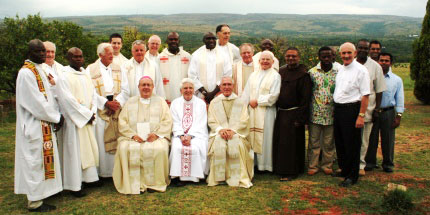
In his homily, Fr Fachtna recounted a story of a Protestant missionary doctor who worked for some years in Africa. One of the lessons of the story is that, most of the time, missionaries are recipients of the Good News from the people we are sent to. And this is true of our work, not just in Africa but also our experience here at home with the huge band of supporters the SMA has throughout Ireland. Fr Fachtna stated: “Many of you support us and other missionaries through the FVC, Mass Association Cards, Mission Boxes, Parishes, Friends of Africa, SMALA, Novenas. Those who work with you directly frequently tell me how humbled they are by your faith; and not only humbled but inspired too.

You reflect something of the faith of Mary. You don’t put on a big demonstration of faith but “you treasure these things and ponder them in your hearts”. Without your faith, without your prayer support and without your financial support our work would cease. We just cannot do it without you.

This is summed up beautifully in the second reading of today’s Mass. We collaborate in this work because, as St Paul puts it to the Corinthians: “though there are many of us, we form a single body because we all share in this one loaf”. We form one single body, each of us having our own role to play.”

In speaking about the beauty of Mission, Fr Fachtna also acknowledged the reality highlighted by the recent RTE Primetime programme, of a shadow side to the work of mission. He stated that it would be wrong to gather in Knock and not acknowledge that some have abused their position of power and dominance and have abused African children. But it is also important to acknowledge, he continued, that missionaries have done and continue to do wonderful work in Africa.

Fr Fachtna expressed gratitude to all our SMA supporters, those participating in the Pilgrimage, and those all over the country without whose support we could not do our work.

Among the Concelebrating priests were some of our missionaries, home on leave from Africa – Fr Pauric Kelly (from Cornamona, Co Galway, on mission in Zambia), Fr P J Kelly (Laurencetown, Tanzania), Fr Billy Sheridan (Newport, Co Mayo, Nigeria) and Fr Aodhán McCrystal (Dromore, Co Tyrone who is the Guestmaster at the SMA Regional House in Nairobi, Kenya).

Fr Edward Muge SMA, from Nigeria was among the principal concelebrants. Fr Muge has just completed post-graduate Studies in Milltown, Dublin and is returning tro Nigeria shortly to be part of the team there responsible for training our SMA seminarians. For the past few weeks Fr Muge was working in Knock, assisting with the celebration of Masses and hearing Confessions.

A friend of the SMA, Ramelo Gregorio  (from the Philippines) led the singing at the Mass, assisted by Marie Campbell at the Organ.

During the Mass, the Rite of Anointing of the Sick was celebrated for those who came forward for it.

procession-2The Missionary Sisters of Our Lady of Apostles (OLA) and St Louis Sisters, who work in many parts of Nigeria, alongside the SMA missionaries, also participated in the Pilgrimage. It was a wonderful opportunity for remembering their shared missionary service. Mercy Sisters also joined with us as did a Scottish group led by Bishop John Mone, emeritus bishop of Paisley.

The Offertory Procession was a little different to what we normally see in Church. A group of dancers from the Moffatt School of Irish Dancing in nearby Crossmolina danced in praise of the Lord. Each of the 32 dancers wore a jersey representing a particular Irish county, which symbolises the national dimension of our annual SMA pilgrimage – our supporters come from every Irish county. The African tapestries used in the Offertory dance symbolise the African countries where our missionaries work.

Fr Liam Brady SMA, home on holidays from South Africa, accompanied them on the Accordian.

In small groups they carried the gifts to the Altar, including the Altar Bread and Wine for the Mass. At the conclusion of the presentation of gifts the different groups danced through the Basilica ‘chapels’ passing underneath some African Tapestries held above their heads. Their dancing was greatly appreciated by all at the Mass and brought a spontaneous round of applause from the congregation.

cullinane t  hayes sHoly Communion was brought to the congregation by the concelebrating priests who moved through the different chapels to those who wanted to receive.

Mgr Joseph Quinn thanked all the pilgrims for their attendance at the National Shrine in honour of Our Lady. In particular he thanked Fr Bresnahan and his team for their organisation as well as Ramelo for his leading of the singing. It was a tribute to him that the entire congregation joined in singing the different hymns and parts of the Mass.

Pictured left are Fr Tim Cullinane SMA who recently completed his mandate as SMA Regional Superior in Nigeria South and Fr Sean Hayes SMA, FVC Director for Dublin.


32nd Pilgrimage takes place on Saturday, 26 May 2012 – See you there!


6th Sunday of Easter 2011

29 May 2011

Readings for
6th Sunday of Easter (A)


Acts 8:5-8

Psalm 65

1 Peter 3:15-18

John 14: 15 – 21

Spirit of Truth…

On a huge hill,
Cragged, and steep, Truth stands, and he that will
Reach her, about must, and about must go; 
And what the hill’s suddenness resists, win so

                                                            – John Donne

The desire for truth is a fundamental aspiration of the human spirit.

This desire includes the desire to know the truth about what is happening in the world around us, but it is much more than that.

It is a desire for truth with a capital T. It is a desire a truth that not only illuminates the mind but that also liberates the heart. It is a truth that cannot be defined by words, only by living. Truth with a capital T is always more than knowledge. Knowledge is about things observed, but truth transcends the purely material levels. It is linked to wisdom and embraces the mysteries of who we are, where we came from and where we are going.

Knowledge originates in science; wisdom in true philosophy; truth in the religious experience of spiritual living. Knowledge deals with facts; wisdom, with relationships; truth, with ultimate values.

This is the Truth the 16th century English poet John Donne is referring to in the lines quoted above, lines which present the quest for truth as an arduous uphill journey.

In the Gospel today Christ tells us, however, that we are not alone in this quest. He sends us a helper, the Holy Spirit, the Spirit of truth, to accompany us in the quest. 

The Spirit of Truth not only teaches us a vision of life totally in harmony with the vision of God himself but guides us in all our decisions, actions and relationships, so that we may live by that vision. 

Fr Michael McCabe SMA, SMA House of Studies, Nairobi, Kenya

Tax evasion in Africa

banks---tax-enlarged

Tax evasion in Africa

banks---tax-enlarged

Tax evasion by some unscrupulous multinational companies is robbing Africa of badly needed resources. Christian Aid estimates that this amounts to a staggering $160 Billion every year!! This money is siphoned off through tax havens. According to some experts it could more than cover the cost of all the projects funded through Aid and make a great difference to the lives and health of millions of Africans. Read more.

Easter in Chainda 2011

chainda-parish-centre

Easter in Chainda

chainda-parish-centre

Fr Paddy Barry SMA (from Cork City) is the Parish Priest of St Theresa’s parish, Chainda. Its parish Centre (pictured) was full to capacity during the 2011 Easter Triduum and Easter Sunday celebrations. Assisted by Fr Lawrence Ongoma SMA (from Kenya) they conducted ceremonies in both the Parish Centre as well as in St Agnes’ Church at Ibex Hill, a rapidly developing part of the parish. Along with a third SMA, Fr James O’Kane SMA (Omagh), they care for this rapidly-growing parish on the outskirts of the Zambian capital, Lusaka. Read more.

Gulf of Guinea District-in-formation

sekongo-fr-alphonse-2011

Gulf of Guinea District-in-formation

A brief history

The SMA was founded by Bishop de Brésillac on 8 December 1856 in Lyons, France. The Society had a central authority governing all parts of the Society and the mission fields in north, west and south Africa. From 1912 to 1992 the Society was divided into individual Provincial / District units. All these developments related to Europe and North America.

The 1983 SMA General Assembly, bringing together delegates from throughout the Society, decided to establish new SMA units in other parts of the world. Their decisions led to the creation of the African, Argentine, Asian and Polish Foundations.

Our picture shows Fr Alphonse Sekongo SMA, a member of the GGDF.

SMA Ordinations 2011

laying-on-of-hands

SMA Ordinations in Ibadan

laying-on-of-hands 

The moment of Ordination
Bishop Kieran O’Reilly SMA, Bishop of Killaloe, lays hands on the head of each one


On Saturday, 21st May, 2011 the SMA welcomed an other priest into their ranks with the ordination of Fr. Alphonse Sekongo (from Côte d’Ivoire) to the priesthood. The ceremony took place at the Chapel of the SMA House of Studies, Ibadan, Nigeria.

Five SMA Deacons were also ordained in a wonderful colourful and vibrant ceremony attended by a large crowd of SMA supporters and people from the neighbourhood who have close links with the SMA. The new Deacons are Hippolyte B. Buhika (DR Congo), Jérôme Anoumu-Sassou (Togo), Joseph Ogungbe (Nigeria), Jean-Paul Kpatcha (Togo) and Gérard Pagnan (Togo).

Also ordained to the Diaconate on the same occasion was Dom Robert Ezika, O.C.S.O. (Nigeria) who has been residing at the SMA House of Formation and has been recently elected as Prior to a Cistercian community in Nigeria.

The ordaining bishop was Bishop Kieran O’Reilly, SMA who was installed as Bishop of the Diocese of Killaloe in Ireland last August. At the time of his appointment as Bishop of Killaloe he was the Superior General of the SMA. Before that he had been on the staff of the Ss Peter & Paul Major seminary in Ibadan where the new Deacons and priest had studied. The new Deacons will continue their studies and be ordained priests in 2012. Fr Sekongo will, however, be appointed to his first mission in the autumn.

We wish each and everyone of them a blessed and happy ministry in the service of the peoples of Africa.


ibadan-group-pic

A group photograph after the ceremony, including Fr Maurice Henry SMA (front row, right) the Regional Superior for Nigeria. On the left  hand side are included SMA Frs Eddie Hartnett (Cork), Augustine Onwuzurike (Nigeria), Francis Rozario (India, a member of the SMA Formation House staff and lecturer in the Major seminary) and Phonsie Flatley (Kinvara).
To Bishop O’Reilly’s right is Rev Deacon Robert Ezika O.C.S.O.


A Time of Hope

candle14Easter, the feast we have recently been celebrating, is about experiencing renewed life, promise, hope. “Christ is Risen!” is the greeting exchanged in France among Christians. “Happy Easter” is a lot less specific and a lot more vague, spoken more as a wish than as a statement of faith. But the challenge is to make our words a statement that means something today, while our world is going through such huge convulsions.

People from all the countries affected by current problems and devastations are living among us now, whether as immigrants or as refugees or asylum seekers.  Do those who are not Christian know that we are what the late Cardinal Hume said “an Easter People, and Alleluia is our song” and that we have just celebrated what is the heart of our Christian faith and commitment – that Christ has Risen?  Maybe we can follow the example of Pope Benedict in his Easter message, and make his prayer our own:

“…May the splendour of Christ reach the peoples of the Middle East, so that the light of peace and of human dignity may overcome the darkness of division, hate and violence…. In the current conflict in Libya, may diplomacy and dialogue take the place of arms and may those who suffer as a result of the conflict be given access to humanitarian aid. …May help come from all sides to those fleeing conflict and to refugees from various African countries who have been obliged to leave all that is dear to them; may people of good will open their hearts to welcome them, so that the pressing needs of so many brothers and sisters will be met with a concerted response in a spirit of solidarity; and may our words of comfort and appreciation reach all those who make such generous efforts and offer an exemplary witness in this regard. May peaceful coexistence be restored among the peoples of Ivory Coast, where there is an urgent need to tread the path of reconciliation and pardon, in order to heal the deep wounds caused by the recent violence. May Japan find consolation and hope as it faces the dramatic consequences of the recent earthquake, along with other countries that in recent months have been tested by natural disasters which have sown pain and anguish.

…May heaven and earth rejoice at the witness of those who suffer opposition and even persecution for their faith in Jesus Christ. May the proclamation of his victorious resurrection deepen their courage and trust.”

Benedict XV1, Easter Message Urbi et Obi

And may we all say a heartfelt “AMEN”.

Fr Eugene Connolly Funeral homily

Fr Eugene Connolly SMA

Homily preached by Fr Fachtna O’Driscoll, SMA Provincial Leader at the concelebrated Funeral Mass on Monday, 2 May 2011 at 12 noon in St Joseph’s SMA Parish Church, Wilton, Cork. After the Mass, Fr Connolly was buried in the adjoining SMA Community cemetery.


Ecclesiasticus 2: 1-8, 11       Acts 4:8-12
John 21: 1-14


There is something very nice and consoling about the death of a brother during the Easter Octave. During this week our every thought is focussed on the risen Christ. We rejoice in his victory over death and the inauguration of the new kingdom he came to establish. And as we rejoice in Christ’s victory, we take consolation that all those who believe in his name are called, at the end of time, to share in the fullness of his kingdom. We believe that Eugene Connolly has begun that journey: our prayer for him today is that he be granted a speedy passage on that journey.

Our readings today might not usually come to mind for funeral liturgies. Yet I chose them particularly, as I feel they represent very well what this Easter mystery signifies. Indeed, two of these were the readings of the Mass of Friday morning, just a few hours after Eugene’s death. The reading from Acts reminds us that in Jesus’ name those who believe in him are able to perform miracles. Peter is very emphatic that it is the name of Jesus Christ the Nazarene, the one whom you crucified, whom God raised from the dead, by this name and by no other, can this healing be done. This is what Jesus kingdom is about: doing things in a radically new way. For of all the names in the world given to people, this is the only one by which we can be saved.  

Eugene Connolly believed this and dedicated more than sixty years of his life as a missionary priest in the SMA to share that belief with others. He died two months short of reaching 88 years. By any standards this is a rich life. Our opening reading, then, seems fitting in the circumstances. There is a time for every purpose under heaven: a time to be born, and a time to die. When we interpret a life’s journey in the light of the resurrection it means that all of life’s events are not just significant in themselves but are significant in terms of the whole. Ultimately, then, our time is only a particular participation in God’s time. Eugene’s passing came very quickly last Thursday night. In a sense he died as he had generally lived, without too much fuss or fanfare. As the reading puts it: God has made everything suitable for its time…. and we can grasp neither the beginning nor the end of what God does.

Our gospel story this afternoon is another of those post-Resurrection appearances of Jesus where the despondency and disillusionment of the disciples is transformed into faith. They were fishing all night. It is good to note that they returned to fishing because they had given up on Jesus. Their hope, of having a new life as followers of him, was completely shattered by his crucifixion. What else was there for them to do but return to the trade they knew best. Even when he came among them they did not at first recognise him. His invitation to them to come and have breakfast shows that though he must have being physically changed, as they could not recognise him, nevertheless he was fully physically present among them. Their struggling faith was strengthened by the huge catch of fish. It was then they recognised him as the Lord.

For us, too, death can lead to disillusionment and despondency. The one we love has died and we will not see their physical being again in this life. No matter that they die in advanced age, it is still a time of sadness for family and friends. But at such times we welcome Jesus to come among us once more, the one who has himself overcome death, the one through whose name the cripple is healed and the fishing nets are filled, we welcome him as the one who assures us that death is not the end. At death life is changed, not ended and the sadness of death gives way to the bright promise of immortality.  

Eugene was born in 1923, the only boy in a family of four children, in Aclare, Co Sligo. He schooled in the local National school from where he went on to St Muredach’s College, Ballina and from there to complete his secondary education in Wilton, Cork. During his student days he was a decent footballer and so was given the nickname ‘Cha’, after a noted county footballer of his day. This name became so attached that he regularly signed his letters ‘Cha’ and many people did not know that Charles was not his proper name. He did his BA degree from UCC and UCG and, after theology in Dromantine, was ordained on June 12th, 1949. Due to a foot injury he was actually ordained two days ahead of his classmates. Immediately after ordination he came back to UCC where he completed his H.Dip in Education.

His African missionary assignment was to the diocese of Ondo, Nigeria. His first two years were spent in pastoral assignments but from then, for the next sixteen years, he was involved at different levels in the education apostolate. He worked in Aquinas College, Akure, St Peter’s, Akure, was Catholic Education Secretary of the diocese for many years and was Principal of both St Joseph’s Technical College, Ado-Ekiti and Annunciation College, Ikere-Ekiti. It was fitting that Cha should be in charge of a technical college because, though his hands were enormous, he had very dexterous fingers and was renowned for his ability to fix watches and many other small gadgets.

The respect in which he was held by his confreres is revealed in the fact that he was elected as a delegate to the Provincial Assembly of 1968. At that Assembly he was elected Provincial Councillor to the late Fr Larry Carr, a man whom Cha respected greatly and to whom he gave unstinting support. His areas of responsibility were Promotion and Communications. His time on the Council inaugurated some new developments. Along with the late Fr Bartholomew McCarthy he visited Ghana and Zambia with a view to setting up SMA Irish Province missions in these countries. These were indeed established in 1973. He also visited the families of each of the 26 Irish SMA confreres working in Africa, from the North of Ireland, during the Troubles of 1971.

In 1974 Eugene was assigned to head up a new venture for the Irish Province, in England. He went to Northampton diocese; first he studied the diocesan style from St John the Apostle, Luton, before taking over, as an SMA parish, Sacred Heart, Stopsley, Luton. Here Eugene served for many years with his county colleague, the late Fr John Brehony SMA. In all, Cha spent 24 years as parish priest of Sacred Heart. In that time he distinguished himself as a very capable administrator. But as a pastoral man he also excelled. Though he did not suffer fools gladly and his countenance could sometimes be gruff and a little off-putting, this was somewhat of a facade because he was in truth a deeply sensitive soul and a very caring pastor. Of course, his sheer physical presence could in itself be off-putting; I don’t think too many people would have been ready to engage him in a bout of fisticuffs.

Stopsley was a training ground for SMA deacons for many years and quite a few honed their pastoral skills under Eugene’s supervision. His attention to building and administration would not surprise too many but his easy rapport with the aged, children [as Dan described for us so beautifully and accurately last night] and especially the sick might come as a wee surprise to some. It is inspiring to read, in his file, letters from parishioners extolling his gentleness, compassion and overall giftedness. He lived simply and somewhat frugally and expected others to toe the same line.

Cha was a man who was also able to celebrate life. He had a very warm relationship with his siblings and nieces. He enjoyed music and especially enjoyed playing the organ, though he could be shy with this talent.  And, eventhough he eventually had to have his two hips replaced, he enjoyed golf until a few years ago. Indeed, he represented Northampton diocese in the annual clergy competition in Britain. And he was a regular in the SMA competition, especially in the early years.

Cha has now gone from this life. Perhaps he is now testing out the mechanism of some heavenly watch or clock apparatus. Whatever it might be, we believe his soul is at peace.

Ar dheis lamh De go raibh a anam dilis.    

Fr Eugene Connolly SMA

e connolly 2

Fr Eugene Connolly SMA

e connolly 2

The members of the Irish Province invite you to join with them in praying for the happy repose of the soul of Fr Eugene (Cha) Connolly SMA who gave up his life to God at 11.50pm on Thursday, 28 April 2011, aged 87 years. May he rest in peace.

Easter Message 2011

Jesus is Risen! Alleluia!!

resurrection3Fr Pat Kelly SMA (from Belfast) shares his reflection on the meaning of Easter.

The famous Christian author (Narnia etc.), C. S. Lewis, said that Jesus could only be one of three things: a habitual liar (meaning that he said many things that were simply not true), a demented lunatic (meaning that if he believed the things he said about himself then he was totally mad), or that he really is the Son of God!

Most people would accept that he wasn’t a habitual liar or a demented lunatic. No doubt some people during Jesus’ life on earth may have thought these things (Jn.10:20), but many more people were so convinced that he was who he said he was that they followed him even though there was a heavy price to pay. These were not foolish or superstitious people. They were not stupid. They saw him heal the sick and raise the dead. Because of him they experienced a new joy and peace in their lives that they did not have before. Many left everything to follow him even though it meant being persecuted, ridiculed, imprisoned and even killed. They would not have done this to follow a madman or a liar. There was something uniquely special and different about Jesus that made them convinced that he truly is who he claimed to be – the Son of God.

What was that something? It was the Resurrection! They believed he rose from the dead because they actually met him! It was this encounter that gave them the strength, the courage, the conviction, the determination to spread his message throughout the world, even if it meant their own death. Their encounter with the risen Jesus was real.

I pray your encounter with the risen Jesus be likewise real.

Have a blessed Easter!

My experience in South Africa

maria mclaughlin moita bw 2010

My experience in South Africa

Louise Loughran hails from Co Tyrone. Louise is a member of the Friends of Africa (FOA). She recounts her visit to South Africa in 2010 as part of an FOA team involved in different projects.

Water – a commodity or right?

water

Water – a commodity or right?

water

The only choice 1.1 billion people have is to drink dirty water that is available to them. In Ireland access to clean water is taken for granted. As a result we are often wasteful of it – running the tap while we brush our teeth, flushing the toilet with a full cistern of water on every occasion, hose-washing the car, dripping taps…

Spirituality of the Plastic bag

re-useable bag

THE SPIRITUALITY OF THE RE-USEABLE BAG
a reflection on care for the environment

At the check-out in the local Supermarket the heavy duty reusable bags available are ambiguously advertised as “A bag for Life” indicating the obvious longevity of service they will provide and also the deeper meaning of the contribution to maintaining the environment that choosing the reusable option will bring.  Here in this simple slogan are two elements, one referring to the practical life task of shopping and the other to the possibility of making a choice that shows an attitude or spirit attuned to caring for the world we live in. 

Someone once defined spirituality is nothing more than faith lived.  Part of our faith journey must be living in harmony with the world in which we live.  Realizing God’s Kingdom which is our Christian Mission is therefore linked to the environment in which we live, for we cannot love our neighbour unless we love and care for the world in which both we and our neighbour live.  Our attitude to the environment is then, just as much part of our faith lived, by definition of our spirituality, as is our relationship to neighbour. This spirituality has been called many things – here, just to get your attention, “the spirituality of the reusable bag” but elsewhere “Eco-spirituality” or “Creation Spirituality.” 

Whatever it is called it points to a new awareness of an interconnection and interdependence between us and the world.  A connection that is not just physical but which also has a spiritual and faith dimension. Care for the environment is part of our Christian witness, of what we are called on to preach and teach through the example of our lives.  The Irish poet Patrick Kavanagh wrote – “God is in the bits and pieces of every day, a kiss here a laugh again and sometimes tears.”   Perhaps this is something we should take more notice of in these times when we are more conscious of the need to conserve reuse and recycle.  The bits and pieces of our lives matter.  The stewardship of caring for creation is also a place to find God as are prayer, scripture, the sacraments and ministry to the faithful. 

The reusable bag and turning off the switch to save energy connect us, in a positive way, to those who live far away, to those who will come after us and to the God who made us.

Divine Mercy parish, Ndola, Zambia

divine mercy hydroform block

Parish coming to birth… with the help of the Irish Mercy Sisters…

divine mercy hydroform block 

Fr Brian O’Kane SMA hails from Omagh, Co Tyrone. Since ordination in 1965 he has been a missionary in Nigeria and Zambia. He also ministered in the diocese of Derry and was the Director of the Family Vocations Crusade (FVC) in Dromantine in the 1990’s.

After his return to Zambia he was assigned to the diocese of Ndola where, since 2008, he is responsible for the development of a new parish. Called the “Divine Mercy parish” it was carved out from the Cathedral parish, in a fast developing area on the outskirts of Ndola city. Blocks for the Church are ,ade on site using the Hydraform block-making machine.

New SMA members in Philippines & India

silang-oath-2011-1

Indian & Filipino students commit to the SMA

silang-oath-2011-1

9 April last was the day when two Filipino and two Indian seminarians made their first commitment as temporary members of the Society of African Missions. Along with two other Filipinos (who were renewing their commitment) the ceremony was attended by about 200 hundred guests at the International Spiritual Year (ISY) Centre in Silang, Philippines.

4th Sunday of Easter 2011 – Vocations Sunday

15 May 2011

Acts of Apostles 2:14, 36-41
1 Peter 2:20-25
John 10:1-10

A certain young woman in her early thirties was a very fearful person. She was fearful of so many things: her health, that she would lose her job, that she might be killed in a car accident any day she travelled to work. She was fearful of risking marriage in case she married the wrong man etc. She really lived with so much fear in her life. That was 10 years ago. Since then there has been a great transformation in the life of this young woman.  She actually met a young man who understanding her fears gradually led her to an ever-greater freedom.  She eventually married him.

This young man reminds me of the last verse of today’s gospel when Jesus says ‘I have come that you may have life and have it to the full’. Of course the young man would never compare himself to what Jesus came to do. But he certainly helped the young woman who became his wife to have a much fuller, happier and less fearful existence. He led her out of her fears as the shepherd leads out his sheep.

What about you and me here this morning? How would we describe the quality of our lives?  Would we say that we are close to living life to the fulness? Are we at peace?  Do we experience much joy in our lives?  That is not to say that there won’t be difficulties and trials but deep down do we have this inner peace so many desire. So where do we go or to whom do we go to find this peace and joy? The great German mystic Meister Eckhart wrote: “As far as you are in God, thus far you are in peace and as far as you are outside God you are outside peace…for where you lack peace, you must necessarily lack God, since lack of peace comes from the creature and not from God”.

The image used for Jesus in the gospel today is that of a shepherd.  Jesus was living in a rural setting so the image of sheep and shepherd would have been familiar to the Jews. For the Jews down through their history God was seen to be a Good Shepherd for his people, always caring for them.

In the rural set-up of the time of Jesus a number of shepherds would bring their flocks home before night came. They would have put them into a common sheepfold or enclosure. Each night one shepherd would keep watch over all the sheep to guard against robbers or wild animals that could steal or kill the sheep. Early next morning all the shepherds would arrive, they would enter the sheepfold and call their sheep one by one, by name. The sheep would know the voice of their own shepherd who would lead them out to where they could pasture. Each shepherd knew his own sheep very well.

Like the young woman there are people who would are enclosed in their fears or addictions like drink, drugs, sex, money or power etc. That is why Jesus the Good Shepherd is inviting all to leave what is enclosing them and reach out for the fullness of life. He is inviting them to follow him to a greater freedom, peace, in fact to the fulness of life he offers in the gospel today.

There are many voices calling out to us each day. The voices of advertisements urging us to buy this or that product and so be happy. As if it was that easy. We rarely see sad faces in the adverts.  We are children of God and called into an ever-greater relationship with Jesus the Good Shepherd who alone can guide us along the way to true peace and joy.  I know a man who once decided to explore a large forest and nearly died of thirst because he got completely lost for nearly 3 days.  Luckily someone passed by the place where he was and so his life was saved.  From then on he would never enter the forest without a guide. Jesus the Good Shepherd is like that. A shepherd is there to guide his flock. We have a sure guide for life if we have a good relationship with Jesus. It is more than just saying prayers or going to Mass. It is asking him to teach us to become a real friend of his and have an ever-deeper friendship with him. The danger is that Jesus can remain a stranger to us unless we live close to him.

In Jesus’ time the true shepherd guided his flock, he nourished them, went after the stray, knew each sheep by name and assured their safety. Jesus does all this and even more for us if we allow him.

Before Jesus left the world, he commissioned Peter to feed his lambs and tend his sheep (John 21:15-16). The work of shepherding God’s flocks is an ongoing task that is entrusted to the whole church with Peter as head. As today we celebrate Good Shepherd Sunday or Vocations Sunday we need to ask ourselves two important questions:

1          Am I a faithful member of God’s flock?

2          How could I participate more closely in the work of shepherding God’s flock?

Popes and bishops as well as parents, school teachers, church ministers etc – all participate in various forms of shepherding God’s flock. How can I be a better shepherd in my own state, reaching out with understanding and compassion to the weak and misguided dropouts of church and society, so that through me they may hear the loving voice of Jesus, the Good Shepherd?   Let us pray for genuine vocations to the priesthood, religious life and the lay state. 

“Lord Jesus, may I allow you to be the Good Shepherd in all areas of my life”

Fr. Jim Kirstein, SMA

3rd Sunday of Easter 2011

8 May 2011

Acts of Apostles 2:14, 22-28
1 Peter 1:17-21
Luke 24: 13-35

Some time ago I was visiting a family and one morning the mother was sending 2 of her children to school. After a kiss and a hug for each, her final words of advice were: ‘Remember you never, never talk to strangers’. Unfortunately in nearly all cultures today this is very necessary advice.

What would have happened in the gospel today if the two disciples had refused to talk to the stranger who appeared at their side and started to converse with them? He noticed that they were very sad and downhearted and asked them what they had been talking about that had caused this. We know the answer from today’s gospel, ‘You must be the only person staying in Jerusalem who does not know about the things that have been happening there these last few days’. And they describe what happened to Jesus. This leads to a frank and profound dialogue that set their cold hearts on fire with insight and inspiration. All because they trusted a stranger and were open to inform and be informed by him.

In their disappointment and sadness they say to this stranger ‘our hope had been that he would have been the one to set Israel free’.

What of us today? What are our hopes? Do we hope that Jesus will set us free not from the Romans as in the case of the Jews of Jesus’ time but from fears, prejudices, from looking at reality in a wrong way, from our inability to forgive etc.

Cleopas and his companion shared with the stranger all the way through. Not only were they ready to share their confidences with him, but they went all the way and shared their meal and shelter with him. It was in the process of this sharing that the moment of disclosure occurred and they suddenly realised that the one whom they had accepted all along as a stranger was indeed Jesus, the answer to all their heart’s questions. This discovery that the one in whom they had trusted, Jesus Christ, was indeed alive and not dead, gave new meaning to their lives, their faith and their vocation. Banishing all fear and fatigue they went back that same night to rejoin the apostles and followers of Jesus and share the good news with them that they had met the risen Lord and that they met him in the person of a stranger.

It is important to note that Jesus explained to the two companions all the scriptures had spoken about him. So it was in breaking the Word of God for them that opened their eyes also. He did not speak only about the wonderful things God had done for his people and is still doing for us. He spoke of the suffering which was part of his own human experience.

Was it not necessary that the Christ should suffer and so enter into his glory”.  It is may be enough easy to speak generally about the cross in life. But when it touches our own lives we may wonder where God is. Yet in genuinely trying to do God’s will, suffering will come our way, as for example when we try to be faithful in marriage, be honest, forgive, show kindness to all we meet etc. Then we may expect in faith that we will also share in the resurrection of Jesus and not only when we die. We ought to pray for all priests each week that they would have the gift of preparing their homilies well by prayer so as to be able to break the Word of God for their Sunday congregations. They owe it to them to do this. It is not an option but indeed a serious obligation.

When Jesus went in with the 2 disciples for a meal, he breaks the bread in his own special way and immediately they recognize him in this action. We are told that their eyes were opened. It might be good for us to ask the Lord to open our eyes too to recognize him in his Word and in the sacrament of his Body and Blood each time we take part in the celebration of Mass.

The problem for us is that nearly always God appears to us in so ordinary ways, in so ordinary people and actions each day. If we fail to see him in these and wait for extraordinary signs we may never encounter him.

The resurrection was for Jesus the dividing line between earthly life when he was limited to the form of a male Jewish body, and his risen life when he is no longer limited in this way. The risen Lord now appears in all types of bodies: male and female, White and Black, young and old, rich and poor, those with special needs, native and immigrant, Catholic and Protestant, Christian and Muslim, liberal and conservative etc. Though we may see those who are different from us as strangers, today’s gospel challenges us to start seeing them simply as companions on the way. When we reach out to them in hospitality we reach out to God and so receive his blessing.

‘Lord Jesus, open our eyes to recognise you in the breaking of the Word of God and at the breaking of the bread at each Eucharist. May we also see you in the strangers in our midst.  Amen’.

Fr. Jim  Kirstein, SMA


2nd Sunday of Easter 2011

1 May 2011

Acts of Apostles 2.42-47
1 Peter 1.3-9
John 20.19-31

resurrectionSome time ago I was speaking to a young man of about 27 years. He wanted to make a decision. He had been going with his girlfriend for the previous two years and he felt the time had come for him to decide whether to marry her or not. He listed many good qualities she had but he still wasn’t sure. He said also ‘when I see so many marriages nowadays ending up with couples separating how can I be certain the same won’t happen to us if we marry’. The simple answer is, of course, he can’t be certain. What would you think of this young man if before marrying he wanted every guarantee and assurance that he was not going to make a mistake in marrying his girlfriend? Many would regard him as a very calculating young man who had not much of a heart to give.

Maybe things have not changed much since the first Easter, and so, like Thomas, sometimes called ‘Doubting Thomas’, we may continue to ask for more than is needed in order to believe. Maybe we too would like to see and touch Jesus and have everything proved beyond doubt. We could not then be said to believe as there would be nothing left to believe in. Neither faith nor love call for absolute certainty.

Perhaps too we may think that having doubts of faith is something to be ashamed of. In fact if we have doubts and still believe in spite of them are we not making a great act of faith in the other? So like the young man doubting whether to marry or not, we too may have our doubts but basically we are saying to God.  ‘I believe in you’.  Even on the human level is not this a great gift, a great compliment to pay to another? Did you ever say to another ‘I believe in you’ as hopefully the young man decided to say to his girlfriend, ‘I believe enough in you to want you to be my wife. I believe we can have a very good future together and work through whatever difficulties may arise. Yes, I love you because I believe in you’. Did anyone ever say to you ‘I really believe in you’?  How did you feel as a result?

In the gospel today we have many doubters, not just Thomas. We have the disciples locked into the Upper Room because of fear. They were afraid that what happened to Jesus would happen to them. They have lost all faith in ever seeing Jesus again.  After all, he died on the cross and was buried. And then the unthinkable happens. Jesus appears in their midst.  His opening words are ‘Peace be with you’ and he repeats it again. There is no condemnation and we are told the disciples are filled with joy when they saw the Lord. But Thomas was not there and he refuses to believe them when they tell him about the appearance of the Risen Jesus. Eight days later Jesus appears again and this time Thomas is there. Again the opening words of Jesus are: ‘Peace be with you’. And in his great love Jesus came to the doubting Thomas and allowed him to touch his hands and side.  Then Jesus says ‘You believe because you can see me. Happy are those who have not seen and believe’. Hopefully we are among those whom the Lord addresses. John is saying very clearly that the faith of the Church in the Risen Jesus does not depend on the sort of proof Thomas demanded. The reason for writing the gospel is then given. All the signs and miracles of Jesus are recorded so that people may believe that Jesus is the Son of God and believing they may have life in his name. The purpose of believing in Jesus is to have the fulness of life.

When Jesus appears to the disciples in today’s gospel he showed them his hands and feet meaning he went back to his Father in his woundedness. This is to say that we too can have confidence in going back to our Heavenly Father in our woundedness. Unlike Jesus whose wounds were physical, ours are our sins. And the Good News is that our wounds are no obstacle to our being with God. In fact he wishes we go to him and allow him to embrace us, wounds and all, as did the father of the Prodigal Son.

We are also told in today’s gospel that Jesus breathed on the disciples and gave them the Holy Spirit. We too are sent by Jesus and so need this Holy Spirit to witness to Jesus especially his forgiveness.

A very important aspect of today’s gospel is that the mission to proclaim the forgiveness of sins is entrusted to the community as a whole and not only to certain leaders. John describes the group simply as the gathering of the ‘disciples’.

It is above all by forgiving others that the gospel or Good News looks to the future, opening up the possibility of a new existence. We can always begin anew with God after failures.  The joyful realisation that one has been accepted by God even after betrayal and sin is a central part of the Easter experience and brings with it an obligation to become God’s instrument in announcing his forgiveness to all.

“Lord Jesus we believe you are risen from the dead. Praise you for always being faithful, always ready to forgive and especially for accepting us totally in our woundedness. Amen”

Fr. Jim Kirstein, SMA

Millennium Development Goals TV

mdg-pres-kaunda 2011

Millennium Development Goals

RTE to air a four part series on the MDGs

mdg-pres-kaunda 2011

beginning 5 May 2011

At the start of the new millennium, 189 nations of the world agreed eight millennium development goals that they believed would transform the lives of the poor of the world.