
15 September 2019
Exodus 32:7-11, 13-14
1 Timothy1:12-17
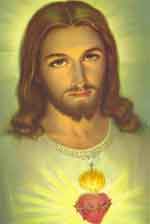
Luke 15.1-32
When I used to go on vacation I visited an Irish family who had 5 children aged between 25 and 35. The father was an army officer and at times his wife complained to me that she felt that he was too strict since he brought up his children as if they were in the army. The parents were very proud of 4 of their children who were married with young families and all had good jobs. The problem was the second youngest son, then 27. He seemed unable to hold down a job, got drunk frequently and spent some time in prison for stealing. The father could not accept this as he felt he is a disgrace to the family. He refused to meet the son whenever he visited home. On the other hand the mother was very gentle with her son even if not agreeing with his behaviour. This son, Paul, knew that his mother will always welcome him but certainly not his father.
This reminds me of today’s gospel. The first two verses are the most easy to neglect and yet perhaps the most important for a prayerful understanding of the text. Jesus tells the 3 parables that follow especially that of the Prodigal or wayward son to provoke a response from the Pharisees and scribes. These, in fact, are like the elder brother in the 3rd parable. They felt safe and secure in their religious practices and in a sense didn’t need God’s help as they felt by strictly keeping the Law they were just before God. The meant they were very severe and strict in their judgement of all those who did not exactly observe all the precepts of the Law, just like the army office father who judged his wayward son without any mercy.
The Pharisees saw Jesus as a lawbreaker – he was too liberal for them. He didn’t always observe the Sabbath. To welcome and eat with sinners was just not acceptable and certainly wouldn’t please God.
The chief purpose of the 3 parables is to give his listeners, the Pharisees, scribes, the tax collectors and sinners who sought his company sinners a true image of God. Is my image of God the same as that which Jesus reveals in these three parables? So who is God as revealed by Jesus?
The first parable is about the shepherd seeking the lost sheep. He leaves the other 99 in the wilderness with a good chance they will get lost whilst he is off searching for the lost one. Many would describe this shepherd as being irresponsible.
The second little parable is about a woman who loses a coin of little worth. Then she lights a lamp and sweeps out the house and searches thoroughly until she finds it. Remember she did not have a tiled or concrete floor but only an earthen one. One could say she was obsessive.
The third parable tells of the father of the prodigal son who asks for his inheritance. Now it is only when a person dies that we get our inheritance. So for this son the father is as good as dead. Besides what father knowing that his son was the kind of person who would waste all his inheritance on a life of loose living would give this to him? If he did most of us would call the father plain crazy.
This is precisely what Jesus reveals to us about God. When it comes to loving us, forgiving us, being gentle and understanding with us, God is like that. He is irresponsible like the shepherd, obsessive about us like the woman and crazy as St.Paul would say in his love and ways of dealing with us in spite of all our failings and sinfulness.
No wonder the Pharisees and scribes reacted to Jesus as they did. The image Jesus was giving us of God was so far from theirs that they were threatened and ultimately killed him. Does this image of God revealed by Jesus reflect my own or is it very different. Little wonder the tax collectors and sinners were all seeking his company to hear this Good News. We must remember that Jesus is also a challenging Messiah. In the light of God’s incredible love for us he expects us to follow his ways, to have his attitudes, be converted– not to gain God’s freely given love but to show our gratitude in action and to praise him.
So these three parables are raising some questions for us. How could one sheep equal a flock of 99, how can a single coin be as valuable as the other 9? How can a worthless son be so precious in the eyes of the father? Simply because God counts each one of us as totally irreplaceable, equally precious to him.
In the story of the Prodigal Son perhaps there is part of the younger son and the elder son in each of us. We sin; we wander far from God seeking happiness elsewhere. Are we like the elder son, very judgmental and critical of others, refusing to forgive, reconcile or be gentle with the failures and limitations of others?
The call of course, is to be like the Father who welcomes back the sinning younger son and having thrown a party to celebrate his return goes out to encourage the elder son to join the celebration. What did the elder son do? We have to finish the parable in our lives. Will we end up as the younger son who returned or as the elder son, or allow the attitudes and love of the father to take over more and more in our lives?
“Loving Father, help me to let go of all in my life that does not reflect your welcome and love for others. Amen”.
Fr. Jim Kirstein, SMA
 One time I remember visiting a bush village in Africa. It was a very poor area. It was the dry season so there was little water around. The farmers were waiting for the arrival of the rains to plant their seeds. The previous farming season had been a poor one because of the small amount of rain that fell. The amount of grain still left wasn’t much so they could only eat once daily. On the day I was there a son of one of the farmer’s arrived from the city far away where he worked and he brought with him some sacks of grain. His family was delighted. What really touched me was that the father immediately called all the other families together and he sat down and divided all the contents of the three sacks of grain equally among all of them. He did not keep them for his own family only. He shared because he cared.
 Recently I was at a meeting during which one woman said to another, ‘After all these years of marriage I think I will never fully understand my husband. What he did recently really surprised me. I never knew he could be so creative’. No doubt men say similar things about their wives. I remember my good father shaking his head from time to time as he saw some aspect of my mother’s personality that was new to him.
 “The success of Shalom,” Fr. McCabe continued, “is in its determination to remove the underlying causes of ethnic, religious and tribal disagreements that wreck the lives of ordinary people. Padraig realised that to achieve this he needed to recruit a highly skilled team of academics and conflict management practitioners to train teachers and tribal leaders in the art and skills of conflict resolution and reconciliation.
 Two men who were very good friends for a long time had a serious disagreement and stopped talking to each other. Three months later one of them phoned the other and admitted the major fault had been his and invited the other to a meal which was accepted. His friend forgave him totally and they had a great reunion.
 Many years ago I knew a young married couple, very happily married. Then after 15 years of marriage the husband died suddenly. Sadly they had had no children. For the woman life all but ended with her husband’s unexpected death. She said to me once at that time that the sun would never shine again for her in her life. She didn’t see any point in living. She was totally devastated. This went on for about 4 years. Being the quiet retiring person she was, she had depended very much on her husband and after his death, she felt totally alone. Others helped her for awhile but then they had to look after their own families. With the help of a few close friends and her faith in God, she gradually started to live again. In fact, because her husband was no longer there to depend on, she had to develop talents she never knew she had. Bit by bit she grew in self-confidence and now this woman thinks nothing of travelling to the far end of the world alone where before she would hardly go a 100 kilometers. She had matured out of all recognition and the sun certainly shines again for her in her life. I know that it was her faith in God and the support of a few friends, which made all the difference. But it took time.
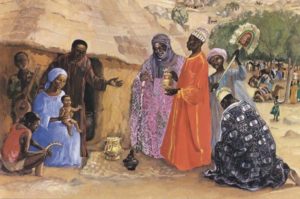 What is the star that guides you in your way through life?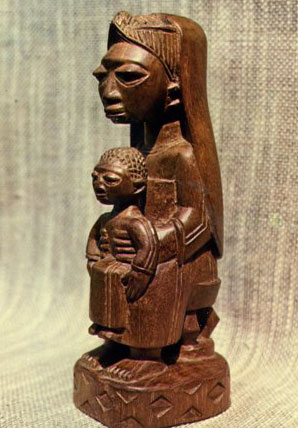
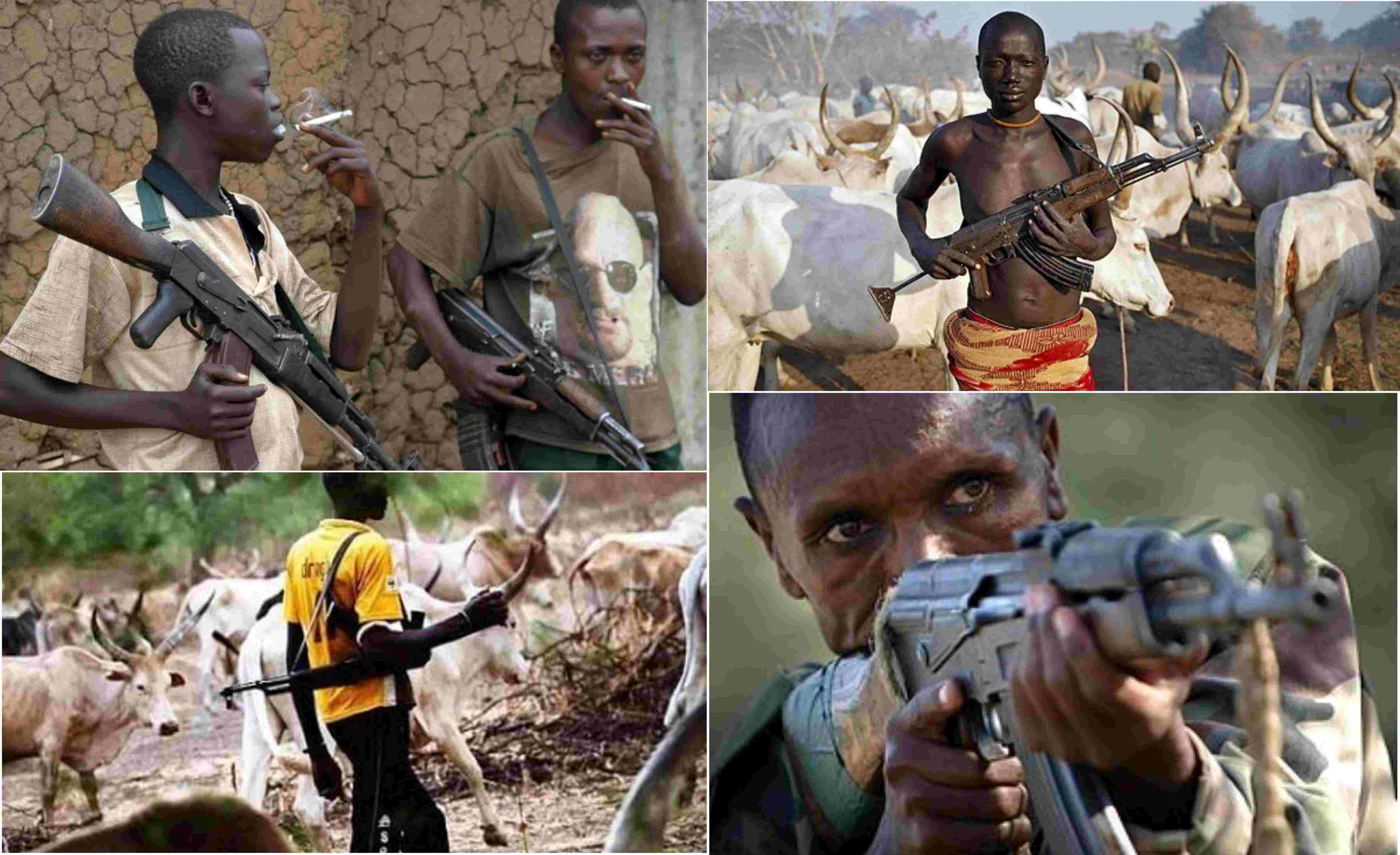
 A priest once told me of a scene he often witnessed in his part of northern Nigeria. One day he was on a hillside observing the valley below. He saw a Fulani walking ahead of his cattleherd who were followed by his 3 wives and a number of children. Obviously this was the place of a woman in the Fulani culture. We know from many cultures women are in a similar situation. But our God is the upside down God who chooses very differently to us. Another image for us in the Old Testament is that of the land being furrowed by the plough in preparation for the sowing. God does that to us too, at time turning our plans upside down.






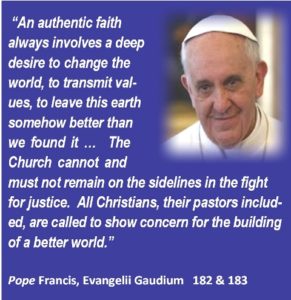 The Presentations are delivered by Bishop Patrick Harrington SMA and by Mr Gerry Forde, SMA Justice Officer.



 In a recent television interview a famous Muslim scholar said that ultimately there is only one sin and all others come from that sin. What would you name as the worst sin? He was quite clear that the greatest sin of all is forgefulness. According to him if we forget Allah (or for us, God) we forget who we are, what we are about and where we are going. We are like people wandering about without any goal in life, being blown this way and that by whatever prevailing wind blows – pleasure, drugs, money, etc.

















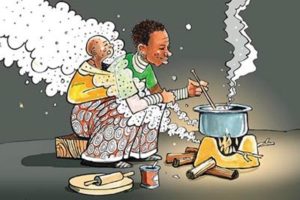 We tend to take our modern gas and electric stoves and ovens for granted, but in many countries, homes have only kerosene or solid fuel cooking stoves, which can pollute household air. Each year, more than 4 million people die globally of complications from inhaling smoke from these stoves.
 Several nations still rely heavily on pollution-producing cookstoves. Here are just a few of those countries with the following key:
 At the end of the program we were very aware that we need the solidarity of like-minded people to take on the many challenges that the program highlighted. While the challenges are many, the hope that was nurtured during the program will sustain us as we live a life that sustains the planet, rather than undermining its life and vitality.










 that you’ve won a foreign lottery; opportunities to make easy money working from home. The list goes on.
 The BBC report also looks at efforts in conflict resolution concluding with an unusual compromise reached by a farmer who had cause to be furious with the herdsmen. Rotimi Williams, a rice farmer, had 49 acres of rice paddies destroyed in February by Fulani cattle and some of his farmhands were ready to go to war. However, Williams kept a cool head, rationalising, “We need a pragmatic approach where we learn to resolve conflicts with our neighbours.”

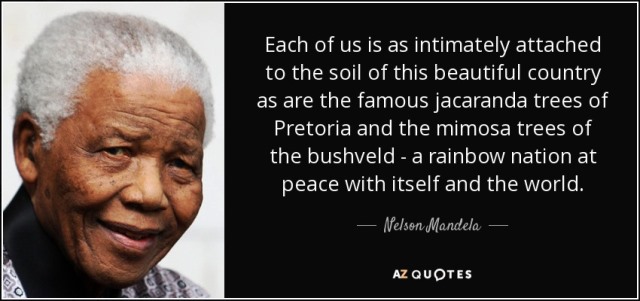 The party that Mandela led to an overwhelming victory in 1994 and which has dominated South African politics since, the African National Congress (ANC) is now fighting to keep control of its traditional heartlands. Corruption, scandals and failure to keep promises and meet expectations has brought it to a point where South Africa’s local elections on 3 August 2016 will see it emerge battered and bruised by an increasingly disillusioned electorate in what are the most closely contested elections since white minority rule ended in 1994.

 The SMA Summer School was dedicated to celebrating the 1st anniversary of Pope Francis’s Encyclical Laudato Si.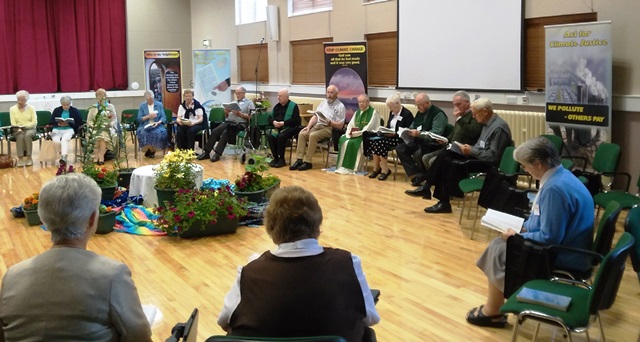







 Global Catholic Climate Movement Objectives:
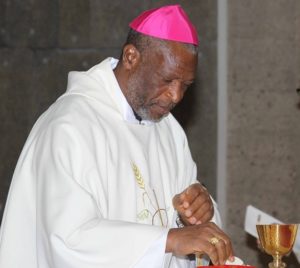



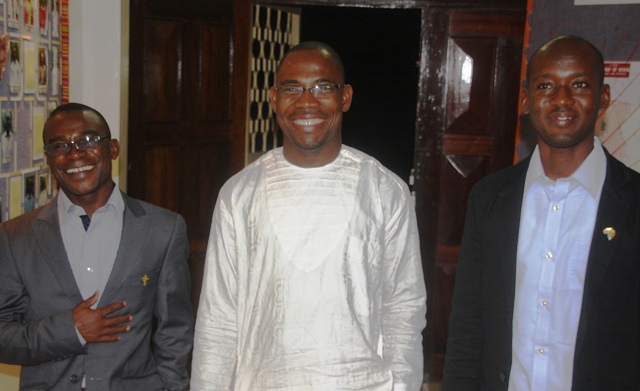 Last Monday, 2 May 2016, the SMA Formation House in Nairobi celebrated the admission to Permanent membership in the Society of African Missions of Armand Mayumbu Maku (from the Democratic Republic of the Congo), Anicet M Agoli-Agbo (Benin Republic) and Luc Tougouma (Ivory Coast).