Home Blog

SMA JOURNAL – October 2026

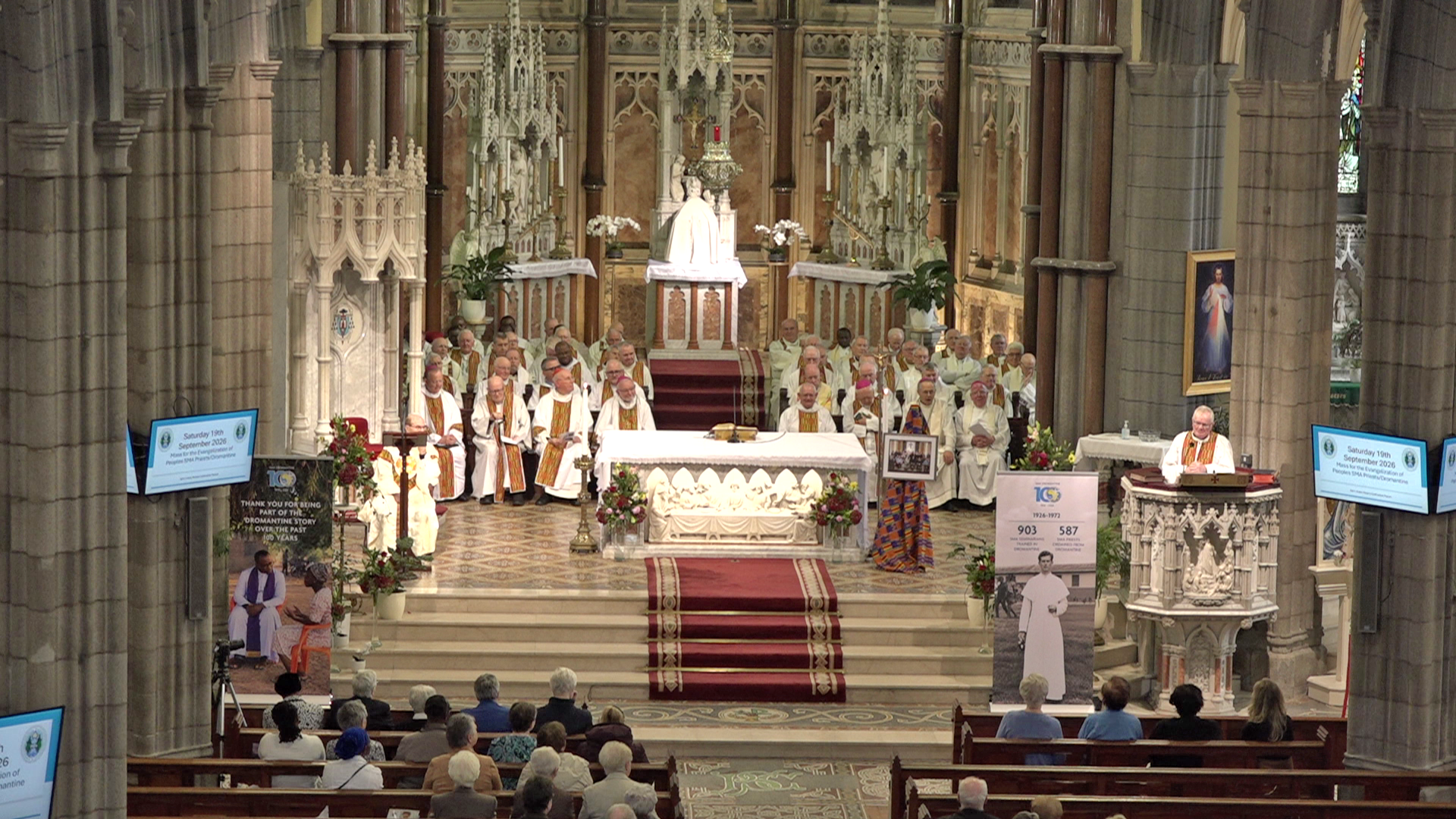
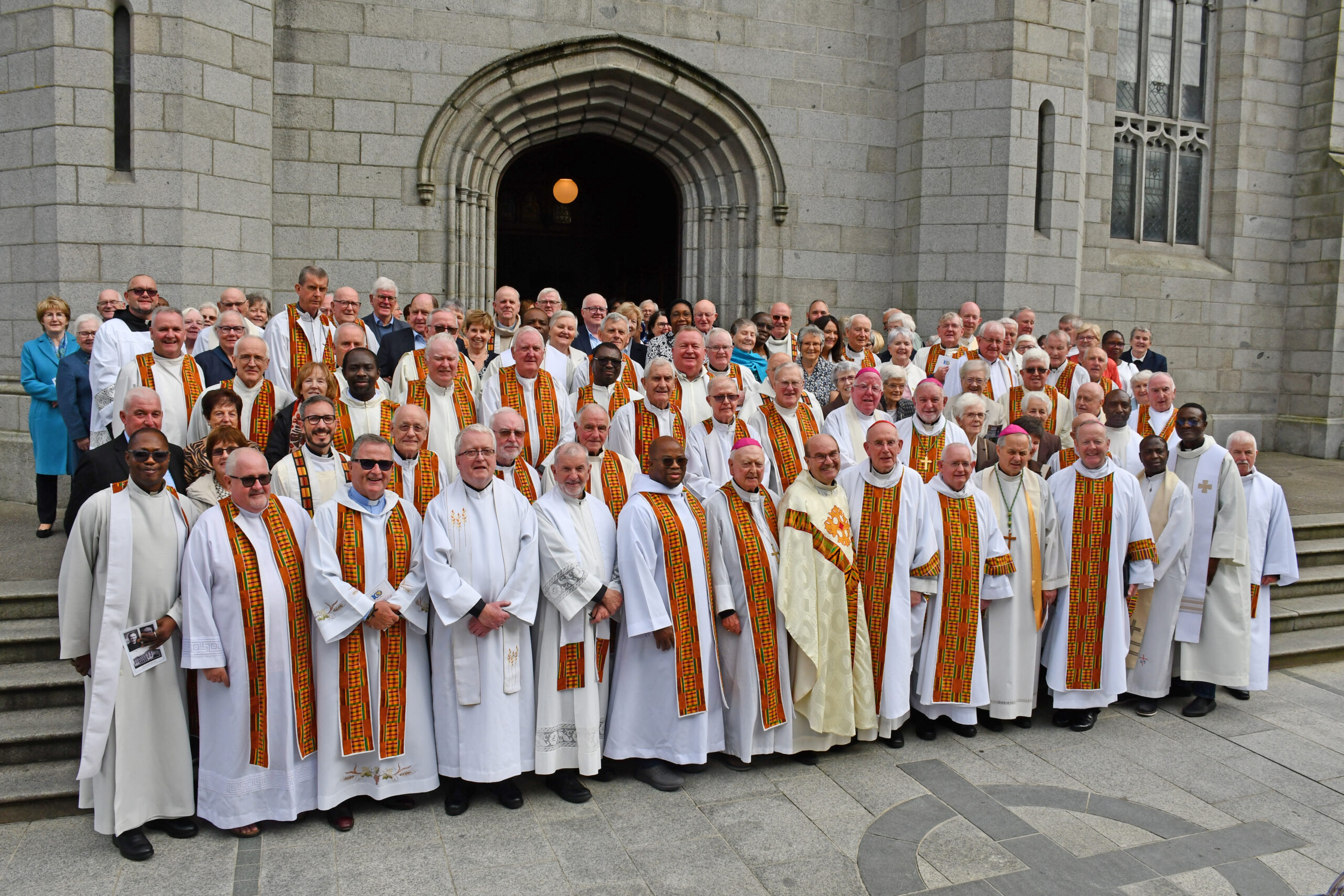
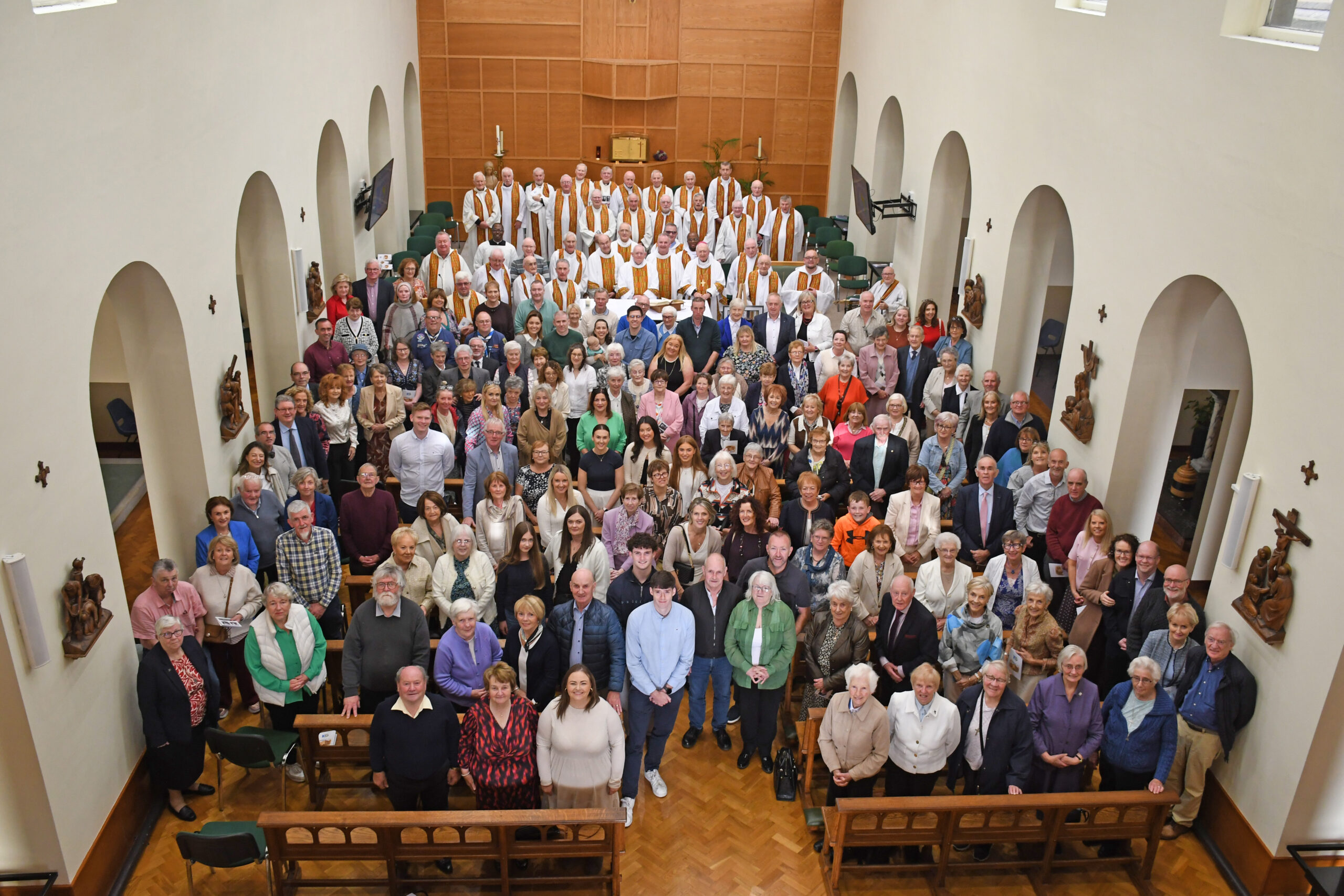
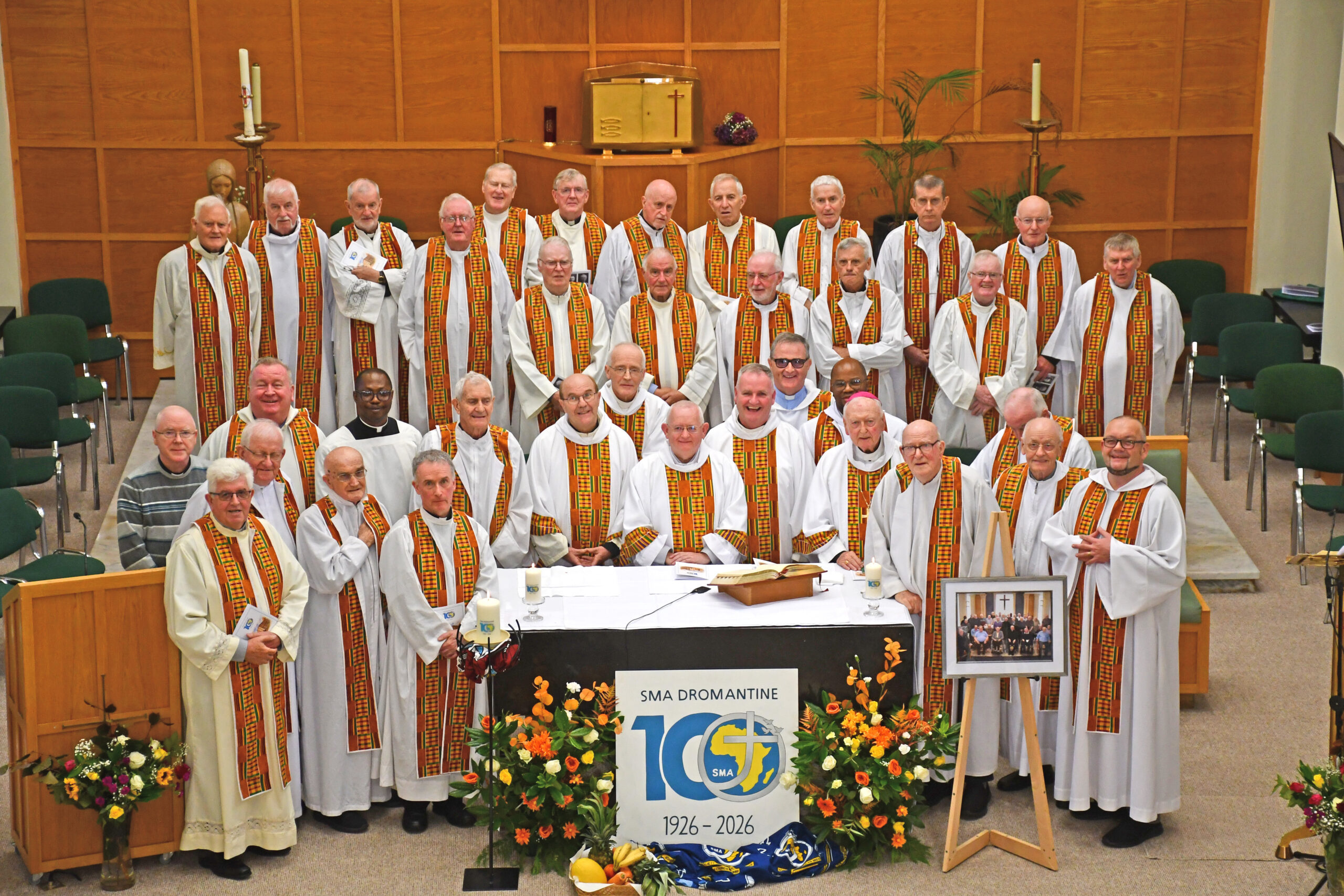
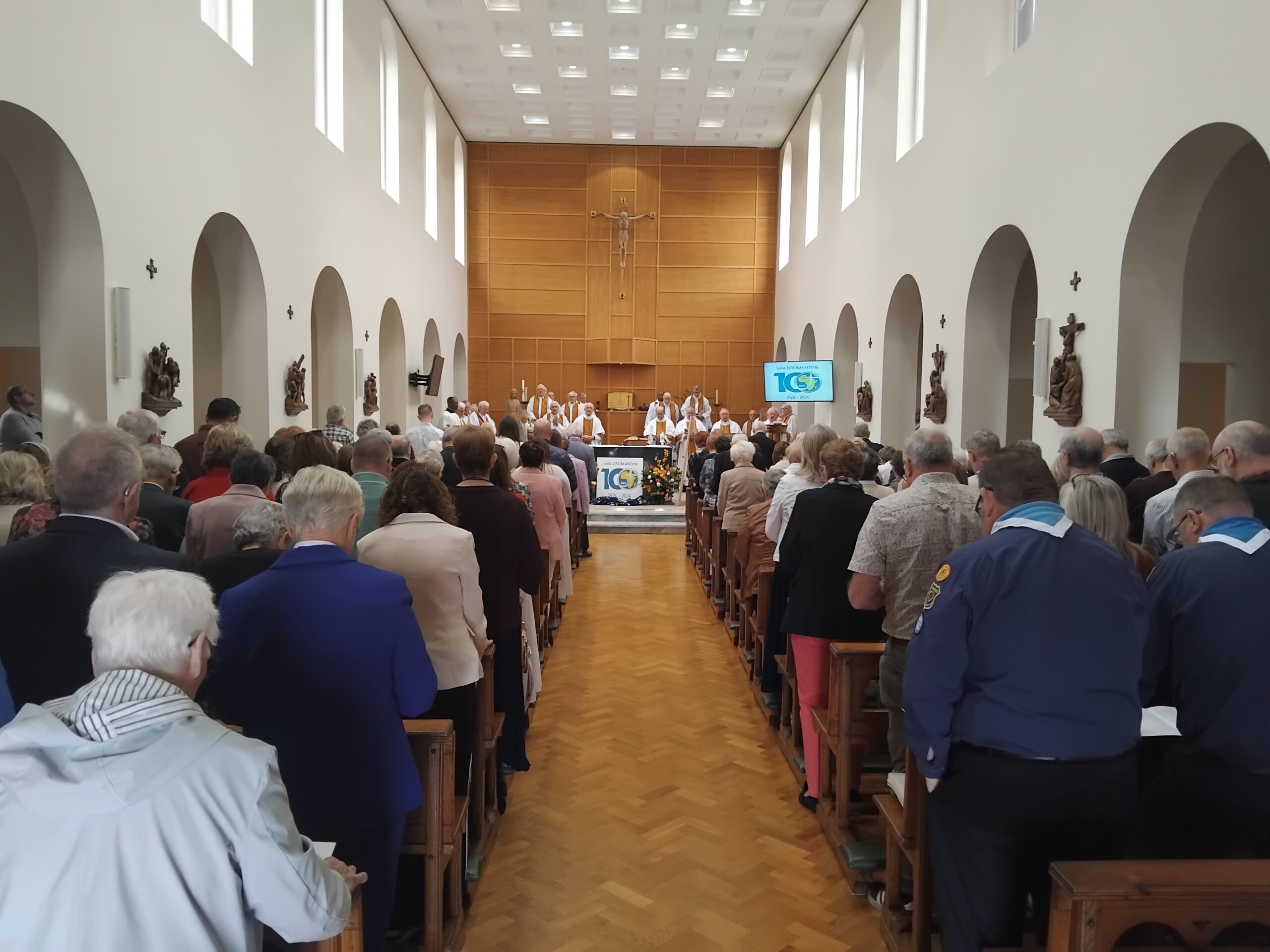
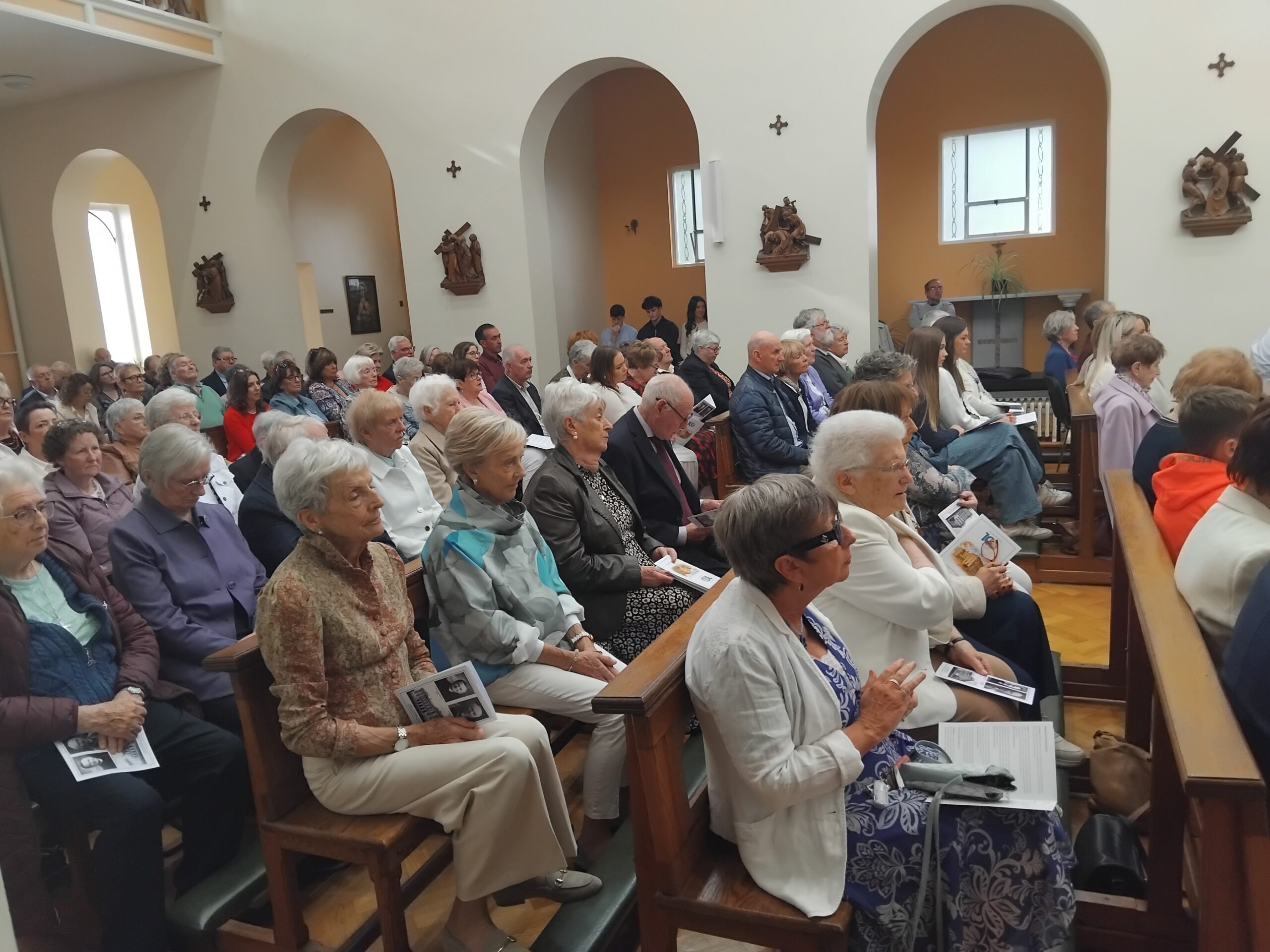
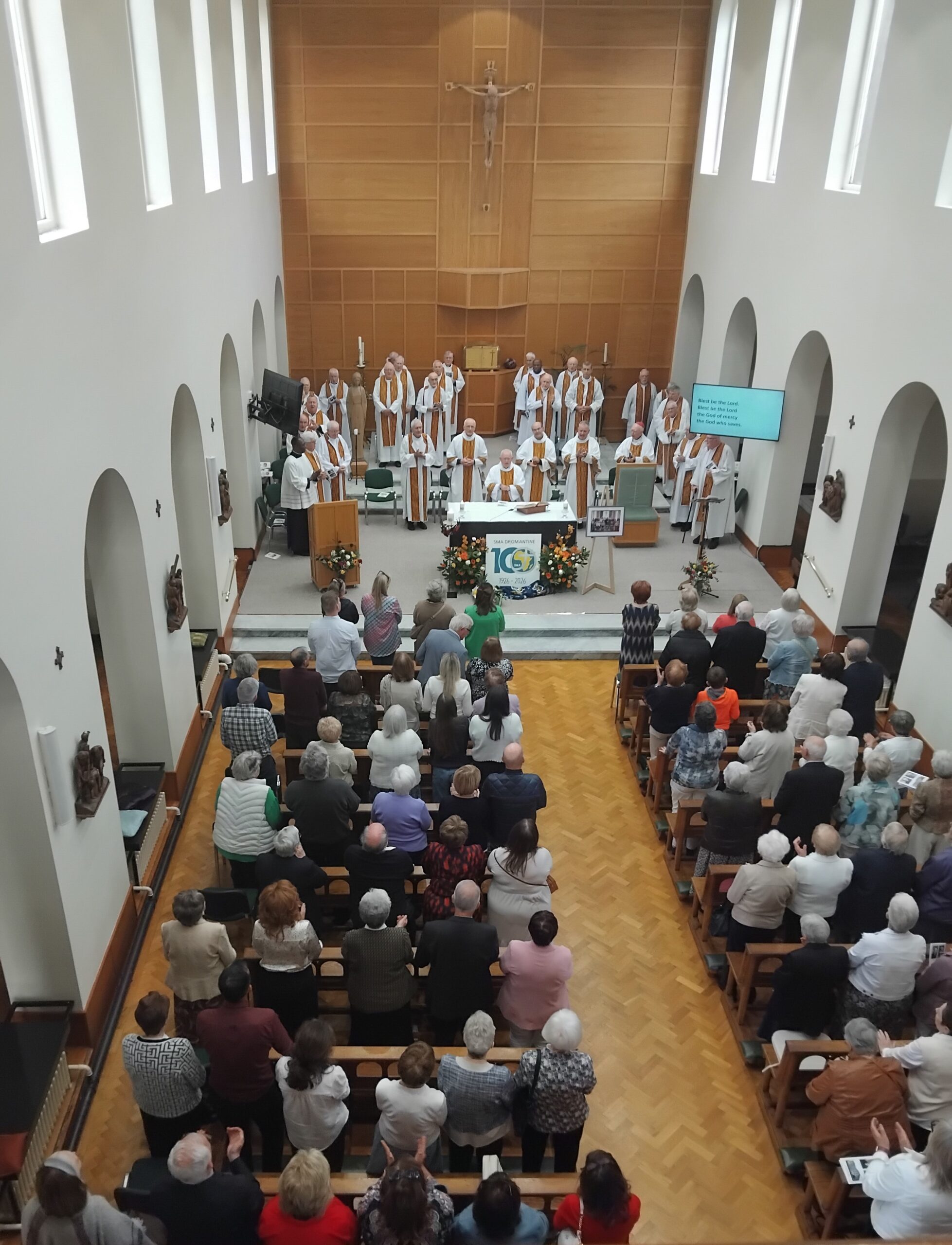
In the October 26 Chapter of the SMA Journal we travel to Newry, Co Down to hear about how 100 years of SMA Presence in Dromantine was celebrated.
Next, staying in Dromantine, Fr Des Corrigan SMA talks about the writing of his new book about the history of Dromantine.
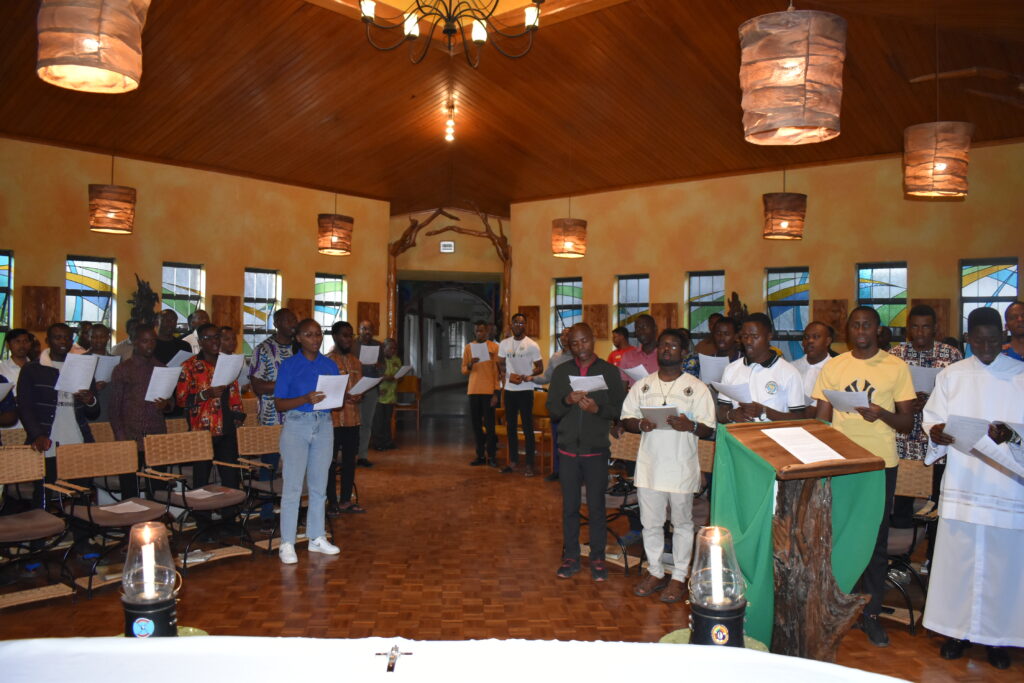
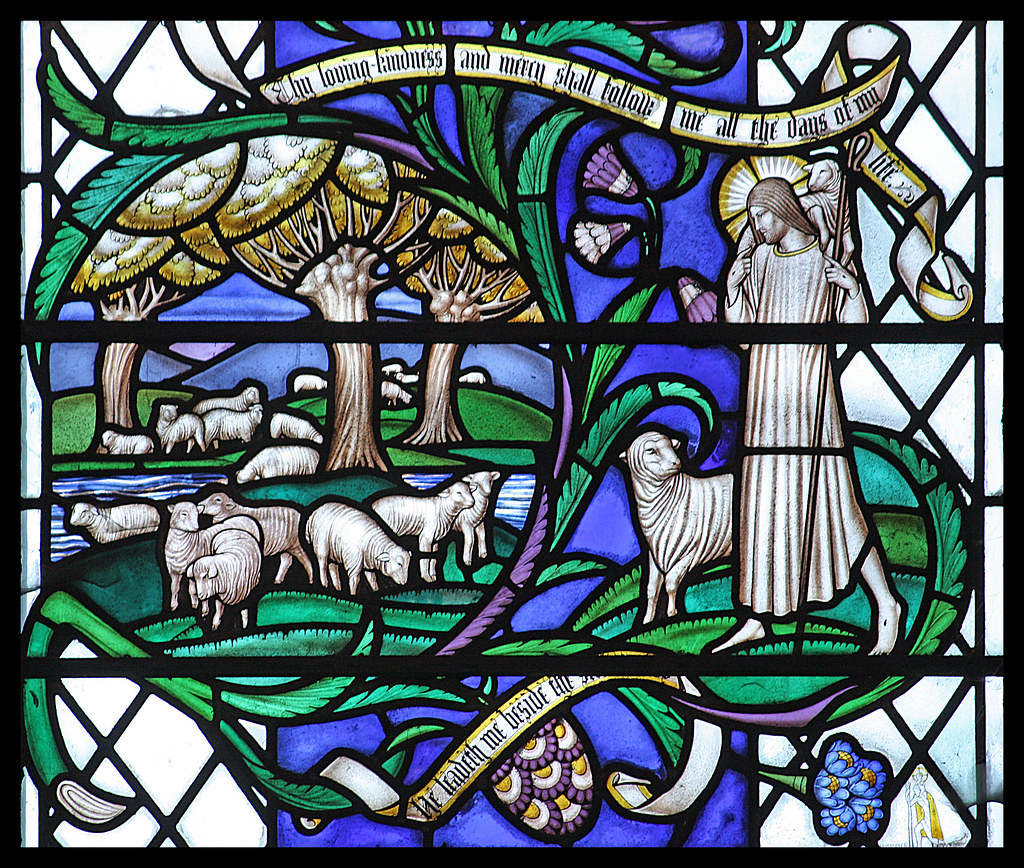
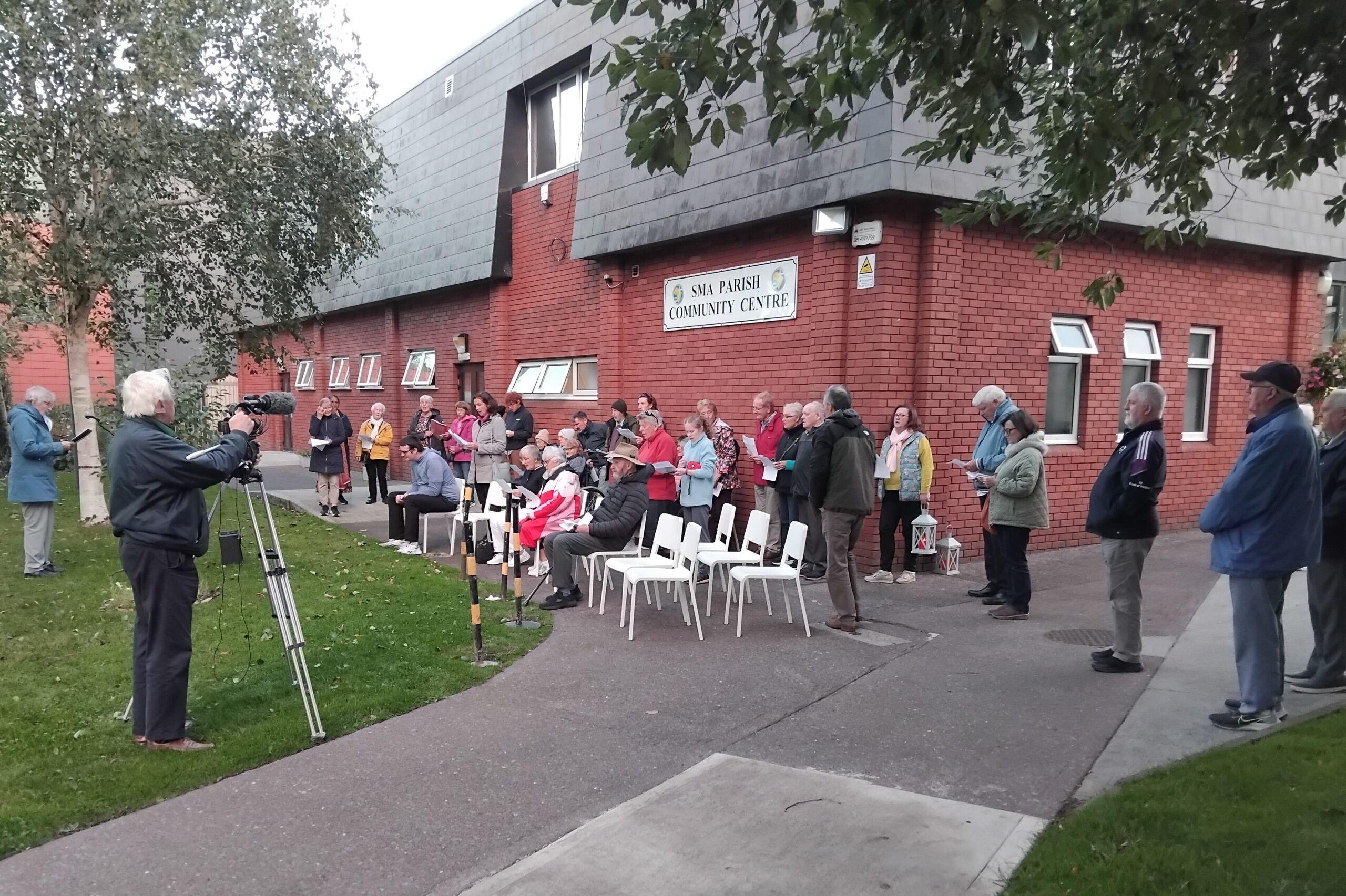
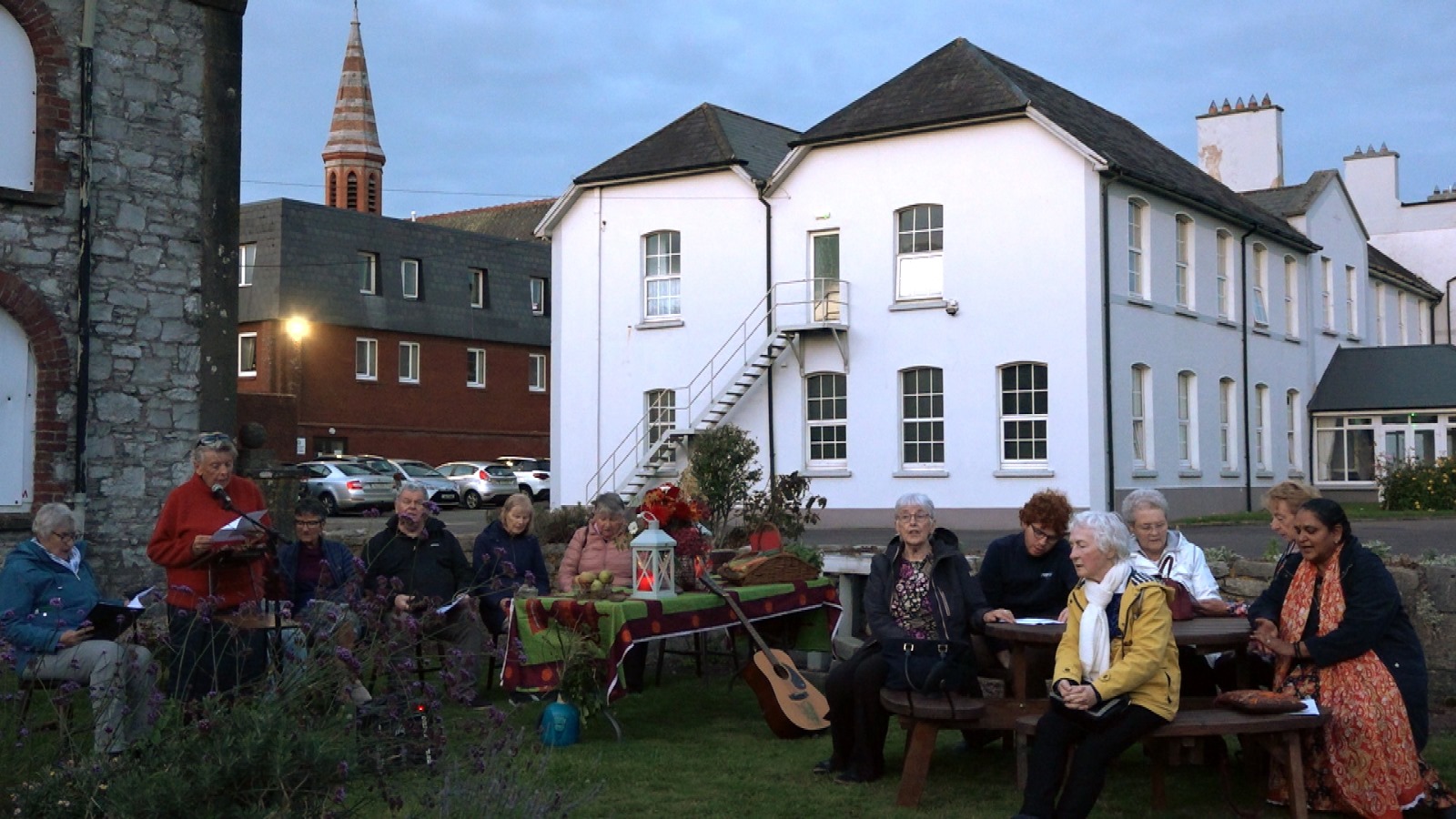
Finally, we hear the Lord is My Shepherd sung by the Wilcollane Singers, who performed at the recent Novena in the SMA Church in Wilton, Cork.

Homily for the 29th Sunday of the Year: 2026

World Mission Sunday
Readings: Isaiah 45:1,4-6; 1 Thessalonians 1:1-5; Matthew 22:15-21
Theme: ‘One in Christ, United in Mission’ (Pope Leo XIV)
By Michael McCabe, SMA

Today, World Mission Sunday, is the day set aside by the Catholic Church throughout the world to publicly renew its commitment to its universal mission, its calling to bring the Good news of Christ to the ends of the earth. In his message marking the 100th World Mission Sunday Pope Leo reminded us that the unity of the Church as a community of Christ’s disciples is inseparable from its missionary outreach to the world: ‘The unity of disciples is not an end in itself; it is directed towards mission. It is through the witness of a reconciled, fraternal and united community that the proclamation of the Gospel acquires its full communicative power.’

The mission of Christ that the Church is charged and empowered to continue is to promote God’s reign ‘on earth as in heaven’. This is the heart of what is meant by the words of today’s gospel, ‘to give back to God what belongs to God (Mt 22:21), for everything belongs to God, and must be returned to him. Unlike the reign of Caesar, based on ruthlessly enforced power and control, which was bad news especially for the poor, God’s reign is good news. It is a reign of love and freedom, of truth and justice. Moreover, unlike the reign of Caesar, and all earthly kingdoms, it will endure forever. As lived and proclaimed by Jesus, God’s reign meant good news for the poor, healing for the sick, and liberation for the enslaved and oppressed: ‘The Spirit of the Lord is upon me, for he has anointed me to bring good news to the afflicted. He has sent me to proclaim liberty to captives, sight to the blind, to let the oppressed go free, to proclaim a year of favour from the Lord’ (Lk 4:18-19).

During his life on earth, Jesus was particularly concerned with those who were marginal to, or excluded from, the Jewish establishment of his time: the poor, the blind, the lepers, the tax collectors, those possessed by demons, the persecuted, and the downtrodden. Jesus wanted to end their misery and enable them to have life in abundance: ‘I have come that you may have life and have it to the full’ (Jn 10:10). Concern for the integral welfare of human beings, created in the image of a loving God, was at the very heart of Jesus’ message and minstry. As Christ’s disciples, we are all called and sent to be instruments of his compassion in the context of our broken, confused and anxiety riven world.

While all baptised members of the Church are called to bear witness to Christ and the Gospel of love, wherever they are, there is also, within the Church, a special calling to mission outside one’s own cultural or national setting – mission ad gentes. Down through the centuries the Church’s mission to the nations was carried out by the members of missionary congregations and societies, ready and willing to embark upon a courageous outreach to peoples and cultures outside their homelands. Irish missionaries and their supporters have made, and continue to make, an outstanding contribution to this missionary outreach. Without the inspiration and leadership given by these women and men, the missionary impulse of the Church would have gradually diminished and died out, and the Church would have never realised its essential vocation to bring the Good News to the ends of the earth.

Pope Leo has special words of commendation for these missionaries ad gentes, and he insists that they have lost none of their relevance today. ‘They have left their homeland, their families and all sense of security in order to proclaim the Gospel, and bring Christ and his love to places that are often challenging, poor, conflict-ridden or culturally distant. Despite adversity and human limitations, they continue to give themselves joyfully, because they know that Christ, and his Gospel, are the greatest treasure we can can offer. Through their perseverance, they demonstrate that God’s love transcends all barriers. The world still needs these courageous witnesses to Christ, and ecclesial communities still need new missionary vocations.’

The Church’s missionary outreach is a great act of love. In the words of Pope Leo: ‘The mission of the Church as a whole is to continue the mission of Christ in the Holy Spirit: a mission born of love, lived in love, and leading to love’. Its purpose is not to transplant the Church as we known it to new places, but to bring about ‘a new creation’, one that respects the culture of the people. Missionaries nurture the seeds of the God’s Word already present in the lives and cultures of the people among who they work, so that these seeds may come to full flowering in the light of the Gospel of Christ. In this way, the Catholic Church becomes what it is called to be – truly Catholic and universal. I end with the exhortation and prayers of Pope Leo: ‘Let us all commit to contributing to the great mission of evangelisation – which is always a work of love – according to our own vocation and the gifts we have received… Mary, Queen of Missions, accompany our work of evangelisation in every corner of the earth: make us instruments of peace, and grant that the whole world may recognise in Christ the light that saves. Amen.’

Listen to an alternative audio Homily by Tom Casey, SMA:

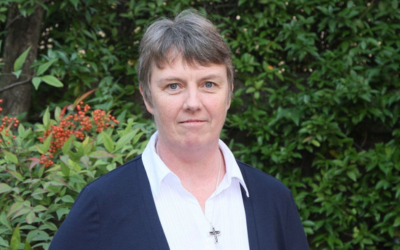
VATICAN – Sister Mary Teresa Barron OLA appointed adjunct secretary of the Dicastery for Evangelization and president of the Pontifical Mission Societies

VATICAN – Sister Mary Teresa Barron appointed adjunct secretary of the Dicastery for Evangelization and president of the Pontifical Mission Societies

Vatican City (Fides News Agency) – Pope Leo XIV has appointed the Reverend Sr. Mary Teresa Barron, OLA, superior general of the Missionary Sisters of Our Lady of the Apostles, as adjunct secretary of the Dicastery for Evangelization in the Section for First Evangelization and the New Particular Churches, with the office of president of the Pontifical Mission Societies, with effect from 4 January 2027.

Today, at around noon, before the recitation of the Angelus, Sr Mary Teresa Barron was presented to the staff of the Missionary Dicastery at the Palazzo di Propaganda Fide.

Reverend Sr. Barron was born in Donegal, Ireland, on 7 November 1968. She was awarded a master’s degree in “Public Healthcare Administration from the Institute for Public Administration in Dublin, and in “International Development” from the Kimmage Institute in Dublin, Ireland. Since 2018 she has served as superior general of the Missionary Sisters of Our Lady of the Apostles, from 2022 to 2025 she was president of the Service of Documentation and Study on Global Mission (SEDOS), and from 2023 to 2025, president of the International Union of Superiors General (UISG) in Rome, Italy, as stated in the official curriculum vitae accompanying the appointment.

Her public statements are characterized by her missionary experience, intercultural dialogue and the link between synodality and the proclamation of the Gospel.

In an interview with the Spanish weekly Vida Nueva, published on 10 January 2025, she stressed the importance of having lived and worked in different ecclesial contexts and of being in contact with “the Church and peoples from different continents”.
She described this experience as “extremely important for any role in the Church that has a global reach”.
When asked on that occasion what belonging to a missionary congregation might have in common in her own journey and that of Sister Simona Brambilla, who had recently been appointed Prefect of the Dicastery for Institutes of Consecrated Life and Societies of Apostolic Life, she explained: “I believe that a missionary perspective and understanding are very important in a synodal Church, because experience teaches us to appreciate and cherish diversity as a source of richness.” She added that “the missionary spirit is often inclusive and readily encourages dialogue”, qualities that are important in relations with people from all over the world.

The link between mission and synodality was already at the heart of her words at the conclusion of the Assembly of the Synod on Synodality in October 2024. In an interview with iCatholic, Sister Barron recalled with emotion a process in which she had been involved from the very beginning, three years earlier. She expressed satisfaction with the final document, which she regarded as a source of support to continue “as a Church on this synodal path”.
When asked about the prospects for the Irish synodal journey, she identified the “missionary orientation” as one of the document’s strengths. The challenge, she explained, was to form missionary disciples and to help people live their faith in everyday life: “Faith is not a Sunday event; it is something we live every day.” It meant bringing Christ’s love into ordinary life and sharing it. She also highlighted the emphasis placed on the family as the domestic Church, seeing this as a call to a more missionary presence in society.

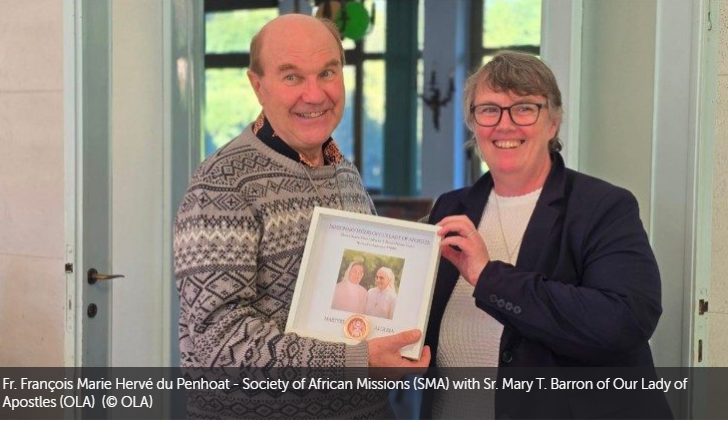
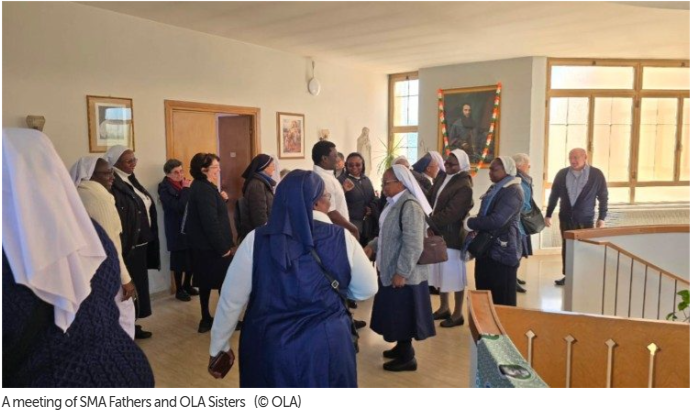
On 19 March 2026, in a joint interview with Vatican News together with Father François Marie Hervé du Penhoat, Superior General of the Society of African Missions, Sister Barron reflected on new forms of missionary presence. The two congregations were celebrating, among other anniversaries, the 150th anniversary of the foundation of the Sisters of Our Lady of the Apostles and the 170th anniversary of the Society of African Missions.
“The Church is becoming more synodal. This missionary spirit is fundamental,” she said.
“Today, our response could include accompanying migrants, women who are victims of trafficking for the purpose of exploitation, and a greater commitment to social pastoral ministry, even though our traditional apostolates in healthcare and education remain essential.”
She also recalled the international dimension of the congregation, which brings together sisters from 21 countries, and the importance of nurturing a family spirit among them.

Her concern for people wounded by exploitation is one of the causes particularly close to her heart, as shown by a message she addressed to participants in a prayer marathon against human trafficking, organized in 2025 by the UISG and the Union of Superiors General. “Our prayers today are not just words. They are also a call to action,” she stressed, inviting participants to walk in solidarity with victims and to draw inspiration from the courage of survivors.
During the nine-day novena following the death of Pope Francis, on 3 May 2025 in St Peter’s Basilica, she expressed, on behalf of consecrated women, a commitment to continue a mission of closeness: “To be the caress of our loving God the Creator towards those who suffer, to be the fire that kindles other fires.” She linked this mission to the Gospel’s call to go out to meet people, to serve, heal and accompany those most in need.
(Fides News Agency, 8/10/2026)

Pope Leo XIV: Let us celebrate the 100th anniversary of World Mission Sunday with gratitude and generosity

Below is a link to a video message delivered by Pope Leo XIV in preparation for World Mission Sunday (18 October), established 100 years ago by Pope Pius XI and celebrated this year on Sunday, October 18.  The text of message, as published by Fides News Agency is given below.  

Dear brothers and sisters in Christ,
As we mark World Mission Sunday, we give thanks to God for the abundant fruits he has bestowed upon the Church since my predecessor, Pope Pius XI, established this annual celebration 100 years ago. He desired that it would foster, in every Diocese and parish, a deeper understanding of the greatness of the missionary task, fervent prayer for the work of evangelization, encouragement for the missionary vocation, and support for the work of the Pontifical Mission Societies.

Indeed, the realization of Pius XI’s aim has borne fruit in my own life. Looking back on my youth, I can see how the prayers offered to the Lord of the harvest mysteriously helped prepare my heart to hear Jesus’ call to follow him as an Augustinian missionary. Moreover, the prayers and contributions of the faithful encouraged and sustained my missionary work in Peru, as well as that of countless others throughout the world. For this reason, I would like to express my heartfelt gratitude to everyone who has supported World Mission Sunday over the years.

In this centenary year, the present theme, “One in Christ, United in Mission,” invites us to reflect on the fundamental task of nurturing the Church’s unity in following Christ, particularly in our commitment and responsibility to spread the Gospel message of salvation to all people.

Indeed, through Baptism, each one of us becomes a member of the Body of Christ and has a unique role in contributing to Jesus’ saving work. Our Lord calls us to cooperate as one family, with the help of the Holy Spirit, to bring everyone everywhere into a communion of faith in Christ.
I reiterate, therefore, the special appeal I made in the Message for World Mission Sunday: “Let us all commit to contributing to the great mission of evangelization — which is always a work of love — according to our own vocation and the gifts we have received. Your prayers and practical support… will be a great help in bringing the Gospel of God’s love to everyone, especially the poorest and those most in need.” (Message for the 100th World Mission Day, 25 January 2026).

Finally, as we celebrate this centenary, I thank you for all that you will do to carry on the legacy of World Mission Sunday and to support generously the evangelizing mission of the Church throughout the world.

May the blessing of Almighty God, the Father, and the Son, and the Holy Spirit come down on you and remain with you for ever. Amen.
(Fides News Agency, 7/10/2026)

THE POPE’S PRAYER INTENTION For mental health ministry | September 2026

Pope Leo, in his prayer intention for this month, invites us to pray for mental health ministry, so that we may know how to welcome those who suffer in silence, support those who care for them, and learn to integrate mental health care into our community life as a living sign of mercy.

By praying this prayer, you join the millions of people who belong to the Pope’s Worldwide Prayer Network who, from every corner of the world, are praying for humanity’s challenges and the Church’s mission. Take a moment, pray with the Pope.

TEXT OF THE POPE’s PRAYER
In the name of the Father, and of the Son, and of the Holy Spirit. Amen.
God of life,
You know the innermost depths of our hearts—
the light and shadows within us,
the silent wounds that sometimes no one sees.
Today we bring before you our brothers and sisters
who struggle with challenges to their mental health,
who suffer in solitude with anxiety, depression, or any other mental illness.
You call them by name, with tenderness,
and in You they find dignity and hope.
Forgive us for the times we have looked the other way,
feeding the stigma and discrimination of persons with mental illnesses.
May your Church be an open house,
a safe space where everyone has a place—
a community that accompanies and never excludes,
that listens without judging and draws near without fear.
We pray to you, Lord, for those who care:
professionals, family members, volunteers—
men and women who, with patience and love,
build bridges of understanding and comfort.
Give them strength and compassion to sustain others.
Send your Spirit upon us,
that we may learn to welcome and integrate care for mental health
into the life and ministry of our communities and of the whole Church,
and thus become a living sign of your mercy,
which never abandons and always restores.
Amen.

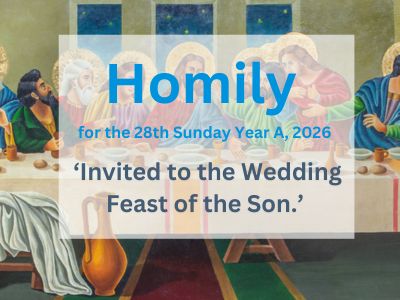
Homily for the 28th Sunday of the Year 2026

Readings: Isaiah 25:6-10; Philippians 4:12-14,19-20; Matthew 22:1-14
Theme: Invited to the Wedding Feast of the Son
By Michael McCabe, SMA

Jesus favourite way of teaching was by telling stories or parables. In today’s gospel, he tells a story about a banquet prepared by a King for his son’s wedding. When everything is ready for the feast, the king sends his servants, not once but twice, to call the invited guests to come. When these refuse to come, for one reason or another, he finally asks his servants to go to the crossroads in the town and invite everyone they can find, good and bad alike, to come to the wedding. These come, and the ‘wedding hall is filled’ (Mt 22:10). Like most of the parables of Jesus, this is a story about the Kingdom of God, or the world as ruled by God and transformed by his love. All are called to be part of this world, but not everyone appreciates the invitation, or responds to it appropriately.

In the first reading, the prophet Isaiah uses the image of a banquet of rich food and fine wines to describe God’s plans for the exiled people for Israel, and for all peoples. The Lord of Hosts will remove ‘the mourning veil covering all peoples, and the shroud enwrapping all nations; he will destroy death for ever’ (Is 25:7). In the gospel parable, Jesus takes up and develops Isaiah’s image of God’s banquet, interpreting it in the light of his own experience of rejection by the chief priests and elders of the people. The banquet is now a wedding feast in honour of the Son, who is Jesus, and the special guests are the people of Israel.

Sadly, despite repeated invitations, they refuse to come. Instead they seize the servants, mistreat and kill them. This refers to the hostile reception given to the prophets whom the Lord sent at various times to teach and instruct the people how to live as his beloved children. We are reminded of the story in last Sunday’s gospel about the absentee landlord sending messengers to collect the produce of his vineyard and the reception they got. The audience to whom Jesus was addressing these parables was made up of ‘chief priests and the elders of the people’ (Mt 22:1), the very people whom he knew were going to reject him, and hand him over to the Roman authorities to be crucified. And, sadly, we see God’s messengers being arrested, jailed, tortured and killed in many parts of our world today.

Reading this parable today challenges us to ask ourselves how well we are responding to the Lord’s multiple invitations to us. Are we so tied up in all kinds of concerns and anxieties about things which do not really matter that we fail to recognise or simply ignore the invitation to God’s banquet? And, even if we may not persecute God’s prophets and messengers, how seriously do we take their words of wisdom?
To return to the gospel parable, following the refusal of the invited guests to accept the invitation, the King sends his servants out again – this time not to the houses of the wealthy and respectable, but to the ‘crossroads in the town’ (Mt 22:9). These were places near the gates and markets of a typical Middle East town where large crowds of ordinary people would gather. Here you found the social and religious outcasts, tax collectors, prostitutes, all those in despised trades. This time no exceptions are made. All are invited, good and bad alike, until the wedding hall is filled.

What Jesus is saying is that everyone is invited to the Kingdom of God. All kinds of people are called to be part of God’s new world. It does not belong to an elite group of specially chosen ones. It encompasses saints and sinners. As the sacrament of the Kingdom, the Church must never forget that, in God’s eyes, there are no first and second-class members. It must resist the temptation to create elite groups that are ‘different’ and, by implication, ‘better’ than the ordinary average members. While it might seem wonderful to have a Christian community consisting only of totally dedicated members, it would not reflect the love of God reaching out to all. It would not be a catholic church, a church open to all. The only requirement is a ‘wedding garment’ (Mt 22:11-12). But what is this wedding garment? For an answer I turn to a short poem, entitled The Kingdom, by the Welsh priest poet, R.S. Thomas. In it he describes vividly the kind of people who belong to the Kingdom of God and the kind of things that are happening there. He also suggests that the required wedding garment is ‘the simple offering/Of your faith, green as a leaf’.

It’s a long way off but inside it
There are quite different things going on:
Festivals at which the poor man
Is king and the consumptive is
Healed; mirrors in which the blind look
At themselves and love looks at them
Back; and industry is for mending
The bent bones and the minds fractured
By life. It’s a long way off, but to get
There takes no time and admission
Is free, if you will purge yourself
Of desire, and present yourself with
Your need only and the simple offering
Of your faith, green as a leaf.

Listen to an alternative audio Homily by Tom Casey, SMA:

AFRICA/BENIN – Families forming missionary seminarians: small, concrete steps to overcome conflict and build peace

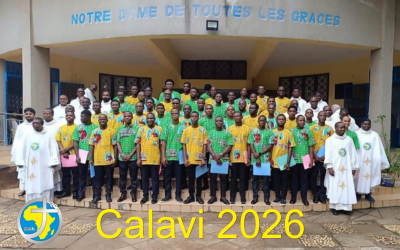
Calavi (Fides News Agency) – On Thursday, 1 October, the international year of spirituality for 42 seminarians of the Society of African Missions (SMA) will begin at the Brésillac Centre in Abomey-Calavi, in the Archdiocese of Cotonou, Benin. They come from 12 countries in Africa and Asia, are between 20 and 30 years old, and have already completed the philosophical studies required of those preparing for missionary priesthood.

“Accompanied by a team of five formators, they will spend nine months in an experience of discernment, through periods of reflection and interiority, listening to the Word and prayer, as they prepare to make a decision about their future: whether to continue their vocation as members of the SMA or to discern another form of life and service.”

The testimony comes from Father Antonio Porcellato, who, after six years as Superior General of the SMA, has received a new assignment from his successor, Father François du Penhoat, who appointed him as a formator for a three-year term, renewable for another term.

“I continue to serve in the field of the initial formation of seminarians, an area in which I already worked from 1989 to 2001: six years in Genoa, one year here in Calavi and five years in Ibadan, Nigeria,” the missionary explains. Father Porcellato himself had suggested taking on an assignment in formation. “I am convinced that discernment and initial formation are among the most urgent priorities for the SMA today, which is experiencing a flourishing of vocations in Africa, more moderate growth in Asia, and an almost complete absence of vocations in Europe and America.”

“This year too, around 30 Beninese families have played an active role in the missionary formation of these young men by welcoming, free of charge, into their homes throughout the month of September the seminarians who need to improve their knowledge of French before the beginning of the annual program,” the missionary continues.

Every morning, the seminarians go to the Brésillac Centre, where they meet their classmates for French lessons and have lunch. In the afternoon, each returns to his host family, where he spends the evening and night before returning to the Centre the following morning. The families generally have school-age children, with whom the seminarian naturally interacts and converses, while also taking part in daily activities, meals and times of prayer.

“The group of families who offer their hospitality has existed for decades and has gradually organized itself, identifying each year those families willing to welcome a seminarian. In keeping with the African tradition of hospitality, these families see welcoming others as an opportunity for encounter and are happy to host young people from other countries. In this way, relationships are formed that often continue well beyond the nine months of the year of spirituality spent in Benin.”

This is the experience of Pascaline Assogba, a recently retired university lecturer, who speaks joyfully of the experience she has gained over 20 years of welcoming seminarians. Today, she has what amounts to an extended family in several African countries. “If I travel anywhere on the continent, practically every country has an SMA missionary whom I have hosted in my home and who has now become part of my family,” she says.

On Saturday, 26 September, a closing celebration was held, during which the 24 seminarians who had been hosted by local families expressed their gratitude for the experience.

Spending a month with a Beninese family, besides providing an opportunity to practise French, represents a significant stage in the formation of future missionaries. The young men are called to adapt to foods they have never encountered before, different rhythms of daily life – such as the custom of having dinner very late – and forms of devotion that may sometimes be new to them.

In essence, it is a practical school of proximity, interculturality and adaptability – essential skills for those called to live out their missionary vocation in contexts different from their own. The experience also helps foster mutual understanding and trust among people from different countries and continents, including those marked by tensions or conflict.

These are small, concrete steps towards overcoming divisions, building relationships and contributing to peace.
(AP) (Fides News Agency, 30/9/2026)

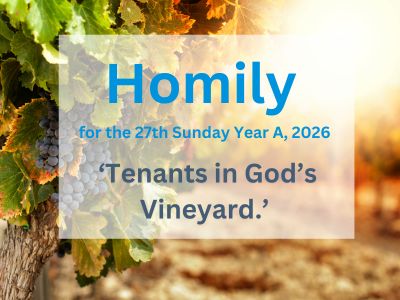
Homily for the 27th Sunday of Year A

Readings: Isaiah 5:1-7; Philippians 4:6-9; Matthew 21:33-43
Theme: Tenants in God’s Vineyard
By Michael McCabe, SMA

The images of vines and vineyards loom large in the Scriptures. They feature today in the first reading, the responsorial psalm, and the gospel. Vineyards were as important for the people of Israel as dairy farms were, and indeed still are, for people in Ireland. The cultivation of vineyards and the production of wine was no less demanding than is the production of milk. A lot care and hard work went into the production of quality vines and vintage wine. Because vineyards and vines were so central to the everyday life of the Israelites, they are often used symbolically in Scripture to represent God’s relationship to Israel and its people. A fruitful vine was a symbol of Israel’s fidelity to God, while sour grapes were an indication of Israel’s infidelity (cf. Jer 2:21).

Our first reading today, taken from the prophet Isaiah, illustrates God’s attentive and loving care for the people of Israel, using the image of a vine-grower’s who did everything possible to produce grapes of the highest quality. ‘He dug the soil, cleared it of stones and planted choice vines in it. In the middle he built a tower and cut a wine-press as well. He expected it to yield a crop of good grapes, but sour grapes were all that it gave’ (Is 5:2).

What God expected from the people of Israel, after all the love and care he had shown them, was justice and integrity. Instead what he found was bloodshed and a cry of distress (cf. Is 5:7). Isaiah goes on to paint a sad picture of Israel as an abandoned vineyard, ‘a wasteland, neither pruned nor cultivated, overgrown with briers and thorns’ (Is 5:6).

In our gospel reading, Jesus expands and develops the parable of the vineyard in the light of his own experience of rejection. He is speaking ‘to the chief priests and elders of the people’ (Mt 21: 33), who refused to accept him as the Messiah. He tells them a story about a landowner who planted a vineyard, developed it, and leased it out to tenants. Then, when harvest time drew near, he sent his servants to collect the grapes. However, the tenants seized, thrashed, stoned and even killed these servants. And this happened not just once but several times. Jesus is here referring to the rejection of the prophets whom God sent to remind the Israelites of their calling to be a holy and faithful people, a model of truthfulness and upright behaviour for other nations. Finally, as Jesus develops the parable, the landowner sends his Son, thinking that they will respect him at least. Instead, the kill him too in order to take possession of the vineyard themselves. This represents precisely what happened to Jesus himself, the beloved Son sent by the Father to the people of Israel, but rejected by the chief priests and elders of the people. Jesus was ‘the stone rejected by the builders that became the keystone’ (Mt 21:42).

Our readings today are not merely an account of Israel’s ingratitude and infidelity, or of Jesus’ rejection by the chief priests and elders of the people. They are addressed to us here today. They challenge us to ask ourselves what God expects of us, after all the love and care he has shown us? We are privileged, by baptism, to be called to work in the Lord’s vineyard. Every Sunday we are invited to gather together to hear the Gospel message and to make it part of our lives. We are God’s new people, called to be faithful and active members of the Body of Christ, the Church. We are those ‘other tenants’ whom the Lord expects ‘to deliver the produce to him when the season arrives’ (Mt 21:41). What kind of grapes do we produce? Are they sweet and luscious, or dry and sour? Have we lived up to the Lord’s expectations of us as a community of his beloved disciples? What kind of impact do we have on the world around us? Can we honestly say that we are people of justice and integrity? Am I a person of justice and integrity?

In today’s Second Reading, St Paul offers us practical guidance on how to produce good fruit in our lives and live up to the Lord’s expectations of us. ‘Finally, brothers and sisters, fill your minds with everything that is true, everything that is noble. Everything that is good and pure, everything that we love and honour, and everything that can be thought virtuous or worthy of praise’ (Phil 4:8). If we follow Paul’s instruction, we do not need to worry about the kind of fruit we will produce. ‘That peace of God, which is so much greater than we can understand’ will guard our hearts and our thoughts, in Christ Jesus’ (Phil 4:8) and ensure that we produce the fruits of love.

Listen to an alternative audio Homily by Tom Casey, SMA:

Dromantine 100 Celebrations

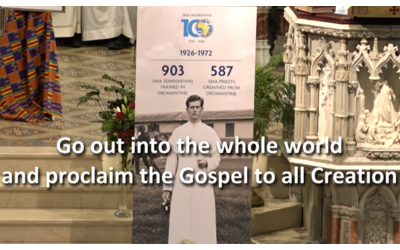
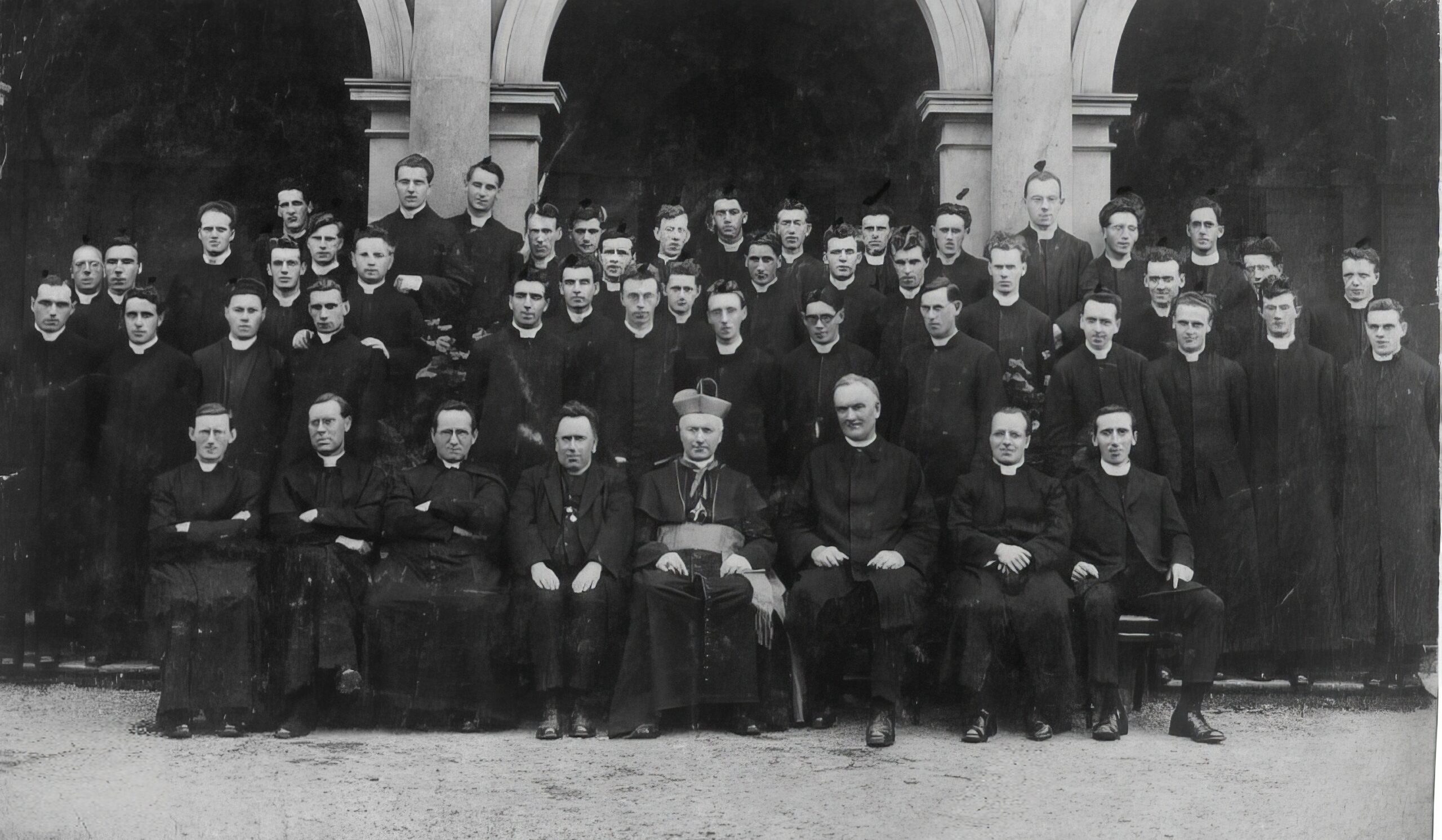
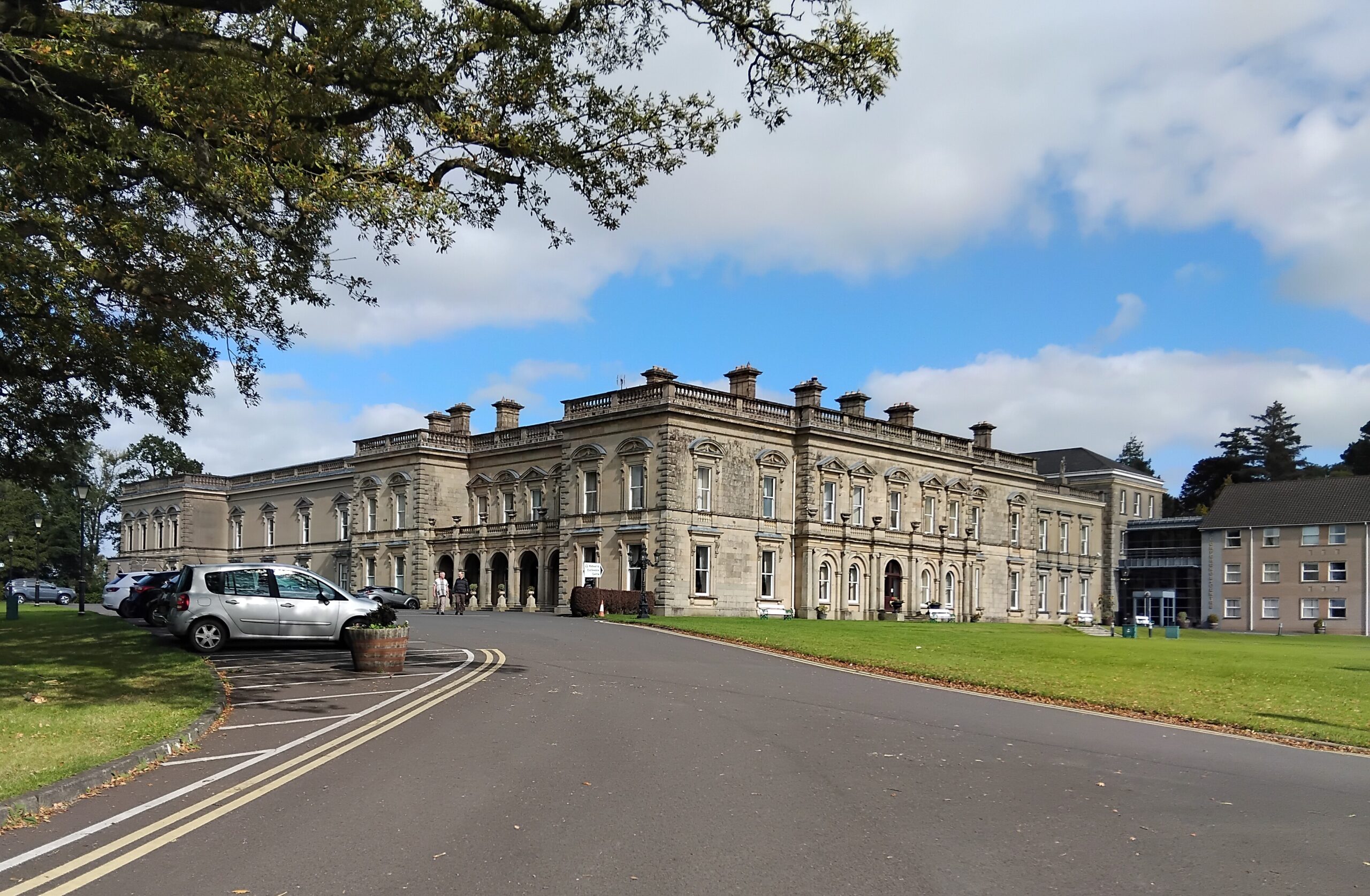
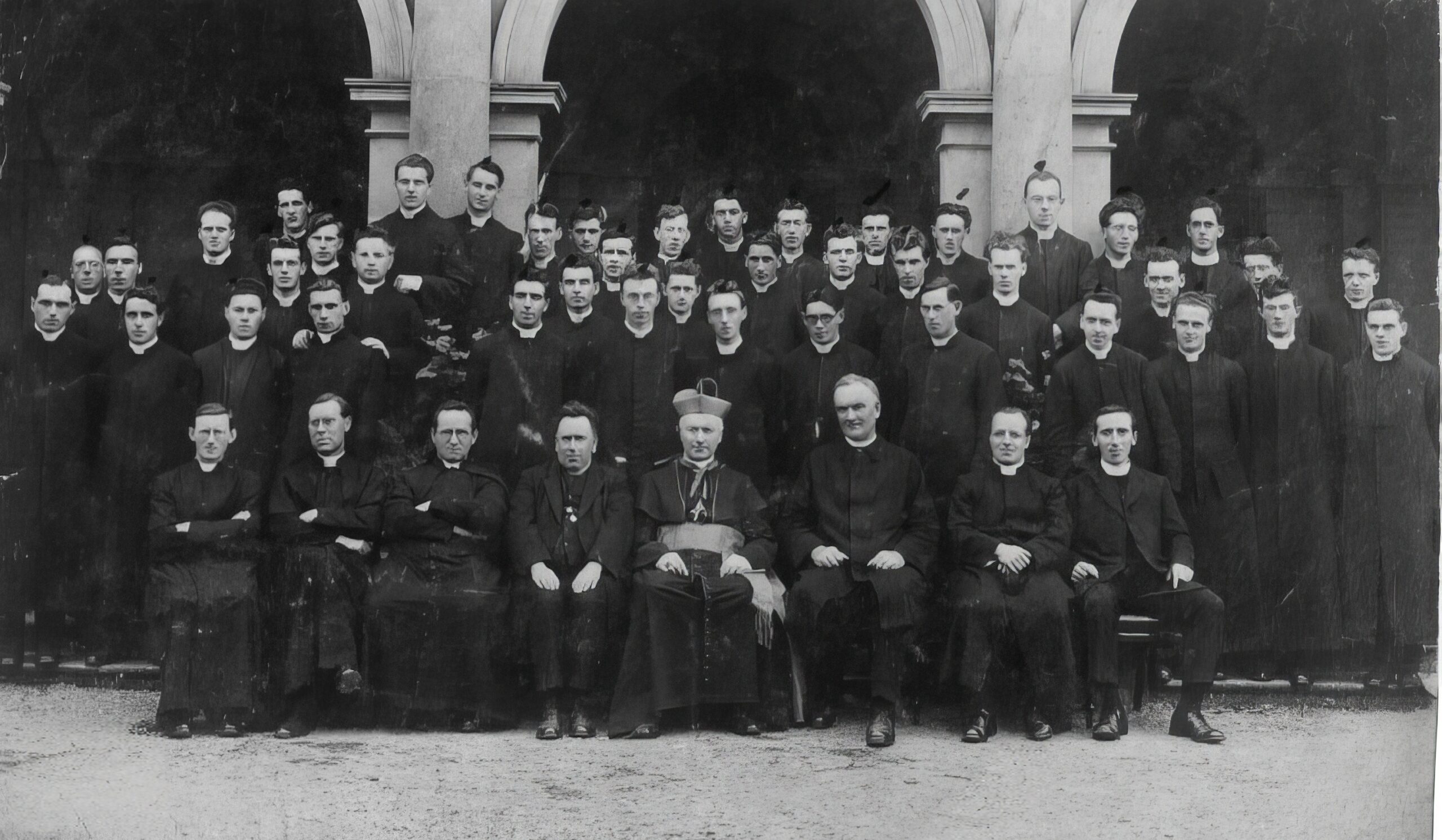
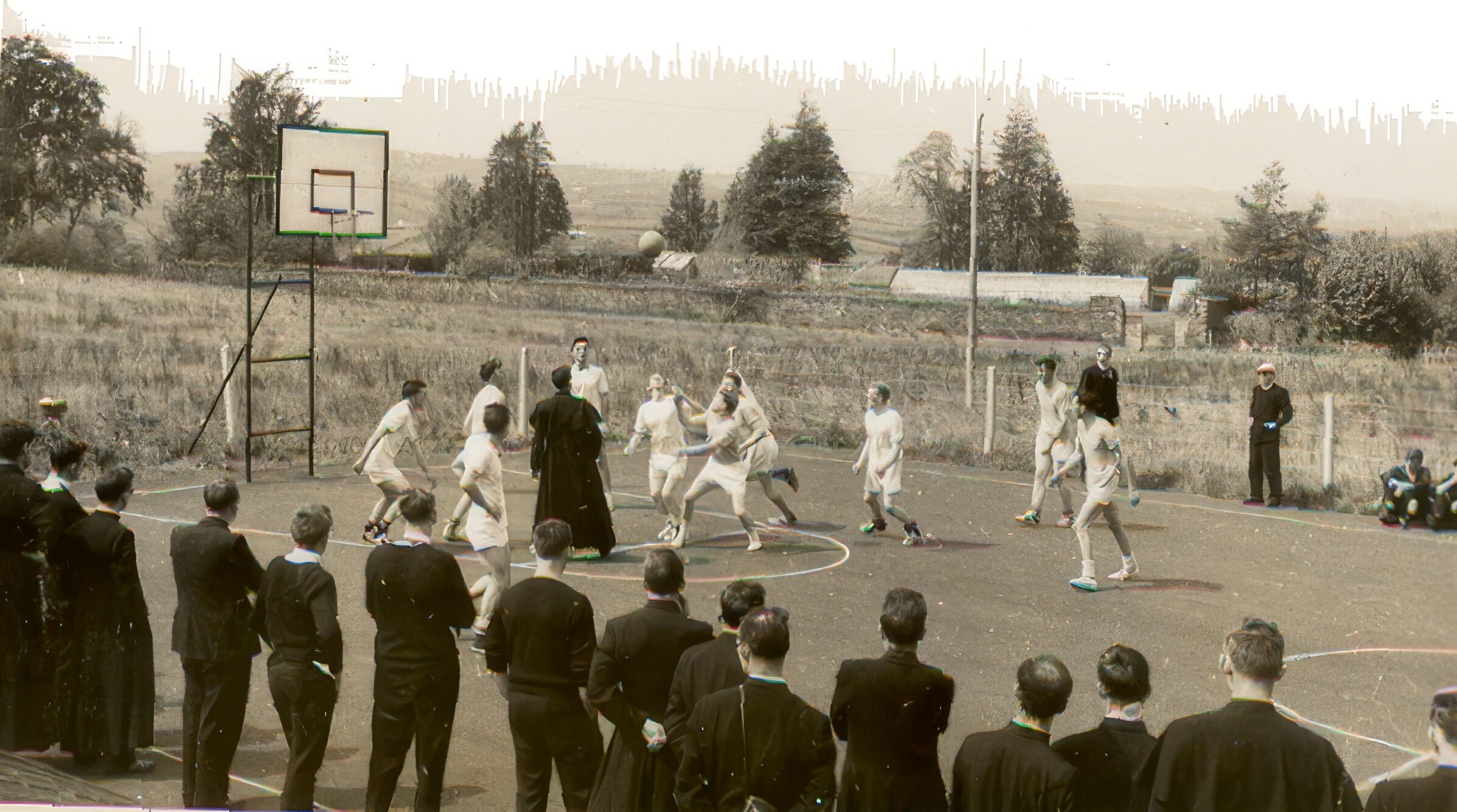
Dromantine Seminary officially opened its doors 100 years ago today – on the 29th of September 1926.  Forty- seven seminarians transferred from the SMA seminary in Cork, then located in what is now the headquarters of the Society of African Missions in Blackrock Road.  The first, in the series of photographs below, shows the students and staff at that time.
For the next forty-seven years, up until 1972, Dromantine prepared generations of men for missionary priesthood. During its years as a major seminary, 587 students were ordained, many of whom were subsequently sent to serve in countries including Egypt, Nigeria, Ghana, Zambia, Liberia, Kenya, South African and Tanzania.
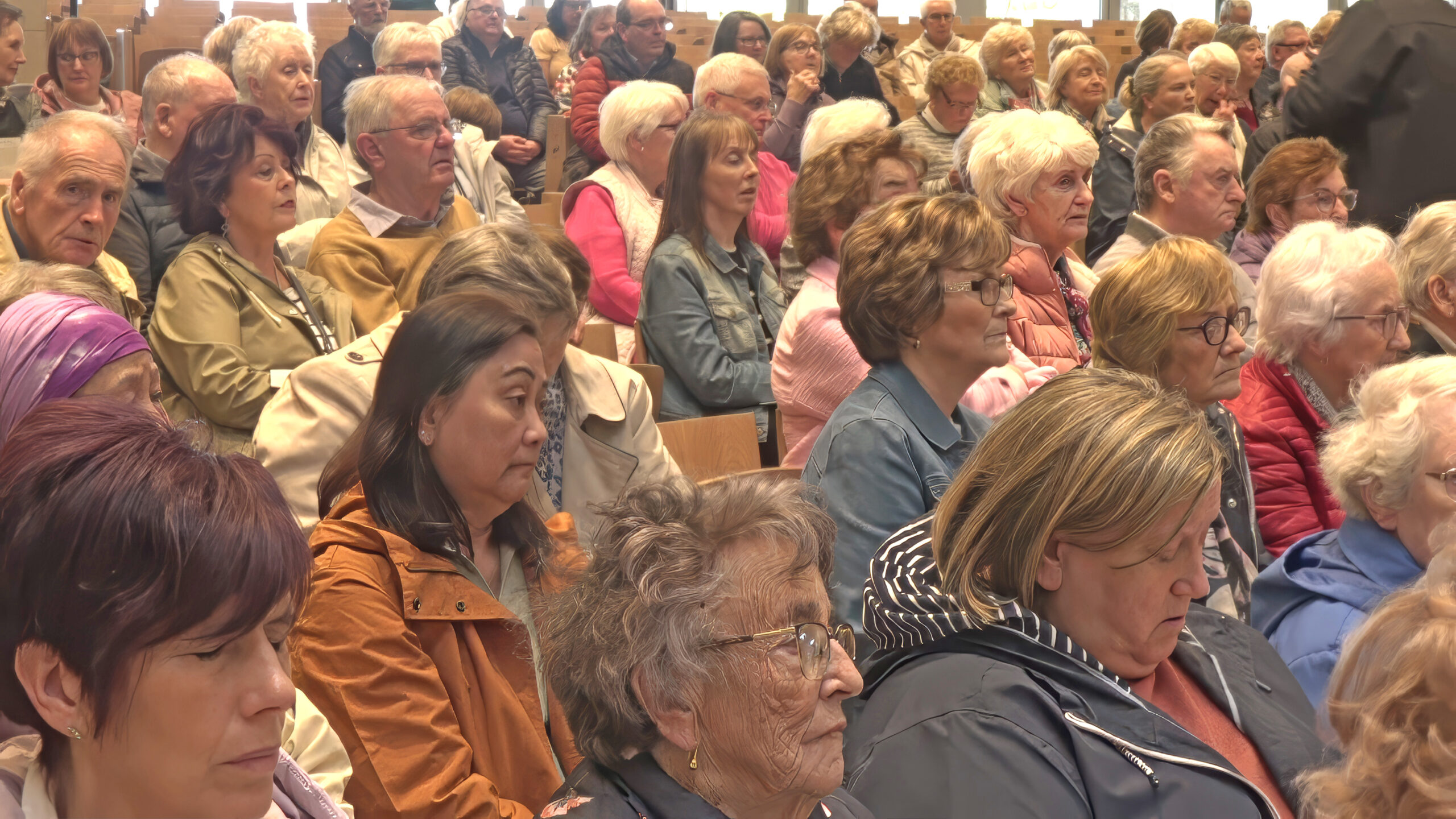
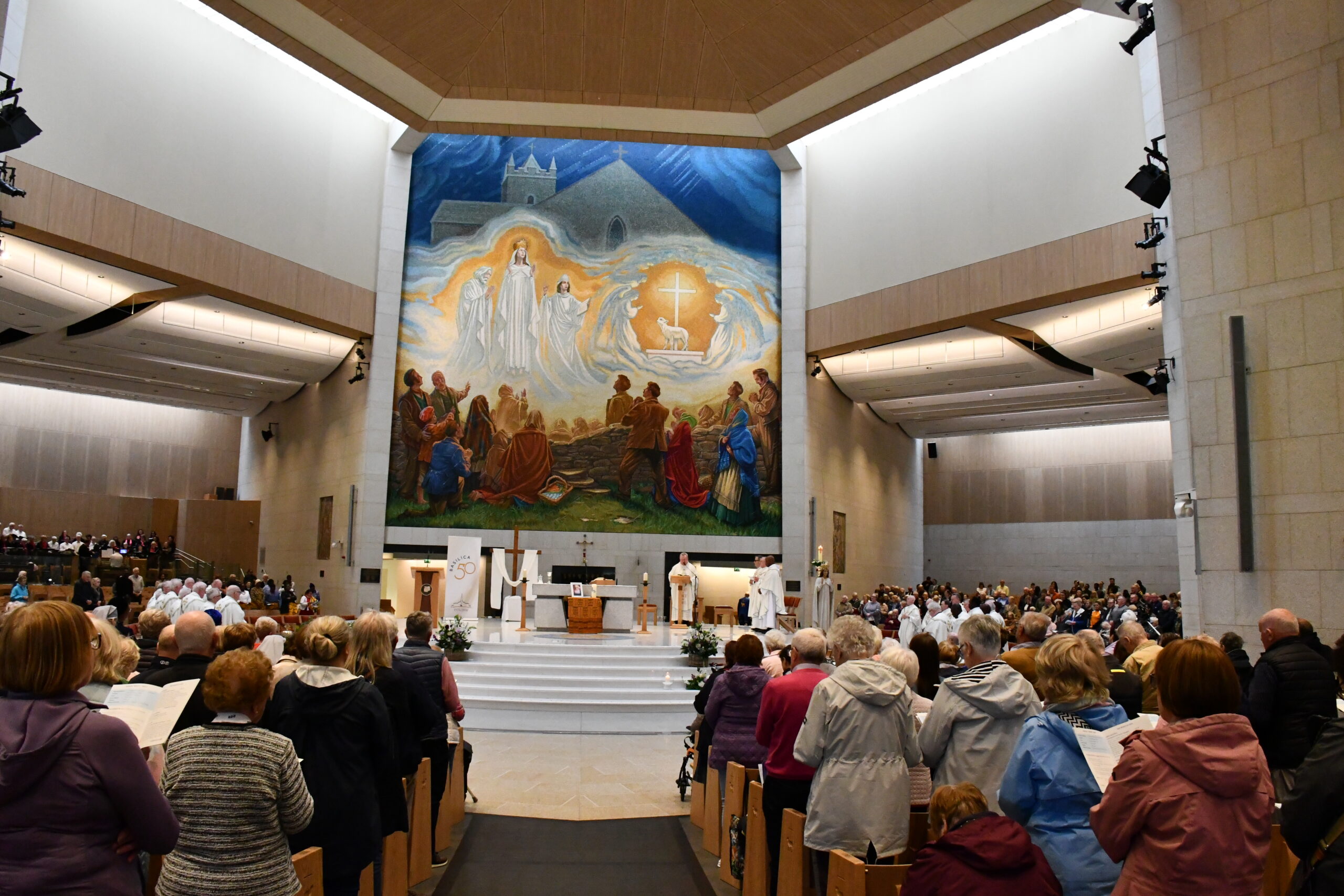
The contribution of Missionaries trained in Dromantine to the Church and to education and development in Africa has been enormous.  On the 19th and 20th of September Celebrations to mark this fact and the part that Dromantine played in making this possible took place.  Below are some photographs taken at these events.  You may click on the photos to enlarge.   
To view a video about Dromantine Click HERE


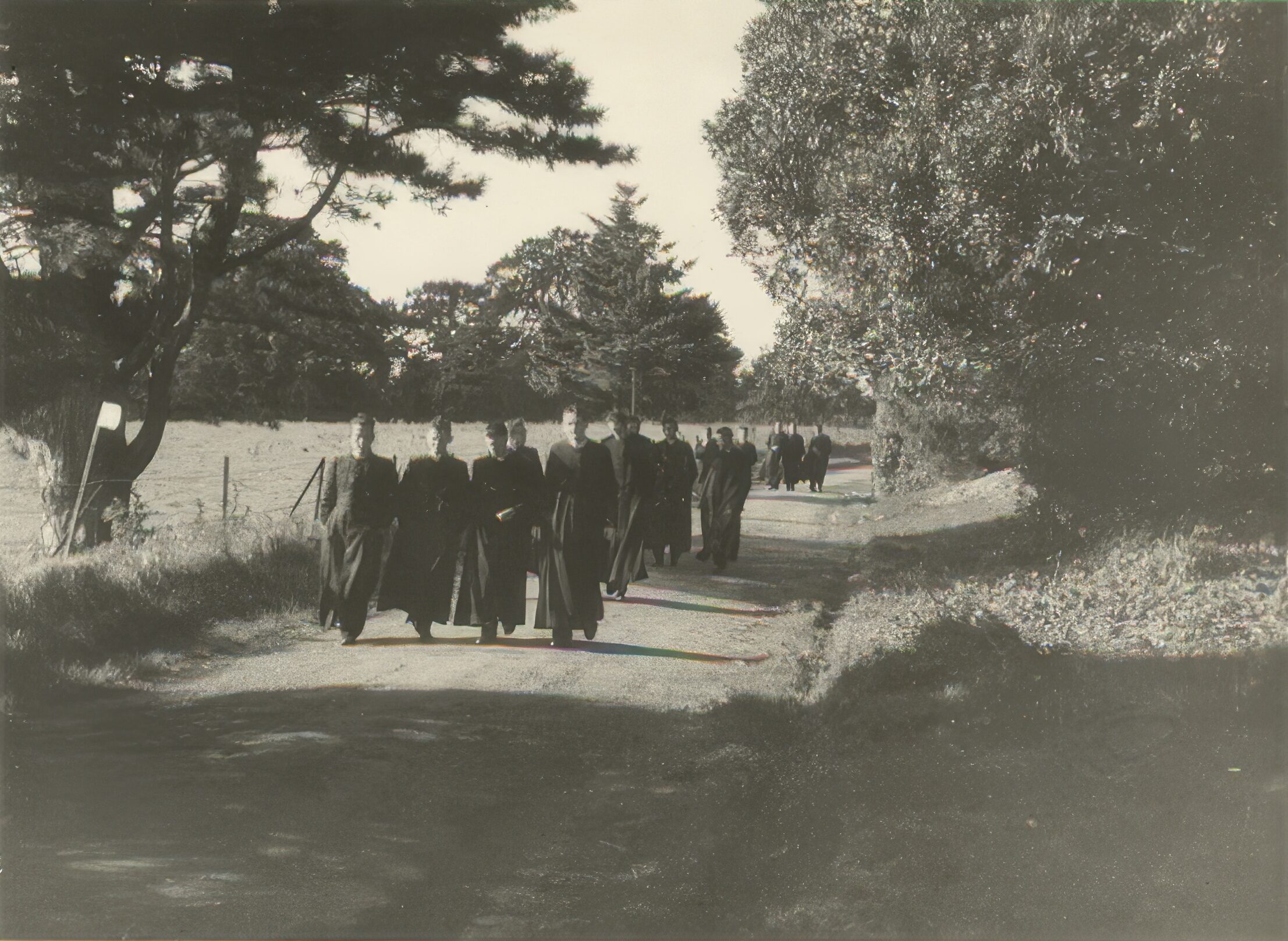
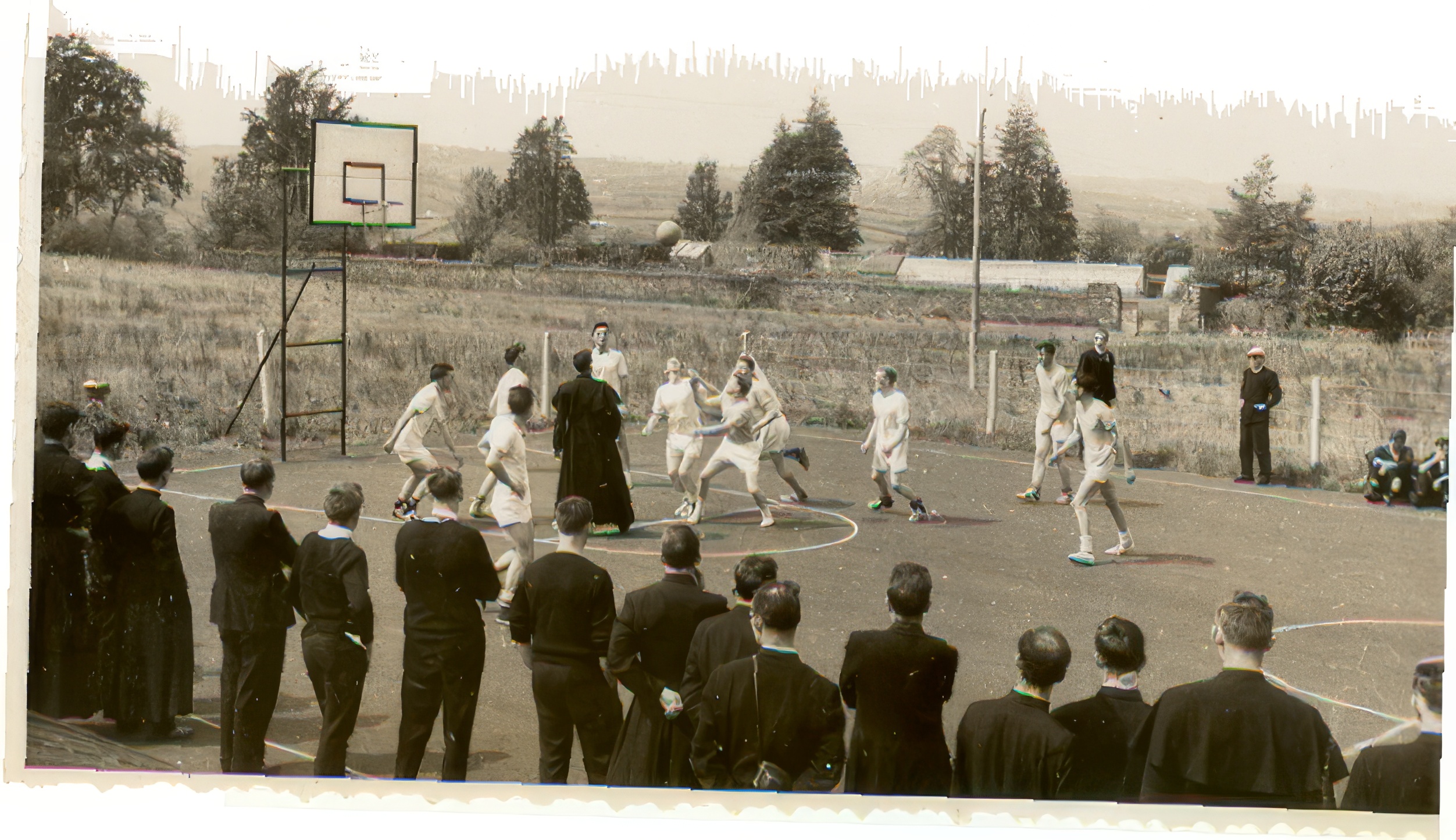
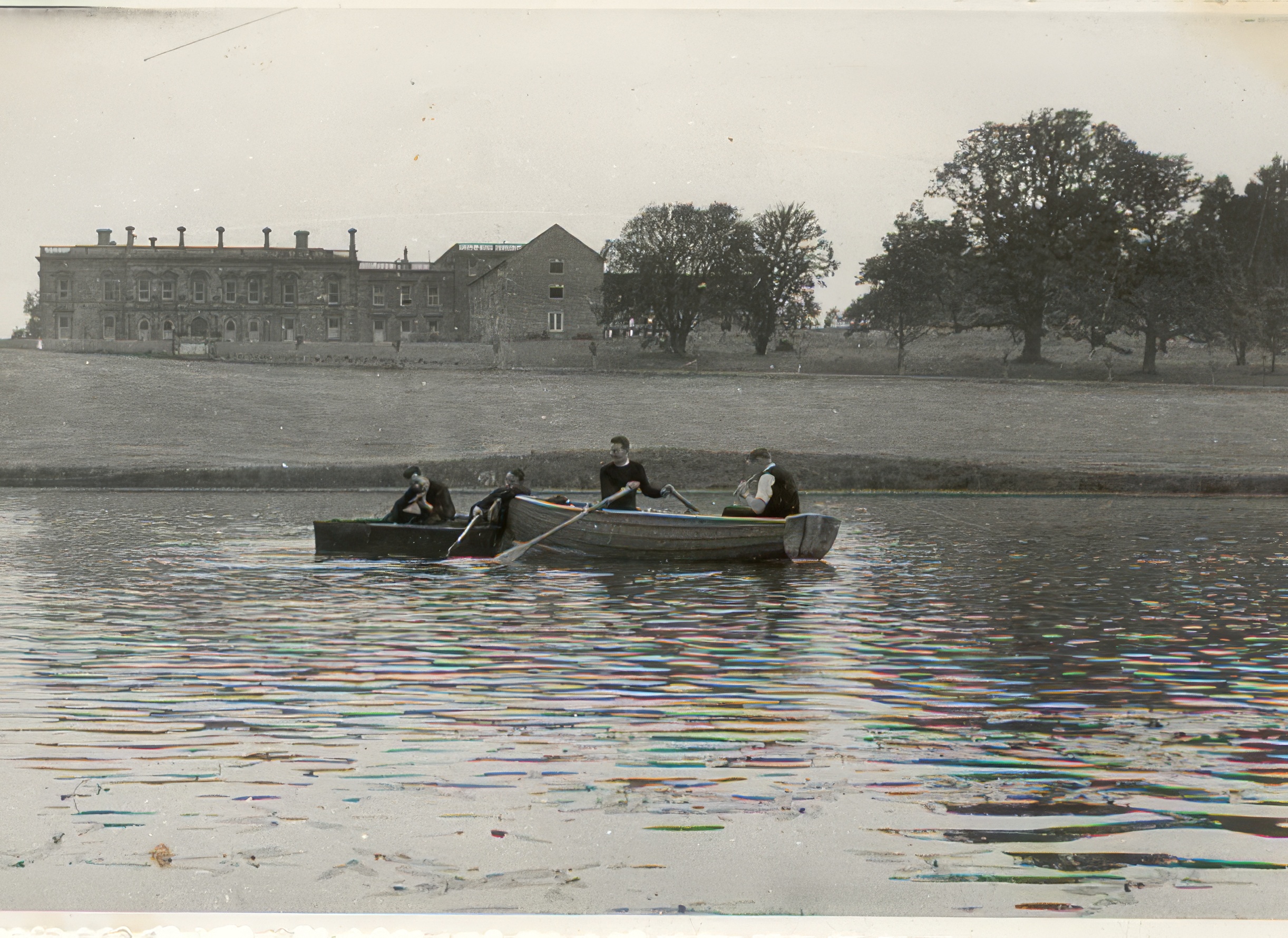
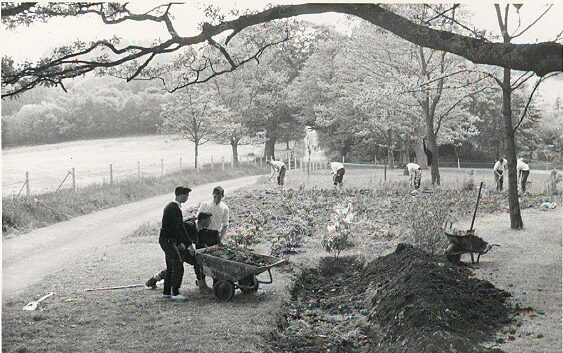
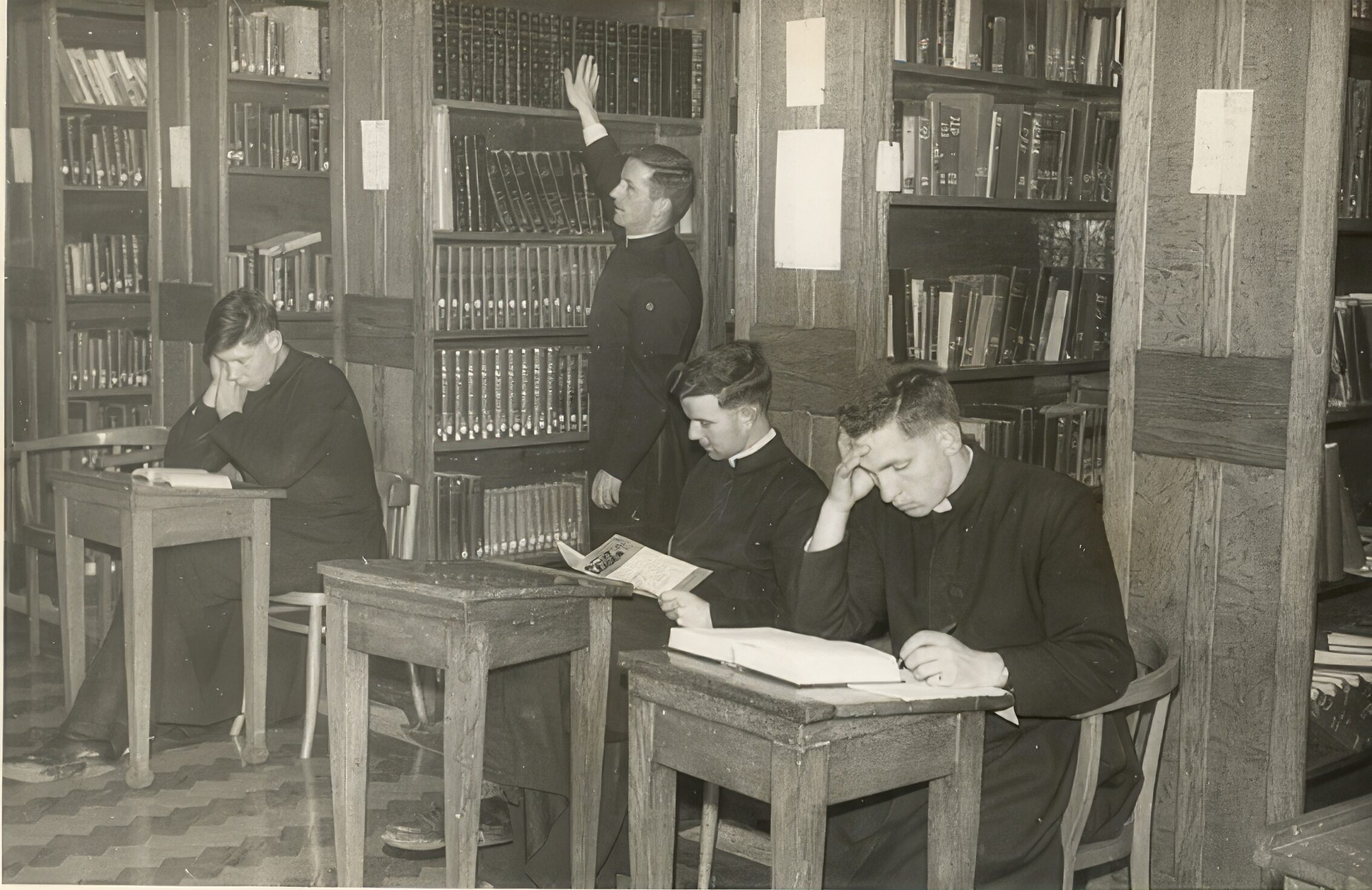
September 1926 – Students and Staff. Flanking Bishop Edward Mulhern are Fr William Butler SMA, first Superior of Dromantine and Fr Maurice Slattery SMA, Provincial Superior.              Below, scenes from student life in Dromantine.

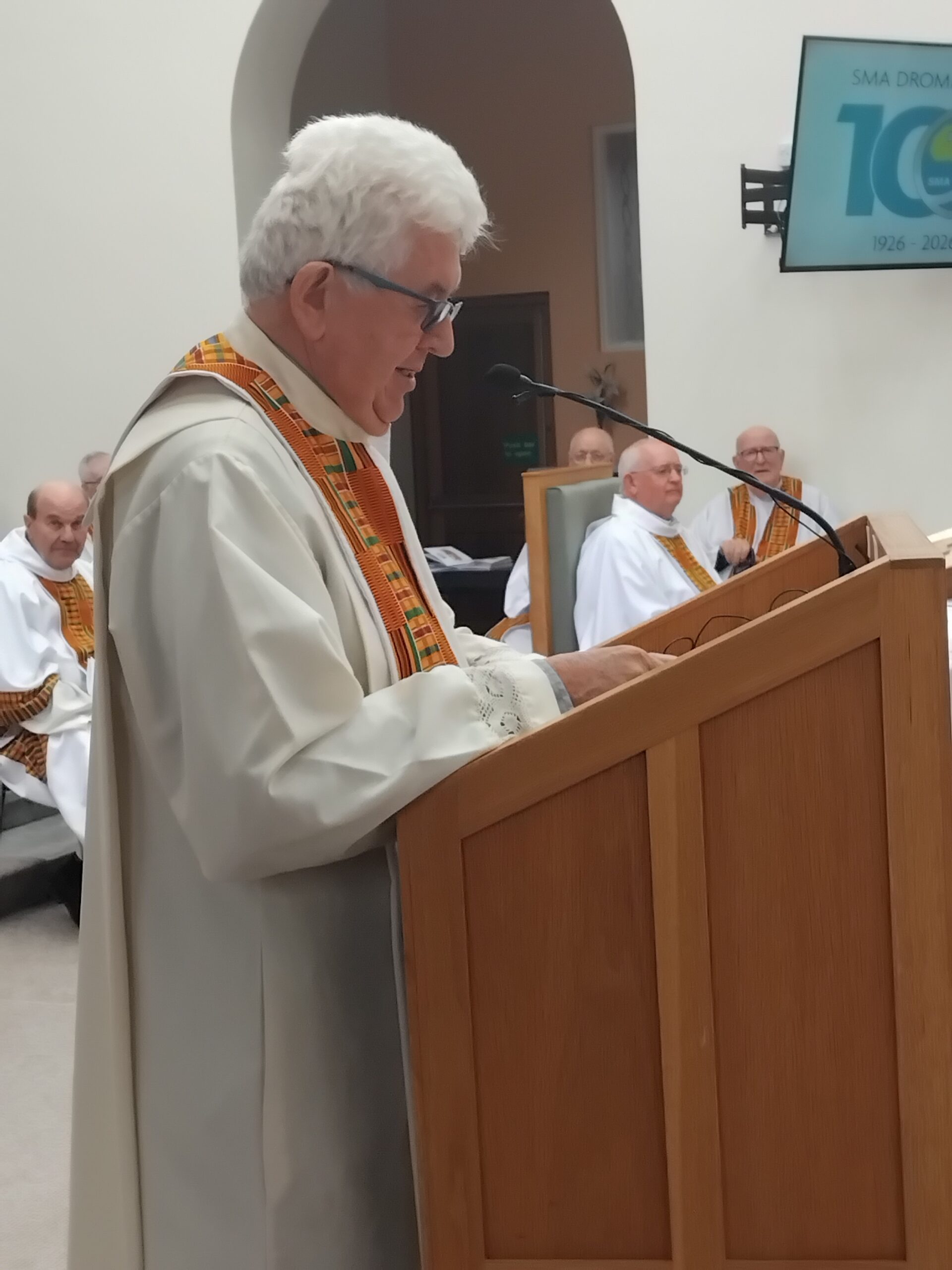
Mass in Newry Cathedral – 18 September, Fr Michael McCabe preached the Homily on Dromantine’s 100 years.
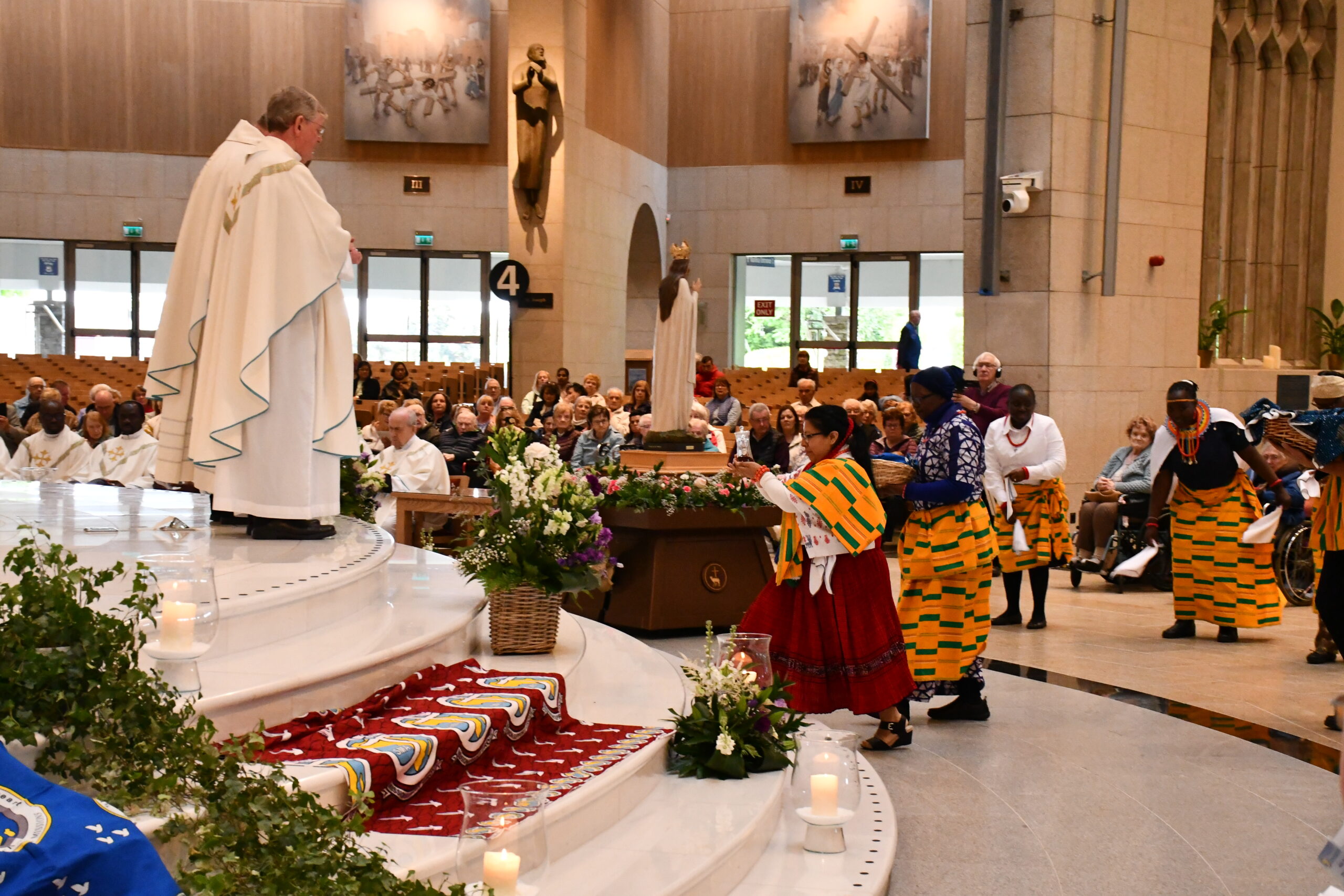
Newry Cathedral, 19 September – Mass Celebrants and friends
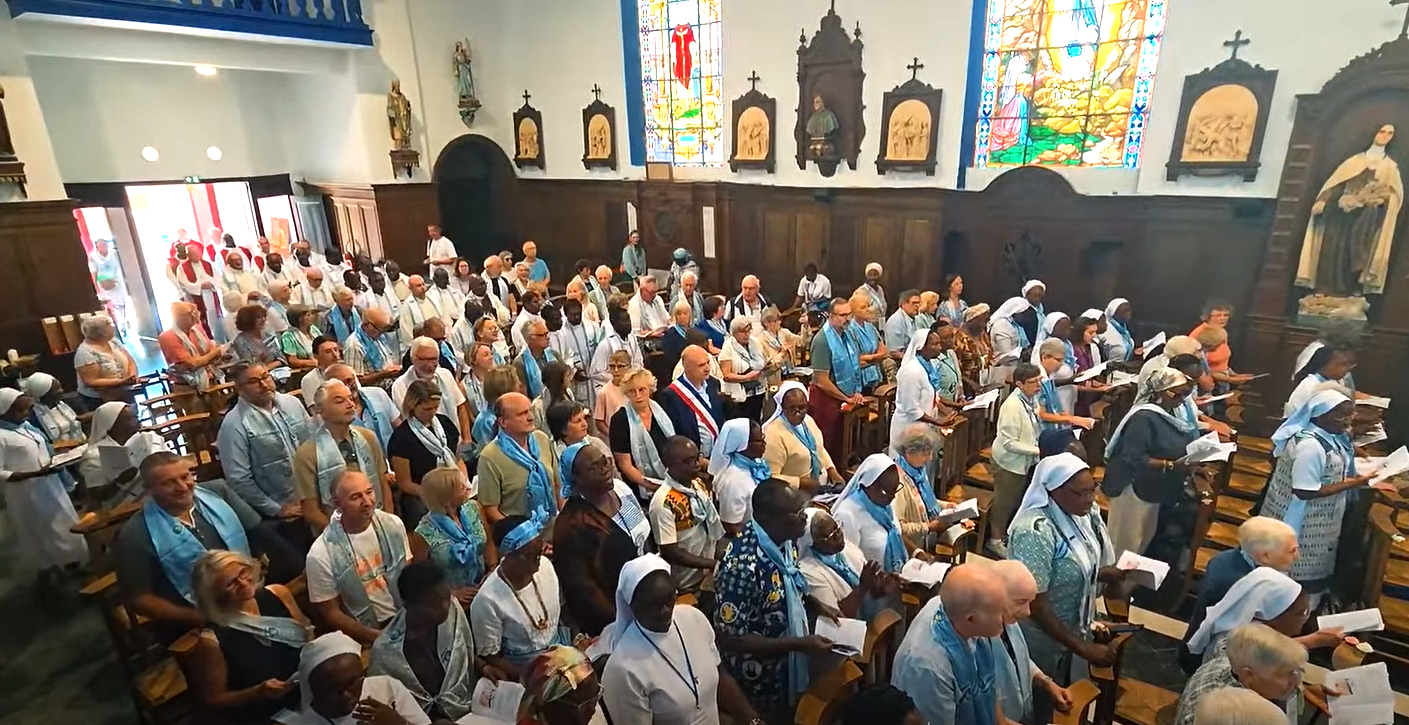
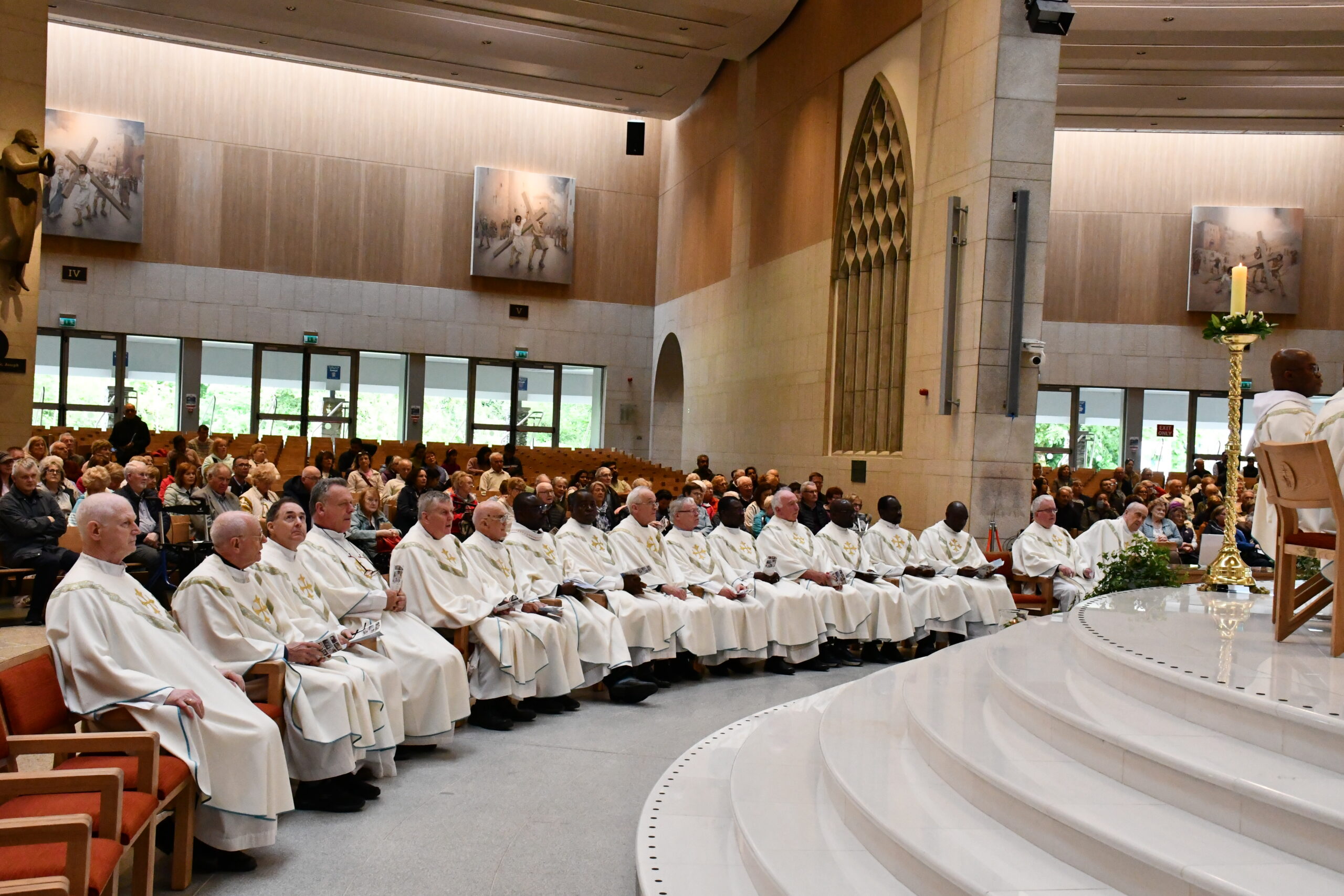
Dromantine Chapel, September 20 – Mass for supporters and friends of the SMA. Below SMA Celebrants at the Mass.


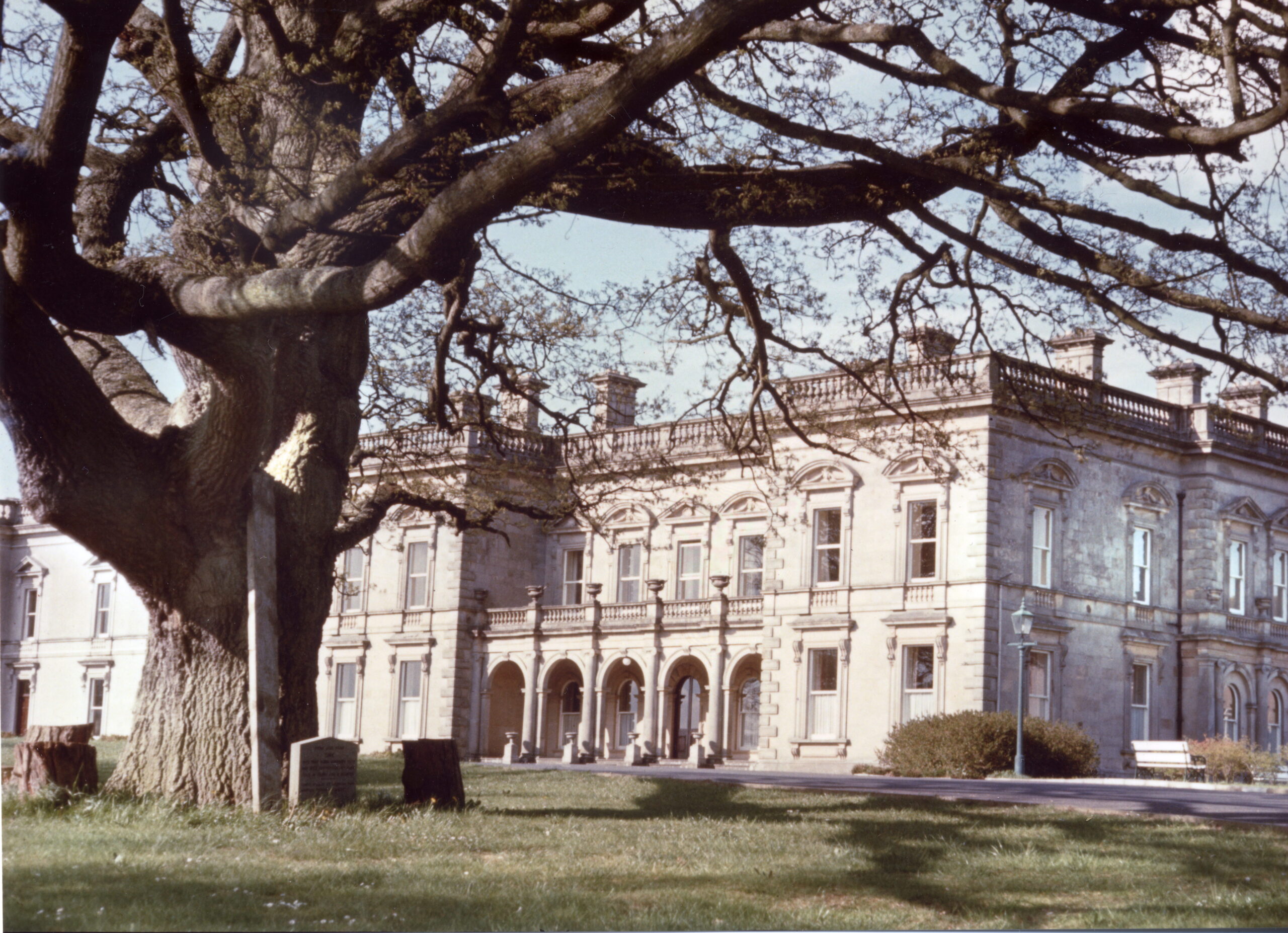
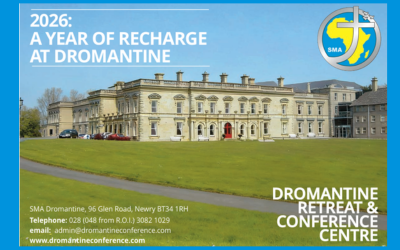
Dromantine Retreat and Conference Centre 2026 – a place of welcome, beauty, tranquility and prayer

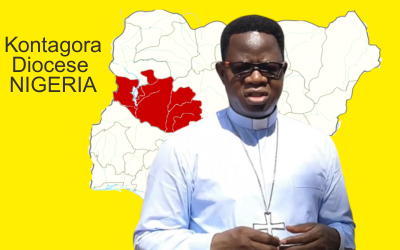
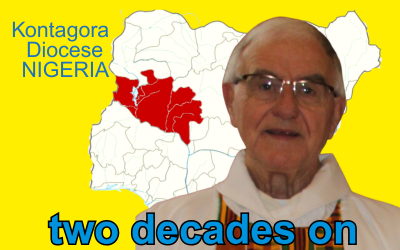
Nigeria: “Some Christian communities could disappear”: The bishop trying to keep the faith alive in his country

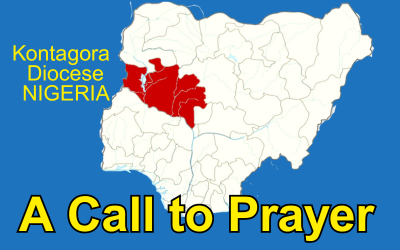
Below is a summary of a recent article published by the Mexican, Catholic News platform, “Press Crux. ”  There is a link to the full text below.  

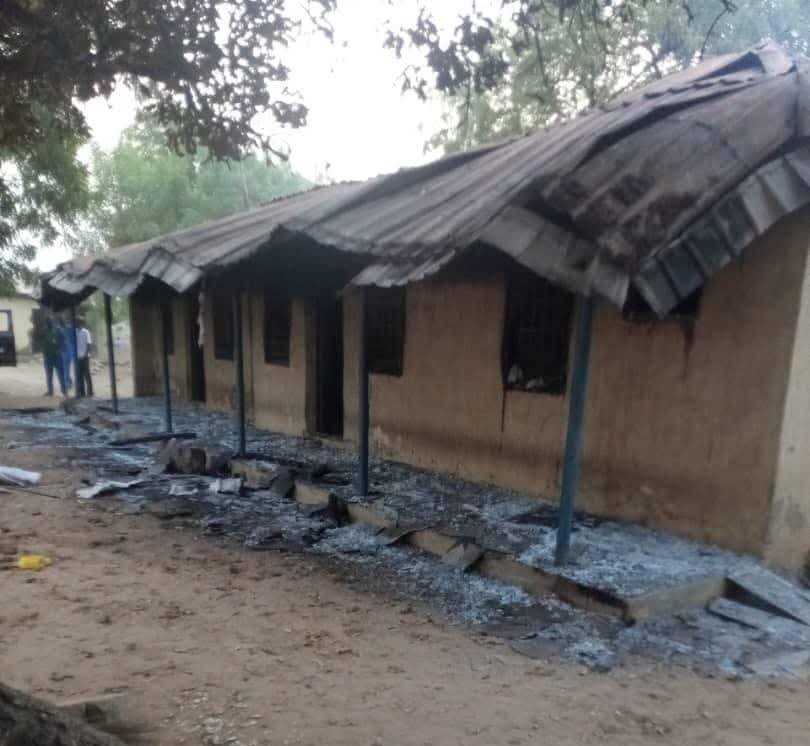
The article highlights the severe security crisis affecting the Catholic Diocese of Kontagora in north-central Nigeria, where widespread violence, kidnappings, and attacks by armed groups are disrupting religious life and threatening the survival of rural Christian communities.   According to Bishop Bulus Dauwa Yohanna, some villages can no longer receive regular Mass because roads have become too dangerous for priests, religious workers, and catechists to travel safely. Many families have been forced to abandon their homes, farms, schools, and churches, creating a risk that entire Christian communities may disappear from their ancestral lands.

A major example of this insecurity was the November 2025 kidnapping of 230 students and staff from St. Mary’s Catholic School in Papiri. Although all hostages were eventually released, the incident left deep emotional trauma among children, parents, and educators. The attack highlighted the vulnerability of schools and rural communities, where limited security presence allows armed groups to operate with relative ease.

The bishop explains that Nigeria’s violence cannot be attributed to a single cause. Criminal kidnapping for ransom, cattle rustling, territorial disputes, poverty, weak state institutions, and sometimes religious tensions all contribute to the crisis. While some Christian communities have been specifically targeted, both Christians and Muslims suffer from kidnappings, killings, and displacement. Bishop Yohanna stresses the importance of interfaith cooperation to prevent criminals from exploiting religious differences.

The insecurity has significantly affected the Church’s pastoral mission. Some parishes and mission stations have been closed temporarily, priests are unable to reach remote communities, and access to sacraments and religious education has been disrupted. Nevertheless, local catechists and lay leaders continue to support the faithful and maintain community prayer despite the challenges.

The bishop argues that biggest problem in relation to the current violence is impunity, with attackers often escaping justice. He calls for stronger security measures, better intelligence gathering, faster intervention, and greater investment in education, healthcare, and economic opportunities. He also emphasizes that security requires more than military action; it requires addressing the underlying social and economic conditions that fuel violence.

Despite these difficulties, the Church continues to provide humanitarian support, including food, shelter, educational assistance, and pastoral care to displaced families. Bishop Yohanna’s final message is a plea for prayer, international solidarity, and support for those affected by the crisis. He insists that the Diocese of Kontagora does not want to be defined by violence but by its commitment to faith, peace, dignity, and hope.

To read the full article click on the link below and then on  “translate” for an English version.

https://presscrux.org/nigeria-algunas-comunidades-cristianas-podrian-desaparecer-el-obispo-que-intenta-mantener-viva-la-fe-en-su-pais  

100 years of SMA Dromantine – Homily by Fr Eamonn Finnegan SMA

Below is the the text of the homily delivered by Fr Eamonn Finnegan SMA during a Mass, to mark the centenary of the SMA’s presence on Dromantine, Newry, Co Down, celebrated on Sunday 20th of September 2026.

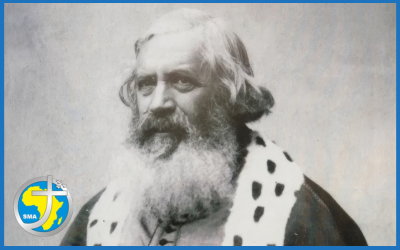
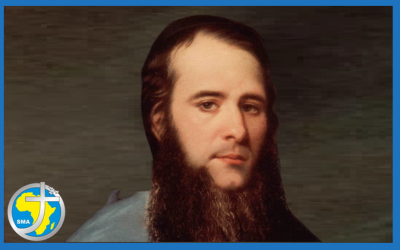
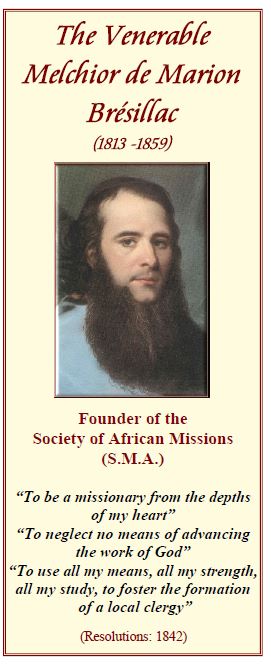
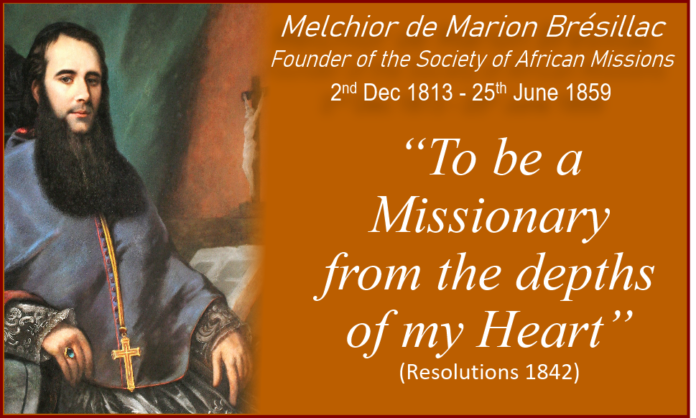
This year is a year of Jubilees for the Society of African Missions and the Missionary Sisters of Our Lady of Apostles (OLA). Last June, in Lagos, Nigeria, we celebrated three jubilees – the 170th anniversary of the foundation of the SMA by the Venerable Bishop de Brésillac. The Missionary Sisters of Our Lady of Apostles [OLA] celebrated the 150th anniversary of their foundation. and the 200th anniversary of the birth of their founder and the SMA Co-Founder, Fr Augustin Planque.  And here this afternoon, we celebrate the 100th anniversary of the arrival of the SMA in Dromantine, in 1926.

When our Founder died at the age of 46 in Freetown, Sierra Leone, it was left to Fr Planque to continue the work he started in Lyons, France. Fr Planque realised that, not only did Africa need priests, but they also required religious Sisters to look after the health and education of the women and girls. He therefore founded the OLA Sisters.  I want to acknowledge the tremendous work the OLA Sisters have done in Africa, in Ireland and especially in Dromantine for many years.

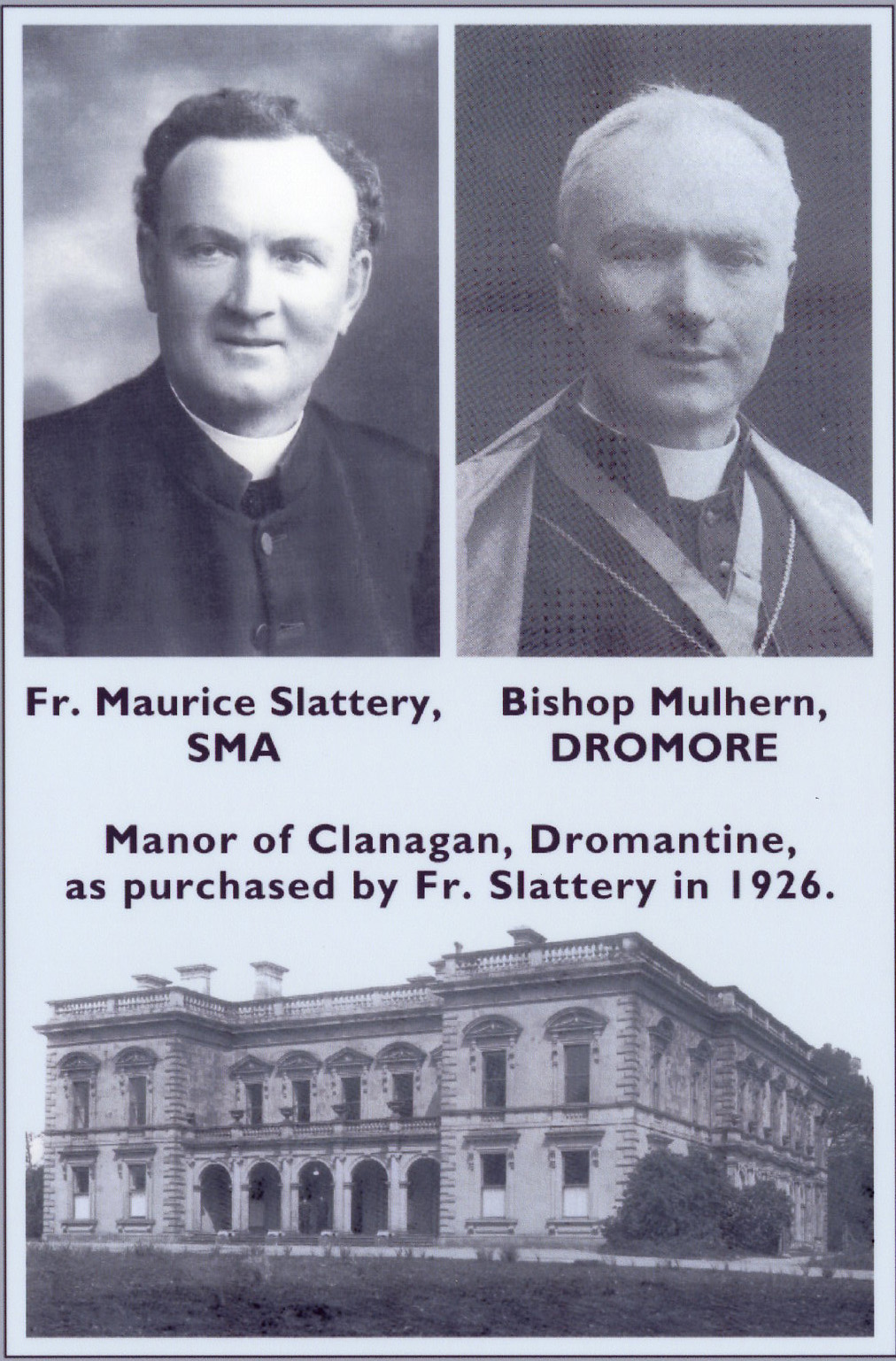
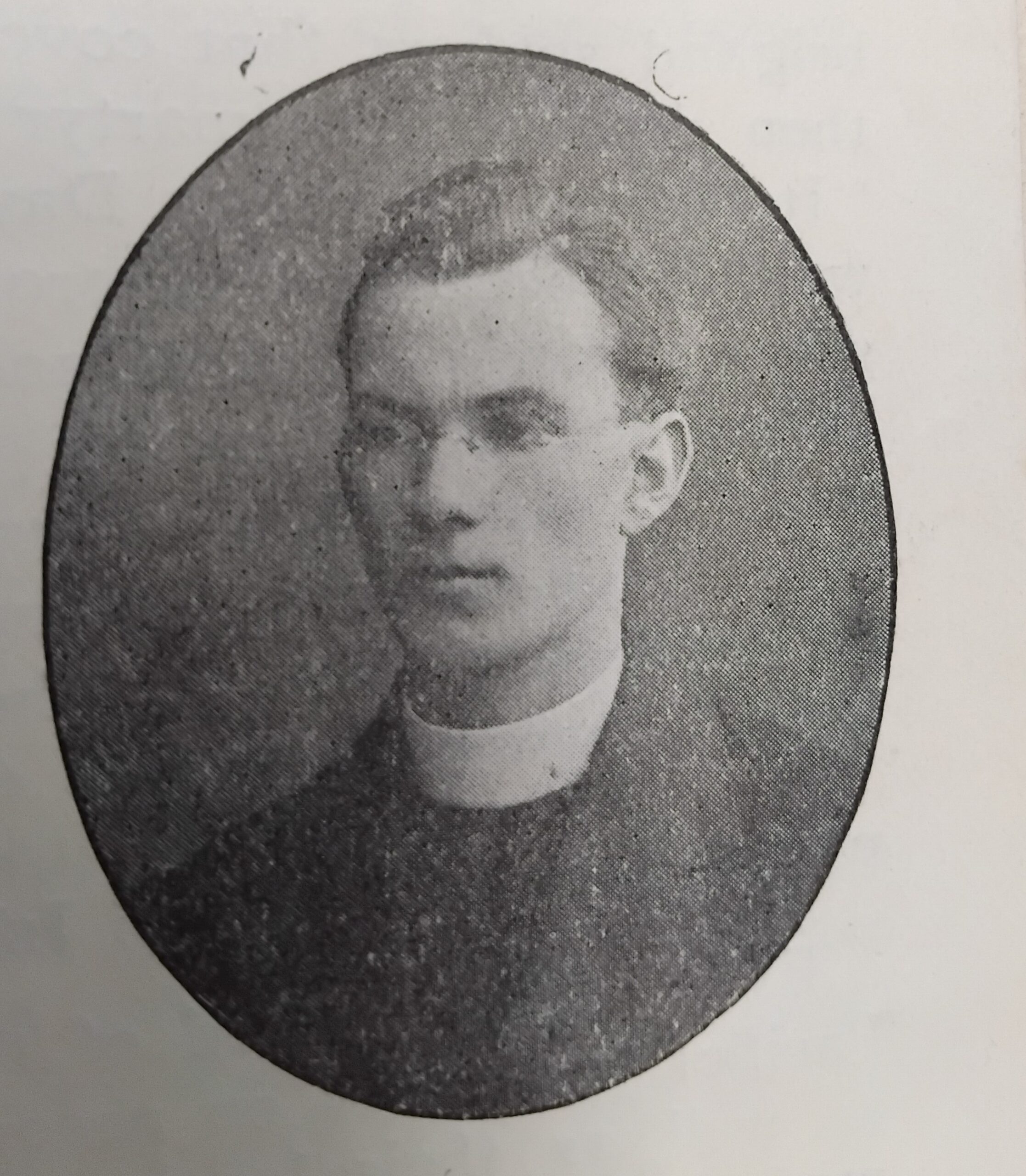
In our early years in Ireland, we had our own Fr Planque in the person of Kerryman, Fr Maurice Slattery. He, too, like Fr Planque, was a man of vision, a man who took risks, a man who was totally committed to the work of building up of the Society of African Missions in Ireland.

He was ordained in Egypt in 1900 and after his ordination he remained there, teaching in the seminary. In 1912 he was elected Vice-Provincial of the newly-erected Irish Province and the following year at the age of 38 he succeeded Fr Stephen Kyne, as Provincial Superior. When he took over from Fr Kyne, he had many challenges to face. By the time his term of office came to an end in 1918, he had put the young Society on a sound financial footing. He had the joy of seeing many young

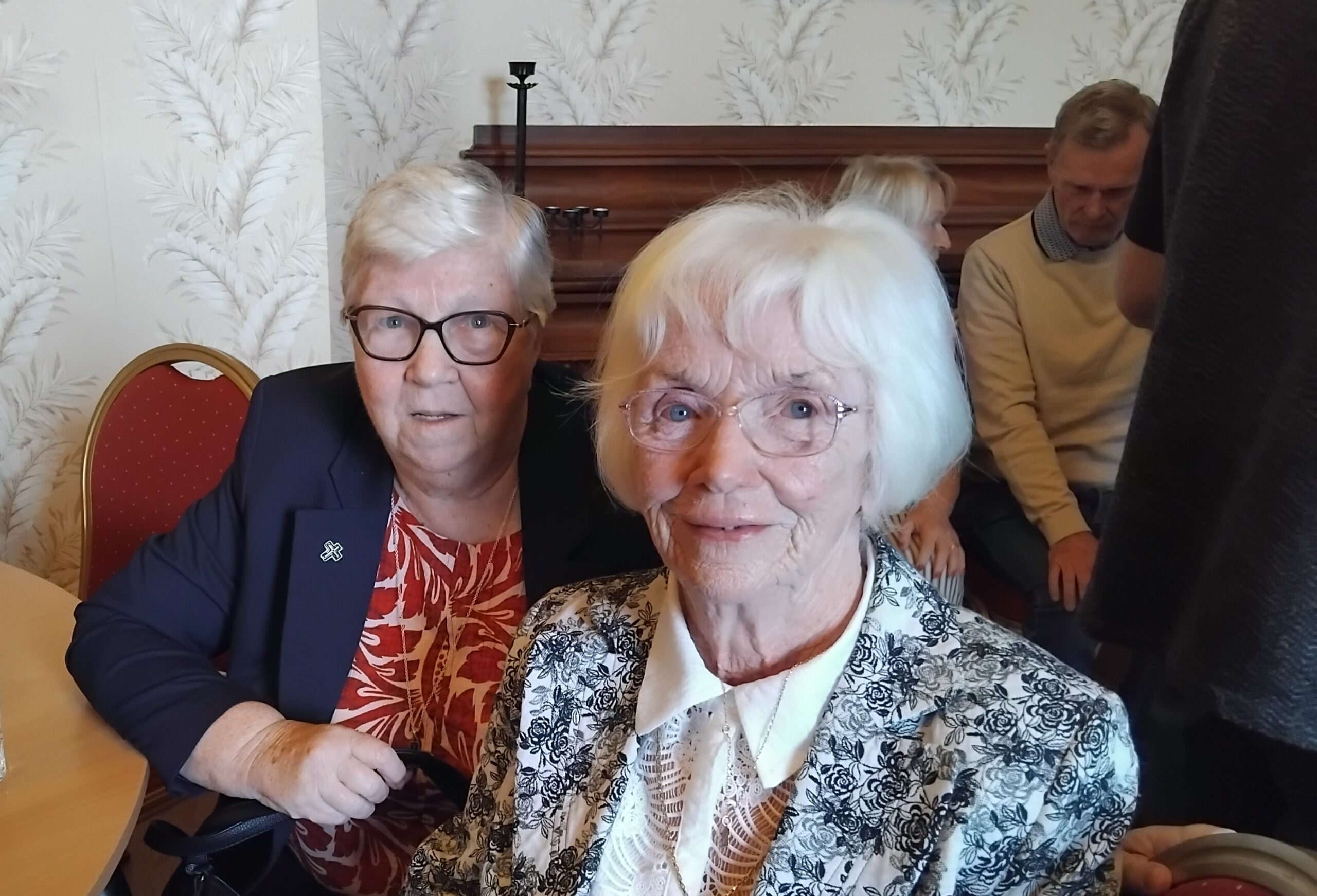
Ms Annie Bagnall and Sr Maura Cranney OLA, both of whom have many years of association with the SMA

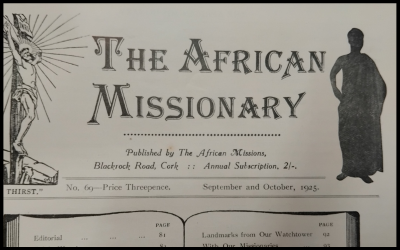
newly ordained priests going on mission in West Africa. In 1914 he started the African Missionary magazine – the first missionary magazine in Ireland. In 1925 he was elected again as Provincial Superior. One of the most pressing needs for us at that time was to find a suitable seminary for the increasing number of young men who were joining the Irish branch of the Society.  The seminary at Blackrock Road, Cork was too small. Maurice put his heart and soul into looking for a suitable house. On the 24th January 1926, at his request, a special novena begun after night prayers for the procuring of a suitable site for a new seminary. Shortly afterwards he heard that a suitable property, near Newry, Co Down, had come on the market. Permission to build a seminary was given by Bishop Mulhern of Dromore diocese. On the 29th September 1926, Dromantine opened its doors to welcome 47 seminarians. On the 16th June 1927, eleven of those students were ordained in Newry Cathedral by Bishop Mulhern. From 1927 until 1972, 587 students were ordained to the missionary priesthood, nearly all in Newry Cathedral.

Fr Slattery soon saw, with the increase in the student numbers, that he would have to extend the house. He supervised the various extensions himself, keeping them in harmony with the architecture of the original Manor House.  Only a man of Slattery stature, vision and courage could have transferred the seminary from Cork to Newry. 

When Fr Slattery arrived in 1926, he was welcome at the front door by a lady from Ardee who worked for the McKeever family – the previous owners of Dromantine. She was Annie Rogers who later married a local man, Pat Bagnall. Two of their daughters Agnes and Annie worked here for almost 50 years. Agnes married Sean McCrink who along with his father Frank looked after the farm. In later years Sean was the maintenance man in the house. Annie & Sean are present here today. We, SMA’s are very grateful to all our lay staff for their loyalty to us going right back to 1926. I must also acknowledge the many people from this parish (Donaghmore) and surrounding area who worked in Dromantine.

The cost of running a large seminary for many years was very difficult for SMA Leaders. Money in the 1930’s 40’s and 50’s for very scarce.

In 1959 a new movement began that was to change the financial situation in Dromantine. And this movement was started in Belfast when a young man by the name of Tommy McKenna came to visit a student friend of his. On that visit he met the Superior, today we call them Community Leaders. Tommy asked the Superior, ‘how much does it cost to educate a student for one year?’ He was told that approximately £100 per student. Tommy went back to Belfast and gathered members of his own family and some friends and told them the story of Dromantine. That Sunday afternoon in Belfast he got his £100 and sent it to Dromantine. And he did this for the next seven years – seven years being the length of time a student spent studying for the priesthood. So, from that meeting the Family Vocation Community (FVC) was born. And it snowballed throughout Ulster. Very soon every town had an FVC group. It was so successful that a priest had to be appointed to help with the work.  Every Sunday afternoon, two laymen, Tommy McKenna and Johnny Lappin from Portadown travelled with Fr Andy Anglin to towns and villages all over Ulster, to speak to groups of people about this movement. It has been perhaps one of the most successful lay movements in the country. At one time we had over 30,000 families involved throughout Ireland. Today I want to thank all those that we call Head Sponsors or group leaders – some are with us for over 50 years. Your commitment to Dromantine for the education of students to the priesthood has been phenomenal. Our Sponsors are just Like St Thérèse of Lisieux, the Little Flower, who never left her convent in France but spent her life praying and offering her sufferings for the missions.

I want also to mention the many FVC Directors – SMA priests who succeeded Fr Andy. Some of them are here today. They all made a great contribution to the work, especially those who worked here during the Troubles.  

From the FVC came the Open Day, the Holiday Camps, the missionary Association Cards. Open Day was built on the enormous number of local people and others from further afield. I want also to acknowledge the many people who support our missionary work through our Mission Boxes and our Mission Awareness ministry.

I must not forget the great support we – and all missionaries – received from the Apostolic Workers. Founded in Belfast by Miss Agnes McCauley, our Society has been receiving all types of support from them since 1923 with money being sent to Cork for our missions

In the 1970’s the SMA seminarians transferred to the National Seminary – St Patrick’s College, Maynooth. This has led to a very fruitful collaboration with the diocesan clergy our students studied alongside for many years. A new beginning for Dromantine saw it hosting conferences and Retreats, Holiday Camps etc. Over a three-year period, the entire building underwent major renovations and reopened in 2001 as the refurbished Dromantine Conference and Retreat Centre.  Since then, the Centre has, and continues to play a major part in promoting the work of Mission to groups from all over Ireland and overseas. Thousands of priests, Sisters and lay people have made use of the Conference Centre facilities for workshops, retreats etc.

Many groups from other denominations also use Dromantine. In 2005, the worldwide Anglican Assembly of bishops was held here. In 2000 and 2006, we hosted two international Flower festivals to celebrate the new millennium and the 150th anniversary of the foundation of the Society. More than 10,000 people came through the doors of Dromantine for these weekends.

You, my dear missionary friends, can be proud of the work of the Irish missionaries, your representatives in Africa. Many of those early missionaries did not see the fruit of their labours. But we who worked in countries like Nigeria, Liberia, Ghana, Zambia, Tanzania, Kenya and South Africa have witnessed the growth of the African Church.

In many African countries, the church is flourishing. When I first went to the Archdiocese of Lagos, Nigeria, there were over 20 Irish SMA priests. Today there are none. But there are over 400 Nigerian priests caring for more than three million Catholics. There are thousands of Sisters who run hospitals, schools and clinics.  And today Nigeria and other African countries are sending missionaries all over the world to preach the gospel. As SMA’s we thank God for the gift of so many Africans, Indians, Filipino and Polish young men who have been ordained as SMAs since the early 1990’s. This year alone we had 31 young men ordained as SMA missionaries.

Dromantine has served us well since 1926 – the people of Ulster have been generous with their spiritual and financial support. The young people still come to the holiday camps in large numbers. The promotion activities and the Retreat and Conference Centre continue. We give thanks to God for the many gifts the SMA have received since its foundation.

My dear friends of the SMA, in this place, we stand on Holy Ground. For 100 years we have been praying and celebrating Mass daily for our supporters, for our missionaries and for the work of the Church. And we will continue to do so. The future is in the hands of the Lord. May we be attentive to the voice of God’s spirit as we face the future.

We are not just looking back, we work in the present and with the help of God, our Blessed Mother and with the continued support of the people of Ulster, the Society of African Missions will continue to bring the message of Jesus to the ends of the earth.

But what does the future hold? Our Irish membership are ageing. We are just over 100 Irish SMAs, two thirds of whom are over 70 years. Before Bishop de Brésillac died he told Fr Planque that the work would continue if he, Fr Planque, would take it on. And so today, as our numbers decline, the vibrant churches in Africa, Asia and Poland are taking up the challenge. Thanks to the Family Vocations Community, the SMA now rejoices with more than 400 SMA priests at the service of Africa. They are the future. Six of them, from Africa and India, are now here in Ireland helping us with our work. And we know they will continue the work of the Irish and other European missionaries who left all to proclaim God’s message of mercy, compassion and love to the people of Africa. Amen.

God bless you and enjoy your afternoon.


Homily for the 26th Sunday of Ordinary Time, Year A

Ezekiel 18:25-28 Philippians 2:1-11 Matthew 21:28-32
Theme: Change

Today’s Gospel reminds us of how people can change their minds, or their way of life, for good or for evil. There are many such accounts in the Gospel: from Joseph who had decided to divorce Mary informally, to Mary Magdalene; from the woman caught in adultery to Peter the anointed leader who denied Jesus three times; from the doubting Thomas who declared he would not believe unless… to Judas Iscariot, one of the chosen twelve.

In today’s Gospel we find the two sons, each doing the opposite to what they declare; while Jesus tells us that tax collectors and prostitutes paid attention to John the Baptist and they changed too.

There is plenty of common ground between those bible figures and our own fickle behaviour.

One day we can be full of fervour and keen to profess our Christian faith, come what may. The next we can’t pray. We ask where is the God of yesterday? Does he exist at all? Is all our time wasted? Those who reject belief, faith, Church, religion and moral responsibility continue life as contented, apparently, as everyone else. Many of them were our classmates with whom we received our First Holy Communion and Confirmation. They don’t darken the door of the Church anymore. They changed their minds!

Of all the gifts given to us by God, the freedom of choice is perhaps the greatest. We’re not pre-determined beings; our choices are sacred and are literally our making, our doing and un-doing.

When we respond positively to God’s grace as also reflected in the best and noblest inspirations and aspirations of our environment, we’re shaping ourselves more firmly in the image and likeness of God our Creator.

Part of the challenge of our day is to ignore the choices made by others and content ourselves with our own good choices which uplift, and determine a better tomorrow for ourselves and society.

Let us pray for those who have changed their minds or way of life and turned away from God. May they experience afresh the fervour of their early faith and experience anew God’s gifts of peace and joy.

Edited from a Reflection of Fr Maurice Henry.

Listen to an alternative Homily for this Sunday, from Fr Tom Casey of the SMA Media Centre, Ndola, Zambia.


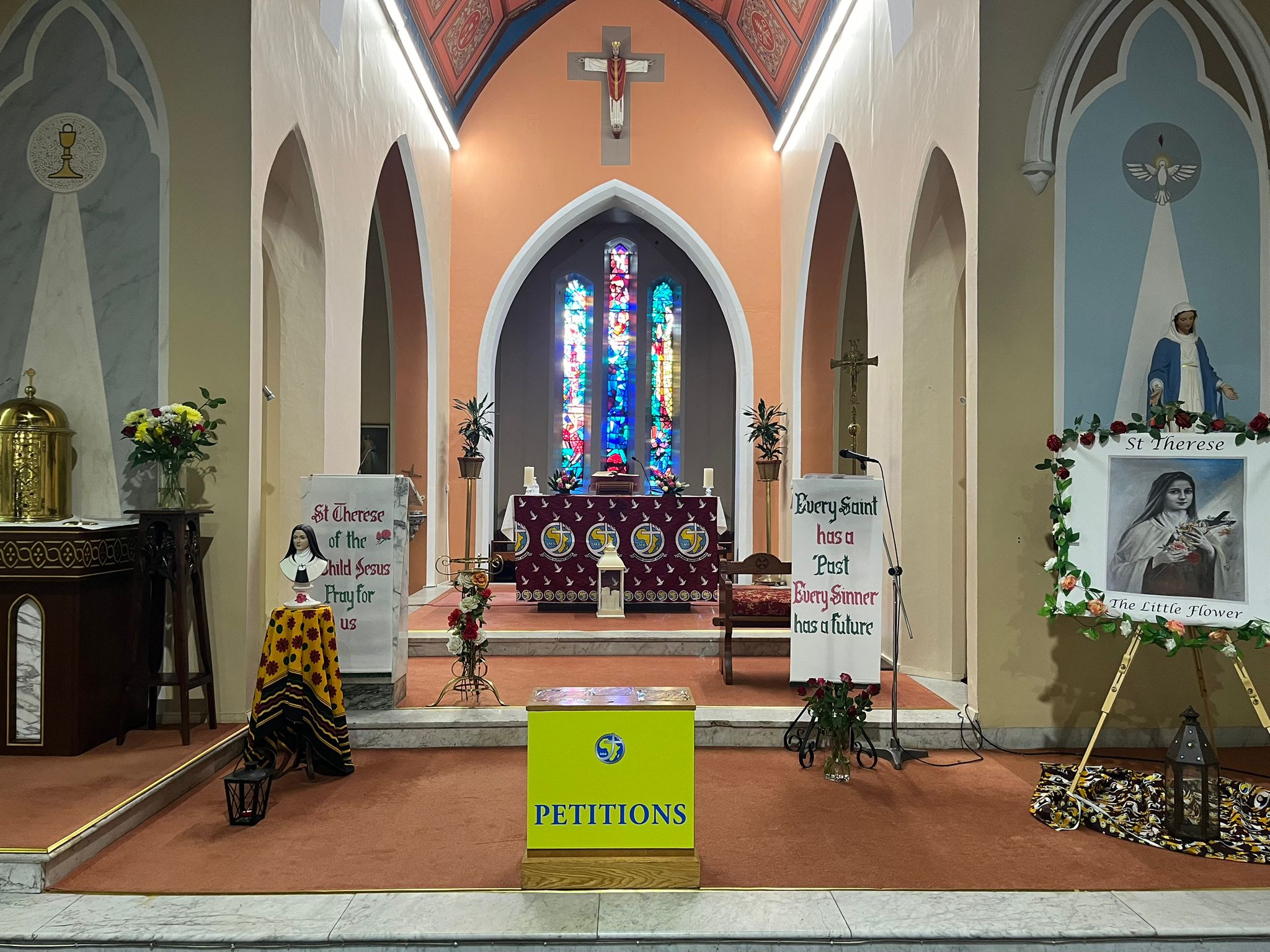
NOVENA in honour of St Thérèse – join Ceremonies from Dromantine and Blackrock Road via Webcam

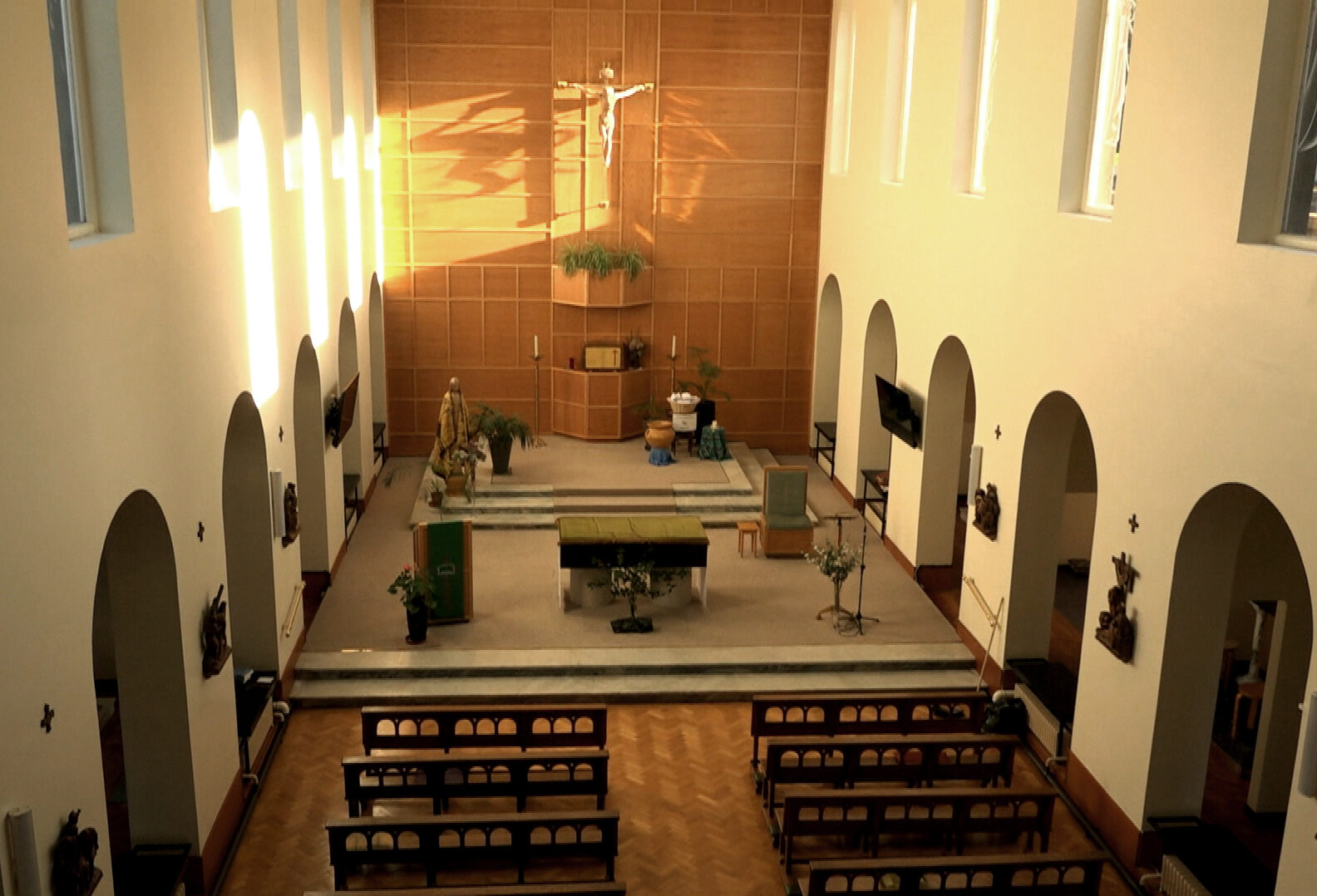
The Annual SMA Novena in honour of St Thérèse of the Child Jesus takes place from the 23rd of September until the 1st of October. Ceremonies with take place at St Joseph’s SMA Church, Wilton, Cork City and in SMA House Dromantine, Co Down.

In Cork Mass and Novena Prayers will be at 7.30pm each evening (Saturday 6pm), while in Dromantine there will be morning Mass at 10 am each morning and also at 7.30pm each evening.  You may also join remotely via the WEBCAM tab on the top of this Page or via the links below. 

SMA HOUSE DROMANTINE

SMA PARISH BLACKROCK ROAD
In Dromantine
Mass will be at 10 am each morning and also at 7.30pm each evening. 
CLICK HERE TO JOIN 
In Blackrock Road Parish Mass will be at 7.30 pm each evening with the exception of Saturday when it will begin at 7pm. 
CLICK HERE TO JOIN 

PRAYER FOR MISSIONARIES
St. Thérèse of the Child Jesus, who merited to be proclaimed Patroness of the Catholic Missions of the whole world, remember the very ardent desire you manifested here on earth “to plant the Cross of Jesus Christ in every land and to announce the Gospel even to the end of time”.
We beseech you, according to your desire, to help priests, missionaries and the whole Church.
Obtain for us all an increase of missionary zeal and generosity. Protect our missionaries; help them in their labours, support them in their sufferings and poverty, teach them to love Jesus more ardently and to place all their confidence   in the Tabernacle and in the intercession of our immaculate Mother Mary.                                                                                                                                            

Reflection for Saturday 19th September 2026 – Fr Kevin O’Gorman SMA

Readings: 1 Corinthians 15:35-37, 42-49; Psalm 55; Luke 8:4-15

The disciples were wondering and worrying why things weren’t developing quickly enough – would the Kingdom of God come in time for them to receive the reward they expected for their hanging in and holding on while others walked away from Jesus and his mission. They were expecting some equivalent reward for their efforts and endurance. Instead Jesus answers with a parable expressing that growth takes time and that such growth depends also on the condition of the ground.

canva image

In the first reading Paul proposes the image of the seed – ‘Whatever you sow in the ground has to die before it is given new life’. This picks up on the saying of Jesus : ‘Amen, Amen I say to you, unless a wheat grain falls into the earth and dies, it remains only a single grain; but if it dies it bears much fruit’. (John 12: 24)  This saying is found only in the Gospel of John and is the closest statement in it to the nature parables in the other Gospels, as we have in today’s reading from Luke. The context for this saying is important, as a response to a group of Greek visitors to the festival in Jerusalem. To his disciples, who were probably impressed by their presence, Jesus did not give a philosophical argument – what Paul earlier in this Letter labelled ‘human wisdom… to the gentiles foolishness’ (see 1 Corinthians 1: 20-25).

Indeed following on from the image of the seed, Jesus indicates and insists on ‘Anyone who loves life loses it; anyone who hates life in this world will keep it for eternal life. Whoever serves me, must follow me, and my servant will be with me wherever I am’. (John : 12:25-26). Christian discipleship demands a dying to self, the discernment of which is dealt with in conscience and within the context of a person’s life considered in the round.  

Kevin O’Gorman SMA


SMA JOURNAL – September 2026

In this chapter of the SMA Journal we look back at just one very significant event in the history of the SMA Irish Province. This month, 100 years ago, Dromantine opened as the SMA Seminary in Ireland.  For the next 47 years hundreds of students began their Missionary journey there, a journey that led them to Africa and many parts of the world.  

As the Dromantine centenary celebrations take place this weekend, we bring you this special edition in which Fr Peter McCawille SMA recalls milestones throughout 100 years of the SMA’s presence in Dromantine, County Down.


Homily for the 25th Sunday of Ordinary Time, 2026

Readings: Isaiah 55:6-9; Philippians 1:20-24,27; Matthew 20:1-16
Theme: ‘Why be envious because I am generous’ (Mt 20:16)
By Michael McCabe, SMA

Our readings last Sunday challenged us to imitate our heavenly Father by forgiving others as he forgives us. Today readings continue in a similar vein. They challenge us not to resent God’s magnanimity but strive, rather, to reflect his generosity in our relations with one another. Our first reading from the prophet Isaiah reminds us that God does not think the way we think, nor act the way we act: ‘The heavens are as high above earth as my ways are above your ways, my thoughts above your thoughts’ (Is 55: 9).

Just how different God’s thoughts and ways are to ours is clearly illustrated in the parable of the Vineyard Owner in today’s gospel. It is important to note the significant elements of the story. The first noteworthy element is that it is the owner himself who goes out in search of workers for his vineyard. This was not the normal practice for an employer in Jesus’ day. If he needed extra workers he would send his foreman, or one of his employees, to the marketplace to pick them up. This Vineyard Owner, however, goes to the marketplace himself. And he goes there several times, at different hours of the day, in search of workers to harvest his grapes. He is not just concerned about his business. He is clearly concerned also about the predicament of those who have been standing around all day in hope of finding someone to hire them.

The second significant element in the story has to do with the wages the workers receive at the end of the day. Those who were employed last receive their wages first, and they receive a full day’s wage, the same as those who have worked all through the day. If this happened today, the vineyard owner would have the Workers’ Union on his back. Indeed, he would probably be forced out of business. We easily identify with the complaints of those workers who, having laboured throughout the heat of the day, expected to receive more money than those who had worked for just one hour. And yet, they have, as the parable makes clear, no justifiable grounds for their complaint. They received a just wage: the salary their employer had agreed with them.

Finally, we come to the main point of the parable, the sting in the tail – the last words of the Vineyard Owner: ‘Why be envious because I am generous’ (Mt 20:16). These words alert us to what the parable is all about. It is not about work and wages, about industrial relations or social justice. It is about God’s magnanimity of heart, his extravagant generosity, especially to the late-comers, those overlooked, left behind, or pushed to the margins of society. God’s ways, while not contradicting the demands of social justice, infinitely transcend them. As Pope Benedict teaches in his encyclical letter, Caritas in Veritate (Love in Truth), God acts according to a higher logic than that which normally governs industrial relations – the logic of gift or gratuitous love, rather than the logic of entitlement. Only in the light of this logic can we understand the foolish generosity of the Vineyard Owner, or the lavish welcome of the Father in the parable of the Prodigal Son for his errant son. Only by this logic can we appreciate the extraordinary behaviour of Jesus in mixing with tax-collectors and sinners.
Commenting on the parable of the Vineyard Owner, the great biblical Scholar, Tom Wright, makes the same point as Pope Benedict. He states that ‘God doesn’t make contracts with us, as if we could bargain or negotiate for a better deal. He makes covenants, in which he promises us everything and asks of us everything in return. When he keeps his promises, he is not rewarding us for effort, but doing what comes naturally to his over-flowingly generous nature.’ According to Shakespeare’s Hamlet, if we were treated according to what we deserve, ‘none of us would escape whipping’ (cf. Act 2, scene 2). Fortunately, God does not treat us according to our deserts, but according to his boundless generosity, mercy and compassion, as today’s responsorial psalm proclaims.

Today’s readings not only illustrate the divine logic, the logic of gift. They also challenge us imitate God’s ways of thinking and acting in our relationships with one another. They challenge us to stop focusing on our entitlements or counting our deserts, and move from the narrow world of human calculation, of competition and rewards, into the magnanimous world of divine logic, where nothing has to be earned and everything is gift, everything is free. In the words of a popular contemporary hymn: ‘Freely, freely, you have received. Freely, freely, give.’

Listen to an alternative audio Homily by Tom Casey, SMA:


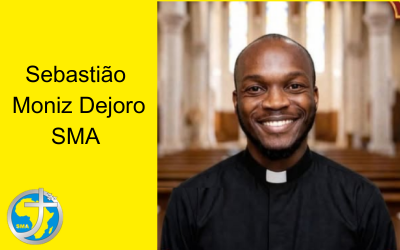
Father Sebastião Moniz Dejoro: first Angolan priest of the Society for African Missions

(Fides News Agency) – “I am bringing Angola into the SMA, just as the SMA was brought to Angola by the first missionaries.” These words capture the meaning of Sebastião Moniz Dejoro’s vocation. Ordained a priest at the end of August, he has become the first Angolan priest of the Society for African Missions (SMA).

This is not simply a personal first. His ordination marks a significant moment in the history of the SMA’s missionary presence in Angola: a Church that for decades welcomed missionaries from abroad is now beginning to send them.

“The missionaries who came to Angola planted a seed; today I have the grace of being one of the first fruits of that seed,” Sebastião explains. His words reflect his awareness of becoming part of a story that began many years ago, when SMA missionaries arrived in the country to proclaim the Gospel, accompany communities and contribute to the growth of the local Church.

Being the first Angolan priest of the SMA, however, is not a source of prestige for him. “It is a grace to be called the first. I receive it not primarily as a title, but as a gift and a responsibility.” A responsibility that already looks to the future: “I do not want to consider being ‘the first’ as something that makes me important. Rather, I see it as an invitation to pave the way for others.” This is also one of the reasons why Sebastião looks with confidence at young people considering a vocation. Social change, secularization and economic difficulties can make it harder for a young person to choose the priesthood or consecrated life. “They think about their studies, their work and how to build a future for themselves,” he observes. Yet difficulties do not mean that the desire for consecration has disappeared. “The flame has not gone out. It simply needs people willing to protect it, keep it burning and allow it to grow.”

Fr Sebastiao with parishioners. Photo: (c) SMA Italy

His personal journey began at the heart of the Christian community. After becoming actively involved again in the life of the Church during his youth, Sebastião realized the need for deeper catechesis. While preparing for Confirmation, he began assisting a catechist in accompanying children preparing for Baptism and First Communion. That service was the first step in a journey destined to expand. From his own community, Fr Sebastião’s horizons progressively extended to the province, the country and beyond Angola’s borders. In his desire to serve the Church in different contexts, he found in the SMA a family and a distinct missionary identity.

“I discovered a family and a missionary identity that gave meaning to this desire,” he says. That desire is now expressed in his commitment to serving the poor and those who have been abandoned, accompanying people through the joys and difficulties of life, and remaining available wherever the Church may send him. His choice thus takes on a broader significance for the Church in Angola.

The African country has a long history of welcoming missionaries and has received much through their service. Today, however, it feels ready to share with other Churches what it has received and brought to maturity. “We have received so much from the missionaries, and today we have a Church that is growing strongly, with great potential, many talents and much to offer,” Fr Sebastião emphasizes. “We can receive from other Churches, but we can also give. I believe Angola is ready to broaden its horizons through the SMA. We can bring our faith, our culture, our experience and our way of being Church to other places.”

Ultimately, this is the significance of the young priest’s ordination: not only the arrival of the first Angolan priest in the SMA, but also a sign of a Church that, having received the gift of mission, is discovering that it can in turn give that gift to others. Angola, once a mission land, is increasingly becoming a land that sends missionaries. And Fr Sebastião wants to be the first step on this new journey.

(AP) (Fides News Agency, 14/9/2026)  https://www.fides.org/en/news/78165-AFRICA_ANGOLA_Father_Sebastiao_Moniz_Dejoro_first_Angolan_priest_of_the_Society_for_African_Missions

THE POPE’S PRAYER INTENTION For the care of water | September 2026

Water is a sacred gift that sustains life. We see a sign of God’s generosity in water. It quenches our thirst and makes the earth fertile. In Baptism, it becomes a symbol of his renewing grace. Taking care of water is also a form of safeguarding life and of recognizing that this resource belongs to everyone, without distinction.

In his prayer intention for September, Pope Leo invites us to pray that water be protected so that we might learn to appreciate it with gratitude, justice, and moderation, and so that we might know how to defend the right of every brother and sister to have equal access to drinkable water.

By praying this prayer, you join the millions of people who belong to the Pope’s Worldwide Prayer Network who, from every corner of the world, are praying for humanity’s challenges and the Church’s mission. Take a moment, pray with the Pope.


PRAYER TEXT
In the name of the Father, and of the Son, and of the Holy Spirit. 
Lord of Life, You have given us the gift of water, source of fruitfulness, freshness, and hope. It quenches thirst, nourishes the earth, and heals wounds.

We thank You, because it is also a symbol of your grace and love that renews us through Baptism. Today we ask You to teach us to safeguard it with gratitude, justice, and responsibility.

Forgive us for turning it into a commodity, forgetting that it is a universal gift, a right without borders, meant for all your children. We see with pain so many brothers and sisters who lack clean water, who walk for miles to find it, who become ill due to its scarcity.

May your Spirit make us pilgrims of the essential, able to live with simplicity, denouncing waste and pollution, defending the right of every brother and sister to drink without fear and without inequality.

May our care for water be a sign of love for the Creator and a commitment to the lives of the poor, educating new generations to value and protect the Earth’s resources. Amen.

Homily for the 24th Sunday of Ordinary Time 2026

Readings: Ecclesiasticus 27:33 – 28:7; Romans 14:7-9; Matthew 18:21-35
Theme: ‘To err is human, to forgive divine ‘ (A. Pope)
By Michael McCabe, SMA

Forgiveness is the most striking manifestation of God’s love. The God of Jesus Christ is, above all, a God who forgives. This was shown supremely in Jesus’ death on the Cross, when he prayed to his Father to forgive those who were crucifying him. This was indeed an extraordinary act of forgiveness, the climax of a life and ministry in which Jesus constantly proclaimed and witnessed to God’s forgiving love.

As the American poet, Robert Frost, memorably reminded us in his poem, A Masque of Mercy:

‘Christ came to introduce a break with logic
That made all other outrage seem as child’s play:
The Mercy on the Sin against the Sermon.
Strange no one ever thought of it before Him.
‘Twas lovely and its origin was love.’

Our scripture readings today challenge us to imitate the mercy and forgiveness of Jesus. Our first reading from the Book of Ecclesiasticus reminds us that we have no right to ask the Lord to forgive us unless we are ready to forgive those who offend us: ‘Forgive your neighbours when they wrong you, and then your sins will be pardoned when you pray. If we nurse anger against others, can we then demand compassion from the Lord?’ (Eccles 28: 2-3).

In our gospel reading we see Jesus insisting so strongly on the need to forgive those who wrong us that Peter gets annoyed with him and asks him, sarcastically: ‘How often must I forgive my brother if he wrongs me. As often as seven times? And Jesus answers: ‘Not seven, I tell you, but seventy times seven’ (Mt 18:21). What Jesus is saying is that there should be no limit to how often we forgive those who do us wrong. We must imitate the forgiving attitude of our heavenly Father in our relations with one another. St Paul is merely repeating what Jesus says when he writes to the Colossians: ‘Bear with one another; forgive each other as soon as a quarrel begins. The Lord has forgiven you; now you must do the same’ (Col 3:13).

Forgiveness, however, does not come easy to us because we are not like our compassionate and loving Father, ‘slow to anger and rich in mercy’ (Ps 102:8). Even in small things we find it difficult to forgive. We can bear grudges for years against those we consider to have wronged us, to have let us down, or to have treated us unfairly. This can apply to family members, neighbours, friends and colleagues at work or in school. We often nurture bad feelings towards them. We avoid people with whom we have clashed or argued. We forget – or overlook the fact – that God continues to forgive us over and over again.

Why does Jesus insist so much on forgiveness? It is because without forgiveness love cannot flourish and peace cannot exist between people. When we refuse to forgive what happens? We simply close the doors of our hearts to love. Nursing anger and resentment is the surest way to keep love out. The elder brother in the parable of the Prodigal Son is a striking example of this. He is someone cannot forgive because he has closed his heart to his younger brother and even to his Father. He never knew how much the father loved him too.

In his 2002 New Year message, reflecting on the horrific terrorist attack on the World Trade Center, New York, on 9/11/2001, Pope John Paul II stated that lasting peace is not possible without ‘that form of love which is forgiveness’. He then added that this forgiveness is not a feeling but rather ‘a personal choice, a decision of the heart to go against the natural instinct to pay back evil with evil.’ The popular movie, Philomena, offers us a striking example of what forgiveness really is. The movie tells the story an elderly Irish woman’s search for her son, Anthony. She had become pregnant as a teenager, was sent to a convent to have her child, and later forced to give him up for adoption to an American couple. Yet she never stopped thinking about him and loving him. With the help of a journalist, Martin Sixsmith, Philomena discovers that, following a distinguished career in politics, Anthony had died of AIDS. She also discovers that, before his death, he had travelled to Ireland in search of his Irish roots. However, the Sisters who negotiated the adoption had kept her in the dark about Anthony’s search for her. The highpoint of the movie comes when, along with Martin, Philomena meets the sister – now in a wheelchair – mainly responsible for frustrating her efforts to find her son, and tells her, ‘I forgive you’. In truth, she had made the decision to forgive long before she spoke those words, and, because of that decision, she was blessedly free from bitterness and resentment.

In the words of the English poet Alexander Pope, ‘To err is human; to forgive, divine’. It is in forgiving that we are most like God, our Father, and Christ, his Son. It is in forgiving that we bring healing to ourselves and to others, that we restore broken relationships and release the seeds of love in our communities. It is in forgiving that we extend the reign of God’s love on earth. May the celebration of this Eucharist help us to become more forgiving persons.

Listen to an alternative audio Homily by Tom Casey, SMA:

Catholics, Copts, Muslims: Latin Bishop of Alexandria on Christianity in Egypt

Below is a link to an interesting article written by Joseph Tulloch for Vatican News.  It outlines the Church’s relations with the Coptic Orthodox and Muslim communities, and the impact of the ongoing conflict in Gaza.

At present there are eight SMA’s working in Egypt, based in Cairo at Shourba and Heliopolis and also in Shohag which is located 467 kilometres south of Cairo.

https://www.vaticannews.va/en/church/news/2026-09/bishop-alexandria-claudio-lurati-catholic-copt-muslim-egypt-gaza.html   

Below: Views of St Mark’s Church, Shoubra where SMAs minister.      


St Peter Claver window in St Mark’s


Homily for the 23rd Sunday of Ordinary Time 2026

Readings: Ezekiel33:7-9; Romans13:8-10;Matthew18:15-20
Theme: Speaking the truth in love
By Michael McCabe, SMA

The theme of today’s scripture readings is at odds with the commonly held view that we should mind our own business, and let other people mind theirs. We are only responsible for our own behaviour. It is, of course, true that each of us is responsible for his or her own behaviour. However, as Jesus reminds us we also have a responsibility for others, one that, at times, may include correction.

Our first reading is taken from the prophet Ezekiel, one of the great prophets of Israel. Ezekiel lived about 600 years before Christ at a time of great turbulence in the history of Israel. In this reading, he presents himself as a watchman appointed by God to warn the people of Israel of approaching disaster, and to call on them to repent and live in fidelity to the covenant God made with them. The reading makes it clear that the prophet is responsible only for warning the people. If they ignore his warning and do not repent, then the disastrous consequences of their failure rests on their shoulders. God sends prophets to warn people of the error of their evil ways, but leaves them free to choose the right path or continue down the wrong road.

The Responsorial psalm echoes Ezekiel’s warning and makes a heart-felt appeal to the unfaithful people of Israel not to harden their hearts but to open them and listen to the voice of the Lord, who guides them in the ways of truth, justice and love. ‘O that today you would listen to his voice! Harden not your hearts’ (Ps 94:7). These words are surely equally relevant for us today, as we struggle to hear the Lord’s voice amidst the many conflicting voices of our dangerous and confusing world.

The words of Jesus in the Gospel reading are clear and unambiguous: ‘If your brother does something wrong, go and have it out with him alone, between your two selves’ (Mt 18:15). It is important to note the context in which Jesus is speaking. He is instructing his disciples as a community called to proclaim and witness to God’s reign on earth, on how they should behave towards one another. He encourages them to challenge and help one another to live fully Christian lives, lives of integrity and loving service in accordance with God’s reign of justice and love. So, when they see that a member of the community is not living in accordance with their Christian calling, they should not speak of that person’s failings behind his or her back – which is what we all tend to do. Rather, they should go directly to the person in question and try to put him on the right path. And they should correct that person with love, not with self-righteous anger – which will most likely have the opposite effect to the one intended. St Paul reminds us in the second reading today that ‘love is the one thing that cannot hurt your neighbour’. It is never right to correct a brother or sister in a way that hurts them. Indeed, if we do not love the persons we wish to challenge or correct, then we had best not try to correct them at all.

In Western society today we tend to think of correcting an erring brother or sister as inappropriate for a liberal and tolerant society. We have an exaggerated sense of our personal autonomy and independence of one another. We forget that we are all interdependent and that our lives are inextricably bound up with one another. This truth is captured in a single African word, ‘ubuntu’, which means ‘I am because we are’, and in the beautiful expression of St Paul that we all form ‘one body’. For good or ill, our lives impact on one another. In the words of the poet Alfred Lord Tennyson, ‘Our echoes roll from soul to soul/ And grow forever and forever’. If we believe this, we are obliged to help one another to grow together to be the best that we can be as a Christian community of witnesses to the reign of God.
Often what inhibits us from speaking the truth in love to a brother or sister is our fear of rejection and conflict. We don’t want to take the risk of endangering our relationship with those we love. But a relationship built on the avoidance of all conflict rather than on truth is on a very shaky foundation indeed. There is a healthy conflict that leads to growth just as there is an unhealthy peace that is really another word for indifference. So, instead of tolerating all sorts of unchristian and destructive behaviour, today’s gospel challenges us to correct one another in love, and with respect, so that the entire Christian community, all members of the Church of Christ, may glorify the wonder and the beauty of God who has made each one of us in his image and who calls us to live as his children.

Listen to an alternative audio Homily by Tom Casey, SMA:

MESSAGE OF HIS HOLINESS POPE LEO XIV FOR THE 11th WORLD DAY OF PRAYER FOR THE CARE OF CREATION 2026

 “They shall beat their swords into plowshares and their spears into pruning hooks” (Isaiah 2:4) 
Dear Brothers and Sisters,
Our Lord Jesus Christ came so that we might have life and have it in abundance (cf. Jn 10:10). This gift of life lies at the very heart of our mission as disciples and of our shared calling to build a civilization of love. As we observe this World Day of Prayer for the Care of Creation, we are once again invited to contemplate the gift of life and to cherish the earth that sustains it, for they are tangible ways of offering praise to our Creator.

Today, we are witnessing many crises and much human suffering. At the same time, it seems that the disruption to the harmonious balance of creation is accelerating. These phenomena are not unrelated; they are a single plea for healing and peace arising from a wounded world.

The God of life, revealed in Jesus Christ, offers a peace that the world cannot give: “Peace I leave with you; my peace I give to you” (Jn 14:27). This peace is neither superficial nor fleeting; it flows from the enduring love of Christ and his care for every human person.

Yet this promise of peace stands in stark contrast to the realities we see in many parts of the world. The prophet Isaiah spoke of a time when nations “shall beat their swords into plowshares” (Is 2:4), transforming what destroys life into what sustains it. But today, we too often witness the very opposite, as efforts continue to be directed toward violence and war.

War leaves wounds that extend far beyond the battlefield. It claims lives, tears families apart and forces millions to flee their homes, thereby deepening fear, injustice and division (cf. Gaudium et Spes, 77-82). War also leaves behind social and ecological destruction that endures for generations. Moreover, the interaction between armed conflicts and environmental degradation often creates a vicious cycle, which destroys ecosystems, contaminates essential resources, such as air and water, and undermines food security. This fuels poverty, inequality, and new social tensions that can contribute to the emergence of further conflicts.

What is more, war creates wounds that damage the whole fabric of life, harming not only individual persons and communities, but also their broader network of relationships with the whole human family, and their harmony with creation. It reveals a deeper failure to live in God’s image and likeness, to respect life and to care for the earth entrusted to us. This is not only a political failure, but also a moral and spiritual one. Rooted in distorted desires and the misuse of human freedom and power, war stands as a counter-witness to the Gospel of peace.

The above-mentioned crises call not only for responsibility but also for a conversion of heart that will bear fruit in a deeper fidelity to God, love of one another and respect for the gift of creation. Indeed, the discord we see in the world, such as violence, injustice and ecological degradation, is not simply the result of flawed systems or structures; it is a “symptom of the deeper dichotomy that is rooted in humanity itself” (Gaudium et Spes, 10). In fact, the human heart is the place where the deepest struggles unfold and our fallen condition reveals itself. It is not merely the seat of emotion, but the center of the person — the place where reason, desire, will and conscience converge. It is here that we wrestle with the contradictory desires within us between love and indifference, truth and illusion, justice and injustice (cf. Jas 1:14–15). The wounds of war and the degradation of the earth, then, are profoundly linked to the condition of the human heart. The conflicts that torment humanity are in many ways the outward expression of interior discord and division. When the heart is distorted, relationships suffer, and the structures we build begin to reflect that disorder.

Pope Benedict XVI reminded us that “the external deserts in the world are growing, because the internal deserts have become so vast” (Homily for the Solemn Inauguration of the Petrine Ministry, 24 April 2005). This calls us to recognize that, in some way, what is broken around is also broken within us. In order to build a peaceful society, therefore, we must not only reform structures but also renew our hearts. The deep-set causes of conflict and the exploitation of creation stem from an ethical and cultural crisis, including the loss of a sense of limits, the desire for domination, the pursuit of immediate profit, and the inability to recognize the God-given dignity of each human person.

The prophetic call to “beat swords into plowshares” (Is 2:4) is therefore not only a vision for nations, but a call to each person. It invites us to transform harm into life. Yet this transformation cannot be achieved through external change alone. It requires, through cooperating with God’s grace, a deeper personal and collective conversion — a returning to God, who will reorder our desires, heal our wounds and help us grow in virtue.

Without this inner transformation, peace will remain fragile and short-lived. But where hearts are renewed, new possibilities begin to open. What has been used for destruction can be redirected toward life, toward the care of the poor, the nourishment of the hungry, and the safeguarding of creation. This is the path of authentic ecological conversion, where the effects of our encounter with Jesus Christ become evident in our relationship with the world around us (cf. Francis, Laudato Si’, 217). Peace, then, begins in the heart and flows outward to our relationships, communities and the broader world.

Although the challenges before us are enormous, God does not leave us without the means of healing and transformation. In place of the weapons of war, the God of peace grants us the strength to heal, to reconcile and to build a civilization of love. In this way, we are called to safeguard the many “ecosystems” entrusted to us: the ecosystems of creation, of human relationships and of the human heart itself.

Let us imagine a world in which the energies currently invested in war are directed toward integral human development, to overcoming poverty, protecting human dignity and reconciling divided peoples. Such a vision reflects faith in the coming of God’s Kingdom.

The true tools for building peace are not weapons of destruction, instead they are truth, dialogue, patience, goodness, justice, mercy, understanding, care and love. These flow from hearts shaped by the Gospel and sustained by God’s grace. Only these qualities possess the power to transform individuals, renew communities and heal the wounds of our world.

Dear brothers and sisters, the path before us is clear, though it is not easy. We are called to allow our hearts to be renewed, so that we might seek peace and care for creation. Scripture tells us to guard our hearts, for everything we do flows from them (cf. Prov 4:23).

If we take up this task with humility and faith, we will become collaborators in God’s work of renewal. We will move, slowly but surely, from desert to garden, from division to communion, and from violence to peace.

May the Lord grant us the courage to walk along this path, so that in our time, swords may indeed be beaten into plowshares, and the promise of the Gospel may take deeper root in our world, and the peace of Christ may reign over all of creation.

From the Vatican, 15 August 2026, Assumption of the Blessed Virgin Mary.


LEO PP. XIV

Reflection for Saturday 29th August 2026 – Fr Kevin O’Gorman SMA

Readings :  Jeremiah 1:17-19; Psalm 70; Mark 6:17-29

The title of today’s Memorial taken from the Missal is The Passion of Saint John the Baptist. Two words there – Saint and Passion – not only suggest but state the significance of the person remembered today, John the Baptist. Calling the beheading of John at the hands of Herod his Passion points out his blood relationship to Jesus in a very realistic manner while naming him Saint shows his relationship to the Holy Spirit. Rather than seeing John then as a minor character in the unfolding of the Jesus story that the Gospels undertake, his importance is indicated in the Introduction to a study which was published 30 years ago: ‘The fact that the traditions about John can be traced to every layer of the gospel  tradition points to the early acceptance of a significant role for him in the life of the Church and in its understanding of its own mission’.[1]

John the Baptist Copyright: Lawrence OP – CC BY-NC-ND

The subtitle of this study – Prophet and Evangelist – goes beyond the received understanding of the cousin of Jesus as merely another minor prophet pointing to Jesus. In this perspective John points out Jesus and prepares the way in a unique manner through his Passion. After calling John ‘a Martyr for truth and justice’ in the Opening Prayer, the Prayer over the Offerings presents him as having ‘powerfully sealed his teaching by the shedding of his blood’. If we substituted passionately for powerfully here we could perhaps appreciate more the personal involvement and investment of John who was prepared and, in the words of the Preface, it was; ‘He alone of all the prophets pointed out the Lamb of redemption’. 

Alongside his role as herald of the saving mission of Jesus and the church John’s spiritual hallmark is his humility. The response to today’s Psalm could be readily placed in his mouth: ‘My lips will tell of your justice, O Lord’. This is the saving justice of the Gospel that Jesus proclaimed and paid his life in service of. In playing his part John is an indispensable piece of the picture, the willing witness who makes way for Jesus, Messiah and Saviour. As a victim of the violent thuggery of those prepared to go to any length, even killing others, to save their own skin and status in society, John is the patron saint of the innocent and those injured by the moral cowardice of others, especially office holders.

Kevin O’Gorman SMA

[1] Carl R. Kazmierski, John the Baptist, Liturgical Press, 1996,  9.

Homily for the 22nd Sunday of Ordinary Time 2026

Readings: Jeremiah 20:7-9; Romans 12:1-2; Matthew 16:21-27
Theme: The Cost of Discipleship
By Michael McCabe, SMA

Today’s gospel reading presents us with a rather unflattering portrait of Peter. Jesus had just hailed him as the ‘rock’ upon which he intended to build his Church. Now, he calls him a tempter, an obstacle to the fulfilment of the mission entrusted to him by his beloved Father. What a ‘put down’ for Peter who must have been ‘on a high’ after the extraordinary accolade he had received from his Master. How could this passionate and outspoken disciple now suddenly become a stumbling block for Jesus?

While Peter had recognised, and openly acknowledged, that Jesus was indeed the promised Messiah, the One sent by God to establish his Kingdom on earth, he did not understand, any more than his companions, what this would mean for Jesus. He expected Jesus to defeat the enemies of Israel and become King of a free and sovereign people. So, when Jesus tells his disciples that he ‘must go to Jerusalem and suffer greatly at the hands of the elders and chief priests and scribes, and be killed, and on the third day be raised’ (Mt 16:21), Peter is shocked. His very human and understandable response is to try and persuade his Master from risking his life. Peter’s words almost sound like a prayer: ‘Heaven preserve you, Lord, this must not happen to you!’ (Mt 16:22). But Jesus emphatically rejects Peter’s natural concern for his Master’s safety: ‘Get behind me, Satan! You are an obstacle in my path, because the way you think is not God’s way, but man’s’ (Mt:16:23).

If we are honest with ourselves, it is the vehemence of Jesus’ reply rather than the Peter’s words that we find shocking. Would we not, like Peter, be similarly concerned for the safety of those we love? We wouldn’t want them to become hapless victims of their enemies’ evil designs. Why, then, does Jesus react so strongly to Peter, calling him Satan? To understand his reaction, we need to recall an earlier scene at the beginning of Jesus’ public ministry where he retreats into the wilderness to prepare for the mission entrusted to him by his Father. There he rejects the temptations of Satan who promises him victory over the world through wealth and power. From that moment Jesus knew and accepted that his mission would involve suffering and death. Now, Peter unwittingly becomes an ally of Satan in seeking to deflect him from his chosen path, the path that would lead to the Cross. Hence his vehement rejection of Peter’s plea.

Jesus’ knew that to establish God’s Kingdom from on earth would entail the defeat of the powers of evil in the world. But those powers would not be overcome by military might but by enduring their destructive force with love, thus exposing them for what they were. Peter and his companions wanted a kingdom without suffering, glory without the Cross. Jesus wants his disciples to be under no illusion about what following him will mean. It will be no ‘primrose path of dalliance’ (Hamlet), but a costly discipleship involving self-sacrifice and the cross: ‘If anyone want to be a follower of mine, let him renounce himself and take up his cross and follow me’. For anyone who wants to save his life will lose it; but anyone who loses his life for my sake will find it’ (Mt 16:26).

These words are as challenging for us today as they were for Peter and his companions. They shake us out of our tendency to settle for a comfortable and conforming religion. They unmask our evasions, our double standards, our desire for ‘cheap grace’ (Dietrich Bonhoeffer), our reluctance to involve ourselves in sacrifice. The renunciation Jesus is calling for goes much further than our annual Lenten observance of denying ourselves our favourite foods or taking on a few penitential practices. It involves, as St Paul reminds us in our second reading, developing a new way of seeing life, and changing our behaviour accordingly. The instruction of Paul is clear: ‘Do not model yourselves on the behaviour of the world around you, but let your behaviour change, modelled by your new mind’ (Rom 12:2).

Becoming disciples of Jesus means learning to think the way God thinks, rather than the way we usually think. And that will be for us, as it was for Peter and his disciples, a life-long process of ups and downs, successes and failures. There may be times when we will feel a bit like Jeremiah in our first reading today. Chosen by God to be his ‘prophet to the nations’ (Jer 1:5), fidelity to his calling ‘made him a daily laughing-stock, everybody’s but’ and brought him ‘insult and derision, all day long’ (Jer 20:7-8). Though tempted to stop being a spokesman for the Lord, he could not give up because, as he states, ‘there seemed to be a fire burning in my heart, imprisoned in my bones’ (Jer 20:9). Jeremiah had been, as he states, ‘seduced’ by God, and he had let himself ‘be seduced’ (cf. Jer 20: 7). In other words, he had fallen in love with God so that nothing could stop him from doing God’s will, no matter where this might lead him. The example of Jeremiah prompts us to ask ourselves the question: Have we let ourselves be seduced by Christ so that we persevere in following and serving him, regardless of the consequences?

Listen to an alternative audio Homily by Tom Casey, SMA:


THE POPE’S PRAYER INTENTION August 2026 – For evangelization in the city

Today’s cities are filled with contrasts. They are places of freedom and opportunity, as well as anonymity and loneliness for many who live in them. In the midst of the hustle and bustle of urban life, millions of people seek deeper meaning for their lives, often without finding it.  In his August prayer intention, Pope Leo invites us to pray for the evangelization of the city so that the Church might know how to reach out to everyone, offering comfort, community, and the joy of the Gospel in every corner of the city.

By paying this prayer, you join the millions of people who belong to the Pope’s Worldwide Prayer Network who, from every corner of the world, are praying for humanity’s challenges and the Church’s mission. Take a moment, pray with the Pope. 

TEXT OF THIS MONTH’s Prayer
In the name of the Father, and of the Son, and of the Holy Spirit. Amen.
Lord Jesus, Good Shepherd, You walk through our streets and squares, enter tall buildings and humble neighbourhoods, and silently accompany millions who seek meaning amid noise and haste. You know, Lord, the heart of the city: its lights and shadows, its noise and loneliness. We know that cities are called to be places of freedom and opportunity, but they can also become spaces of anonymity and isolation. That’s why today we ask You for a renewed gaze, able to discover in urban life fertile ground for proclaiming your Gospel. Give us a creative and deep faith, that doesn’t remain in words, but becomes flesh through simple and loving gestures. Make us a Church that goes forth, able to reach out to the peripheries, to console those who are lonely, and to sow fraternity and connection instead of giving in to indifference. Lord, may our urban communities be open and welcoming homes, places where hope is shared, where no one feels invisible, and where the joy of your Gospel shines in the hidden lives of so many brothers and sisters. Make us your witnesses in the city, bold and creative missionaries, who proclaim your Love with their lives— a Love capable of overcoming haste, noise, and anonymity. Amen.

Source: https://thepopevideo.org/august-for-evangelization-in-the-city/ 

SMA JOURNAL – AUGUST 2026

In the August 2026 Chapter of the SMA Journal we: 

– Remember the 200th Anniversary of the birth of Fr Augustin Planque SMA – First Superior General of the SMA and founder of the OLA.
– Hear a report from Fr John Kilcoyne about the Dromantine Summer Camps of 2026.
– View a pictorial record of Dromantine past & present by Fr Des Corrigan SMA.
– Listen to Silver Jubilarian, Fr Christopher Emokhare SMA  as he reflects on his priestly
   journey.

00:42 – Remember the 200th Anniversary of the birth of Fr Augustin Planque SMA.
06:16 – Report from Fr John Kilcoyne about the Dromantine Summer Camps of 2026.
11:52 – View a pictorial record of Dromantine past & present by Fr Des Corrigan SMA.
15:34 – Silver Jubilarian, Fr Christopher Emokhare SMA reflects on his priestly journey.

Homily for the 21st Sunday of Ordinary Time, 2026

Readings: Isaiah 22:19-23; Romans 11:33-36; Matthew 16:13-20
Theme: ‘But who do you say I am?’ (Mt 16:15)
By Michael McCabe, SMA

Today’s gospel reading begins with Jesus asking his disciples a question about his identity: ‘Who do the people say the Son of Man is? (Mt 16:13). In referring to himself as the Son of Man, Jesus is identifying himself with the Messianic figure mentioned in the Book of Daniel, the divinely chosen leader sent to end Israel’s oppression, and establish God’s reign of justice, peace and integrity (cf. Daniel 7:13-14). The response of the disciples shows that the people see Jesus as a great prophet, a spokesperson for God, like Elijah, Jeremiah or John the Baptist, but no more than that.

Without commenting on this response, Jesus puts an altogether more pointed and personal question to his chosen companions, who share his life on a daily basis, witness his miracles, hear him preach and see him pray: ‘But you, who do you say I am’? (Mt 16: 15). This question is, in the words of Father Simeon, a Trappist monk, the ‘hopeful query of a Lover who needs to know to what extent he is known, understood, and accepted in his deepest identity by those he loves, those to whom he has been at pains to manifest himself’. Simon, speaking on behalf of his companions, responds: ‘You are the Messiah, the Son of the living God’ (Mt 16:16). With these words, Simon is clearly confessing that Jesus, their teacher and guide, is indeed the long-awaited Messiah, the one in whom God’s promises for the people of Israel are being realised. Clearly pleased with Simon’s response, Jesus affirms his confession of faith as divinely inspired and declares Simon blessed: ‘Blessed are you, Simon, son of Jonah! For it was not flesh and blood that revealed this to you but my Father in heaven’ (Mt 16:17).

Jesus then goes on to give Simon a new name, a new identity, a special authority within the community he is forming, and an awesome promise in regard to the future: ‘And I tell you, you are Peter, and on this rock I will build my Church, and the gates of the underworld can never hold out against it’ (Mt 16: 18). Peter (the name is taken from the Aramaic root word for ‘rock’) is to become the rock, the foundation of the community that will carry the name and the authority of Jesus to the whole world. On him, together with his Apostolic companions as the faithful communicators of Jesus’ life and message, Jesus will build his Church, a Church that will endure, despite the assaults of the Evil One.

We have here a testimony to the firmness of the Church’s foundation whose strength comes from the authority of Jesus and his promise to Peter: ‘I will give you the keys of the kingdom of heaven, and whatever you bind on earth will be bound in heaven, and whatever you loose on earth will be loosed in heaven’ (Mt 16:19). These words echo the promise made by the Lord to Eliakim in our first reading from the prophet Isaiah: ‘I place the key of the House of David on his shoulder; should he open no one shall close; should he close no one shall open (Is 22:22). Jesus is conferring on Peter a unique role of leadership and authority in the Church. He is the one whose decisions in faith will be confirmed by God.

Catholics consider the Pope the successor of Peter, sharing the same charism or gift of leadership the Jesus conferred on Peter. This leadership is not one of coercion or political power, but of example and service. Traditionally the Pope has been called the ‘servant of the servants of God’. The Pope is not a dictator. He does not decide what the members of the Church should believe. Rather, he communicates to the Church at large what it already believes. He is the focal point of unity of the Church’s one faith and communion in the Spirit. He is the servant of the community of believers, united in one faith.

In the Church today, where there are so many different, and often conflicting, understandings of Jesus and what it means to be his disciples, the role of the Pope as a focal point of unity is perhaps more important than ever. It is a demanding and difficult role. At the present time, Pope Leo, is striving to reform the Church in the service of its mission, by continuing the synodal process launched by his predecessor, Pope Francis, in October 2021. As we continue this Eucharist, let us pray for him, and for the success of the ongoing synodal process. And, let us also take him as our reference point in our own efforts to understand the One whose mission we serve and who is also asking each one of us today: ‘Who do you say that I am?’

Listen to an alternative audio Homily by Tom Casey, SMA:

Homily for the 20th Sunday of Ordinary Time, 2026

Readings: Isaiah 56:1,6-7; Romans 11:13-15,29-32; Matthew 15:21-28
Theme: ‘Woman, great is your Faith’ (Mt 15:28)
By Michael McCabe, SMA.

There is no more powerful force in this world than the love of a mother for her child. In truth, a mother’s love is the clearest human embodiment of that love which is God’s way of being. Today’s gospel reading shows the love and faith of a distraught mother who approaches Jesus to cure her seriously ill daughter. It is a strangely disturbing yet inspiring story which illustrates the length to which a mother will go out of love for the child of her womb.

The story begins with Jesus and his disciples leaving their homeland and crossing over into the non-Jewish territory of Tyre and Sidon (present-day Lebanon). We are not sure why Jesus decided to leave Galilee. Perhaps it was because of the opposition he faced from some of his fellow Jews, scandalised by his rather relaxed attitude to Jewish purity laws and rituals. In any case, as he enters foreign territory, he is approached by a woman whose daughter is seriously disturbed. Desperate to find some solution to her terrible predicament, she throws caution to the winds and shouts out: ‘Sir, Son of David, take pity on me. My daughter is tormented by a devil’ (Mt 15:22). Matthew tells us that the woman was a Canaanite. This means she was a gentile and member of an ethnic group despised by the Jews, who regarded the Canaanites as idolaters and, therefore, ritually unclean. This perhaps explains the initial reluctance of Jesus to have anything to do with her.

Fortunately, her awareness of her lowly status in the eyes of Jews does not deter this determined woman from approaching Jesus and pleading with him for help. We can presume she is aware of Jesus’ reputation as a healer. Undaunted by his initial silence – ‘he answered her not a word’ (Mt 15:23), or by his insulting words – ‘It is not right to take the children’s food and throw it to the house dogs’ (Mt 15: 26), she continues to plead her cause with intelligence and humour, saying: Yes, Lord, yet even the dogs eat the crumbs that fall from their masters’ table’ (Mt 15: 27). In an extraordinary reversal of Jesus’ usual interactions with foreigners, Jesus is outwitted by this formidable woman. Taking her cue from the proverb Jesus used to refuse her request, she invites Jesus to look at her situation from the point of view of a despised outcast (‘a dog’). Her response clearly stuns Jesus, bringing him to realise that the compassion she has for her stricken daughter reflects that of his heavenly Father for all his children.

Completely won over by the woman’s faith, courage, humility and wit, Jesus answers her, ‘Woman, great is your faith! Let it be done for you as you wish’ (Mt 15:28). Matthew tells us that ‘from that moment her daughter was well again’. Through her faith and persistence, the Canaanite woman gets what she came for, the healing of her daughter. And she is presented by Jesus as a model of faith with words he used only for one other person (also a foreigner) that he met in the course of his public ministry.

We may well wonder why Jesus resists this woman’s plea for so long. It seems so out of keeping with his customary response to all who seek his help. In this instance, Jesus is presented as reflecting the prejudice of his fellow Jews toward gentiles – a prejudice shared by the disciples of Jesus and by the first Christians, all of whom were Jews. As Peter tells us in the Acts of the Apostles, it was ‘forbidden for Jews to mix with people of another race and to visit them’ (Acts 10: 28). It took a lengthy period of divine pedagogy before the early Christians realised that Gentiles could be filled with the Spirit of God and were also called to become followers of Jesus.

Following an extraordinary vision, Peter eventually came to realise that, for God, no one is profane or unclean (cf. Acts 10: 9-16, 28). However, it was Paul, originally a strict Jew, and member of the Pharisee party, who, following his conversion, grasped the implications of the all-embracing reach of God’s love and mercy, and spearheaded the early Church’s mission to the gentiles. As he states in our second reading today, ‘I have been sent to the pagans as their apostle, and I am proud of being sent’ (Rom 11:13).

It may seem surprising us today to realise that it took so long for the early Church to accept the teaching of Isaiah (an Israelite prophet who lived in the eighth century before Christ) and become the Lord’s agents in the creation of ‘a house of prayer for all peoples’ (Is 56:7). The question, of course, that we should ask is, if we, disciples of Jesus in the twenty-first century, have yet fully embraced that same challenge. The current synodal process in the Church prompts us to ask: Who are the people who feel unwelcome in the House of God today, and what are we doing to reach out to them? Today’s gospel story invites us to let ourselves be questioned by the presence of the ‘Canaanites’ in our midst, to listen to them, and respond to their demands for respect and dignity. For we can be certain that, in listening to them, we are opening our minds and hearts to the voice of God, for whom no one is ever a stranger.

Listen to an alternative audio Homily by Tom Casey, SMA:

Reflection for Saturday 8th August 2026 – Fr Kevin O’Gorman SMA

Readings: Habakkuk 1:12-2-4; Psalm 9; Matthew 17:14-20.

Today’s first reading is taken from one of the minor prophets, Habakkuk, where we hear some of the most hopeful and helpful words in holy scripture: ‘Write the vision down, inscribe it on tablets to be easily read, since this vision is for its own time only: eager for its own fulfilment, it does not deceive; if it comes slowly, wait, for come it will, without fail’. The perspective of the prophets is proclaimed as follows: ‘Prophets are less concerned with foretelling the future than with exposing what is spiritually misaligned in the present, naming the idols of their age, and unsettling the comforts of injustice or ritual formality’.[1]

In today’s Gospel text we hear and see the prophet of God’s Reign in action. After hearing about the boy in his ‘wretched state’ where he was wont to fall onto the fire or water, and hearing that his disciples could not cure him, Jesus is exasperated and exclaims, ‘faithless and perverse generation, how much longer must I be with you?’ He goes on to answer the disciples’ question about their inability to cure the boy. Jesus is blunt, ‘Because you have little faith’. The complete contrast in size between the mustard seed and the mountain only serves to communicate the power of faith.

Pope Leo’s papal arms and motto

Earlier in the week we heard from the prophet Jeremiah: ‘Listen to this word that I am now going to say for you and all the people to hear. From remote times, the prophets who preceded you and me prophesied war, disaster and plague for many lands and for great kingdoms; the prophet who prophesies peace can be recognised as one truly sent by the Lord only when the prophecy comes true.’ (28:7-9) The so-called prophets of doom could be preaching in the present with the proliferation of conflict and contagion being communicated in media that were unimaginable ‘in remote times’.

In the Gospel of Matthew Jesus expresses and enacts, embodies and exemplifies the Reign of God. This is an eternal vision which has entered into history, of which peace between peoples is an essential part. As we say the prayer in the Communion Rite – asking the ‘Lord Jesus Christ’ to look ‘on the faith of your Church, and graciously grant her peace and unity in accordance with your will’ – we are reminded of the vision of ‘peace and unity’ that Pope Leo XIV is making the motto of his papacy, mindful of the prophecy ‘Before God and before Christ Jesus who is to be judge of the living and the dead, I charge you, in the name of his appearing and of his kingdom: proclaim the message and, welcome or unwelcome, insist on it’.  (2 Timothy 4:1)

Kevin O’Gorman SMA

[1] Nina Blibetic, ‘Sacred Space between Inclusion and Exclusion’, Studia Liturgica, 2026, (1), 40-53, here 42.

Homily for the 19th Sunday of Ordinary Time 2026

Readings: 1 Kings 19:9, 11-13; Romans 9:1-5; Matthew 14:22-33
Theme: Faith in Stormy Times
By Michael McCabe, SMA

It’s never easy to keep faith but to hold on to it in stormy times, as many people are going through at present is particularly difficult. Today’s Scripture readings encourage us not to lose heart, or give in to despondency, but to trust in the Lord who is with us even when we are unaware of his presence.

In the first reading today, we find the great prophet, Elijah, in deep trouble. He had drawn on himself the ire of the evil queen, Jezebel, the wife of King Ahab, who ruled the Northern Kingdom of Israel during the ninth century BC. Under her malign influence, the weak King had introduced pagan customs and rituals into Israel, building pagan shrines and opening his palaces to a horde of false prophets and cronies of his wife. Elijah confronted these charlatans, shamed them publicly, and had them slaughtered. Now, Jezebel wants him dead. Frustrated, despondent, and on the verge of despair, Elijah retreats to the wilderness, taking refuge in a cave. His spirits are so low, he wants to die. He prays: ‘O Lord, I have had enough. Take my life; I am no better than my ancestors’ (1 Kgs 19:4). However, in the cave near Mount Horeb, he experiences the presence of the Lord in ‘a gentle breeze’ (1 Kgs 19:12) and, comforted by this experience, he finds the strength and self-confidence to continue his prophetic mission.

In our gospel reading from Matthew, we see the disciples of Jesus caught up in one of those violent storms to which the Sea of Galilee is prone. They are battling heavy waves and a strong headwind, and losing the battle! This dramatic story reflects the experience of the early Church at the time Matthew wrote his gospel, fifty years after the death of Jesus. The boat represents the Church, while the night storm represents the opposition the young Church is facing. Sailing on stormy seas has been a constant experience of the Christian community from earliest times up to the present day. As Pope Francis reminded us, ‘The boat at the mercy of the storm is an image of the Church, which in every age encounters headwinds, sometimes very hard trials’ (Angelus Address. 9 August, 2020).

To return to the gospel story, Jesus approaches his disciples walking on the water. Far from being reassured, the disciples become even more terrified. Imagining him to be a ghost, they cry out in fear. However, the ghost turns out to be Jesus, who reveals himself to them, saying: ‘Courage! It is I! Do not be afraid’. Encouraged by the words of Jesus, Peter is the first to respond. At his invitation, he walks towards Jesus across the water, but when he ‘feels the force of the wind’, his courage fails him and he begins to sink. In panic, he cries out to Jesus, ‘Lord, save me’ (Mt 14:30), and Jesus reaches out his hand to him and saves him. The story ends with Jesus calming the storm and being acknowledged as ‘Son of God’ by the disciples.

‘Courage! It is I! Do not be afraid’. These are the same words Jesus speaks to us today as we sail on the uncertain sea of life in the 21st century. He does not promise us a storm free voyage, but he does promise to be always there for us. The example of Peter teaches us that, to stay afloat on the sea of life, we need to fix our gaze on Jesus, not on the surging waves around us, or on the fears and doubts that well up in our hearts. Today’s gospel invites us to deepen our faith and to maintain our focus on Jesus. To quote again words spoken by Pope Francis during his Angelus address on 9 August 2020: ‘Having faith means, in the midst of the storm, keeping your heart turned to God, to his love, to his tenderness as a Father. Jesus wanted to teach this to Peter and his disciples, and also to us today, in moments of darkness, moments of storms’.

In stormy times, there is always a tendency for us to retreat to a cave like Elijah, or to seek out some safe harbour, far from the stormy seas. But clearly that is not what Jesus wants. In today’s gospel, Matthew tells us that Jesus ‘made his disciples get into the boat and go on ahead of him to the other side’ (Mt 14:22). On another occasion, he tells Peter not to hesitate but to ‘launch out into the deep’ (Lk 5:4). Jesus was calling his disciples, as he is calling us today, to join him in the greatest adventure known to human history: the realisation of God’s dream of a world transformed by the power of love. And, irrespective of what storms we encounter, we shall not fail, because Jesus is always with us.

Listen to an alternative audio Homily by Tom Casey, SMA:

At Fourvière, the SMA–OLA Jubilee Pilgrimage in France Concludes in Joy and Hope

In 2026 the Society of African Missions and the Sisters of Our Lady of Apostles celebrate a triple anniversary: the 170th anniversary of the SMA, the 150th anniversary of the OLA, and the 200th anniversary of the birth of Father Augustin Planque SMA, founder of the OLA Sisters. To mark these a series of events took place in Africa, in Ireland and in France. 

The article below, first published on the SMA International website, is about the final day of one of these events – a pilgrimage in which 120 members of the SMA and OLA participated.  Over a six-day period they visited and prayed in places with strong links to the development, life and mission of the SMA and OLA. Among them were  the Church of Saint-Martin in Chemy, Father Planque’s native village — the Chapel of the Martyrs of Algeria in Vénissieux, and, the Basilica of Notre-Dame de Fourvière in Lyon, where the SMA was consecrated on 8 December 1856.

Chaponost, Tuesday, July 28, 2026 — The sixth and final day of the pilgrimage held in France as part of the triple jubilee of the Society of African Missions (SMA) and Our Lady of Apostles (OLA) reached its high point this Tuesday, with a solemn Mass celebrated at the Basilica of Notre-Dame de Fourvière. A highly symbolic place to close this stage of the pilgrimage: it was on this very hill that the SMA was founded nearly 170 years ago.

SMAs, OLAs and Parishioners in the Parish Church at Chemy, birthplace of Fr Augustine Planque SMA

A Mass of Sending, Not of Closing
It was Archbishop Michel Cartateguy, SMA, Archbishop Emeritus of Niamey, Niger, who presided over the Eucharistic celebration. In a homily marked by gratitude and challenge, he recalled the journey of the two founders — Bishop de Brésillac for the SMA and Father Planque for the Sisters of Our Lady of Apostles — who climbed this same hill with five companions, before most of them gave up the venture in the months that followed. Only three of the seven remained.

Recalling this founding episode, Archbishop Cartateguy saw in it an echo of the question Jesus posed to the Twelve in the Gospel of John: “Do you also want to leave?” The missionary vocation, he stressed, has always been demanding — yesterday as today — and calls for courage, perseverance, patience, and self-denial. He expressed his joy at the number of young people drawn to this vocation today, while asking whether they are prepared to go not only to the peripheries, but to the places where, precisely, no one wants to go. That, he recalled, is the very heart of the SMA-OLA mission.

The archbishop emeritus emphasized the collective dimension of this sending: no one is a missionary alone, but always within the Church — universal, diocesan, parish-based, communal. He used a sporting image to express this conviction: talent wins matches, but it is teamwork that wins championships.

He then drew on another, still more symbolic image: that of a fig tree originally from the South — the land of Bishop de Brésillac — but bought in the North, the land of Father Planque, and then planted in Lyon, at the center, precisely where the two founders met to give birth to the SMA-OLA family. A tree born of this dual origin and now called to bear fruit from this place of convergence. He concluded by describing this Mass not as the closing of the pilgrimage, but truly as a sending, inviting everyone to come down from the hill with the boldness of the founders, to proclaim that Christ is alive.

Sister Clémentine’s Testimony: “I Hope to Have Them Soon”

Among the many testimonies gathered throughout the day, that of Sister Clémentine Remadji Narangar, an OLA religious sister from Chad, stood out in particular. Visiting the founding places of the SMA and OLA for the first time, she shared her joy at having seen with her own eyes how it all began, and her gratitude toward those who, day and night, worked to prepare this jubilee.

Asked about the SMA’s presence in her country — Chad, where SMA Fathers are not yet established — Sister Clémentine did not hide her hope: “I hope to have them soon,” she said, adding that the OLA sisters, already present there, are preparing the ground for a future welcome of the Fathers. According to her, two sites are already being set up, and the OLA’s presence in Chad could well open the way for their SMA brothers, so that the mission may continue together in her country.

This wish echoes as a concrete extension of Archbishop Cartateguy’s call to live the mission “together” — a thread that ran through the entire day, between gratitude for the heritage received and momentum toward new territories to evangelize.

Gratitude, Renewal, and Hope

Other voices joined Sister Clémentine’s to express this same blend of gratitude and hope. Sister Julienne Adogboe, OLA, originally from Togo and currently on mission in France, said she was happy to have taken part, through Providence, in this jubilee pilgrimage, and expressed the wish that the Spirit continue to raise up vocations for both institutes.

Sister Françoise Fri Abena, for her part, emphasized the day’s dimension of renewal: walking in the footsteps of Bishop de Brésillac and Father Planque, she explained, is a return to the source in order to set out again, at a time when the world still expects much from missionary institutes.

Finally, Father Michael Adebote, SMA, originally from Nigeria and currently serving in the Diocese of Portland, Maine (United States), gave a testimony filled with personal emotion. Baptized, having made his first communion, and ordained by SMA priests, he said he felt a deep sense of debt toward the Society for all it has brought to Africa and to Africans. He praised the 170-year journey — from a childhood dream to a presence that is now worldwide, carried by many African sisters and fathers serving on every continent — and expressed confidence in the future: the torch, he affirmed, now rests in the hands of a new generation of “missionaries without borders,” called to continue proclaiming the Good News in Africa, from Africa, and with Africa.

Thus concludes, at Fourvière, the France stage of the SMA and OLA triple jubilee pilgrimage: a stage lived as a return to the sources, but above all as a new sending on mission, carried by gratitude for the past and hope for lands still to be sown — starting, perhaps soon, with Chad. The triple jubilee itself will officially close on December 8, 2026

Source:  https://smainternational.site/2026/07/at-fourviere-the-sma-ola-jubilee-pilgrimage-in-france-concludes-in-joy-and-hope/  

US House bill calls to halt aid to Nigeria over anti-Christian violence

by Cosimo Graziani

 (Fides News Agency) – The US House of Representatives has passed a bill that aims to halt US aid to Nigeria in the next fiscal year, justifying this measure as a response to anti-Christian violence in the African country.

The bill was approved in mid-July with a majority of 217 votes in favor and 209 against. The proposal calls for foreign governments and “bad actors to be held accountable for the persecution of people of faith” and proposes reducing assistance to Nigeria “until effective action is taken to protect Christian communities suffering from religious violence.”
The proposal also lists the objectives of the measures it intends to introduce, namely, offering “support for religious freedom programs abroad and the protection of religious freedom for faith-based organizations engaged in cooperation.”

The proposal to tie US financial aid to Nigeria to the situation of Christians in the country was spearheaded by two Republican congressmen: Representative Riley Moore of West Virginia and Representative Jeff Steube of Florida. Moore had long advocated cutting aid to Nigeria, arguing that such action is necessary to defend the country’s Christian population. In recent months, he had repeatedly claimed that Christians in Nigeria are facing genocide and accused the federal government of failing to take adequate action against Fulani extremists. He also proposed a bilateral security agreement between the United States and Nigeria aimed at protecting Christian communities.

Moore initially proposed a 50% reduction in US assistance to Africa’s most populous nation, while Steube introduced an amendment calling for a complete suspension of aid to Abuja. The House ultimately approved the amendment. Following the vote, Steube announced the bill’s approval in a post on X: “American taxpayers should never bankroll governments that turn a blind eye while Christians are abducted, tortured and murdered”

It should be noted that this is the first approval of a bill, and has not yet become law. For the 2027 federal budget to become legally binding, the bill must also be approved by the Senate and signed by President Donald Trump.

In February, the current US administration released a report describing Nigeria as the most dangerous country in the world for Christians. Following that report, Washington designated Nigeria a “Country of particular concern,” a label rejected by the government in Abuja as well as by local and international organizations, which have stressed that violence in Nigeria affects Christians and members of other religions.

In recent months, the United States and Nigeria have continued to strengthen security cooperation. The US has deployed military personnel to the country, describing the move as support for the fight against several terrorist groups. The collaboration prompted expressions of appreciation from President Trump, as reflected in a letter he sent to the Nigerian government in recent weeks.
According to the authorities in Abuja, Trump also commended President Bola Tinubu’s administration for its efforts to address the problems “afflicting Christian communities.” Those statements appear to contrast with the House of Representatives vote, though they are unlikely to prevent the proposal’s final approval.
(Fides News Agency, 26/7/2026)

Homily for the 18th Sunday of Ordinary Time 2026

Readings: Isaiah 55:1-3; Romans 8:35.37-39; Matthew 14:13-21
Theme: Feeding the Hungry
By Michael McCabe, SMA

Today’s gospel recounts the miracle of the multiplication of the loaves and fishes. It was one of the bible stories that impressed me when I was in primary school, but for the wrong reasons. I pictured Jesus as a great magician who, instead of making things disappear or pulling rabbits out of a hat, could take something small and increase it many times over. To a ten year old school boy this seemed hugely impressive. However, although the story made a lasting impression on me, I had missed its meaning. The multiplication of the loaves and fishes is not the act of a master magician, but a miracle of divine compassion and generosity that manifests what God’s reign on earth is all about.

Among the blessings associated with God’s reign in the First (Old) Testament is the end of want and misery, and the availability of food in abundance for God’s people. Our first reading today from the Prophet Isaiah, writing to the impoverished and dispirited Israelites living in exile, reminds them that God has not deserted them. He will bring an end to their suffering and provide for their needs: ‘Oh, come to the water all you who are thirsty; though you have no money, come! Buy corn without money and eat, and, at no cost, wine and milk’ (Is 55:1).The prophet Joel doubles down on this promise of Isaiah: ‘You will have plenty to eat until you are full, and you will praise the name of the Lord your God, who has worked wonders for you’ (Joel 2:26).

In the miracle of the multiplication of the loaves and fishes, Jesus fulfils the prophecies of Isaiah and Joel. He also manifests, in a very tangible way, the mystery of abundant life symbolised by the parables we heard on recent Sundays: the parable of the seed producing a hundredfold; the mustard seed and its extraordinary growth, and the leavening of three measures of flour. The Lord of the harvest has showered us with an abundance of his gifts, more than we would ever ask for, or need. It is our hearts that need to be touched and transformed by the elixir of divine compassion and generosity so that we share what we have received with those in need, and everyone has more than enough.

Sadly, in our world today, 1 out of every 10 persons (almost 700 million) go to bed hungry, despite the fact that enough food is produced to feed far more than the population of the world. In 2015 many world leaders pledged themselves to end world hunger by 2030 – just four years away and we are far from achieving this admirable goal. Indeed, the chronic crisis of food insecurity in many countries seems to be on the increase because of global warming, wars and conflicts, and a lack of political will to address these issues.

One of the few world leaders who have alerted us to the scandal of this situation is Pope Leo XIV. On the 22nd June, he visited the headquarters of the UN World Food Programme (WFP) – one of the largest humanitarian organisations in the world – in Rome, and laid a wreath at a memorial to the members of this programme who lost their lives attempting to bring food to starving people living in situations of conflict. In his address Pope Leo stated that, in today’s world, ‘conflicts are fed more readily than people are nourished’, reflecting ‘a fundamental imbalance in our political and moral priorities’. A few facts illustrate the truth of Pope Leo’s statement. Global military expenditure is roughly $2.88 trillion a year. The United Nations estimates that eliminating world hunger by 2030 would cost approximately $93 billion annually, or about 3.4% of the yearly global military budget. At present 30 times more is spent fighting wars than feeding people. What a shame! Have we lost our humanity, our compassion?

At the end of Mass, St Augustine was accustomed to challenge the assembly to enact the meaning of what they had just celebrated by telling them: ‘See what you are and become what you see. What you see is the Body of Christ and that is what you must become for others.’ So let us pray: Lord, as we receive the Eucharist today may we be your loving and caring presence in our world today. May we be motivated by a joyful gratitude for what we already have and by a constant concern for the needs and concerns of others. May we attend not only to our own hungers but to the hungers of those in our world who suffer with empty stomachs, aching hearts and lonely spirits, constantly crying out for help. I end with a reflection on today gospel from the pen of Flor McCarthy SDB. It is appropriately entitled ‘Feeding the Hungry’:

The multiplication of the loaves happens in our fields
every year between sowing and harvest time.
Like the miracle of Jesus, this miracle too
is brought about by the power of God.
And just as Jesus needed the hands of the apostles
to distribute the bread to the people,
so God also needs human hands to make
this abundance available to the hungry.
In some countries today the problem is over-eating.
In other countries the problem is getting anything to eat at all.
Today we don’t need anyone to multiply the loaves for us.
The food is there.
What is not always there is the will to share it.

Listen to an alternative audio Homily by Tom Casey, SMA:

The 200th Anniversary of Fr Augustin Planque SMA

This year, one of the triple Anniversaries that both the OLA Sisters and SMA Fathers celebrate is the birth of Fr Augustine Planque SMA, founder of the Our Lady of Apostles Sisters (OLA) and also who, as the second Superior General of the SMA, ensured the continuation and growth of the Society of African Missions.  He was born 200 years ago on the 25th of July 1826.  Without him the SMA would likely have ceased to exist soon after it was founded and the OLA would not have come into being.

He was born in Chemy, northern France, into a devout and hardworking Catholic family.  As a young man searching for direction, her discovered an appeal from Monsignor Melchior de Marion Brésillac, who sought volunteers for a new missionary initiative – the Society of African Missions. Inspired, Planque arrived in Lyons in November 1856, just a few weeks before the formal founding of the SMA on the 8th of December. 

Planque longed to be sent to African but Brésillac, discerning his gifts asked him to remain in France while he and the first small group of missionaries travelled to Sierra Leone.  Tragically, within weeks, all but one of the group, including Brésillac, succumbed to yellow fever.  Despite pressure to abandon the fledgling society, Augustine Planque stepped into leadership with determination and faith.

In the following decades he guided the Society of African Missions with a combination of sound judgement, forward vision, humility and deep spiritual grounding.  He was known for his ability to analyse situations, anticipate needs, and chart new paths – a skill that helped secure the Society’s survival and growth.

Fr Plangue knew that reaching the women of West African required the presence of women missionaries, and he turned to several existing congregations for help.  A courageous group of Franciscan sisters responded and worked in SMA missions for several years. Still, the need was far greater. 

When Planque petitioned the Pope for more sisters, the answer her received was simple and challenging. “You want nuns. Well, make them!”

Though already fully occupied as Superior General of the rapidly growing SMA, Fr Planque trusted that if God needed a new congregation, God would provide the means. He issued an appeal in the Annals of the Propagation of the Faith and women from France and Ireland answered generously.  From these first volunteers, a new congregation took shape.

He placed the growing community of sisters under the protection of Mary, Queen of Apostles and chose as their motto the phrase from Acts 11:14: “With Mary, the Mother of Jesus.”   Thus, on the 1st of May 1876 the Sisters of Our Lady of Apostles were born.   

About a year later the first OLA missionaries arrived in Lagos.  Among them were two Irishwomen, Sr Dominique O’Riordan (Cork) and Sr Felicity Kirwan (Dublin).  Both gave their lives within their fist year on mission – an early testament to the courage and sacrifice that would characterise the congregation’s history.  In the following years, the presence of OLA sisters spread throughout West Africa, North Africa the Middle East and beyond.  Wherever they went they responded to the most urgent needs of the people, establishing schools, clinics, hospitals and undertaking pastoral outreach to villages, homes and prisons.

Today, OLA Sisters serve in twenty-one countries across Africa, Europe, the Middle East, North America and South America. Their work remains anchored in the same spirit Fr Planque instilled: profound faith, courage and commitment to making Christ known and loved.

Fr Planque died on the 21st of August 1907 at the age of 81.  He is buried at the SMA Seminary in Lyons.  His legacy lives on in the thousands of SMA Priests and OLA sisters who continue the mission he dedicated his life to and worked to promote.

Source: The article above is taken mostly from an OLA publication.


Homily for the 17th Sunday of Year A, 2026

Readings: 1 Kings 3:5,7-12; Romans 8:28-30; Matthew: 13:44-52
Theme: Hidden treasure
By Michael McCabe, SMA

A few years ago I came across a fable that may help us to reflect on today’s gospel:
One day God decided to launch a treasure hunt on earth. So he called his angels and gave them a priceless treasure to bring to earth, instructing them to hide it so that people would have to search for it and might have the joy of finding it. ‘Shall we hide it on the highest mountain, the angels asked. ‘No’, answered God, ‘because only the fittest and healthiest could climb that mountain and the weak would have no chance’. Again the angels asked: ‘Shall we put it on the furthest shores of the ocean’. ‘No’, answered God, ‘because only the rich people could afford to travel so far and the poor would have no chance.’ ‘Where then shall we put it?’ the angels asked. ‘Put it within reach of everybody, rich or poor, healthy or weak. Plant it in the centre of their beings. Hide it in their hearts.’

We are all treasure hunters. We seek the ‘pearl of great price’, the one thing that will answer our deepest yearning and make us truly happy. The problem is that we spend a lot of time looking for it in the wrong places – outside ourselves – and end up frustrated. The treasure we seek is the presence of God for which our hearts were made. In his famous autobiography, Confessions, St Augustine writes movingly about his own experience of seeking, and finally discovering, this divine treasure. After a long and fruitless search for this treasure outside himself in the many wonderful works of creation, he finally discovered it in the depths of his own heart. He expressed his joy in discovering this treasure in these memorable words: ‘Late have I loved you, o beauty ever ancient, ever new, late have I loved you! You were within me, but I was outside, and it was there that I searched for you.’

The quest for the divine treasure was the great passion that dominated the life of the nineteenth century English poet and mystic, Francis Thompson. He had become a destitute opium addict, begging on the streets of London when he discovered the presence of God in his own heart. His poem, In no Strange Land, reflects this discovery and reminds us that the divine presence is closer to us than we are to ourselves. I quote a few lines from this beautiful poem:

Does the fish soar to find the ocean,
The eagle plunge to find the air—
That we ask of the stars in motion
If they have rumour of thee there?
Not where the wheeling systems darken,
And our benumbed conceiving soars!—
The drift of pinions, would we hearken,
Beats at our own clay-shuttered doors.

Today’s gospel invites us to hearken to the divine presence in our hearts. It is there we will find the hidden treasure we seek, the priceless pearl for which we must give up all we possess. Yes, there is a price to be paid for this divine treasure. We have to make choices, to let go of the things that distract us from the quest – things we foolishly imagine will make us happy, such as power, or wealth, or success. Like Solomon in our first reading today we need ‘a discerning heart’ to keep us on the right path, the path that leads us to the secret treasure hidden by the angels.

For the faithful people of Israel, God’s Law was a sure roadmap to discovering this treasure. Hence, they were accustomed to pray in the fervent words of today’s responsorial psalm: ‘The law from your mouth means more to me than silver and gold… That is why I love your commands more than finest gold’ (Ps 118:72,127) As disciples of Christ, however, we rely, not so much on the Law, but on God’s loving design for us in Christ. As St Paul reminds us in our second reading, ‘We know that by turning everything to their good, God co-operates with all those who love him, with all those that he has called according to his purpose. They are the ones he chose specially long ago and intended to become true images of his Son, so that his Son might be the eldest of many brothers and sisters’ (Romans 8:28-29).
Our fundamental calling is to become images of Christ, and this is the priceless treasure we must pursue at all costs. So, let us pray that we may never lose sight of the treasure God has planted in our hearts, that we will continue to grow into the image of Christ, his Son, and so share the glory for which he has destined us. Amen.

Listen to an alternative audio Homily by Tom Casey, SMA:

Growing social alarm across Africa over the damage caused by illegal mining

by Cosimo Graziani

(Fides News Agency) – Liberia has announced the establishment of a task force to combat illegal mining. The new body, called the Protect Our Resources Taskforce (PORT), has been created to strengthen inspections, improve enforcement of mining regulations and enhance government oversight of the phenomenon. According to the Liberian newspaper The New Dawn, the initiative was launched in the presence of Minister of Mines and Energy Matenokay Tingban, who described it as “a strategic shift toward intelligence-led enforcement, stronger coordination and more responsible management of mineral resources.”

The task force will monitor mining operations across the country, ensuring compliance with licensing requirements, royalty payments, environmental standards, labor regulations and other legal provisions. One of the government’s objectives is to promote a more regulated mining sector by reducing illegal mining and illicit trafficking, particularly of gold, in order to improve working conditions, limit environmental damage and increase government revenues. As Tingban explained at the press conference, Liberia’s mineral resources are among its national assets and must therefore contribute to economic transformation, financial stability, environmental sustainability, and national prosperity.

The Liberian government’s decision to establish a task force for the mining sector should come as no surprise. The rapid expansion of mining activities, especially illegal operations, has become one of the major socio-economic challenges facing several African countries.
West Africa, from Senegal to Nigeria, as well as the Congo Basin, Cameroon, and the Democratic Republic of Congo (DRC), are the hardest hit. But illegal mines, primarily gold mines, also exist in South Africa and Uganda. In recent days, illegal mines have been shut down in both countries. The closures in South Africa led to the arrest of over two hundred people, mostly undocumented immigrants. Illegal mining harms African societies in many ways, most notably the environment. Gold mining involves the use of pollutants such as mercury, which is discharged into rivers and water basins. The environmental impact is compounded by equally devastating social consequences. In the Ugandan mine closed in recent days, located in the Kanungu district, a full-scale gold rush had developed over recent weeks. The rush prompted most residents to abandon the village of Kanoni and move into makeshift settlements surrounding the mine.

The abandonment of the village resulted in a local food crisis, as farmers abandoned their fields to work in the mines. Entire families left the village, including underage children, who had to drop out of school to support their families. To resolve this situation in Uganda, the Minister of Energy and Mineral Development, Phiona Nyamutoro, had to intervene and shut down the mine upon her arrival on site.
The problem not only causes internal social difficulties but is also closely linked to international dynamics and conflicts. Illegal mining is fueled by the raw material hunger of regional and global geopolitical powers. It is linked to widespread corruption and represents another facet of neocolonialism.

In the Democratic Republic of Congo (DRC), mining activities are intertwined with the instability caused by the presence of rebel groups such as the M23. Since the movement seized control of Goma in early 2025, the government in Kinshasa has lost control of the local mines, which are now operated by the rebel group. The group has also extended its control to gold smuggling. Furthermore, the DRC not only mines gold but also precious metals for technological innovation. These are at the heart of a smuggling trade coveted by rebel groups, often linked to close alliances with groups and organizations in neighboring countries. Thus, the trade in gold and precious metals also becomes a battleground for economic conflicts, which in turn are intertwined with regional and global conflicts. (Fides News Agency, 12/7/2026)

https://www.fides.org/en/news/77918-Growing_social_alarm_across_Africa_over_the_damage_caused_by_illegal_mining 


SMA JOURNAL – July 2026

In this chapter of the SMA Journal we celebrate Jubilees in Dromantine and the return of Frs Paddy Barry and Martin O’Farrell to Ireland, having each spent over 40 years in Africa.

We then hear from Fr Fachtna O’Driscoll about a project at the SMA House of Formation in Kabwe, Zambia. Finally, we get a review of other SMA events in what was a very busy month.


Homily for the 16th Sunday of Ordinary Time, Year A

Readings: Wisdom 12:13.16-19; Romans 8:26-27; Matthew 13:24-43
Theme: The Patience of God
By Michael McCabe, SMA

Today’s readings highlight a virtue that is fast disappearing from our world: the virtue of patience. According to the British psychiatrist, Neel Burton, ‘Today more than ever, patience is a forgotten virtue. Our society values ambition and action above all else…. Waiting, even for a very short time, has become so unbearable that much of our economy is geared at eliminating “dead time”.’ However, patience along with its inseparable companions – self-control humility, tolerance, generosity and mercy – is an essential ingredient of God’s world.

The God we worship, as our first reading teaches, is both loving and patient: a God ‘who cares for every good thing’; a God who is ‘mild in judgement’ and who governs us ‘with great lenience’ (Wisdom 12:13,17). Today’s gospel reading from Matthew also underlines the patience of God. Extending the parable of the sower, in last Sunday’s gospel, Jesus tells his disciples that when the good seed begins to sprout, weeds (darnel) appear among the wheat, much to the consternation of the servants who would like to root them out immediately. However, the wise farm owner asks them to be patient, and to wait until harvest time. He points out that, if they try to remove the weeds now, they ‘might pull up the wheat with it’ (Mt 13: 29). So, he tells them to let both grow together till the harvest. Then, the reapers can collect the weeds and burn them before gathering the wheat into the barn (cf. Mt 13:30).

The parable depicts a world with which we are all familiar – a world where evil is mingled with good – weeds among the wheat. While the world is still God’s garden, it is not as God intended it to be. God planted only good seed. The Book of Genesis reminds us that, when God had finished the work of creation, he ‘saw all that he had made and indeed it was very good’ (Gen 1:31). The presence of weeds is evidence of an enemy who has sneaked into the garden while the labourers were sleeping and planted bad seed (Mt 13: 25). Thus we have all kinds of evil in the world, from the most banal everyday variety, such as lies, jealousy, deceit, egotism and selfishness, to the most egregious – wars, human trafficking, mindless exploitation of earth’s resources, labour camps and torture chambers.

Today’s gospel is not telling us that we should do nothing about these weeds in God’s beautiful garden. As the Irish Statesman, Edmund Burke reminds us ‘All that is necessary for evil to triumph is for good people to do nothing’. There is much we can and must do, but we may not act prematurely to try and eliminate all evil from the world. We must not hasten the final judgement, which belongs to God alone. It is not for us to put ourselves in God’s place, as Joseph reminded his brothers who feared he might seek revenge for what they had done to him (cf. Gen 50: 1519). Unfortunately, history provides many examples of the disastrous outcome of ill-conceived attempts to rid the world of evil. More recently we have seen the tragic consequences of America’s wars in Vietnam (1954-’75), Iraq (2003-’11) and Afghanistan (2001-’14), and, more recently, Iran. Even good people rarely get it right when they try to remove the weeds from God’s garden.

The history of the Church, too, has been marred by arrogant efforts to rid the Church of those regarded as propagators of error and confusion, resulting in witch hunts and regular purges that continue right up to our time. I am thinking particularly of the harsh manner in which a number of gifted theologians of the post-Vatican II era were treated by the Congregation for the Doctrine of the Faith. In his letter appointing Archbishop Fernandez as head of this Congregation three years ago, Pope Francis referred to the ‘immoral methods’ used by the Doctrinal Office in the past, ‘when rather than promoting theological knowledge it chased after possible doctrinal errors’. While acknowledging the importance of ‘safeguarding the faith’, Pope Francis insisted ‘that nothing must overshadow the power and mercy of God’. As we were reminded in our first Reading, the lesson we need to learn from the patient and tolerant manner in which God treats everyone is to always treat one another with kindness and understanding (cf. Wisdom 12:19). This must include those who differ from us or are even hostile to us.

The good news is that we have a master gardener (God) who assures us that all will be sorted out in the end. God’s kingdom grows slowly but surely, as the parables of the Mustard Seed and the Yeast in the Cake illustrate. This assurance should free us from a dangerous preoccupation with getting rid of the weeds in God’s garden, and lead us to focus instead on sowing seeds of the kingdom. We can confidently leave the problem of the weeds to the master gardener and look forward to the day when he will gather the wheat into his barn. I conclude by leaving you with the wise maxim of Scottish writer, Ian McLaren:‘Be kind, for everyone you meet is fighting a hard battle’.

Listen to an alternative audio Homily by Tom Casey, SMA:

Reflection for Feast of Saint Benedict, Saturday 11 July 2026 – Fr Kevin O’Gorman SMA

Readings: Proverbs 2:1-9; Psalm 33; Matthew 19:27-29

Today we celebrate Saint Benedict, a figure renowned for his role in establishing monasticism in the Latin church through his Rule which still regulates the lives of many religious and inspires many of the lay faithful. Widely respected both within the church as saint and without as sage, today’s first reading is like a waterfall pouring out the attributes of such a figure – ‘turning [one’s] ear to wisdom and applying [the] heart to truth’, seeking discernment ‘as if it were silver’ and searching for it as for buried treasure’. This spiritual seeking stands opens to ‘the knowledge of God’ since ‘the Lord himself is giver of wisdom’. Today’s reading from Proverbs closes with a profile of the wise person who is just in his or her judgements, whose character cannot be impugned by those playing politics rather than practicing ‘justice and fair dealing’. The Psalmist portrays the wise person in prayerful terms – ‘I will bless the Lord at all times, his praise always on my lips’; ‘those who seek the lord lack no blessing’.

St. Benedict of Nursia writing the Benedictine rule, portrait in the church of Heiligenkreuz Abbey near Baden bei Wien, Lower Austria. Portrait (1926) by Herman Nieg (1849-1928) Creative Commons

The Gospel reading relates the personal price in relational terms paid by those who ‘have left everything and followed’ Jesus. (This is rather humorously illustrated in the story of Benedict’s sister Scholastica who had to pray for a storm to prolong his stay with her.) This resonates with and indeed reflects the recommendation in the Rule, ‘This is the kind of zeal then which monks should exercise with fervent love…let them prefer nothing whatever to Christ, and may he lead us all alike to everlasting life’. The ‘reward’ which Christ promises is fleshed out, ‘And everyone who has left…for the sake of my name will be repaid a hundred times over, and also inherit eternal life’.

Having taken his name as Pope, Benedict XVI wrote about him, ‘The obedience of the disciple must correspond with the wisdom of the Abbot’[1], about whose office he has many insights to offer, not least the need to listen to ‘the brethern’s views, because the lord often reveals to the youngest what is best’.[2] The Pope’s commentary is timely: ‘This provision makes a Rule written almost 15 centuries ago surprisingly modern! A man with public responsibility even in small circles must always be a man who can listen and learn from what he hears’.[3]

Kevin O’Gorman SMA

[1] The Pope Benedict XVI Reader, Park Ridge, Ill: Word of Fire Institute, 2021, 294.

[2] Ibid.

[3] Ibid.

Homily for the 15th Sunday of Ordinary Time, Year A

Readings: Isaiah 55:10-11; Romans 8:18-23; Matthew 13:1-23
Theme: Nurturing the Seed of God’s Word
By Michael McCabe, SMA

Jesus’ favourite way of teaching was by using stories or parables. There are over 30 parables in Matthew’s gospel alone. Why did Jesus adopt this method of teaching? Well, for one thing, the use of stories was a method hallowed among the rabbis of Israel from time immemorial. However, Jesus’ reason for using stories is perhaps best illustrated by the following fable:

Once upon a time, Truth walked down a village street as naked as the day he was born. Horrified, the villagers ran back to their houses and locked their doors. Taken aback, Truth continued walking until he met Story coming down the road facing him, smiling and dressed to the nines. Noticing his dejection, she asked him why he was so sad. ‘Nobody wants me, he said. As soon as they see me coming, they all run away’. ‘That’s because you’re naked’, responded Story. ‘People are afraid of naked truth. Look, I’ll make you some nice clothes and we’ll see how people respond’. Reluctantly, Truth agreed, and two weeks later he dressed himself in the suit Story had made for him. At first, he felt rather uncomfortable to be all covered up. But when people began to accept him and welcome him into their homes, he relaxed. Soon Truth and Story became best friends, eventually married, and had three children: a boy and two girls. Their names were: Myth, Fable and Parable.

A story makes truth more approachable and leads us to discover it for ourselves. And it also makes it more memorable. We recall a story much more readily than an abstract discourse. Today’s gospel reading from Matthew narrates the familiar parable of the sower and the different kinds of soil on which the seed falls. This story encourages us to reflect on our lives and our response to the good news of God’s loving reign. It invites each of us to ask: What kind of soil am I? Am I receptive to God’s word? Do I nurture it regularly and carefully? Do I let it to penetrate my heart, so that I become God’s co-worker in the birth of a new creation?

The sower, as depicted by Jesus, sows seeds with prodigious liberality, seemingly unconcerned that some may be lost or fail to bear fruit. This is an image of a God who, in the words of the Kerry poet, Brendan Kennelly, ‘goes about his work/determined to hold on to nothing’; the God who, ‘embarrassed at the prospect of possession /distributes leaves to the wind/and lets them pitch and leap like boys capering out of their skin.’ The word of God is strewn everywhere around us, in ‘pictures thrown behind hedges/poems that skitter backwards over cliffs’. When we open our eyes we cannot miss the presence to this unbelievably generous God ‘who gives everything away’. Today’s gospel calls on us to open our hearts to the gracious seeds of God’s presence scattered so abundantly in our world – a world that, in the striking words of the poet, Gerard Manley Hopkins, is ‘charged with the grandeur of God’.

The problem is that we so often don’t pay enough attention to that word or let it take root in the soil of our hearts. That soil can become dry and hard through neglect, or get choked with weeds – and there are a lot of weeds around in these days. It may require clearing and cultivation to become receptive to the seed of God’s word. For most of us, the cultivation of the soil of our hearts remains a constant and demanding challenge but, as Isaiah reminds us in today’s first reading, we must not lose heart. God’s word will accomplish the purpose for which it was sent. And that purpose, as our second reading today makes clear, includes the transformation of all created things. ‘From the beginning till now the entire creation, as we know, has been groaning in one great act of giving birth’ (Rom 8: 21).

Creation is not destined for extinction, as some proponents of ‘Extinction Rebellion’ might have us believe. It is intended to share in the glory of Christ’s resurrection. However, it is surely groaning today under the relentless impact of human exploitation. Our destiny and the destiny of creation are inseparably connected, and we have a God-given responsibility to work for a renewed creation. While it is God who ultimately liberates and transforms, we are invited to be his active representatives, working with him, and under his authority, to develop, heal, and restore the created world.

Creation will be freed from its enslavement to human greed only when our hearts are transformed by the seed of God’s word and we learn to live as his children and citizens of his kingdom. St Paul’s reminds us that, while we have received the first-fruits of the Spirit, we, too ‘groan inwardly’ as we struggle to allow God’s Spirit to reign in our hearts, and transform us so that we become his co-workers in the birth of the new creation. So, let us give thanks to the Lord for his invitation to us today, and let us continue to prepare the soil of our hearts to receive the seed of God’s word and enable it to produce abundant fruit.

Listen to an alternative audio Homily by Tom Casey, SMA:

THE POPE’S PRAYER INTENTION July 2026 – For respect for human life

Human life is a sacred gift that merits to be welcomed, protected and cared for in all its stages. Nevertheless, indifference, exclusion and violence threatening the dignity of the person, especially those who are particularly vulnerable, persists in many parts of the world. When respect for life diminishes, the throwaway culture grows, leaving many without the care, support and recognition they need. 

By praying this prayer, you join the millions of people who belong to the Pope’s Worldwide Prayer Network who, from every corner of the world, are praying for humanity’s challenges and the Church’s mission. Take a moment, pray with the Pope.

TEXT OF POPE LEO’s PRAYER
In the name of the Father, and of the Son, and of the Holy Spirit. Amen.

Lord of life, we thank you for the gift of sport, for those who glorify God through the exercise of their bodies, for the friendships born on the field and the joy of playing as a team. You teach us that in life, as in the game, no one is saved alone. We need others to grow, to learn respect, to overcome our limits, and to celebrate together the victories we achieve. We ask that sport may always be a school of fraternity, not of empty rivalry, a space of encounter, not exclusion, a path of peace, not violence. May those who play, train or cheer discover in sport a universal language that brings cultures together, unites peoples, and sows respect, solidarity and personal growth. Lord Jesus, may every sport become a parable of life lived with you, working with joy and effort, living with humility in defeat and with gratitude in the victory you offer in your Resurrection. May your Spirit never be lacking in us, making us one team, united with you to build communion and fraternity in history. Amen.

A Shepherd Marked by the Spirit: Archbishop Dennis, SMA, Receives the Pallium

By Pierre-Paul Dossekpli

On June 29th, in St. Peter’s Basilica in Rome, Most Rev. Dennis Kofi Agbenyadzi, SMA — newly appointed Archbishop of the Archdiocese of Berberati in the Central African Republic — received the pallium from Pope Leo, the woollen band that marks a metropolitan archbishop’s bond with the Apostolic See and his call to shepherd his flock as Christ shepherds the Church. The following day, June 30th, he returned to a more intimate setting to celebrate Mass with the SMA Community at Via della Nocetta — with his Missionary family of the Society of African Missions, SMA.

“Let us entrust it to the Lord”

In his homily at Nocetta, Archbishop Dennis spoke not as a man basking in honor, but as one keenly aware of his own limits and of the God who carries him regardless. He urged the community gathered around him not to dwell on the things that cause panic or fear, but to receive each day as a blessing — a sign of the Lord’s abiding presence.

He returned to the Gospel scene where Jesus tells Simon Peter that he has prayed for him, knowing full well what Peter would go through and that his faith would not ultimately fail. For Archbishop Dennis, this was the heart of his message: ministry is not built on personal strength or competence, but on trust. “Let us not count on our own strength,” he said, “but let us entrust it to the Lord.”

He spoke candidly of his own journey since becoming a bishop — of moments when he simply had to say, “Yes, Lord, you know,” even without understanding why he had been led to a particular place or trial. He described these moments not as abandonment, but as “a divine surprise” of God’s ever-abiding presence, even — perhaps especially — in God’s silence. “Sometimes the silence of God is an answer to our prayers,” he reflected, asking the community to pray for the grace to let that silence speak.

The homily turned, too, toward the suffering Church in his beloved country of the Central African Republic. The Ghanaian-born Archbishop Dennis asked for prayers for a young priest who had been attacked and shot at the previous day in the Central African Republic, and for the local bishop, the faithful and his family. It was a sober reminder, offered in the same breath as words of hope, that the joy of his own celebration is inseparable from the suffering of the Church he now leads. “It’s a moment of pain for the whole Church,” he said, “as we try to put our lives at the service of others.”

He closed by asking the community to help him stand firm “in the midst of all the storms of life,” and entrusted everyone present — and all those who had asked for prayers — to the Lord’s care, in the name of the Father, the Son, and the Holy Spirit.

Archbishop Dennis Agbenyadzi SMA of Berberati, CAR with Damian Bresnahan SMA VG and Didier Lawson, SMA General Councillor

A Brother From Another Mother: Fr. Chris Remembers

Among those present for the celebrations in Rome was Fr. Christopher J. Hickey of Our Lady of the Angels Parish in the Archdiocese of Boston, ordained in 1994 and a friend of Archbishop Dennis for more than two decades. Fr. Chris was also present in 2012, when Archbishop Dennis — then Fr. Dennis — was ordained a bishop in the Central African Republic.

Reflecting on the two days, Fr. Chris described being “overwhelmed” to stand so close to the Chair of Peter alongside his old friend. “I’m a friend of a descendant of the Apostles,” he said, still visibly moved. He recalled the long, beautiful ordination in the heat of Bangui years earlier, and contrasted it with the weight of standing within two thousand years of history at the Vatican.

Fr. Chris brought greetings from Our Lady of the Angels Parish in Boston, noting with a smile the fitting connection that the parish carries the name Queen of the Apostles in its own prayer life. Archbishop Dennis has visited the parish nearly every summer for 21 years, missing only twice — once for his episcopal ordination, and once during COVID. “We have continued this friendship for all those years,” Fr. Chris said. “I tell everyone he’s my brother from another mother.”

Asked what drew him so closely to the SMA family, Fr. Chris traced it back to his own assignment in Dedham (USA), near the former SMA seminary, where he came to know Fr. Nelson and Fr. Joseph. That early connection blossomed into a lasting bond. “Whenever someone asks me who they should support, I always mention the SMAs first,” he said, “because I know how much more the people you serve need it.”

What struck him most, he said, was not only the SMA’s work but its joy. “Between the Irish and the Africans, there’s such joy,” he reflected, expressing a wish that the same spirit of contentment and gladness — joy found in very little — might take deeper root among his own parishioners. “I love the spirit of the SMAs.”

A Celebration Rooted in Trust

Taken together, the homily and Fr. Chris’s reflections paint a portrait of a churchman whose elevation has not changed his posture before God: one of trust, humility, and solidarity with a suffering Church. As Archbishop Dennis put on the pallium in Rome, his thoughts remained with the priests and people of the Central African Republic — a reminder that every honor in the Church exists for the sake of service.

Please keep Archbishop Dennis, the people of the Archdiocese of Berberati, and all those affected by violence in the Central African Republic in your prayers.

SMA International Spiritual Year, Calavi – 48 Students complete the programme

The SMA House at Calavi is located about 18 kilometers north of Cotonou, the capital of Benin. It is here that the SMA International Formation Programme shapes hundreds of future missionary priests through a unique balance of prayer, community life, manual work, and discernment. The programme at Calavi is overseen by a team of five formators.  Fr. Luc Kouakou Yao N’dah, (Ivory Coast) is the rector; he is assisted by Fr. Athanas Dotto (Tanzania), Fr. Andrzej Grych (Poland), Fr. Abel Attikassou (Republic of Benin), and, finally, Fr. Daniel Mellier (France).

Every morning in Calavi, the day begins before sunrise. At 6:30 a.m., silence gives way to meditation. At 7:00 a.m., there is the Eucharist. Then comes breakfast, formation sessions, manual work, sports, and evening prayer. This rhythm has formed and shaped missionary priests of the Society of African Missions (SMA), coming from Africa, the Americas, Europe, and Asia.

Calavi is where seminarians discern their vocation in the light of the SMA Charism. Here, the students receive a holistic formation – spiritual, human, intellectual, and moral – designed to prepare them for a life of missionary service.   What makes Calavi unique is not only its international character but also its deep conviction that spiritual formation cannot be separated from the rest of life. The daily schedule reflects this integrated vision: prayer frames the day, but the middle hours are devoted to classes, practical work, and community life.

Another striking aspect of life at Calavi is its commitment to self-sufficiency. The house runs many livestock projects: chickens, rabbits, ducks, guinea fowl, pigs, sheep, and even five oxen. There is also a catfish farm.  This not only helps to cover costs but provides good training and a healthy diet.

The class of 2026 at the Oath Ceremony in Calavi on June 25th

The International Spiritual Year begins each year on October 1 and ends on June 25 of the following year. This date is a special day in the SMA Calendar as it marks the anniversary of the founder’s death, Bishop de Marion Brésillac, who died in Sierra Leone on June 25, 1859.  In Calavi, this day is even more special as on this day students who have successfully completed their spiritual year take their first oath of commitment to the SMA for a period of one year.

On June 25th, 2026, forty-eight students took their first Oath and they will now move on to the next stage of their formation.  We wish them well as they continue their training to become missionary priests.  Life in Calavi is made up of many different elements but overall the core aim always remains the same: to create a place where young men can hear God’s voice clearly enough to respond to it. 

If you would like to support the upkeep and training of SMA Seminarians please donate by clicking HERE  – and selecting ‘FVC Training SMA Priests’.

The article above is based on information published  in an article on the SMA international website:
https://smainternational.site/2026/06/my-joy-is-to-accompany-the-young-men-inside-the-international-spiritual-year-of-calavi/

Homily for the 14th Sunday Year 2026

Readings: Zechariah 9:9-10; Romans 8:9.11-13; Matthew 11:25-30
Theme: The Gentle Yoke of Jesus
By Michael McCabe, SMA

On the night of October 11, 1962, a large crowd of mostly young people, many carrying torches, made their way to St. Peter’s Square to celebrate the opening of the Second Vatican Council. Excited and gripped by an air of expectancy, they hoped to hear a few words from the Pope. Tired after a demanding day, Pope John XXIII was reluctant to speak once again. However, when he saw how many people were gathered in the Square, the good Pope asked for his stole and made his now famous impromptu ‘moonlight speech’. After some words of encouragement, he said: ‘When you go home give your children a hug and say “This is a hug from the Pope”’.

Today’s gospel reading feels like a hug from Jesus, a hug especially for all who feel the weight of the world on their shoulders. The reading contains some of the most consoling words in the Bible: ‘Come to me, all you who labour and are overburdened, and I will give you rest. Shoulder my yoke and learn from me, for I am gentle and humble of heart, and you will find rest for your souls’ (Mt 11:29-30). This is surely an invitation we cannot refuse! In his invitation, Jesus uses the image of a ‘yoke’, an image familiar to the farmers of his time, but not familiar to most people today. A yoke was a curved wooden beam placed over the neck of two animals (usually oxen) to enable them to pull a cart or a plough. From his earliest years Jesus knew what a ‘yoke’ looked like and what it was used for. It is likely that Joseph, made many yokes for the local farmers in his carpenter’s workshop, In the bible the word ‘yoke’ is often used as a metaphor for the bondage and oppression from which God had delivered the enslaved people of Israel: ‘I am the Lord your God, who brought you out of the land of Egypt, that you should not be their slaves; I have broken the bars of your yoke and made you walk upright’ (Lev 26:13).

At the time of Jesus, the Torah, or Law of Moses, originally intended to help the Israelites to walk in the way of the Lord as a free people, had become another yoke, another form of oppression. This was because the religious leaders had added a whole plethora of man-made rules and regulations – 613 of them – to the Ten Commandments God gave to Moses, thus placing an insupportable burden on the shoulders of the people. Growing up in Nazareth, Jesus lived and worked among ordinary people. He had first-hand experience of their struggles and frustrations. He felt for them and reached out to them with compassion and kindness, healing their sicknesses, dispensing God’s mercy, casting out demons, and giving them hope. He excoriated the Scribes and Pharisees for crushing people with impossible demands, without lifting a finger to ease their burdens (cf. Mt 23:4). Jesus wanted to free people from unnecessary burdens. So, he invited them to surrender to his loving embrace and accept his gentle ‘yoke’. And he promised them that, if they gave themselves to him, they would find peace and solace for their weary hearts.

Jesus is making the same invitation, and the same promise, to us today. He is not giving us a ‘soft sell’ or telling us that following him is going to be easy. As we saw in last Sunday’s gospel, Christian discipleship is a ‘costly grace’ (Dietrich Bonhoeffer). To embrace the ‘yoke of Jesus’ means choosing to live by the values and standards of the gospel, rather than those of the world around us. This involves resisting the permissive spirit of the age that invites us to cast aside all restraints and create our own values. In such circumstances, embracing the ‘yoke’ of Jesus may prove demanding. But we are not left to our own resources. Jesus is always with us. We are ‘yoked’ to him. And, as our gospel reading reminds us, he is ‘gentle and humble of heart’ (Mt 11:29).

The ‘yoke’ of Jesus, unlike that of the heartless masters we may be tempted to serve – Wealth, Power, Fame – does not enslave. It frees us. Even when we fail to live by the demands of the Gospel, all is not lost. The Lord never rejects us. As our responsorial psalm reminds us: ‘The Lord is faithful in all his words and loving in all his deeds. He supports all who fall and raises all who are bowed down’ (Ps 144: 13-14). In tune with today’s gospel, Paul reminds us, in our second reading, that the Spirit of Christ is living in us, enabling us to resist the downward pull of our unspiritual selves and embrace the invitation and challenge of Jesus. Trusting in the Spirit and going all the way with Jesus is never a burden, but a constant source of liberation, peace and joy. So, let us cast off the yoke of slavery, the yoke attachments and addictions that drag us down and make our hearts heavy, and embrace the gentle yoke of Jesus, the yoke that frees us to live and act as children of our loving Father.

Listen to an alternative audio Homily by Tom Casey, SMA:


Marking a Memorable Milestone – Fr Peter McCawille SMA

The text below was first published as an article in the African Missionary Newsletter,  No 47, Spring-Summer 2026. 

As we travel along the pathway of life there are many milestones which we scarcely notice, but, occasionally, we are reminded of a milestone we cannot and should not pass by without pausing to reflect on its significance. This year the SMA Irish Province is approaching such a milestone when we prepare to celebrate the centenary of the opening of Dromantine House as a Major Seminary on 29th September, 1926. While we are commemorating a mere hundred years of its existence the building is steeped in history and boasts a rich multifaceted heritage whose origins can be traced back to the 12th century, when it belonged to the Magennis clan. It was then purchased by a Scottish family named Innes who made numerous additions and alterations to the building while residing there until 1922.

1926 – the first group of Students and Staff in Dromantine with Bishop Mulhern flanked by Fr William Butler, the Seminary Superior and Fr Maurice Slattery, Provincial Superior
A view of Dromantine House with the over 300 year-old Oak Tree referred to in the text in the foreground

The Society of African Missions (SMA) was founded on the 8th December, 1856, in Lyon, France. It established its first presence in Ireland in Cork city in 1878 and its first official Major Seminary was established at Blackrock Road, Cork, on 20th September, 1909. Hitherto students went to a seminary in Lyon, France, to pursue their studies. On the 15th May, 1912, Bishop Paul Pellet, the SMA Superior General, formally erected the SMA Irish Province as a separate branch of the Society. The SMA Superior in Ireland since 1910, a Mayo man, Fr Stephen Kyne, resigned due to ill-health and was replaced by Fr Maurice Slattery, a native of Kerry, who later became the first Irish man to be elected the SMA Superior General, serving from 1937- 1947. A century ago, it was the foresight, diligence and determination of Fr Slattery whose keen intellect and warm personality impelled him to look for a suitable location to replace the Seminary at Blackrock Road which was no longer adequate to cater for the increasing numbers of students applying to join the Society. When an exhaustive search throughout the 4 Provinces proved to be fruitless, he sought divine intervention and organised a Novena in January, 1926. A few months later news reached him that a suitable site in the Diocese of Dromore was for sale. He sought and received the permission of Bishop Eugene Mulhern to establish a new theological seminary in the Diocese. He purchased Dromantine House and, after necessary renovations were completed, 47 seminarians moved from the seminary at Blackrock Road to take up residence in the new Major Seminary at Dromantine on the 21st September, 1926. The official Opening took place on 29th September, 1926. Fr William Butler, SMA, a native of Kilkenny, was the first elected SMA Provincial Superior in 1918 and was also the first Superior of Dromantine. 

It is not an exaggeration to say that, when the SMA purchased Dromantine House and established it as a Major Seminary, it was a pivotal moment for the SMA here in Ireland and for the Diocese of Dromore. The prestigious Manor, which hitherto housed members of the landed gentry, was being transformed into “a spiritual powerhouse, an academy out of which go forth ambassadors to win new worlds for Christ”. (Quote from Dromantine Annual, 1943- 44, page 8). Eleven such ambassadors were ordained to the priesthood by Bishop Eugene Mulhern at St. Patrick and St. Colman’s Cathedral, Newry on the 16th June, 1927, and for the next 46 years a total of 571 students were ordained to serve as missionaries in Egypt, Nigeria, Ghana, Zambia and Liberia, where they left a lasting legacy. Many are still remembered and admired long after they have gone back to God. Largely unknown in their own country, they were regarded as giants on the mission fields of Africa, in the manner of the little acorn that has grown into the impressive oak tree and occupies a prominent position, standing guard for centuries at the entrance to Dromantine, to welcome its many visitors.

From the mid-60s onwards there was a significant rethink of the entire priestly formation process, in response to the insights of the Second Vatican Council (Vatican II, (1962-1965). This led to a fundamental change in seminary formation from an overly academic classroom-centred approach to a model which placed greater emphasis on human, spiritual and pastoral development. Vatican II was seen as a watershed moment in the history of the Catholic Church. It sought to move the Church away from a defensive and isolationist posture towards a more active engagement with the modern world. In the light of Vatican II, and in keeping with this prevailing fresh thinking, a decision was made to move SMA students into mainstream seminary formation at St. Patrick’s College, Maynooth. After 46 years as a Major Seminary, Dromantine gradually closed its doors and the historic move to Maynooth began, starting with a few classes in September, 1969, to be followed by the remaining classes in 1972.

Another new era for Dromantine was about to begin. (This story will continue in the Autumn edition of the African Missionary)

The 167th Anniversary of the SMA Founders Death

June 25th 2026 marks the 167th Anniversary of the death of the SMA Founder, the Venerable Melchior de Marion Brésillac in 1859.  He and four other SMA’s who had arrived in Freetown, Sierra Leon, just six weeks before, died of yellow fever.  This left the Society of African Missions, established just three years before, with three priests, one brother and five seminarians. In spite of the disaster in Freetown the work and mission of the SMA, not only continued, over the following years and decades, it thrived.   


Today, there are seventeen SMA Provinces and eleven other SMA Districts and Delegations (i.e. smaller organizational structures and groups). Together these comprise of over 800 missionaries who work in 17 African countries as well as in Europe, the Americas and Asia. 

There are over 450 students in SMA Houses of Formation. This year 34 new SMA priests will be Ordained to continue the Mission begun and inspired by our Founder.

We are thankful for his life and work and pray that God’s blessing and protection may be with SMA Missionaries working in countries all around the world.  May they continue to be inspired by his life example, self-sacrifice and dedication to spreading the Gospel message.   

We invite you to view information and resources about the Founder on this website. To do so Click here.  To view a short video about the life of Melchior de Marion Brésillac Click here 

Homily for the 13th Sunday of Ordinary Time: Year A – 2026

Readings: 2 Kings 4:8-11,14-16; Romans 6: 3-4,8-11; Matthew 10:37-42
Theme: The Cost of Discipleship
By Michael McCabe, SMA.

The main theme of today’s gospel reading is the cost of discipleship. As Jesus reminds his disciples, there is a price to be paid by all who wish to be his disciples – by those willing to walk the walk, not just talk the talk: ‘Anyone who does not take his cross and follow me is not worthy of me’ (Mt 10:38). Any commitment that is real rather than notional is costly, involving sacrifices and self-less service of others. Take, for example, the commitment of parents to their children, or of doctors and nurses, who often put their lives on the line to serve others

The noted German Protestant theologian, Dietrich Bonhoeffer, whose opposition to the Nazi regime cost him his life, wrote a famous book in 1937 entitled, The Cost of Discipleship. In it he spells out what it means to be a follower of Christ. He distinguishes between ‘cheap grace’ and ‘costly grace’. Cheap grace is ‘grace without discipleship, grace without the cross, grace without Jesus Christ, living and incarnate. Costly grace is the treasure hidden in the field; for the sake of it one will go and sell all one has. It is costly because it costs one’s life, and it is grace because it gives one the only true life….Above all, it is costly because it cost God the life of his Son.’ Bonhoeffer’s words are as relevant today as when he wrote them. There is no avoiding the cross if we really wish to be true followers of Him who gave his life for us. ‘If a person serves me, that person must follow me; wherever I am, my servant will be there too’ (Jn 12:26). The cross is an invitation to become like Jesus, who is our true Life.

The beautiful song ‘The Rose’ includes the striking line: ‘It’s the one afraid of dying who never learns to live.’ These words echo the words of Jesus in today’s Gospel: ‘Anyone who finds his life will lose it; anyone who loses his life for my sake will find it’ (Mt 10:39). This is the heart of the paschal mystery in which we are all called to participate. As St Paul reminds us in our second reading today, ‘When we were baptised in Christ Jesus, we joined him in death, so that as Christ was raised from the dead by the Father’s glory, we too might live a new life’ (Rom 6:3-4). We may not all be called to be martyrs, but we are all called to die to self, if we wish to follow Christ and share in his new life. The spirituality of ‘cheap grace, grace without the cross’, much in vogue today, is an illusion.

Some time ago, I was listening to a BBC programme on old age and heard an Asian woman of 82 responding to the question: what were the most important ingredients for a happy life? Two things she said struck me: ‘Let go of being needful of the approval of others’ and ‘Don’t be afraid of death. If you’re afraid of death you will never live.’ Fear of death, fear of the cost of discipleship can paralyse us and prevent us experiencing the life of loving self-surrender to which Christ calls us. The struggle to overcome that fear begins the very moment we decide to commit our lives to Jesus Christ and to let him be our Master. There may be ties that bind us and that we need to break – things we normally consider good, such as family ties: ‘Anyone who prefers father or mother to me is not worthy of me’ (Mt 10:37). Even these ties may sometimes hold us back from committing our lives fully to Christ.

The effort to let go of the ties that bind us and to give ourselves without reserve to the Lord is a life-long process – a process that brings growth and freedom and life, but not without a daily struggle. However, God’s Spirit is there for us always – supplying guidance and strength. In following Jesus, we are set free; in dying to self we are reborn; and, if we persevere in the struggle, we can rest assured that we will be channels of Christ’s ‘costly’ life-giving grace to others, not purveyors of ‘cheap grace’. I will end with a short poem on discipleship by Steve Page, entitled Counting the Cost.

Have I loved enough,
Have I denied myself?
Have I ducked the responsibility
That comes with so much grace?
Is mine a cost worth counting?
Is mine a cross worth lifting?
Have I reduced my discipleship
To a too comfortable pace?

Lord, I’m tired of this highway
With its crowded lanes and tolls to pay.
Let me live your love without speed limits
Along your narrow way.

May the good Lord continually grant us the grace to remain true and faithful missionary-disciples so as not to lose focus of Him nor prize our self-interest above our Christian calling. Amen

Listen to an alternative audio Homily by Tom Casey, SMA:

SMA Media Centre, Ndola, Zambia – Fr Tom Casey SMA

The SMA Media Centre, Ndola Zambia, was founded by Fr Tom Casey SMA in 1999. Since then it has served as a vital hub for communication and evangelization by producing religious, catechetical and educational programmes to be used in Zambia and beyond. Here, Fr Tom shares an account of the Centre’s beginning and development over the last twenty-seven years.

My media journey began in 1998 with a year of studies in radio and television production at Kairos Communications, Maynooth, in Ireland.  On returning to Zambia the following year, the Bishop of Ndola Diocese, offered me a position with Radio Icengelo. This marked the start of my involvement in media ministry.

From the early days until 2007, I focused on producing radio programs.  In addition to homilies, religious topics, material for Lent and Advent, these programs also covered a wide range of subjects, including witchcraft, the plight of widows, the education system, alcoholism, drug abuse, and child abuse.  From a Christian perspective, this diverse programming aimed to raise awareness of pressing societal issues and, ultimately, to promote positive change.

A milestone for the Media Centre occurred in 2006 when, in collaboration with the Franciscan Media Centre, a short video was made on the life and work of Fr. Fergus Conlon SMA, who had died in January of that year. This, our first video production, marked the beginning of a new era which recognised the potential and value of using this medium.  With the assistance of Irish supporters, equipment was acquired and this facilitated the establishment of a dedicated video production section at the SMA Media Centre.

Initially our main subjects for video productions were NGOs and SMAs involved in project work in Zambia, for example, Father Anthony Kelly’s project for housing widows and orphans in Kitwe. The videos we produced supported fundraising efforts for this and for other important initiatives.  Our experience also grew through providing video coverage for events such as graduations at the university in Kalulushi, the 25th anniversary of St. Dominic’s Hospital and various SMA occasions such as Ordinations and celebrations of SMA Foundation Day.  A comprehensive video commemorating 50 years of the SMA in Zambia was made, featuring interviews conducted both in Zambia and Ireland, particularly with the founding fathers of the SMA mission in Zambia.

A major project, spread over many years, was the writing, recording and editing of Sunday Homilies for the full three-year Sunday cycle of Church readings – 156 recordings in all.  Each sermon was produced in both audio and video versions. This dual-format approach is intended to allow an outreach to as wide and diverse an audience as possible.  The videos have been distributed via Facebook, YouTube and Email. The Audio versions have a much wider outreach and, in 2024, were broadcast on 11 local Radio Stations in Zambia.  For many years the homilies page on the SMA website (www.sma.ie)  has been its most visited page, often achieving thousands of visits each week.  Two different homilies are offered on this page – a written homily from Fr. Michael McCabe SMA and the audio recording from SMA Media Centre Ndola.  These provide spiritual support and guidance to many people all around the world. 

The SMA Media Centre, Ndola is also engaged in other areas of work.  It has organised and facilitated live conferences (via Zoom) between schools in Zambia and Ireland over the past three years. These gave students in both countries an opportunity to meet, interact and experience one and other’s culture and daily life. These collaborations required substantial preparation and coordination with school authorities in both countries.  In Ireland Mr. Paul O’Flynn, who works with the SMA Communications Office, has been invaluable to our efforts, bringing his expertise from years of service with Ireland’s national media outlet, RTE.

In a conscious effort to educate new communicators and media personnel the SMA Media Centre has since 1999, trained over 200 students in radio and TV production.   Among these are students from the SMA formation house in Kabwe. The Photo above shows Ernest Katema, Henry Kangwa and Jonathan Chibwe who attended an intensive course on audio and video production.   While doing this, they produced a short audio documentary and also a video about life as an SMA student.  This experience and training will help to prepare them to be better communicators and, therefore, better missionaries, able to use modern means of communication effectively.   The training of these students is also essential for the continued operation of the Media Centre.  Hopefully some of them will, as missionaries, be actively engaged in media ministry and future managers of the SMA Media Centre.

First published as an article in the African Missionary Newsletter,  No 47, Spring-Summer 2026. 

Homily for the 12th Sunday of Ordinary Time 2026

Readings: Jeremiah 20:10-13; Romans 5:12-15; Matthew 10:26-33
Theme:  ‘Fear not’  (Mt 10:28)

Fr Michael McCabe SMA

 In March 2018, Fr Tony Coote, a 53 year old Dublin priest,  was diagnosed with the dreaded Motor Neuron Disease, and died 18 months later. Before his death he wrote an inspiring memoir about his life entitled Live While you Can. It became an instant best-seller. The final words of Tony’s memoir were: ‘When the train stops, I will step onto that platform with hope and no fear.’  The words ‘Fear not’ are the most frequent words spoken by Jesus to his disciples. In today’s gospel they occur three times. But what is Jesus really saying when he tells them not to be afraid? Certainly, he is not giving them, or us, the false assurance that we have nothing to fear.

In last Sunday’s gospel, we heard how Jesus selected twelve of his disciples to collaborate with him in his mission. He told them that he was sending them out ‘as sheep in the midst of wolves’ (Mt 10:16). He warns them that they must be prepared to meet with opposition and persecution: ‘You will be dragged before governors and kings for my sake… and you will be hated by all because of my name’ (Mt 10: 18,22).  So, the disciples of Jesus had genuine reasons to be fearful. Indeed, it would be superhuman of them not to be afraid. What Jesus is saying to them – and to us – is they must not be overcome or paralysed by fear, but continue to carry out the mission he has entrusted to them, trusting in the power of the Spirit to sustain them.

Our first reading sets before us the example of the prophet Jeremiah. A timid and sensitive youth, afraid to speak, Jeremiah was, nevertheless, chosen by the Lord to be ‘a prophet to the nations’ (Jer 1:5) – a mission he accepted with great reluctance. Fidelity to his prophetic vocation cost him dearly. It pitted him against the whole nation of Judah from the king, princes and priests down to the people in the streets of Jerusalem. He was derided, opposed and physically threatened, as the first words of our reading make clear. There were times when he was sorely afraid and tempted to give up being a prophet. However, he not succumb to his fears. He remained faithful to his difficult calling to the end of his life. And the foundation for this fidelity was his trust in the Lord’s promise to be with him always: ‘The Lord is with me, like a mighty champion: my persecutors will stumble, they will not triumph’ (Jer 20: 10).  

Like Jeremiah, those called to continue the mission of Jesus must be prepared to meet with opposition and persecution. They cannot expect to be treated differently from their master (cf. Mt 10:24). Indeed, the absence of persecution may be a sign that the Church has diluted the gospel to suit the spirit of the times. The message and mission of Jesus were radical, indeed revolutionary. His words and actions represented a complete reversal of the value system that marked the society of his time. Hence, he was perceived as a threat to the powerful political and religious elites of his day. No wonder he was opposed, tortured and crucified!

Down through the centuries, all true disciples of Jesus have met with opposition from those who benefit from the unjust status quo. In recent decades, violent persecution of Christians has been on rise. Speaking to diplomats on the 9th January this year, Pope Leo stated that ‘the persecution of Christians remains one of the most widespread human rights’ crises today, affecting over 380 million believers worldwide. They suffer high or extreme levels of discrimination, violence or oppression because of their faith’. According to the 2026 World Watch List (WWL) report, the number of Christians suffering persecution rose by 8 million over the past year.

Thankfully, in most countries of the world, Christians are not in danger of being killed or driven from their homes. However, they often are subjected to subtle forms of opposition and persecution. Many so-called democratic countries may allow their citizens to believe what they want, but impose laws which render ineffective their capacity to influence public life, morals, or policy. In some countries, the name of Christ cannot be mentioned in public prayer, and the crucifix cannot be placed on the walls of public institutions. Such regulations constitute a form of discrimination and harassment that relegates Christianity to the private sphere, and keeps Christian influence from the public forum – perhaps in hope that it will eventually fade away.

In face of such opposition and persecution, Jesus urges his disciples not to allow their genuine fears to cripple them, but to continue to proclaim the truth of the gospel and to witness to him publicly. He assures them that the truth that the powerful elites try to cover up will eventually be revealed: ‘Nothing is covered up that will not be uncovered, and nothing secret that will not become known’ (Mt 10:26). He reassures them of the Father’s love and care for them: ‘Even the hairs of your head are all counted’ (Mt 10:30). And he ends by making them this awesome promise: ‘Everyone therefore who acknowledges me before others, I will also acknowledge before my Father in heaven’ (Mt 10:32).

So we pray: Lord, grant us the courage to stake our lives on the truth of your awesome word. Amen.

Listen to an alternative audio Homily by Tom Casey, SMA:

SMA JOURNAL – JUNE 2026

This month’s Journal begins with the SMA Annual Pilgrimage to Knock – the 46th occasion that this has taken place. Next, we journey with Fr Patsy Lynch SMA to visit sacred places. After this we we have a report on the SMA Plenary Council gathering – an International meeting of SMA Leaders that took place in Lagos, Nigeria during the last two weeks of May.  Finally, we hear about a Concert that aimed to raise spirits and a roof. 


THE POPE’S PRAYER INTENTION FOR JUNE 2026 | For the values of sports

In this month’s prayer, the Holy Father invites us to pray “for the values of sports” so we “discover in sport a universal language that brings cultures together, unites peoples, and sows respect, solidarity and personal growth.”

You are not alone. By praying, you join the millions of people who belong to the Pope’s Worldwide Prayer Network who, from every corner of the world, are praying for the challenges of humanity and the Church’s mission. Take a moment, pray with the Pope.  

 In the name of the Father, and of the Son, and of the Holy Spirit. Amen.

Lord of life, we thank you for the gift of sport, for those who glorify God through the exercise of their bodies, for the friendships born on the field and the joy of playing as a team. You teach us that in life, as in the game, no one is saved alone. We need others to grow, to learn respect, to overcome our limits, and to celebrate together the victories we achieve. We ask that sport may always be a school of fraternity, not of empty rivalry, a space of encounter, not exclusion, a path of peace, not violence. May those who play, train or cheer discover in sport a universal language that brings cultures together, unites peoples, and sows respect, solidarity and personal growth. Lord Jesus, may every sport become a parable of life lived with you, working with joy and effort, living with humility in defeat and with gratitude in the victory you offer in your Resurrection. May your Spirit never be lacking in us, making us one team, united with you to build communion and fraternity in history. Amen.

Homily for the 11th Sunday of Ordinary Time 2026

Readings:  Exodus 19:2-6; Romans 5:6-11; Matthew 9:36-10:8
Theme: The Compassion of Jesus

By: Fr Michael McCabe SMA

 God’s tender love and compassion for his creatures is the dominant theme of our Mass readings today. In our first reading from the book of Exodus, God’s loving care for the people of Israel is conveyed in a beautiful image: ‘I bore you up on eagle’s wings and brought you to myself’ (Ex 19:4). The appropriateness of this image came home to me recently, as I was strolling along by the Atlantic pond near our house in Blackrock Road, Cork, and noticed a mother swan carrying her baby swans on her back. I was immediately captivated by this sight, as were several other people who were walking nearby. It was a striking example of motherly love and care.  Later, I was informed that, while eagles do not carry their young on their back, as swans do, when the young eaglets are learning to fly, the mother eagle flies under them with her wings spread out to catch them in case they fall.  

When the Israelites became discouraged as they wandered through the wilderness of Sinai, following their miraculous escape from Egypt, they needed to be reminded that God, who had intervened to facilitate their escape, would never desert them.  So, God commands Moses to tell them: ‘You have seen what I did, how I carried you on eagle’s wings and brought you to myself. From this you know that now, if you obey my voice and hold fast to my covenant, you of all the nations shall be my very own, for all the earth is mine. I will count you a kingdom of priests, a consecrated nation’ (Ex 19:4-6). We, too, need to hear those same words of encouragement, especially when we feel threatened by forces outside our control, like the Artificial Intelligence (AI) revolution, which, as Pope Leo XIV has reminded us in his first Encyclical Letter, Magnifica Humanitas, threatens to erode our humanity and subvert our inherent dignity as children of God.

In our second reading, St Paul underlines the unconditional quality of God’s loving care for us. God’s love, says Paul, is not like that of people who only love those who deserve it, or who might be prepared to give their lives for those they consider worthy of such a gesture. Just how different, and infinitely greater, is the love of God is shown by the fact that he sent his Son to die for us while we were still sinners (cf. Rm 5:8). Paul encourages us not to let ourselves become slaves to our fears and doubts, but to be filled with ‘joyful trust in God’ (Rm 5:11). Just imagine, he says, that if God loved us when we were estranged from him, how much more will he love us now that we have been made citizens of his Kingdom? Our weaknesses and sins can never be stronger than his love.  While we may be tempted to give up on God, he will never abandon us.

Our gospel reading from Matthew highlights the empathy of Jesus for the people he encountered in his ministry. The English expression ‘he felt sorry for them’ (Mt 9:36) doesn’t come close to capturing the depth of his feeling for their pain and suffering. Far from observing the pitiable conditions of the people – ‘harassed and dejected, like sheep without a shepherd’ (Mt 9:36) – with detachment or disinterest, he was moved from the depths of his heart to respond to their plight. He knows that the political leaders and the religious authorities of his time have no real concern for them. Their focus is on maintaining their privileged positions and feathering their own nests, while neglecting the hungry, the sick, and the oppressed of the land.  Not so with Jesus. He identifies with their sufferings. And his compassion leads him, not only to embark on a personal ministry of healing and hope, but also to choose and select twelve of his disciples to collaborate with him in this mission.

The mission on which Jesus sends his twelve chosen disciples, is an extension of his own ministry: ‘Go and proclaim the message: The kingdom of heaven is near. Heal the sick, bring the dead back to life, cleanse the lepers, and drive out demons’ (Mt 10:7-8). The demons and illnesses symbolise everything that   erodes our humanity (Mt 9:35). The authority that Jesus confers on the twelve is an authority, not over people, but over evil. It is the liberating power of his word, which can destroy evil and transform us and the world in which we live. As disciples of Jesus, we, too, are called and sent to continue his mission of healing and hope in the world of our time.

The gospel reading concludes with the directive of Jesus to his apostles: ‘You received without charge, give without charge’ (Mt 10:8). These words remind us that we, too, are called to be instruments in the service of their Lord, and not to seek fame or personal enrichment. Our task is well expressed in the words of a contemporary hymn: ‘Freely, freely you have received; freely, freely give. Go in my name, and because you believe others will know that I live.’  This remains our constant challenge.

Listen to an alternative audio Homily by Tom Casey, SMA:

OLA SMA – Together let us proclaim the Good News

The short video below gives an overview of the four Anniversaries taking place in 2026, that make this year a special one for the Society of African Missions and the Sisters of Our Lady of Apostles. The video is based on the text of an article published in the African Missionary Newsletter – No 47 Spring/Summer 2026. 


Reflection for Saturday 6 June 2026 – Fr Kevin O’Gorman SMA

Readings: 2 Timothy 4:1-8; Psalm 70:8-9, 14-17, 22; Mark 12:38-44.

‘Christ has said that he is truth, not fashion’.[1] This saying of Tertullian is in sync with the teaching of today’s first reading. From his travels throughout the Greek and Roman world there was probably no one more well placed than Paul to see – and see through – the fashions and fads of his time. Thus today’s exhortation – ‘proclaim the message, and, welcome or unwelcome, insist on it’ – emerges from Paul’s own travails and trials. This commission and challenge occur in the course of ‘the time…when far from being content with sound teaching, people will be avid for the latest novelty’. Described in terms of ‘instead of listening to the truth, they will turn to myths’, many are drawn to false dichotomies and futile doctrines.

Gnosticism is the belief that salvation can be attained through gnosis—secret, mystical, or esoteric divine knowledge—rather than through faith, creeds, or sacraments

Pelagianism is a theological view that denies the doctrine of original sin, it emphasizes that humans have the free will to choose good or evil without divine intervention, meaning salvation can theoretically be achieved by human effort without God’s grace.

Pope Francis frequently warned against such contemporary dangers to Christian faith. Chapter Two of his Apostolic Exhortation Rejoice and Be Glad is entitled, ‘Two Subtle Enemies Of Holiness’ and this evaluates Gnosticism and Pelagianism which ‘are two heresies from early Christian times’ yet they continue to plague us’.[2] With headlines such as ‘An intellect without God and without flesh’, ‘A doctrine without mystery’ and ‘the limits of reason’, the Exhortation gives a flavour of the estrangement of Gnosticism from the Gospel. Similarly with Pelagianism which, as Francis formulated, ‘subtly led back to the old error of the gnostics, which was simply transformed rather than eliminated’. The chapter concludes with a call to an examination of conscience: ‘These aberrations take various shapes, according to the temperament and character of each person. So, I encourage everyone to reflect and discern before God whether they may be present in their lives’.[3]

The first reading furnishes the Pauline testament of finishing the witness to and work for the Gospel while waiting in hope for the ‘crown of righteousness’. This finds further expression in the Gospel reading where Jesus points out the generosity of the ‘poor widow’ whose existence is in extremis yet her example is exalted over those who have contributed to the Temple treasury from their surplus. Together the readings testify to a theology that ties together the true threads of Christian worship and witness, words and works.   

Kevin O’Gorman SMA

[1] Quoted in The Pope Benedict Reader, Park Ridge, Ill: Word of Fire Institute, 2021, 238.

[2] Gaudete et Exsultate – Rejoice and Be Glad’, Dublin, Veritas, 2028, Par. 35.

[3] Ibid., Par. 62

Homily for the Solemnity of the Body and Blood of Christ (Corpus Christi) 2026

Readings: Deuteronomy 8:2-3.14b-16a; 1 Corinthians 10:16-17; John 6:51-58
Theme: Keeping Alive the Blessed Memory of Jesus
By Michael McCabe, SMA.

In his book, Why Go To Church?, Timothy Radcliffe, O.P., illustrates the importance of the Eucharist for the early Christian community with the following story. In the year 304 AD [at a time when Christians were being persecuted for their faith], a number of Christians were arrested in North Africa for gathering together in the house of a Roman Official to celebrate the Eucharist. When the Roman Pro-consul of the area asked the official why he had allowed these people into his house, he replied that these people were his brothers and sisters. Hence he could not refuse them. And he added these striking words: ‘Without the Day of the Lord we cannot live’.

Celebrating the Eucharist was what gave meaning to the lives of the early Christians. They would risk imprisonment, or even death, rather than try to live their lives without the Eucharist. This has been true for many Christian communities down through the centuries. During the time of the Penal Laws in Ireland [the 17th to the early 18th centuries], the celebration of the Eucharist was forbidden. This did not stop many of Catholics from celebrating Mass in secret. Mass rocks were erected and used as altars, and Catholics would congregate at these sites despite the danger of being caught.

During his life on earth, Jesus’ favourite way of expressing his love for, and his desire to be one with people, especially for those who were rejected and unloved, was to share meals with them. Shared meals were, for the Jews, signs of acceptance and friendship. Like many of us, the Jews were rather selective about those with whom they shared meals. In seeking out sinners and tax collectors, Jesus was contravening their traditions. Most Jews invited only friends or powerful people to their meals. In eating with sinners, Jesus was making friends with those who had no friends. He was showing them respect and love. He was letting them see themselves in a new light and become a new people. Instead of a people despised and rejected, they were God’s beloved children and citizens of his Kingdom.

It should come as no surprise to us that Jesus’ last act before his death on the Cross was to share a meal with his disciples – his Last Supper. In the course of this meal he takes bread and wine, blesses them and gives them to his disciples saying: ‘Take and eat, this is my body; Take and drink, this is my blood. Do this in memory of me.’ Jesus commands his disciples to keep his memory alive by gathering together to break and share bread. And this is what we do every time we celebrate the Eucharist.

Jesus’ last meal with his disciples is inseparable from the sacrifice of his life on the Cross, his supreme act of love. Love is manifested supremely in self-sacrifice. ‘Greater love has no one than this: to lay down one’s life for one’s friends’ (Jn 15:13). In celebrating the Eucharist we celebrate the blessed memory of Jesus’ passion and death. We also recall and affirm the values by which Jesus lived, and for which he died, and we commit ourselves to live by those same values: his passion for a world re-fashioned in the image of a loving God; his compassion for the poor and outcast; his mercy for, and forgiveness of, sinners; his hatred of hypocrisy; his abhorrence of violence and his commitment to peace.

In receiving the body and blood of Christ in the Eucharist, we become one, not only with Jesus, but with one another. As St Paul reminds us in our Second Reading today: ‘Though we are many, we form a single body because we share in this one loaf’ (1 Cor 10:17). This recognition of the oneness of all who partake of the Body and Blood of Christ is expressed in several ways throughout the Mass: the common acknowledgement that we are sinners; the common responses; the songs of praise; the Gloria; the Creed; the Acclamation of Faith; the Great Amen; and the sign of Peace. When St Augustine preached to his assembled congregation on the meaning of the Eucharist, he told them: ‘See what you are and become what you see: the Body of Christ… You are saying “Amen” to what you are: your response is a personal signature, affirming your faith. … Be a member of Christ’s body, then, so that your “Amen” may ring true!’

Every Eucharist ends with a sending on Mission: ‘Go in Peace to love and serve the Lord’. We are commissioned to bring the message of the Eucharist to the world. Just as the Jesus has become our Food, giving himself completely to us, so we, too, must give ourselves for the sake of the world. Our celebration of the this great feast of Corpus Christi reminds us of our constant challenge: to keep alive the blessed memory of Jesus by becoming, in the context of our time, his flesh and blood given for the life of the world.

So let us pray: ‘Lord, we thank you for the gift of your Body and Blood through which we are nourished and strengthened to share your love with our brothers and sisters. Amen’.

Listen to an alternative audio Homily by Tom Casey, SMA:

Irish Province Supporting SMA Projects in Africa

Every year, the Irish Province of the SMA uses donations received to support projects in Parishes run by SMA Missionaries in Africa. Grants are given to support pastoral, social or construction projects, associated with the parish and the people who live there.  They aim to bring improvements to parish structures, to provide training or to ensure suitable living conditions for SMA missionaries.  Funds are granted for things such as building/roofing materials for Churches, to cover the cost of pastoral courses or to help provide basic requirements in Mission Houses where SMA Missionaries live such as water, sanitation or solar panels for lighting.

The photographs here show examples of past projects supported. Although the grants are for relatively small amounts and are sometimes for very mundane and basic things, they help the life of the Parish or allow SMA Missionaries the facilities they need to live to live and work.  

This year 26 such projects were funded following applications received from SMAs working in Tanzania, Ghana, Nigeria, Zambia, Benin, South Africa and other countries. The grants will, among other things, be used to provide windows for a new Church, equip a school laboratory, renovate a Mission House and provide a fund for the Poor and Needy.

These projects are important and make a big difference in the lives of the Parishioners and SMA Missionaries who work among them. In mission Parishes, needs are always greater than the available resources. Next year again, there is no doubt that many SMAs will apply for grants to meet particular needs where they minister.  Please help the Irish Province of the SMA to continue providing grants by making a donation. Click on the link and choose General Donation.  DONATE  


This year Fr Josephat Nzioka SMA, photographed here,  received a grant to put windows in the new Parish Church that he is building at Bwiru near Mwanza in Tanzania (click on the photos to enlarge).


NIGERIA – Nine dead and 25 kidnapped in three months in attacks against parish communities in Kaduna State

Abuja (Fides News Agency) – At least nine people have been killed and another 25 kidnapped in the last three months in various attacks against parish communities in Kurmin Dangana, Kaduna State, in north-central Nigeria. This was reported by Father Christian Okewu Emmanuel, Chancellor of the Archdiocese of Kaduna, in a letter sent to the Catholic General Secretariat in Abuja.
“I write to notify you of the incessant terrorist attacks on some communities and outstations under the pastoral care of Saints Peter and Paul parish in Kurmin Dangana District of Kagarko Local Government Area of Kaduna State,” the letter reads.

“The latest attack took place on Thursday, May 21, at Kurmin Bongo station.”The Terrorist struck between 10:00pm and 1:00am, during a heavy rainfall. In spite of the efforts of the vigilante group, five persons were killed, while ten others were abducted, out of which two were rescued through the efforts of the vigilante group.”

The Chancellor of the Archdiocese of Kaduna also recalled that there had already been two other attacks in the outstations of Kasaru-B on the 2nd of March, and Sabon Gari on the 1st of May. During the attack on Kasaru-B, one person was shot dead, another sustained several gun-shot injuries, while eight others including the Mai Wa’azi  (Lay-Preacher), were abducted. Although they later regained their freedom, two of them were killed in the terrorists’ den.”

“The attack in Sabon Gari outstation took place barely two weeks after victims from Kasaru-B were released, two persons sustained gunshot injuries, while ten others were abducted. One of them was also killed while still in the camp of the terrorists.” The repeated attacks have also led to the displacement of numerous residents from the affected communities. The Archdiocese has asked the government to intensify efforts to protect lives and property in the besieged areas. The serious insecurity affects several states in the Federation and impacts communities of different religious affiliations, not only Christian ones. Even an association of Fulani herders, sometimes considered among the attackers of settled communities, has denounced the insecurity in Kogi State. The Miyetti Allah Cattle Breeders Association of Nigeria (MACBAN), an informal pressure group that promotes the interests of Fulani herders, denounced the murder of eight of its members in the Ankpa Local Government Area, in Kogi State. In response to increased security threats, an aide to President Bola Tinubu has asked residents of Kwara and Kogi states to temporarily suspend religious celebrations in mountainous and forested areas. Finally, the 37 worshippers captured on Easter Sunday, April 5, in the community of Ariko, in the Kachia Local Government Area, remain in captivity (see Fides, 8/4/2026). The kidnappers are demanding 1 billion naira (approximately €628,000) and 35 motorcycles for their release, threatening to kill the hostages if their demands are not met. (L.M.) (Fides News Agency, 26/5/2026)

SMA PILGRIMAGE TO KNOCK 2026

Saturday 23rd of May was a big day in the OLA and SMA calendar. The 46th SMA Pilgrimage to Knock took place and it was also the Feast of Our Lady of Apostles. 

SMA’s, OLA Sisters, along with supporters and friends, gathered at Knock Shrine for an occasion that, as usual, marked the end of the annual Novena in honour of Our Lady. This year the Pilgrimage was also special as it was part of the 2026 triple Jubilee Celebrations marking:
– the 200th anniversary of the founder of the OLA Congregation, Fr Augustine Planque SMA.

– the 170th Anniversary of the SMA.

– the 150th anniversary of the founding of the OLA.  

Here, through photographs (click on photos to enlarge)  and videos we give a flavour of our day in Knock where the traditional rites of the Pilgrimage, including Stations of the Cross, Rosary, Mass and Novena Prayers were observed.  The Mass concelebrated by thirty-five priests, was led by Fr Paddy O’Rouke SMA, Vice Provincial and the homily was delivered by Fr John Kilcoyne SMA, Provincial Councillor.  Music, provided by the Choir of Castlebar Parish greatly enhanced the liturgy as did the Offertory Procession of the Loreto House Spiritual Formation Group. This added a vibrant and much appreciated African touch to the celebration. Our thanks to all who attended and to those who helped organise and run events in Knock.

The first video is an address delivered by Sr Mary Crowley the OLA District Leader as symbols of the OLA Congregation’s missionary journey, were brought to the altar. CLICK HERE The second is the homily preached by Fr John Kilcoyne SMA, Provincial Councillor during the Mass.  CLICK HERE

Homily on the Solemnity of the Most Holy Trinity 2026

Readings: Exodus 34:4-6, 8-9; 2 Corinthians 13:11-13; John 3:16-18
Theme: ‘God of tenderness and compassion’ (Ex 34:6)
By Michael McCabe, SMA.

Some of you may remember the popular song, ‘From a Distance’. Composed by Julie Gold in 1985, it became a major hit for Bette Middler. It is a beautiful hope-filled anthem, envisioning a world of justice, peace and harmony, as seen through God’s eyes, from a distance. The refrain goes like this: God is watching us; God is watching us; God is watching us, from a distance’. Julie Gold’s lyrics remind me of a story I came across several years ago about a young boy who was intrigued by a colourful mural in the home of his aunt. It featured the biblical text: ‘You are the God who sees me’ (Gen: 16:13). Noticing her young nephew’s interest in the mural, the kindly aunt decided to explain the words to him. ‘Some people will tell you’, she said, ‘that God is always watching you to see if you are doing wrong. But this is not what the words mean. God is not watching you to catch you out, but because he loves you so much that he cannot take his eyes off you’.

Today’s gospel passage from John carries the same message. It presents a conversation between a Pharisee, and leading member of the Jewish Ruling Council, named Nicodemus, and Jesus. Impressed by the reports he has heard about Jesus, but fearful of reaction of his fellow-Pharisees, Nicodemus approaches Jesus under cover of darkness. In response to Nicodemus’ questions, Jesus makes the astounding declaration: ‘God loved the world so much that he sent his only Son … not to condemn the world but so that through him the world might be saved’ (Jn 3:16-17).

This is the heart of the Gospel – the good news of God’s unconditional love for the world. We are not, to cite a frightful image used by Gloucester in King Lear, ‘flies to wanton boys [who] kill us for their sport’. We are not creatures of a cruel and capricious deity, but children of a God of unimaginable love and tenderness. The same truth is also affirmed in today’s first reading from the book of Exodus. Speaking with God, Moses, is assured, that however unfaithful and headstrong the chosen people have shown themselves to be, God remains the God of faithful love, ‘a God of tenderness and compassion, slow to anger, rich in kindness and faithfulness’ (Ex 34:6).

Today, Trinity Sunday, we are celebrating a mystery not a mathematical puzzle – the mystery of God’s unfathomable love. The God who dwells in inaccessible light and eternal glory comes to us in the face of Jesus and the activity of the Holy Spirit. The lyrics of Julie Gold’s song, to which I referred at the beginning of this homily, might seem to suggest that God is watching us from afar. However, the God revealed in the Bible is not some remote and distant deity, but a God who is close to us, and involved with us.

The God revealed in the life and ministry of his Son, Jesus, is a loving Father who is interested in, and cares for, all creatures from the smallest to the greatest—a passionate and compassionate God, capable of being deeply moved by the sufferings of his creatures. In the words of Pope Francis, the Scriptures reveal a ‘God of Love who created the universe and generated a people, became flesh, died and rose for us, and, as the Holy Spirit, transforms everything and brings it to fullness’. This is the God who is Father, Son and Spirit.

The Trinity is not just a dogma to be accepted in faith, or a formula to be recited in our liturgy. It is the heartbeat of our Christian way of life. It is ultimately about what it means to be human persons created in the image of the God of Love. To be human means to be like the God who created us, the God in whom all creatures live and move and have their being, and who are intimately connected with one another. It means to live in relationships of love and respect, nor only for our fellow humans, but for all God’s creatures with whom we share the gift of life. Living at a time when our humanity is threatened as never before, especially with the explosion of Artificial Intelligence (AI), we need to be reminded this fundamental truth.

Our liturgy today invites each of us to acknowledge and deepen our participation in the Trinitarian communion of Father, Son and Spirit through our loving communion with one another and with all creation. I can think of no better way of responding to this invitation than by reciting and reflecting on the prayer, St Patrick’s Breastplate, mindful that God loves us so much he cannot take his eyes off us. I end with a few lines from this great prayer:

I bind unto myself today
The strong name of the Trinity:
By invocation of the same,
The three in one and One in Three….

I arise today
Through God’s strength to pilot me;
God’s might to uphold me,
God’s wisdom to guide me,
God’s eye to look before me,
God’s ear to hear me,
God’s word to speak for me,
God’s hand to guard me,
God’s way to lie before me,
God’s shield to protect me,
God’s hosts to save me...

Listen to an alternative audio Homily by Tom Casey, SMA:

ENCYCLICAL – “Magnifica humanitas” and the risk of the digital age becoming “colonial in another form”

Vatican City (Fides News Agency) — By dating his first encyclical, Magnifica Humanitas, on May 15, Pope Leo XIV deliberately places himself within a well-defined tradition: that of the great social encyclicals, and in particular Pope Leo XIII’s Rerum Novarum, published on May 15, 1891.
The “industrial revolution” to which his concern refers is that of artificial intelligence (AI). However, Magnifica Humanitas is not intended to be an encyclical “about” artificial intelligence (although the topic is central), but rather an encyclical about our “magnificent humanity,” shaken by the ongoing revolution.

From the very first words of the text — presented today in the Vatican, in the Synod Hall in the presence of the Pontiff himself — the framework of the reflection is set out clearly: “Humanity, created by God in all its grandeur, is today facing a pivotal choice: either to construct a new Tower of Babel or to build the city in which God and humanity dwell together.” [n. 1]
The reflection that follows seeks to challenge humanity and decision-makers to a genuine examination of conscience. It is not necessarily a frontal condemnation. “Technology,” the Pope writes, “should not be considered, in itself, as a force antagonistic to humanity. On the contrary, it has formed part of our history since the beginning as ‘a profoundly human reality, linked to the autonomy and freedom of man.’” [n. 4]
Rather, the goal is to establish an ethical and moral framework prior to the use of AI, using the pursuit of the “common good” as its epistemological criterion.

In the current context, Leo XIV shows how the principles of Social Doctrine are of great help for discernment. “In a world where data, computational resources and regulatory influence remain in the hands of a few, to speak of the common good means exposing this new form of epistemic, economic and political asymmetry and naming the new monopolies of AI.” [n. 109]
What is at stake, he says, is the need to “disarm AI” “means freeing it from the mentality of “armed” competition, which today is not limited simply to the military context, but is also an economic and cognitive phenomenon. This entails a race for ever more powerful algorithms and larger datasets, driven by the desire to secure geopolitical or commercial dominance.” [n. 110]
“To disarm,” he adds, “means discrediting the assumption that technical power automatically confers the right to govern. To disarm does not mean rejecting technology, but preventing it from dominating humanity.” [n. 110]

AI is not “neutral”
One of the most relevant points of discernment is that AI is not “neutral,” because “it takes on the characteristics of those who devise, finance, regulate and use it.” [n. 9]
The heart of the reflection appears in paragraph 104: “We cannot consider AI to be morally neutral,” the Holy Father insists. “In reality, every technical tool embodies choices and priorities through what it measures, ignores and optimizes, and how it classifies people and situations. If a system is designed or used in a way that treats some lives as less worthy, or excludes them without the possibility of appeal, then it is not merely a tool “to be used well,” since it has already introduced criteria that contradict the inalienable dignity of the human person. For this reason, ethical discernment cannot be limited to asking whether we are using a system for good or bad purposes; it must also examine how that system is designed and what vision of the human person and society is embedded in the data and models that guide it.” Therefore, Leo XIV explains, “the primary choice is not between a “yes” or “no” to technology, but rather between constructing Babel or rebuilding Jerusalem; between a power that claims to dominate the heavens and a people who work together in the presence of God to rebuild the walls of fraternal coexistence.” [n. 9]

Digital Neocolonialism
The text denounces a contemporary “colonialism” that “assumes new forms,” and “no longer dominates only bodies, but appropriates data, transforming personal lives into exploitable information.” “Entire regions, especially those marked by structural fragility and limited geopolitical relevance, are currently subjected to a new mindset of extraction: that of health data, epidemiological profiles, genetic maps and demographic information. These have become the new “rare earths” of power: vital data which, once aggregated and analyzed, can be used to train predictive models, guide investment strategies, anticipate crises and, above all, determine who and what is deemed to matter.” [n.178]
The evident risk is that of new forms of domination and worsening inequalities, because “those who control the health data of entire peoples — often collected under the pretext of aid, research or innovation — possess a structural leverage over the future, for they can shape needs and markets.” Likewise “they can also decide, before others, to whom medicines, investments and protections will be allocated.” For the Pope, here lies “one of the most urgent moral challenges of our time: to ensure that shared knowledge becomes a true common good rather than an instrument of dominance. This requires restoring to individuals not only the data that describes them, but also the ability to decide how it is used, by whom and for whose benefit. Otherwise, the digital age will not be post-colonial, but colonial in another form.” [n. 178]

Immense power in the hands of a few
The Pope stresses that “in many cases within the digital context, control over platforms, infrastructure, data and computing power does not rest with States, but with major economic and technological actors. These entities effectively set the conditions for access, determine the rules of visibility and shape the very possibilities for participation.”
This problem is immense because “when such power is concentrated in the hands of a few, it tends to become opaque and evade public oversight, increasing the risk of distorted forms of development that give rise to new dependencies, exclusions, manipulations and inequalities.” [nn. 95–96]

The New Gnosis of transhumanism
If Magnifica Humanitas appears more as a warning than as a condemnation of AI, its tone becomes much harsher regarding transhumanism and posthumanism currents “that interpret progress as surpassing the human condition.”
Leo XIV compares them to “an archipelago of different conceptual islands, distinct yet connected by a common “sea” of assumptions, namely the central role of technology and the aspiration to transcend the limits of the human condition.” [n. 116]
He explains that transhumanism “envisions the enhancement of human beings through technologies — such as biomedicine, body engineering, devices and algorithms — with the aim of increasing performance and capabilities. Posthumanism, especially in its more radical forms, goes further: it challenges anthropocentrism and envisions a hybridization of human beings, machines and the environment, even anticipating a threshold where humanity surpasses itself in a new evolutionary stage.”
Although the Pope acknowledges that “such ideas remain largely speculative,” he nonetheless sounds the alarm because “they gain relevance by altering the collective imagination and thereby influence social, economic and political choices.” [n. 116]
Faced with these ideological tendencies, all the more dangerous because, like wolves in sheep’s clothing, they can disguise themselves as good intentions and already constitute for some an almost mystical horizon, a new gnosis that despises the human body in its limited form and dreams of rejecting its limits, Christianity possesses a precious experience. “Our relationship with life seems to be in crisis today. Everything that appears as a “limit” — incapacity, illness, old age, suffering, vulnerability — tends to be seen primarily as a defect to be corrected, rather than as a reality through which our humanity matures and opens itself to relationship. And yet we must remember that humanity flourishes not despite limitations, but often through them.” [n. 118]
“In the promises of transhumanism and some posthumanist currents of thought, which seek an enhanced and almost disembodied humanity, we recognize a yearning that is of concern to us, namely the need for a fuller life, less exposed to limitations and suffering. Yet the Incarnation opens a different pathway. On the one hand, old and new ideologies alike urge humanity to overcome limitations through technology, and to rise above others by asserting dominance. Contrary to this, the mystery of the Son of God entering into our human condition promises something quite different. The living God descends into our history in order to free us from all forms of slavery. He takes upon himself our weakness and transforms it into a setting for salvation. There is no moment or human situation that is not worthy of God.” [232]

The wounds through which grace can enter
Leo XIV here develops a magnificent reflection on the human condition, in which limitation becomes the breach through which the light of grace can enter. “It is precisely within our limitations that the following find a place: compassion, as well as a sincere concern for the needs of others; a generosity that can emerge even in the midst of darkness and failure; spiritual experience and the worship of God. We see this at many moments when our limits become tangible: when we face rejection, when we suffer the illness or loss of a loved one, when we encounter our own weakness or failure. Mysteriously, it is precisely in such moments that we can discover a new wisdom, tangibly experience the closeness of others and encounter the presence of the Lord.” [n. 119]

“Even when limitations are experienced as inner suffering, human wisdom teaches us not to deny or suppress it, but to integrate it. To eliminate suffering entirely would mean, in the end, extinguishing love and desire as well. Those who love and desire cannot avoid passing through trial and suffering; and over the years, we carry within us lessons that leave their mark like scars, the memories of a journey shaped by freedom and failure, dreams and disappointments.” [120]. He continues, “the moral corruption of our limitations as created beings — namely the evil that clearly agitates the human heart — ruins society and life, at times reaching extreme forms of inhumanity. Yet even these painful expressions of our limitations leave openings for the good. Even when persons dehumanize themselves and bring about tragedy, a small light continues to shine within humanity, one that can be rekindled, with God’s grace, along paths of conversion and reconciliation.” [n. 121]

For all these reasons, Magnifica Humanitas ultimately becomes a hymn to critical thinking, freedom, and the beauty of the human being, to humanity’s infinite capacity to rise again, with its wrinkles and scars, carrying the inestimable treasure of a flesh promised not to an “enhanced” body, but to a glorified one. (ML) (Fides News Agency, 25/5/2026)

International Meeting of SMA Superiors in Lagos Nigeria

The SMA Plenary Council 2026 began on Monday, 18 May 2026, at the EHJ Domus Fidei in Ikeja, Lagos, Nigeria. Participants received a warm welcome from the Nigerian SMA Province, under the direction of the Provincial Superior, Fr Emmanuel Dim.  The Irish participants at this meeting are Frs Malachy Flanagan SMA, Provincial Superior and Damian Bresnahan SMA, Vicar General.  

At this international meeting SMA Superiors from around the world have gathered to discuss the current state of the congregation and the direction of our mission in the coming years.  The meeting began with a welcoming ceremony that included traditional dances and the exchange of symbolic gifts as signs of welcome and hospitality. A welcome address was also delivered by Fr Emmanuel Dim SMA, Provincial Superior of the Nigerian Province during which he expressed the joy of the Province in hosting the Meeting and also the deep missionary roots of the SMA in Nigeria.

Following the welcoming ceremony, the Council moved into its first working session.  The meeting will continue until the 30th of May and then from the 31st of May until the 3rd of June a series of events and celebrations marking the triple SMA – OLA Jubilee celebrations, of the 200th Anniversary of the birth of Fr Augustine Planque, the 150th anniversary of the founding of the OLA Congregation and the 170th Anniversary of the founding of the SMA.

We wish all the participants at the Plenary Council, Lagos 2026 well and pray that they will be guided by the Holy Spirit in their discussions and in the decisions they make.

Opening Mass of the Plenary Council – Rev. Fr. François Marie Hervé du Penhoat, Superior General and Fr Emmanuel Dim, Nigerian Province Provincial
Participants at the opening session of the Plenary Council – also in phots above


Reflection for Saturday 23 MAY 2026 – Fr Kevin O’Gorman SMA

Acts of the Apostles 28:16-20, 30-31; Psalm 10; John 21:20-25

The Revised New Jerusalem Bible (which will be the version of the new Lectionary) has a heading for the last two lines of today’s first reading. Entitled ‘Epilogue’ it condenses information about Paul’s travel to Rome and his teaching there into these final lines from Acts of the Apostles. After the many travails and trials he experienced during his missionary journeys Paul at last enjoyed freedom from contestation and conflict though we know that this state of affairs did not last with his being put to death like Jesus on a cross. In the meantime, ‘he welcomed all who came to visit him, proclaiming the kingdom of God and teaching the truth about the Lord Jesus’. Thus, American scripture scholar Raymond E. Brown stated succinctly that ‘the summary that ends Acts speaks of Paul’s preaching for two years in Rome with success’.[1]

St._Paul_in_Prison_by_Rembrandt_-_Staatsgalerie_-_Stuttgart_-© José Luiz Bernardes Ribeiro_Germ c

The reign (rather than ‘kingdom’, a more dynamic reality) of God was the meaning of Jesus’ own mission, the subject of his teaching, especially parables, and the merciful motive of his many miracles. In the light of Jesus’ Resurrection and the Easter faith this engendered in his followers, ‘proclaiming the kingdom of God and teaching the truth about the Lord Jesus’ dovetail rather than divide in description. This dovetail is the subject of the Gospels, detailing (to different degrees) the ministry of Jesus and disclosing the paschal mystery of his life, death and Resurrection. The theology of the New Testament tries to tease out the relations of Jesus to God and humanity. This points to and out its Christology, that is, Jesus as both Son of God and Saviour.

The last lines of today’s Gospel reading might also be referred to as an ‘Epilogue’ to the Gospel of John. While the writer records that ‘there are also many other things that Jesus did; if they were written down one by one, I do not suppose the world itself would contain all the books written’  (John 21:25, Revised New Jerusalem Bible), what we read in the New Testament serves to remind us that the church’s proclamation and teaching, faith and mission are founded, formed and fruitful through participation in the paschal mystery of Christ, the authentic revealer and absolute representative of the reign of God.


[1] An Introduction to the New Testament, New York, Doubleday, 1996, 316.

SMA Deacons Ordained in Ibadan, Nigeria

By Pierre-Paul Dossekpli

This Saturday, May 16, 2026, the Archbishop of Ibadan, Gabriel Abegunrin, ordained five members of the Society of African Missions as deacons in Bodija, Nigeria.

The celebration took place in the presence of the Superior General of the SMA, Fr. François du Penhoat, his Council, Fr. Emmanuel Dim, Superior of the SMA Province of Nigeria, as well as many SMA Fathers from different entities, on the eve of the opening of the Plenary Council of the Society.

The new deacons were presented by Fr. Emmanuel Avonyoh, rector of the SMA Formation House in Bodija. Among them are Reuben Atabo Gabriel (Nigeria), Philippe Nama (Republic of Benin), Luc Abignima Kadjaka (Togo), Sergino Koffi Gbodui (Togo), and Freddy Koutouan Assoukpou (Côte d’Ivoire).

In his homily, Archbishop Gabriel Abegunrin recalled the universality of the priestly ministry. “No priest should consider himself a priest of his locality,” he said, urging the new deacons to remain humble and set a good example. “You have not yet arrived,” he added, also speaking of himself as archbishop and all the other priests.

At the end of the celebration, questioned by the SMA Media Office, the prelate appealed to the members of the Plenary Council to “work on the improvement of the formation system”. In particular, he drew attention to the challenges posed by current digital culture and artificial intelligence, in a context where young people entering the seminary are growing up in an environment deeply marked by these realities.

For his part, Father Emmanuel Avonyoh, rector of the SMA formation house in Bodija, did not hide his satisfaction. He gave thanks to God, whom he considers to be the true formator of these young missionaries. He also welcomed the strong presence of the superiors of entities who came to Nigeria to participate in the SMA Plenary Council, scheduled for May 17-30, 2026 in Lagos, Nigeria.

At the microphone of the SMA Media Bureau, the rector also appealed to the Plenary Council to work for “a better harmonization between formators and entity superiors” in the accompaniment of future missionaries.

For the academic year 2025-2026, the SMA formation house in Bodija has 62 seminarians, divided between the philosophy and theology cycles. These young people actively participated in organizing this day of ordination, already demonstrating their sense of responsibility in serving the mission.

In addition, the SMA Formation House in Nairobi, Kenya, also celebrated the diaconal ordination of eight candidates on the same day with the laying on of hands by Peter Kimani Ndung’u, Bishop of Embu. The celebration was held at St. Monica’s Parish in Kitengela, Kenya.

Article from:  https://smainternational.site/2026/05/a-ibadan-des-ordinations-diaconales-sous-le-signe-du-conseil-plenier-sma-2026/  


Homily for the Solemnity of Pentecost Sunday, 2026

Readings: Acts 2:1-11; 1 Corinthians 12:3-7,12-13; John 20:19-23
Theme: ‘Receive the Holy Spirit’ (Jn 20:22)
By Michael McCabe, SMA.

Today, Pentecost Sunday, we come to the climax of our Easter celebrations. Today is the birthday of the Church as a Spirit-filled community sent out, in the name of the Risen Christ, to continue his mission on earth. Our readings today remind us of three important truths about the Church and its mission: first, that the Church is essentially missionary; second, that the Holy Spirit is the principal agent of Mission; and third, that the goal of mission is to create a unity that embraces diversity. A few brief words on each of these points.

First, the Church is, in the words of the Second Vatican Council, “missionary by its very nature” (AG, no. 9). Witnessing to the Gospel is the reason for its existence. This means all its members, all who are baptised in the Spirit, are ‘missionary disciples of Christ’ (Pope Francis). A Church that turns in on itself and stops being missionary is no longer the Church of Christ but simply a sodality, a group of like-minded people content to enjoy each other’s company. In his great Encylcical Letter, The Joy of the Gospel, Pope Francis reminded us that that the true Church ‘is a Church that is bruised, hurting and dirty because it has been out on the streets, rather than a Church which is unhealthy from being confined and from clinging to its own security’ (EG, n. 49). The noted Protestant theologian, Emile Bunner, expressed this truth memorably when he stated that ‘the Church exists by mission just as fire exists by burning” (The Word and the World, p. 108). And the fire that burns in the heart of the Church and keeps her alive in mission is the fire of the Holy Spirit.

Second, the Holy Spirit is the principal agent of this mission. We, the members of the Church, are simply her servants. We forget this truth at our peril, at the risk of becoming agents of an enterprise that has little for nothing to do with the message of the Gospel or God’s reign in the world. Catholics have been accused of paying mere token respect to the role of the Holy Spirit in the Church. Even if we consider this accusation unfair, we should ask ourselves: Do we put more trust in our resources and our expertise than in the action of God’s Spirit in our lives and in the lives of those among whom we work? Do we leave enough room in our various ministries for the Spirit, the ‘God of surprises’, the God who chooses the weak to confound the strong, the God whose light invariably enters through the cracks in our lives rather than through our successes and achievements? We need to remember that we are at the service of a task which always transcends our human capabilities.

Third, the goal of Mission is to create a unity that respects and embraces diversity. Pentecost reverses the confusion of Babel (cf. Gen. 11: 1-9). As we see in our first reading today, people of different linguistic and cultural backgrounds (Persians, Asians, Romans, Egyptians, Libyans, Cretans and Arabs) came together for this major Jewish feast but were unable to communicate with one another. However, through the gift of the Sprit, they were all able to understand the message of the apostles. ‘Surely, they said, all these people speaking are Galileans? How does it happen that each of us hears them in his own language?’ (Acts 2:7-8). The miracle of Pentecost was a miracle of mutual understanding, a restoration of the unity that humanity lost at Babel.

The story of the first Pentecost prompts us to ask ourselves what gift of the Spirit, what language do we need today so that everybody can understand us. We know that there is such a gift, such a language. It is the language of love, a language that all people understand. irrespective of their ethnic or linguistic background? Love is the language of the Spirit, the only language capable of creating a unity that respects diversity, the language that, in the words of Pope Leo, ‘breaks down barriers between peoples and tears down the walls of indifference and hatred’.

I conclude with a few lines from a sonnet on Pentecost by the Anglican priest poet, Macolm Guite:

‘The right words come today in their right order
And every word spells freedom and release.
Today the gospel crosses every border.
All tongues are loosened by the Prince of Peace
Today the lost are found in His translation.
Whose mother-tongue is Love, in every nation’.

Listen to an alternative audio Homily by Tom Casey, SMA:

SMA Journal – May 2026

The May SMA Journal begins with a report about the visit of past pupils of St Finbarr’s School, Lagos to the grave of their schools’ founder, Fr Denis Slattery, in the SMA Cemetery in Wilton.

We next get an update of the progress of roof repairs in the SMA Parish Blackrock Road Church. Finally, we go to Wilton parish to hear about the presentation of a cheque to Trócaire – funds donated by Parishioners during Lenten collections.


Over 100 dead, 98,000 displaced, 217 churches destroyed in the diocese of Wukari

 (Fides News Agency) – “Since September, over 98,000 people, including 16 priests, have been displaced due to the ongoing violence in the southern part of Taraba State (in northeastern Nigeria), while 217 churches have been completely destroyed,” reports Msgr. Mark Maigida Nzukwein , Bishop of Wukari in a statement released following the diocese’s third General Assembly. “The homes of eight priests were also ransacked, and it is estimated that over 100 people have been killed,” the statement reads. Among the most recently attacked churches is Saint James the Great Catholic Church in Adu, Takum District (see Fides, 25/3/2026). A fire severely damaged the Cathedral of the Assumption of the Virgin Mary in Wukari on March 4 (see Fides, 6/3/2026).

The violence is primarily affecting areas such as Chanchanji District in the local government area of Takum, as well as Ussa and Donga.
These attacks on rural communities are most likely perpetrated by Fulani herding gangs, who predominantly target Christian villages, often inhabited by the Tiv ethnic group. After destroying houses, churches, and other buildings, the attackers often illegally occupy the land of the displaced residents. The herding raids exacerbate the centuries-old land conflict between the Tiv and the Jukun (see Fides, 7/11/2023).

On February 12 of this year, the clergy from the dioceses of Wukari and Jalingo took to the streets demanding immediate government intervention to stop the wave of murders, kidnappings, and destruction affecting Christian farming communities, particularly the Tiv people in southern Taraba (see Fides, 13/2/2026). On that occasion, the diocese of Wukari reported: “To date, more than 80 people have been killed, many more injured, over 200 communities and churches destroyed, and over 90,000 Christians forced to flee.”

Nearly three months later, despite urgent appeals to the authorities to restore safety to the population in the affected areas, these figures have continued to rise. (L.M.) (Fides News Agency, 11/5/2026)

The Society of African Missions celebrates Mary’s Month

This year’s Novena of Prayer to Our Lady takes place from Friday 15th to Saturday 23rd May.   Mass and Novena Prayers will take place at 10am each morning in St Joseph’s Church Wilton, Cork. If you are unable to attend the daily Mass please join us via the Wilton Parish WEBCAM  https://www.smawilton.ie/live/     

The closing Mass of the Novena, on Saturday 23rd May, will take place during the 46th annual SMA Pilgrimage to Knock Shrine, where members of the OLA Sisters and the SMA, together with friends and supporters will gather to praise God and honour Mary His Mother.
The Mass in Knock will take place at 3pm (see programme below).  Those who cannot join us on the Pilgrimage can view the Mass via the Knock Basilica Webcam at  https://www.knockshrine.ie/ 

Homily for the Solemnity of the Ascension 2026

Readings: Acts 1:1-11; Ephesians 1:17-23; Matthew 28:16-20
Theme: “Go therefore, make disciples of all nations” (Mt 28:18)
By Michael McCabe, SMA.

During the Spring of 2008 while on a sabbatical programme in Jerusalem, I had the opportunity to visit The Chapel of the Ascension on the Mount of Olives. Located on a site traditionally believed to be the place where Jesus ascended into heaven after his Resurrection, it contains a slab of stone believed to feature one of his footprints! This image might give us the wrong impression that, in ascending to the Father, Jesus did a kind of vertical take-off into some remote region of the cosmos beyond the clouds, a place we think of as heaven.

When Luke tells us in our first reading today that Jesus ‘was lifted up, while they [the disciples] looked on, and a cloud took him from their sight’ (Acts 1:9), he is speaking metaphorically to convey the mystery of Jesus’ return to the Father. What we are celebrating today is not some mind-boggling physical feat never done before. It is, rather, in the words of Scripture Scholar, Tom Wright, ‘the fact that Jesus has gone ahead of us into God’s space, God’s new world, and is already ruling this present world as its Lord, and also interceding for us at the Fathers’ right hand’. In our second reading, Paul explains the meaning of the Ascension when he tells us that God ‘has put all things under his [Jesus’] feet and made him, as the ruler of everything, the head of the Church, which is his body, the fullness of him who fills the whole creation’(Eph 1:22-23).

The significance of the Ascension for the disciples of Jesus is brought out in our Gospel reading from Matthew. On a mountain in Galilee, where Jesus had begun his ministry, he now addresses his disciples for the last time and launches a new phase of his Kingdom mission. He begins by stating that ‘all authority in heaven and on earth’ (Mt 28:18) has been given to him. Then, on the basis of this authority, he commissions his disciples to ‘make disciples of all nations’ (Mt 28:19), and assures them that he will be with them always, ‘until the end of time’ (Mt 28:20).

During his earthly ministry Jesus was reputed to have taught with authority, unlike the scribes and Pharisees. His words resonated with divine power and his actions manifested this power: healing the sick, casting out demons, calming storms, forgiving sinners and raising the dead to life. The authority of Jesus was not about imposing his will on others, but about overcoming the forces of sin and evil in the world, ushering in God’s reign, and communicating the ‘the fullness of life’ (Jn 10:10). Now, as Risen and Ascended Lord, his authority is supreme and all-embracing. In the words of one of the earliest Christian hymns, quoted by Paul, he is the One ‘before whom every knee shall bow and every tongue confess that he is Lord” (Phil 2:9-11).

As Lord of the universe, the Risen Jesus commissions his disciples to be his instruments in extending his life-giving ministry to the peoples of all nations. During his earthly life, Jesus’ ministry was limited primarily to the Jewish people. Now its boundaries are expanded to include all humanity. His commission to his disciples has universal scope. Jesus does not command his disciples to proclaim the Gospel to all peoples, although this is implied. What he commands them to do is to ‘make disciples of all nations. Making disciples, of course, includes preaching and teaching [instructing], and confirming people in their identity as God’s children, ‘by baptising them in the name of the Father and of the Son and of the Holy Spirit’ (Mt 28:19). But it involves much more than this.

A disciple is a learner—a student—a person committed to learning what the master has to teach. A modern parallel would be an apprentice – or a student musician asking a master musician to be his/her teacher. The disciple is expected not only to learn what the master teaches, but also to put it into practice. Making disciples is about bringing others to embrace a new way of living, to become devoted followers of Jesus, and to imitate his way of life. This is a slow process that cannot be rushed, a process that requires patience and personal involvement [accompaniment] on the part of the teacher.

The commission of the Risen Lord to his still fearful and confused disciples must have seemed overwhelming, impossible even. But Jesus assured them that they will not be alone. To enable his disciples to carry out his commission, he assures them of his continuing presence with them. Jesus remains Emmanuel – God with us – as much after his ascension as before. Yes, his physical presence among them ceases. This was limited to the period of his earthly life. Now, as Risen Lord, he is present to them through his Spirit, a presence without limitation.

Significantly, Jesus did not say “I will be with you” but rather “I am with you”, promising an always-current presence. And so, the disciples of Jesus will not be overwhelmed, but rather emboldened and empowered to carry out the commission they have received. And we, too, his disciples today, struggling to continue his mission in these uncertain and turbulent times will not be overwhelmed, for he who has sent us remains with us “until the end of time”.

Listen to an alternative audio Homily by Tom Casey, SMA:

THE POPE’S PRAYER INTENTION FOR MAY 2026 | That everyone might have food

Today, millions of people continue to suffer from hunger. This threatens the dignity of the most vulnerable and questions the way we live and share our resources.

In his prayer intention for this month, Pope Leo invites us to pray that no one might lack the food they need and that we might learn to live more responsibly, recognizing that the earth’s resources are a gift for everyone. He also encourages us to awaken a new awareness—one capable of gratitude, sharing and caring for others, thus promoting a culture of solidarity.

You are not alone. By praying, you join the millions of people who belong to the Pope’s Worldwide Prayer Network who, from every corner of the world, are praying for the challenges of humanity and the Church’s mission. Take a moment, pray with the Pope.

In the name of the Father, and of the Son, and of the Holy Spirit. Amen.

Lord of creation, You gave us the fertile earth and, with it, our daily bread, as a sign of Your love and providence. Today we recognize with sorrow that millions of brothers and sisters continue to suffer from hunger, while so many goods are wasted at our tables. Awaken in us a new awareness: that we learn to thank for every food, to consume simply, to share with joy, and to care for the fruits of the earth as a gift from You, destined for all, not just a few. Good Father, make us capable of transforming the logic of selfish consumption into a culture of solidarity. May our communities promote concrete gestures: awareness campaigns, food banks, and a sober and responsible lifestyle. You who sent us Your beloved Son Jesus, broken bread for the life of the world, give us a new heart, hungry for justice and thirsty for fraternity. May no one be excluded from the common table, and may Your Spirit teach us to see bread not as an object of consumption, but as a sign of communion and care.

PRODUCED BY: Pope’s Worldwide Prayer Network: https://www.popesprayer.va/ In collaboration with Vatican Media www.vaticannews.va

Homily for the 6th Sunday of Easter 2026

Readings:  Acts 8:5-8,14-17; 1Peter 3:15-18; Jn 14: 15-21
Theme:  ‘I will not leave you orphans; I will come back to you’ (Jn 14:18)
By Michael McCabe, SMA
 
The words of Jesus in today’s gospel remind me of a song, that was popular in the 1960s, Nobody’s Child.  Sung by Hank Williams, it tells the sad story of an orphan boy whom no one wants to adopt because he is blind. The refrain goes like this:
 
I’m nobody’s child, I’m nobody’s child,
I’m like a flower just growing wild,
No mommy’s kisses and no daddy’s smile, 
Nobody wants me I’m nobody’s child.
 
For all their mawkishness, these words capture the feelings of loneliness and abandonment all of us may have experienced at some time of our lives. These were also the feelings of Jesus’ disciples when he told them that the time had come for him to return to his Father.  We see that Jesus responds to his disciples with words or comfort and assurance. Changing the title and rewriting the words of Hank Williams’ song, we might express what Jesus is saying to his disciples as follows:
 
Somebody loves you, you’re somebody’s child. 
You are a flower, born of God’s smile,
I will never desert you, I’ll return in a while,
I will always be with you, for you are God’s child.
 
Jesus promises his disciples that he will not abandon them: ‘I will not leave you orphans; I will come back to you’ (Jn 14:18). He is returning to the Father but only to be with them in a new way, through the gift of the Spirit: ‘I shall ask the Father, and he will give you another Advocate (Counsellor) to be with you for ever, that Spirit of truth whom the world can never receive’ (Jn 14:16-17).  In identifying the Spirit of God as the ‘Spirit of truth’, Jesus is highlighting an essential role of God’s Spirit in  the lives of his disciples and in our lives too, namely, to be courageous truth-tellers, witnesses to the truth of Jesus Christ and his gospel of love.  This role of the Spirit is underlined again in chapter 15 of John’s Gospel: ‘When the Advocate comes, whom I shall send to you from the Father, he will be my witness.  And you too will be witnesses,  because you have been with me from the outset’ (Jn 15:26-27). 
 
As disciples of Jesus we, too, are called and empowered by God’s Spirit, the Spirit of the Father and the Spirit of Jesus, to be witnesses to the truth – the truth that sets us free (cf. Jn 8:32), the truth that enables us to live as God’s children. This is surely a calling particularly relevant  in our time.  We live in a world that has scant regard for truth. With the advent of digital technology, and its impact in the field of communication, the lines between fact and fiction, truth and fantasy, are becoming increasingly blurred in every sphere of life. In the field of politics, political leaders subject us to what one commentator has termed ‘a bunch of self-serving lies’. More and more, we inhabit ‘virtual worlds’ constructed by our imaginations, worlds in which we become the sole arbiters of what is true, just, wise and loving. As Pope Francis reminds us in his Encyclical Letter, Fratelli Tutti, ‘Today everything can be created, disguised and altered’ (FT 47) – surely a frightening scenario! Being witnesses to the truth of Christ in such a  world is certainly challenging.
 
The vocation to be truth tellers has nothing in common with arrogant claims to be in possession of the full truth about God and his plans for us. Indeed, we are no more possessors of the truth, than we are possessors of God’s Spirit. It is God’s Spirit, the Spirit of truth, who possesses us, and we must be truth-seekers if we are ever to be  truth-tellers.  In the words of a modern martyr, Bishop Claverie of Oban, Algeria, murdered by Muslim extremists in 1996: ‘No one possesses the truth, everyone is searching for it….One does not possess the truth, and I need the truth of other seekers. This is my experience with the thousands of Algerians, who existence I share and whose questions are my questions.’
 
We received the Holy Spirit when we were baptised and confirmed, but we may not have had a profound experience of its presence in our lives.  In this Easter season, as we continue to celebrate the Resurrection of Jesus, we pray that the Spirit may be more fully present to us and within us, so that we become more committed truth-seeking witnesses of Christ. And so, may we be more effective instruments in the transformation of our world into ‘a new earth and a new heaven’, where all people feel at home and no one is an orphan. 
 
Listen to an alternative audio Homily by Tom Casey, SMA:


A Legacy not forgotten

Fr Denis Slattery SMA was born in 1916 in Fermoy, County Cork.  He was ordained in 1939 and spent 55 years as a missionary in Nigeria.  He passed away in 2003 and is buried in the SMA Cemetery in Wilton Cork.

Between the basic facts in these few sentences is a long story of the remarkable achievements of a missionary who as an educator, a journalist, sportsman and pastor has left a lasting and fruitful legacy.

The appreciation of the work of Fr Denis Slattery SMA is not something that is history or forgotten.  His legacy is very much alive and appreciated in the hearts of many Nigerians, some of whom took the trouble to travel from afar for an event that took place in the SMA Parish in Wilton at the end of April 2026.  The seeds of this event hark back  seventy years, to 1956 when Denis Slattery SMA opened the first secondary technical school in Nigeria at Akoka, Lagos.  In recognition of his Cork roots, he called it St Finbarr’s College. 

Today, this college is still recognised as one of the best schools in Nigeria.  On Sunday on Sunday 26 April 2026 a group of about thirty past pupils, members of the St Finbarr’s College Old Boys Association, along with their wives and members of Fr Slattery’s family, gathered at the SMA Cemetery in the grounds of St Joseph’s Parish Church, Wilton, Cork.  They came to pray at his grave, to honour his memory and to give thanks for the formation and education that they and many generations of students received at St Finbarr’s College.  This, they made clear, allowed them to become productive members of society, professionals such as doctors, engineers, lawyers and, accountants as well as good parents who could hand on the values instilled in them at St Finbarr’s College to their own children.   

Some of the Association members now live in Ireland but others had come from Nigeria, Europe and the USA to be present in Wilton, to show their respect and to celebrate the life of Denis Slattery on the occasion of the 70th Anniversary of St. Finbarr’s College.

After visiting the grave, the group joined the Parish Community at the midday Sunday Mass.  This was concelebrated by SMA Fathers, including the SMA Provincial Council, led by Fr Malachy Flanagan the Provincial Leader.  In his homily, Fr Eamonn Finnegan SMA outlined the service and achievements, in journalism, education, sport and pastoral work made by Denis Slattery during his 55 years in Nigeria. This commitment and dedication was acknowledged by the people of Nigeria when he was honoured with two traditional Chieftaincies and he also received the national honour of the Order of the Niger from President Olusegun Obasanjo in recognition of outstanding service to the country and people of Nigeria.  Fr Finnegan thanked the group for their visit to Wilton, to the SMA and for sustaining the legacy of Fr Denis Slattery SMA though the on-going work of the Old Boys Association which supports the education of students at St Finbarr’s College.

Members of the St Finbarr’s Old Boys Association, the Slattery family and Frs Malachy Flanagan and Eddie Deeney SMA at the grave for Fr Denis Slattery

Reflection for Saturday 2 MAY 2026 – Fr Kevin O’Gorman SMA

Memorial of Saint Athanasius

Readings: Acts of the Apostles 13:44-52; Psalm 97:1-4; Gospel of John 14:7-14

 Today’s first reading – from Acts of the Apostles – gives an account of the activity of the early church and what they were up against. In spite of their experience of ‘dungeon, fire and sword’ ‘Paul and Barnabas spoke out boldly’. Pope Francis brought ‘boldly’ back, not into fashion but in the need to proclaim the Gospel in season and out of season. We hear in today’s reading that ‘it made the pagans very happy to hear that [God’s] salvation may reach the ends of the earth and they thanked the Lord for his message’. Paul and Barnabas found the freedom to shake the dust of both begrudgers and bullies from their feet and turned their steps towards more welcoming and receptive audiences. The latter half of the last line – ‘but the disciples were filled with joy and the Holy Spirit’ – finds a powerful echo in the exhortation by Pope Francis’, ‘Rejoice and Be Glad’ (Mt 5:12), Jesus tells those persecuted or humiliated for his sake’.[1]

Today’s Gospel reading is about the relationship between Jesus and God. This relationship was at the root of the Arian crisis which rejected the divinity of Christ so that, for example, the line ‘so that the Father may be glorified in the Son’ did not mean equality between the ‘Word made flesh’ and God the Father. Today the church celebrates the memorial of Saint Athanasius, called contra mundum – ‘against the world’, on account of, like the apostles above, the aggravation and aggression he endured in his lifetime. Thus the ‘Opening Prayer’ of today’s Mass addresses ‘Almighty ever-living God who raised up the Bishop Saint Athanasius as an outstanding champion of your Son’s divinity’ and the ‘Prayer after Communion’ asks ‘Almighty God that the true divinity of your Only Begotten Son, which we firmly profess with Saint Athanasius, may, through thus Sacrament, ever give us life and protection’.

In his “General Audience” of June 20th 2007, Pope Benedict XVI proclaimed that ‘Athanasius was undoubtedly one of the most important and revered early Church Fathers…[he] was also the most important and tenacious adversary of the Arian heresy, which at that time threatened faith in Christ, reduced to a creature “halfway” between God and man’, adding that ‘the fundamental idea of Athanasius’ entire theological battle was precisely that God is accessible’.[2]


Fr Kevin O’Gorman SMA


[1]Apostolic Exhortation,  Evangelii Gaudium – The Joy of the Gospel, 2013.

[2] See ‘St. Athanasius’, The Pope Benedict XVI Reader, Word on Fire Institute, 2021, 250-254, here 250.

Homily on the 5th Sunday of Easter, 2026

Readings: Acts 6:1-7; 1 Peter 2:4-9; John 14:1-12
Theme: Jesus, the Way, the Truth and the Life
By Michael McCabe, SMA.

The context of today’s gospel reading is Jesus’ lengthy conversation with his disciples at the Last Supper. While fully aware of his enemies’ determination to destroy him, Jesus’ concern is not for himself but for them. Sensing their sadness and apprehension, he prepares them for his imminent departure with words of comfort and encouragement. He urges them to trust in God and also in him, assuring them that ‘there are many rooms in my Father’s house’; that he is going ‘to prepare a place’ for them, and that he will return to take them with him (cf. Jn 1-3).

We tend to interpret these words of Jesus, frequently read during funeral liturgies, to mean that he is going to prepare a place for his disciples in heaven. However, Jesus is preparing his disciples to continue his mission. His concern in not with life after death, but with life here and now on earth. He is opening up a new way of relating to his disciples so that they will continue to abide in him, and be his witnesses to the ends of the earth. He is calling on them to have faith in him as ‘the Way, the Truth, and the Life’ (Jn 14:6).

These words of Jesus clearly captured the imagination of the earliest followers of Jesus who referred to themselves as ‘followers or the way’ or ‘people of the way’. It was not until they established a presence in Antioch, around the middle of the first century AD, that they became known as Christians (cf. Acts 11:26). Following the Way of Jesus involved more than obeying a set of instructions from their Master. It meant a deeply personal relationship with Jesus who identifies himself as the Way to the Father because of his oneness with the Father: ‘No one can come to the Father, except through me. If you know me, you know my Father too’ (Jn 14:4).

Initially, the disciples fail to understand the words of Jesus. Hence, Philip’s question: ‘Lord, show us the Father and then we shall be satisfied’ (Jn 14:8). Jesus’ response conveys his disappointment while re-affirming his claim to be one with the Father: ‘Have I been with you all this time, Philip, and you still do not know me. To have seen me is to have seen the Father… Do you not believe that I am in the Father and the Father is in me’ (Jn 14:9,10) Even though Philip and indeed all the apostles, had been Jesus’ constant companions throughout his public ministry, and had witnessed all that he said and did, they were unable to recognise who he really was until their eyes were opened, when the Risen Christ himself appeared to them and gifted them with his Spirit. Only then did they come to realise the truth of Jesus’ words and, as Peter affirms in our second reading, to acknowledge him as ‘the living stone, rejected by people but chosen by God and precious to him’ (1 Peter 2:4).

We may wonder what prevented the Apostles from ‘seeing’ and recognizing Jesus as the one in whom the Father was present. Perhaps it was a false or inadequate image of God, a distorted, nationalistic, reading of the messianic promises, a lack of attention to what Jesus was saying and doing. Or, maybe, they simply took it for-granted that they knew him. The question for us, of course, is do we ‘see’ Jesus as he really is? Do we enter into the presence of the Father when we meet Jesus in the Scriptures, in the Eucharist, in our daily prayer?

Today’s gospel warns us against complacency. Simply because we are baptised members of the Church and practising Catholics does not necessarily mean that we know the God revealed in Jesus. Indeed, our very familiarity with Jesus may make us blind to the ‘heart-breaking strangeness’ (Patrick Kavanagh) of his person and message. No less than Philip and the apostles, we, too, need to have our eyes and ears opened to the ‘the spirit-shocking’ power of his life and message. We need to shake off the chains of familiarity and allow the readings of this beautiful Easter season, ‘to charm back’ in us ‘the luxury of a child’s soul’, to use again the words of Patrick Kavanagh, and bring us to see the true face of the Father revealed in Jesus.

So let us pray:
Heavenly Father, open our eyes to see your face in the life, death and resurrection of your Son, Jesus. Teach us to place him at the centre of our lives and thus become his instruments in leading people ‘out of the darkness into his wonderful light’ (1 Peter 2:9).

Listen to an alternative audio Homily by Tom Casey, SMA:

Mgr Dennis Kofi Agbenyadzi SMA, Appointed Metropolitan Archbishop of Berbérati

(Fides News Agency) The recent erection of the ecclesiastical province of Berbérati and appointment of metropolitan archdiocese.

 The Holy Father has erected the ecclesiastical province of Berbérati, with the suffragan dioceses of Bouar, Mbaïki, and Bossangoa, and has appointed Bishop Dennis Kofi Agbenyadzi, S.M.A., until now bishop of Berbérati, as metropolitan archbishop of the same province.
Archbishop-elect Dennis Kofi Agbenyadzi, S.M.A., was born on 9 October 1964 in Kadjebi-Akan, diocese of Jasikan, Volta Region, Ghana. After carrying out his national civil service, he entered the Society of African Missions. He then studied philosophy in the diocesan seminary of Accra, Ghana, and carried out the year of spirituality in Cavali, Benin, and his pastoral apprenticeship in Bèlèmboké in the diocese of Berbérati. He went on to complete his studies in theology at the interdiocesan major seminary of Anyama, Cote d’Ivoire, and gave his perpetual vows on 29 June 1996.
He was ordained a priest on 12 July 1997.
He has held the following offices: parish vicar in Berbérati (1997-1999), parish priest in Berbérati and director of development projects for the Pygmy People; member of the Episcopal Council and head of the management of pharmaceutical products, and assistant to the regional superior (1999–2005); superior of the Formation House in Bangui and member of the diocesan Commission for the Pastoral Care of Migrants, as well as regional superior of the Fathers of the Society of African Missions, re-elected in 2010 for a second term (2007–2012). He was appointed bishop of Berbérati on 14 May 2012 and received episcopal consecration on the following 22 July. (Fides News Agency, 25/4/2026)

https://www.fides.org/en/news/77616-AFRICA_CENTRAL_AFRICA_Erection_of_the_ecclesiastical_province_of_Berberati_and_appointment_of_metropolitan_archdiocese  

The “Ahonhon Center,” for the treatment of brain disorders, inaugurated by the Togolese Province of the Society of African Missions

The Apostolic Nuncio, Archbishop Rubén Darío Ruiz Mainardi, presided over the blessing and inauguration of the “Ahonhon” Neuropsychological Centre (“brain” in Ewe), a new facility dedicated to the care of neurological and psychological disorders, intended to serve both Togo and the wider West African region.

Located about 15 kilometers from downtown Lomé, near the Medical Centre of the Sisters of the Holy Family and Saint John the Baptist Parish, the center is part of a broader effort to strengthen specialized healthcare services across West Africa.

The project was initiated by Fr. Jean-Paul Lawson, a Togolese neuropsychologist, a member of the Society of African Missions (SMA), who will serve as its director. The “Ahonhon” Centre aims to promote brain health, provide neuropsychological support to patients, and advance research on neurological diseases.

The inauguration ceremony, broadcast live on SMA-Togo TV and Radio Maria, brought together a wide range of participants, including SMA priests, OLA Sisters, Sisters of the Holy Family, partners, friends of the project, as well as the artisans and workers who contributed to the construction of the facility.

In his address, Fr. Lawson expressed his gratitude to all those involved in making the project a reality, with special recognition given to the workers. In a gesture warmly received by the audience, he mentioned several of them by name, highlighting their specific contributions at different stages of the construction.

Guests were then invited to tour the facility, discovering its various departments spread across multiple levels, reflecting the project’s ambition. The ceremony continued in a convivial atmosphere with refreshments shared on the ground floor.

The day concluded at the SMA Provincial House, where the Apostolic Nuncio met with SMA priests from southern Togo, followed by a festive meal shared in a spirit of fraternity.

Through this inauguration, the Church reaffirms its commitment to healthcare, particularly in the still underdeveloped field of brain health, in service of human dignity and the well-being of communities.

This article is taken from the SMA International website https://smainternational.site/


Homily for the 4th Sunday of Easter 2026 – Vocations’ Sunday

Readings: Acts 2:14, 36-41; 1 Peter 2:20-25; John 10:1-10
Theme: ‘I have come that you may have life and have it abundantly’ (Jn 10:10)
By Michael McCabe, SMA

Today, World Day of Prayer for Vocations, we are invited to reflect on the meaning of God’s call to leadership and to pray for vocations. To help us reflect on the meaning of vocation – a call to serve others – the Church, in today’s Gospel, presents us with the figure of Jesus, the Good Shepherd, who not only looks after the sheep in his care, but is ready to risk his life for them.

At the time in which Jesus lived, there were two kinds of shepherds in Israel. There was the hired hand for whom herding the sheep was just a job. He would move from one flock to another depending on the conditions of service, but would never dream of risking his life for them. If he saw wolves or thieves approaching, he would flee for dear life and leave the flock to the mercy of the marauders. Then there was the shepherd-owner of the flock who stayed with the same flock all his life. He knew every sheep in his flock individually and had a name for each one. The shepherd-owner was devoted to his sheep. He knew the one that was likely to lag behind the others on a long trek, and he would lift it up and carry it in his arms. He knew the ones that were likely to stray from the flock and kept his eye out for them when passing through dangerous terrain. When attacked by wolves or thieves, he would fight to protect his sheep and even lay down his life for them: ‘The good shepherd lays down his life for the sheep’ (Jn 10:11)

The expression ‘laying down one’s life’ comes from the practice in Israel of keeping the sheep in an enclosed space called a ‘field pen’. In his book about the Holy Land, John Kellman tells us that a field pen consisted of a circular stone wall about four feet high with a narrow opening in it. The pen didn’t have a gate. The shepherd himself was the gate. Hence the significance of Jesus’ words in today’s gospel reading: ‘I am the gate of the sheepfold’ (Jn 10: 7). At night the shepherd would lie down across the opening so that the sheep would not wander out, or wolves enter in. Any intruder would literally have to cross over his body.

This background gives us an insight into what Jesus had in mind when he stated, ‘I am the Good Shepherd’ (Jn 10:11). His concern and care for us is like that of the shepherd-owner for his sheep. Like the shepherd, he knows and understands us better than we know ourselves. Jesus cares for his flock, leads them, calls them by name. His sole concern is for our well-being. He has come among us so that we ‘may have life and have it abundantly’ (Jn 10:10). What the Lord said to his chosen people through the prophet, Isaiah, Jesus says to each of us personally: ‘Do not be afraid… I have called you by name… You are precious to me… Do not be afraid, I am with you’ (Is 43:1,4-5). And he has laid down his life for love for us. In the words of John’s gospel, repeated in the Fourth Eucharistic prayer, ‘Having loved those who were his own in the world, he loved them to the end’ (Jn 13:1). In a culture in which leaders ‘made their authority felt’ and insisted on others serving them obsequiously, Jesus modeled a leadership of loving service without conditions or limits.

Today’s gospel challenges all those involved in leadership and pastoral ministry in the Church to imitate the generosity and selflessness of Jesus, the Good Shepherd. Recently, a striking example of such self-less generosity was given by a Maronite Catholic priest, Pierre Al-Rahi. [The name, Al-Rahi, means ‘Shepherd’]. On Monday, March 9, he was struck by tank fire in the village of Al-Qlayaa, in southern Lebanon, while running toward those wounded in a previous strike to help them. He died in the hospital a short time later. Though had been warned repeatedly to leave the village, he had refused – not out of stubbornness, or ignorance of the danger, but out of the conviction that a shepherd does not abandon his flock. Pope Leo praised his heroic witness, stating that he was ‘a true shepherd who remained beside his people with the love and sacrifice of Jesus’.

In a homily he gave to priests, shortly before his death, Pope Francis reminded them that they are called to be ‘joyful, stubborn shepherds who take risks and seek out even those who are most distant from God, in imitation of the Good Shepherd, Jesus Christ. He went on to say: ‘you must have hearts sufficiently free to set aside your own concerns. You must not live by calculating your gains or counting the hours you have worked.’ The task of those called to pastoral ministry in the Church is ‘to strengthen the fearful, protect the weak, lift up the fallen, embrace the dying, share burdens and wipe away tears, open doors closed by despair, discover the best in others and set it free’ (from Catalysts, written by Rene Dionne and Michael Fitzgerald, Mafr, and published in Dublin, 1980). Let us pray that all those involved in pastoral Leadership may reflect in their ministry the qualities of Christ, the Good Shepherd.

Listen to an alternative audio Homily by Tom Casey, SMA:

Reflection for Saturday 18 April 2026 – Fr Kevin O’Gorman SMA

(Readings : Acts of the Apostles 6:1-7; Psalm 32: 1-2,4-5,18-19; John 6:16-21)

In the English speaking world the name of Raymond Brown will always be associated with the Gospel of John. In his commentary he divided it into two parts – the Book of Signs and the Book of Glory. Today’s reading is taken from the first Book, set between the signs of feeding the five thousand and healing the man born blind. Though it appears to have been a brief episode without the drama on the part of the disciples depicted in the Gospel of Mark, it is significant for the following reasons : the sight of Jesus ‘walking on the lake and coming towards them frightened’ those in the boat followed by the statement of Jesus simply identifying himself – ‘It is I’.

This is significant – for as well as 7 signs there are 7 statements of Jesus in the Gospel of John – and today’s declaration is the basis for these – for example, ‘I am the bread of life, I am the good shepherd’.  Here Jesus is simply content to announce himself which at the same time is an assurance that he will come to the aid of the disciples at any time of danger and distress. The presence of Jesus on the water and in the boat is already a promise of the peace proclaimed later in the same Gospel: ‘Peace I leave with you; my peace I give to you. I do not give as the world gives. Do not let your hearts be troubled, and do not let them be afraid’ (14: 27).

A Prayer For Peace
God our Father, peace is the environment in which you exist in heaven, the effect of your eternal glory. This state of supreme serenity is like a space where your light shines permanently, without any shadow or subtraction. This atmosphere attracts us always, answering our deepest desire to be drawn into the depths of your peace and dwell there. Teach us how to discern the presence of your peace amidst the distractions and demands, difficulties and dangers of daily life. Father, your peace is not a private possession, preserved within the precinct of heaven: so we can pray, pour out peace upon and between us, taking away from us all anxiety and anger, avarice and aggression.

Lord Jesus, the prophet’s promise that ‘a child has been born for us’ who is ‘named Prince of Peace’ (Isaiah 9:6) is made present, personified in you. The Reign of God you reveal is a relationship representing the love of God and leading people to the hope of eternal peace in heaven. However, humanity’s peace is the huge price paid by the  privation, pain and penalty of death experienced in your Passion. Yet, despite their failure, flight and fear, the first words to your disciples following your Resurrection were ‘Peace be with you’, words  you repeated to reinforce their feeling of being forgiven (John 20: 19, 21). Our prayer for  others (_____) is that ‘the peace of God, which surpasses all understanding, will guard your hearts and your minds, in Christ Jesus’ (Philippians 4:7).

Holy Spirit, you are the channel and communicator of the peace of God the Father in the name of Christ His Son. In our contemporary world characterised by so much confusion, lack of civility and conflict we come seeking a peace that only the confirmation of truth and celebration of love can confer. We pray particularly for (______), couples, communities and countries, hoping in the confidence of Paul the ‘Apostle of Peace’: ‘Now may the Lord of peace himself give you peace at all times in all ways’ (2 Thessalonians 3:16).

Fr Kevin O’Gorman SMA


SMA Journal – April 2026

The April chapter of the SMA Journal opens with a report on repair work in St Joseph’s Church Blackrock Road. Then, remaining in Blackrock Road Parish, we see how Parishioners there are helping and supporting an SMA mission far away in the Republic of Benin. Finally, from Fr Lee Cahill we hear memories of the SMA presence in Liberia during 14 years of Civil War.

Homily for the Third Sunday of Easter 2026

Readings: Acts 2: 14, 22-33; 1 Peter 1:17-21; Luke 24:13-35
Theme: ‘Did not our hearts burn within us’ (Lk 24:32)
By Michael McCabe, SMA

Luke’s famous account of the risen Jesus’ meeting with two of his disciples on the road to Emmaus is one of the most captivating stories every written. It is a beautifully crafted tale, recounted with great dramatic flair, humour, and gentle irony, and climaxing in a shared meal and an astonishing discovery. But it is more than a great story. It is a profound illustration of what the Christian life is all about: the movement from darkness to light, from despair to hope, and from desolation to consolation.

The setting of the story is important. It is the evening of Easter day and two disciples – Cleopas and a companion – are leaving Jerusalem and heading home to the village of Emmaus, about seven miles away. We do not know for certain where this village is, and it doesn’t really matter. What matters is that the two disciples, like all of us, are on a journey. Despondent and disillusioned, they are discussing the events that have happened recently in Jerusalem. Suddenly, out of the blue, they are joined by a mysterious stranger who asks them what they are discussing. With delightful irony they reply: ‘You must be the only person staying in Jerusalem who does not know the things that have been happening there these last few days’ (Lk 24:18). Nonplussed, the stranger, wanting to draw them out, asks, ‘What things? and they tell him about the condemnation and horrific death of Jesus of Nazareth, ‘a prophet mighty in deed and word before God and all the people’ (Lk 24:19-20).

The stranger does not interrupt the two disciples as they tell him their story. Like Tommy Tiernan’s interviews with his Saturday night guests on RTE I, he allows them to express themselves freely until they voice the real reason for their sadness and disillusionment. ‘We had hoped’, they tell him, ‘that he [Jesus] was the one to redeem Israel’ (Lk 24:21). For them, redemption meant liberation from the tyranny of Roman domination and the freedom to forge their own destiny and live securely in their own land as God’s covenanted people. The crucifixion of their Master, Jesus, meant the complete shattering of this hope. They had thought that, in following Jesus, they had been on the road that led to freedom, but it turned out to be another cul-de-sac. Hence, their sorrow and acute disappointment.

Only when they have opened their hearts to him does the stranger speak again. Starting with what they already know, he tells the story of Israel in a new way ‘beginning with Moses and the prophets’ (Lk 24:27), showing them that what happened to Jesus, including his sufferings and death, far from being a tragedy was part of God’s plan all along. The death of Jesus was the achievement of his mission, not the end of it. As the significance of the stranger’s words begin to dawn on them, the two disciples reach their home and insist on the stranger staying with them. When they sit down to the evening meal with their visitor, he now assumes the role of host. Luke tells us that ‘he took the bread, blessed and broke it, and gave it to them’ (Lk 24:30). In that very act, they recognised him as Jesus, now risen from the dead, though he immediately vanished from their sight. With that recognition, all that happened on the road, and everything the ‘stranger’ said to them, suddenly made sense: ‘Did not our hearts burn within us as he talked to us on the road and explained the Scriptures to us?’ (Lk 24:32). Emboldened by their experience, and eager to tell their fellow disciples about it, they hurry back to Jerusalem, only to discover there that they, too, have good news for them: ‘that the Lord is risen indeed and has appeared to Simon’ (Lk 24: 34).

At the beginning of this homily I stated that this wonderful story illustrates what the Christian life is all about. All the key elements are there: faith as a journey from darkness to light, from sorrow to joy; the value of having someone to accompany us and listen to our stories without interrupting us; the importance of hospitality and openness to the stranger; the recognition of the risen Jesus in ‘the breaking of bread’ – another name for the Eucharist in the early Church; and the sharing of that experience with others. In every Eucharist, we are invited to open our hearts to the Lord, to tell him our stories, to listen to his enlightening Word and experience his living presence; and, then, with transformed hearts and minds, to share that experience with others.

Listen to an alternative audio Homily by Tom Casey, SMA:

THE POPE’S PRAYER INTENTION FOR april 2026 | For priests in crisis

In this month’s intention, the Holy Father thinks especially of priests “when loneliness weighs heavily, when doubt clouds their hearts, and when exhaustion seems stronger than hope.” He prays that they might rediscover that “they are not mere functionaries or lonely heroes, but beloved sons…and pastors sustained by the prayer of their people.” Likewise, he invites the entire community to care for them through being near, sincere listening, and constant prayer, recognizing that they too need to be supported on their journey.

By praying this prayer, you join the millions of people who belong to the Pope’s Worldwide Prayer Network who, from every corner of the world, are praying for the challenges of humanity and the Church’s mission.

TEXT OF THIS MONTH’S PRAYER
In the name of the Father, and of the Son, and of the Holy Spirit. Amen.

Lord Jesus, Good Shepherd and companion on the journey, today we place in your hands all priests, especially those going through moments of crisis, when loneliness weighs heavily, when doubt clouds their hearts, and when exhaustion seems stronger than hope. You who know their struggles and wounds, renew in them the certainty of your unconditional love. Let them feel they are not mere functionaries or lonely heroes, but beloved sons, humble and cherished disciples, and pastors sustained by the prayer of their people. Good Father, teach us as a community to care for our priests: to listen without judging, to give thanks without demanding perfection, to share with them the baptismal mission of proclaiming the Kingdom in word and deed, and to accompany them with closeness and sincere prayer. May we support those who so often support us. Holy Spirit, rekindle in our priests the joy of the Gospel. Grant them healthy friendships, networks of fraternal support, a sense of humour when things don’t go as expected, and the grace to always rediscover the beauty of their vocation. May they never lose trust in You, nor the joy of serving your Church with a humble and generous heart. Amen.

Pope welcomes Middle East ceasefire, invites faithful to join prayer vigil for peace

(Vatican News)  Pope Leo welcomes the news of a ceasefire in the Middle East and asks that all parties engage in prolonged dialogue to reach an end to the conflict. He also invites men and women of goodwill across the world to join him in prayer for peace on Saturday 11 April.

At the conclusion of his General Audience on Wednesday, 8 April, Pope Leo turned his thoughts to the weeks of tension that have been escalating in the Middle East. In light of the announcement of a two-week ceasefire on the evening of 7 April, the Pope said he welcomed the news “with satisfaction and as a sign of deep hope”. 

Addressing the faithful gathered in St Peter’s Square, the Pope emphasised that “only through a return to the negotiating table can we bring the war to an end”. He went on to urge those gathered to accompany this time of delicate diplomatic work with prayer, “in the hope that a willingness to engage in dialogue may become the means to resolve other situations of conflict throughout the world”.

Prayer Vigil for Peace

Finally, the Pope reminded the faithful that on 11 April a Prayer Vigil for Peace will be celebrated in St Peter’s Basilica, and that everyone, both in person or following from home, is invited to join. The Vigil will take place at 6 pm Rome time  (Irish time 5pm) and will be presided over by the Holy Father. 

Ceasefire agreement

Iran, the United States and Israel said they reached a deal for a two-week ceasefire in the war that is ravaging the Middle East. On Tuesday evening, U.S. President Donald Trump pulled back from his threats to destroy Iranian “civilisation.” 

In a statement released on Wednesday morning, Israeli Prime Minister Benjamin Netanyahu said that while it supports Trump’s decision to suspend strikes against Iran for two weeks, the ceasefire will not include Lebanon, where more than 1,500 people have been killed.

https://www.vaticannews.va/en/pope/news/2026-04/pope-leo-xiv-appeal-ceasefire-middle-east-audience-8-april.html  

Homily for the Second Sunday of Easter 202

Readings: Acts 2:42-47; 1 Peter 1: 3-9; John 20:19 – 31
Theme: Touching the Wounds of Christ
By Michael McCabe, SMA

Today’s gospel reading from John recounts three distinct but related events: a) on the evening of first day of the week (Sunday) the appearance of the Risen Jesus to his disciples locked behind closed doors ‘for fear of the Jews’; b) Jesus’ commissioning of his disciples to continue his mission of forgiveness and peace; and c), eight days later, Jesus’ second appearance to his disciples, this time in the company of Thomas, who is brought to believe that Jesus is truly risen by touching the wounds in his risen body. The reading climaxes in Thomas’ great acclamation of faith: ‘My Lord and my God’ (Jn 20:28).

When we feel anxious or threatened, we tend to withdraw to a safe place, lock the doors, and wait for the danger to pass. This is precisely what the disciples of Jesus do following the capture, torture and horrific death of their master. Despite the witness of Mary Magdalene, they remain paralysed by their fear, sense of failure, and perhaps also by guilt at having deserted their Master at the end. It is in such a confused state that the Risen Jesus comes to them, not with words of blame or recrimination, but with his peace. His first words are ‘Peace be with you’ (Jn 20:19). The importance of this greeting is highlighted by being repeated three times in today’s gospel passage.

We usually think of peace as the absence of conflict and turmoil, the ending of all those things that make us anxious and fearful – and there are indeed many reasons for us to be anxious and fearful in our world today. However, the peace Jesus offers is something more profound than the absence of war or the resolution of conflicts. Earlier in John’s Gospel, Jesus says to his disciples: ‘My peace I leave with you; my peace I give to you. I do not give to you as the world gives. Do not let your hearts be troubled, and do not let them be afraid’ (Jn 14:27). The peace Jesus gives is not something that we can establish from our own resources. It is a peace that can only be received as a gift ‘from above’ – a gift that enables us to live freely, and even joyfully, in the midst of strife, stress and conflict.

Having freed his disciples from the prison of their own making with his gift of peace, the Risen Jesus immediately commissions them to continue his mission of peace and forgiveness. For this, he invests them with the gift of the Spirit. ‘As the Father sent me, so am I sending you. After saying this he breathed on them and said: Receive the Holy Spirit. For those whose sins you forgive, they are forgiven; for those whose sins you retain, they are retained’ (Jn 20:21-23). As the Risen Jesus came to his disciples, so he comes to us today in the midst of our fears, doubts, pain and confusion. He comes offering us his peace and breathing into our anxious hearts the empowering breath of the Spirit, strengthening us to continue his healing mission of peace and forgiveness.

John tells us that the apostle, Thomas, was not with the group of disciples when Jesus first appeared, though he doesn’t tell us why. Perhaps distancing himself from his erstwhile companions was his way of coping with his grief and disillusionment at what had happened to his master. On the following Sunday, however, Thomas is with them when Jesus appears again to his disciples, openly bearing in his Risen body the scars of his traumatic recent history. It is surely significant that Jesus does not hide his wounds but invites the ‘doubting’ Thomas to touch them and ‘doubt no longer but believe’ (Jn 20:27). The wounds in Jesus’ risen body are not old wounds but wounds so fresh that Thomas can place his finger inside them, as vividly portrayed in the famous painting of this scene by Caravaggio. And it is this intensely physical contact with the wounds of Jesus’ risen body that draws from Thomas the greatest act of faith in the Bible: ‘My Lord and my God’ (Jn 20: 28).

Besides demonstrating that the Risen Jesus is the same Jesus of Nazareth whom Thomas and the disciples had known and loved, these wounds also remind us of the terrible wounds that disfigure our world today– wounds we are challenged to embrace with faith, rather than withdraw from in fear. At this time, even as we are assailed by images of the horrific sufferings of people in the Middle East, Ukraine, Sudan, and many other parts of the world, let us, like Thomas, bury our own doubts, fears and confusion in the open wounds of the Risen Jesus. As the prophet Isaiah reminds us: ‘By his wounds we are healed’ (Is 54:5). I conclude with some lines from the poem Jesus of the Scars, written by the English poet, Edward Shilito, who experienced the horrors of World War I:

‘If we have never sought, we seek Thee now;
Thine eyes burn through the dark, our only stars;
We must have sight of thorn-pricks on Thy brow,
We must have Thee, O Jesus of the Scars.
The heavens frighten us; they are too calm;
In all the universe we have no place.
Our wounds are hurting us; where is the balm?
Lord Jesus, by Thy Scars, we claim Thy grace.’

During this Divine Mercy Sunday, may we find solace, hope, and courage in the risen Christ who did not hide his wounds.

Listen to an alternative audio Homily by Tom Casey, SMA:

“URBI ET ORBI” MESSAGE OF HIS HOLINESS POPE LEO XIV – EASTER 2026

Sunday, 5 April 2026  

Brothers and sisters,
Christ is risen! Happy Easter!

For centuries, the Church has joyfully sung of the event that is the origin and foundation of her faith: “Yes, Christ my hope is arisen / Christ indeed from death is risen / Have mercy, victor King, ever reigning” (Easter Sequence).

Easter is the victory of life over death, of light over darkness, of love over hatred. It is a victory that came at a very high price: Christ, the Son of the living God (cf. Mt 16:16), had to die — and die on a cross — after suffering an unjust condemnation, being mocked and tortured, and shedding all his blood. As the true immolated Lamb, he took upon himself the sin of the world (cf. Jn 1:29; 1 Pet 1:18–19) and thus freed us all — and with us, all creation — from the dominion of evil.

But how was Jesus able to be victorious? What is the strength with which he defeated once and for all the ancient adversary, the prince of this world (cf. Jn 12:31)? What is the power with which he rose from the dead, not returning to his former life, but entering into eternal life and thus opening in his own flesh the passage from this world to the Father?

This strength, this power, is God himself for he is Love who creates and generates, Love who is faithful to the end and Love who forgives and redeems.

Christ, our “victorious King,” fought and won his battle through trusting abandonment to the Father’s will, to his plan of salvation (cf. Mt 26:42). Thus he walked the path of dialogue to the very end, not in words but in deeds: to find us who were lost, he became flesh; to free us who were slaves, he became a slave; to give life to us mortals, he allowed himself to be killed on the cross.

The power with which Christ rose is entirely nonviolent. It is like that of a grain of wheat which, having rotted in the earth, grows, breaks through the clods, sprouts, and becomes a golden ear of wheat. It is even more like that of a human heart which, wounded by an offense, rejects the instinct for revenge and, filled with compassion, prays for the one who has committed the offense.

Brothers and sisters, this is the true strength that brings peace to humanity, because it fosters respectful relationships at every level: among individuals, families, social groups, and nations. It does not seek private interests, but the common good; it does not seek to impose its own plan, but to help design and carry out a plan together with others.

Yes, Christ’s resurrection is the beginning of a new humanity; it is the entrance into the true promised land, where justice, freedom, and peace reign, where all recognize one another as brothers and sisters, children of the same Father who is Love, Life, and Light.

Brothers and sisters, through his resurrection, the Lord confronts us even more powerfully with the dramatic reality of our freedom. Before the empty tomb, we can be filled with hope and wonder, like the disciples, or with fear like the guards and the Pharisees, forced to resort to lies and subterfuge rather than acknowledge that the one who had been condemned is truly risen (cf. Mt 28:11–15)!

In the light of Easter, let us allow ourselves to be amazed by Christ! Let us allow our hearts to be transformed by his immense love for us! Let those who have weapons lay them down! Let those who have the power to unleash wars choose peace! Not a peace imposed by force, but through dialogue! Not with the desire to dominate others, but to encounter them!

We are growing accustomed to violence, resigning ourselves to it, and becoming indifferent. Indifferent to the deaths of thousands of people. Indifferent to the repercussions of hatred and division that conflicts sow. Indifferent to the economic and social consequences they produce, which we all feel. There is an ever-increasing “globalization of indifference,” to borrow an expression dear to Pope Francis, who one year ago from this loggia addressed his final words to the world, reminding us: “What a great thirst for death, for killing, we witness each day in the many conflicts raging in different parts of the world!” (Urbi et Orbi Message, 20 April 2025).

The cross of Christ always reminds us of the suffering and pain that surround death and the agony it entails. We are all afraid of death, and out of fear we turn away, preferring not to look. We cannot continue to be indifferent! And we cannot resign ourselves to evil! Saint Augustine teaches: “If you fear death, love the resurrection!” (Sermon 124, 4). Let us too love the resurrection, which reminds us that evil is not the last word, because it has been defeated by the Risen One.

He passed through death to give us life and peace: “I leave you peace; I give you my peace. Not as the world gives it, I give it to you” (Jn 14:27). The peace that Jesus gives us is not merely the silence of weapons, but the peace that touches and transforms the heart of each one of us! Let us allow ourselves to be transformed by the peace of Christ! Let us make heard the cry for peace that springs from our hearts! For this reason, I invite everyone to join me in a prayer vigil for peace that we will celebrate here in Saint Peter’s Basilica next Saturday, April 11.

On this day of celebration, let us abandon every desire for conflict, domination, and power, and implore the Lord to grant his peace to a world ravaged by wars and marked by a hatred and indifference that make us feel powerless in the face of evil. To the Lord we entrust all hearts that suffer and await the true peace that only he can give. Let us entrust ourselves to him and open our hearts to him! He is the only one who makes all things new (cf. Rev 21:5).

Happy Easter!

Homily for Easter Sunday 2026 

Readings: Acts 10:34, 37-43; Col 3:1-4; John 20:1-9 
Theme: Christ has turned all our sunsets into dawn (Clement of Alexandria) 
By Michael McCabe, SMA

In the early 19th century, gas lighting was installed in the dark foggy streets of London and other cities, mainly as a safety measure. Someone had to light the gas lamps at night and extinguish them before morning. Thus the job of the Lamplighter was born. The story is told about one of these lamplighters who was interviewed by a newspaper reporter about his job. The reporter asked him if he ever grew weary of his work on the cold, lonely winter nights. ‘Never’’ replied the Lamplighter ‘for there is always a light ahead of me to lead me on. But, added the reporter, ‘what about when you have put out the last light?’  ‘Then’, replied the lamplighter, ‘comes the dawn’. Today, Easter Sunday, we celebrate the coming of a dawn that has transformed our world forever. In the words of St Clement of Alexandria, the resurrection of Christ has turned all our sunsets into dawns’. 

Today’s gospel reading from John recounts the dramatic story of Mary of Magdala’s discovery of the empty tomb. This is the same Mary mentioned as one of those standing at the foot of the cross as Jesus lay dying (cf. Jn 19:25). Very early – it was still dark – on the first day of the week (Sunday), Mary goes alone to the tomb of Jesus. Surprised to find that the large stone sealing the entrance to the tomb has been moved away, and presuming that the body of Jesus has also been removed, she rushes off to inform Peter and John (‘the other disciple’).  They, in turn, run to the tomb as fast as they can. John, younger and fitter, reaches the tomb first, where he waits for Peter, who enters the tomb ahead of him. Both of them see the burial cloths of Jesus on the ground, indicating that the body had not been stolen, and come to believe in his resurrection. The account ends with the statement: ‘Until that moment they had failed to understand the teaching of scripture, that he must rise from the dead’ (Jn 20:9) 

In our first reading Peter declares that Jesus’ resurrection from the dead was the direct action of God: ‘God raised him to life and allowed him to be seen’ (Acts 10:40. The resurrection of Jesus is God’s response to the Cross, the divine affirmation of everything that Jesus preached and did, everything for which he lived and died. It is the definitive answer of God the Father to a world that sought to silence Jesus forever; the final word between God and humanity in the great dialogue of salvation – the Father’s great ‘Amen’ to his beloved Son, and, through him, to humanity and all creation.  

On this Easter Sunday morning, let us rejoice and be glad because Christ our   Lord is Risen. Death, and all that is negative within ourselves and in our world, has no longer any power over him. And, with him, we too are victorious, for now nothing can come between us and the love of God made manifest in Christ (cf Rom 8:39). With the resurrection of Jesus, earth has been for evermore joined to heaven, and the ‘new creation’ has begun. This means, not just that there is life after death, but that, here and now, the old creation, where the power of death held sway, has been dethroned, and a new power loosed upon the world – the power to remake what is broken, to heal what has been diseased, and to restore what has been lost. 

Our second reading from St Paul’s Letter to the Colossians draws out the implications of Christ’s resurrection for us, his disciples. In baptism we died with Christ and came to share in his new, risen life. So, ‘we must look for the things that are in heaven, where Christ is, sitting at God’s right hand (Col 3:2). In saying this, Paul is not suggesting that we become so heavenly-minded as to be of no earthly use. To the contrary, he is challenging us to live, here and now, in the light of the new creation. This means, as St Paul reminds us, casting off the outworn garments of our former selves, and clothing ourselves in the heavenly garments of compassion, kindness, humility, meekness, patience and love (cf. Col 3:12-15). It means turning away from the language of hate and resentment and speaking a new language – the heavenly language of forgiveness. It means courageously resisting the forces of darkness that use bombs and bullets as instruments of power, and letting the peace of Christ rule in our hearts (cf. Col 3:15). It means striving to manifest, in every relationship, in every word and deed, the name – the power – of Christ Jesus, our Lord (cf. Col 3:17).    

I will end with a few lines from A Villanelle for Easter Day by the contemporary English poet, Malcolm Guite: 

As though some heavy stone were rolled away, 
You find an open door where all was closed, 
Wide as an empty tomb on Easter Day…. 

The way is open, death has been deposed, 
As though some heavy stone were rolled away, 
And you are free at last on Easter Day.  

I wish you all a blessed, peaceful and joy-filled Easter! 

Listen to an alternative audio Homily by Tom Casey, SMA:

The Dromantine Stations of the Cross

The script in this video is from “The Dromantine Stations of the Cross”, written by Fr Kevin O’Gorman SMA.  It is voiced by Mr Paul O’Flynn and uses images provided by Frs Kevin O’Gorman, Des Corrigan SMA and Margaret O’Hare. Video footage used was recorded by David O’Flynn. 

“The Stations of the Cross are seen in cathedrals, churches and convents all around the world. The setting of this set of Stations is in the grounds of SMA (Society of African Missions) House Dromantine, Co. Down, where they invite us to walk, literally or imaginatively, with Jesus the via dolorosa of his suffering and sacrifice for our sake.”  Fr Kevin O’Gorman SMA. 
   

Holy Thursday 2026 – Homily

Readings:  Exodus12:1-8,11-14; 1 Corinthians 11:23-26;  John 13:1-15
Theme: ‘I have given you an example so that you may copy what I have done to you’ Jn 13:15).

Introduction
This evening, we celebrate three interrelated events: a) The institution of the Eucharist at the Last Supper (expressing the core of our identity as disciples of Christ); b) The Washing of the feet: the Christian understanding of leadership and authority as service of others; c) The institution of the Priesthood as a ministry of service to the People of God.

Homily
In a book he wrote some years ago on the Eucharist (Why Go To Church?) The famous Dominican author, Timothy Radcliffe, tells a memorable story about the importance of the Eucharist for the Early Christian community. In the year 304 AD (a time when the Christians were being persecuted for their faith under the Emperor Diocletian), a number of Christians were arrested in North Africa for gathering together in the house of a Roman Official to celebrate the Eucharist on a Sunday. When the Roman pro-consul of the area asked the owner of the House why he had allowed these people into his house, he replied that these people were his brothers and sisters. The pro-consul insisted that he should have forbidden them, but he replied that he could not, and added these words, ‘Without the Day of the Lord we cannot live’. Celebrating the Eucharist was what gave meaning to the lives of the early Christians. So, they would risk imprisonment or even death rather than try to live their lives without the Eucharist. This has been true of many Christians down through the centuries.

In every Eucharist we celebrate the presence of Christ, the one on whom our lives are based, the one whose love lights up the darkness of our lives. We also celebrate our own deepest identity as children of God, brothers and sisters of Christ.  The great North African theologian and saint, St Augustine, expressed the meaning of the Eucharist concisely, when he said as he held up the sacred host before the Christian assembly: ‘See what you are, and become what you see. What you see is the body of Christ and that is what you are and what you are called to become’.  It is to this affirmation we answer ‘Amen’ when we receive the sacred host.

We receive the body of Christ and we must become the body of Christ for others. What does this mean?  The Christ we receive is the one who came ‘not to be served, but to serve and to give his life as a ransom for many’ (Mk 10: 45). At his last Supper with his disciples, he said: ‘I am among you as one who serves’ (Mk 22:27). To show what he meant, he said, he washed his disciples’ feet – the action of a slave at that time. And he commanded his disciples to do likewise; ‘I have given you an example so that you may copy what I have done’ (Jn 13:15).  In the Eucharist we receive the body of Christ not just to nourish us but to enable us to become Christ’s body for others. The great Spanish mystic, St Theresa of Avila, reminds us that

Christ has no body now but yours,
no hands, no feet on earth but yours,
yours are the eyes with which he looks
Compassion on this world,
yours are the feet with which he walks to do good,
yours are the hands, with which he blesses all the world.

Today the Church also celebrates the institution of the Priesthood as a sacrament of service ‘directed’, as the Catechism of the Catholic Church states, ‘at the unfolding of the baptismal grace of all Christians’ (n. 1547). The core of the priest’s identity is to be found in the Eucharist, in the body of Christ broken and shared for the life of the world. Many years ago, I came across the following portrait of the priest penned by two members of the Society of Missionaries of Africa, Michael Fitzgerald and René Dionne and I end with a few lines from that portrait.

You have been given
          Eyes to see and ears to listen
          And a mind and heart to interpret what we see
          And hear the hidden meanings beneath the words spoken…
          A tongue to speak for the innocent… and the guilty,
          To praise, encourage and support,
          To proclaim, in season and out,
          The Good News that always renews the lives of all who listen…

 You have been given
          A heart to feel with,
          To open doors closed by despair,
          To discover the best in others and set it free,
          To rise to the summons in the night and not count the cost,
          To understand and forgive … or simply to forgive,
          To comfort the sorrowful.
          To love and thereby heal wounds.

All these things God has given you so that people may never doubt or forget his presence among them, that in your touch, your words, your actions, he may touch and speak and act; and they in turn may sense his presence wherever we go, and seeing you may know, with little effort, they catch a glimpse of God.

 This is the identity not just of ordained priest but of all Christians who; by baptism, share in the priesthood of Christ. To reflect that identity by our lives is our constant challenge.


Palm Sunday Homily – Year 2026

Readings: Isaiah 50:4-7; Philippians 2:6-11; Matthew 26:14-27,66
Theme: ‘There was a shout about my ears and palms before my feet’ (G.K. Chesterton)
By Michael McCabe, SMA

Today, Palm [Passion] Sunday, marks the beginning of Holy Week, the final phase of our Lenten preparation for the great feast of Easter. This is the only Sunday when two Gospels are proclaimed. The first, during the procession with palms, is taken from Matthew’s gospel. It recounts Jesus’ entry into Jerusalem, riding on a donkey to launch the final stage of his mission. As he enters the city he is greeted joyfully by the crowds. They spread their garments and palm branches on the road before him and acclaim him with the words: ‘Hosanna to the Son of David! Blessed is he who comes in the name of the Lord! Hosanna in the highest (Mt 21:10). These are the same crowds who will, a few days later, shout out in unison, ‘Let him be crucified!’ (Mt 27:22).

During the Liturgy of the Word, the events of Jesus’ passion and death are proclaimed in full, again from the gospel of Matthew. These same events will be proclaimed again on Good Friday from John’s gospel. We may wonder why the Church gives such a central place in its liturgy to recalling, in detail, the humiliation and crucifixion of the one who was Love Incarnate, the one who came on earth only to bring healing, forgiveness and peace? Surely not because this was the price demanded by the Father for our sins. Only a sadist would demand such a price, and God, far from being a sadist, is Love itself. Nor did Jesus go out of his way to bring about his violent end. He did not seek the Cross. However, he did embrace it freely when he discerned that the inevitable outcome of his mission of love would involve being handed over to his enemies and put to death.

Jesus’ suffering and death shows us with startling clarity what happens to self-forgetful love in a world ruled by the demons of hatred and violence – demons whose handiwork is still with us. Jesus might have avoided the Cross, but only by turning aside from his mission of proclaiming and inaugurating the God’s reign of justice, peace and love. And this he could not and would not do. To reveal the full extent of God’s love for us, he had to endure suffering and death. The events we recall today represent the final phase and climax of Jesus’ life-giving mission of love and they reveal, as the fourth Eucharistic prayer reminds us, ‘how perfect his love was’.

In his famous 2004 movie, The Passion of the Christ, Mel Gibson highlights the horrific suffering endured by Jesus during the final twelve hours of his life. Yet, despite its lengthy and detailed portrayal of the violence inflicted on Jesus, Gibson’s movie is not a true representation of the passion of Christ. Jesus’ suffering and death on the Cross cannot be understood apart from the context of his passionate life, lived in obedience to the will of his Father, and poured out in loving service of others, especially the poor and marginalised – a life spent proclaiming a message of hope to those longing for liberation, brining healing to the sick, forgiving sinners, and casting out demons.

We recall the death of Jesus not as an arbitrary act of gratuitous violence but rather as the supreme manifestation of a life of love – the love of one who, as our second reading today reminds us, ‘did not cling to his equality with God but emptied himself to assume the condition of a slave’ (Phil. 2: 6 -7). In the first phase of his mission, Jesus was actively implementing his mission of proclaiming and witnessing to the reign of God. Now, in this final phase of his life, he is the one being acted upon. We see him being betrayed, arrested, imprisoned, interrogated by Caiphas, Herod and Pilate, scourged, crowned with thorns, mocked, forced to carry a cross, stripped of his garments, and finally nailed and hung on the cross until he expired. But this is not the end but rather the climax of his mission of loving service.

The Cross, as the noted Dominican theologian, Herbert McCabe, reminds us, reveals ‘the weakness of God…, not the weakness of ineffectiveness but the weakness of love, which is our best picture of the power of God. However, it is only through the lens of the resurrection that we come to see the weakness of divine love in our world, not as a tragic defeat, but as a glorious victory. To quote the words of that wonderful hymn in our second reading: ‘But God raised him high and gave him the name which is above all other names, so that all beings in the heavens, on earth and in the underworld… should acclaim Jesus as Lord, to the glory of God the Father’ (Phil. 2: 9 -11)

As we prayerfully recall the memory of Christ’s passion and death, we profess our gratitude for the love that allowed him to be ‘led like an innocent lamb to the slaughter’. We express our solidarity with all the victims of violence in our war-torn world today: the people of Ukraine, the countries of the Middle East, of South Sudan, and many other countries. And we pray that, like Jesus, we may be active witnesses to Christ’s transforming love in our troubled and violent world.

Listen to an alternative audio Homily by Tom Casey, SMA:

Witnessing through small gestures: SMA Fathers and OLA Sisters are marking their triple jubilee

Below is an article  written by Jean-Paul Kamba, SJ, and Paul Samasumo  that was published recently by Vatican News.
 
The year 2026 is a special milestone for two missionary families: the Society of African Missions (SMA) and the Sisters of Our Lady of Apostles (OLA). Both congregations are celebrating three significant anniversaries: 170 years since the establishment of the Society of African Missions in 1856; 150 years since the founding of the Sisters of Our Lady of Apostles in 1876 and 200 years since the birth of Fr. Augustine Planque, founder of the OLA Sisters and co-founder of the SMAs.
 

In a joint interview with Vatican News, the leaders of both congregations, Sister Mary T. Barron, the Congregational Leader of the OLA Sisters, and Father François Marie Hervé du Penhoat, Superior General of the Society of African Missions, reflected on the new challenges of mission in a world that is continually changing.

A heritage of collaboration

The triple jubilee of the OLA and SMA communities worldwide is being commemorated through pilgrimages, communal prayer, ongoing formation, conferences, and collaborative missionary initiatives.

Founded for the evangelization of the African continent, the two congregations share a common root. However, today, they are global missionary institutions. After founding the SMAs, the need for a female presence was soon recognised. For effective evangelization, women are needed. “There was the realisation that men and women must work together,” recalled Fr. du Penhoat.

Pope Leo XIV: Communities that are family

Asked about the meeting between Pope Leo XIV and the OLA Sisters in audience, Sr. Barron said meeting the Holy Father was a special moment for the whole congregation.

“We had our leaders gathered from all around the world. They were here in Rome for what we call a plenary council meeting. And we were so blessed to have the audience with Pope Leo. Many of our sisters are working and living in very difficult situations. Several of the countries where our sisters are currently working face conflict, like Lebanon at the moment. The encouragement that Pope Leo was able to offer us was very meaningful,” Sr. Barron explained.

“But I think what stays with me is that the Holy Father quoted from our founder, speaking about the family spirit that must reign among us. It was another reminder to us as missionaries that, first and foremost, we are an international congregation—sisters from 21 different countries living together in community. We must foster that family spirit, which speaks to the world today, especially as we live together in peace and love,” she added.

New ways of being missionary

For Fr. Du Penhoat, the SMA Superior General, jubilees are not only about reminiscing and thanksgiving but also an opportunity to embracing new missionary realities and challenges. The goal, he said, is to deepen reflection and renew the missionary charism upon which congregations are founded.

Sr. Barron agreed, saying, “I think we are at a very exciting moment for missionary religious life. The Church is becoming more synodal. That missionary spirit is crucial. Today, our response might include outreach to migrants, women trafficked for exploitation, and greater social pastoral work—even as our traditional apostolates of healthcare and education remain vital,” she emphasised.

In the Face of Suffering

Mission is not without its challenges. Sister Barron revisited the traumatic event of 21 November 2025, when unidentified gunmen abducted 315 school children and some staff members from a school managed by the OLA Sisters in Nigeria. The kidnappings at St. Mary Primary and Secondary School in Papiri, Niger State, Nigeria, were devastating. Fortunately, all teachers and students were eventually rescued.

Sr. Barron called for solidarity with the people of Papiri and urged everyone not to forget the suffering communities in Nigeria, saying that insecurity and hardship persist.

Despite the suffering witnessed by OLA and SMA missionaries around the world, discouragement is not an option. True to the spirit of their founders, Sr. Barron summarized their approach: “Our founder was a man who was not into big gestures. He was a man of small gestures that make an impact. I believe he would tell us today to continue doing the little things, because we do not know the plans God has for us.”


SIPRI Report 2026: The global arms market is growing, while in Africa it remains a mystery

The Article below from Agenzia Fides and written by Cosimo Graziani gives an overview of the world arms trade and highlights Africa’s unclear place in it. 

Stockholm (Agenzia Fides) – On March 9, the Stockholm International Peace Research Institute (SIPRI) published its report on the development of the arms market for the five-year period 2021–2025.
The report is considered one of the most important tools for analyzing the international arms market and its changes over the years. In particular, the current edition reflects the changes resulting from the wars in Ukraine, Sudan, and the Middle East, thus providing an overview of the deterioration of international relations in recent years.
According to the report, the arms market grew by 9.2% in the five-year period 2021–2025 compared to the previous five years, confirming an upward trend that began in the five-year period 2001–2005.

The continent with the strongest increase in imports during the period under review is Europe, with a rise of 210%, driven by the conflict in Ukraine and the rearmament of European countries. Elsewhere, the trend is negative: Imports fell by 41% in Africa, by 20% in Asia and Oceania, and by 13% in the Middle East. Only the Americas saw an increase, at 12%.

As for individual countries, Ukraine has been the world’s leading importer, accounting for 9.2% of the total, while the United States has remained the leading supplier with 42%.

Washington has increased its share by almost a third in recent years: compared to 2016-2020, its exports grew by 27%. France and Russia follow, with 9.8% and 6.8% of exports, respectively, representing increases of 21% and -64%. Among the top ten exporters, five are European countries: in addition to France and Russia, these include Germany, Italy, which has registered the largest increase in exports at 157% over five years, the United Kingdom, and Spain.

China, Israel, and South Korea are also among the leading exporters.

Among the countries that have most increased their exports is Poland, which accounts for only 1% of global exports, but whose arms sales have grown by 4,387% compared to 2016-2020, with Ukraine as the main destination, reflecting the new security stance of its foreign policy.

Looking at importing countries, the top ten include Ukraine, Poland (whose imports increased by 852%, illustrating the downside of its security-oriented foreign policy), the United States, four countries in Asia and Oceania, and three Middle Eastern countries. Interestingly, two of these countries are currently involved in conflicts: Pakistan with Afghanistan, and Qatar and Saudi Arabia with Iran. In these cases, the increase in arms imports was a sign of the deteriorating regional security situation.

It is striking that Africa is absent from both categories, even though a war has broken out in Sudan in the last five years, a civil war is raging in Tigray, the internal conflict in the Democratic Republic of Congo has intensified, and the security situation in the Sahel region is tense.

The only African countries among the largest importers are Morocco (ranked 28th – with a 12% increase between the two periods analyzed) and Algeria (ranked 33rd – with a 78% decrease).

The problem highlighted in the report regarding the African arms market is the secrecy surrounding agreements between suppliers and importers, which makes precise calculations impossible. This is clearly evident in the deliveries to Algeria, which in recent years has concluded a supply agreement with Russia, the terms of which are unknown, as well as to the warring parties in Sudan. Secrecy surrounding the arms market in Africa makes it possible to predict the coming years: wherever political crises prevail, the possibility of new wars cannot be ruled out. (Agenzia Fides, 16/3/2026)

Reflection for Saturday 21st March 2026 – Fr Kevin O’Gorman SMA

Readings: Jeremiah 11:18-20; Psalm 7:2-3, 9-12; John 7:40-52.

There is a sense of impending doom in today’s Liturgy of the Word. Jeremiah sets the ball rolling as it were and it will roll all the way to Calvary and the crucifixion of the Christ of God. The cynicism of the ‘schemes they were plotting’ is pronounced powerfully in the vicious verdict, ‘Let us destroy the tree in it’s strength’. The felling in 2023 of the so-called Sycamore Gap Tree in Northumberland, which won the 2016 Tree of the Year award in England, was an act of arboreal vandalism which aroused widespread condemnation.  By putting the image of a felled tree with the symbol of the slain lamb the prophet uncannily underlines the sacrifice undertaken by Jesus. The Psalmist underscores the pain which will be undergone and the prayer uttered by the prophet of God’s Kingdom in the passion of Jesus – ‘Lord God, I take refuge in you. From my pursuer save me and rescue me’.

The Gospel reading – taken from John – expresses the enormous gap between the people/police on the one hand and the chief priests/ Pharisees on the other about Jesus. The proclamation of the security service that ‘There has never been anybody who has spoken like him’ is in complete contrast to the put-down of their religious masters who, protecting their patch as the so-called guardians of the Law, have no interest in the revelation of the Gospel of grace by a Galilean. The scene is set for a titanic struggle between light and darkness; the search for truth about Jesus is supported in the statement of Nicodemus who, we are told earlier, ‘came to Jesus by night’ (John 3:2) and who will reappear with ‘a mixture of myrrh and aloes, weighing about fifty kilograms’ (John 20:39) to anoint the body of the crucified Jesus. Nicodemus’ intervention on behalf of Jesus for a fair hearing to ‘discover what he is about’, is greeted again with the dismissive denigration of Galilee, greeted by the prophet Isaiah and quoted in the Gospel of Matthew  as ‘Galilee of the nations’ (Matthew 4:15). (Isaiah goes on immediately to give the lyrical line which appears as a leitmotif of the Advent season and is picked up  by the evangelist– ‘the people that sat in darkness have seen a great light; on those who lived in  a country and shadow of  death, a light has dawned’  (Matthew 4:16).[1]

This has a strong resonance in the Gospel of John who makes the most of the metaphor of light in its majestic manifestation of the ‘Word [who] became flesh’, for ‘through him all things came into being…What has come into being in him was life, life that was the light of all people, light that shines in darkness, and darkness could not over overpower it’ (1:3-6).In the opening of his encyclical Lumen fidei Pope Francis proclaimed ‘The light of Faith: this is how the Church’s tradition speaks of the great gift brought by Jesus…Conscious of the immense horizon which their faith opened before them, Christians invoked Jesus as the true sun “whose rays bestow life”. To Martha, weeping for the death of her brother Lazarus, Jesus said: “Did I not tell you that if you believed, you would see the glory of God?” (John 11:40). Those who believe, see; they see with a light that illumines their entire journey, for it comes from the risen Christ, the morning star which never sets’.[2] The conflict of light and darkness courses through the Gospel of John not as a competition between two cosmic principles but as a revelation of the Christ, ‘the true light that gives light to everyone’ (John 1:9).

Fr Kevin O’Gorman SMA


[1] The Gospel text is slightly different to that of Isaiah 9:1 in the Revised New Jerusalem Bible

[2] Pope Francis, Lumen fidei – The Light of faith, Dublin, Veritas, 2013, Par. 1.

Lent – a reflection by Ann Weems

A short poem reflecting on the Season of Lent written by the American poet Ann Weems.  This video was filmed, produced and voiced by Paul O’Flynn. 


Homily for 5th Sunday of Lent 2026

Readings: Ezekiel 37:12-14; Romans 8:8-11; John 11:1-45
Theme: ‘I am the resurrection and the life’ (Jn 11:25)
By Michael McCabe, SMA.

In today’s gospel reading from John we have the familiar story of Jesus raising Lazarus from the dead. This story includes the shortest sentence in the Bible: ‘Jesus wept’ (Jn 11: 25). These two words capture one of the most moving scenes in the life of Jesus, a scene in which he expresses the depth of his grief on the death of his friend, Lazarus. Jesus experienced the unspeakable grief that accompanies the death of a loved one, and he wept – along with all those heartbroken at the death of Lazarus.

When a close relative or friend dies, something within us is broken beyond repair. Words fail us, and we are reduced to tears. Tears are the only language that can give expression to our grief, our acute sense of loss. Grief is the reverse side of the face of love, and our gospel reading today draws our attention to Jesus’ love for Lazarus. The message of Lazarus’ sisters to Jesus states ‘He whom you love is ill (Jn 11:3), and when the crowd see Jesus weeping, they remark, ‘See how he [Jesus] loved him [Lazarus]’ (Jn 11: 36). Love inevitably exposes the human heart to pain and sorrow. Jesus is the perfect example of a human heart constantly open to others in love and he fully embraced the intense pain and suffering that is part and parcel of all genuinely loving relationships.

The occasion of the death of Lazarus serves not only to draw our attention to the humanity of Jesus. It serves especially to manifest his divinity, to reveal him as the life-giving Word of God. Early on in his story, John tells us that, through the death of Lazarus, the Son of God will be glorified (cf. Jn 11:4). The raising of Lazarus from death is an illustration of the great truth about Jesus, proclaimed at the beginning of John’s Gospel: ‘All that came to be had life in him and that life was the light of people, a light that shines in the dark, a light that darkness could not overpower’ (Jn 1:4-5). It is also a climactic moment in the unfolding of Jesus’ life-giving mission, as affirmed in John 10:10: ‘I have come that they may have life and have it to the full’.

John narrates the story of the raising of Lazarus with dramatic flair. It opens with Jesus being informed that his friend, Lazarus, is seriously ill. To our surprise, Jesus waits two more days before journeying to Bethany, where Lazarus and his sisters live. Bethany is about two miles from Jerusalem, and Jesus is well aware of the danger that awaits him there. The Jewish leaders are plotting to capture and kill him. Thomas alludes to this danger when he says to his fellow disciples, ‘Let us also go, that we may die with him’ (Jn 11:16).

When Jesus arrives in Bethany, Martha and Mary rebuke him for not having come sooner. In welcoming Jesus, Martha says, ‘Lord, if you had been here, my brother would not have died’ (Jn 11:21). Later, when Mary comes from her house to meet Jesus, she falls at his feet and greets him with similar words (cf. Jn 11: 32). Jesus does not take umbrage at their implied rebuke, but makes the astonishing declaration, ‘I am the resurrection and the life’ (Jn 11:25). This leads them to express their faith in him. Martha responds in words that echo Peter’s profession of faith in Jesus: ‘I believe that you are the Christ, the Son of God’ (Jn 11:27). What is our response to the words of Jesus? How do his words challenge us in our faith journey?

The climax of the story comes when Jesus is brought to the ‘cave’ where the body of Lazarus is entombed. Overriding Martha’s protests about the smell of death from a body already four days in the tomb, Jesus asks that the stone enclosing the tomb be removed. Then, following a prayer of thanksgiving to his Father, he cries out in a loud voice: ‘Lazarus, come out’ (Jn11:43). Immediately, to the dazed astonishment of those who had come to mourn, ‘the dead man came out, his feet and hands bound with strips of linen, and his face wrapped in a cloth’ (Jn 11:44). The story ends with Jesus turning to the awe-struck Jews around him and commanding them: ‘Unbind him, let him go free’ (Jn 11:44). The community is called upon to play its part in freeing Lazarus to emerge into the light of his new life.

When Vaclav Havel, the famous Czech dissident, and later first President of the Czech Republic, was released from jail after many years of imprisonment under a Communist regime, he stated that he ‘felt like Lazarus emerging from the tomb and awakening to new life’. He exhorted his fellow citizens to keep the flame of hope burning in their hearts. ‘Life without hope is empty, boring and useless,’ he said. ‘It is like being in a tomb. I do not know how I could have survived if I did not have hope in my heart. I am thankful to heaven for this gift. Hope is as big as life itself’. Let us continue to keep alive the gift of hope in our own lives as we profess our faith in the resurrection of the body and the life of the world to come.

Listen it to an alternative audio Homily by Tom Casey, SMA:

SMA Journal – March 2026

In the March edition of the SMA Journal we remember the events of 20 years ago in Kontagora, Nigeria.  We hear about a significant birthday celebrated in Wilton Cork.  With sadness, we report the recent death of Fr PJ Gormley SMA, may he rest in peace.  This month’s edition ends with a poetic reflection fitting for this Lenten period.  


THE POPE’S PRAYER INTENTION FOR MARCH 2026 | For disarmament and peace

In his prayer this month, the Holy Father invites us to pray that “every kind word, every gesture of reconciliation, and every choice for dialogue be seeds of a new world.” You are not alone. By praying, you join the millions of people who belong to the Pope’s Worldwide Prayer Network who, from every corner of the world, are praying for the challenges of humanity and the Church’s mission. Take a moment, pray with the Pope.

TEXT OF POPE LEO’S PRAYER 
In the name of the Father, and of the Son, and of the Holy Spirit. Amen. Lord of Life, you shaped every human being in your image and likeness. We believe you created us for communion, not for war, for fraternity, not for destruction. You who greeted your disciples saying, “Peace be with you,” grant us the gift of your peace and the strength to make it a reality in history. Today we lift up our prayer for peace in the world, asking that nations renounce weapons and choose the path of dialogue and diplomacy. Disarm our hearts of hatred, resentment, and indifference, so we may become instruments of reconciliation. Help us understand that true security does not come from control fueled by fear, but from trust, justice, and solidarity among peoples. Lord, enlighten the leaders of the nations, so they may have the courage to abandon projects of death, halt the arms race, and place the lives of the most vulnerable at the center. May the nuclear threat never again dictate the future of humanity. Holy Spirit, make us faithful and creative builders of daily peace: in our hearts, our families, our communities, and our cities. May every kind word, every gesture of reconciliation, and every choice for dialogue be seeds of a new world. Amen.

REFLECTION FOR SATURDAY 14TH MARCH – Fr Kevin O’Gorman SMA

Readings: Hosea 5:15-6:6; Psalm 50:3-4, 18-21; Luke 18:9-14.

 Getting older I find that I need to take greater care in walking, for fear of falling on stairs and slipping on escalators, having to keep an eye on the elevation of the ground, especially on paths that are not even and broken in parts. Scripturally speaking pathways and steps, the state of the ground are familiar images for the spiritual life. Perhaps the most familiar form is found in the Psalm which proclaims – ‘Your word is a lamp to my feet and a light to my path’ (119:105). The importance of walking and the way that is walked are hardly surprising given the centrality of the metaphor of journey in the Bible. Beginning with Abram’s departure from home and the journeys of Israel, through Mary’s trip to the hill country to rejoice with Elizabeth and Zechariah and announce her own good news and Paul’s many journeys throughout today’s Mediterranean, travel is a theological motif for mission.

In the Preface to the Lenten retreat he preached to Pope John Paul II in the presence of the Roman curia in 1983 Cardinal Joseph Ratzinger (Pope Benedict XVI) stated ‘In preparing the retreat I endeavored to assemble all the components of the liturgical texts which suggest the theme of a journey, of being on the way’. He also stated that the ‘readings are taken from the Cycle for Year C’, the Gospel for which is Luke with its leitmotif of journey, especially that of Jesus to Jerusalem. Not surprisingly the title of the collected Lenten talks is Journey to Easter.[1] (A fuller theological treatment of the theme of journey would take into account Jesus’ self-identification in the Gospel of John : ‘I am the way, and the truth, and the life’ (14:6). Michael Taylor’s commentary on this verse is both magisterial and majestic: ‘To say that Jesus is the Way and that he is the Truth means his words and deeds truly reveal the Father. Jesus has also been sharing with believers that which he reveals: life was given, light was given; soon love will be given. This indicates that Jesus is sharer as well as revealer; he is thus the Way to Life as well as the Way to Truth.’[2]

Hosea makes great headway with the metaphor of journey, of travel. Yesterday we heard ‘Provide yourself with words and come back to the Lord’, ‘For the ways of the Lord are straight, and the virtuous walk in them’. Today we read ‘Come. Let us return to the Lord’, the constant callhttps://www.flickr.com/photos/paullew/54879710367/ to conversion which is paralleled by the promise ‘we shall live in his presence’. God’s going out is never in doubt, his coming ‘as certain as the dawn’, for the mission of God is mercy, manifest in the hope that the Lord ‘will bandage our wounds’. This is the mission of the church, to be a field hospital, Pope Francis’ proposal put to the church in his teaching and travels.

The Gospel reading from Luke presents ‘two men who went up to the Temple to pray’. There they adopt different attitudes and articulate two different approaches, one praying to himself and the other asking for God’s mercy. Their travel to the Temple, their journeys there reflecting how their fundamental options could not be further apart, one relying on himself and his hubris, the other relying on God and revealing his humility. The response of the tax-collectors resembles the return of the prodigal son earlier in the Gospel of Luke – ‘So he set off and went to his father’. Having broken away in his earlier departure, his descent into penury brought him through grace that he would be better off at least by heading home, where he was received with open arms and a celebration which exceeded even his greatest expectation. Both the tax-collector and the younger son repent, reversing their refusal and rejection of covenantal relations. The Liturgy of the Word in Lent provides us with words to look at how we are going and where we hope to get to.

Fr Kevin O’Gorman SMA


[1] Pope Benedict XVI, Journey to Easter – Spiritual Reflections for the Lenten Season, New York, Crossroad, 1987, 10.

[2] Michael J. Taylor, S.J., JOHN the different GOSPEL –  A Reflective Commentary, New York: Alba House, 1983, 170-171.

Fr PJ Gormley SMA [RIP]

It is with feelings of deep sorrow that we announce the death of our dear confrere Fr PJ Gormley  SMA, late of Ballinagurra, Augher, Co. Tyrone.  Fr PJ died peacefully on 12 March 2026 at Craigavon Hospital, Portadown, Co. Armagh at the age of 81 years.  

Predeceased by his parents Daniel Patrick and Maureen (nee O’Hagan). Fr PJ will be sadly missed by his loving family, relatives, friends and neighbours, the clergy and people of the Diocese of Clogher, and the Archdiocese of Ndola, Zambia and his confreres in the Society of African Missions.

Mass at the Society of African Missions, Dromantine, Newry, Co. Down on Saturday 14th March at 11.00am where all are welcome. Transfer to St Macartan’s Church, Augher, Co. Tyrone for reception at 3.00pm where he will lie in state until 9.00pm. The Gormley family will be in attendance 3.00pm – 6.00pm. Sunday 15th March: lying in state from 12.30pm – 9.00pm with the Gormley family in attendance from 12.30pm – 3.30pm. Requiem Mass at 12noon on Monday 16th March, followed by burial in the adjoining cemetery.

Requiescat in Pace

Homily for the Fourth Sunday of Lent 2026

Readings: 1 Samuel 16:1,6-7,10-13; Ephesians 5:8-14; John 9:1-41
Theme: ‘Be like children of Light’ (Eph 5:8)
By Michael McCabe, SMA

Last Sunday we had a wonderful story from the Gospel of John, featuring a Samaritan woman who meets Jesus at Jacob’s well and ends up becoming a missionary to her town’s people. Today we have another equally fascinating story, also from John’s gospel – of a blind beggar, who is cured by Jesus and becomes his disciple, courageously standing up to the Pharisees who refuse to believe.

During World War II the American journalist and champion of racial equality, John Howard Griffin, was blinded in an air-plane explosion, and for twelve years couldn’t see. Then one day, as he was walking down a street near his parents’ home in Texas, he began to see ‘red sand’ in front of his eyes. Almost immediately, his sight returned. The eye specialist explained to him the reason for the extraordinary recovery of his sight. A blockage of blood on the optic nerve, caused by the explosion, had opened, giving him back his sight. Later, in an interview with a newspaper reporter, Griffin said: ‘You don’t know what it means for a father to see his children for the first time. They were much more beautiful than I ever suspected’. Griffin’s dramatic experience may give us some inkling of the joy felt by the hero of today’s gospel when he was able to see for the first time.

The physical cure of the blind man, wonderful as it is, is not the main focus of our gospel reading. It is just a prelude to the more awesome miracle of spiritual sight, of the blind man’s awakening to faith in Jesus. This miracle of faith happens gradually, reflecting the physical cure which was also gradual. Initially, when some people question him about his cure, he simply recounts what happened to him, stating that ‘the man called Jesus’ (Jn 9:15) was responsible for his cure. Later in the story, under interrogation by the Pharisees, our hero courageously stands up to them and declares that Jesus ‘is a prophet’ (cf. Jn 9: 17). Finally, when he comes face to face with Jesus again, John tells us that he professes his belief in him as ‘the Son of Man’ (Jn 9:35), and worships him.

It is no mere coincidence that the cure of the blind man and his profession of faith in Jesus take place during one of the major Jewish feasts, the Feast of Tabernacles. During the time of Jesus, this feast had come to be known as simply ‘The Feast’. It lasted seven days and, on each of the seven nights, four great lights were lit in the Temple of Jerusalem, illuminating the entire temple precinct. This ceremony was intended to remind the people of the pillar of fire, symbolising the presence of God, that had led them during their journey in the wilderness of Sinai. This ceremony was also a reminder that God had promised to send another greater light to renew Israel’s glory, release the people from bondage, and restore their joy. It is in this context that Jesus’ cures the man born blind and declares himself to be ‘’the light of the world’ (cf. Jn 9: 10). By this statement Jesus is implying that he is not just a prophet, but truly the light of God – the same light that led them through the wilderness of Sinai. He is the real presence of God among them.

The blind man’s faith journey and acceptance of the light of Christ clearly mirrors the spiritual awakening of the Samaritan woman whom we met in last Sunday’s gospel. It also stands in stark contrast to the spiritual blindness of the Pharisees, who obstinately refuse to accept the man’s testimony to Jesus, dismissing him as a sinner and driving him away (cf. Jn 9:34). Their arrogance and conviction that, with Moses as their guide, they are already living in the light, leads them to reject the very light to which Moses had borne witness (cf. Jn 5:47). Jesus underlines the sad irony of an unschooled blind man awakening to the light of Christ while the Pharisees, schooled in the Mosaic Law, remain enclosed in darkness. He states: ‘It is for judgement that I have come into this world, so that those without sight may see and those with sight turn blind’ (Jn 9: 39).

As disciples of Jesus, we are invited, to learn from the example of the blind man in today’s gospel, and open our hearts fully to the light of Christ. Then, as St Paul reminds us in our second reading, we must continue to live ‘like children of light… in complete goodness and right living and truth’ (Eph 5:8), rolling back the darkness of our world until it is filled with the presence of God who is Light.

Listen to an alternative audio Homily by Tom Casey, SMA:

Holy See: Christians are most persecuted religious community in world

The article below is from Vatican News and was written by Isabella H. de Carvalho.  It  reports on  an address made recently by Archbishop Ettore Balestrero, the Holy See’s Permanent Observer to the UN in Geneva.
 

Nations bear the responsibility to protect, respect, and guarantee freedom of religion, said Archbishop Ettore Balestrero, the Holy See’s Permanent Observer to the United Nations and other international organizations in Geneva, at the event “Standing with Persecuted Christians: Defending the Faith and Christian Values” on March 3.

Archbishop Ettore Balestrero (Photo Vactican News)

“Almost 400 million Christians worldwide face persecution or violence, making them the most persecuted religious community in the world. This means that one in seven Christians is affected,” Archbishop Balestrero said.

“Even worse, almost 5,000 Christians were killed for their faith in 2025, which equates to an average of 13 per day,” he said.

The Archbishop explained that for Christians, those who are killed for their faith are “martyrs,” so “witnesses” to their creed who embody values that challenge the logic of power,” while from the perspective of international law, “they are victims of outrageous human rights violations.”

“Their testimony must not distract from the fundamental responsibility of States which should have protected them,” the Permanent Observer highlighted.

Freedom of religion is fundamental human right  

“It is the State’s duty to protect freedom of religion or belief, which includes preventing third parties from violating this right,” he insisted. “This protection has to safeguard believers who are targeted, before, during, and after an attack. However, impunity remains one of the most serious issues in the global landscape of religious persecution.”

“A State should promote freedom of religion or belief, first and above all because it is a fundamental human right,” he underlined.

Archbishop Balestrero also noted that nations themselves must “respect freedom of religion or belief and refrain from interfering with an individual’s or group’s ability to profess their faith privately or publicly through worship, practice, and teaching.”

Subtle and silent forms of persecution

Archbishop Balestrero then highlighted that it is “deeply unjust and profoundly concerning” that almost 400 million Christians around the world “are subjected to physical violence, subjugation, false detention, the expropriation of their property, enslavement, forced exile, and even murder because of their religious beliefs.”

He noted that this issue affects countries across the world, including in Europe, where over 760 anti-Christian hate crimes were recorded in 2024 alone, such as arson attacks on churches, physical assaults, or vandalism.

The Permanent Observer shed light on other “more subtle and often silent forms of persecution,” which do not show up in statistics. For example, he mentioned gradual marginalization or exclusion from social and professional life, discrimination, or “discreet” restrictions and limitations that “narrow or in fact annul the rights legally recognized to the predominantly Christian population.”

Archbishop Balestrero pointed out that in Western countries, human rights enshrined in international instruments “are sometimes overridden by competing interests or claims to so-called ‘new rights,’ the normative status of which is not established in any treaty or customary international law.”

He cited statistics from the Observatory on Intolerance and Discrimination against Christians in Europe (OIDAC), which state that in 2024 there were 2,211 cases of violent incidents affecting Christians in Europe. “These include prosecutions for silent prayer near abortion facilities or for quoting a Bible verse on social issues,” he said.

He insisted that these “are not superficial acts” but “serious violations of the rights of Christians, perpetrated by the very authorities who are charged with the duty of respecting, protecting, and promoting the human rights of all.”

“This contradiction must end,” he continued.

The Cross

Lastly, Archbishop Balestrero emphasized that “attacks on Christians are attacks on the Cross itself,” as he said that the cross is formed by a vertical line that “represents human openness to transcendence” and a horizontal one that symbolizes “the human bond with others.”

He explained that attacks on the “vertical dimension seek to sever the relationship between conscience and God,” by confining faith to silence, as they attempt to “close the space in which the human spirit transcends itself.”

Attacks on the horizontal dimension, concluded the Archbishop, deprive “the human person of their innate capacity to respond freely to the call of truth,” and ultimately can lead to the disintegration of relationships within communities.

https://www.vaticannews.va/en/vatican-city/news/2026-03/holy-see-christian-persecution-religious-freedom-human-rights.html?utm_source=newsletter&utm_medium=email&utm_campaign=NewsletterVN-EN  

A POEM – a thought for Lent

A short poem by Fr Flor McCarthy SDB suitable for this time of Lent.  Before looking out, look in.  Filmed, produced and voiced by Paul O’Flynn. 

DROMANTINE – programme of retreats and workshops 2026

This year marks a remarkable milestone — 100 years of the Society of African Missions (SMA) in Dromantine. Since 1926, Dromantine has stood as a place of faith, learning, and welcome — its doors open to all who seek peace, purpose, and connection. For almost fifty years, generations of SMA seminarians lived, studied, and prayed here before setting out to serve communities across Africa and beyond. Their dedication and spirit of service still echo in the life of Dromantine today.

Following the seminary years, Dromantine entered a new and vibrant chapter as the Dromantine Retreat and Conference Centre — a place of spiritual renewal, dialogue, and hospitality. Though times have changed, the mission remains the same: to be a place of welcome, reflection, and peace.

As we celebrate a century of SMA presence in Dromantine, we give heartfelt thanks for all who have contributed to its story — priests, staff, volunteers, and visitors — and for the continuing spirit of mission, hospitality, and hope that defines this special place.

You may view the full programme of Retreats and Workshops by clicking in the link below.  It also contains booking and contact details. 

Click here 2026 PROGRAMME OF RETREATS AND WORKSHOPS


Homily for the 3rd Sunday of Lent, 2026

Readings: Exodus 17:3-7; Romans 5:1-2,5-8; John 4:5-42
Theme: Living Water
By Michael McCabe, SMA

As a young lad, growing up on a small farm in the country before the advent of water on tap, one of my favourite chores was going to the well for water. My dad had dug and lined a well in the field below our house. Once a day, along with one of my brothers, or with my sister, I went to the well to ferry fresh water to the house. I enjoyed the challenge of lowering the bucket on a rope and pulling it up to the surface without spilling the water. Often, at the well, we would meet and chat with some of our neighbours who also came there to draw water. Today’s gospel reading from John recounts the familiar story of Jesus’ meeting with a Samaritan woman at Jacob’s well in Sychar.

Some background will help us appreciate the significance of this intriguing story. Jesus and his disciples have left Jerusalem to return to the northern region of Galilee, where Jesus grew up and where he will carry out most of his ministry. Their journey takes them through Samaria whose inhabitants were a mixed-blood race due to centuries of intermarriage between Jews and Gentiles. Relationships between Jews and Samaritans were strained, to say the least – a bit like the relationship between Unionists and Catholics in Northern Ireland prior to the Good Friday Agreement. As we learn from John’s account, Jews and Samaritans did not worship God in the same place or associate with one another in any way.

The story begins with Jesus, a tired and thirsty traveller, resting himself by the well of Jacob during the hottest part of the day (‘the sixth hour’) while his disciples go off to the town to buy food. A Samaritan woman comes to the well to draw water and Jesus asks her for a drink. In response the woman expresses astonishment at his request: ‘What? You are a Jew and you ask me, a Samaritan, for a drink?’ (Jn 4:7). In asking her for a drink, Jesus is breaching the social and religious boundaries of his day on a number of counts. First, he is interacting alone with a woman. Secondly, she is a Samaritan woman, with whom he should not be conversing. Thirdly, according to Jewish law, accepting a drink from such a woman would entail ritual contamination for a law-abiding Jew. On their return from town, Jesus’ disciples are clearly shocked to find their master conversing with her (cf. Jn 4:27).

The woman’s surprised reaction gives Jesus the opportunity to shift the focus of the conversation from his thirst to her need and to move it to a deeper level. He tells her that if she knew who he is – which she clearly doesn’t – she would be the one asking him for ‘living water’ (cf. Jn 4: 10). She responds by asking how he can give her this water without a bucket. She even challenges him, saying: ‘Are you greater than our father Jacob, who gave us this well?’ (Jn 4:11). Patiently, Jesus points out that he is offering her something infinitely greater than physical water: ‘anyone who drinks the water that I shall give will never be thirsty again’ but will have ‘eternal life’ (Jn 4:14). Jesus is, of course, referring not to a physical thirst, but to a spiritual thirst, a thirst of the heart that people have experienced since the dawn of time. This is a thirst that only a life-giving relationship with God can satisfy. In the memorable words of St Augustine, ‘Our hearts are made for God, and they will not rest, until they rest in God’. It is the answer to this thirst Jesus is offering the Samaritan woman, though she does not yet realise it.

Eventually, as the conversation continues – ranging from the woman’s messy marriage situation to the different traditions of worship of Jews and Samaritans – the woman comes to recognise Jesus as a prophet. The conversation culminates with Jesus revealing himself to her as the Messiah. Finally, she has found the answer to a longing she didn’t realise she had until she met him. Leaving behind the water-jar, she rushes off joyfully to tell her town’s people about the man who has revealed her life to her. Abandoning her water jar is undoubtedly symbolic of the fact that she had indeed found in Jesus the source of ‘living water’. And with this discovery, a missionary is born. She cannot keep her experience to herself. She feels compelled to share it with others. As a result of her testimony, many Samaritans come to believe in Jesus. Many more come to believe in him when he stays in their town for two days, and they meet him themselves. Their direct experience of Jesus leads them to acknowledge him as ‘truly the Saviour of the World’ (Jn 4:42).

In an inspiring little book on John’s Gospel, entitled The Sign, scripture scholar, Sean Goan, highlights how the story of Jesus’ meeting with the Samaritan woman can enrich our own faith-journey. He invites us to identify ourselves with the Samaritan woman and recognise ourselves in her, ‘because she names our thirst’. So, as we continue our Lenten journey, let us, like the Samaritan woman, acknowledge our thirst and accept with grateful hearts the ‘living water’ Christ offers us in this Eucharist.

Listen to an alternative audio Homily by Tom Casey, SMA:

Fr Michael McGrath S.M.A – Funeral Homily

Below is the homily preached by Fr Michael McGrath CC, Saint Mel’s Cathedral, Longford during Funeral Mass of his uncle, Fr Michael McGrath SMA, at the Church of Our Lady of Lourdes, Abbeyshrule, Co Longford on Saturday, January 31st 2026.  

I have a vivid memory of Uncle Mick standing on this very spot thirty-nine years ago preaching at his own father’s funeral—my grandfather, also Michael McGrath. Uncle Mick spoke of his memory of being brought as a young boy by his father to the Odeon cinema in Longford. How they’d sit there, waiting with craned necks in anticipation, until at last the curtains were drawn back. And then—suddenly—the magic of the silver screen would open up a whole new world. Mystery, story, beauty, drama. What had been hidden was now revealed.

What Uncle Mick spoke that day for his father, he now lives for himself.

That simple image brings us very close to the vision of Isaiah whose poetry imagines heaven as the party of abundance, the table set for everybody—‘all the nations.’ The Prophet imagines the veil being lifted, the curtain drawn back, so that people can finally see what God has been preparing for them all along. It is a powerful image for death—but it is also a beautiful image for priesthood. Because at its deepest level, the awesome vocation of the priest is not to bring meaning so much as to unveil it; not to impose, but to reveal the mystery—unveil it, open the curtains on the deepest beauty, the sparkling nuggets of gold in the dust and earth of the everyday.

And that is how Uncle Mick lived his priesthood. For fifty-five years, most of them spent in Kaduna and across northern Nigeria, he gave his life to helping others see: to see the Gospel, to see Christ, to see their own dignity as sons and daughters of God. His life’s work in catechetics was not simply about passing on information. It was about unveiling the mystery—patiently, respectfully, beautifully—so that ordinary women and men, catechists and lay leaders, could recognise the light they carried within them.

A favourite writer of Uncle Mick, Daniel O’Leary describes the priest as a “midwife of mystery.” The midwife is not one who creates life, but one who helps it come to birth. Uncle Mick understood this deeply. When he arrived in Nigeria as a young priest in 1965, he quickly realised that the future of the Church did not rest primarily on missionaries, but on local catechists—women and men who could speak the language, understand the culture, and carry the faith into their own communities. His genius was to see them—to see their capacity, their wisdom, their calling—and then to equip them so that others, in turn, could see. He had a deep appreciation of their way to God and so, unsurprisingly the catechetical series that he and his dear friend Sister Nicole devised was Africa: Our Way. Desiring to lead others in the path of discipleship following the footsteps of Him who says, ‘I am the Way,’ Mick and Nicole stepped inside African skin and so did not impose a European or American Way, much less ‘his, her or my way.’  Through their books, posters, and videos that travelled far beyond Nigeria—Mick was quietly lifting the veil for countless people across Africa. In English, in Hausa, in Kiswahili, and in many other languages, he helped people encounter a God who was already close, already present, already at work in their lives.

That theme of seeing runs gently through today’s Gospel, specially chosen by Uncle Mick. He reminded Joe and me that this text said it all. In the Catechist’s material for this scripture passage, Uncle Mick points out that in the text there is no suggestion that the widow of Nain ever saw Jesus coming towards her. She is locked in grief, walking behind the body of her only son. What matters in the story is not that she sees Jesus—but that Jesus sees her.

“He saw her,” Luke tells us, “and was moved with compassion.” Jesus sees her fully: her loss, her vulnerability, her future. And because he sees her with compassion, he acts. Life and Hope interrupt death and despair.

Mick’s priesthood echoed that same way of seeing. Whether with catechists in Malumfashi, students in seminaries, young men in the Borstal Institute in Kaduna, or ordinary parishioners seeking understanding of the faith, Mick learned to see people not as problems to be solved, but as mysteries to be reverenced. And in helping them see God more clearly, he helped them see themselves more truthfully.

Daniel O’Leary wrote that the priest is called “to be a prophet of beauty, to remind people of the light within them; to reassure them that they are shining like the sun; to tell them that they can almost touch a rainbow.” What a privileged task that is, to draw back the curtain and enable another’s light to shine, and to see them smile in wide-eyed wonder at their own beauty. And Mick enabled all of that—faithfully and patiently, respecting the mystery unfolding in other people’s lives.

Uncle Mick was so ready for this day. The last page of his well-thumbed dog-eared breviary that he prayed every night remembers the prayer of Simeon in the Temple who had lived to see the day of the Messiah: “At last all powerful mater, you can let your servant go in peace.” Paul felt the same way as he wrote words to Timothy that are most surely in Uncle Mick’s heart as he takes leave of us:  “I have fought the good fight. I have finished the race. I have kept the faith.”

Mick’s was not a race for recognition. It was a long obedience in the same direction; of teaching and writing, of training, of answering questions and asking too, of running a bookshop, accompanying catechists, helping brother priests, and standing patiently at the threshold moments of other people’s lives—putting, as O’Leary says, “glass around fragile hearts.” And Uncle Mick did that for us all. And now we send him home. 

We always looked forward to Uncle Mick’s coming home—from Africa every two years, Olympics Year and World Cup Year. No prizes for guessing who had the remote control, when we became sophisticated enough not to have to move in order to switch the channel! Anyway those biennial visits began with the excitement of the trip to Dublin Airport. What a magical place that was for a child, and we weren’t even boarding a flight. We’d be standing behind the barrier at arrivals, scanning every face, waiting for first glimpse of the deeply tanned missionary to come through. Seconds would feel like hours as our anticipation would heighten. And then—suddenly—we’d recognise him. And the joy would erupt. And, sure we’d be gobsmacked, and we wouldn’t know how to talk to him at first and with the days and weeks we’d grow familiar again and there’d be family gatherings and outings to Croke Park and other Holy places, and then in his own time Mick would be packing the bags again.

And such is the mystery of death and dying too. As we bid farewell at departures to send a pilgrim home to God, there are saints and angels gathered at the Arrivals—and among that blessed communion there all standing to welcome Mick, are his parents Mike and Mary, his sisters Rose and Maureen, brothers in law John and Tom and sister in law Mary, my mother, and there’s Deirdre his niece and there are infant nieces and nephews too, and brother and sister missionaries and countless people whose faith he helped shape—they’re all waiting. And the Lord Himself is waiting.

The curtain is drawn back. The veil is lifted.
And the one who spent his life unveiling the mystery now steps fully into it. And the Lord says to him: “Well done, good and faithful servant. Come, share the joy of your Master.”

Amen.


Homily for the Second Sunday of Lent 2026

Readings: Genesis 12:1-4; 2 Timothy 1:8-10; Matthew 17:1-9
Theme: ‘The Love that dances at the heart of things’ (Malcolm Guite)
By Michael McCabe, SMA

The second Sunday of Lent presents us with the story of the Transfiguration of Jesus. This year the account is taken from Matthew’s Gospel. Jesus leads three of his beloved disciples up a high mountain and there offers them a glimpse of his glory. In the words of the poet Malcolm Guite, this was a moment when ‘The Love that dances at the heart of things/Shone out upon us from a human face’. If we are feeling a bit under the weather and unresponsive to this season of grace, the story of the Transfiguration should lift our spirits. It captures a luminous moment at the heart of creation, made glorious by the presence of Jesus at its centre.

The Transfiguration takes place at a critical moment in the life and ministry of Jesus. He has left behind the beautiful green valleys and gentle rolling hills of Galilee and taken the road to Jerusalem, where he will be delivered into the hands of his enemies. He realises that he is going to meet the same fate as the prophets met before him. He had already warned his disciples ‘that he was destined to go to Jerusalem and suffer grievously at the hands of the elders and chief priests and scribes, to be put to death and to be raised up on the third day’ (Mt 16: 21). When Peter began to remonstrate with him, refusing to accept his prophetic words, he rebuked him in unusually harsh terms: ‘Get behind me, Satan! You are an obstacle in my path, because the way you think is not God’s way but man’s’ (Mt 16:23). Jesus’ suffering and death were part and parcel of his salvific mission.

As was his custom when facing into danger, Jesus withdraws to a mountain to pray and reflect, taking with him Peter, James and John. In their presence he is transfigured – ‘his face shone like the sun and his face became as white as the light’ (Mt 17: 2). And he appears in conversation with Moses and Elijah. Then, as on the occasion of his baptism, a voice from ‘a bright cloud’, the voice of his Father, affirms his divine identity and messianic vocation: ‘This is my Son, the Beloved; he enjoys my favour. Listen to him’ (Mt 17:7). This affirmation and confirmation of the Father’s love must surely have strengthened him in the face of the dark and threatening future that lay ahead.

The transfiguration experience was important not just for Jesus but especially for his beloved disciples. Their eyes are opened to catch a glimpse of Jesus in his glory. Their ears are opened to hear the divine confirmation of Jesus’ identity as ‘beloved Son’ to whom they are commanded to listen. Captivated by the experience, Peter wishes to remain on the mountain in the exalted company of Elijah, Moses and Jesus. However, this is not to be. The radiant moment passes and the three disciples find themselves alone with Jesus, who warns them not to tell anyone about what they have seen ‘until the Son of Man has risen from the dead’ (Mt 17:9).

The fact that the story of the transfiguration of Jesus is recounted in all three synoptic gospels – Matthew, Mark and Luke – shows its significance for the early Christian community. In the words of the popular New Testament scholar, Thomas Wright: ‘It demonstrates, for those with eyes to see, and ears to hear, that Jesus is the place where God’s world and ours meet…. It forms part of a new set of signposts, Jesus-shaped signposts, indicating what is to come: a whole new creation, starting with Jesus himself as the seed that is sown in the earth and then rises to become the beginning of that new world’ (from his book, Simply Jesus, p. 144).

Today’s gospel may prompt us to recall transfiguration moments in our own lives – moments of light, joy and peace; moments when we were privileged to caught a glimpse of a transcendent beauty beyond the horizon of the habitual; moments that, in the words of the poet, Seamus Heaney, ‘catch the heart off guard and blow it open’. Such moments may not transform us, for they are always fleeting, but they do heighten our awareness of a sustaining presence that helps us cope with times of fear and uncertainty, and carry us forward in hope of ‘a new world in the morning’ (Roger Whittaker). Lent is a time to remember such moments and draw strength from them. It is a time to trust in the Lord, like Abraham in our first reading, even though the odds may seem stacked against us. It is a time, as St Paul reminds us in our second reading, to trust in the grace of Christ, who has ‘abolished death’, and ‘proclaimed life and immortality through the Good News’ (2 Tim 1:10).

So let us pray: Lord grant us the grace to continue our Lenten journey towards Easter ‘relying on the power of God who has saved us and calls us to be holy’ (2 Tim 1:8). Amen.

Listen to an alternative audio Homily by Tom Casey, SMA:


KONTAGORA – TWO DECADES ON. (Feb. 2006 – Feb. 2026)

On the night of 23rd February 2006, in Kontagora, Niger State, Nigeria, a mob attacked the Churches and private premises of many Christian denominations including our own St. Michael’s Catholic Church and Presbytery (Mission House).   I was one of three priests and a German lay worker living in the house at the time.   The house was completely gutted and a number of vehicles belonging to the church personnel and workers plus a set of three school busses were all torched.  The mob had been mobilised as a protest by a section of the Muslim population in response to the publication of cartoons of the Prophet Mohammed in a Danish newspaper.  For a fuller account of the events of that evening, I refer you to an article titled ‘Kontagora McCauley Report’ (click on this link to view) written in the immediate aftermath of the attack on our website. You will also find a second article titled ‘Ten Years Ago in Kontagora’  (click on this link to view) which is a reflection on these events written ten years after the riot in Feb. 2016.

Fr Dan surveys the destruction of the Priest’s House

2006-2016   I write these lines as the 20th anniversary of the incident approaches (23rd Feb.) i.e. two decades later.  For most of the first decade I continued working in the Vicariate until I departed Nigeria finally for Ireland, my homeland, in May 2015. I had already handed over the ‘keys’ of the Apostolic Vicariate of Kontagora to the newly appointed leader, Bishop Bulus Yohanna, after his episcopal ordination on 3rd May 2012.  I had been the acting leader of the jurisdiction for two years as Apostolic Administrator (2010-2012). This came about due to  Bishop Tim Carroll SMA having had to retire back to Ireland for health reasons in 2010.  The youthful Bishop Bulus wholeheartedly set about the task of continuing the growth and development of the Catholic Church in the Vicariate of Kontagora, begun by the missionaries of the SMA and SPS (St. Patrick’s Missionary Society).

2016-2026   Looking back over this decade, I observe that one of its main features is the continued development and growth of the Vicariate of Kontagora with the steady increase in the number of priests, religious sisters and number of parishes.  The outcome of this growth led to the announcement by the Vatican of the promotion of the jurisdiction from the rank of Vicariate to that of a Diocese on 2nd April 2020 with Bishop Bulus Dauwa Yohanna continuing as its leader. However, the official Inauguration Mass could not take place until 16th June 2022 due to the restrictions of the Covid 19 pandemic.  The journey since the first announcement of the creation of Kontagora as a new jurisdiction, in the care of the Society of African Missions, by the Vatican in December 1995 was now complete.   I, together with my SMA colleagues, OLA Sisters and members of other Congregations are proud to have been a part of that journey.                  

However, a sad feature of the recent decade is that the Diocese of Kontagora and its people have had to face the challenge of increasing lawlessness and insecurity.  The scourge of banditry and kidnapping has led to a climate of fear and the disruption of economic, agricultural, educational and family life.  For me, a painful example of this was the kidnapping of over three hundred schoolchildren and teachers from St. Mary’s Catholic Primary and Secondary School in Papiri village on 21st Nov. 2025.  This school is in the parish I served from 1995 till 2001.  Fr. Donal O’Cathain SMA, the Cork priest who spearheaded the growth and development of this school over the past twenty years is now residing for safety in the Bishop’s House in Kontagora town as, for now, it is too risky for him to return to his remote parish of Kigbera. Thankfully all the kidnapped children and staff were eventually released but the ‘bandits’ continue to wreak havoc among the villagers that remote area at the time of writing.

Looking back over the past two decades since the attack on Kontagora mission, I have mixed emotions. I rejoice that the Diocese has grown from its first announcement in December 1995 to its current position as one of the fifty-five Catholic Dioceses of Nigeria.  Then, 1995, it was solely in the hands of missionaries (mainly Irish) i.e. SMA and SPS.  Nowadays, it is led by a native of the Diocese, Bishop Bulus Yohanna assisted by around sixty priests (Nigerian) and a few missionaries, only one of whom is Irish, Fr. Donall O’Cathain SMA. I also enjoyed working at close quarters with the Missionary Sisters of Our Lady of Apostles (Papiri and Kwimo communities), the Sisters of Notre Dame de Namur (Kontagora community). In addition, I also worked with the Dominican Sisters of St. Catherine of Siena (Zuru and Yauri communities), the Sisters of Charity (Tungan Gero community).

Bishop Bulus Yohanna and Bishop Tim Carroll – a photograph taken during a visit by Bishop Bulus to Blackrock Road, Cork

On the other hand, it is with a heavy heart that I receive news of the increasing tension and insecurity in the Diocese of Kontagora. Stories abound of ‘bandit’ attacks, kidnapping and destruction in the villages     A mixture of religious, economic, ethnic and demographic expansion factors contribute to this climate. But I have confidence in the strong faith of the Christian community of Kontagora Diocese and its leader, Bishop Bulus that they will withstand and overcome these challenges to their way of life and worship.  I hope and trust that the current wave of unrest will end and that the villagers will be able to go with confidence to their churches, schools, markets and farms.    May God bless and protect the People of God in the Diocese of Kontagora.

Dan McCauley SMA    22nd Feb 2026.

A Meditation for Lent 2026

Lent arrives like a soft whisper on a February morning,
calling the heart to slow its pace and listen again for God’s voice.
It is the season when winter’s quiet meets the first hints of spring,
and the soul, still half‑asleep, is gently stirred awake.

These forty days invite a holy turning— from noise to stillness,
from excess to simplicity, from self‑reliance to surrender.

Prayer becomes a lantern guiding us through the dim places.
Fasting becomes a clearing where new life can take root.
Charity becomes a river carrying God’s mercy into the world.

Each Lenten Sunday offers a new step on the path: a beginning in repentance,
a strengthening in faith, a return to God’s embrace,
a burst of joy in the desert, a renewed resolve to love,
and finally, palms raised high as we walk with Christ into His Passion.

Then comes the Triduum— the quiet table of Maundy Thursday,
the shadowed hill of Good Friday, the waiting silence of Holy Saturday,
until dawn breaks open the tomb and Easter light pours over the earth.

Lent is not a burden but a gift, a 
sacred invitation to let God remake us from within.
May this season soften what has hardened,
heal what has fractured, and awaken what has grown weary.

And when Easter morning arrives,
may we rise with Christ renewed in hope,
restored in love, and ready to live the Resurrection.

The Meaning of Lent – Fr Michael McCabe SMA

This short  video reflection, its just about two and a half minutes long, from Fr Michael McCabe SMA explores the meaning of Lent.  In this brief message he gives us food for thought, relevant to this season and to living our lives in this busy world.

Homily for the First Sunday of Lent – Year A 2026

Readings: Genesis 2:7-9,3:1-7; Romans 5:12-19; Matthew 4:1-11
Theme: Jesus in the Wilderness
By Michael McCabe, SMA

The mission of Jesus was to establish on earth God’s reign of justice, peace and love. Before he begins his mission, he withdraws into the Judean desert or wilderness, to fast and pray for forty days. Today’s gospel reading from Matthew tells us that it was the Spirit, the same Spirit who came upon him at his baptism, who led him ‘out into the wilderness to be tempted by the devil’ (Mt 4:1). Jesus’ sojourn in the wilderness was a testing time for him, leading him to greater clarity about his mission, and strengthening him to carry it out.

Until the Spring of 2008, when I participated in the Ecce Homo Renewal Programme in Jerusalem, I had only the vaguest idea of what a wilderness was like. For me, one of the highpoints of the programme was the night we spent sleeping in the wilderness. I hardly slept at all. I spent the night listening to the whistling wind and watching the myriads of stars shining more brightly than I had ever seen them before. It was an unforgettable experience that made me want to de-clutter my mind and heart, let go of things I thought I needed, and create more space in my life for the things that really mattered.

Matthew recounts three temptations of the devil that Jesus rejected: to turn stones into bread in order to feed himself; to throw himself from the highest tower of the Temple to prove the Father’s love for him; and to worship Satan in return from immense power and wealth. These temptations are presented by Satan as a test of Jesus’ identity as Son of God. At his baptism in the river Jordan the Father affirmed Jesus’ identity, saying ‘This is my beloved Son, with whom I am well pleased’ (Mt 3:17). Satan tries to deflect Jesus from his mission by suggesting that he use his divine power as the Son of God to serve himself rather than others. He even quotes scripture to support his insidious suggestions.

In each instance, Jesus rebuffs Satan, also quoting scripture. He will not be turned aside from his mission of loving service of others – a service of redemptive suffering that will lead him to the ultimate sacrifice of his life on Calvary. Finally, Matthew tells us, ‘the devil left him, and angels came and ministered to him’ (Mt 4:11).

We have just begun the season of Lent, forty days of preparation leading to the great feast of Easter. As we enter this special season, the Church invites us to accompany Jesus in the wilderness – at least symbolically – and to deepen our relationship with him. This is a time for us to slow down and take a good long look at where we are in our lives, and to try to become more aware of where we are going. Traditionally, Lent is a time when we give up things to which we have become attached, like alcohol or our favourite foods. This is certainly a part of our Lenten observance, but it is not enough. We are also challenged to strive for a more profound self-emptying. We must try to get in touch with our heart’s core for, as the Monaghan poet, Patrick Kavanagh, reminds us:

‘….God cannot catch us
unless we stay in the unconscious room
Of our hearts. We must be nothing,
Nothing that God may make us something…
God must be allowed to surprise us.

The word ‘Lent’ comes from an old English word meaning ‘springtime’. So, it reminds us of the bursting forth of new life in nature during Spring. Lent not a dreary penitential season to be patiently endured. It is a joyful season, as today’s Lenten preface reminds us: ‘Each year you give us this joyful season when we prepare to celebrate the paschal mystery with mind and heart renewed’ The season of Lent offers us a blessed opportunity to do some spring cleaning in our lives and enjoy new life as a result. The idea that the more things we have in life, the happier we will be is a popular but pernicious myth. Advertisements urge us to try everything, to leave no stone unturned. ‘More is better’ is the underlying philosophy of our materialistic world. But it is precisely this attitude which kills our capacity for enjoyment, our ability to appreciate the quality things in life, and we end up with hearts that are cold and indifferent. When we resist the temptation to possess things, we become open to the mystery all around us and come to see things as we never saw them before.

Lent, then, is a time – a grace-filled, precious time – for us to try and recover our sense of wonder at the ordinary miracles of life that surround us – basic elemental things like the changing colours of the seasons, the bursting forth of new life in spring. Let us, then, turn to the simple things, the things we take for-granted, the things that, as the poet E.E. Cummings says, ‘I cannot touch because they are too near.’ Like nature, our weary, wounded hearts, to quote Patrick Kavanagh once again, ‘need to be honoured with a new dress woven/From green and blue things and arguments that cannot be proven’ (from his poem, Canal Bank Walk). Lent offers us to opportunity to attune our hearts to the rhythms of nature, and allow them to be healed and blossom again with new life.

Listen to an alternative audio Homily by Tom Casey, SMA:

MESSAGE OF POPE LEO XIV FOR LENT 2026

Dear brothers and sisters,

Lent is a time in which the Church, guided by a sense of maternal care, invites us to place the mystery of God back in the center of our lives, in order to find renewal in our faith and keep our hearts from being consumed by the anxieties and distractions of daily life.

Every path towards conversion begins by allowing the word of God to touch our hearts and welcoming it with a docile spirit. There is a relationship between the word, our acceptance of it and the transformation it brings about.  For this reason, the Lenten journey is a welcome opportunity to heed the voice of the Lord and renew our commitment to following Christ, accompanying him on the road to Jerusalem, where the mystery of his passion, death and resurrection will be fulfilled.

Listening

This year, I would first like to consider the importance of making room for the word through listening. The willingness to listen is the first way we demonstrate our desire to enter into relationship with someone. 

In revealing himself to Moses in the burning bush, God himself teaches us that listening is one of his defining characteristics: “I have observed the misery of my people who are in Egypt; I have heard their cry” (Ex 3:7). Hearing the cry of the oppressed is the beginning of a story of liberation in which the Lord calls Moses, sending him to open a path of salvation for his children who have been reduced to slavery.

Our God is one who seeks to involve us. Even today he shares with us what is in his heart.  Because of this, listening to the word in the liturgy teaches us to listen to the truth of reality. In the midst of the many voices present in our personal lives and in society, Sacred Scripture helps us to recognize and respond to the cry of those who are anguished and suffering. In order to foster this inner openness to listening, we must allow God to teach us how to listen as he does. We must recognize that “the condition of the poor is a cry that, throughout human history, constantly challenges our lives, societies, political and economic systems, and, not least, the Church.” [1]

Fasting

If Lent is a time for listening, fasting is a concrete way to prepare ourselves to receive the word of God. Abstaining from food is an ancient ascetic practice that is essential on the path of conversion. Precisely because it involves the body, fasting makes it easier to recognize what we “hunger” for and what we deem necessary for our sustenance. Moreover, it helps us to identify and order our “appetites,” keeping our hunger and thirst for justice alive and freeing us from complacency. Thus, it teaches us to pray and act responsibly towards our neighbor.

With spiritual insight, Saint Augustine helps us to understand the tension between the present moment and the future fulfilment that characterizes this custody of the heart. He observes that: “In the course of earthly life, it is incumbent upon men and women to hunger and thirst for justice, but to be satisfied belongs to the next life. Angels are satisfied with this bread, this food.  The human race, on the other hand, hungers for it; we are all drawn to it in our desire. This reaching out in desire expands the soul and increases its capacity.” [2] Understood in this way, fasting not only permits us to govern our desire, purifying it and making it freer, but also to expand it, so that it is directed towards God and doing good.

However, in order to practice fasting in accordance with its evangelical character and avoid the temptation that leads to pride, it must be lived in faith and humility. It must be grounded in communion with the Lord, because “those who are unable to nourish themselves with the word of God do not fast properly.” [3] As a visible sign of our inner commitment to turn away from sin and evil with the help of grace, fasting must also include other forms of self-denial aimed at helping us to acquire a more sober lifestyle, since “austerity alone makes the Christian life strong and authentic.” [4]

In this regard, I would like to invite you to a very practical and frequently unappreciated form of abstinence: that of refraining from words that offend and hurt our neighbor. Let us begin by disarming our language, avoiding harsh words and rash judgement, refraining from slander and speaking ill of those who are not present and cannot defend themselves. Instead, let us strive to measure our words and cultivate kindness and respect in our families, among our friends, at work, on social media, in political debates, in the media and in Christian communities. In this way, words of hatred will give way to words of hope and peace.

Together

Finally, Lent emphasizes the communal aspect of listening to the word and fasting. The Bible itself underlines this dimension in multiple ways. For example, the Book of Nehemiah recounts how the people gathered to listen to the public reading of the Law, preparing to profess their faith and worship through fasting, so as to renew the covenant with God (cf. 9:1-3).

Likewise, our parishes, families, ecclesial groups and religious communities are called to undertake a shared journey during Lent, in which listening to the word of God, as well as to the cry of the poor and of the earth, becomes part of our community life, and fasting a foundation for sincere repentance.  In this context, conversion refers not only to one’s conscience, but also to the quality of our relationships and dialogue. It means allowing ourselves to be challenged by reality and recognizing what truly guides our desires — both within our ecclesial communities and as regards humanity’s thirst for justice and reconciliation.

Dear friends, let us ask for the grace of a Lent that leads us to greater attentiveness to God and to the least among us. Let us ask for the strength that comes from the type of fasting that also extends to our use of language, so that hurtful words may diminish and give way to a greater space for the voice of others. Let us strive to make our communities places where the cry of those who suffer finds welcome, and listening opens paths towards liberation, making us ready and eager to contribute to building a civilization of love.

I impart my heartfelt blessing upon all of you and your Lenten journey.

From the Vatican, 5 February 2026, Memorial of Saint Agatha, Virgin and Martyr

LEO PP. XIV

____________________________________________________

[1] Apostolic Exhortation Dilexi Te (4 October 2025), 9.
[2] Augustine The Usefulness of Fasting, 1, 1.
[3] Benedict XVI, Catechesis (9 March 2011).
[4] Paul VI, Catechesis (8 February1978).

Lent 2026: A Season of Reflection, Penance, and Renewal

As Ash Wednesday approaches, Christians around the world prepare to enter Lent 2026—a sacred 40‑day journey marked by renewal, repentance, and deep reflection. This season has long been understood as a spiritual “spring cleaning,” a time to clear away what distracts us from God and to cultivate habits that draw us closer to Christ. Through prayer, fasting, and acts of charity, believers are invited to rediscover the heart of their faith and embrace a more intentional, grace‑filled way of living.

Lent is not merely a tradition; it is a pilgrimage of the soul. The Church offers these weeks as a time to prepare for the joy of Easter, encouraging us to pause, look inward, and allow God to transform us. In quiet moments of prayer, in the discipline of fasting, and in the generosity of almsgiving, we remember Christ’s sacrifice and open ourselves to His renewing love.

Walking Through the Sundays of Lent
Each Sunday of Lent carries its own spiritual rhythm, guiding us step by step toward Easter.

  • February 22 – First Sunday of Lent The journey begins with a call to repentance and conversion. We are invited to take our first intentional steps toward spiritual renewal.
  • March 1 – Second Sunday of Lent A moment to reflect on God’s promises and strengthen our trust in His faithfulness.
  • March 8 – Third Sunday of Lent A reminder to turn away from sin and return wholeheartedly to God’s mercy.
  • March 15 – Fourth Sunday of Lent (Laetare Sunday) A joyful pause in the penitential season, offering a glimpse of Easter’s light and the reassurance of God’s enduring compassion.
  • March 22 – Fifth Sunday of Lent A renewed commitment to prayer, fasting, and service as we draw nearer to Holy Week.
  • March 29 – Palm Sunday The triumphant entry of Christ into Jerusalem marks the beginning of Holy Week, inviting us to walk with Him through the mystery of His Passion.

The Paschal Triduum: The Heart of Our Faith
The holiest days of the Christian year unfold in the Paschal Triduum, drawing us into the profound mystery of Christ’s love.

  • April 2 – Maundy Thursday We remember the Last Supper, the gift of the Eucharist, and Christ’s command to love one another.
  • April 3 – Good Friday A solemn day of remembrance, honouring Christ’s Passion and His sacrificial death on the cross.
  • April 4 – Holy Saturday A quiet day of waiting, prayer, and hope as we prepare for the glory of the Resurrection.
  • April 5 – Easter Sunday The celebration of Christ’s victory over death—a radiant proclamation of life, hope, and salvation.

A Call to Renewal
As we journey through Lent 2026, we are invited to open our hearts to God’s transforming grace. This season offers a sacred opportunity to reflect deeply, repent sincerely, and renew our love for Christ. In his message for Lent 2026 Pope Leo XIV says:  “Dear friends, let us ask for the grace of a Lent that leads us to greater attentiveness to God and to the least among us. Let us ask for the strength that comes from the type of fasting that also extends to our use of language, so that hurtful words may diminish and give way to a greater space for the voice of others. Let us strive to make our communities places where the cry of those who suffer finds welcome, and listening opens paths towards liberation, making us ready and eager to contribute to building a civilization of love.”  By embracing these days with intention and faith, we prepare ourselves to celebrate Easter not only with joy, but with hearts made new.

May this Lent be a time of genuine spiritual growth, a season that leads us closer to God and fills us with hope, peace, and renewed purpose.

REFLECTION FOR SATURDAY 14TH FEBRUARY – Fr Kevin O’Gorman SMA

Reflection for the Feast of Saints Cyril and Methodius

Readings: Acts of the Apostles 13:46-49; Psalm 116; Gospel of Luke 10:1-9

Two themes stand out from today’s readings and they both turn on the word ‘light’. The Opening Prayer of Mass (in the Roman Missal) begins ‘O God, who enlightened the Slavic peoples through the brothers Saints Cyril and Methodius’ and in The Weekday Missal (1998) ‘Father, you brought the light of the Gospel’. Rooted often in the scriptural readings, the ‘light of faith’ is regularly referenced in the prayers of the liturgy.

The image of light – and its opposite – are also often used to symbolize secular situations and state(s) of affairs. President Catherine Connolly, in the course of her recent visit to Queen’s University, Belfast, ‘told staff and students’ that ‘Northern Ireland, without exaggeration, now represents a beacon of light to a world in how decades-long conflict can be resolved and reconciliation fostered and continued’.[1] In his America Letter Keith Duggan, writing about recent cutbacks in staff numbers at The Washington Post (newspaper), stated ‘that doggedness and fearlessness entitled the Post to its gallant motto: “Democracy Dies in Darkness”.[2] Adopting the method of distinguishing between what Pope Saint John Paul II described as ‘bright spots and shadows’ calls for ethical and evangelical discernment.

Apart from the identification and invitation of Jesus in the Gospel of John – ‘I am the light of the world. Whoever follows me will never walk in darkness but will have the light of life’ (8:12), the half line from today’s first reading – ‘a light for the nations’ – reveals a very rich scriptural and salvific seam from the Old Testament prophet Isaiah (42:6) which runs through to the sacramental and spiritual significance of the opening line of Vatican II on the church (known by its Latin title Lumen gentium): ‘Christ is the light of the nations and consequently this holy synod, gathered together in the Holy Spirit, ardently desires to bring to all humanity that light of Christ which is resplendent on the face of the church, by proclaiming his Gospel to every creature’.[3]  

The second sense of ‘light’ is reflected in the reading Gospel text and, put simply, it is about ‘travelling light’. Are the words ‘Carry no purse, no haversack, no sandals’ a recommendation or an obligation? Are they to be taken absolutely? The experience of, for example, taking up a post teaching theology in a country where there is little or no access to books and periodicals calls for the prudence of a portable basic reference and required reading library! Luke Timothy Johnson called ‘the connection between being a Christian and the way we own and use things one of the knottiest questions imaginable’.[4] If material possessions, (including publications) get in the way of freely proclaiming the Gospel, they are not optional but obstructive. Therefore, if wealth gets in the way of witnessing to the Gospel it should be given away, preferably to the poor, otherwise it ends up like, ‘But when the young man heard these words he went away sad, for he had many possessions’(Matthew 19:22).

Pope John Paul II dedicated his fourth encyclical to today’s saints, Slavorum Apostoli – The Apostles of the Slavs. This extolled their efforts in evangelizing ‘the Slav nations’, enriching the ‘Church, the Continent of Europe and the whole world’, expanding the spiritual and cultural treasure of the church and expressing its communion, ending on a deeply personal note, ‘The Pope of Slav origin in a special way thanks you for this’.[5]

Kevin O’Gorman SMA

[1] The Irish Times, 5th February 2026. 
[2] The Irish Times, 7th February 2026.
[3] ‘Dogmatic Constitution on the Church’, in ed. Austin Flannery O.P., Vatican Council II – Constitutions, Decrees, Declarations, Dublin, Dominican Publications, 1996, par. 1. 
[4] Sharing Possessions – What Faith Demands, Eerdmans, Cambridge, U.K., 2011, 1. 
[5] Slavorum Apostoli, 1985, par. 32. (Available at Vatican.co.za)


SMA JOURNAL – February 2026

Welcome to the February 2026 edition of the SMA Journal.   We celebrate the 90th Birthday of Fr Eddie Deeney SMA and also the launch of his latest book.  In a piece prepared by the SMA Wilton Parish, Folklore Group, we hear about the Feast Days of Saints in the February Calendar.  In the final part of this month’s Journal we remember Fr Michael McGrath SMA who died recently and hear of how he dedicated most of his 61 years of Missionary life to the training of Catechists.


Homily for the 6th Sunday of Ordinary Time 2026

Readings: Ecclesiasticus 15:16-21; 1 Corinthians 2:6-10 Matthew 5:17-37
Theme: Law and Virtue
By Michael McCabe, SMA

Human estimates of the value of law have varied from Aristotle’s sober statement that ‘law is order and good law is good order’ to Mr Bumble irate observation in Oliver Twist that ‘the law is an ass’. For the people of Israel, the Law (or Torah) was God’s gift to help them live as his beloved children and thus be a light to the nations. They viewed the precepts of the Law as a sure guide enabling them to live a godly life and to be happy.

Our first reading from Ecclesiastics reminds us that the purpose of God’s law is to help us to choose between life and death (cf Ecc. 15:17). The high regard of the Jews for the Law is reflected in their prayers, as we see in today’s responsorial psalm: ‘Open my eyes that I may consider the wonders of your law. Teach me the demands of your statutes and I will keep them to the end’ (Ps 118:33-34). As a Jew, Jesus respected and upheld the Law. In today’s gospel reading, he declares that his mission is not to abolish the Law but to complete it. And he adds that ‘until heaven disappear, not one dot, one little stroke of a letter, will pass from the law until its purpose is achieved’ (Mt 5:18).

However, Jesus was not impressed by the manner in which the religious leaders of his day interpreted and observed the Law. In his judgement they had lost sight of its true purpose which was help the people to live a virtuous life. At the time of Jesus, there were three ways in which the Law had become distorted and exploited. First, a whole plethora of rules and regulations (613 of them), covering every aspect of Jewish life, had been added to the basic commandments God gave to Moses. It was impossible for most Jews to remember, much less observe them.

Second, some strict Jews – the scribes and Pharisees – were more concerned with appearing virtuous than being virtuous. While carefully observing minor regulations about food and the paying of tithes, they neglected, as Jesus points out, the weightier matters of the law like justice, mercy and integrity (cf. Mt 23:23). Third, to use a popular phrase today, the Law had become weaponised as an instrument of power and control. Jesus reproaches the scribes and Pharisees for laying ‘heavy burdens on peoples’ shoulders, and not lifting a finger to move them’ (Mt 23:4). Jesus himself was a victim of this notorious misuse of the Law. The Pharisees rebuked him for ‘eating with tax collectors and sinners’ (Mt 9:10) for permitting his hungry disciples to pick and eat some heads of grain as they walked through a cornfield on a Sabbath day (cf. Mt 12:1), and for healing ‘a man with a withered hand’, also on the Sabbath (cf. Mt 12:9-13).

Not surprisingly, Jesus calls his disciples to a higher standard than that exemplified by the scribes and Pharisees. He tells them, ‘If your virtue goes no deeper than that of the scribes and Pharisees, you will never get into the kingdom of heaven (Mt 5:20). He then gives us concrete examples of how we can not only keep the letter of the law but also live a life of virtue in accord with its spirit. While the law forbids murder, Jesus challenges us to refrain from anger and violent language (there’s a lot of it around these days especially in political circles) and strive to be reconciled with those who are at odds with us. While the law commands us to avoid adultery, Jesus challenges us to avoid lustful thoughts. And, in rejecting divorce (permitted by the Mosaic Law for men), Jesus is insisting that women be accorded equal status with men in the marriage contract. While the law, in Jesus’ time, allowed Jews to guarantee the truth of their statements by making a solemn oath before God. Jesus challenges us not to swear at all. Our honesty and sense of integrity should ensure the truth of what we say without external guarantees. Our ‘yes’ should mean yes, and our ‘no’, mean no. (cf. Mt 5: 36-37).

When we measure our conduct against the demands of Jesus in today’s gospel, we may feel rather deflated. Our efforts, not just to keep the Law, but to live a life of virtue in accord with its spirit, may fall short of the teaching of Jesus. However, we shouldn’t be discouraged. We are not alone. As St Paul reminds in our second reading today, we belong to a community of faith that is graced with the wisdom of God’s Spirit ‘the Spirit that reaches the depths of everything, even the depths of God’ (1 Cor. 2:10). St Paul also assures us that the Spirit comes to help us when we find ourselves struggling with the demands of the gospel. And even if we fail, we shouldn’t beat up on ourselves. Jesus had a soft spot for sinners. It was the self-righteous and the hypocrites he couldn’t stomach.

So, we pray again in the words of today’s psalm:
Open my eyes that I may consider
the wonders of your law.
Teach me the demands of your statues
and I will keep them to the end (Psalm 118: 33-34).

Listen to an alternative audio Homily by Tom Casey, SMA:

THE POPE’S PRAYER INTENTION FOR FEBRUARY 2026 | For children with incurable diseases

Let us pray that children suffering from incurable diseases and their families receive the necessary medical care and support, never losing strength and hope.

By praying with Pope Leo (see the text below), you join the millions of people who belong to the Pope’s Worldwide Prayer Network who, from every corner of the world, are praying for the challenges of humanity and the Church’s mission.  

PRAYER TEXT  (Please pray this text) 
In the name of the Father, and of the Son, and of the Holy Spirit. Amen.
Lord Jesus, who welcomed the little ones in your arms and blessed them tenderly, today we bring before you the children living with incurable illnesses. Their fragile bodies are a sign of your presence, and their smiles, even in the midst of pain, are a testimony of your Kingdom.

We ask you, Lord, that they may never lack proper medical care, human and compassionate attention, and the support of a community that accompanies them with love. Sustain their families in hope, in the midst of weariness and uncertainty, and make of them witnesses of a faith that grows stronger through trial. Bless the hands of doctors, nurses, and caregivers, so that their work may always be an expression of active compassion. May your Spirit enlighten them in every difficult decision, and grant them patience and tenderness to serve with dignity. Lord, teach us to recognize your face in every suffering child. May their vulnerability awaken our compassion, and move us to care, accompany, and love with concrete gestures of solidarity.

Make of us a Church that, animated by the feelings of your Heart and moved by prayer and service, knows how to uphold fragility, and in the midst of suffering, becomes a source of comfort, a seed of hope, and a proclamation of new life. Amen.

Appeal from the Bishop of Kontagora: “Mr. President, a military base must be established immediately in the area where the children from the school in Papiri were kidnapped”

(Agenzia Fides) – “Mr. President, this is a desperate appeal to you to put an end to the relentless attacks against the population living in the local administrative areas of Agwara and Borgu, both located in the Emirate of Borgu.” In a video released on social media, Bishop Bulus Dauwa Yohanna of Kontagora, President of the Niger State Chapter of the Christian Association of Nigeria (CAN), urged Nigerian President Bola Ahmed Tinubu to establish a military base in the Agwara local administrative area. 


Bishop Bulus Yohanna of Kontagora Diocese

This is the area where, on November 21, 265 students from St. Mary’s Catholic primary and secondary school in the community of Papiri were kidnapped by armed bandits (see Fides, 24/11/2025). In addition to the video, Msgr. Yohanna reiterated his request for a greater military presence in a statement shared with Fides. “Our people are helpless and we are crying for help,” the text reads. “This is a passionate appeal to you to finally curb the incessant attacks in Agwara local government area of Niger state. We want you to beef up security in Agwara and especially in Papiri town where we have the St. Mary’s Private Catholic Primary and Secondary schools which serves over fifty (50) communities in Agwara and Borgu LGAs by establishing a military base that will ensure security presence at all times.”

“Agwara and Borgu LGAS have always been peaceful areas where anyone could travel at anytime and return safely until men of the underworld infiltrated our communities,” the Bishop of Kontagora emphasized. However, today, “the insecurity challenge has continued to cripple education, agriculture and community life as these terrorists now move about freely. They roam about freely both at night and day without being challenged.”

In his appeal to the Nigerian president, Bishop Yohanna stated that “these terrorists are gradually turning Borgu Kingdom into what I can call “Terrorists Kingdom” by killing our people at free will, forcing others to flee, and compelling some to become their informants and If the insecurity challenge is not tackled urgently, very soon our farmers who are traditionally known as the “Breadbasket of the Northwest, could soon become dependent on Government’s relief,” the bishop warned. Among the requests submitted by Bishop Yohanna are: to establish a fully equipped military base in Agwara LGA that will include a mobile and armoured detachment capable of pursuing and neutralising armed groups whenever they emerge from their hideouts in the game reserve; to deploy adequate security personnel, provide necessary resources, and work with local stakeholders to restore peace; to fortify Police station and checkpoints without delays; and posting of more Policemen to the Police station and Agwara LGA in general with vehicular mobility. 

Niger State is just one of the 36 states in the Nigerian Federation affected by violence from armed gangs and jihadist groups. On February 7, three people were killed and eleven others kidnapped during an attack on the Holy Trinity Parish Church in Karku, in the Kauru Local Government Area of Kaduna State, in the northwest of the country. Among those kidnapped, according to the Diocese of Kafanchan, is the parish priest, Father Nathaniel Asuwaye (see Fides, 8/2/2026). (L.M.) (Agenzia Fides, 9/2/2026)


Convent, Catholic Hospital, and two Protestant Churches attacked in North-Central Nigeria

(Agenzia Fides) – Several towns in the Agwara Local Government Area (LGA) in Niger State, in north-central Nigeria, have been the target of armed attacks. According to a statement from the Diocese of Kontagora, on Sunday, February 1, armed gangs carried out “coordinated attacks” against the LGAs of Agwara and Mashegu. “In the Agwara LGA, the attackers began their assault in the main town by setting fire to a police station, which was severely damaged,” reads the statement signed by Father Matthew Stephen Kabirat, Director of Communications for the Diocese of Kontagora.

Subsequently, the bandits attacked the home of a village resident, Ahmed Burade, kidnapping his wife, sister-in-law, and three of his children. “Eyewitnesses reported that Mr. Burade narrowly escaped the kidnapping when police officers attempted to repel the attackers,” states the document sent to Fides.

The assailants then turned their attack on the UMCA (United Missionary Church of Africa) church in Agwara, setting it on fire. “As a result of the attacks, several residents have fled their homes and sought refuge in the jungle and nearby areas for fear of further violence,” reports the Diocese of Kontagora. “Similarly,” the statement continues, “what was once a peaceful community in Tugan Gero, in the Mashegu Local Government Area, was transformed into a scene of terror around 2:00 a.m. that same day, when armed criminals launched a coordinated attack, targeting primarily the convent attached to the Tugan Gero clinic, both belonging to the Diocese of Kontagora.”

Photo Credit: Kontagora Diocese

The nuns managed to escape in time, but the bandits looted and vandalized the clinic, stealing and severely damaging medical equipment and facilities. Later, the attackers targeted several passing vehicles, killing one passenger and kidnapping an unknown number of people. They then headed toward the UMCA church in Tugan Gero, where they kidnapped more people. “Eyewitnesses have reported that the bandits acted freely for several hours before withdrawing, leaving the residents with fear, destruction, and deep sorrow,” said Father Kabirat, who concluded, “These attacks have raised new concerns about the security of religious communities, healthcare facilities, and rural settlements.”

The Niger State Police Command confirmed the attack on the Agwara police station, which occurred at approximately 3:40 a.m. on Sunday, February 1. According to police, tactical teams responded to the attackers, but the assailants managed to overpower the officers and used dynamite to blow up the station. Authorities have confirmed the kidnapping of at least five people in Agwara. To assist the authorities in Abuja in confronting armed groups, particularly jihadists, a small contingent of US military personnel has arrived in Nigeria. The American soldiers will be tasked with providing intelligence support to their Nigerian counterparts. (L.M.) (Agenzia Fides, 4/2/2026)

Homily for the 5th Sunday in Ordinary Time, Year A, 2026

Readings: Isaiah 58:7-10; 1 Corinthians 2:1-5; Matthew 5:13-16
Theme: Called to be the Light of the World and the Salt of the Earth
By Michael McCabe, SMA

In his 1969 hit song, ‘Try a Little Kindness’, Glen Campbell sings ‘Just shine your light for everyone to see’, echoing the words of Jesus to his disciples in today’s gospel: ‘Your light must shine in the sight of people’ (Mt 5:14). Light is one of the oldest and most important symbols found in all religions and cultures, and it is the central symbol of Christianity. The God we worship is not just the source of light. He is light. In the words of St John’s first letter, ‘God is light; in him there is no darkness at all’ (1 Jn 1:5). Jesus, the Son of God and ‘perfect copy of his nature’ (Heb 1:3) ‘is the true light who enlightens everyone in the world’ (Jn 1:9).

As disciples of Jesus, we are called to be instruments in the transformation of the world: ‘You are the salt of the earth… You are the light of the world’ (Mt: 5:13,14). This is our fundamental vocation and constant challenge. Today’s readings clarify this vocation, answering the questions how and why we are to be the light of the world and the salt of the earth. In our first reading, the prophet Isaiah, tells us that it is by speaking and acting with justice and compassion that we bring light into the darkness of the world: ‘If you do away with the yoke, the clenched fist, the wicked word, if you give your bread to the hungry, and relief to the oppressed, your light will shine in the darkness, and your shadows become like noon’(Is 58:10). The responsorial psalm confirms Isaiah’s plea. By being generous, merciful and just, the good person ‘is a light in the darkness for the upright’ (Ps 111:4).

Along with the symbol of light, today’s gospel reading from Matthew also uses the symbol of salt to illustrate our vocation as followers of Christ: ‘You are the salt of the earth’ (Mt 5:13). Salt was a valuable commodity in the world of Jesus’ time. It had many uses. Not only did it add flavour to food, it was also a preservative. It was used to fertilise crops and as an agent of healing. Like light, salt, then, is an apt symbol for our calling as disciples of Jesus. We are called and sent into the world to draw out and preserve the inherent goodness in the world around us. We are enjoined to manifest the presence of God in the everyday lives of people and in the wonders of creation. We are called to be sources of healing for the wounds of society that so easily turn septic if ignored. And just as salt can sting as well as heal, so, too, are called to be courageous in confronting, challenging and correcting the abuses that today scar the face of humanity – the propagation of fake news; the greed and corruption of political leaders; the horrific impact of wars and violence on millions of men, women and children; the unconscionable exploitation of our common home – planet earth.

When we were baptised, the light of Christ was entrusted to our parents and god-parents with these words: ‘Receive the light of Christ…This light is entrusted to you to be kept burning brightly: These children of yours have been enlightened by Christ. They are to walk always as children of light. May they keep the flame of faith alive in their hearts.’ By our baptism, we are called not just to walk as children of the light, but to be children of light and to bring that light into the darkness of our world. The testimony of Aristides, a second century philosopher, reveals how well the early Christian community reflected the light of Christ by the witness of their lives. Writing to the Emperor Hadrian in defence of the Christians, he states that: ‘Christians love one another. They never fail to help widows; they save orphans from those who would hurt them. If one member of the community has something, he gives freely to those who have nothing. If they see a stranger, Christians take him home as though he were a real brother…. There is something divine in them.’

It is clear that the lives of the early Christians manifested what Paul in our second reading calls ‘the power of the Spirit’ (1 Cor 2:5). We might ask ourselves if that divine spark is evident in our communities today. Do our lives shine as brightly in our world as the lives of the early Christians did in the world of their time? Have we become like salt that has lost its taste? How well do we manifest ‘the power of the Spirit’ at work in us?

So let us pray:

Author of light, of freedom, of love,
open our eyes and our hearts
to your presence in our midst,
and sustain us with the power of your Spirit,
as we strive to embrace the challenge to be
light of the world and salt of the earth,
and so promote your reign of justice, truth and love
in the circumstances of our time. Amen.

Listen to an alternative audio Homily by Tom Casey, SMA:

A tribute to Fr Michael McGrath, SMA – by +Gerald Musa, Bishop of Katsina

Fr Michael  McGrath died on 28 January 2026, peacefully at the SMA House, African Missions, Blackrock Road, Cork at the age of 85 years.  He worked in Nigeria for more than fifty years.  Below is a tribute written by the Bishop of Katsina, Most Rev Gerald Mamman Musa. 

If holiness were measured by noise, Fr Michael McGRATH might have been overlooked. He did not arrive with thunder, slogans, or spiritual fireworks. He arrived instead with books under his arm, time in his pocket, a tennis racket in the boot of the car, and a Mass that was celebrated as though heaven itself had politely asked him not to rush.

Most Rev Gerald Mamman Musa, Bishop of Katsina

As Director of the Catechetical Centre in Malumfashi, Fr Michael quietly performed a miracle that only patient people can pull off: he turned a local centre into a national one. Catechists came from different parts of Nigeria, not because of glossy brochures, but because word travelled the old-fashioned way: “If you want to understand the faith and remain human, go to Malumfashi.” There, catechists were trained not to sound clever, but to sound clear; not to impress, but to instruct; not to dominate, but to serve.

One of his major decisions was employing my father, Mr Emmanuel Musa, to work with him in training catechists and translating the many books written by Fr Michael himself and Sr. Nicole Grégoire. Translation, after all, is theology with dust on its feet. Through Hausa words and African images, the faith learned to breathe local air. If St Jerome translated Scripture, Fr Michael translated the Church’s confidence in lay people.

As a child, I learned some of my most enduring lessons from simply watching him. The way he celebrated Mass was catechesis without footnotes. After Holy Communion, there was always a deep, unhurried silence, so deep that even the angels seemed to sit down. It was there I learned that prayer is not something you squeeze between appointments; it is the appointment that gives meaning to everything else.

And yet, Fr Michael was no cloistered mystic who forgot the clock. Long before I entered the seminary, I learned from him what it meant to have time for everything. When he prayed, he prayed with mind, body, and spirit. When he taught, he taught with the same devotion. When he administered, he did so with clarity. When he played sports, especially tennis and golf, he played with joy and determination, proving that grace does not cancel balance, and holiness does not forbid a good backhand.

He travelled with my siblings and me, took pleasure in our company, and was connected to our family in a way that went beyond pastoral duty. He showed us that a missionary does not merely serve communities; he becomes part of families. If evangelisation is about incarnation, then Fr Michael incarnated himself very successfully, complete with Irish humour, African patience, and a suitcase that always seemed heavier on the way back because it was full of books.

He believed strongly that catechists and lay leaders are not assistants to evangelisation; they are its backbone. This conviction led him to the Gaba Pastoral Institute in Kenya in 1972, where he met Sr Nicole Grégoire. Providence has a quiet sense of humour—it often introduces collaborators before they know they are collaborators. Together, they produced the “Africa, Our Way” series, now over 20 books strong, available in English, Hausa, and Kiswahili, with translations into other African languages, and complemented by videos and posters. Forty years on, these materials are still shaping catechists, homilists, and pastoral workers across the continent. Many books age; good catechetical tools mature.

From 1974, Fr Michael spent 19 years directing the Malumfashi Catechetical Centre, training hundreds of catechists—full-time and part-time—who now serve in parishes across Nigeria. The Centre itself continues under Nigerian leadership, which is perhaps one of his quietest successes: he built something that did not need him to survive.

After returning to Kaduna in 1993, he devoted himself to reprinting, distributing, and explaining the “Africa, Our Way” series, running a bookshop, answering questions, advising priests on RCIA, conducting seminars, and helping wherever help was needed. “There is no such thing as a typical day in my life,” he once said—a statement that perfectly describes a man who allowed God to write his timetable.

Even the margins of society were not beyond his concern. For several years, he served as chaplain to the Borstal Training Institute in Kaduna, spending long Sundays with young men who had already learned too much about failure and too little about mercy. He handed this ministry on to a local priest, as he always did, because for him, mission was never about ownership, only about continuity.

Fr Malachy Flanagan the SMA Provincial Leader, speaking during the funeral Mass of Fr Michael on the 31st of January 2026.

If one were to sum up Fr Michael McGrath’s life with gentle humour, one might say this: he taught the faith with books, defended it with patience, celebrated it with reverence, played it out on tennis courts, and proved that the most effective missionaries are those who believe deeply in ordinary people. He showed us that catechetics is not about producing answers, but about forming witnesses.

And perhaps his greatest legacy is this simple lesson: when you take catechists seriously, Christ is taken seriously.

We send our sincere condolences to the entire family of the Society of African Missions and to all whose lives have been touched by Fr McGrath in Ireland, Nigeria and other places.

+Gerald Musa
Bishop of Katsina, Nigeria
30th January 2026

Fr Michael McGrath SMA [RIP]

It is with feelings of deep sorrow that we announce the death of our dear confrere Fr Michael McGrath SMA, late of Ratharney, Abbeyshrule, Co Longford.  Fr Michael died on 28 January 2026, peacefully at the SMA House, African Missions, Blackrock Road, Cork at the age of 85 years.

Predeceased by his parents Michael and Mary (née Kelly), his sisters Maureen (Dillon) and Rose (Brennan). Fr Mick will be sadly missed by his brother Joe (Navan), his sister Kathleen (O’Sullivan, Valleymount, Co. Wicklow) Sr. Eileen, The Franciscan Missionaries of Mary (Ghana), nieces, nephews, relatives, friends, the people of Sokoto and Kaduna dioceses, Nigeria, his confreres in the Society of African Missions, his religious sisters in The Missionary Sisters of Our Lady of Apostles and his dear colleague Sr Nicole Grégoire, a Canadian Sister of Africa.

Reposing at the SMA House, Blackrock Road, Cork from 4pm Thursday January 29th with Rosary at 7pm. Removal on Friday January 30th at 11.30am to the Church of Our Lady of Lourdes, Abbeyshrule, Co Longford arriving at 6pm. Funeral Mass at 12 noon on Saturday January 31st with burial afterwards in Carrickedmond Cemetery.

Requiescat in Pace.


SMA JOURNAL – Special edition on Séan Ó Sé RIP

Welcome to this Special edition of the SMA Journal featuring the late Séan Ó Sé who died on the 13th of January 2026. 
In an interview recorded over a year ago in SMA House Wilton Cork, he spoke about his memories of the great Cork hurler, Christy Ring, the composer Seán Ó Riada and about his own connection with the SMA.  
May he Rest in Peace – Ar dheis lamh De go raibh a anam dílis.


The Fourth Sunday of Ordinary Time 2026

Feast of St Brigid, Secondary Patron of Ireland
Readings: Zephaniah 2:3; 3:12-13; 1 Corinthians 1:26-31; Matthew 5:1-12
Theme: The Beatitudes: Jesus’ Recipe for happiness
By Michael McCabe, SMA.

In last Sunday’s gospel we heard how Jesus launched his mission with a simple, clear message and exhortation: ‘Repent for the Kingdom of Heaven is at hand’. In today’s gospel Matthew introduces us to the beatitudes of Jesus. In them we see the kind of repentance or change of heart Jesus is asking of us, if we wish to enjoy the blessings of God’s Kingdom and experience the kind of happiness God is offering us.

In The Beatitudes Jesus is not giving his disciples a new set of commandments like the ten commandments Moses received on Mount Sinai for the people of Israel. The Jews in Jesus’ time already had enough commandments and rules. Six hundred and thirteen of them are found in the Torah. So, more rules would be bad news, not good news. The beatitudes are good news. They are declarations of blessing. They are Jesus’ recipe for happiness. The word ‘blessed’ occurs nine times in today’s gospel reading. Declarations of blessing are found throughout the bible. The first psalm opens with the beatitude: ‘Blessed is the person who follows not the counsel of the wicked… but who delights in the law of the Lord’ (Ps 1:1-2). The first beatitude in Luke’s gospel declares Mary blessed because she believed ‘that the promise made her by the Lord would be fulfilled’ (Lk 1:45).

What is surprising about the beatitudes of Jesus is the categories of people he declares to be blessed. They are not the prosperous, powerful or famous, not those we tend to consider blessed or happy. Indeed, his beatitudes turn upside down the values and attitudes that are dominant in our world. They propose an alternative way of life to that which most people desire. They articulate a vision of the good life seen from the perspective of a God who is Love. This was the vision of life Jesus himself embodied and lived. In the words of the American Evangelist, Carl F. Henry, ‘Jesus clothes the beatitudes with his own life’.

For the sake of the Kingdom that he proclaimed, Jesus renounced power and prestige and chose the way of powerlessness. He was truly ‘poor in spirit’ and identified himself with the lowly of this world, not with the high and mighty. He was merciful, meek and compassionate. He mourned with the sorrowing. He was a peace-maker who offered the violent no resistance. Yet, he was uncompromising in his commitment to all who were exploited and suffered injustice. He was persecuted for the cause of right and finally handed over to death. Everything he said and did flowed from, and gave concrete expression to, the power of the Father’s love at work in him.

The beatitudes only make sense in the context of the Kingdom of God. In this Kingdom it is not the rich, the successful. and the powerful who are blessed, but the meek and lowly. These are the people God chooses as his privileged instruments in the service of his Reign. In the striking words of St Paul in today’s second reading, ‘God chose what is foolish in the world to shame the wise; God chose what is weak in the world to shame the strong; God chose what is low and despised in the world, things that are not, to reduce to nothing things that are, so that no one might boast in the presence of God (1 Cor 1:27-29). These are the people through whom God works to realise his dream of a world transformed by the power of Love: a world where the weak are protected and none go hungry; a world where the riches of creation are shared and everyone can enjoy them; a world where all peoples live in harmony and mutual respect; a world where peace is built on justice, and justice is guided by love.

While the beatitudes are not a new set of rules for the disciples of Jesus, they constitute a radical challenge and call to action. We cannot live them without undergoing a profound change of heart. They go way beyond the moral requirements of The Ten Commandments, which the rich young man in the Gospel of Luke was easily able to observe. They require that we imitate the example of the self-giving love of Jesus, resisting the idolatrous pull of wealth and power. They involve not merely a personal observance of ethical rules, but a rejection of the obscene inequalities that mar our world, and a tenacious struggle for a more just participation by all in the gifts of the earth. They involve an unswerving commitment to mirroring on earth the ‘Kingdom of Heaven’ and making the world a place of truth, love, compassion, justice, freedom and peace.

Today in Ireland, we celebrate the Feast of St Brigid, Secondary Patron of our Land. Born at Faughart in County Louth around the middle of the 5th century, she consecrated her life to God and founded monasteries for men and women in Kildare. Her life was marked by kindness to strangers, care for the sick and poor, and love of nature. She was truly a woman of the beatitudes, whose reputation spread not only in Ireland, but throughout many parts of Europe.

St Brigid, Mary of the Gael, pray for us and help us to live the beatitudes in the context of our time.

Listen to an alternative audio Homily by Tom Casey, SMA:

My First Year of Priestly Ordination

(This article was first published in the African Missionary No.46 Autumn-Winter 2025) 
In this reflection Fr Moses Katabawa, a Zambian SMA missionary, looks back on this first year as a priest, and expresses his gratitude to the many people, including members of the Family Vocations Community (FVC), who have helped and supported him.  Fr Moses is 36 years old. He was Ordained on the 17th of August 2024 and is working in Zambia with Fr Martin O’Farrell SMA in Divine Mercy Parish, Ndola.

 As I reflect on my first year as a priest, my heart is filled with gratitude, first to God for His grace, and also to all of you, who have supported me through your prayers, generosity, and encouragement. The last year has been a journey of grace, humility, and spiritual growth. I came into ministry after being ordained, knowing that being a priest requires complete self-giving and daily purpose renewal.

Fr Moses during a First Holy Communions Mass in Divine Mercy Parish Ndola
Fr. Mijoni Nkhoma, SMA, District of Zambia, Ordained August 2025

SMA Ordinations 2025.  
Eight new SMA Priests were Ordained, two from The Central African Republic, two from Tanzania, two from Ivory Coast and one each from Zambia and Kenya. In addition, twenty-three young men, studying in SMA Seminaries in Nairobi, Kenya, Ibadan, Nigeria and in Ebimpe, Ivory Coast became Deacons and will, with God’s help, be Ordained Priests in 2026.  

Moments of Joy and Fulfilment: The celebration of the sacraments, particularly the Eucharist and Reconciliation, have been some of the year’s most joyous events. It has been exciting and humbling to stand at the altar and offer the Holy Sacrifice of the Mass. There have also been moments of great joy at baptisms, the blessing of marriages, visiting the sick and elderly. Such are moments where heaven profoundly affects the earth.

Pastoral Challenges and Growth:  Alongside the happy moments came difficulties – guiding bereaved families, negotiating parish dynamics, or resolving spiritual difficulties. There have been challenging moments, difficult conversations, pastoral responsibilities, and the weight of spiritual leadership.  All these have taught me to rely on God’s grace rather than on my own strength. I have found that one of the priest’s most effective tools is listening. Accompanying people through their struggles, sharing in their celebrations, and simply being present has been a rewarding experience.

Community and Brotherhood: I am grateful for the fraternity I experienced among my fellow priests and the support of the lay faithful. Sharing experiences, praying together, and receiving encouragement has helped me to remain grounded, especially during low moments.

Personal Prayer and Interior Life: Perhaps the greatest realization during the past year was the importance of maintaining a strong personal prayer life. Amid the hustle and bustle of the parish, it has become clear to me that, without daily communion with Christ in prayer, my ministry would lose its depth. Silence before the Blessed Sacrament has become my strength. 

Looking Forward: As I reflect on this first year, I am filled with hope. Priesthood is service, a journey and not a destination. I pray that, in the years ahead, I may grow in holiness, humility, and love.

Your support has played a pivotal role in making this possible. The formation I received, the vestments I wear, the books that continue to nourish my faith—all were made possible through your generous hands. Please know that I carry you with me each time I approach the altar. You are remembered in my prayers and in my Masses.

We ask you to remember Fr Moses in your prayers. Let us pray that he, and all young and newly ordained SMA Missionaries, may experience fulfilment, peace and joy in their pastoral and missionary work. AMEN 


Homily for the 3rd Sunday of Ordinary Time 2026

Readings Isaiah 8: 23-9:3; 1 Corinthians 1:10-13,17; Matthew 4: 12-23
Theme: ‘The people who walked in darkness have seen a great light’ (Is 9:2)
By Michael McCabe, SMA

The theme of light looms large in the readings of today’s Mass. In our first reading, the great prophet Isaiah uses the image of light to announce a message of hope for the oppressed and downtrodden people of Israel: ‘The people that walked in darkness has seen a great light; on those who live in a land of deep shadow a light has shone’ (Is 9: 2). Our gospel reading from Matthew repeats the prophesy of Isaiah and identifies this ‘great light’ with Jesus of Nazareth. The responsorial psalm confidently proclaims our trust in the Lord, employing the image of light: ‘The Lord is my light and my help; whom shall I fear?’

Matthew tells us that, following the arrest of his cousin, John the Baptist, Jesus withdraws to Galilee, and settles in Capernaum, a fishing village on the northern shore of the Sea of Galilee. And it is there that Jesus launches his mission. Like John the Baptist, he begins, not with a lengthy manifesto, but with a simple exhortation: ‘Repent, for the kingdom of heaven is near’ (Mt 4:13). Matthew’s reference to ‘heaven’ can be misleading. For many Christians heaven is a ‘place’ where we hope to go after death, if we live good lives here on earth. It is this image of heaven that the American journalist, Maria Shriver, presents in her book, What’s Heaven, written for children: ‘It’s a beautiful place where you can sit on soft clouds and talk to other people who are there…When your life is finished here on earth, God send angels down to take you up to Heaven to be with him.’ A sweet image, certainly, but totally at odds with what Matthew means by ‘the Kingdom of Heaven’.

Belinda Carlile’s 1987 hit song ‘Heaven is a place on earth’ is much closer to the biblical idea of heaven than Maria Shriver’s picture of elysian bliss. Matthew’s ‘kingdom of heaven’ is identical with the more familiar term, ‘kingdom of God’, used by Mark and Luke. The Kingdom of God was the central theme of Jesus’ mission and it refers, not to a place beyond the grave, but to God’s sovereign rule in our lives here and now. By his life and ministry, his words and actions, Jesus showed that this rule of God would mean nothing less than a complete transformation of our lives on earth. It would be ‘good news’, especially for the poor and exploited, the downtrodden and marginalised. It would mean the end of their misery and the creation of a society where justice, truth, peace and love would triumph over injustice, lies, hatred and violence. And it would be very good news, too, for the abused and exploited planet that is our common home.

Entering God’s kingdom and experiencing the power of his loving rule in our lives is not automatic. It requires a change of heart as Jesus’ exhortation makes clear. Jesus called his contemporaries to repentance, and he is asking for the same response from us today. However, we often fail to appreciate the full significance of this call. It implies much more that being sorry for the wrong actions we have done in the past. It means making a radical break with our past and taking a new direction in our lives. It means looking at life in a completely new way, putting on the mind and heart of Jesus, and allowing the Spirit of God to direct us. It is only when we begin to make this radical change that we are free to enter God’s Kingdom, and become sharers in the mission of Jesus.

After his proclamation of the Kingdom, Jesus calls four fishermen (Simon and his brother, Andrew, James, son of Zebedee, and his brother John) to follow him and to share in his mission – ‘I will make you fishers of people’ (Mt 4:19). For them, this call would mean a complete change in their way of life, a decisive break with their familiar past and a readiness to take a risk on an uncertain future. Matthew tells us that they ‘immediately left their nets and followed him (Mt 4:20). They put their total trust in Jesus, leaving behind their only means of livelihood, not knowing where it would all lead. Eventually, they would become, not just disciples of Jesus, but his apostles, sent and empowered to bring his light to others.

We, too, are called to be, not just disciples, to also apostles of Jesus, his light-bearers to a broken world, still mired in deep shadows. And, as St Paul reminds us in today’s Second Reading, it is Christ’s light we carry, not our own. I will end with a short story about the great English Art critic and writer, John Ruskin. One day, Ruskin was sitting with a friend in the dusk of an evening and watching a lamplighter, with a torch in hand, lighting the street lights on a distant hill. Eventually, the lamplighter’s form was no longer distinguishable in the distance. ‘There’, said Ruskin, to his friend, ‘that is what I mean by a real Christian. You can trace his course by the light he leaves behind’. Let us pray that our lives in the service of the Lord may be marked by the light we leave behind.

Listen to an alternative audio Homily by Tom Casey, SMA:

Three African Conflicts 2026

Using information provided by the International Crisis Group  (ICG) on ten conflicts likely to continue in 2026, Netzwewrek Afrika Deutschland, the German antenna of the African Faith and Justice Network published the information below.  This provides a summarized overview of these conflicts located in Africa, i.e. conflicts affecting Sudan, Ethiopia and Eritrea, as well as Mali and Burkina Faso.   

SUDAN

  • April 2023 – Civil war – triggered by a power struggle within the junta.
    On the one hand: the Sudanese army together with a number of Islamist militias and former rebels. On the other hand: the RSF (Rapid Support Forces) under Mohammed Hamdan Daglo (‘Hemedti’), which is allied with other former insurgents and supported by foreign mercenaries.
  • The RSF captured most of Khartoum and, with the support of the United Arab Emirates, advanced into the river basin of Sudan.
    Abu Dhabi is close to the RSF and believes that supporting the RSF will strengthen its position in Africa.
  • By the end of 2024, Egypt, Turkey and Iran had increased their arms sales to the military. Saudi Arabia provided greater support to the army.
  • March 2025 – Recapture of Khartoum and pushing back the RSF to Darfur and the Kordofan region. However, the RSF attacks as far as Port Sudan in the east. RSF sets up a parallel government in Nyala in southern Darfur.

The idea of peace negotiations is meeting with fierce resistance within the army leadership and among its allies. Powerful Islamists from the Bashir regime and former rebels from Darfur fear that a ceasefire would consolidate the RSF’s power in western Sudan. Hemedti is more willing to negotiate but continues to fight even after the official acceptance of the ceasefire. The tense relations between Saudi Arabia and the United Arab Emirates pose another obstacle: in early December 2025, forces supported by the Emirates captured territory in Yemen from their Saudi-backed rivals, further exacerbating tensions between the two countries over Sudan.

MALI AND BURKINA FASO

2012 – Rebellion against the central government: Ag Ghaly, leader of the Islamist group Ansar Dine, formed a coalition with Tuareg associations and other groups affiliated with Al-Qaeda. He succeeded in driving the Malian army out of the north of the country.

  • It is the birth of the jihadist militia jama’at Nusrat al-Islam wa-l-Muslimin (JNIM). In March 2017, Ag Ghaly announced that JNIM had allied itself with al-Qaeda.
  • Today, Ag Ghaly is at the helm of one of the most successful jihadist offshoots of al-Qaeda. Between 6,000 and 7,000 fighters are said to belong to JNIM, who are mainly active in Mali, Burkina Faso and Niger. In Burkina Faso, JNIM is now said to control 50% of the country. JNIM has also gained a foothold in Benin, Togo, Ivory Coast and Nigeria.
  • Since September 2025, jihadists have partially blockaded Mali’s capital, Bamako, ushering in a new phase of the war in the Sahel. But in both Mali and neighbouring Burkina Faso, the risk of regime collapse and further chaos is growing.
  • Attacks on key infrastructure, army bases and checkpoints, and most importantly, supply lines.
  • Disruption of connections with Senegal and Côte d’Ivoire, whose ports handle most of the trade of the landlocked country of Mali.
  • The Malian army and Russian forces are trying to protect the main roads.
  • Goal of the JNIM – seizure of power

ETHIOPIA AND ERITREA

  • 1993 – Eritrea becomes independent from Ethiopia after 30 years of war  This will make Ethiopia a landlocked country with no direct access to the sea.
  • 1998 – 2000 Eritrean-Ethiopian War  12. Dec. 2000 Signing of the ‘Algiers Peace Agreement’ – remains a meaningless document.
  • 2018: Peace Treaty 2.0 War from 1998 to 2000 formally ended.
  • Autumn 2020 – Outbreak of war between the regional government in Tigray and the Ethiopian central government.
  • More than 600,000 people are killed, more than 120,000 women are raped and almost two million people are displaced.
  • 2022 – „Pretoria Agreement” – Peace treaty between the Ethiopian government and the Tigray People’s Liberation Front.
  • Agreement: to cease hostilities.
  • Since this agreement, Addis Ababa has been waging a shadow war against both Eritrea’s capital Asmara and the Amhara region in Ethiopia.
  • On 1 September 2025, President Abiy declares that Ethiopia’s ‘mistake’ of giving up access to the sea will be ‘corrected’.

Hope and Options:

“Kenya, Nigeria and South Africa, which were all pivotal in securing the Pretoria agreement, should shuttle between the two capitals, emphasizing the dangers if they should come to blows. Others with influence in Addis Ababa and Asmara – the U.S. especially but also China, the European Union, Gulf Arab countries, Türkiye and the UN – should reinforce that message. A new confrontation, this time between two states and their powerful armies, would be ruinous for a region already devastated by the Tigray conflict and now Sudan’s war.” Quelle: International Crisis Group

Network Africa Germany (NAD)               [email protected]               www.netzwerkafrika.de

SMA JOURNAL – January 2026

In this, the first chapter of the SMA Journal for 2026 we visit Fr Patsy Lynch SMA at St Brendan’s Church, Ballinskeilligs, Co Kerry to hear about stained glass windows there. Next we are informed about important OLA and SMA Anniversaries that take place in 2026. We hear a seasonal greeting received from the Tanga Project in Tanzania and finally, information about a new book, a collection of stories, written by Fr Eddie Deeney SMA.


Homily for the Second Sunday of Year A – 18th January 2026

Readings: Isaiah 49:3,5-6; 1 Corinthians 1:1-3; John 1:29-34
Theme: Witnessing to Christ, the Light of the World
By Michael McCabe, SMA

Last Sunday we celebrated the Feast of the Baptism of the Lord, an event that confirmed the identity of Jesus as God’s ‘beloved Son’ and marked the launch of his mission. Today, the Second Sunday of Ordinary Time, our readings invite us to reflect further on the identity and mission of Jesus and on what it means to witness to him as ‘the Chosen One of God’ (Jn 1:24)

Our first reading is taken from the prophet Isaiah who lived in the eighth century before Christ. He introduces the figure of the Servant of the Lord and declares that God will be honoured and glorified in the work of the Servant, who will not only liberate the people of Israel but will be ‘the light of the nations’ so that God’s saving love ‘may reach the end of the earth’ (Is 49:6). It is in Jesus that this prophesy is perfectly fulfilled. He is the universal saviour ‘who takes away the sin of the world’ (Jn 1:29).

In the second reading Saint Paul addresses the Christian Community in Corinth. He had spent about two years in Corinth preaching the message of Christ to the people. Now he wants to encourage them in the faith they had received through him. He reminds them that they ‘are called to take their place among all the saints everywhere who pray to our Lord Jesus Christ’ (1 Cor 1:3). This privilege is not reserved to the Christians of Corinth, but extended to us who are part of the great community of those who acknowledge Jesus Christ as Lord. The secret of Saint Paul’s apostolate was his profound personal experience of Jesus. Like Paul, are called centre our lives on Christ and deepen our knowledge of him.

Our gospel reading is taken from John’s gospel and presents John the Baptist as the first and primary witness to the identity of Christ, the Messiah, the one sent by God to liberate his people. When the messengers sent by the religious leaders of the Jews put this question to him, ‘Who are you?’ (Jn 1:19), he replies ‘I am not the Christ’ (Jn 1: 20). When he is pressed further to say who he is, he identifies himself, in words borrowed from the prophet Isaiah, as ‘a voice of one that cries in the desert: Prepare a way for the Lord. Make his paths straight!’ (Jn 1:23). But John does more than prepare the way for the Messiah.

He also identifies Jesus as the Messiah and so becomes ‘a witness to speak for the light’ (Jn 1:8). When he sees Jesus coming towards him, the Baptist points to him and says, ‘Look, there is the Lamb of God that takes away the sin of the world’ (Jn 1:29), indicating the manner in which Jesus will carry out his mission. Jesus will be a suffering servant, as Isaiah envisaged, not a glorious warrior. John the Baptist also witnesses to what he saw at the baptism of Jesus. He states that he saw the Spirit ‘come down on him [Jesus] like a dove from heaven and rest on him (Jn 1:32). Hence, he is able to testify that Jesus ‘is the Chosen One of God’ (Jn 1:34).

While the Baptist plays a unique role as the first witness to Jesus, he is first of many witnesses. Later in John’s gospel, Jesus tells his own disciples that, when they receive ‘the Spirit of truth who comes from the Father’, they, too, will be his witnesses (cf Jn 15:26-27). We, too, have been given the same commission. We have been baptised in the Spirit and empowered to witness to Jesus as the Chosen One of God, the Light of the World, and to lead others to him. In carrying out this commission, we have a great model in John the Baptist. Like him we are challenged to point away from ourselves towards Christ. The role of being a witness to Christ is memorably expressed by the great fourth century theologian, St Augustine, in the following words:
I listen; he is the one who speaks.
I am enlightened; he is the light;
I am the ear; he is the Word.

We must not stand in the way or block the light of Christ; we must reflect it. Speaking of ‘blocking the light’ reminds me of an interesting story of a meeting between the famous Greek Commander Alexander the Great and Diogenes, an eccentric Greek philosopher. Diogenes renounced worldly wealth and chose to live an ascetic life close to nature. Alexander found him sunning himself at the entrance of his home – an empty barrel. He asked Diogenes if there was anything he could do for him. ‘Yes’ replied Diogenes, ‘there is one thing you can do for me. You can mover a bit to one side so that I can see the Sun’.
So we pray: Heavenly Father, pour your spirit into our hearts and help to imitate the example of John the Baptist and become clear and effective witnesses to your beloved Son, Jesus Christ. May our words and actions never block, but always reflect the Light of Christ, the Saviour of the Lord.

Listen to an alternative audio Homily by Tom Casey, SMA:

THE POPE’S PRAYER INTENTION FOR JANUARY 2026 | For prayer with the word of God

With the first prayer intention of the year, Pope Leo XIV invites us to rediscover the transforming power of God’s Word, the Word in which “we find the light that guides our steps.” Along with the Holy Father, we turn to prayer, asking that we might be a Church that “prays with the Word, that is built upon it and shares it with joy, so that in every person, the hope of a new world may be born again.”

TEXT OF POPE’S MESSAGE
In the name of the Father, and of the Son, and of the Holy Spirit. Amen. Lord Jesus, living Word of the Father, in You we find the light that guides our steps. We know that the human heart lives restless, hungry for meaning, and only your Gospel can give it peace and fullness. Teach us to listen to you each day in the Scriptures, to let ourselves be challenged by your voice, and to discern our decisions from the closeness to your Heart. May your Word be nourishment in weariness, hope in darkness, and strength in our communities. Lord, may your Word never be absent from our lips or from our hearts— the Word that makes us sons and daughters, brothers and sisters, disciples and missionaries of your Kingdom. Make us a Church that prays with the Word, that is built upon it and shares it with joy, so that in every person the hope of a new world may be born again. May our faith grow in the encounter with you through your Word, moving us from the heart to reach out to others, to serve the most vulnerable, to forgive, build bridges, and proclaim life. Amen.

PRODUCED BY: Pope’s Worldwide Prayer Network: https://www.popesprayer.va/ In collaboration with Vatican Media www.vaticannews.va

Homily for the Feast of the Baptism of the Lord, 2026

Readings: Isaiah 42: 1-4,6-7; Acts 10:34-38; Matthew 3:19-16
Theme: ‘This is my Son, the Beloved; my favour rests on him’ (Mt 2:13)
By Michael McCabe, SMA.

Today we celebrate the feast of the Baptism of the Lord – the last major feast of the Christmas season. His baptism by John is a threshold moment in Jesus’ life. He is leaving behind the security of his ‘hidden’ life in Nazareth and entering the public arena for the first time. So, the liturgy invites us to shift our focus from the baby in the manger to the adult Jesus about to embark on his messianic mission in the service of God’s reign.

Jesus’ first public act is to go to the Jordan river to be baptised by his cousin John, an event recorded by Mark and Luke as well as Matthew. Matthew’s account suggests that John is reluctant to baptise Jesus, saying in words with which we can readily identify, ‘It is I who need baptism from you’ (Mt 2:14). But Jesus insists and is baptised. At this moment the true identity of Jesus as God’s Beloved Son is revealed and he is empowered by the Spirit: ‘As soon as Jesus was baptised, he came up from the water, and suddenly the heavens opened, and he saw the Spirit of God descending like a dove and coming down on him. And a voice spoke from heaven, “This is my Son, whom I love; with him I am well please.d” (Mt 3: 15 -16). For Jesus, this event marks the beginning of a journey that will take him from Nazareth to Jerusalem, from the hills of Galilee to the hill of Calvary.

Jesus’ baptism by John, ‘a baptism of repentance’ (Acts 19:4) manifests Jesus’ complete solidarity with sinful humanity. In the words of James Martin SJ, ‘The divine one, is fully immersing himself, literally in this case, in our humanity’.

It also confirms Jesus in his messianic mission and indicates the shape that mission will take. He will be the kind of Servant Leader, outlined by Isaiah in our first reading. He will not shout out, ‘or make his voice heard in the streets’ (Is 42: 3), as many political leaders and angry prophets are wont to do. He will be kind and merciful to all who are oppressed and who carry heavy burdens. ‘He will not break the crushed reed, nor quench the wavering flame’ (Is 42:3). Yet, he will be implacable in his pursuit of justice for the poor and exploited: ‘Faithfully he brings true justice; he will neither waver nor be crushed until true justice is established on earth’ (Is 42:4).

He will be a compassionate and merciful leader bringing healing and liberation to his people. His mission will be ‘to open the eyes of the blind, to free captives from prison, and those of live in darkness from the dungeon’ (Is 42:7). And he will be a light not just for the people of Israel but for all nations of the world. As St Peter reminded Cornelius and his family in our second reading, ‘Jesus Christ is Lord of all people’ (Acts 10:35).

Recalling the baptism of Jesus and what it meant for him reminds us of our baptism and what it means for us. It reminds us of who we are and to whom we belong. By baptism we become children of God, brothers and sisters of Jesus, members of the Church, and sharers in the threefold office of Jesus: the priestly, prophetic and kingly offices.

Hence, by baptism, all who are baptised, not just priests and religious, are called to continue the mission of Jesus of establishing true justice on earth; to become co-creators with God in building his Kingdom of compassion, justice and love; to be the salt of the earth and the light of the world. The importance of baptism is highlighted by the renowned biblical scholar, Raymond Brown, when he states that ‘the day when a person is baptised is more important than the day when a person is ordained priest and bishop’.

Today, then, is an appropriate occasion for us to remember the graces we have received in Baptism and renew our Baptismal promises. On the day of our baptism, we were anointed with the oil of Chrism to show that we were consecrated in the image of Jesus, the Father’s Anointed One. The candle, lighted from the Paschal Candle, was a symbol of the light of Faith which our parents and godparents passed on to us. This is, then, a day for us to renew our baptismal promises and to consecrate ourselves anew to the Lord, ‘rejecting Satan and all his empty promises’.

Let us ask our Lord to help us to be true disciples of Jesus, faithful to our baptismal commitment. Let us thank him for the privilege of being joined to Jesus’ mission in witnessing to the Gospel by our lives of love, mercy, service and forgiveness.

Listen to an alternative audio Homily by Tom Casey, SMA:

Homily on the Solemnity of the Epiphany of the Lord

Readings: Isaiah 60:1-6; Ephesians 3:2-3a. 5-6; Matthew 2:1-12
Theme: ‘We saw his star as it rose and have come to do him homage’ (Mt 2:2)
By Michael McCabe, SMA

Today we celebrate the Solemnity of the Epiphany of the Lord, one of the most important celebrations of the Liturgical Year – a feast with particular significance for missionaries.  The word Epiphany comes from the Greek word ‘Epiphaneia’, which means revelation or manifestation. This Solemnity celebrates the revelation of the light of Christ to all the nations and peoples of the world, represented by the Magi or the Wise Men. It is an appropriate occasion to thank God for our missionary vocation to bring the Good News of Christ to those who have not yet heard it.

In today’s gospel we hear the enthralling story how the certain wise men (Magi)  from the East, guided by a Star, come to visit to the baby Jesus in Bethlehem. The Magi saw the star from afar and they knew that a very prominent event was about to happen, the birth of a great King, destined to bring integrity and justice to the world, an event foretold by many prophets and wise men throughout the centuries and millennia past. The Magi undertook a long and arduous journey from their own lands, enduring difficult conditions to reach the place indicated by the star. Although their names are not recorded in the Scriptures, Church tradition has given them the names of Gaspar, Melchior and Balthasar. Their places of origin are often given as India, Persia and Arabia or other distant lands. On entering the place indicated by the star, ‘they saw the child with his mother Mary, and falling to their knees they did him homage. Then opening their treasures, they offered him gifts of gold, frankincense and myrrh’ (Mt 2: 11-12).

While this beautiful story should not be taken literally, it is a superb summary of the entire life of Jesus and every element in it is rich in symbolism. Jesus’ birth was like a star rising in the skies to guide people on their pilgrimage of life. His birth has an important background, highlighted by John in his prologue to his Gospel – the moment when the Eternal Word gave birth to the Universe. This is, as theologians today increasingly recognise, the first incarnation of God, a free and creative event with particles of matter and light expanding in an endless adventure. The initial birthing of our universe eventually gave rise to our Star, the Sun, the source of the atmosphere of our planet and of all living beings. At a certain moment in time this cosmic unfolding story converged in a unique and incomparable conjunction of light and love, of human and divine, in the historical person of Jesus. So, with the Magi, we contemplate the mystery of the Word Incarnate, the Cosmic energy of love shining in the defenceless and tender flesh of a baby.

The story of the Magi, as recounted by Matthew, shows how Jesus is recognised as the Messiah and universal Lord by those who genuinely sought wisdom, while many of his own people rejected him for various reasons. The political leaders, represented by Herod and the Jerusalem elite were perturbed. They felt threatened by a child! The Chief priests and scribes had access to all the right texts. But their knowledge of the texts did not open their hearts and guide them along the road of faith – a warning surely to those who are too sure of themselves and their knowledge.  The wise men, however, were seekers, and willing to undertake a long and hazardous journey. And, as Matthew tells us, led by a star they found the house and went inside. The house represents the house of faith. The gifts of the Magi, the gold, frankincense and myrrh express the true nature of Jesus, Universal King and Lord of all Creation, Eternal High Priest and Suffering Servant. The gift of gold expresses the real significance of Christ’s Kingship; incense is a sign of his Priesthood; while myrrh signifies the manner in which he would fulfil his role as Messiah – his suffering and death.

At the time the Gospel of Matthew was written, around 85 AD, the Gentile nations had responded to the preaching of Paul and his companions and were entering the house of faith, the Church. In today’s second reading we find Paul rejoicing that ‘the pagans now share the same inheritance, that they are part of the same body, and that the same promise is made to them, in Christ Jesus, through the gospel’ (Eph 3:5-6). This providential acceptance of Christ by the nations was foreseen and gloriously celebrated by the Prophet Isaiah in the 8th century BC – as we see in the first reading: ‘The nations come to your light and kings to your dawning brightness’ (Is 60:3).

As we join with the Magi in acknowledging the great light that has come upon the earth with the birth of Jesus, and offer him our homage Let us pray:

May Christ, our Lord, King, High Priest and Saviour, revealed and manifested to the whole world, be our Light and Guide. May he sustain us with his Spirit as we continue to walk faithfully in his presence in this world, bearing witness to his truth and love. May he bless us all now and always. Amen.


MISSIONARIES AND PASTORAL WORKERS KILLED IN 2025

Rome (Agenzia Fides) – Even the hope of missionaries and pastoral workers who are killed is “a hope filled with immortality because their witness lives on as a prophecy of the victory of good over evil.”
This is one of the phrases of Pope Leo XIV chosen to introduce the usual report published at the end of the year by Fides on Catholic missionaries and pastoral workers killed around the world. It suggests in a simple way the source of Christian hope, the pledge of a life that does not die.
The news about the lives and circumstances of their deaths shows once again this year that the missionaries killed were not in the spotlight for spectacular deeds. They bore witness to Christ in their everyday life, even in contexts marked by violence and conflict.

Some data
According to data verified by Fides, 17 missionaries were killed worldwide in 2025, including priests, women religious, seminarians, and lay people.

The breakdown by continent shows that the highest number of pastoral workers killed in 2025 was in Africa, where ten missionaries (six priests, two seminarians, and two catechists) were murdered. Four missionaries were killed in the Americas (two priests and two nuns), and two in Asia (one priest and one layperson). One priest was killed in Europe.

In recent years, Africa and America have alternated at the top of this tragic ranking.

In detail, among the 10 pastoral workers killed in Africa, five lost their lives in Nigeria, two in Burkina Faso, one in Sierra Leone, one in Kenya and one in Sudan.
Among the four missionaries killed in America, two nuns were murdered in Haiti, one priest was killed in Mexico and another priest of Indian origin was killed in the United States.
Of the two priests killed in Asia, one was brutally murdered in Myanmar and the other was killed in the Philippines.

The only priest killed in Europe lost his life in Poland.

Among the pastoral workers killed in 2025 is the young Nigerian seminarian Emmanuel Alabi, who died during a forced march imposed on him by his captors, who had attacked the minor seminary in Ivianokpodi and, after wounding him, they had kidnapped him along with two of his companions. Sister Evanette Onezaire and Sister Jeanne Voltaire were also murdered by members of one of the armed gangs that hold Haiti in their grip; there is also Donald Martin, the first Burmese Catholic priest killed in the civil conflict that is bloodying Myanmar, whose lifeless body, mutilated and disfigured, was found by some parishioners in the parish complex.

From 2000 to 2025, 626 Catholic missionaries were killed worldwide.

«These brothers and sisters may also seem to be failures, but today we see that it is not the case. Now as then, in fact, the seed of their sacrifices, which seems to die, germinates and bears fruit, because God continues to work miracles, through them, changing hearts and saving men and women» (Pope Francis, December 26, 2023, liturgical feast of St Stephen Protomartyr).
(Agenzia Fides, 30/12/2025)
LINK
Missionaries and Pastoral Workers killed in 2025 -> https://www.fides.org/it/attachments/view/file/Dossier_Operatori_pastorali_uccisi_2025_-_ENG.pdf 


Homily for the 2nd Sunday of Christmas 2026

Readings: Ecclesiasticus 24:1-2,8-12; Ephesians 1:3-6,15-18; John 1:1-18
Theme: ‘The Word was made flesh and lived among us’ (John 1:14)..

Many of you may remember a popular song in the 1990’s, ‘What if God was one of us’. Written by Eric Bazilian, it became a major hit for American singer, Joan Osborne.  The chorus goes like this: ‘What if God was one of us? Just a guy like you and me, Just a stranger on the bus, trying to make his way home’. Indeed God has become one of us;  there is no ‘what if’ about it. That’s what the great feast of Christmas is all about as today’s readings remind us. Our first reading from Sirach states that Eternal Wisdom has pitched her tent and made her home among us. The gospel reading from John states that the Eternal Word,  through whom all that exists came to be,  ‘was made flesh and lived among us’ (Jn 1:14). These statements give expression to the climactic moment at the heart of our Christian faith, the moment when God in his love becomes one with us. While the human mind cannot grasp the mystery of a love so great, perhaps the following story, that I came across some years ago, many help to give us some limited appreciation of it.

Once upon a time in the ancient kingdom of Siam there lived a prince who fell in love with a fair maiden, the daughter of one of the farm labourers. As heir to the throne, the prince knew that, if he married her, she would become queen and this should make her happy. But he also realised that something would be missing from her happiness.  She would admire him and be grateful to him, but she would not be able to truly love him because the inequality between them would be too great.  So he decided to renounce his kingship, become a humble labourer on his Father’s vast estate, and offer her his love as an equal.  Gradually he befriended the maiden and offered her his love. He went out of his way to show her how much he loved her. At first she was withdrawn and distrustful but, as the prince continued to woo her, her resistance broke down and she opened her heart to  him. Once she accepted his love she began to believe in her own goodness and was able to love him in return. Eventually, the prince revealed his true identity and proposed to her. They were married and lived happily ever after.

This simple story is clearly a parable about the kind of love we celebrate today. The Son of God came in humility and weakness. He wanted to gain our love so that we would follow him freely out of love and not in servitude. This, of course, involved a risk. People might not accept him. As John says in the prologue of his gospel: ‘He came to his own domain and his own people did not accept him’ (Jn 1:11). But an extraordinary transformation took place in those who accepted his love and opened their hearts to him: ‘But to all who did accept him he gave power to become children of God’ (Jn 1:12). When we accept God’s love we experience our own goodness and are able to love God and one another in return. 

Today’s readings invite us to deepen our appreciation of the great mystery of God’s love for us, a love so complete and unconditional that it made its home among us, and to respond to that love by letting it take possession of our hearts. What a different place the world would be if we all let the message of Christmas  take deep root in our hearts so that we become, in turn, channels of that love in our relationships with others.  This is essentially the mission of the Church. It is called to bring the balm of Christmas love to the darkest places of our lost and broken world.

Over thirty years ago, I remember listening to a very moving talk by an American woman, Mrs Leckey, on the need for a fresh vision of the Church’s mission. Speaking at a conference in the Gregorian University, Rome, she said that the post-Vatican II Church had shaped its vision of mission around the ‘pilgrimage’ image. This had, she said, yielded fruitful insights into the nature of the Church as a perfectible community en route towards the future Kingdom, but it was not an adequate image.  We needed, she suggested,  a companion image of the Church as ‘home’  – a place of refreshment,  intimacy, peace and order.  Only when the Church becomes a ‘home,’  can it bring healing,  peace and order into a world of chaos and alienation,  and this is a vital dimension of its mission. Home is a place where people are accepted and feel secure. 

Many people today, both in Church and world,  feel lost and alienated. They do not know what it is to have a home. Surely it is an essential part of the Church’s mission to make Christmas real and practical for the uprooted people of our time,  providing a place of intimacy where they feel accepted; a place where they may discover or re-discover a sense of rootedness, of having an anchor in the world. Only on this foundation can the Church bring the message of Christmas to people and become an effective agent of healing and peace for our broken world.

Homily on the Solemnity of Mary, Mother of God – 1 January 2026

Readings: 6:22-27; Galatians 4:4-7; Luke 2:16-21
By Michael McCabe, SMA

Today, the 1st of January 2026, we celebrate the Solemnity of Mary, Mother of God, honouring Mary as the mother of Jesus Christ, the incarnate Son of God. This feast invites us to reflect on Mary’s unique role in God’s unfolding plan of salvation, and encourages us to imitate her virtues – her faith, obedience and courage – and to seek her intercession as we begin the New Year.

When the famous film director, Stephen Spielberg, was asked why he made principal character of his 1982 movie, E.T., ugly rather than handsome, he replied that he wanted to make a creature that only a mother could love. This response tells us a lot about mothers. They are seen as the embodiment of that total and unconditional love that is God’s way of being. Mary was the most famous mother who ever lived, the mother of Jesus Christ, and, as he was both God and Man, the Mother of God (Theotokos) as the Council of Ephesus solemnly declared in 431 AD. While it is customary to dwell on the privileges associated with this august title (All generations shall call me blessed’ (Lk 1:48) – I wish to draw your attention to the human aspects of her role as Mother.

The hymn, ‘The Baker Woman’, brings out Mary’s motherly love for her Son. In the words of this lovely hymn, Mary gave the baby Jesus ‘the fire of her love, the salt of her tears and the warmth of her heart.’ She was probably in her mid teens when she received God’s invitation to become the mother of His Son. As she carried him in her womb for nine months, she ‘longed for him with love beyond all telling’, as the Second Advent Preface reminds us. She gave birth to him in a humble manger, as our gospel reading from Luke tells us (Lk 2:16). Then, in the family home in Nazareth, she nursed him, taught him how to walk and talk, to read and write. With the help of her husband, Joseph, she reared him from infancy to adulthood. Jesus lived with her for 30 years or so, in other words, for most of his life. We are told by St Luke that, during the time he was with his mother and Joseph, Jesus ‘increased in wisdom and stature and favour before God and people’ (Lk 2:52). When the time came for her Son to leave home, she gave him away. She was with him when he died and lived out the remainder of her days with the apostle, John.

Mary’s role as Mother began the moment she said yes to God’s Word. Let us reflect briefly on that ‘yes’ of Mary. Her ‘yes’ to God was probably the greatest act of faith a human being has ever made, and was of decisive importance in bringing about God’s plan for our salvation. Once assured that it was through God’s Spirit that she would become the mother of Jesus, Mary responded with the total gift of herself: ‘Be it done unto me according to your word’ (Lk 1:38). Speaking of her decisive response to the God’s invitation, Pope Francis reminded us of her courage, as well as her faith and obedience: ‘She knew how to reject fear, even while sensing that her ‘yes’ would bring her tremendously difficult trials.’

Mary’s courage in accepting to become the mother of Jesus is also highlighted by the American poet, Denise Levertov, in her beautiful poem ‘Annunciation’:

Called to a destiny more momentous
than any in all of Time,
she did not quail,
only asked
a simple, ‘How can this be?’
and gravely, courteously,
took to heart the angel’s reply,
the astounding ministry she was offered:
to bear in her womb
Infinite weight and lightness; to carry
in hidden, finite inwardness,
nine months of Eternity; to contain
in slender vase of being,
the sum of power –
in narrow flesh,
the sum of light.

Mary’s had to repeat her ‘yes’ to God’s invitation over and over again, as the implications of her initial ‘yes’ to the angel became clearer to her. Throughout her many moments of pain and puzzlement, when she did not understand what was happening in her life, she repeated and deepened that initial yes, until her final heart-wrenching ‘yes’ as she stood at the foot of the Cross, sharing in her Son’s unspeakable agony.

Mary not only accompanied her Son throughout his entire life, she also accompanied the first steps of the timid and fearful early Church, praying with the men and women her Son had called to form the community that would continue his mission on earth. And Mary continues to accompany and mother us, as we strive to say ‘yes’ to God in the circumstances of our time. Sometimes we, too, do not understand what God is doing in our lives. Like Mary, we are invited to ‘store up in our hearts’ what we do not understand, and strive to imitate her faith, her obedience and her courage. Let us pray: Lord, you invite us to respond to your call at every moment of our lives. Give us the courage to respond with generosity, and help us to echo Mary’s ‘Yes’ in all the circumstances of our lives.

Listen to an alternative audio Homily by Tom Casey, SMA:

MESSAGE OF HIS HOLINESS POPE LEO XIV FOR THE 59th WORLD DAY OF PEACE – 1st JANUARY 2026

Towards an “unarmed and disarming” peace 

“Peace be with you!” 
This ancient greeting, still in use today in many cultures, was infused with new life on the evening of Easter on the lips of the risen Jesus.  “Peace be with you” ( Jn 20:19, 21) is his Word that does not merely desire peace, but truly brings about a lasting transformation in those who receive it, and consequently in all of reality.  For this reason, the Apostles’ successors give voice every day throughout the world to the most silent of revolutions: “Peace be with you!”  From the very evening of my election as Bishop of Rome, I have wanted to join my own greeting to this universal proclamation. And I would like to reiterate that this is the peace of the risen Christ – a peace that is unarmed and disarming, humble and persevering.  It comes from God who loves us all unconditionally. [1]

The peace of the risen Christ

The Good Shepherd, who gives his life for the flock and has other sheep not of this fold (cf. Jn 10:11,16), is Christ, our peace, who has conquered death and broken down the walls of division that separate humanity (cf. Eph 2:14). His presence, his gift and his victory continue to shine through the perseverance of many witnesses through whom God’s work carries on in the world, becoming even more visible and radiant in the darkness of our times.

The contrast between darkness and light is not only a biblical image describing the labor pains of a new world being born; it is also an experience that unsettles us and affects us amid the trials we face in our historical circumstances. In order to overcome the darkness, it is necessary to see the light and believe in it. This is a call that Jesus’ disciples are invited to live in a unique and privileged way; yet it also finds its way into every human heart. Peace exists; it wants to dwell within us.  It has the gentle power to enlighten and expand our understanding; it resists and overcomes violence. Peace is a breath of the eternal: while to evil we cry out “Enough,” to peace we whisper “Forever.”  Into this horizon the Risen One has led us.  Sustained by this conviction, even amid what Pope Francis called “a third world war fought piecemeal,” peacemakers continue to resist the spread of darkness, standing as sentinels in the night.

Sadly, it is also possible to forget the light. When this happens, we lose our sense of realism and surrender to a partial and distorted view of the world, disfigured by darkness and fear. Many today call “realistic” those narratives devoid of hope, blind to the beauty of others and forgetful of God’s grace, which is always at work in human hearts, even though wounded by sin.  Saint Augustine urged Christians to forge an unbreakable bond with peace, so that by cherishing it deeply in their hearts, they would be able to radiate its luminous warmth around them.  Addressing his community, he wrote: “If you wish to draw others to peace, first have it yourselves; be steadfast in peace yourselves.  To inflame others, you must have the flame burning within.” [2]

Dear brothers and sisters, whether we have the gift of faith or feel we lack it, let us open ourselves to peace! Let us welcome it and recognize it, rather than believing it to be impossible and beyond our reach. Peace is more than just a goal; it is a presence and a journey. Even when it is endangered within us and around us, like a small flame threatened by a storm, we must protect it, never forgetting the names and stories of those who have borne witness to it. Peace is a principle that guides and defines our choices. Even in places where only rubble remains, and despair seems inevitable, we still find people who have not forgotten peace. Just as on the evening of Easter Jesus entered the place where his disciples were gathered in fear and discouragement, so too the peace of the risen Christ continues to pass through doors and barriers in the voices and faces of his witnesses. This gift enables us to remember goodness, to recognize it as victorious, to choose it again, and to do so together.

An unarmed peace

Shortly before being arrested, in a moment of intimate confidence, Jesus said to those who were with him: “Peace I leave with you; my peace I give to you.  I do not give to you as the world gives.”  And he immediately added: “Do not let your hearts be troubled, and do not let them be afraid” (Jn 14:27). Their distress and fear were certainly connected to the violence soon to befall him. But, more deeply, the Gospels do not hide the fact that what troubled the disciples was his nonviolent response: a path that they all, Peter first among them, contested; yet the Master asked them to follow this path to the end. The way of Jesus continues to cause unease and fear. He firmly repeats to those who would defend him by force: “Put your sword back into its sheath” (Jn 18:11; cf. Mt 26:52). The peace of the risen Jesus is unarmed, because his was an unarmed struggle in the midst of concrete historical, political and social circumstances. Christians must together bear prophetic witness to this novelty, mindful of the tragedies in which they have too often been complicit. The great parable of the Last Judgment invites all Christians to act with mercy in this awareness (cf. Mt 25:31-46). In doing so, they will find brothers and sisters at their side who, in different ways, have listened to the pain of others and freed themselves inwardly from the deception of violence.

Although many people today have hearts ready for peace, they are often overcome by a great sense of powerlessness before an increasingly uncertain world.  Saint Augustine had already pointed out this particular paradox: “It is not difficult to possess peace; it is, perhaps, more difficult to praise it. To praise peace, we may find that we lack the necessary talent; we search for the right ideas and weigh our words. But to have peace, it is there, within reach, and we can possess it without effort.” [3]

When we treat peace as a distant ideal, we cease to be scandalized when it is denied, or even when war is waged in its name. We seem to lack those “right ideas,” the well-considered words and the ability to say that peace is near. When peace is not a reality that is lived, cultivated and protected, then aggression spreads into domestic and public life. In the relations between citizens and rulers, it could even be considered a fault not to be sufficiently prepared for war, not to react to attacks, and not to return violence for violence. Far beyond the principle of legitimate defense, such confrontational logic now dominates global politics, deepening instability and unpredictability day by day. It is no coincidence that repeated calls to increase military spending, and the choices that follow, are presented by many government leaders as a justified response to external threats.  The idea of the deterrent power of military might, especially nuclear deterrence, is based on the irrationality of relations between nations, built not on law, justice and trust, but on fear and domination by force.  “Consequently,” as Saint John XXIII had already written in his day, “people are living in the grip of constant fear. They are afraid that at any moment the impending storm may break upon them with horrific violence. And they have good reasons for their fear, for there is certainly no lack of such weapons. While it is difficult to believe that anyone would dare to assume responsibility for initiating the appalling slaughter and destruction that war would bring in its wake, there is no denying that the conflagration could be started by some chance and unforeseen circumstance.” [4]

Moreover, it should be noted that global military expenditure increased by 9.4% in 2024 compared to the previous year, confirming the trend of the last ten years and reaching a total of $2718 billion (or 2.5% of global GDP). [5] Furthermore, the response to new challenges seems to involve not only enormous economic investment in rearmament, but also a shift in educational policies. Rather than fostering a culture of memory that preserves the hard-won awareness of the twentieth century and the millions of victims, we now see communication campaigns and educational programs – at schools, universities and in the media – that spread a perception of threats and promote only an armed notion of defense and security.

And yet, “those who truly love peace also love the enemies of peace.” [6]  Saint Augustine thus advised not to burn bridges or persist in reproach, but to prefer listening and, where possible, engaging in discussions with others. Sixty years ago, the Second Vatican Council concluded with a renewed awareness of the pressing need for dialogue between the Church and the contemporary world.  In particular, the Constitution Gaudium et Spes drew attention to the evolution of warfare: “The hazards peculiar to modern warfare consist in the fact that they expose those possessing recently developed weapons to the risk of perpetrating crimes like these and, by an inexorable chain of events, of urging people to even worse acts of atrocity. To obviate the possibility of this happening at any time in the future, the bishops of the world gathered together to implore everyone, especially government leaders and military advisors, to give unceasing consideration to their immense responsibilities before God and before the whole human race.” [7]

Reiterating the appeal of the Council Fathers, and considering dialogue to be the most effective approach at every level, we must acknowledge that further technological advances and the military implementation of artificial intelligence have worsened the tragedy of armed conflict. There is even a growing tendency among political and military leaders to shirk responsibility, as decisions about life and death are increasingly “delegated” to machines. This marks an unprecedented and destructive betrayal of the legal and philosophical principles of humanism that underlie and safeguard every civilization. It is necessary to denounce the enormous concentrations of private economic and financial interests that are driving States in this direction; yet that alone would not be enough, unless we also awakened conscience and critical thought. The Encyclical Fratelli Tutti presents Saint Francis of Assisi as a model of such awakening: “In the world of that time, bristling with watchtowers and defensive walls, cities were a theater of brutal wars between powerful families, even as poverty was spreading through the countryside. Yet there Francis was able to welcome true peace into his heart and free himself of the desire to wield power over others. He became one of the poor and sought to live in harmony with all.” [8] This is a narrative that we are called to continue today, and that means joining forces to contribute to a disarming peace, a peace born of openness and evangelical humility.

A disarming peace

Goodness is disarming. Perhaps this is why God became a child. The mystery of the Incarnation, which reaches its deepest descent even to the realm of the dead, begins in the womb of a young mother and is revealed in the manger in Bethlehem. “Peace on earth,” sing the angels, announcing the presence of a defenseless God, in whom humanity can discover itself as loved only by caring for him (cf. Lk 2:13-14). Nothing has the power to change us as much as a child. Perhaps it is precisely the thought of our children and of others who are equally fragile, that cuts to the heart (cf. Acts 2:37). In this regard, my venerable predecessor wrote that “human fragility has the power to make us more lucid about what endures and what passes, what brings life and what kills. Perhaps for this reason, we so often tend to deny our limitations and avoid fragile and wounded people: they have the power to question the direction we have chosen, both as individuals and as a community.” [9]

John XXIII was the first pope to advocate “integral disarmament,” which can only be achieved through renewal of the heart and mind.  In Pacem in Terris, he wrote: “Everyone must realize that, unless this process of disarmament be thoroughgoing and complete, and reach people’s very souls, it is impossible to stop the arms race, or to reduce armaments, or — and this is the main thing — ultimately to abolish them entirely. Everyone must sincerely co-operate in the effort to banish fear and the anxious expectation of war from our minds. But this requires that the fundamental principles upon which peace is based in today’s world be replaced by an altogether different one, namely, the realization that true and lasting peace among nations cannot consist in the possession of an equal supply of armaments but only in mutual trust. And we are confident that this can be achieved, for it is a thing which not only is dictated by common sense, but is in itself most desirable and most fruitful of good.” [10]

An essential service that religions must render to a suffering humanity is to guard against the growing temptation to weaponize even thoughts and words. The great spiritual traditions, as well as right reason, teach us to look beyond blood ties or ethnicity, beyond associations that accept only those who are similar and reject those who are different. Today, we see that this cannot be taken for granted. Unfortunately, it has become increasingly common to drag the language of faith into political battles, to bless nationalism, and to justify violence and armed struggle in the name of religion. Believers must actively refute, above all by the witness of their lives, these forms of blasphemy that profane the holy name of God. Therefore, alongside action, it is more necessary than ever to cultivate prayer, spirituality, and ecumenical and interreligious dialogue as paths of peace and as languages of encounter within traditions and cultures. Throughout the world, it is to be hoped that “every community become a ‘house of peace,’ where one learns how to defuse hostility through dialogue, where justice is practiced and forgiveness is cherished.” [11] Now more than ever, we must show that peace is not a utopia by fostering attentive and life-giving pastoral creativity.

At the same time, this should in no way detract from the importance of the political dimension. Those entrusted with the highest public responsibility must “give serious thought to the problem of achieving more humane relations between States throughout the world. This adjustment must be based on mutual trust, sincerity in negotiations and the faithful fulfilment of obligations. Every aspect of the problem must be examined, so that, eventually, a point of agreement may emerge from which sincere, lasting, and beneficial treaties can be initiated.” [12] This is the disarming path of diplomacy, mediation and international law, which is sadly too often undermined by the growing violations of hard-won treaties, at a time when what is needed is the strengthening of supranational institutions, not their delegitimization.

In today’s world, justice and human dignity are at an alarming risk amid global power imbalances. How can we live in this time of destabilization and conflict, and free ourselves from evil? We need to encourage and support every spiritual, cultural and political initiative that keeps hope alive, countering the spread of “fatalistic terms, as if the dynamics involved were the product of anonymous impersonal forces or structures independent of the human will.” [13] For, as has been suggested, “the best way to dominate and gain control over people is to spread despair and discouragement, even under the guise of defending certain values.” [14]  Against this strategy, we must promote self-awareness in civil societies, forms of responsible association, experiences of nonviolent participation, and practices of restorative justice on both a small and large scale. Leo XIII had already made this clear in his Encyclical Rerum Novarum: “The consciousness of his own weakness urges the human person to call in aid from without. We read in Scripture: ‘Two are better than one, for they have the advantage of their society. For if they fall, one will lift up his fellow; but woe to him who is alone when he falls and has not another to lift him up’ ( Eccles 4:9-10). And further: ‘A brother that is helped by his brother is like a strong city’ ( Prov 18:19).” [15]

May this be one of the fruits of the Jubilee of Hope, which has moved millions of people to rediscover themselves as pilgrims and to begin within themselves that disarmament of heart, mind and life. God will surely respond to this by fulfilling his promises: “He shall judge between the nations, and shall decide for many peoples; and they shall beat their swords into plowshares, and their spears into pruning hooks; nation shall not lift up sword against nation, neither shall they learn war any more.  O house of Jacob, come, let us walk in the light of the Lord” (Is 2, 4-5).

From the Vatican, 8 December 2025


LEO PP. XIV

____________________________________

[1] Cf. Apostolic Blessing “Urbi et Orbi,” Central Loggia of the Vatican Basilica (8 May 2025).

[2] Saint Augustine of Hippo, Serm. 357, 3.

[3] Ibid., 1.

[4] John XXIII, Encyclical Letter Pacem in terris (11 April 1963), 111.

[5] Cf. SIPRI Yearbook: Armaments, Disarmament and International Security (2025).

[6] Saint Augustine of Hippo, Serm. 357, 1.

[7] Pastoral Constitution on the Church in the Modern World Gaudium et Spes, 80.

[8] Francis, Encyclical Letter Fratelli Tutti (3 October 2020), 4.

[9] Francis, Letter to the Directors of “Corriere della Sera” (14 March 2025).

[10] John XXIII, Encyclical Letter Pacem in Terris (11 April 1963), 113.

[11] Leo XIV Address to the Bishops of the Italian Episcopal Conference (17 June 2025).

[12] John XXIII, Encyclical Letter Pacem in Terris (11 April 1963), 118.

[13] Benedict XVI, Encyclical Letter Caritas in Veritate (29 June 2009), 42.

[14] Francis, Encyclical Letter Fratelli Tutti (3 October 2020), 15.

[15] Leo XIII, Encyclical Letter Rerum Novarum (15 May 1891), 50.



A Homily for the Feast of the Holy Family

28th December 2025

 Readings: Ecclesiasticus 3:2-6, 12-14; Colossians 3:12-21; Matthew 2:13-15, 19-23

Theme: Family Life in the Lord

Today we celebrate the Feast of the Holy Family. Coming within the octave of Christmas, this feast invites us to reflect on the importance of family in our lives as God’s children, and on the values that underpin and sustain it. Created in the image of a God who is Love, the meaning of our lives is to be found in relationships. Our identity as human beings is inseparable from that network of relationships we call ‘family’ – not just the family into which we are born and in which we grow up, but the wider family of friends and relations, of county and country, of Church, and of all humanity. And our final destiny is to belong to the family of the blessed in heaven.  We might say then that family is inscribed in our DNA. It is part of who and what we are. All this is all beautifully captured in the Africa philosophy of Ubuntu, which is best translated as ‘I am because we are’.

Today’s scripture readings highlight important family values. The focus of our first reading from Ecclesiasticus is on the respect, love and practical care children should show for their parents, particularly when they get old and feeble. ‘He who sets his mother at ease is showing obedience to the Lord. My son, support your father in his old age, do not grieve him during his life. Even if his mind should fail, show him sympathy, do not despise him in your health and strength’ (Ecc 3:11-12). These dictates are no more than the precepts of common decency.  

In our second reading, St Paul sets a higher standard for us and highlights the virtues that should inform our relationships with one another. As God’s beloved children we ‘should be clothed in sincere compassion, in kindness and humility, gentleness and patience.’ And ‘over all these clothes, to keep them together and complete them, put on love’ (Col 3:12,14). Paul is, of course, well aware that tensions and disagreements arise even in the best families. So, we need to ‘bear with one another’ and ‘forgive each other as soon as a quarrel begins’ (Col 3:13). Paul also offers practical advice to wives, husbands and children. While we might not agree that wives should ‘give way’ to their husbands, we would surely agree that husbands should ‘love their wives and treat them with gentleness’, that children should obey their parents, and that parents should not ‘drive their children to resentment’ (cf. Col 3: 18-21). Paul’s teaching certainly deserves a hearing at a time when family violence is perhaps more prevalent than ever, especially violence towards women and children.

Matthew’s gospel draws our attention to the significant role that Joseph plays in God’s plan of salvation. He is called to accept Mary as his wife and to become, in the words of the Polish novelist, Jan Dobraczyńsk, the ‘shadow father’ of Jesus. Today’s reading highlights one aspect on his calling: the protection of baby Jesus from imminent danger to his life. It describes how an angel warns Joseph in a dream to take Mary and Jesus to Egypt, to escape the clutches of King Herod, seeking to eliminate the possibility of a rival to his kingship. In response to the angel’s warning, Joseph flees to Egypt with Mary and the baby Jesus, where they remain until the death of Herod (cf. Mt 2:13-15).

After Herod’s death, Joseph is again instructed by an angel to return with the child and his mother to the land of Israel. Even then danger awaits them in the figure of Archelaus, son of Herod, the ruler of Judah. So, instead of going back to his home in Bethlehem, he settles down with Mary and Jesus in the town of Nazareth in Galilee (not under the rule of Archelaus). We can only imagine what a difficult and stressful time that must have been for the ‘holy family’. With good reason, then, Joseph is regarded as the special patron of all those forced to leave their native lands because of war, hatred, persecution and poverty. And we surely need his patronage in the turbulent and war-torn world of our time.

 Joseph is rightly presented to us as a model of fatherhood. While not the biological father of Jesus, in every other respect he is a true father to Jesus.  His life embodies and reflects the tender love of God the Father for his beloved Son. In today’s world, where so many biological fathers fail to take responsibility for the children they bring into the world, the example of Joseph is as relevant as ever. In the words of Pope Francis, Joseph reminds us that ‘fathers are made, not born. A man does not become a father simply by bringing a child into the world, but by taking up the responsibility to care for that child.’  Alongside Mary, Joseph devoted his entire life to watching over, and caring for, Jesus. And in this essential role of ‘shadow father’ he never made himself the centre of things. His entire life was focused instead on carrying out his responsibility to protect and care for Jesus and Mary.  Let us pray that we may imitate the faith, courage and self-less dedication of St Joseph in carrying out our responsibilities for those committed to our care. Amen.

NATIVITY

Adverts announcing the ‘magic of Christmas’ alert us – starting earlier every year it seems – to the markets and merchandise of the mid-winter season. For Christians it is the mystery of Christmas that counts. As Advent announces the coming of ‘a child who has been born for us, a son given to us’ (Isaiah 9:6), Christmas literally confirms the prophecy with the arrival of the Christ child born in Bethlehem. For Christian faith the message and meaning of Christmas are not mercantile but missionary, revealing that the feast is not about retail transactions but the tender relationships between God the Father and Son, between Mary and her newborn son.

The Incarnation is neither illusory nor an abstract proposition, neither the product of psychological projection or philosophical speculation but a proclamation that announces the actual presence of the Son of God, proceeding from the Father and entering into human existence with the goal of glorifying God through the people who have ‘walked in darkness’ (Isaiah 9:2), waiting for ‘the dawn from on high to give light to those who live in darkness and the shadow of death, and to guide [their] feet into the way of peace’ (Luke1:79). In the Incarnation (from the Latin, entering into/taking flesh) both faith and fact are fused in the figure of ‘the Word made flesh’ (John 1:14), integrating the immensity and immediacy of God’s presence in the infant Jesus, born of Mary, ‘the child conceived in her from the Holy Spirit (Matthew 1:20).

From creation to conception the first fourteen verses of the Gospel of John are centered on Jesus Christ, called the Word, his relationship with God and the world through the truth of his life and light. Raymond Brown wrote that the church uses this [the Prologue] at the third Mass of Christmas in order to bring out the fullest meaning of what that feast reveals’.[1] From eternal to earthly, the existence of the Word is evident, explored and expressed endlessly by the church on earth in its mission of evangelization and eschatological hope.  

The Nativity is neither a fiction nor a fantasy but an event, celebrated at – the aptly named – Christmas with the human birth of One whose origin is beyond, before history began. Recorded in scripture, remembered in hymnody, represented in art, the birth of Jesus is a reminder of the dignity, beauty and sanctity of all human life. Where words run out before the wonder of Christ’s Nativity, a space is opened for wisdom, the innocence to imagine a world without woe and war, where ‘the peace of God which is beyond all understanding will guard your hearts and your thoughts in Christ Jesus’ (Philippians 4:7).                                                                                                 

Fr Kevin O’Gorman SMA

[1] Christ in the Gospels of the Liturgical Year, (Collegeville, MN: Liturgical Press, 2008), p. 416.

Homily for the Feast of the Nativity of the Lord, Night Time Mass, Year A, 2025

Readings: Isaiah 9:1-7; Titus 2:14-18; Luke 2:1-14
Theme: ‘A Saviour is born to us; he is Christ the Lord’ (Lk 2:11)
By Michael McCabe, SMA

Tonight we celebrate the greatest event in the history of humanity, the birth of Jesus Christ, Son of God and son of Mary, in a the town of Bethlehem over 2000 years ago – an event heralded by angels in the words of today’s gospel: “I proclaim to you good news of great joy that will be for all the people. For today in the city of David a Saviour has been born for you who is Christ the Lord” (Lk 2:12). We celebrate this event with great acclaim because it was the moment that changed human history forever, revealing the boundlessness of God’s grace and, as our second reading tells us, making ‘salvation possible for the whole human race’ (Titus 2:11).

Tonight’s liturgy pulsates with a joy that resonates throughout the universe. The responsorial psalm calls on earth and heaven to join in one great song of joy and praise:

‘Let the heavens rejoice and earth be glad,
let the sea and all within it thunder praise,
let the land and all it bears rejoice,
all the trees of the wood shout for joy
at the presence of the Lord for he comes,
he comes to rule the earth.’ (Ps 95: 11-13)

The child whose birth we celebrate this night is hailed by Isaiah, in our first reading, with the titles, ‘Wonder Counselor’, ‘Mighty God’, ‘Eternal Father’, ‘Prince of Peace’ (Is 9:5).

The gospel reading from Luke describes in concise, unadorned language how the Christ child came to be born in a manger in Bethlehem, David’s city, while Mary and Joseph were there to be registered for a census of the people. It tells us how angels announce his birth to shepherds who come to worship him. And we, too, worship him because he is Emmanuel, God-with-us. As we gaze in wonder upon the nativity scene, represented in the Christmas crib, we see the Lord of the universe as a baby totally dependent on his mother for his every need. Becoming one with us, he became subject to the joys and pains that all human flesh is heir to: the joy of loving parents, of friendship, of play and laughter, of song and dance; but also the pain of hunger and thirst, disappointment and frustration, grief and sadness.

Like all human beings, Jesus had to learn to walk and talk, to pray and study, to work and play. He would come to know the joy of bringing healing and hope to the crippled, the blind, the dumb, and those excluded from society. He would experience the pain of ingratitude and rejection, and the misunderstanding of even his closest disciples. He would also know fear when faced with the hostility of those who sought to destroy him. Finally, he would endure the unspeakable agony of a shameful death on Calvary – and all this to manifest the Father’s unfailing love for us and to show us what it really means to be human. He is indeed the ‘Bright blue Rose’ of Jimmy McCarthy’s wonderful song, whose impact on humanity continues to grow after more than 2000 years. And ‘it is a holy thing, and it is a precious time/and it is the only way/…. To ponder his death and his life eternally’.

The Christmas story recalls the birth of this unique person, the incarnate Son of God, who emptied himself of glory to be with us – who didn’t just tell us how to live but showed us by the way he lived and died. The Christmas story touches something deep in our hearts. In the words of Pope Francis, ‘Christmas is a feast that is heart-felt, participatory and capable of warming the coldest of hearts, of removing barriers of indifference towards our neighbours and encouraging openness towards others’. It challenges us to reflect on the life of Jesus so that we enter into the immense mystery of the love of God and discover the meaning and purpose of our lives and share it with others.

As we celebrate Christ’s birth this Christmas, may our hearts burn with the fire of the love he has kindled on this earth. Have a happy, peaceful and healthy Christmas.

Listen to an alternative audio Homily by Tom Casey, SMA:

SMA JOURNAL – December 2025

In this, the final chapter in the SMA Journal for 2025, we begin by travelling to Kenya to hear about the recent celebrations marking the 30th Anniversary of the SMA House of Formation in Nairobi, a place where many Irish SMAs have work and served down the years.

Next, a report from Fr Thierry Aimade SMA, a priest from the Republic of Benin, who is now working with us here in Ireland as the Assistant Parish Priest in the SMA Parish in Wilton, Cork.  Then we hear about some Irish traditions in the Christmas season and finish off with a look-back at SMA activities in 2025.  


PEACE BE WITH YOU ALL

Pope Leo XVI ‘s papacy began in a time of many wars, growing International division and tension.  Adherence to humanitarian and Christian values respecting human dignity, truth, justice, and equality are in decline. In this situation the opening words, spoken from the balcony of St Peters Basilica by Robert Prevost, now Pope Leo XIV, were:

“Peace be with you all! Dear brothers and sisters, these are the first words spoken by the risen Christ, the Good Shepherd who laid down His life for God’s flock….I would like this greeting of peace to resound in your hearts…. Peace be with you!”

Pope Leo XVI addresses people gathered in St Peter’s Square after his election on the 8th May 2025 © Vatican Media

He then continued by repeating words spoken last Easter by his predecessor, the late Pope Francis:

“God loves us, God loves you all, and evil will not prevail! All of us are in God’s hands. So, let us move forward, without fear, together, hand in hand with God and with one another other! We are followers of Christ. Christ goes before us. The world needs his light. Humanity needs him as the bridge that can lead us to God and his love. Help us, one and all, to build bridges through dialogue and encounter, joining together as one people, always at peace.”

Pope Leo XIV also emphasised that the Church needs to be constantly moving forward, “a Church that always seeks peace, that always seeks charity, that always seeks to be close, above all, to those who are suffering.”

These words of Pope Leo XVI are guidance for us all. They call us to “move forward without fear” – “to build bridges”– to be people who bring peace and who work for peace – “in your families, among all people, wherever they may be, in every nation and throughout the world”.

This inaugural message from St Peter’s Square reflects this urgent need of our time. It is a call to us, and to all believers, to be counter-witnesses to the violence, greed, lack of truth and self-centeredness we see around us. Let peace begin with us. Let the choices we make each day be choices for truth, for tolerance, for compassion – all the things that build peace. Let our lives and actions show love and care for others and for God’s creation. Peace is the fruit of loving one another, of doing God’s will in our lives. Peace is at the core of the Christ’s message and at the heart of Christian mission.

We are reminded each time we go to Mass that we are entrusted with this mission, when, at the end of the liturgy, we are called to give Christian example and witness in our homes,  communities or wherever we are. Go in Peace to Love and Serve the Lord.

Holy Spirit, once again You have spoken. 
Through the voices of human beings
You have chosen Pope Leo XIV to guide us.
We pray that You will guide him.
Help him in his service to You, the Church, and the world.
Help him offer a beacon of love
To those searching for hope
Amidst the chaos of our changing planet.
In Jesus’ name we pray.
Amen.
(Source: Laudato Si Movement)

This article was first published in the African Missionary Magazine, No. 46, Autumn – Winter 2025

Homily for the Fourth Sunday of Advent, Year A 2025

Readings: Isaiah 7:10-14; Romans 1:1-7; Matthew 1:18-24
Theme: Joseph, a very special Father
By Michael McCabe, SMA

The role of Mary in the unfolding of God’s plan of salvation is one of the great themes of the Advent season. In today’s Eucharist, however, it is the role of Joseph that takes centre stage. His yes to the message of the angel plays a vital role in the great drama of the incarnation, God’s coming to dwell with us. Unlike Mary’s yes, his yes is not uttered in words, but expressed in action. As today’s gospel reading from Matthew states, ‘he did what the angel of the Lord told him to do: he took his wife to his home’ (Mt 1:24).

St Matthew describes Joseph ‘as a man of honour’ (Mt 1:18), but, as the gospel reading shows, he is much more than that. He is a man of faith, obedience and courage. Unlike King Ahaz, in our first reading, who refuses to ask the Lord for a sign of the coming of the Messiah (Is 7:12), Joseph’s response is one of unhesitating obedience. Taking to heart the words of the angel not to be afraid to take Mary as his wife, he commits himself unreservedly to doing what the Lord had asked of him. He brings Mary to his home and takes care of her and her precious child. I’m sure that, like Mary, this was a response he had to make over and over again, as the implications of the angel’s message became clearer to him.

I wish to highlight just a few moments that illustrate Joseph’s faith and courage While he would not have had to endure the vicious trolling of today’s social media, he must have had to put up with some ‘wagging tongues’ when he took Mary [already noticeably pregnant] home as his wife, instead of divorcing her as the Law of Moses required. Then, with Mary at an advanced stage or her pregnancy, he has to undertake the arduous journey from his home in Nazareth to Bethlehem for a census of the people (cf. Lk 2:1-5), And, in that overcrowded town, he has to search for a place for Mary to have her child safely delivered. Later, when King Herod plans to eliminate the possibility of a rival to his kingship, Joseph is the one who, in response an angel’s warning, has to flee by night with Mary and the baby Jesus to Egypt, where they remain until the death of Herod (cf. Mt 2:14-15). What a difficult and demanding time that must have been for him as head of the ‘holy family’. It is with good reason, then, that Joseph is regarded as the special patron of all those forced to leave their native lands because of war, hatred, persecution and poverty. We surely need his patronage in the turbulent and war-torn world of our time.

Another incident, mentioned in Luke’s Gospel, gives us an insight into the kind of anguish Joseph, as well as Mary, had to endure when Jesus was a young lad asserting his independence. The incident occurred during the Holy Family’s pilgrimage to Jerusalem when Jesus was just twelve years old. On this occasion, Jesus leaves his parents and remains behind in the Temple to converse with the doctors of the Law. After searching for him everywhere for three days, they eventually find him. On this occasion Mary speaks very sternly to her Son in words that reveal not only her own pain but that of Joseph as well: ‘Why have you done this to us; see how worried your father and I have been, looking for you’ (Lk 2:48). Jesus’ enigmatic reply can only have sharpened their pain. “Why were you looking for me? Did you not know that I must be in my Father’s house?” (Lk 2:49). Luke tells that they ‘did not understand what he meant’ (Lk 2:50). We can presume that Joseph, like his wife Mary, accepts without understanding the strange ways of the Lord and ponders them in his heart.

To use the evocative image of Jan Dobraczyński, in his novel, The Shadow of the Father, Joseph is the earthly shadow of the heavenly Father. His life humanly embodied and reflected the tender love of God the Father for his beloved Son. We notice that Mary refers to Joseph simply as ‘your Father’ when she speaks to Jesus on finding him in the temple of Jerusalem. Though clearly not the biological father of Jesus, Joseph was nonetheless a true human father to him. To quote Pope Francis, ‘Fathers are made, not born. A man does not become a father simply by bringing a child into the world, but by taking up the responsibility to care for that child.’ Together with Mary, Joseph devoted his entire life to watching over, and caring for, Jesus. And in his essential role of ‘shadow father’ he never made himself the centre of things. His entire life was focused instead on carrying out his responsibility to protect and care for Jesus and Mary.

I conclude with Pope Francis’ prayer to St Joseph in his Apostolic Letter, With a Father’s Heart, to mark the 150th anniversary of the declaration of Saint Joseph as Patron of the Universal Church:

Hail, Guardian of the Redeemer,
Spouse of the Blessed Virgin Mary.
To you God entrusted his only Son;
in you Mary placed her trust;
with you Christ became man.
Blessed Joseph, to us too,
show yourself a father
and guide us in the path of life.
Obtain for us grace, mercy, and courage,
and defend us from every evil. Amen.

Listen to an alternative audio by Tom Casey, SMA:

THE POPE’S PRAYER INTENTION FOR DECEMBER 2025 | For Christians in areas of conflict

Following his visit to Türkiye and Lebanon, the Pope invites us to pray for Christian communities who live in war-torn or conflict zones. 

He asks all Christians in the world “to not fall into indifference” and to be “builders of unity.”

Let us pray that Christians living in areas of war or conflict, especially in the Middle East, might be seeds of peace, reconciliation and hope.


God of peace,
who through the blood of Your Son
has reconciled the world to Yourself,
today we pray for Christians
living amidst wars and violence.

Even surrounded by pain, may they
never cease to feel the gentle kindness of your presence
and the prayers of their brothers and sisters in faith.

For only through You, and strengthened by fraternal bonds,
can they become the seeds of reconciliation,
builders of hope in ways both small and great,
capable of forgiving and moving forward,
of bridging divides,
and of seeking justice with mercy.

Lord Jesus, who called blessed
those who work for peace,
make us Your instruments of peace
even where harmony seems impossible.

Holy Spirit,
source of hope in the darkest times,
sustain the faith of those who suffer and strengthen their hope.
Do not let us fall into indifference,
and make us builders of unity, like Jesus.

Amen.

December 2025 – Pope Leo XIV

REFLECTION FOR SATURDAY 13th DECEMBER 2025 – Fr Kevin O’Gorman SMA

Readings: Eccles (Sir) 48:1-4, 9-11; Psalm 79: 2-3, 15-16, 18-19; Mathew 17;10-13

There is a lot of violence in today’s readings – the fulminations of the prophet Elijah and his return in the Gospel where Jesus mentions his mistreatment which the disciples take to refer to John the Baptist. The reason for Jesus’ mention of Elijah is twofold – firstly, as we read ‘to see that everything is once more as it should be’. We remember that Matthew was writing to and for a Jewish community which naturally wondered about the relation between the Gospel and the Law & the Prophets. This accommodation between them is not appeasement but rather an assurance. Secondly, Jesus’ reference to the fate of the Son of Man, which, we are told, ‘the disciples understood then’ was about John the Baptist. The use of ‘then’ here is important, as it refers to the time spent travelling around Galilee and to Jerusalem. The disciples were later to realise, in light of his passion and resurrection, that Jesus was speaking about himself.

The words of Edward Schillbeeckx are both clarifying and comforting: ‘In the resurrection God authenticates the person, the message and the whole career of Jesus. He puts his seal on it and speaks out against the human judgment on him. Through and in this Christian faith in the resurrection of Jesus, the crucified but risen Jesus remains active in our history’.[1]

The Liturgy of the Word in Advent is a school for formation in the Word of God. It is through this Word that we come to know the way and the will of God, the will of the Father that forbids warfare, the way of Christ that leaves no root or room for violence.

In his homily during Mass at ‘Beirut Waterfront’ on December 2nd just passed Pope Leo called for

‘a transformation of the heart, a conversion of life and a realization that God has made us precisely to live in the light of faith, the promise of hope and the joy of charity. As a result, we are all called… to not be discouraged, to not give in to the logic of violence and the idolatry of money, and to not resign ourselves in the face of the spreading evil’.

In his Appeal at the end of Mass he added

‘The Middle East needs new approaches, in order to reject the mindset of revenge and violence, to overcome political, social and religious divisions, and to open new chapters in the name of reconciliation and peace. The path of mutual hostility and destruction in the horror of war has been travelled too long, with the deplorable results that are before everyone’s eyes. We need to change course, we need to educate our hearts for peace’.

Kevin O’Gorman SMA

[1] The Church with a Human Face, London, SCM Press, 1985, 33.

God Bless us, every one.

Thanks to Fr Hugh Harkin SMA for bringing this to our attention and for providing the information here, which is suitable for this time, as we look towards Christmas. 

The poem below is obviously inspired by the character Tiny Tim, from Charles Dickens’ A Christmas Carol, a novel that also made famous the characters of Ebenezer Scrooge and Bob Cratchit, Tiny Tim’s much maligned father.   The poem was written by an unknown person who signed themselves as T.J.P.  It was published, 86 years ago, in the December edition of the 1939 African Missionary Magazine.  

Charles Dickens was born in 1812 in Portsmouth, Hampshire and died in 1870.He was the author of many famous novels, among them – David Copperfield, Tale of Two Cities, Great Expectations and of course, A Christmas Carol.

He was also a journalist and entertainer.  In 1858 Dickens came to Ireland, performing shows in Belfast, Dublin and Cork. He did three shows at the Athenaeus Theatre, Cork – the precursor of the present-day Cork Opera House. 

During these shows he brought Ebenezer Scrooge to life, describing him as “a swaggering, wretched, grasping, scraping, clutching, covetous old sinner”.

Dickens said it was the story of Lazarus and the Rich Man (Luke 16:19-31) that inspired him to write A Christmas Carol.

A Christmas Carol is about the conversion of the miser Scrooge, who was a “hard and sharp old flint”.  He was totally devoted to making money.  He was a mean old man who had no time for charity of any kind.  His accounting clerk was Bob Cratchit whom he underpaid and treated harshly.  Bob was the father of an invalid son called Tim – Tiny Tim.

A Christmas Carol recounts a threefold visit of the Ghost of Christmas to Scrooge after which he completely changes his lifestyle to showing mercy, compassion and friendship.  It is a story that gives food for through and reflection as to how we live our lives.

He was a little feeble child,
and full of care and pain,
But yet with blithesome heart he sang
His simple Christmas strain.
God Bless us all, cried Tiny Tim
God Bless us, every one:
So too, we pray, this holy day,
God bless us, every one.

The sat around their humble board
In Christmas mirth and glee;
In every truth, though low their lot,
A pleasant group to see.
And Tiny Tim’s poor pallid face
With light and beauty shone,
And looking at them all he cried,
God bless us, every one.

Another Christmas Day came round,
And Tiny Tim lay dead;
Yet as they deck’t his simple bier,
They scarce could think him fled,
Upon them still the little face
With kindly presence shone,
For still they seemed to hear him pray,
God bless us, every one.

Though many a place be vacant now,
Though dim be many an eye,
Which erst the Christmas chimes might greet,
In gladness flitting by;
A golden light comes gleaming down
From dear ones who are gone,
As pray we now, with Tiny Tim
God bless us, every one.            T.JP

Last month we celebrated the feasts of All Saints and All Souls,  a time when we prayed for and recalled those who have gone before us and those who gave great witness to faith and inspiring examples of faith lived.  As Christmas approaches, we remember and give thanks to God for the happy times we had with family and friends who are now gone.  Christmas is also the time of new life, Christ’s birth, God becoming man and the gifting of eternal life to those marked with the sign of faith. 

In these weeks of Advent, as we prepare to celebrate this great time of family and friends, may we use our time well.  Let us remember with thanks for those gone before us and, among those we live with, may we be bringers of kindness, peace, joy and blessing.  God Bless us, every one.

CONGRATULATIONS TO SMA KENYA

Tomorrow, 12th December, will be a special day in the life of the SMA Kenya Province as one of the main occasions in a year-long series of events, celebrating the 30th Anniversary of the SMA House of Formation in Nairobi takes place.  A special Anniversary Mass, presided over by Fr. Damian Bresnahan Vicar General of the Society of African Missions, will be celebrated.  Current residents, former students and staff of the House as well as friends and associates of the SMA will attend the celebration. 

Evening Prayer in the Chapel of SMA House, Nairobi

The Nairobi SMA House of Formation, opened on the 3rd of November 1994, was established to provide a place for SMA Seminarians from Kenya and Tanzania to undertake Philosophy studies and for East African and SMA seminarians from other parts of Africa, India, and Poland to stay while undertaking their Theology Studies at Tangaza University in Nairobi.

The SMA House was built with the support of the Irish Province of the SMA and donations from supporters here in Ireland. Among those attending the event tomorrow are Irish SMA’s, Fr. Tom Curran and Fr. John Dunne, both of whom served as Rectors in the House and also Fr. James Clesham who served as Bursar in the early years of the House.  Other Members of the SMA Irish Province, including Frs Sean Lynch, Tom McNamara, Anthony Kelly, Michael McCabe and Hugh Lagan, have also been involved in the Formation House in Nairobi over the past 30 years.

As part of the day’s activities, a fundraising event will also take place to support renovation works and the construction of new facilities at the House.

If you would like to support the upkeep and training of SMA Missionaries you may do so via the DONATE button on www.sma.ie


Bishop of Kontagora: “The freed hostages are on their way to their families”

Abuja (Agenzia Fides) – “The 100 freed children and young people are on their way from Minna, the capital of Niger State, to Papiri to return to their families,” reports Bishop Bulus Dauwa Yohanna of Kontagora, the diocese where, on November 21, 315 students and school staff were kidnapped by an armed group that attacked St. Mary’s Catholic School (see Fides, 24/11/2025 and 26/11/2025).

“Their release was announced by the military authorities, but without specifying the circumstances under which it took place. The freed children and young people were taken

Bishop Bulus Yohanna of Kontagora Diocese

to Minna and are now on their way back to Papiri to finally be reunited with their families,” the bishop said. A little over one hundred hostages remain in the hands of the kidnappers. Around fifty young people managed to free themselves at the time of the abduction (see Fides, 24/11/2025), but we are confident that we will soon be able to embrace them again,” said Bishop Yohanna.

In a statement from the Diocese of Papiri, sent to Fides, Bishop Yohanna thanks Nigerian President Bola Ahmed Tinubu for his commitment to the students’ release. (L.M.) (Agenzia Fides, 9/12/2025)

Homily for the 3rd Sunday of Advent Year 2025

Readings: Isaiah 35:1-6,10; James 5:7-10; Matthew 11:2-11
Theme: The Joy of the Gospel
By Michael McCabe, SMA

Joy is the dominant theme of our liturgy on this, the 3rd Sunday of Advent. In our opening prayer we ask the Father to help us experience the joys of the salvation Christ has won for us ‘and to celebrate them always with solemn worship and glad rejoicing’. Our first reading from the prophet Isaiah invites nature to join in this rejoicing: ‘Let the wilderness and the dry land exult, let the wasteland rejoice and bloom, let it bring forth flowers like the jonquil, let it rejoice and sing for joy’ (Is 35:1). The responsorial psalm proclaims the praises of God ‘who gives sight to the blind, raises up those who are bowed down, protects the stranger and upholds the widow and orphan’ (Psalm 145). And our gospel reading from Matthew invites us to embrace Jesus as our Saviour, the promised Messiah whose life and ministry manifest the saving power of God.

Too often in the past, Christianity has been presented as a rather grim and joyless affair, confronting us with a sense of guilt and failure. In an interview he gave a short time before his death, the well-known Radio and TV broadcaster, Terry Wogan, described his experience of growing up in Catholic Ireland in these words: ‘There were hundreds of churches, all these missions breathing fire and brimstone, telling you how easy it was to sin, and how you’d be in hell.’ Sadly, this perception of Catholic Ireland receives ample exposure in the media today. Without denying the truth of Terry Wogan’s memories, they give us a distorted perception of the past based on the ‘hell-fire sermons’ of some zealous but misguided preachers.

Today’s gospel reading begins with John the Baptist in prison because of his public condemnation of King Herod for divorcing his first wife and unlawfully marrying his sister-in-law, Herodias. Surprisingly, John seems to need reassurance about the Messianic identity of Jesus. When he heard about what Jesus was doing he was disturbed and confused, so he sent some of his disciples to ask Jesus if he was the promised Messiah ‘or have we got to wait for someone else?’ (Mt 11:3). The response of Jesus is to point to the incontestable evidence of his healing and life-giving ministry: ‘Tell John what you hear and see’ (Mt 11:4). His actions prove that he is the Messiah foretold by Isaiah, the one who embodies God’s healing love rather than the fiery prophet of divine retribution that John may have expected. We trust that John was indeed reassured by what his disciples reported back to him and did not lose faith in Jesus – ‘Happy is the man who does not lose faith in me’ (Mt 11:6).

The reality of sin and failure is not heartbeat of the Christian story; it is merely the backdrop. The core of good news of Jesus Christ is the victorious love of God who forgives, heals and makes all things new. And the experience of this love is the source of our joy. But what is joy? We think of joy very much in association with youthfulness, freshness, innocence. And it is true that joy keeps us young. A joyful person seems always youthful. Like the kiss of the sun on a flower, or a smile lighting up a child’s face, joy transforms. People who are joyful transform those around them. Joy is contagious. In the presence of joyful people, our hearts become lighter and the world around us seems so much brighter.

Christian joy must not be confused with the kind of superficial cheerfulness we often come across in our social gatherings. It is not the false hilarity of those who choose to ignore the reality of suffering in the world around them, or avoid pain in their own lives. In the words of John Catoir, ‘Joy is not the absence of pain. It is the awareness of God’s loving presence within you.’ And this awareness is a gift of the Holy Spirit. Christian joy is quite compatible with sorrow and even with anger. As Christians we are called to share not only in the passion of Christ, but also in his passions – his joy and sorrow, his frustrations. These are the passions of those who are alive with the gospel, those who have come to know from personal experience that ‘it is in giving that we receive; it is in pardoning that we are pardoned, and in dying that we are born to eternal life’ (Prayer of St Francis).

The joy of the gospel is a joy that is often found in the midst of pain and suffering. The most joyful people I have come across in my life as a missionary priest were those who had been profoundly touched by the pain of the world. I give just one example among many. Several years ago, an Irish Lay Missionary, Barbara McNulty, worked among the poor in Brazil. She later wrote a memorable account of her experience for an article in The Tablet, describing how she found joy in the heart of suffering. ‘I worked for many years with the sick and the dying in a place where one would expect to find despair and depression; yet because of the warmth of the love all around me I found laughter and hope’. As disciples of Jesus, we are invited, like Barbara McNulty, to share the joy Jesus offers us, the joy we discover only when we reach out to others in love.

Listen to an alternative audio Homily by Tom Casey, SMA:

A HOMILY FOR SMA FOUNDATION DAY – Dec 8th

On the Feast of the Immaculate Conception 169 years ago, Mgr Melchior de Marion Brésillac founded the Society of African Missions. In a letter written on the 13th December 1856 to the then Prefect of the Sacred Congregation of Propaganda Fide, Mgr Barnabo, he describes this founding event in the following words:


Eminence,

Although I have not yet received a reply to the letter I had the honour of writing to you about a month ago, I think it useful to let you know that on the Feast of the Immaculate Conception we went, seven of us, to offer our enterprise to the Blessed Virgin, at the foot of her image venerated on the hill of Fourvière. There we renewed our resolution to devote ourselves entirely to the work of the African Missions. And we desire, if the Sacred Congregation so permits, to date the existence of our Society from the 8th December 1856.

These words capture the moment the Society of African Missions was born. It was a moment of profound faith and total generosity, reflecting and repeating the unconditional ‘fiat’ of her under whose protection our Founder placed his new enterprise. At that moment a seed for God’s Kingdom was sown a seed that would yield abundant fruit and call forth hundreds of young men to give their lives to bring the Gospel of Christ to ‘the most abandoned’ in Africa. After more than a century and half, we recall that event with a sense of awe and gratitude. We also strive to recapture something of the sprit that gave us birth as we continue to embrace the challenges of mission today.

It was, I believe, no accident that de Brésillac dedicated his new Missionary Society to the Virgin Mary on the Feast of her Immaculate Conception. The mid-nineteenth century was a high point of Mariological devotion in the Church. Many of the great founders of Missionary Institutes and Religious Congregations in the 19th century laid their dreams at the feet of Mary. Two years before de Brésillac founded the Society of African Missions (1854), Pius IX had capped a great wave of Mariological fervour with the definition of the Dogma of the Immaculate Conception. The Dogma declared that, by the grace of God, and through the merits of Jesus Christ, Mary was preserved free from all sin.   

In today’s liturgy, Mary is presented as the one who is without sin, the first beginning of human perfection, in contrast to the first woman, Eve, the mother of all the living, who stands at the first beginnings of our sinful rebellion. In Mary a break is made with our sinful history, and humanity is made newly open to God. The Immaculate Conception signifies that Mary is the first of the redeemed. In her we see what we are called to be, and what we shall be if we respond to this call. Mary, then, is not so much ‘our fallen nature’s solitary boast’, as an old hymn to Mary puts it, as she is our model of true humanity. What God has done in her, God can and will do in us.

It is no accident either that his feast occurs in the Advent Season – when we prepare to celebrate the birth of Jesus Christ, the Son of God.  During Advent, Mary is presented as someone who, like any mother, awaits the birth of her child, and bears him in her womb ‘with love beyond all telling’ as the Second Advent Preface states.  

One of my favourite images of the missionary is that of a midwife, assisting at the ongoing birth of Christ among new peoples in new places. The task of the midwife is a delicate one, demanding sensitivity and patience as well as courage and skill.  We can surely invoke Mary’s help in this task. Who understands better than she the dynamics of birth-giving – that combination of nurturing and caring, of letting go and letting be? We can rely on her teach us how to be good mothers so that Christ may ‘play in ten thousand places/ Lovely in limbs, and lovely in eyes, not his/ To the Father through the features of men’s faces’ (GM Hopkins).

As we continue to serve the mission our Founder entrusted to us at the feet of Our Lady of Fouvière, 169 years ago, may Mary, our Missionary Mother, bless and sustain us all in our commitments and enable us to bear abundant fruit in the harvest fields of God’s Kingdom.

Michael McCabe SMA

This homily was first published on this website in December 2024

A TIME FOR PEACE – Part two

One of the most beautiful texts read in Advent is in continuity with the above moral-theological trajectory, involving the coming of the messianic king: ‘For a son has been born for us, a son has been given to us and dominion has been laid on his shoulders; and this is the name he has been given, ‘Wonder-Counsellor, Mighty-God, Eternal-Father, Prince-of-Peace’. His rule will be great and there will be no end of peace for the throne of David and his kingdom, secure and established in fair judgement and righteousness’. (Isaiah 9:5-6) Hearing this prophecy of ‘Immanuel – God with us’, we hang on to the hope that the justice and peace of God’s reign will be extended throughout the earth. Christmas proclaims ‘Immanuel’, the presence of God in the infant Jesus, whose mission embodies the ‘Reign of God’, empowering the church to extend its promise of peace to embrace all peoples in the power of the Holy Spirit.

Saint Paul attributes the hope of universal peace to Christ, uniting Jews and Gentiles: ‘For he is the peace between us, and has made the two into a single unit, in his flesh dissolving the dividing wall of enmity…so that by making peace he might form the two into one new Man in himself…remember that you were without Christ, alien to the community of Israel and strangers to the covenants of the promise, But now in Christ Jesus, you who were far off have been brought close, by the blood of Christ…so that by making peace he might form the two into one new Man in himself’…By his coming he proclaimed the good news of peace to you who were far off and peace to those who were near’ (Ephesians 2:14-18).The repetition of ‘by making peace’ between both the personification and proclamation of peace in Christ, the fivefold reference to ‘peace’, reinforces our hope in the reassurance of Christ’s words, ‘Peace I leave to you, my own peace I give you, not as the world gives do I give to you’ (John 14:27).

In his ‘Encyclical’ Fratelli Tutti – On Fraternity and Social Friendship, Pope Francis wrote: ‘In many parts of the world, there is a need for paths of peace to heal open wounds. There is also a need for peacemakers, men and women prepared to work boldly and creatively to initiate processes of healing and renewed encounter’.[1] He went on to assert that ‘there is an “architecture” of peace, to which different institutions of society contribute, each according to its own area of expertise, but there is also an “art” of peace that involves us all.’[2]

 A Prayer for Peace 
God our Father, peace is the environment in which you exist in heaven, the effect of your eternal glory. This state of supreme serenity is like a space where your light shines permanently, without any shadow or subtraction. This atmosphere attracts us always, answering our deepest desire to be drawn into the depths of your peace and dwell there. Teach us how to discern the presence of your peace amidst the distractions and demands, difficulties and dangers of daily life. Father, as Jesus your Son showed us, your peace is not a private possession, preserved within the precinct of heaven: may the Holy Spirit pour out peace upon us, make peace between us, taking away all anxiety and anger, avarice and aggression.

Kevin O’Gorman SMA


[1] Fratelli Tutti, Dublin, Veritas, 2020, Par. 225.

[2] Ibid., Par. 231.

A TIME FOR PEACE – Part one

Below is the first part of an Advent Reflection by Fr Kevin O’Gorman.  Part two will be published next Sunday.    

October 4th this year marked the 60th anniversary of Pope Saint Paul VI’s historic address to the United Nations where he proclaimed his protest and plea, his prophecy and prayer to put an end to war(s) on earth, putting it ‘first of all negatively. These are the words you are looking for us to say and the words we cannot utter without feeling aware of their seriousness and solemnity: never again one against the other, never, never again!’,  repeating this later ‘never again war, never again war!’ Sadly, over sixty years later our screens, on televisions and digital devices, again and again show us the awful effects of wars around the world.

Today the call for an end to war is not confined to battlefields. Another war is being waged around the globe, not with weapons but with words, the war against truth. Globalisation has given birth to the capacity to communicate almost anywhere, anytime. Tragically such global media can generate lying at any level, individual or institutional, leading to a loss of truth. So-called ‘alternative facts’ erode confidence in communications, both interpersonal and international. In an age with an unrivalled access to and amount of media, both personal and professional, the challenge to truth is unprecedented with the risk of reducing trust to transactional affairs, with the danger of even former friendship and other relationships being reduced to deal-making. Transactions deal with things; truth testifies to respect for other people, recognising their equal and transcendent dignity as persons. There is no justice without truth-telling; there is no peace among peoples without trust.

Advent is the season for hoping in the truth of God’s Word, a word of justice and peace proclaimed by the prophets of the Old Testament. For them the link between faith and justice was indivisible: ‘The prophets as a movement were the social conscience of Israel. They attacked the rich’s exploitation of the poor because Yahweh’s covenant demanded not sacrifice but interhuman justice’.[1] The promise of justice will be delivered by the coming of the new shoot in the line of David: ‘A branch will spring from the stock of Jesse, a shoot will grow from his roots. On him will rest the spirit of the Lord, the spirit of wisdom and insight, the spirit of counsel and power, the spirit of knowledge and fear of the Lord: his delight will be in fear of the Lord. His judgement will not be by appearances, his verdict not given on hearsay. He will judge the weak with righteousness and give fair sentence for the poor of the land’.(Isaiah 11:1-4)[2]

While making just demands on the people of God in the present, the prophet  foretold a period of messianic peace: ‘The wolf will live with the lamb, the leopard lie down with the kid, calf, lion and fat-stock beast together, with a little boy to lead them. The cow and the bear will graze, their young will lie down together. The lion will eat hay like the ox. The infant will play over the hole of the adder; the baby will put its hand into the viper’s lair. No hurt, no harm will be done on all my holy mountain, for the land will be full of knowledge of the Lord’. (Isaiah 11:6-9). Thus true ‘knowledge of the Lord’ knits together faith and justice, love of God and neighbour.

Fr Kevin O’Gorman SMA

[1] L. John Topel, The Way to Peace – Liberation through the Bible, Dublin; Gill & MacMillan, 1980, 68.

[2] This and subsequent scriptural texts are taken from New Revised Jerusalem Bible.

A Call from the SMA Superior General to Prayer for Papiri’s Captives

St Mary’s school in Papiri was constructed by an SMA missionary with financial support from many donors especially St Mary’s secondary school, Newry. This school continues to support the running and other costs for the school. Other donors included the SMA Irish province and Apostolic Work Societies in Ireland, particularly in the archdiocese of Armagh.  

(Agenzia Fides) Prayer chain for those abducted from Catholic schools in Papiri: the Superior General of the SMA Fathers in a sign of missionary unity with the OLA Sisters

Rev. Fr. François du Penhoat, Superior General

 “We stand with them, we grieve with them, we pray with them,” is the call to prayer from the Missionary Sisters of Our Lady of Apostle for the 265 hostages of St. Mary’s Catholic School in Papiri, who have been held captive since November 21.

“Specifically, these are 239 primary school children, 14 secondary school students, and 12 staff members, whose absence represents a deep wound in the life of the school and the community as a whole,” explained the Superior General of the Society of African Missions, Father François du Penhoat, in a statement sent to Fides.

The Superior General of the Society of African Missions has expressed his concern and solidarity in the face of the attack on the St. Mary’s Catholic Primary and Secondary Schools in Papiri (see Fides, 24/11/2025), which involves students, teachers, and staff entrusted to the care of the Sisters of Our Lady of Apostle (OLA), with whom they share the same spiritual family and mission.

“We understand the anguish felt by the families, the OLA community, the Diocese of Kontagora, and the entire population of Papiri,” emphasized Father du Penhoat. “We take some comfort in the announcement from the diocese confirming the escape and return of fifty students. We unite our hearts in imploring the swift and safe release of all those still held captive, invoking God’s protection over their families, and praying for peace and justice in a region wounded by recurrent violence.”

“The invitation to prayer launched by the Missionary Sisters of Our Lady of Apostle,” the missionary says, “reminds us once again of the spiritual bond that unites us as a missionary family. As we did during the kidnapping of our confrere, Father Pierluigi Maccalli, in 2018 (see Fides, 18/9/2018), I invite everyone to join the great chain of prayer that has already begun. I ask all my confreres in every community to actively participate in this prayer of solidarity. Let us, together with the Missionary Sisters, the Diocese of Kontagora, and the entire Church, raise our voices and entrust these innocent lives to the mercy of God until the pain of the Papiri families is transformed into songs of thanksgiving.”

Father du Penhoat concludes with an appeal to everyone: “may every Eucharist celebrated, every Rosary prayed, and every moment of intercession be offered for the return of the 265 abducted pupils and staff; strength and comfort to their families and communities; the protection of our people in Nigeria; and the restoration of peace, dignity, and security in the land.” (AP) (Agenzia Fides, 2/12/2025)

Additional information from the SMA International website https://smainternational.site/2025/12/appel-du-superieur-general-a-la-priere-pour-les-captifs-de-papiri/ 

I invite everyone to participate in the great chain of prayer that has already begun.

We unite our hearts in imploring the swift and safe release of all those still held captive, invoking God’s protection over their families, and praying for peace and justice in a region wounded by recurrent violence.

Let us raise our voices with the Sisters of Our Lady of the Apostles, the Diocese of Kontagora, and the entire Church, entrusting these innocent lives to God’s mercy until the cries of the families in Papiri are transformed into songs of thanksgiving.

May every Eucharist celebrated, every Rosary prayed, and every moment of intercession be offered for:

  • the safe return of the 265 abducted pupils, students, and staff;
  • strength and comfort for their families and communities;
  • the protection of our people in Nigeria;
  • the restoration of peace, dignity, and security in the land.

As one family united in mission, we stand with them in faith, compassion, and steadfast solidarity.

May the Lord, who is close to the broken-hearted, keep and protect His little ones and the staff members, strengthen all those who work for peace, and bring consolation to everyone.

Through the intercession of the Venerable Bishop Melchior de Brésillac, may He strengthen our hope, deepen our trust, and hasten the liberation of all captives.

Rev. Fr. François du Penhoat, Superior General

St Mary’s Papiri is so named because of its long-standing links with St Mary’s Secondary School in Newry. The pupils, staff and families of the Newry school have being linked to the school from the start. They, along with many others in Ireland, Nigeria and elsewhere are praying for the release of the children and staff.

Please join us in this prayer chain. Thank you. 

Homily for the 2nd Sunday of Advent, Year A 2025

Readings: Isaiah 11:1-10; Romans 15:4-9; Matthew 3:1-12
Theme: ‘A Future without Hope is like a Night without Stars’
By Michael McCabe, SMA

Many of you, I’m sure, have seen Franco Zeffirelli’s great movie, Jesus of Nazareth. Since I first saw it over 40 years ago, a line from the movie has remained with me: ‘A future without hope is like a night without stars’. It is spoken by Yehuda, the rabbi, as he looks forward to the birth of the Messiah. Hope is the dominant theme of our scripture readings on this second Sunday of Advent, and it is the context in which we must situate the urgent cry of John the Baptist in today’s gospel to ‘prepare a way for the Lord, make his paths straight’ (Mt 3:3).

The liturgy of Advent has been described as one continuous song of hope. The spirit of Advent is admirably summed up in one of the season’s typical antiphons: ‘Lift up you eyes, Jerusalem, and see the power of the King. Behold the Saviour comes. He will free you from your bonds.’ But what is hope? It is best described a positive attitude of trust and expectancy for the future, an attitude that gives us confidence and energy. In the words of the English poet Emily Dickinson, ‘Hope is the thing with feathers/That perches in the soul’. Hope lifts us up. It encourages us to change ourselves and our world for the better.

While hope is the opposite of cynicism and despair, it is not fooolishly optimistic; it is not naive about human life or blind to the reality of evil in our world. However, a hopeful attitude is only possible in an imperfect situation, a situation in need of, and open to change, a world where the future can be better than the past. If the world were already perfect, there would be no point in hope. On the other hand, if the world is simply going from bad to worse, there is no room for hope. This is why we must resist the prophets of Doom and there are a lot of them around at the present time. They are not just killjoys. More seriously, they are killers of hope.

Christianity is essentially a religion of hope. It envisages a better and brighter future for all humanity – indeed, for the entire order of creation. This hope is based on God’s coming to dwell among us to heal, redeem, and transform our lives. The people of Israel believed that this hope to be realised with the advent of the Messiah. Israel’s messianic hope is movingly expressed in today’s first reading from the prophet Isaiah. Isaiah, who lived about 700 years before the birth of Christ. gives us an inspired vision of the Messiah as a holy and peaceful King, ‘who will judge the poor with justice and decide in favour of the land’s afflicted’ (Is 11:4). He will put an end to wars and conflicts, and bring lasting peace, a peace that extends beyond the frontiers of humanity to the world of nature: ‘The wolf lives with the lamb, the panther lies down with the kid, calf and lion feed together, with a young child to lead them’ (Is 11:6).

The word that Isaiah uses to express this hopeful vision of a world at peace is ‘shalom’. It is a word with a much greater breadth and depth of meaning than we normally give to the term ‘peace’. It signifies, as the images from today’s first reading suggest, not merely the absence of war or violence, but the universal presence of harmony and integrity – a world of restored relationships at every level. So we proclaim joyfully in the words of today’s responsorial psalm: ‘In his days justice shall flourish and peace till the moon fails’ (Ps 71:7).

As disciples of Jesus we believe that, with the first coming of Jesus Christ, God’s reign of justice and peace has taken root in human history. In Christ, God has come closer to us than we could ever have imagined. His only begotten Son became one with us. He suffered, died and rose again to unite us to one another and to the Father. Our hope for ‘a new heaven and a new earth’ (Rev 21:1) is now centred on Jesus and on what God has done, and is doing, in and through him. So, while we still live in a world that is far from the peace envisioned by Isaiah, we must not lose heart. As St Paul reminds us in our second reading today, ‘Everything that was written long ago in the scriptures was meant to teach us something about hope from the examples scripture gives of how people who did not give up were helped by God’ (Rom 15:4).

Our hope in Christ is a hope that looks beyond the often tragic circumstances of our lives. It is a hope based ultimately on his resurrection, and therefore a hope for new life rising from the ashes of death and decay. This hope is not bound by the limits of what we can achieve by our own efforts. Even when we feel that we are getting nowhere and are tempted to give up, God never gives up on us. He is the ever faithful God, whose Spirit enables to model our lives on the example of Jesus Christ and, by our commitment to the promotion of justice, mercy and love, to keep hope alive in our struggling world.

Listen to an alternative audio Homily by Tom Casey, SMA:

An Advent Prayer

This anonymous prayer very succinctly captures the spirit of Advent and expresses the deep spiritual longing and anticipation that lies at the heart of this time. It echoes the ancient Christian prayer Maranatha” (“Come, Lord!”), which is traditionally associated with Advent, the season of waiting for Christ’s coming.  It also reflects Christian hope in the coming of Christ at the end of time.  Added to this the words of the prayer express hope on a personal level, of Christ coming into one’s heart, of being a real presence in one’s daily life influencing our thoughts, actions and how we relate to others. Finally it expresses the hope of Christ bringing light to the world in these troubled times.

Our Advent prayer is “Lord, come!”
Lord, come — into our world!
Lord, come — into our lives!
Lord, come — and purify our longings!
Lord, come — to free us from our compulsions and sins!
Lord, come — into our relationships!
Lord, come — into our work! 
Lord, come — into our sufferings! 
And into the darkness of our troubled world

We hope you will take time to meditate on this heartfelt prayer in this time of expectant waiting and hope in God’s coming to heal and renew all things.  

ADVENT- by Patrick Kavanagh

As Advent begins, this Poem by Patrick Kavanagh sets the scene and is a good introduction to some of the themes of this season of waiting for the coming of the Christ child. Like much of Kavanagh’s work, this poem celebrates the beauty and spirituality found in the commonplace.  It also rejects the prevailing materialistic and intellectual mindset, where people are consumed by knowledge and pleasure.  Instead true fulfilment lies in embracing the ordinary and mundane. There is a need to rediscover the childlike innocence and the sense of wonder, dulled by worldliness and indulgence.  A need to see God in the bits and pieces of every day. 

 CC BY-SA 3.0 <https://creativecommons.org/licenses/by-sa/3.0>, via Wikimedia Commons
Patrick Kavanagh monument at Grand Canal, Dublin, CC Wikimedia Commons
We have tested and tasted too much, lover-
Through a chink too wide there comes in no wonder.
But here in the Advent-darkened room
Where the dry black bread and the sugarless tea
Of penance will charm back the luxury
Of a child’s soul, we’ll return to Doom
The knowledge we stole but could not use.

And the newness that was in every stale thing
When we looked at it as children: the spirit-shocking
Wonder in a black slanting Ulster hill
Or the prophetic astonishment in the tedious talking
Of an old fool will awake for us and bring
You and me to the yard gate to watch the whins
And the bog-holes, cart-tracks, old stables where Time begins.

O after Christmas we’ll have no need to go searchingKittelendan, CC BY-SA 3.0 , via Wikimedia Commons
For the difference that sets an old phrase burning-
We’ll hear it in the whispered argument of a churning
Or in the streets where the village boys are lurching.
And we’ll hear it among decent men too
Who barrow dung in gardens under trees,
Wherever life pours ordinary plenty.
Won’t we be rich, my love and I, and
God we shall not ask for reason’s payment,
The why of heart-breaking strangeness in dreeping hedges
Nor analyse God’s breath in common statement.
We have thrown into the dust-bin the clay-minted wages
Of pleasure, knowledge and the conscious hour-
And Christ comes with a January flower.


Taking Advent Seriously

by Michael McCabe SMA

This coming Sunday the Church begins a new liturgical year with the season of Advent: four weeks of preparation for the great feast of Christmas. This is a long tradition in the Church going back to the ninth century. Like Lent, Advent is a season with particular hymns, readings, antiphons, and responses each day, both in the Eucharist and in the Liturgy of the Hours. Advent also has its own  special  symbols: the wreath and the four candles. 

What is the purpose of all this build-up to the feast of Christ’s birth?  It is certainly not to engage in a game of pretence, as if we were still waiting for Christ’s first coming. Christ has come. He has lived among us and, once and for all, changed the course of human history. And he will not come in the flesh again. Moreover, Christ is with us now.  He lives on in us (the members of his Church) through his Spirit. Nor is the purpose of Advent to teach us something new about Christ, something we don’t already know. No!  Advent is designed to help us to appreciate more fully the significance of Christ’s first coming, and to make more room for him in our hearts now.  Its purpose is to help us ‘see Christ more clearly, love him more dearly and follow him more closely’ (St Richard of Chichester).

For this to happen we need to take Advent seriously. Unfortunately we live at a time, and in a culture, that tends to make us leapfrog Advent and launch into Christmas immediately. No sooner have the macabre celebrations of Halloween ended than we begin arranging Christmas parties and shopping for presents till we drop. By the time Christmas arrives we are so exhausted  we long for it to be over.  Because we have not taken Advent seriously, because we have not slowed down and given ourselves a chance to respond to the special grace of this beautiful season, we lose out on the grace of Christmas as well, and all the wonder it  should evoke in us.   

In his poem, Advent, Patrick Kavanagh has the striking line: ‘Through a chink too wide there comes in no wonder’. When we are saturated with a surfeit of material things– as easily happens today with the relentless commercialisation of Christmas –  we lose our capacity for wonder.   We may even get to the stage where we are unable to feel anything but boredom and exhaustion.  How could it be otherwise? Our senses were made for our hearts, not the other way round. We need to draw back from the commercial forces launching themselves at our senses, and give our hearts a chance to cope, to focus, to rest, to slow down. Advent is a time for such slowing down and focusing: taking in less, but learning to appreciate more.  The season of Advent should have a certain quality of retreat. It is a time for us to attune ourselves to what the Lord is saying to us through the  scripture readings, hymns, antiphons and symbols of this  beautiful season. If we do this, and take Advent seriously, perhaps we may, to quote Kavanagh again,  ‘charm back the luxury of a child’s soul’, and ‘return to doom the knowledge we stole but could not use.’ .  And Christ may come to meet us ‘with a January flower’.

Homily for the First Sunday of Advent Year A

Readings: Isaiah 2:1-5; Romans 13:11-14; Matthew 24:37-44
Theme: Longing for Peace
By Michael McCabe, SMA

We begin our new liturgical year with the season of Advent – four weeks of preparation for Christmas. With its special readings and attractive symbols (wreath and four candles) Advent is designed to help us to appreciate more fully the significance of Christ’s first coming, to look forward to his second coming, and to open our hearts to him now as we celebrate his presence with us.

An ardent yearning for peace marked Israel’s long period of waiting for the first coming of Christ. A tiny nation wedged between huge and ambitious nations constantly vying for superiority, Israel – for much of its history – lived under the sovereignty of these larger nations. Wars were almost constant, many with devastating consequences for Israel. Naturally the people grew weary of war, weary of the divisions that had torn their country apart, weary of the instability of a world where power and might prevailed and the weak and powerless suffered constant oppression. However, the people knew that their God was a God who had heard the cries of their ancestors when they lived as slaves in Egypt, and who intervened to relieve their oppression. They knew that God would not remain indifferent to their plight, for he is the Lord of history who ‘puts forth his arm in strength and scatters the proud-hearted; brings down the powerful from their thrones and raises up the lowly; fills the starving with good things, and sends the rich away empty’ (Lk 1:51-53).

So they hoped and dreamed. They longed for a time when God would finally establish his reign of peace and justice on earth and restore all creation to what he intended it to be. They dreamed of a time when the divisions that had torn their people apart would be healed and they would be united as God’s chosen people in a world at peace. This dream – this hope – is poignantly evoked by Isaiah in our first reading today. Isaiah envisions a time when the God will intervene decisively to break the recurring cycle of war and violence. ‘Then he will judge between the nations and arbitrate between many peoples. They will hammer their swords into ploughshares and their spears into sickles. Nation shall not lift up sword against nation, no longer will they learn how to make war’ (Is 2:4).

Two and a half millennia later, these words of Isaiah still resonate with us as we yearn for a world where war will be no more. Despite the coming of Christ and his inauguration of God’s universal reign of love, justice and peace on earth, Isaiah’s vision of a world at peace under God is still far from being a reality. To echo the words of Jesus, as he wept over Jerusalem, we have not discovered the way to peace: ‘If you too had only recognised on this day the way of peace! But in fact it is hidden from your eyes’ (Lk 19:42). We have not yet learned how to live as children of a loving Father and brothers and sisters of Jesus Christ. We inhabit a world where ‘the madness of war’ (Fergal Keane) continues to tear asunder the fabric of civilisation, yielding an unholy harvest of destruction and misery. Almost daily our TV screens bring us horrific images of the ongoing wars in Ukraine, Sudan and Gaza. According to a recent U.N. Report, there are a total of 59 active conflicts currently raging in more than 35 countries – the most since 1945 – and affecting the lives of almost 2 billion people.

So, as we await Christ’s second coming, we continue to dream Isaiah’s dream of a world where war is no more – the dream echoed by Pope Paul VI in his historic address to the United Nations on 4 October 1965 when he said: ‘No more war, war never again’. We long for that day when, in the words of St Paul in today’s second reading, the night of war and misery is over and it will soon be daylight. Meanwhile, as today’s gospel reading reminds us, there is something we can and must do now. We must ‘stay awake’ (Mt 24:42). We must remain spiritually alert and keep our focus on the Lord, so that his coming does not catch us off guard. We must, in the words of St Paul, ‘throw off everything that belongs to the darkness and equip ourselves for the light’ (Rom 13:12).

These words remind me of the familiar story of a wise old Rabbi who instructed his students by asking questions. He asked them: ‘How can a person tell when the darkness ends and the day begins?’ After thinking for a moment, one student replied, ‘It is when there is enough light to see an animal in the distance and be able to tell if it is a sheep or a goat’. Another student ventured, ‘It is when there is enough light to see a tree, and tell if it is a fig or oak tree.’ The old Rabbi then spoke, ‘No. It is when you can look into the face of a stranger and recognise him or her as your sister or brother. For if you cannot recognise in another’s face the face of a sister or brother, the darkness has not yet begun to lift, and the light has not yet come’. And peace is still a distant dream!

So we pray:

Come Lord Jesus and let the light of your love lift the darkness from our hearts and make us instruments of your peace.

Amen.

Listen to an alternative audio Homily by Tom Casey, SMA:

UPDATE

As more information becomes available the true extent of the the abductions in Kontagora is becoming more apparent. Here we link to an article from the Our Lady of Apostles website. 

It contains additional information and also links to a Press Release from Kontagora Diocese, to information from Vatican News, RTE and also a statement from Sr Mary T Barron, the OLA Congregational Leader

Click here to read: /www.olaireland.ie/africa/abduction-at-st-marys-schools-papiri-a-call-to-prayer-and-solidarity/  

Kontagora Diocese, Nigeria – About a hundred students kidnapped in the attack on a Catholic school

It is with great sadness that we bring you this news from Agenzia Fides which reports on the abduction of students during an attack on Catholic schools run by Kontagora Diocese, Nigeria.  SMA Missionaries have worked in this area for many years and Bishop Tim Carroll SMA was the first Bishop of the Diocese.  Recently his successor Bishop Bulus Dauwa Yohanna visited us in SMA House, Blackrock Road and a video interview recorded by him is published in the November SMA Journal.  We ask your prayers for all those who have been kidnapped, for their families, for the OLA Sisters who manage the schools, Diocesan Priests, Bishop Bulus and for SMA Fathers who work in Kontagora.  

During the Sunday Angelus Prayer in the Vatican, Pope Leo expressed his great anguish for the children and their parents.

(Agenzia Fides) – A Catholic school in Nigeria was attacked and around 100 students were kidnapped. In the early hours of November 21 an armed group on 60 motorcycles and in cars stormed St. Mary’s Catholic Primary and Secondary School in the community of Papiri, Niger State, in north-central Nigeria.

A statement from the Diocese of Kontagora, signed by Diocesan Secretary Jatau Luka Joseph, further stated that a member of the security personnel was seriously injured in the attack. The attack reportedly took place between 1:00 and 3:00 a.m. “The Diocese of Kontagora strongly condemns the attack and expresses deep concern for the safety of the kidnapped children and their families,” the statement sent to Fides reads. “The security authorities were immediately informed and have launched coordinated efforts to ensure the safe return of the hostages.” (L.M.) (Agenzia Fides, 21/11/2025)

Artificial Intelligence and the Mission of the Church. A Critical Contribution

This article from Agenzia Fides gives a synthesis of the Church’s view of Artificial Intelligence (AI)  

by Marie Symington

Roma (Agenzia Fides ) – On Monday September 29 2025, the Dicastery for Communication announced the theme chosen by the Holy Father Leo XIV for the 60th World Communications Day: Preserving human voices and faces . In the face of the rapid expansion of AI technology along with the risks it entails, it is no wonder that the Catholic Church senses the urgency to respond to these potentially dangerous developments. This topic has evidently been on Pope Leo’s mind since the outset of his papacy, as his choice of papal name points to a deliberate parallel with the papacy of his predecessor Pope Leo XIII. Indeed, Leo XIV compared this “industrial revolution” in the age of AI to that during the pontificate of Pope Leo XIII, who “in his historic Encyclical Rerum Novarum addressed the social question in the context of the first great industrial revolution”. Today, according to the present Pope Leo, the Church faces another industrial revolution “in the field of artificial intelligence that pose new challenges for the defence of human dignity, justice and labour.”

The Holy Father has not shied away from expressing vigilance with regard to AI. During an interview with senior Cruz journalist, Elise Ann Allen, the Pope revealed that an authorisation to create an artificial version of him had been sought “so that anybody could sign onto this website and have a personal audience with the Pope”. Pope Leo adamantly refused the idea. He stressed the importance of organic human connection, explaining that “Our human life makes sense not because of artificial intelligence, but because of human beings and encounter, being with one another, creating relationships, and discovering in those human relationships also the presence of God. It’s going to be very difficult to discover the presence of God in AI. In human relationships, we can find at least signs of the presence of God” .

That does not mean to say that one should deny the value of technology in spreading the Gospel. The recently beatified Carlo Acutis used technology as a means to evangelise. In 2005, the young teenager developed a website to document the various Eucharistic miracles from around the world, convinced that the scientific evidence in favour of these miracles would call people back to the Catholic faith. Carlo Acutis is a great example of how technology should be used, that is, as a means to do good. However, one should be aware of the limits of AI and take note that it is simply a tool, a tool that cannot and never will replace human beings through which God works. As the Dicastery for Communication pointed out “while these tools offer efficiency and reach, they cannot replace the uniquely human capacities for empathy, ethics and moral responsibility. Public communication requires human judgment, not just data patterns. The challenge is to ensure that humanity remains the guiding agent. The future of communication must be one where machines serve as tools that connect and facilitate human lives, rather than erode the human voice” .

Some AI enthusiasts would argue that due to the rapid evolution of AI, it could become intelligent enough to explain Catholic doctrine and to respond to typical objections, by referring to Doctors of the Church, provided that it is programmed with the adequate data to do so. However, to understand the Church’s mission in spreading the Gospel as a matter of feeding information in the form of computed speech would be to bypass the meaning of the Gospel completely. Communicating the Truth is certainly essential to the Church’s mission, in that it brings people to God, but this must be done out of and through Love, for God is Love. God the Father manifested His Love for His creation by becoming incarnate in human flesh, as the Gospel of John reminds us: “The Word became flesh and made his dwelling among us” (John 1:14); “God so loved the world as to give His only-begotten Son, that whosoever believeth in Him may not perish, but may have life everlasting.” (John 3:16). One can learn from the Incarnation to better understand the mission of the Church.

Saved through Christ’s humanity

In his work Summa Theologiae, Saint Thomas Aquinas poses the question of the fitness of Incarnation: is it fitting for God to become incarnate and was it necessary for the restoration of the human race? Aquinas answers that “It would seem most fitting that by visible things the invisible things of God should be made known” (III, qu.1, a. 1). In other words, due to human nature being both body and spirit, Man acquires knowledge of the “invisible things of God” through what is visible. Thus, by incarnating Himself, God makes his Love for humanity manifest, serving as the perfect model for human beings to imitate in loving God and their neighbour. Indeed, as Aquinas notes, among other reasons listed, God’s Incarnation was necessary for Man “with regard to well-doing, in which He set us an example” (III, q.1, a. 2).

Just as Jesus did not only proclaim the Truth but lived accordingly in Love, missionaries must spread the Gospel through both their words and their actions. For, as Aquinas points out in his work Summa Contra Gentiles, “nothing induces us to love any one so much as the experience of his love for us. Nor could God’s love for man have been more effectually demonstrated to man than by God’s willing to be united with man in unity of person: for this is just the property of love, to unite the lover with the loved” (Book IV, Chapter 54, a. 4).

Proclaiming the Gospel through the dynamic of the Incarnation

God’s Incarnation was the most effective way to express His Love, highlighting the importance of the human voice and action in spreading the Word. God the Father did not stop at the stone tablets given to Moses to reveal Himself and his Law but made Himself incarnate among His children, just as Christians should not substitute in-person relationships with others for an AI robot to spread the Word. Relationships can only be formed between individuals, not with machines, and God’s Incarnation clearly demonstrates His desire to form a relationship with His creation. Indeed, as Aquinas writes “To promote familiar friendship then between man and God, it was expedient that God should become man, that while we know God in visible form, we may thereby be borne on to the love of His invisible perfections” (Book IV, Chapter 54, a. 5).

An intelligence that knows neither how to love nor how to give thanks

Just as God sought a relationship of love and friendship through his Incarnation, Christians should seek love and friendship with their neighbours. Yet AI cannot love, it cannot bear witness to the Truth through its computed functions. God works through human beings to touch hearts, not AI, and if the latter serves to spread the Gospel, it is only to the extent that its use is governed by Man’s reason and good will.

Therefore, the preservation of human voices and faces is essential in the Church’s mission to spread the Good News, in that God’s Love is best expressed through our relationships with others, as the Incarnation demonstrates. Yet, moreover, it is worth noting that God incarnated Himself also “with regard to the full participation of the Divinity, which is the true bliss of man and end of human life; and this is bestowed upon us by Christ’s humanity” (Summa Theologiae III, q. 1, q. 2).
As Saint Athanasius said “[God] was made man that we might be made God” (On the Incarnation of the Word, a. 54). For the same reason, God acts through human beings, as Aquinas puts it “this is not from the insufficiency of God’s power, but from the immensity of His goodness, whereby He has wished to communicate His likeness to creatures, not only in point of their being, but likewise in point of their being causes of other things” (Summa Contra Gentiles, Book III, Chapter 70, Reply 2). Thus, the preservation of human voices and faces stands all the more necessary not only so that souls may be loved and saved, but also so that Christian missionaries may embrace God’s loving desire and purpose for them.
(Agenzia Fides, 17/11/2025)

Homily for the 34th Sunday of Ordinary Time 2025

The Solemnity of Jesus Christ, King of the Universe
Readings:  2 Samuel 5:1-3; Colossians 1:12-20;  Luke 23:35-43
Theme:  The Kingship of Jesus
By Michael McCabe, SMA

The solemnity of Christ the King marks the end of the Church’s liturgical year. This feast was instituted by Pope Pius XI in 1925 to promote devotion to the Universal Lordship of Christ in response to the growing secularism of the Western world. In 1969, Pope Paul VI gave the celebration a new title ‘Jesus Christ, King of the Universe’, and moved it from the last Sunday in October to the last Sunday in the liturgical year. He also declared it a Solemnity. But what does it mean to worship Jesus as King of the Universe? And what kind of kingship are we celebrating?

Our usual idea of Kingship evokes images of wealth, power, control, and distance from the concerns and struggles of ‘ordinary’ people – images impossible to associate with the figure of Jesus as presented in the gospels. Here we meet Jesus, the itinerant preacher who walked the roads of Galilee and had nowhere to lay his head, the good shepherd who went in search of the lost sheep, the compassionate healer whose touch brought inner peace as well as physical health, the man for others who came to serve, not to be served, the suffering Messiah who died forgiving his enemies.   Our idea of kingship seems to contradict everything that Jesus stood for. And yet we honour Jesus as King. Why? 

Nothing is more certain about the ministry of Jesus of Nazareth than that he proclaimed the kingdom or reign of God. The phrase ‘Kingdom of God’ occurs 122 times in the Gospels, 90 of which are on the lips of Jesus. The synoptic gospels introduce Jesus’ public ministry with the phrase: ‘The time is fulfilled. The kingdom of God is at hand. Repent. Believe the Good News’ (Mk 1:15). The kingdom God was the central theme of Jesus’ teaching and the event that shaped his entire ministry – his table-fellowship with sinners and outcasts, his healing miracles and exorcisms, his forgiveness of sins. God’s kingdom, as lived and proclaimed by Jesus, meant good news for the poor, healing for the sick, and liberation for the enslaved and oppressed: ‘The Spirit of the Lord is upon me, for he has anointed me to bring good news to the afflicted. He has sent me to proclaim liberty to captives, sight to the blind, to let the oppressed go free, to proclaim a year of favour from the Lord’ (Lk 4:18-19). 
 
The kingship of Jesus is, above all, a kingship of love and forgiveness, as today’s Gospel reading from Luke illustrates.  Dying in  unspeakable agony on the Cross, and mocked by the leaders of the people, Jesus reaches out to those around him with words of forgiveness and consolation. The unique kingship of Jesus is recognised by the repentant thief: ‘Remember me when you come into your kingdom’ (Lk 23:42). And to him Jesus makes this promise:  ‘Today you will be with me in paradise’ (Lk 23:43).  The same promise is made to us. As St Paul reminds us in our second reading today: ‘He (God the Father) has taken us out of the power of darkness and created a place for us in the Kingdom of his Son that he loves, and in him, we gain our freedom, the forgiveness of our sins’ (Col 1:13). As inheritors of this promise, we are challenged to walk in his footsteps and imitate his example of love and forgiveness. 
 
But forgiveness does not come easy to us. Even in small things we find it difficult to forgive.  We can bear grudges for years against those whom we consider to have wronged us, let us down, or treated us unfairly. This can include even family members, neighbours, friends and colleagues at work or in school. We may harbour bad feelings towards them and even try to exact revenge.  We avoid people with whom we have ‘fallen out’ or squabbled. We forget, or overlook the fact, that God has forgiven us.  
 
Today’s gospel reminds us that it is in forgiving that we are most like God our Father and Christ his Son. It is in forgiving that we bring healing to others and to ourselves, that we restore broken relationships and release the seeds of love in our communities and in the world. As Pope Leo XIV reminded us in a recent Wednesday audience, ‘When the light of forgiveness succeeds in filtering through the deepest crevices of the heart, we understand that it is never futile. Even if the other does not accept it, even if it seems to be in vain, forgiveness frees those who give it: It dispels resentment, it restores peace, it returns us to ourselves’ (20 August ‘25). In forgiving we manifest most clearly the kingship of Christ and extend ón earth God’s reign of love.
 
I conclude with a reflection by Flor McCarthy SDB  that captures perfectly what the kingship of Christ means and the kind of response it requires from us. It is entitled ‘The victory of Love’.
 
On the Cross Jesus endured insults and mockery.
Yet his heart remained open, even to his enemies.
He absorbed all the violence, transformed it,
and returned it as love and forgiveness.
One’s pain can so easily turn into rage, 
so that one wants only to lash out blindly
at whoever happens to be within range.
From the depth of his own pain,
Jesus reached out to comfort the thief.
Some people are like sugar cane:
even when crushed in the mill, what they yield is sweetness.
Jesus stretches our capacity for compassion.
He challenges our idea of love.
The pity is that it often goes unused.
By our love people will know that we 
are followers of Christ the King.
    

SMA JOURNAL – November 2025

In this month’s SMA Journal we are informed of the publication of the latest edition of the SMA Magazine and the SMA Calendar for 2026.  We also hear about the new online availability of our Missionary Association Cards through the SMA website.  Next, we talk with Bishop Bulus Yohanna of Kontagora Diocese, Nigeria, an area in which many SMA’s served and contributed to the establishment of the diocese.  We hear how Newry, Northern Ireland, honours the memory of Archbishop Francis Carroll SMA and finally in this November, the month of the Holy Souls, a report about the Blessing of graves in St Finbarr’s Cemetery, Cork.


100 years ago – in the African Missionary Magazine (2)

The header of the AM Magazine of October 1925

This letter from Fr Michael O’Rourke SMA to the African Missionary describes his experience in Nigeria a few months after his arrival.  He was born Diocese of Kildare & Leighlin in April 1893 and ordained priest in June 1924.  After arriving in Nigeria, he was appointed to Lokoja, in the Vicariate of Western Nigeria.  He served there from December 1924 to 1929. He was incardinated into to Archdiocese of Cardiff in 1934.  He died in August 1975.

The letter was published in the African Missionary Magazine of September – October 1925 and given this introduction by Fr John Francis Lupton SMA, the Editor at the time.

“The following letter from the Mission Front will help our readers to visualise the Missionary, as he pursues the “even tenor of his ways” beneath the tropic skies.  We are sure they will congratulate the writer on the hard-fought victory which the latter portion of his letter describes, and their prayers will go out to him, and to his fellow Missionaries, for the many smaller victories in a long and fruitful apostolate.”

Lokoja, Western Nigeria

Fr Michael O’Rourke SMA 1924

After a long journey up the Niger, I arrived here on December 14th, having dropped my companions, one by one, along the way as their respective destinations were reached.  Lokoja is one of the hottest stations on the banks of the Niger. My arms are already mahogany colour, and my face, well, I don’t know what that is like, as I have no looking-glass.  So far, thank God, I have enjoyed good health. I am not fatter, certainly, but, I believe, not much thinner, either.  Lokoja is chiefly a Mohammedan town, with a sprinkling of Catholics. The school is fairly good, but the attendance is not all that could be desired. The numbers are ever rising and falling, just like the Niger. High water, more pupils.  Low water, numbers decrease. This is due to the fact that the people travel up and down trading or visiting their native districts. 

The little children are wonderful, they seem to be at home at music, they can go right through a Gregorian Mass, and are very proficient at plain chant, especially when they delve into a word having several notes on it.  Many of their native refrains savour very much of this style, all their verses ending on suspension notes.

In catechism, they are, in truth, well ahead of Europeans, their knowledge being more reasoned.  Of course, this is due to their teaching. At home, children memorise their catechism, and having the faith, little explanation is needed.  But here, dark souls have to be illuminated, and many explanations must be given.

So far, I have been privileged, have had the privilege of baptising four children, and there are a dozen others on the list for the end of the month.  No candidate can be baptised unless he has at least a preparation of one year, a knowledge of Christian doctrine that would secure him Confirmation.  In that way we are fairly sure of our boys.

Now, to leave missionary topics and come nearer home.  I have been alone for a little while past and my first fever has arrived.  It came just like a tornado, as insidiously, as quickly, and from goodness knows where, as do all things in the tropics.  Sufficient to say that I am Victor, though I must admit it was a tester.

At first, I found it difficult to perspire, while the temperature increased by leaps and bounds.  When the thermometer registered 104 degrees, I was not alarmed, but I knew I should sweat. When at 105 I said it was time to be anxious and so as a last resort, I told the boy to boil a flannel.  This I wound around my body and still the pores remained stubborn while temperature rose to 106 degrees. At this point I said to myself well you must either perspire or expire. and I rather enjoyed the joke just then the first beads came out, and soon I was flooded in perspiration all of this happened in the space of two and a half hours. At a temperature of 104 I took the precaution of sending for a doctor but alas he was absent – away up river. He got my note long afterwards and came to see me to find me alive and crowing. Now I  am quite all right again.   M. O’R

Fr Hugh Harkin SMA

Homily for the 33rd Sunday of Ordinary Time 2025

Readings: Malachi 3:19-20; 2 Thessalonians 3: 7-12; Luke 21:5-19
Theme: ‘Your perseverance will win you your lives’ (Lk 21:19)
By Michael McCabe, SMA

As we near the end of the Church’s liturgical year, our Scripture readings take a grim turn. They speak of the end times, of persecution, of plagues, famines, wars and revolutions, of destruction and betrayal, and of God’s judgement on evil-doers. Confronting us with images of future disaster; these readings leave us with an uncomfortable feeling that things are going to get a lot worse before they get better, if indeed they are ever going to get better!

Living in the 21st century we might be inclined to dismiss the challenge of today’s readings by categorising them as apocalyptic – a genre of literature that flourished during times of great crisis and persecution in the Church, and perhaps is no longer relevant. However, we should ask ourselves the question: “Are we not living now through a time of major crisis in human history?”, indeed a time of many crises. I will mention just three contemporary global crises we cannot afford to ignore.

Topping the list is surely the climate crisis? Ten years after the famous Paris Agreement on climate change (COP 21), when almost 200 countries agreed to put to take decisive action to limit global warming, the world continues to heat up at an alarming rate, with catastrophic consequences for human life on earth. A second, no less serious, crisis is the re-emergence of the threat of nuclear war. A recent study of this threat from Princeton University concluded that ‘the risk of nuclear war has increased dramatically as the United States and Russia have abandoned nuclear arms control treaties and begun to develop new kinds of nuclear weapons’. We have good reason to fear that we might all be nuked into oblivion by a deranged leader’s obsession with power.

A third global threat arises from the recent phenomenal developments in the area of communications technology, specifically Artificial Intelligence (AI). Geoffrey Hinton, the so-called ‘Godfather of AI’, who resigned from Google two years ago, has warned us that the unchecked development of AI could lead to the extinction of humanity in a few decades. In more measured terms, Pope Leo XIV, while acknowledging the huge potential of AI for good, has stated that it ‘also raises troubling questions regarding its possible repercussions on humanity’s openness to truth and beauty, and our distinctive ability to grasp and process reality’.

Apart from these global crises, Christianity, at least in some countries, is under threat. Marginalised, if not banished from the public sphere in much of the Western world, Christians are persecuted and suppressed in the other parts of the world. World Watch List 2025 stated that 380 million Christians worldwide face persecution and discrimination for their faith. This bears out the truth of Jesus’ prophetic words to his disciples: ‘you will be hated universally on account of my name’’ (Lk 21:17).

Our readings today, then, are not only relevant to our current situation; they offer us a Christian reading of that situation. Unlike many prophets of doom, they do not plunge us into despair but offer us a positive response to the threats we face. The context in which the readings should be read is that of God’s coming reign of justice, truth and love, as expressed in today’s Responsorial psalm: ‘For the Lord comes; he comes to rule the earth. He will rule the world with justice and the peoples with fairness’.

The first reading, written by the last of the prophets, Malachi (the name means ‘my messenger’), sometime in the 5th century BC, speaks of a day of Judgement when ‘all the arrogant and the evil-doers’ will be burned up ‘like stubble’ (Mal 3:19). On that same day, however, ‘the sun of righteousness will shine out with healing in its rays’ (Mal 3:20) for the Lord’s faithful ones. This reading exhorts us, even when things seem to be collapsing around us, not to be overcome by fear, but to trust in the Lord’s promises and to persevere in faithful service of him.

In the gospel reading from Luke, Jesus predicts the terrible catastrophe which would befall Jerusalem almost 40 years later. In the year 70 AD, Jerusalem was besieged by the mighty Roman army. Over a million people were killed or died of starvation during the long siege. The city was destroyed and the Temple burned to the ground. Yet Jesus assures his disciples that, even though they will be persecuted, they will not be overwhelmed or paralysed by fear. They will be protected from harm. ‘Not a hair of your head will be lost’ (Lk 21:18). Through the power of his Spirit they must continue to trust him and bear witness to him. They are assured of ultimate victory: ‘Your perseverance will win you your lives’ (Lk 21:19). Such words of reassurance and hope for the future are always needed, just as much in our day as they were for the first followers of Jesus.

The response to today’s psalm (psalm 97) expresses a profound yearning for God’s coming among us to govern the peoples with justice and fairness.  We can surely identify with this yearning.  Times of suffering can offer the possibility of renewal, of new directions, that may give birth to the hope that, as the prophet Malachi assures us, ‘there will arise the sun of justice with its healing rays’ (Mal 3:20).  So we pray: ‘May your love be upon us, O Lord, as we place all our hope in you’ (Ps 32).

Listen to an alternative audio Homily by Tom Casey, SMA:

CARDS AVAILABLE ONLINE

For many years the SMA has through its Missionary Association Cards provided people with  a meaningful way to remember a deceased loved one, to celebrate an occasion –  or to let family or friends know that they are in the thoughts and prayers of the person who sent them a card and, that they will be remembered during the Mass and Prayers of SMA Priests. 

Those for whom prayers have been requested are remembered and prayed for during the daily community Mass, offered for donors’ intentions in SMA Houses. The donations given for the cards are an important means of supporting  and sustaining our Mission work in Africa.   

Up to now people obtained cards either by visiting or telephoning their nearest SMA House.   Now, in a new initiative, Mass Association Cards can be ordered online via the SMA Website.   Just click on the Cards in the menu on the top of  this page.  The cards you order will be posted to you promptly.  You can of course still use the more traditional means of visiting or phoning your nearest SMA House to request prayers and get cards. 

Cards for various times and occasions are available

•    With Sympathy
•    Prayer for You
•    Get Well
•   Thinking of you as you begin your treatment
•   Birthday
•   Anniversary Remembrance
•   Thank You
•   Success in Examinations
•   Ordination Jubilee
•  St Patrick’s Day
•  Easter Remembrance
•  Christmas  

Click HERE  or on Cards in the menu above to view cards available.  

CHRISTMAS CARDS AND PACKS OF 10
As Christmas is approaching – there are 20 different cards available that can either be chosen individually (donation €2) or in two different packs, each containing a variety of ten cards (donation €20). Postage is free for ten cards or more.  The names and intentions of those for whom prayers are requested will be remembered during the SMA Community Mass on Christmas morning in Blackrock Road.   Click to view Christmas Cards and Packs of Cards.   

THE POPE’S PRAYER INTENTION FOR NOVEMBER 2025 | For the prevention of suicide


Let us pray that those who are struggling with suicidal thoughts might find the support, care and love they need in their community, and be open to the beauty of life.


TEXT OF POPE LEO’s MESSAGE

Lord Jesus,
You who invite the weary and burdened to come to You and rest in Your Heart,
we ask You this month for all the people who live in darkness and despair,
especially for those struggling with suicidal thoughts.

May they always find a community that welcomes them, listens to them,
and accompanies them.
Give all of us an attentive and compassionate heart,
capable of offering comfort and support, also with the necessary professional help.

May we know how to be close with respect and tenderness, helping to heal wounds,
build bonds, and open horizons.
Together may we rediscover that life is a gift,
that there is still beauty and meaning, even in the midst of pain and suffering.
We are well aware that those who follow You are also vulnerable to sadness without hope.

We ask You to always make us feel Your love so that, through Your closeness to us,
we can recognize and proclaim to all the infinite love of the Father
who leads us by the hand to renew our trust in the life You give us.

Amen.

November 2025 – Pope Leo XIV

Homily for the Feast of the Dedication of the Lateran Basilica

Readings: Ezekiel 47: 1-2,8-9,12; 1 Corinthians 3:9-11;16-17; John 2:13-22
Theme: Cleansing the Temple
By Michael McCabe, SMA

Today, instead of the usual Sunday liturgy, we are celebrating the feast of the dedication of a Church – the Lateran Basilica in Rome. Built by the Emperor Constantine, it was solemnly dedicated   on the 9th November, 324. As the first and oldest Christian basilica, it is considered ‘the mother and head of all churches of Rome and the world’. It the Pope’s Cathedral as Bishop of Rome. In celebrating this feast we express our union with out Pope, Leo, and our loyalty to him as supreme leader of the Church. The feast also invites us to reflect on the important role of church buildings in our lives as communities of faith, called to worship and pray together. It also challenges us to recognise our personal baptismal identity as temples of the Holy Spirit, and to confirm that identity by the way we live. 

Our readings today tell us about two Temples, the Temple of Jerusalem, and the temple that is Christ’s body. In the first reading, the prophet Ezekiel uses the image of a mighty river flowing from the temple of Jerusalem, and enriching the land, to express his hope for the renewal of Israel. The river flows not from any earthy source but from God himself. Ezekiel envisions a time when the river of God’s grace and blessing will flow from his throne, bringing healing and transformation to the land and its people – surely a hope to keep in our prayers on this blessed day.

Our gospel reading from John describes Jesus’ cleansing of the Jerusalem temple.  On entering the temple precincts, Jesus is shocked to see the money changers and merchants selling doves and sacrificial animals. In anger, he makes a whip out of cords and drives them out of the temple area, telling them to stop making his Father’s house into a marketplace (cf. Jn 2:15-16). This surprising and drastic action of Jesus reminds us that the Temple, and indeed every church, is not an ordinary place but a house of worship, a place where people encounter God in a special way. As the Sacred Congregation for Divine Worship reminds us: ‘A church is the place where the Christian community gather to hear the word of God, to offer intercession and praise to him, and, above all, to celebrate the Eucharist…. And it is the place where the Blessed Sacrament is kept’.  Hence, it is appropriate that churches are treated with appropriate respect and reverence.

I was fortunate to grow up at a time in Ireland when my local church, St Bridget’s, Mountnugent (Meath diocese), was central to the life of the small rural community in which I spent the first eighteen years of my life. Our church was not just a place where we gathered for Sunday Mass, for funerals, Holy Hours and Benediction. It was also the place where many members of the parish made regular visits to the Blessed Sacrament, or prayed the Stations of the Cross, or just spent a few moments in quiet prayer. The sound of the Church bells punctuated our daily work routines, reminding us to pray the Angelus, or to get ready for Mass. We never passed by the Church on the road without blessing ourselves with the sign of the Cross. Sadly, those days are long gone and, with their passing, we could ask ourselves: have we lost something precious – that  sacred reminder of who and what we are as members of Christ’s body?  

To return to our gospel reading, we see Jesus reminding his Jewish audience of his imminent death and resurrection, using the temple as an image: ‘Destroy this temple and in three days I will raise it up’ (Jn 2:19). As St John explains, Jesus is referring to the temple that is his body, not the Temple of Jerusalem.  Jesus has become the new and indestructible temple of God – God’s ever enduring presence with us. And, by our union with Christ in baptism, we too, as St Paul reminds us in our second reading, are temples of God: ‘Do you not know that you are a temple of God, and that the Spirit of God dwells in you?…God’s temple is holy, and that temple is you’ (1 Cor 3:16-17). 

In a homily he preached on today’s feast, the sixth century French saint, Caesarius of Arles, explains the above statement of Paul in the following words: ‘Baptised, we have become temples of Christ. The more profoundly we meditate on our salvation, the more deeply we come to realise that we are indeed the true and living temples of God. God does not live only in shrines made by human hands, structures of wood and stone but above all he lives in the soul which is made after his image; shrines built by the hand of the great craftsman himself. As we celebrate  the Dedication of the Lateran Basilica – a famous building made of wood and stone –  let us keep in mind that the Church is not just the building where we gather for worship, but, above all, the community of believers, temples of Christ, shrines built by the hand of God – shrines ever in need of renovation. 

So we, pray:

“Lord, cleanse and renew us with the life-giving streams of mercy and love that flow from your throne, and make us true temples of your Spirit, united in love with your Son, Jesus Christ, with our Holy Father, Pope Leo, and with one another. Amen.”

Alternative audio Homily by Tom Casey, SMA:

IN THE AFRICAN MISSIONARY MAGAZINE 100 YEARS AGO

The writer of this glimpse of day-to-day life in Nigeria in the early 1920s was Fr P J Kelly SMA from the Diocese of Clonfert, Co Galway. He was born in August 1894 and ordained priest in June 1921.

He was assigned to the Vicariate of Western Nigeria, and his first posting was to Aragba Mission, in the Delta area.  After time he was sent to Eku, a new mission station, where he ministered until 1926.  He later ministered in Sapele and Warri.

In June 1939 he was appointed Vicar Apostolic of another jurisdiction (the Vicariate of the Bight of Benin) with headquarters in Benin City.  In 1950 it was erected into the Diocese of Benin City.  Bishop Kelly retired in 1973 after 34 years as Bishop to be succeeded by Bishop Patrick Ekpu.

He took up residence in SMA House, Wilton, Cork until 1985 and then transferred to  SMA House, Blackrock Road, Cork.  He died on 18 August 1991, aged 96.

Thanks to Fr High Harkin SMA for providing the information that allows us to present these paragraphs that were first published 100 years ago, in the African Missionary Magazine of July-August 1925.

Under the title, “From Day to Day”,  the editor of the time, Fr John F Lupton SMA, introduced this short piece written by the young, but clearly wise Fr Kelly stating:    

“Rev Fr PJ Kelly gives us a glimpse into the Missionary’s day-to-day life in W. Nigeria in the following:”  

I am sure you would like to know how I am faring out here in Eku.  Well, the health is all right, thank God. And that means a good deal.  Of course, there are always a few small fevers from time to time, but they only put a person out of form for a day or two at the time.”

“Then, as regards the flock, to look after them is the art of arts.  If you insist on too many principles, they will find things to hard and fall away; while if you insist on none, it will be hard to draw the line between the Christian and the Pagan standards of morality.”

“The big drawback here is the fact that as yet we are but feeling our way. There is no tradition as in the older Mission Stations, and, above all, not Christian public opinion. To establish any good customs among them – those customs that are practically necessary to preserve a little Christian community in the midst of the Pagan surroundings – is very difficult.  Hence it is that patience and perseverance are most essential to the Missionary.  He must keep on day after day, always remembering that Pagan traditions, with the devil himself in the background, are up against him.

REFLECTION FOR All Saints Day – 1 November 2025 – Fr Kevin O’Gorman SMA

Solemnity of All Saints

Readings: Apocalypse 7:2-4, 9-14; Ps 23:1-6; 1 John 3:1-13; Matthew 5:1-12

We are familiar from the Apostles’ Creed with confessing our faith ‘in the communion of saints’. (Interestingly, this article is not included in the longer Nicene Creed.) ‘Communion’ is central to the church’s self-understanding, its synodal way and sacramental life, especially in and through the Eucharist. The readings for today’s Solemnity focus on the criteria for those recognized as saints, the so-called canonised. Three reflections …

Firstly, from the Book of Revelation, we read about the ‘people dressed in white robes’ who are those ‘who have been through the great persecution and have washed their robes white again in the blood of the Lamb’. While we might think in this part of the world that persecution of the church is a thing of the past, the reality of martyrdom is for many Christians a ‘sign of the times’. Pope Leo XIV recently received a document entitled ‘Nicaragua: A Persecuted Church’ which ‘lists 1,010 reports ranging from assaults on clergy to attacks on sacred spaces’.[1]

The Communion of Saints, Public Domain image

Secondly, the Gospel lists the Beatitudes which read like a litany, looking at the moral and spiritual characteristics of the blessed. Informed and inspired by the holy men and women who lived these qualities in suffering, service and solidarity, we are invited again and again, on hearing the Word of God especially in the Liturgy of the Word on their feast days, to imitate their example. I recently reflected on the Dromantine Altars[2] – located in the chapel there –named in honour of the saints for their holy lives at home and abroad. There are thirteen altars – eleven named for Saint Therésè, Saint Augustine (‘Special Patron’ for the SMA), Saint Peter Claver (‘Principal Patron’ for the SMA), Saint Colmán of Dromore, Saint Joseph, Saint Patrick, Saint Colmcille, Saint Francis Xavier (‘Patron’ for the SMA), Saint Brendan, Saint Paul, Saint Peter alongside altars for Our Lady and the Sacred Heart – to which another is added, the African Saint Josephine Bakhita, canonised in 2000 by Pope John Paul II, who has since then joined this litany of virtuous and venerable men and women.

Thirdly, Pope Francis reminds us to remember ‘The Saints Next Door’, writing: ‘Nor need we think only of those already beatified and canonized. The Holy Spirit bestows holiness in abundance among God’s holy and faithful people…I like to contemplate the holiness in the patience of God’s people…Very often it is a holiness found in our next-door neighbours, those who, living in our midst, reflects God’s presence’.[3]

Kevin O’Gorman SMA  

[1] The Tablet, 11th October 2025, p. 28. 
[2] A Dromantine Prayerbook, Cork, 2025.
[3] Gaudete Et Exultate/Rejoice and Be Glad, Dublin: Veritas, 2018, par. 6.

Bishop of Sokoto: “Coexistence between Muslims and Christians is possible; together we can defeat jihadist violence”

(Agenzia Fides) – “In Sokoto, we do not have a problem with persecution, but we do observe restrictions on our freedom,” says Bishop Matthew Hassan Kukah of Sokoto, in northern Nigeria, in an interview with Fides.

Sokoto, the capital of the State of the same name, is a predominantly Muslim area where coexistence with the Christian minority is threatened by the violence from jihadist groups.
Despite this, Bishop Kukah offers elements of reflection that allow us to go beyond the narrative of a “clash between religions.”

Bishop Matthew Hassan Kukah, what is the situation in your diocese?

In Sokoto, we do not have a problem with persecution. Since we live in a predominantly Muslim environment, we rather have problems with restrictions on freedom. However, these do not concern religious freedom. For example, we have no problem holding a procession with the Blessed Sacrament on the streets of Sokoto. The only areas where there are restrictions concern the teaching of the Catholic religion in public schools and permits for the construction of new places of worship. These are obstacles that arise primarily at the bureaucratic level. I believe we can resolve these issues through dialogue and negotiations. So, in general, we can say we do not have any serious problems. We have friendly relations with Muslims. I myself have good friends who are Muslims. We work closely with the state governor, who is Muslim.

What do you believe are the roots of jihadist violence in northern Nigeria?

In my opinion, there are two causes. Before the emergence of modern Nigeria in the 19th century, there was a Muslim caliphate in what is now northern Nigeria, extending over large parts of what are now Mali, Chad, Niger, and Burkina Faso. British colonialism destroyed this Islamic empire and left a legacy of resentment that persists among the local Islamic population to this day. With the British came the Christian faith. Today, ignorance of our country’s history leads many Muslims to associate Christianity with colonialism. Yet the missionaries did not come to conquer, but to help the local population, while the colonialists came with the intention of extracting resources from our land.
The second factor, related to the first, is the determination of Muslims in northern Nigeria to receive a Western-style education. This attitude is encouraged by the federal government, which since the 1960s has insisted on taking measures to ensure that every Nigerian child has access to education. Nevertheless, there are currently approximately 20 to 25 million children and young people in Nigeria who do not have access to school. Ninety percent of these children live in northern Nigeria, where many poor families fear that their children will convert to Christianity if they attend school. This is happening while the children of the Muslim elite in the north receive an excellent education; however, this elite fails to consider the general problem of providing a proper education to the entire population of the region. The problem thus arose here, where people have been instilled with many untruths about the Christian faith. This leads to sections of the Muslim population venting their anger and frustration on the Christian minority during turbulent events, for example, by setting fire to a church. This situation was exploited by “Boko Haram” (which means “Western education is forbidden”) to recruit fighters from among the population in the north. However, I would like to emphasize that jihadist violence has claimed more lives among Muslims than among Christians. The statistics tell us this.

In the United States, there are efforts to introduce federal legislation to impose sanctions against the Nigerian government, which is accused of failing to protect Christians. What do you think about this?

What I can say is that they are adopting a narrative that Christians are persecuted. We cannot deny this, but it must be emphasized that the worst situation occurred between 2014 and 2023 during the presidency of Muhammadu Buhari, who did not respect the traditional balance between Muslims and Christians in high offices of state and, above all, placed high-ranking Muslim officers at the head of the various security apparatuses. This led the jihadists to feel that Islam was the dominant religion in the country. They felt encouraged to intensify their violent struggle. Since 2023, a noticeable change has taken place with the new President, Bola Tinubu, a Muslim married to a pastor of a Pentecostal church, as he appears much more determined to preserve democracy and to protect the human rights of all Nigerians. I am confident that we can restore peaceful coexistence among all the Country’s populations. (L.M.) (Agenzia Fides, 23/10/2025)

Homily for the Commemoration of All the Faithful Departed

Readings: Isaiah 25:6-9; Romans 5: 5-11; Luke 7:11-17
Theme: Nothing can come between us and the love of God
By Michael McCabe, SMA

‘Indeed for your faithful, Lord, life is changed not ended, and, when this earthly dwelling turns to dust, an eternal dwelling is made ready for them in heaven.’ (Preface for the Dead, no. 1). In the face of death the Church confidently proclaims that God created each person for eternal life and that Jesus Christ, the Son of God, by his death and resurrection, has broken the chains of sin and death that bound humanity. All who are baptised in Christ share in his victory over death and nothing can separate us from God’s love. As St Paul declares exultantly in his Letter to the Romans: ‘I am certain of this; neither death nor life, nor angels, nor principalities, nothing that exists, nothing still to come, nor any power, nor the heights, nor the depths, nor any created thing whatever, will be able to come between us and the love of God, known to us in Christ Jesus our Lord’ (Rom 8:38-39).

Our readings today help us to commemorate (and pray for) our deceased loved ones, those who have gone ahead of us ‘marked with the sign of faith’, in the light of this unconquerable hope. The first reading from the prophet Isaiah, tells us that the Lord will prepare a lavish banquet for all peoples. He will ‘remove the mourning veil covering all peoples, and the shroud enwrapping all nations, he will destroy death forever’ (Is 25:8). In our second reading, St Paul reminds us that this hope of a final and enduring victory over sin and death ‘is not deceptive because the love of God has been poured into our hearts by the Holy Spirit which has been given us’ (Rom 5:5).

The gospel reading from Luke recounts the moving miracle of Jesus restoring a young man to life. Unlike most of the miracles of Jesus, this one does not begin with someone asking him for help. Luke describes the event with admirable simplicity and clarity. As Jesus and his disciples approach the village of Nain they come upon a funeral procession. A young man is being carried out for burial, ‘the only son of his mother, and she was a widow’ (Lk 7:12). Without a husband and sons, the situation of the grief-stricken widow is desperate. Moved with compassion (the translation ‘he felt sorry for her’ is weak), Jesus immediately reaches out to her and tells her not to cry. He then puts his hand on the bier, stops the procession, and commands the young man to get up. Which he does, to the great astonishment and rejoicing of the accompanying crowd. In telling this story, Luke adds an important detail. After raising the young man to life, Jesus ‘gave him back to his mother’ (Lk 7:15). Responding to the mother’s grief was as much the concern of Jesus as the restoration of the young man to life.

For all of us here, today’s commemoration triggers memories of the many ‘faithful departed’ whose lives have touched ours profoundly: parents, grandparents, brothers sisters, relatives and friends. We all have our own special memories of them, memories that ‘bless and burn’, to quote the title of a song by the pop group ‘Dry Branch Fire Squad. They burn because they remind us of a physical presence gone forever. But the memories also bless us. They become sacramental moments that keep alive our communion with them. The Monaghan poet, Patrick Kavanagh, evokes this sense of communion in his lovely poem In Memory of My Mother.

The poem ends with these lines:

“O you are not lying in the wet clay.
For it is a harvest evening now and we
Are piling up the ricks against the moonlight
And you are smiling up at us –eternally.”

However, our communion with our loved ones ‘gone ahead of us’ is not confined to the memories of beautiful moments from the past. While physically absent from us, we must not think of them as totally absent. In a real sense they remain in communion with us, as we continue on our pilgrim journey towards that awesome destiny God has prepared for all those who love him – ‘what no eye has seen, what no ear has heard, and what no human mind has conceived’ (I Cor 2:9). The great German theologian, Karl Rahner. reminds us of this important truth in the following reflection, with which I conclude this homily.
‘The great and sad mistake of many people, among them, even pious persons, is to imagine that those whom death has taken, leave us. They do not leave us. They remain….We do not see them, but they see us. Their eyes, radiant with glory, are fixed upon our eyes full of tears. Though invisible to us, our dead are not absent.

‘I have often reflected upon the surest comfort for those who mourn. It is this: a firm faith in the real and continual presence of our loved ones; it is the clear and penetrating conviction that death has not destroyed them, nor carried them away. They are not even absent, but living near to us, transfigured: having lost, in their glorious change, no delicacy of their soul, no tenderness of their hearts, nor especial preference in their affection. On the contrary, they have, in depth and fervour of devotion, grown larger a hundredfold. Death is, for the good, a translation into light, into power, into love. Those who on earth were only ordinary Christians become perfect, those who were good become sublime.’

Listen to an alternative audio Homily by Tom Casey, SMA:

80th Anniversary of the End of World War II: SMA Chaplains

By Fr Hugh Harkin SMA

Throughout the summer and autumn of 2025, commemorations have been taking place in many parts of the world to mark the 80th Anniversary of the end of World War Two (WW2). VE Day (Victory in Europe) was 8th May 1945, and the global end in Asia, Japan and USA was 2 September 1945.

 In the early 1940s, as the World War intensified there was a request made to SMA Superiors and Bishops by the British Forces and the West African Forces for Catholic Chaplains. In response several priests volunteered most serving with the West African Brigade or the British Air Force.

We should not forget the role played by members of the Irish Province of the SMA who volunteered to serve as Military Chaplains during these war years.  

Fr Thomas Donoghue SMA

Fr Thomas Donoghue from Terryglass, Borrisokane, Co Tipperary volunteered at the beginning of the war as a chaplain and served with the British Forces in the Middle East.  He served with the 8th Army of the Egyptian and North African campaigns.  Later, after the war, he was to become the Head Chaplain in the Middle East, a post which brought him to the troubled centers of Palestine, Iran, Lebanon and Jordan.  Subsequently he served as chaplain in Northern Ireland, Germany and England. He died in Cork on 16 October 1980, aged 82.

Fr Patrick Dorr from Foxford Co Mayo volunteered for the West African Brigade in early 1942 serving in Nigeria, Burma and India.  Demobilised in 1946 he returned to Nigeria in 1947. He died in Belfast 19 August 1971, aged 64.

Fr Joseph Hilliard SMA

Fr Joseph Hilliard born in Kilcullen, Co Kildare and later resided in Fermoy, Co Cork joined the West African Force in July 1942.  He served in Zaria, Nigeria and Ibadan, Nigeria for a year before accompanying the 81st West African Division to India for three months and to Burma for eight months where he participated in two campaigns in the Arakan Province.  He was the Senior Chaplain with the 81st Division in India and Burma. Demobilised in June 1946 he returned to Benin City Diocese to resume his missionary work. He died in the Mater Hospital, Dublin on 24 June 1971, aged 57.

Fr Louis Kinnane from Belfast responded to the Bishop’s request for volunteers.  In 1943 he became a Chaplain with the Royal Air Force.  First serving in the UK and then in the Far East until 1947.  He died in Cork on 6 November 1985, aged 74.

Fr John Lupton SMA

Fr John Lupton from Newry was a missionary in Cairo, Egypt.  He also served as Officiating Chaplain visiting the Military Hospitals and ministered to the wounded and dead in Cairo.  Fr John also served as an Army Chaplain during World War I in the Near East.  He died in Cork on 23 April 1969, aged 81.

Fr Patrick McAnally from St Patrick’s Parish, Belfast served in the Royal Air Force (RAF) from February 1944 to June 1949.  During that time, he served in Singapore, Batavia, Burma and England.  After being demobilised he returned to his Nigerian mission. He died in Manchester on 29 June 2001, aged 92. 


Fr John Doherty SMA

Fr John O’Doherty from Castleknock, Co Derry responded to Archbishop Taylor request for volunteers to the West African Division in May 1943.  He served in Nigeria for a year and was then posted to Northern Ireland.  Six months later he was assigned to Sierra Leone and later to the Gold Coast (Ghana) and then back to Nigeria again.  After demobilization and a rest at home he returned to his Nigerian mission.  He died in Cork on 22 March 1970, aged 70.
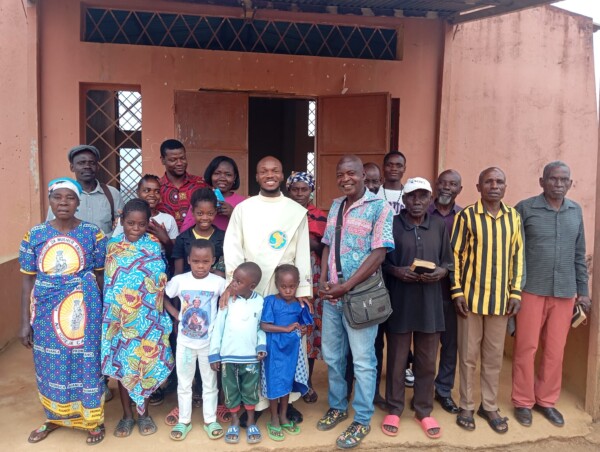
 Fr Edward Rice from St Colmcille’s Parish, Belfast volunteered and became Chaplain with the Royal Air Force serving in England from 1942 to 1949.  He returned to Nigeria then. He died in Bangor, Co Down on 5 August 1972, aged 61.
Fr Henry Russell from Belfast volunteered and became a Chaplain in the Royal Air Force serving in England and Ireland until 1944.  He resumed his mission in Nigeria.  He died in Albuquerque, USA on 30 March 1992, aged 79. 


REFLECTION FOR SATURDAY 25th October 2025 – Fr Kevin O’Gorman SMA

25th October 2025

Readings Romans 8:1-11; Ps 23:1-6; Luke 13:1-9

The phrase ‘in Christ Jesus’ appears dozens of times in the Letters of Paul that we hear in the first line of the today’s reading. For Paul it was a statement of his own standing before God, a status that he desired to share with those he proclaimed the Gospel to, the Gentiles who were outside the Law of Israel. Paul is assuring his audience that ‘the law of the spirit of life in Christ Jesus has set you free from the law of sin and death’. The language of law has largely disappeared from contemporary church life as moral theologians have devoted a lot of their energy in dropping the lexicon of laws from their discourse. An example of this is Bernard Haring, the renowned Redemptorist moral theologian who wrote a three-volume work in the 1950s entitled The Law of Christ; in the wake of the Second Vatican Council he replaced it with Free and Faithful in Christ.

While law has largely disappeared from theological discourse, people are drawn to the description of Paul that ‘the spiritual are interesting in spiritual things’. Such ‘things’ sit side-by-side on the shelves in many bookshops today, showing titles on such topics as self-help and mindfulness, awareness and angels, New Age and Eastern religions. The increasing involvement in spirituality indicates a personal interest and identity in interiority alongside a social/cultural signaling of transcendence. The reason for this is reflected in Paul’s half-line, ‘life and peace can only come with concern for the spiritual’.  

Addressing his Roman audience (and readers down to our time) Paul reminds them that their ‘interests are …in the spiritual since the Spirit of God has made his home in you’. Paul specifies that this is ‘the Spirit of Christ’, combining the image of ‘home’ with belonging to, being in Christ. This indwelling is the basis of Christian spirituality, the source of God’s grace. It is also the hope of bearing fruit as today’s Gospel holds out, as proclaimed by the Psalmist: ‘The person with clean hands and pure heart, who desires not worthless things, who shall receive blessings from the Lord and reward from the God who saves’.

Kevin O’Gorman SMA


Homily for 30th Sunday of Ordinary Time 2025

Readings: Ecclesiasticus 35:12-14, 16-19; 2 Timothy 4:6-8, 16-18; Luke 18:9-14
Theme: ‘Lord. Be merciful to me, a sinner’ (Lk 18:13)
By Michael McCabe, SMA.

Today’s Scripture readings link the themes of prayer and humility. The first reading from the book of Ecclesiasticus assures us that ‘the prayer of the humble pierces the clouds’ (Ecc 35:17). The responsorial psalm echoes the same sentiment: ‘The Lord is near to the broken-hearted; he helps those whose spirit is crushed’ (Ps 34:18). In the Gospel reading from Luke, which recounts the memorable parable of the Pharisee and the Tax-collector, Jesus illustrates the kind of prayer that is acceptable to the Lord. Luke draws our attention to the audience Jesus had in mind when he spoke this parable, namely, ‘people who prided themselves on being upright and despised everyone else’ (Lk 18:9). The parable tells the story of two men who go to the Temple to pray: one a respected and law-abiding Jew, a Pharisee; the other a renegade and despised Jew, a Tax-collector and, therefore, a collaborator with the hated Roman colonisers. The story contrasts vividly the prayers of these different characters.

The Pharisee stands up (probably near the front of the Temple) and thanks the Lord that he is different from, and superior to, several categories of disreputable persons: the greedy, the unjust, adulterers, and, worst of all, tax-collectors. To our 21st century ears, his prayer seems so brazenly self-congratulatory as to be laughable. Indeed, God may well be laughing at him. Yet, allowing for some exaggeration, his prayer is quite close to the way pious Jews were taught to pray, as reflected in the Talmud (a practical guide to interpreting and applying the Torah to everyday life): ‘Praised be the Lord that he did not make me a heathen for all the heathens are as nothing before him’. While we might not imagine ourselves praying openly in this way, we could ask ourselves if we sometimes secretly regard ourselves as better than others and more worthy of God’s love and care than they are!

Unlike the Pharisee, the Tax-collector, whose profession made him ‘unclean’ and an unwelcome presence in the Temple, stands ‘some distance away’ (probably near the entrance). ‘Not daring even to raise his eyes to heaven’, he beats his breast and prays simply and earnestly: ‘God, be merciful to me, a sinner’ (Lk 18:13). Clearly, here is a man whose spirit has been broken. He knows he has no ‘brownie points’ to claim any credit with the Lord. And, unlike the Pharisee, he doesn’t compare himself with anybody else. Nor does he make excuses for his egregious failure to be a good Jew and abide by the commandments of the Law. He just throws himself entirely on God’s mercy. And Jesus tells us that God heard his man’s prayer and not the self-serving prayer of the Pharisee who prayed ‘to himself’ (Lk 18:11): ‘This man, I tell you, went home again justified; the other did not’ (Lk 18:14).

Today’s readings, especially the gospel, teaches us that God wants us to be honest and real when we approach him in prayer, to acknowledge the cracks in our lives and open our hearts to him. We are far from perfect but we shouldn’t be discouraged by this or pretend to be better than we are, or better than some others. As the famous Canadian poet and singer, Leonard Cohen, reminds us: ‘There is a crack in everything. That’s how the light gets in’. When we bring our broken spirits, our broken hearts to God; when we abandon ourselves to his mercy, as the Tax-collector did, then we are giving him a chance to make something of us. We are letting God in, and that is when healing and transformation takes place. In the words of the poet, Patrick Kavanagh, ‘We must be nothing,/Nothing that God may make us something….Let us lie down again/Deep in anonymous humility and God/May find us worthy material for his hand’ (from his poem, Having Confessed).

Today, we live in a world where many people hide their brokenness, covering up the cracks in their lives, and pretending to be better than others, often judging them mercilessly. The only antidote to this false pride and arrogance is to present ourselves to God as we are, cracks and all, and let him heal us. This is really what the parable of the Pharisee and the Tax-collector is all about. It is about having our broken hearts healed, by allowing God’s loving mercy to flow into them. Then we, in turn, may be sources of healing for our broken messed-up world.

I conclude with a challenging reflection on today’s gospel from the pen of Fr Flor McCarthy, SDB.

Sinners in Church
If the Pharisee had his way, the Tax-Collector
would not have been allowed into the Temple at all.
Some people believe that sinners should never go to church.
They cry ‘hypocrites’ at those who do.
According to them only saints should be admitted to church.
But that would result in a very small church,
and would make as little sense as a repair shop
that accepted only sound things,
or a hospital that accepted only healthy people.
We go to church not because we are worthy,
but because we need to.
We are brave enough to admit our sinfulness,
but are willing to strive for something better.
We need the healing mercy of God,
as well as the support of the community,
if our efforts at self-improvement are to bear fruit.

Listen to an alternative Homily by Tom Casey, SMA:

EVENTS IN TRIBUTE TO ARCHBISHOP FRANCIS CARROLL SMA

As part of the their tribute to Archbishop Francis Carroll S.M.A., Newry Maritime Association (NMA) is hosting an exhibition in the Heritage Gallery of Newry City Library.
The exhibition will feature the portrait of the Archbishop which was commissioned by the Council in 1985 and hung in the Sean Hollywood Arts Centre until its closure.
 
The exhibition began on Tuesday 21st of October at Newry Library and will conclude on Friday 31st October.  It is open to the public during the normal Library opening hours. 
 
A second event will take place on Saturday 25th October in Newry Cathedral where Francis Malachy Carroll was baptised on 17th June 1912.  In his youth he was a Mass server at the Cathedral and it was there also that he was ordained  as an SMA Missionary Priest on the 20th December 1936. Forty-four years later, after a life of missionary service as a priest, Archbishop and as a Vatican diplomatic representative, his funeral Mass was celebrated there on 14th October 1980 and attended by over 100 clergy including the Papal Nuncio.
 
On Saturday Canon Francis Brown will dedicate the 10.30am Mass to Archbishop Carroll with liturgical music from Kathy Mc Caughey and The Choir Studio.  After Mass, Fr. Joe Egan, Community Leader SMA Dromantine, will unveil a commemorative plaque in the Cathedral garden.

The son of a docker from Castle St, Newry,  Archbishop Francis Carroll SMA had a long and highly distinguished career, spanning 42 years, in Liberia. He rose to the highest levels of the Church and received every available civic honour from the Government of Liberia for his outstanding services to the state.

For the people of Newry he truly is recognised, in these events, as one of their most illustrious citizens and a man whose legacy will long be remembered in his adopted country of Liberia.


VATICAN – Catholic Church Statistics 2025

Vatican City (Fides Agency) – As every year, in view of World Mission Sunday, which this year celebrates its 99th anniversary on Sunday, October 19, 2025, on the theme “Missionaries of Hope Among all Peoples”, Fides News Agency offers some statistics chosen to give a panorama of the Church in the world.

All the data in this dossier, and the subsequent processing of tables, are taken from the latest edition of the «Church’s Book of Statistics» and regard members of the Catholic Church, church structures, healthcare, welfare and education.
The data in the volume relating to the total world population and the number of baptized Catholics are updated to June 30, 2023. The other data are updated to December 31, 2023.

The Catholic Church in the World: Summary of data

To June 30, 2023 the world population was 7.914.582.000, with an increase of 75.639.000 units compared to the previous year. The positive trend is confirmed for all continents, including Europe.

To June 30, 2023, Catholics in the world numbered 1.405.454.000 units with an overall increase of 15.881.000 Catholics compared to the previous year. Even in this case, the increase affects all five continents, including Europe. A decrease in Europe was registered in 2022 compared to 2021.

As in previous years, increases were registered above all in Africa (+8.309.000) and in America (+5.668.000). Followed by Asia (+954.000), Europe (+740.000) and Oceania (+210.000).

The world percentage of Catholics increased slightly (+0,1) compared to the previous year, reaching 17,8%. The Continents register slight variations.

The total number of Bishops in the world increased by 77 units compared to the previous year, reaching 5.430. The number of diocesan Bishops increased (+84) and Religious Bishops decreased (-7). Diocesan Bishops number 4.258, while that of Religious Bishops is 1.172.
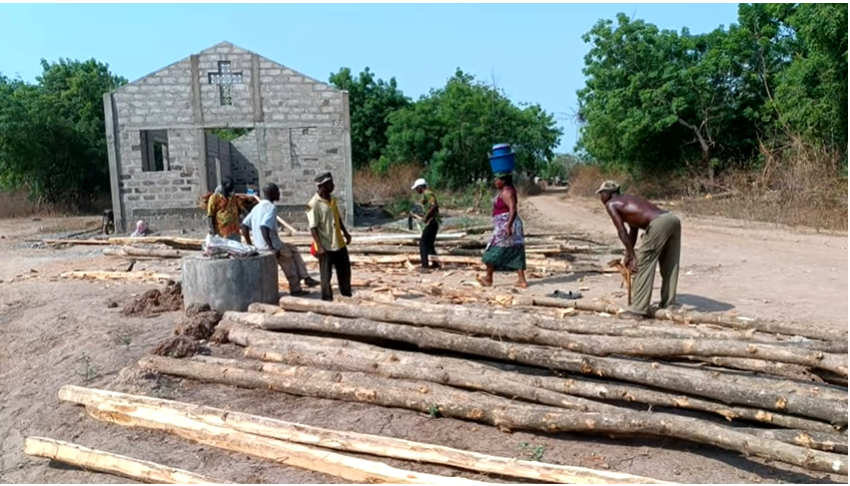
The total number of priests in the world continues to decline, reaching 406.996 (-734 in the last year). Once again, it is Europe that shows a consistent decrease (-2.486), followed by America (-800) and Oceania (-44). Like last year, significant increase were registered in Africa (+1.451) and in Asia (+1.145). Compared to last year, diocesan priests in the world decreased by 429 units, reaching 278.742. Compared to last year there is also a decrease of religious priests, reaching 128.254 (-305).

Permanent deacons in the world continue to increase (+1234), reaching 51.433. The increase was registered in America (+1257), and in Oceania (+57). A slight decrease was registered in Asia (-1) in Africa (-3) and in Europe (-27).

The number of non-religious priests decreased by 666 units compared to the previous year, reaching 48.748. A decrease was registered in Europe (-308) in America (-293) in Asia (-126) and in Oceania (-46) while an increase was registered only in Africa (+107).

Even this year there is an overall decrease in the number of women religious, reaching 589.423 (-9.805). An increase was registered, once again, in Africa (+1.804) and in Asia (+46), while a decrease was registered in Europe (-7.338), America (-4.066) and Oceania (-251).

The number of major seminarians, diocesan and religious decreased this year, they are globally 106.495 (they were 108.481 in the previous year). An increase was registered only in Africa (+383), while a decrease was registered in America (-362), in Asia (-1331) in Europe (-661) and also in Oceania (-15) where last year saw a slight increase (+15).
The total number of minor seminarians, diocesan and religious decreased by 95.021 (-140). In detail, the trend in Africa has reversed, moving from the increase recorded in the previous annual statistics (+1.065) to the decrease recorded in the latest statistics (-90). A decrease was registered in Europe (-169) and Oceania (-31), while a significant increase was registered in Asia (+123) and a slight increase in America (+27).

In the field of education, the Catholic Church runs 74.550 kindergartens with 7.639.051 pupils; 102.455 primary schools with 36.199.844 pupils; 52.085 secondary schools with 20.724.361 pupils. Furthermore, 2.688.615 pupils study in secondary schools and 4,468,875 in university institutes affiliated with the Catholic Church.

Charity and healthcare centres run in the world by the Church are 103.951 and include: 5.377 hospitals and 13.895 dispensaries; 504 Care Homes for people with Leprosy; 15.566 Homes for the elderly or the chronically ill or people with a disability; 10.858 creches; 10.827 marriage counselling centres; 3.147 social rehabilitation centers and 35.184 other kinds of institutes.

Ecclesiastical circumscriptions (Metropolitans, Archdioceses, Dioceses, Territorial Abbeys, Apostolic Vicariates, Apostolic Prefectures, Missions sui iuris, Territorial Prelatures, Apostolic Administrations and Military Ordinariates) dependent on the Dicastery for Evangelization are 1.130 (+7). Most of the ecclesiastical circumscriptions entrusted to the Dicastery based in Piazza di Spagna are in Africa (530) and in Asia (483). Followed by America (71) and Oceania (46).

(SOURCE: Fides Agency, 17/10/2025)

MESSAGE OF HIS HOLINESS POPE FRANCIS FOR WORLD MISSION DAY 2025 – 19 October 2025

Missionaries of Hope Among all People


Dear brothers and sisters! 

For World Mission Day in the Jubilee Year 2025, the central message of which is hope (cf. Bull Spes Non Confundit, 1), I have chosen the motto: “Missionaries of Hope Among all Peoples”. It reminds individual Christians and the entire Church, the community of the baptized, of our fundamental vocation to be, in the footsteps of Christ, messengers and builders of hope. I trust that it will be for everyone a time of grace with the faithful God who has given us new birth in the risen Christ “to a living hope” (cf. 1 Pet 1:3-4). Here, I would like to mention some relevant aspects of our Christian missionary identity, so that we can let ourselves be guided by the Spirit of God and burn with holy zeal for a new evangelizing season in the Church, which is sent to revive hope in a world over which dark shadows loom (cf. Fratelli Tutti, 9-55).

1. In the footsteps of Christ our hope

Celebrating the first Ordinary Jubilee of the Third Millennium after that of the Holy Year of 2000, we keep our gaze fixed on Christ, the centre of history, “the same yesterday and today and forever” (Heb 13:8). In the synagogue of Nazareth, Jesus declared that Scripture was fulfilled in the “today” of his presence in history. He thus revealed that he is the One sent by the Father with the anointing of the Holy Spirit to proclaim the Good News of the Kingdom of God and to inaugurate “the year of the Lord’s favour” for all humanity (cf. Lk 4:16-21).

In this mystic “today”, which will last until the end of the world, Christ is the fullness of salvation for all, and in a particular way for those whose only hope is God. In his earthly life, “he went about doing good and healing all” from evil and the Evil One (cf. Acts 10:38), restoring hope in God to the needy and the people. He experienced all our human frailties, save that of sin, even those critical moments that might lead to despair, as in the agony in the garden of Gethsemane and on the cross. Jesus commended everything to God the Father, obediently trusting in his saving plan for humanity, a plan of peace for a future full of hope (cf. Jer 29:11). In this way, he became the divine Missionary of hope, the supreme model of all those down the centuries who carry out their own God-given mission, even amid extreme trials.

Through his disciples, sent to all peoples and mystically accompanied by him, the Lord Jesus continues his ministry of hope for humanity. He still bends over all those who are poor, afflicted, despairing and oppressed, and pours “upon their wounds the balm of consolation and the wine of hope” (Preface “Jesus the Good Samaritan”). Obedient to her Lord and Master, and in the same spirit of service, the Church, the community of Christ’s missionary disciples, prolongs that mission, offering her life for all in the midst of the nations. While facing persecutions, tribulations and difficulties, as well as her own imperfections and failures due to the weakness of her members, the Church is constantly impelled by the love of Christ to persevere, in union with him, on her missionary journey and to hear, like him and with him, the plea of suffering humanity and, indeed, the groaning of every creature that awaits definitive redemption. This is the Church that the Lord always and for ever calls to follow in his footsteps: “not a static Church, but a missionary Church that walks with her Lord through the streets of the world” (Homily at the Concluding Mass of the Ordinary General Assembly of the Synod of Bishops, 27 October 2024).

May we too feel inspired to set out in the footsteps of the Lord Jesus to become, with him and in him, signs and messengers of hope for all, in every place and circumstance that God has granted us to live. May all the baptized, as missionary disciples of Christ, make his hope shine forth in every corner of the earth!

2. Christians, bearers and builders of hope among all peoples

In following Christ the Lord, Christians are called to hand on the Good News by sharing the concrete life situations of those whom they meet, and thus to be bearers and builders of hope. Indeed, “the joys and hopes, the grief and anguish of the people of our time, especially of those who are poor or afflicted, are the joys and hopes, the grief and anguish of the followers of Christ as well. Nothing that is genuinely human fails to find an echo in their hearts” (Gaudium et Spes 1).

This celebrated statement of the Second Vatican Council, which expresses the sentiment and style of Christian communities in every age, continues to inspire their members and helps them to walk with their brothers and sisters in the world. Here I think especially of those of you who are missionaries ad gentes. Following the Lord’s call, you have gone forth to other nations to make known the love of God in Christ. For this, I thank you most heartily! Your lives are a clear response to the command of the risen Christ, who sent his disciples to evangelize all peoples (cf. Mt 28:18-20). In this way, you are signs of the universal vocation of the baptized to become, by the power of the Spirit and daily effort, missionaries among all peoples and witnesses to the great hope given us by the Lord Jesus.

The horizon of this hope transcends the passing things of this world and opens up to those divine realities in which we share even now. Indeed, as Saint Paul VI observed, salvation in Christ, which the Church offers to all as a gift of God’s mercy, is not only “immanent, meeting material or even spiritual needs… completely caught up in temporal desires, hopes, affairs, and struggles. Rather, it exceeds all such limits in order to reach fulfilment in a communion with the one Absolute, which is God. It is a salvation both transcendent and eschatological, which indeed has its beginning in this life, but is fulfilled in eternity” (Evangelii Nuntiandi, 27).

Impelled by this great hope, Christian communities can be harbingers of a new humanity in a world that, in the most “developed” areas, shows serious symptoms of human crisis: a widespread sense of bewilderment, loneliness and indifference to the needs of the elderly, and a reluctance to make an effort to assist our neighbours in need. In the most technologically advanced nations, “proximity” is disappearing: we are all interconnected, but not related. Obsession with efficiency and an attachment to material things and ambitions are making us self-centred and incapable of altruism. The Gospel, experienced in the life of a community, can restore us to a whole, healthy, redeemed humanity.

For this reason, I once more invite all of us to carry out the works mentioned in the Bull of Indiction of the Jubilee (Nos. 7-15), with particular attention to the poorest and weakest, the sick, the elderly and those excluded from materialistic and consumerist society. And to do so with God’s “style”: with closeness, compassion and tenderness, cultivating a personal relationship with our brothers and sisters in their specific situation (cf. Evangelii Gaudium, 127-128). Often they are the ones who teach us how to live in hope. Through personal contact, we will also convey the love of the compassionate heart of the Lord. We will come to realize that “the heart of Christ… is the very core of the initial preaching of the Gospel” (Dilexit Nos, 32). By drawing from this source, we can offer with simplicity the hope we have received from God (cf. 1 Pet 1:21) and bring to others the same consolation with which we have been consoled by God (cf. 2 Cor 1:3-4). In the human and divine heart of Jesus, God wants to speak to the heart of every man and woman, drawing all of us to his love. “We have been sent to continue this mission: to be signs of the heart of Christ and the love of the Father, embracing the whole world” (Address to Participants in the General Assembly of the Pontifical Mission Societies, 3 June 2023).

3. Renewing the mission of hope

Faced with the urgency of the mission of hope today, Christ’s disciples are called first to discover how to become “artisans” of hope and restorers of an often distracted and unhappy humanity.

To this end, we need to be renewed in the Easter spirituality experienced at every Eucharistic celebration and especially during the Easter Triduum, the centre and culmination of the liturgical year. We have been baptized into the redemptive death and resurrection of Christ, into the Passover of the Lord that marks the eternal springtime of history. Consequently, we are a “springtime people”, brimming with hope to be shared with all, since in Christ “we believe and know that death and hate are not the final word” pronounced on human existence (cf. Catechesis, 23 August 2017). From the paschal mysteries, made present in liturgical celebrations and in the sacraments, we constantly draw upon the power of the Holy Spirit in order to work with zeal, determination and patience in the vast field of global evangelization. “Christ, risen and glorified, is the wellspring of our hope, and he will not deprive us of the help we need to carry out the mission which he has entrusted to us” (Evangelii Gaudium, 275). In him, we live and bear witness to that sacred hope which is “a gift from God and a task for Christians” (Hope is a Light in the Night, Vatican City 2024, 7).

Missionaries of hope are men and women of prayer, for “the person who hopes is a person who prays”, in the words of Venerable Cardinal François-Xavier Van Thuan, who was himself sustained in hope throughout his lengthy imprisonment thanks to the strength he received from faithful prayer and the Eucharist (cf. The Road of Hope, Boston, 2001, 963). Let us not forget that prayer is the primary missionary activity and at the same time “the first strength of hope” (Catechesis, 20 May 2020).

So let us renew the mission of hope, starting from prayer, especially prayer based on the word of God and particularly the Psalms, that great symphony of prayer whose composer is the Holy Spirit (cf. Catechesis, 19 June 2024). The Psalms train us to hope amid adversity, to discern the signs of hope around us, and to have the constant “missionary” desire that God be praised by all peoples (cf. Ps 41:12; 67:4). By praying, we keep alive the spark of hope lit by God within us, so that it can become a great fire, which enlightens and warms everyone around us, also by those concrete actions and gestures that prayer itself inspires.

To conclude, evangelization is always a communitarian process, like Christian hope itself (cf. Benedict XVI, Spe Salvi, 14). That process does not end with the initial preaching of the Gospel and with Baptism, but continues with the building up of Christian communities through the accompaniment of each of the baptized along the path of the Gospel. In modern society, membership in the Church is never something achieved once for all. That is why the missionary activity of handing down and shaping a mature faith in Christ is “paradigmatic for all the Church’s activity” (Evangelii Gaudium, 15), a work that requires communion of prayer and action. Here I would emphasize once more the importance of this missionary synodality of the Church, as well as the service rendered by the Pontifical Mission Societies in promoting the missionary responsibility of the baptized and supporting new Particular Churches. I urge all of you, children, young people, adults and the elderly, to participate actively in the common evangelizing mission of the Church by your witness of life and prayer, by your sacrifices and by your generosity. Thank you for this!

Dear sisters and brothers, let us turn to Mary, Mother of Jesus Christ our hope. To her we entrust our prayer for this Jubilee and for the years yet to come: “May the light of Christian hope illumine every man and woman, as a message of God’s love addressed to all! And may the Church bear faithful witness to this message in every part of the world!” (Bull Spes Non Confundit, 6).

Rothe holy seeme, Saint John Lateran, 25 January 2025, Feast of the Conversion of Saint Paul, Apostle

FRANCIS

Copyright © Dicastery for Communication

SMA JOURNAL – October 2025

The October SMA  Journal begins with an update from Blackrock Road on services available and on the condition of the Parish Church.  Next comes a report on 30 years of the Community Employment Scheme in SMA Parish Wilton. The Scheme benefits the work of the SMA Parish Centre and also provides opportunities and training for workers. Then we see a report on St Joseph’s Cemetery Cork, a place which has historical connections with the SMA.  Finally, we move to Africa – first for a reflection from Topo Island, Nigeria and to finish this edition, we hear about how an Irish and Zambian school link up on Zoom. 

You can view the Journal through, from start to finish by clicking on the red play button in the image. Or, if you wish, view each chapter individually by clicking on the blue time codes below.

Contents 0:00 Opening 0:37 Update on Church in Blackrock Rd. 1:40 Community Employment Programme 8:20 St Joseph’s Cemetery Cork 12:08 Topo Island Nigeria 16:04 Ireland & Zambian Schools on Zoom


Homily for the 29th Sunday of Ordinary Time 2025

Readings: Exodus 17:8-13; 2 Timothy 3:14-4:2;  Luke 18:1-8 
Theme: World Day of Mission
By Michael McCabe, SMA.
 
Today, World Mission Sunday, is the day set aside by the Catholic Church throughout the world to publicly renew its commitment to its universal mission, its calling to bring the Good news of Christ to the ends of the earth. The Second Vatican Council reminded us that  mission is rooted in the nature of the Church; it is the reason for its existence. The Church is the community of Christ’s disciples called and sent to continue the mission of Jesus in the world.  In the name and by the power of his spirit all baptised members of the Church are called and sent to witness to, and proclaim the Gospel of God’s love. In his message for this special day, Pope Leo invites us all to reflect together on our common baptimsal call to be ‘missionaries of hope among the peoples  and to commit ourselves anew to the sweet and joyful task of bringing Christ Jesus our Hope to the ends of the earth’. 
 
Pope Leo also highlights the importance of prayer for the success of the Church’s  missionary work. He states that when he was a missionary priest and bishop in Peru, he  ‘saw first-hand how the faith, the prayer and the generosity shown on World Mission Sunday can transform entire communities’.  So he urges every Catholic parish in the world to take part in World Mission Sunday, and he tells them that their prayers and support ‘will help spread the Gospel, provide for pastoral and catechetical programs, help to build new churches, and care for the health and educational needs of our brothers and sisters in mission territories’. 
 
Prayer is also the dominant theme of our Scripture readings today. In today’s gospel reading, Jesus encourages his disciples to persevere in prayer and not lose heart. Easier said than done, you may say! Jesus is referring especially to what we call ‘prayer of petition’ (asking God for things). It is perhaps the most common kind of prayer. When we bring our needs and the needs of others to our heavenly Father, we are responding to the explicit instruction of Jesus: ‘Ask and it will be given you; seek and you will find; knock and it will be opened to you’ (Lk 11:9). 
 
Jesus illustrates his message with a story about a corrupt judge and a poor widow, who pesters him day and night just to get what is hers by right. The judge eventually relents and accedes to her request, not because he has any concern for justice, but because he wants to be left in peace! Jesus is not comparing God to the corrupt judge, but contrasting them. What he is saying is that, if a corrupt and heartless judge is eventually moved to grant the plea of a persistent widow, how much more swiftly will our infinitely just and loving Father respond to the prayers of his beloved children? 
 
Our first reading from the Book of Exodus illustrates the importance of supporting one another in prayer. It recounts the story of how Moses turns to prayer when his people are attacked by a hostile tribe, the Amalekites. While the battle rages, Moses stands on a hilltop praying with outstretched hands. He knows that only God’s power can save them. When Moses grows weary and his arms begin to flag, his companions come to his help, keeping his arms raised up: ‘But Moses’ arms grew weary, so they took a stone and put it under him and on this he sat, with Aaron and Hur supporting his arms on each side’ (Ex 17:12). What a lovely image of how we can sustain one another in prayer, especially when our hearts grow weary and we feel we are losing the battle.   
 
Here in this Eucharistic community we have come together as the Body of  Christ, not just to bring our personal needs and concerns before the Lord, but also to hold up one another’s hands and sustain one another in prayer and in the struggle of life. There are indeed times when our hearts grow weary, when our energy flags, and like Moses, we can no longer stand alone. It is then that the quiet, unobtrusive prayer of others become the needed oxygen to keep the weakening flame of our own faith alive.  Some years ago I came across a story that illustrates this truth and that links prayer and mission. Christine Benson, a project worker for a Baptist Fellowship, tells of a visit she paid to a Muslim friend following a meeting that upset her. It was nearing prayer time, so she asked her friend to pray for her. She then describes how they prayed: ‘I sat on the settee and prayed my prayer, while she knelt in the corner and prayed her prayer. And we were virtually praying together. And then when she finished praying she sat my me and said: “What is it that has upset you?”  And I shared it with her, and she put her arms round me and we were so close we were just like sisters.’ 
 
As we continue this Eucharist, let us be missionaries of hope and hold one another in prayer. 
 
Listen to an alternative audio Homily by Tom Casey, SMA:

THE POPE’S PRAYER INTENTION FOR OCTOBER 2025 | For collaboration between different religious traditions

Let us pray that believers in different religious traditions might work together to defend and promote peace, justice and human fraternity.

 TEXT OF POPE LEO’s MESSAGE
Lord Jesus,

You, who in diversity are one
and look lovingly at every person,
help us to recognize ourselves as brothers and sisters,
called to live, pray, work, and dream together.

We live in a world full of beauty,
but also wounded by deep divisions.
Sometimes, religions, instead of uniting us,
become a cause of confrontation.

Give us your Spirit to purify our hearts,
so that we may recognize what unites us
and, from there, learn again how to listen
and collaborate without destroying.

October 2025 – Pope Leo XIV

Homily for the 28th Sunday of Year 2025

Readings: 2 Kings 5:14-17; 2 Timothy 2:8-13; Luke 17:11-19
Theme: Gratitude
By Michael McCabe, SMA

I recall my grandmother telling us as children, when she was trying to get us to wash our hands before sitting down to eat, that ‘cleanliness is next to godliness’. Whatever about the truth of that adage, I am certain that gratitude is godliness. In the words of Isaak Walton, ‘God has two dwellings – one in heaven and the other in a thankful heart’. The great Roman Statesman and Scholar, Cicero, regarded gratitude as ‘not only the greatest of virtues, but the parent of all others’. Two of our readings today feature striking examples of gratitude. In our first reading we hear the story of Naaman, a Syrian Army General, who is cured of leprosy through the intervention of the prophet, Elisha. He goes back to the prophet to express his gratitude and glorify the God of Israel. The gospel recounts Jesus’ cure of ten lepers, one of whom – a Samaritan – returns to give thanks.

Both examples take us by surprise. They manifest the spirit of God present and active in unexpected people and places. Naaman is a Gentile, a citizen of Syria, a nation hostile to, and hated by, the Israelites. Yet, in his time of dire need, and on the advice of an Israelite maidservant, he seeks out a prophet from Israel, Elisha. Then, humbly obeying the prophet’s command, he bathes himself seven times in the river Jordan – a river in Israel – and is cleansed of his leprosy. We are told in a beautiful image that ‘his flesh became clean once more like the flesh of a little child’ (2 Kgs 5: 14). With a heart full of gratitude, he returns to Elisha and gives thanks to the God of Israel in words that manifest a spiritual transformation as well as a physical healing: ‘Now I know that there is no God in all the earth except in Israel’ (2 Kgs 5:15).

The central character in our gospel reading is a Samaritan. He is one of ten lepers healed by Jesus while on his way to Jerusalem to suffer and die. The point of the story is that this despised ‘foreigner’ is the only one who returns to thank Jesus and to praise God for his healing. The other nine seem to take their miraculous healing for-granted. They show no desire to find out more about the one who had healed them. They don’t even have the common courtesy to thank him. They just continue on their way oblivious to the great blessing they have received. The Samaritan, on the other hand, is overcome with gratitude and joy at what Jesus has done for him. He praises God in a loud voice, publicising to all around the wonders of the Lord. He has become an evangelizer. No longer shunned and isolated – as when he was a leper – he now draws close to Jesus and falls on his face at his feet and thanks him (cf. Lk 17:15-16).

This is the second time in Luke’s gospel that a Samaritan is presented to us as a model of godly behaviour. The first time is in the familiar story of The Good Samaritan (Luke 10:25-37). Jesus acknowledges that the healing of the Samaritan leper is more than skin deep. He is healed both in body and in spirit. Hence, Jesus says to him: ‘Stand up and go on your way. Your faith has saved you’ (Lk 17:19). What a great tribute to the faith and godliness of a derided heretic!

Both Naaman and the grateful Samaritan show that genuine gratitude flows from a heart attuned to the presence and action of God’s spirit – faith-filled hearts, appreciative of the gifts they have received from God and others. Sometimes it takes a painful experience to make us truly grateful, as was the case with Naaman and the Samaritan. When things are going well, we can easily take our blessings for-granted. Looking back on my own life, I must admit for many years I took for-granted all I had received from others, especially from my Mum and Dad. Only later, when I had more experience of life, did I come to realise and appreciate the sacrifices they made for me and to be truly grateful. Gratitude is much more than saying thanks, though that is important. It is acting out our awareness of being blessed by the way we live. It is, in the words of the American author, Wilferd A. Peterson, practising the art of thanks-living. I conclude with an abbreviated version of his thoughtful reflection:

The art of thanksgiving is thanks-living.
It is gratitude in action.
It is thanking God for your talents and abilities by accepting them as obligations to be invested for the common good.
It is thanking God for all that others have done for you by doing things for others.
It is thanking God for opportunities by accepting them as a challenge to achievement.
It is thanking God for beauty by helping to make the world more beautiful.
It is thanking God for inspiration by trying to be an inspiration for others.
It is thanking God for health and strength by the care and reverence you show your body.
It is thanking God for each new day by living it to the fullest.
It is thanking God by giving hands, arms, legs, and voice to your thankful spirit.
It is adding to your prayers of thanksgiving, acts of thanks living.’

Listen to an alternative audio Homily by Tom Casey, SMA:

Jubilee of the Missionary World, Pope Leo speaks of a “new missionary age”

Today, “a new missionary age opens up in the history of the Church.” It is time to recognize and proclaim anew, “with joy” and “at the tomb of the Apostle Peter,” that “the entire Church is missionary” and that, as Pope Francis repeatedly emphasized, it is time “to let ourselves be ‘permanently in a state of mission’.”

This is the powerful message that Pope Leo XIV reiterated in the square in front of St. Peter’s Basilica during the homily at the Mass for the Jubilee of the Missions and of Migrants. Many pilgrims from all over the world, who filled the entire square and much of Via della Conciliazione, gathered for the Mass despite the rain that accompanied the first part of the celebration.

The missionary vocation, the Pope explained, “arises from the desire to bring the joy and consolation of the Gospel to everyone, especially those who are experiencing difficult and painful situations.” He is thinking especially of “the migrant brothers and sisters, who have had to depart their homelands, often leaving their loved ones behind, enduring nights of fear and loneliness, experiencing discrimination and violence firsthand.”

The Church’s Mission and “the salvation that does not delay”

It is the Holy Spirit – said Pope Leo, referring to the source of every authentic apostolic work – who “sends us to continue the work of Christ in the world’s peripheries, marked at times by war, injustice and suffering. Faced with these menacing situations, the cry that so often in history has been raised up to God has re-emerged,” as is recalled in the first reading of the day from the book of the prophet Habakkuk. This question resonates in the face of the silence of God, who seems absent from those who invoke him in the face of evil. “God is silent,” said Pope Benedict XVI, in a catechesis quoted today by Pope Leo, “and this silence pierces the soul of the person praying, who ceaselessly calls but receives no answer … God seems so distant, so forgetful, so absent” (Catechesis, 14 September 2011).
On the contrary, the Lord’s response, already evoked by the prophet Habakkuk, continued Pope Prevost, is, “that all of this will end, will cease, because salvation will come and it will not delay.”
There is, therefore, “a life,” a “new possibility of life and salvation that comes from faith.” This faith “not only helps us to resist evil and to persevere in doing good, but it transforms our lives so as to make of them an instrument of the salvation that even today God wishes to bring about in the world.” Faith, the Bishop of Rome emphasized, is “a lowly force” and “does not impose itself by means of power and in extraordinary ways. Indeed, it is enough to have faith the size of a mustard seed in order to do unimaginable things (cf. Lk 17:6), because it carries within it the strength of God’s love that opens the way to salvation.” This salvation is fulfilled when “we take responsibility and, with the compassion of the Gospel, care for the suffering of others; it is a salvation that slowly grows when we become “unworthy servants”, namely when we place ourselves at the service of the Gospel and of our brothers and sisters, not seeking our own interests but only bringing God’s love to the world.”

“Departing” and “Remaining”

“It is our responsibility,” Pope Paul VI, also quoted by Leo XIV, wrote in 1971, “to proclaim the Gospel in this extraordinary period of human history, a time truly without precedent, in which, at the heights of progress never before reached, there are also accompanying depths of perplexity and desperation equally without precedent.” “A time – added the current Bishop of Rome – truly without precedent, in which, at the heights of progress never before reached, there are also accompanying depths of perplexity and desperation equally without precedent. If for a long time we have associated with mission the word “depart”, the going out to distant lands that did not know the Gospel or were experiencing poverty, today the frontiers of the missions are no longer geographical, because poverty, suffering and the desire for a greater hope have made their way to us.”
This is evidenced by “the story of so many of our migrant brothers and sisters, the tragedy of their flight from violence, the suffering which accompanies it, the fear of not succeeding, the perilous risk of traveling along the coastline, their cry of sorrow and desperation.” “So mission is not so much about “departing”, but instead “remaining”, to look upon those who arrive from lands that are distant and violent; to remain and open our arms and hearts to them, welcoming them as brothers and sisters, and being for them a presence of consolation and hope.”

Opportunity for an “exchange” in missionary cooperation

With a view to the “new missionary era” that awaits the Church, Pope Leo called “to promote a renewed missionary cooperation among the Churches. In the communities of ancient Christian tradition, such as those of the West, the presence of many brothers and sisters from the world’s South should be welcomed as an opportunity, through an exchange that renews the face of the Church and sustains a Christianity that is more open, more alive and more dynamic.”

At the same time, “all missionaries that depart for other lands are called to live with respect within the culture they encounter, directing to the good all that is found true and worthy, and bringing there the prophetic message of the Gospel.”
The Pope also recalled “the beauty and importance of missionary vocations,” addressing in particular the Church in Europe, where its numerical decline is particularly evident: “Today,” the Pope stated, “there is a need for a new missionary effort by laity, religious and priests who will offer their service in missionary lands. We need new ideas and vocational experiences capable of sustaining this desire, especially in young people .”
At the end of his homily, Pope Leo imparted his blessing to the local clergy of the particular Churches, to missionaries and those discerning a vocation. He addressed the migrants: “know that you are always welcome! The seas and deserts that you have crossed, Scripture calls “places of salvation”, in which God makes himself present to save his people. I hope that you find this face of God in the missionaries that you encounter.” (GV) (Source: Agenzia Fides, 5/10/2025)

Dis-Order of the World – Global Order and the “twilight” in which “monsters emerge”

The article below, from Agenzia Fides, written  by Cardinal Dominique Joseph Mathieu, OFM Conv., Archbishop of Tehran-Isfahan is long and not an easy read.  It is however, worth the effort as it gives a broad and lucid overview of the confusion, change and turmoil taking place in our world today. This is set against the solid ground of faith, Church teaching and the perspective that the Church is link between different communities of people and nations.  

In his “Prison Notebooks,” the Italian politician and writer Antonio Gramsci said in the 1930s: “The old world is dying, the new world struggles to be born, and in this twilight, monsters emerge.”

At some point, the distribution and balance of power among the dominant great powers of the world result in a “world order,” a vague and ambiguous term whose definition has never reached consensus. This gives rise to a status of exclusive managers of global affairs.
It is not the soul of peoples, races, or religions that is at stake, but the insatiable appetite of the powerful, which causes humanity to fall back into confrontation – an irreducible collision of values, driven by the hope of prevailing over others. This leads to crises and wars, the scale of which, depending on their scale, can cause global disorder, chaos.

Natural law demands the triumph of law over force, whether physical, military, economic, or political. In the framework of banning brute force, states are called to act to guarantee individuals, societies, and religious organizations the existence, freedom, autonomy, and development.

Although the signing of the United Nations Charter in 1945, for the first time in human history, made war illegal, war remains omnipresent in the world. The reason is simple: the pursuit by any existing or emerging power of global or regional dominance. The philosophy of international relations, based on state sovereignty and zones of influence, opposes the notions of humanitarian and democratic interference rights (sanctions). The madness of competition and suspicion among leaders often causes unnecessary suffering for populations.

Today, the world is undergoing a paradigm shift—a historic transition from unipolar hegemony, through disorder, toward an asymmetrical multilateralism. But as long as economic and financial resources are allocated to military power, they remain unproductive. Global stability is affected, and difficulties persist.

Ideals that seem good for some are not universal and should not be imposed on other peoples or countries. Working toward a global balance requires more wisdom and humility. It involves diplomacy, dialogue, a more universal respect for human dignity, and not war. This purifies the atmosphere from pessimism through realism, toward optimism driven by necessity.

The task of the pacifist who aspiring to a new world of peace involves a profound, simultaneous revolution of political federations and economic collectivization, as the pioneer of science fiction novels and political thinker Herbert George Wells wrote in 1940 in « The New World Order ». According to him, global collectivism—the only alternative to chaos and humanity’s degeneration —must be carefully designed and well thought out. Its achievement requires a heroic and unwavering goal.

Recently, Pope Leo affirmed that it must be recognized that decisions taken are sometimes more based on military power and economic interests than on human dignity and support.
Saint John Paul II, during the 2004 World Day of Peace, warned that “Peace and international law are closely linked: law fosters peace.” He believed that the current system does not reach enough objectives and called for a new world order to replace the one that emerged after World War II—the United Nations, the International Monetary Fund, and the World Bank. This new order should be capable of providing solutions to today’s challenges, based on human dignity, integrated societal development, solidarity between rich and poor nations, and the equitable sharing of resources and the extraordinary scientific-technological advances.

Robert L. Phillips speaks of the great vision of communitarianism and a New Global Order, as proposed by Saint John Paul II, which presents an encouraging notion of freedom – transcending unilateral positions of Marxism and liberal capitalism, promoting a vision of a unified human destiny.

“We can no longer accept complacently inequalities and environmental degradation. Humanity’s salvation lies in creating a new development model that unquestionably focuses on coexistence among peoples, in harmony with Creation,” Pope Francis reaffirmed in an interview published in Domenico Agasso’s book « God and the World to come». According to the pontiff, a major reset – moving from financial speculation, fossil fuels, and military accumulation to an inclusive green economy – is necessary. Building a new world order based on solidarity, requires innovative methods to eradicate intimidation, poverty, and corruption, working together, each according to their contribution, without delegating or passing by. Christians and people of good will should support initiatives based on four criteria proposed by Francis: “inclusion of the excluded, promotion of the least, the common good, and care for creation.”

The world must heal from the speculative mentality of (purported) unipolar dominance, causing planetary discord, so as to give it a « soul » of multipolarity, conducive to international harmony. This involves not only governments but also all citizens. Abandoning the person to the rising tides of authoritarianism by political leaders threatens human dignity.

Christians, while promoting the City of God, cannot neglect the city of man. They are essential contributors to establishing a more just, fraternal, and solidaristic global order, rooted in human dignity and the common good, aligned with the vision of a utopian Kingdom of God. To this end, their priorities are prayer, charity, and action. As Saint Paul encouraged in his letter to Timothy, they make requests, prayers, intercessions, and thanksgiving for all people, especially for heads of state and those exercising authority, so that we may lead quiet and dignified lives in piety.

The Catholic Church conceives of the global order as the expression of the Kingdom of God in the world. Its magisterium emphasizes that it can and must contribute to the spiritual and moral dimension of the structures that govern international life. In Pacem, Dei Munus Pulcherrimum, Pope Benedict XV exhorted that “all states… should unite in a single league, … a kind of family of peoples,” and presented the Church as a model of fraternity and peace.

The process of synodality, as an expression of global Catholicism, aims to lead the Church from the paradigm of an Occidental empire of the spirit to a truly global church, where the thought and practice of every baptized person, in all their worldwide diversity, matter. Baptism incorporates the believer into the body of Christ, which is the true “family of nations.” Gaudium et Spes, paragraph 42, reminds us that the Church is “universal in the sense that it is engaged in no particular culture or political, economic, or social system” and can thus serve as a “link between different communities of people and nations.” The principles of subsidiarity and solidarity ensure that global structures respect human freedom and the dignity of intermediate communities, avoiding a monolithic “world government” in conflict with Church teaching on liberty.

Although the United Nations played a central role in the decolonization process, based on the principle of self-determination of peoples, the Global South remains largely marginalized. The defense of oppressed and post-colonial peoples, and the preservation of democratic values, often oppose blocs of antagonistic interests, which benefit from the veto right to block decisions that could negatively affect their interests or those of their protégés. This constitutes the main issue causing the “paralysis” of the UN.

Offering a space for “listening” is commendable. Engaging in active listening helps establish trust and improves interpersonal communication and dialogue. Listening in the Spirit opens the individual’s heart to the living presence of God; synodality organizes the entire community to “hear” collectively the same Spirit. All are called to contribute to this forward movement for the good of peoples and God’s people. (Agenzia Fides, 30/9/2025)

Archbishop of Tehran-Isfahan

(Agenzia Fides 30.09.25) 

REFLECTION FOR SATURDAY 4th October 2025 – Fr Kevin O’Gorman SMA

Memorial of Saint Francis of Assisi

Readings: Bar 4:5-12, 27-29; Ps 68, Luke 10:17-24.

The first week of October is remarkable for its litany of saints in the Liturgy –Thérèse of the Child Jesus and Francis. People’s fascination with them is found far beyond the precincts of the church. Within the church, Thérèse is treasured for her so-called ‘Little Way’, the life of love while Francis is feted for his love of life. Francis has found a new and greater audience through his namesake – the Jesuit Pope who chose to be called after the Franciscan Poverello, the poor, little man of Assisi.

There is a wonderful symmetry between the titles and openings of Pope Francis’ two major documents on ecology and the ‘Climate Crisis’ – the one beginning “LAUDATO SI’, mi’ Signore” – “Praise be to you, my Lord”, the other “Laudate Deum” – “Praise God for all his creatures”. The laudatory link between these two documents is the bridge between Creator and creatures, the latter comprising the whole of nature, including humanity. A line from the Second Vatican Council links creation and Incarnation – ‘God, who creates and conserves all things by his Word, provides constant evidence of himself in created realities’.[1] This reflects the Franciscan theological tradition which sees the Son of God’s coming in the flesh as the crowning of creation, Christ as the cosmic head of – as the Gospel of John states – ‘all things that came into being through him’ (1:3).

A review of a recent book recorded that ‘Francis is a figure whose legacy continues to capture the popular imagination in 21st century Europe’.[2] The title of the book under consideration Francis of Assisi: The Life of a Restless Saint communicates the appeal that the Poverello contains for people today which is not confined to the Western world. Like the creation that he loved and lauded which goes through its own restlessness  revealed in the passing of the seasons, ‘the almost continuous drama of his life’[3] conveys the call by God who brought him into being so that, in the concluding words of the reading from the book of Baruch today, ‘he [will] rescue you and give you eternal joy’. Francis of Assisi rejoiced in these words and the hope they retained for him throughout his life on earth.

[1] ‘Dogmatic Constitution on Dogmatic Revelation’, Par. 3.
[2] Andrew Roycroft, Ticket – The Irish Times, 29th March 2005.
[3] Adrian House, Francis of Assisi, Pimlico: London 2001, xvi.

Homily for the 27th Sunday of Ordinary Time, 2025

Readings: Habakkuk 1:2-3;2:2-4, 2 Timothy 1:6-8,13-14; Luke 17:5-10
Theme: Faith and Service
By Michael McCabe, SMA.

Our readings today invite us to reflect on the themes of faith and service and the relationship between them. The first reading from Habakkuk, one of the lesser known Old Testament prophets, is a heart-felt lament directed to God. It reflects the distress of the prophet at what is happening to his country and his people. ‘How long, O Lord, am I to cry for help while you do not listen, to cry “Violence” in your ear while you do not save? (Hab 1:2). This was the time when Israel was invaded by its powerful neighbour, Babylon, leading to massive destruction, chaos, and terrible suffering for the people. We see a similar scenario today in Ukraine and Gaza, and indeed many other countries

Habakkuk asks why the Lord, the God or Israel, allows this unspeakable evil to be visited upon his chosen people, the people he had loved into existence. ‘Why do you make me see wrong-doing, why do you countenance oppression?’ (Hab 1:3). The Babylonians’ attack on Israel leads Habakkuk to question his faith in God’s promise that he would always be Israel’s God and stand by his chosen people – a promise movingly expressed by the prophet, Jeremiah: ‘I have loved you with and everlasting love; therefore, I am constant in my love for you’ (Jer 31:3). Despite his anguish, Habakkuk does despair or abandon hope. He decides to keep watch and wait for the Lord’s response. When it comes, this response does not really address Habakkuk’s question. He is simply told not to lose heart, but to continue to trust in God and his promise to secure justice for his people: ‘You see, anyone whose heart is not upright will succumb, but the upright will live through faithfulness’ (Hab 2:4). Sometimes there is no easy answer to the injustices innocent people suffer at the hands of powerful but unscrupulous foes. They are called to a faithfulness which is nothing short of heroic.

In our gospel reading from Luke, the Apostles ask Jesus to increase their faith. Their request may well reflect, not so much the feelings of the contemporary disciples of Jesus, but rather the doubts and fears of the early Christian communities for whom Luke was writing. As a minority group within the powerful and hostile Roman Empire, they must have feared for their very survival. What future could they have in such an environment? The anguished cry of Habakkuk surely resonates with minority Christian communities, decimated by persecution – a constant feature of the Church’s history. It is estimated that, at this moment, 340 million Christians, one is every eight, suffer persecution because of their faith. They can readily identify with the experience of Habakkuk and with the Apostles’ request of Jesus: ‘Increase our faith’ (Lk 17:5).

The faith the apostles asked for, and the faith we, too, need, is not primarily a better knowledge of Christian doctrine or the teachings of the Church. It is something more important. It is trust and confidence in the presence of God, especially when things go wrong and God seems far away. It is a resolute conviction that God will never abandon us. Being a Christian and taking the Gospel seriously is, as the German Lutheran pastor, Dietrich Bonhoeffer, reminds us, ‘a costly grace’. Yes, God has promised us his loving care, but he has never promised a life free of pain, difficulties, suffering, or even violent death. After all, as St Paul reminds us, ‘he did not spare his only Son, but gave him up for us all (Rom 8:32).

The second theme that emerges in our gospel reading and in the second reading is the theme of service: the kind service that does not seek any recompense; the kind of service that is based, not on a contract with an employer, but on a relationship of unconditional trust and love. Jesus uses the example of the service of a slave, but a better example is that of Jesus himself. At his last Supper with his disciples, he said: ‘I am among you as one who serves’ (Mk 22:27), and, to show what he meant, he washed his disciples’ feet – the action of a slave. And he commanded us, his disciples, to do likewise.

Our second reading reminds us that our service of others is a response to a gift of God’s Spirit. This gift ‘is not a spirit of timidity’, but ‘the Spirit of power and love and self-control’ (2 Tim 1:7). So, we must ‘never to be ashamed of witnessing to the Lord’ (2 Tim 1:8), even if this means being considered out of step with the dominant spirit of the times in which we live. Rather, we must ‘fan into a flame the gift we received’ (2 Tim 1:6) for the service of God’s reign in our world. I will end this homily with a beautiful Eucharistic prayer, said in time of need or distress, which expresses very well the meaning of Christian service.

“Open our eyes to the needs of all. Inspire us with words and deeds to comfort those who labour and are overburdened. Keep our service of others faithful to the example and command of Christ. Let your Church be a living witness to truth and freedom, to justice and peace that all people may be lifted up by the hope of a world made new. Amen.”

Alternative audio Homily by Tom Casey, SMA:

BENIN – Bishop of N’Dali celebrates Mass in the village of Kalalé

This article from Agenzia Fides tells of the visit of Bishop Martin Adjou Moumouni to the Parish of Saint Pierre de Kalalé following an attack by Jihadists from Niger on September 10. The Parish is under the pastoral care of SMA Missionaries. 

 “The hostages are still in the hands of the jihadists,” says Bishop Martin Adjou Moumouni of N’Dali, the diocese in Benin whose territory includes the village of Kalalé, which was attacked on September 10 by a jihadist group from neighboring Nigeria (see Fides, 11/9/2025). The jihadists have since returned to Nigeria, taking with them six villagers who are still in their hands (see Fides, 12/9/2025). The population of Kalalé is traumatized, and many residents have fled. For this reason, Bishop Adjou Moumouni explained, “I went to Kalalé last Sunday, September 21, to celebrate Mass with the few remaining faithful.” “I tried to reassure them by telling them that Jesus never abandons his flock,” he emphasizes.

According to the bishop, security conditions have improved since the government deployed a large military contingent to the area. “I must thank the government and the army, who have increased the military presence in the region. Now we are better protected,” the bishop affirms. Sisters who belong to the Society of Jesus the Savior, an order of Spanish origin, live in Kalalé. “What is dear to me now is the resolution of the issue of the school run by the sisters,” explains the Bishop of N’Dali. “It is a complex that includes a primary school, a middle school, and a vocational school, attended by hundreds of students, most of whom are Muslims. It is a strong presence to witness to Christ’s love for all people,” emphasizes Bishop Adjou Moumouni. “That’s why I am concerned because the sisters have decided not to reopen the school for the time being,” explains the bishop. “The nuns are rightly concerned that the jihadists could take some of the school’s students hostage in the event of another attack,” says Bishop Adjou Moumouni, who, however, expresses confidence that the issue can be resolved. “We are trying, in agreement with the civil and military authorities, to offer concrete security guarantees to the students and teachers. I am confident that we will be able to reopen the school soon,” he concludes. (L.M.) (Agenzia Fides, 24/9/2025)


REFLECTION FOR SATURDAY 27th September 2025 – Fr Kevin O’Gorman SMA

Readings: Zec 2:5-9, 14-15; Ps Jer 31:10-13; Lk 9:43-45.

The readings today are prophetic, proclaiming both the presence of God and the passion of Jesus. ‘For I am coming to dwell in the middle of you’ is a promise of God’s presence which we hear often in the Old Testament. This is Immanuel – God with us – which the evangelists will express in different ways, culminating in the Incarnation expressed in the Gospel of John  – ‘And the Word became flesh and lived among us’. The presence of God in the person of Christ is an assurance of what one theologian said ‘represented God’s absolute involvement with humanity’.[1]

Lawrence OP, Flickr, CC 2.0

In place of the Psalm today the reading is taken from Jeremiah. Here the prophet proclaims the protection which God affords His people – ‘The Lord will guard us, as a shepherd guards his flock’. This image of God’s protective promise is found in many places in the scriptures, most famously in the Psalm (23) of the same name, ‘The Lord is my shepherd’. Indeed Jesus will take up this image to indicate his own mission and identity –‘I am the good shepherd’  – going further to finally ‘lay down his life for the sheep’.

The Gospel reading picks up on this paschal presence. The irony of the statement, ‘at a time when everyone was full of admiration for all he did’, is not lost on us when placed alongside Jesus’ assertion that ‘The Son of Man is going to be handed over into the power of men’. This humble handing over by Jesus himself reveals a new presence and power of God, proclaimed ‘in his hour’ of departure from the earth, ‘it is to your advantage that I go away, for if I do not go away, the Advocate will not come to you’ John 16:7). Christ’s presence and absence, dying and rising ‘opened up a way [and] if we follow this path, life and death are made holy and acquire a new meaning’.[2]

Kevin O’Gorman SMA

[1] Joseph Sittler, The Structure of Christian Ethics, Baton Rouge, 1958.  
[2] Vatican Council II, Church in the Modern World, Par. 22

Homily for the 26th Sunday of Ordinary Time, 2025

Readings: Amos: 6:1, 4-7;1 Timothy 6:11-16; Luke 16:19-31
Theme: Indifference to the Plight of the Poor
By Michael McCabe, SMA.

Today’s readings, like those of last Sunday, invite us to continue our reflection on the dangers of riches. In our first reading, the prophet Amos vividly describes and roundly condemns the self-indulgent life-style of the wealthy. ‘Lying on ivory beds and sprawling on their divans, they dine on lambs from the flock and stall-fattened veal’ (Amos 6:4). He identifies their basic sin as indifference. They do not care about the afflictions of the poor or about the imminent attack on the land of Israel by a foreign power [Assyria] as long as they can live in the lap of luxury. ‘About the ruin of Joseph, they do not care at all’ (Amos 6:6). The prophet reminds them that their wealth will not save them from impending disaster. ‘They will be the first to be exiled; the sprawlers’ revelry is over’ (Amos 6:7). Diplomacy was not Amos’s strong point!

In the gospel reading from Luke, Jesus recounts a familiar rich man/poor man folk tale, adding fresh and telling differences. In the story as told by Jesus, the poor man has a name, Lazarus, which means ‘God will help’, whereas the rich man has no name. Usually, it is the poor who are nameless, while the rich have names, glamour, fame and fortune. Furthermore, the fortunes of Lazarus and the rich man are reversed. The final destiny of Lazarus is to be ‘carried away by the angels to the bosom of Abraham’, whereas the rich man ends up ‘in torment in Hades’ (Lk 16:22-23). Like Amos, Jesus pinpoints indifference as the basic sin of the rich man. Cushioned by his lavish life-style, he is utterly oblivious to the presence of the poor man at his gate, starving and ‘covered with sores’ (Lk 16:20). He fails to see Lazarus as a fellow human, a brother, in dire need. The worlds of the rich and poor can exist side by side but never meet.

Indifference is the cardinal sin of those whose wealth blinds them to the sufferings and deprivations of the poor. It should be counted among the capital sins as it lies at the root of so many other sins of neglect. As Elie Wiesel, a Jewish prisoner in the Auschwitz and Buchenwald concentration camps, wrote: ‘The opposite of love is not hate, it’s indifference. The opposite of art is not ugliness, it’s indifference. The opposite of faith is not heresy, it’s indifference. And the opposite of life is not death, it’s indifference.’ Indifference is truly a deadly sin – a sin from which it is almost impossible to recover. And yet, recovery is possible, as Shakespeare’s King Lear illustrates. As an old man, Lear is driven from his comfortable palace by his ungrateful daughters, and finds himself on an exposed and barren heath in the midst of a frightful storm. At the mercy of the elements, he comes to identify with the sufferings of the poor, whom he had never noticed before. For the first time, he begins to feel compassion for them and wishes to share his wealth with them. He says:

‘O, I have ta’en too little care of this!
Take physic, pomp;
Expose thyself to feel what wretches feel,
That thou mayst shake the superflux to them,
And show the heavens more just.’

The parable of the rich man and Lazarus is particularly relevant to our time, when the gap between the rich and the poor continues to grow. The growing concentration of the world’s wealth in the hands of a few billionaires has been highlighted by Oxfam. Closer to home, a recent report from Social Justice Ireland stated that, despite the existence of a comprehensive social welfare system, the gap between the rich and poor in Ireland has increased over the past decade. We are all aware that the recent dramatic increase in the price of gas and basic foodstuffs is having dire consequences for everyone, especially the poor. Many will be unable to make ends meet. We may say that this is a problem for the Government to solve but it must be our concern too. We cannot be indifferent to the poverty around us. We are our sisters’ and brothers’ keepers. As St John Chrysostom, that great champion of the poor, reminds us, we cannot celebrate the presence of Christ in the Eucharist without serving him present in the poor: ‘Do not pretend to honour Christ in the Church while you neglect him outside where he is cold and naked’. So, let us ask the Lord today to make us more aware of his presence in the poor and to open our hearts in response to their needs.

I conclude with a reflection on the true purpose of wealth from the pen of Fr Flor McCarthy, SDB:

A week ago the sycamore tree was loaded with gold.
However, instead of sitting back and enjoying it,
it began to give it away.
At first it was just a leaf here and a leaf there,
whenever the wind asked for a contribution.
But soon it was giving it away in fistfuls,
without being asked,
and without a thought for a wintry tomorrow.
Wealth is judged,
not by the amount that is accumulated,
but by the amount that is given away.
The only wealth that is worth having is the wealth of the heart.
To close one’s heart is to begin to die;
to open it is to begin to live.

Listen to an alternative audio Homily by Tom Casey, SMA:

Prayer Service for the Season of Creation 2025

“Environmental justice can no longer be regarded as an abstract concept or a distant goal. It is an urgent need that involves much more than simply protecting the environment. For it is a matter of justice – social, economic and human. For believers it is also a duty born of faith, since the universe reflects the face of Jesus Christ, in whom all things were created and redeemed. In a world where the most vulnerable of our brothers and sisters are the first to suffer the devastating effects of climate change, deforestation and pollution, care for creation becomes an expression of our faith and humanity”.   
From the Message of his holiness Pope Leo XIV for the 10th world day of prayer for the care of creation 2025.

On Wednesday 10th September the members of Wilton Justice Group joined with members of the local family of Parishes (Ballineaspaig, Curraheen Road, Sacred Heart and Wilton Parishes) in a Prayer Service to mark the Season of Creation.   The event, organised by Wilton Justice Group, took place on the grounds of SMA Wilton and the theme was “Peace with Creation”.   It moved between three different locations and consisted of elements such as Reflections, Prayers of Lamentation, Song and Poetry.

The Service, which lasted about an hour, was recorded by Mr Paul O Flynn.  As feedback from participants was very positive we wish to share with you some of the elements that made up this reflective and meaningful occasion.  To facilitate easy viewing, we split the recording into parts,  You can view them all or else pick those you want to see now or later. We hope you will take time to view listen, reflect on and enjoy what was a very prayerful event.   To view just click on the links below.

1 OPENING SEQUENCE –  A Welcome and introducing of the theme. Time:3:20
https://youtu.be/bsxctcmUuiI

2 GARDEN MEDITATION – a meditation on the beauty of creation led by Sr Alba.  11 mins https://youtu.be/ITimAcYvuOg

3 LAMENTATIONS – Prayers of lamentation on the misuse of creation by humankind. 3 mins
https://youtu.be/BOVUTEP2A5s

4 SONG: How I long for Peace.  3.19   https://youtu.be/bc95CtL6bTk

5 POEM: When the World has lost its mind by David Hollis.  1.05 https://youtu.be/dVbdBq6s8_M

6 LETTER FROM CHIEF SEATTLE to the President of the USA in 1854.  8.00 mins.  https://youtu.be/gIr3froRrkU

REFLECTION FOR SATURDAY 20th September 2025 – Fr Kevin O’Gorman SMA

Readings: I Tm 6:13-16. Ps 99. Luke 8:4-15

The blurb for the New Collegeville Commentary on First and Second Timothy begins ‘If St Paul and his followers had sent these messages by email they long ago would have been deleted and now floating in cyberspace’.[1] The outcome that these Letters  would be lost in the vast digital library which at times looks like a long, dark cloud is depressing. However, as the commentator continues, ‘But they were painstakingly written and preserved so we twenty-first century Christians can still read about and reflect on life in the church at the end of the first century’.

Caravaggio,  the conversion of St Paul, Wikimedia Commons

Reading from Paul’s First Letter to Timothy this past week reminds us that Paul relied on ‘the grace of our Lord [which] overflowed for me with the faith and love that is in Christ Jesus’. Paul insists on God’s intervention in his life because of his prior identity as ‘a blasphemer and did all I could to injure and discredit the faith’. (1:13-14) In contrast to his own ignorance which caused injustice, casting ignominy and injury on those who followed ‘Christ Jesus our Lord’, in today’s final reading Paul speaks of Jesus ‘who spoke up as a witness for the truth in front of Pontius Pilate’. This historical fact – which Paul would have heard of from Peter and his fellow apostles – found its way into the Creed some centuries later and is confessed today, (though the focus here is on the fact that Pilate cowardly consented to the crucifixion of Christ). Paul commends his readers for how they have ‘spoke up for the truth in front of many witnesses’.

Paul reminds his readers that ‘I put to you the duty of doing all that you have been told, with no faults or failures, until the Appearing of our Lord Jesus Christ’ (6:14). This duty has been detailed in previous parts of the Letter, some of which we have listened to in the Liturgy of the Word throughout the week. With his focus on the virtues, both moral and theological, including ‘righteousness, godliness, faith, love, endurance, gentleness’, we are reminded that these values hold true as much for our time as they did twenty centuries ago. The Christian form of living, which Paul had condemned before his own conversion to ‘the living God’, looks to the ‘Appearing of our Lord Jesus Christ who at the due time will be revealed by God’.

Thankfully, Paul’s Letter(s) to Timothy, like his other correspondence, has not disappeared or been deleted but remains aware and active in and through those who belong to ‘the household of God, which is the church of the living God, the pillar and bulwark of the truth’ (3:15). By bringing belief and behaviour together we can, in the prayer and praise of today’s Psalm, ‘Know that the Lord is God…Give thanks to him  and bless his name’.

Kevin O’Gorman SMA

[1] Terence J. Keegan, First and Second Timothy, Titus, Philemon, Liturgical Press, 2005.

Father Bonazzetti: ‘banknote repairer’

ANGOLA/ Terreiro (Agenzia Fides) – “We are still in the middle of the dry season, even though we are waiting for the first rain, and we want to use the rain to fill the large cistern in Terreiro. We won’t let the first rain enter the cistern because it brings with it all the dust from the roof,” says Father Martino Bonazzetti of the Society of African Missions, who has been living in the northwest of the country for two years, specifically in Desvio da Barro do Dande, Diocese of Caxito, capital of the province of Bengo.

The missionary reports on the commitments, activities, and projects that animate the community of Terreiro.  The parish is centered in Desvio and has a dozen chapels, “some of which are easily accessible, while others are difficult (if not impossible) to reach in the rain. The area is vast, and to get to the chapels, as with many other things, people have to walk a lot,” emphasizes the missionary. “There’s no shortage of activities. In Terreiro, we celebrated baptisms and First Communions. And during the month of the ‘Ferias’ (Vacation), we organized a kind of summer camp with about eighty children and caregivers, some mothers, and a small group of young people.”

“It doesn’t take much to create a good atmosphere here,” adds Father Martino. “Games and activities, a packet of cookies, and a lunch a week before the big lunch on the last day. You don’t need much to celebrate. A balloon, some popcorn, music… and lots of joy.” “

I’ve added a new job to my various ‘roles: ‘banknote repairer,'” he explains. “If a banknote is torn here, it’s often rejected. I brought some non-yellowing tape from Italy, and after I repaired someone’s banknote, word must have gotten around, because every now and then someone comes to me and asks for help.”

Fr Martino with Parishioners, Photo: SMA Italy

“Finally, we are in the process of finalizing the purchase of a property in Zone 6,” the missionary continued. “The Christians of this community also told me about a possible literacy and pre-school initiative. They conducted a census of school-age children; the school is just a few kilometers away. I don’t think everyone is interested, but the number frightens me: more than 450 children. We need to find suitable premises, classrooms, and materials—I deliberately don’t say ‘teaching materials,’ because that’s a big word… and then also ‘teachers,’ that is, young people who attend high school. We will start with that…” Father Martino concludes confidently. (AP) (Source:Agenzia Fides, 16/9/2025)

Homily for the 25th Sunday of Ordinary Time, 2025

Readings: Amos 8:4-7; 1 Timothy 2:1-8; Luke 16:1-13
Theme: ‘You cannot be the slave both of God and of money’ (Lk 16:13)
By Michael McCabe, SMA

‘Money makes the world go round’. So sang Liza Minnelli in the popular 1972 musical, Cabaret. Certainly, money features strongly among the most prominent of human concerns. According to Daniel Kahneman, ‘Money may not buy you happiness, but the lack of it will certainly buy you misery’. Money – its uses and abuses – is the main theme of our readings today.

Our first reading from the prophet Amos, underlines the abuses to which greed for money gives rise. Amos lived in the eighth century BC, one of those rare periods when Israel was relatively peaceful and prosperous. Ideal opportunities for trading had triggered ‘an economic miracle’, leading to undreamed of riches for some people. Behind this success story, Amos sees a world of injustice. Wealth is concentrated in the hands of a few, who mercilessly exploit the many poor farmers and labourers. The wealthy commercial barons and merchants cannot wait for the Sabbath to be over before continuing their lucrative but dishonest business: cheating on weights and measures, tampering with scales, inflating the value of goods and deflating the value of money. What they are doing is ‘buying up the poor for money’ (Amos 8:6). How frighteningly contemporary all this sounds! Fearlessly, Amos castigates whose who engage in such practices, ‘who trample on the needy and try to suppress the poor’ (Amos 8:4). He tells them that God ‘will not forget a single thing you have done’ (cf. Amos 8:7).

The responsorial psalm underscores the message of Amos and reminds us that God is the side of those exploited by the rich and powerful, and will intervene on their behalf: ‘From the dust he lifts up the lowly, from the dung-heap he raises the poor to set him in the company of princes, yes, with the princes of his people’. This affirmation echoes the familiar words of Mary’s Magnificat: ‘He casts the mighty from their thrones and raises the lowly. He fills the starving with good things, sends the rich away empty’ (Lk 1:52-53).
In our gospel reading from Luke, Jesus refers to money as ‘tainted’ but instructs his disciples to use it ‘to win you friends, and thus make sure that when it fails you, you will be welcomed into the tents of eternity’ (Lk 16: 9). The message of the gospel may seem, at first glance, rather puzzling and even disconcerting. Jesus tells his disciples a parable about a dishonest but shrewd steward who, having squandered his master’s property, takes immediate steps to secure his own future. He uses his position to buy favours from his fellow servants who happen to owe his master money, so that they will be obliged to help him when he is sacked. And he does this by cheating his master.

The behaviour of this unjust steward is self-serving and reprehensible, and Jesus is not presenting him as an example to be followed, but rather as a lesson from which we may have something to learn. And the lesson to be learned is that, in our service of God and his reign of love and justice, we must be as decisive as the steward was in the pursuit of his own interests. But instead of acting dishonestly, like him, we must take those actions that serve God’s purposes and that lead to a more human and just world and thus win us eternal life. Service of God is incompatible with service of wealth. We ‘cannot be the slave both of God and of money’ (Lk 16;13).

The abuses to which money gives rise are all too evident in our world today, creating a society where the rich grow richer and the poor struggle for survival. To quote Pope Francis, ‘the worship of the golden calf of old has found a new and heartless image in the cult of money and the dictatorship of an economy that is faceless and lacking any truly humane goal’. The tyranny of an unbridled capitalist system built on competitiveness, where there are some winners but many losers is completely at odds with the teaching of Jesus. The gross inequality created by this system is shocking and an abomination in the sight of our munificent Creator. Over the past two decades alone the wealth of the ten richest persons in the world has doubled while the income of 99% of humanity has reduced. Today 1% of the world’s population have twenty times more global wealth than the bottom 50%. In response to this reality, the Church’s social teaching calls ‘a complete reform of the global financial system along ethical lines that would produce, in its turn, an economy that benefits everyone. Money has to serve, not to rule’.

Today’s gospel speaks about stewardship. A steward is a person who is given responsibility to handle the goods and property of his/her employer. In the words of Joyce Meyer, ‘We must remember that we are stewards of what God has provided for us, not owners’. We have no absolute right to anything we have. So the question today’s gospel puts to us is: ‘How well am I using the resources the Lord has provided me with for his service and the service of others?’ Am I using them to make the kind of friends Jesus refers to in the Gospel – friends who will welcome me ‘into the tents of eternity’ (Lk 16:9)?

Read an alternative audio Homily by Tom Casey, SMA:


NOVENA IN HONOUR OF ST THÉRÈSE Patroness of the Missions

The annual Novena in honour of St Thérèse will take place between
Tuesday 23rd September to Wednesday 1st October 2025. 
Daily Mass & Novena Prayers at 7.30pm each evening (7pm on Saturday).  

Due to St Joseph’s Church, Blackrock Road being closed for repairs, Mass & Novena Prayers will now take place in St Joseph’s Church, WILTON, Cork.

To view online click on the WEBCAMS link on the menu above and then click St. Joseph’s Church, Wilton.


SMA JOURNAL – September 2025

This month we bring you news of the recent closure of the Church in  Blackrock Road due to  damage to its ceiling. We hear about a poem written by Fr Eddie Deeney and how it became a song. Next we move to SMA Parish Wilton, Cork and see how Indian Independence Day was celebrated there. Finally, Fr Patsy Lynch SMA tells us of a book of reflections that he compiled while working in his parish in Ballinaskelligs, County Kerry. 


Homily for Sunday 14th September 2025

Feast of the Exaltation of the Holy Cross
Readings: Numbers 21:4-9; Philippians 2:6-11; John 3:13-17
Theme: The Victory of the Cross
By Michael McCabe, SMA

The origins of today’s feast, ‘The Exaltation of the Holy Cross’, go back to the discovery of the true cross and the dedication of the Church of the Holy Sepulchre in Jerusalem which took place on the 14th September, 326. Up to that time, Christians had been reluctant to venerate something still in use as an instrument of torture and execution. But when the Roman emperor, Constantine, became a Christian, he abolished crucifixion and adopted the cross as a symbol of victory, clearing the way for Christians to publicly venerate and proclaim it. Thus the cross was transformed in Christian consciousness from something shameful and repugnant into a triumphant symbol of God’s victory over death and sin, and the gift of divine life – as succinctly expressed in the Preface of today’s Eucharist.

The cross also shows us with startling clarity what happens to self-forgetful love in a world ruled by the demons of hatred and violence. Jesus might have avoided the Cross, but only by turning aside from his mission of proclaiming and inaugurating the God’s reign of justice, peace, truth and love. And this he could not and would not do. To reveal the full extent of God’s love for us, he had to endure suffering and death on a Cross – the final phase and climax of his life-giving mission of love, showing, as the fourth Eucharistic prayer reminds us, ‘how perfect his love was’.

Mel Gibson, in his famous movie, The Passion of the Christ, highlights the horrific suffering endured by Jesus during the final twelve hours of his life. Yet, despite its lengthy and detailed portrayal of the violence inflicted on Jesus, his movie is not a true representation of his passion. Jesus’ suffering and death on the Cross cannot be understood apart from the context of his passionate life, lived in obedience to the will of his Father, and poured out in loving service of others, especially the poor and marginalised: proclaiming a message of hope to those longing for liberation, healing of the sick, forgiving sinners, and casting out demons. Jesus death on the Cross was the supreme manifestation of a life of love – the love of one who, as our second reading today reminds us, ‘did not cling to his equality with God but emptied himself to assume the condition of a slave’ (Phil. 2: 6 -7). The Cross was the climax of his mission of loving service. In the words of the English poet, Malcolm Guite:

‘…On this tree
Loss becomes gain, death opens into birth.
Here wounding heals and fastening makes free
Earth breathes in heaven, heaven roots in earth.
And here we see the length, the breadth, the height
Where love and hatred meet and love stays true
Where sin meets grace and darkness turns to light
We see what love can bear and be and do,
And here our saviour calls us to his side
His love is free, his arms are open wide.’

The Cross, as the noted Dominican theologian, Herbert McCabe, reminds us, reveals ‘the weakness of God…, not the weakness of ineffectiveness but the weakness of love, which is our best picture of the power of God. From creation itself right through to redemption the power of God is exercised not in manipulating and interfering with things but in letting them be, because the power of God is the power of love’. It is, however, only through the lens of the resurrection that we come to see the weakness of divine love in our world, not as a tragic defeat, but as a glorious victory. To quote again from that wonderful hymn in our second reading: ‘But God raised him high and gave him the name which is above all other names, so that all beings in the heavens, on earth and in the underworld… should acclaim Jesus as Lord, to the glory of God the Father’ (Phil. 2: 9 -11)

The message for us in today’s readings is perfectly expressed in these words of Pope Francis: ‘From the cross of Christ we learn love, not hatred; compassion, not indifference; forgiveness, not vengeance. The outstretched arms of Jesus are the embrace of tender love with which God wishes to embrace us. They show us the love that we are called to have for one another and for everyone. They show us the way, the Christian way. It is not the way of imposition and force, of power and status; it never brandishes the cross of Christ against our brothers and sisters for whom he gave his life! Jesus’ way, the way of salvation is different: it is the way of a humble gratuitous and universal love, with no “ifs”, “ands” or “buts”’. This is surely a message we all need to take to heart, as we strive to be faithful disciples of Jesus in a world still troubled by the demons of hatred and violence.

Listen to an alternative audio Homily by Tom Casey, SMA:


THE POPE’S PRAYER INTENTION FOR SEPTEMBER 2025 | For our relationship with all of creation

In this the Season of Creation the Holy Father dedicates his message and intention for September to the relationship of the human person to creation.

Let us pray that, inspired by Saint Francis, we might experience our interdependence with all creatures who are loved by God and worthy of love and respect.

TEXT OF THE POPE’S MESSAGE
Lord, You love everything You have created,

and nothing exists outside the mystery of Your tenderness.
Every creature, no matter how small,
is the fruit of Your love and has a place in this world.

Even the simplest or shortest life is surrounded by Your care.
Like St. Francis of Assisi, today we too want to say:
“Praised be You, my Lord!”

Through the beauty of creation,
You reveal Yourself as a source of goodness. We ask You:
open our eyes to recognize You,
learning from the mystery of Your closeness to all creation
that the world is infinitely more than a problem to solve.
It is a mystery to be contemplated with gratitude and hope.

Help us to discover Your presence in all creation,
so that, in fully recognizing it,
we may feel and know ourselves to be responsible for this common home
where You invite us to care for, respect, and protect
life in all its forms and possibilities.

Praised be You, Lord!
Amen.

REFLECTION FOR SATURDAY 6th September 2025 – Fr Kevin O’Gorman SMA

(Readings: Col 1:21-23; Ps 53; Luke 6:1-5)

If Saul had listened to Jesus speaking in today’s Gospel he would have been annoyed at what he heard and associated himself with the question asked by ‘some of the Pharisees, Why are you doing something that is forbidden on the sabbath day?’ Saul, the supremely zealous promoter and even prosecutor of the Law, would have had great difficulty deciding what to do after Jesus’ self-declaration – ‘The Son of Man is master of the sabbath’. There could have been only one ‘master of the sabbath’, the Messiah.

One of the outdoor Stations of the Cross at Holy Cross Abbey, CC flickr.com/photos/irishfireside/

However, as Paul, we hear in today’s first reading from Colossians a very different take on Jesus and on Paul himself, now a herald of the Gospel to the Gentiles. In that role he reminds those who were outside the Law that ‘God has reconciled [them] by Christ’s death’. He exhorts them to remain firmly rooted in the faith, ‘never letting themselves drift away from the hope…which you have heard which has been preached to the whole human race’, of which Paul himself is a servant. This shows how far Paul himself has travelled, and as Pope Benedict XVI stated, why ‘He uses the term “servant”… to indicate a relationship of total and unconditional belonging to the Lord Jesus’[1]. As herald of the Gospel he encountered those who ‘not long ago were foreigners and enemies’, experiencing hostility and hassle, harm and even hatred.

Reference to ‘Christ’s death in his mortal body’ in today’s first reading is a reminder of how often Paul refers to the cross and crucifixion of Jesus. This event is salvific, not sadistic, the supreme sign of the humility of God which hollows out human hubris. This is proclaimed in Paul half-line to the Corinthians, ‘so that the cross of Christ may not be emptied of its power’ (1:17). The master of paradox, Paul perceives the futility and fatality of Christ’s death on the cross from a purely human and historical perspective and presents it as revealing the way, working and wisdom of God’s eternal plan.  

Detail of Relic of the true Cross. https://commons.wikimedia.org. Joseph Mischyshyn

‘Ut crux Christi non evacuetur’, Latin for ‘so that the cross of Christ may not be emptied of its power’, is inscribed on the inside of the Altar in Holy Cross Abbey, (County Tipperary). Its annual Novena begins on Monday 8th (September) and includes the Feast of the Exaltation of the Holy Cross (Sunday 14th this year). With a Relic of the True Cross and its three Stations of the Cross in the Abbey, cloister and grounds, Holy Cross continues to be a place of pilgrimage and prayer.

Fr Kevin O’Gorman SMA

[1] Homily at Vespers for Promulgation of “Pauline Year”, June 2008-June 2009 (available at Vatican.co.za).

AFRICA/ZAMBIA – Bishops: “Environmental damage caused by the uncontrolled exploitation of mineral wealth is a social injustice”

Lusaka (Agenzia Fides) – “We are deeply concerned about pollution and environmental degradation, which cause suffering to vulnerable populations due to the predominance of political and economic interests that do not place human dignity and the common good at the center of national development,” write the Bishops of Zambia in a joint statement on pollution and environmental degradation”.
The statement was issued on August 22, shortly the World Day of Prayer for Creation, which is celebrated today, September 1. The bishops criticize “the negligence, particularly evident in the lack of monitoring of the application of environmental regulations,” calling this “a moral failure that directly contradicts our Christian duty to be stewards of God’s creation and to care for our fellow human beings, especially the most vulnerable.”
Zambia is rich in natural resources, from copper (where it is the seventh-largest producer in the world) and cobalt, as well as gold, silver, zinc, emeralds, and other precious stones. In addition, deposits of other minerals essential to the so-called energy transition, such as lithium, manganese, nickel, and uranium, have been discovered, but are not yet being mined.
Mining, meanwhile, causes severe environmental damage. The government in Lusaka therefore launched an investigation into river pollution in the Copperbelt region (where copper and cobalt are mined) earlier this year, following repeated incidents of contamination. The bishops recall that “in 2021, the Konkola Copper Mines (KCM) company settled a long-standing environmental pollution dispute with communities near the mining facility after toxic waste from the Nchabga mine contaminated rivers and destroyed agricultural land.” KCM’s activities have also caused severe environmental damage to the Mushishima River and other areas of the Copperbelt.
“These environmental violations have caused immediate and long-term health damage, destroyed ecosystems, and wiped out the livelihoods of those who rely on agriculture and fishing,” the bishops explain, adding that the national environmental agency (Zambia Environmental Management Agency, ZEMA) “must also be held accountable.”
But it is not only large mines with foreign interests that cause environmental damage. “The discovery of gold veins in various regions of the country has sparked a gold rush,” the statement reads. “In search of earning a living in a precarious economic situation, ordinary citizens, especially young people, embark on a search for fortune at their own risk,” the bishops explain. “Without adequate controls, these gold miners risk being buried by collapses in their makeshift mines and poisoned by mercury (used to extract gold from rock), not to mention the health risks of the local population.” The problem of artisanal gold mining also affects other African countries, such as Ghana (where the phenomenon is known as “galamsey,” see Fides 16/11/2022 and 8/5/2024).
The bishops conclude by calling on the government to tighten regulations, hold mining companies accountable for restoring degraded ecosystems, and create safe and regulated opportunities for citizens, especially young people, to benefit from the country’s natural wealth.  (Source: Agenzia Fides, 1/9/2025)

Homily for the 23rd Sunday of Ordinary Time: 2025

Readings: Wisdom 9:13-18; Philemon 9-10,12-17; Luke 14:25-33
Theme: The Cost of Discipleship
By Michael McCabe, SMA

The Jesus we meet in today’s gospel is far from the ‘gentle Jesus, meek and mild’ of our childhood prayers. Instead, we meet the tough, uncompromising prophet of God’s kingdom. Jesus pulls no punches when spelling out the conditions he requires of those who wish to become his disciples: ‘If anyone comes to me without turning his back on his father and mother, his wife and his children, his brothers and sisters, indeed his very self, he cannot be my disciple. Anyone who does not take up his/her cross and follow me cannot be my disciple’ (Lk 14:25-26).

It is well to recall the context in which Jesus made these statements. He had set his face resolutely towards Jerusalem and was well aware of the fate that awaited him there: rejection, betrayal, and death on a cross. And he wanted his disciples to be under no illusions about what lay ahead of them if they continued to follow him. It is clear that many (perhaps all) of them had understandable expectations of earthly power and glory (cf. Lk 22:24-30). It is also clear that his words made little impression on them until after his death and resurrection. Only then, enlightened and empowered by the Spirit, did they fully embrace the challenges of being disciples of the crucified and risen Lord.

But what about us, the disciples of Jesus living in the 21st century? Surely Jesus does not expect us to take these harsh demands seriously. They seem altogether preposterous, completely out of kilter with the dominant values of our time and culture – security, comfort, human flourishing, and the support of family and friends. We might think that Jesus ‘cannot be serious’, to borrow a phrase from the tennis legend, John McEnroe. But Jesus is being very serious. He intended his words to be taken to heart by those who wished to follow him. There is no way of interpreting his blunt words to make them less challenging and more acceptable that is not simply escapist. Certainly, the intention of Jesus was not to make us miserable. As he himself tells us, he was sent by the Father to bring us life in its fullness (cf. Jn 10:10). He came to teach us how to love, and live as children of an infinitely compassionate and loving Father. But there is a price to pay if we wish to follow Jesus and imitate his example of a love that remained steadfast and true to itself even in the face hostility and rejection. In the words of American poet, T.S. Eliot, genuine discipleship ‘costs not less than everything’ (Little Gidding).

The famous Lutheran pastor, Dietrich Bonhoeffer, got it right when he stated in his popular spiritual classic, The Cost of Discipleship, that the call to discipleship inevitably involves the cross: ‘The cross is not the terrible end to an otherwise god-fearing and happy life; it meets us at the beginning of our communion with Christ. When Christ calls us, he bids us come and die.’ Bonhoeffer was writing from personal experience. His fidelity to his Christian convictions led him to the ultimate sacrifice of his life. His involvement in a small Protestant resistance movement and conspiracy to defeat Hitler led to his incarceration and death by hanging in Flossenbürg concentration camp. Bonhoeffer describes discipleship a costly grace. ‘It is costly because it calls for obedience; it is grace because it calls for obedience to Christ. It is costly because it may cost us our lives; it is grace because only thus are we brought to new life.’

Today’s gospel message it not only profoundly counter-cultural; it falls within the category of things that lie beyond the grasp of our limited human understanding, as our first reading from the Book of Wisdom states. ‘Who can know the intentions of God? Who can divine the will of the Lord’ (Wis 9:13). The wisdom of the cross is a wisdom that is written ‘in the heavens’ (Wis 9:16). It is not the calculating wisdom of the worldly wise, but rather, as St Paul reminds us, ‘God’s foolishness [which] is wiser than human wisdom, and God’s weakness [which] is stronger than human strength’ (1 Cor 1:25). Like Bonhoeffer, Paul is speaking from personal experience. In our second reading today from his Letter to Philemon, he refers to himself as ‘an old man… still a prisoner of Jesus Christ’ forced to wear chains (Phil 9). Far from making him embittered, Paul’s years in prison matured him as a disciple and apostle of Christ, enabling him to imitate more closely the tender and compassionate love of his Master, as this short reading clearly illustrates.

Our following of Jesus today may not lead to physical death or to imprisonment but, if it is genuine and not just wishful thinking, it will involve the cross in one form or another. For those living in the post-Christian secular culture of the Western world, perhaps the words of the British journalist, Philip Toynbee, are apposite: ‘Those who are trying to live Christian lives today are faced, not with martyrdom, not with hostility, not even with contempt. The are faced with the deadly indifference of their fellow men and women, lightened only by an occasional burst of amused curiosity’. So, let us pray in the words of St Richard of Chichester for the grace ‘to see Christ more clearly, follow him more nearly, and love him more dearly, day by day’.

Listen to an alternative audio Homily by Tom Casey, SMA:

MESSAGE OF HIS HOLINESS POPE LEO XIV FOR THE 10th WORLD DAY OF PRAYER FOR THE CARE OF CREATION 2025

Seeds of Peace and Hope

Dear Brothers and Sisters!

The theme of this World Day of Prayer for the Care of Creation, chosen by our beloved Pope Francis, is “Seeds of Peace and Hope”. On the tenth anniversary of the establishment of this Day of Prayer, which coincided with the publication of the Encyclical Laudato Si’, we find ourselves celebrating the present Jubilee as “Pilgrims of Hope.” This year’s theme thus appears most timely. 

In proclaiming the Kingdom of God, Jesus often used the image of the seed. As the time of his Passion drew near, he applied that image to himself, comparing himself to the grain of wheat that must die in order to bear fruit (cf. Jn 12:24). Seeds are buried in the earth, and there, to our wonder, life springs up, even in the most unexpected places, pointing to the promise of new beginnings. We can think, for example, of flowers springing up on our roadsides from seeds that landed up there almost by chance. As those flowers grow, they brighten the gray tarmac and even manage to break through its hard surface.

In Christ, we too are seeds, and indeed, “seeds of peace and hope.” The prophet Isaiah tells us that the Spirit of God can make an arid and parched desert into a garden, a place of rest and serenity. In his words, “a spirit from on high will be poured out on us, and the wilderness will become a fruitful field, and the fruitful field a forest. Then justice will dwell in the wilderness, and righteousness abide in the fruitful field. The work of righteousness will be peace, and the work of righteousness, quietness and trust forever. My people will abide in a peaceful habitation, in secure dwellings, and in quiet resting places” (Is 32:15-18).

These words of the prophet will accompany the “Season of Creation,” an ecumenical initiative to be celebrated from 1 September to 4 October 2025. They remind us that, together with prayer, determination and concrete actions are necessary if this “caress of God” is to become visible to our world (cf. Laudato Si’, 84). The prophet contrasts justice and law with the desolation of the desert. His message is extraordinarily timely, given the evidence in various parts of the world that our earth is being ravaged. On all sides, injustice, violations of international law and the rights of peoples, grave inequalities and the greed that fuels them are spawning deforestation, pollution and the loss of biodiversity. Extreme natural phenomena caused by climate changes provoked by human activity are growing in intensity and frequency (cf. Laudato Deum, 5), to say nothing of the medium and long-term effects of the human and ecological devastation being wrought by armed conflicts.

As yet, we seem incapable of recognizing that the destruction of nature does not affect everyone in the same way. When justice and peace are trampled underfoot, those who are most hurt are the poor, the marginalized and the excluded. The suffering of indigenous communities is emblematic in this regard.

That is not all. Nature itself is reduced at times to a bargaining chip, a commodity to be bartered for economic or political gain. As a result, God’s creation turns into a battleground for the control of vital resources. We see this in agricultural areas and forests peppered with landmines, “scorched earth” policies, [1] conflicts over water sources, and the unequal distribution of raw materials, which penalizes the poorer nations and undermines social stability itself.

These various wounds are the effect of sin. This is surely not what God had in mind when he entrusted the earth to the men and women whom he created in his image (cf. Gen 1:24-29). The Bible provides no justification for us to exercise “tyranny over creation” (Laudato Si’, 200). On the contrary, “the biblical texts are to be read in their context, with an appropriate hermeneutic, recognizing that they tell us to ‘till and keep’ the garden of the world [cf. Gen 2:15]. ‘Tilling’ refers to cultivating, ploughing or working, while ‘keeping’ means caring, protecting, overseeing and preserving. This implies a relationship of mutual responsibility between human beings and nature” (ibid., 67).

Environmental justice – implicitly proclaimed by the prophets – can no longer be regarded as an abstract concept or a distant goal. It is an urgent need that involves much more than simply protecting the environment. For it is a matter of justice – social, economic and human. For believers it is also a duty born of faith, since the universe reflects the face of Jesus Christ, in whom all things were created and redeemed. In a world where the most vulnerable of our brothers and sisters are the first to suffer the devastating effects of climate change, deforestation and pollution, care for creation becomes an expression of our faith and humanity.

Now is the time to follow words with deeds. “Living our vocation to be protectors of God’s handiwork is essential to a life of virtue; it is not an optional or a secondary aspect of our Christian experience” (Laudato Si’, 217). By working with love and perseverance, we can sow many seeds of justice and thus contribute to the growth of peace and the renewal of hope. It may well take years for this plant to bear its first fruits, years that, for their part, involve an entire ecosystem made up of continuity, fidelity, cooperation and love, especially if that love mirrors the Lord’s own self-sacrificing Love.

Among the Church’s initiatives that are like seeds sown in this field, I would mention the Borgo Laudato Si’ project that Pope Francis bequeathed to us at Castel Gandolfo. It is a seed that promises to bear fruits of justice and peace, and an educational project in integral ecology that can serve as an example of how people can live, work and build community by applying the principles of the Encyclical Laudato Si’.

I pray that Almighty God will send us in abundance his “Spirit from on high” (Is 32:15), so that these seeds, and others like them, may bring forth an abundant harvest of peace and hope.

The Encyclical Laudato Si’ has now guided the Catholic Church and many people of good will for ten years. May it continue to inspire us and may integral ecology be increasingly accepted as the right path to follow. In this way, seeds of hope will multiply, to be “tilled and kept” by the grace of our great and unfailing Hope, who is the risen Christ. In his name, I offer all of you my blessing.

From the Vatican, 30 June 2025

Memorial of the First Martyrs of Holy Roman Church


LEO PP. XIV

__________________________________

[1] Cf. PONTIFICAL COUNCIL FOR JUSTICE AND PEACE, Land and Food, Libreria Editrice Vaticana, 2015, 51-53.

The circle closes: an Irish missionary’s journey from Mayo’s fields to Africa’s heart—and home again

Below is an article written by Fr Dominic Wabwireh of the SMA International Media Centre in Rome.  It is based on an interview he conducted with with Fr John Kilcoyne during the recent SMA General Assembly which was published on https://smainternational.site/  All the photos below are also courtesy of the SMA International Media Centre. 

The ancient stones of the Eternal City have witnessed centuries of missionaries departing for distant shores. But inside the Society of African Missions (SMA) General Assembly 2025, a different narrative pulsed through the hallways, meeting rooms, and coffee breaks. Among the 55 delegates, only 11 hailed from the traditional “sending” nations of Europe and North America. The overwhelming majority – a resounding four-fifths – represented the vibrant, growing Church of Africa and Asia. Seated quietly amidst this sea of change was Fr. John Kilcoyne, an Irish priest whose nearly 30 years of leadership across Liberia, South Africa, and Tanzania embody this seismic shift. For him, this Assembly wasn’t just a meeting; it was the culmination of a lifetime witnessing mission turn full circle.

Fr. John Kilcoyne with fellow SMA confreres on their way to an audience with Pope Leo XIV at the Vatican, Rome, on June 6, 2025.

“It’s been an honour,” Fr. John reflects, his soft Irish lilt belying the steel forged in war zones and the warmth nurtured in countless African villages. Recently elected as an SMA Councillor in Ireland, the 64-year-old missionary is a living bridge between eras. As he prepares to hand over the leadership of the SMA District of Tanzania – the final chapter of his African service – His journey embodies the strength of faith, the perseverance of the heart, and the reciprocal love that fuels true missionary work.

From Mayo’s fields to Africa’s frontiers: the roots of a vocation
Fr. John’s journey began far from the equatorial heat, in the rain-washed, faith-steeped landscape of rural Western Ireland. Picture a young boy on a family farm, the rhythm of life punctuated by the Angelus bell and the nightly recitation of the Rosary. His father tilled the land; his mother balanced work in the local post office with farm duties. It was a world shaped by close-knit community and steadfast Catholic faith.

“What inspired me? Local men,” Fr. John states simply, recalling his decision to join the SMA 50 years ago in 1975. “Missionaries – SMA, Columbans, others. They were tangible proof of a life beyond our parish.” Vocation workshops in 1974-75 solidified the call, introducing him to SMA students and priests. Missionary magazines fueled a young imagination, painting vivid pictures of distant lands. “I found myself particularly drawn to Africa,” he recalls. Ordained in 1983, the pride radiating from his home parish remains a vivid memory. Little did they, or he, know the crucibles that awaited.

Liberia: from pastoral calm to the abyss of war
Landing in Liberia in 1983, the 25-year-old priest stepped into a world both challenging and exhilarating. His initial seven years were “ordinary” only by missionary standards: intense pastoral work and community development among the Bassa people in central Liberia. He learned the complex, tonal Bassa language, not just for sermons, but for confession, for intimate conversations, for life. He slept in villages, shared stories under starlit skies, celebrated Mass, and translated essential Catholic texts into Bassa – a labour of love ensuring the faith spoke in the people’s heart-tongue. The rewards were profound: “That sense of belonging, of being accepted… I once thought my mission was about evangelizing new areas, but I came to realize that the greatest joy was becoming part of the community.”

Then, in 1990, paradise shattered. Liberia plunged into a brutal civil war that would rage for seven years. Fr. John’s world became one of survival, displacement, hunger, and witnessing unspeakable suffering. “Civil war is terrible; it is always the innocent who suffer most,” he says, the weight of those years still palpable. With his colleague, Fr. Tony Jennings, and the Consolata Sisters, his mission pivoted to desperate relief efforts – feeding the hungry, offering shelter, providing solace amidst chaos. They were displaced multiple times, constantly navigating danger.

Yet, it was here, in the heart of darkness, that Fr. John witnessed the most luminous faith. “I will never forget the witness of the people – their strength, their refusal to take revenge, their commitment to Christian faith and values. They were willing to die for each other, and even for us.” His voice thickens. “That was one of the most intense and inspiring experiences of my life. Like Dickens said, ‘It was the best of times, it was the worst of times.’ The best because I never felt closer to people, and I saw real martyrs.” The war ended in 1997, leaving scars and a transformed priest. He left for studies in London, carrying Liberia forever in his soul.

South Africa: building bridges in the shadow of apartheid
By mid-1999, Fr. John found himself in a nation grappling with its own profound transformation: post-apartheid South Africa. Sent to the Diocese of Rustenburg, he faced a new linguistic hurdle: Setswana. “Without it, I would have found it impossible to minister,” he emphasizes, reiterating his lifelong conviction that language is the key to the heart. As a European in a land still raw from racial division, acceptance wasn’t automatic. “I had to learn the culture, of course, and to be accepted… But the people made me feel very welcome.”

For nine of his eleven years there (2001-2010), he served as Superior. Leadership here meant navigating the complexities of a society in flux, building trust, and fostering the SMA’s presence during a critical period. He speaks fondly of South Africa’s “culinary variety,” a small symbol of the nation’s rich tapestry, contrasting it with the Liberian staples of fufu and pepper soup that had sustained him through war.

Tanzania: nurturing a thriving future & the art of stepping back
Arriving in Tanzania in February 2012, after a sabbatical, Fr. John encountered a Church bursting with vitality. “28% of Tanzania’s 65 million people are Catholic,” he notes with evident pride. “The Church here is vibrant and confident.” He served as Vice-Superior from 2014 and took the helm as Superior in 2019 – the role that brought him to the Rome Assembly.

The outgoing leadership team of the Tanzania District. From left Fr. Josephat Nzioka, Counselor and Bursar; Fr. John Kilcoyne, Superior; and Fr. James Shimbala

His leadership in Tanzania has been defined by strategic building for an African future. “It truly was a team effort,” he insists, deflecting personal praise towards his Tanzanian counsellors, James Shimbala (now elected to the SMA’s General Council) and Josephat Nzioka. Under his guidance, the SMA Tanzania District (a significant upgrade from a Region) blossomed: over 30 pastoral agents (priests, lay missionaries, religious sisters), a dedicated media and vocations team, a new formation house with a 200-seat chapel, and crucially, a surge in local vocations. “We now have about 24 priests… and a growing number of seminarians. We have worked hard in vocation promotion and recruitment.”

The challenges? “Change – especially change of personnel,” he admits. The constant movement inherent in a global society evolving its structures. “The second would be sustainability – trying to become more financially self-reliant.” Yet, his eyes light up discussing the future: “The biggest change will only truly manifest in the next three years… We are already approaching the numbers needed to become a Province… I can see Tanzania becoming a Province in a few years.”

The pivotal transition: why now is the time for Africa
Which makes his next decision profoundly symbolic. Fr. John will step down as Superior of Tanzania in October 2025. He will not be returning to Ireland permanently yet, but taking a break from Tanzania. The reason is clear and deliberate: “Reading the signs of the times, I believe it’s time for an African – and especially a Tanzanian – to be in charge… There are very capable young men… mature and more than capable.”

He chuckles softly, “I’ve been in leadership in Africa… for a long time… I’ve begun to feel that going to meetings is a bit like being the ‘white sheep’.” More seriously, he adds, “I feel that it is time for Tanzania… I have no sense that I should continue as leader.” Spiritually, he finds deep peace: “I feel at peace and happy with the idea that I have assisted the Tanzania unit to reach a stage where one of its local priests can be the next leader… I’m the last Irish member in Tanzania.”

This transition crystallizes the profound evolution he witnessed starkly at the Rome Assembly – the shift from the overwhelmingly European-led 2007 Assembly to the 2025 gathering dominated by African and Asian voices. “Africa, especially, has gone from being primarily a continent receiving missionaries to one that still receives missionaries but is also sending them out, even to re-evangelize former sending countries.” The era of “reverse mission” is not coming; it is here.

The heart of mission: reciprocity, humility, and fufu
Throughout his journey, Fr. John’s core understanding of mission has remained constant, yet deepened: “Mission has always been a reciprocal experience… I have learned at least as much from them, perhaps more, than they ever learned from me.” He invokes the Kiswahili word “mgeni” (visitor/foreigner): “An mgeni cannot work effectively in another country without the full support of the local community.”

This reciprocity demanded adaptation – not compromise, but immersion. Learning Bassa, Setswana, and Kiswahili wasn’t optional; it was essential for confession, counselling, and true connection. “In Tanzania, Kiswahili is absolutely essential… You simply cannot function… especially as a priest.” Learning language was learning culture, values, and the very rhythm of life. It meant savouring Liberian pepper soup, appreciating South Africa’s diverse cuisine, and sharing the simple, heartwarming chicken-and-rice meals after Mass in Tanzania – acts of communion as significant as any sacrament.

When asked for his greatest lesson, the answer comes swiftly: “Humility. I’ve learned that I could achieve very little without the support of the people I worked with… Missionary work is not an ‘I’ thing; it’s a ‘we’ thing.” He stresses the indispensable role of lay people – catechists and lay missionaries from Poland and the Netherlands – and the unwavering support from his Irish home community, a lifeline especially during the Liberian war.

Advice for the next generation: patience, presence, and letting go
To his successor in Tanzania and young missionaries everywhere, Fr. John offers hard-won wisdom: “We often speak of faith, hope, and charity. I believe a missionary should have a fourth quality: patience. Be patient – with yourself, with your leadership team, and with the people you serve.” He reframes leadership: “Leadership is not a position of authority but a position of service… Your main task is to build up the unit, empower its members… and care for their needs.”

He’d tell his younger self: “Remember you’re not superior to anyone. Respect the people you serve. Be patient. Learn the language, the culture, and the spirituality of the people. Work with them from the start.” The Africa of 2025, he notes, with its thriving local churches, is vastly different from the Africa of 1983.

JK4 Fr. John Kilcoyne preaching during Mass at the 2025 General Assembly in Rocca di Papa, Rome, on May 3, 2025.

What Africa teaches the world: faith unashamed
Fr. John’s perspective, forged over three decades, offers a crucial lens for a global Church sometimes wrestling with secularism and doubt. “What can the global Church learn from the African Church? More than the global Church, I’d say global society can learn from Africa,” he asserts. “In some societies, people focus only on caring for the body and forget to care for the soul. African people have not forgotten this.”

He paints a vivid picture: “In Tanzania, for example, politicians – whether Christian, Muslim, or of traditional faith – will always begin by thanking God. The African Church teaches us faith – a sincere, deep belief. When someone comes for healing prayers, they truly believe those prayers can help.” It’s a powerful counterpoint: “In parts of Europe and the West, faith has weakened. Africa reminds us that we cannot live meaningful lives on our own; we need God.”

The legacy: “helped someone along the way”
As he prepares for his next chapter – a break, then service on the Irish Council, still connected to the mission he loves – Fr. John Kilcoyne is characteristically modest about his legacy. “Simply that I have, in some way, helped someone along the way.”

But his legacy is etched far deeper. It’s in the Bassa translations still used in Liberian villages. It’s in the communities nurtured in South Africa during a fragile transition. It’s in the robust structures and thriving Tanzanian vocations poised to lead the SMA into an African future. It’s in the living testament of reciprocity – the proof that mission enriches the sender as profoundly as the receiver.

As the Rome Assembly concluded, Fr. John offered a final, heartfelt reflection, perhaps the truest summary of his 42 years as a priest and 50 years with the SMA: “I would just like to express my deepest gratitude… from home, through the different countries I’ve lived in and served in… We’ve had the occasional ups and downs… But overall, it has been a very, very good experience for me.”

The Irish farmer’s son from Mayo, who set out to change Africa, discovered instead that Africa irrevocably changed him. And in letting go of leadership, he embodies the most profound success of his mission: an African Church, confident, vibrant, and ready to send its own mgeni out into the world. The circle, witnessed in a Roman assembly hall, is complete. The mission continues, louder and more vital than ever, but now with a distinctly African voice leading the chorus. Father John Kilcoyne wouldn’t have it any other way.

St Joseph’s Church Blackrock Road – CLOSED

Masses previously booked will be celebrated in the SMA House private Oratory.  No public Masses will be said in the Parish Church until further notice.

Funerals, Baptisms and Weddings will be transferred to St Michael’s Church, Blackrock.  Bookings for these liturgies may still be made via the SMA Parish Office. They will be led by an SMA Priest but take place in St Michael’s Church.

We continue to await for the Engineers Report regarding repairs.

Fr John Denvir SMA, Co-PP

Homily for the 22nd Sunday of Ordinary Time: 2025

Readings: Ecclesiasticus 3:17-20,28-29; Hebrews 12:18-19, 22-24; Luke 14:1,7-14
Theme: Humility is the truth about ourselves loved (C. Carey-Elwes)
By Michael McCabe, SMA

Today’s readings invite us to reflect on the virtue of humility. Our first reading from the Book of Ecclesiasticus tells us that the Lord ‘accepts the homage of the humble’ (Ecc 3:20). Therefore, ‘the greater you are the more you should behave humbly’ (Ecc 3:18). Truly great people are humble enough to listen to others and learn from them. The haughty who think they have nothing to learn from others are simply incurable fools. In our gospel reading from Luke, Jesus contrasts the behaviour of the proud fool who grabs the seats of honour at a party, and is ignominiously demoted, with the humble person who takes the lowest place and is promoted to a higher position. The gospel ends with the familiar saying of Jesus: ‘Those who exalt themselves will be humbled, and those who humble themselves will be exalted’ (Lk 14:11).

According to the poet, T.S. Eliot, ‘humility is the most difficult of all virtues to achieve; nothing dies harder than the desire to think well of self’. I agree with the first part of Eliot’s statement but not with the second. Yes, it is difficult to have true humility, but not because we think well of ourselves. To think well of oneself is a healthy desire. The problem for many of us is that we suffer from a poor self-image. We tend to put ourselves down, at least, in our own minds. Marianne Williamson argues that ‘It is our light, not our darkness, that most frightens us. We ask ourselves: Who am I to be brilliant, gorgeous, talented, fabulous?’

True humility is not playing small out of fear of the gifts God has given us; it is, rather, the honest acceptance of who and what we are as children of God, created in his image and likeness. As St Paul reminds us, ‘We are God’s work of art’ (Eph 2:10). And how could God create anything that was not awesome? Yes, we are awesome creatures of a loving God who formed us with infinite love and care. True humility is recognising and accepting the wonder of our being, and of our giftedness. As the famous spiritual writer, C.S. Lewis stated: ‘Humility is not thinking less of yourself. It is thinking of yourself less’.

What then are we to make of Jesus’ challenge to the Pharisees about their behaviour when invited to a feast? He had noticed how they chose ‘the places of honour’ (Lk 14:7). We could be forgiven for thinking that the reason for this behaviour was their high opinion of themselves, but this is not the case. They chose the seats of honour because they wanted others to think highly of them, which is not the same thing. The desire to appear important in the eyes of others betrays an insecurity that comes from not really appreciating oneself. Those who have a genuine appreciation of their own worth do not need to put themselves ahead of others. Freed from that destructive desire, they can allow others to let their lights shine. And they have no problem taking a back seat when invited to a feast, or imitating the example of the noted British Prime Minister, William Gladstone, in the following true story:

One day Gladstone invited his tenants to dinner. As one would expect, it was an excellent dinner, served in the very best style, complete with napkins and finger bowls. One of the invited guests who had never been to such a dinner before began drinking from his finger bowl. Observing this, some of the other guests began sniggering, whereupon Gladstone immediately lifted his finger bowl and drank from it.

What Jesus is challenging is the Pharisees’ selfishness and small-mindedness. They are ‘full of themselves’ and want to appear important because they do not have a true sense of their own worth as creatures of a loving God. Therefore, they look for, and need, the approval of others. Jesus calls them ‘hypocrites’ who ‘parade their good deeds before people to attract their notice’ and ‘love to say their prayers standing up in the synagogues and at street corners for people to see them’ (Mt 6: 1,5). Do we sometimes behave like them? Do we feel so insecure about our own giftedness that we are constantly seeking the approval of others? Sadly, this approval will never be enough. It cannot make up for our failure to see and accept ourselves as truly blessed and beloved children of God.

Jesus calls us to a higher standard of behaviour than that shown by the Pharisees in today’s gospel, the kind of behaviour that only truly free persons with a healthy self-image can practice: ‘When you give a lunch or a dinner do not ask your friends, brothers, relations, or rich neighbours, for fear they repay your courtesy by inviting you in return. No! When you have a party, invite the poor, the crippled, the lame, the blind. That they cannot repay you means that you are fortunate because repayment will be made to you when the virtuous rise again’ (Lk 14:13-14). This is the kind of behaviour that truly humble people practice – behaviour based on seeing the needs of others and tending to them. Let us, then, take up the challenge of Jesus and live our lives in humble service of others, especially those who are least able to repay our love.

Listen to an alternative Homily by Tom Casey, SMA:


St Joseph’s Church Blackrock Road – CLOSED

Due to interior structural damage, our Church in Blackrock Road will remain closed until further notice. 

We are awaiting the Engineer’s and Builder’s Report to assess the work and time that will be needed to repair the damage .  

An update regarding Masses will soon follow.