

Readings: Jeremiah 11:18-20; Psalm 7:2-3, 9-12; John 7:40-52.
There is a sense of impending doom in today’s Liturgy of the Word. Jeremiah sets the ball rolling as it were and it will roll all the way to Calvary and the crucifixion of the Christ of God. The cynicism of the ‘schemes they were plotting’ is pronounced powerfully in the vicious verdict, ‘Let us destroy the tree in it’s strength’. The felling in 2023 of the so-called Sycamore Gap Tree in Northumberland, which won the 2016 Tree of the Year award in England, was an act of arboreal vandalism which aroused widespread condemnation. By putting the image of a felled tree with the symbol of the slain lamb the prophet uncannily underlines the sacrifice undertaken by Jesus. The Psalmist underscores the pain which will be undergone and the prayer uttered by the prophet of God’s Kingdom in the passion of Jesus – ‘Lord God, I take refuge in you. From my pursuer save me and rescue me’.
The Gospel reading – taken from John – expresses the enormous gap between the people/police on the one hand and the chief priests/ Pharisees on the other about Jesus. The proclamation of the security service that ‘There has never been anybody who has spoken like him’ is in complete contrast to the put-down of their religious masters who, protecting their patch as the so-called guardians of the Law, have no interest in the revelation of the Gospel of grace by a Galilean. The scene is set for a titanic struggle between light and darkness; the search for truth about Jesus is supported in the statement of Nicodemus who, we are told earlier, ‘came to Jesus by night’ (John 3:2) and who will reappear with ‘a mixture of myrrh and aloes, weighing about fifty kilograms’ (John 20:39) to anoint the body of the crucified Jesus. Nicodemus’ intervention on behalf of Jesus for a fair hearing to ‘discover what he is about’, is greeted again with the dismissive denigration of Galilee, greeted by the prophet Isaiah and quoted in the Gospel of Matthew as ‘Galilee of the nations’ (Matthew 4:15). (Isaiah goes on immediately to give the lyrical line which appears as a leitmotif of the Advent season and is picked up by the evangelist– ‘the people that sat in darkness have seen a great light; on those who lived in a country and shadow of death, a light has dawned’ (Matthew 4:16).[1]
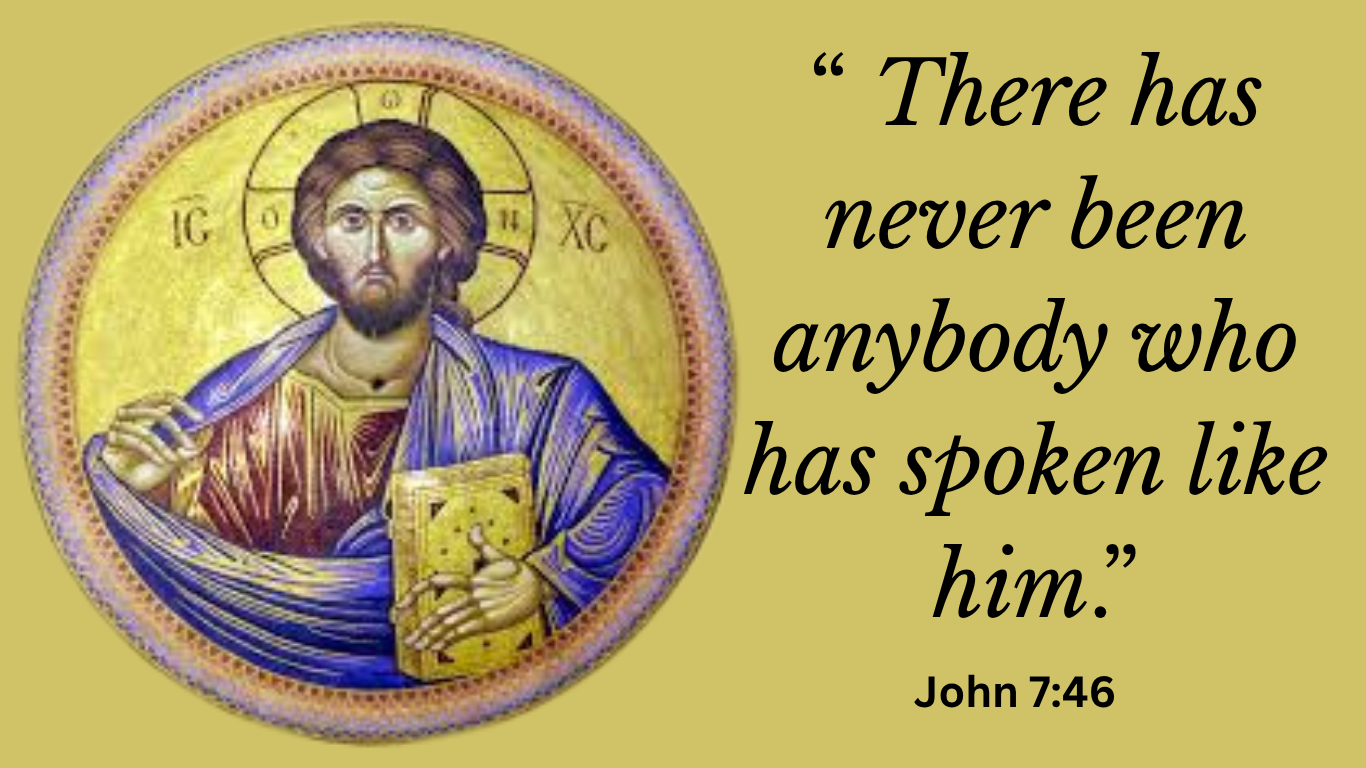 This has a strong resonance in the Gospel of John who makes the most of the metaphor of light in its majestic manifestation of the ‘Word [who] became flesh’, for ‘through him all things came into being…What has come into being in him was life, life that was the light of all people, light that shines in darkness, and darkness could not over overpower it’ (1:3-6).In the opening of his encyclical Lumen fidei Pope Francis proclaimed ‘The light of Faith: this is how the Church’s tradition speaks of the great gift brought by Jesus…Conscious of the immense horizon which their faith opened before them, Christians invoked Jesus as the true sun “whose rays bestow life”. To Martha, weeping for the death of her brother Lazarus, Jesus said: “Did I not tell you that if you believed, you would see the glory of God?” (John 11:40). Those who believe, see; they see with a light that illumines their entire journey, for it comes from the risen Christ, the morning star which never sets’.[2] The conflict of light and darkness courses through the Gospel of John not as a competition between two cosmic principles but as a revelation of the Christ, ‘the true light that gives light to everyone’ (John 1:9).
Fr Kevin O’Gorman SMA
[1] The Gospel text is slightly different to that of Isaiah 9:1 in the Revised New Jerusalem Bible
[2] Pope Francis, Lumen fidei – The Light of faith, Dublin, Veritas, 2013, Par. 1.