

Memorial of Saint Athanasius
Readings: Acts of the Apostles 13:44-52; Psalm 97:1-4; Gospel of John 14:7-14
Today’s first reading – from Acts of the Apostles – gives an account of the activity of the early church and what they were up against. In spite of their experience of ‘dungeon, fire and sword’ ‘Paul and Barnabas spoke out boldly’. Pope Francis brought ‘boldly’ back, not into fashion but in the need to proclaim the Gospel in season and out of season. We hear in today’s reading that ‘it made the pagans very happy to hear that [God’s] salvation may reach the ends of the earth and they thanked the Lord for his message’. Paul and Barnabas found the freedom to shake the dust of both begrudgers and bullies from their feet and turned their steps towards more welcoming and receptive audiences. The latter half of the last line – ‘but the disciples were filled with joy and the Holy Spirit’ – finds a powerful echo in the exhortation by Pope Francis’, ‘Rejoice and Be Glad’ (Mt 5:12), Jesus tells those persecuted or humiliated for his sake’.[1]
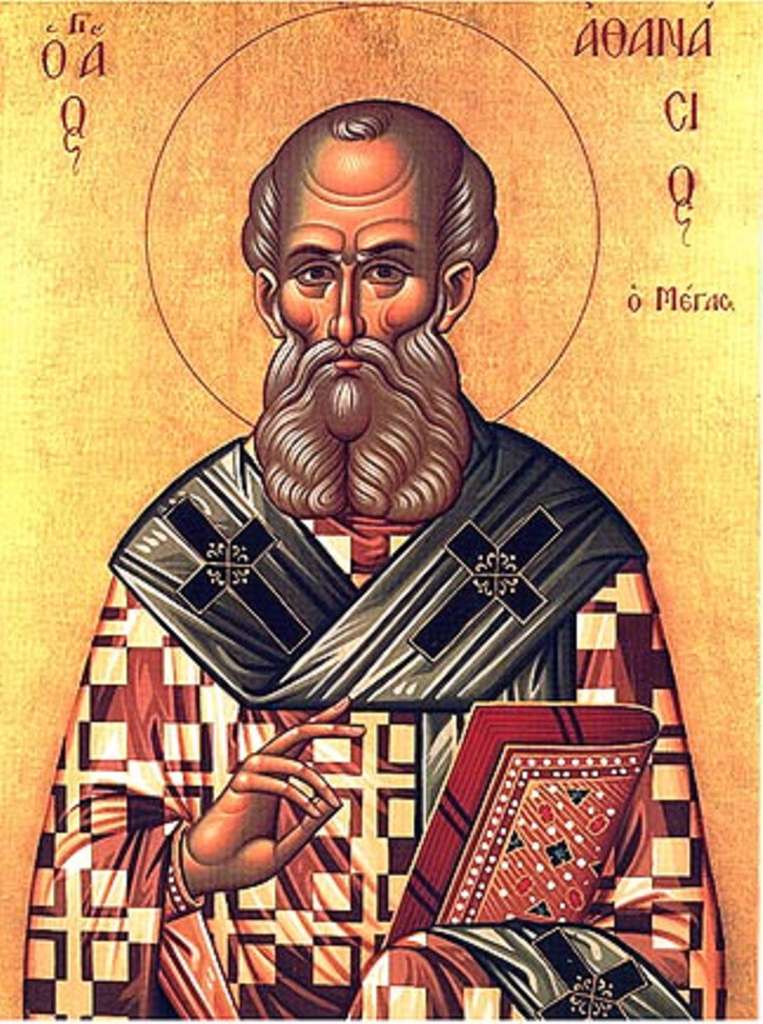 Today’s Gospel reading is about the relationship between Jesus and God. This relationship was at the root of the Arian crisis which rejected the divinity of Christ so that, for example, the line ‘so that the Father may be glorified in the Son’ did not mean equality between the ‘Word made flesh’ and God the Father. Today the church celebrates the memorial of Saint Athanasius, called contra mundum – ‘against the world’, on account of, like the apostles above, the aggravation and aggression he endured in his lifetime. Thus the ‘Opening Prayer’ of today’s Mass addresses ‘Almighty ever-living God who raised up the Bishop Saint Athanasius as an outstanding champion of your Son’s divinity’ and the ‘Prayer after Communion’ asks ‘Almighty God that the true divinity of your Only Begotten Son, which we firmly profess with Saint Athanasius, may, through thus Sacrament, ever give us life and protection’.
In his “General Audience” of June 20th 2007, Pope Benedict XVI proclaimed that ‘Athanasius was undoubtedly one of the most important and revered early Church Fathers…[he] was also the most important and tenacious adversary of the Arian heresy, which at that time threatened faith in Christ, reduced to a creature “halfway” between God and man’, adding that ‘the fundamental idea of Athanasius’ entire theological battle was precisely that God is accessible’.[2]
Fr Kevin O’Gorman SMA
[1]Apostolic Exhortation, Evangelii Gaudium – The Joy of the Gospel, 2013.
[2] See ‘St. Athanasius’, The Pope Benedict XVI Reader, Word on Fire Institute, 2021, 250-254, here 250.